National Naval Aviation Museum
The National Naval Aviation Museum on NAS Pensacola in Pensacola, Florida is the premiere naval air museum in the United States. It houses a vast collection of over 150 aircraft and spacecraft that have ties to the United States Navy, the United States Marine Corps, and the United States Coast Guard. These historic and one-of-a-kind aircraft are displayed inside the museum's 300,000 square feet of exhibit space and outside on its 37-acre grounds.
25Jul23
Blue Angels Practice Session
My visit to the National Naval Aviation Museum started with an early arrival at NAS Pensacola to catch the Tuesday morning airshow practice by the Blue Angels demonstration team. Before the airshow practice began, normal training flights were coming in and out of the field. The Blues performed a complete flight routine that Tuesday morning including the full Fat Albert demonstration. After the completion of the Blues practice session, I took some time on the walk back to the museum to observe and photograph their extensive outdoor collection.
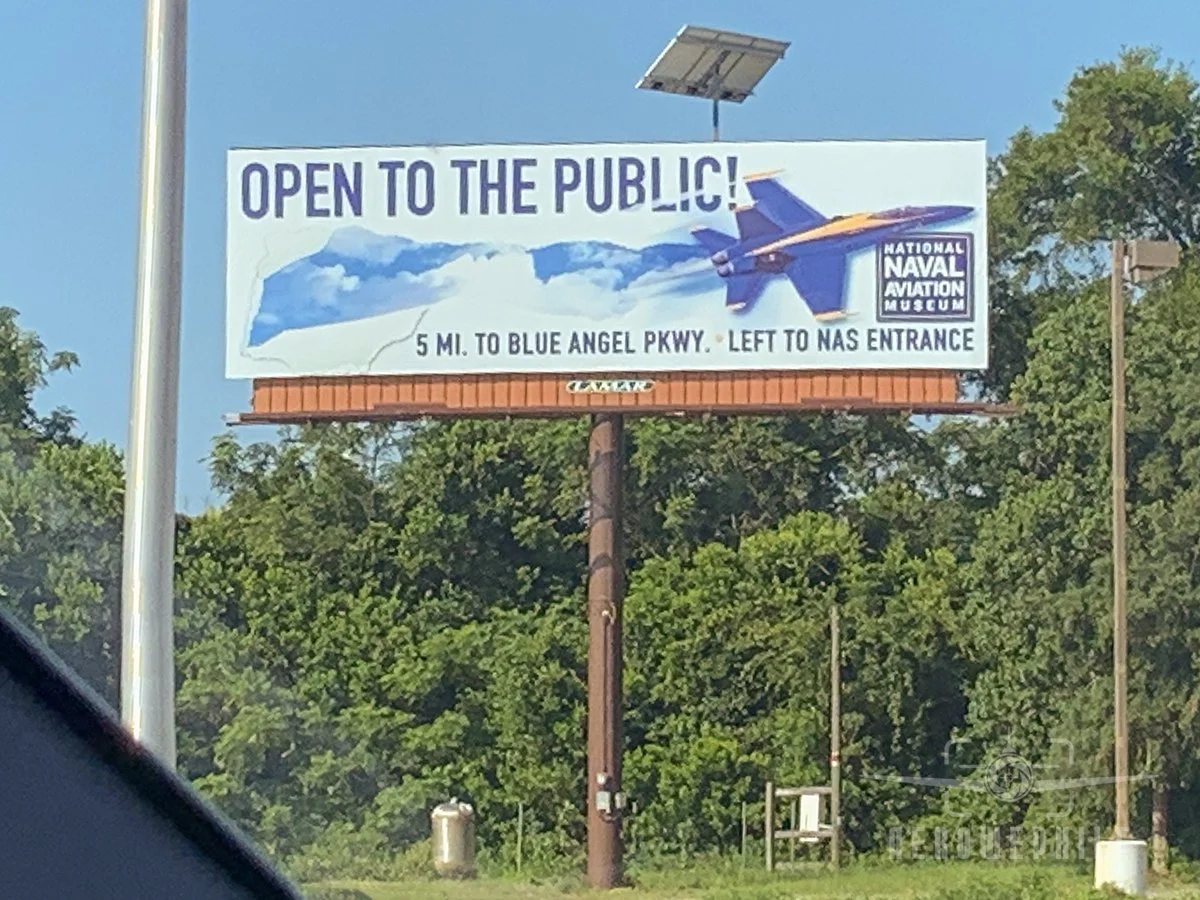
Billboard on the way to NAS Pensacola.
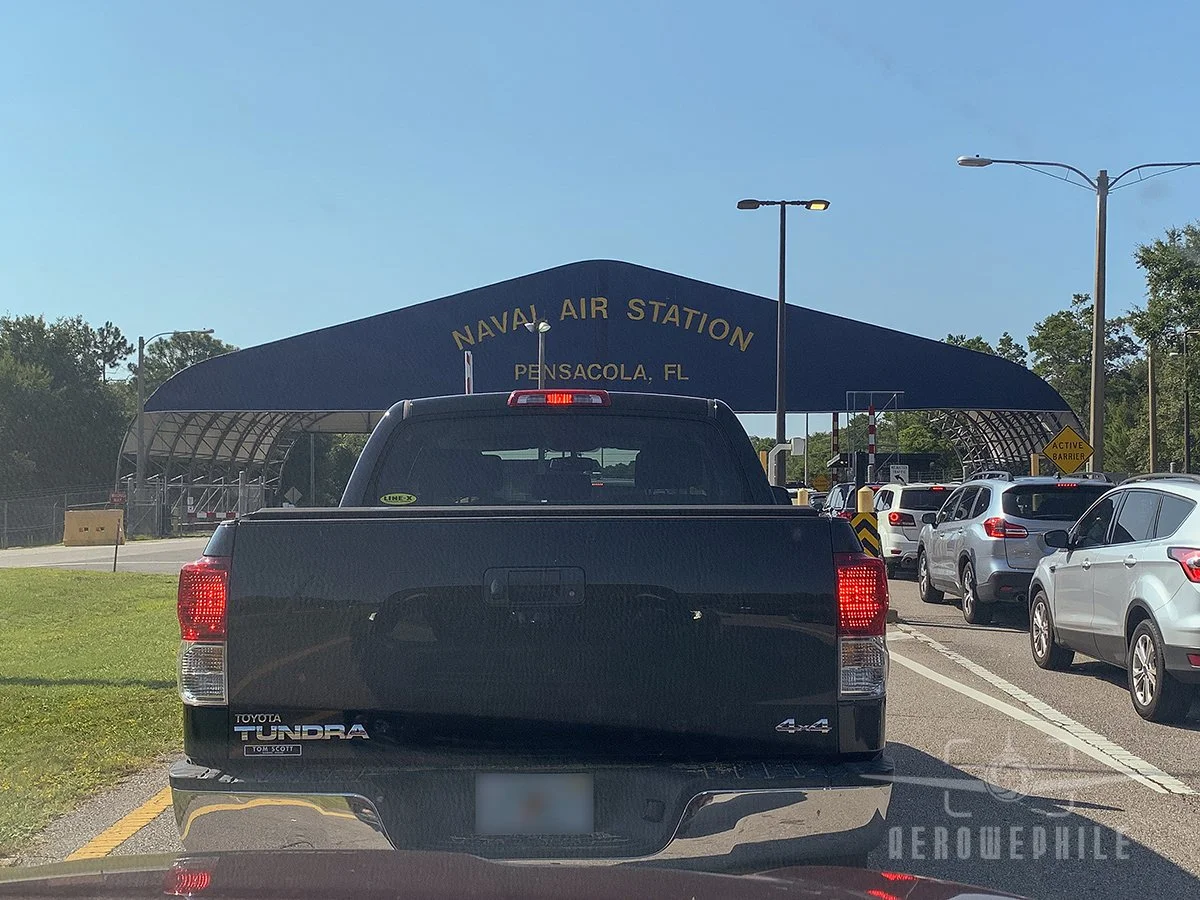
At the West Gate entrance to NAS Pensacola.
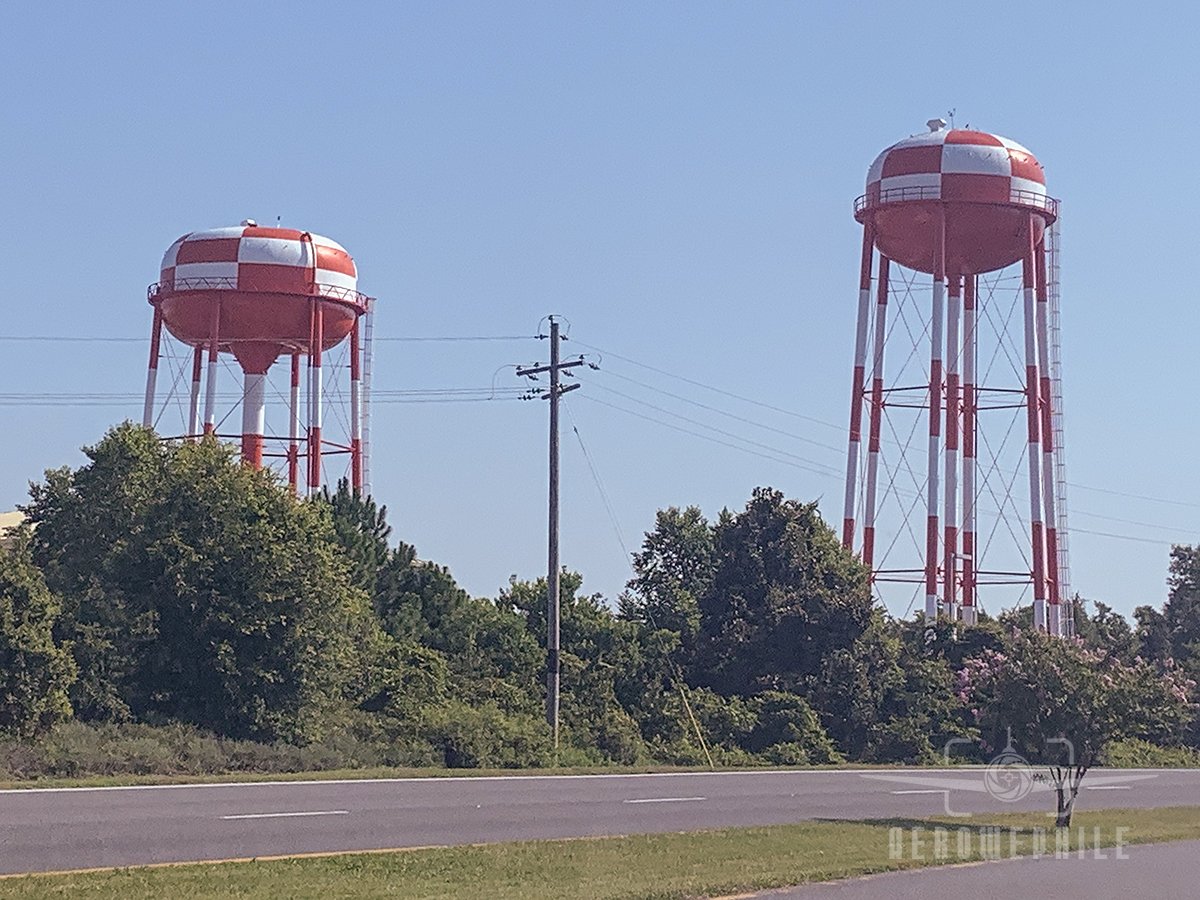
Water towers on NAS Pensacola base.
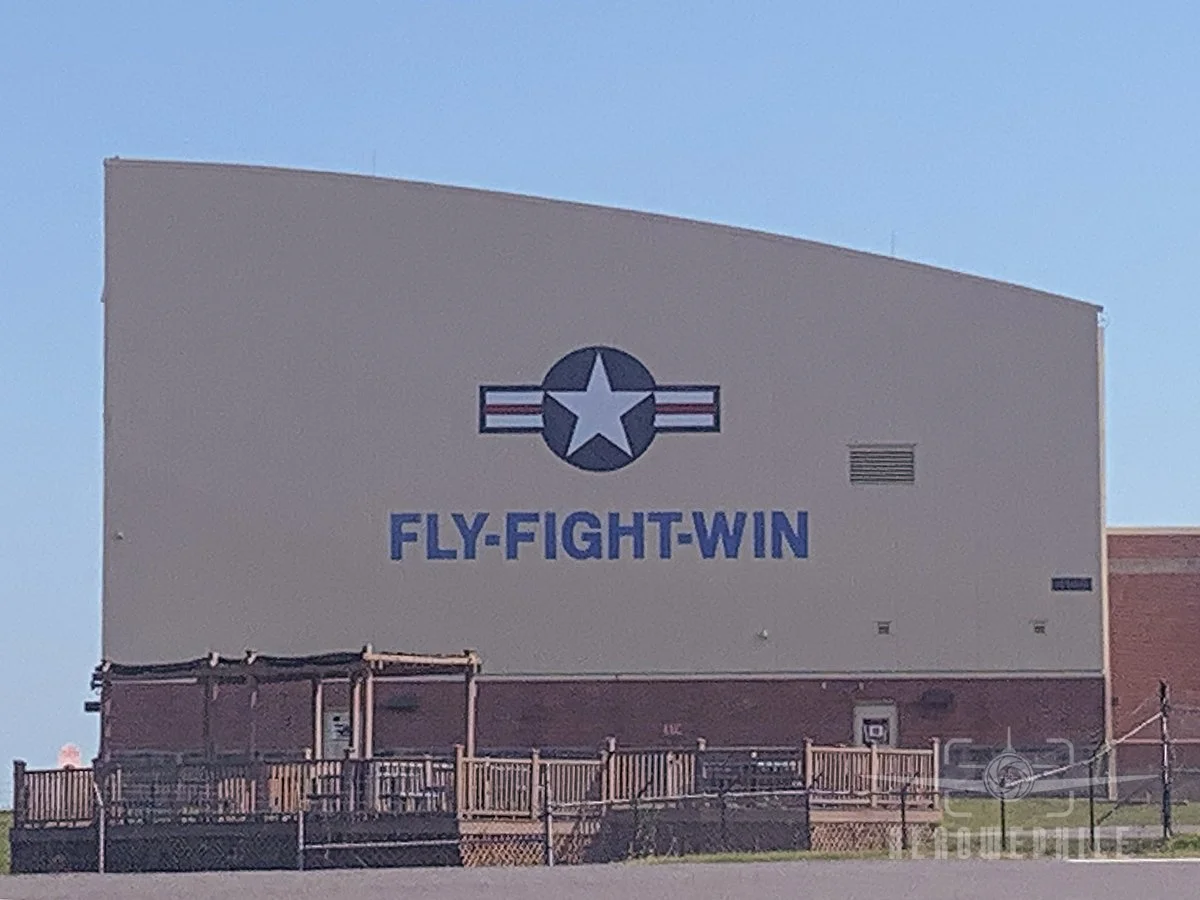
FLY-FIGHT-WIN!
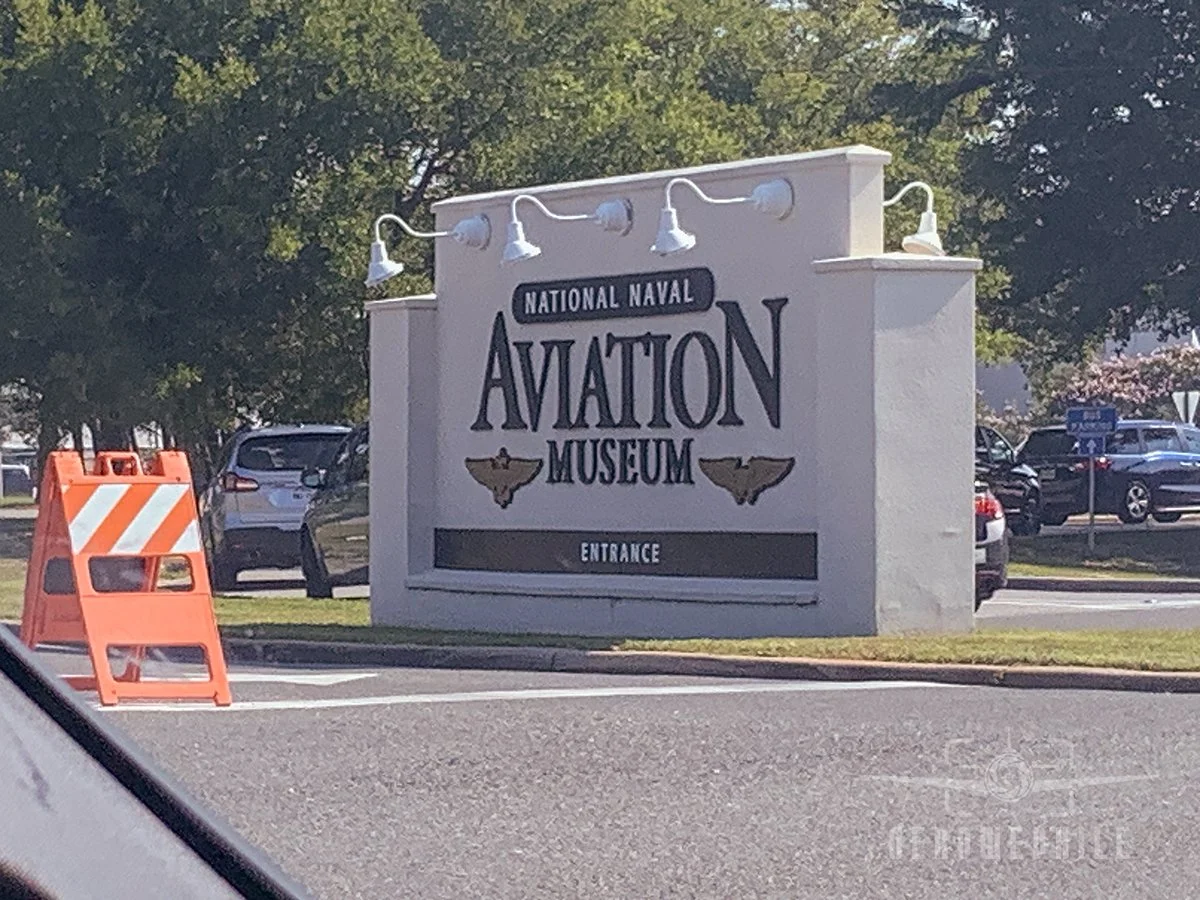
National Naval Aviation Museum entrance marker.
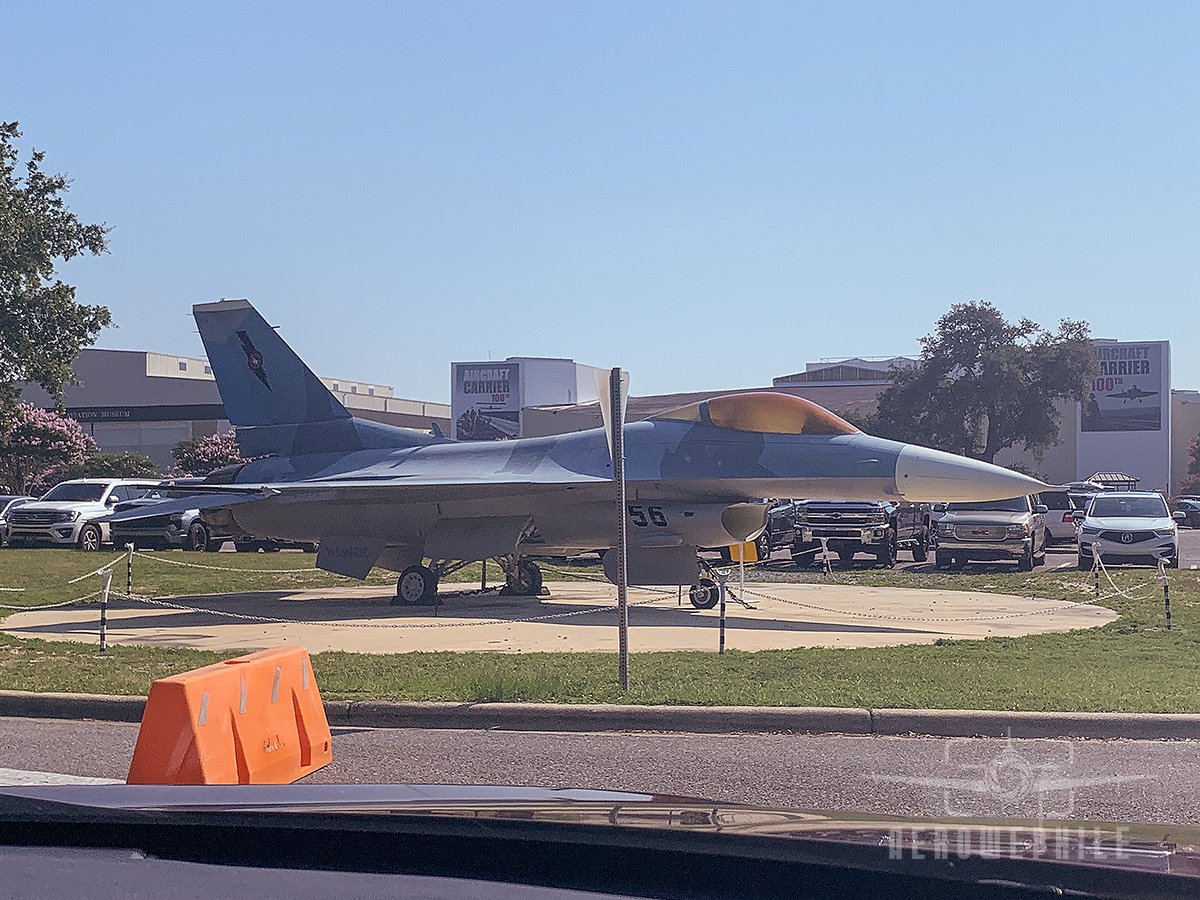
Naval General Dynamics F-16N Viper on display outside next to the museum parking lot.
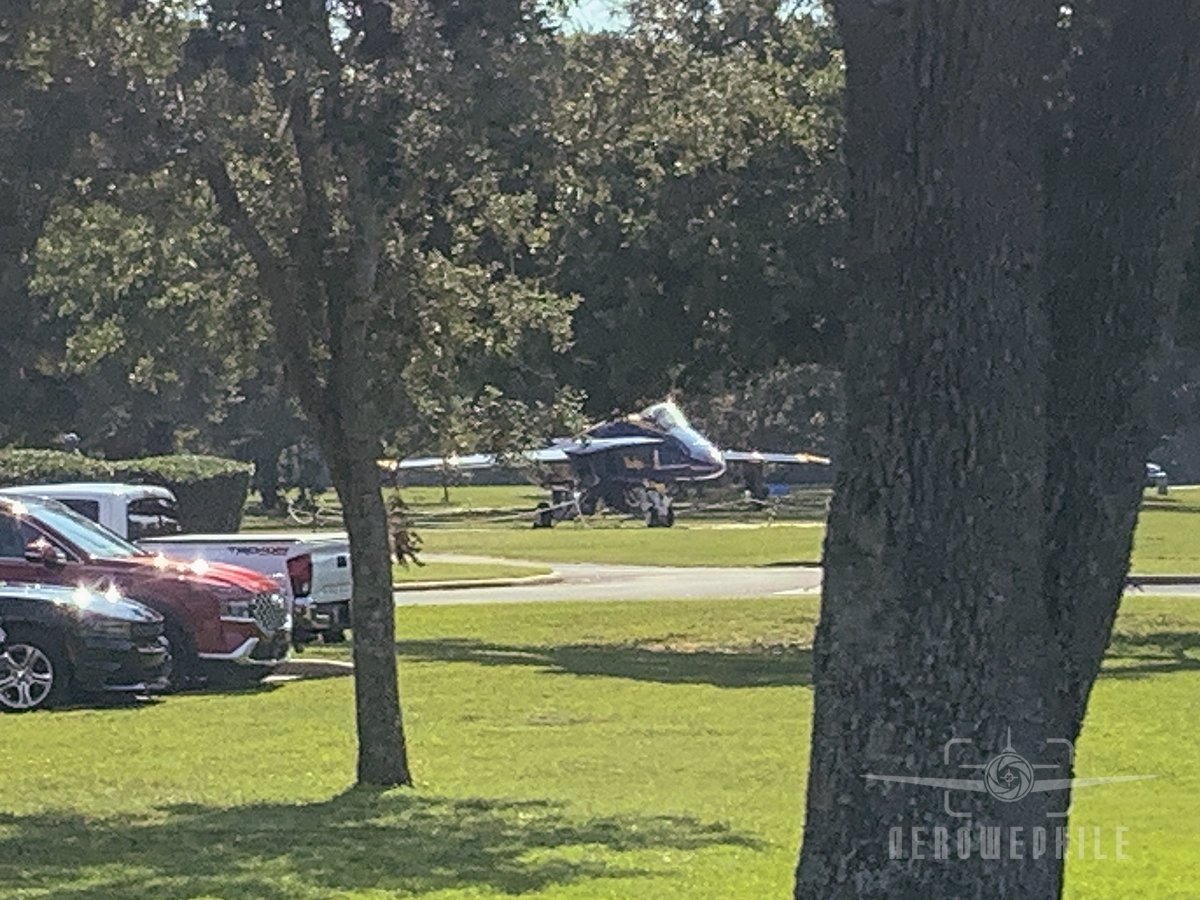
Blue Angels F/A-18 Hornet sitting outside the museum entrance.
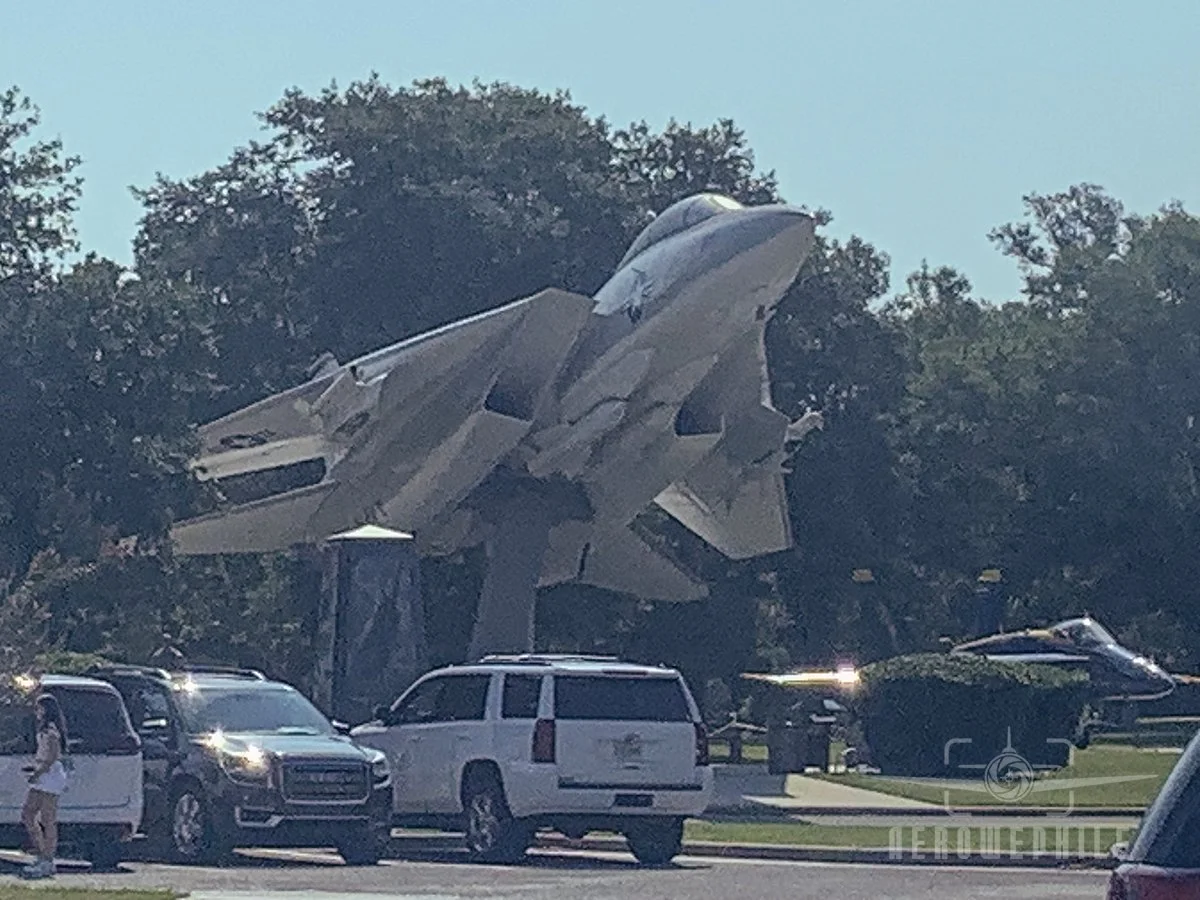
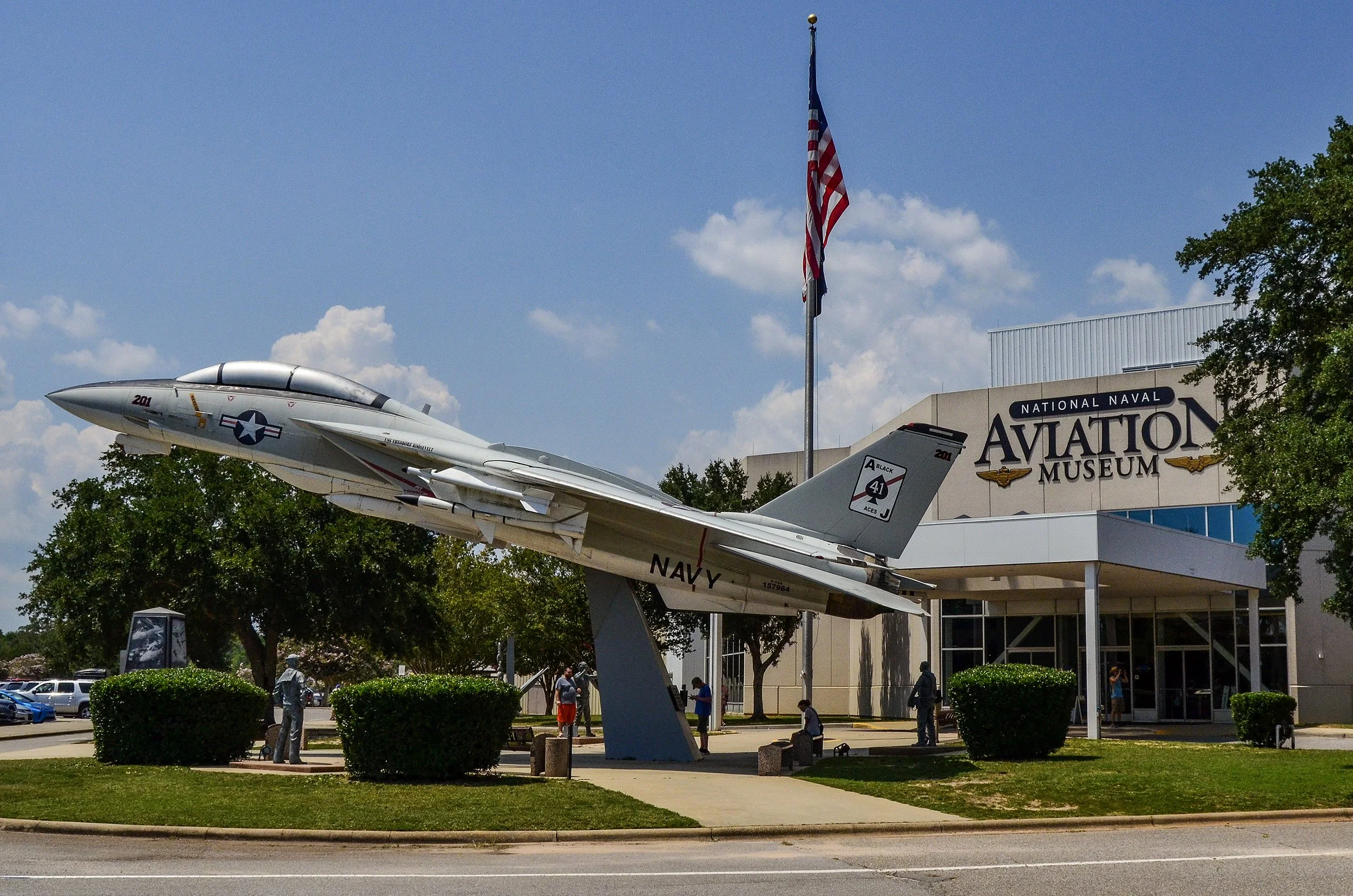
Grumman F-14A Tomcat sitting outside the museum entrance.
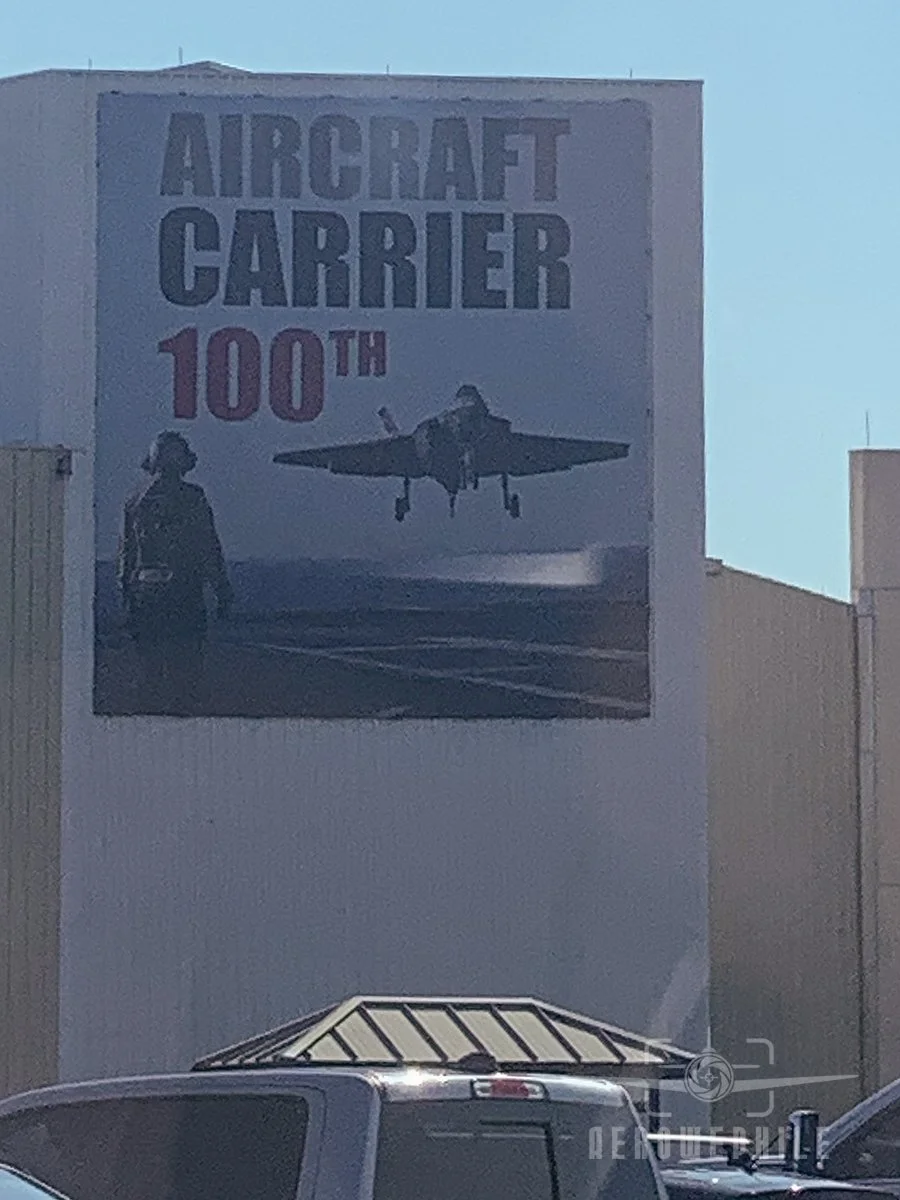
Aircraft Carrier 100th Anniversary.
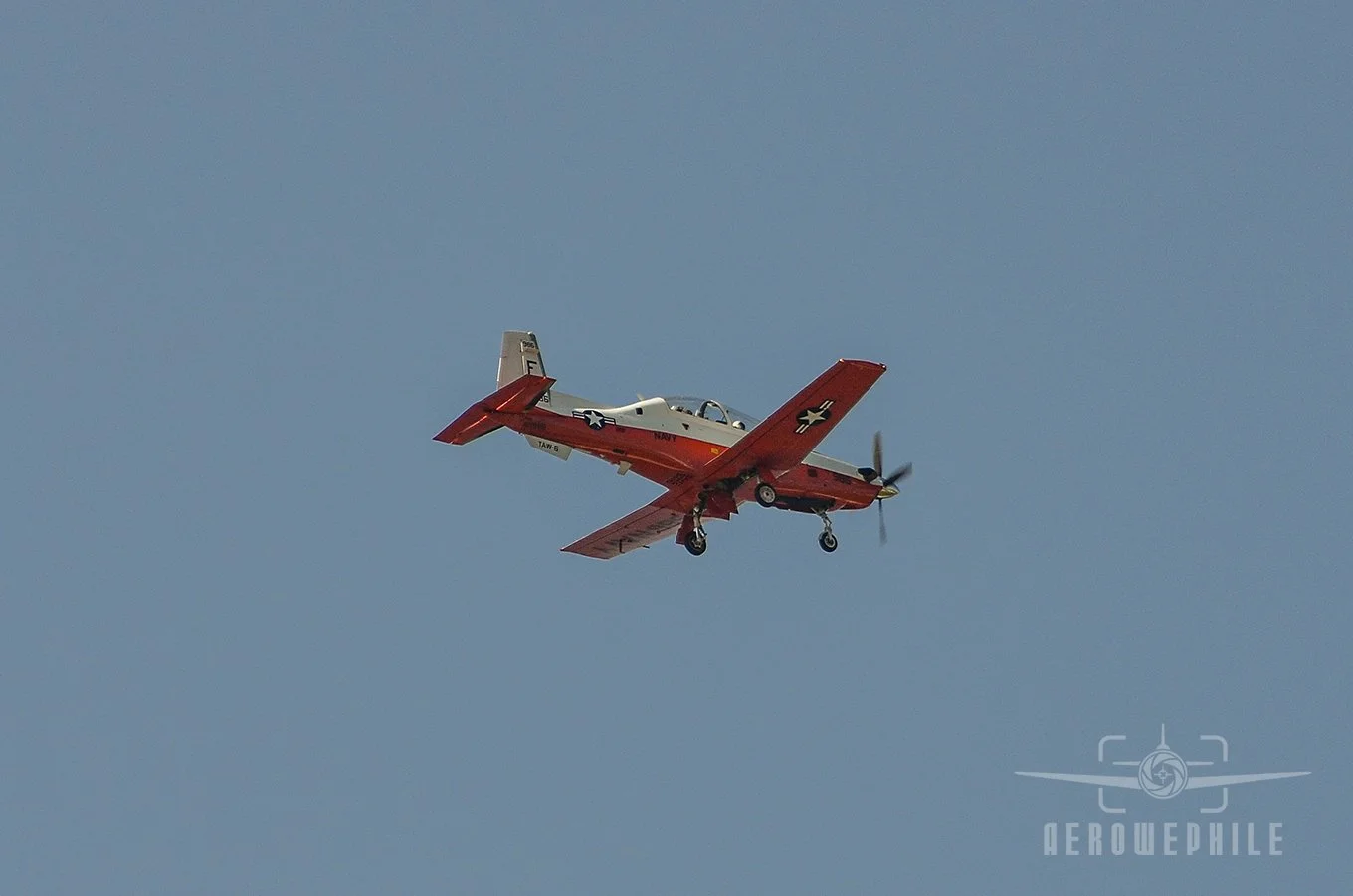
Navy Beechcraft T-6 Texan II out for a morning training session.
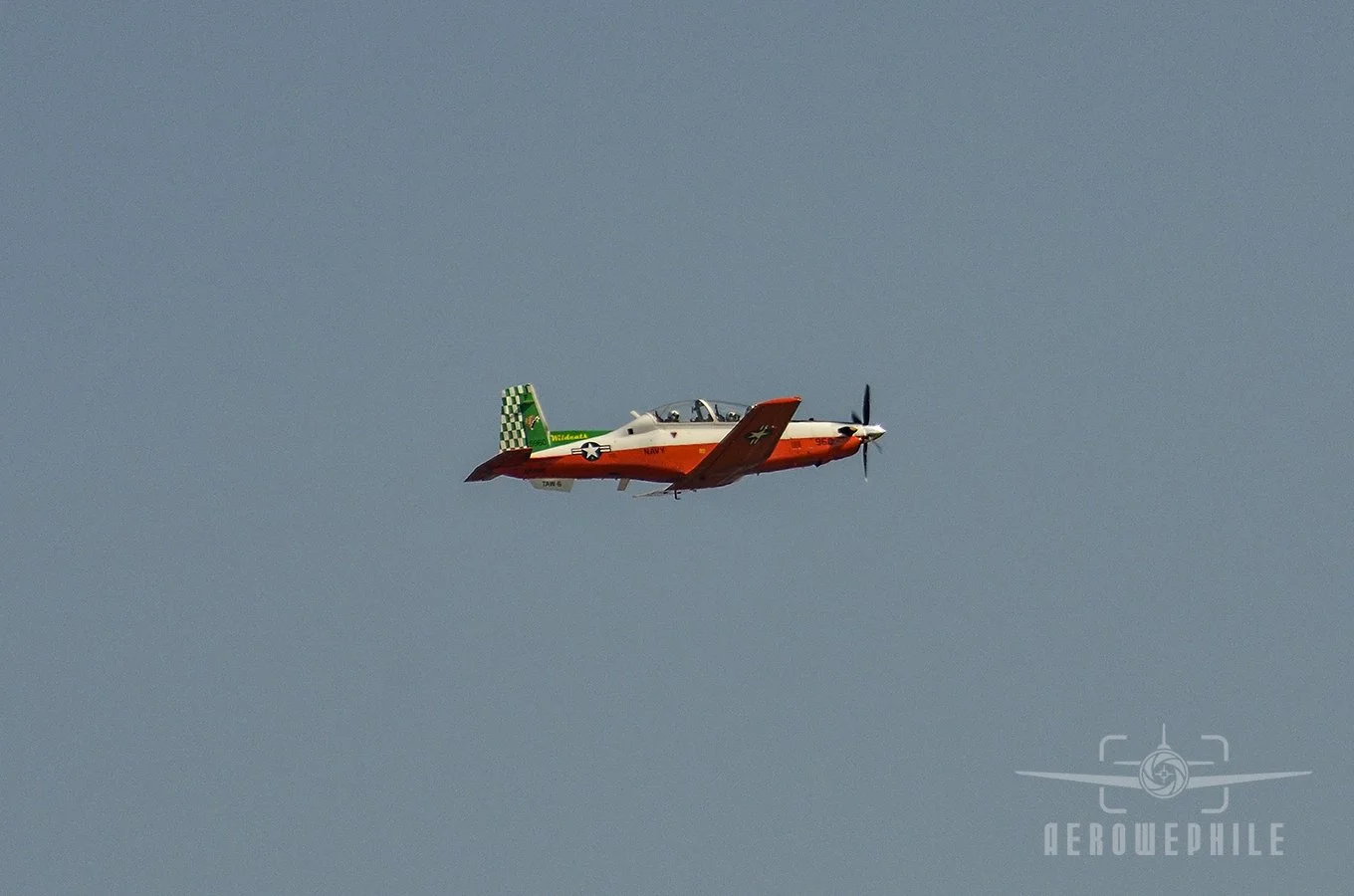
Navy Beechcraft T-6 Texan II out for a morning training session. Note the special livery on the Texan's tail - Wildcats TAW-6.
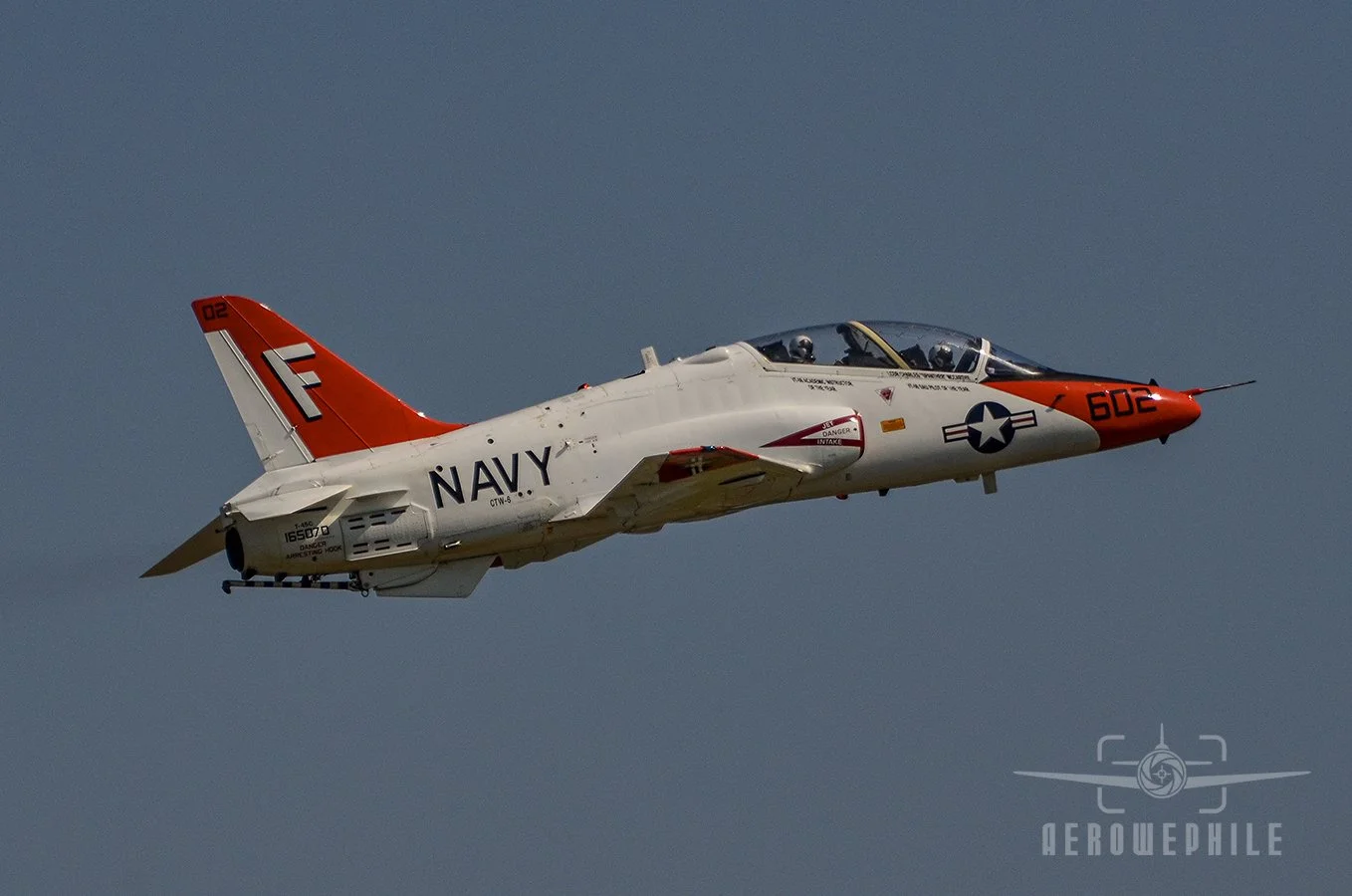
U.S. Navy T-45C Goshawk taking off from NAS Pensacola.
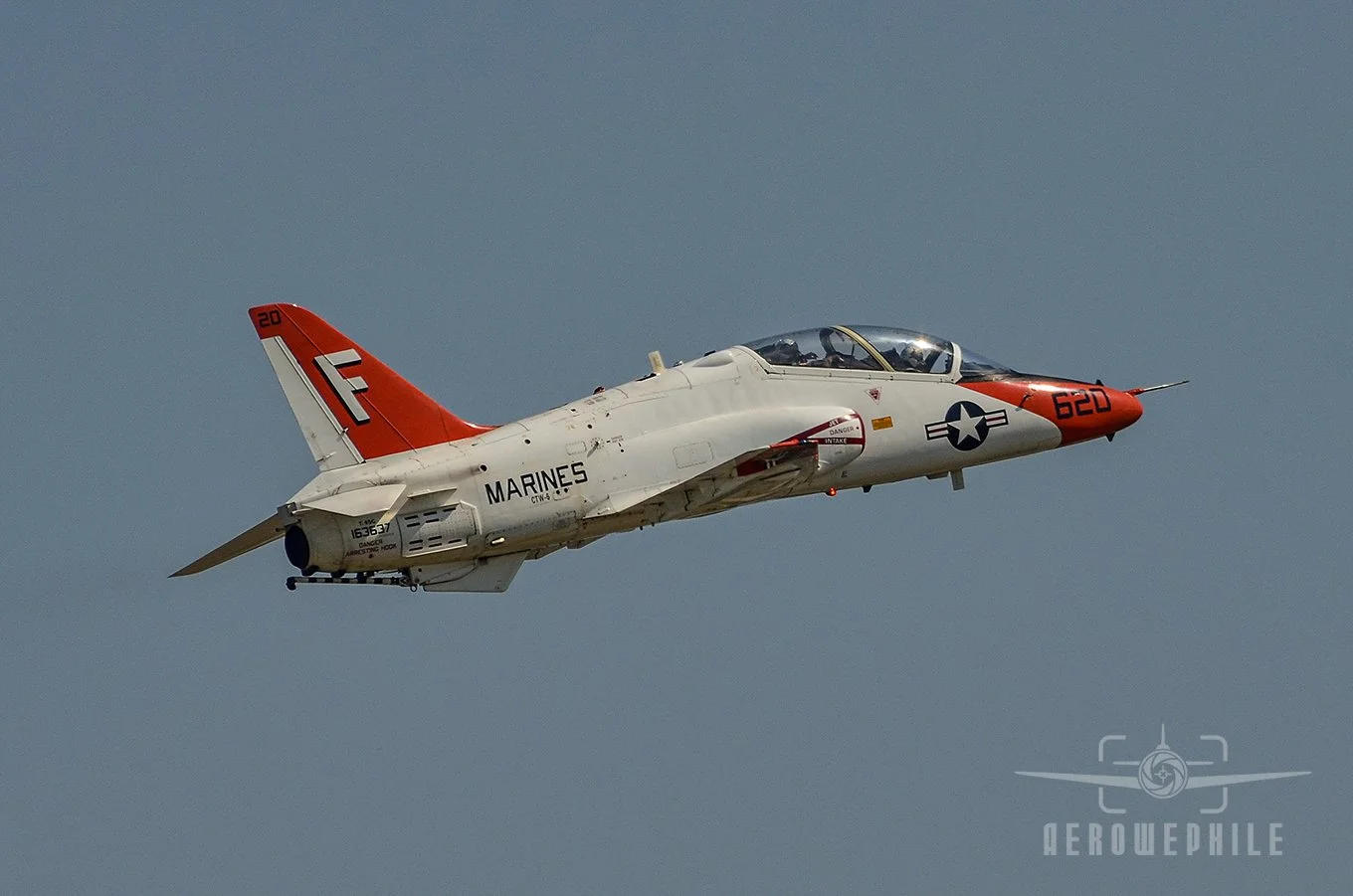
U.S. Navy T-45C Goshawk taking off from NAS Pensacola.
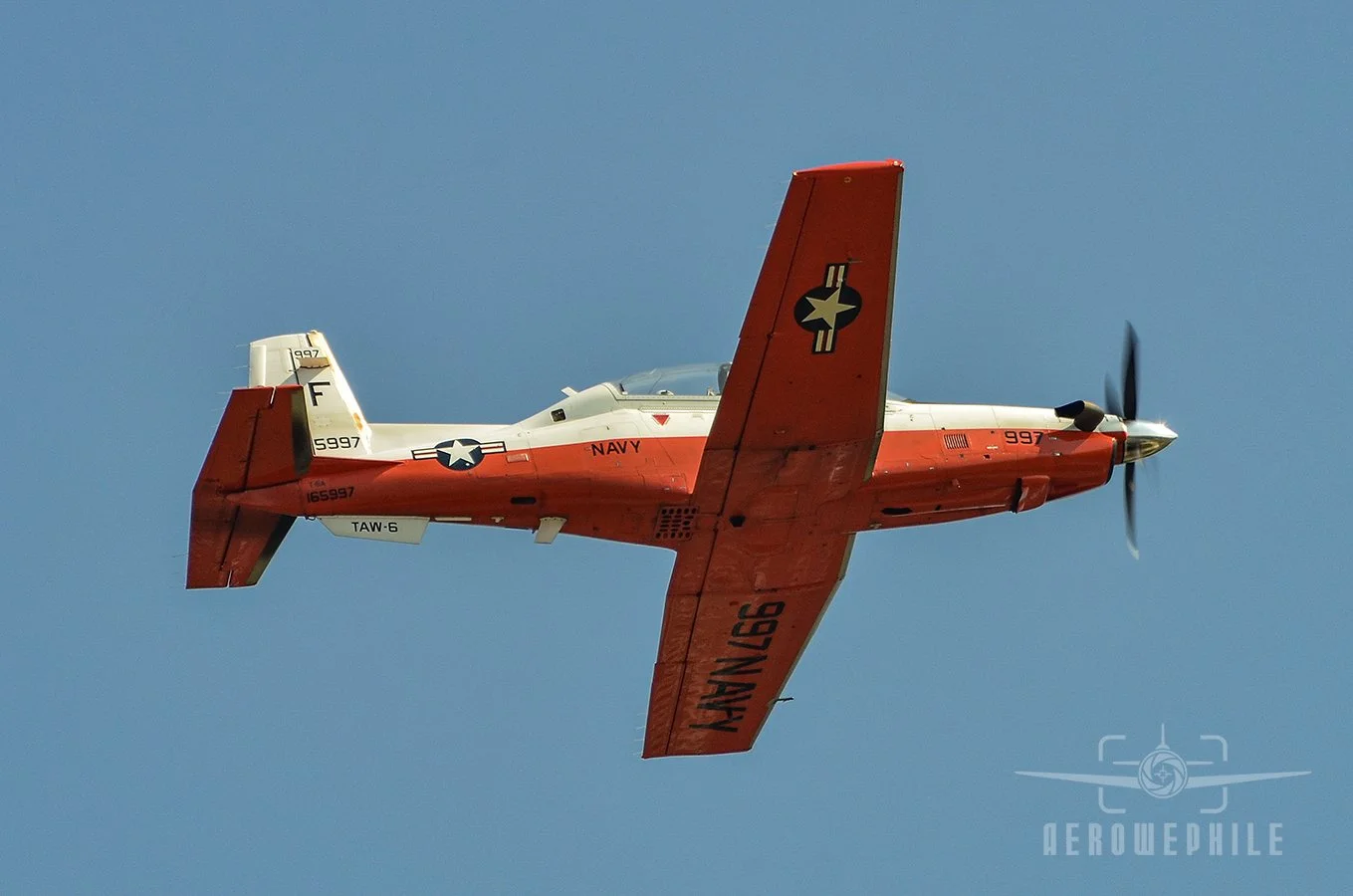
U.S. Navy Beechcraft T-6 Texan II passing overhead.
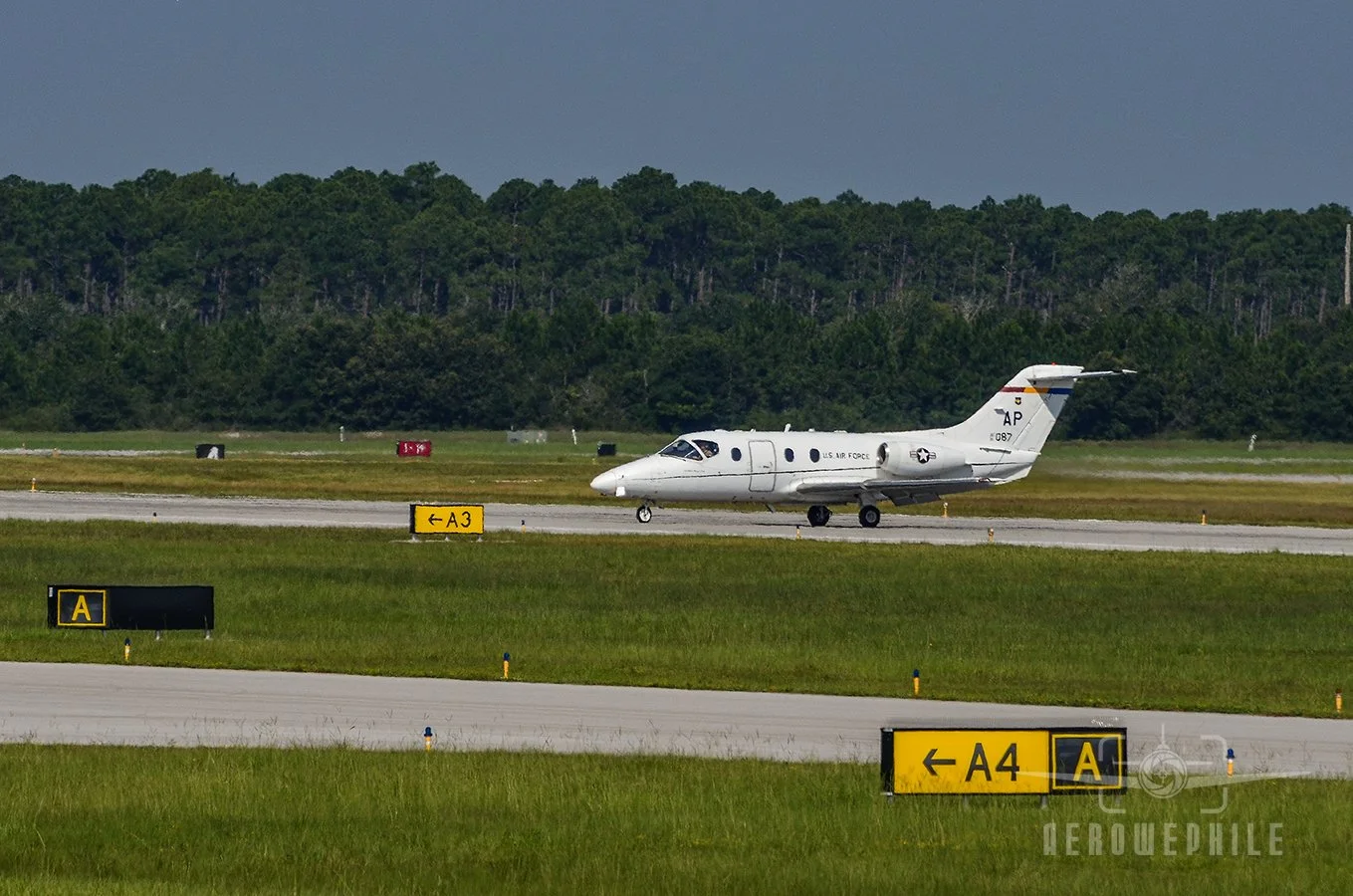
U.S. Navy Raytheon T-1 Jayhawk taxis in after landing.
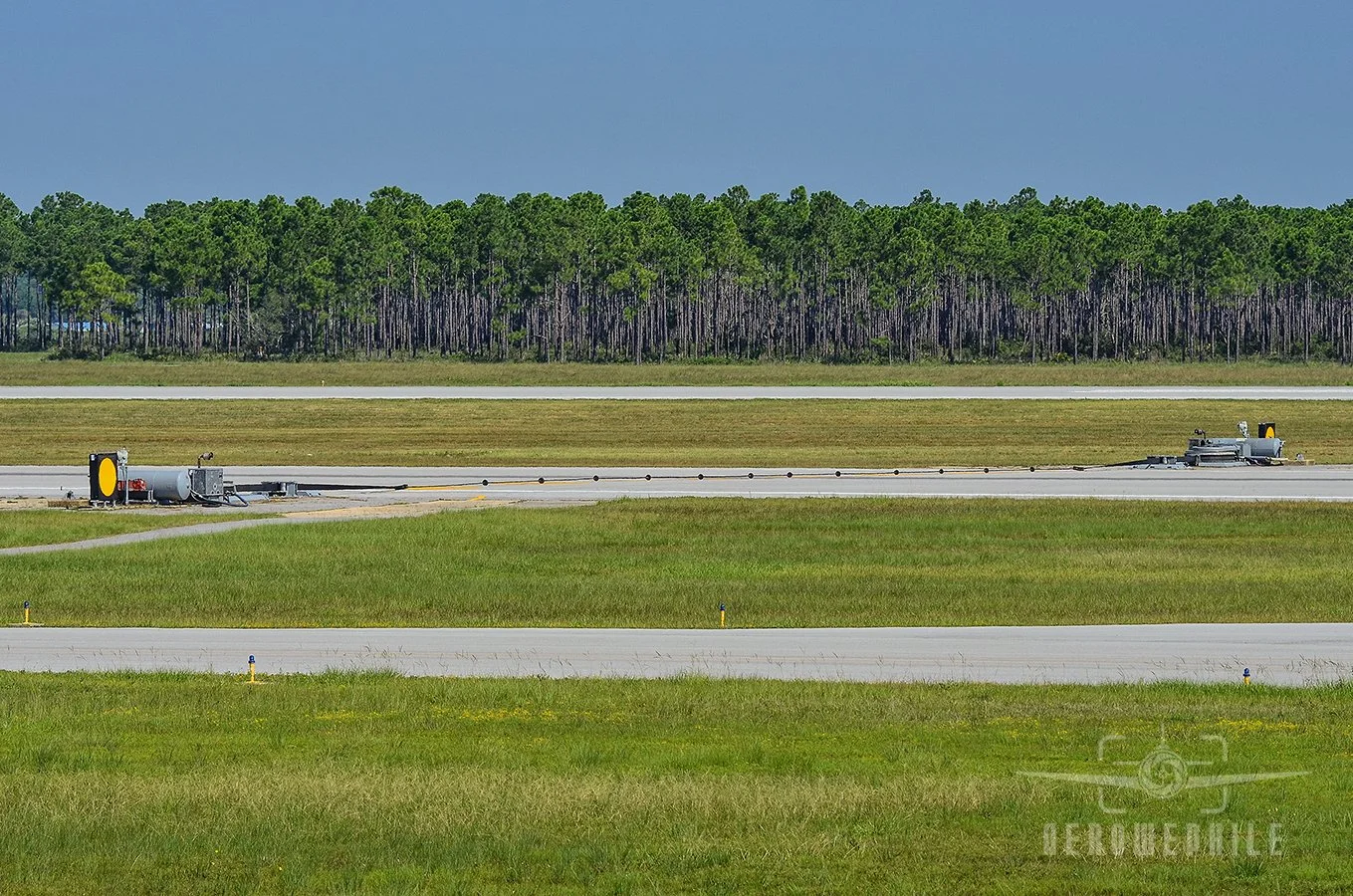
Arrestor cable on the runway at NAS Pensacola.
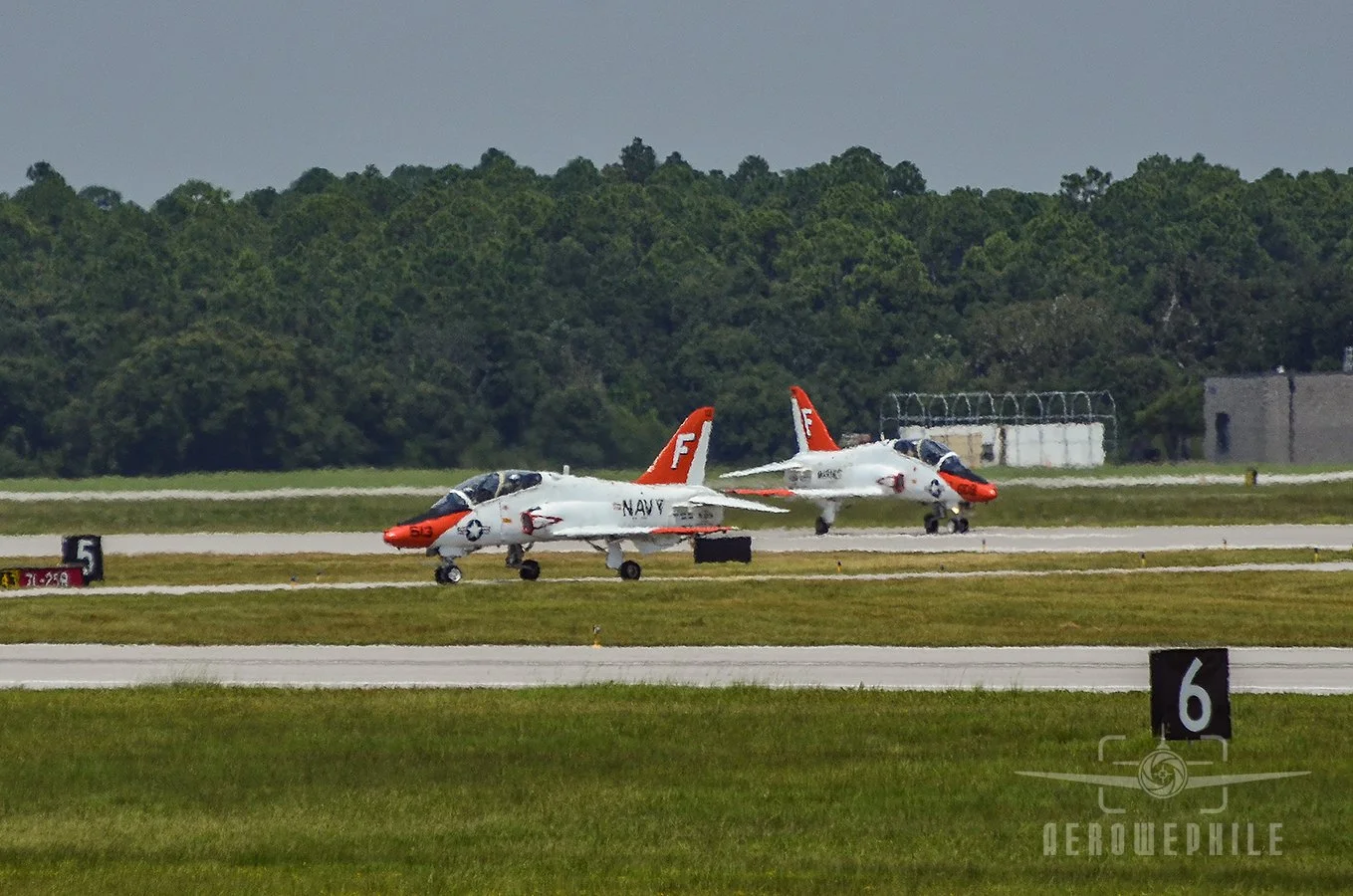
A pair of McDonnell Douglas (now Boeing) T-45 Goshawk taxi in after landing.
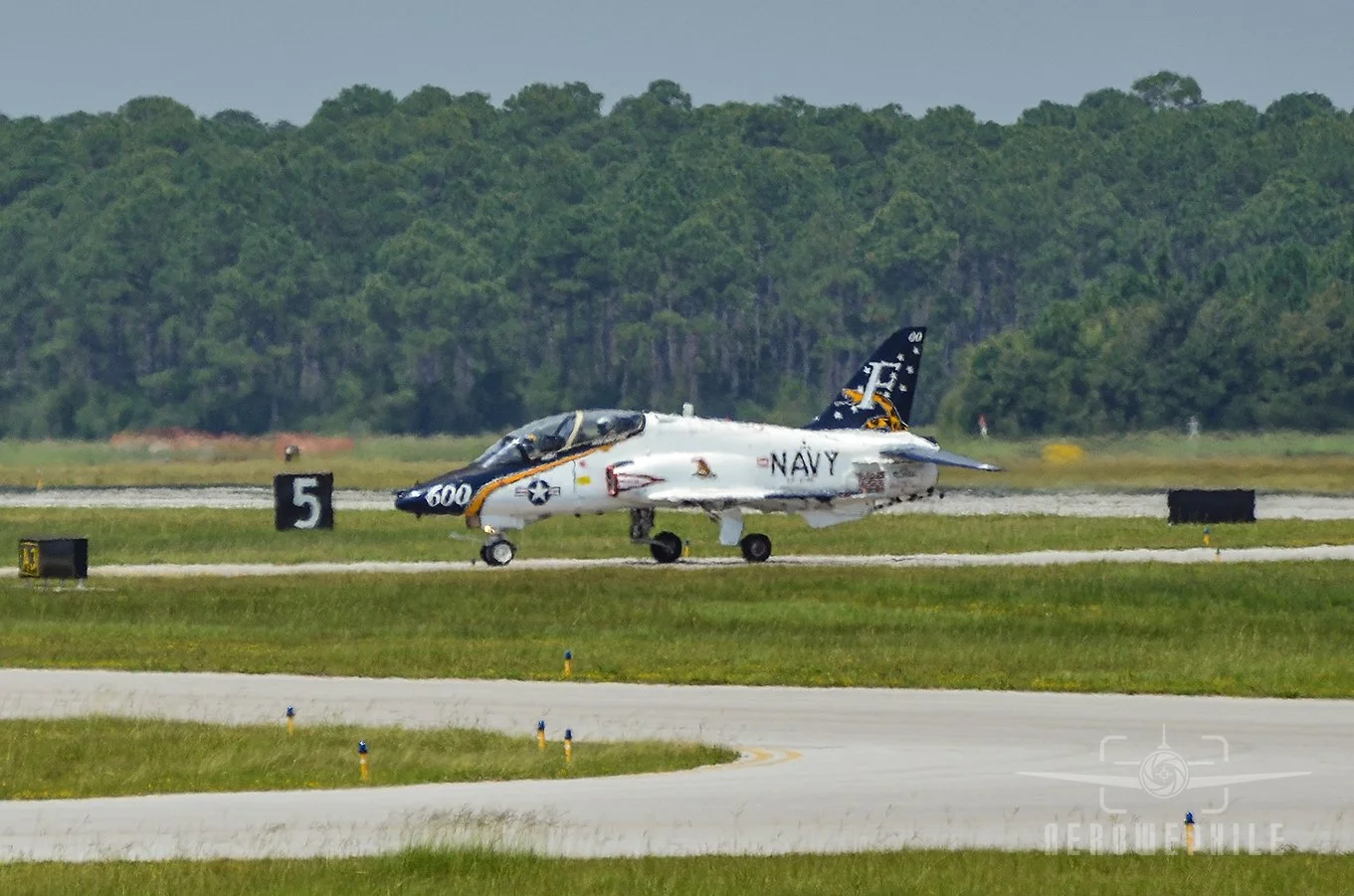
U.S. Navy T-45C Goshawk in a special "Don't Tread of Me" livery taxis in after landing.
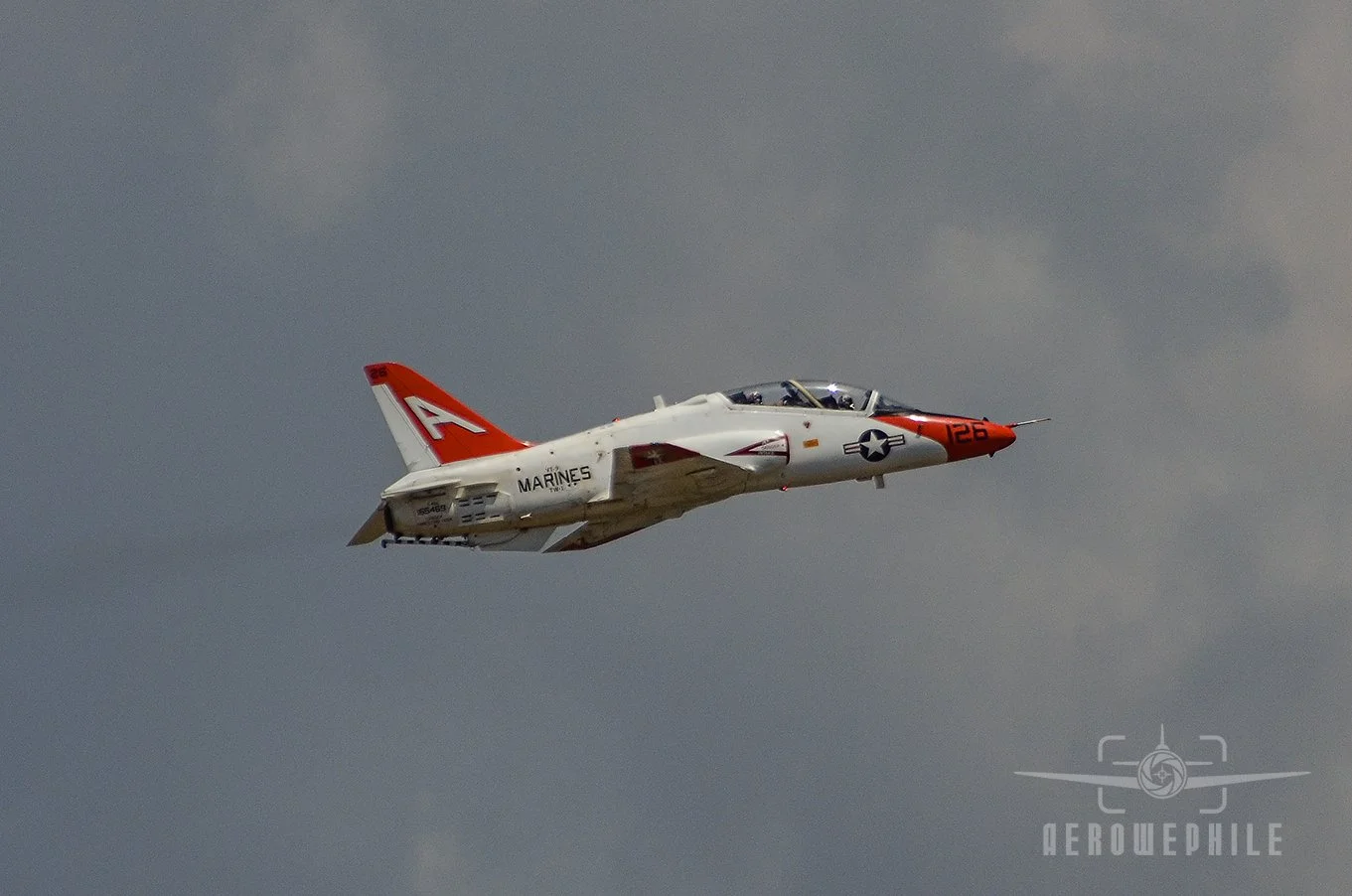
U.S. Navy T-45C Goshawk taking off from NAS Pensacola.
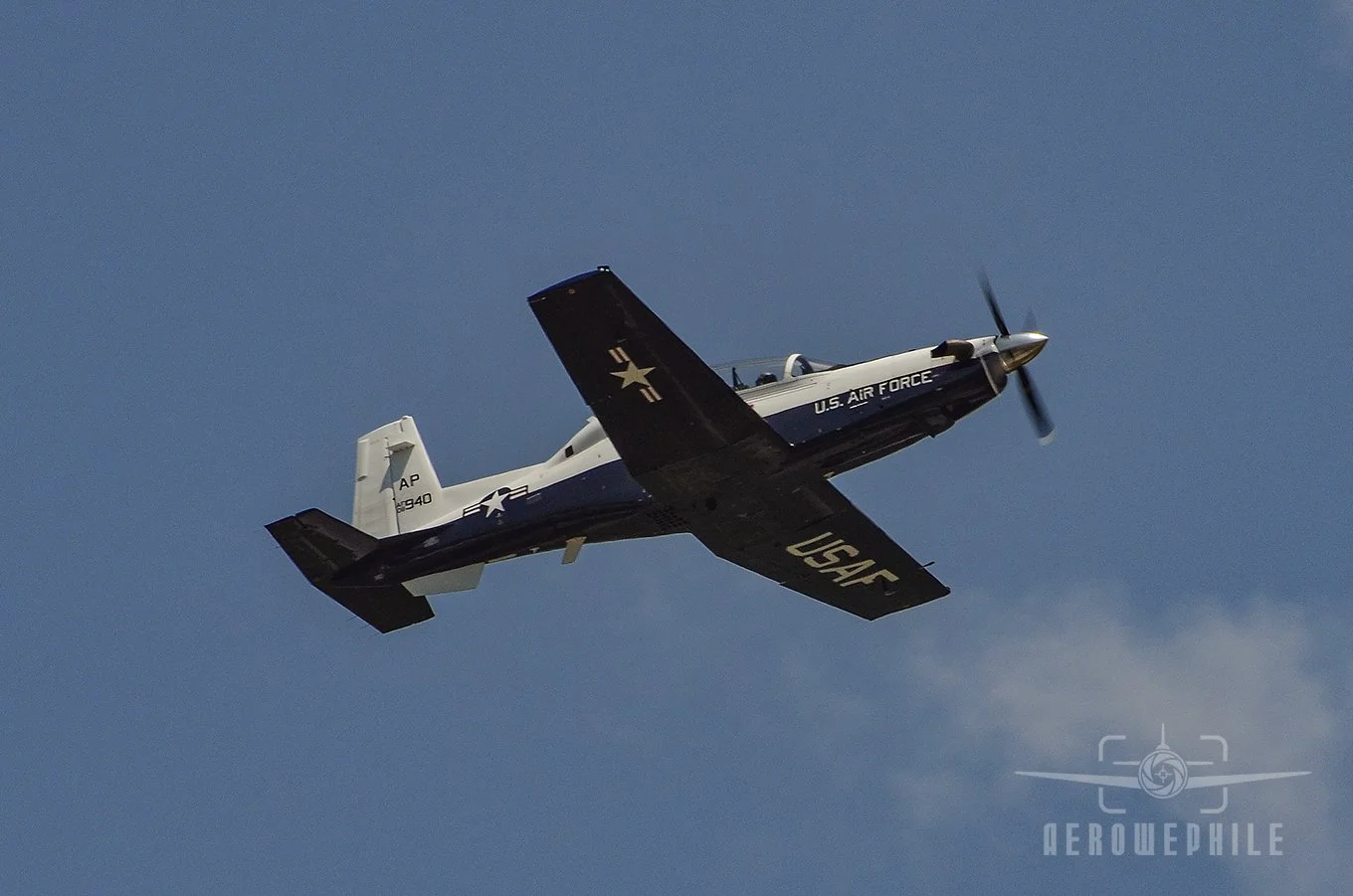
A U.S. Air Force Beechcraft T-6 Texan II passing overhead at the naval air station.
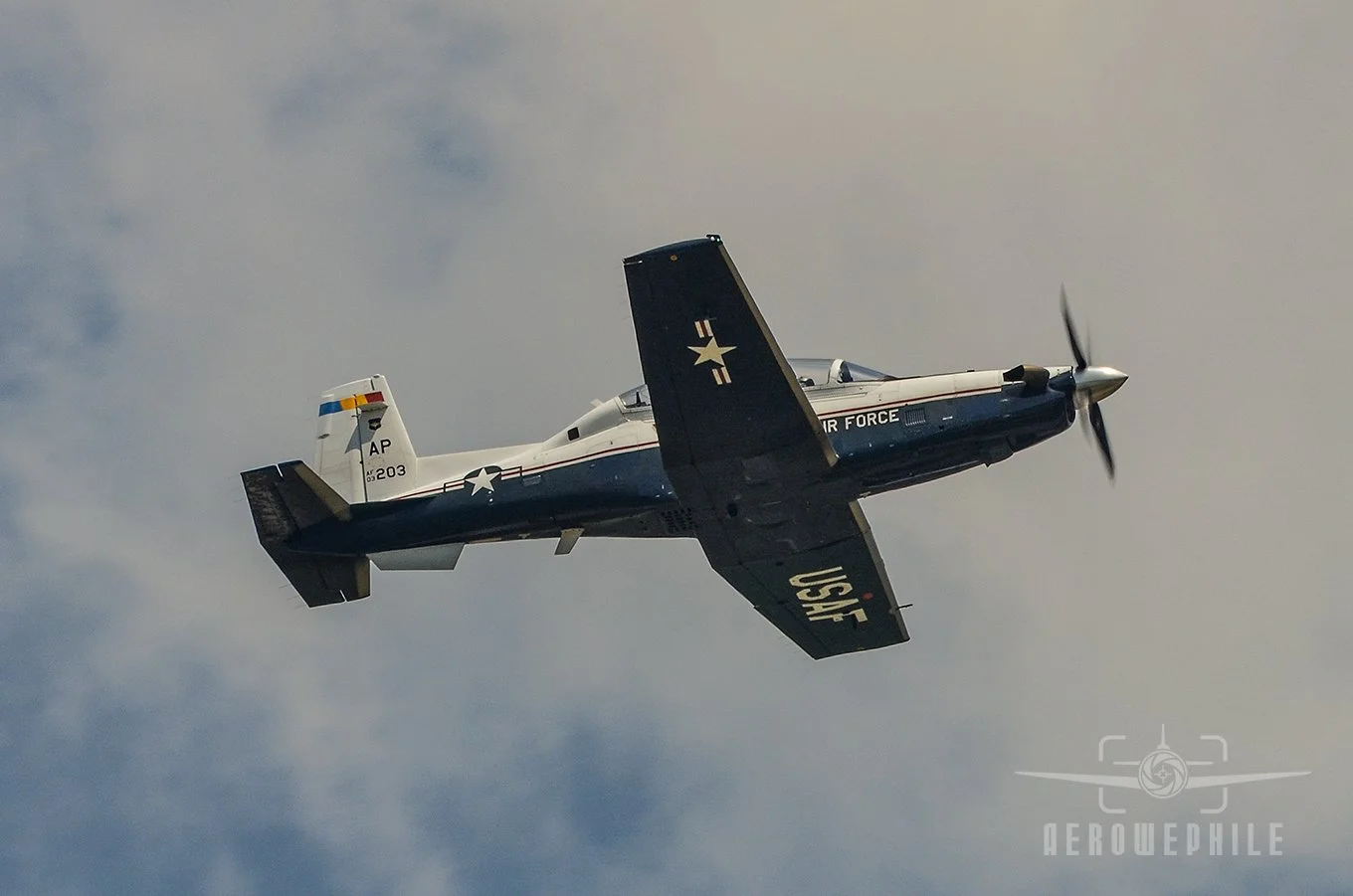
A second U.S. Air Force Beechcraft T-6 Texan II passing overhead at the naval air station.
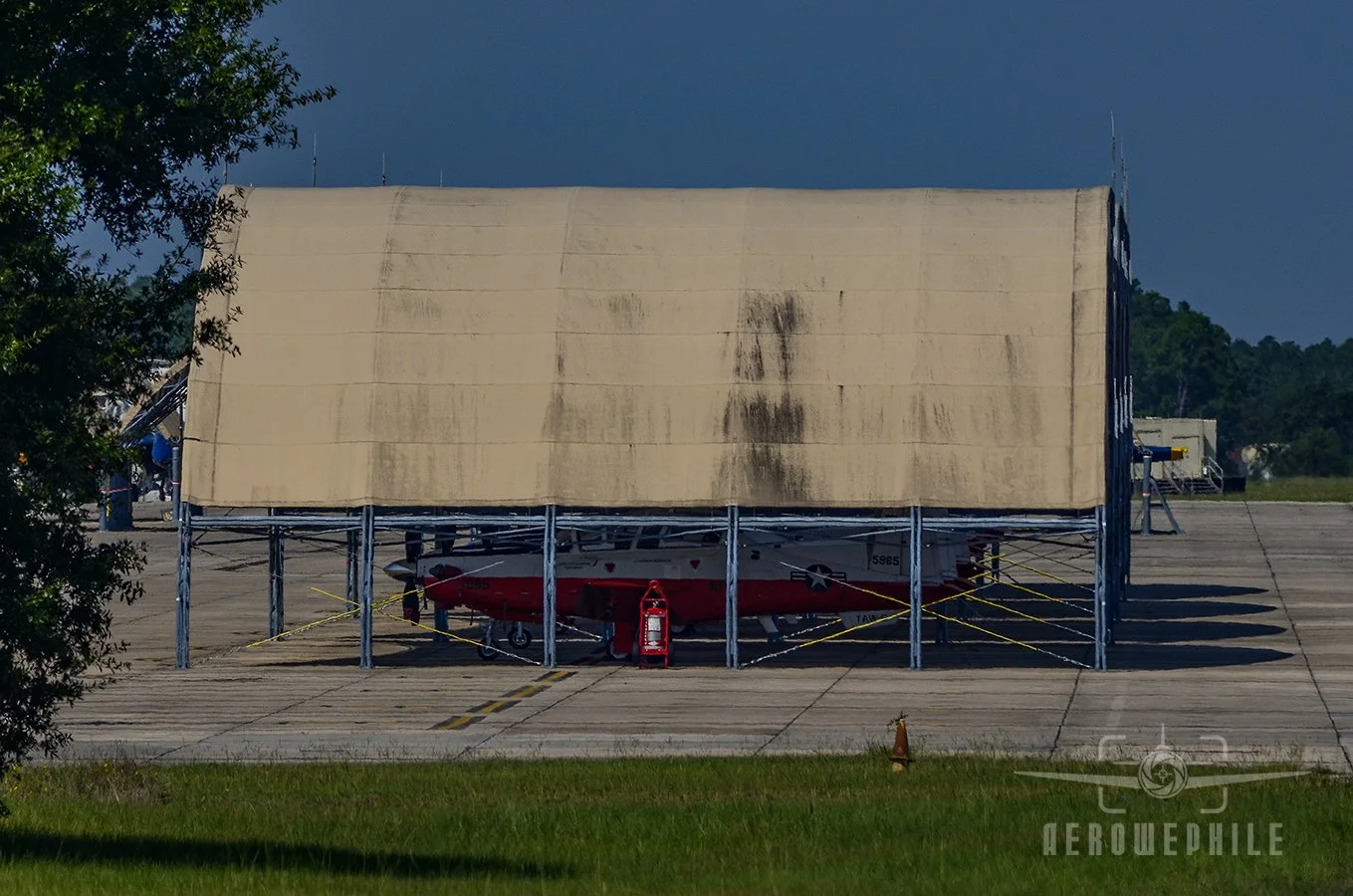
T-6 Texan IIs parked under the dome hangers.
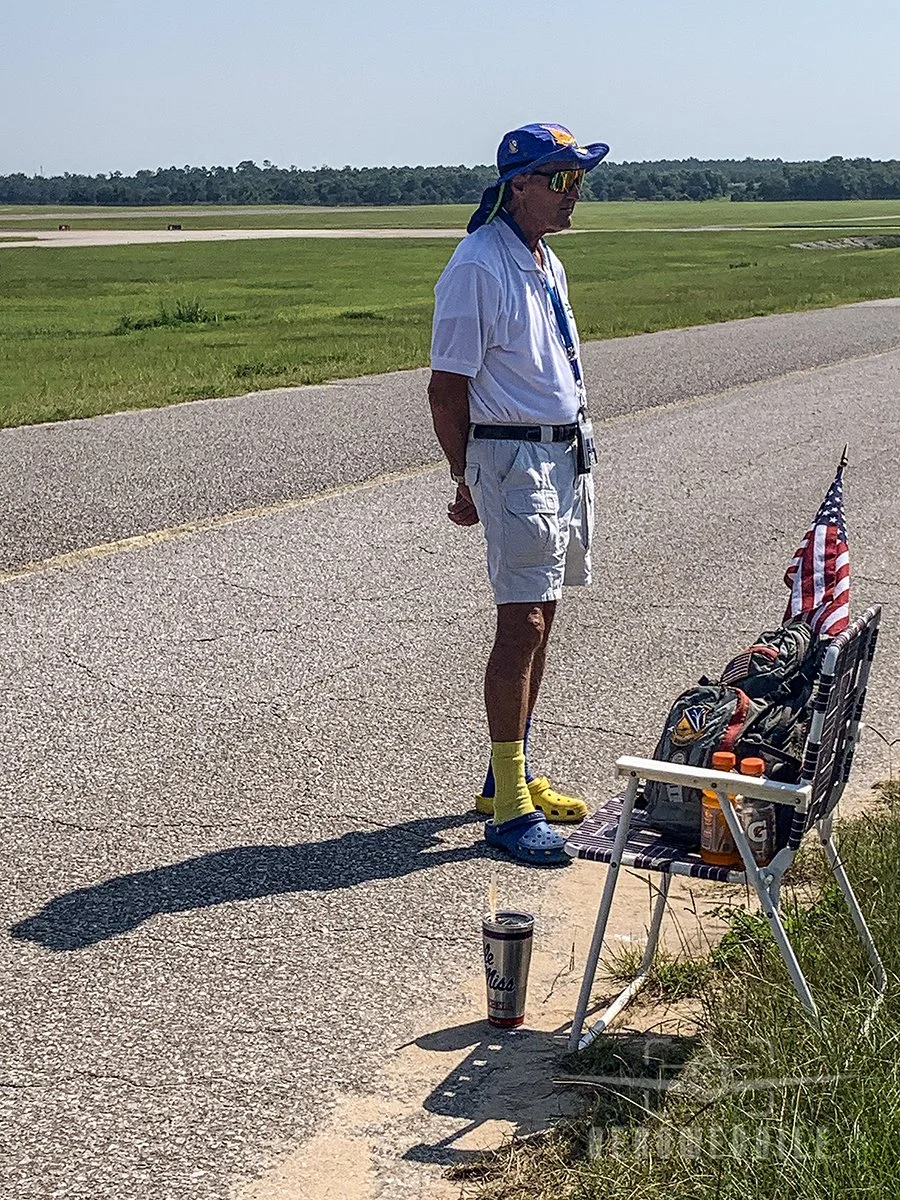
Volunteers were on hand to help answer questions and keep the fans safely in the viewing area.
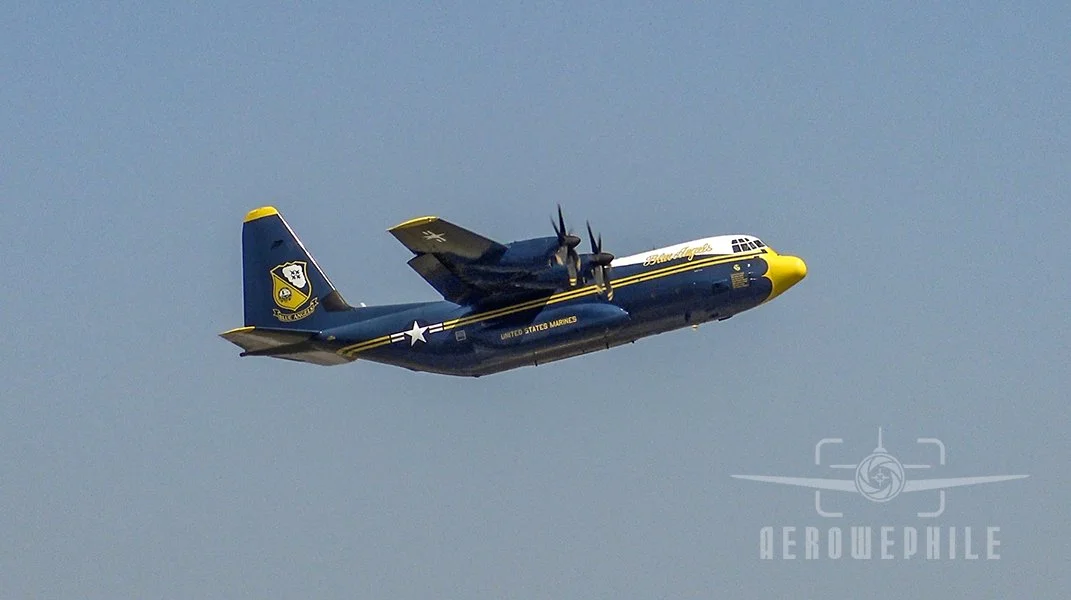
The Blue Angels logistical support aircraft, "Fat Albert", a C-130J Super Hercules, takes off at the beginning of the Blues flight demonstration.
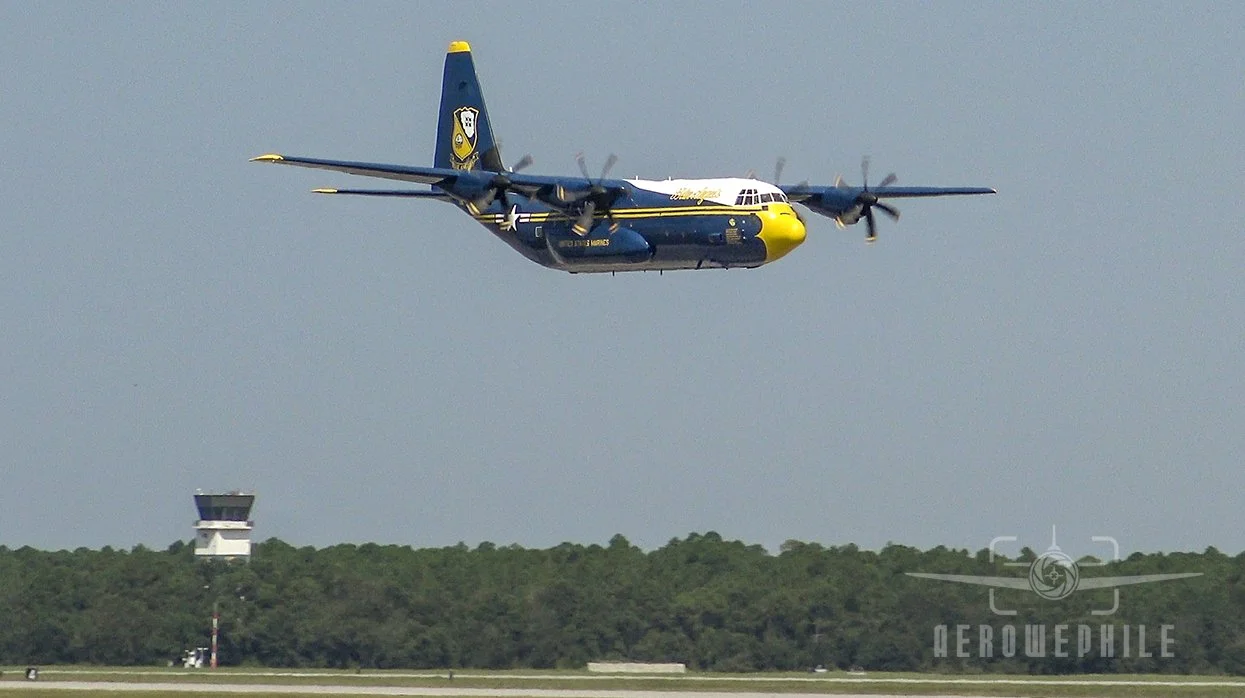
"Fat Albert" coming in hot!
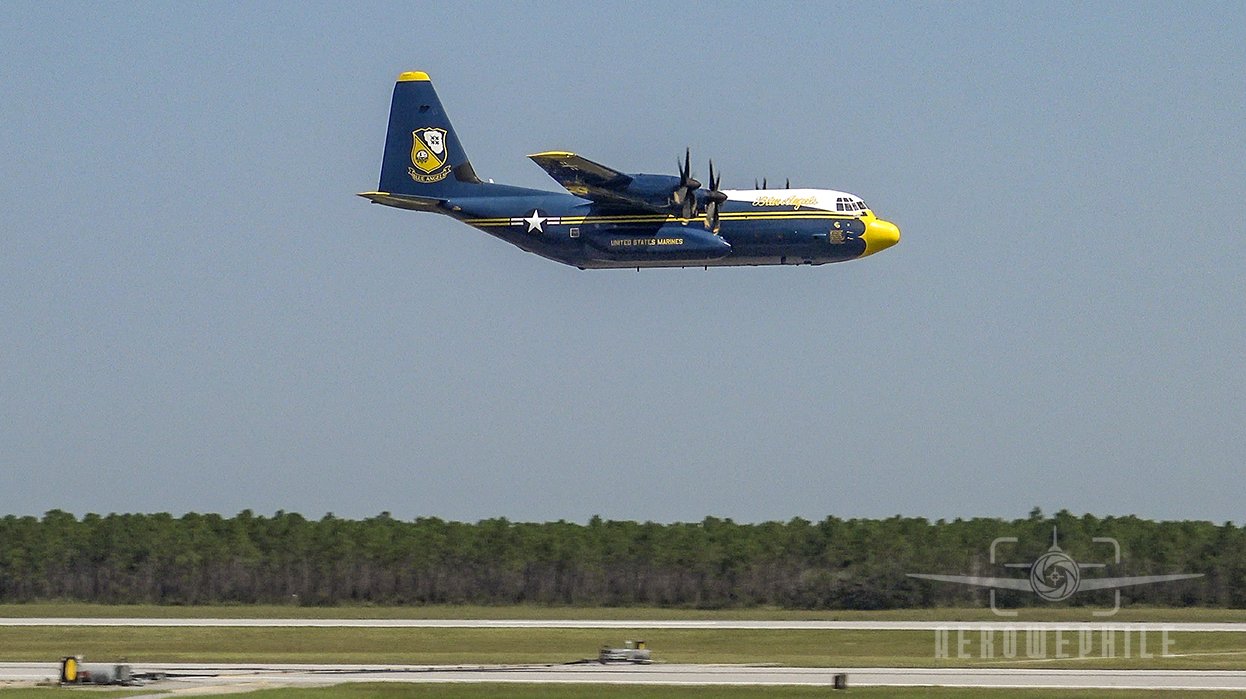
"Fat Albert" is operated by an all-Marine crew and they put on a great show in their Hercules.
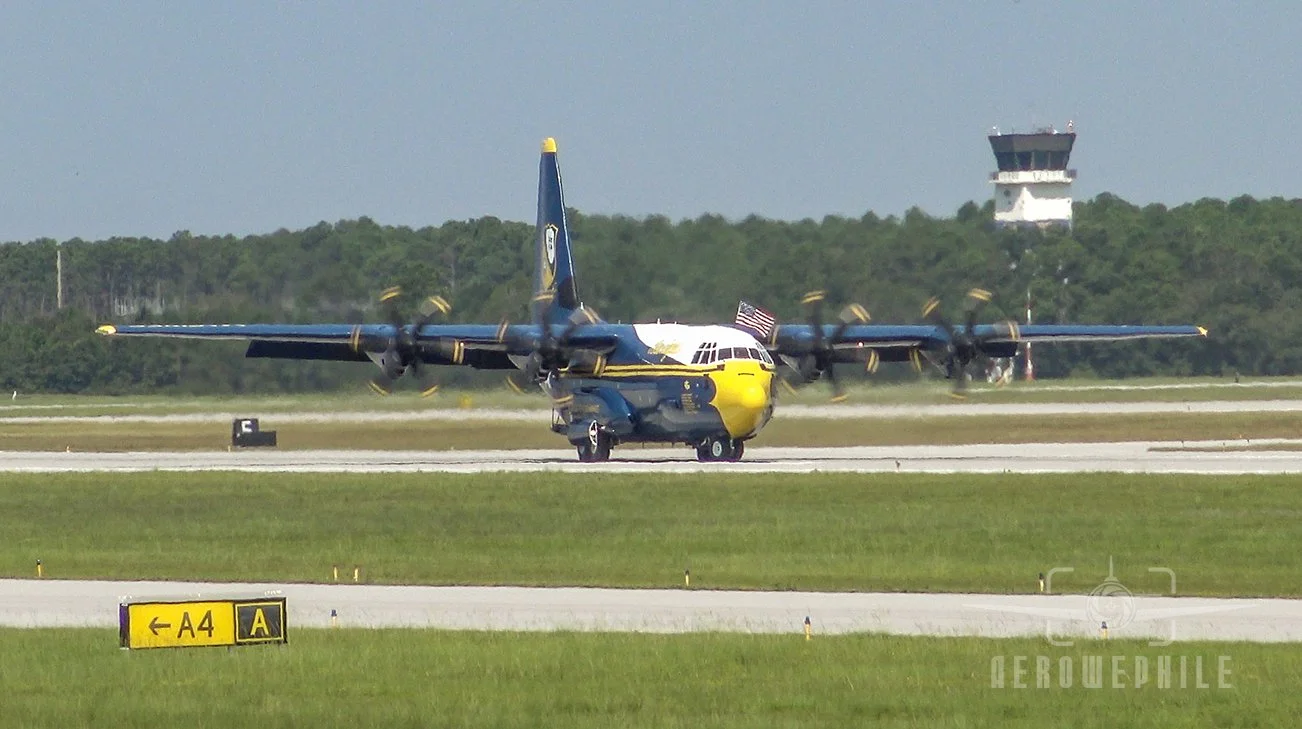
Blue Angels "Fat Albert" taxis in after the completion of its flight demonstration.
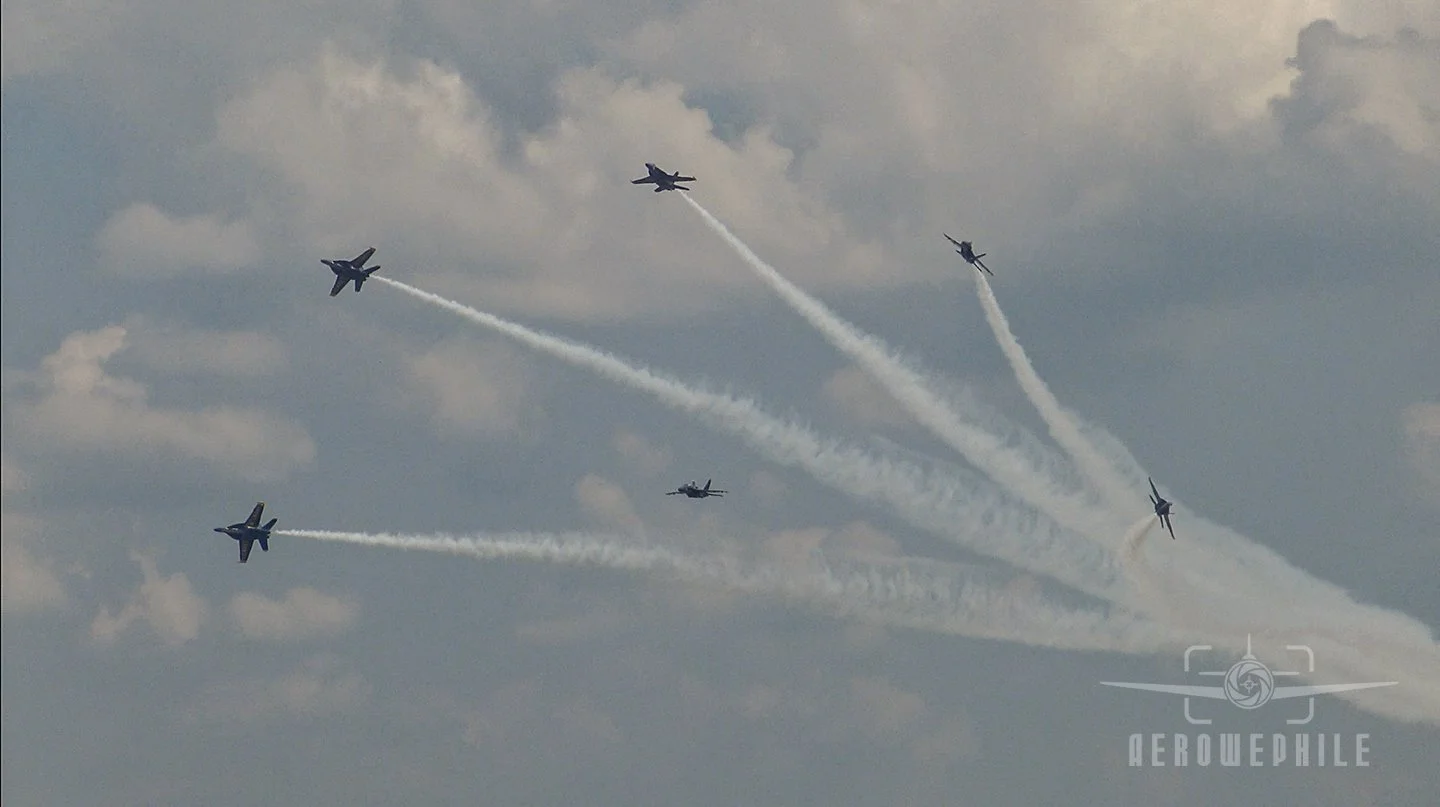
Blue Angels performing their Delta Breakout.
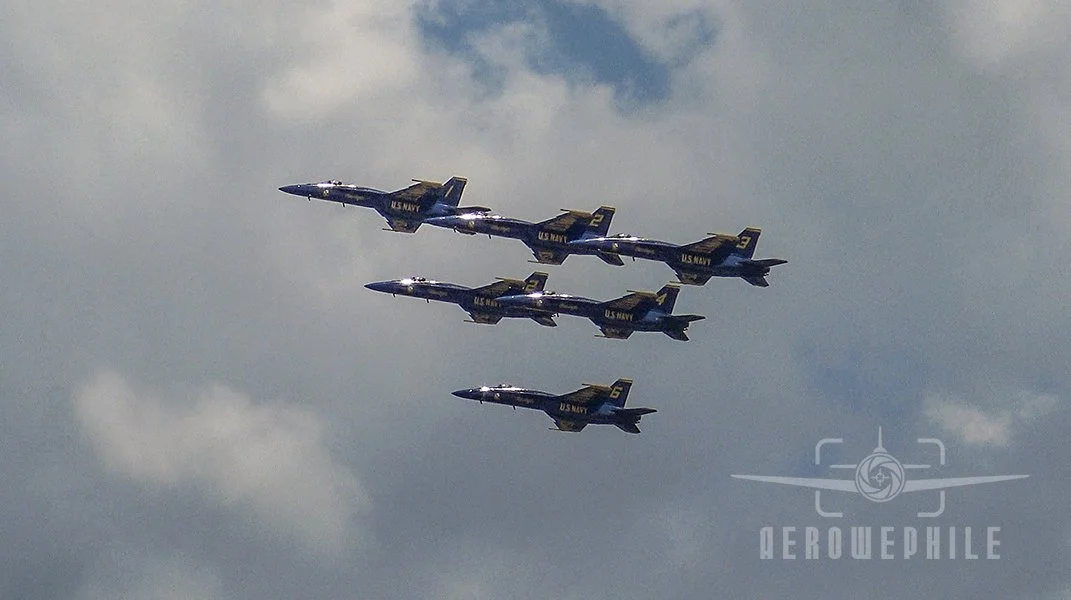
Blues in a full formation pass.
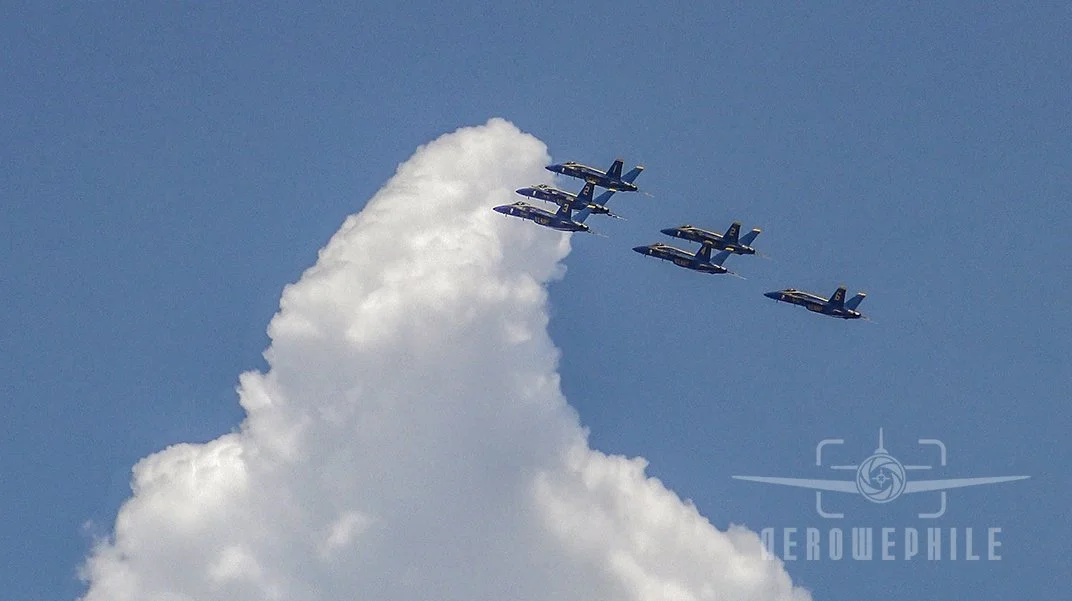
The Blues climbing into the blue sky.
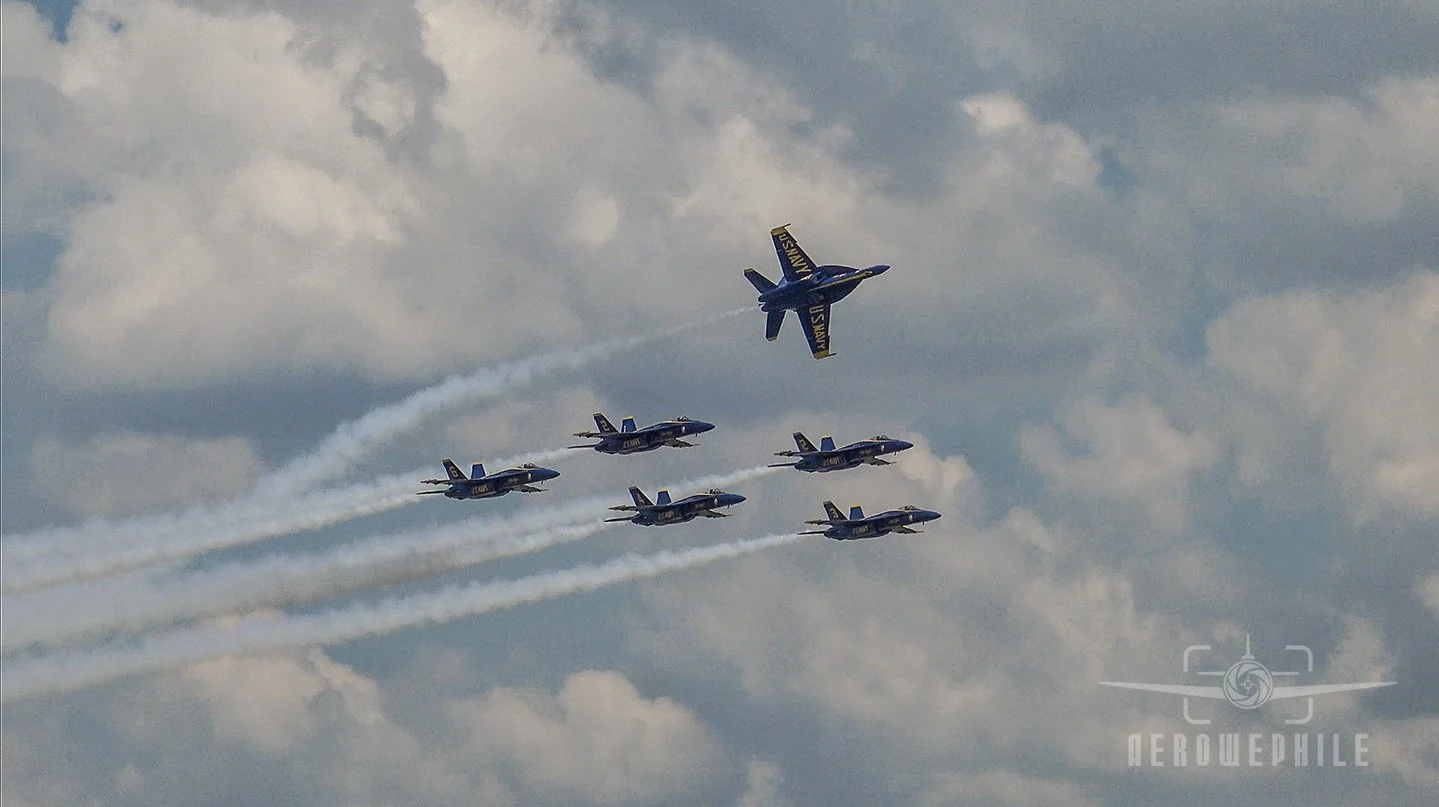
Blues formation pass with the first jet breaking out to land.
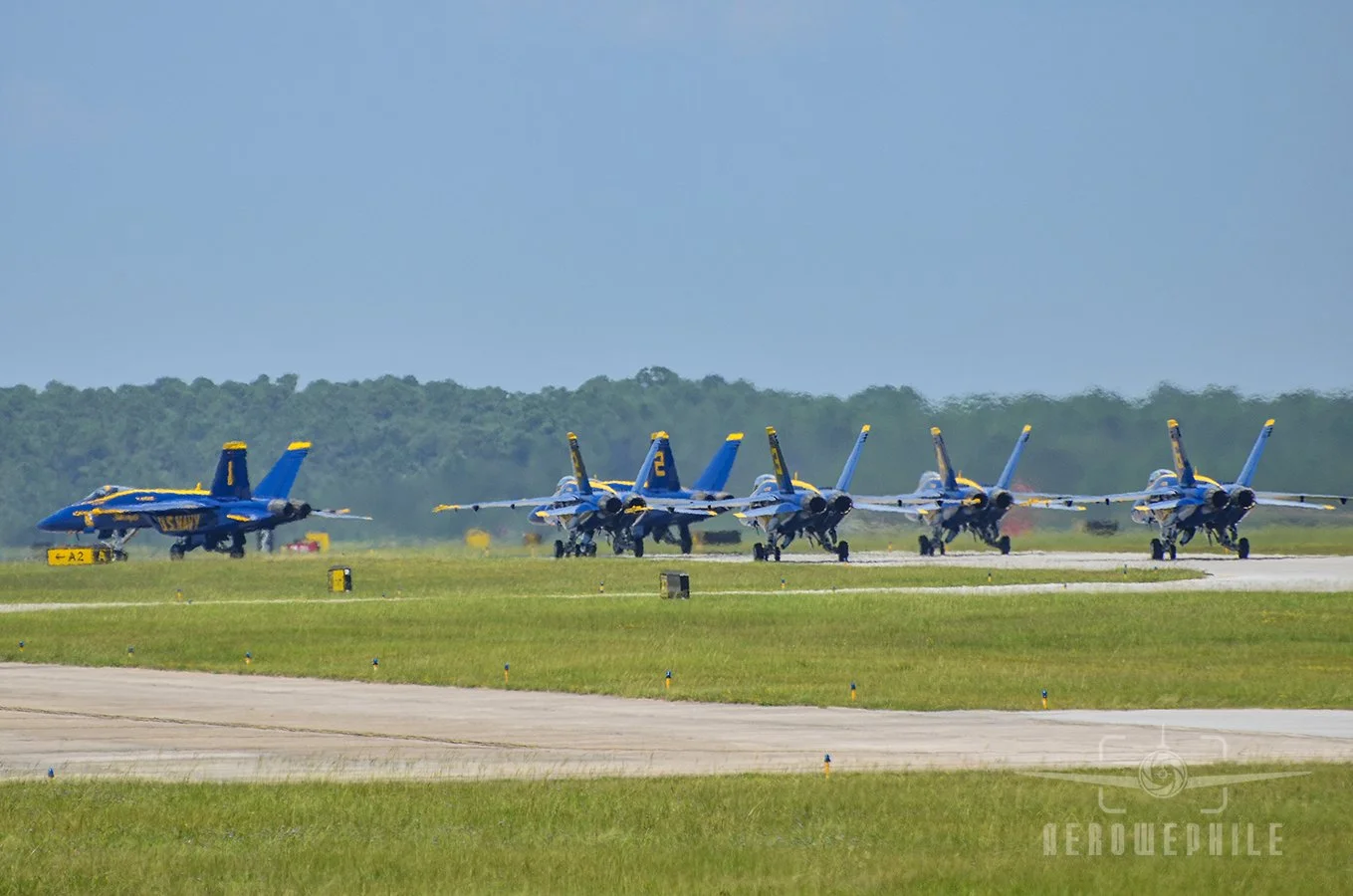
Blue Angels taxi in after the completion of their display.
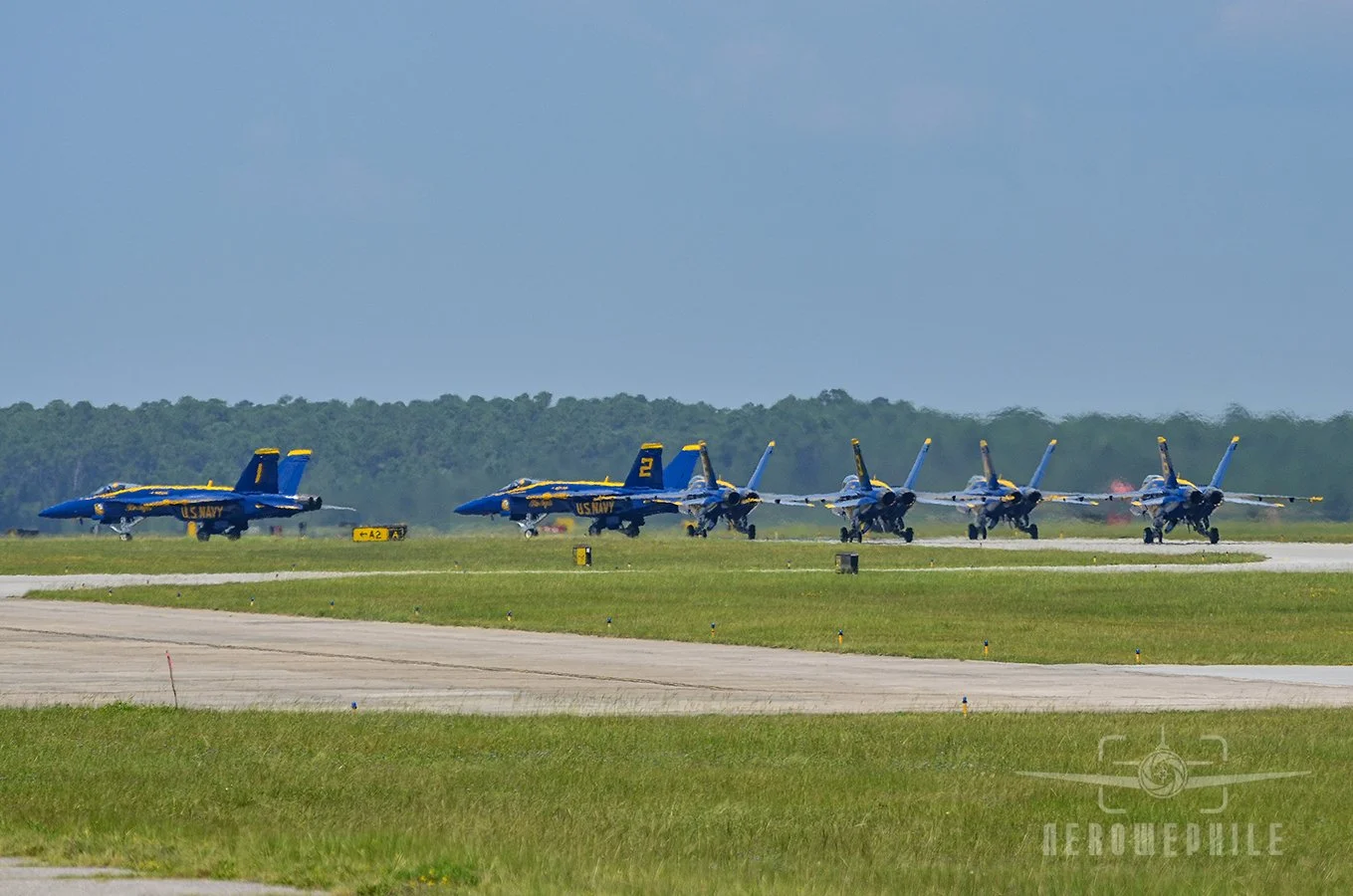
Blue Angels taxi in after the completion of their display.
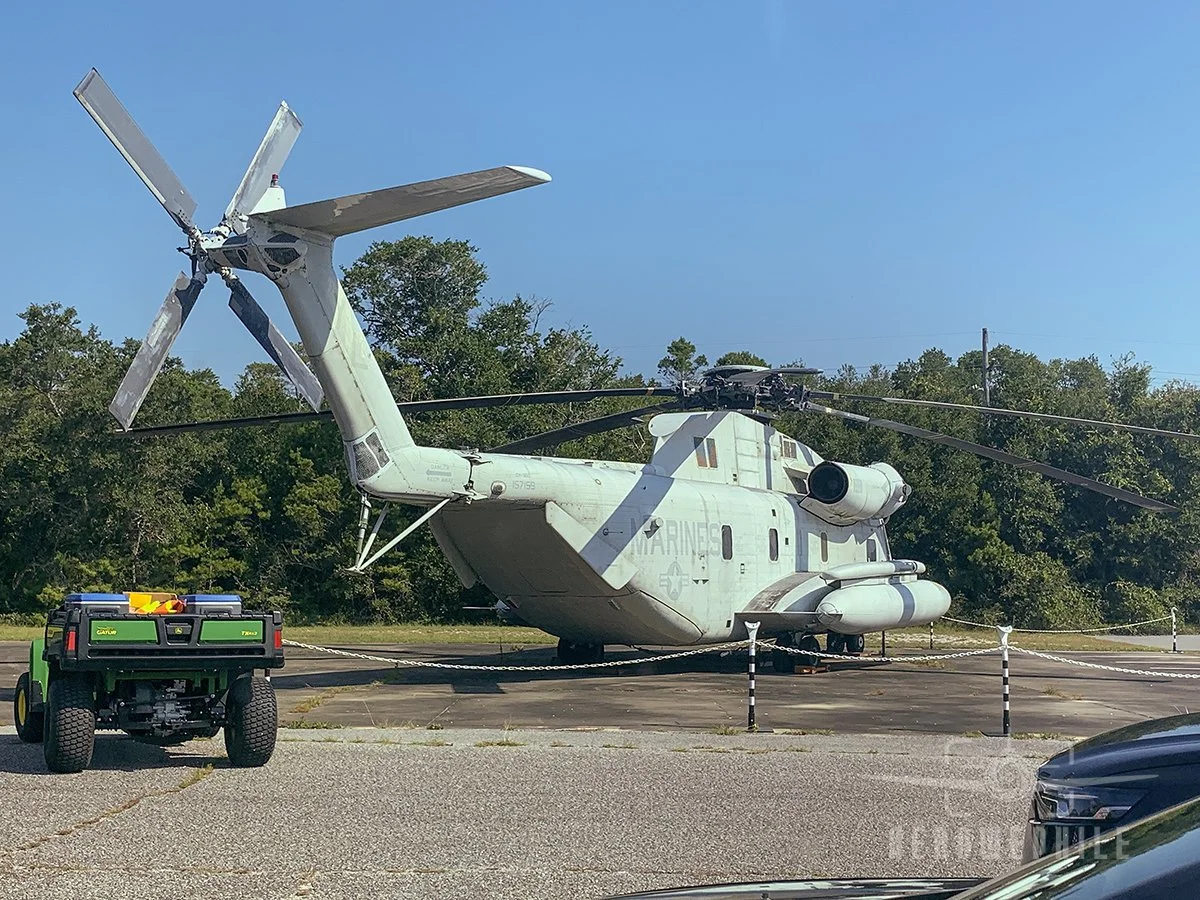
CH-53D Sea Stallion
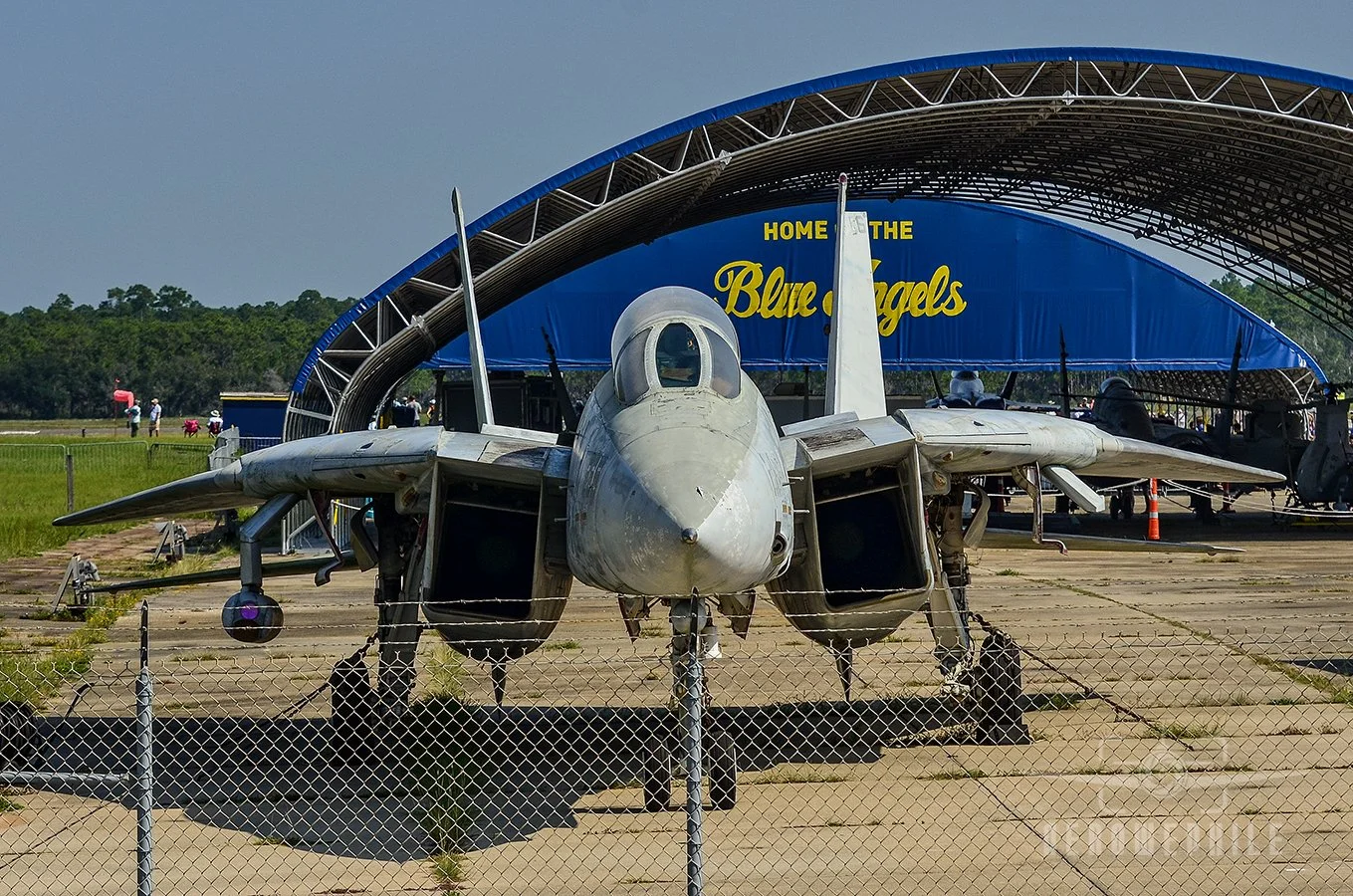
F-14 Tomcat
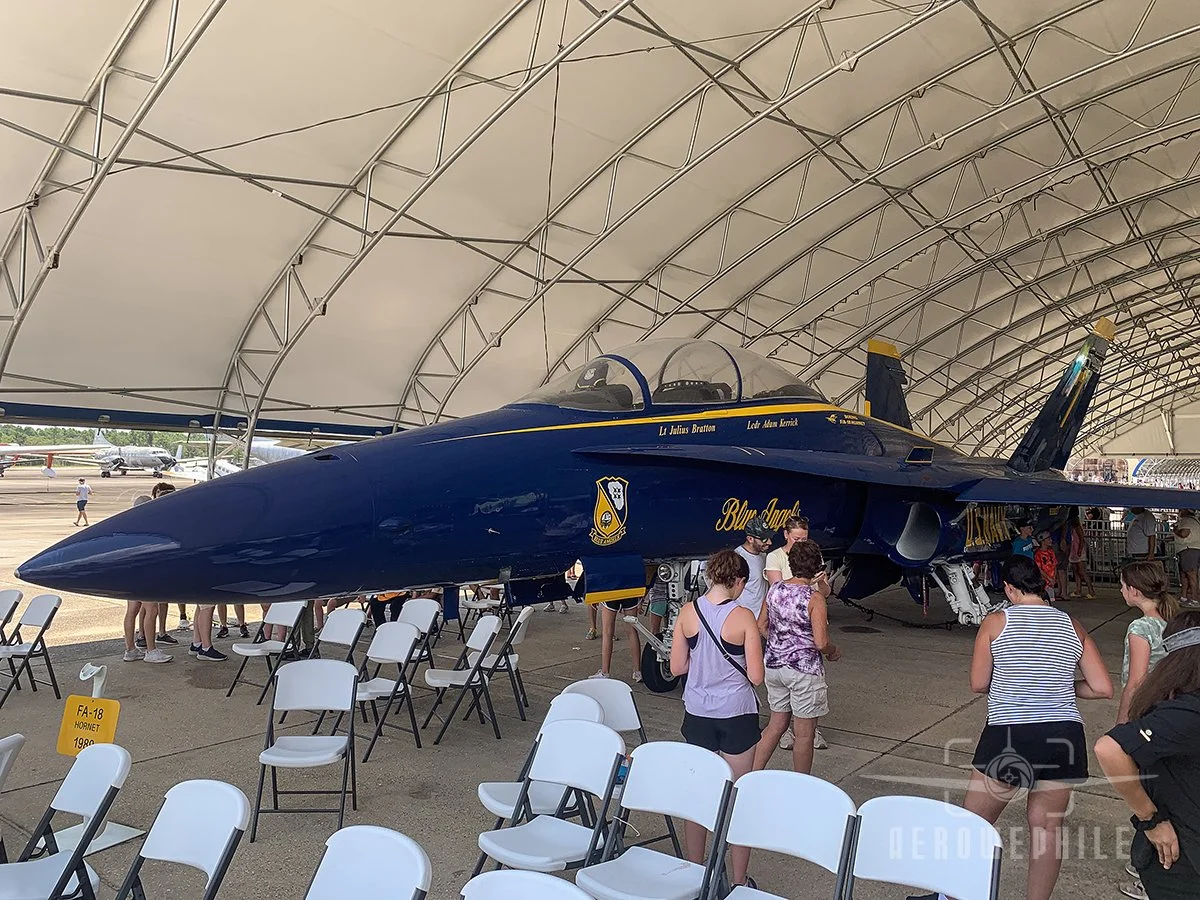
F/A-18 Hornet under a shelter.
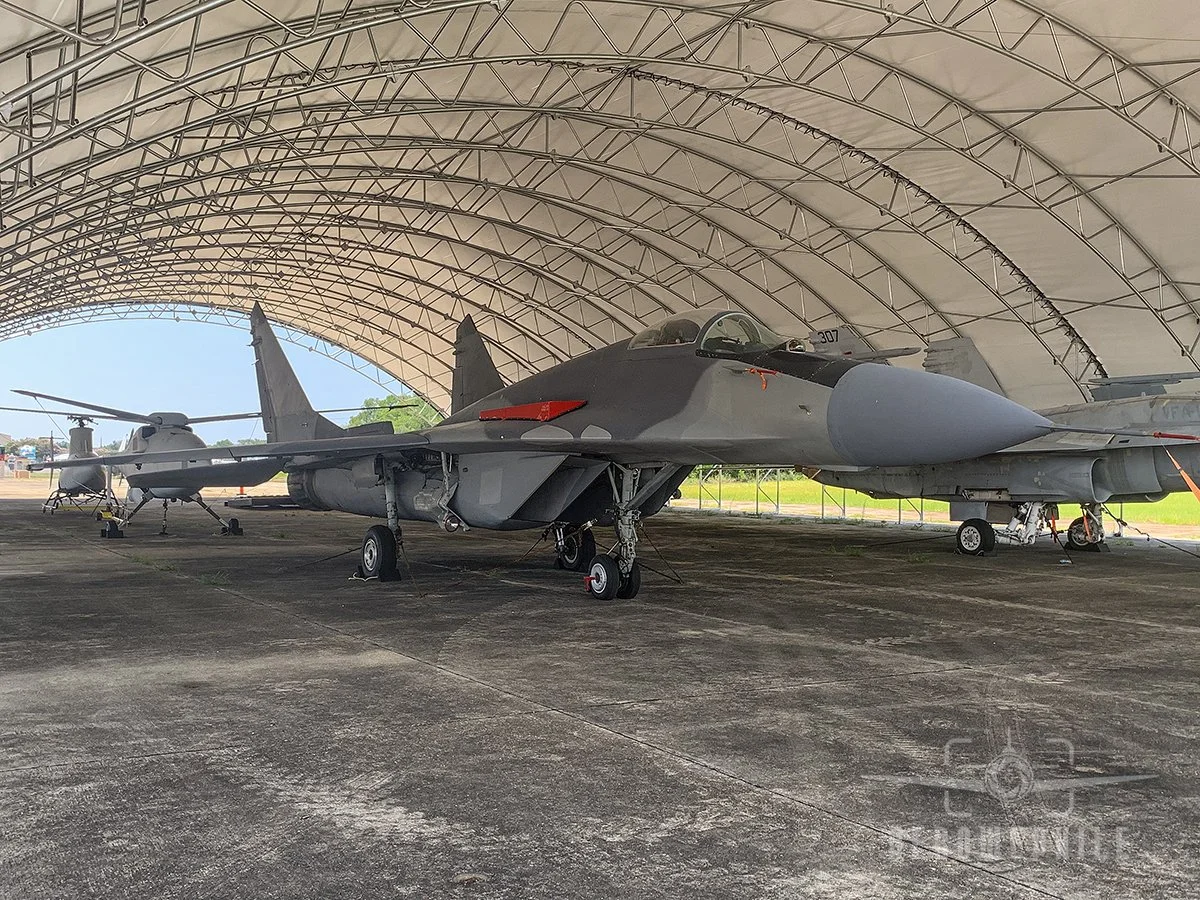
MIG-29 and A 160 Humming Birds in the back.
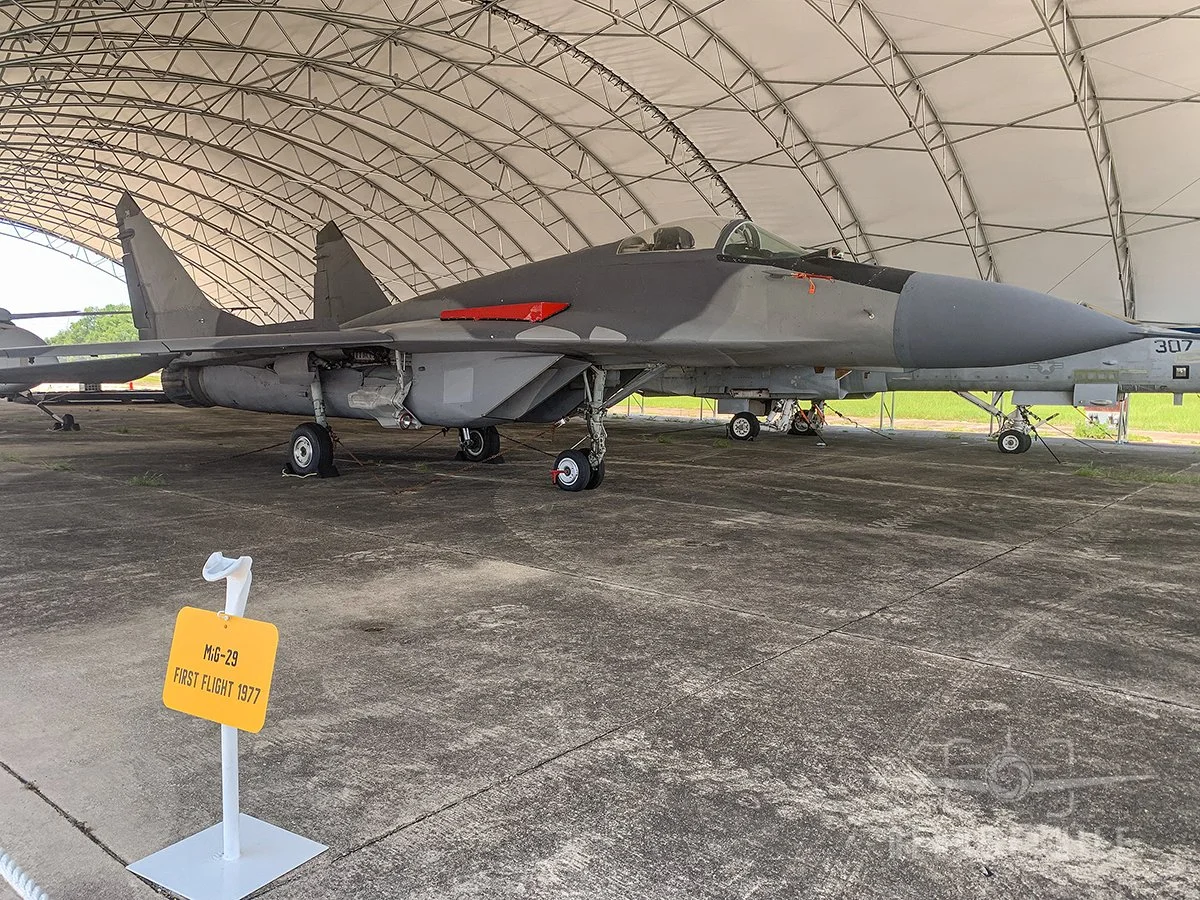
MIG-29
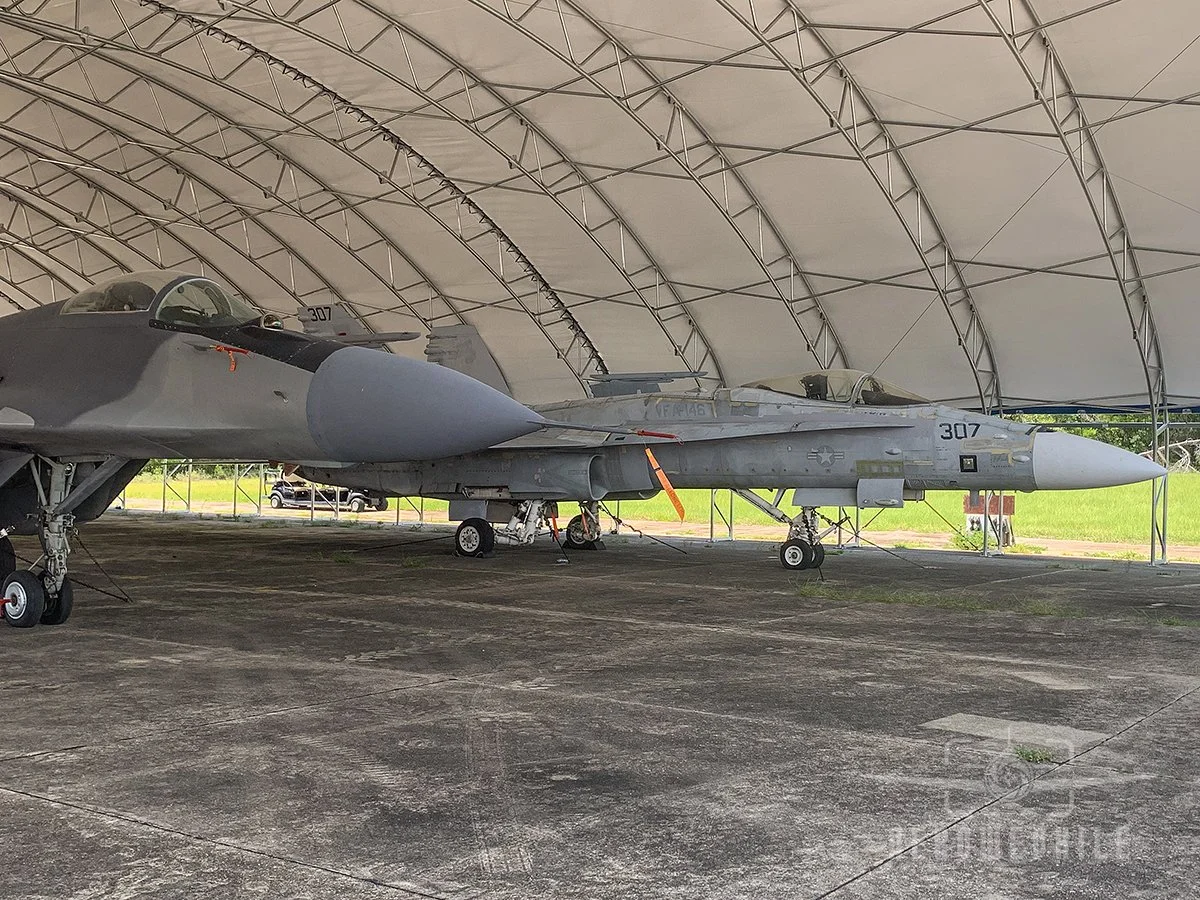
MIG-29 and F/A-18 Hornet
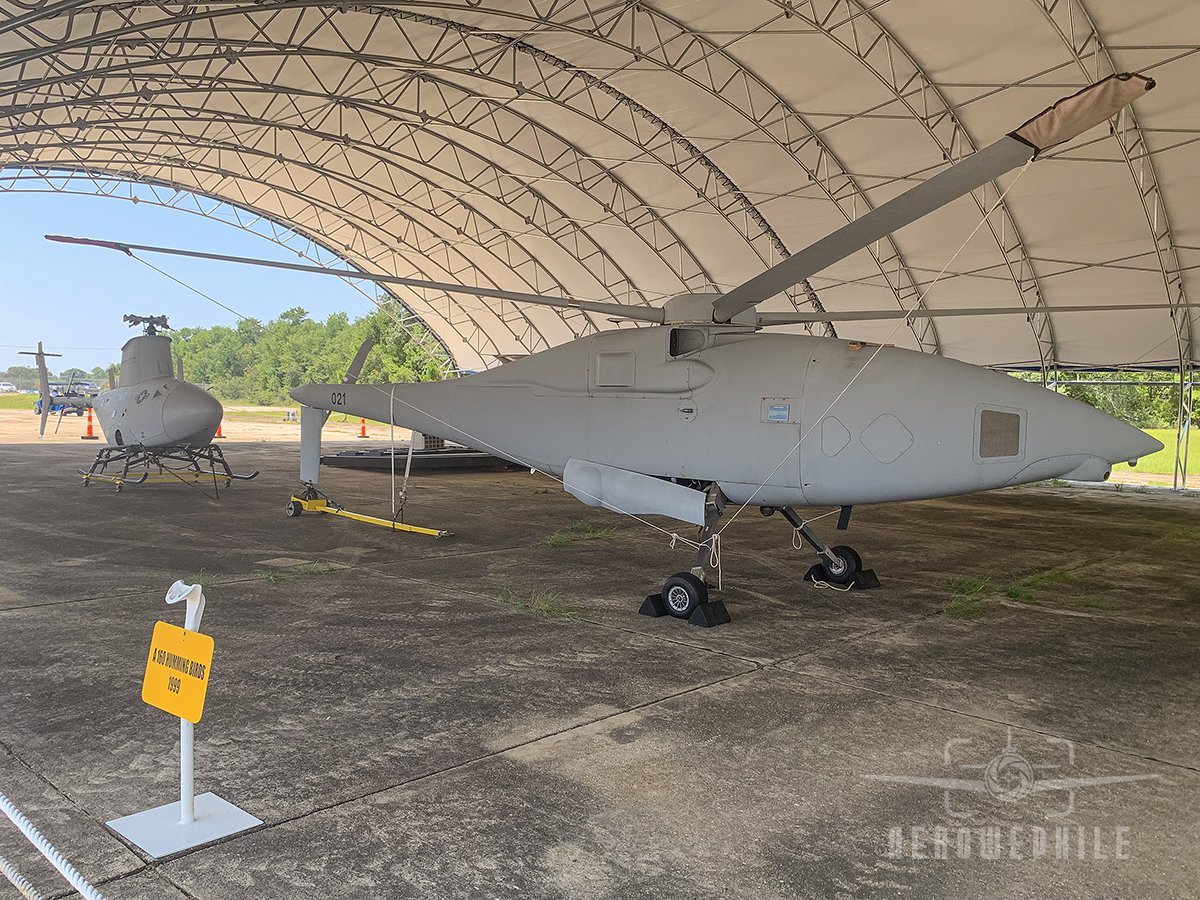
A 160 Humming Birds
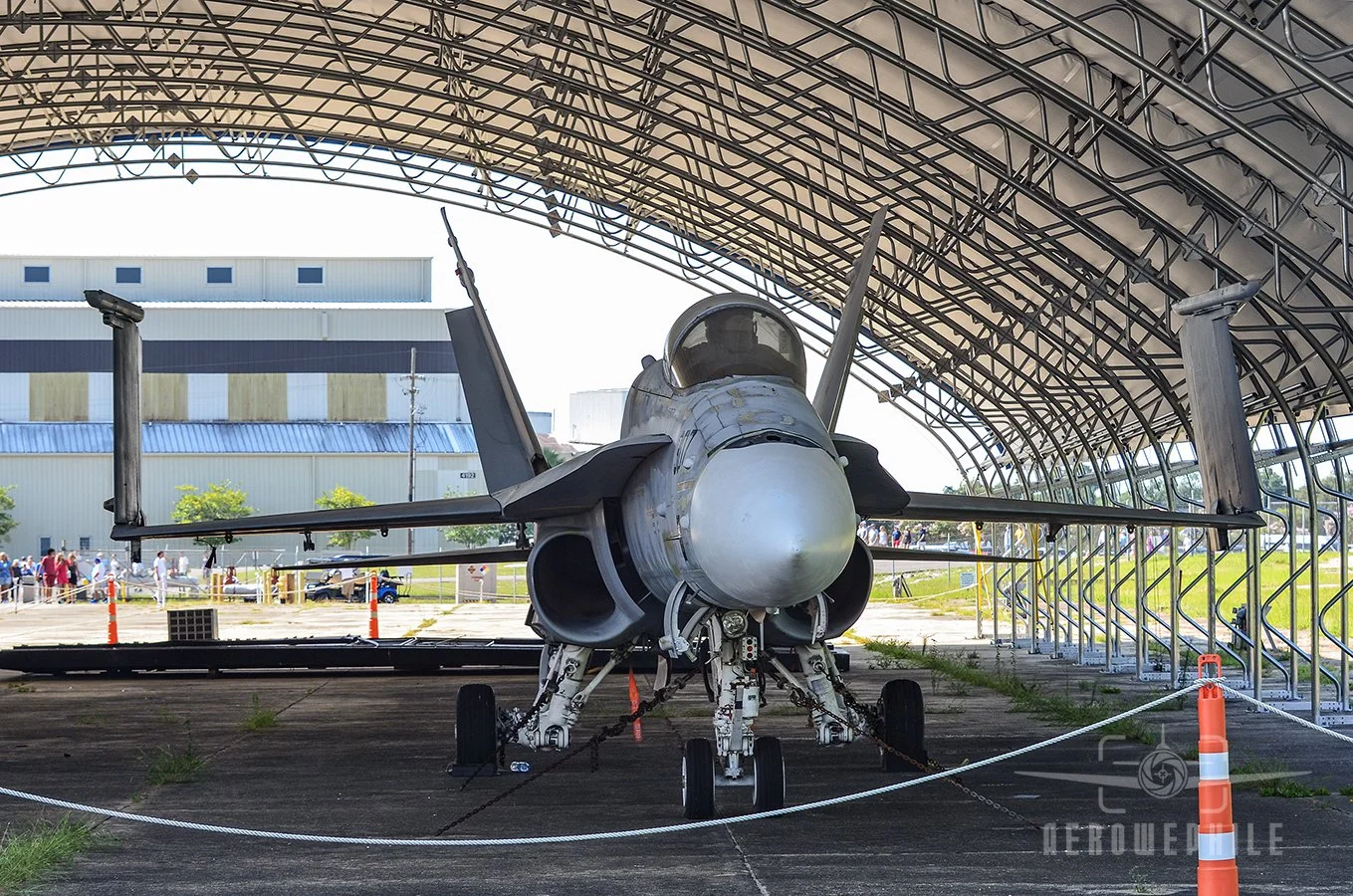
F/A-18 Hornet with folded wings.
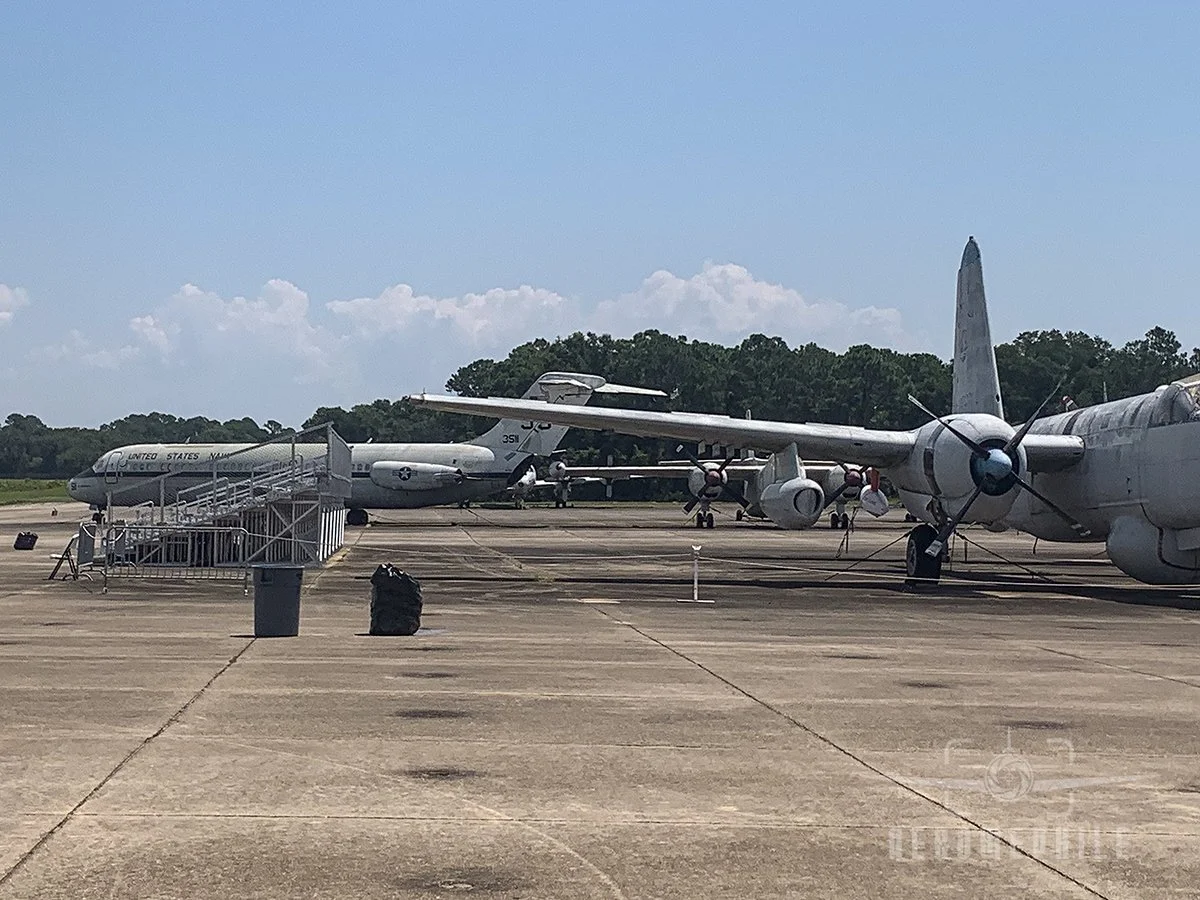
Outside storage ramp panorama - 1
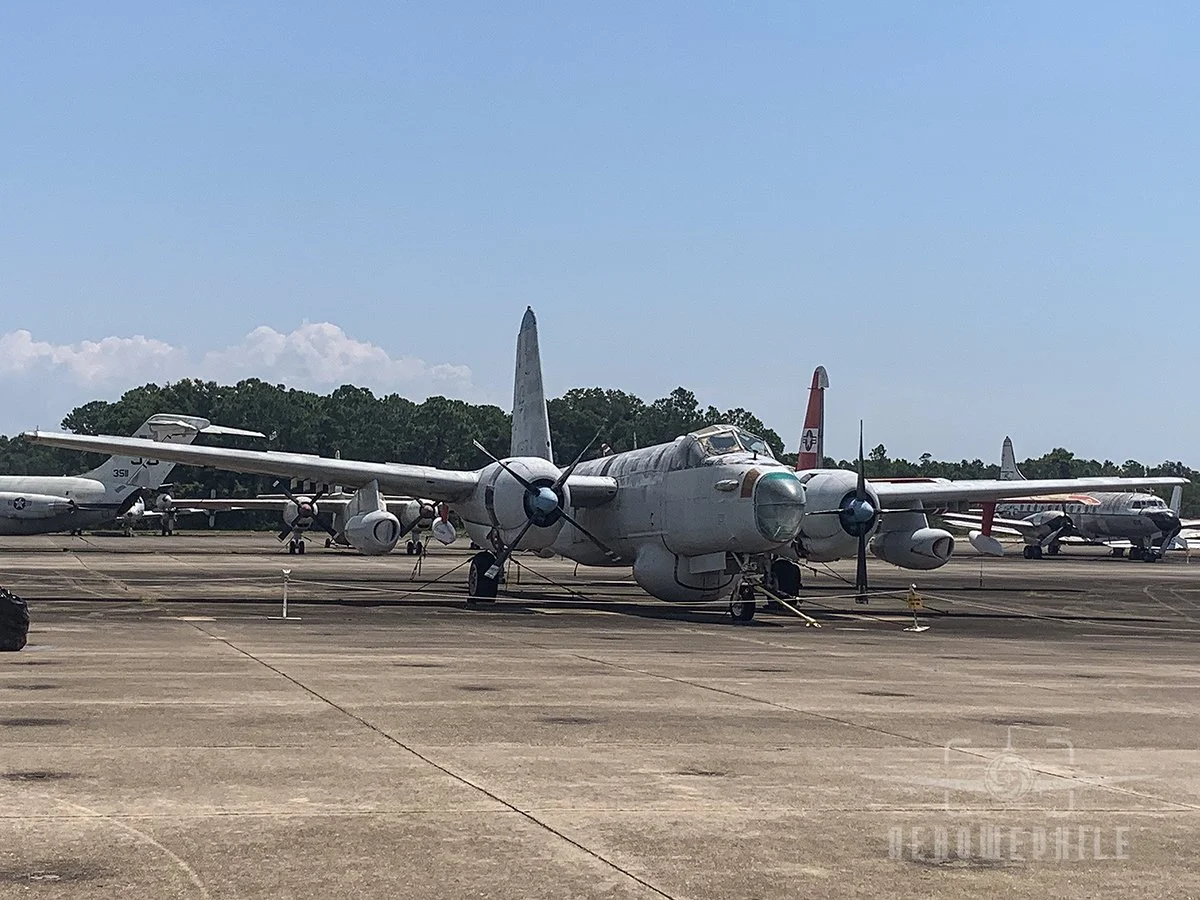
Outside storage ramp panorama - 2
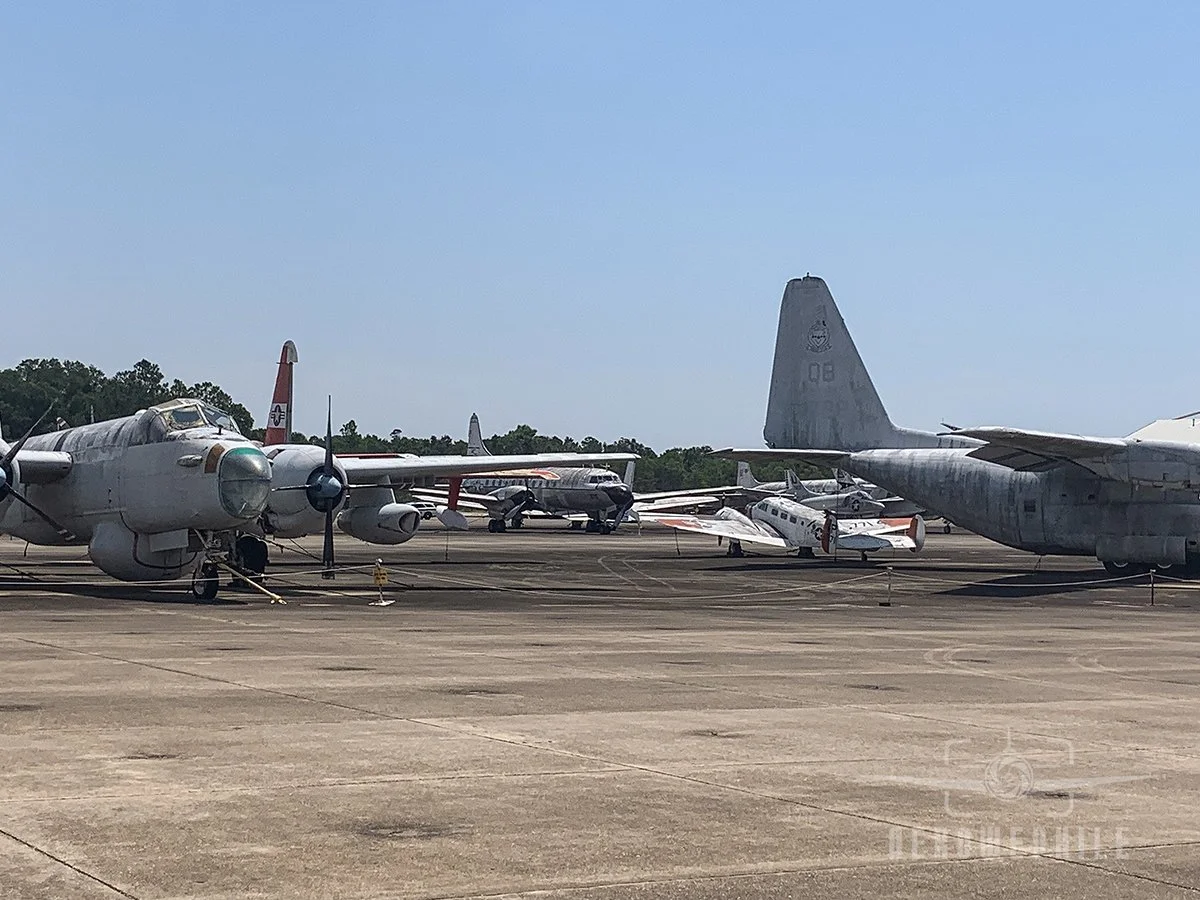
Outside storage ramp panorama - 3
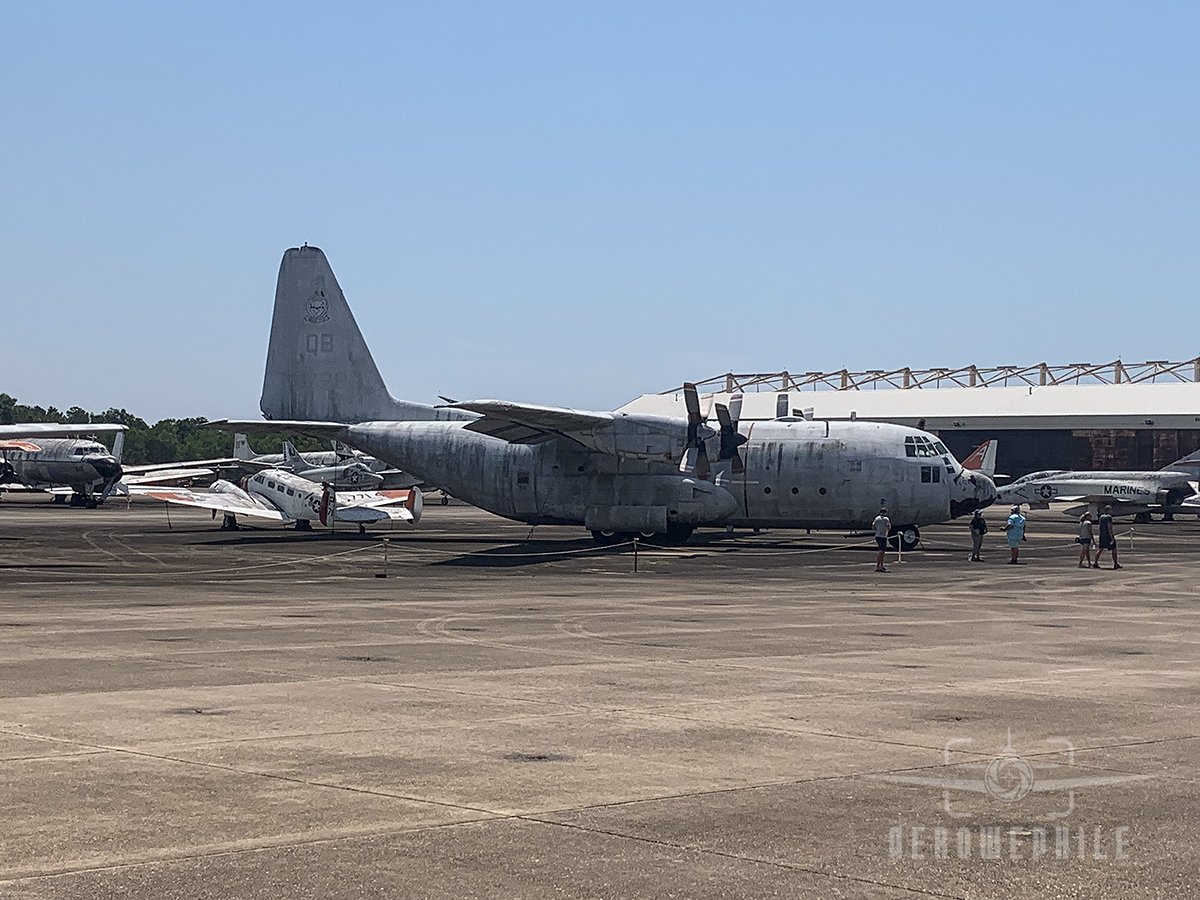
Outside storage ramp panorama - 4
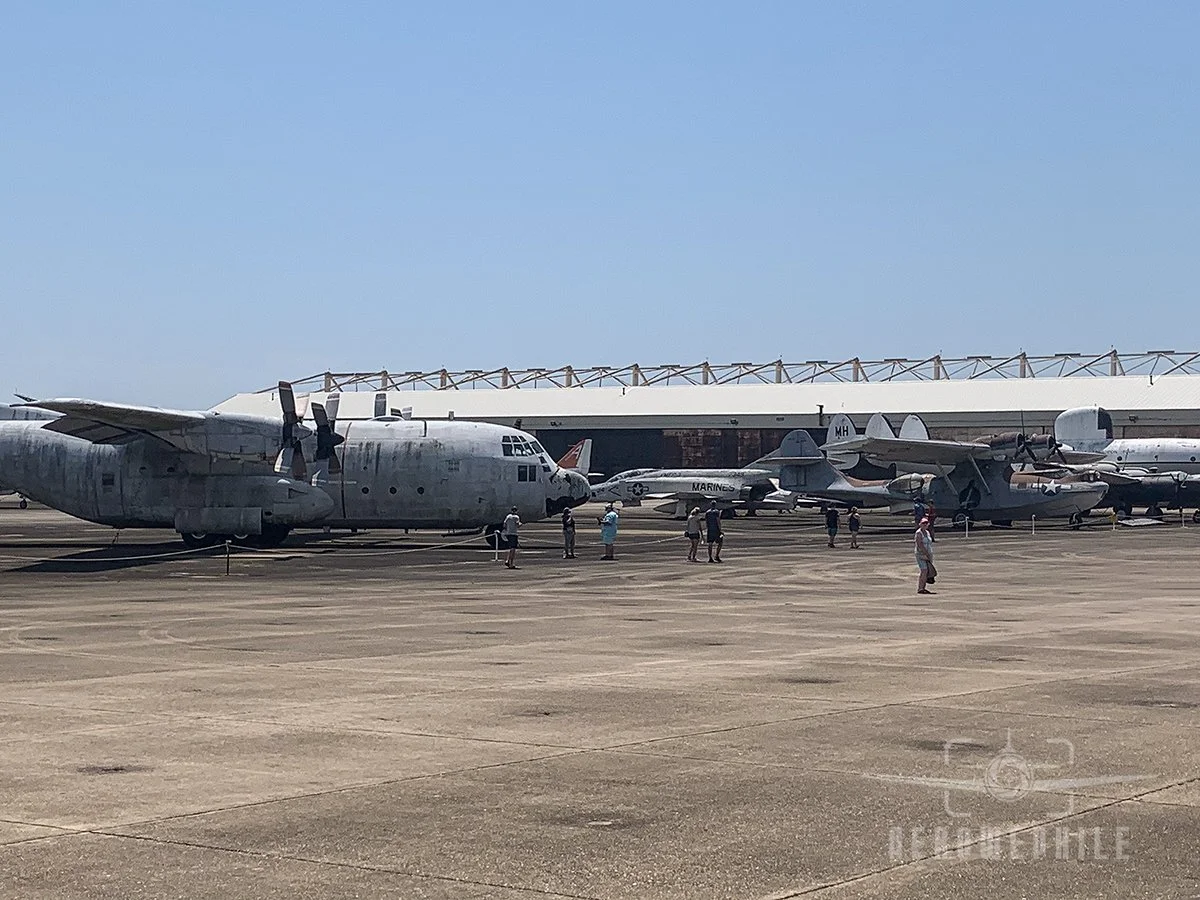
Outside storage ramp panorama - 5
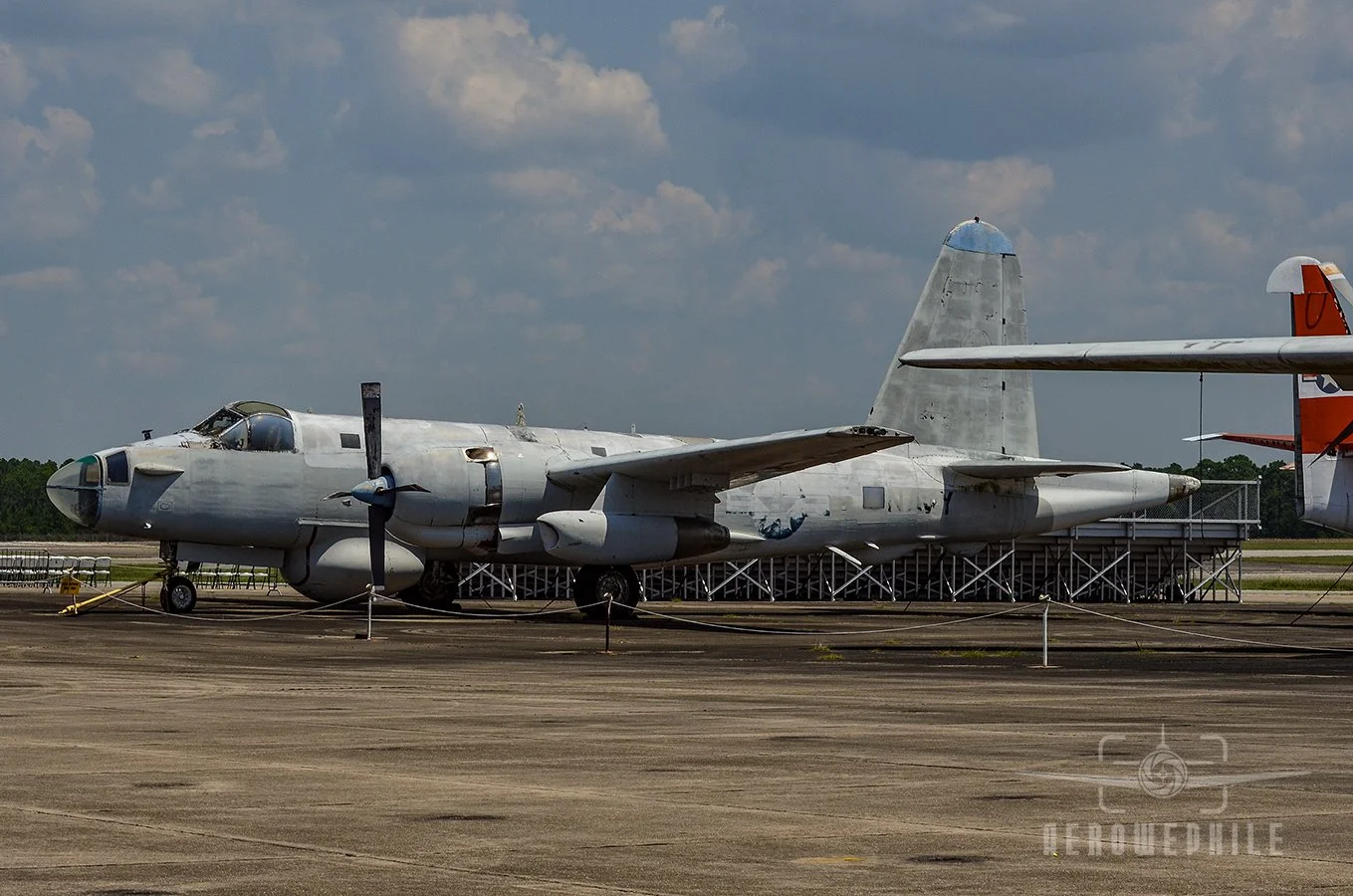
Lockheed P2V-1 Neptune
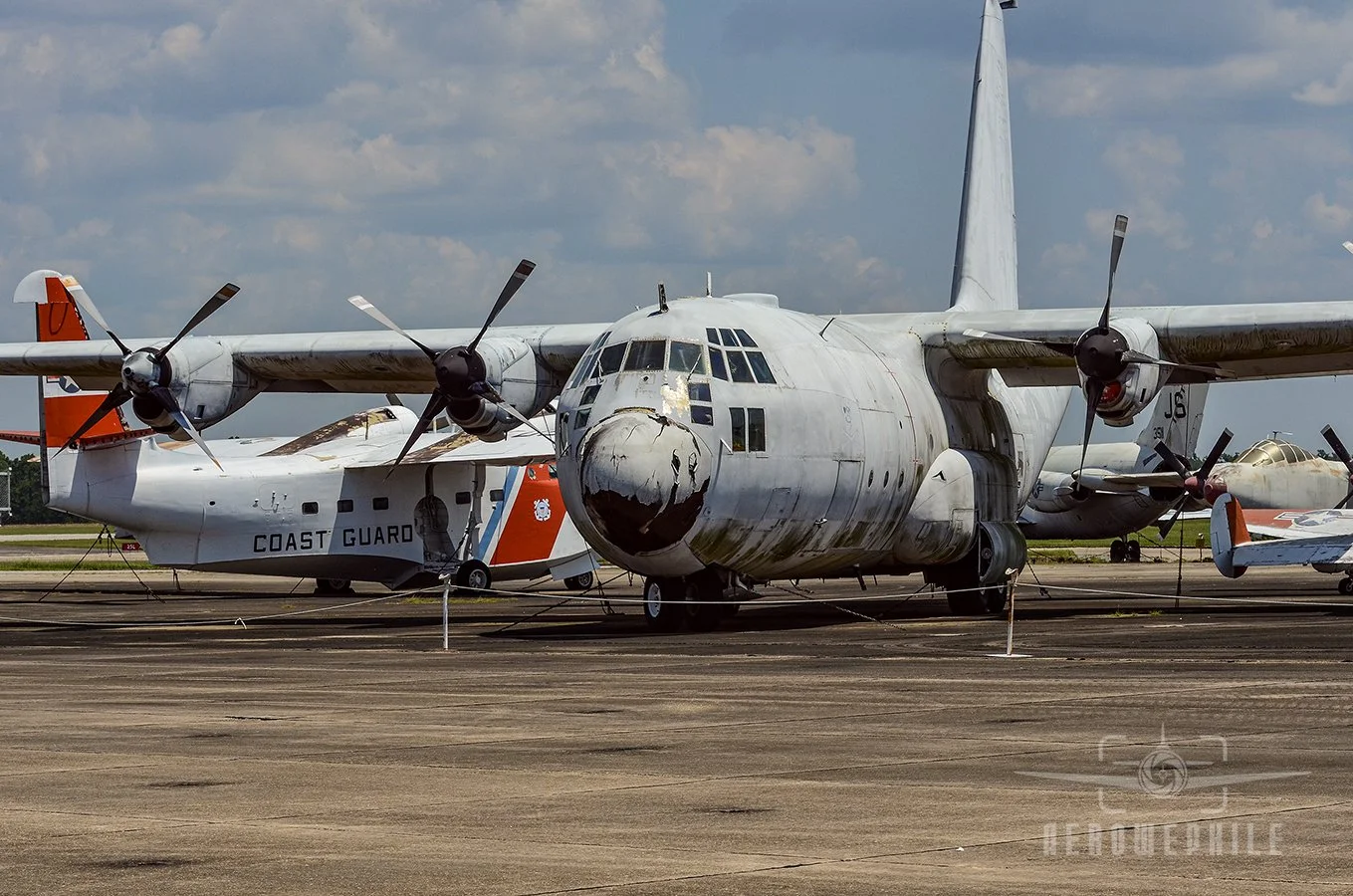
C-130 Hercules, HU-16 Albatross
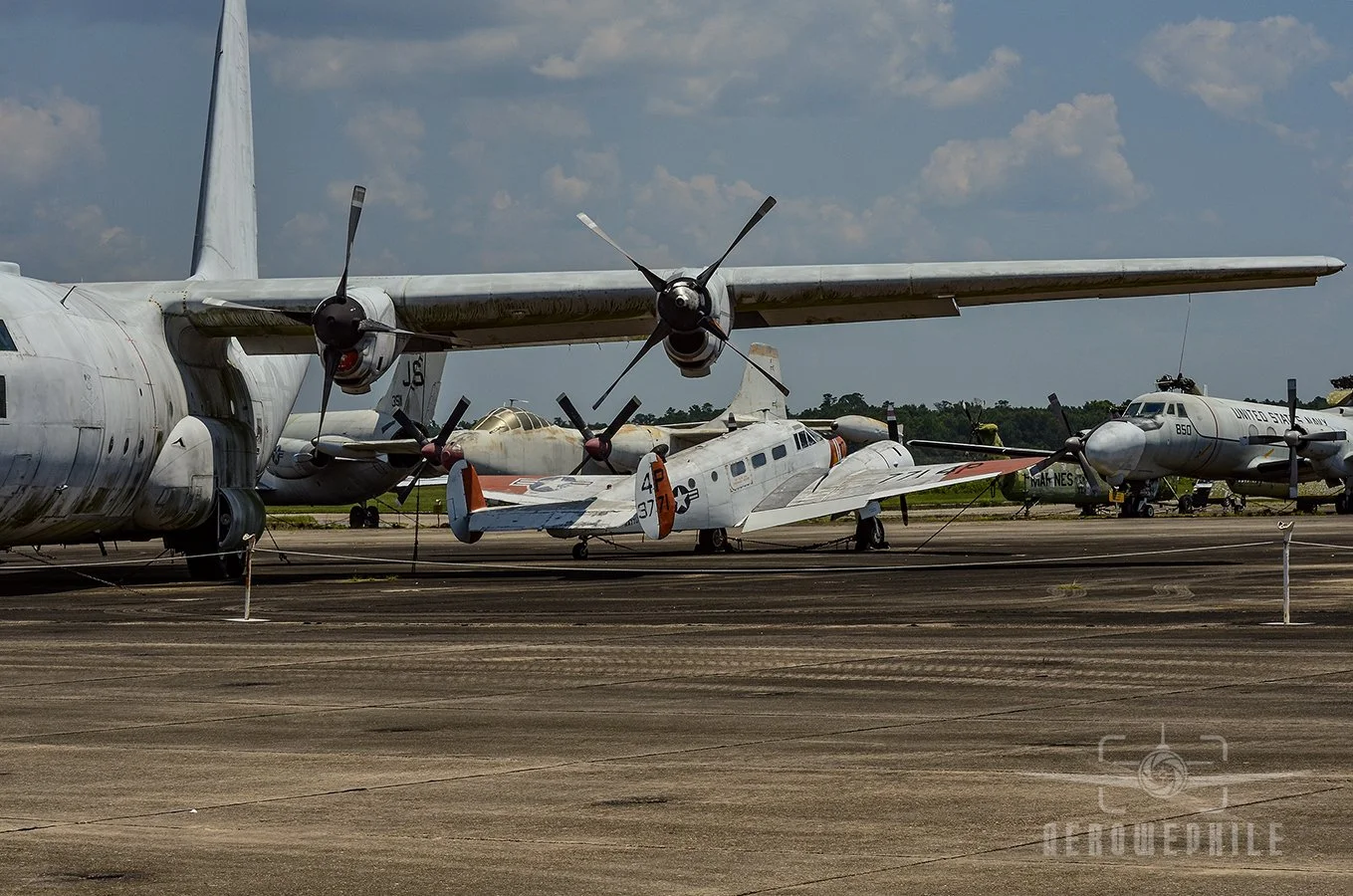
Beechcraft SNB Kansan, North American AJ Savage, Grumman TC-4C Academe.
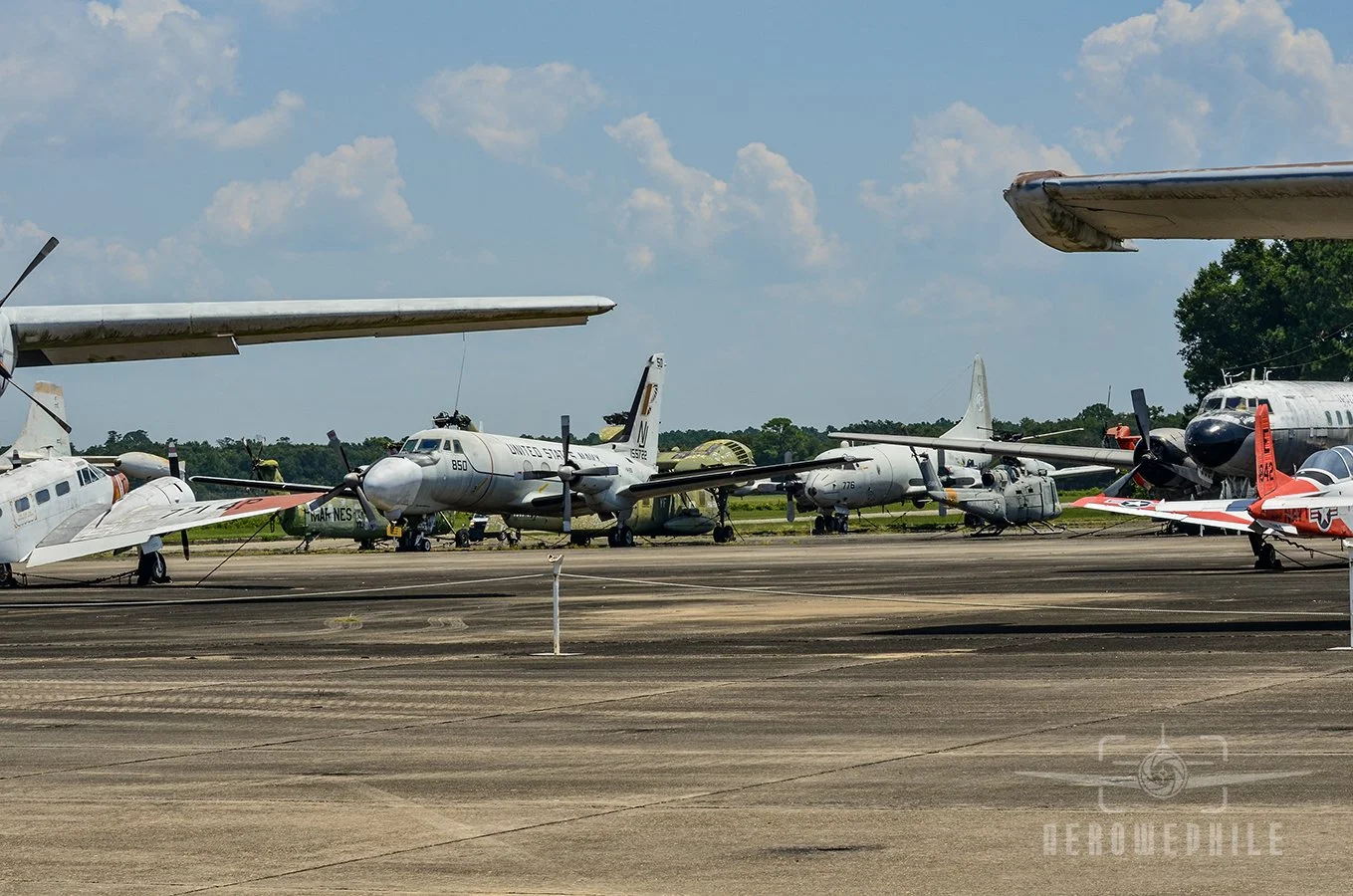
Grumman TC-4C Academe, P-3 Orion, UH-1 Huey, and a Sikorsky CH-37 Mojave partially visible in the back.
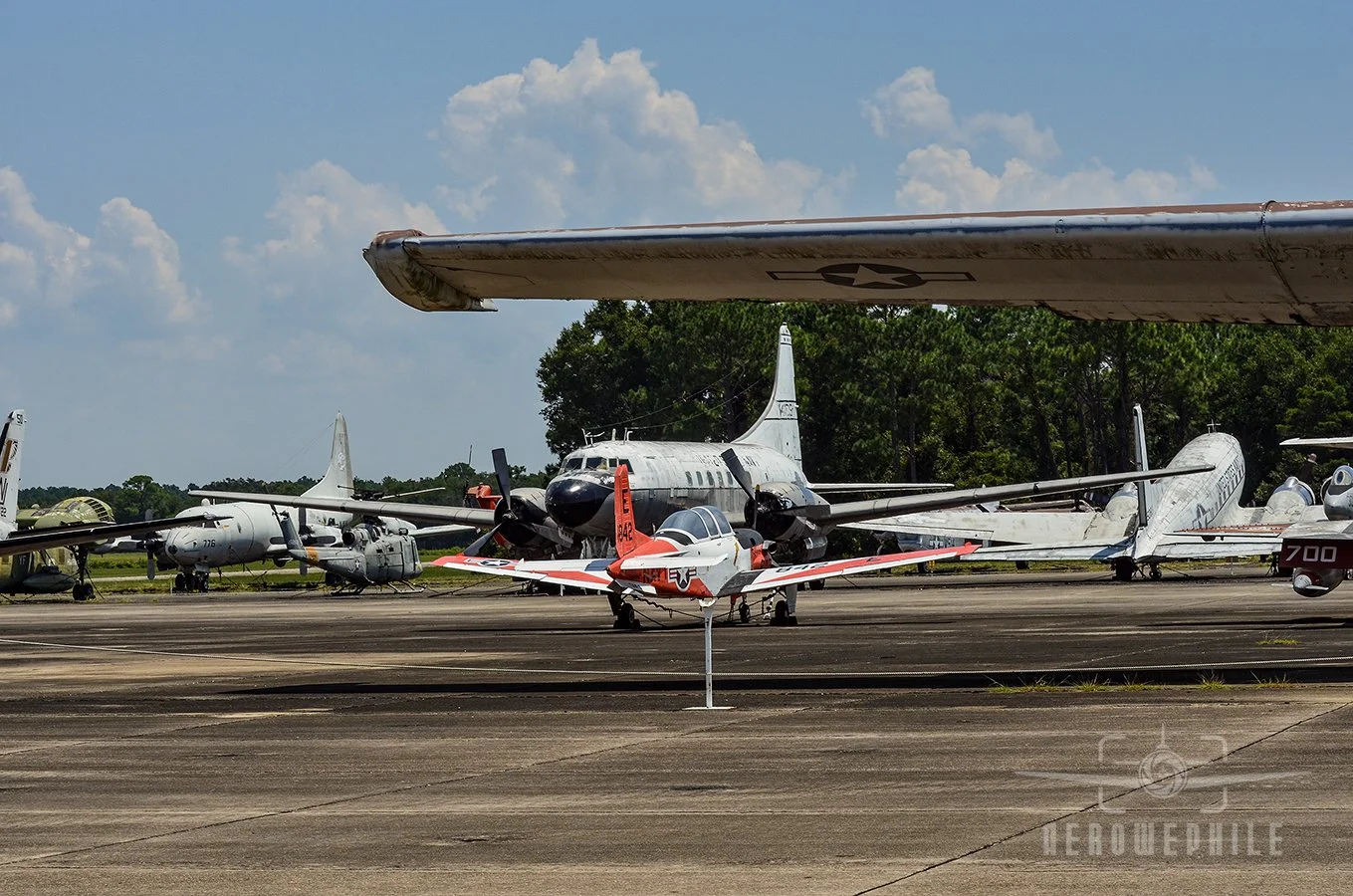
T-34C Turbomentor, Convair C-131F (R4Y-2) Samaritan, Douglas R4D Skytrain, P-3 Orion, and UH-1 Huey.
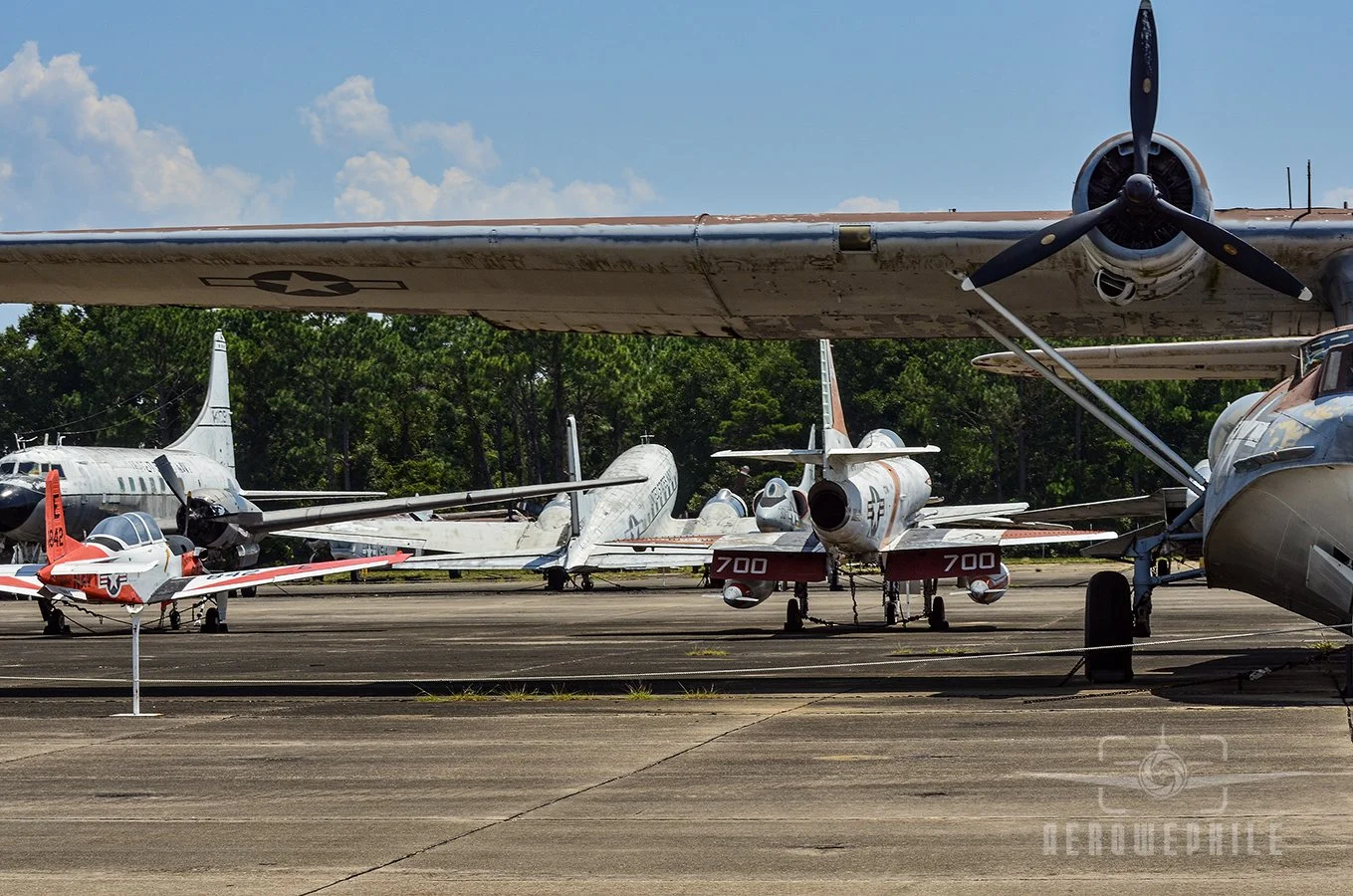
T-34C Turbomentor, Convair C-131F (R4Y-2) Samaritan, Douglas R4D Skytrain, A-4 Skyhawk, and PBY-5A Catalina.
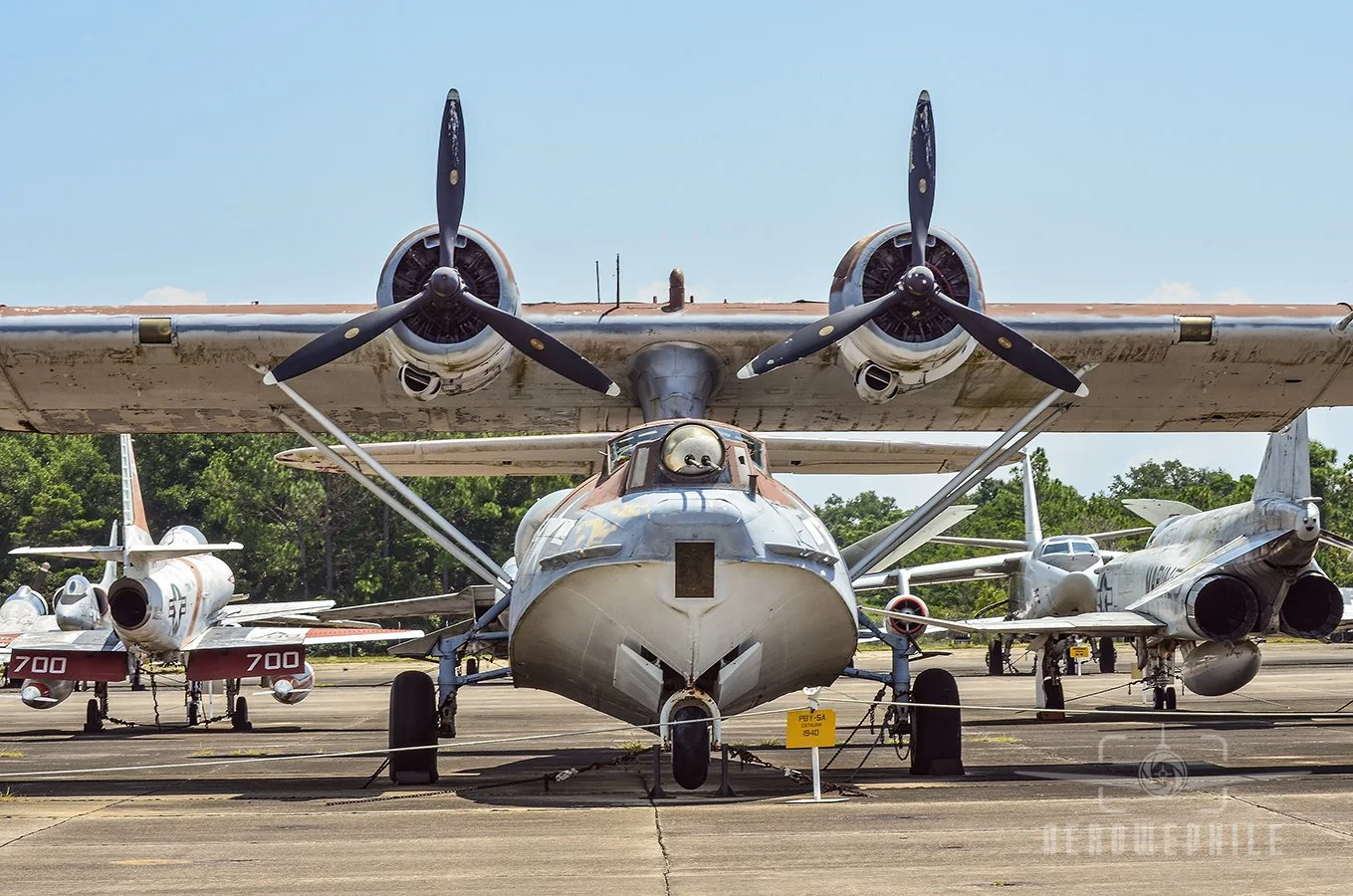
PBY-5A Catalina (Center), A-4 Skyhawk (Left), F-4 Phantom (Right), and a Douglas A-3 Skywarrior (Right-Rear).
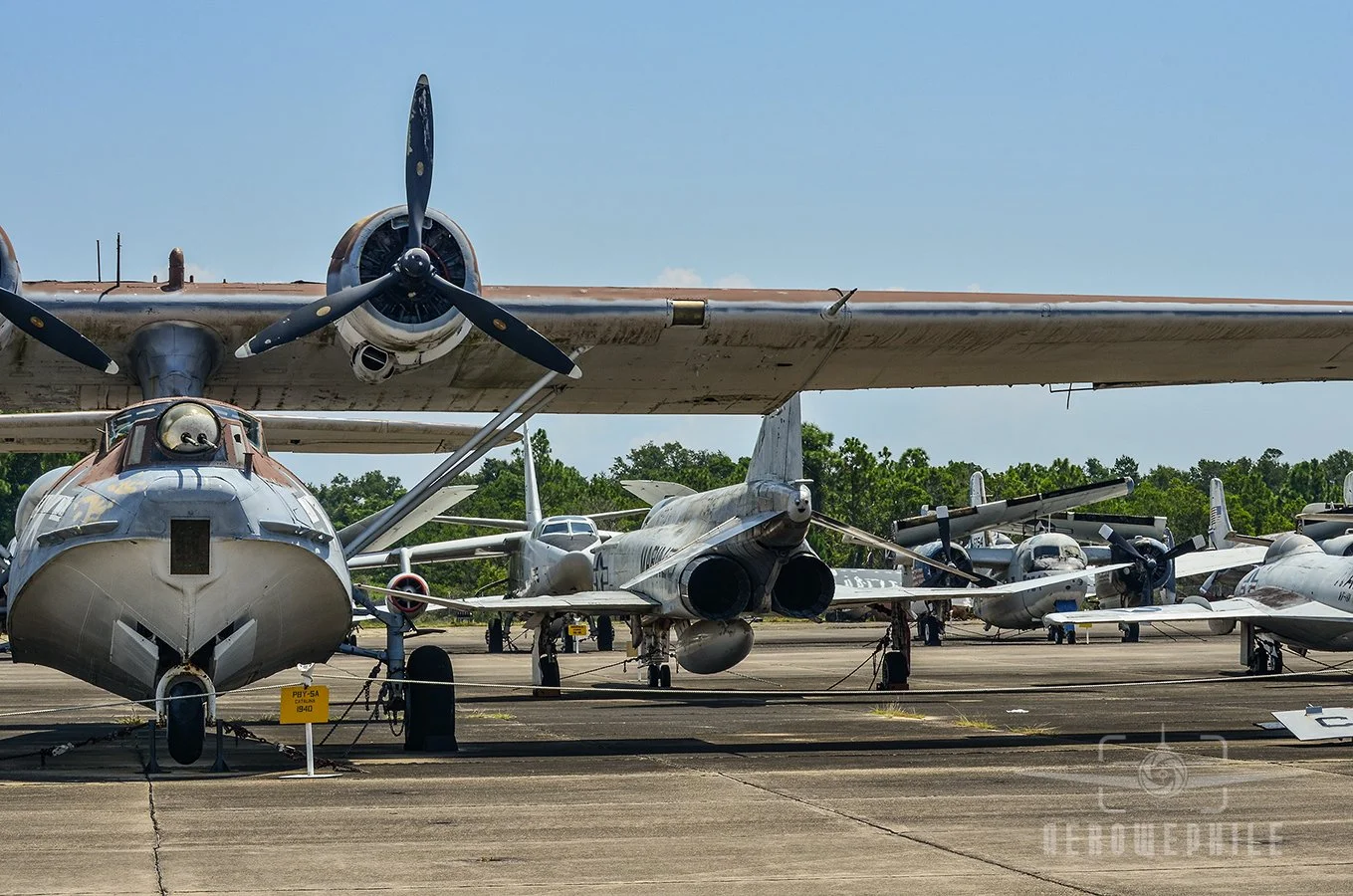
PBY-5A Catalina, F-4 Phantom, Douglas A-3 Skywarrior, Grumman S-2 Tracker.
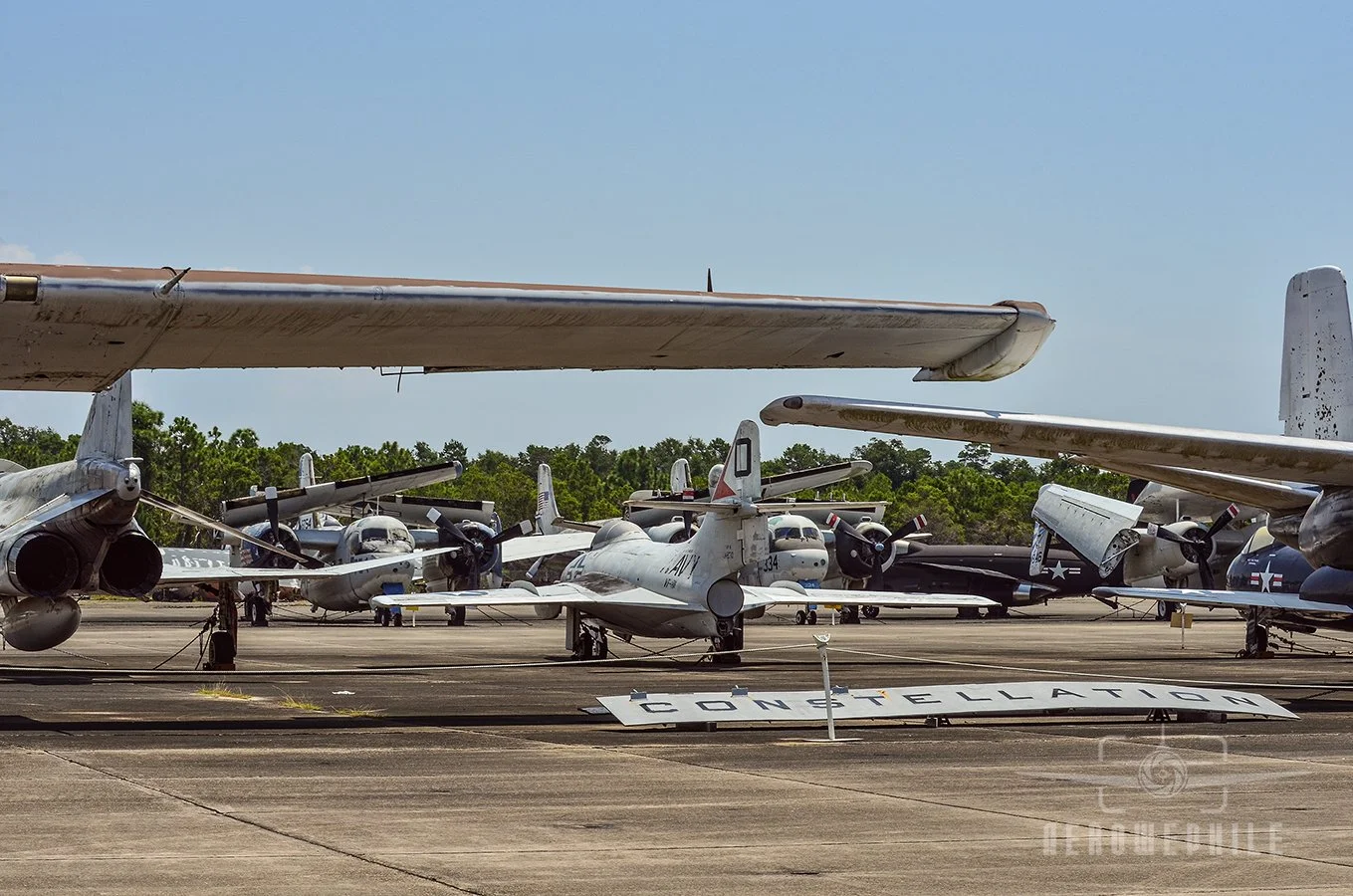
F-4 Phantom, Douglas A-3 Skywarrior, Grumman S-2 Tracker.
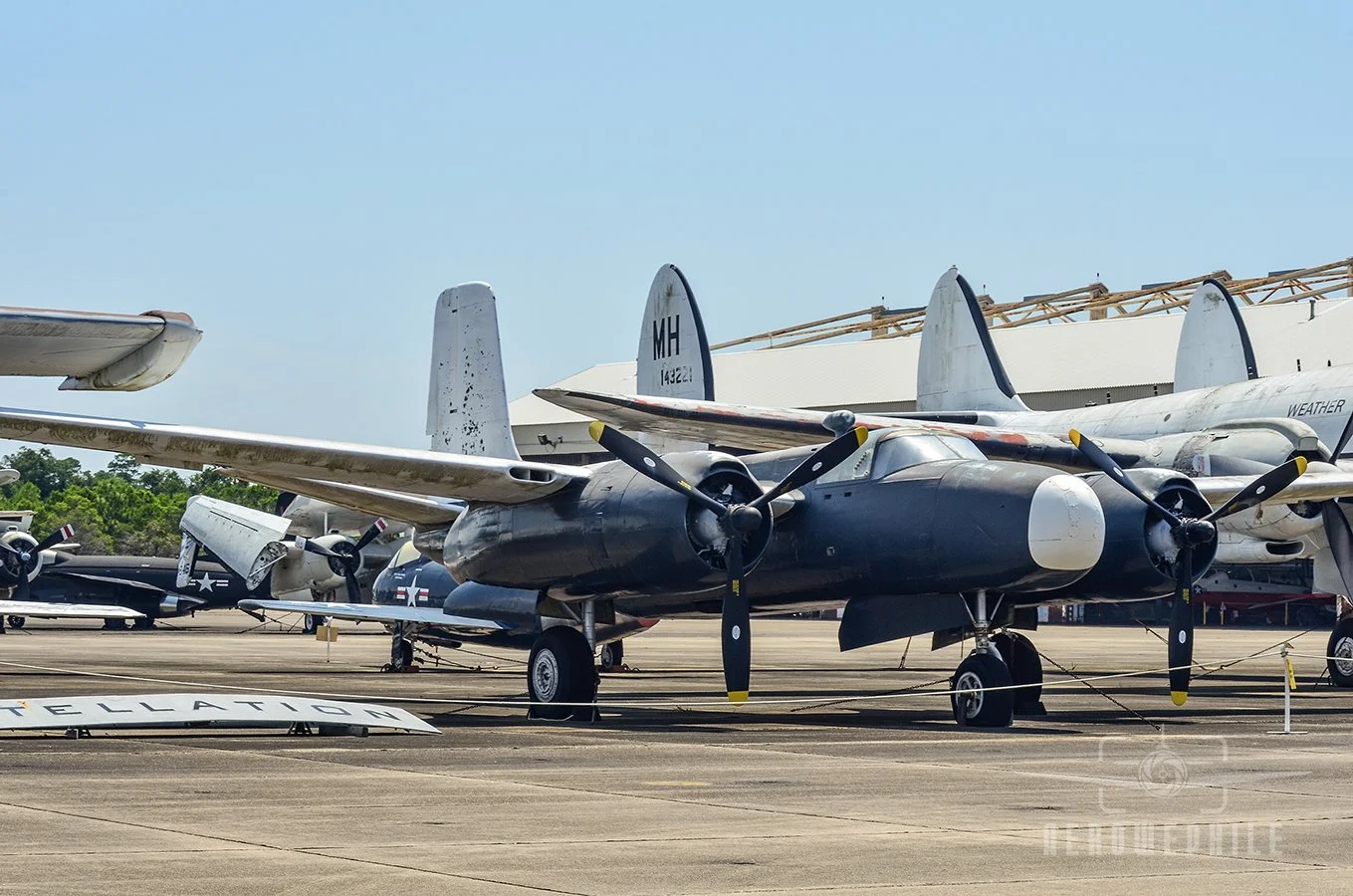
Douglas JD-1 Invader
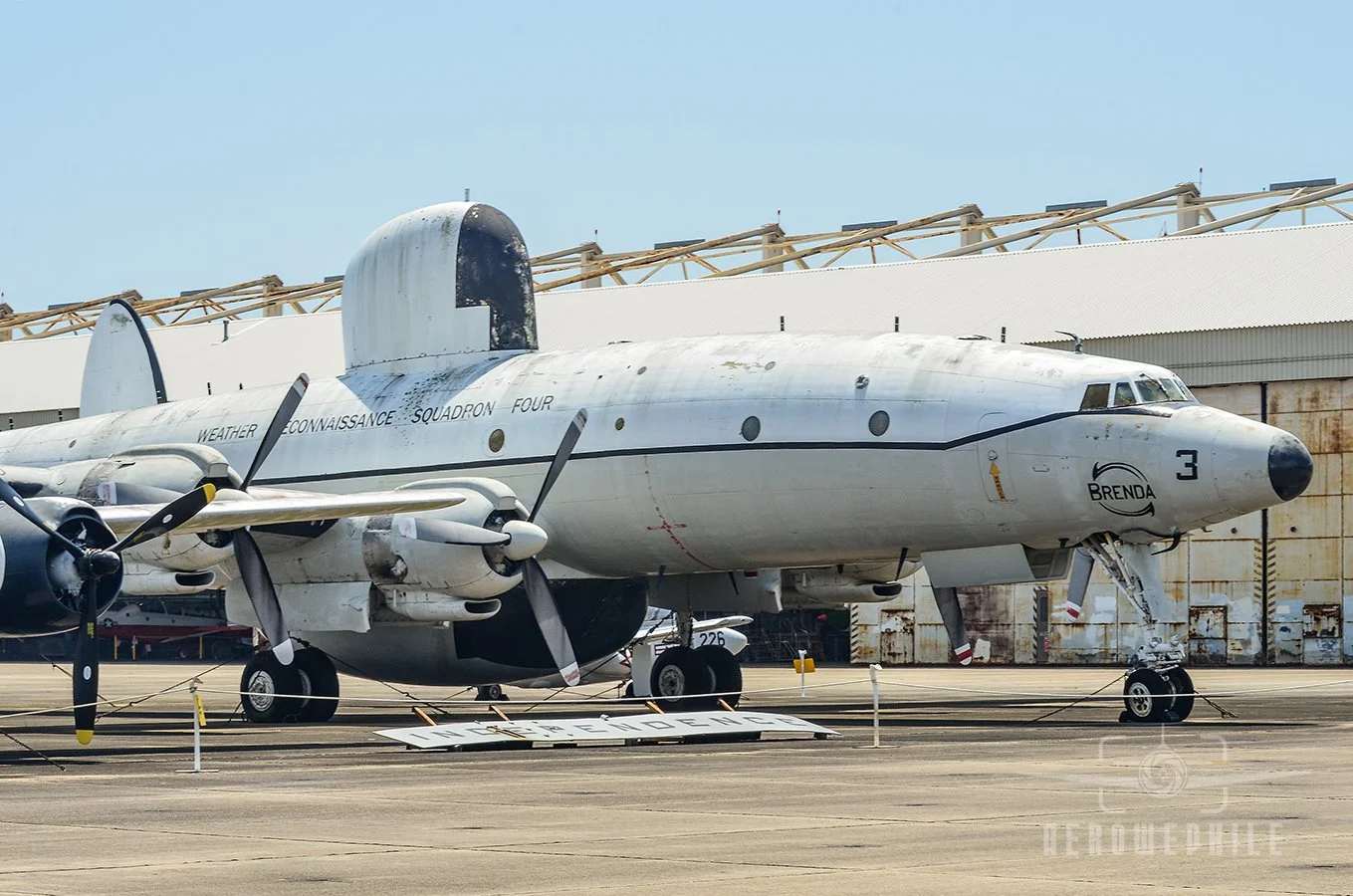
Lockheed EC-121 Warning Star
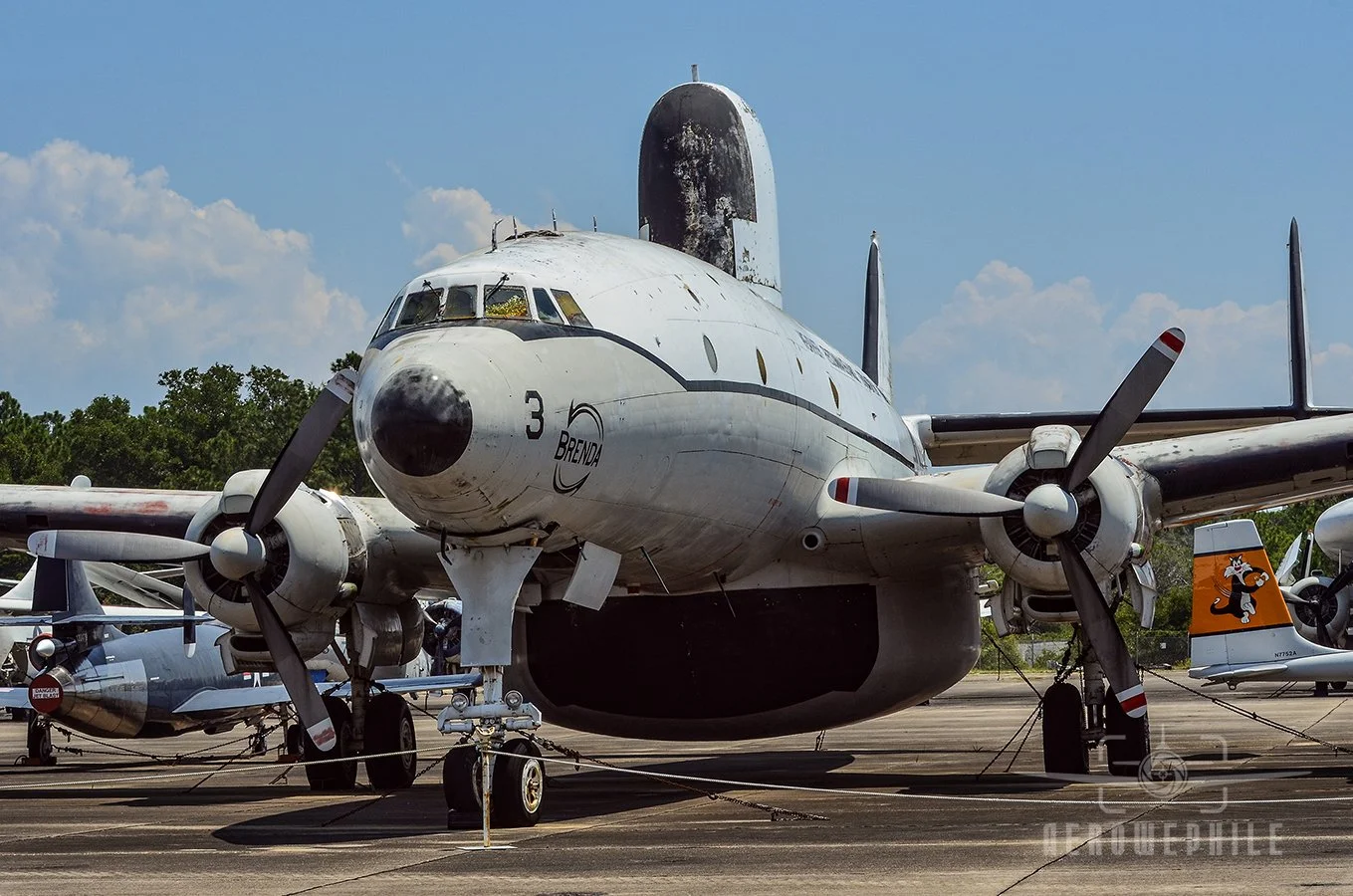
Lockheed EC-121 Warning Star
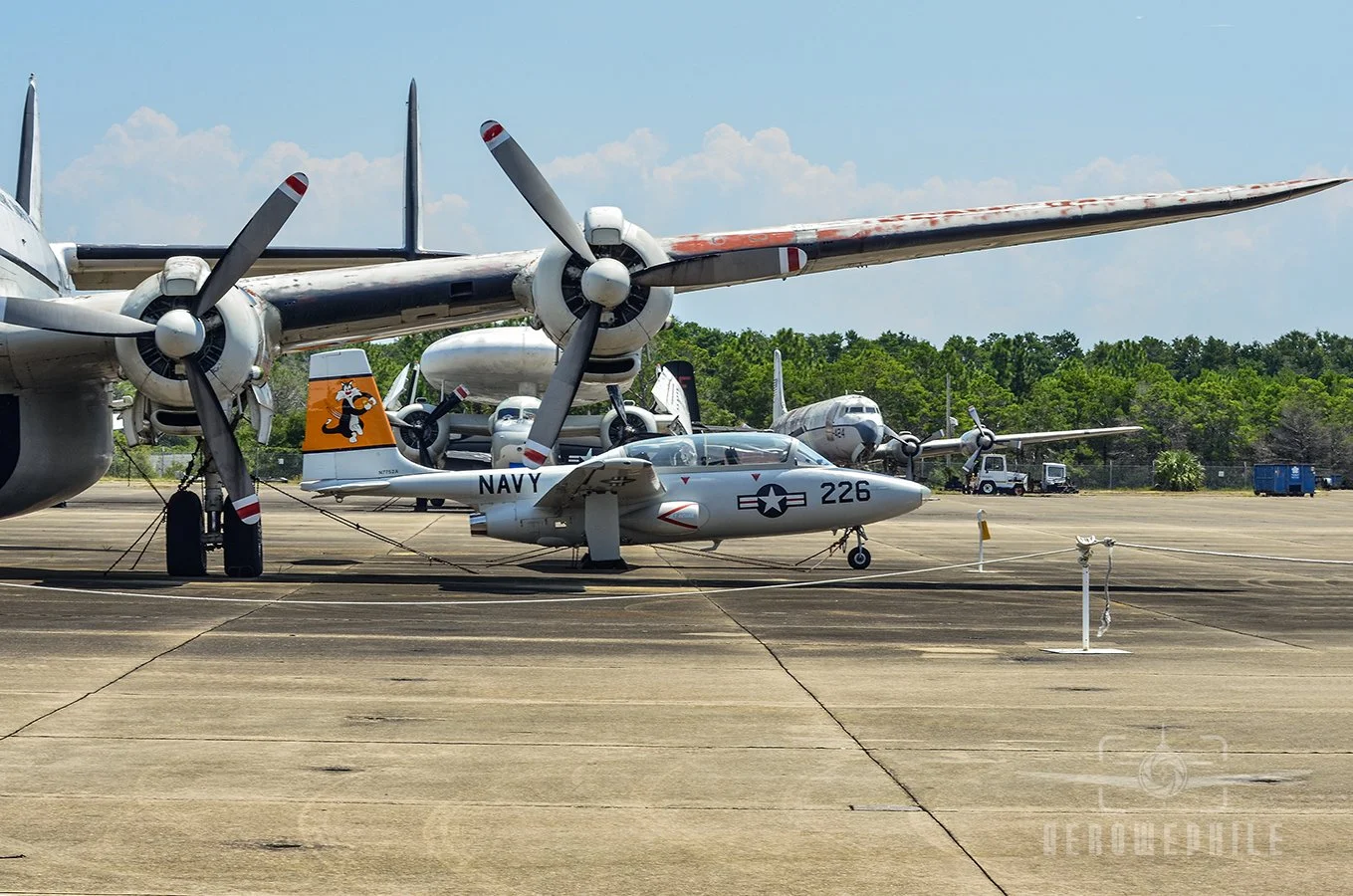
Temco TT-1 Super Pinto, Grumman E-1 Tracer, Douglas VC-118B Liftmaster.
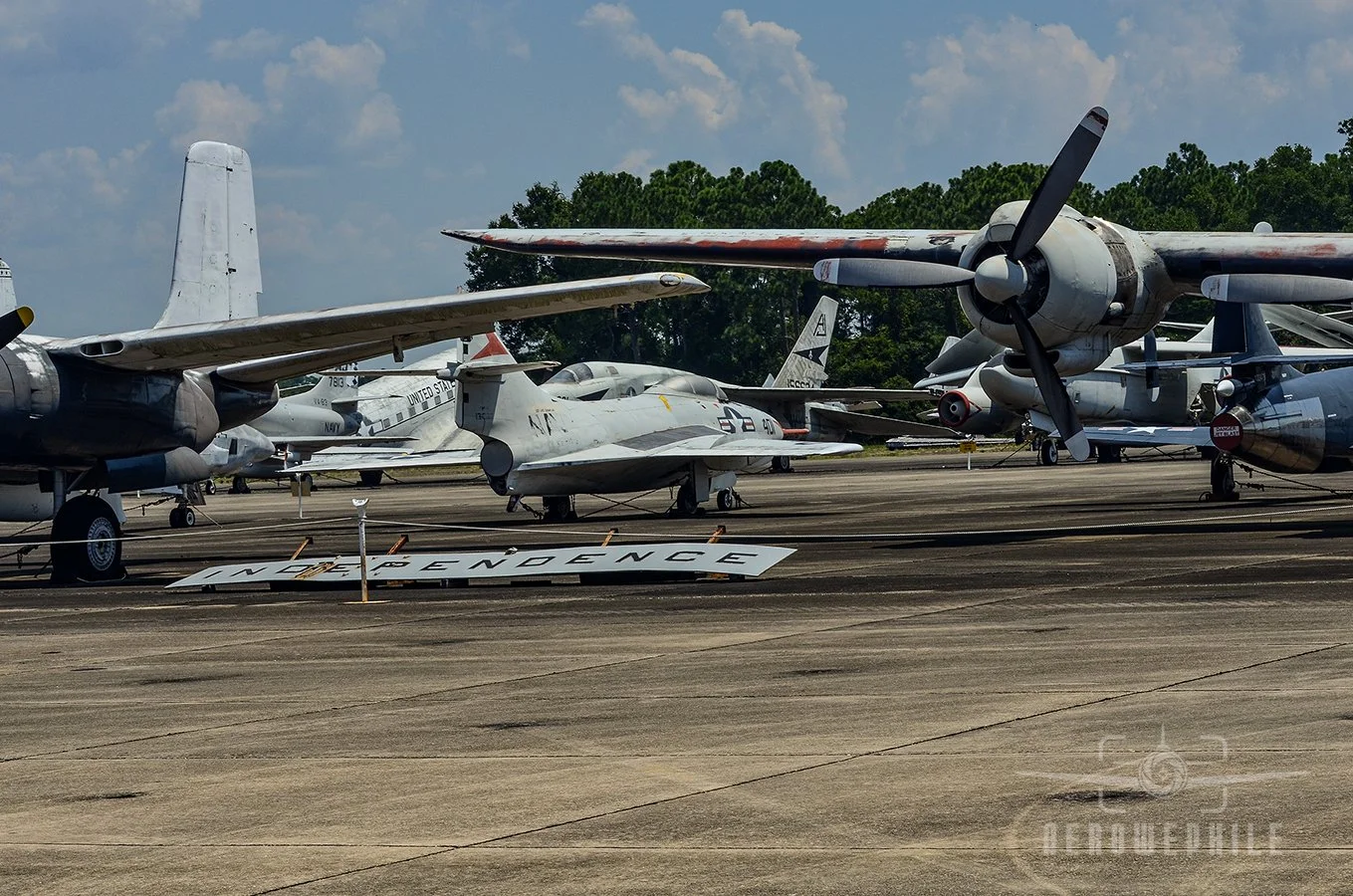
F9F Cougar
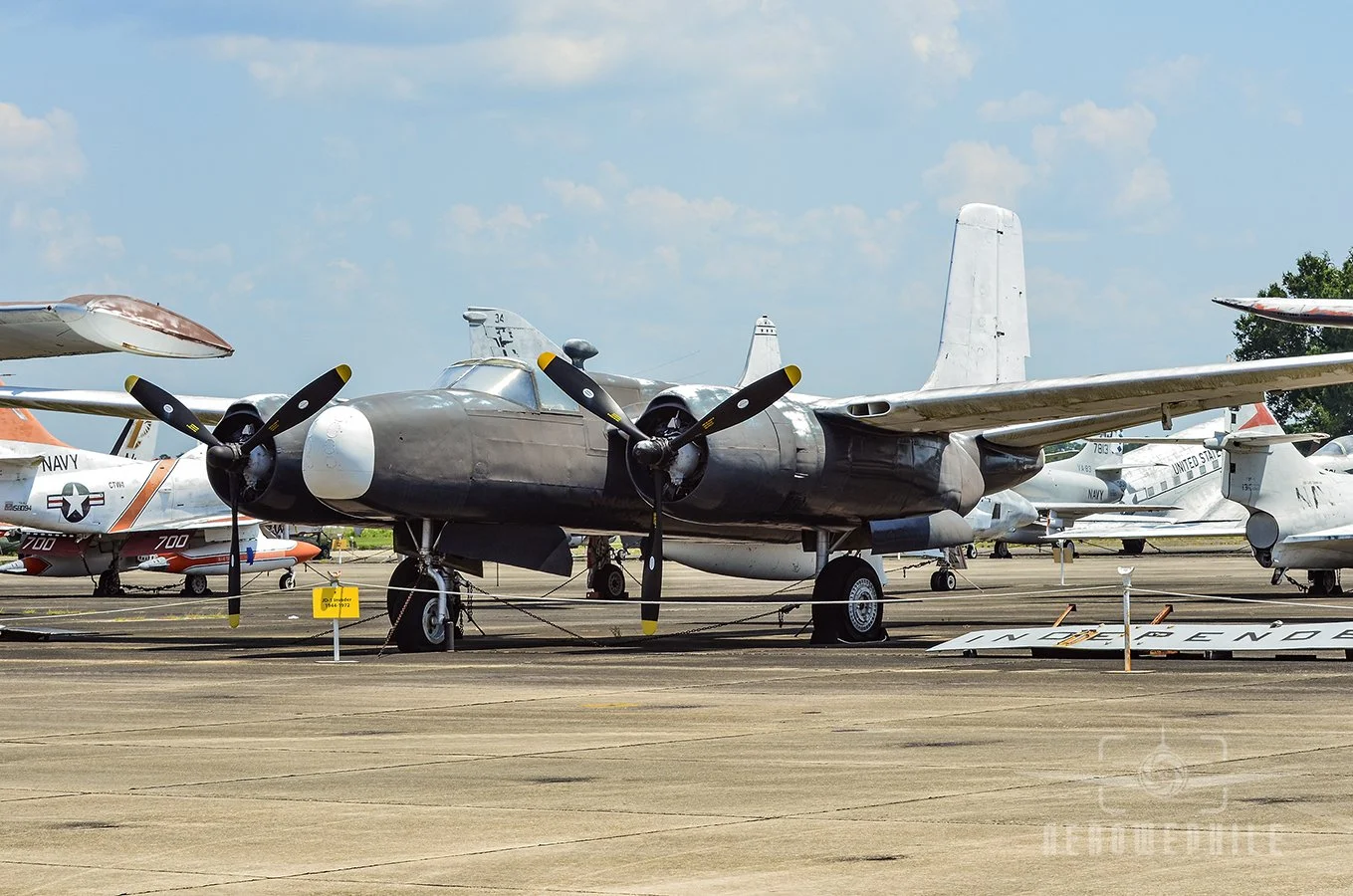
JD-1 Invader
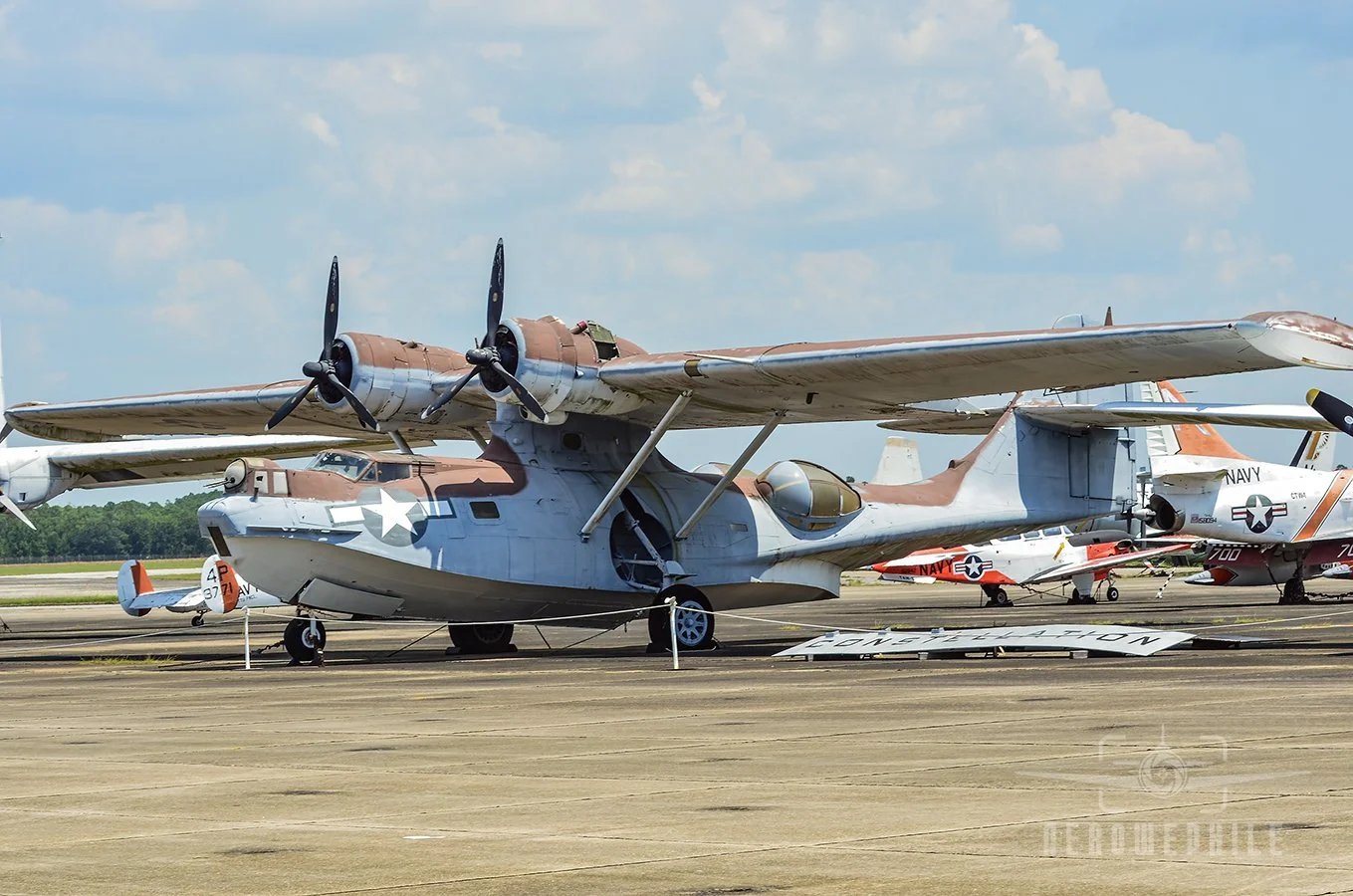
PBY-5A Catalina
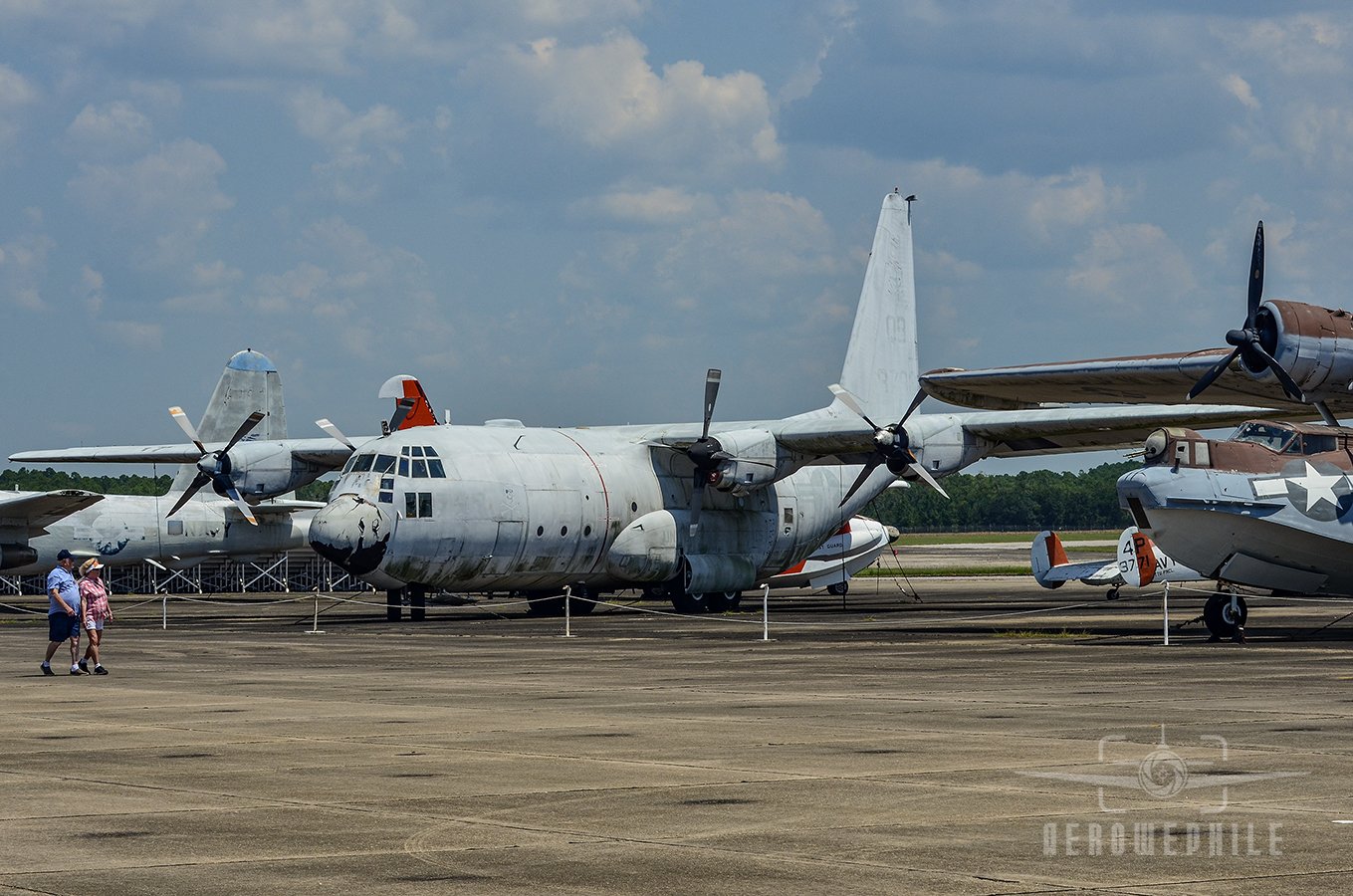
C-130 Hercules
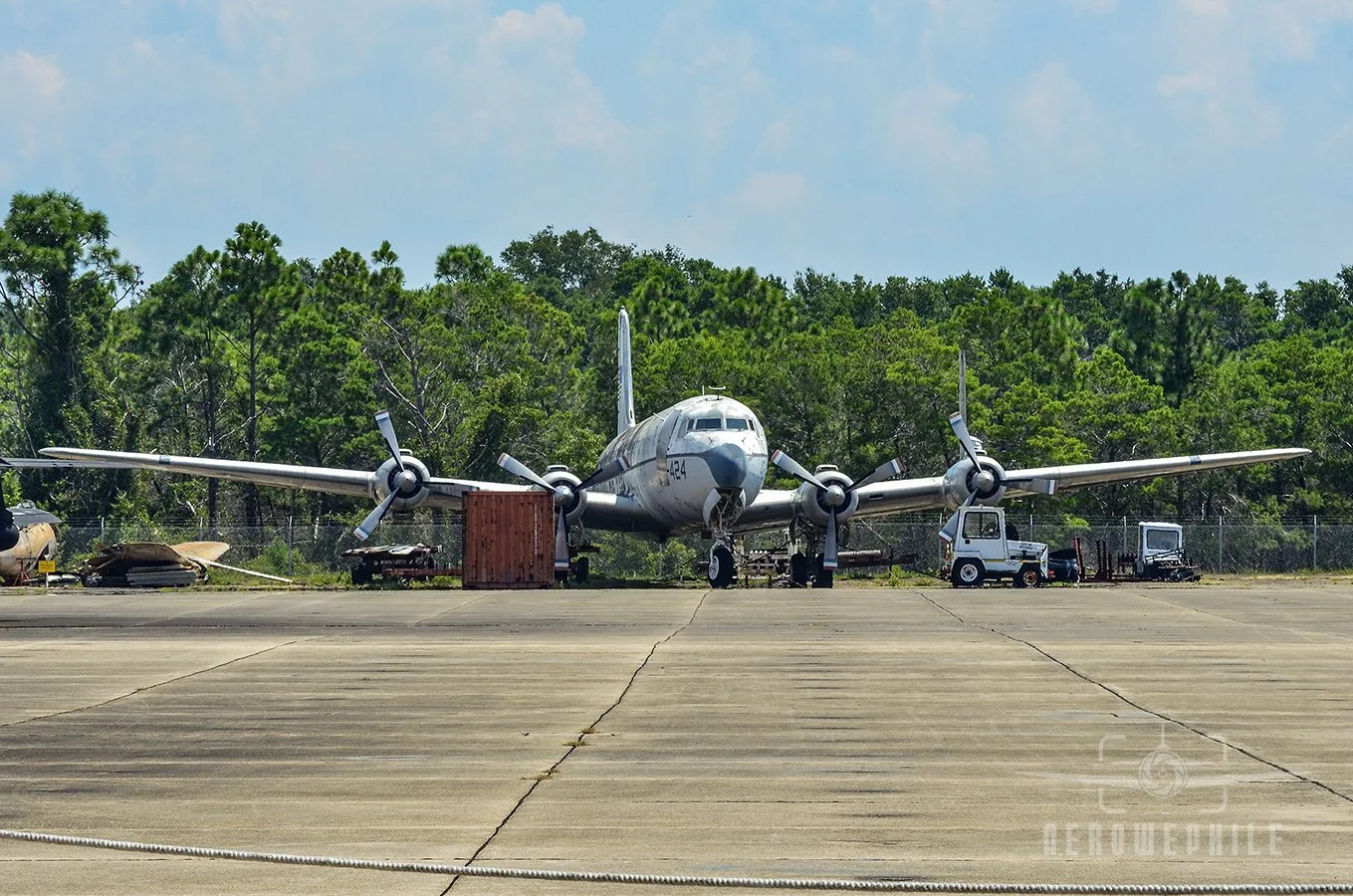
Douglas VC-118B Liftmaster.
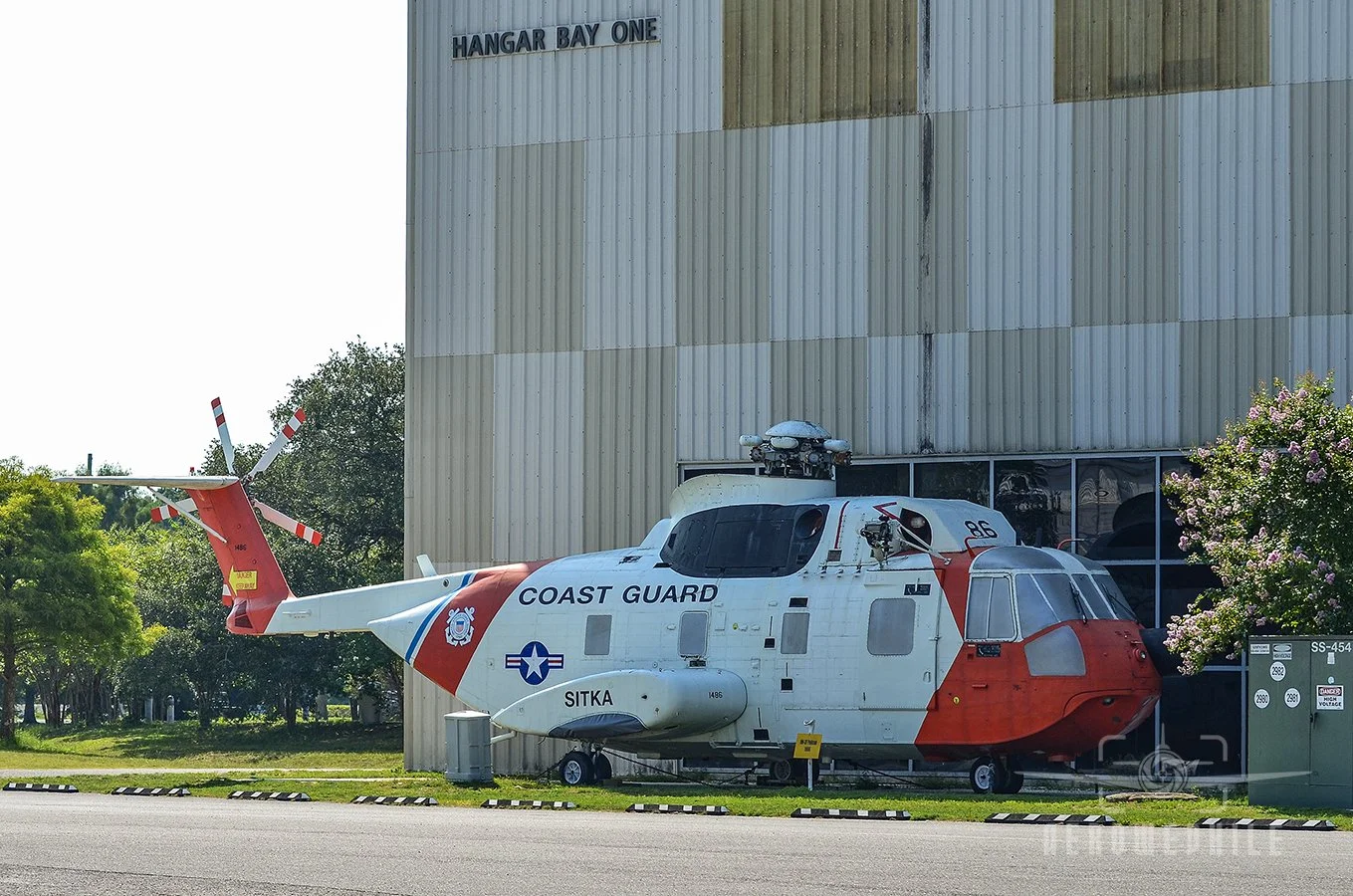
Sikorsky HH-3F Pelican outside the back of Hanger Bay One.
National Naval Aviation Museum
The museum is devoted to the history of naval aviation, including that of the United States Navy, the United States Marine Corps, and the United States Coast Guard. Its mission is "to select, collect, preserve and display" appropriate memorabilia representative of the development, growth and historic heritage of United States Naval Aviation. More than 150 aircraft and spacecraft are on display,
MUSEUM ENTRANCE, QUARTERDECK and BLUE ANGEL ATRIUM
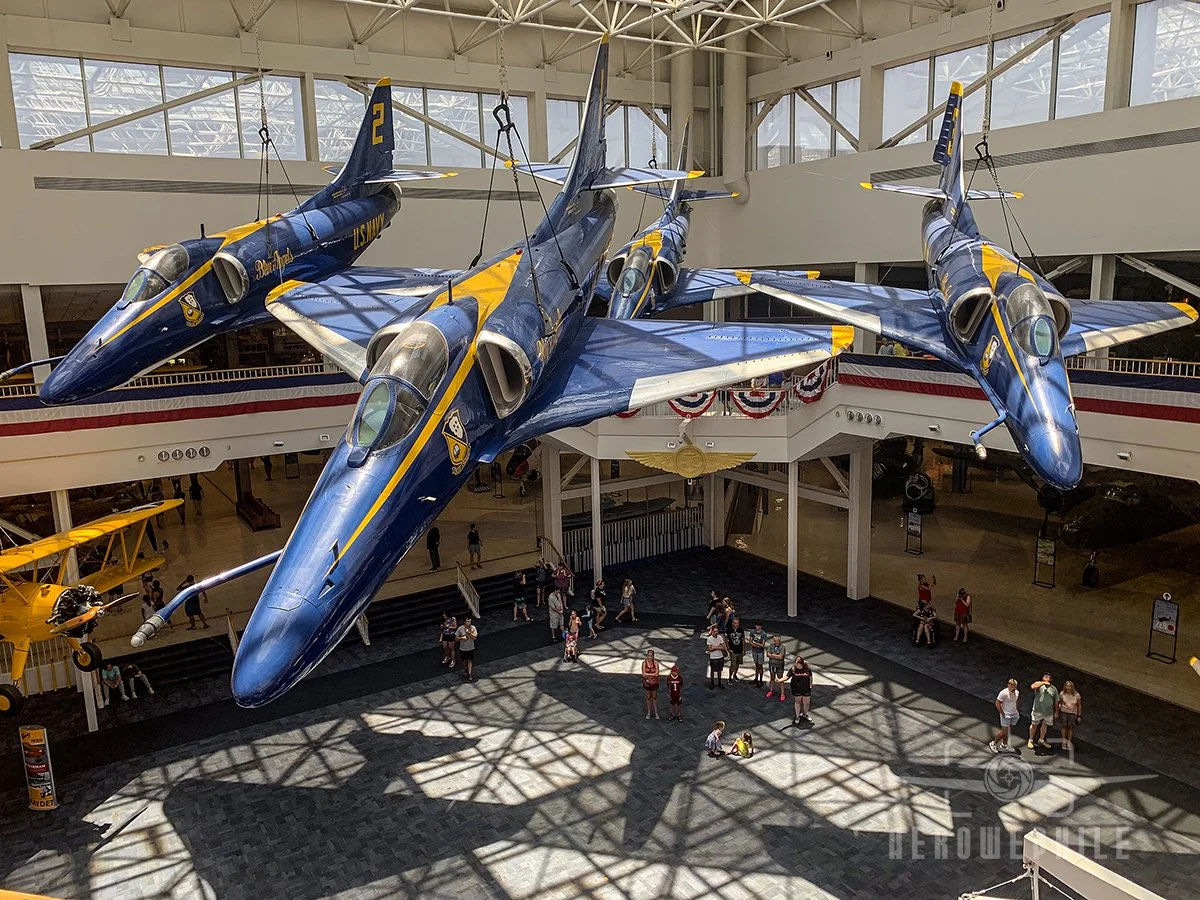
Four examples of the A-4 (Bureau Numbers 150076, 154217, 154983, and 155033) form the diamond formation suspended in the Blue Angel Atrium.
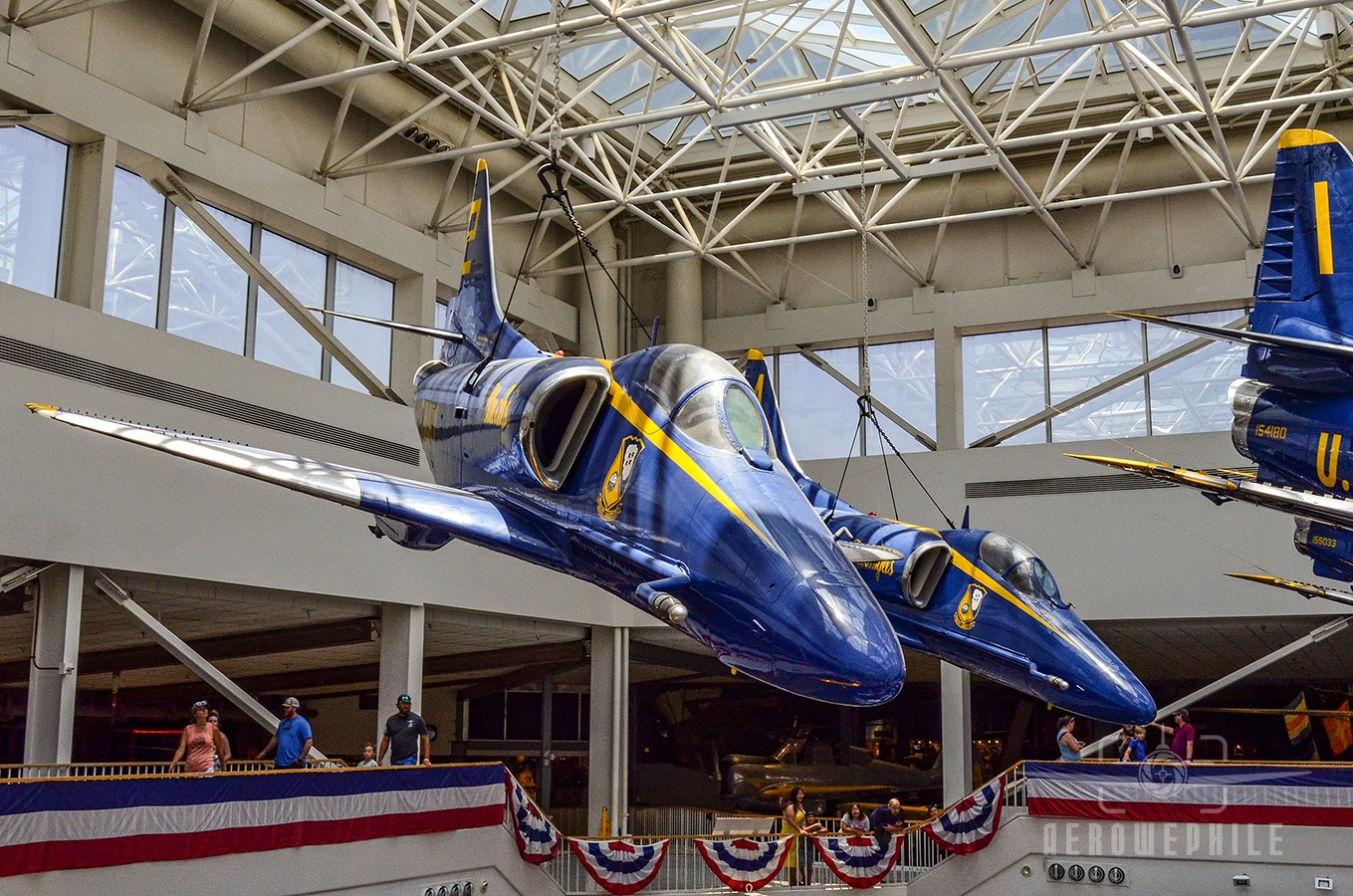
Blue Angels A-4 Skyhawks in the diamond formation suspended in the Blue Angel Atrium.
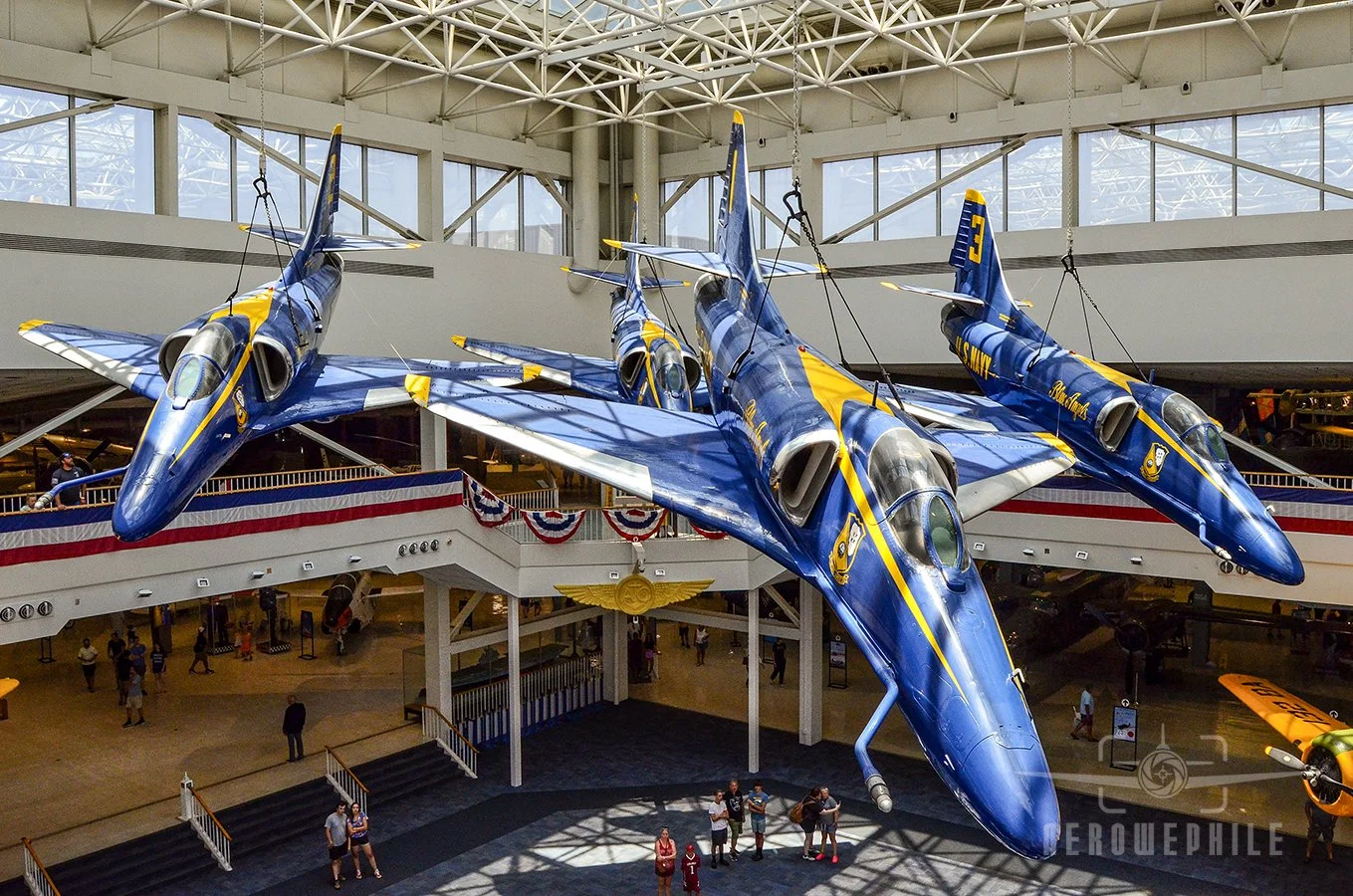
Blue Angels A-4 Skyhawks in the diamond formation suspended in the Blue Angel Atrium.
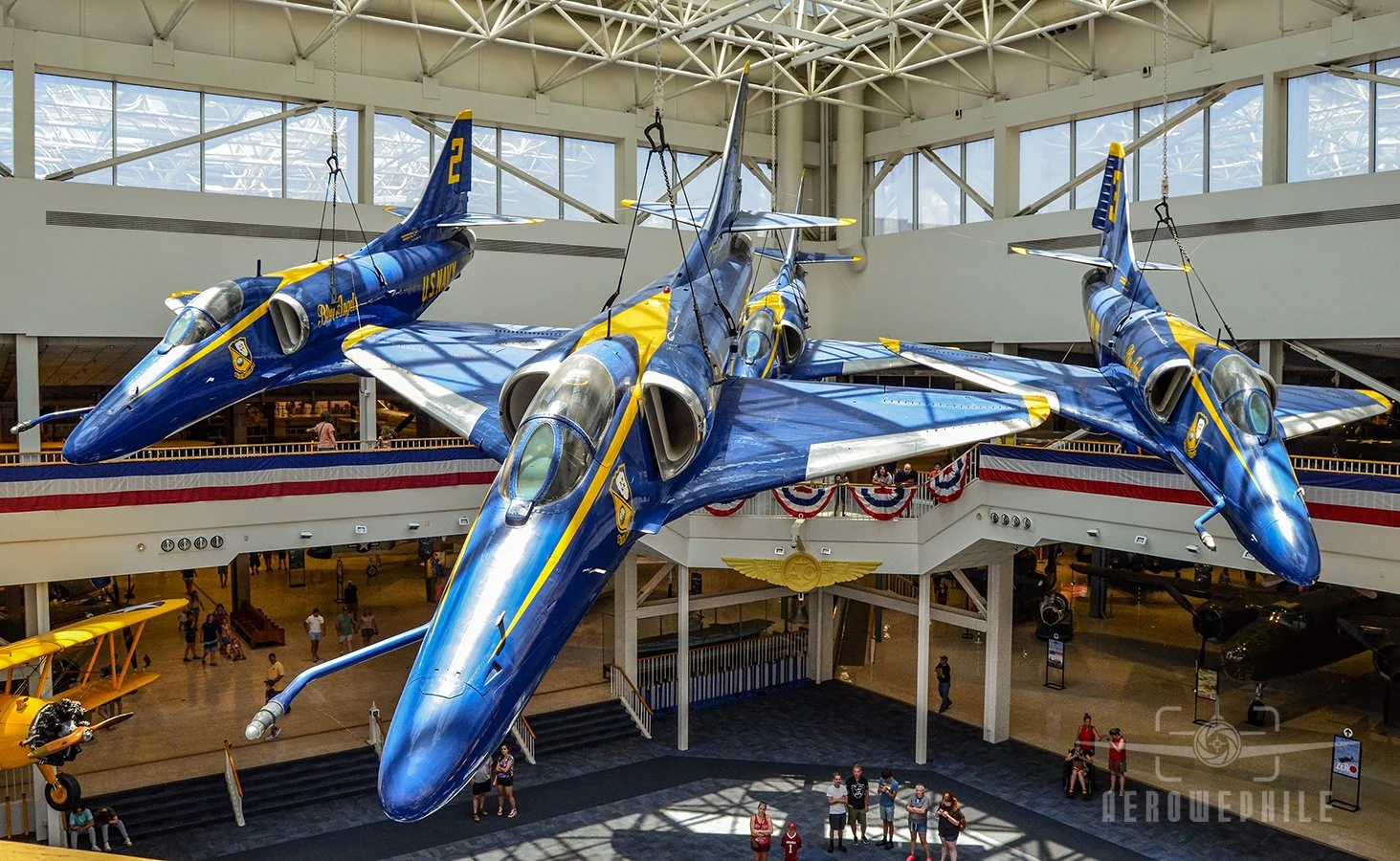
Blue Angels A-4 Skyhawks in the diamond formation suspended in the Blue Angel Atrium.
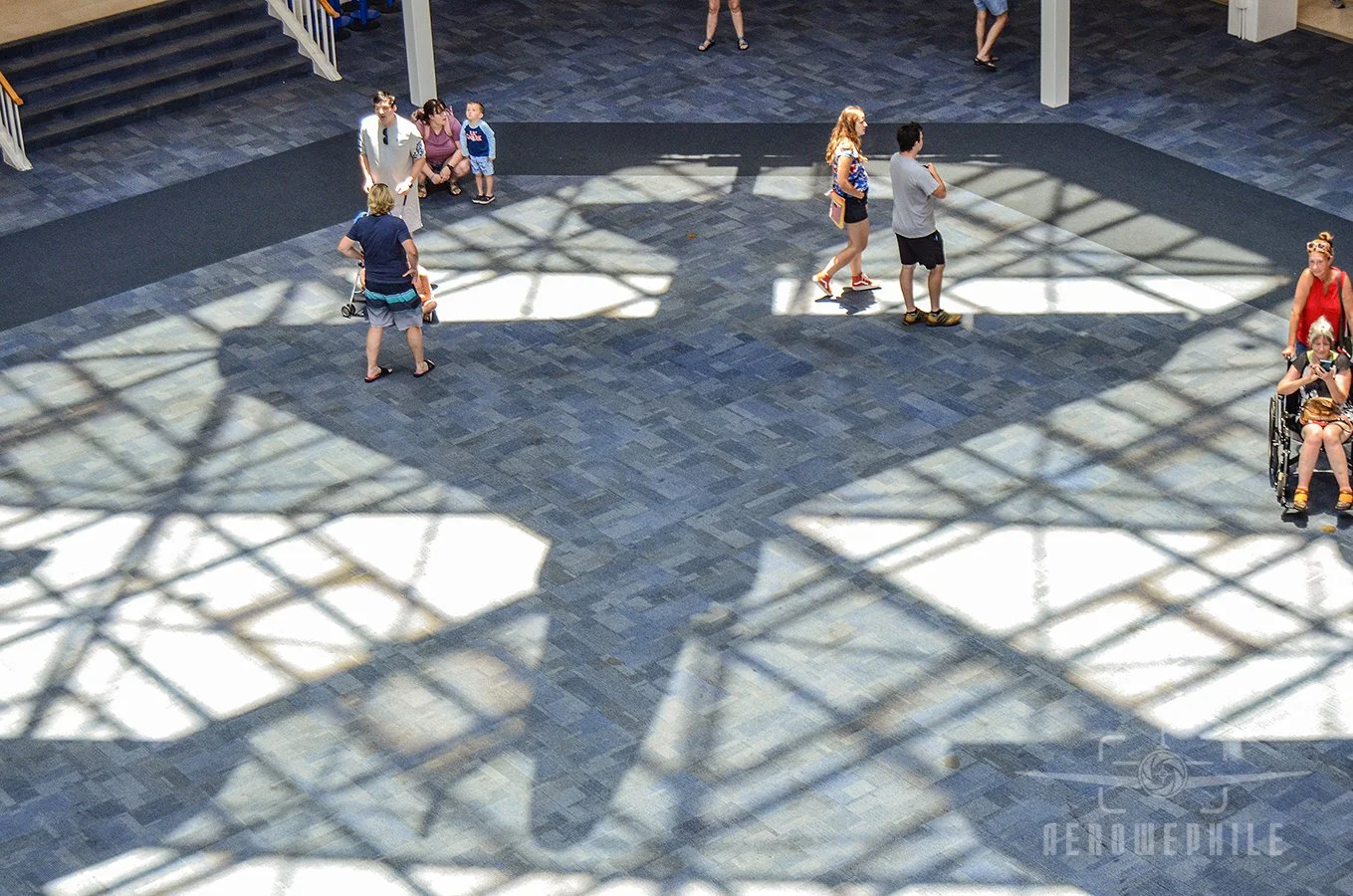
Blue Angel A-4 Skyhawk shadows on the floor of the Blue Angel Atrium.
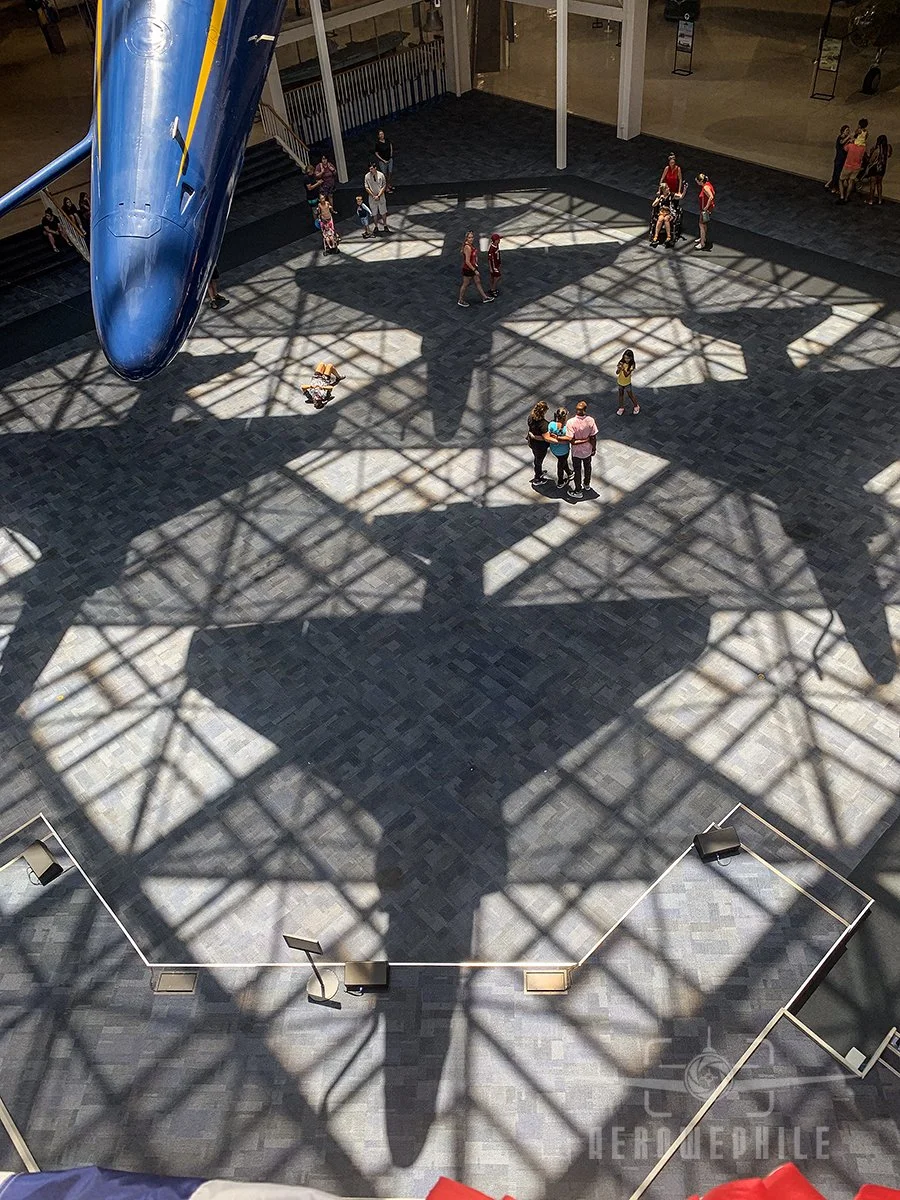
Blue Angel A-4 Skyhawk shadows on the floor of the Blue Angel Atrium.
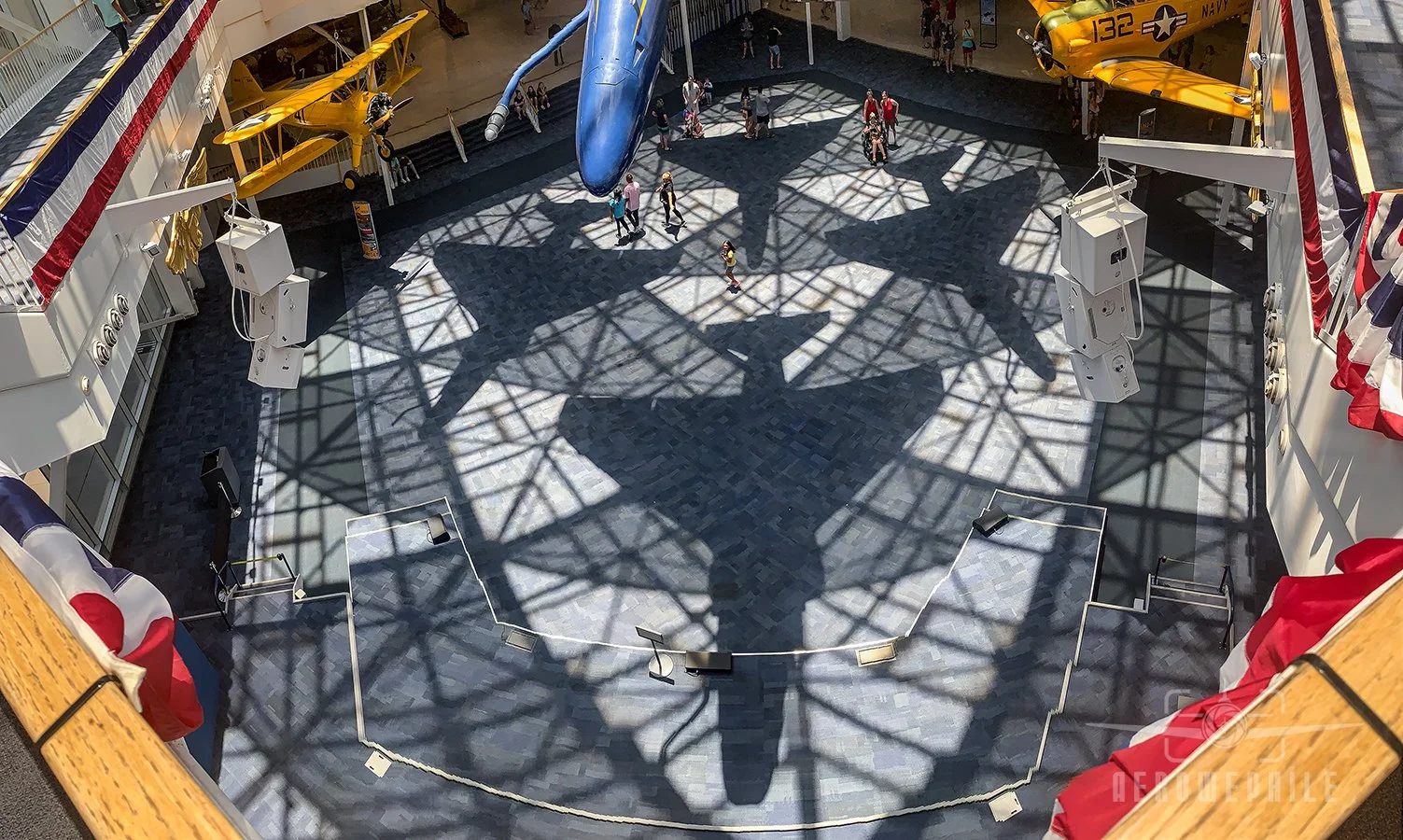
Blue Angel A-4 Skyhawk shadows on the floor of the Blue Angel Atrium.
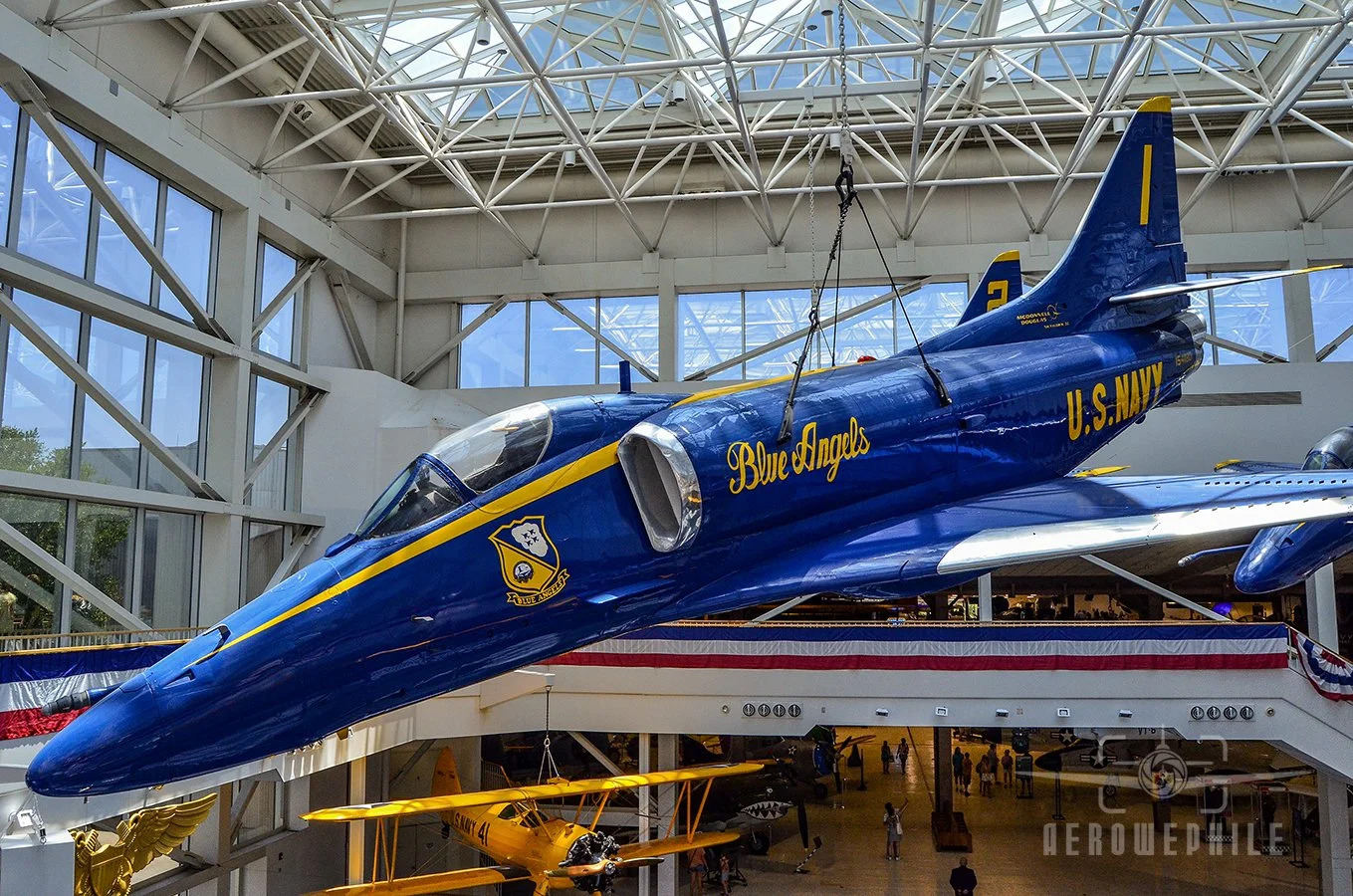
Blue Angel A-4 Skyhawk Diamond Lead #1.
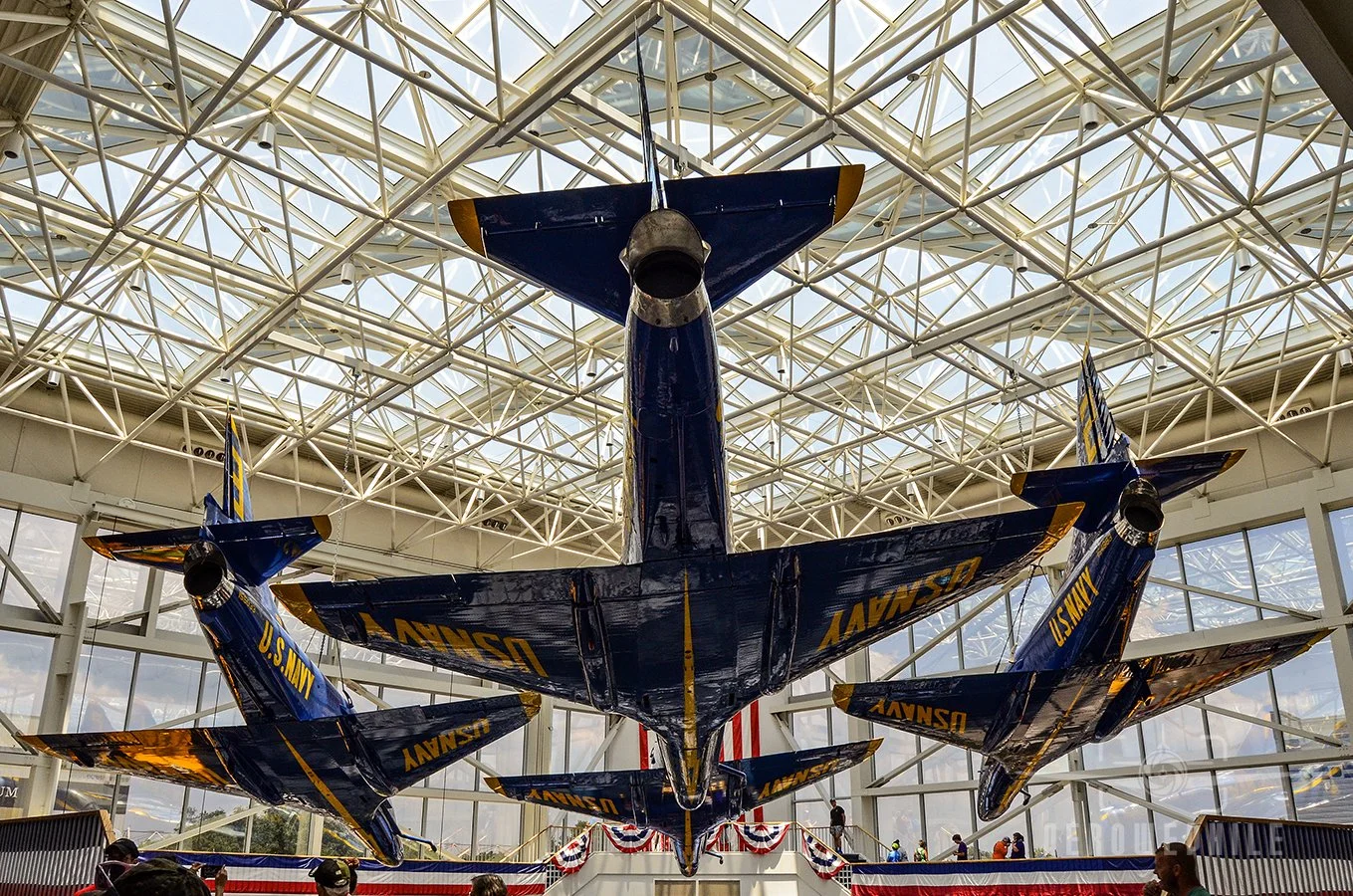
Blue Angels A-4 Skyhawks in the diamond formation suspended in the Blue Angel Atrium.
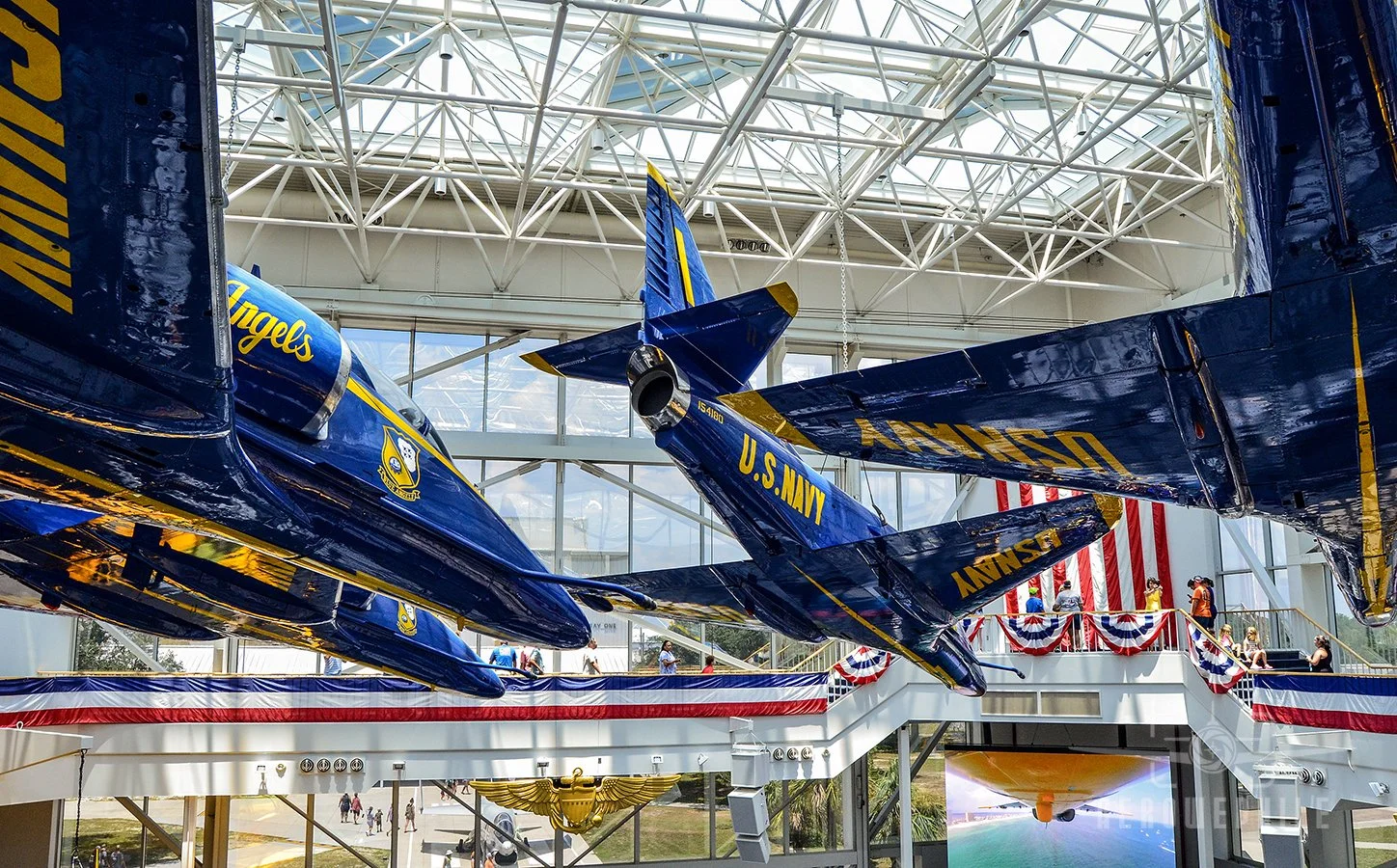
Blue Angels A-4 Skyhawks in the diamond formation suspended in the Blue Angel Atrium.
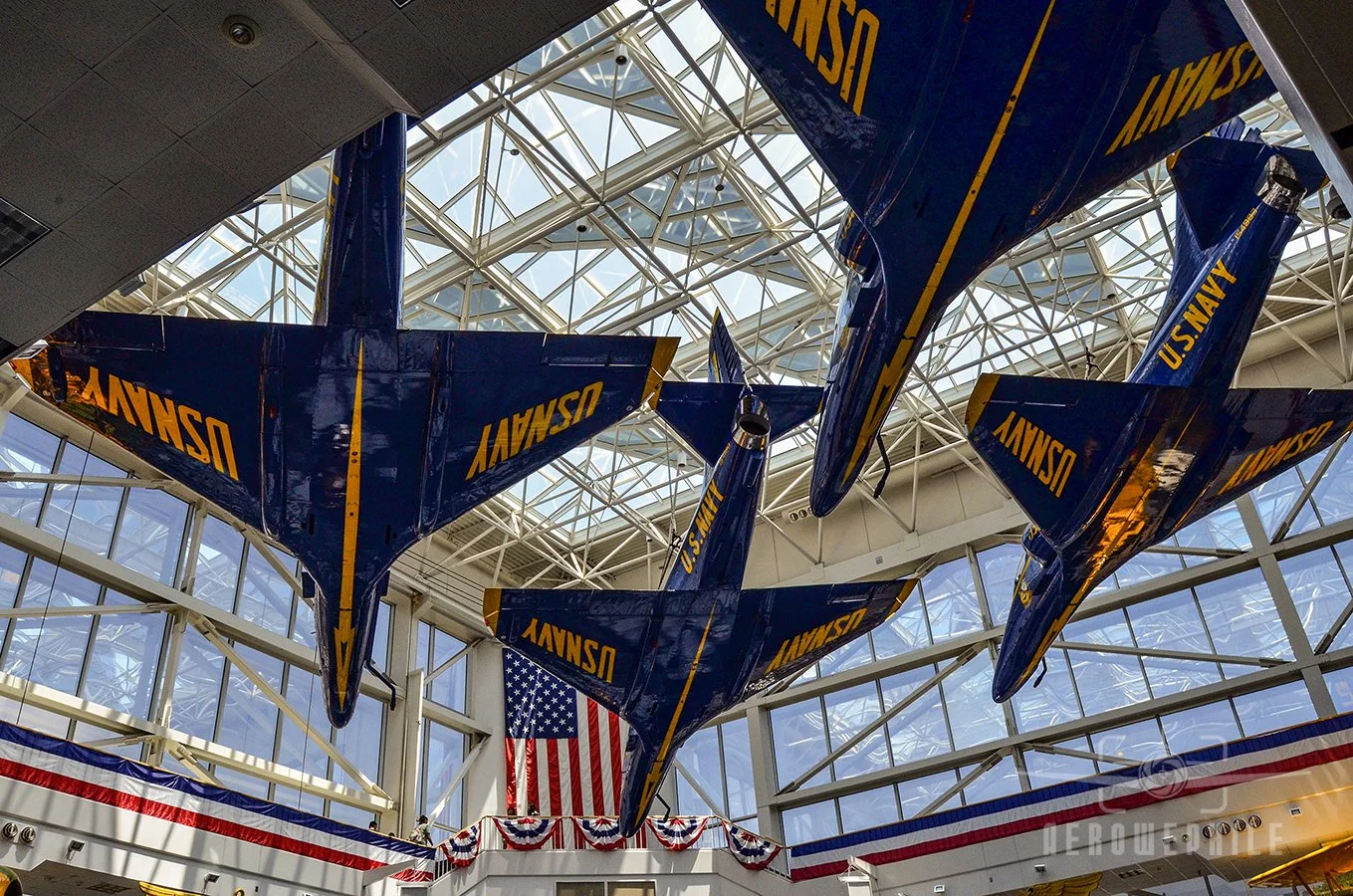
Blue Angels A-4 Skyhawks in the diamond formation suspended in the Blue Angel Atrium.
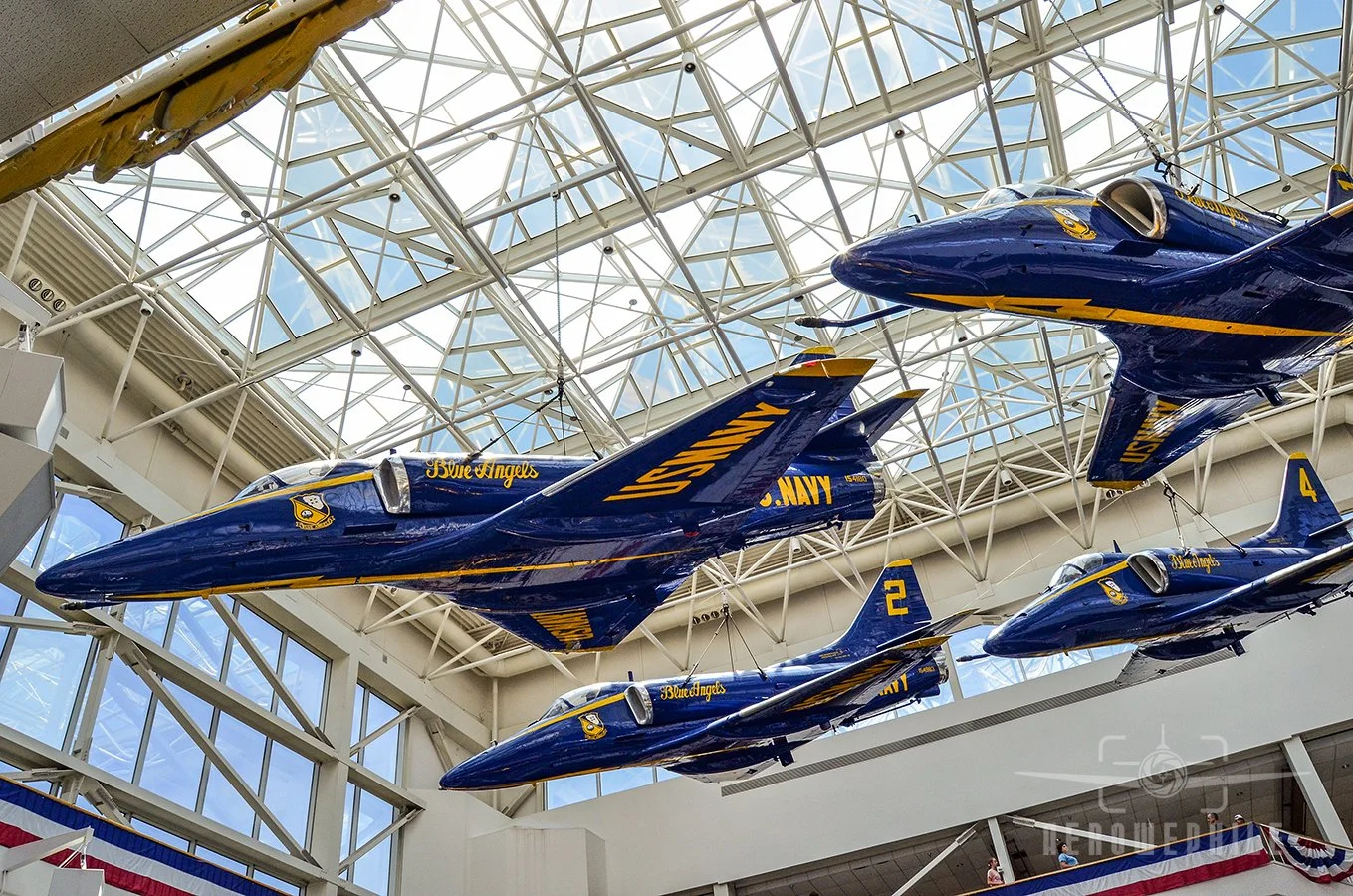
Blue Angels A-4 Skyhawks in the diamond formation suspended in the Blue Angel Atrium.
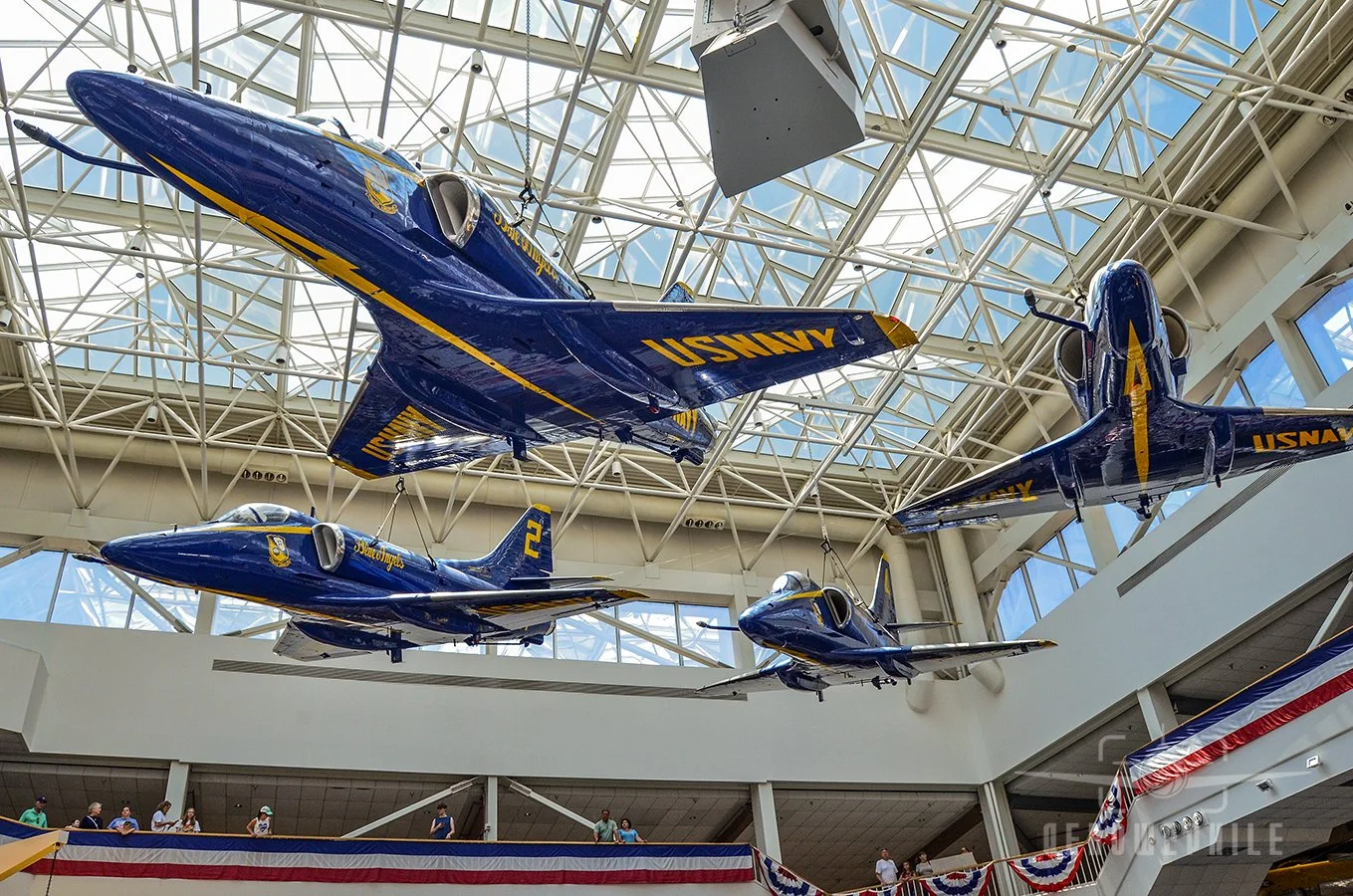
Blue Angels A-4 Skyhawks in the diamond formation suspended in the Blue Angel Atrium.
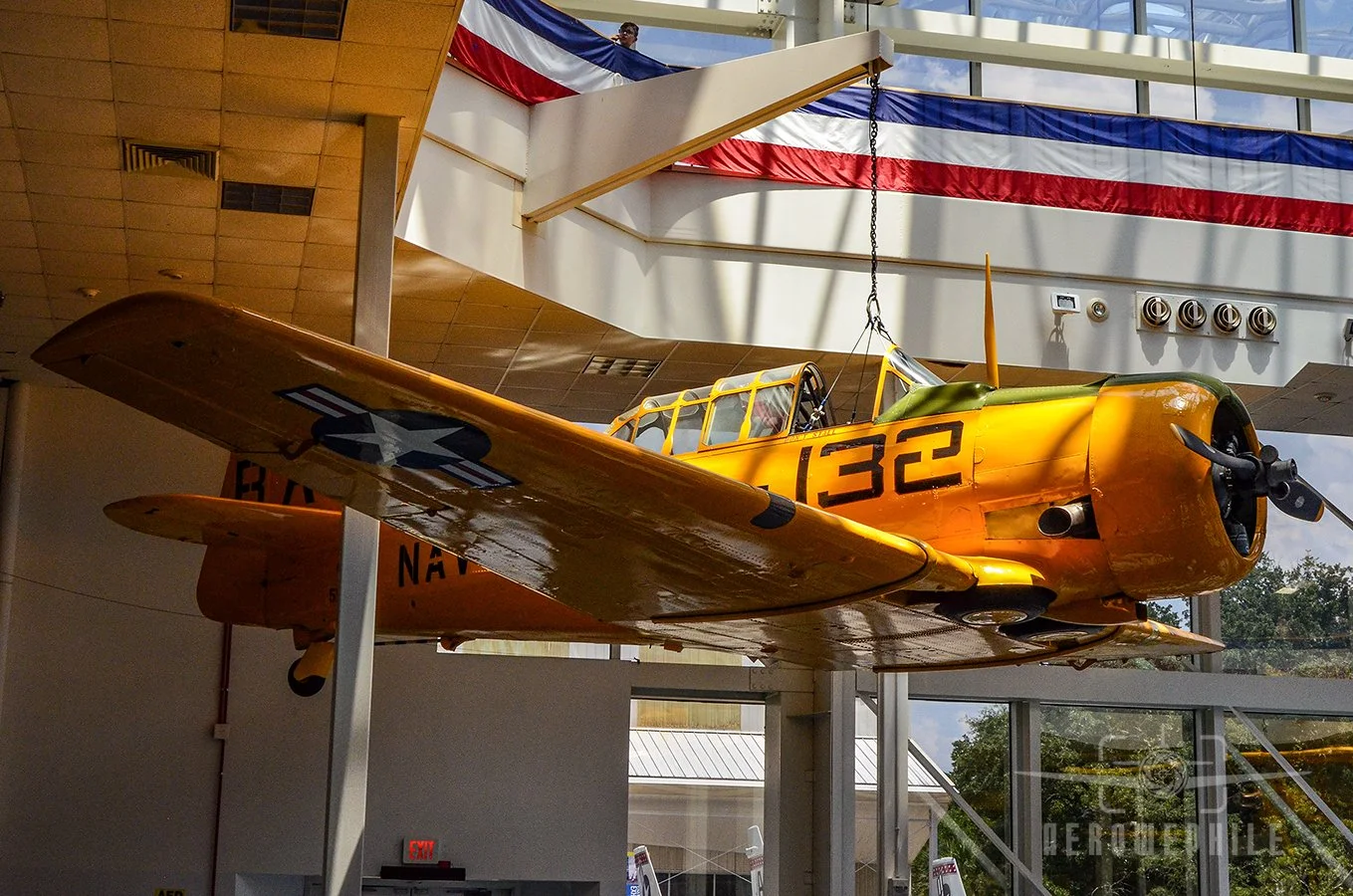
Delivered in 1943, the SNJ-5C Texan on display (Bureau Number 51849) spent most of its service life at Naval Air Station (NAS) Pensacola and surrounding airfields, but also flew as a utility aircraft aboard the aircraft carrier Kearsarge (CVS-33).
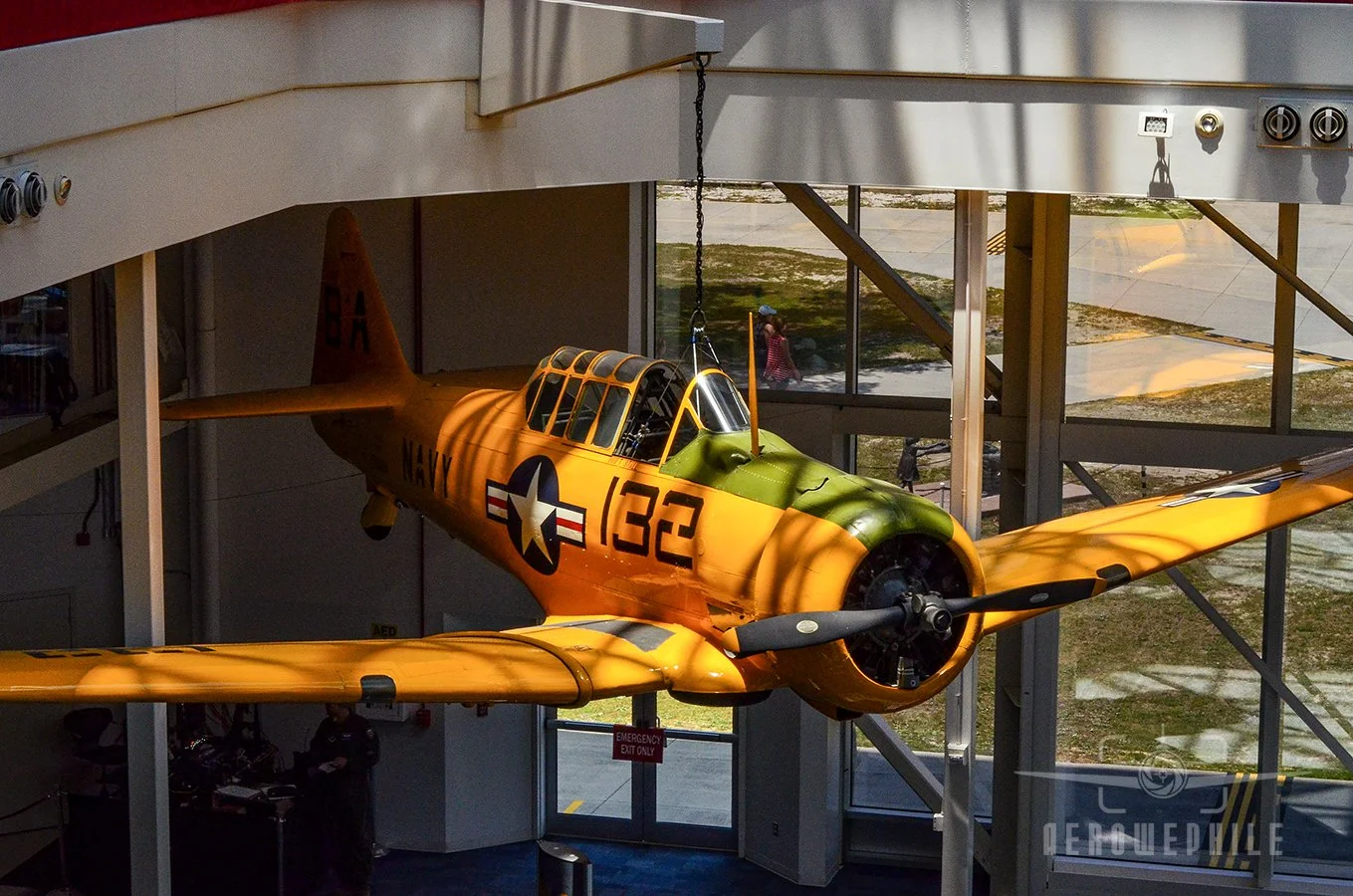
The SNJ-5C Texan served for a time in the Argentine Navy before it arrived at the Museum in 1984. The aircraft is displayed in the markings of a squadron at Naval Auxiliary Air Station (NAAS) Barin Field near Foley, Alabama.
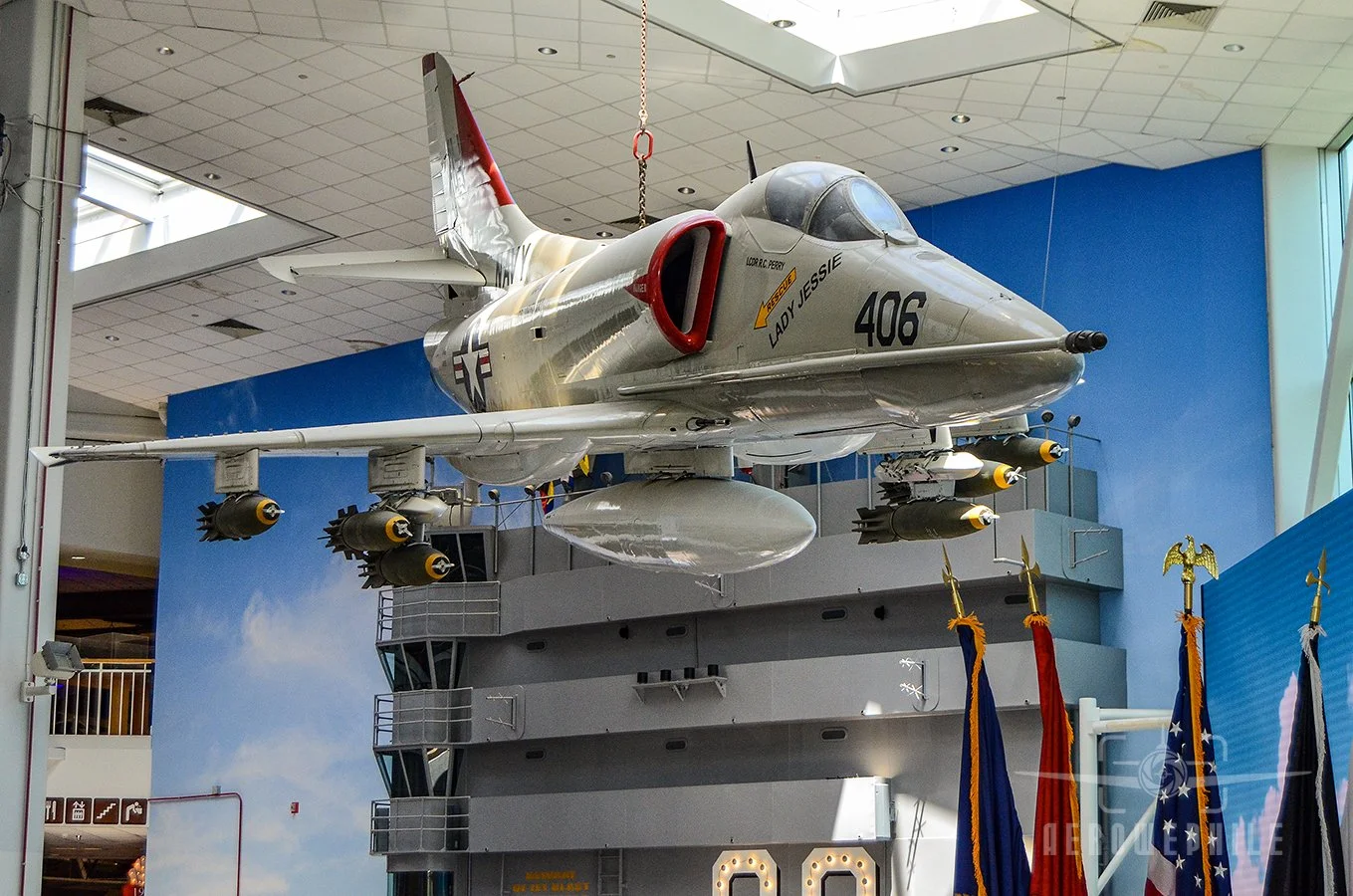
A-4E Skyhawk (Bureau Number 149656) suspended in the Quarterdeck honors Attack Squadrons (VA) 163 and 164.
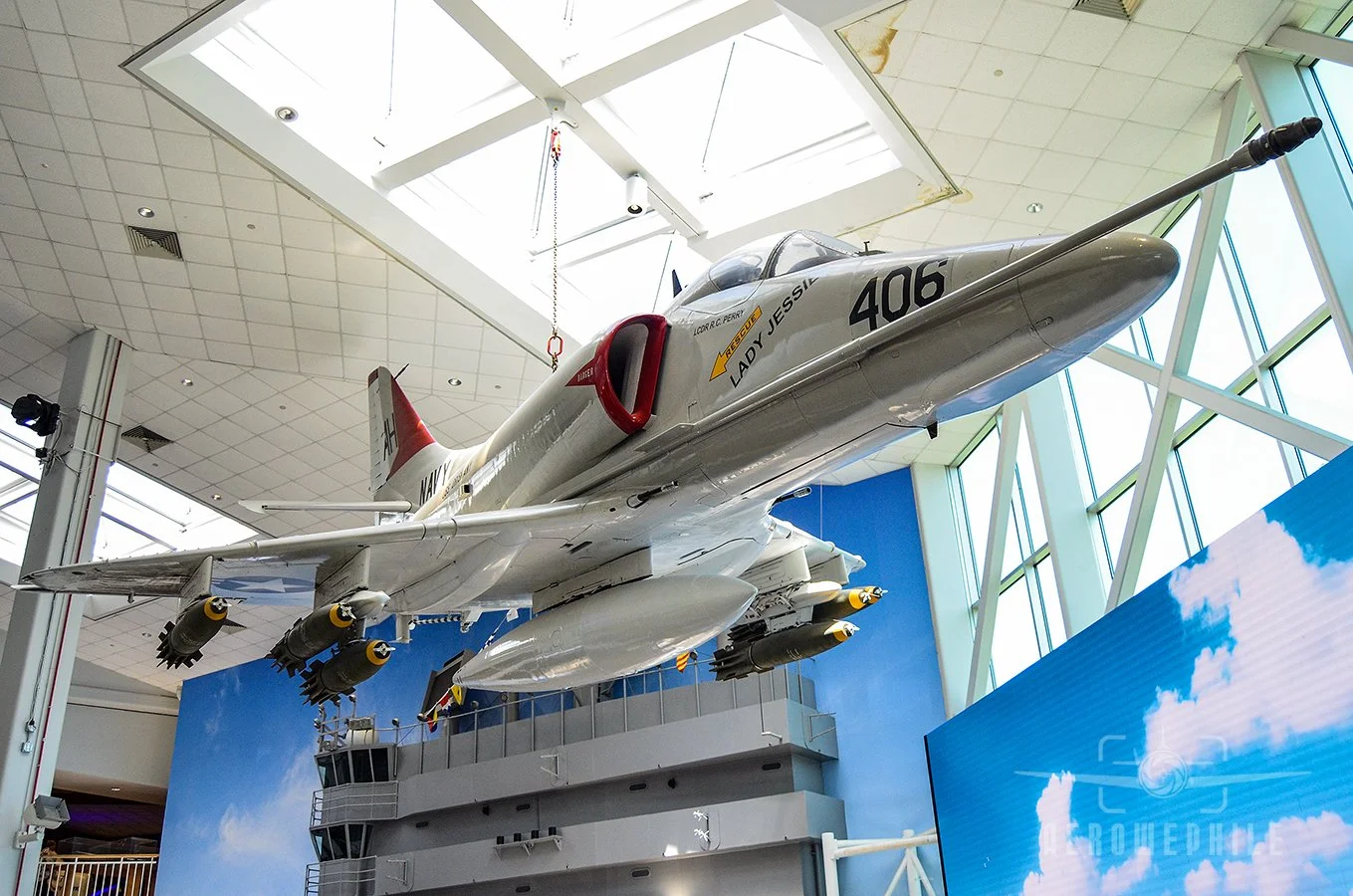
A-4E Skyhawk (Bureau Number 149656) suspended in the Quarterdeck honors Attack Squadrons (VA) 163 and 164.
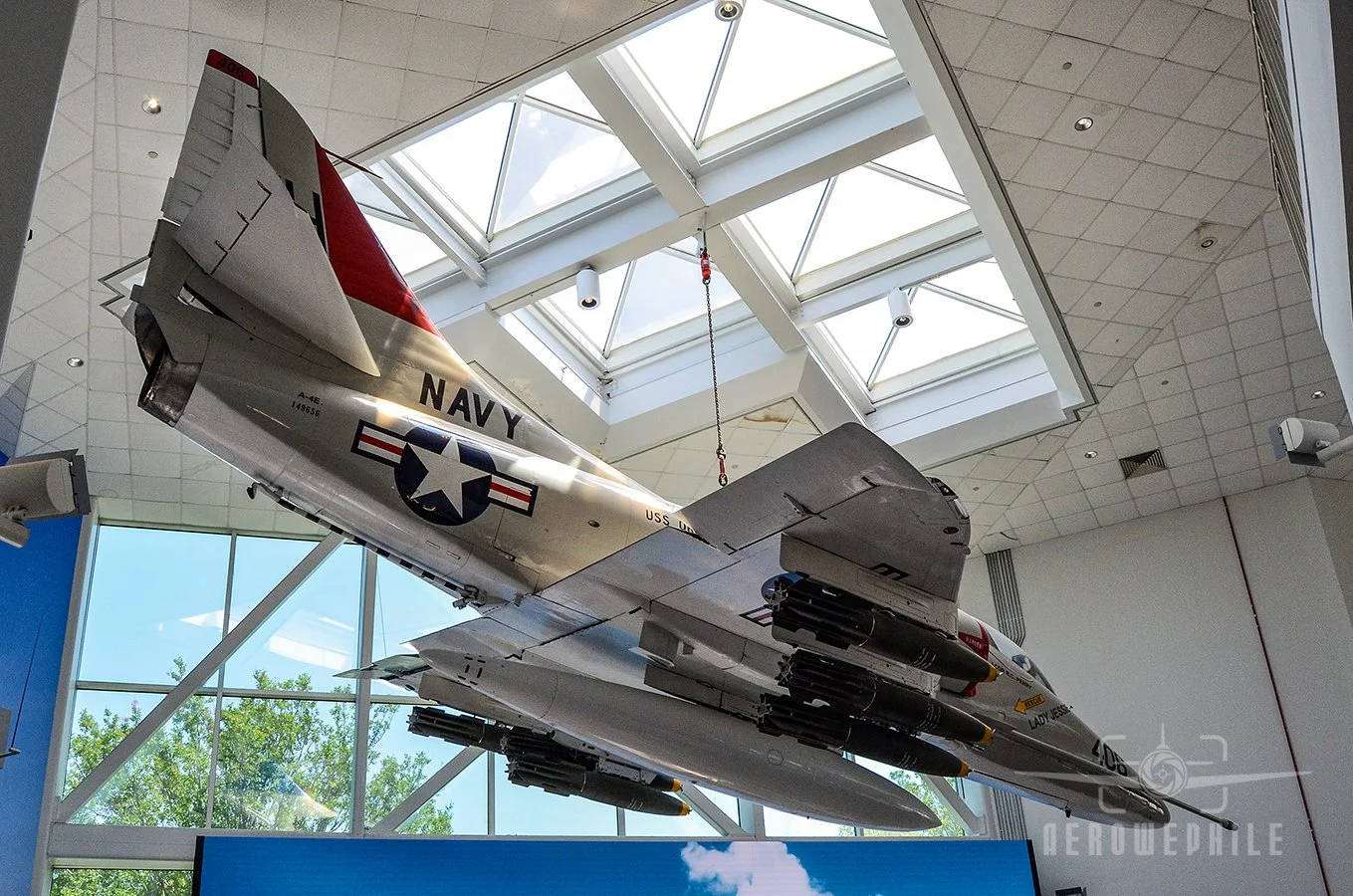
A-4E Skyhawk (Bureau Number 149656) suspended in the Quarterdeck honors Attack Squadrons (VA) 163 and 164.
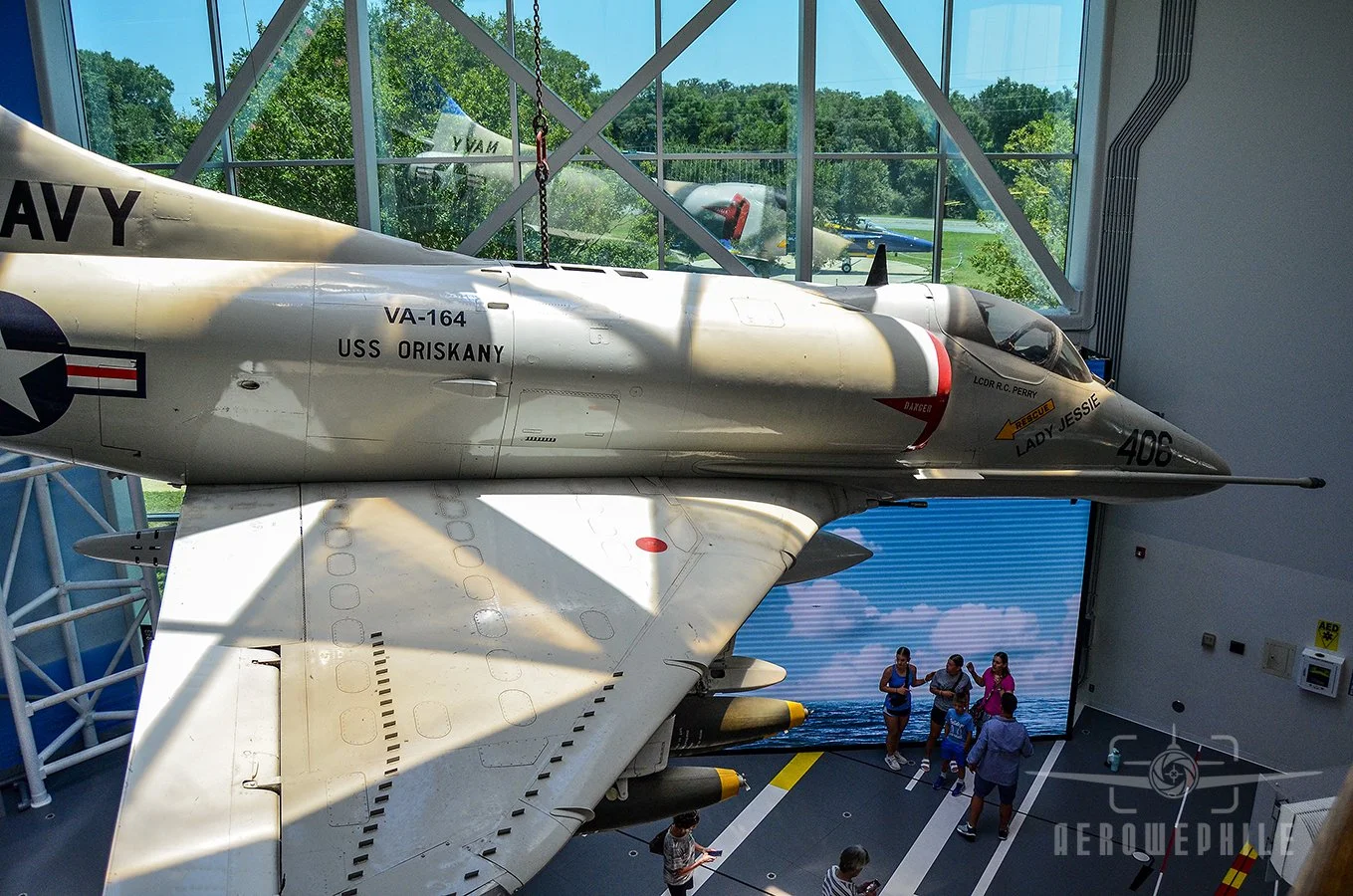
A-4E Skyhawk (Bureau Number 149656) suspended in the Quarterdeck honors Attack Squadrons (VA) 163 and 164.
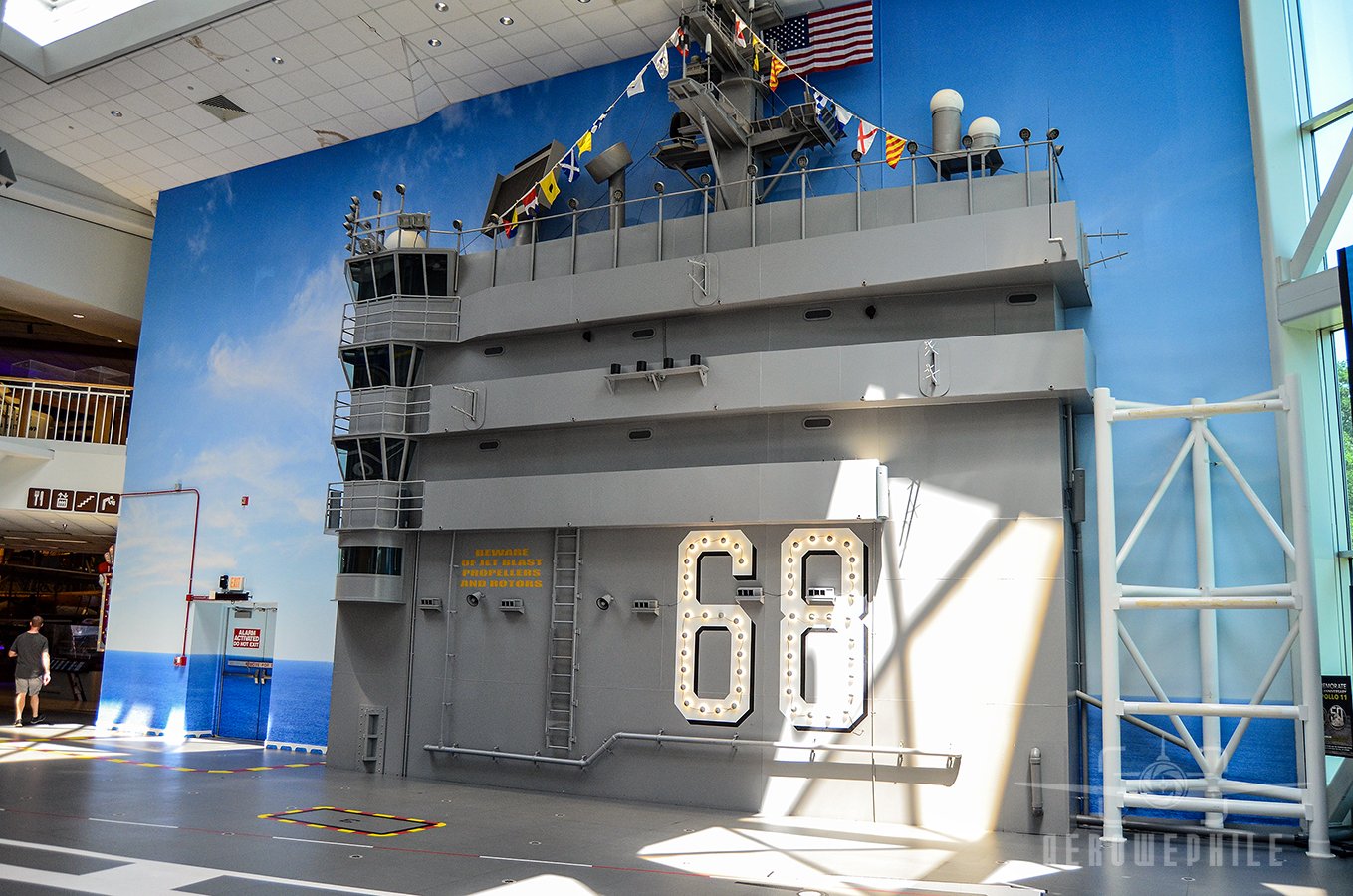
USS Nimitz (CVN 68) Flight Deck Experience - The USS Nimitz one-quarter scale replica flight deck highlights features of the modern nuclear-powered aircraft carriers that operate around the world.
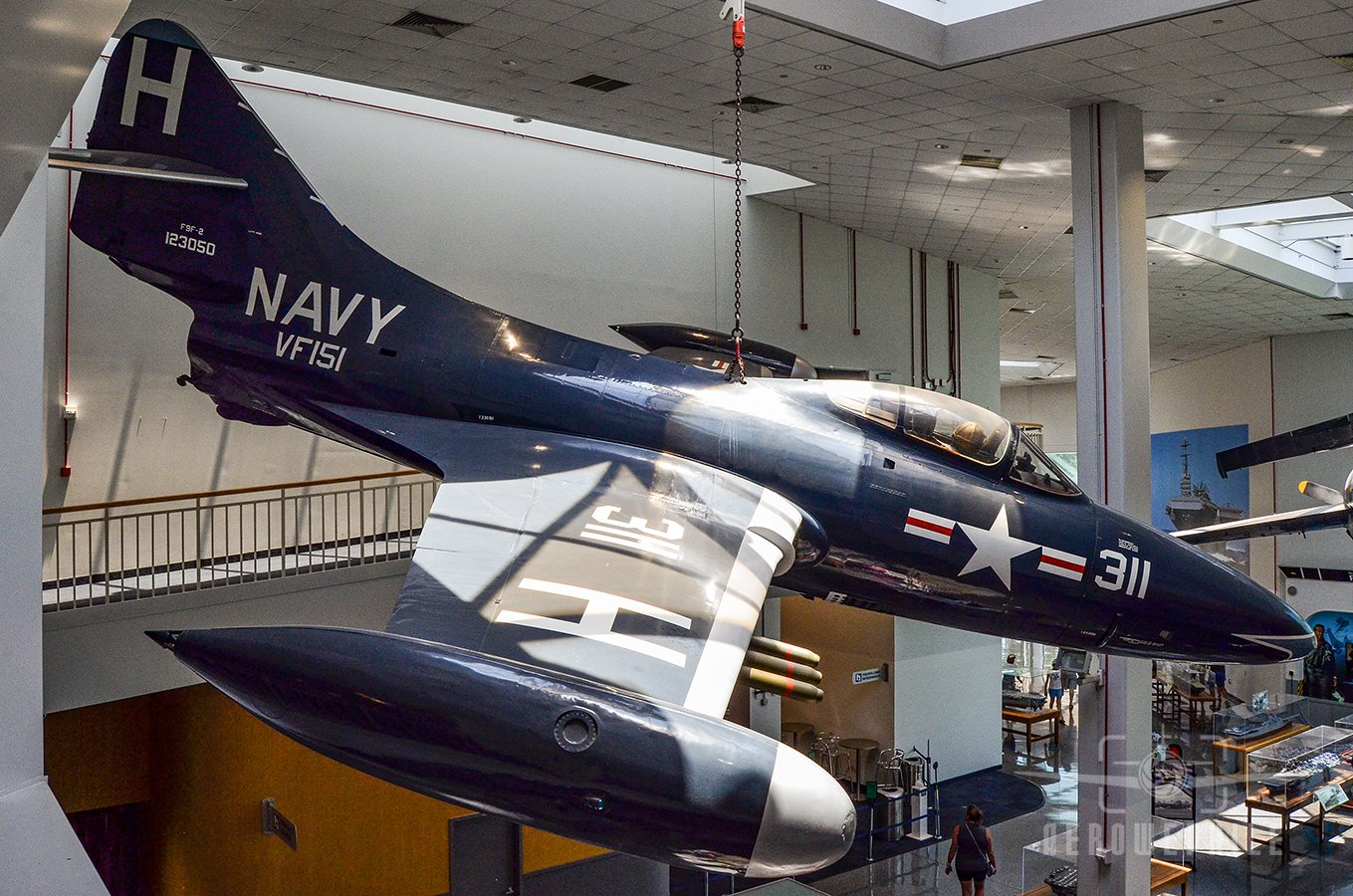
Grumman's first jet fighter, the F9F Panther.
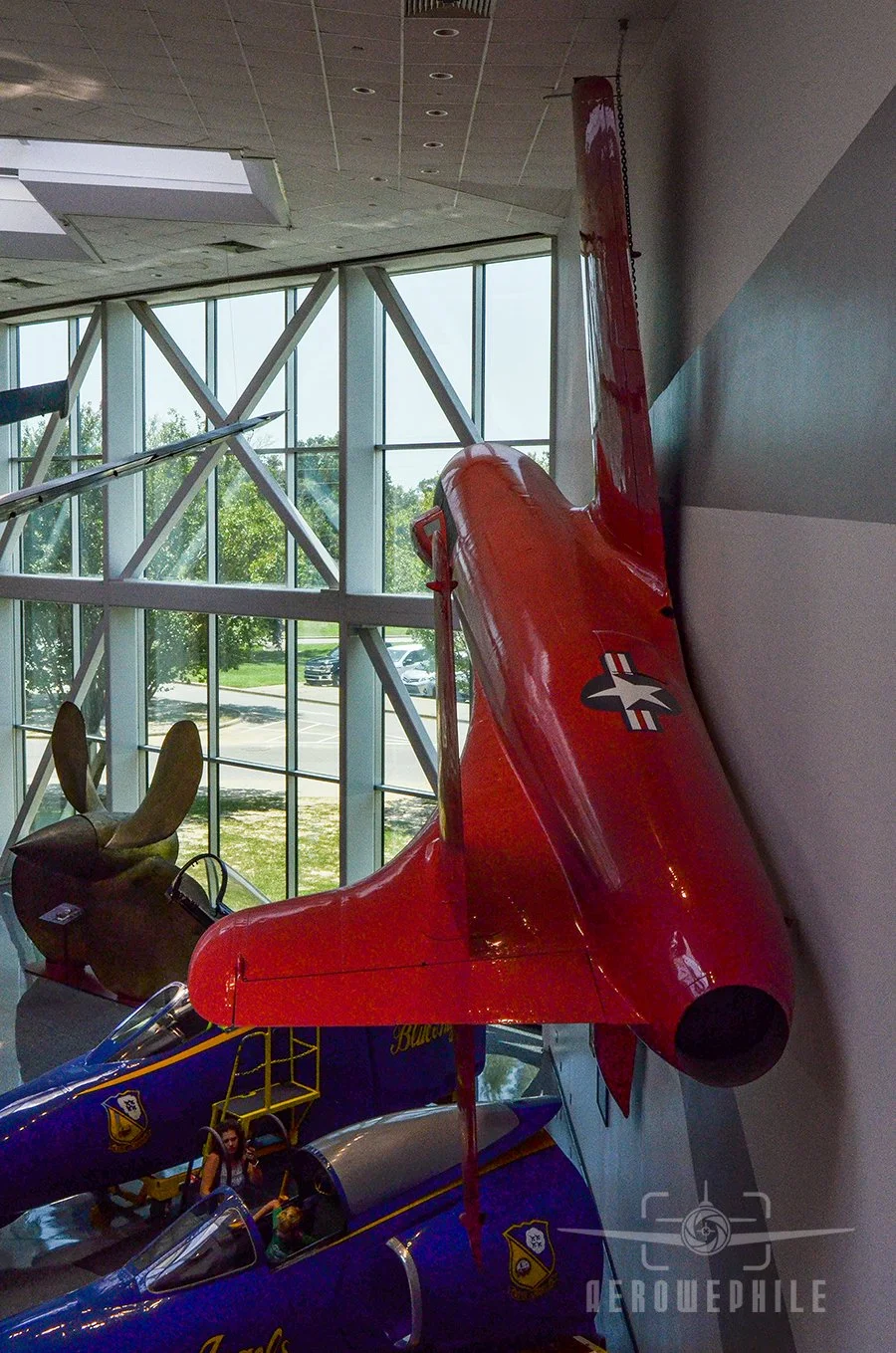
This is the first Douglas D-558-1 Skystreak (Bureau Number 37970), the aircraft in which Commander Turner F. Caldwell established a world speed record on August 20, 1947. It joined the aircraft collection in 1964.
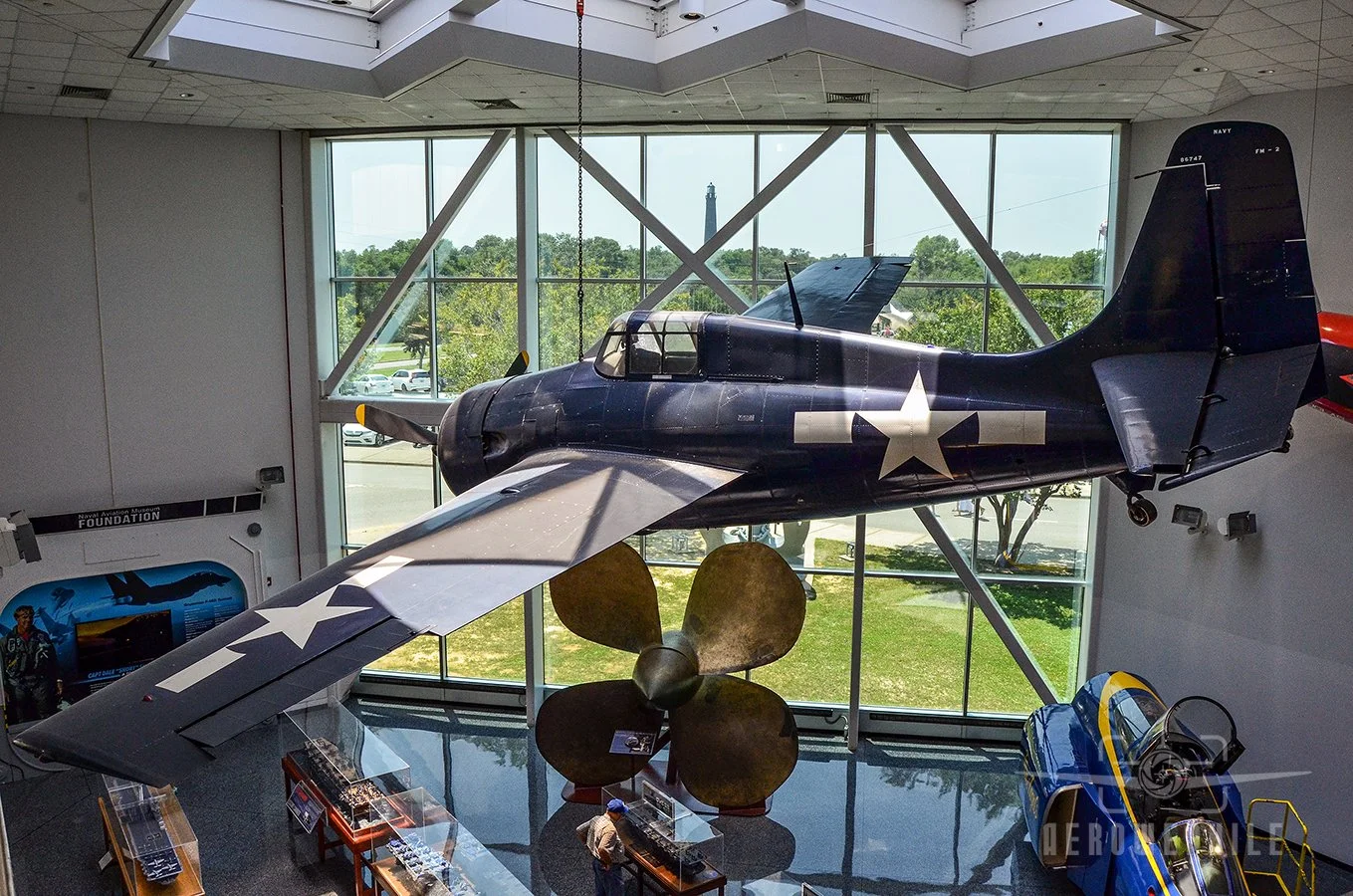
FM-2 Wildcat which is essentially is an improved version of the famous Grumman F4F-4 Wildcat.
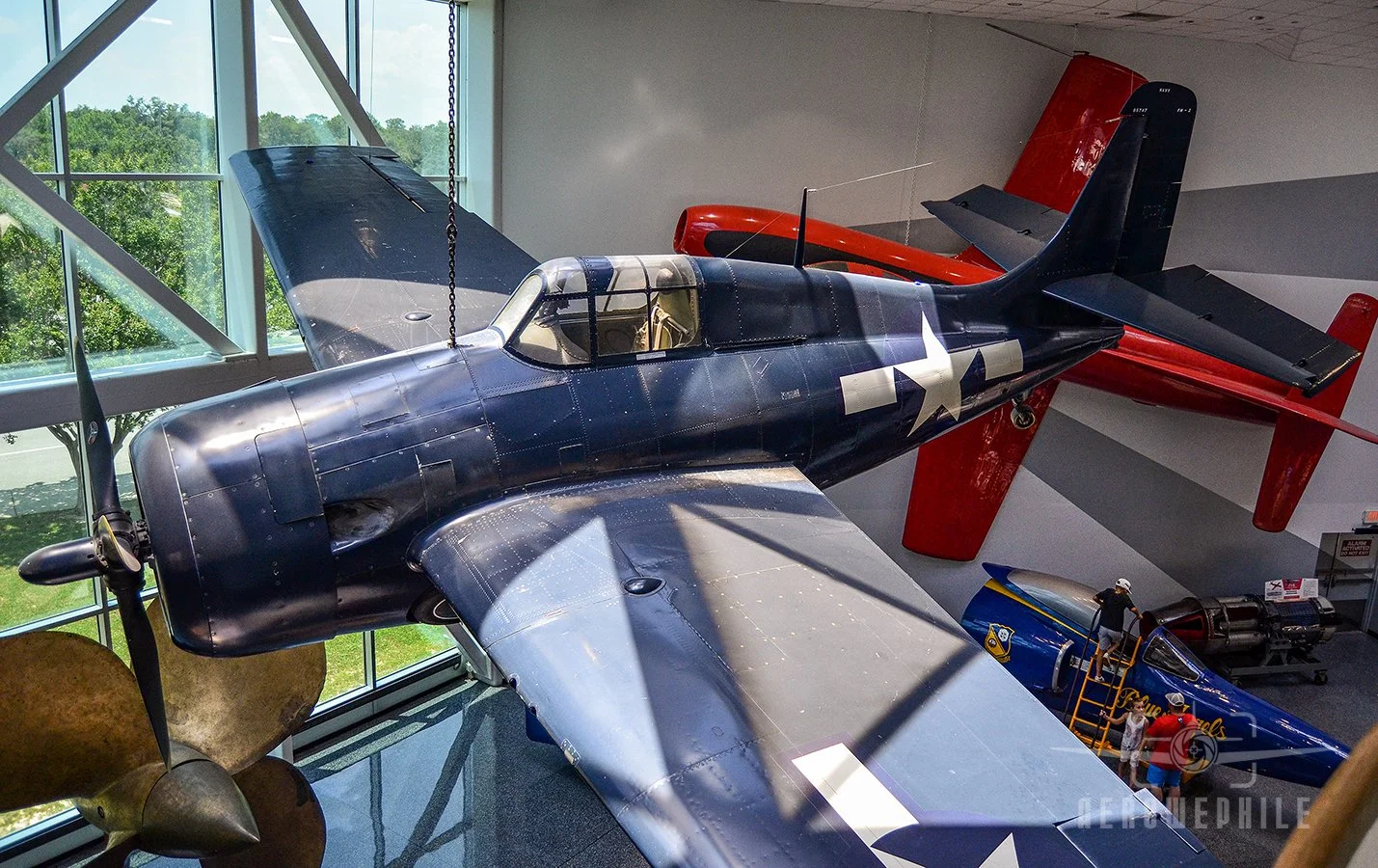
FM-2 Wildcat was built by the Eastern Aircraft Division of General Motors. It can be recognized by its taller fin than the F4F.
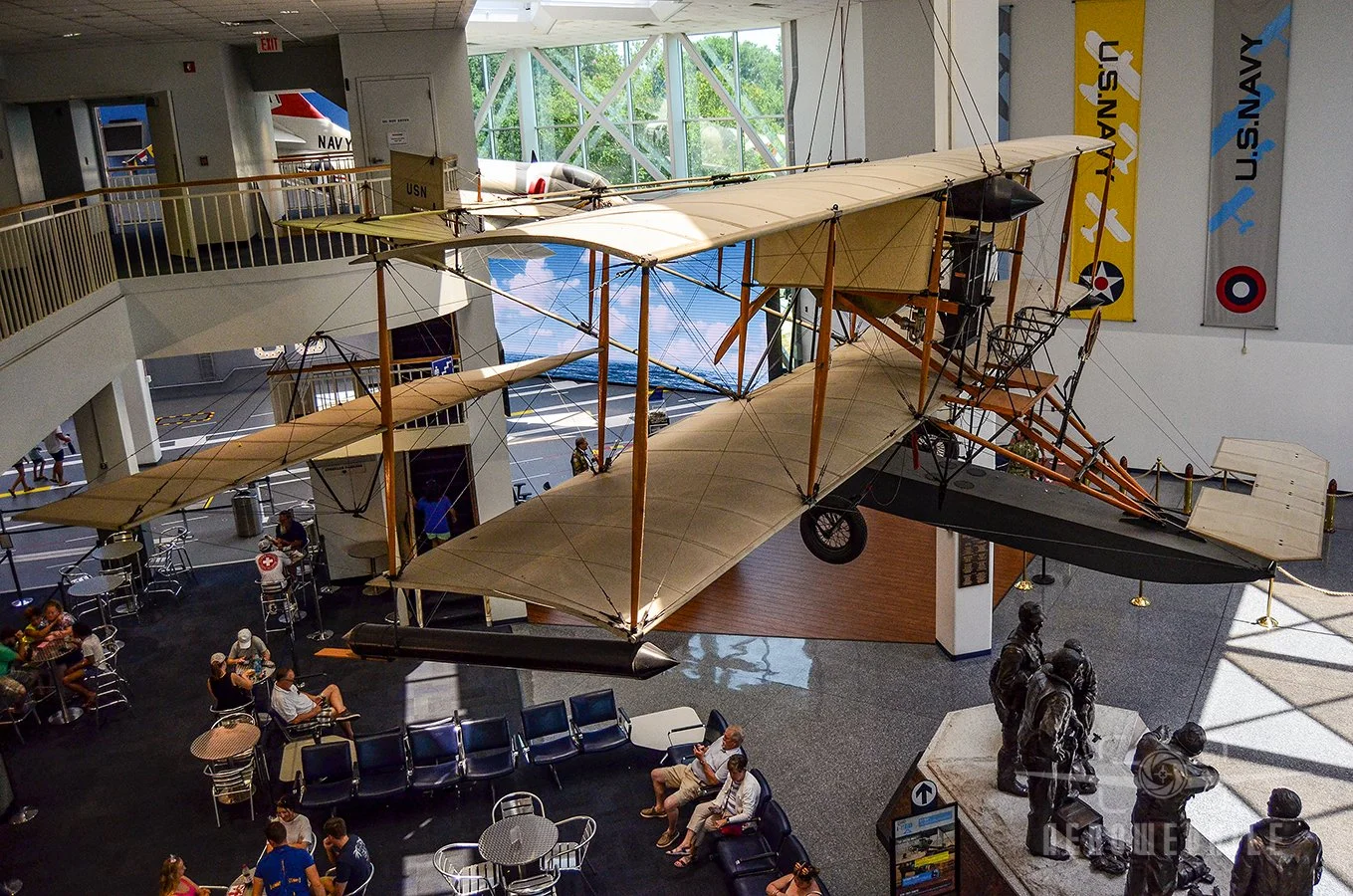
The Curtiss A-1 Triad, the Navy's first aircraft.
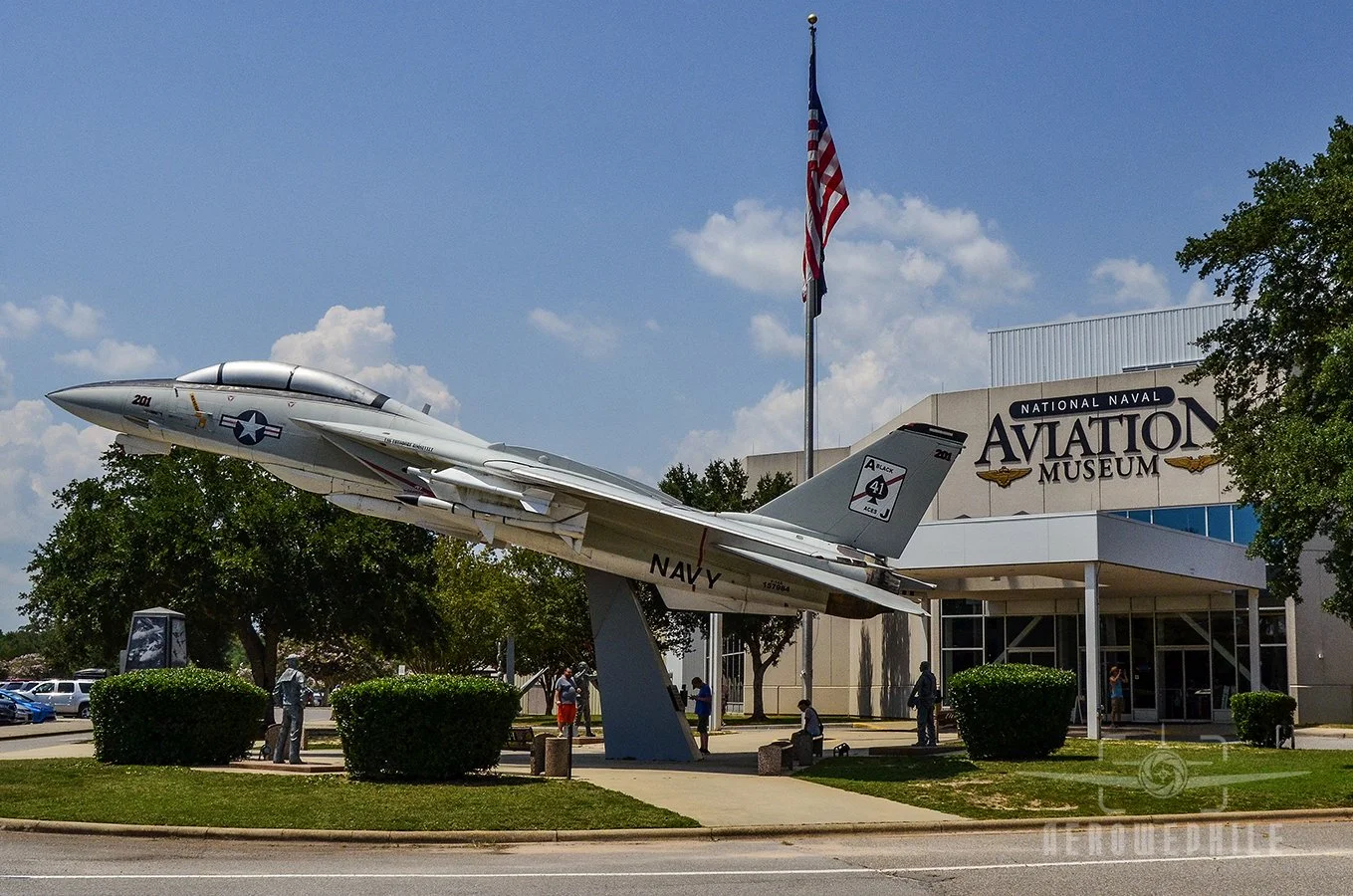
The Museum's Grumman F-14A Tomcat (Bureau Number 157984) is the fifth Tomcat produced.
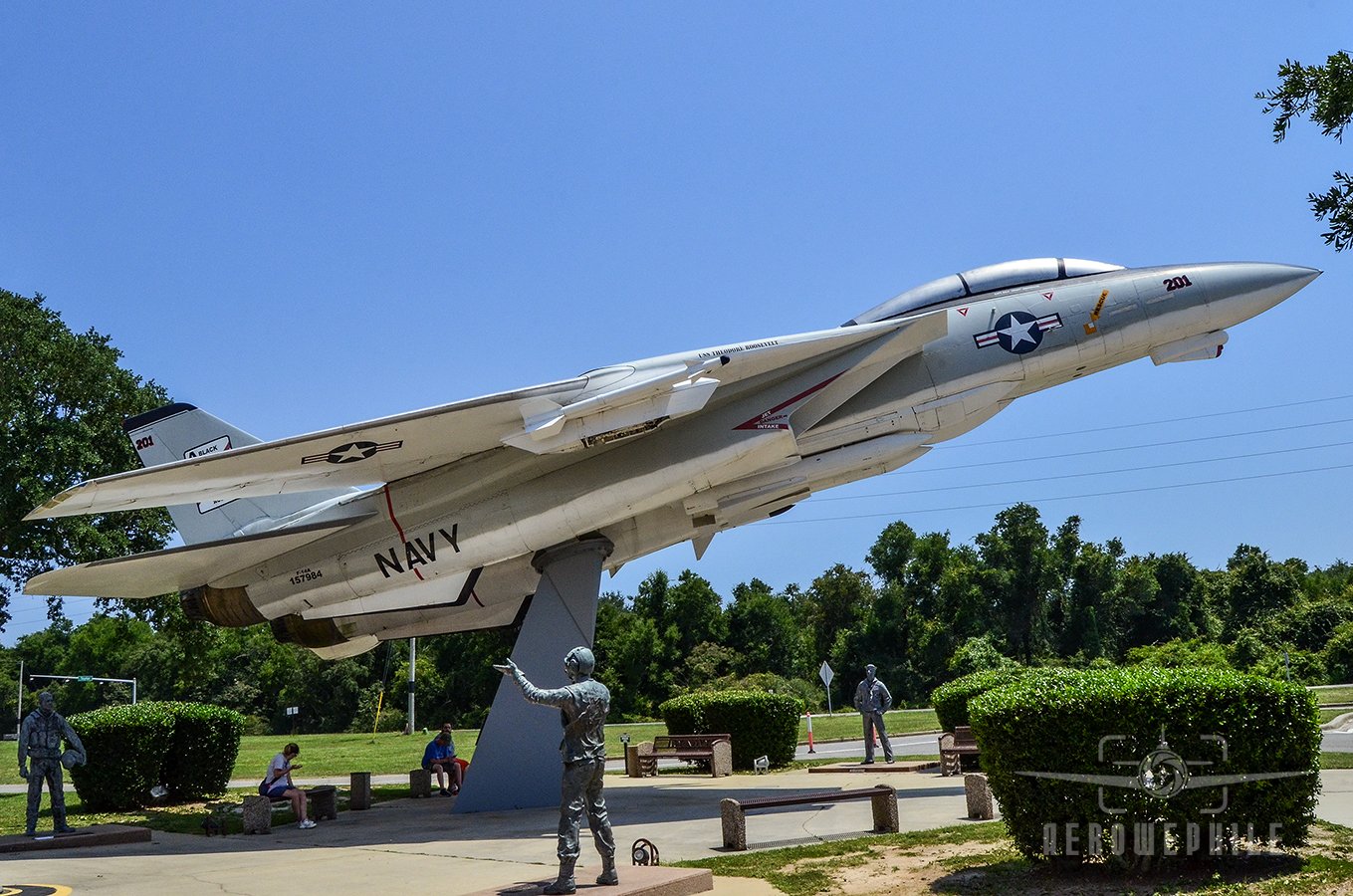
This Grumman F-14A Tomcat was one of the prototypes used in the early testing of the aircraft.
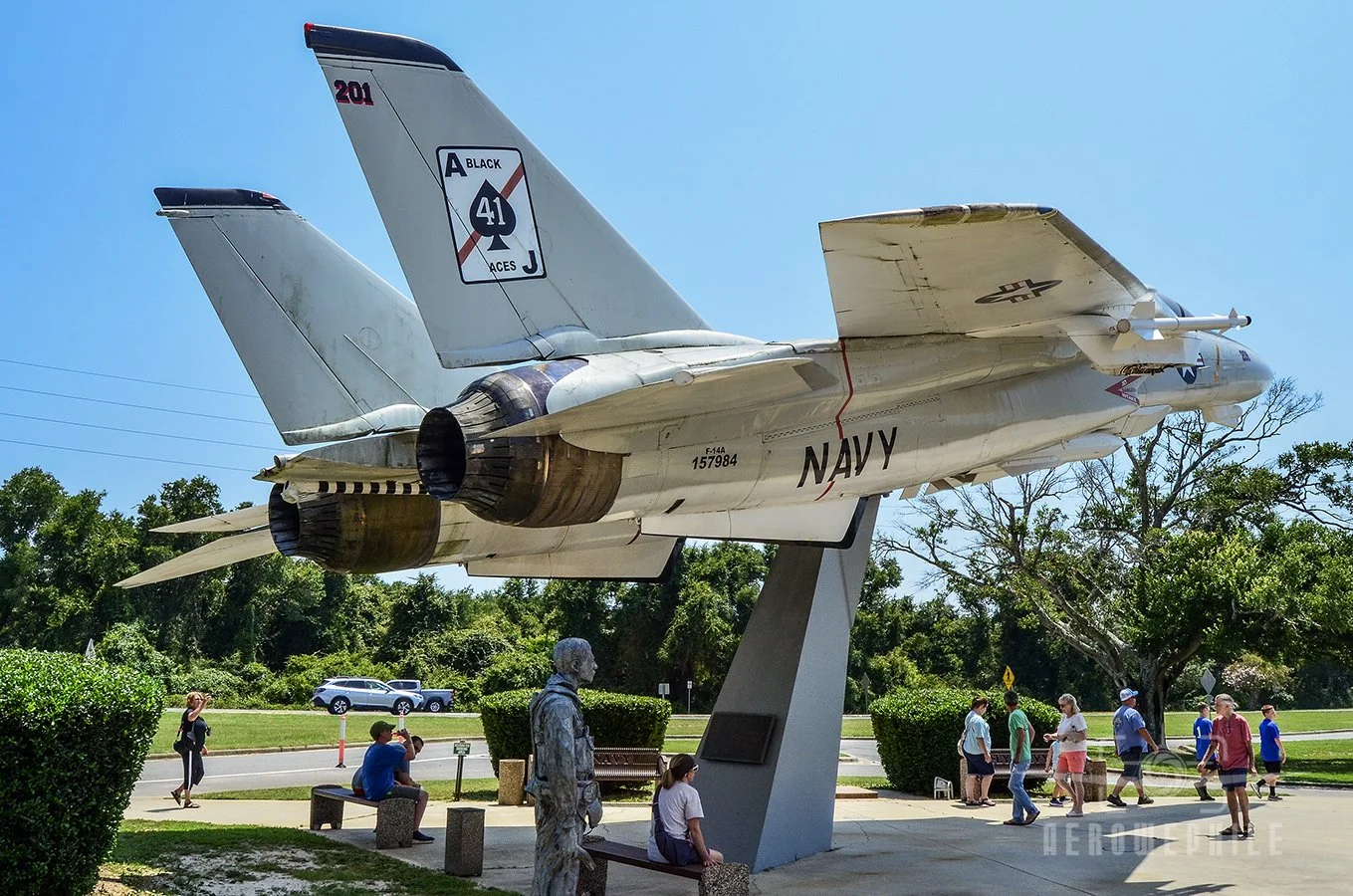
This Grumman F-14A Tomcat is the first F-14 Tomcat ever placed on public display.
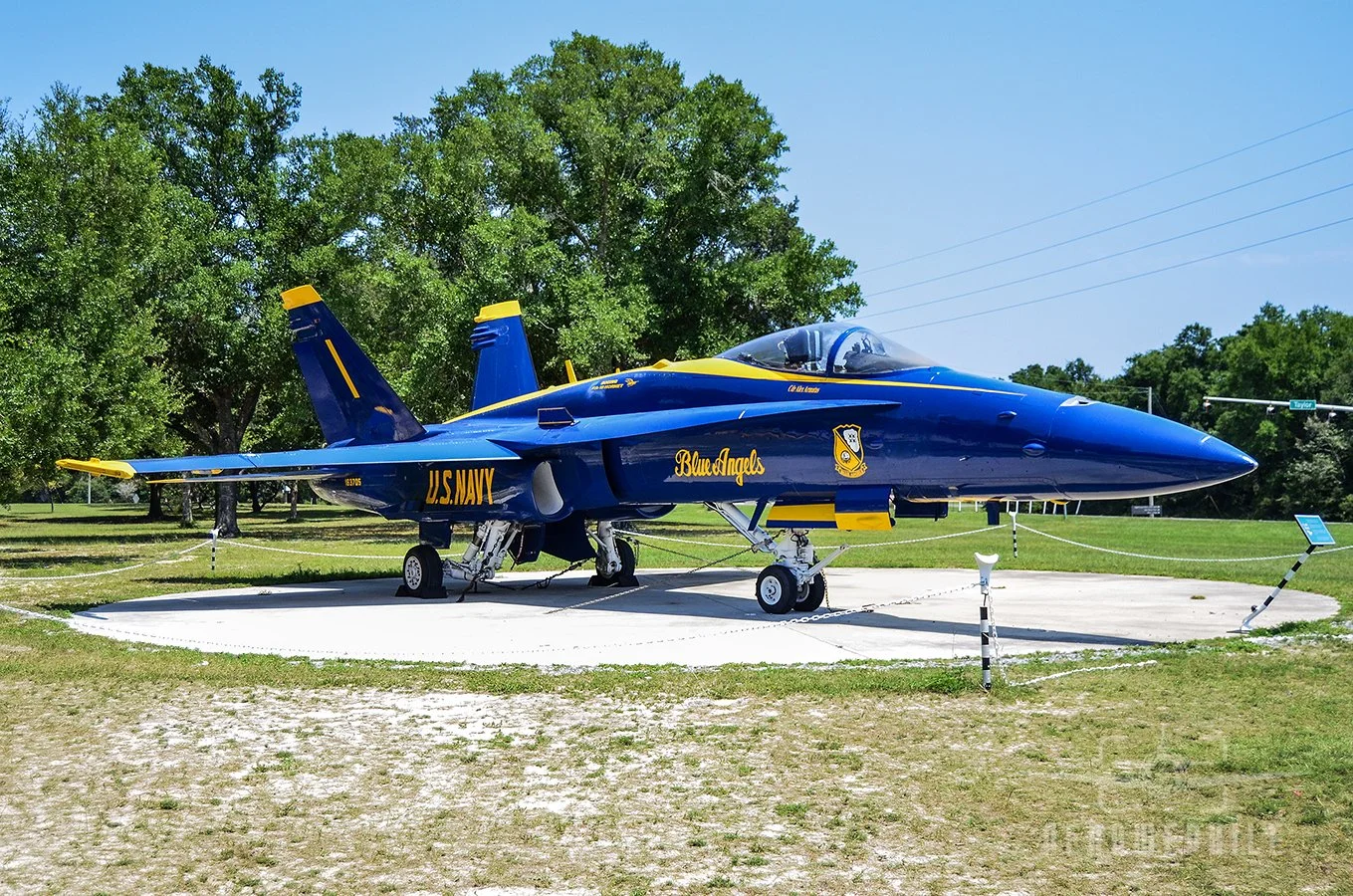
This F/A-18A Hornet (Bureau Number 161959) is in the markings of the Blue Angels Navy Flight Demonstration Squadron to which it was assigned before acquisition by the Museum.
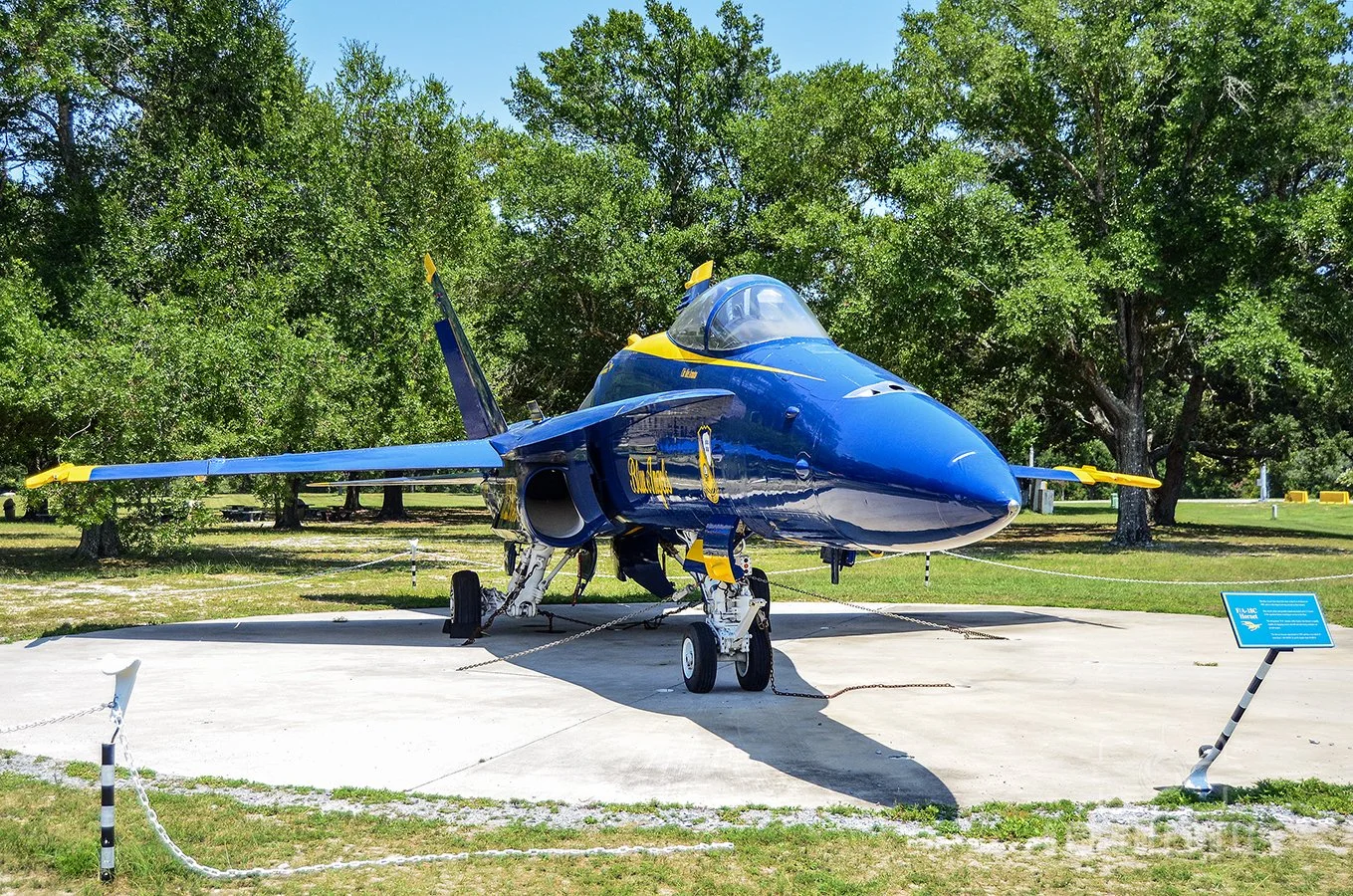
F/A-18A Hornet (Bureau Number 161959) entered service in August 1984, with initial assignment to Air Evaluation Squadrons (VX) 4 and 5 for operational evaluation. In October 1984, it joined Strike Fighter Squadron (VFA) 113.
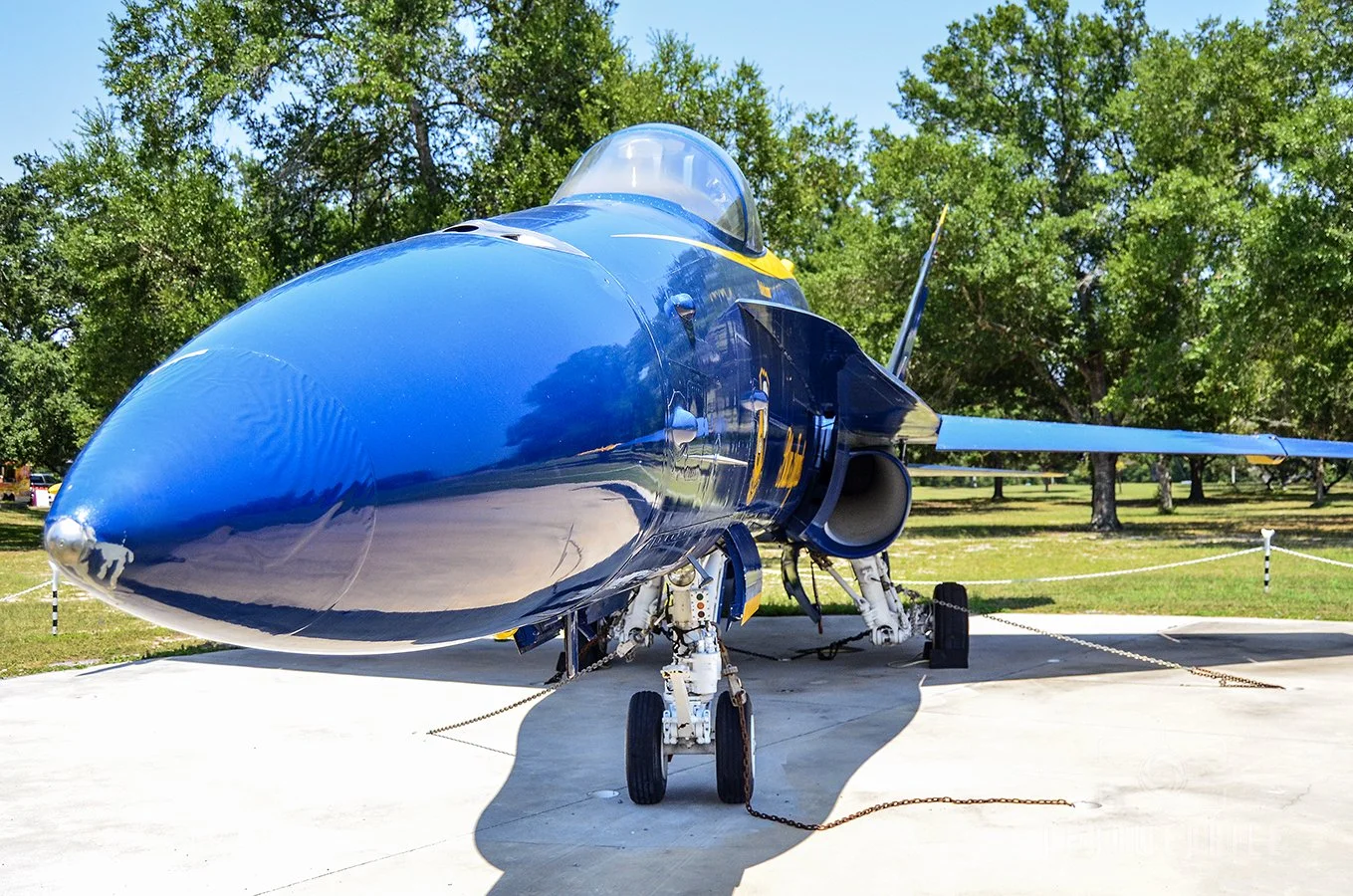
This F/A-18A Hornet flew with the “Blue Dolphins,” until 1997 when it was assigned to the Blue Angels. It flew with the Navy Flight Demonstration Squadron until 2010. It was accessioned into the National Naval Aviation Museum Collection in 2011.
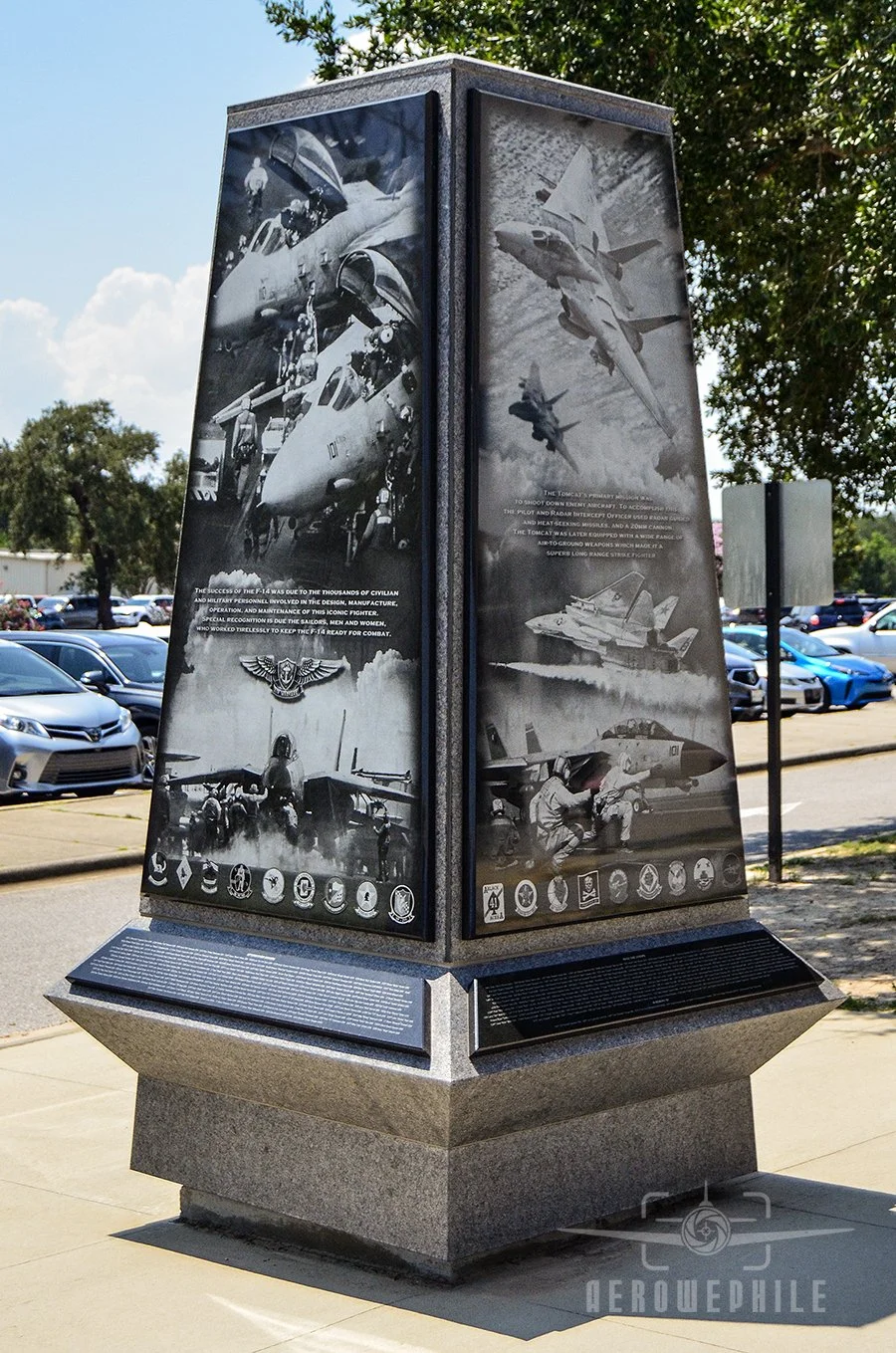
U.S. Navy themed obelisk at the front entrance.
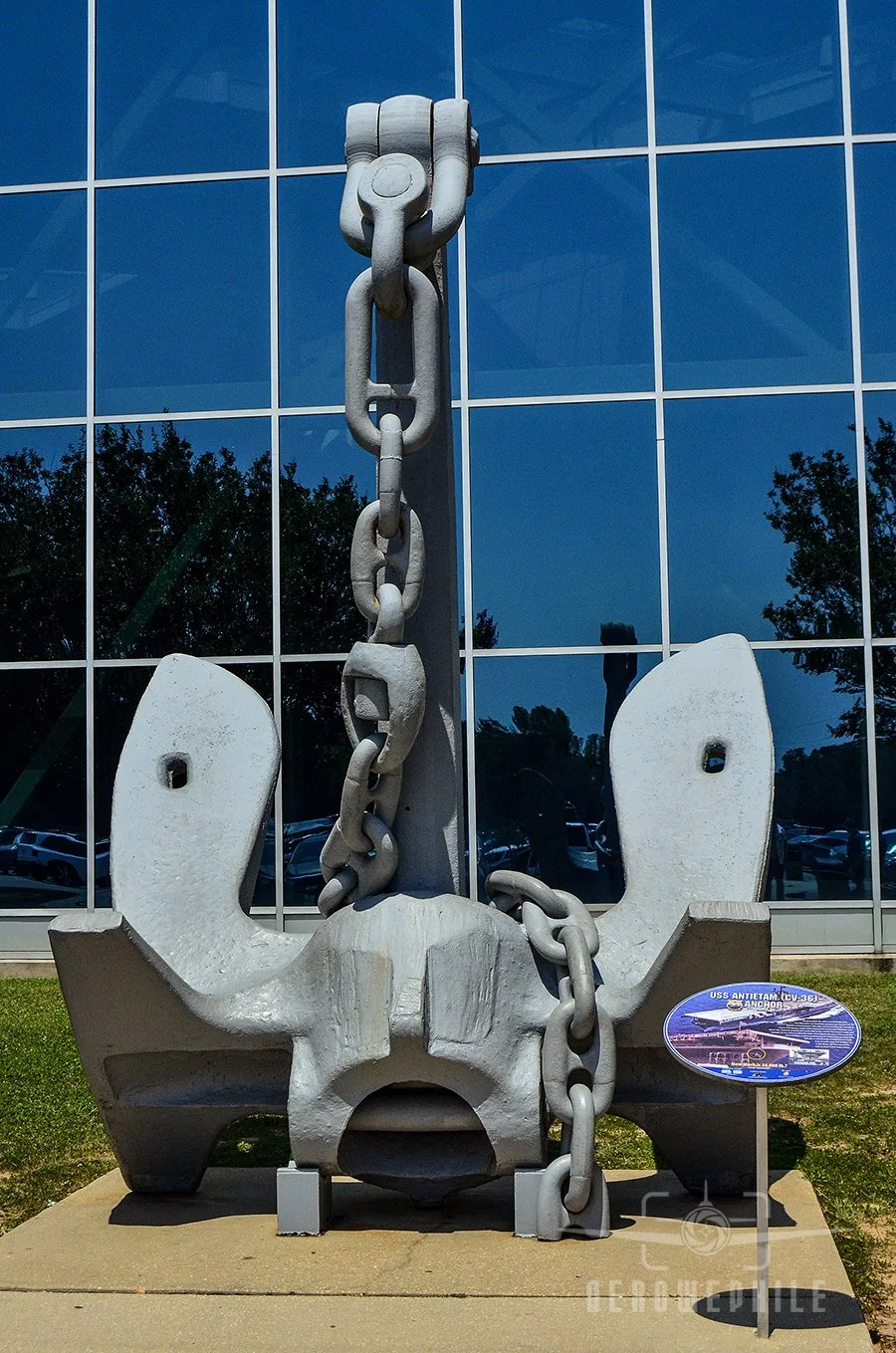
USS Antietam (CV-36) Anchor outside the museum's entrance.
WEST WING
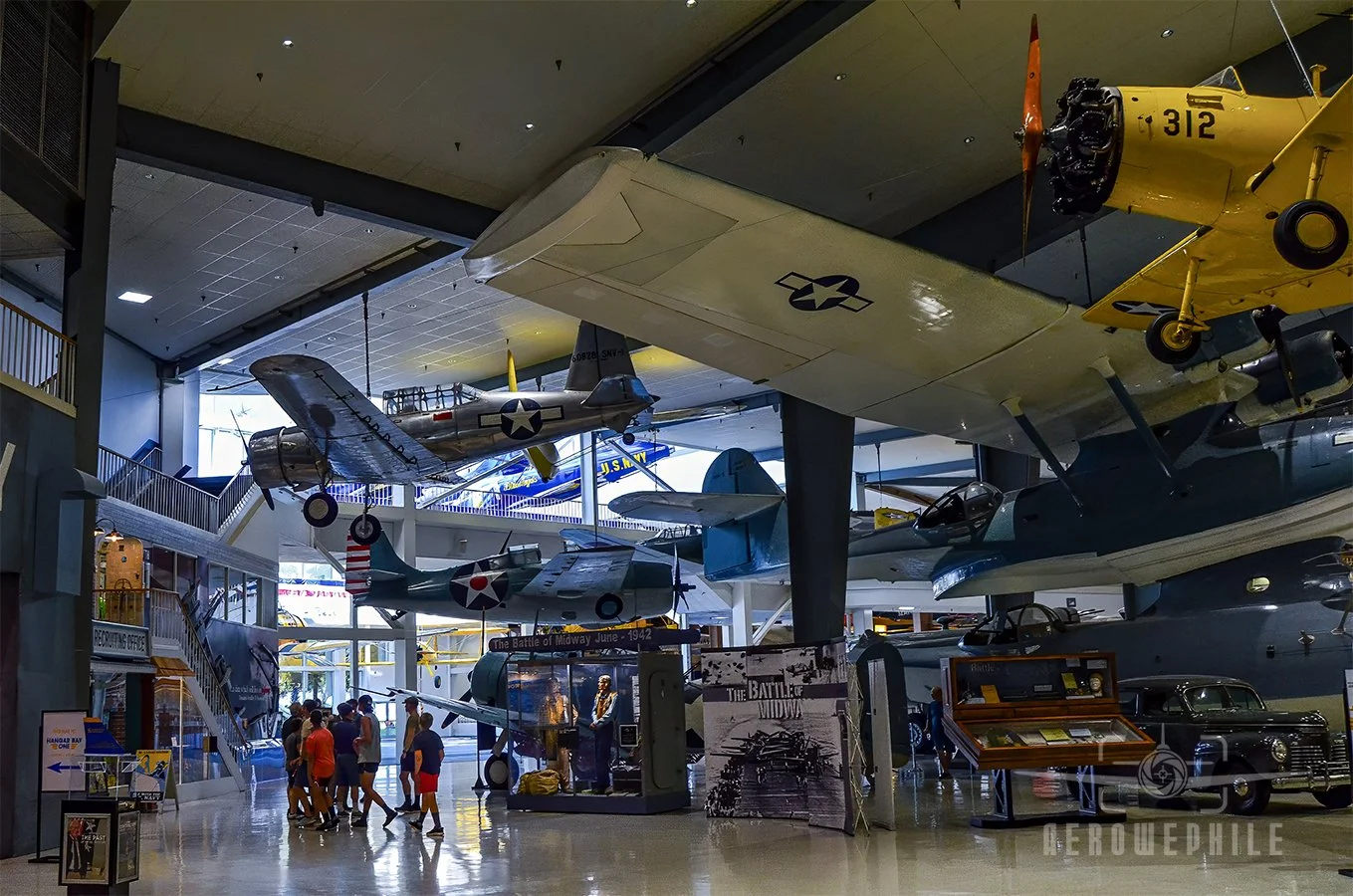
West Wing looking back at the Blue Angel Atrium.
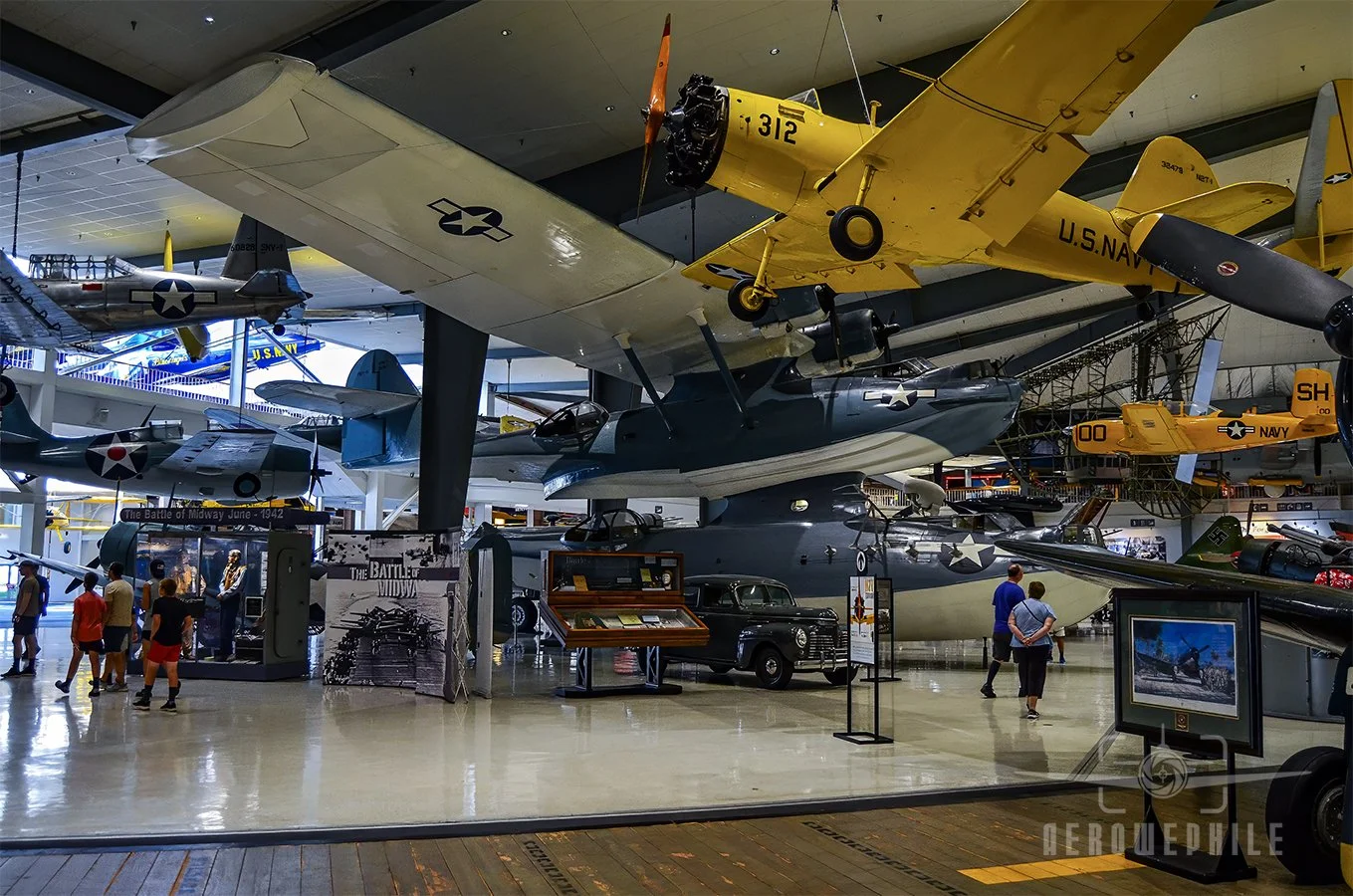
West Wing
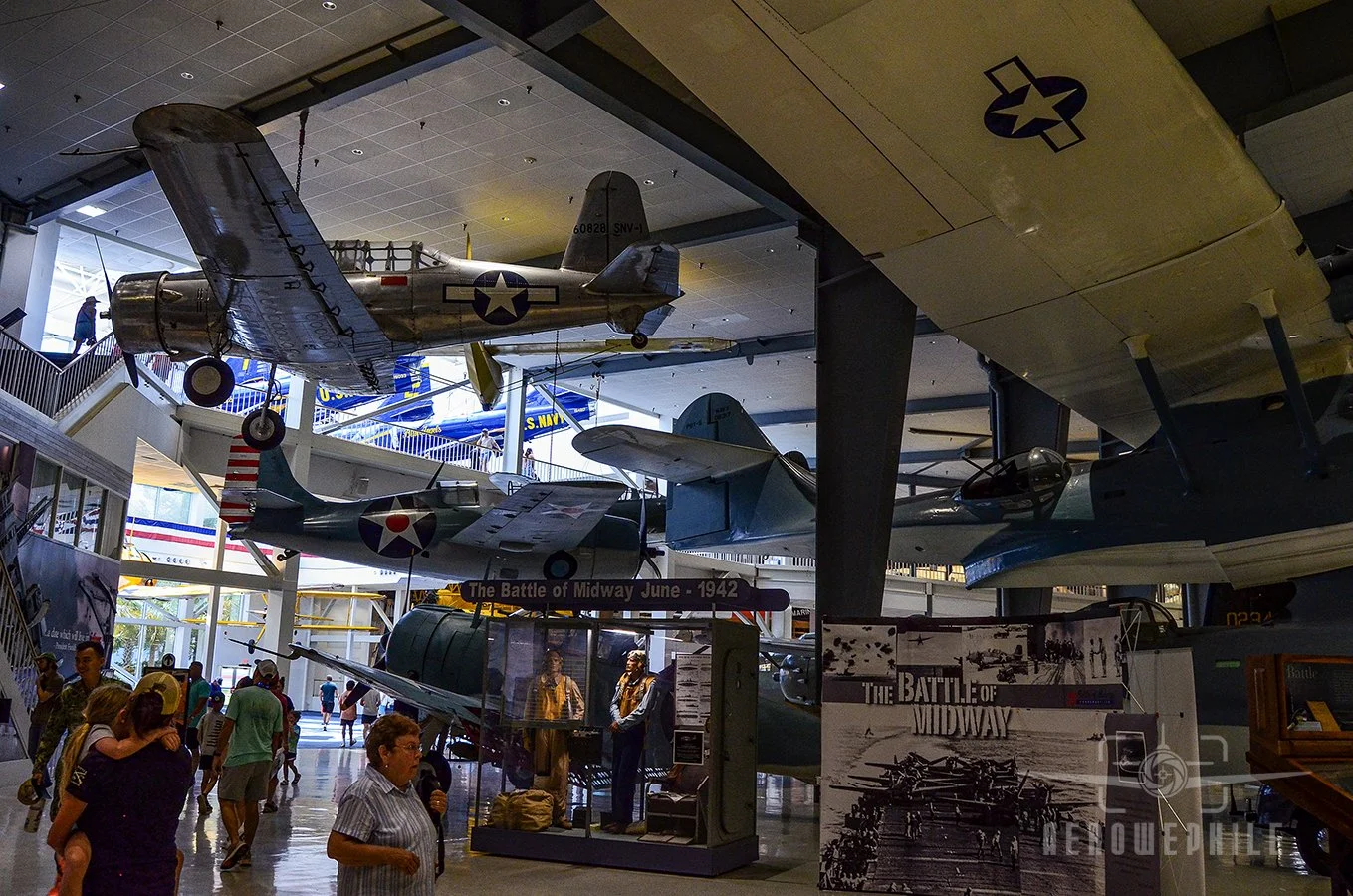
West Wing looking back at the Blue Angel Atrium.
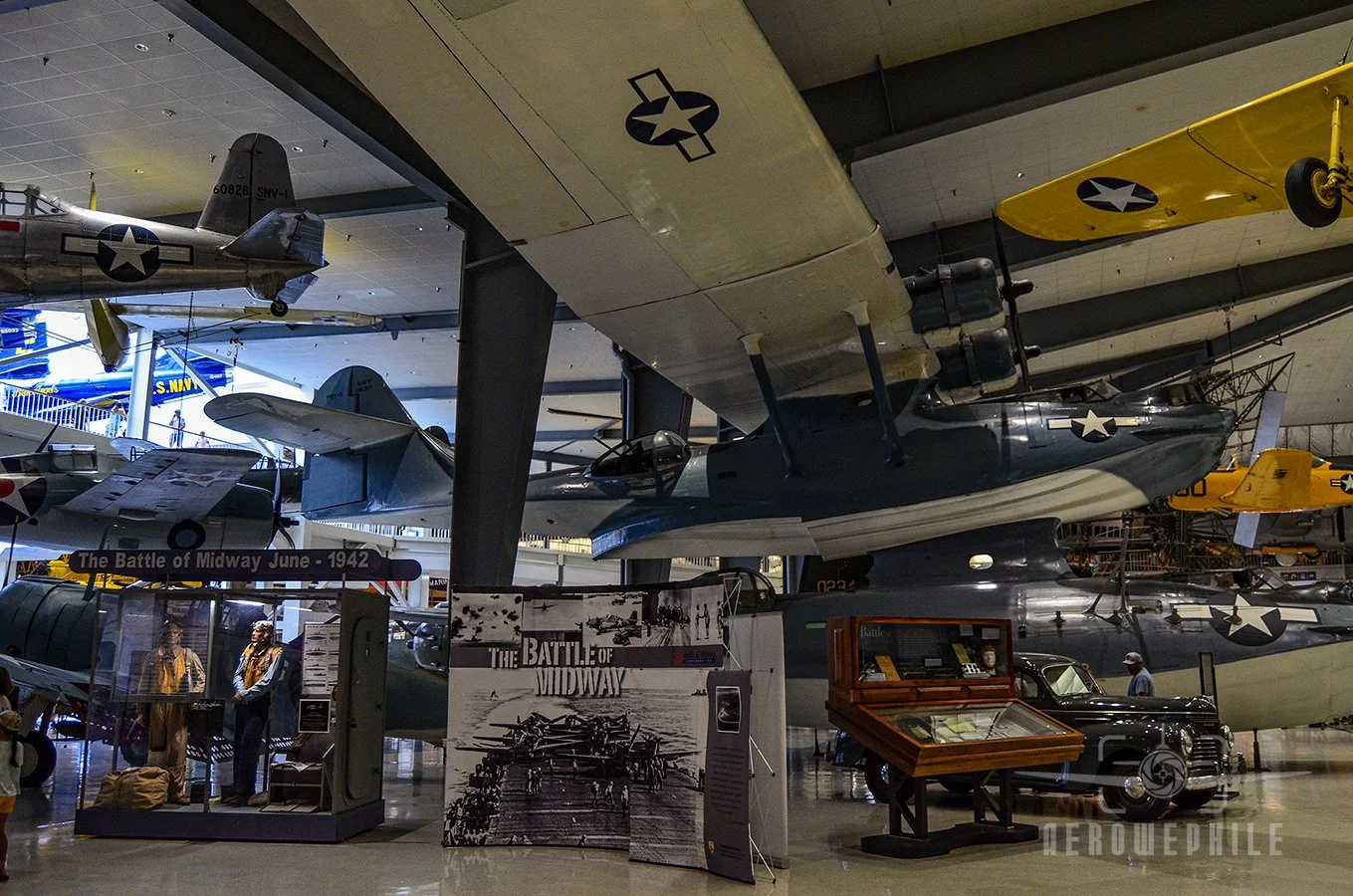
West Wing
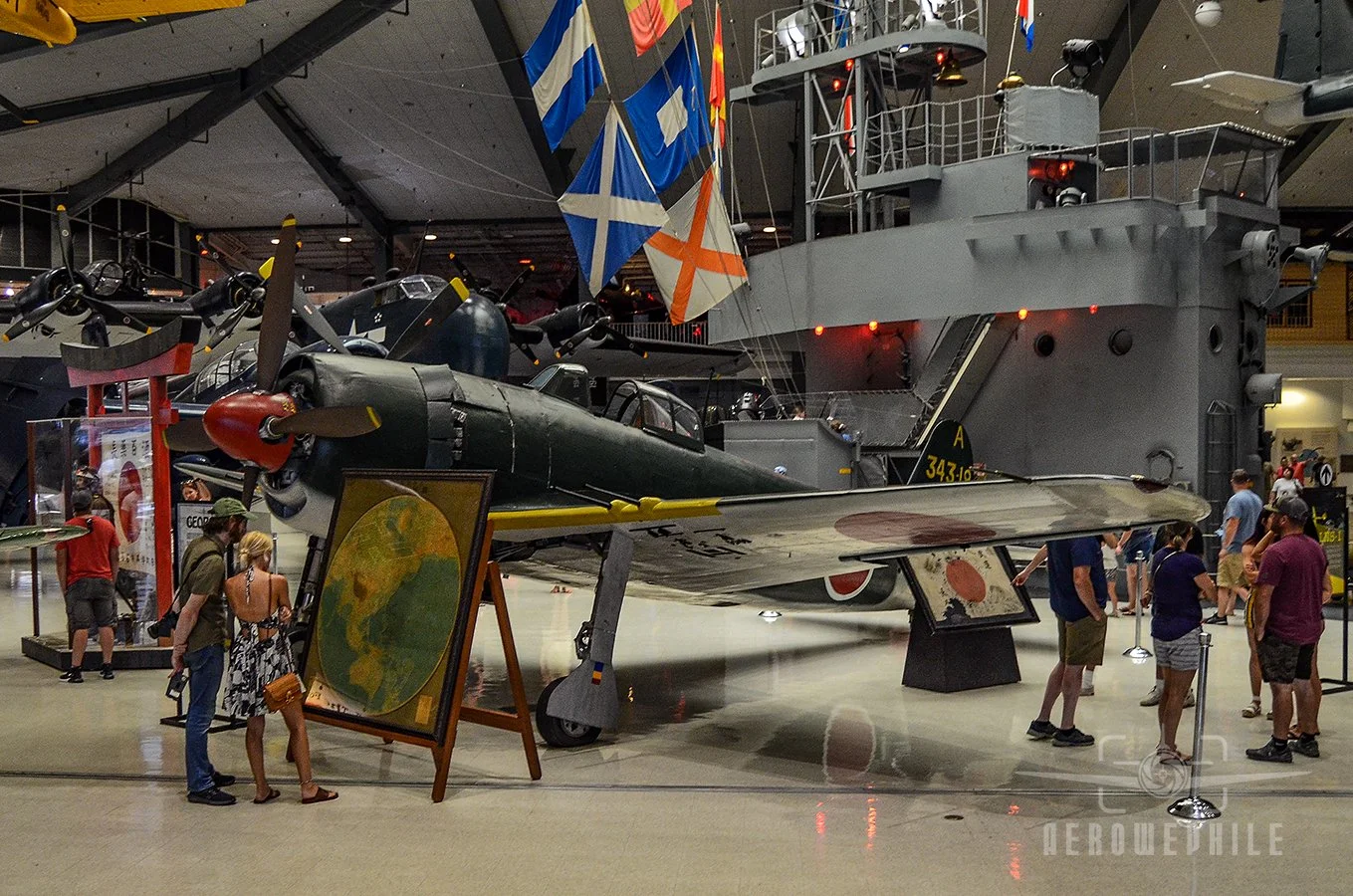
The N1K2-Ja Shiden Kai (Japanese for "Violet Lightning--Improved") was the best fighter used in significant numbers by the Japanese Navy during World War II.
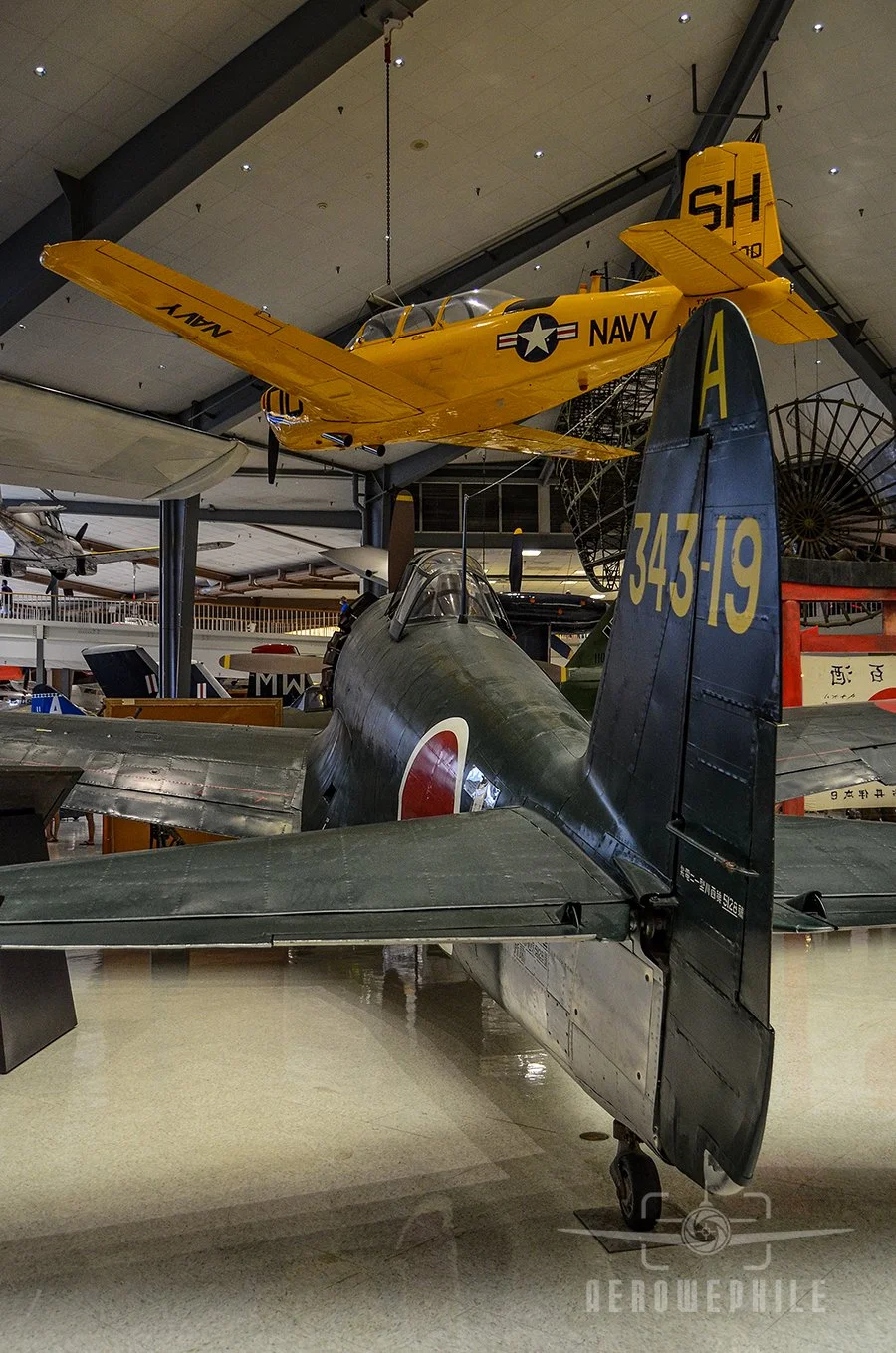
One of four surviving examples, the Shiden Kai (Violet Lightning Modified) on display served with the 343 Kokutai (air group) led by the famous Captain Minoru Genda and manned by Japanese aces.
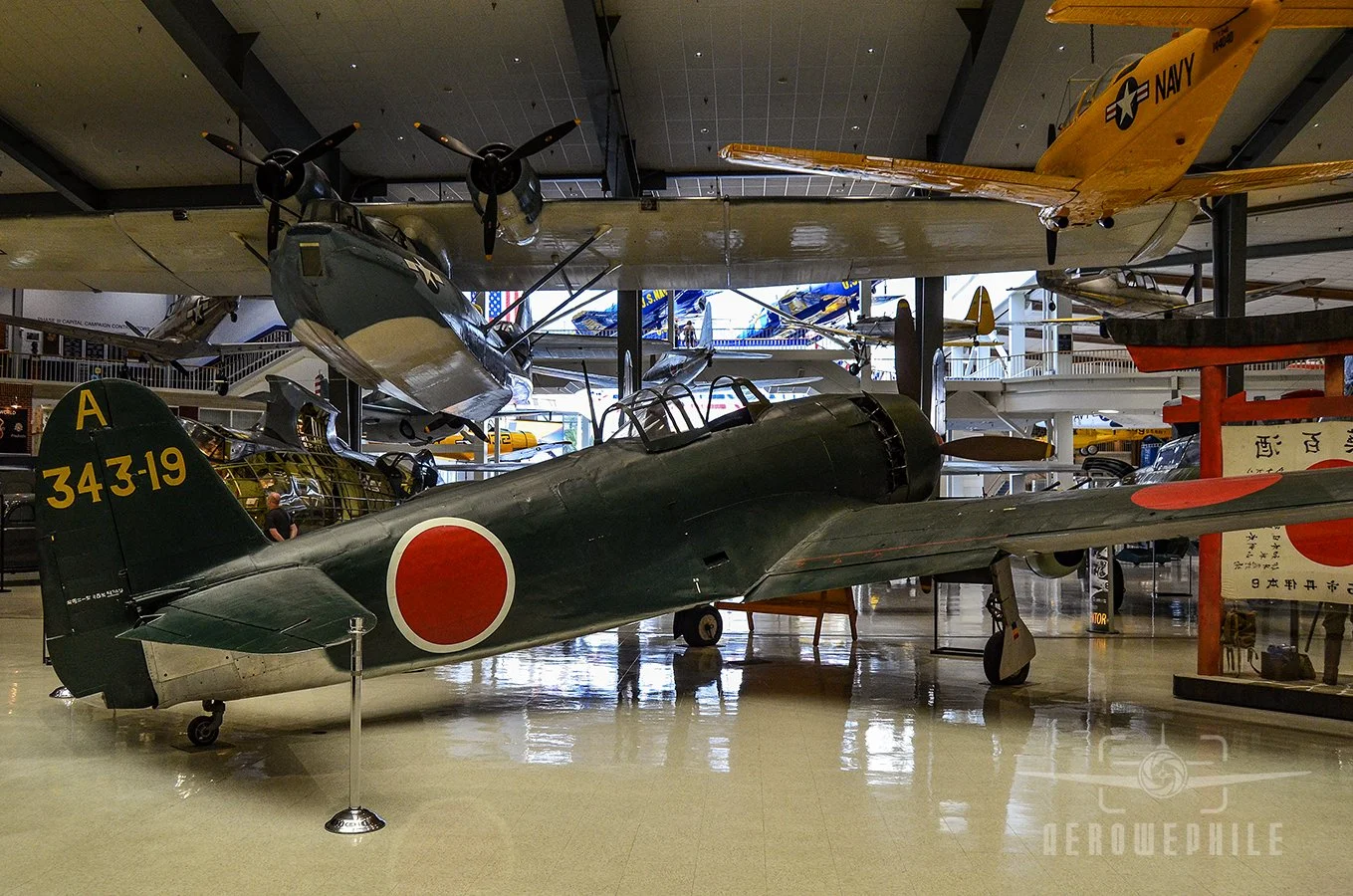
A unique design feature on the N1K2-Ja Shiden Kai was an automatic flap system used not only for landing, but also aiding in slow-speed air combat maneuvering.
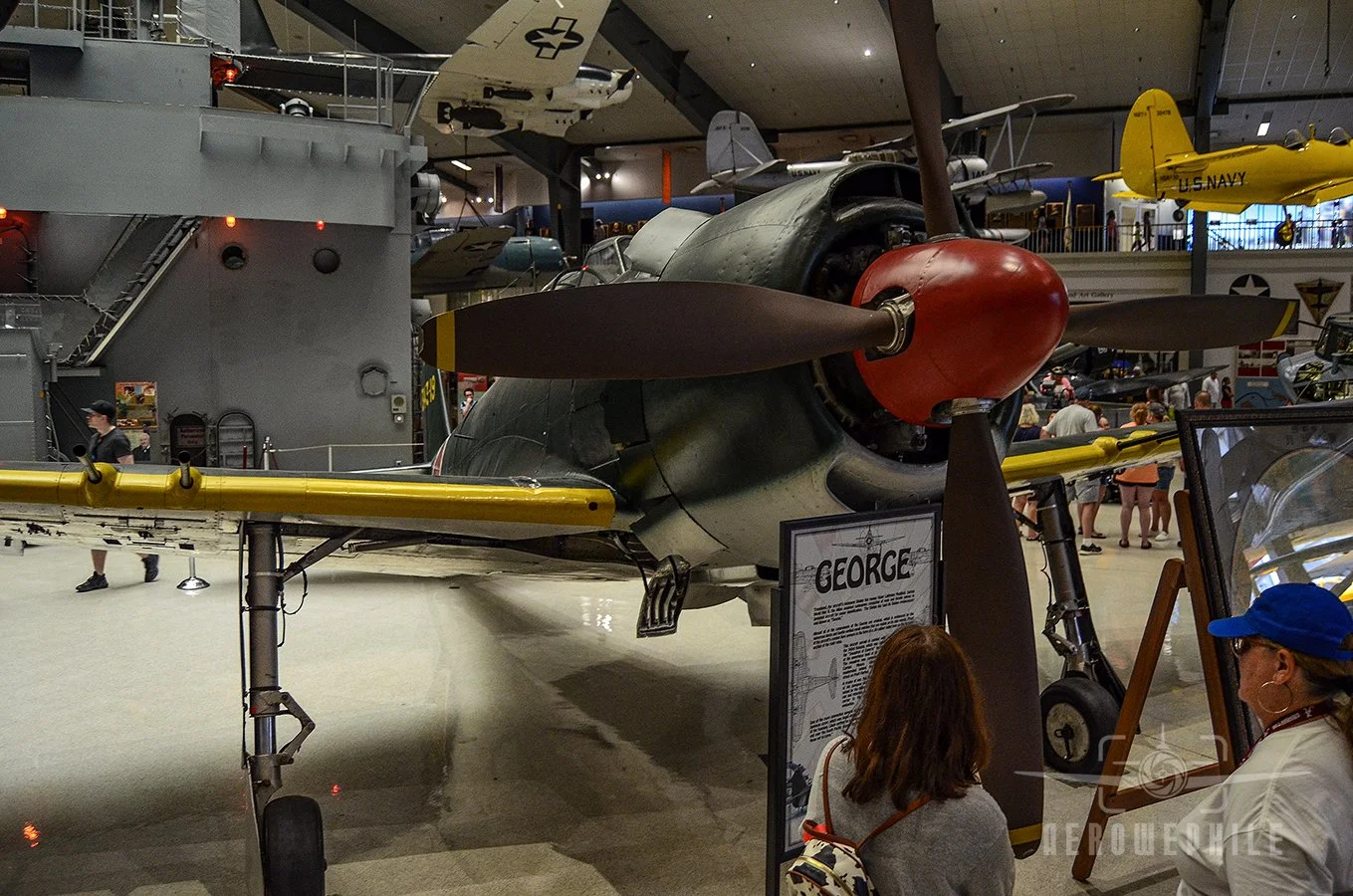
The N1K2-Ja Shiden Kai was code named "George" by the Allies.
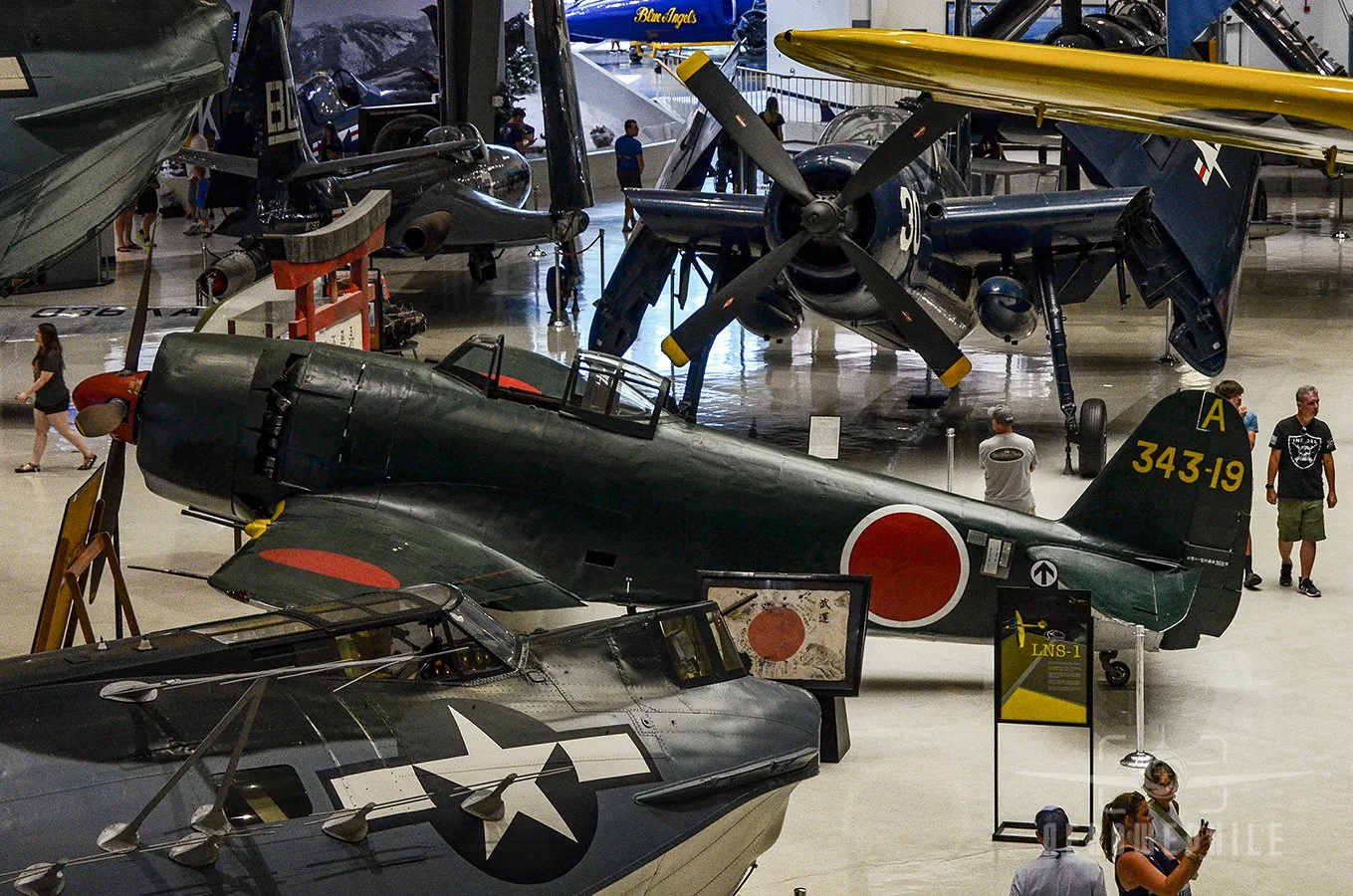
Unfortunately for the Japanese, the N1K2-Ja Shiden Kai arrived too late in the war to make a difference.
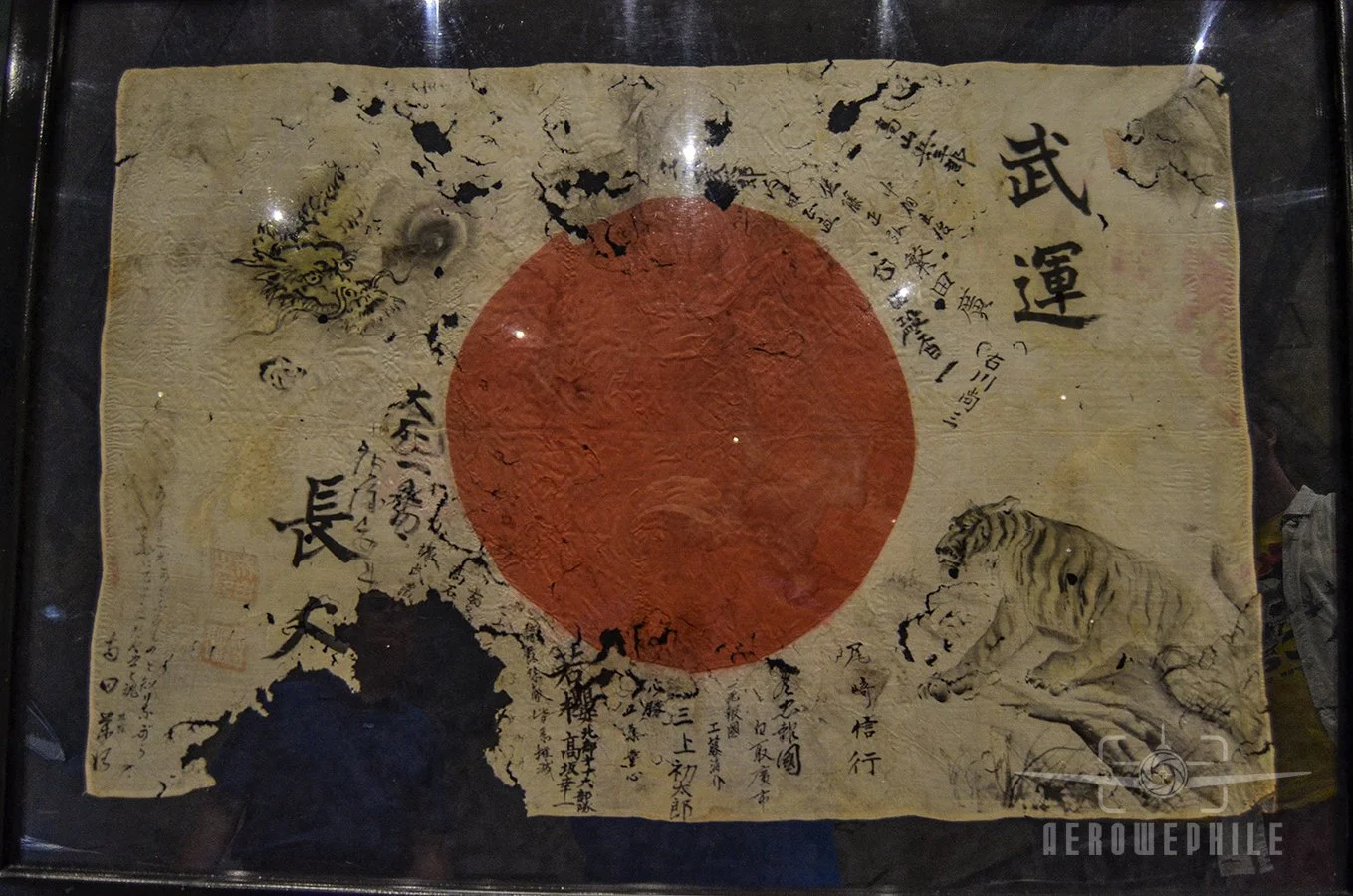
Japanese flag on display.
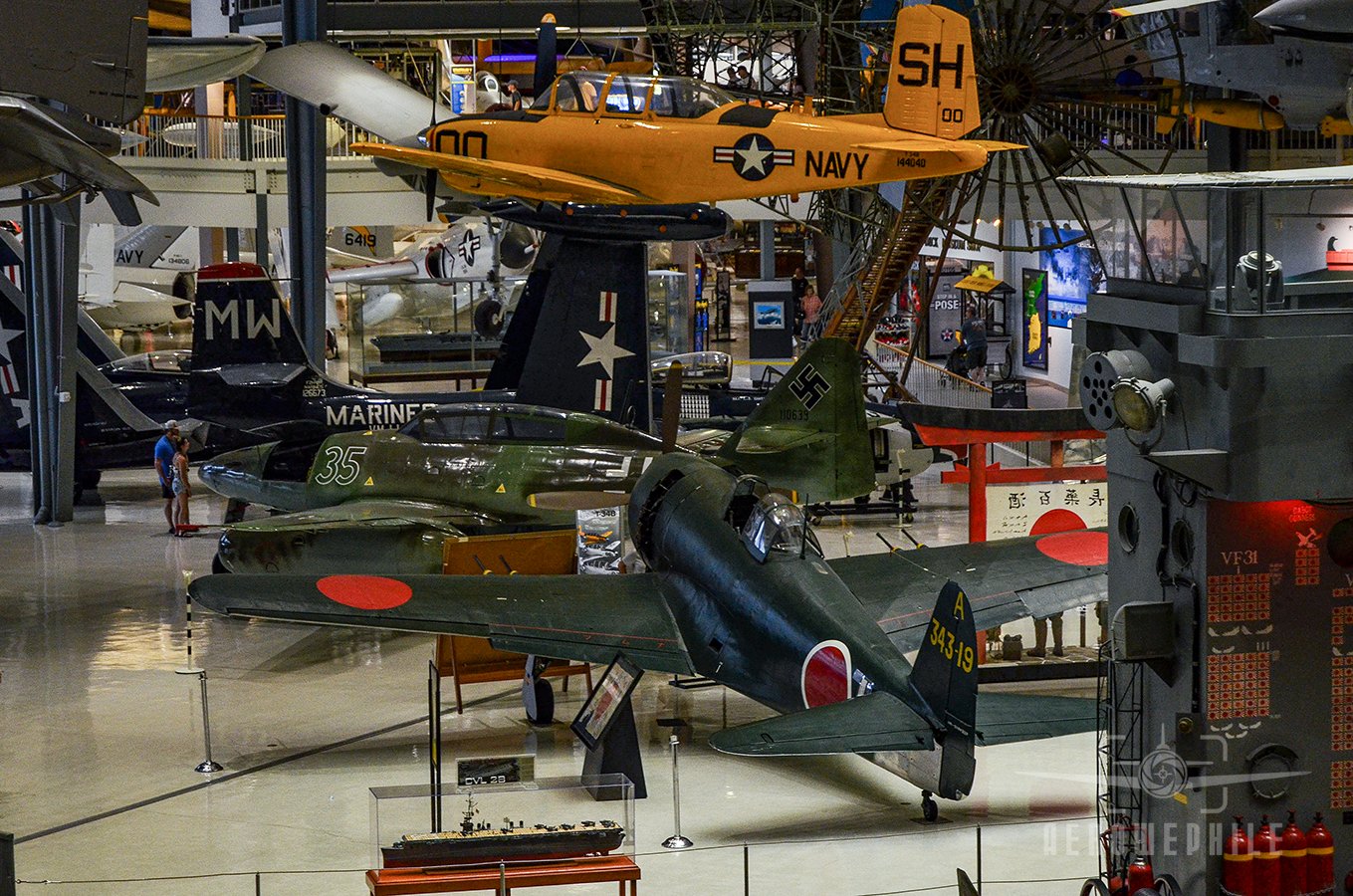
Only 1,435 of the new N1K2-Ja Shiden Kai fighters were produced before war's end, most of them used in the defense of the Home Islands.
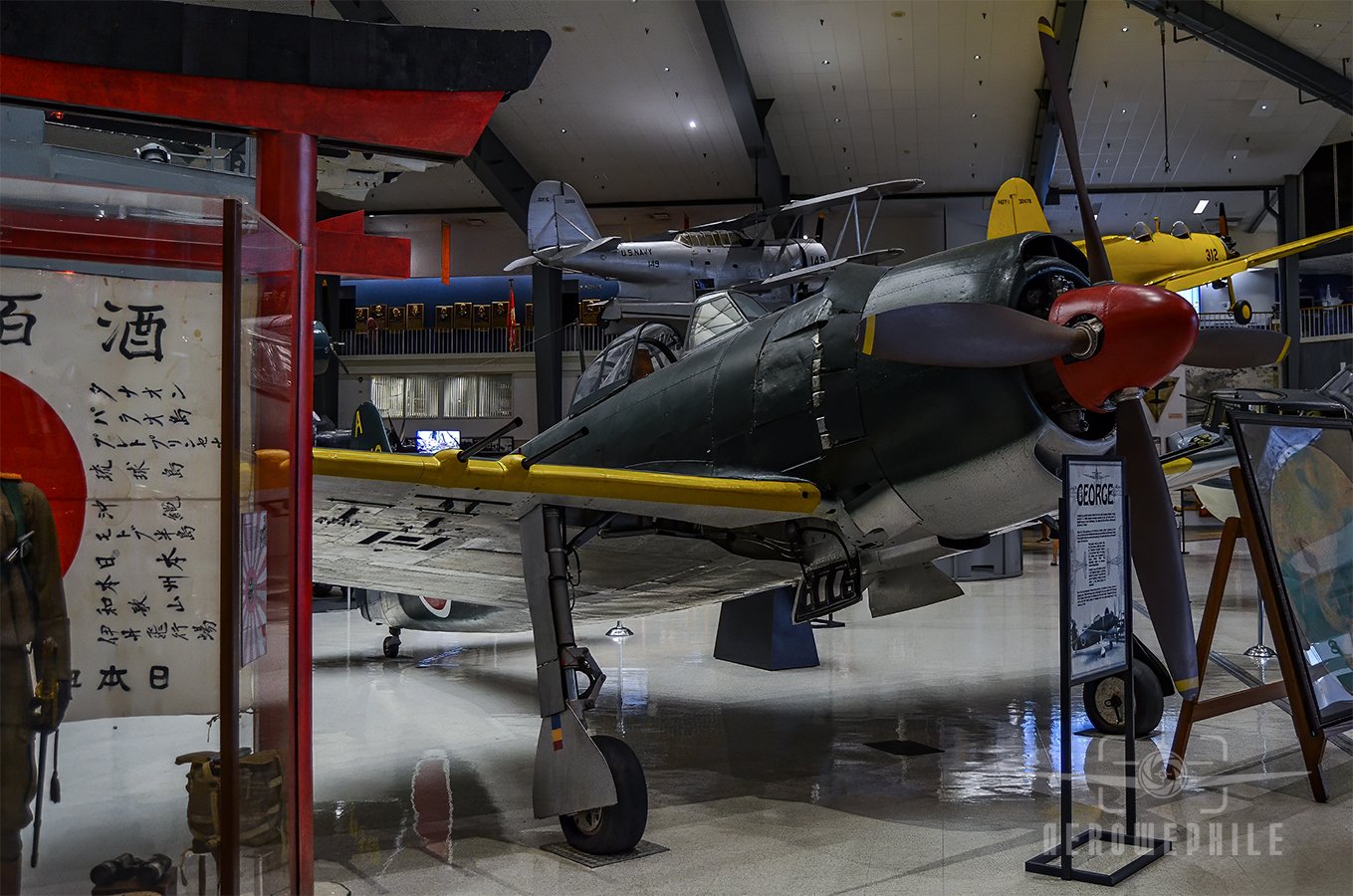
Built at Kawanishi's Naruo plant, the N1K2-Ja Shiden Kai fighter, designated Model X-1, made its first flight on 27 December 1942. It was armed with two fuselage-mounted 7.7mm machine guns and two Type 99 20mm wing cannon.
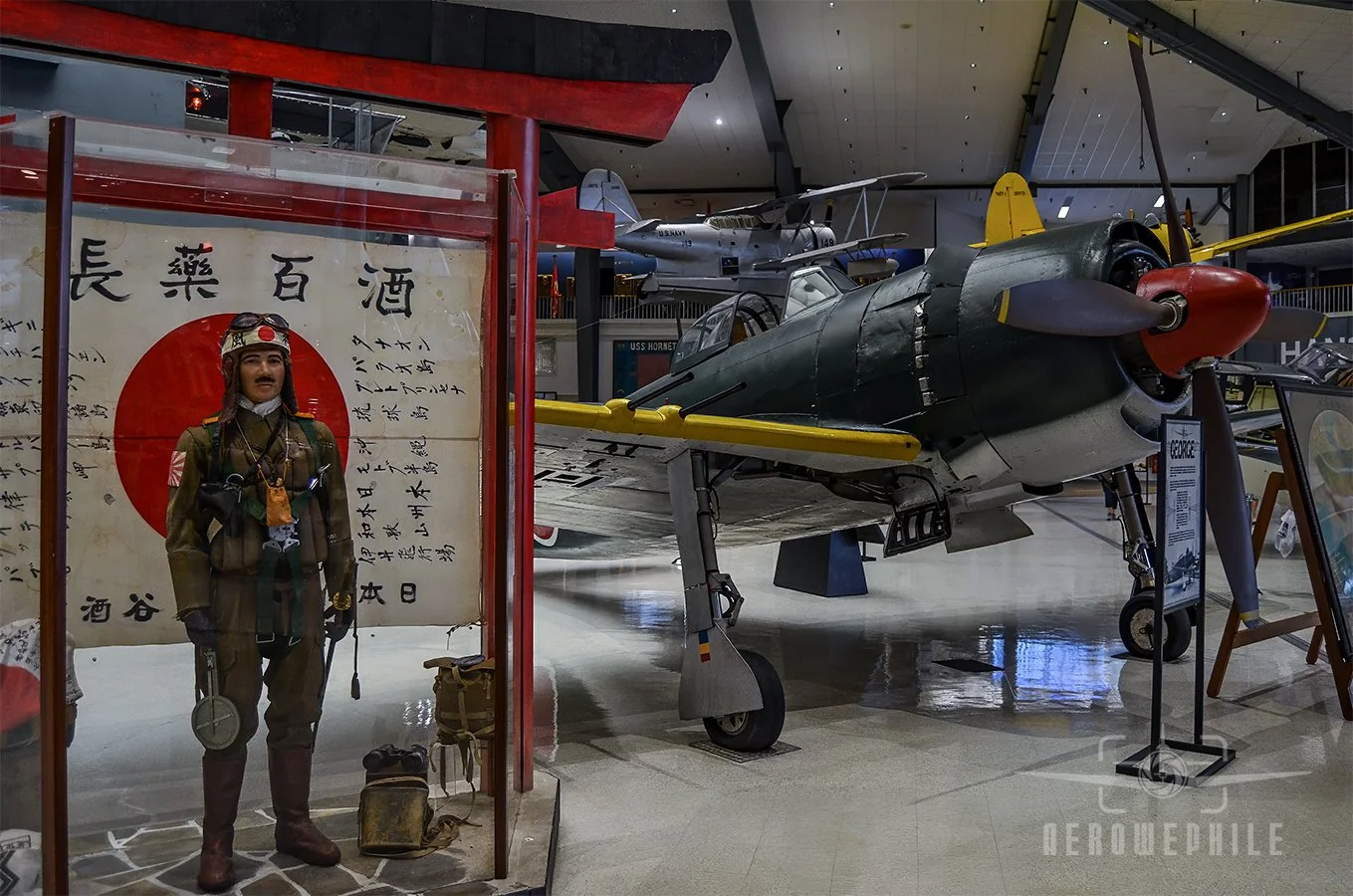
From the start, flight testing on the N1K2-Ja Shiden Kai was interrupted by both engine and landing gear problems. Additionally, the aircraft failed to meet the maximum speed requirement (357 mph vice 403 mph), but impressive maneuverability and range made it a worthy adversary for Allied fighters.
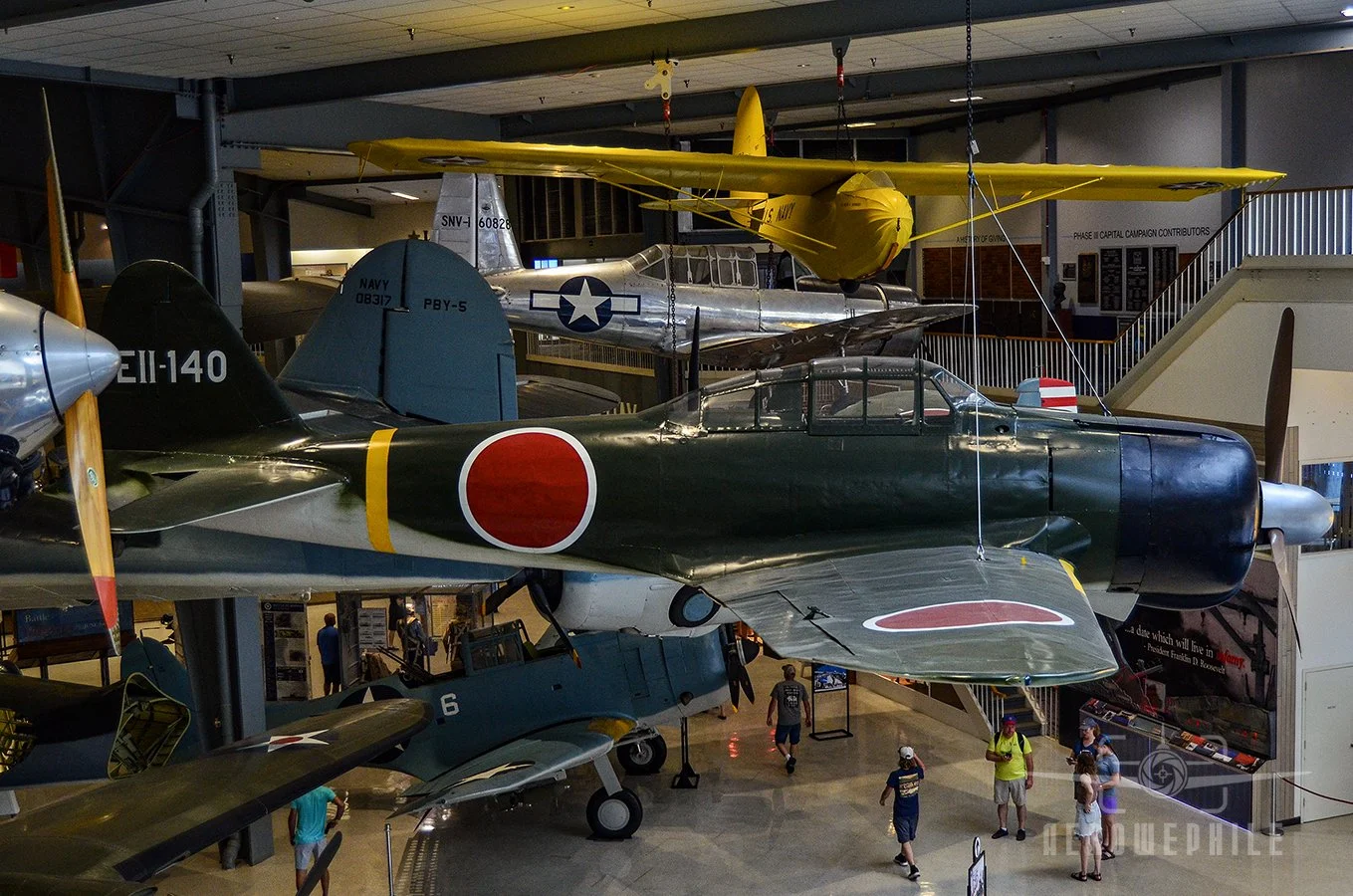
The birth of the legendary A6M2 Zero fighter came in 1937. Designed at Mitsubishi by lead designer Horikoshi Jiro. Various versions served throughout the Pacific War from strafing attacks at Pearl Harbor to the great carrier battle at Midway to the final defense of the Home Islands.
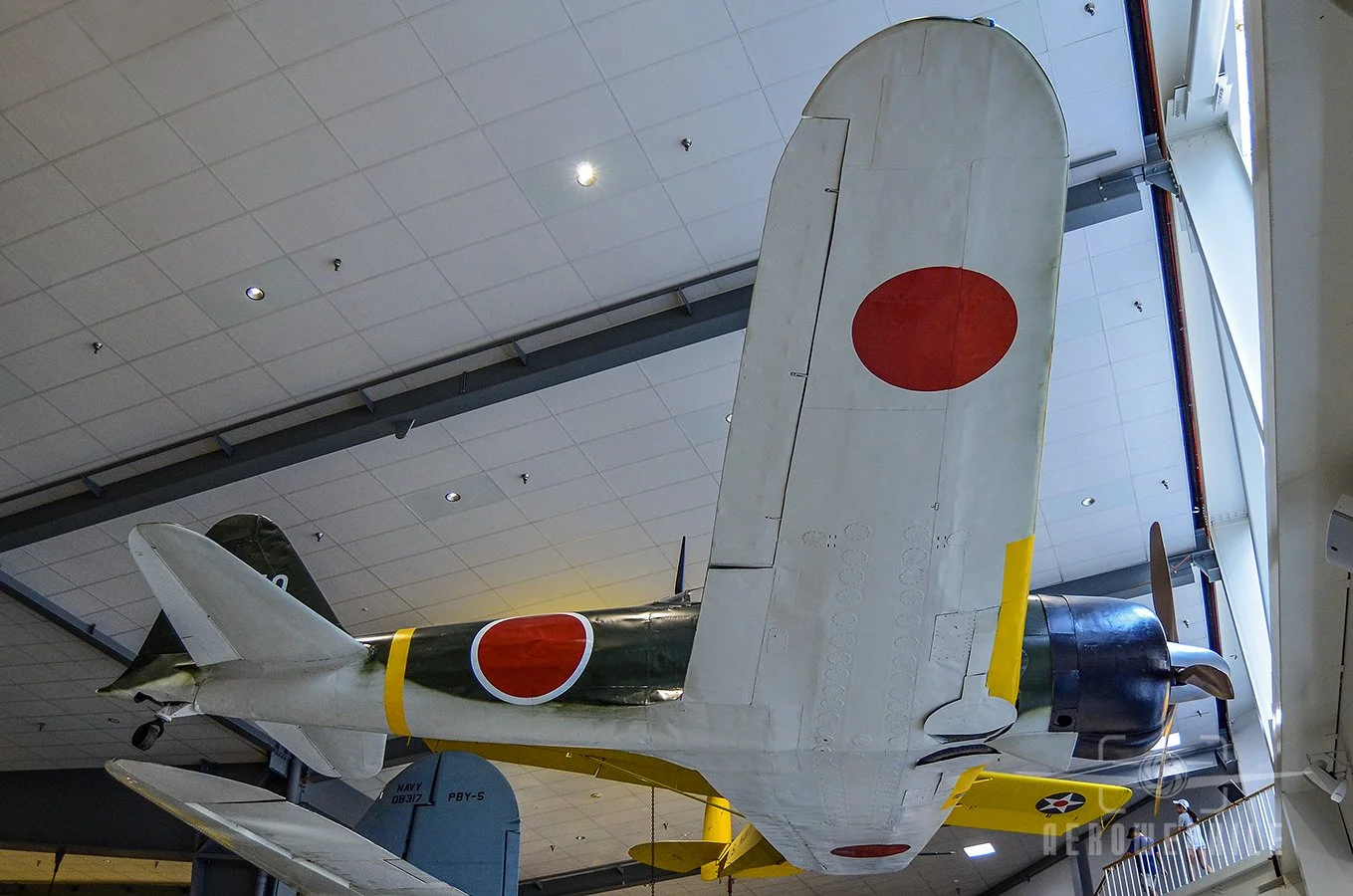
The Zero fighter made its combat debut in the skies over China in July 1940. While only 328 A6Ms were in operation at the beginning of World War II, some 11,283 examples were ultimately produced by war's end, equipping both carrier-based and land-based units.
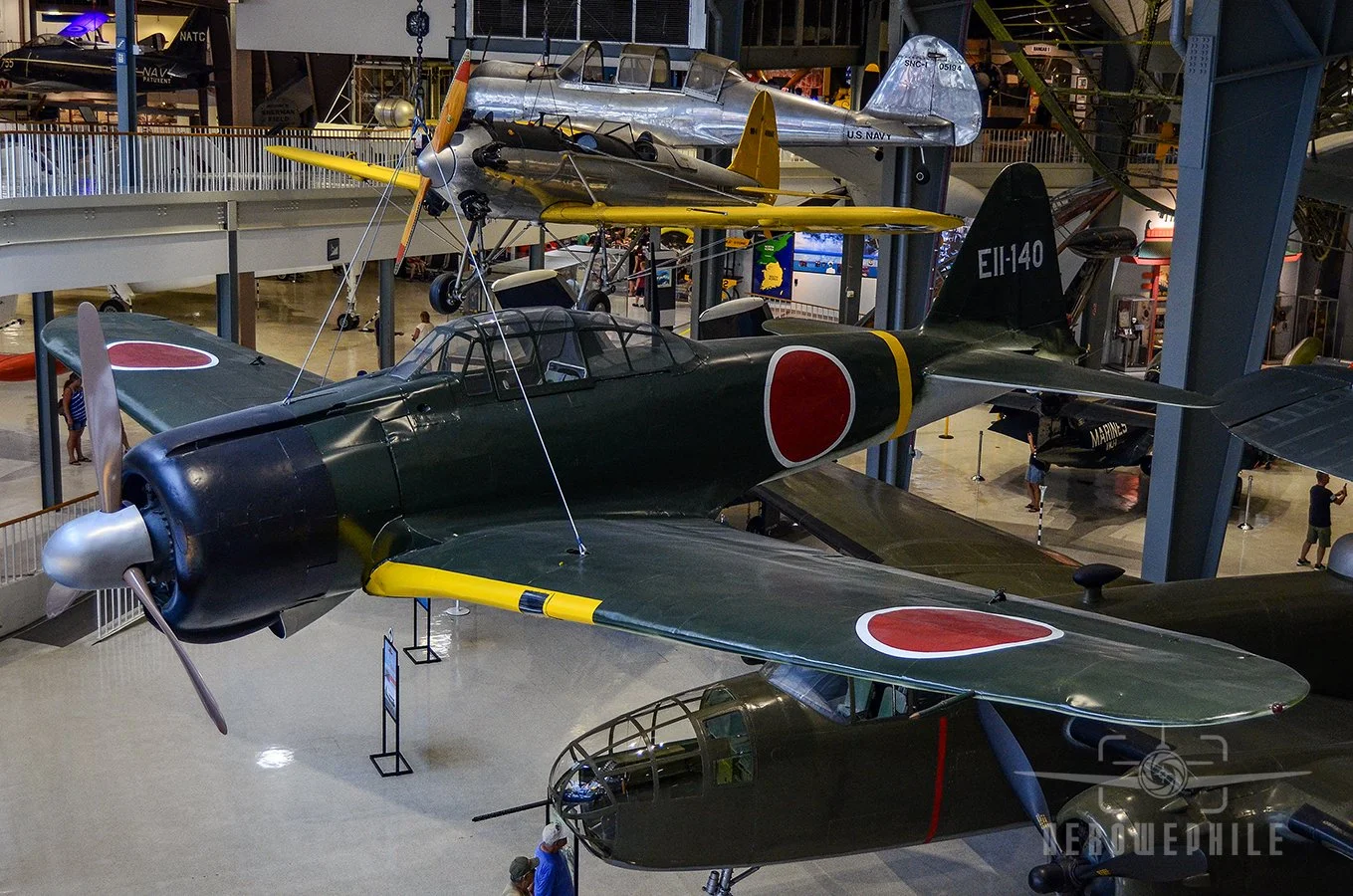
The Museum's example of the A6M2 Zero is a conglomerate of components from more than one aircraft wreck discovered at an abandoned fighter strip on Ballele Island near Bougainville.
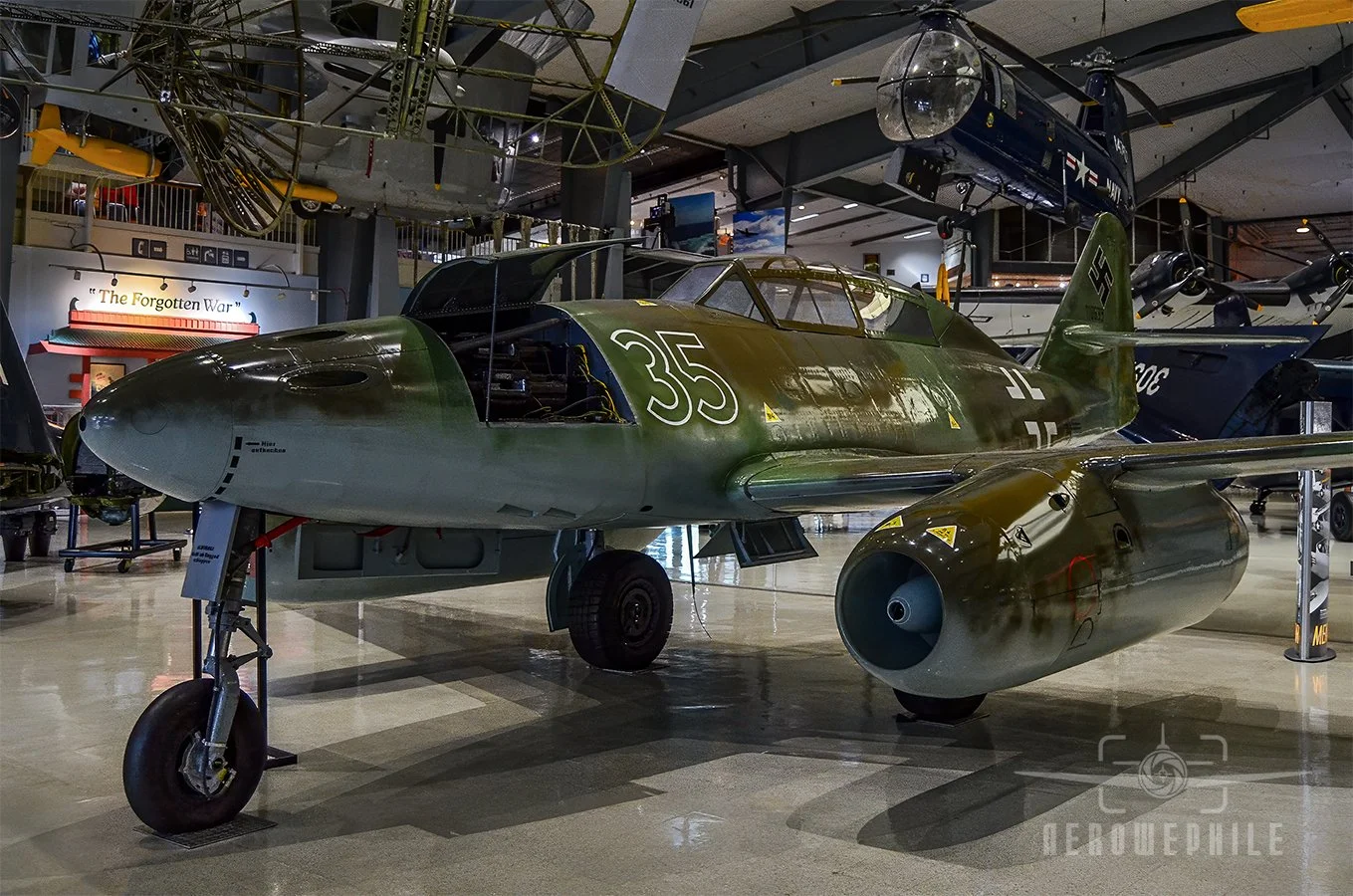
The world's first operational jet fighter, Messerschmitt's Me 262 started as Projekt 1065 in 1939.
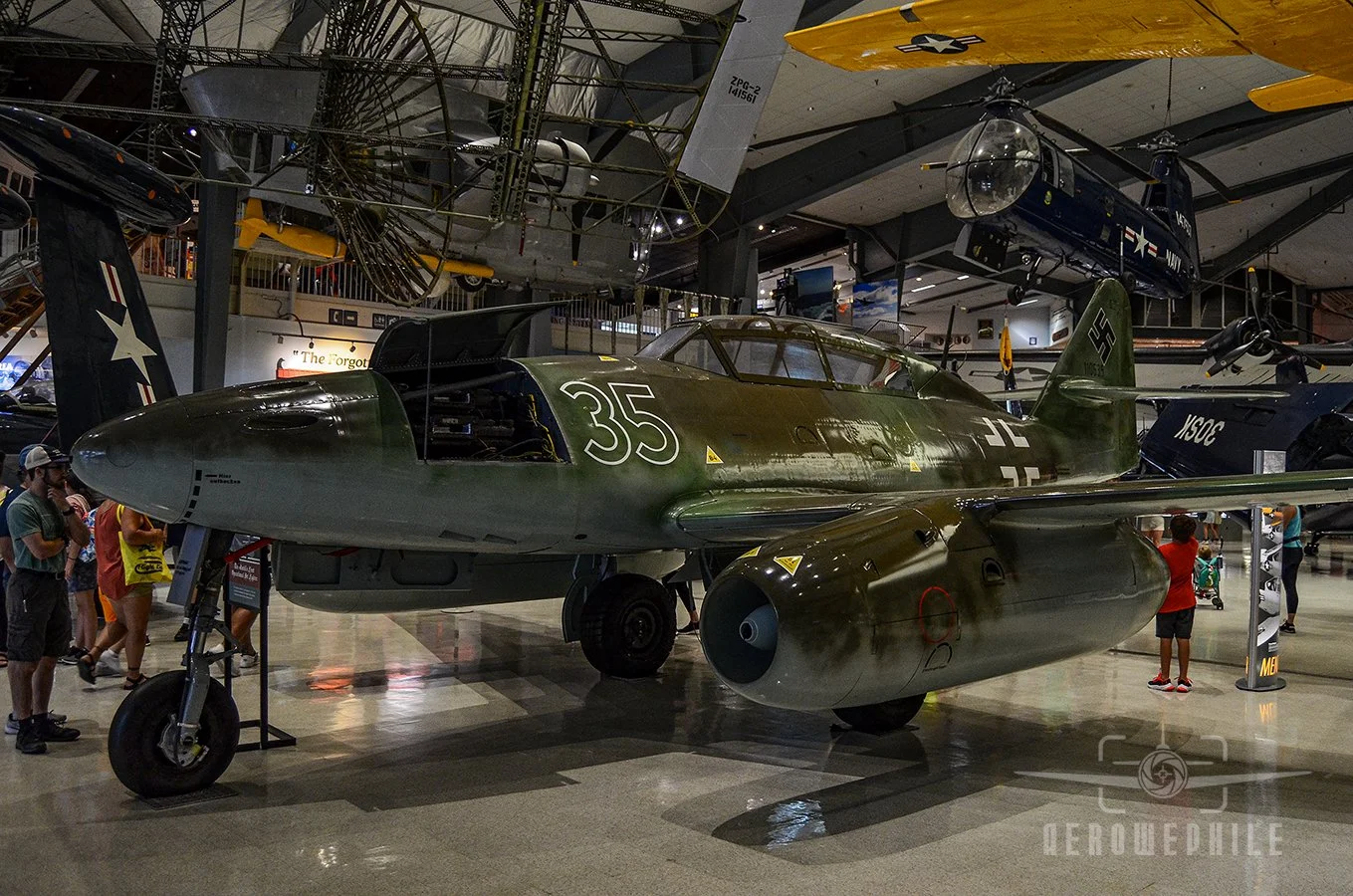
The Me 262 first took to the air in April 1941, powered by a piston engine. Jumo 004-powered Me 262s appeared in 1943, and were in production by April 1944.
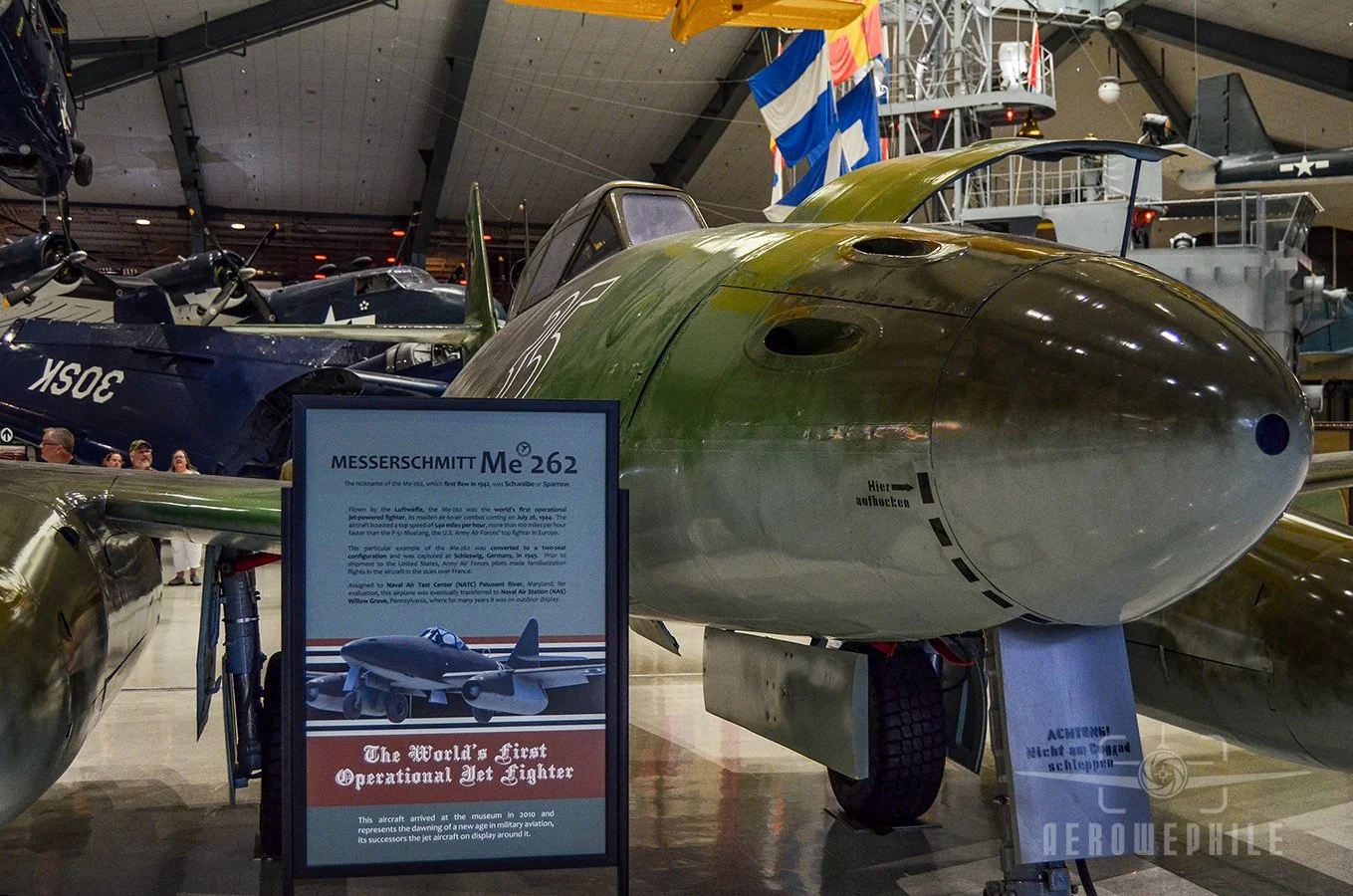
The model on display, "White 35," was captured in Schleswig, Germany in 1945. Captured jets such as this were critical to the development of new, advanced U.S. fighters in the early Cold War.
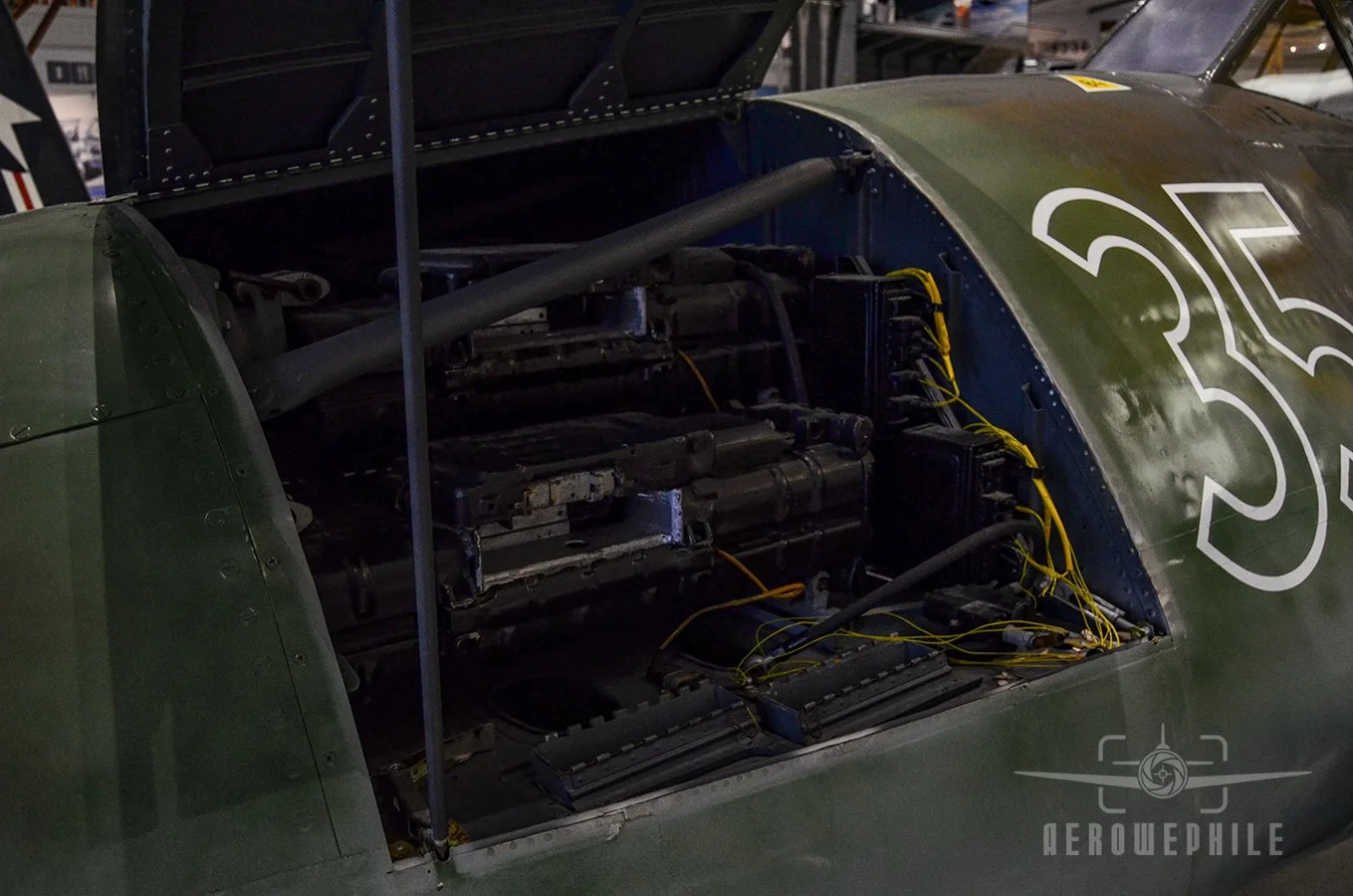
Panel open in the nose of the ME262 showing the 30mm 108 cannons
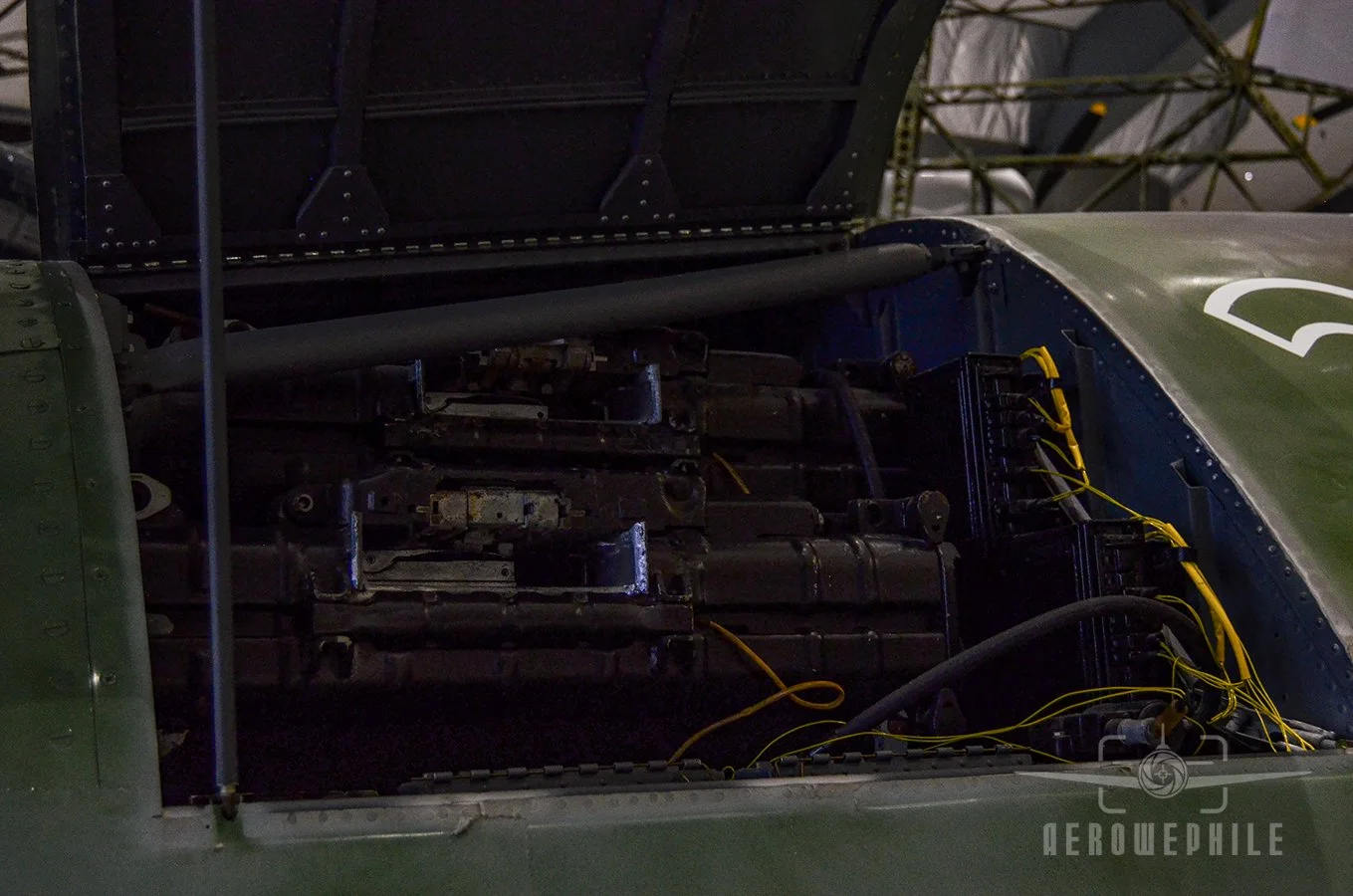
Panel open in the nose of the ME262 showing the 30mm 108 cannons
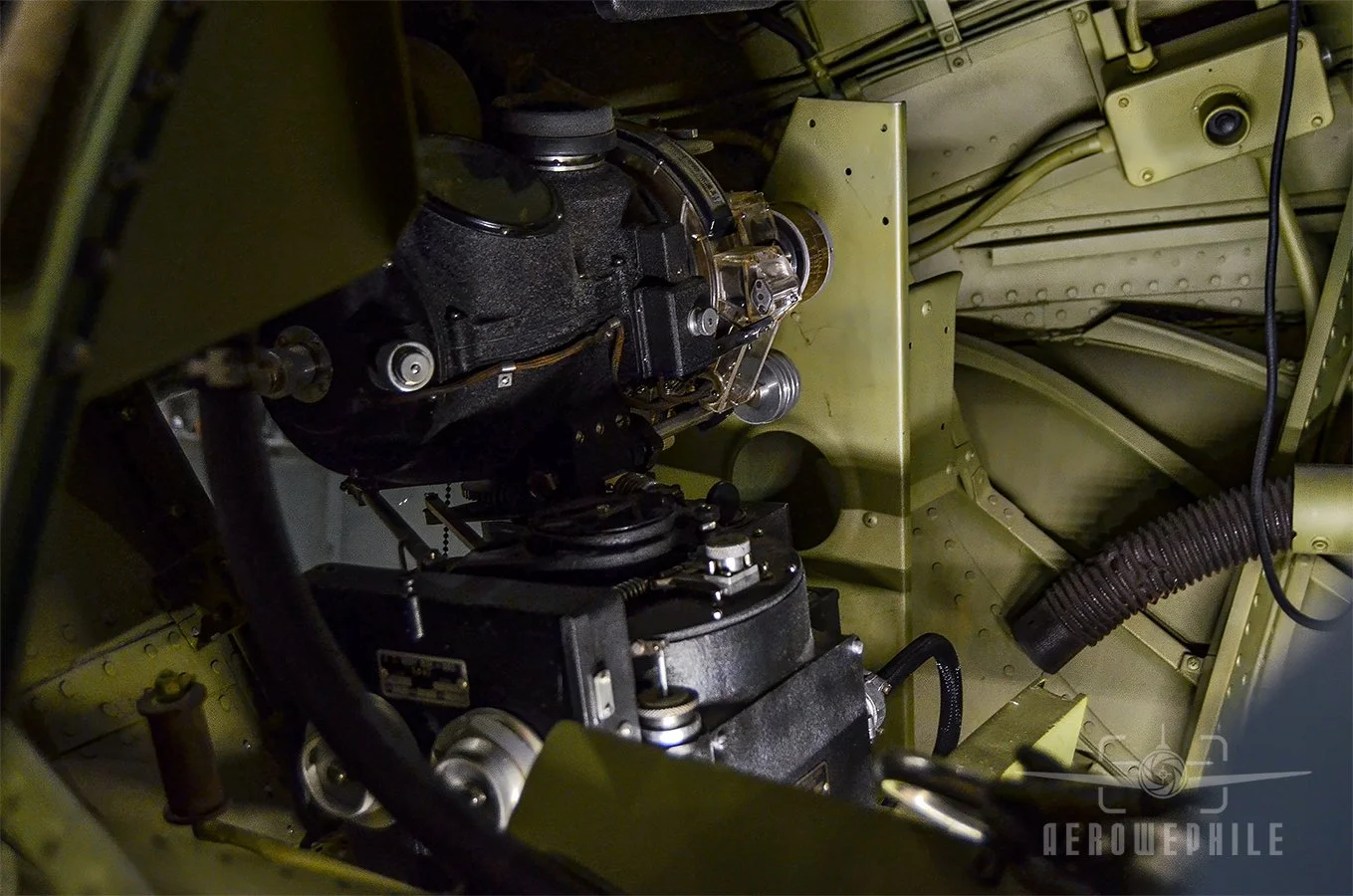
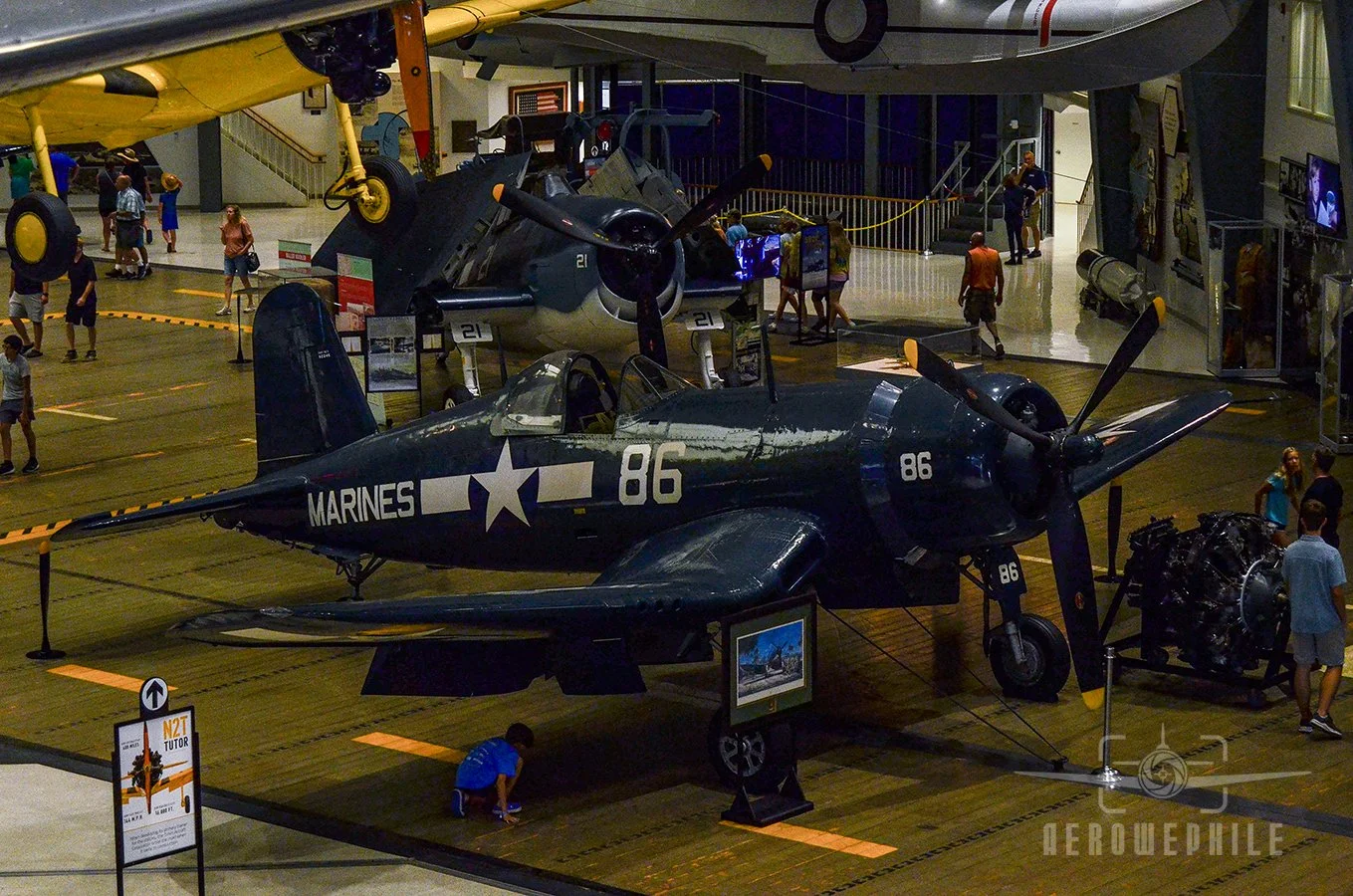
FG-1D Corsair - Vought's F4U Corsair design was subcontracted for production by other companies, among them Goodyear, whose Corsairs carried the designation FG.
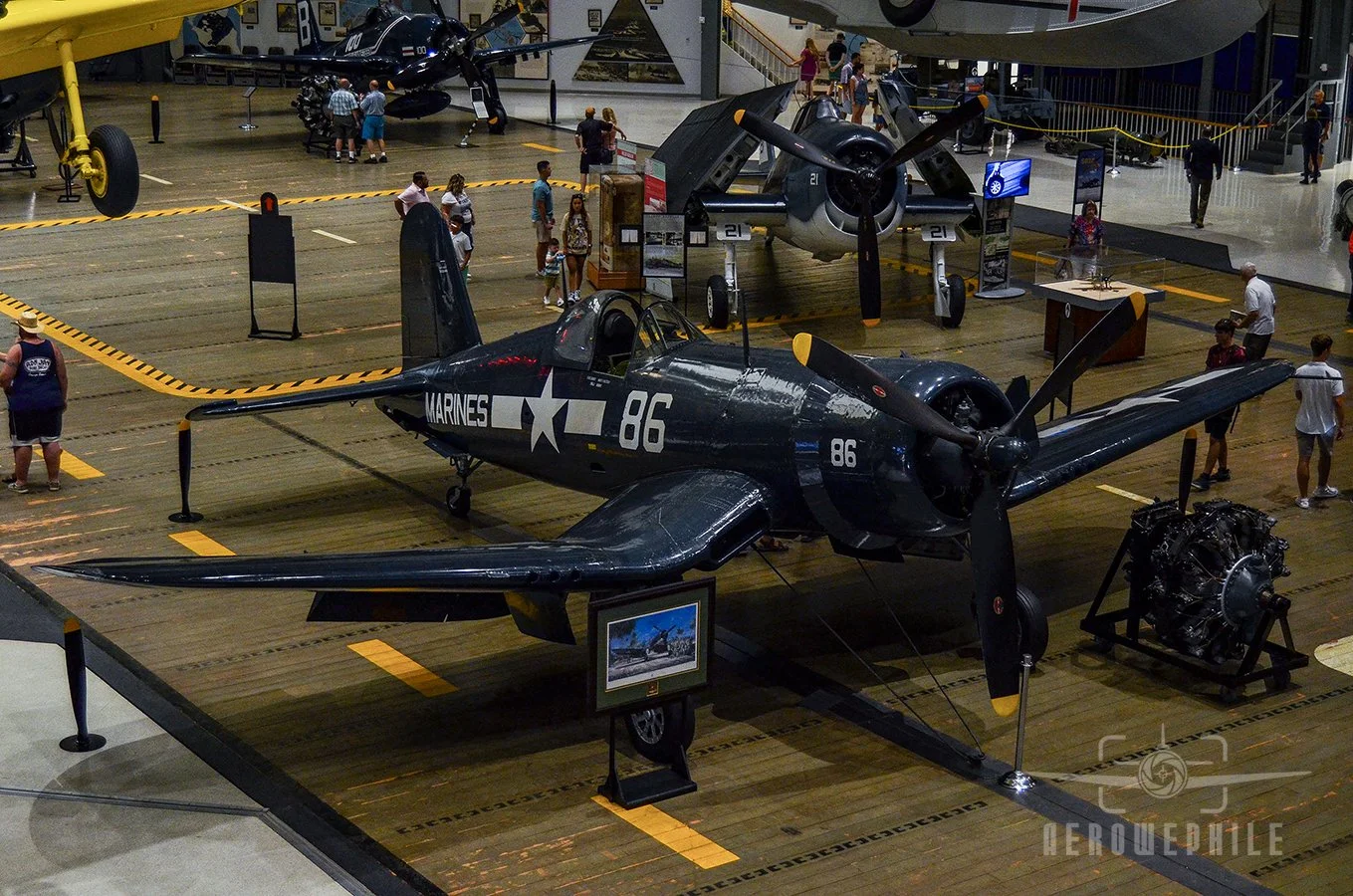
By the end of World War II, Goodyear-built Corsairs were flying in over 50 Navy and Marine Corps squadrons ashore and on board aircraft carriers.
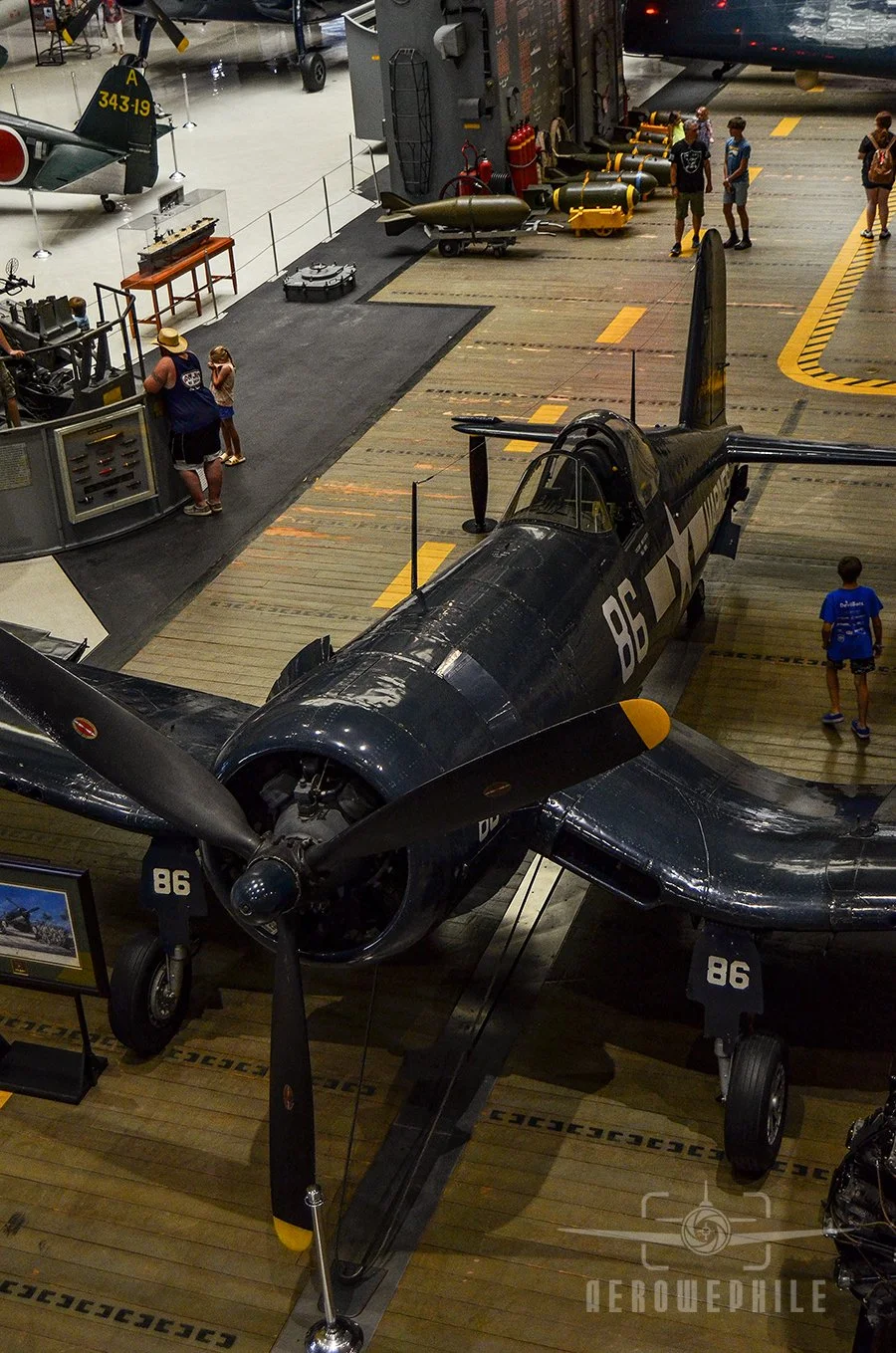
The design of the Corsair featured the smallest possible airframe to accommodate Pratt & Whitney's new R-2800 Double Wasp engine. A unique feature, an inverted gull wing, allowed shorter landing gear while maintaining sufficient ground clearance for the large 13-foot propeller.
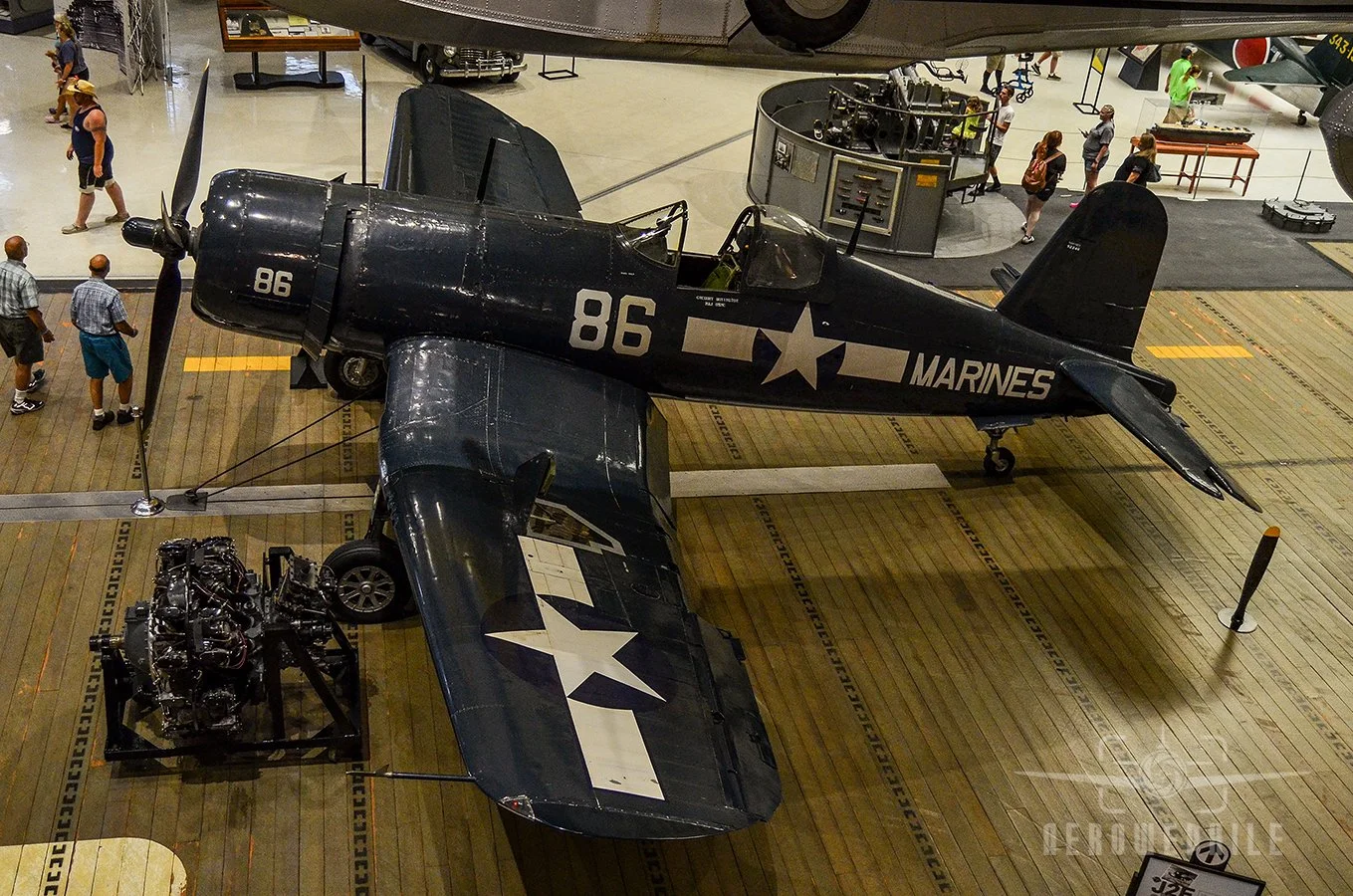
The Corsair prototype, designated XF4U-1, first flew on 29 May 1940, and by year's end exceeded 404 mph, faster than any other U.S. fighter.
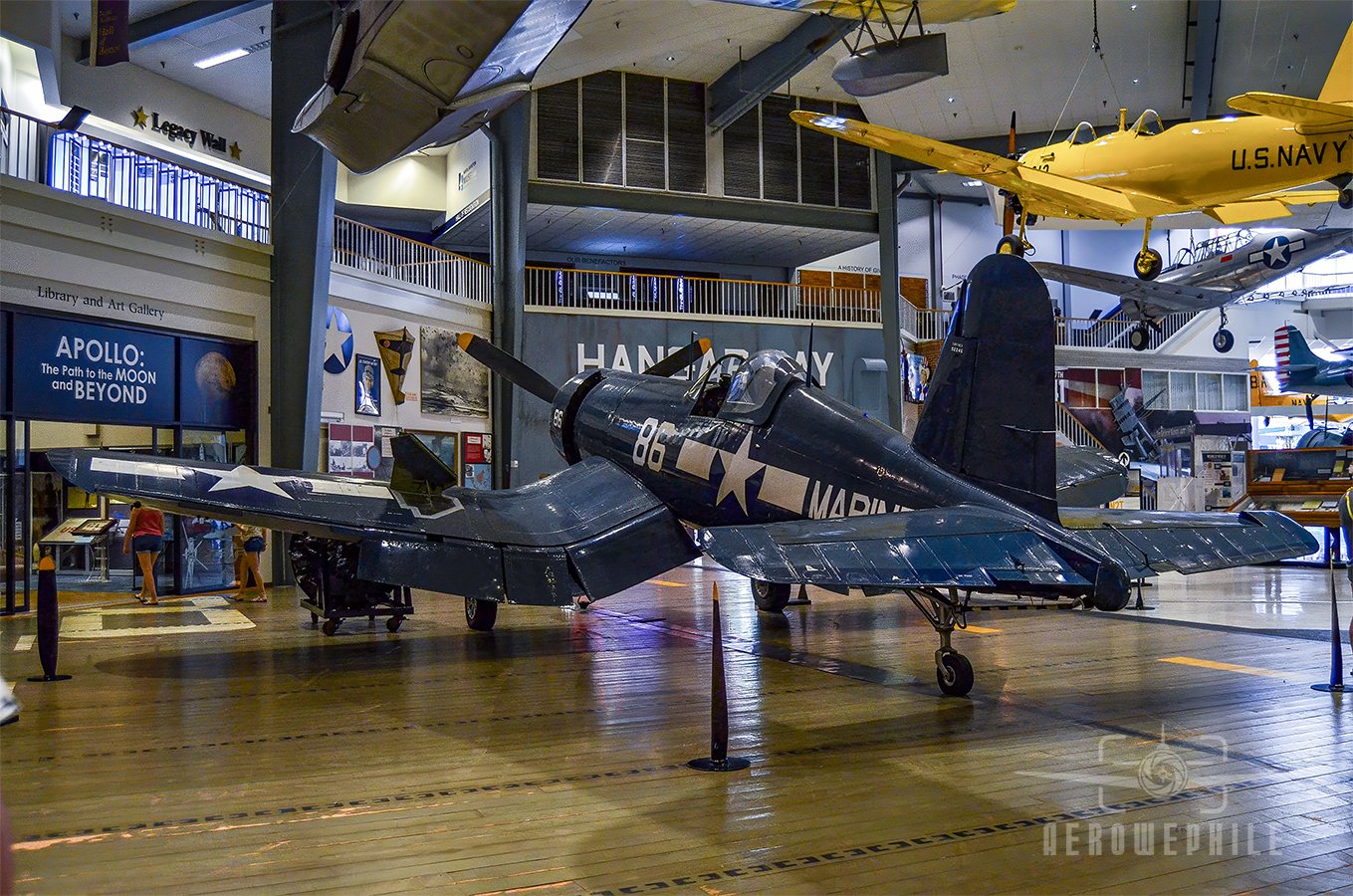
Differing from the XF4U-1 prototype, the production model Corsair was modified by moving the cockpit three feet aft to make room for an additional fuel tank, changing the armament to six .50-caliber wing guns, and adding pilot armor and self-sealing fuel tanks.
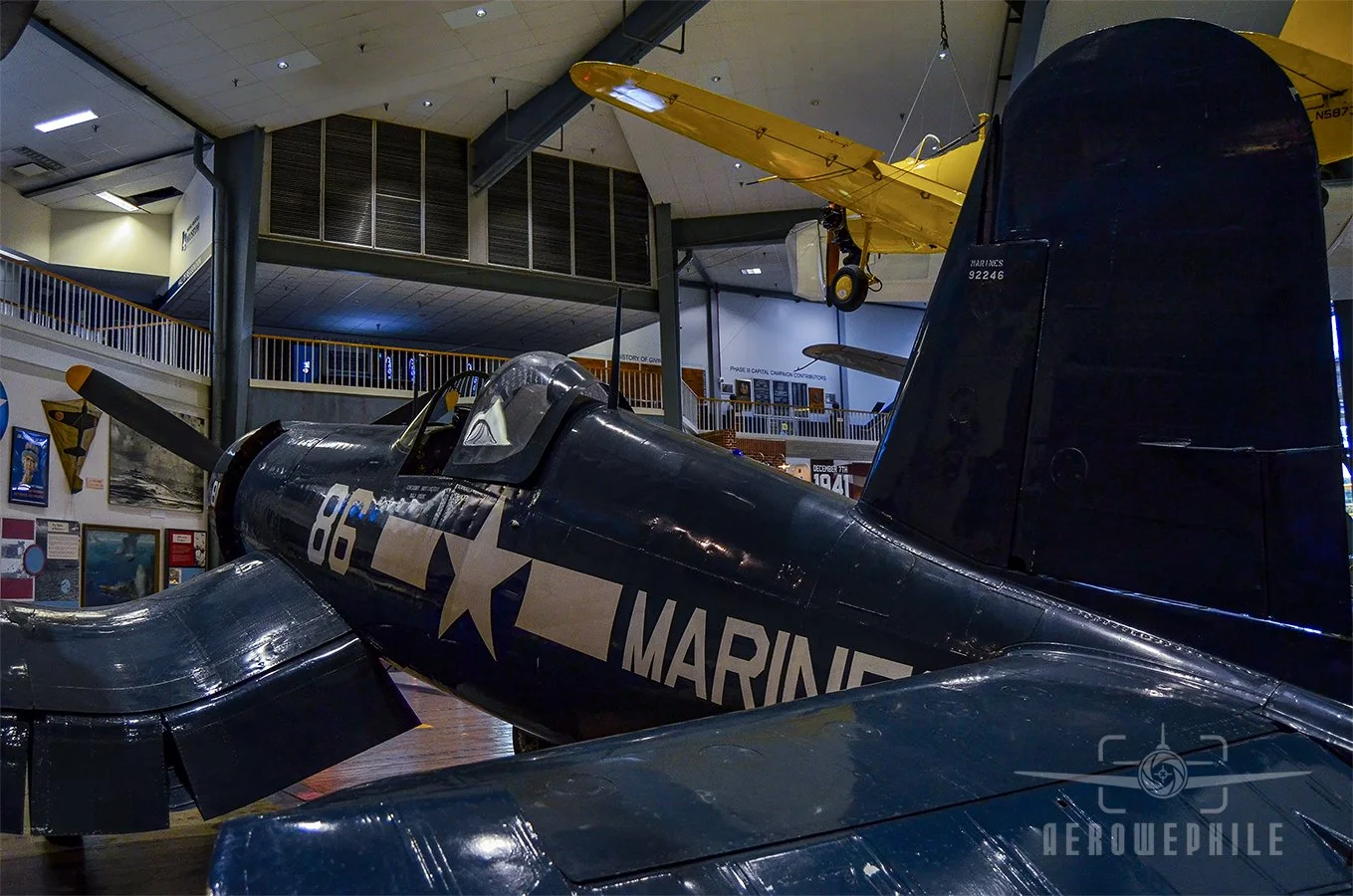
In April 1944, the Navy approved the Corsair for carrier operations. The airplane went on to distinguish itself in the air, with an 11 to 1 kill ratio during World War II, and as a fighter-bomber in Korea.
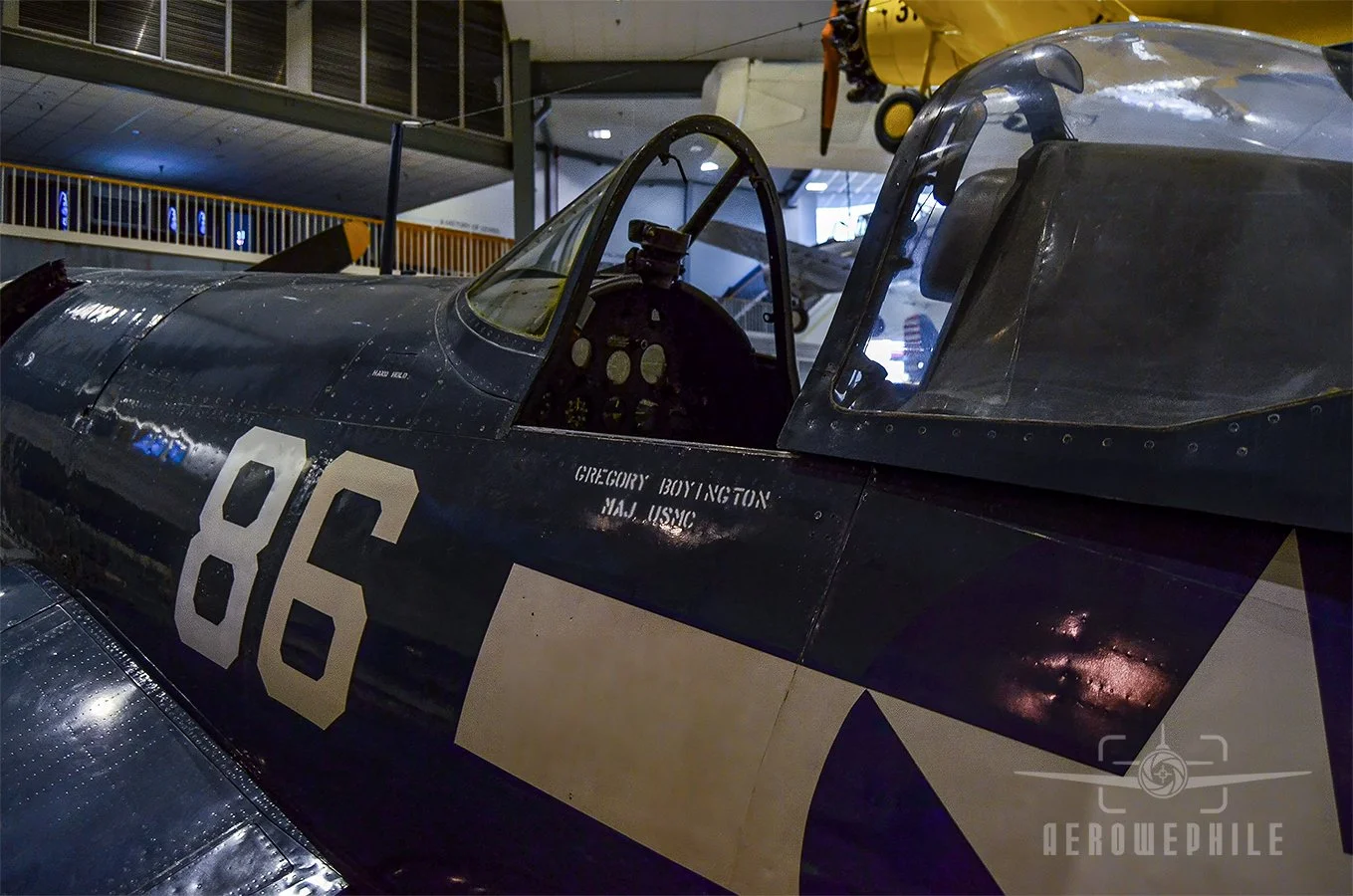
Gregory "Pappy" Boyington was an American combat pilot who was a United States Marine Corps fighter ace during World War II. He received the Medal of Honor and the Navy Cross. He flew Corsairs while leading the infamous VMF-214 "Black Sheep" squadron.
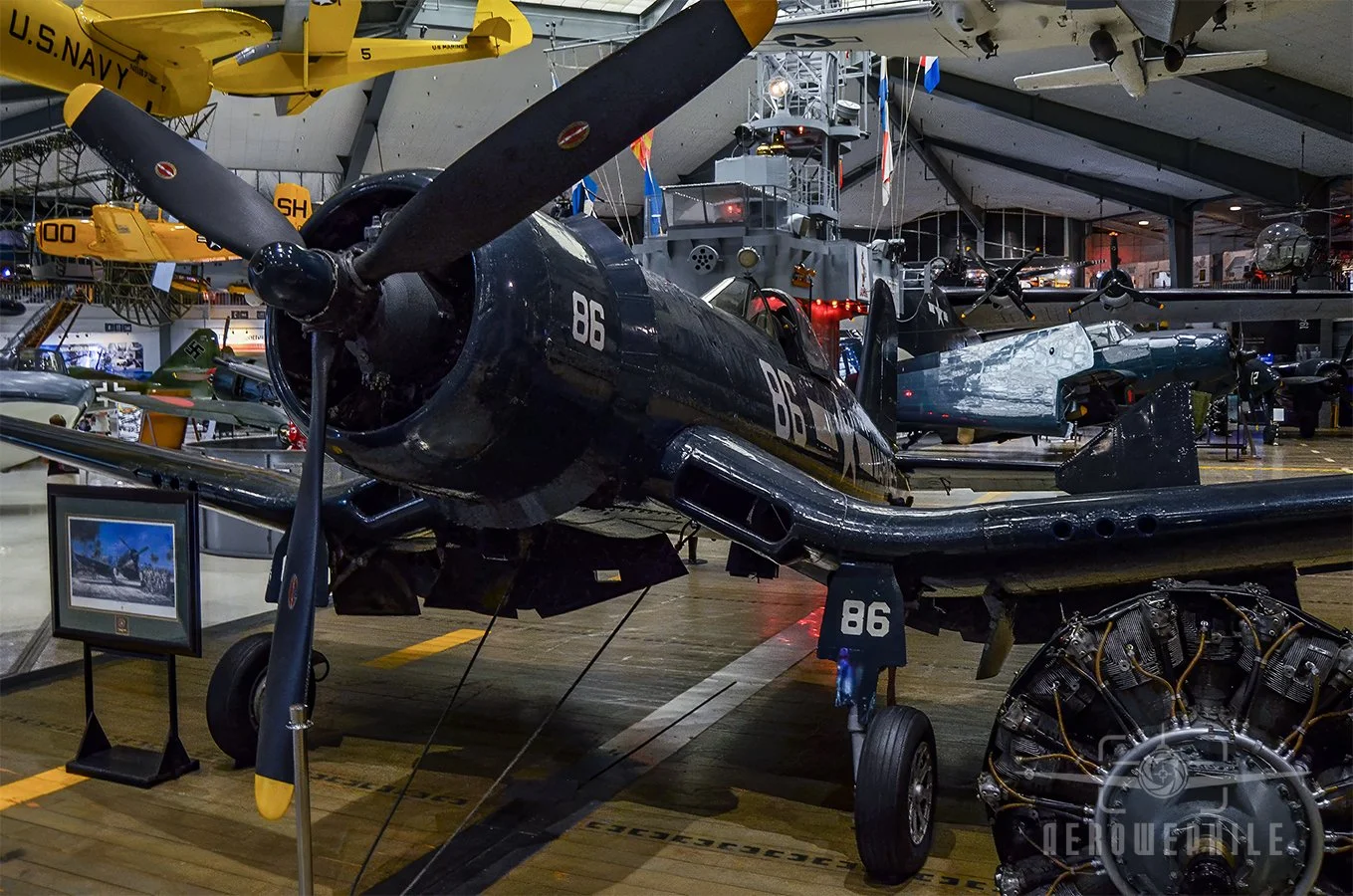
To speed production, Goodyear Aircraft and Brewster produced similar versions of the F4U-1, designated as the FG-1 and F3A, respectively. Various modifications appeared. Some FG-1As had non-folding wings.
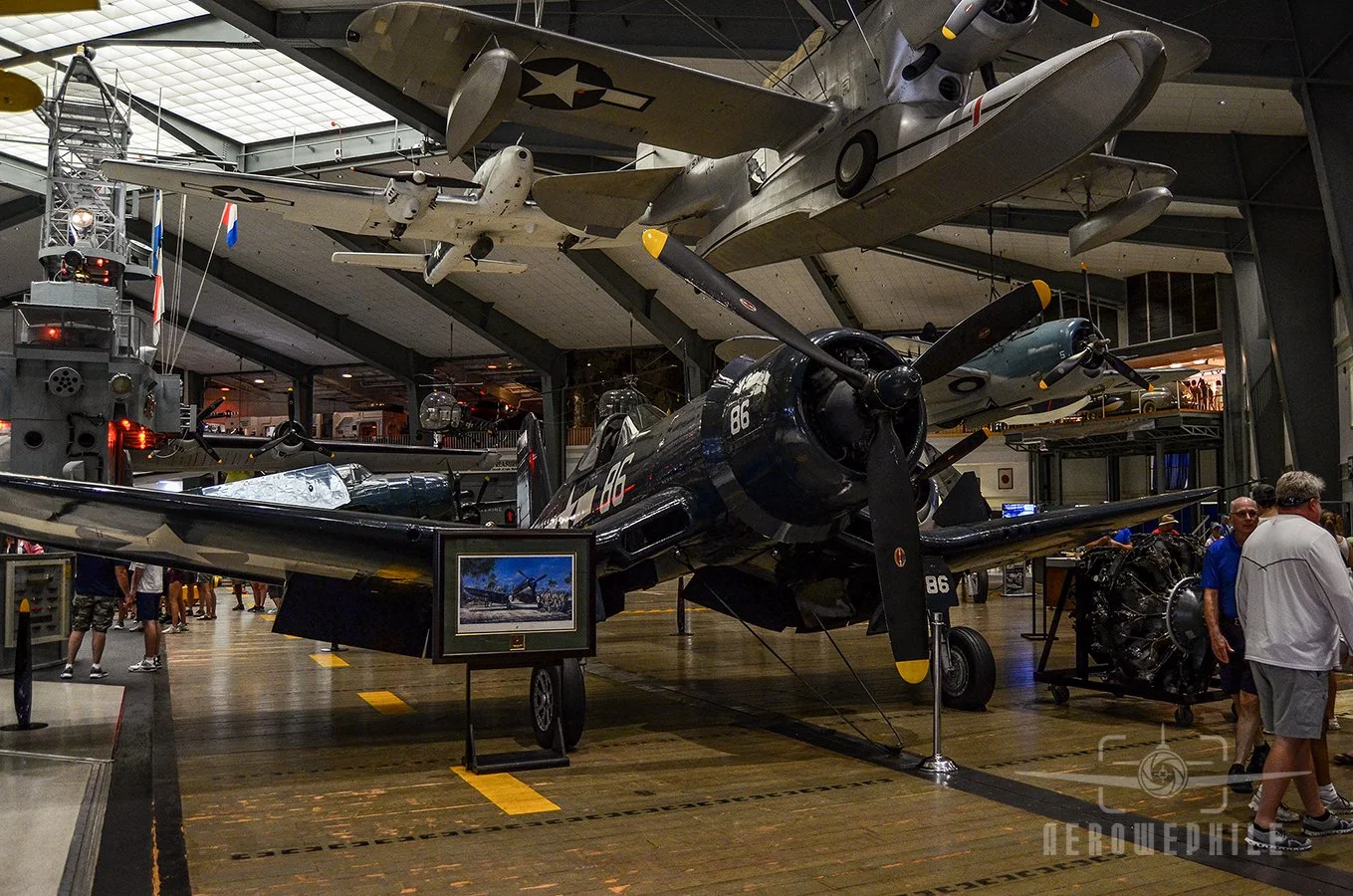
When production ended in December 1952, 12,521 Corsairs in 18 different models had been built, among which were 1,074 FG-1s.
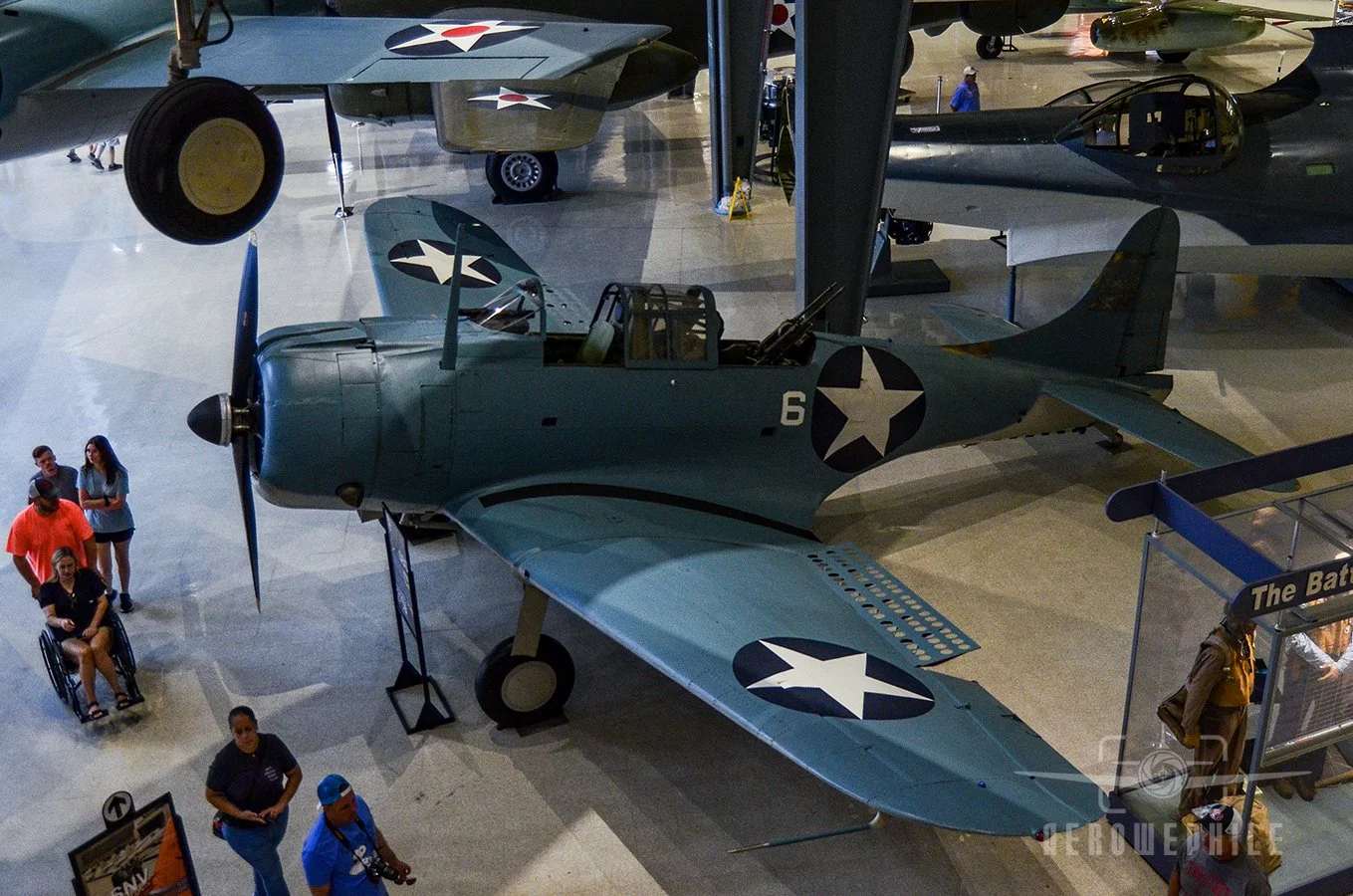
This one-of-a-kind SBD Dauntless, Bureau Number 2106, is a survivor of the attack on Pearl Harbor and participated in dive bombing runs against a Japanese carrier during the pivotal Battle of Midway, making it one of the most historic aircraft in existence.
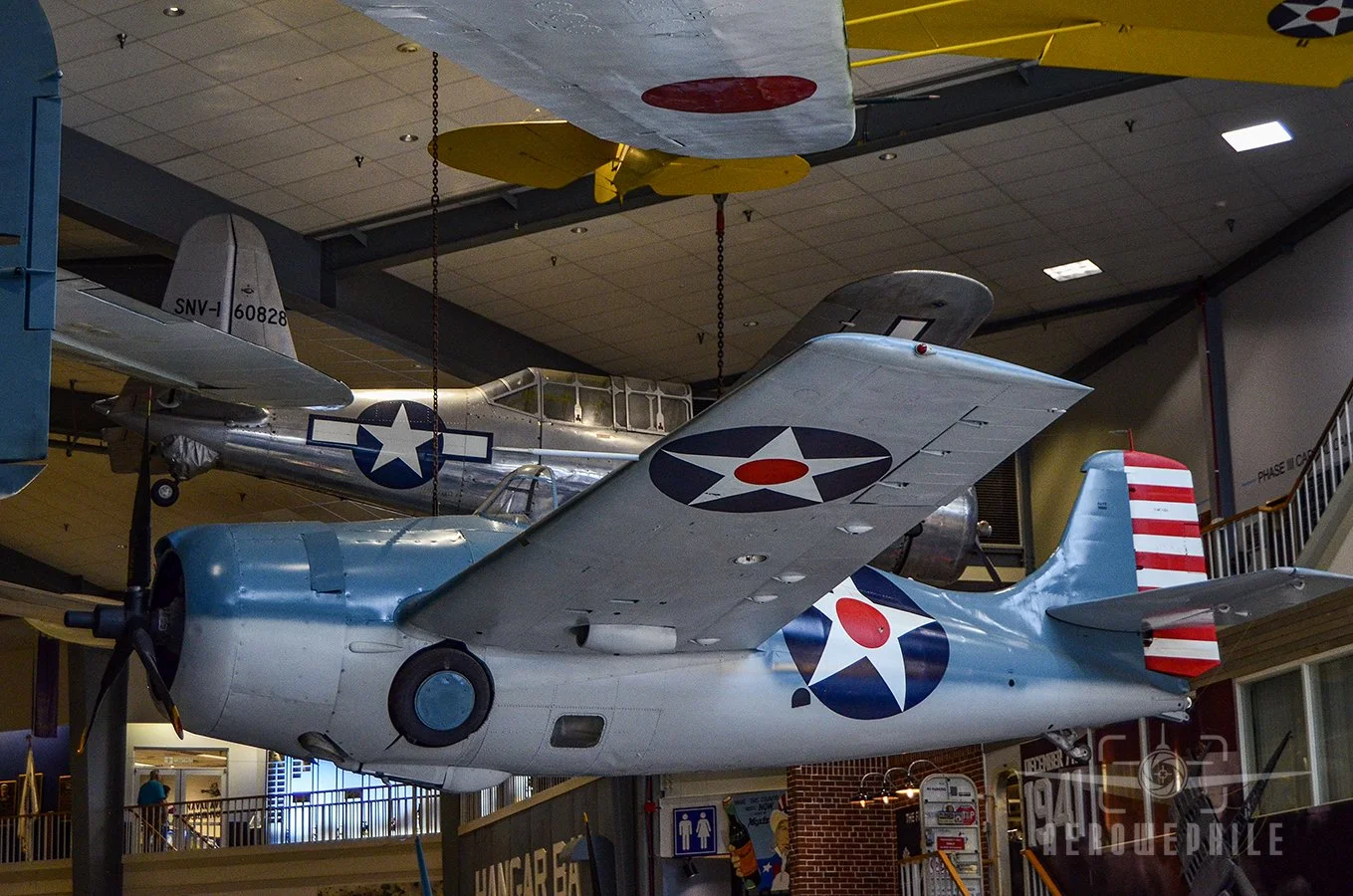
Grumman F4F-3A Wildcat - First flown in February 1939, the rugged and heavily armed F4F Wildcat became the Navy/Marine Corps premier fighter until late 1942.
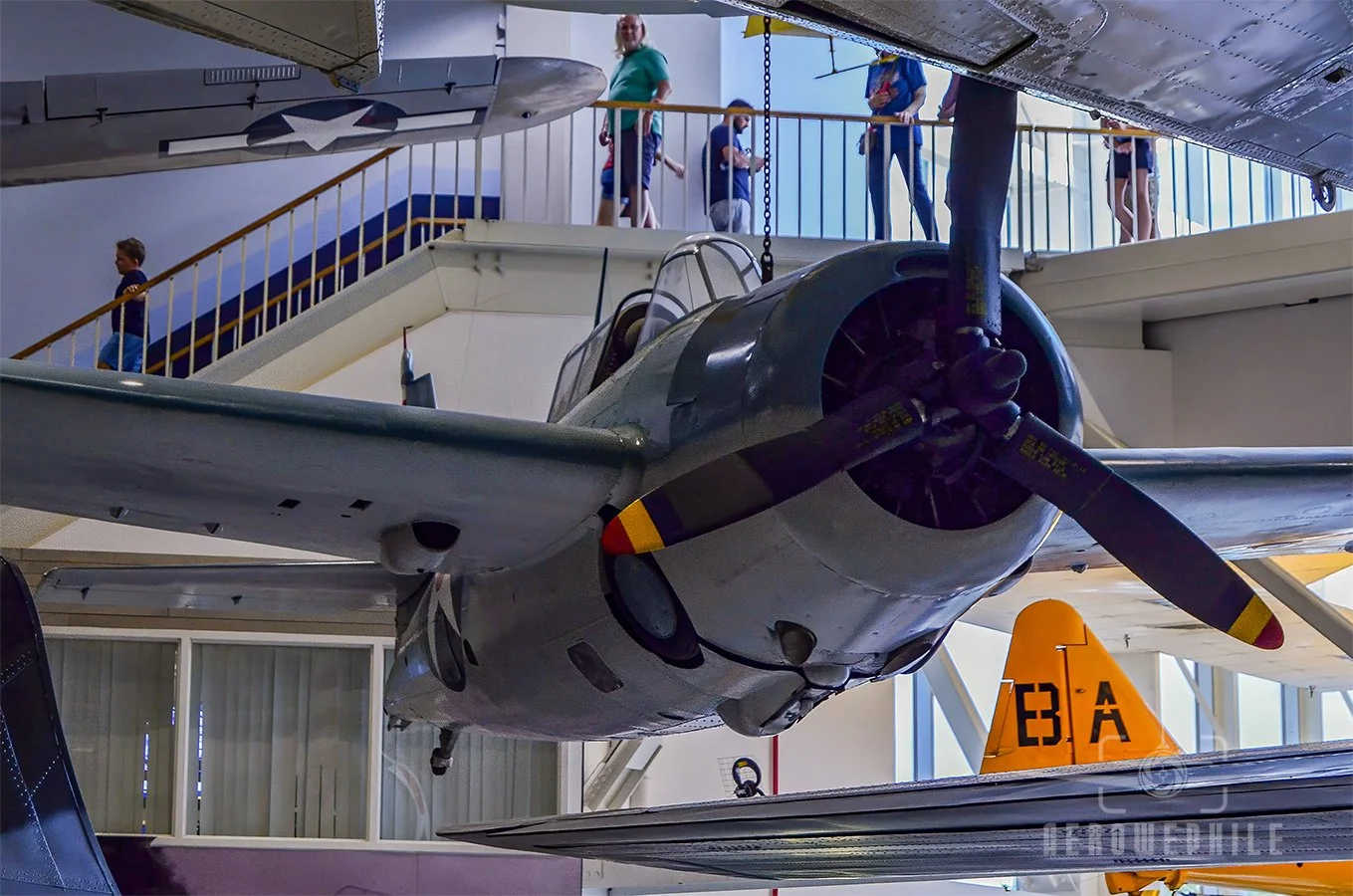
By the end of 1942, Navy and Marine F4F Wildcat pilots had amassed a 9:1 kill ratio over the Japanese, despite the reputation of the vaunted Mitsubishi A6M Zero. By war's end the stubby Grumman design had accounted for 1,006 enemy aircraft, and listed 58 aces among its pilots.
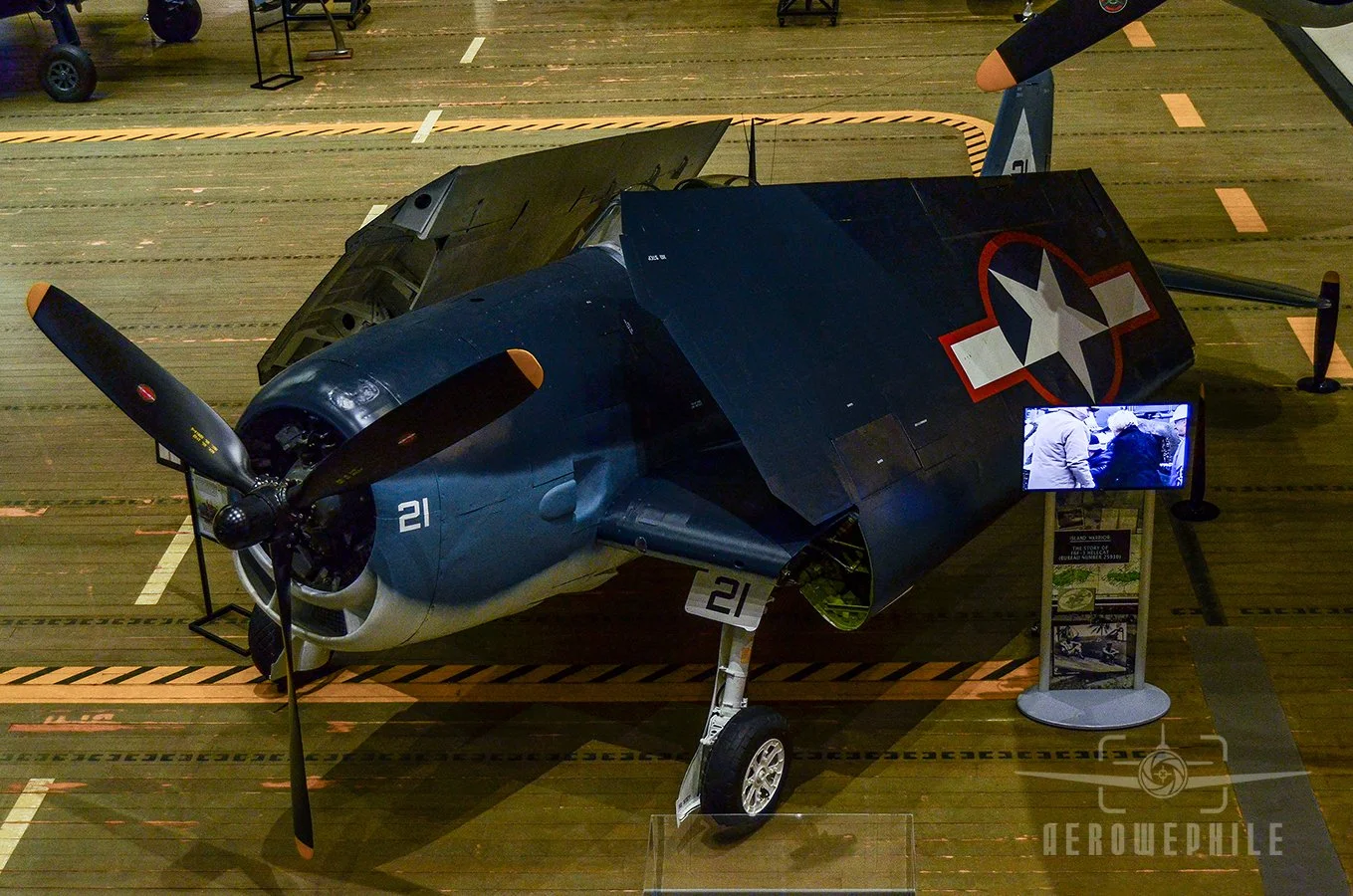
The restored F6F-3 Hellcat on display in the museum. Wearing a temporary paint scheme honoring Jack Taylor, it will eventually wear permanent markings of the squadron in which it service, Fighting Squadron (VF) 38.
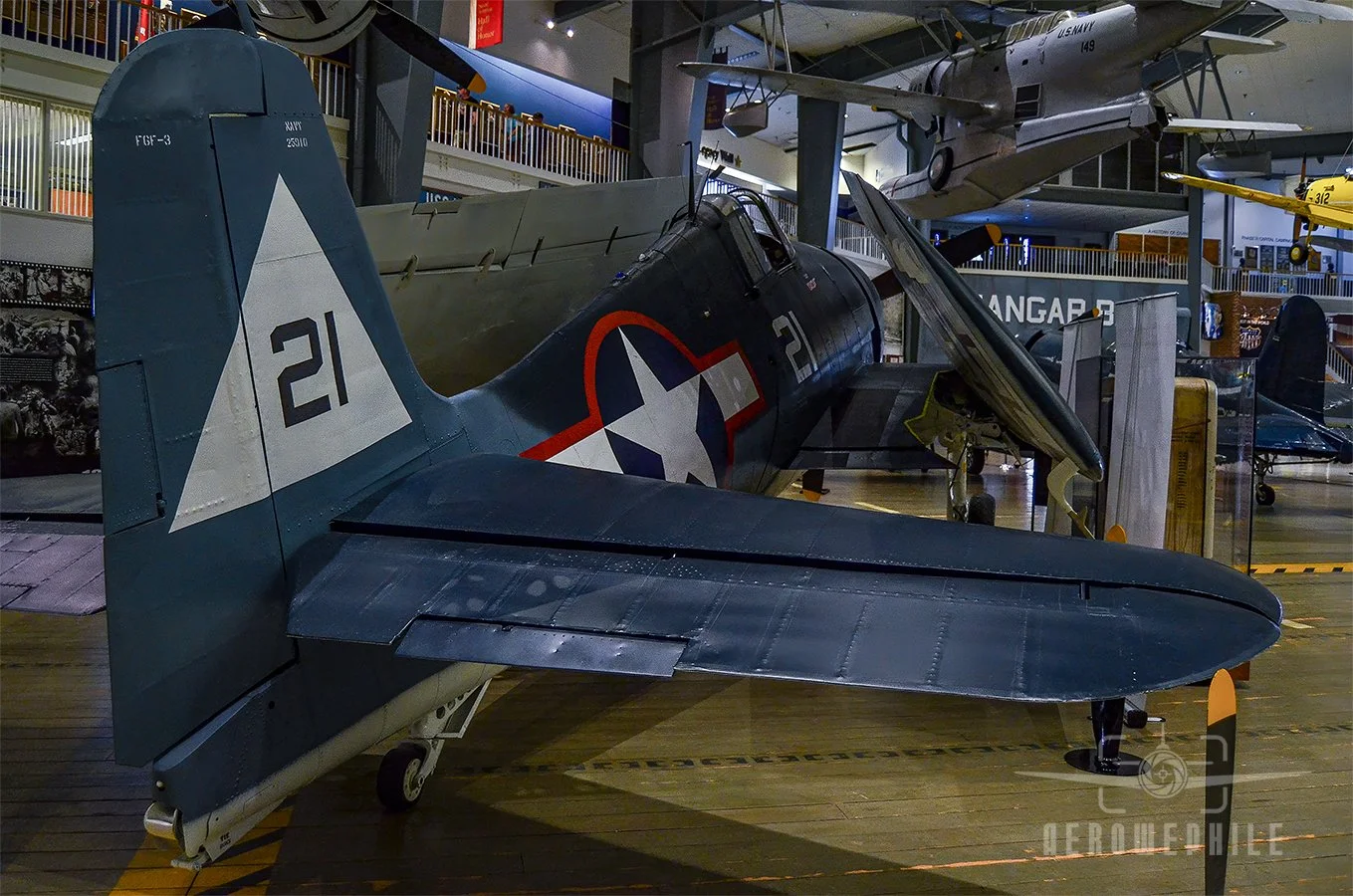
Entering fleet service in July 1943, Bureau Number 25910 joined Fighting Squadron (VF) 38, a unique squadron in the annals of the wartime Navy in that it was one of only a handful of land-based Navy fighter squadrons to operate the F6F Hellcat.
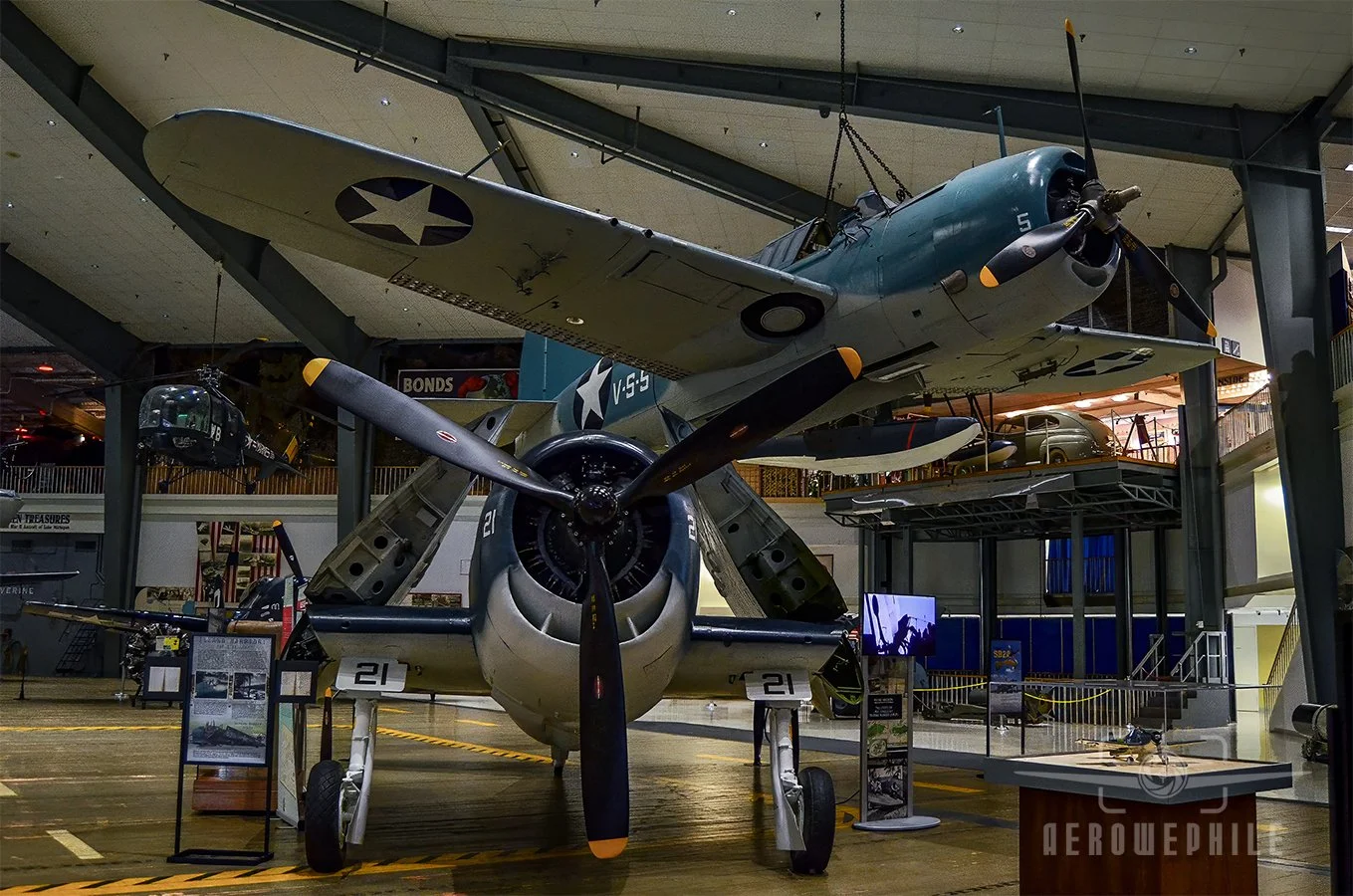
Recovery and restoration of this aircraft, which took nearly 15,000 hours of painstaking work, was funded by the Taylor family of Enterprise Rent-A-Car. Company founder Jack C. Taylor, a former naval aviator, served aboard the aircraft carrier Enterprise (CV 6) flying F6F Hellcats during World War II. In 1957, he founded what was to become Enterprise Rent-A-Car, naming it for the famous ship.
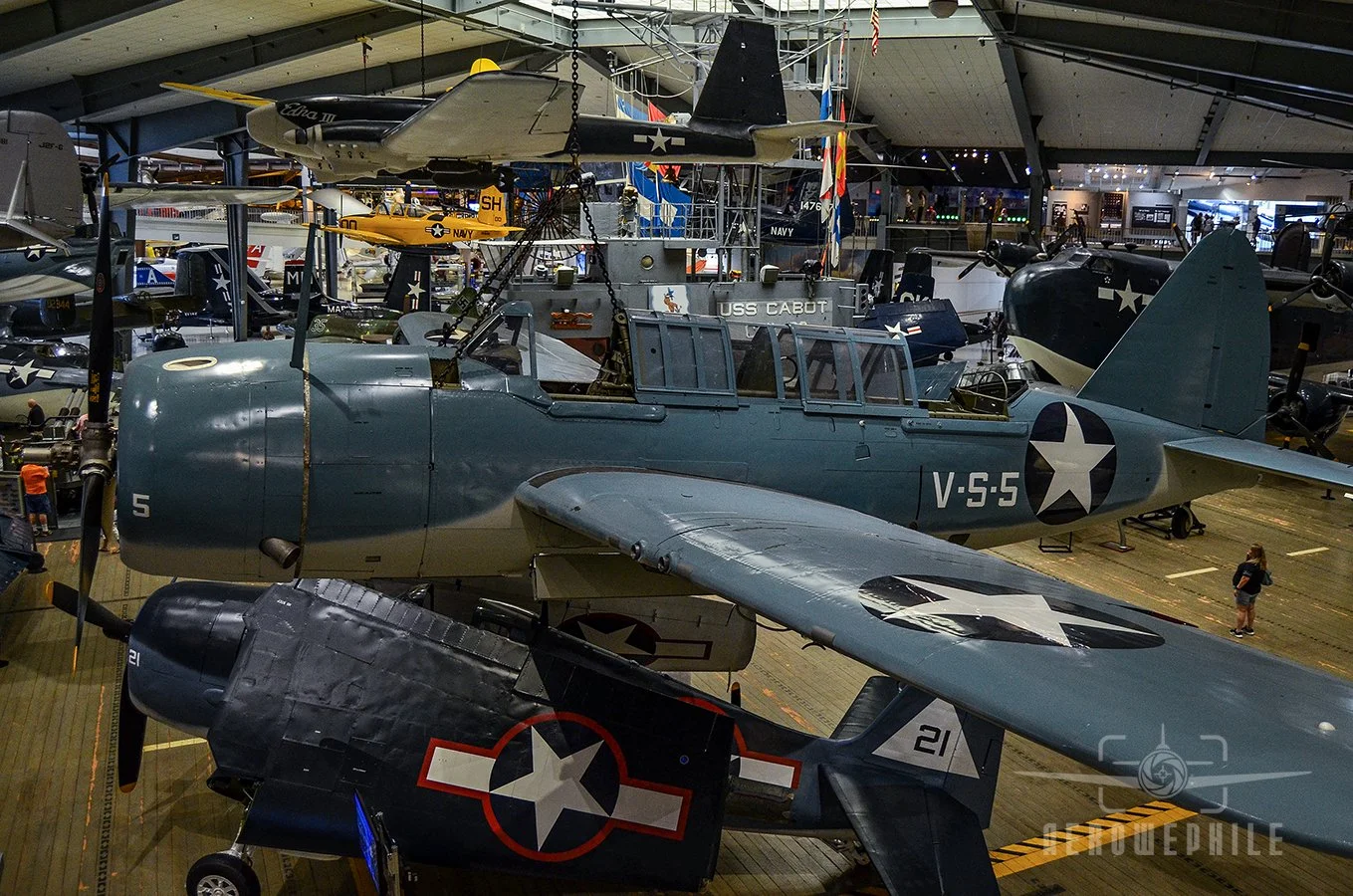
Overweight, underpowered, and lacking maneuverability, the Brewster SB2A Buccaneer was a classic failure. The aircraft were found to be unsatisfactory and were never used in combat, but instead became trainers, target tugs and ground maintenance trainers.
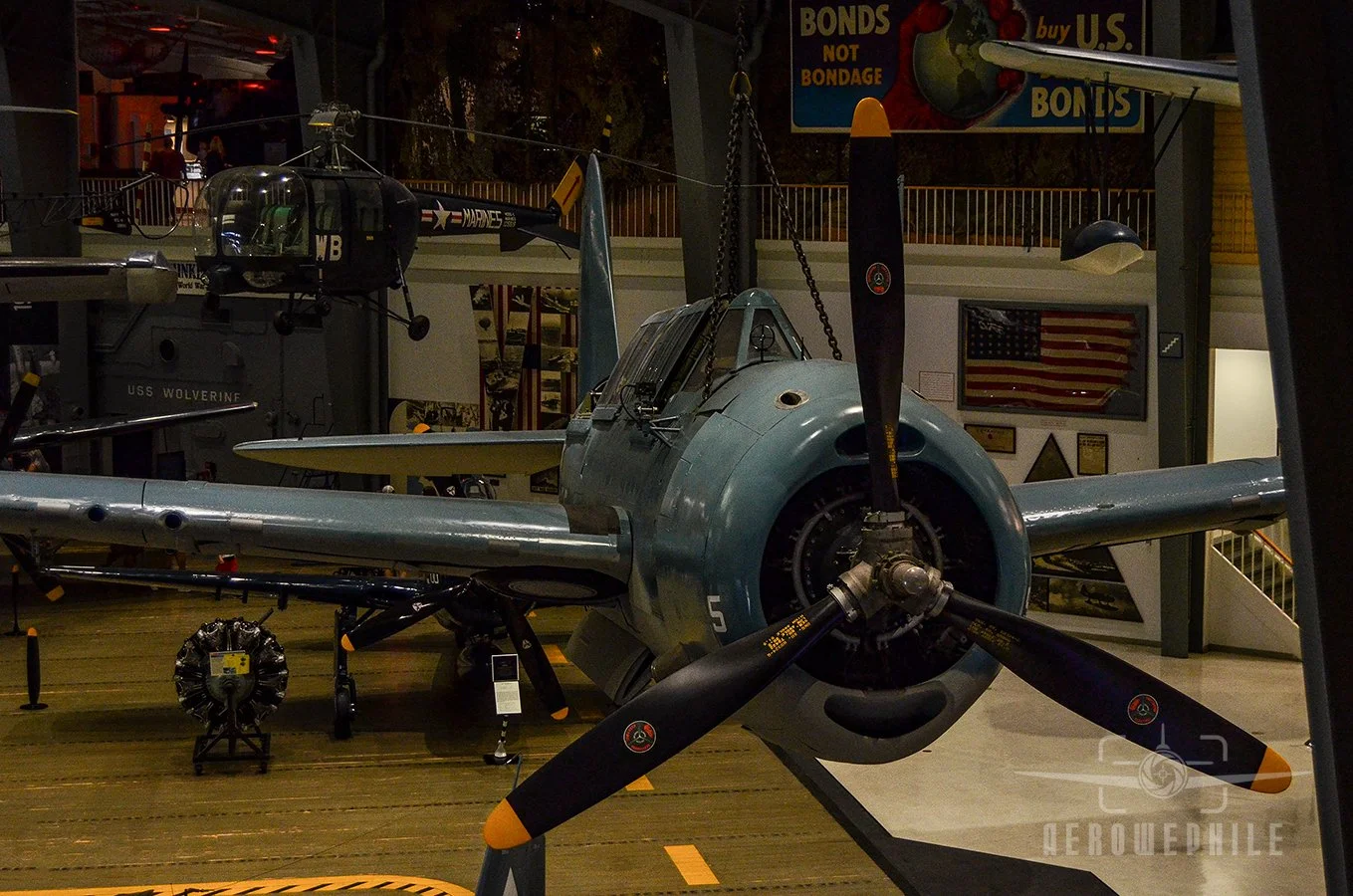
First flight of the Brewster SB2A Buccaneer did not occur until June 1941, though Brewster had succeeded in contracting for 750 aircraft for the British and landing a contract with the Dutch for 162 of the type.
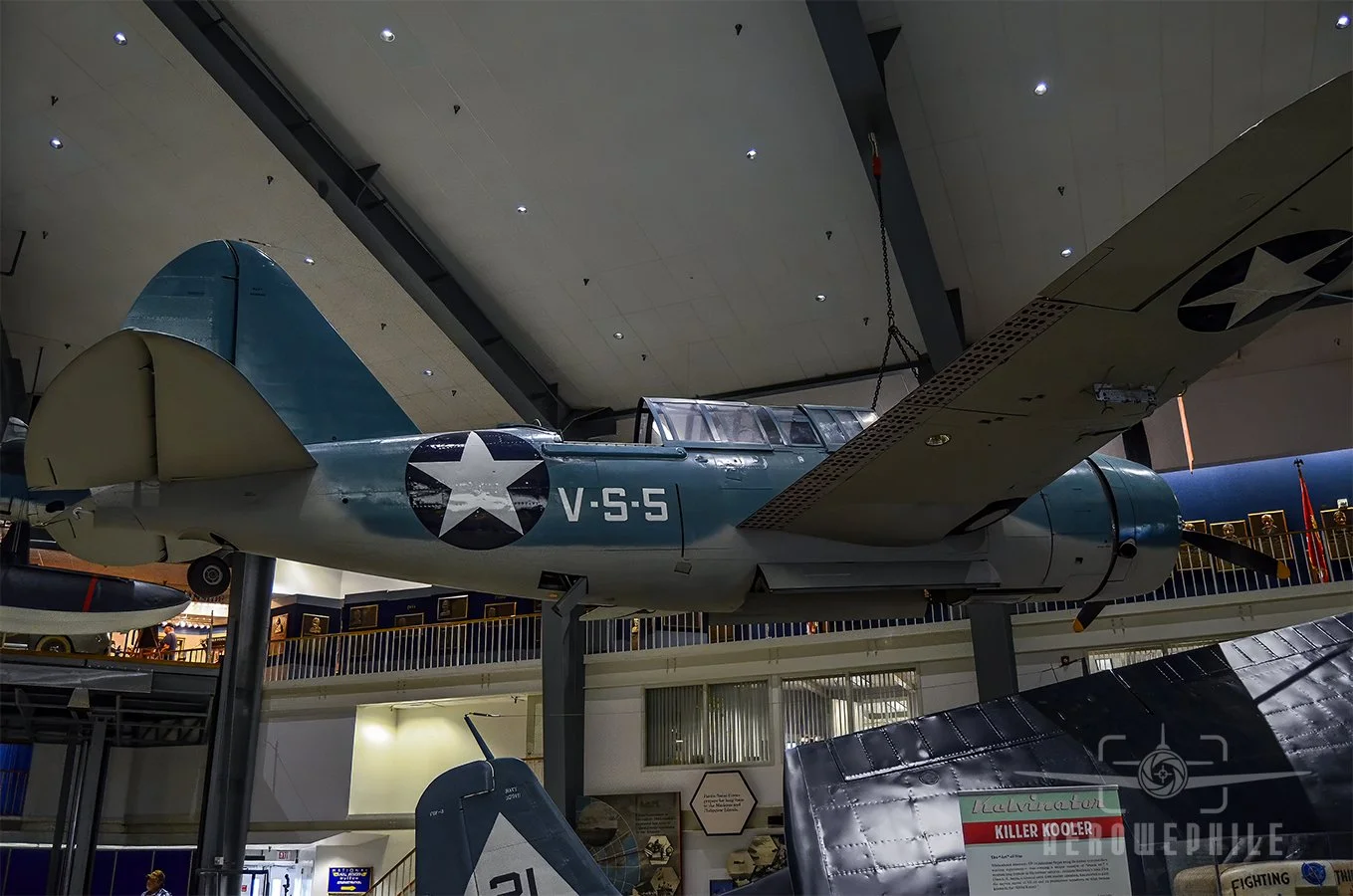
In 1943, the Navy began accepting 80 modified SB2A-2s, and repossessed the 162 Dutch aircraft after the fall of the Netherlands, designating those aircraft SB2A-4s. The Marine Corps, needing an aircraft for night fighter training, took some of the SB2A-3s and assigned them to two squadrons at Naval Air Station (NAS) Vero Beach, Florida.
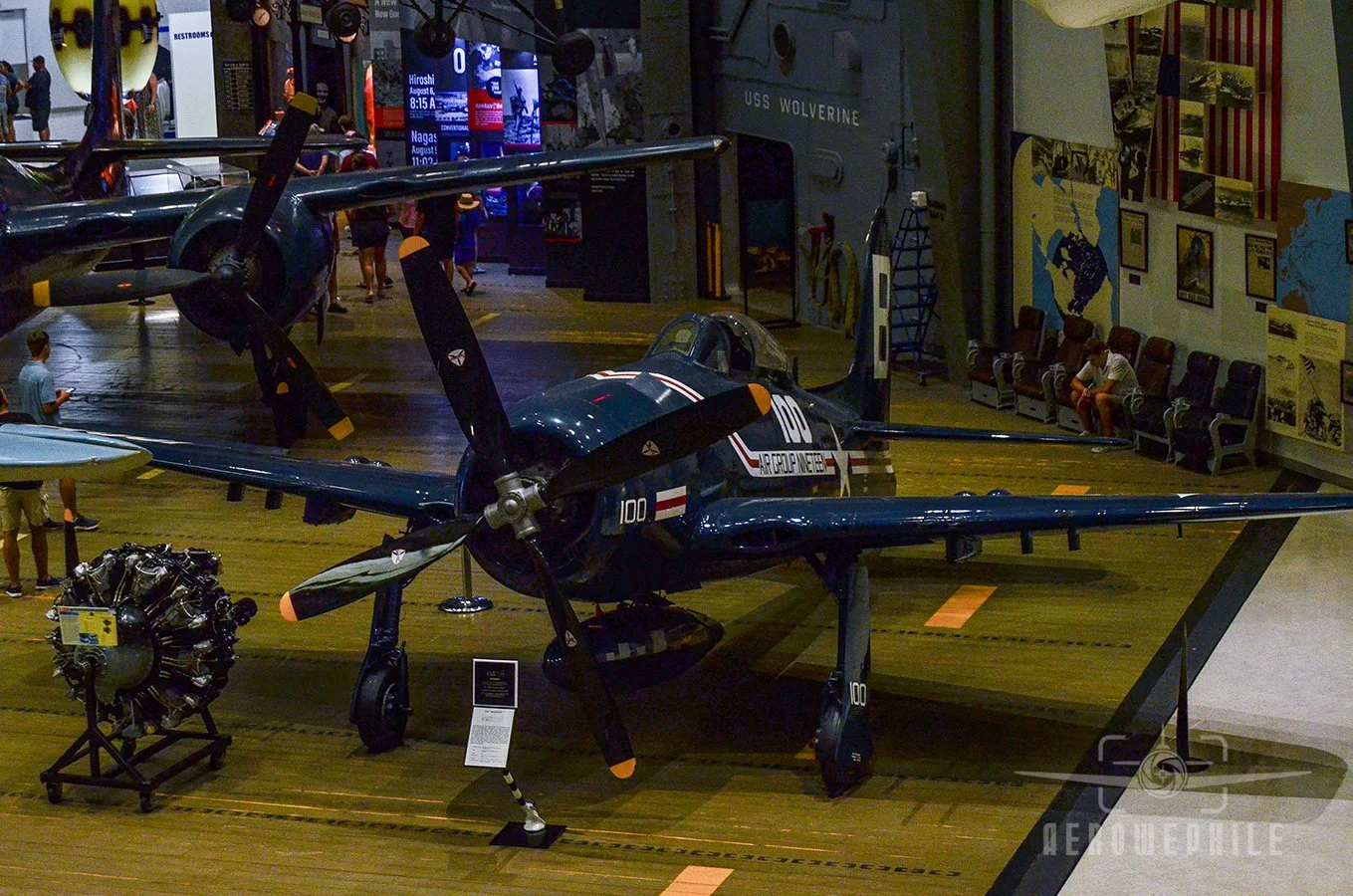
The last, most powerful of Grumman's prop-driven fighters, the F8F Bearcat has been described as an engine with a saddle on it.
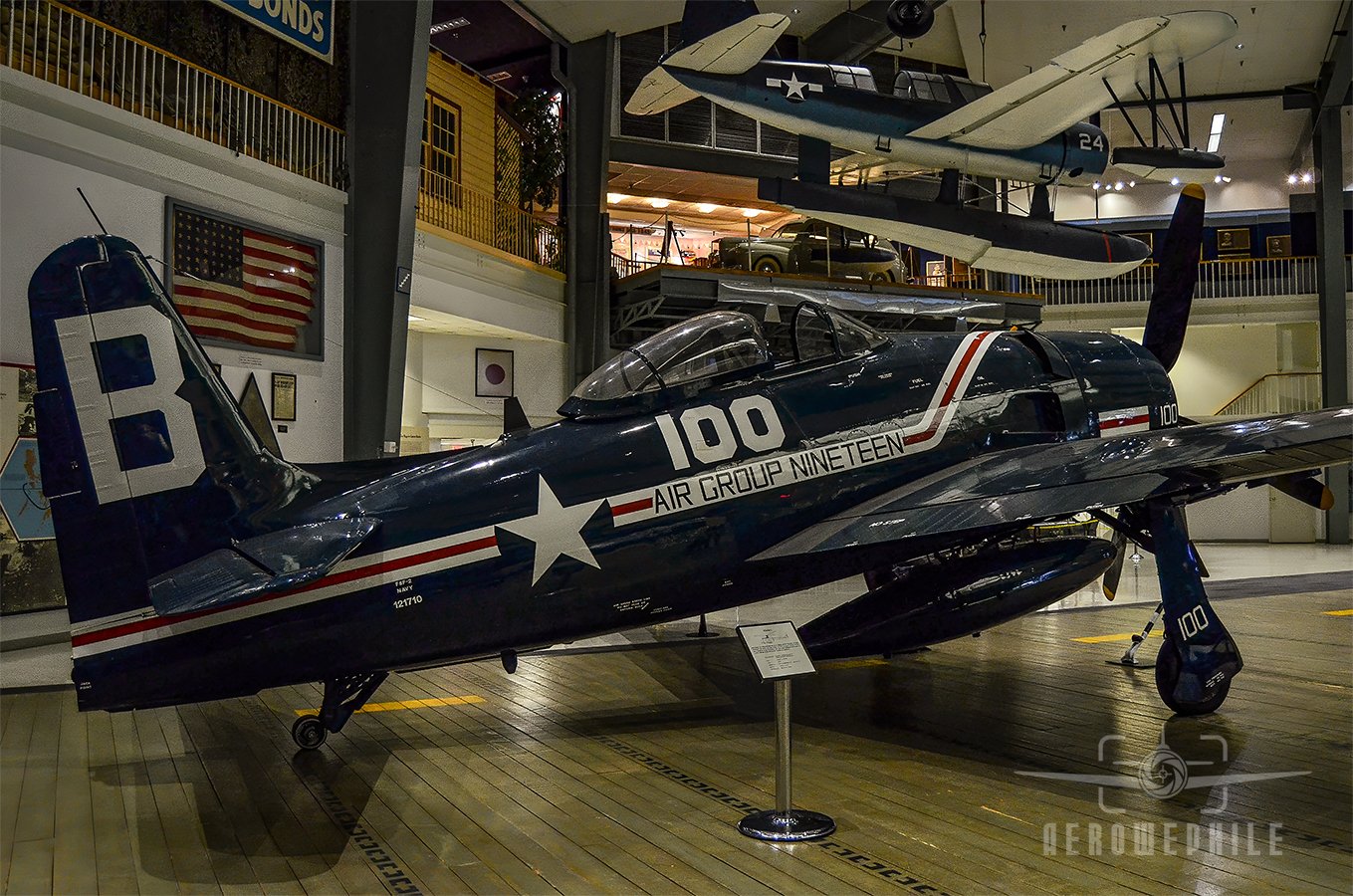
The F8F Bearcat out-performed all fighters of the time in speed, time to climb, quick take off, and combat maneuverability. Pound for pound, the F8F was the most powerful single-engine, propeller-driven aircraft ever built.
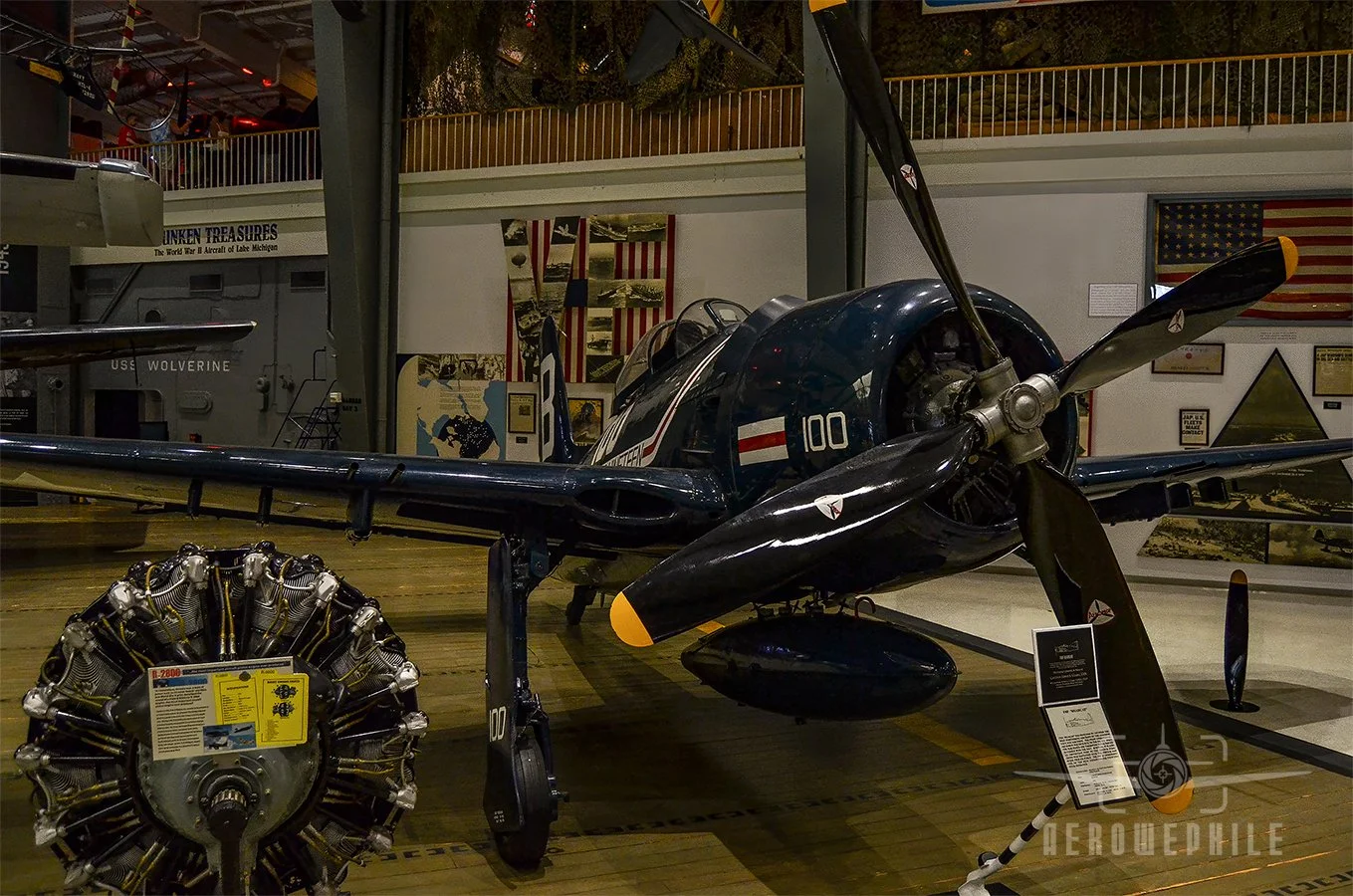
Grumman built 293 F8F-2s along with twelve night fighter F8F-2Ns and 60 photo reconnaissance F8F-2Ps, an example of the latter on display as part of the Museum collection.
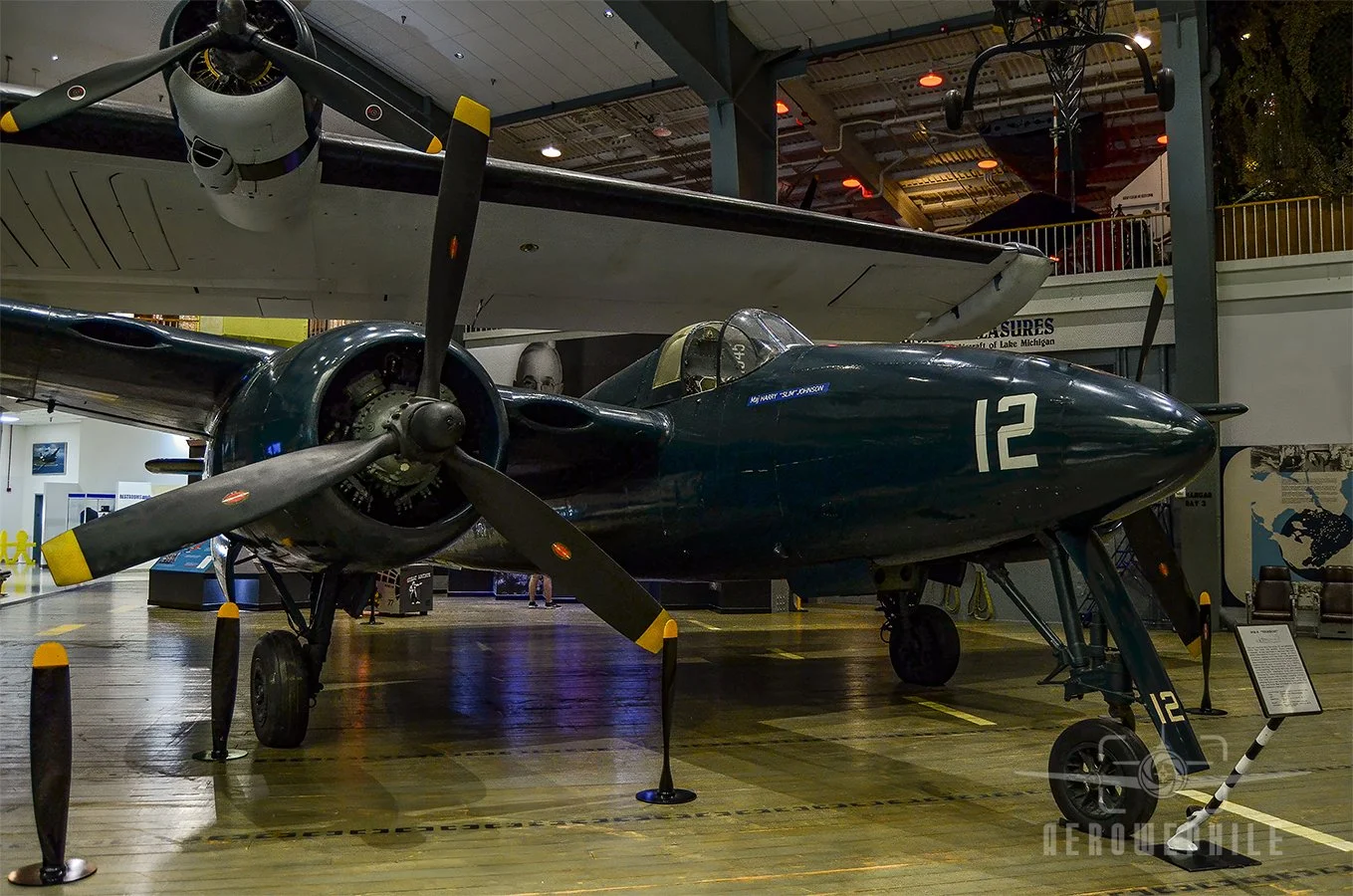
Too late for service in World War II, the F7F Tigercat served in several Marine Corps squadrons after the war and later performed close air support, night fighter, reconnaissance and utility missions during the Korean War.
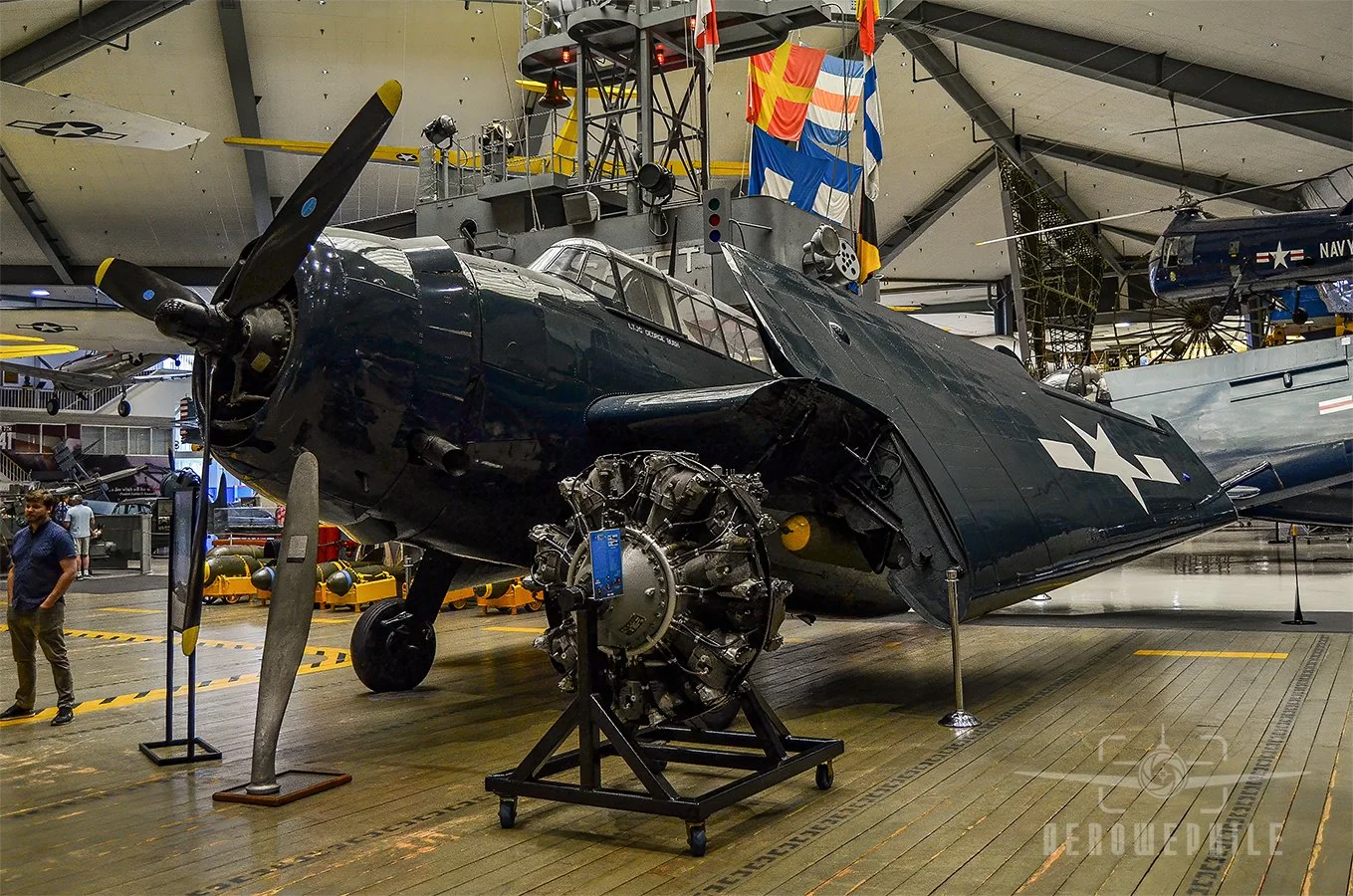
The TBM Avenger became the Navy's standard torpedo bomber throughout World War II. It served in other roles as well, including glide bombing in close air support, reconnaissance, and light transport.
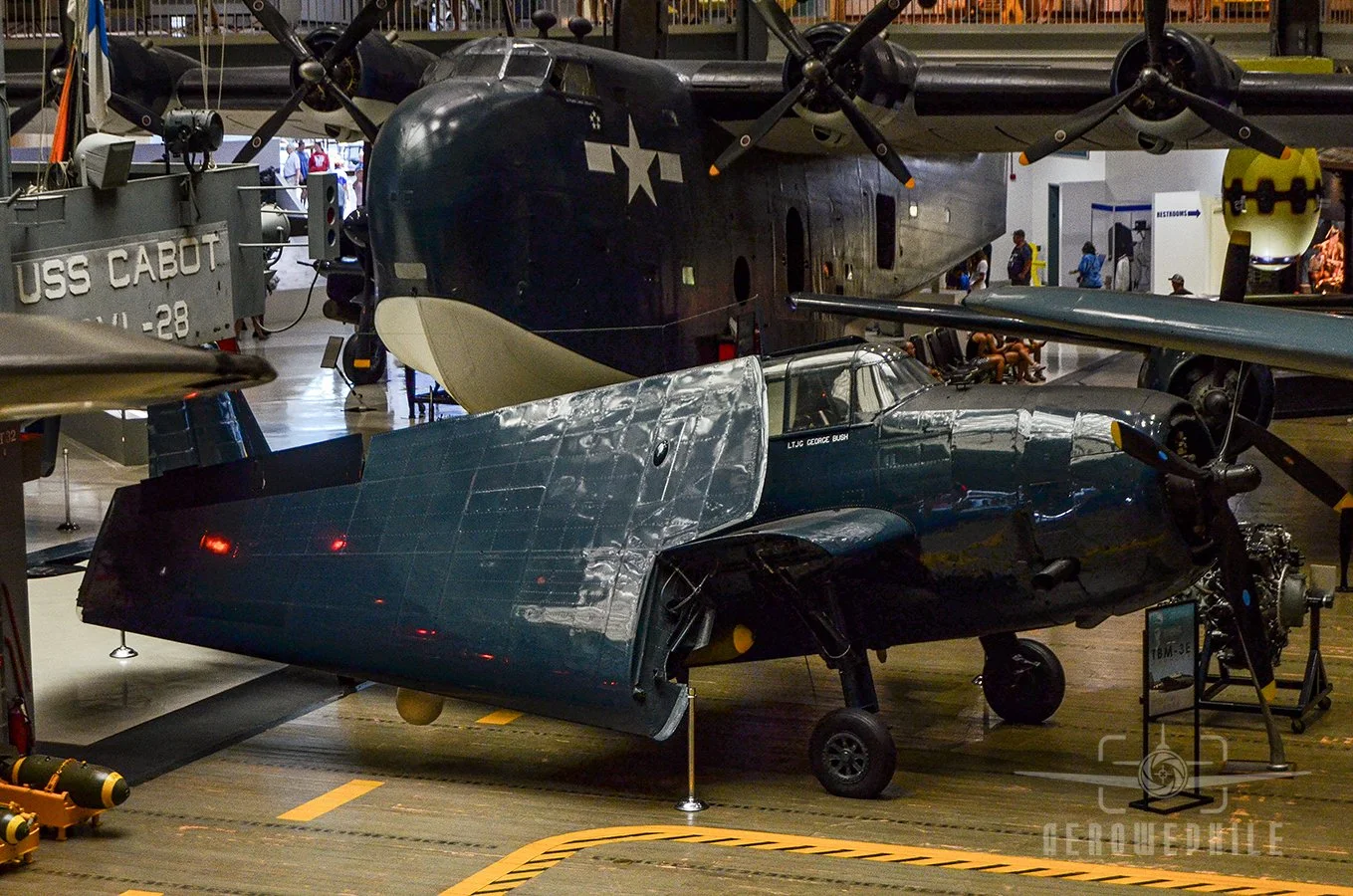
In all, 9,836 Avengers were built, 7,546 of which were turned out by General Motors Eastern Aircraft Division and designated TBMs. Grumman built Avengers were designated as TBF Avengers.
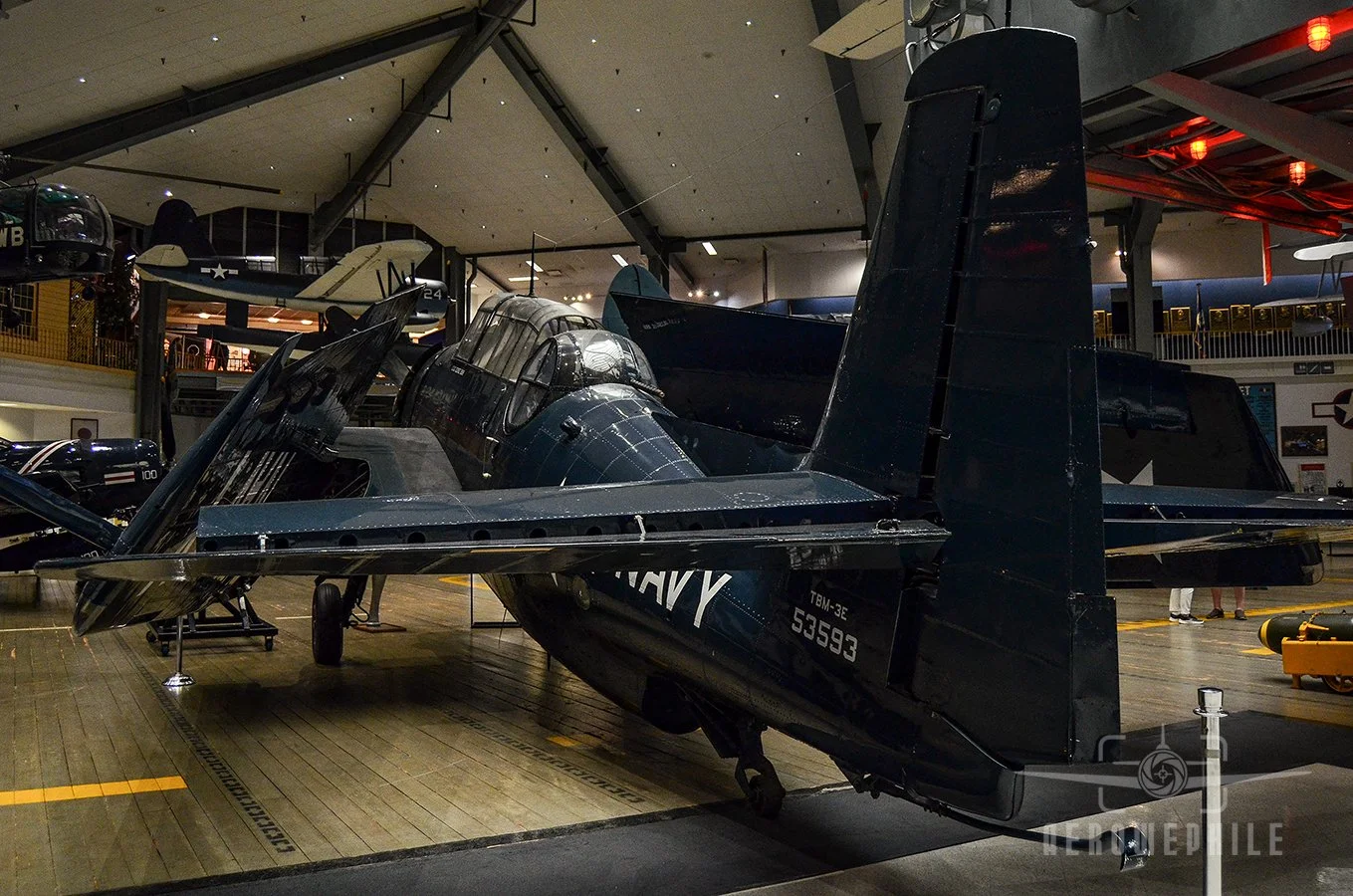
The Avengers introduction to combat was at the Battle of Midway. Operating from land, the aircraft attacked the Japanese fleet but were mauled by enemy fighters. Five were shot down, and the surviving aircraft was badly damaged with one crew member dead and one wounded.
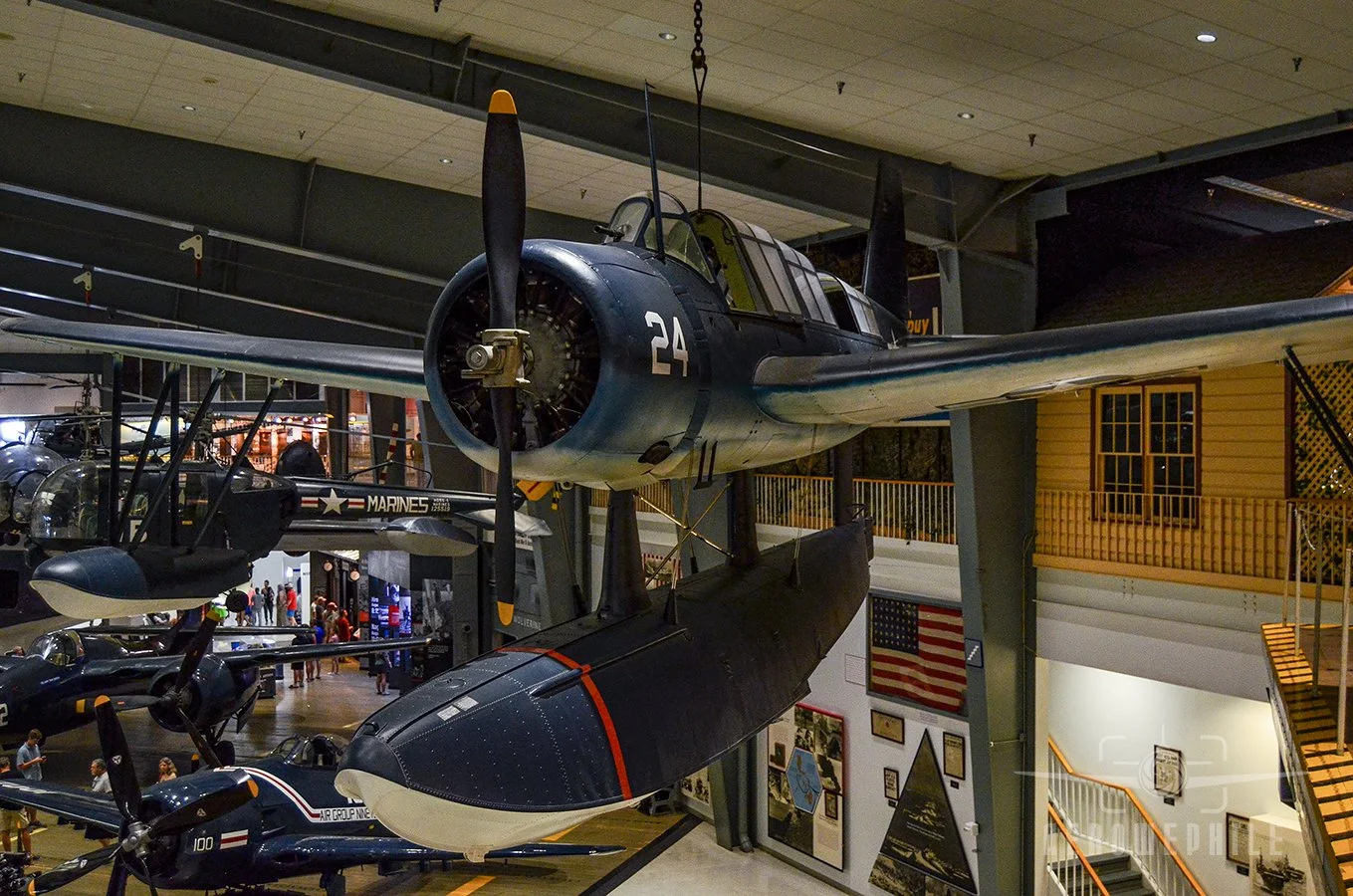
Flying from battleships, heavy cruisers and land bases during World War II, the Vought Sikorsky OS2U Kingfisher served throughout the Pacific in a variety of roles, from naval gunfire spotting, to observation, sub hunting and rescue.
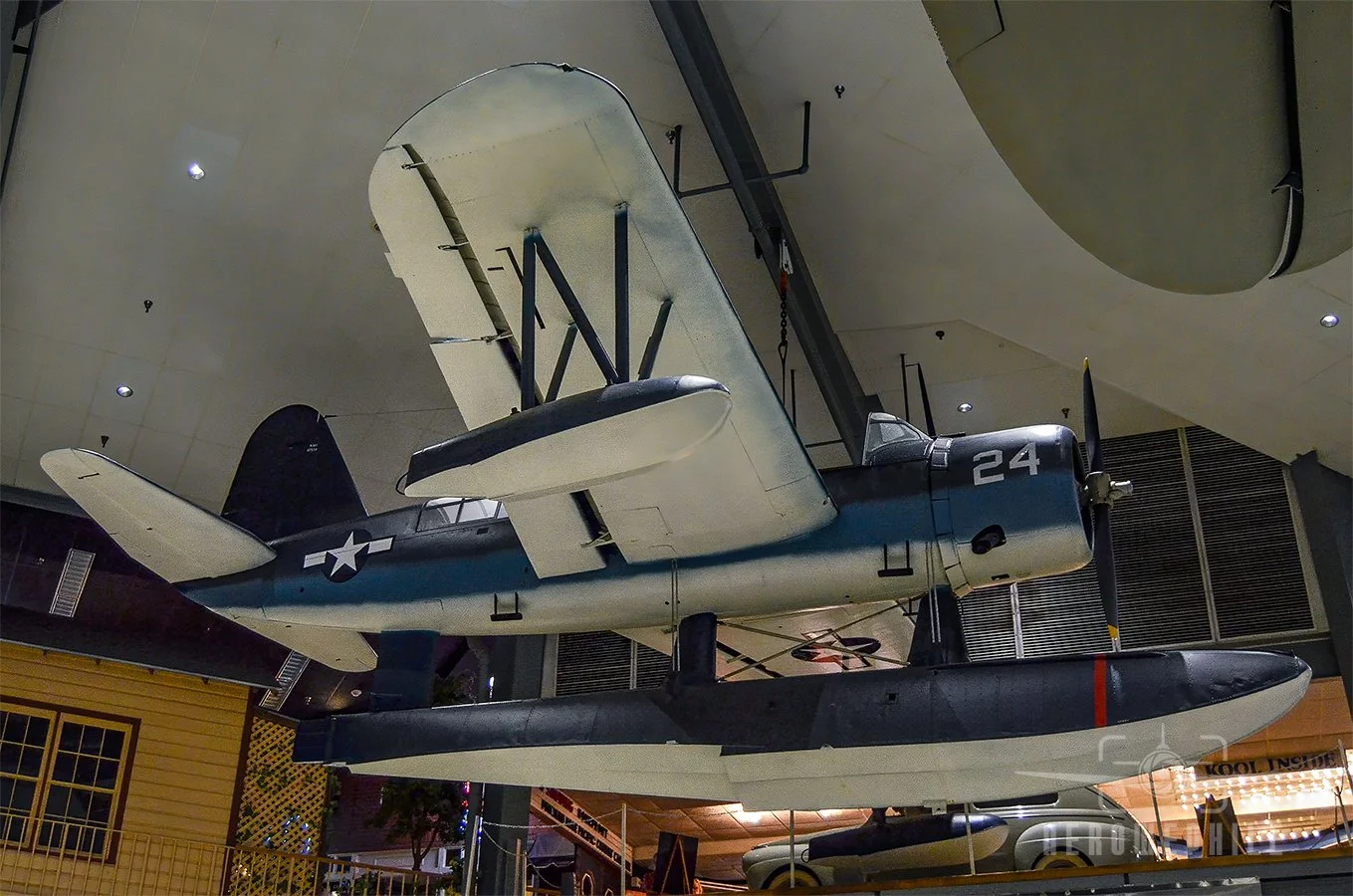
The Museum's example of the OS2U Kingfisher was a Lend-Lease aircraft that was operated by the navy of Uruguay until 1958. It was received by the Museum from that nation in 1971.
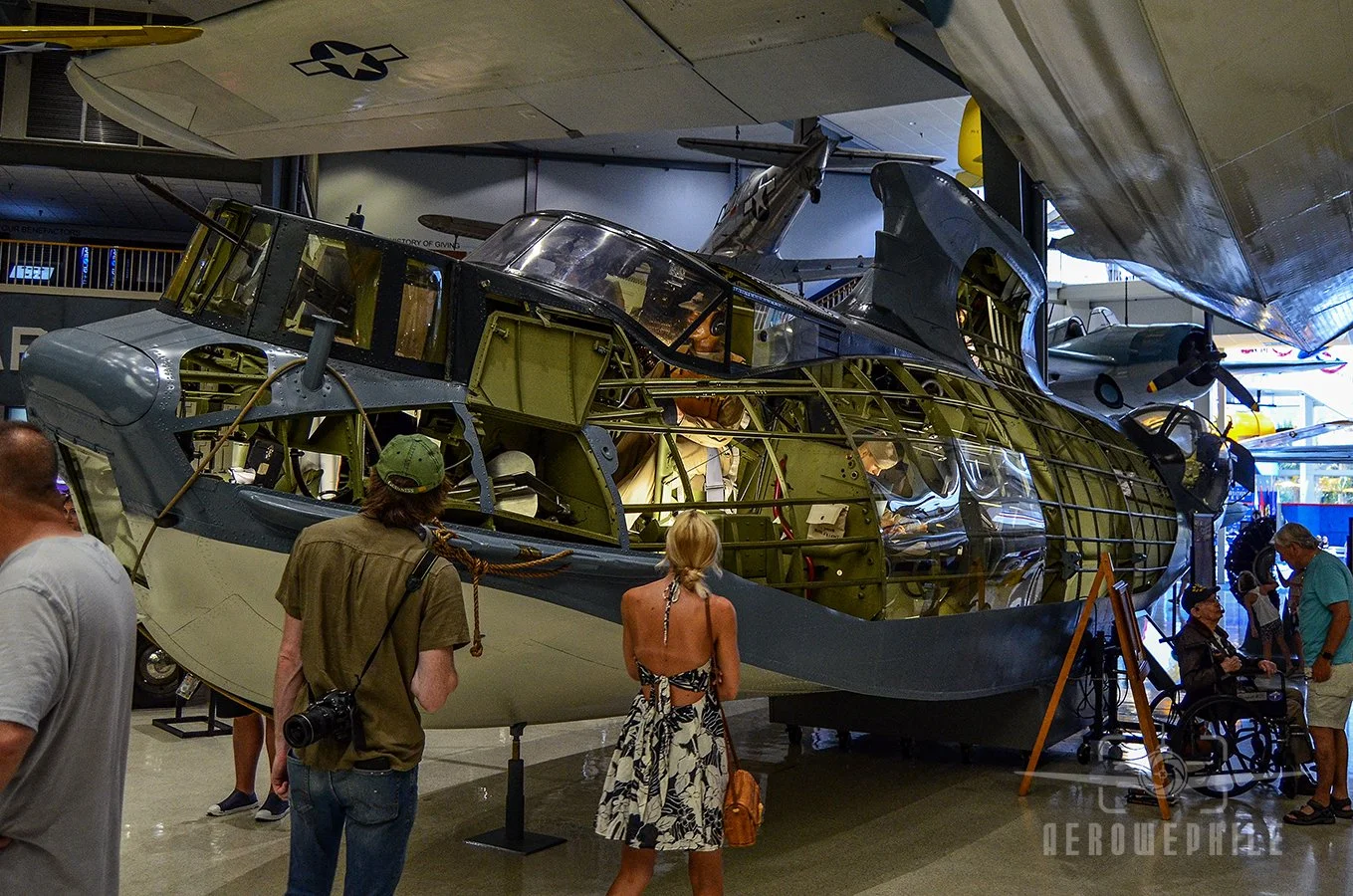
Consolidated PBY-5 Catalina, Number FP-216, cutaway.
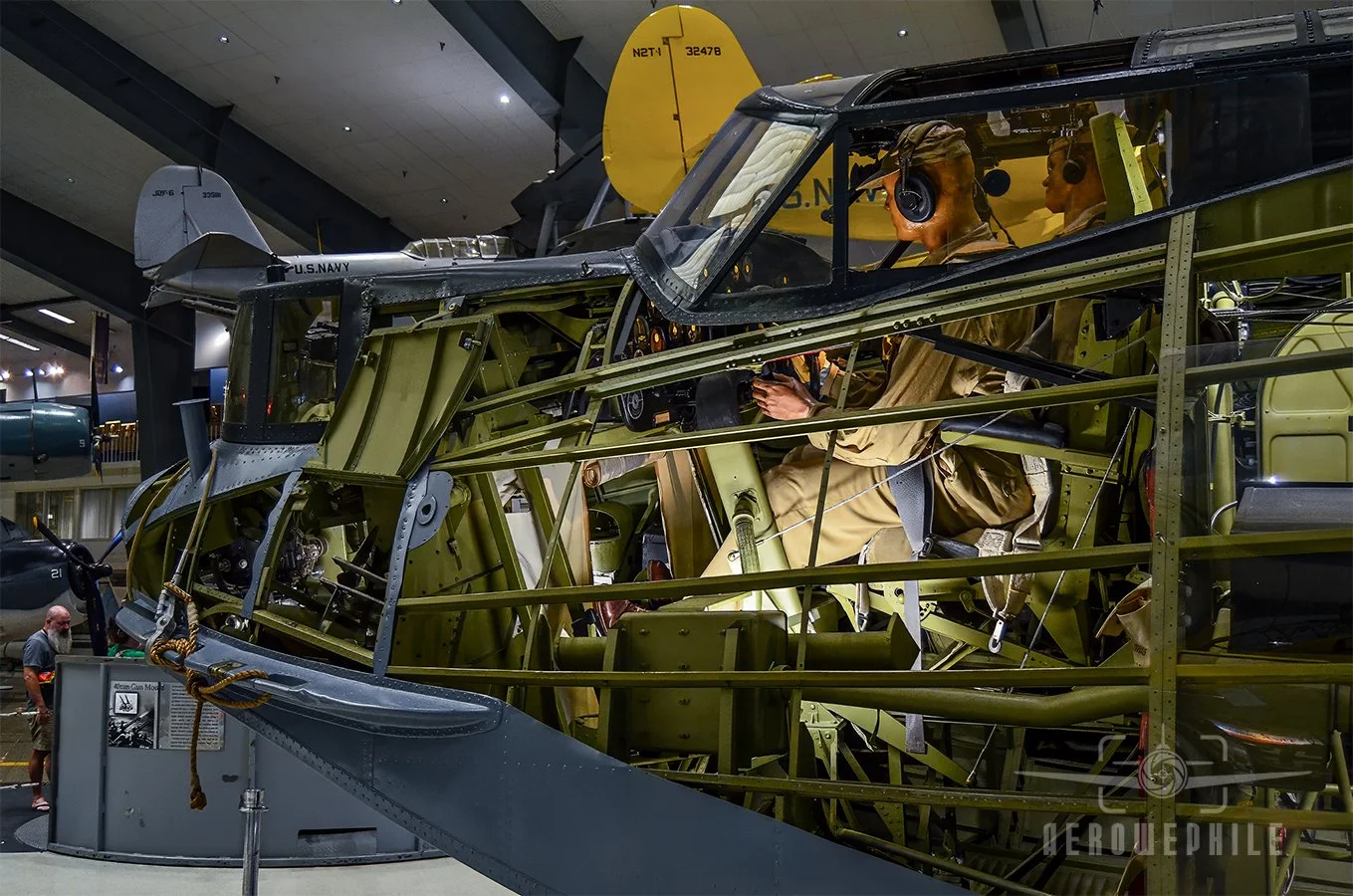
Consolidated PBY-5 Catalina, Number FP-216, cockpit cutaway.
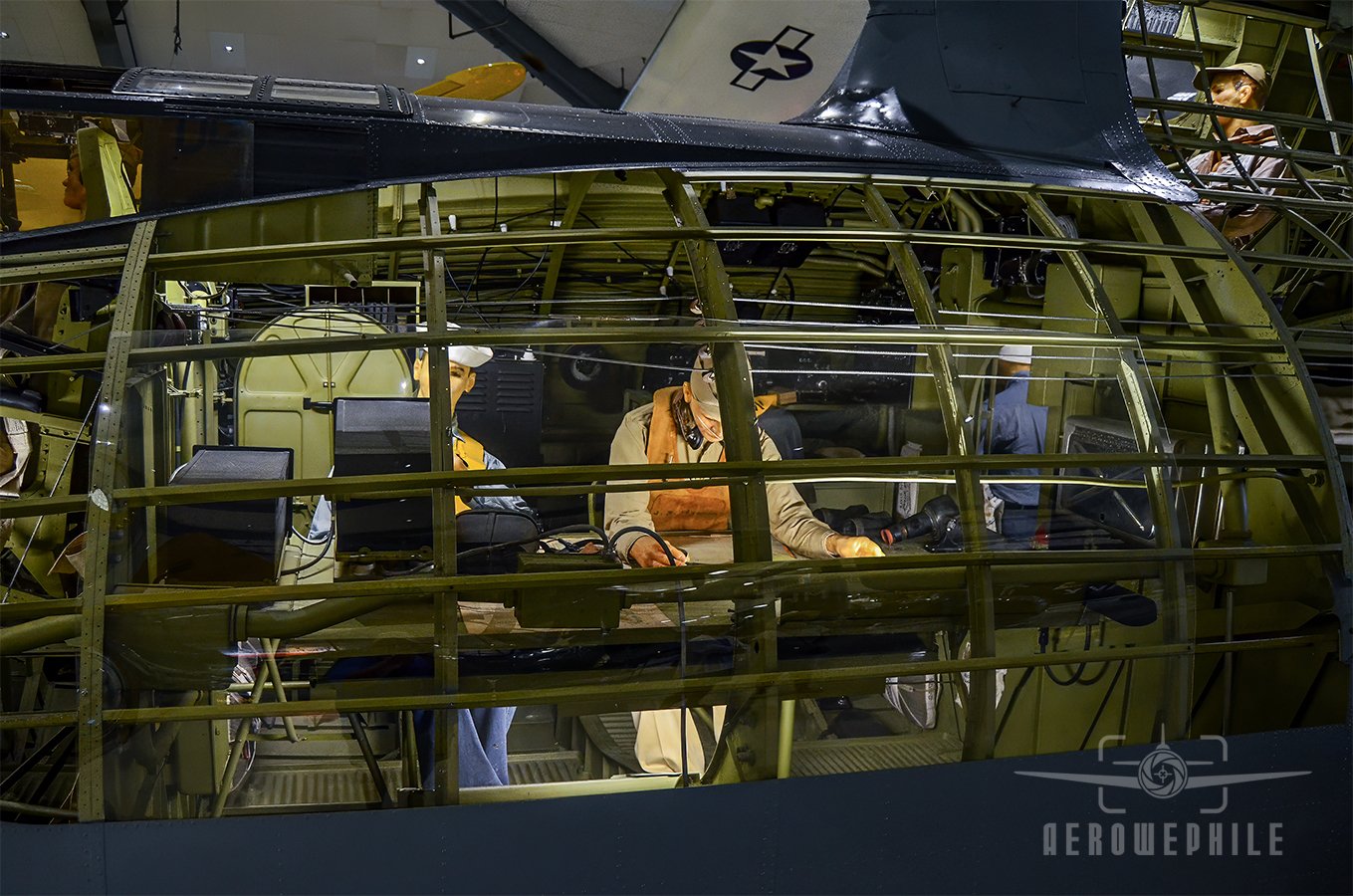
Consolidated PBY-5 Catalina, Number FP-216, interior cutaway.
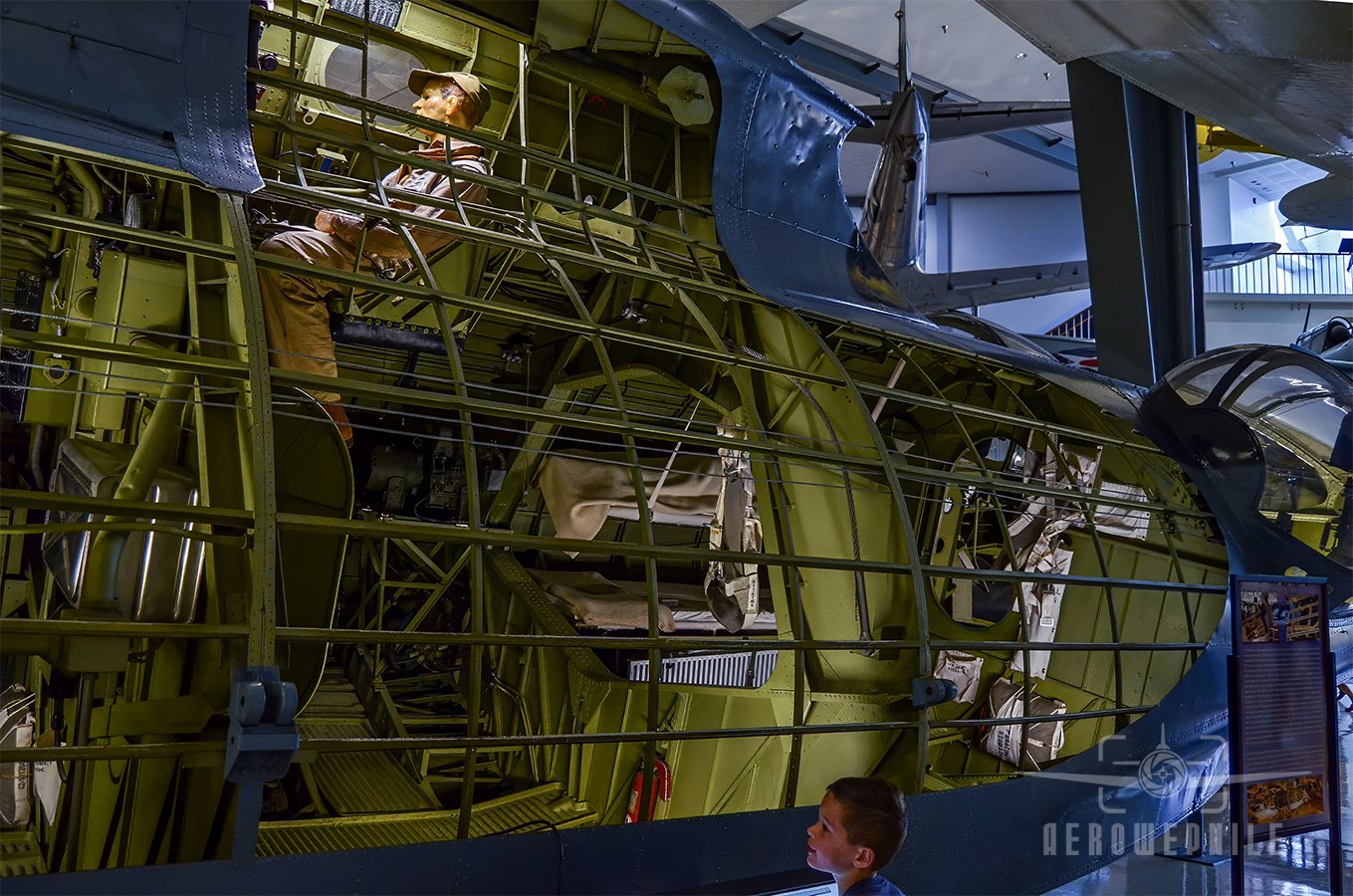
Consolidated PBY-5 Catalina, Number FP-216, interior cutaway.
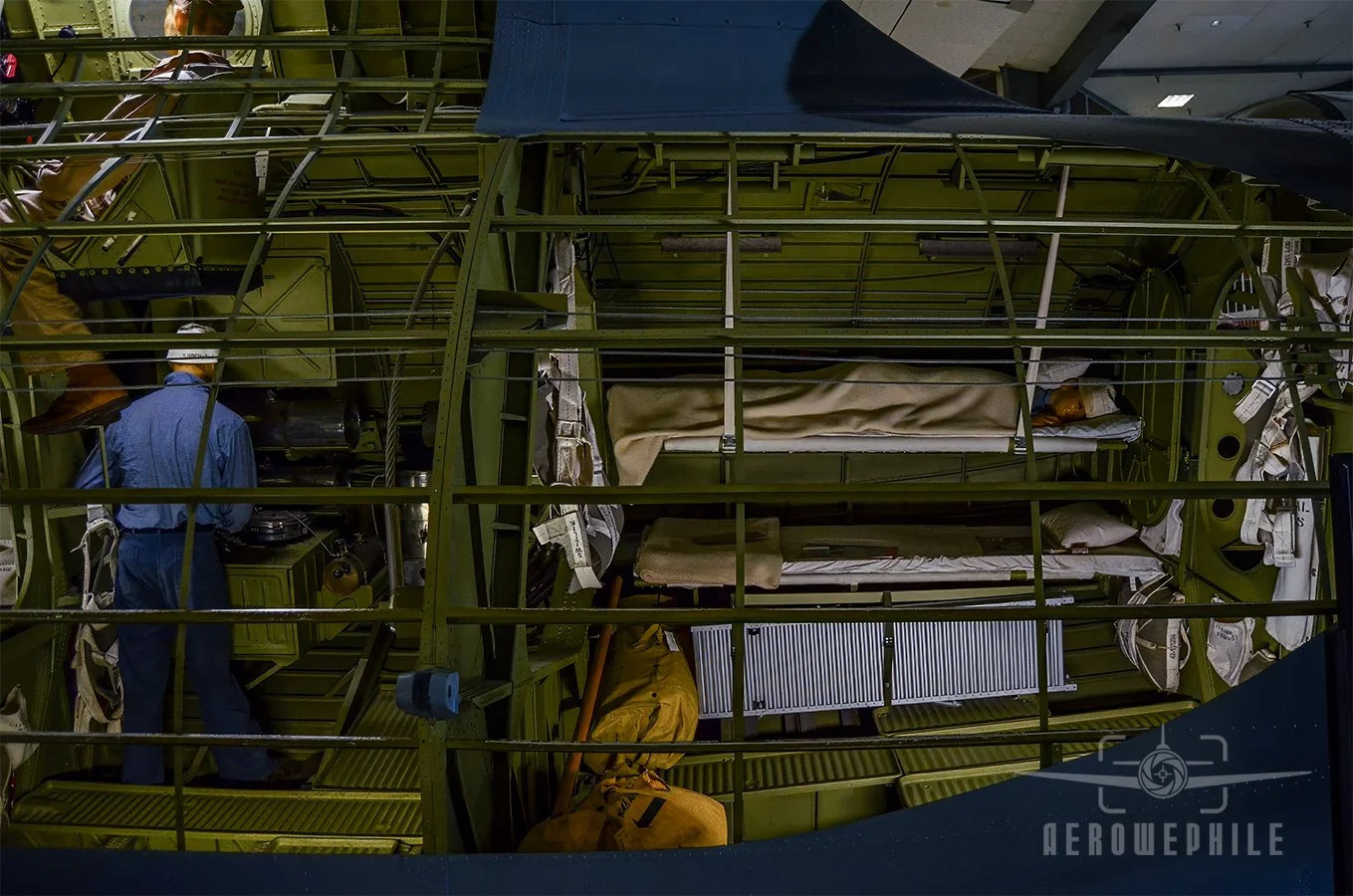
Consolidated PBY-5 Catalina, Number FP-216, interior cutaway.
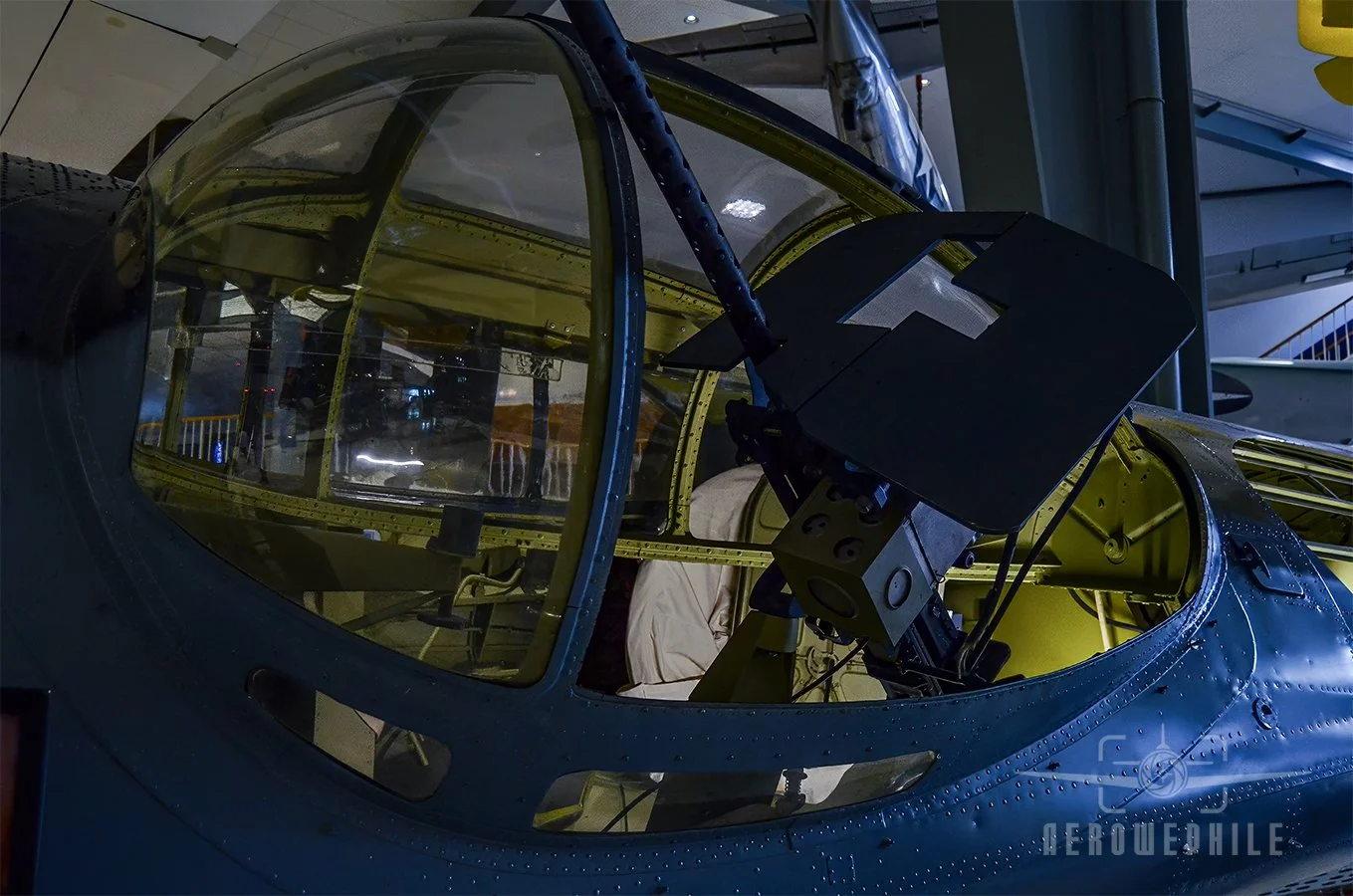
Consolidated PBY-5 Catalina, Number FP-216, observation bubble window.
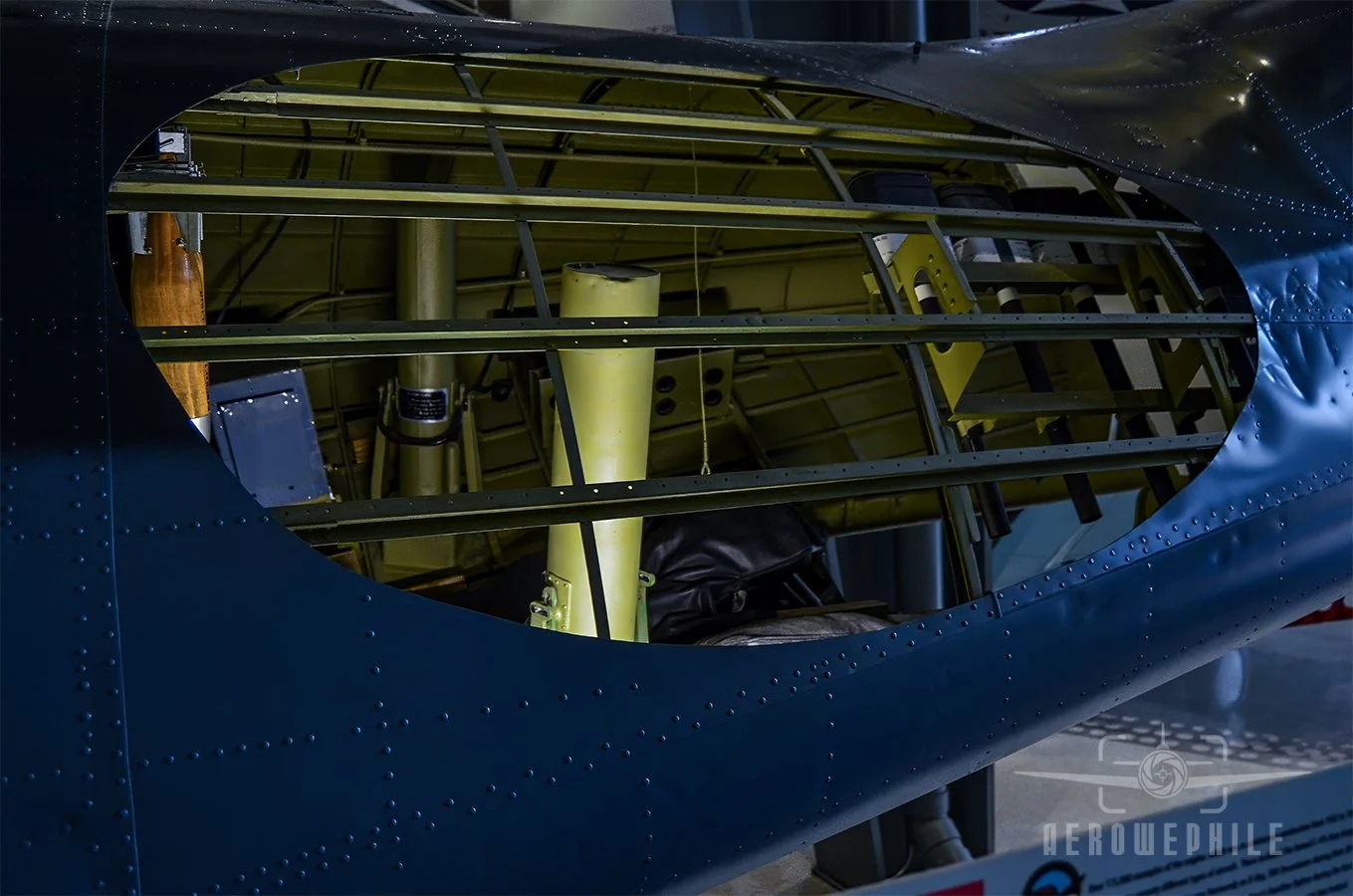
Consolidated PBY-5 Catalina, Number FP-216, interior cutaway.
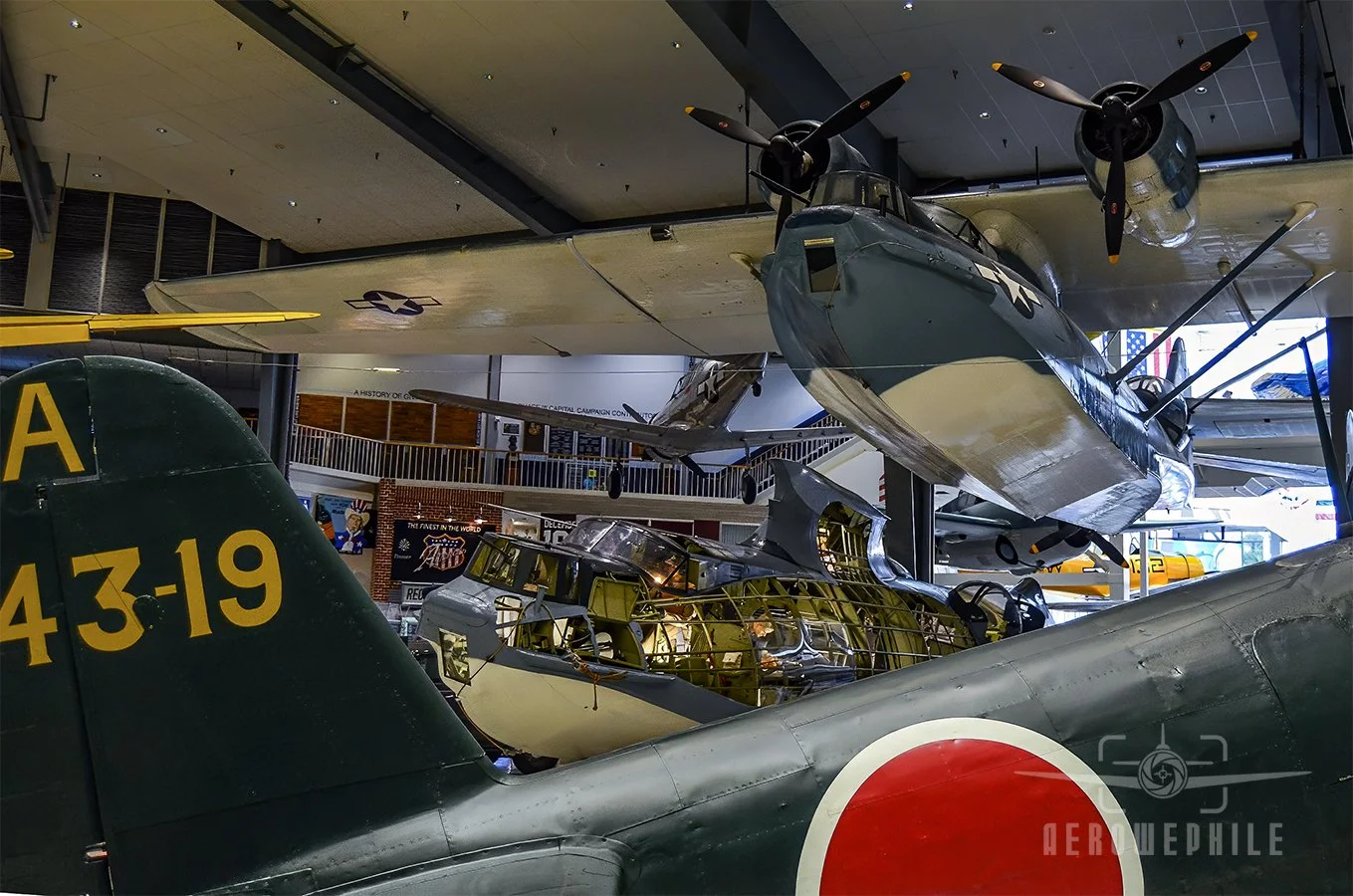
One of the most recognized aircraft in the world, the Consolidated PBY Catalina not only served in the U.S. Navy, but also with the air arms of Britain, Australia, New Zealand, Canada, the Netherlands and the Soviet Union. The suspended PBY-5 on display is the only pure seaplane variant in existence; other surviving Catalinas are PBY-5A amphibious versions.
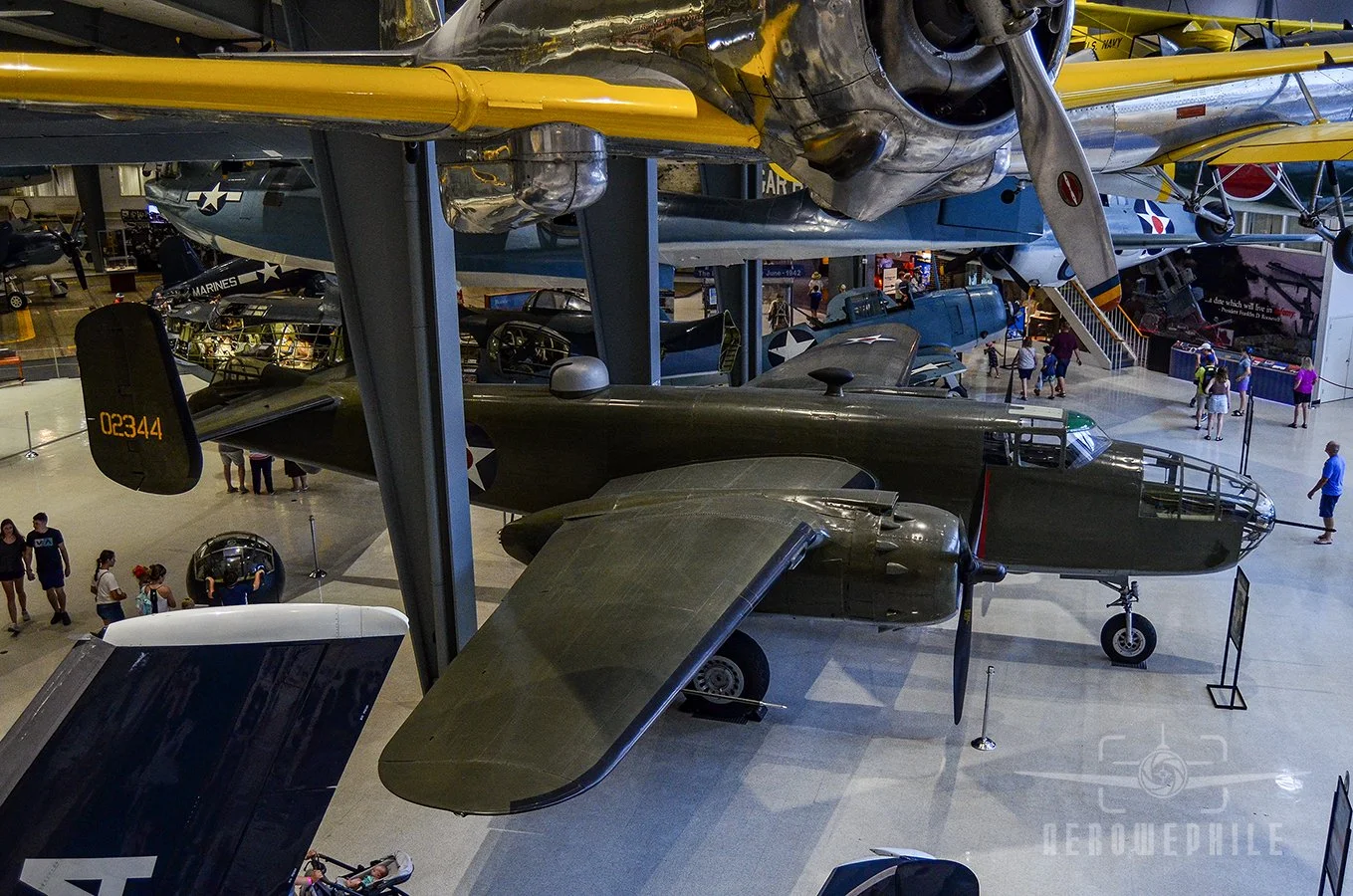
The museum’s B-25J Mitchell flew in both the Army Air Forces and the civilian market. It is painted in the markings of the airplane flown by Lieutenant Colonel James H. Doolittle on the raid from the aircraft carrier Hornet.
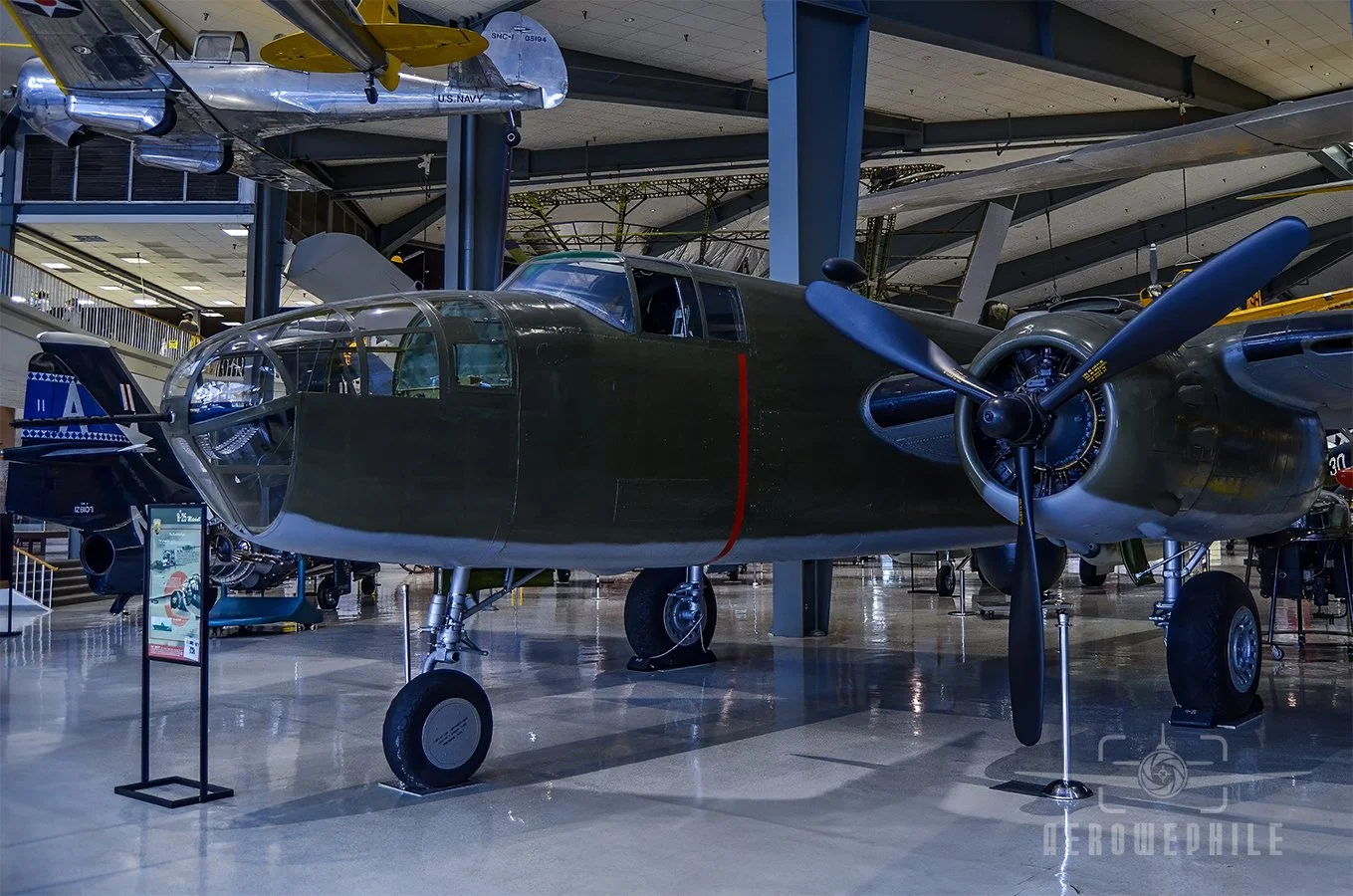
On April 18, 1942, with the aircraft carrier Hornet having been observed by a Japanese vessel short of the intended launch point, Doolittle led his Raiders in sixteen B-25Bs aloft 650 miles from Japan. The crews bombed industrial targets before setting course for China, with most bailing out or crash landing. One crew landed in the Soviet Union.
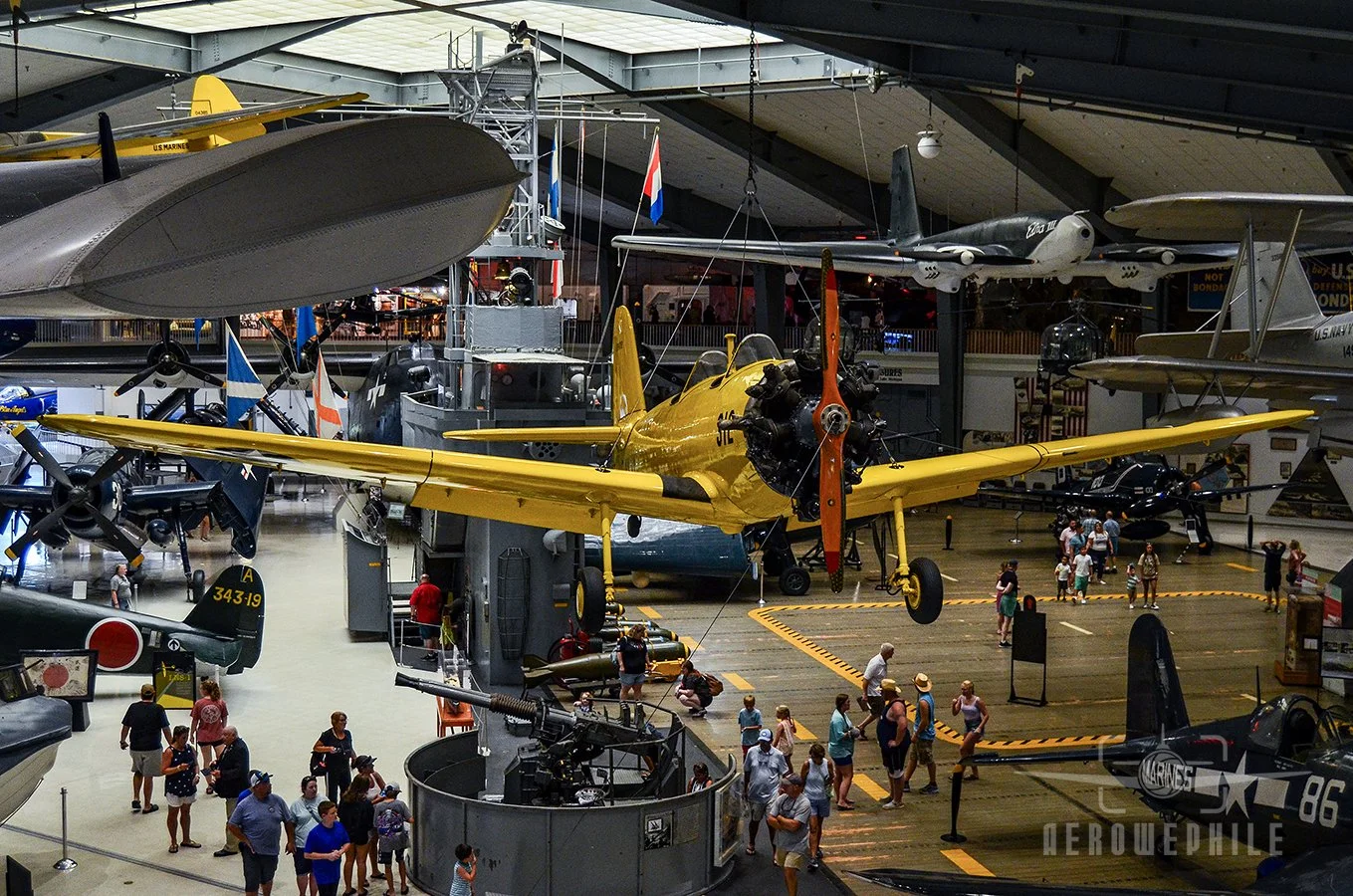
On 2 April 1941, Timm Aircraft Corporation introduced a two-seat primary training monoplane built entirely of 'Aeromold,' a plastic-bonded plywood. The Navy conducted tests on the type and placed an order for 262 aircraft for use in formation flying training. They were delivered in 1943 under the designation N2T-1 Tutor.
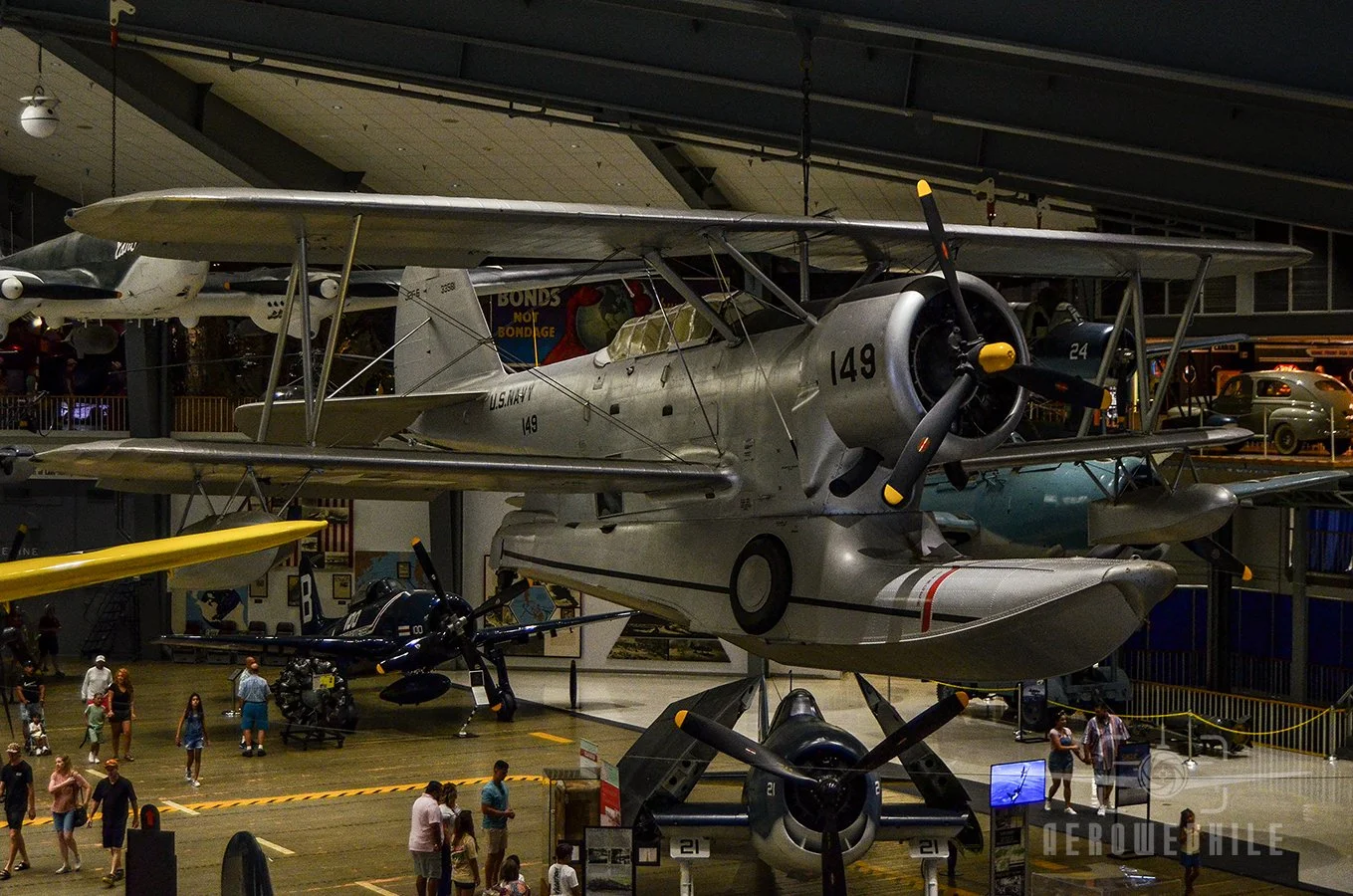
The J2F-6 on display was built by Columbia Aircraft. The venerable Duck served with all the services during the World War II, performing transport, observation/patrol, anti-submarine and search and rescue missions.
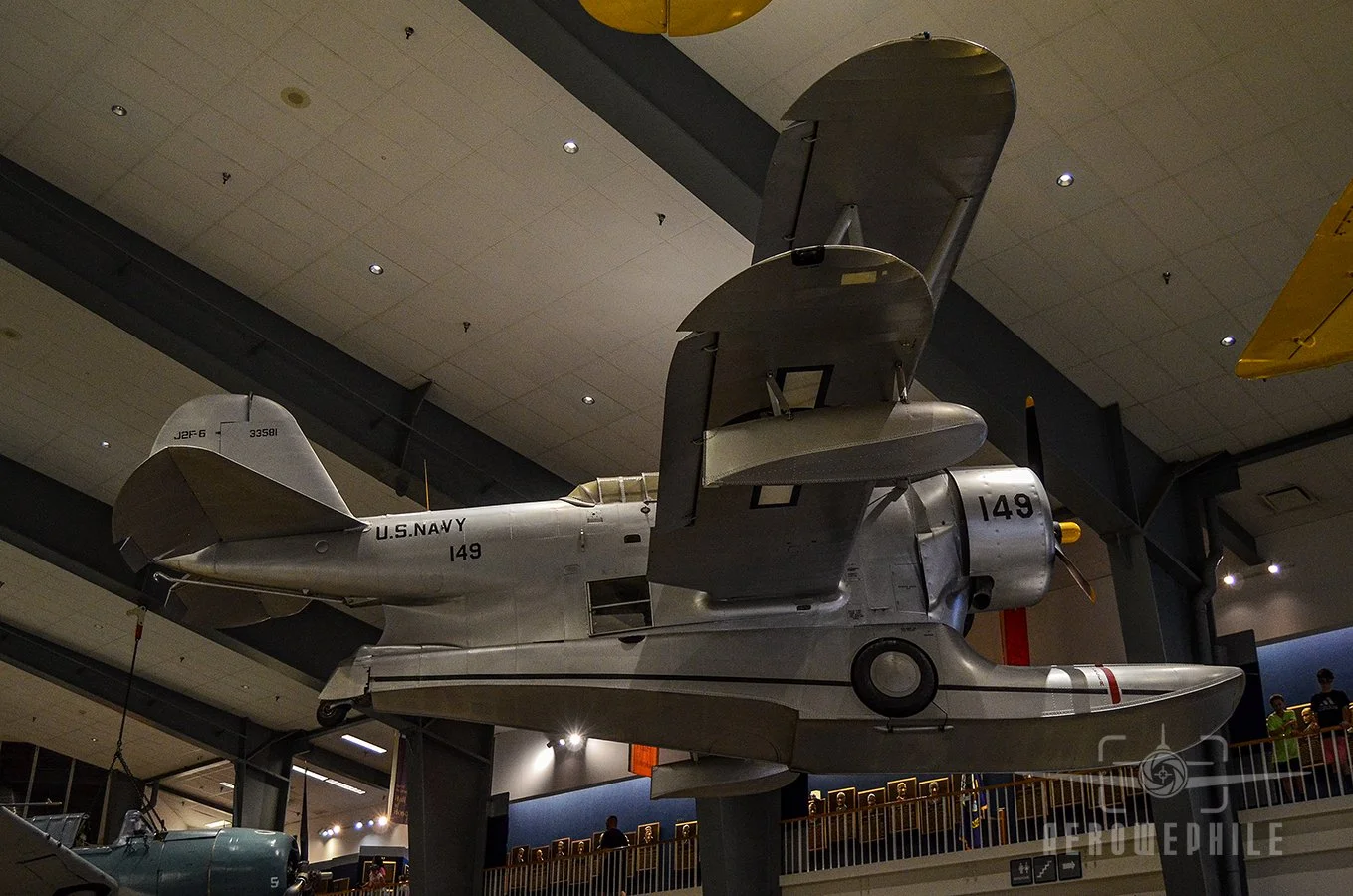
Originally the J2F-6 Duck was designed and built by Grumman. After Pearl Harbor, the Navy ordered 330 more Ducks, but assigned the contract to Columbia Aircraft Corporation of Long Island, New York.
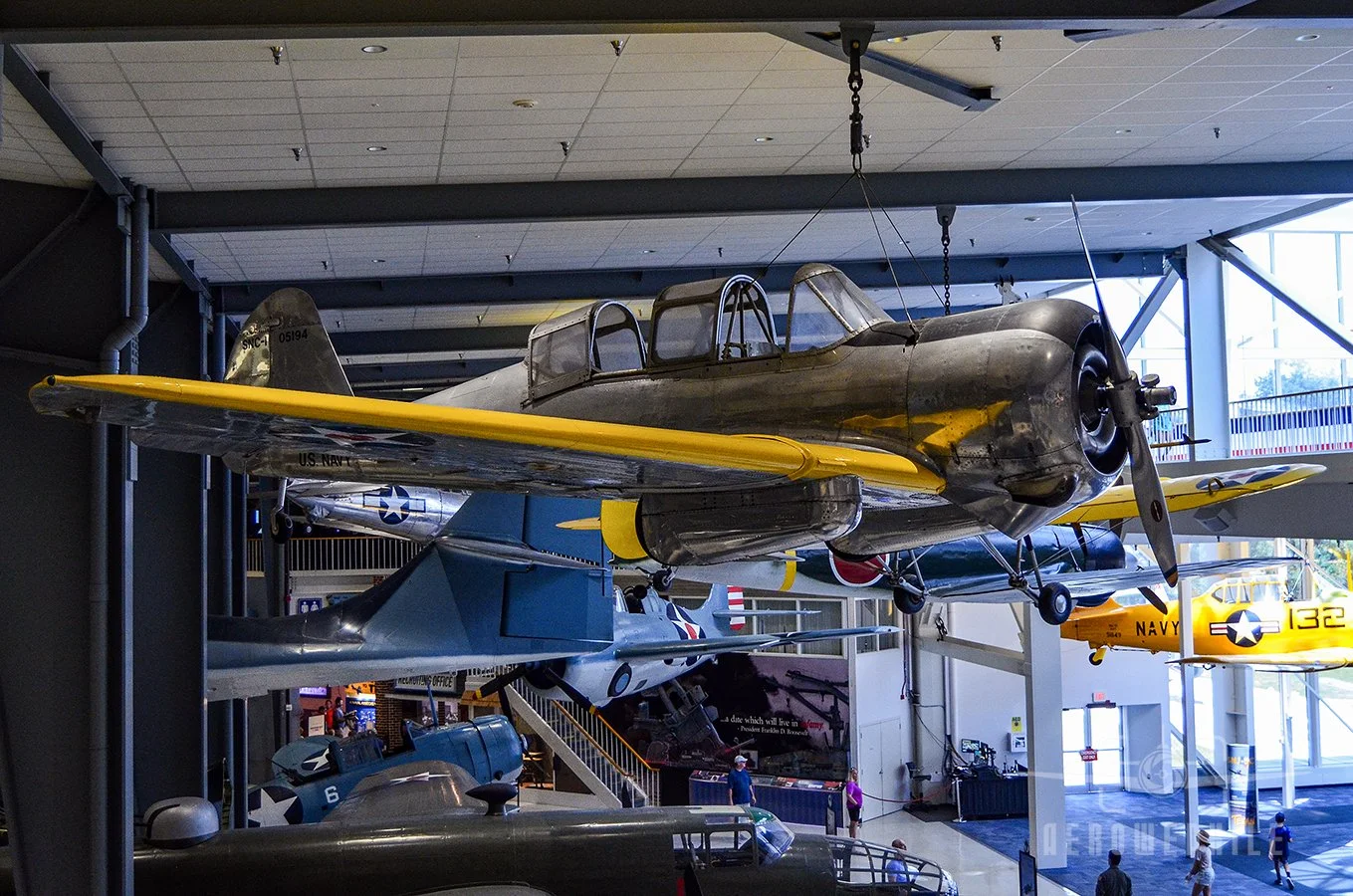
The Museum's SNC Falcon (Bureau Number 05194) was accepted by the Navy in 1942. It served as a trainer and utility aircraft until 1944, when it was stricken from the Navy inventory. It arrived at the Museum in 1984.
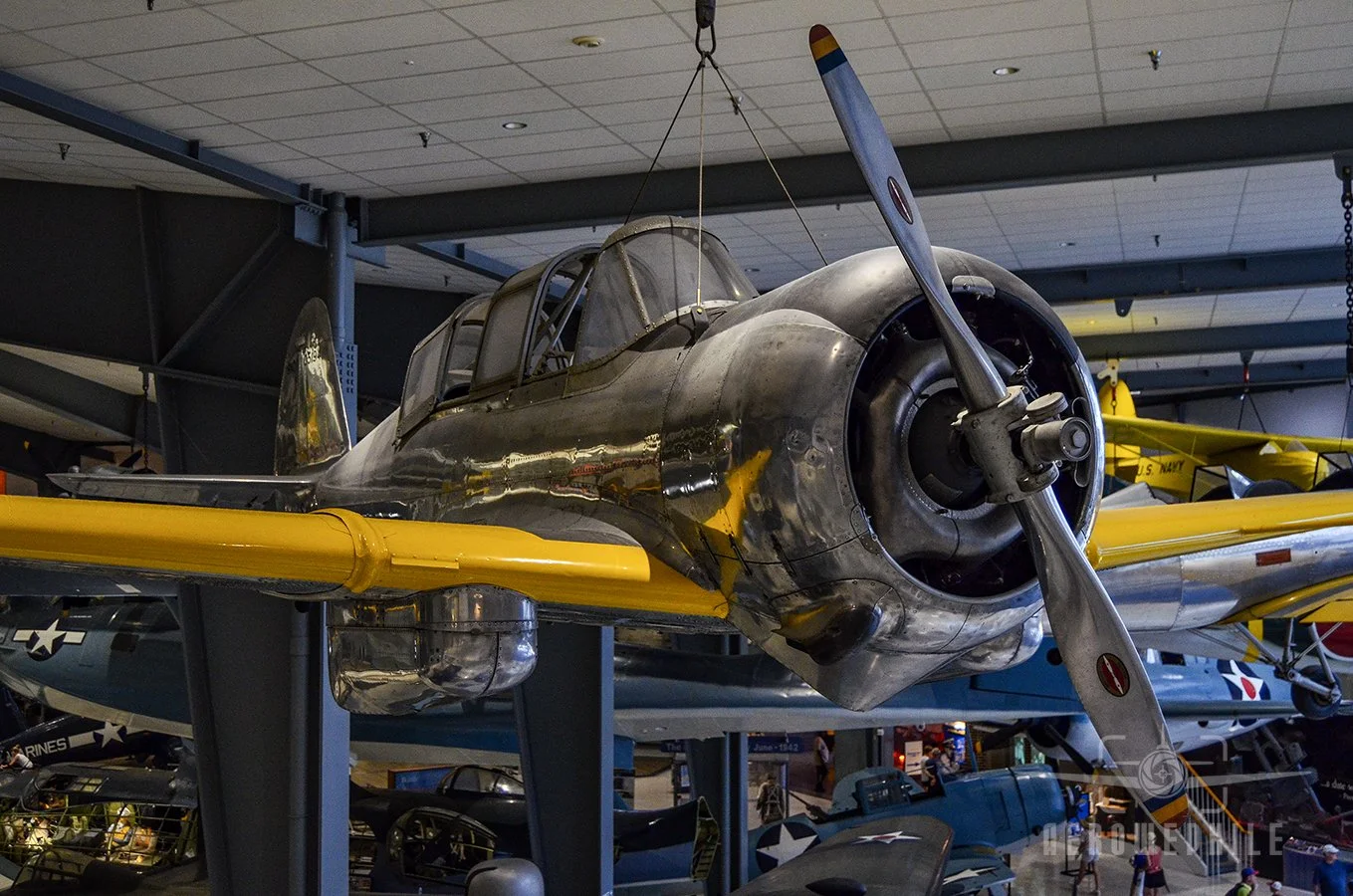
The SNC Falcon was an all-metal low-wing monoplane derived from a light fighter design and widely used as a training aircraft.
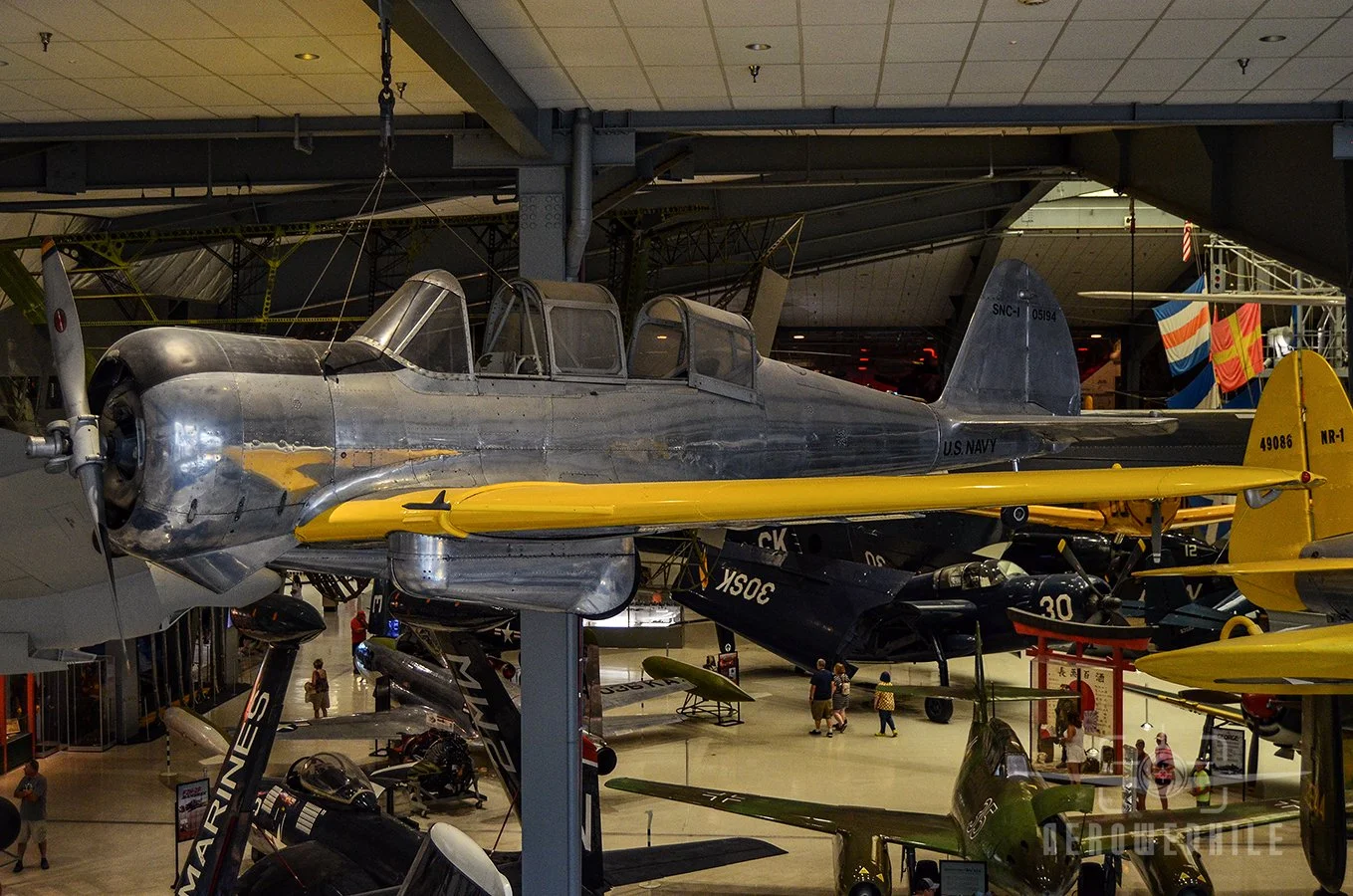
The Curtiss-Wright Corporation's CW-22 was a 1940s general-purpose advanced training monoplane aircraft. It was conceptually similar to the SNJ, which preceded it into the Navy training inventory, but had a less powerful engine, among other differences.
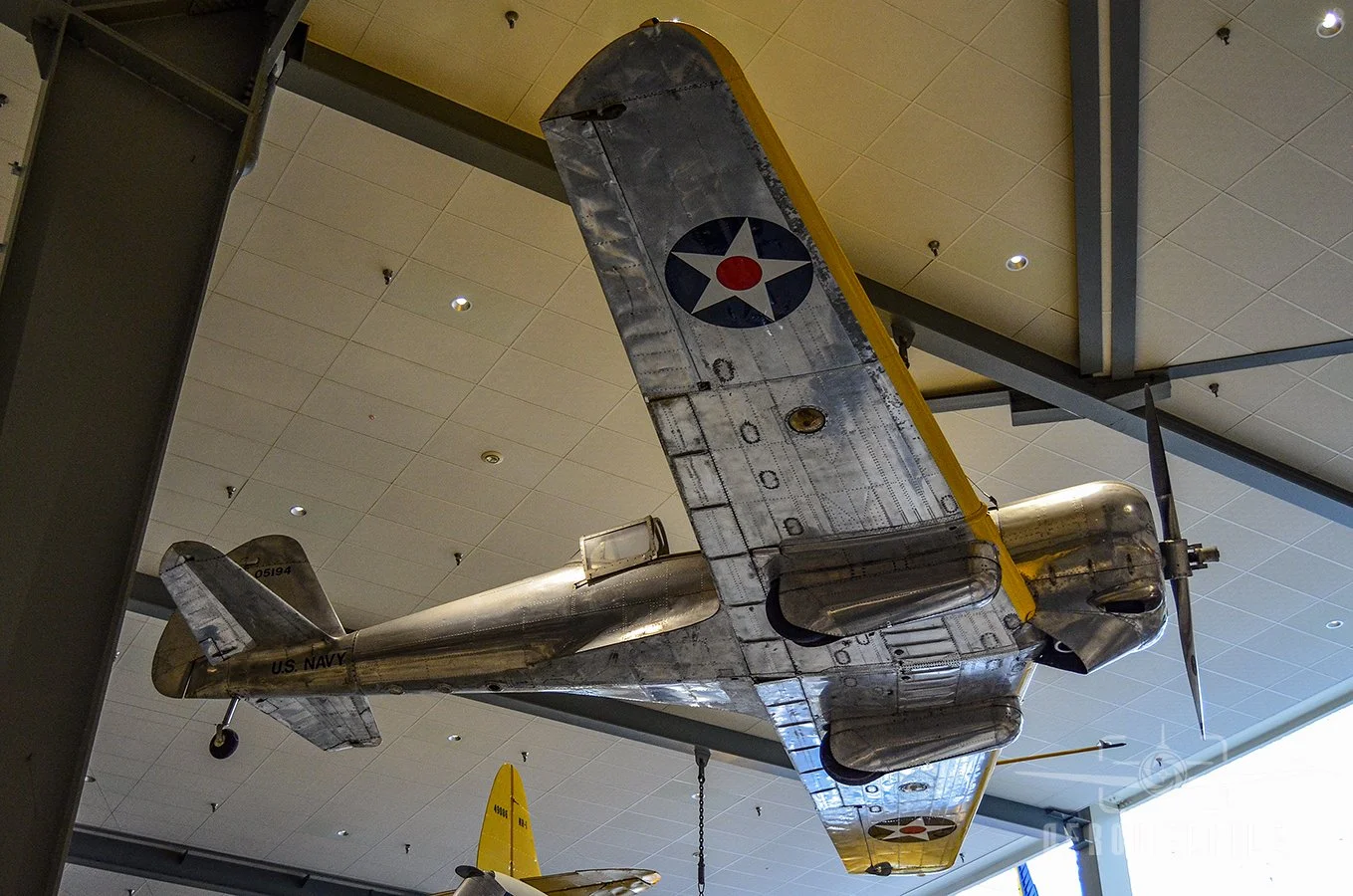
The Curtiss-Wright CW-22 and -22B were sold to the Netherlands, Turkey, and some Latin American countries. Following the outbreak of World War II, the Japanese captured several of the Dutch aircraft and put them in service.
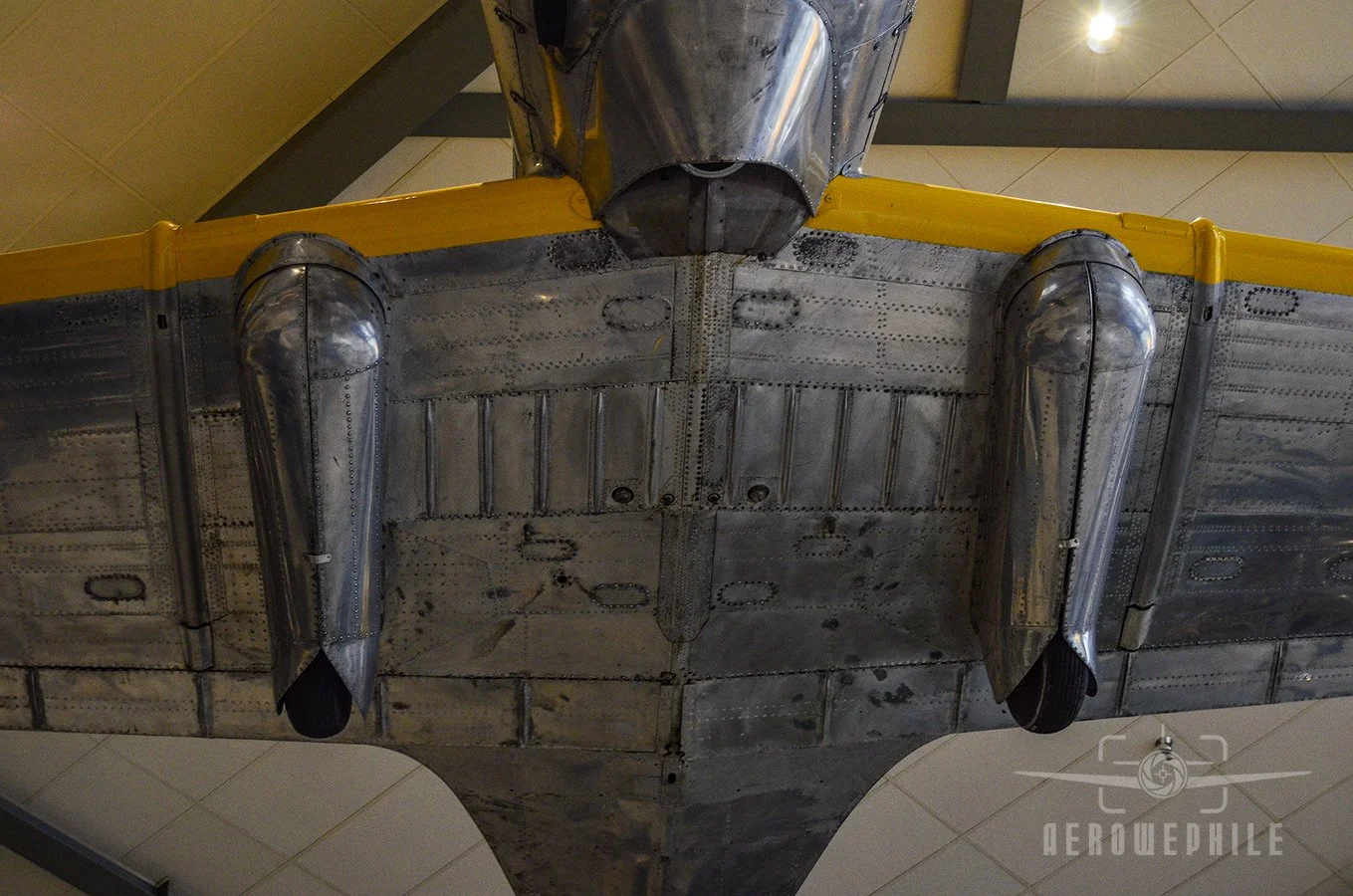
The completely enclosed fairings for the landing gear are an interesting concept for streamlining.
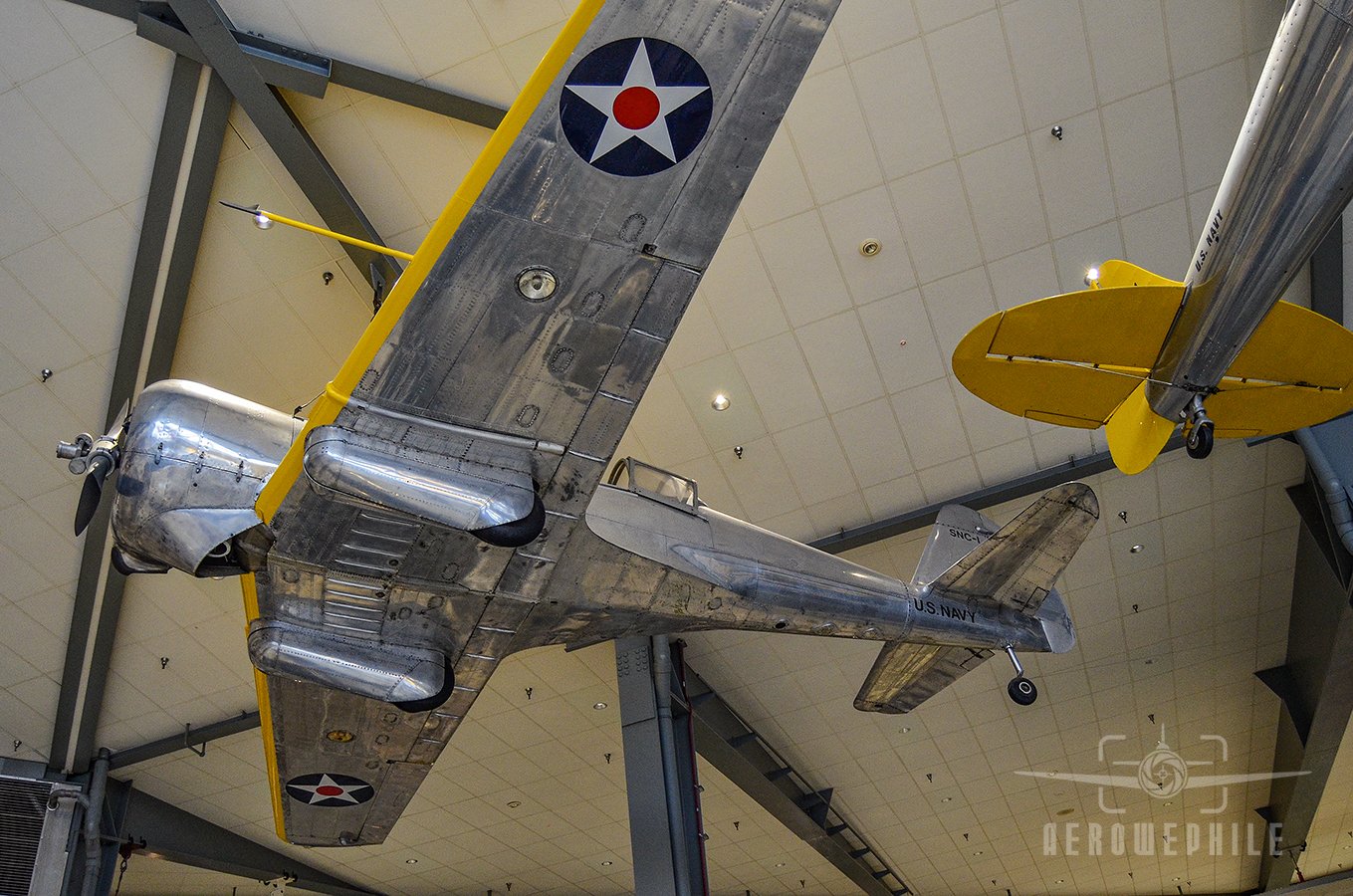
An unarmed advanced training version, the CW-22N, was demonstrated to the Navy. To help to meet the war-driven need for aviator training, and transition from biplanes to monoplane aircraft, the Navy ordered 150 CWE-22Ns in 1940. Further orders brought the total to 305 aircraft, which were designated SNC-1 Falcons.
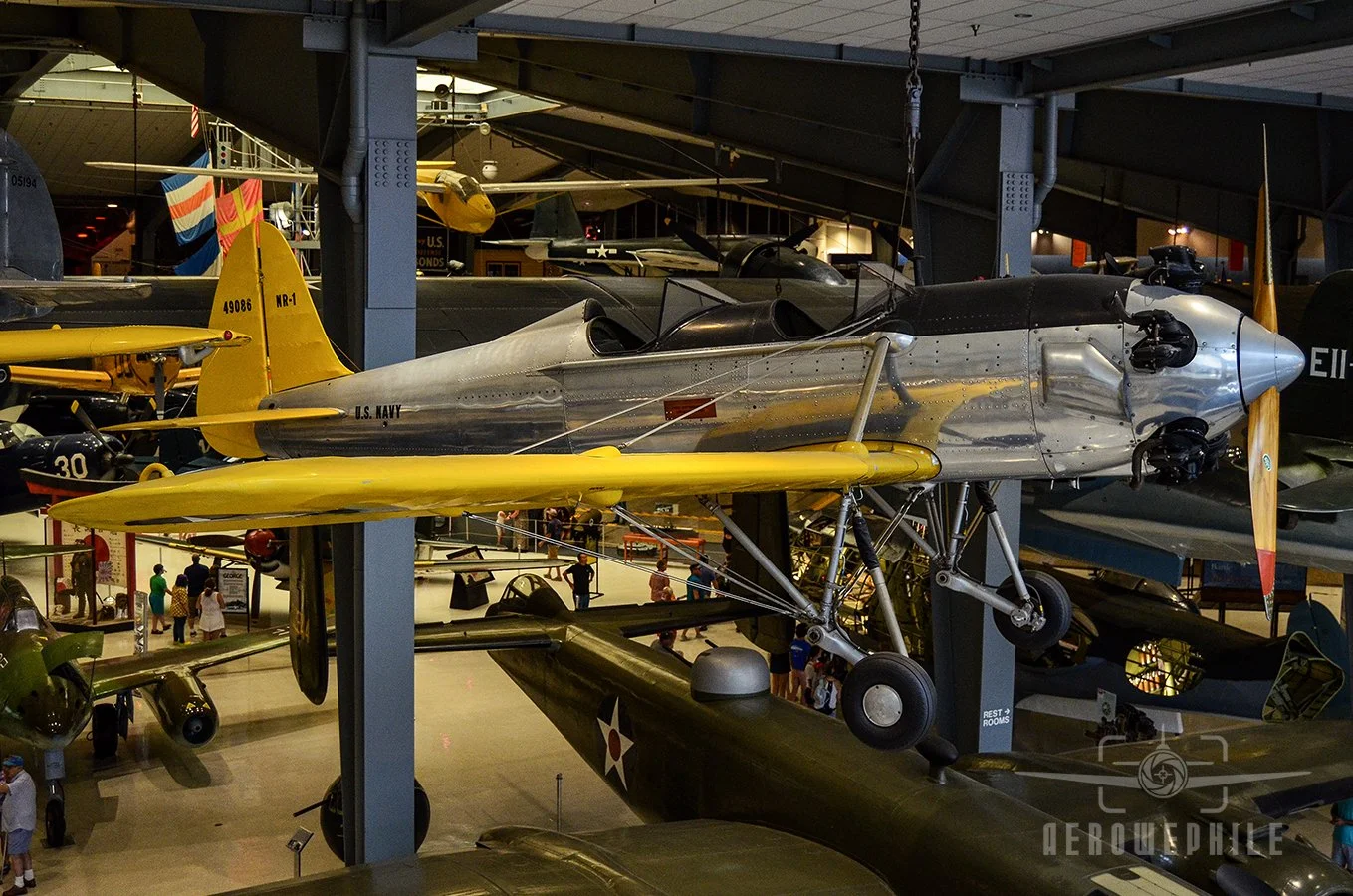
The airplane was built in 1941 and likely flew with the Army Air Forces as a PT-22 primary trainer. Flown by civilian owners in the postwar years, it was acquired by the National Naval Aviation Museum in 1982 and is painted in the markings of a Navy NR-1 Recruit primary trainer.
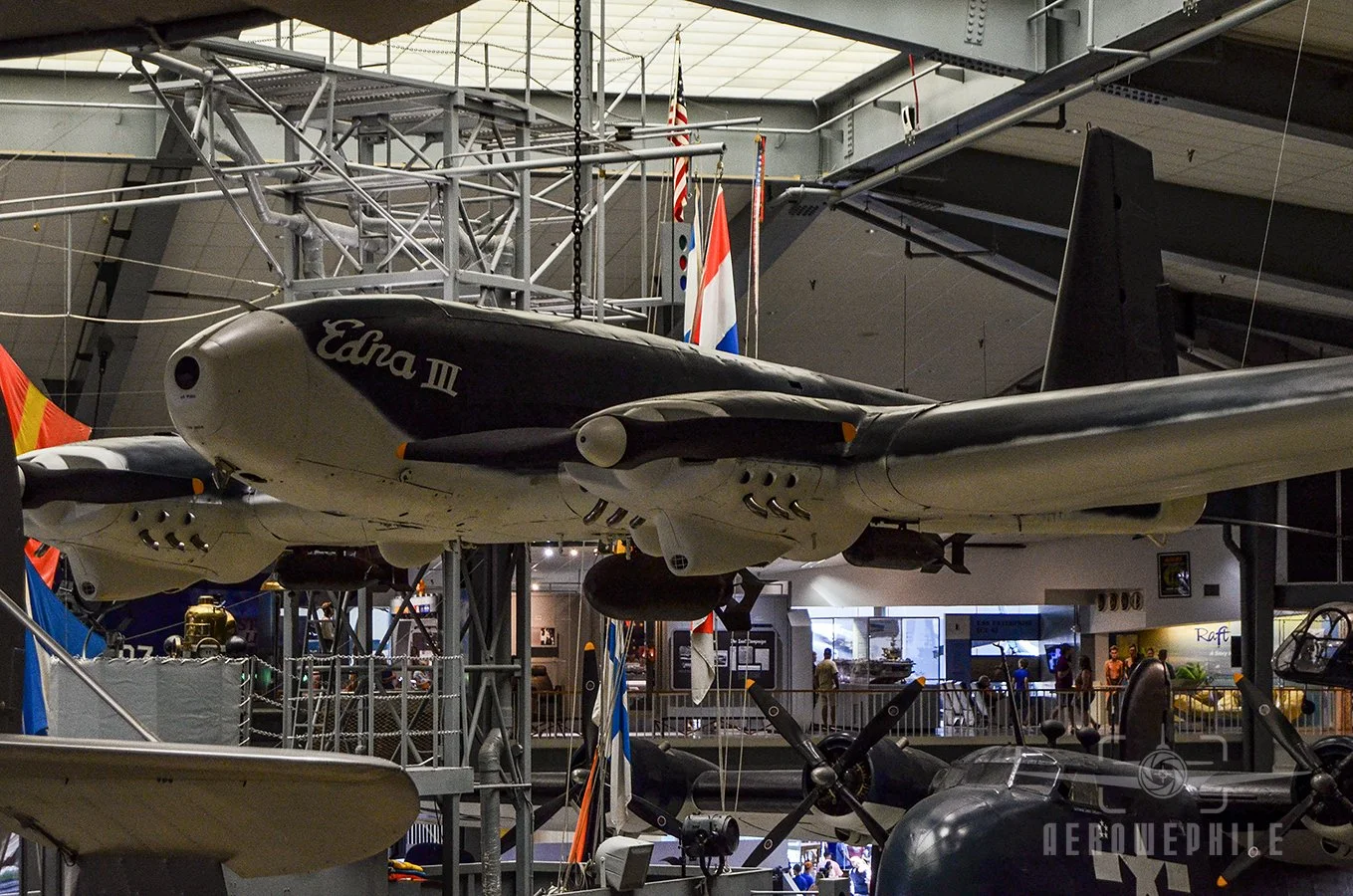
The world's first legitimate cruise missile, the TDR-1 (EDNA III) was built around RCA's early television to create a precision-guided munition.
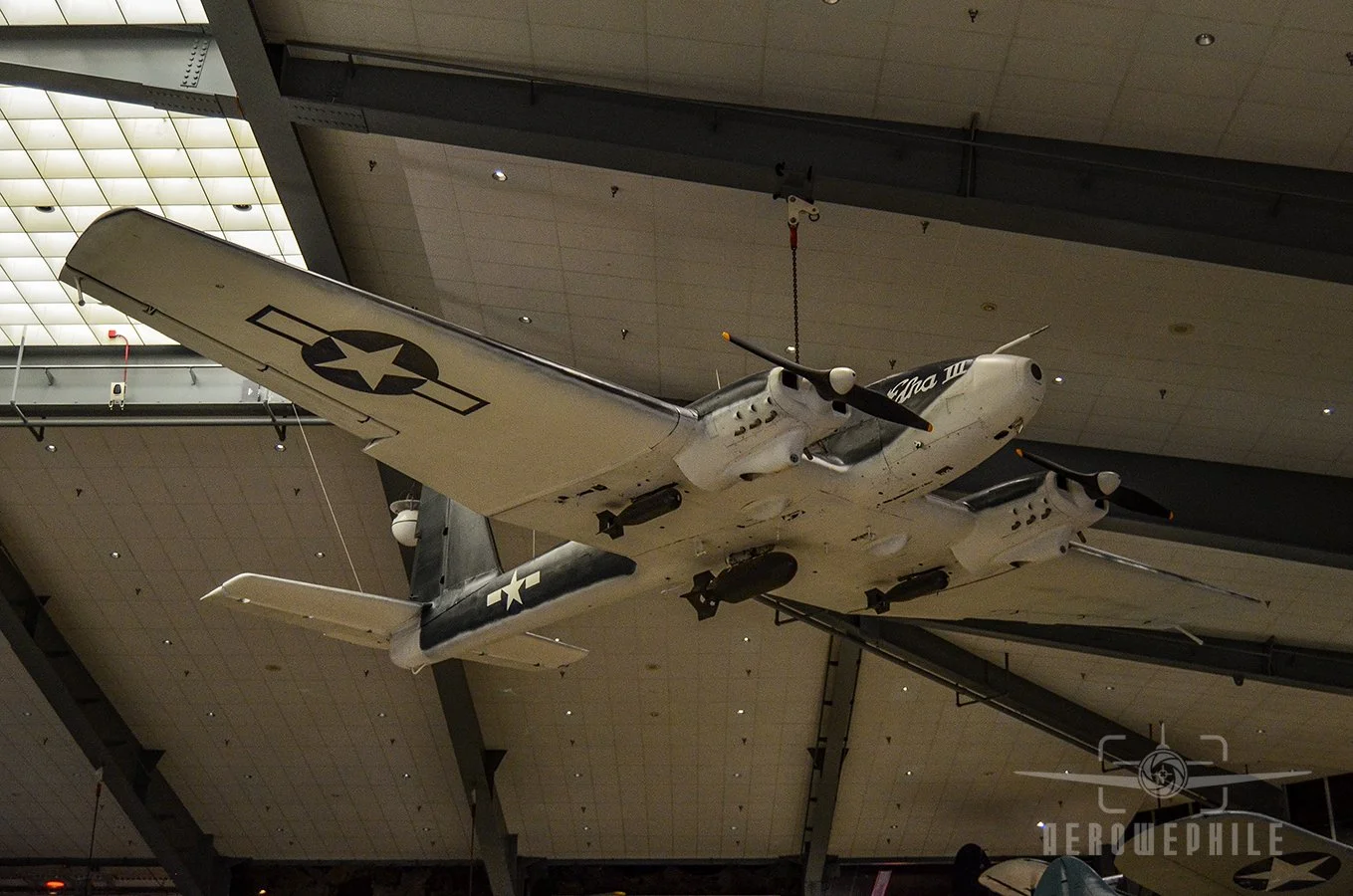
Carrying a 1,000 lb. bomb or a torpedo, and controlled from a TBM-1C Avenger control aircraft, the TDR saw action in the Pacific in September 1944. Two months later it was withdrawn from combat.
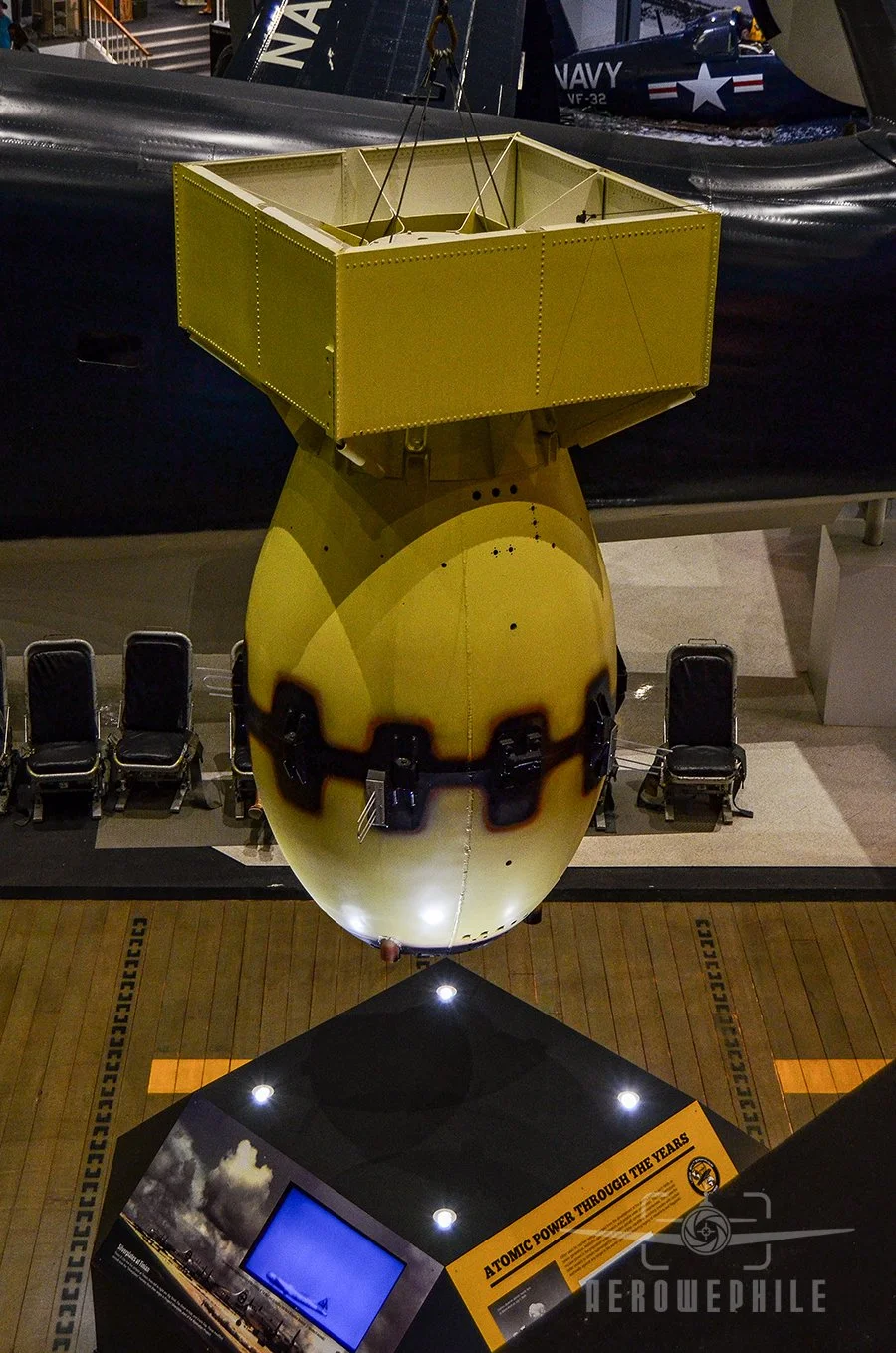
Replica "Fat Man" atomic bomb. Fat Man was a plutonium, implosion-style weapon.
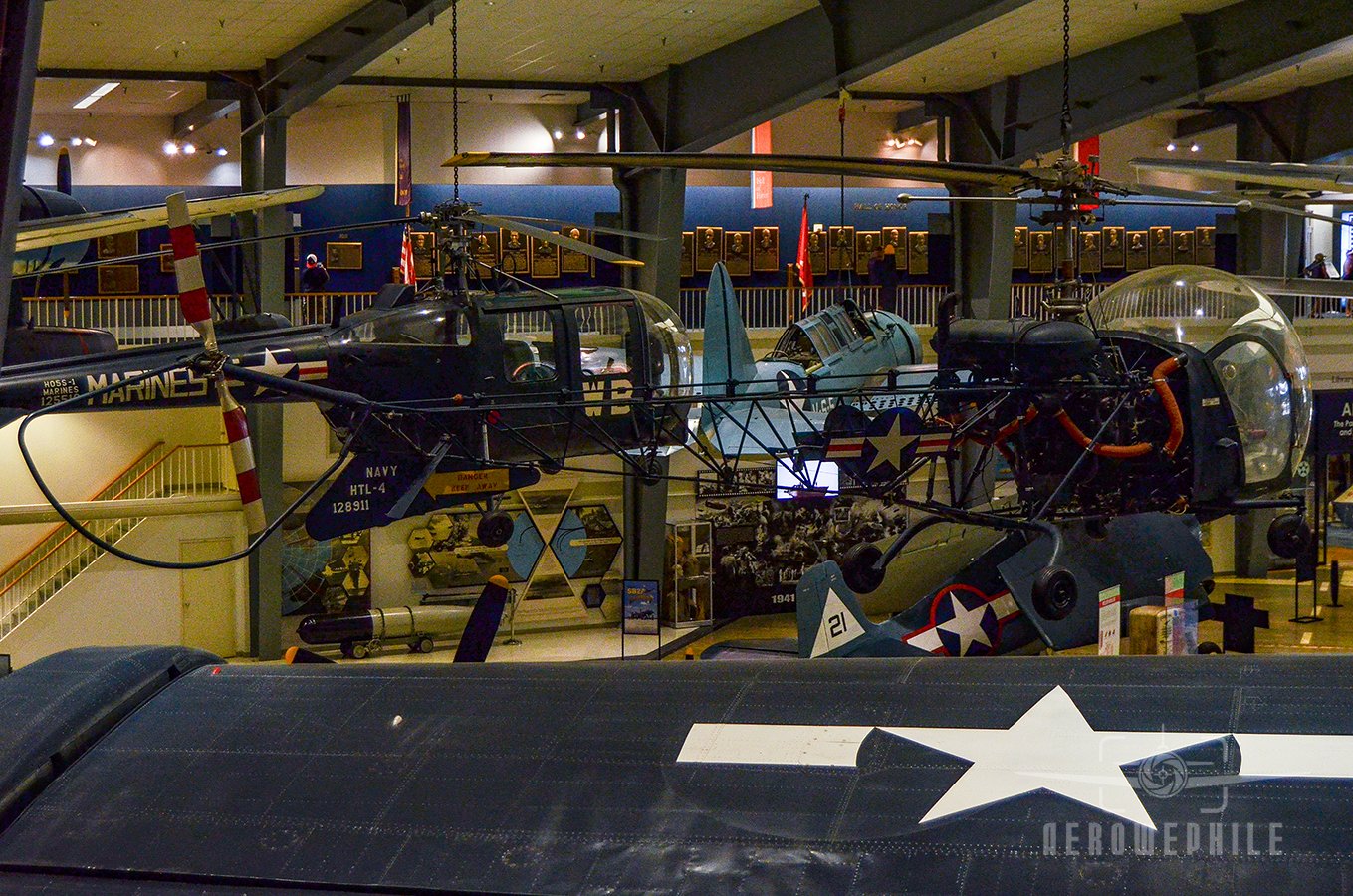
The HO5S and the HTL Sioux helicopters hanging in the West Wing.
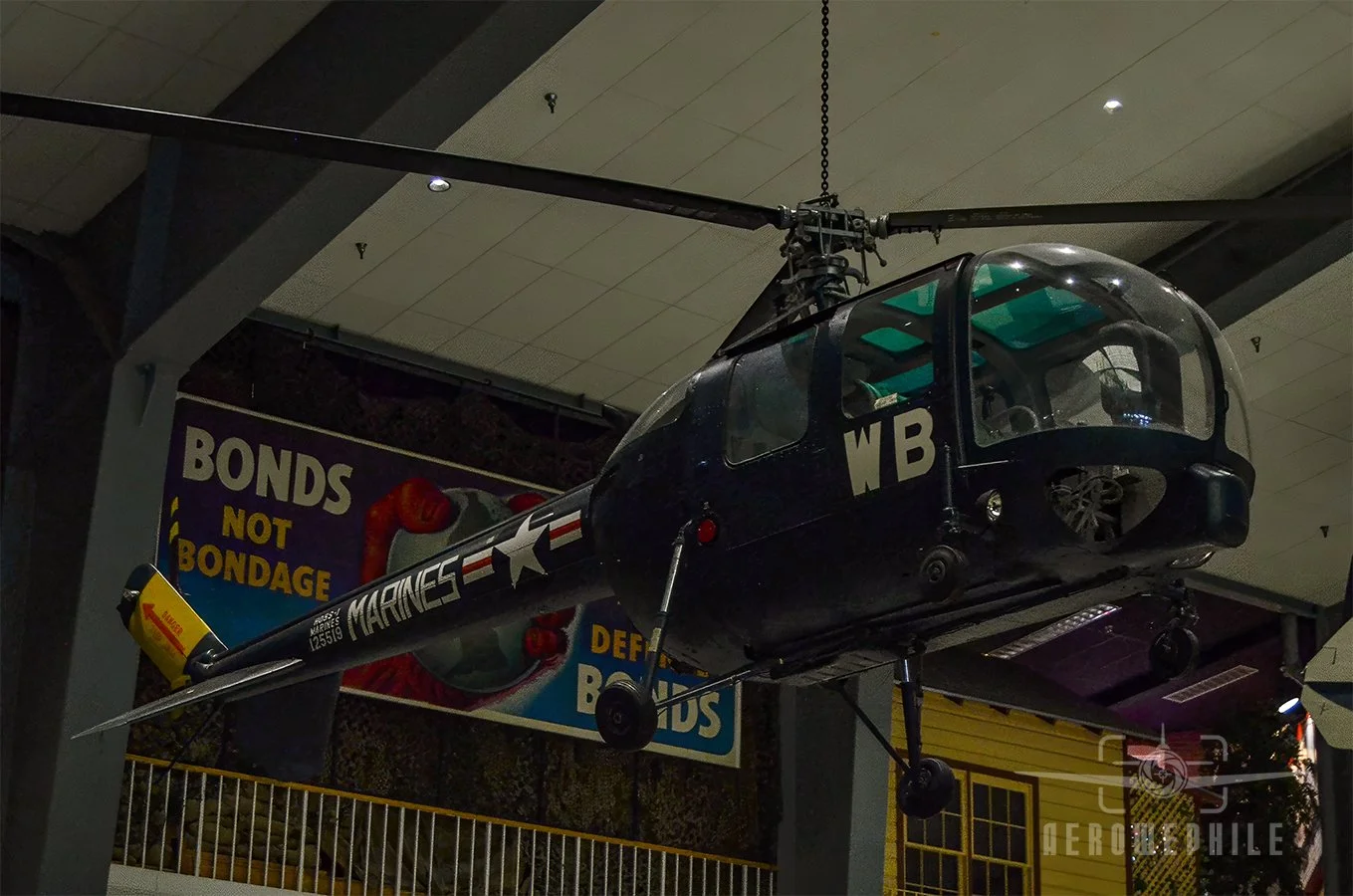
Derived from the 1940s-era Sikorsky S-52, the HO5S was the first helicopter with all-metal rotor blades. Originally a two-seat design, the helicopter incorporated four seats in its military configuration and saw use primarily with the Marine Corps during the Korean War as an observation aircraft or for day and night evacuation of personnel.
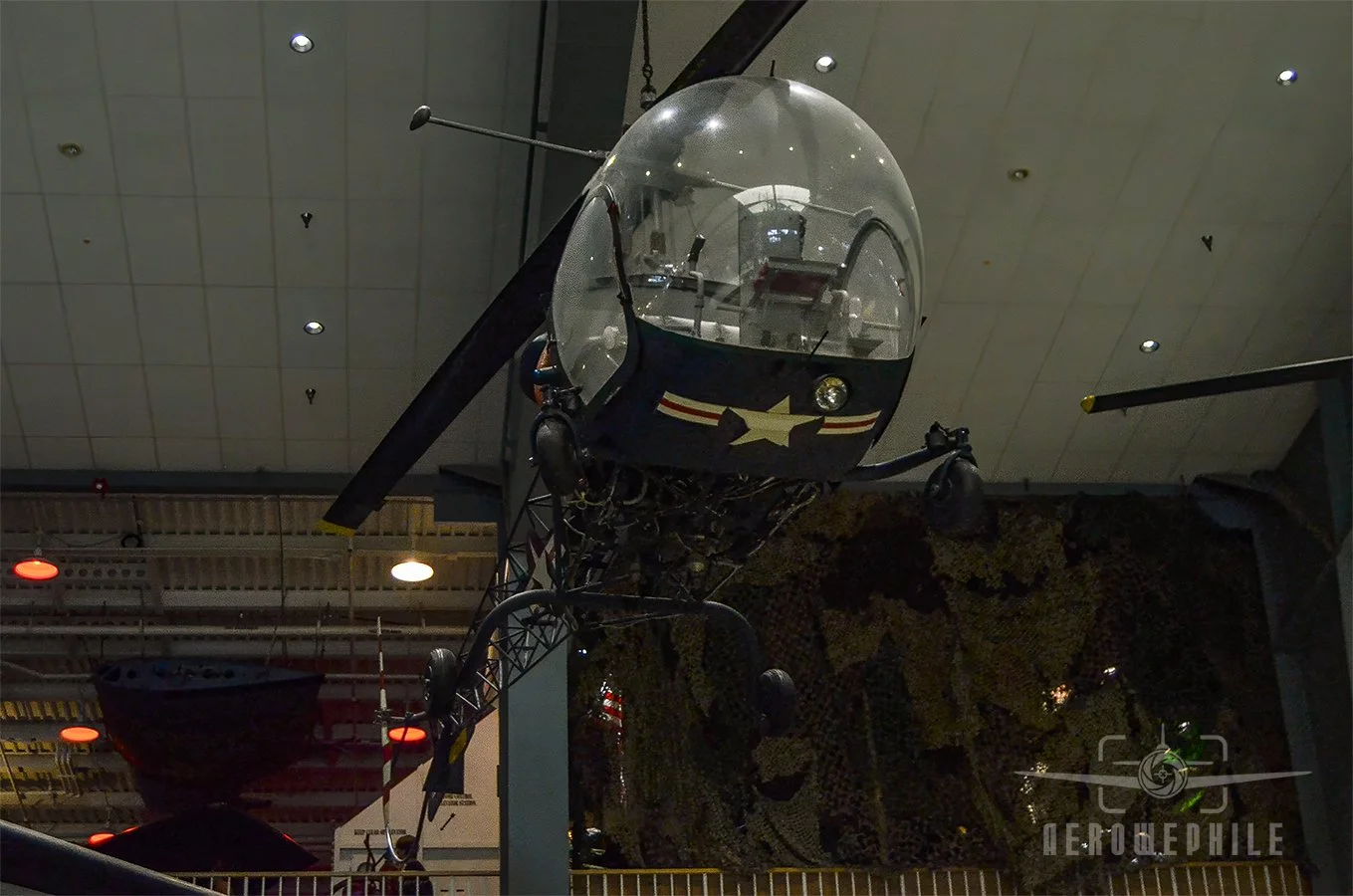
The HTL Sioux was aquired by the Navy for training purposes in the late '40s. Until retired in April 1964, HTLs were used in the Apollo program to familiarize astronauts with its auto-rotation sink rate which was simliar to that of the Lunar Excursion Module. HTLs also became famous as the medical evacuation helicopter featured on M*A*S*H.
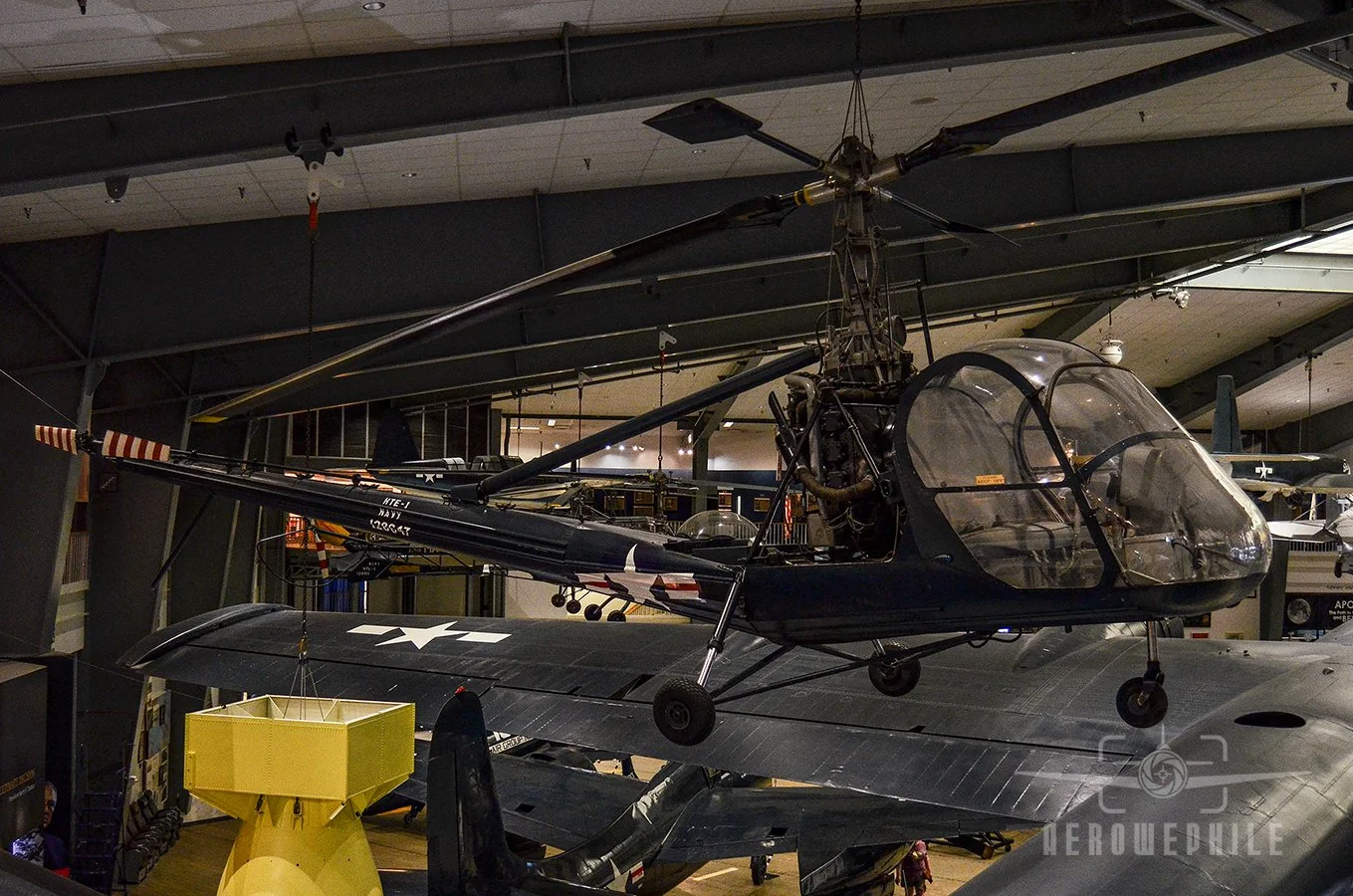
During the Korean War the Navy ordered a number of Hiller Aircraft Corporation's HTE-1s, the most powerful light utility helicopter at that time, for use in medical evacuation, observation and utility.
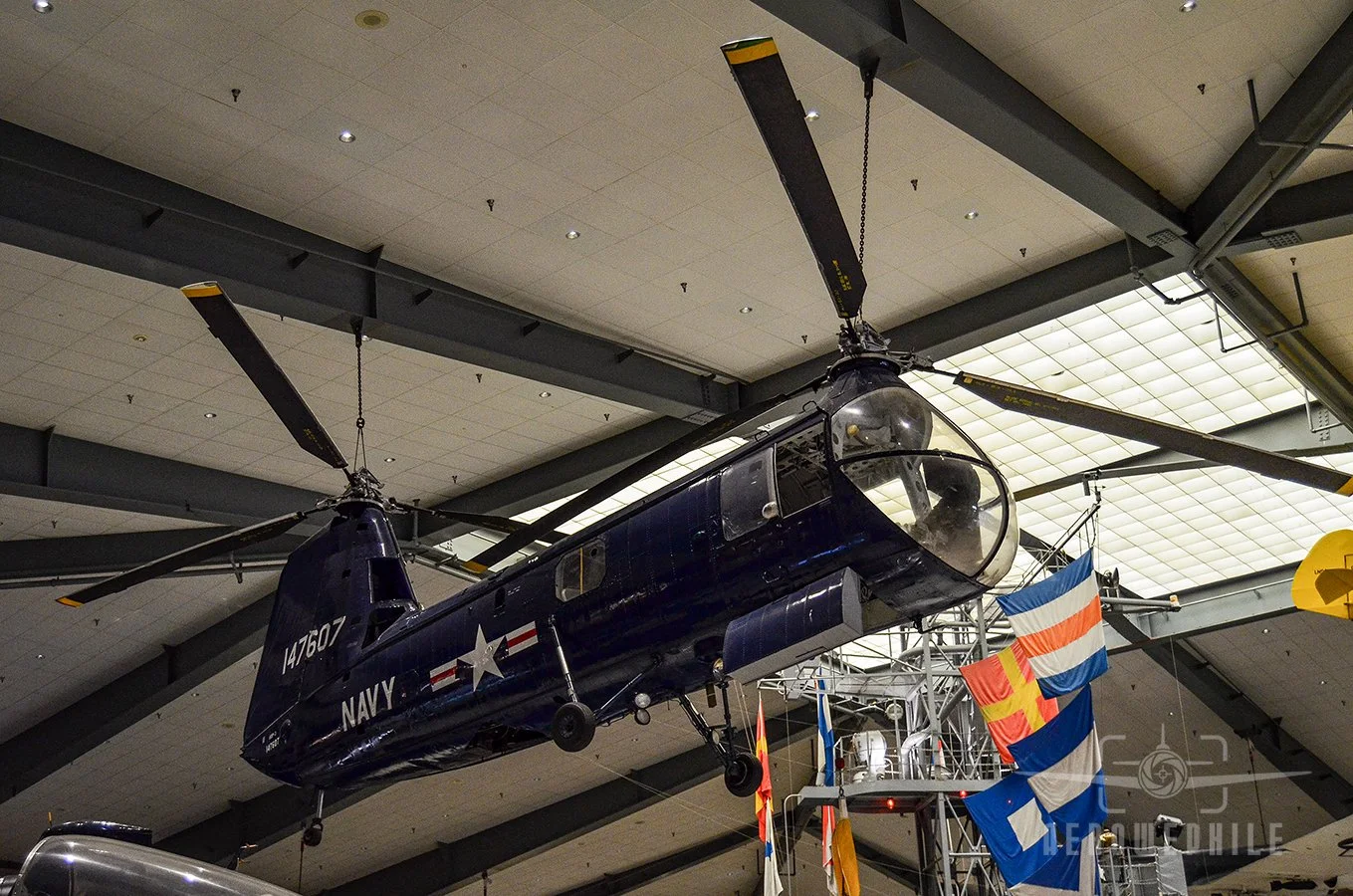
Accepted by the Navy in April 1958 after having been operated by the U.S. Army, the Museum's HUP-3/UH-25C served in Helicopter Utility Squadron (HU) 2 at Naval Air Station (NAS) Lakehurst, New Jersey, operating in squadron detachments on board the carriers Forrestal(CVA-59), Lake Champlain (CVS-39), Saratoga (CVA-60), and Randolph (CVS-15) during the period 1961-1962. Stricken from the naval inventory in March 1963, it was acquired by the Museum in 1988.
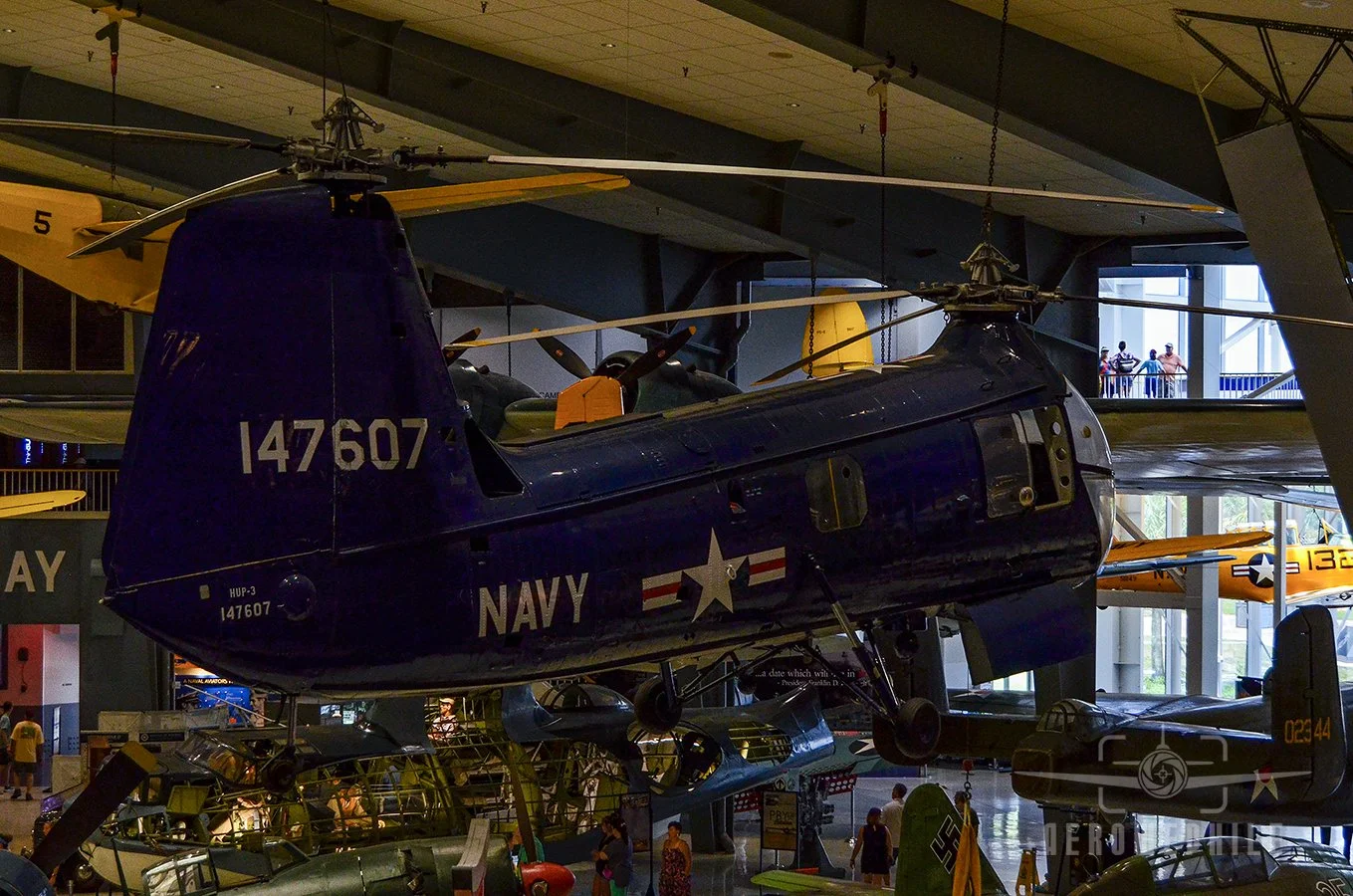
Appropriately nicknamed "Retriever," the Piasecki HUP operated on board every deployed aircraft carrier at the height of its career, flying as a plane guard ready to pull downed aircrews from the water in the event of a mishap. Further, in 1955 a HUP became the first aircraft to land on a nuclear-powered vessel, its wheels touching down on the submarine Nautilus (SSN-571).
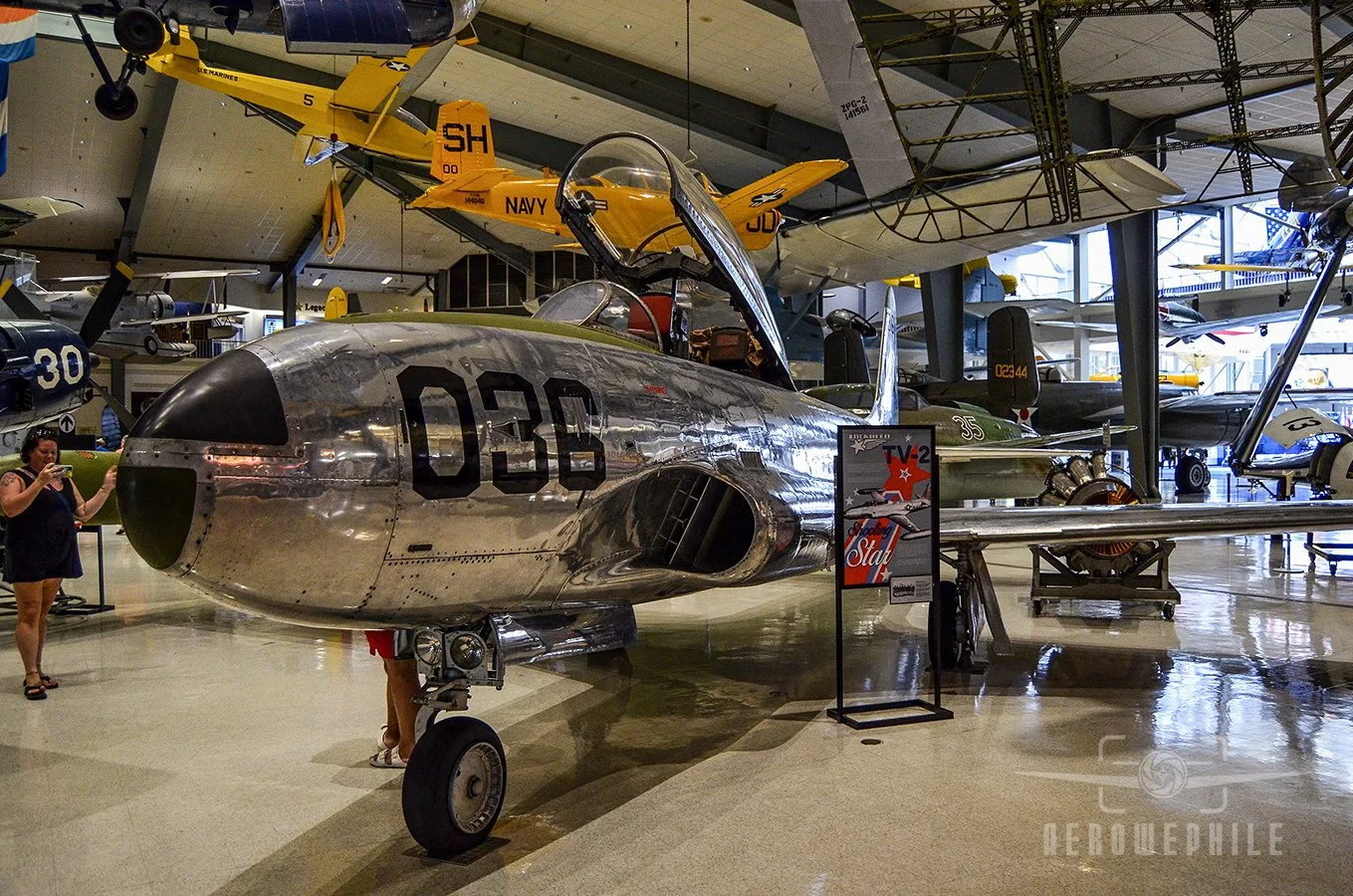
Built in 1958, the Museum's example of the Lockheed TV-2 is actually a U.S. Air Force T-33, originally assigned Air Force Serial Number 58-480. Acquired in 1994 and restored to the operational appearance of a Navy TV-2 with an unpainted, polished finish, it is displayed as Navy Bureau Number 131816, which served in Advanced Training Unit (ATU) 200.
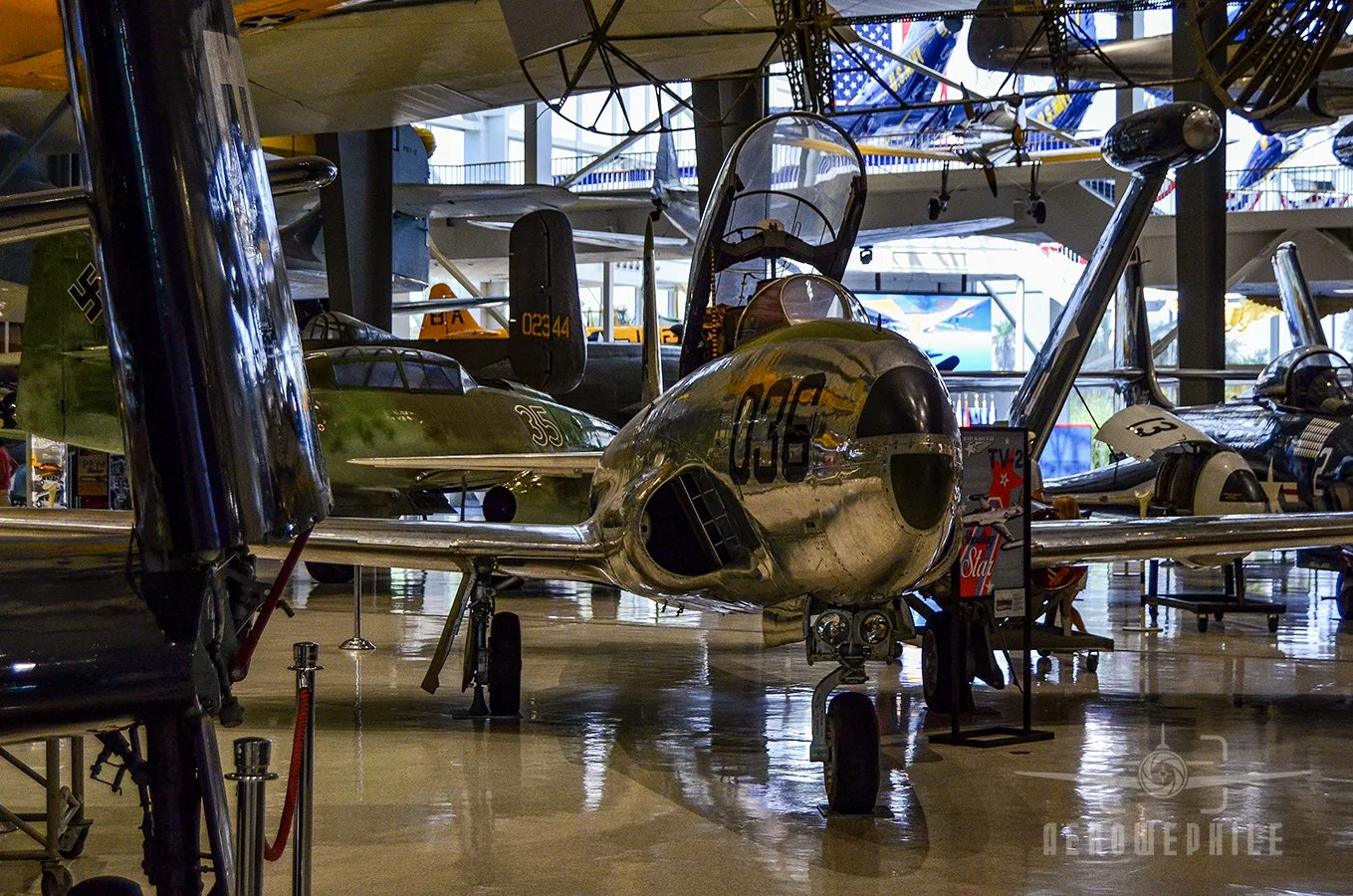
The TV-2 is a two-seat version of the P-80 Shooting Star, the U.S. Air Force's first operational jet fighter. In 1946, the Navy conducted carrier trials in the P-80 on board the carrier Franklin D. Roosevelt (CVB-42) with World War II fighter ace Major Marion Carl, USMC, flying the aircraft.
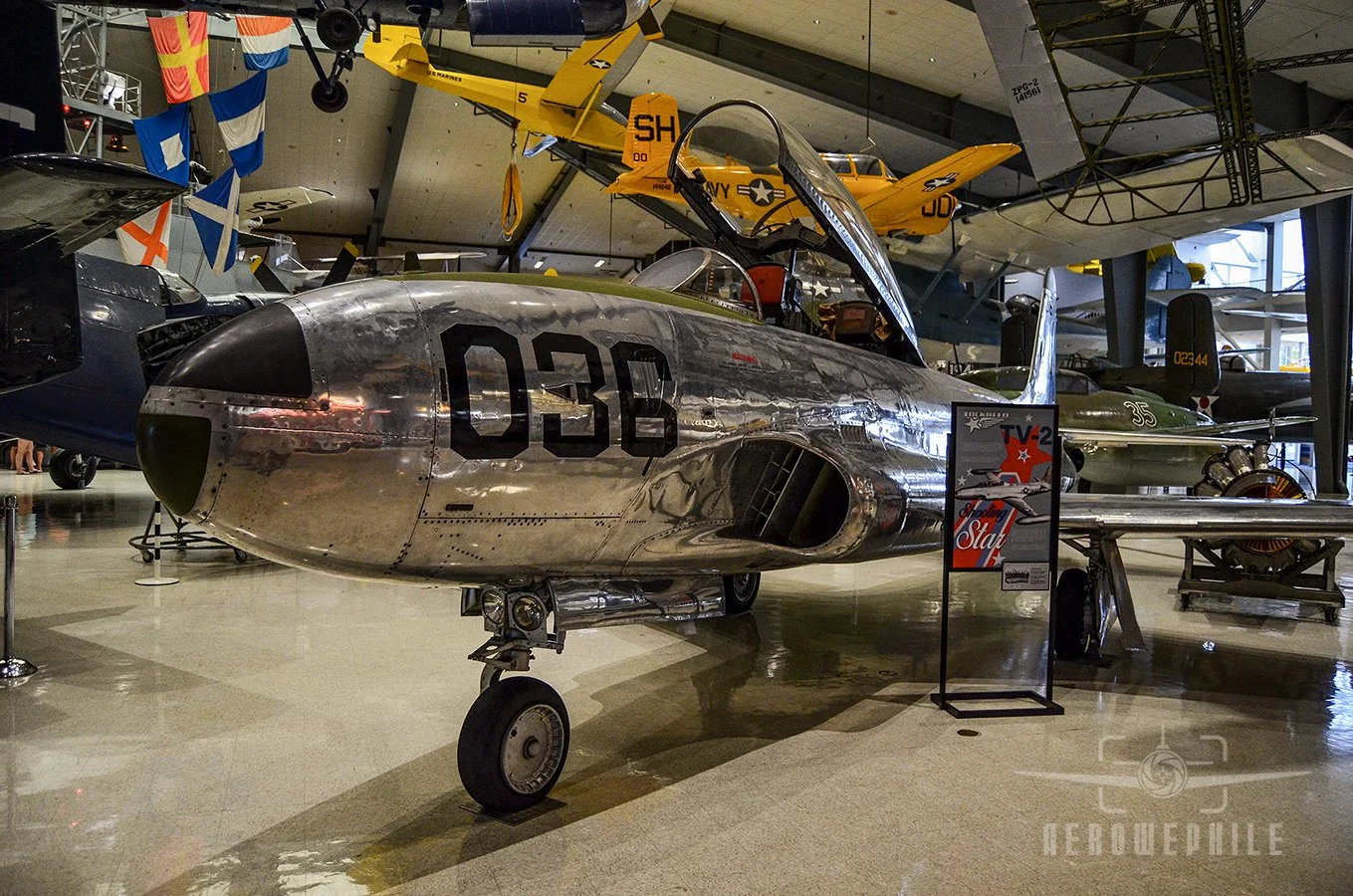
The Navy procured 699 TV-2s, which trained the first generation of jet pilots and also supported missile testing as control aircraft and target drones.
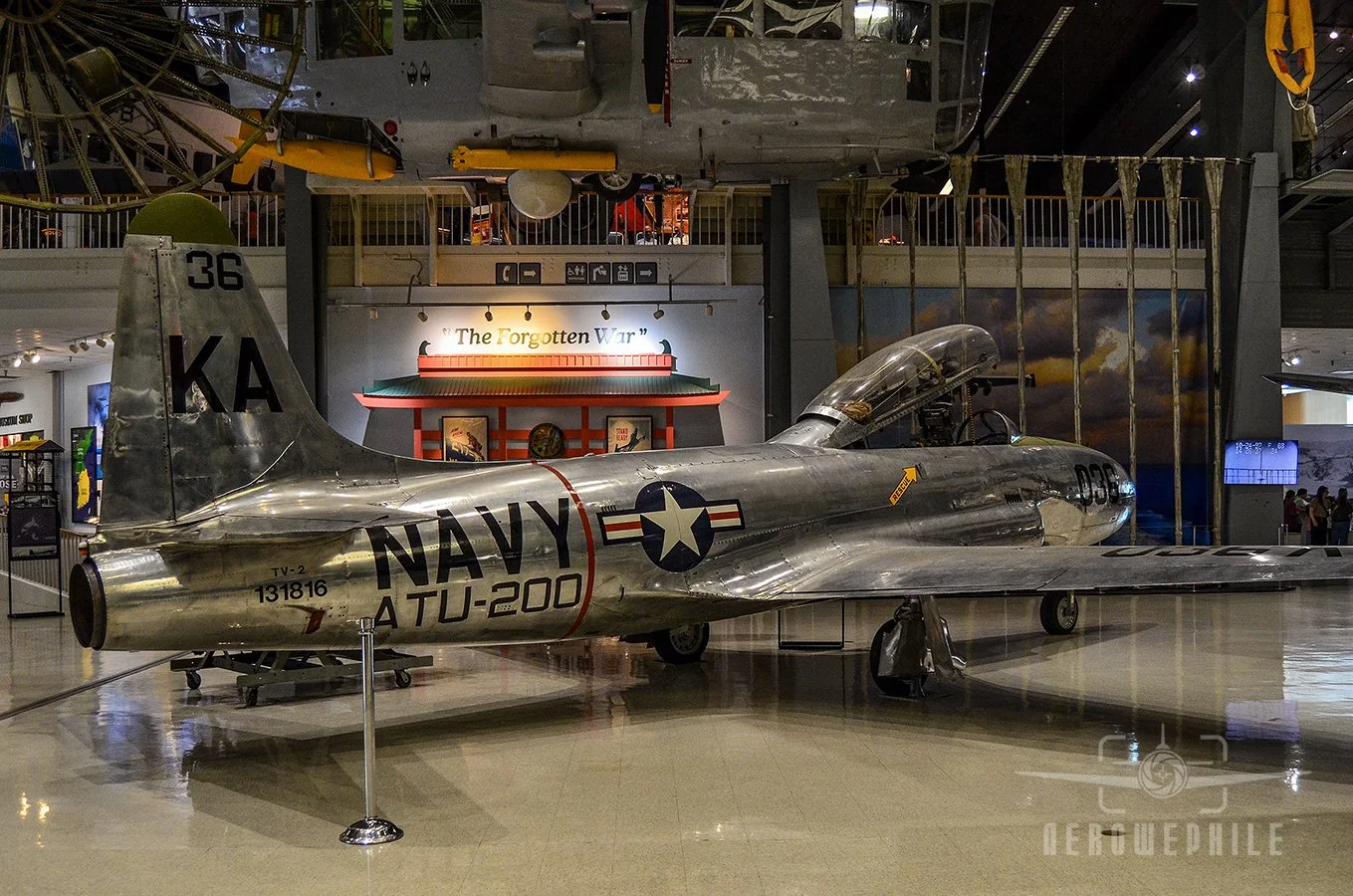
Navy interest in a high-performance trainer logically accompanied the first development contracts for the Grumman F9F Panther and McDonnell F2H Banshee, two of the Navy's early jet aircraft. However, though successful as a land-based trainer, the TV-2 was not satisfactory for carrier operations.
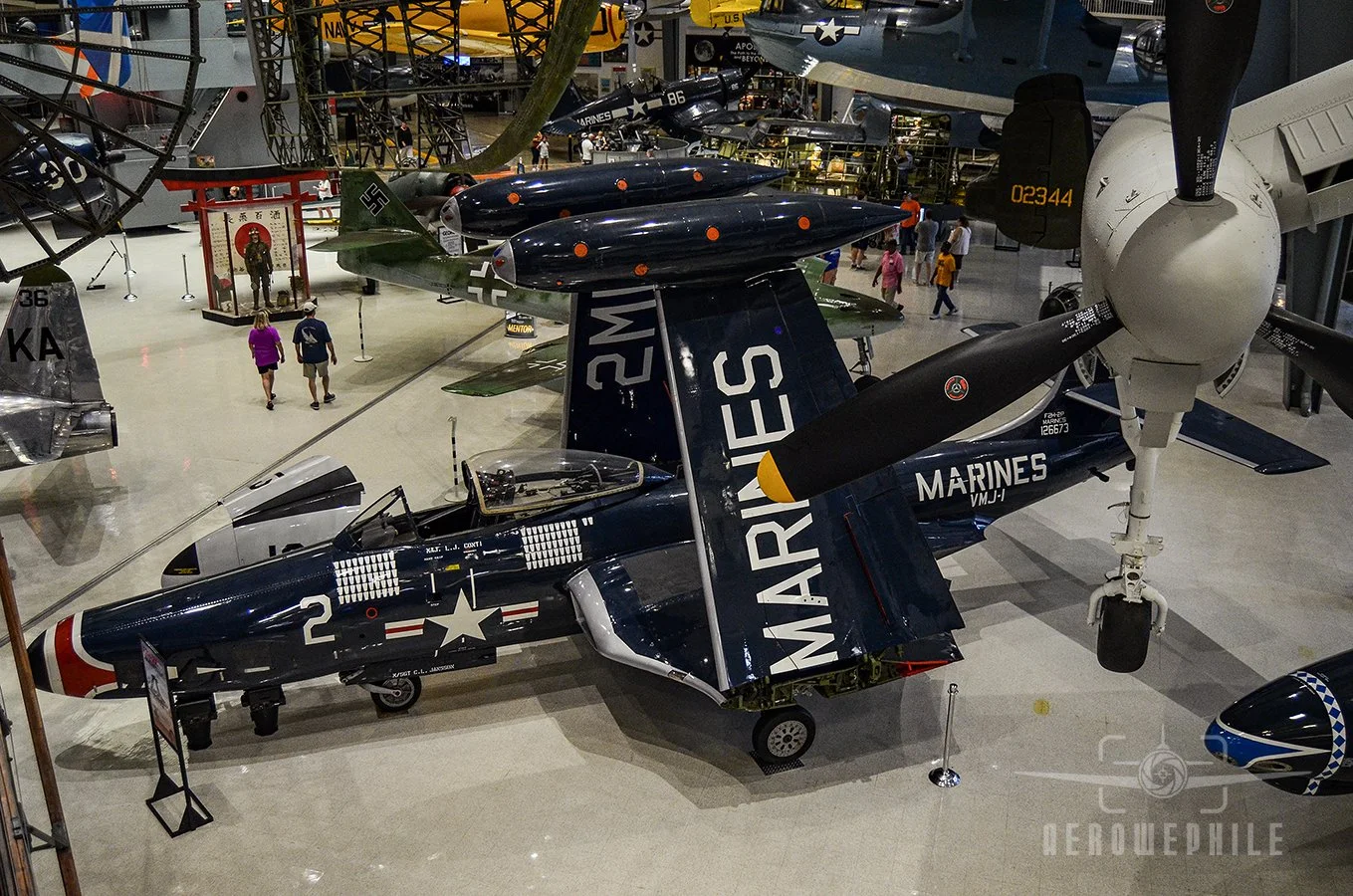
The F2H-2P Photo Banshee was Naval Aviation's most capable photo reconnaissance platform during the Korean War. Having the speed and high-altitude performance of the F2H fighter, the F2H-2P adeptly provided reconnaissance vital to the interdiction campaign. Following its service, the Museum's aircraft was discovered in a playground in Vero Beach, Florida, its fuselage and wings filled with concrete.
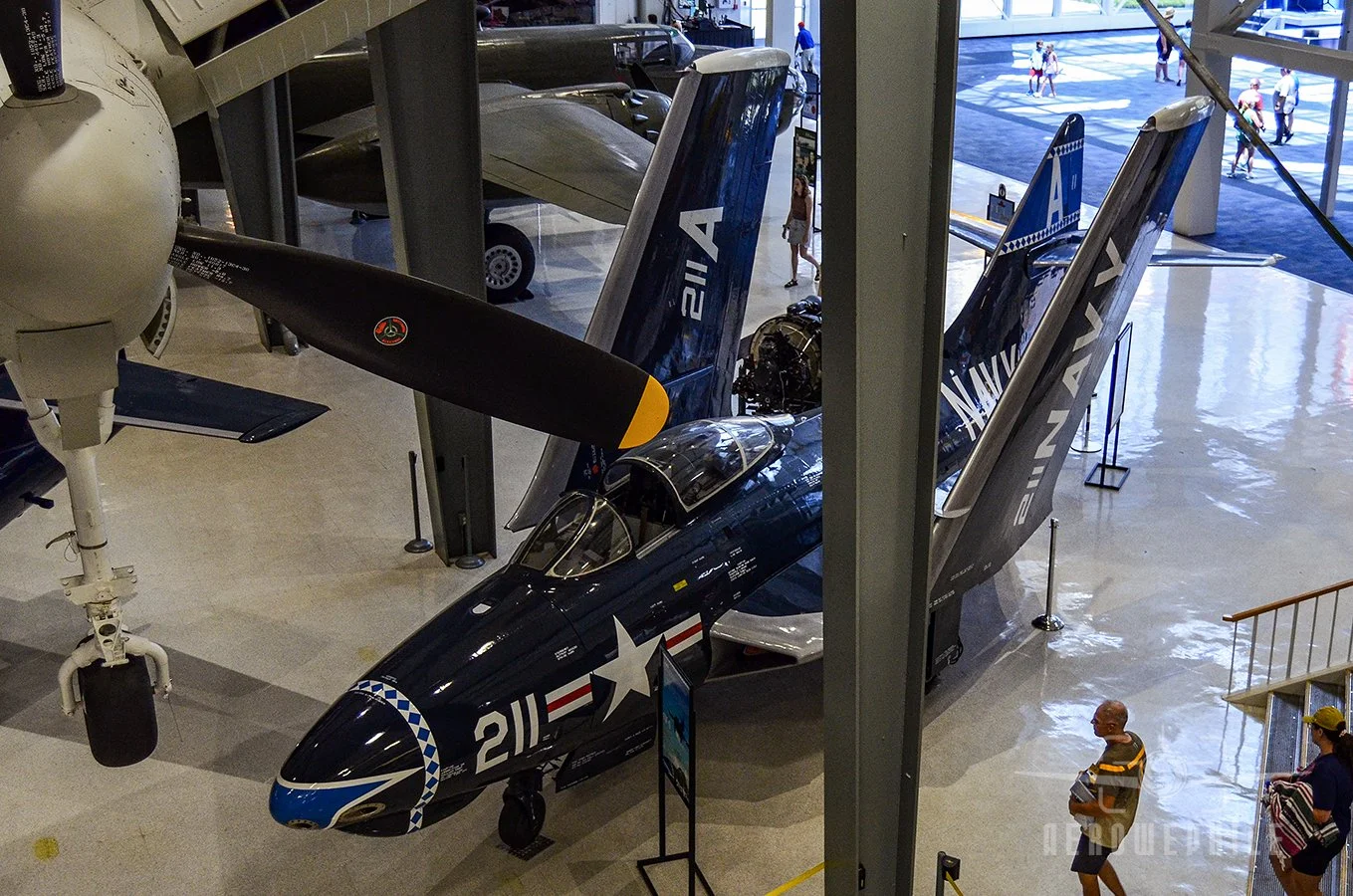
The Museum's F9F-6 Cougar (Bureau Number 128109) was accepted by the Navy in April 1953, and served until 1959. It arrived at the Museum thirty years later.
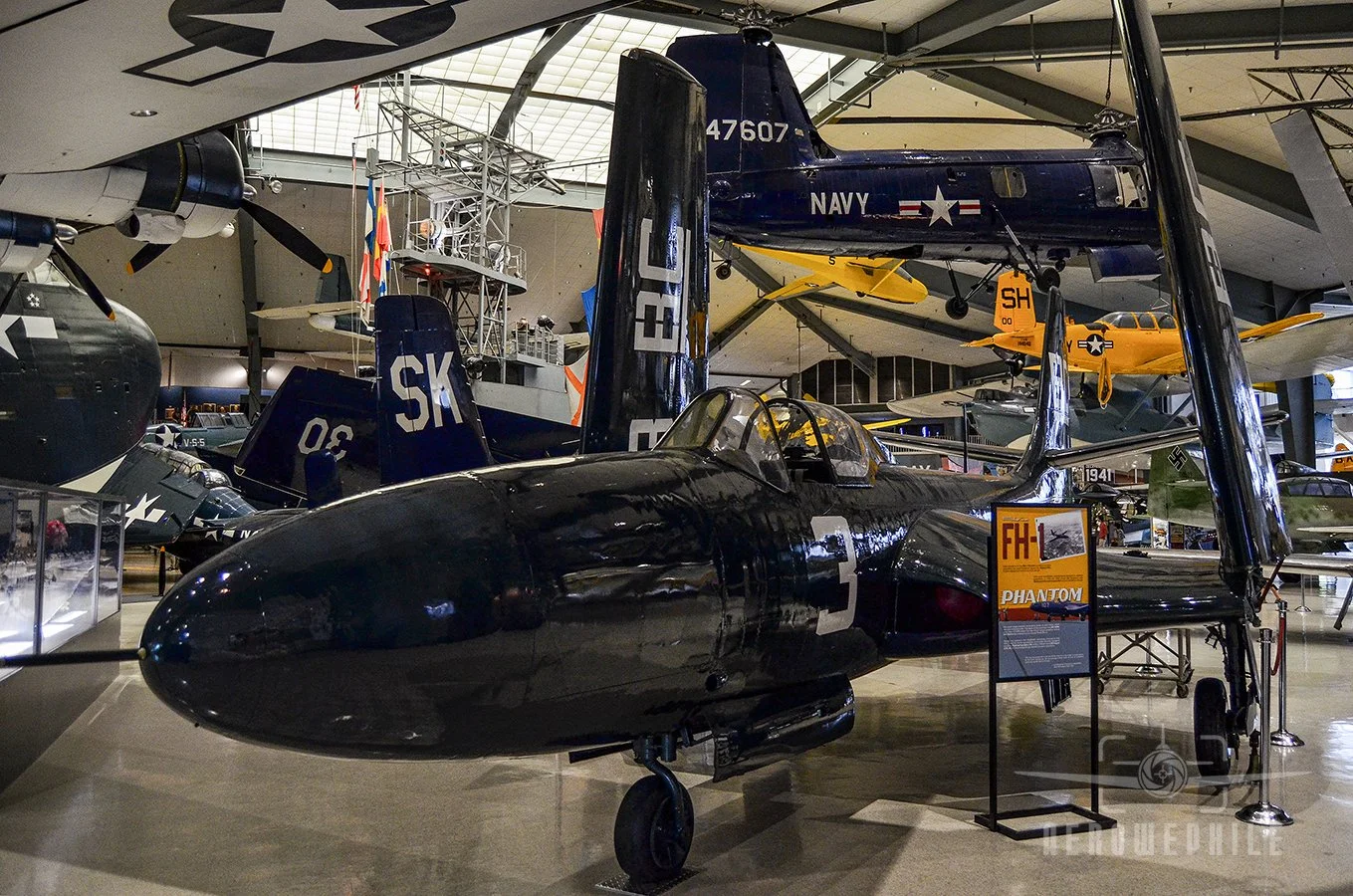
Accepted by the Navy in February 1948, the Museum's FH-1 Phantom (Bureau Number 111793) spent only a brief time in active service, the rapid development of jet aircraft technology outpacing it virtually from the moment it joined its first squadron. After flying for a brief time with Marine Fighter Squadron (VMF) 122, the first Marine jet squadron, at Marine Corps Air Station (MCAS) Cherry Point, North Carolina, it was stricken from the naval inventory in 1949. The Museum acquired the aircraft in 1983.
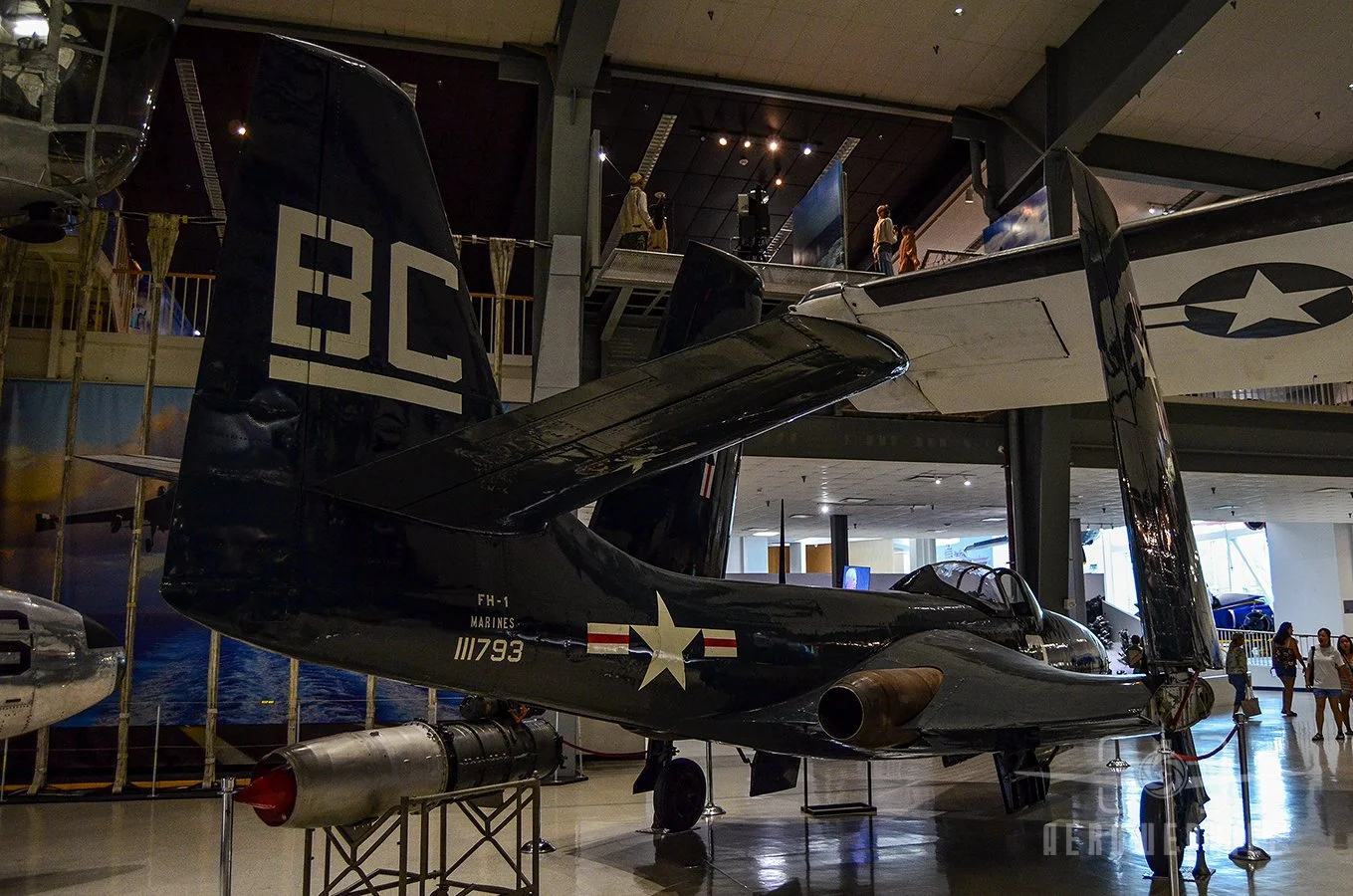
Initially designated the XFD-1, the prototype of the FH-1 was delivered for evaluation in 1946, thus becoming the Navy's first jet fighter. On 21 July 1946, the XFD-1 completed the first carrier qualification of a pure jet in U.S. Naval Aviation history on board the carrier Franklin D. Roosevelt (CVB-42).
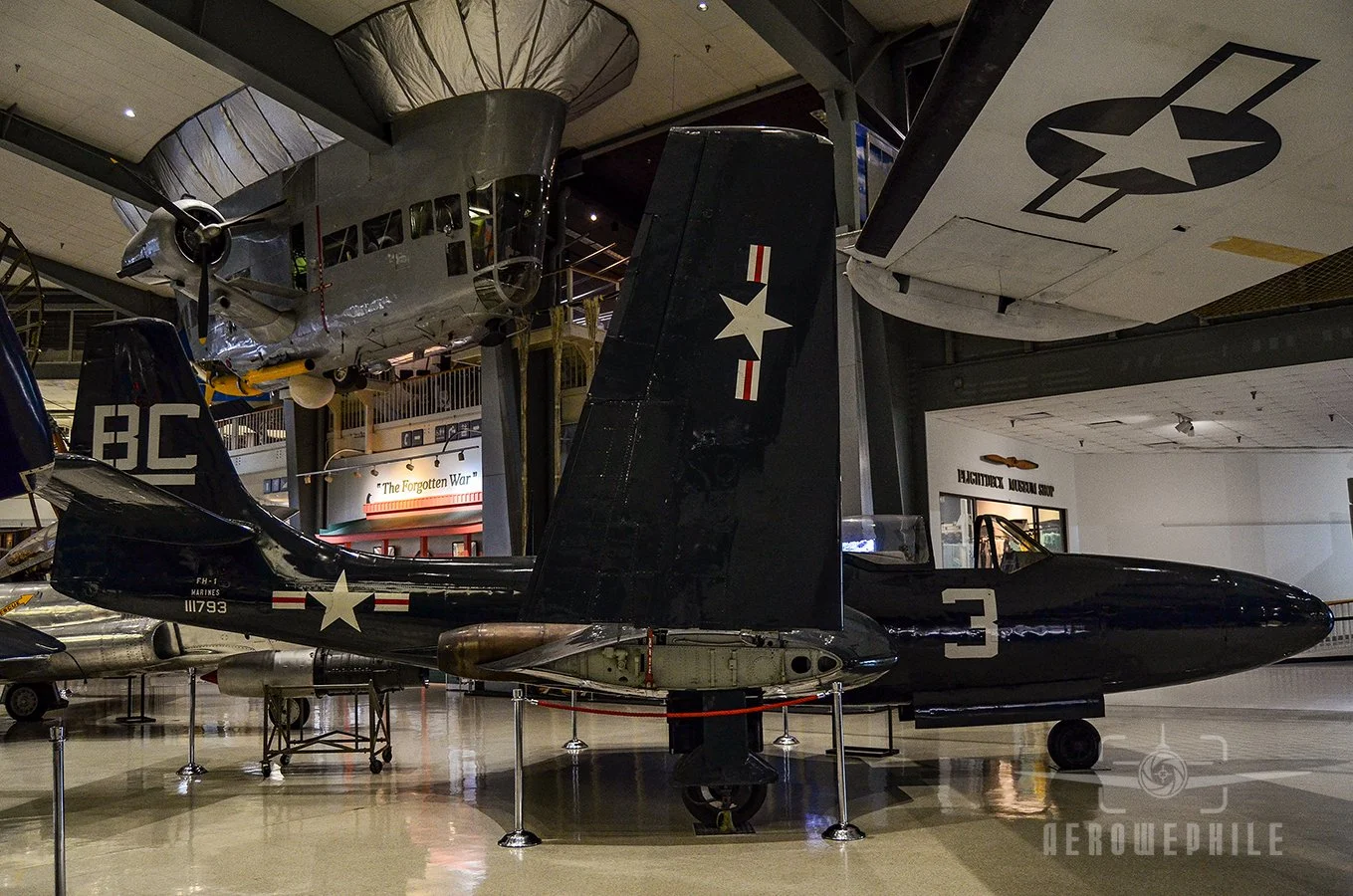
The first FH-1 Phantoms joined the fleet in 1947, with Marine Fighting Squadron (VMF) 122 flying them as part of an unofficial demonstration team called the "Marine Phantoms."
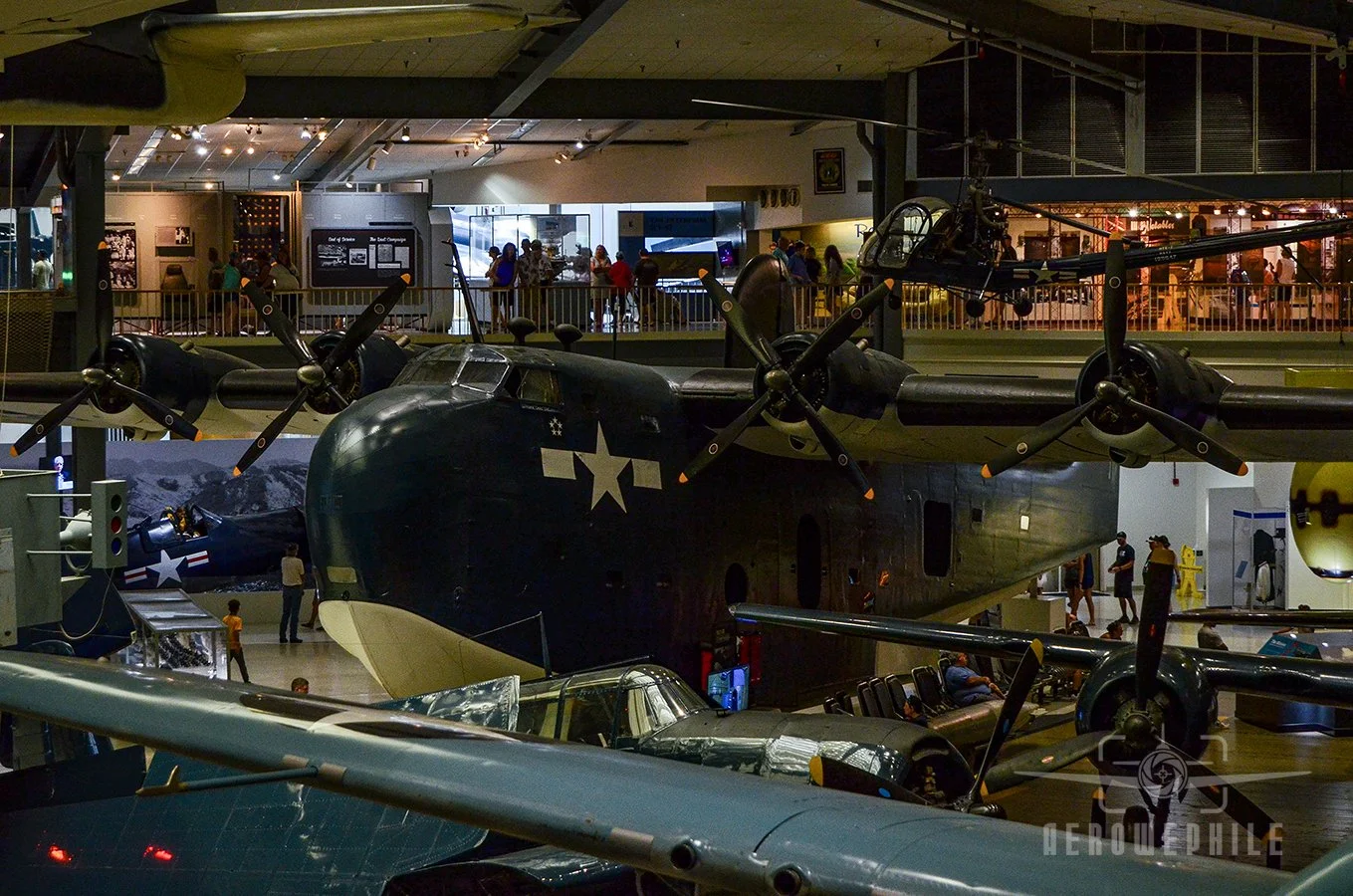
The Museum's aircraft (Bureau Number 7099), last known surviving example of the PB2Y, served as a plush flag transport, carrying the staff of Fleet Admiral Chester W. Nimitz to Tokyo to attend Japan's surrender ceremonies aboard the battleship USS Missouri (BB-63) in Tokyo Bay on 2 September 1945.
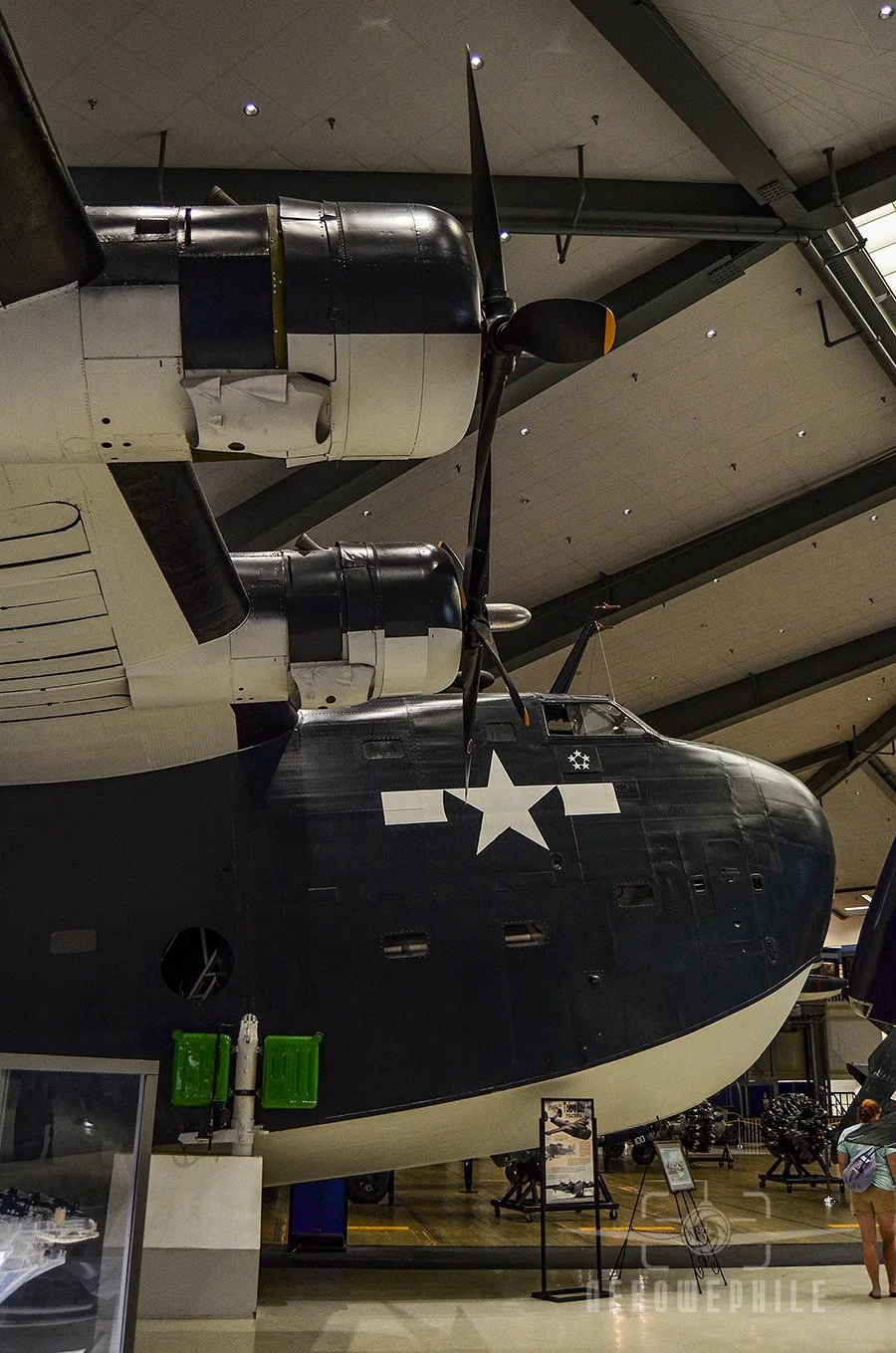
First flown in December 1937, and designated the XPB2Y-1, the Coronado was powered by four 1,050 horsepower Pratt & Whitney R-1830-72 engines, and was armed with two .50-caliber guns (in the nose and tail) and three .30-caliber guns (two in the in the waist and one in the tunnel).
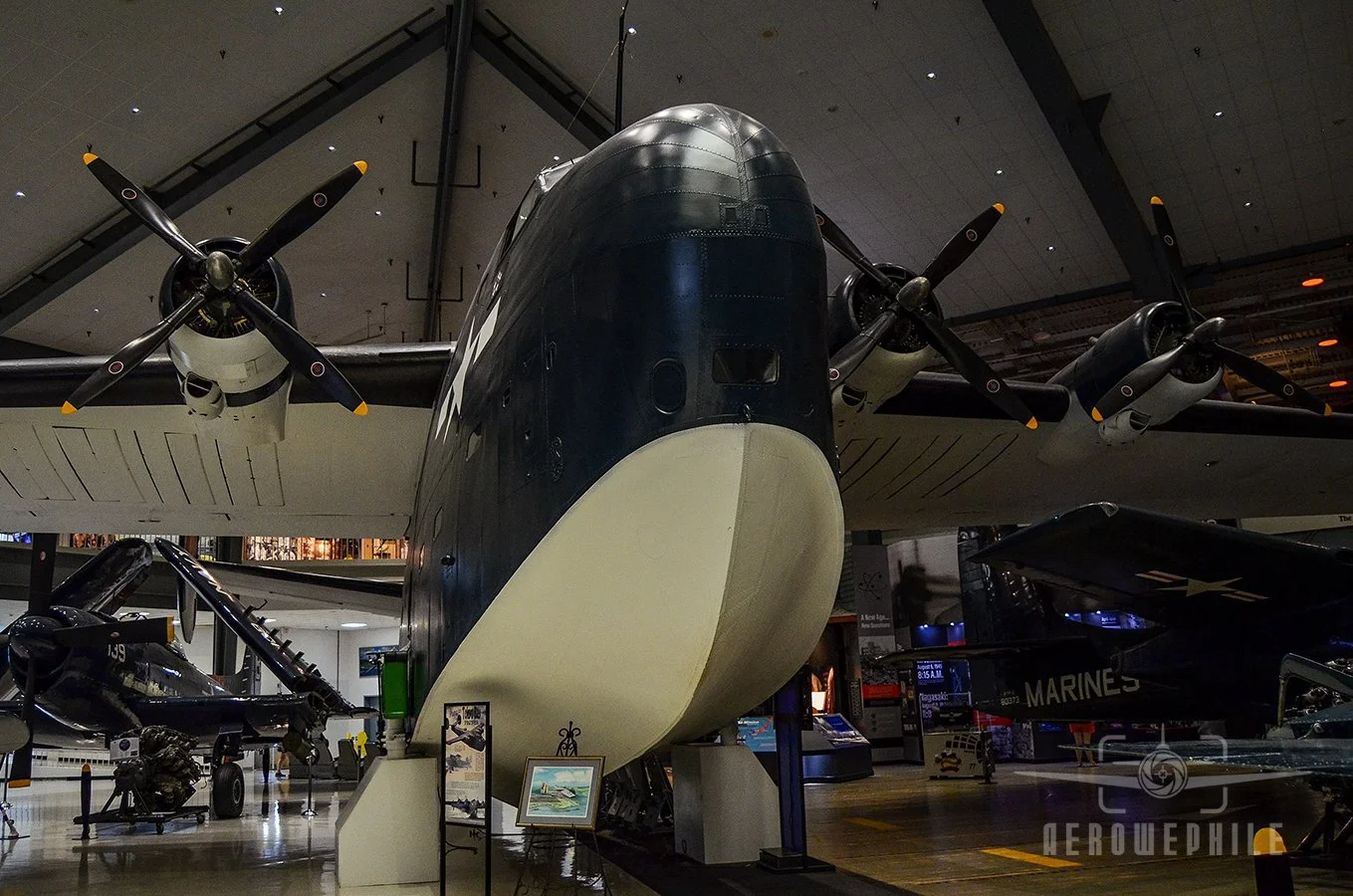
The PB2Y front-line service was limited, though Coronados participated in bombing missions against Japanese-held Wake Atoll and aerial mining operations in the air campaign against the Japanese naval base at Truk Atoll. Modified versions of the airplane included 10 PB2Y-3Bs supplied to Britain and used as transatlantic freighters, and 31 PB2Y-3s converted to PB2Y-3Rs with faired-over turrets for use as transports.
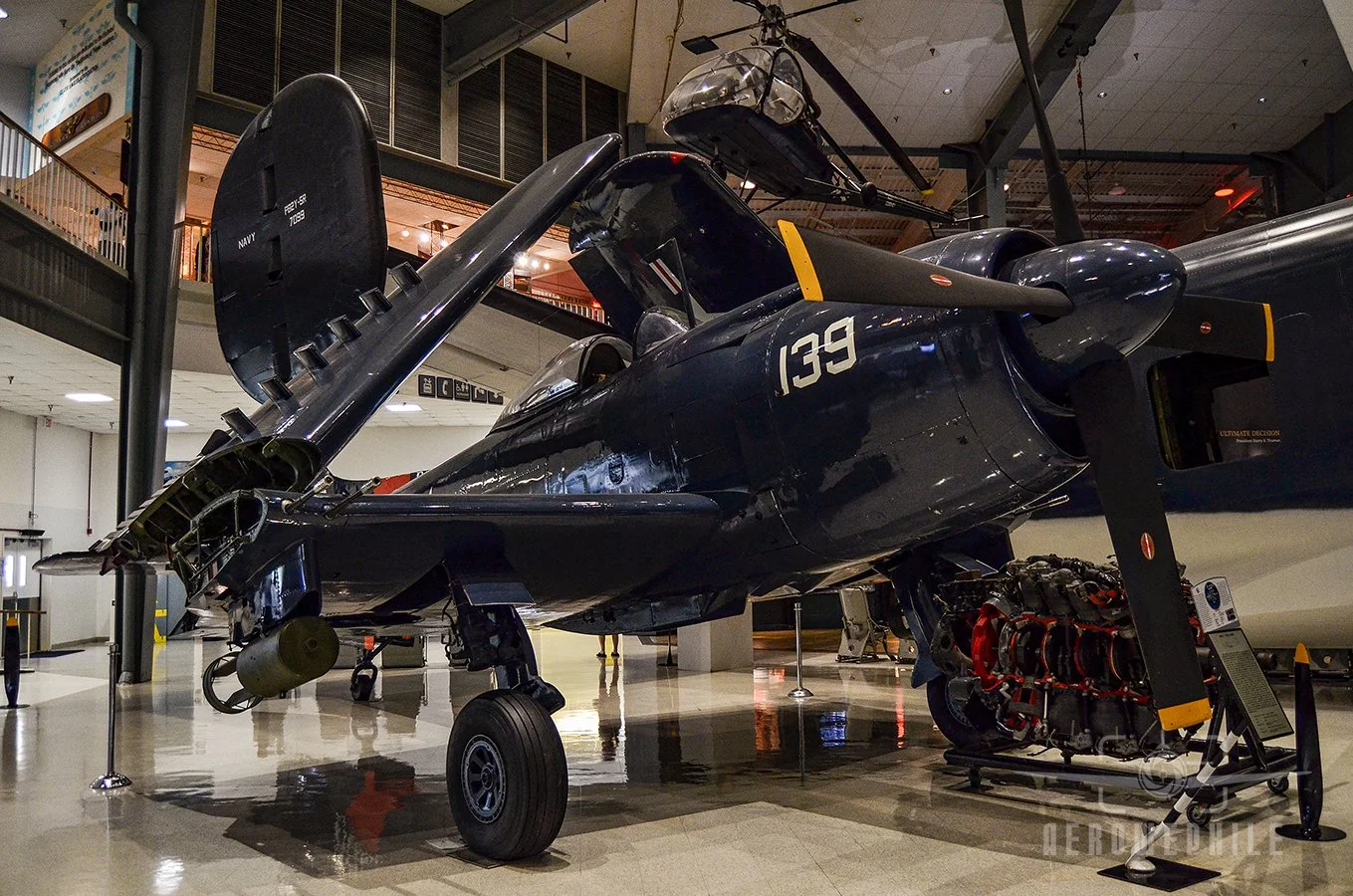
The Martin XBTM-1 made its maiden flight on August 26, 1944. On January 15, 1945, the Navy placed an order for 750 production aircraft, which received the designation AM-1 Mauler before their maiden flight on December 16, 1946.
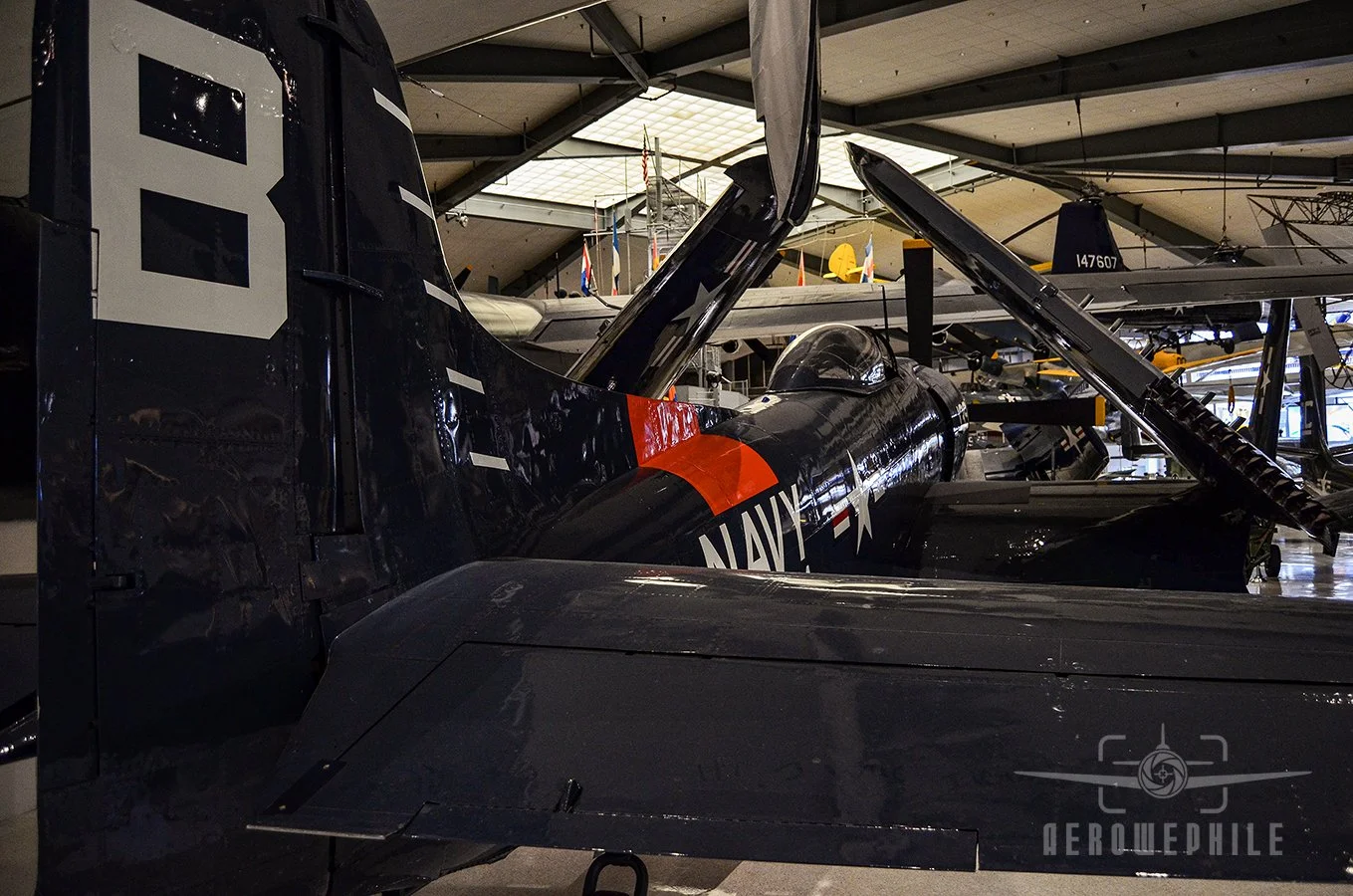
Attack Squadron (VA) 17A was the first squadron to accept delivery of the Mauler on March 1, 1948, with four additional squadrons also flying the AM-1, including Composite Squadron (VC) 4, which flew the electronic countermeasures version, which was designated the AM-1Q.
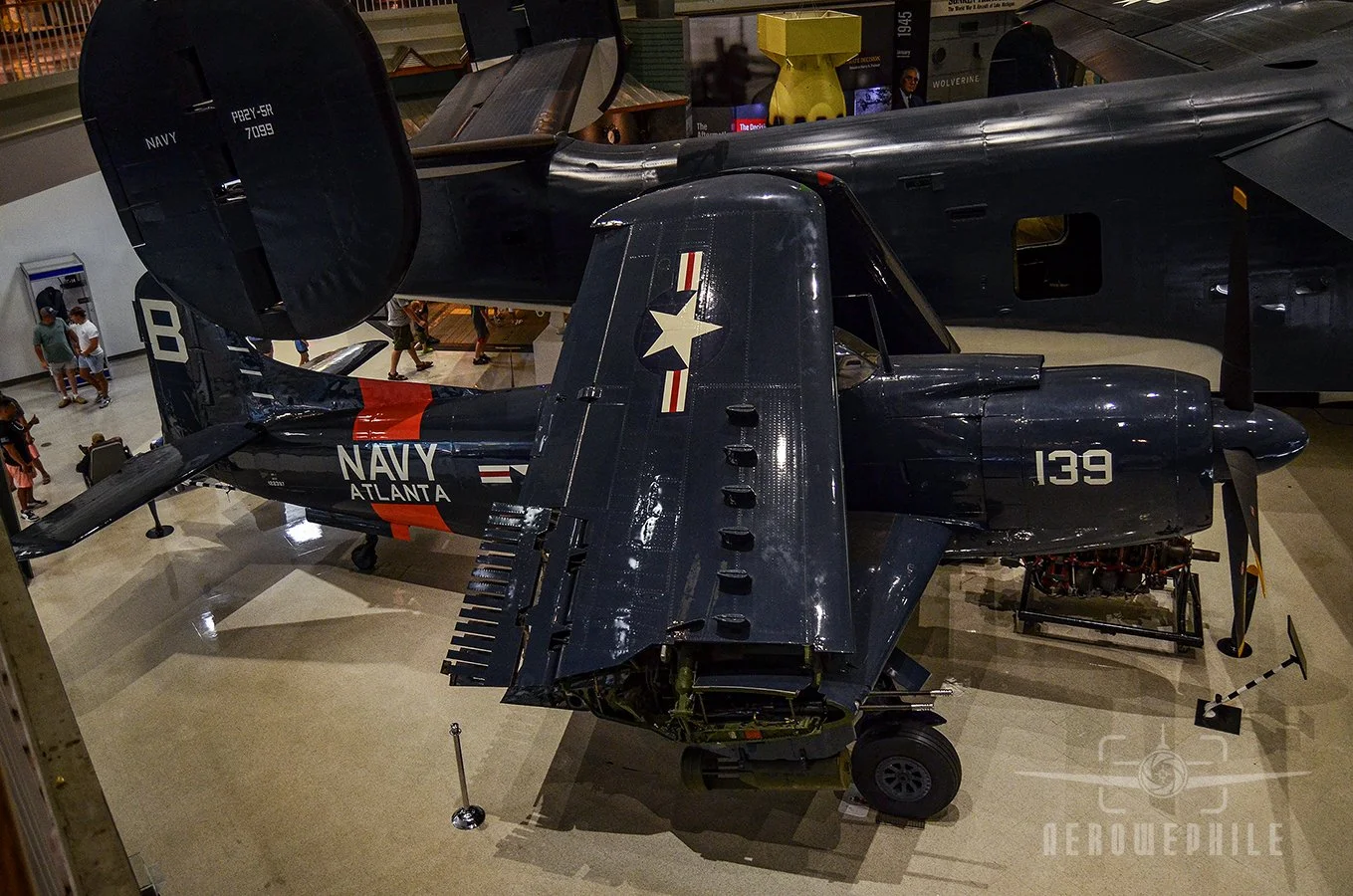
Delivered in March 1949, the museum’s AM-1 Mauler (Bureau Number 122397) logged 673 flight hours before being retired from the Naval Air Reserve in 1955. During its career it flew from Naval Air Stations (NAS) Atlanta, Georgia, and St. Louis, Missouri. This Mauler set an unofficial record for a single-engine aircraft by carrying a 10,689 lb. load aloft. Stored at the Aberdeen Proving Ground in Maryland following its service, the aircraft arrived at the museum in 1972.
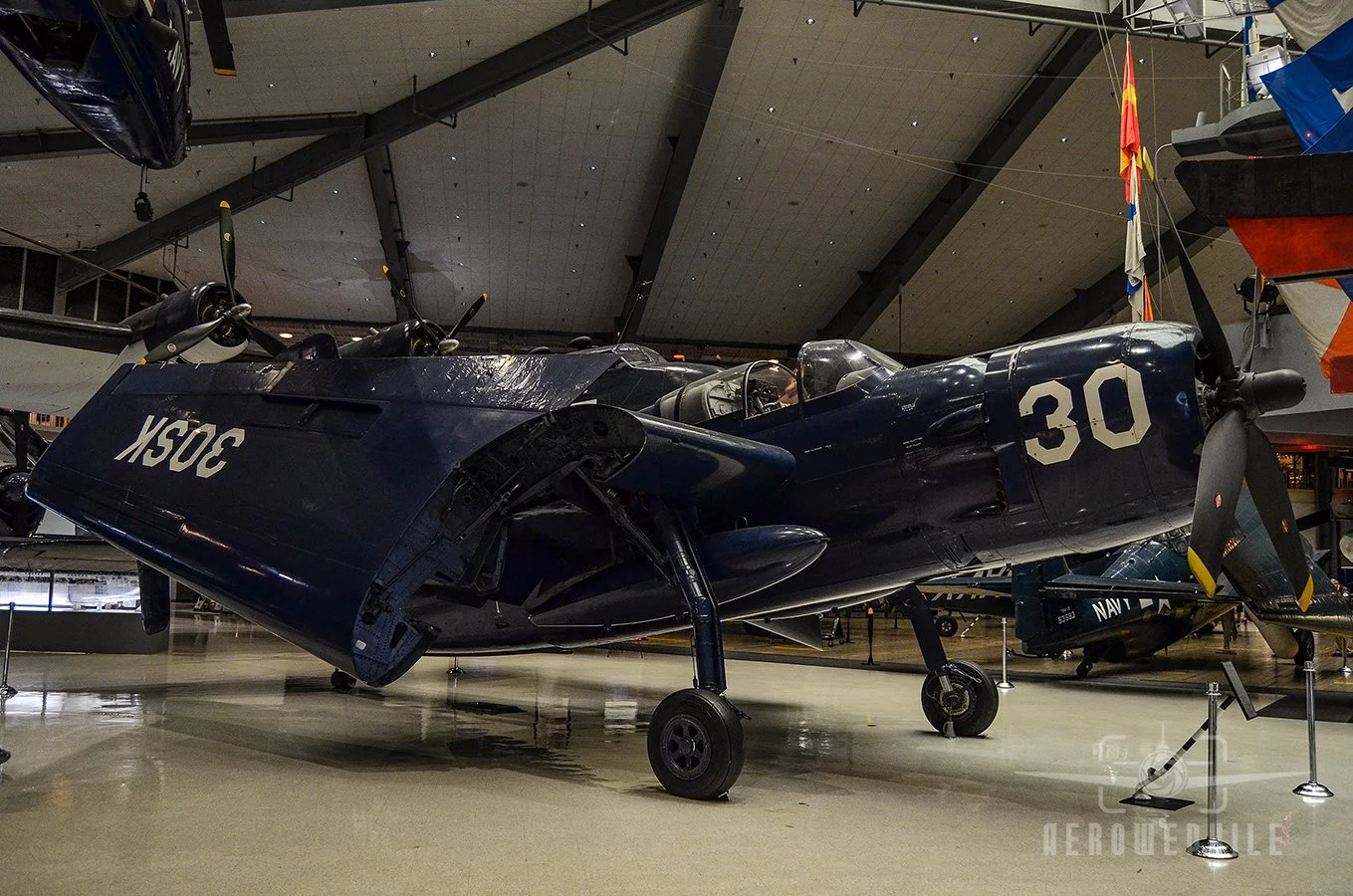
AF-2S Guardian - The AF-2S incorporated a wing-mounted searchlight and radar along with provisions for carrying sonobuoys and a blend of rockets, depth charges, bombs, and homing torpedoes for the antisubmarine warfare (ASW) duty.
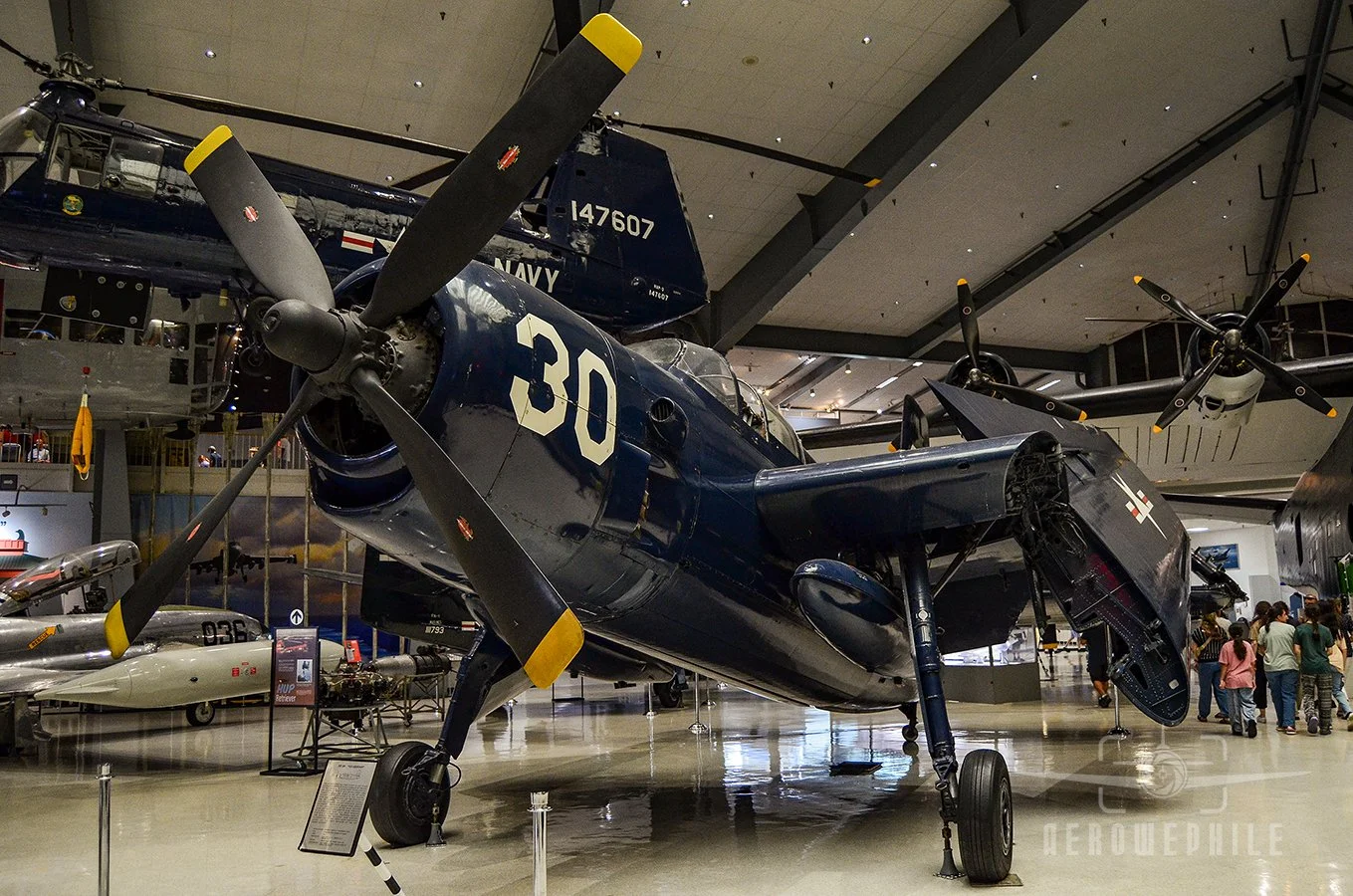
AF-2S Guardian was the largest single-engine airplane in the world when introduced. However, the Guardian demonstrated poor low-speed handling characteristics. This, combined with the fact that they routinely operated from small deck aircraft carriers, resulted in a high accident rate that plagued the airplane.
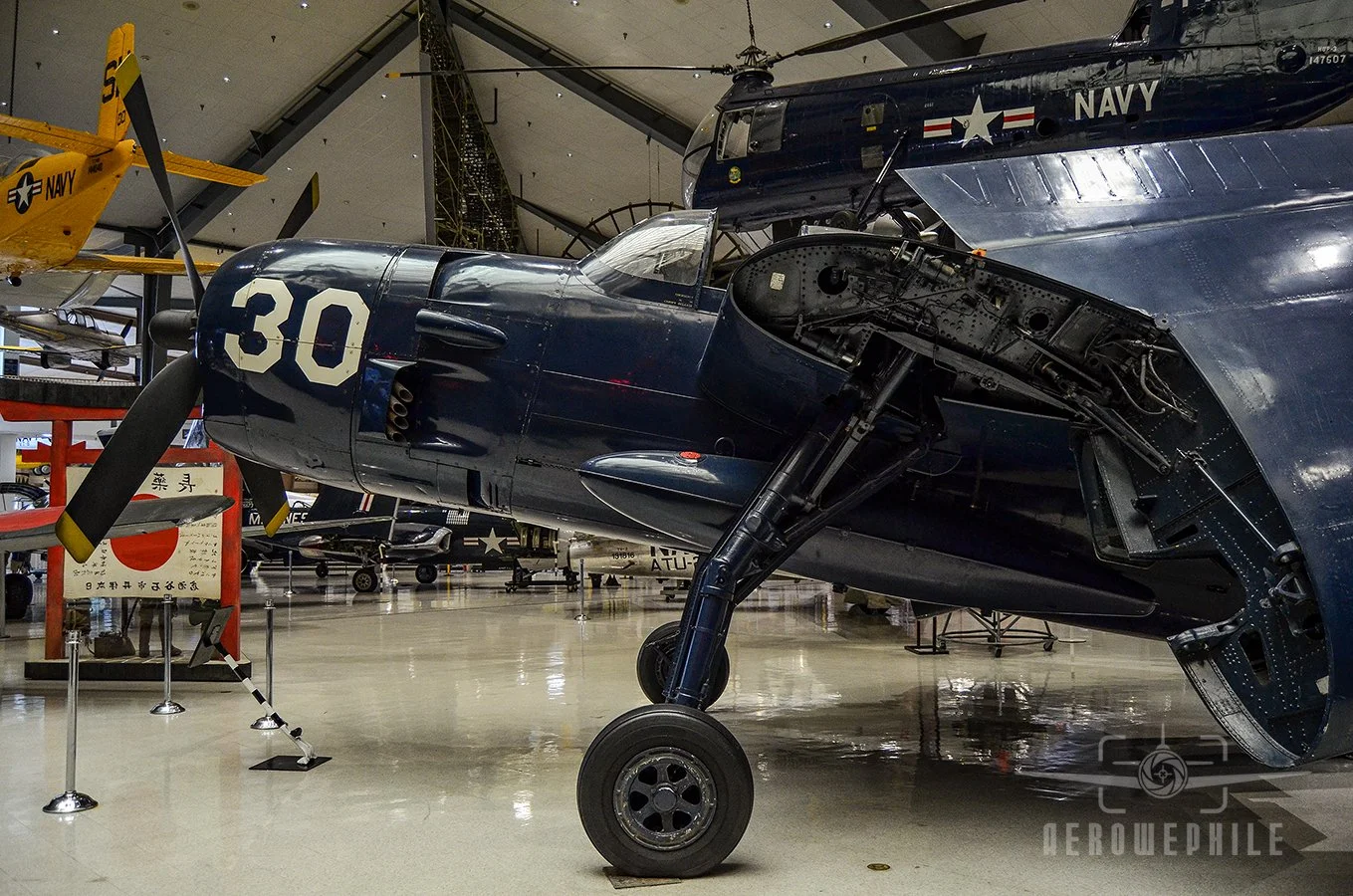
The AF-2S/2W Guardians served in the fleet squadrons until 1955, at which time VS-37 retired its last one to accept the delivery of the S2F Tracker, which combined the search and attack role in one airplane. The Naval Air Reserve retired the last of its AF Guardians in 1957.
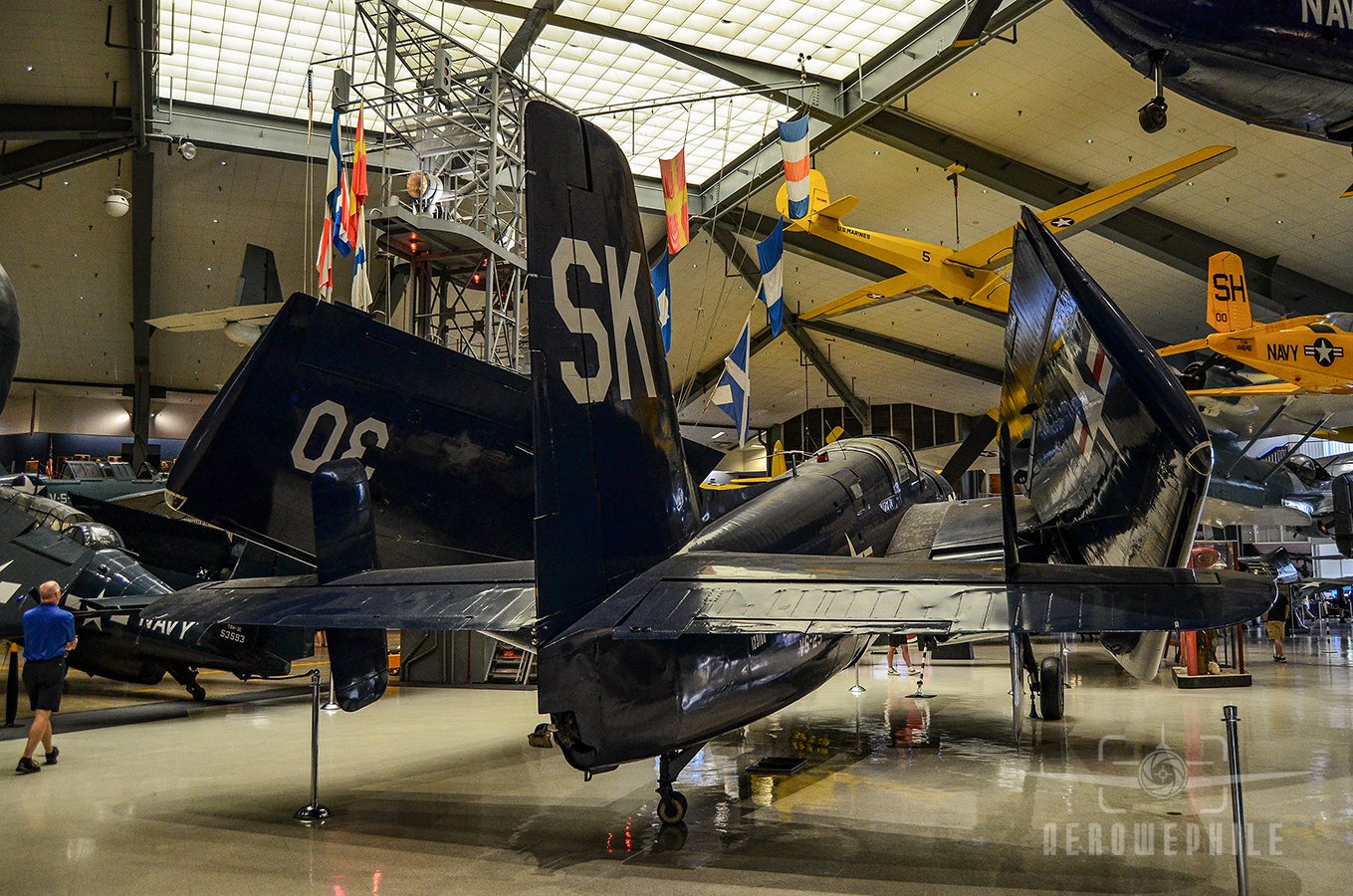
The Museum's AF-2S (Bureau Number 123100) entered squadron service with Air Development Squadron (VX) 1 at Naval Air Station (NAS) Key West, Florida, where it served as a flight test aircraft until February 1952. After Naval Air Reserve service, it flew as a civilian air tanker and air show airplane until acquired by the museum in 1980.
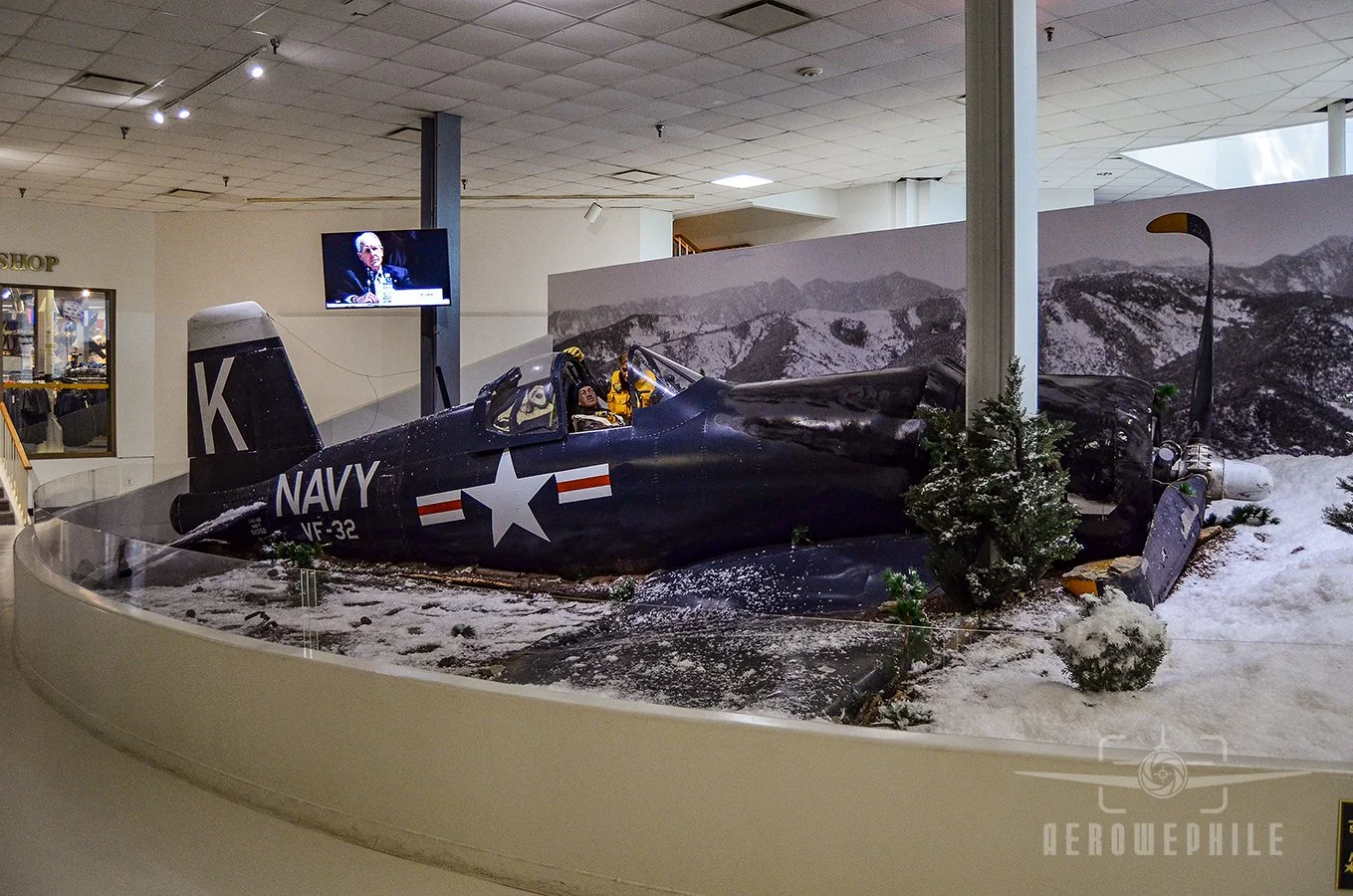
The Korean War exhibit includes a diorama depicting the attempted rescue of ENS Jesse L. Brown, the first African American to complete flight training and become a Naval Aviator, by squadronmate LTJG Thomas Hudner Jr. on December 4, 1950.
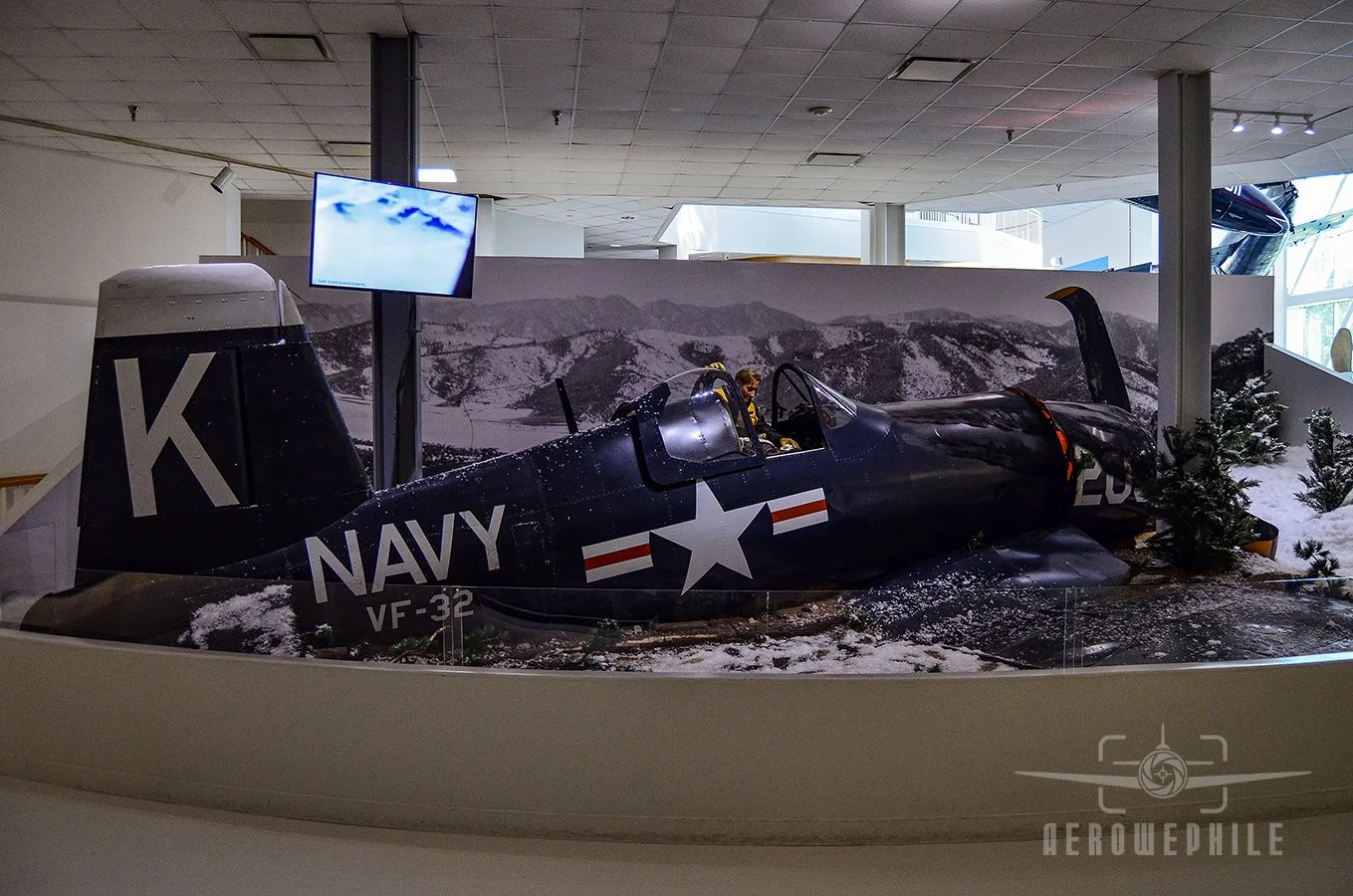
The rescue action, for which LTJG Thomas Hudner Jr received the Medal of Honor, was the subject of a book and motion picture titled Devotion. The replica F4U-4 that is the centerpiece of the diorama depicting the snowy North Korean landscape around the Chosin Reservoir was a prop used in the filming of the movie.
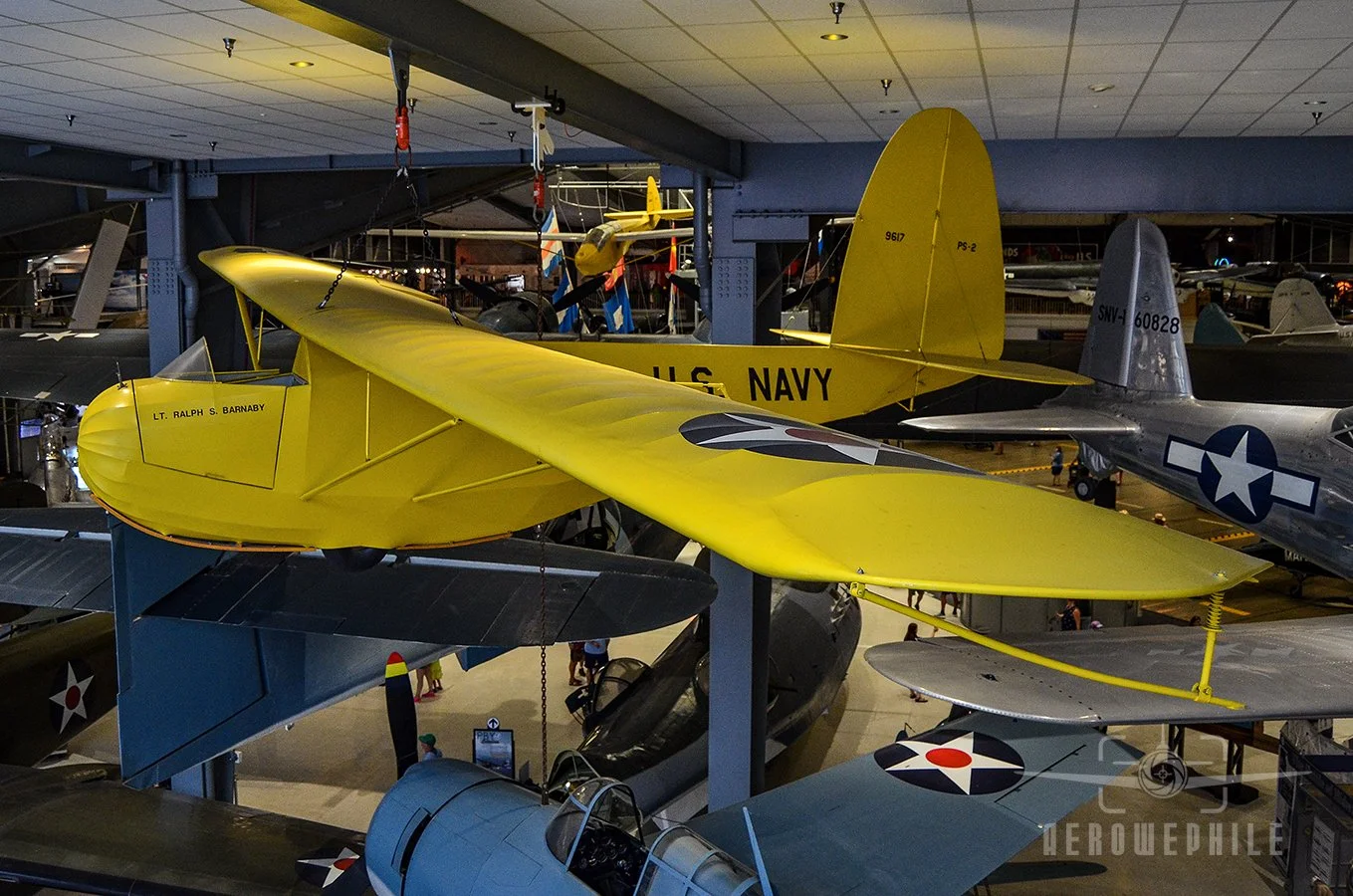
The Navy procured the Schweizer LNS-1 in 1942 for training of glider pilots to execute airborne assaults, the focus of these operations Glider Group 71 at the Marine Corps base at Parris Island, South Carolina. During operations there, the glide ratio and performance of the LNS-1 was discovered to be very different than what glider pilots would experience in heavier assault gliders with much higher sink rates. That, and the realization that glider operations were impractical in the Pacific, caused the program to be terminated.
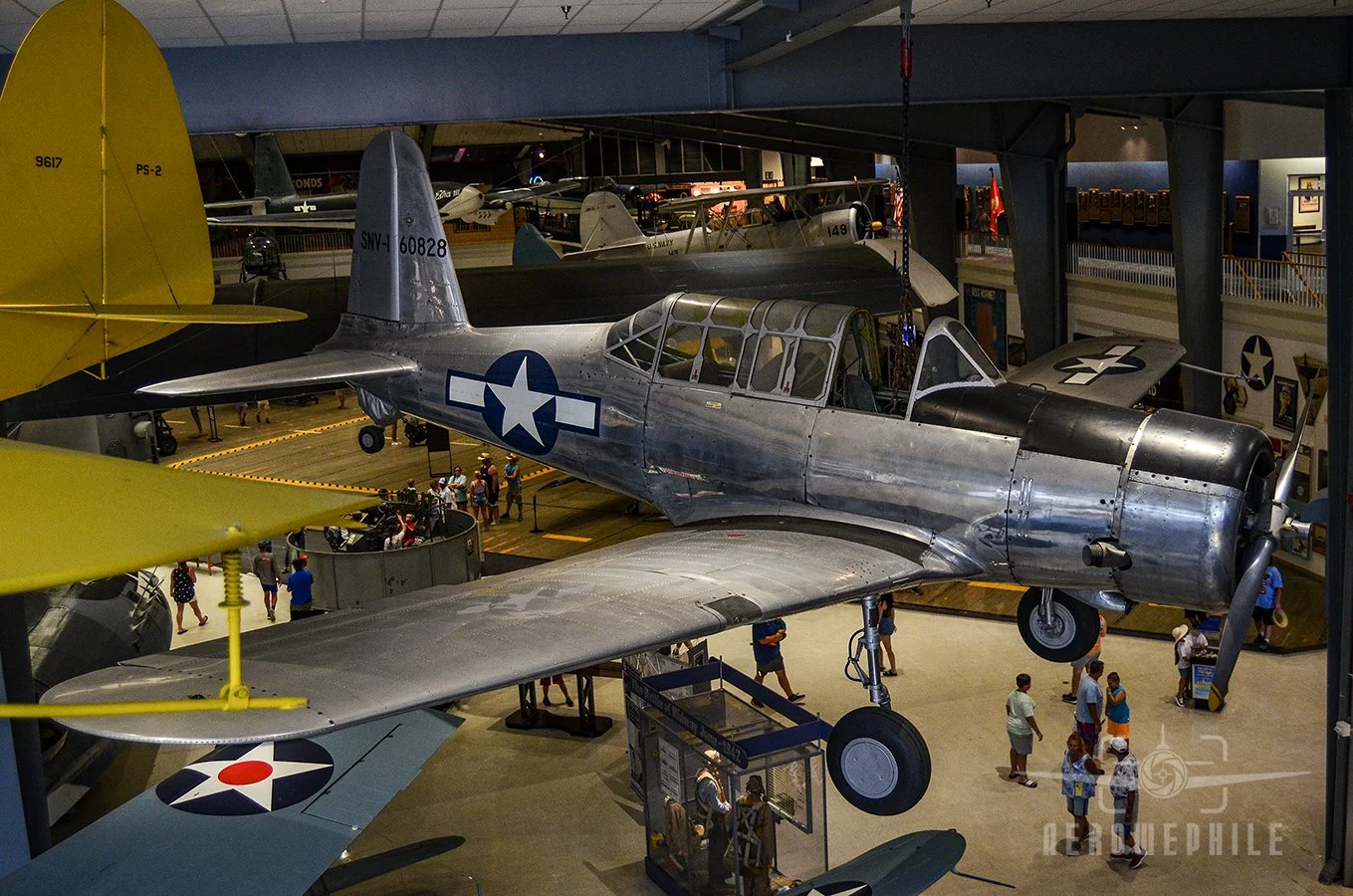
The SNV, built by Vultee Aircraft, was used as an intermediate trainer for Naval Aviators during World War II. The SNV introduced students to a more powerful Pratt & Whitney R-985 engine, incorporated two-way radio communication, manually operated flaps and a variable pitch, two-blade propeller, a major step in preparing student pilots to advance to more complicated, higher performance aircraft. Its annoying harmonics and rattling caused students to nickname it the "Vultee Vibrator."
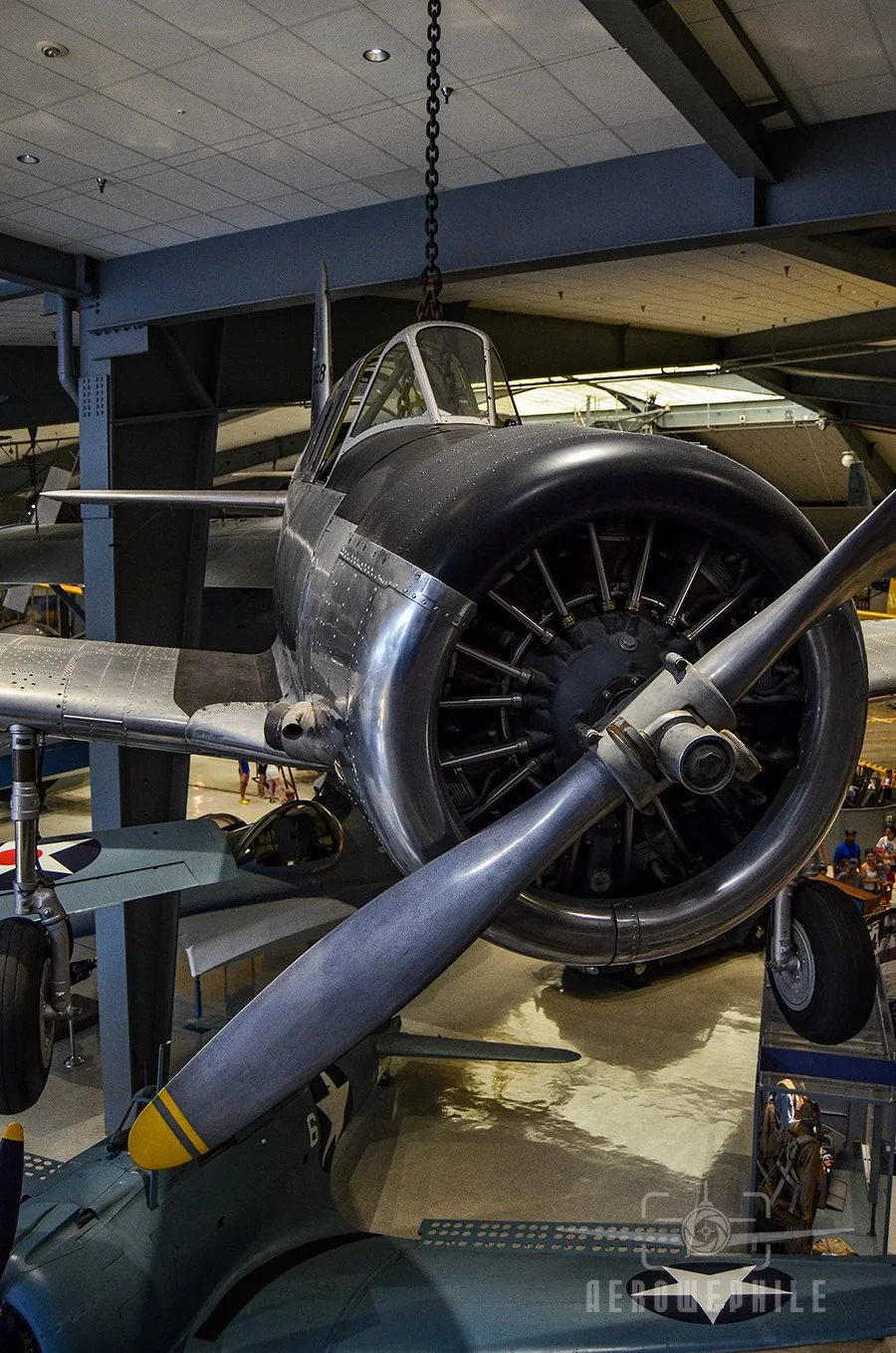
The airplane was built in 1941 and flew with the Army Air Forces as a BT-13A. It was acquired by the National Naval Aviation Museum from a civilian owner in 1982 and is displayed in the markings of an SNV-1.
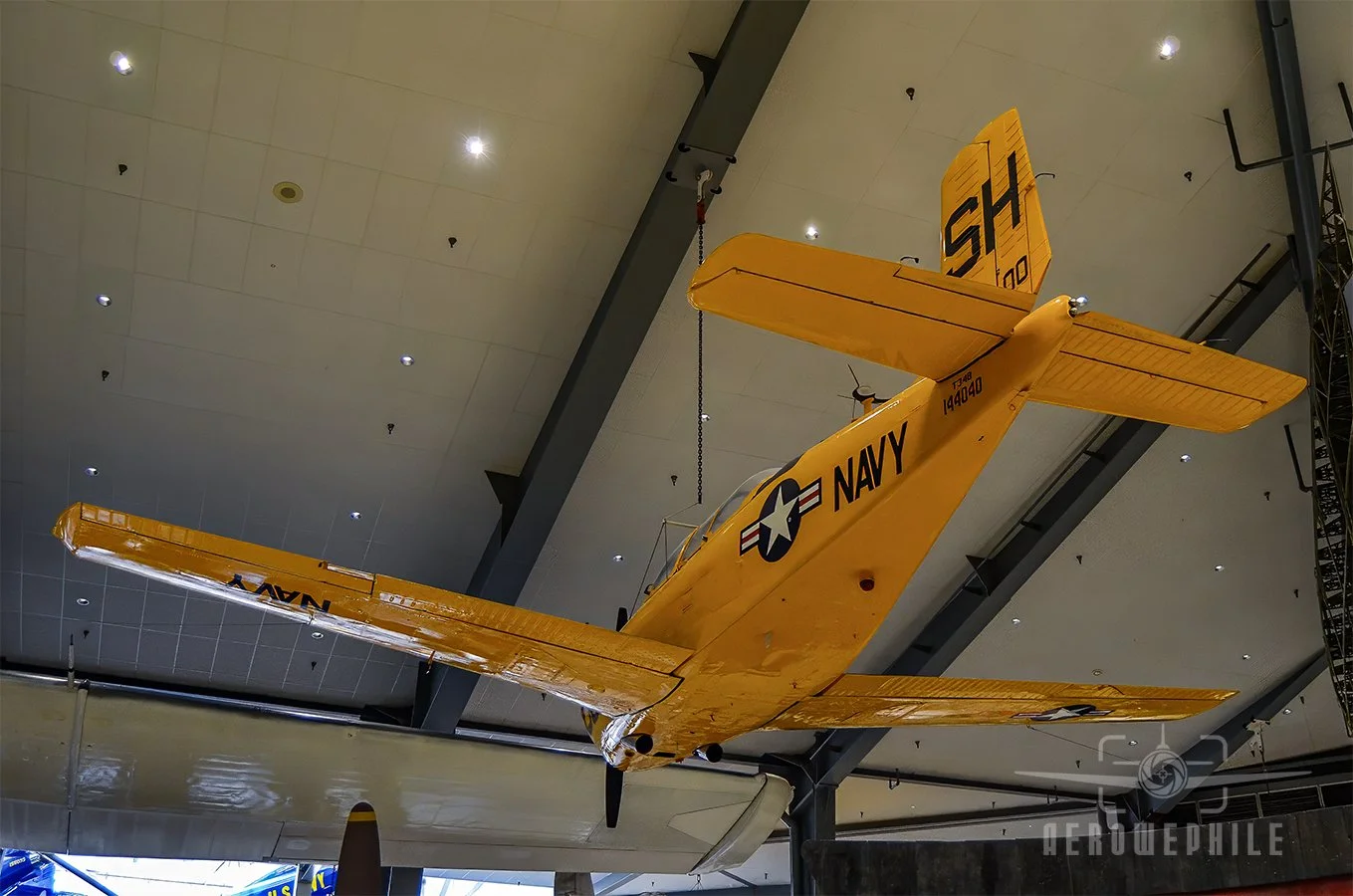
This early version of the T-34 Mentor became operational during the 1950s, and was used by the Navy for over twenty years, accumulating almost 100,000 flight hours per year. The T-34B Mentor on display (Bureau Number 144040) was acquired from the U.S. Department of Agriculture Forest Service and is painted in the markings of an aircraft of the Naval Air Training Command.
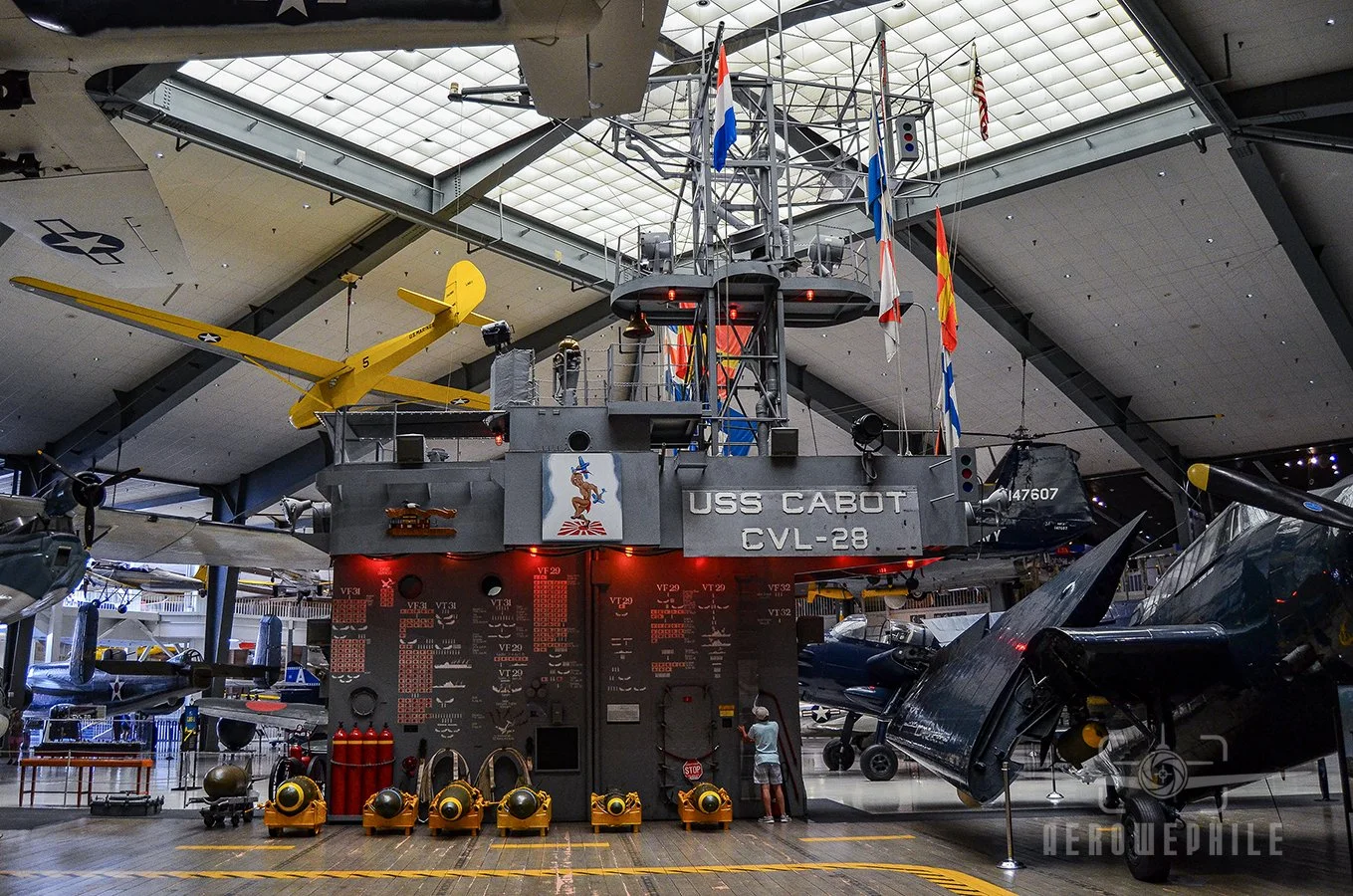
USS Cabot Flight Deck - This exhibit depicts the decorated light carrier USS Cabot (CVL 28) and includes a replica of the wooden flight deck and island superstructure.
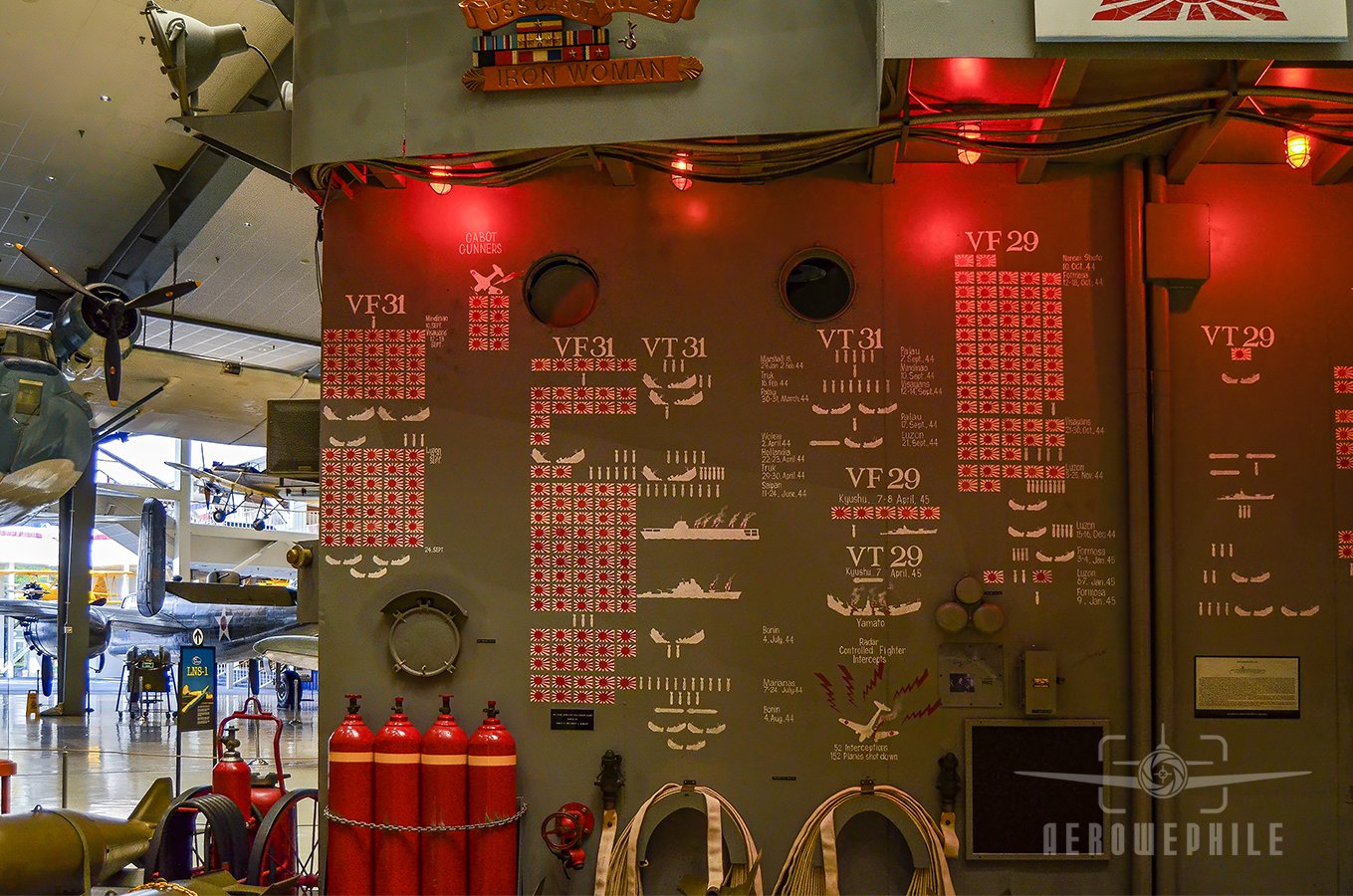
The USS Cabot scoreboard documenting the ship’s combat record was painted by a sailor who completed the original, this time with the assistance of his son.
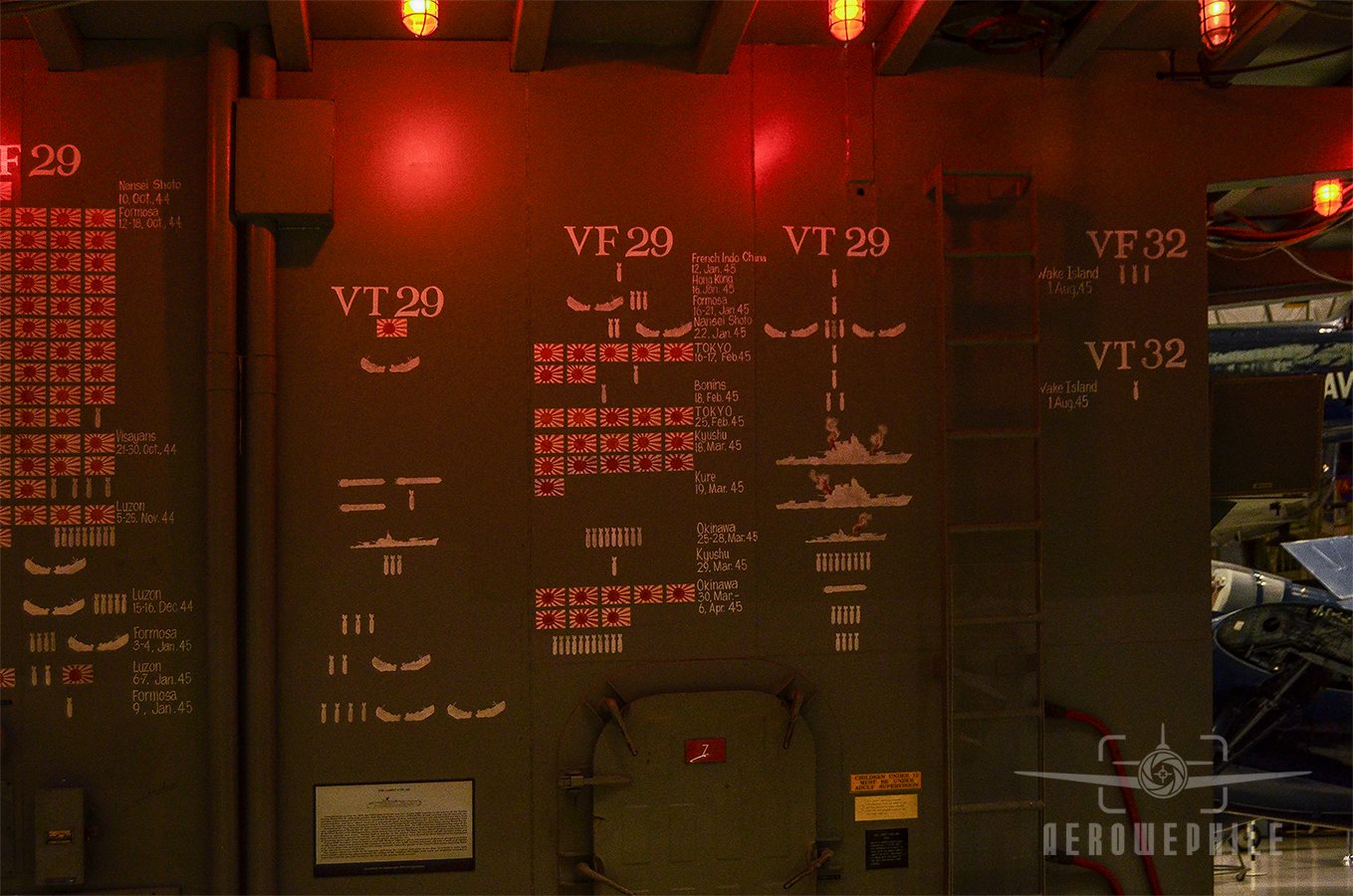
USS Cabot scoreboard.
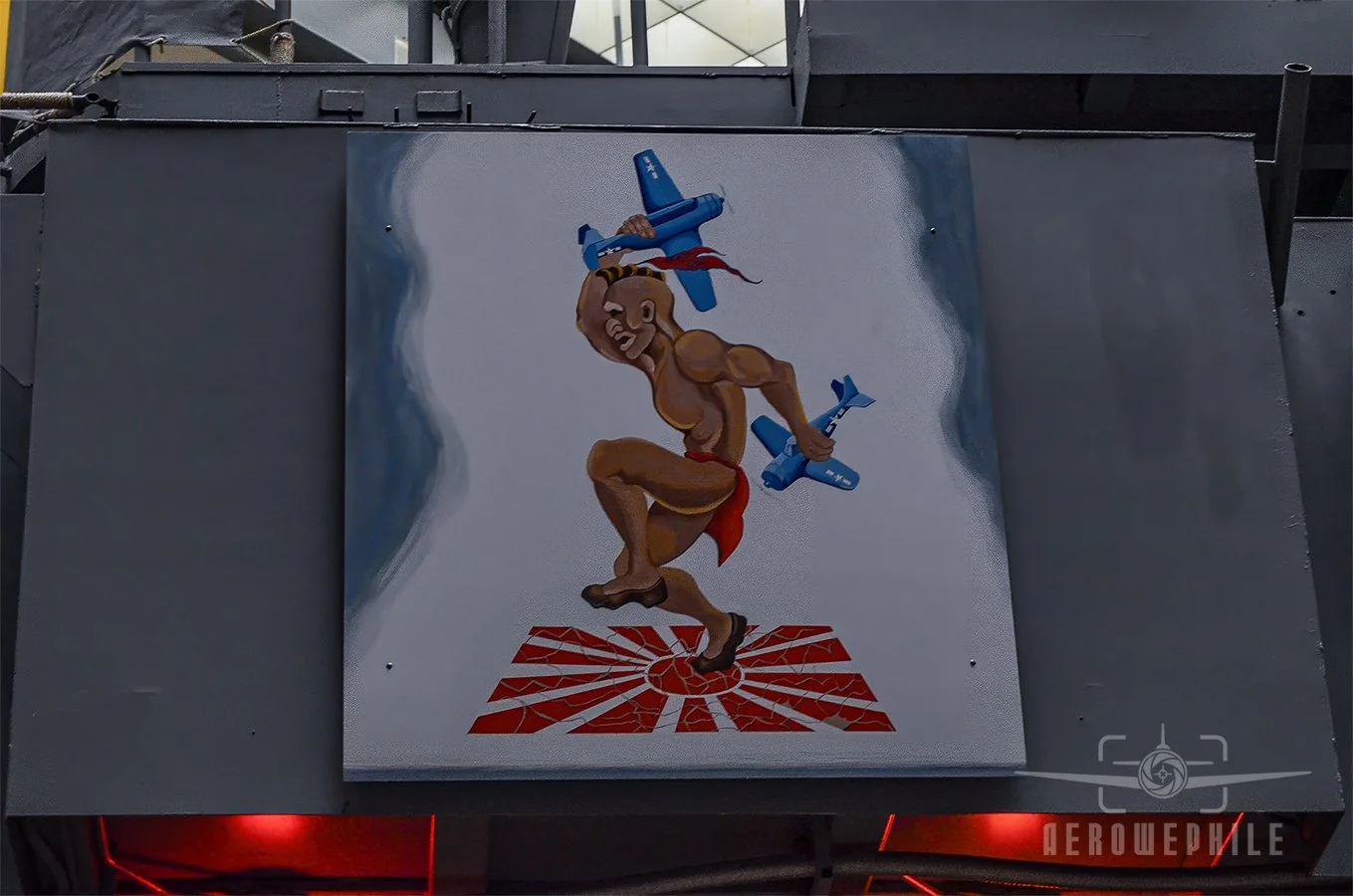
The island features a painting reflecting the ship’s wartime radio callsign “Mohawk” and ribbons noting it combat awards that are topped by a duck decoy.
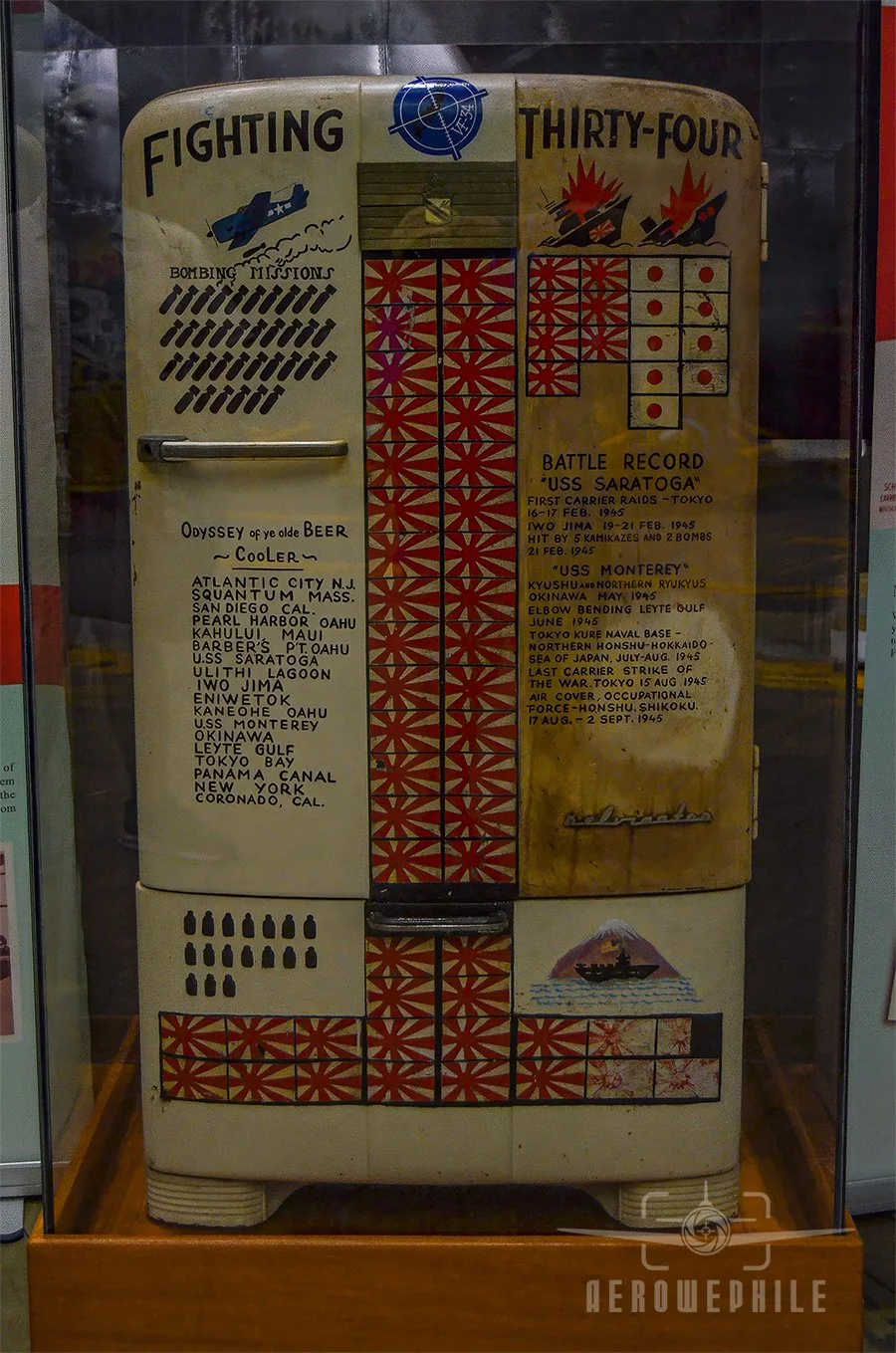
Dubbed the "Killer Kooler," the Kelvinator Icebox was in the ready room of two aircraft carriers that took part in the war. The 1940s-era appliance is painted with the names of the men who served in fighter squadron VF-34 commanded by Navy Lt. Cmdr. Robert Conrad. The refrigerator was damaged in a World War II kamikaze attack.
SOUTH WING
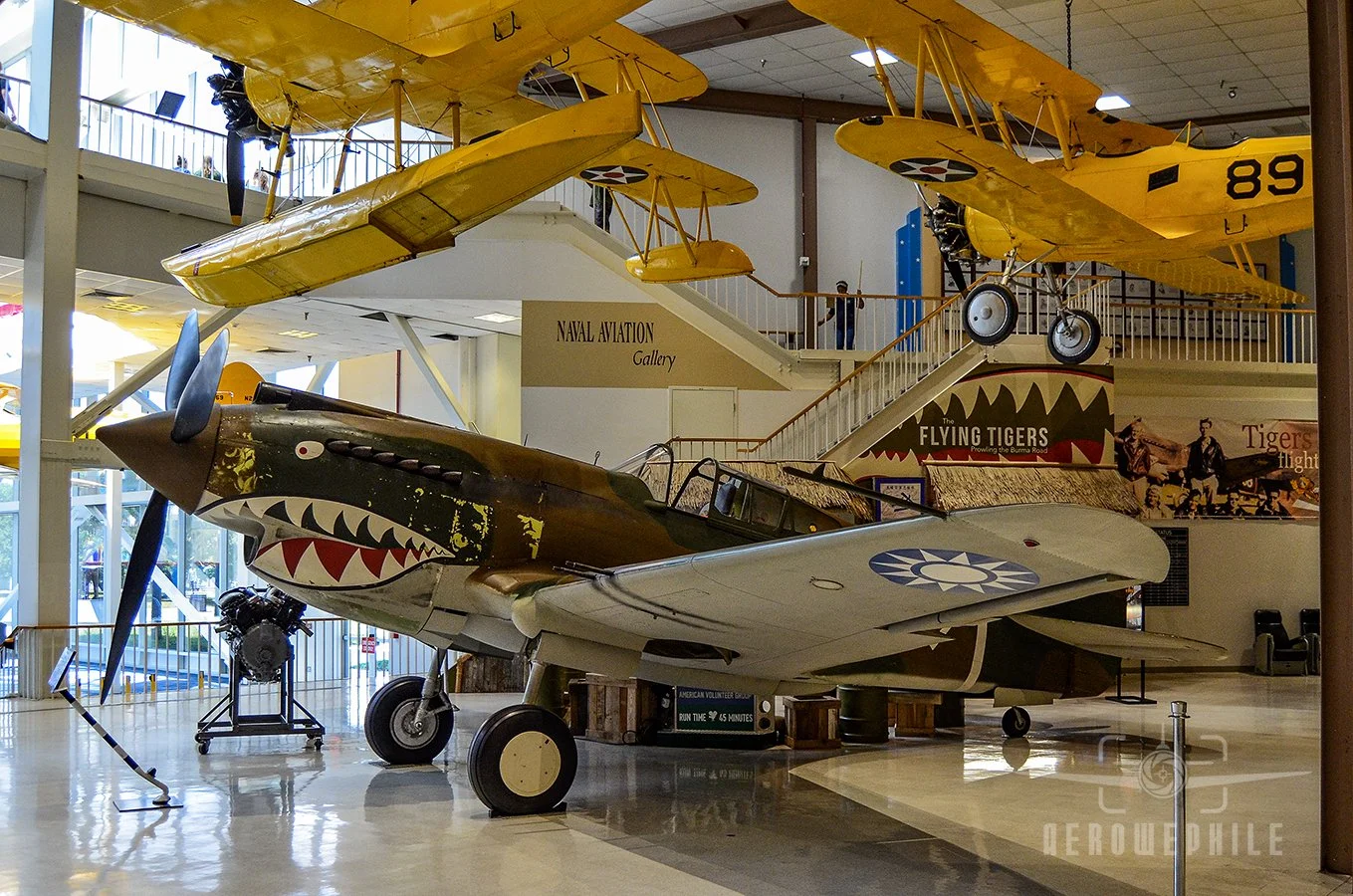
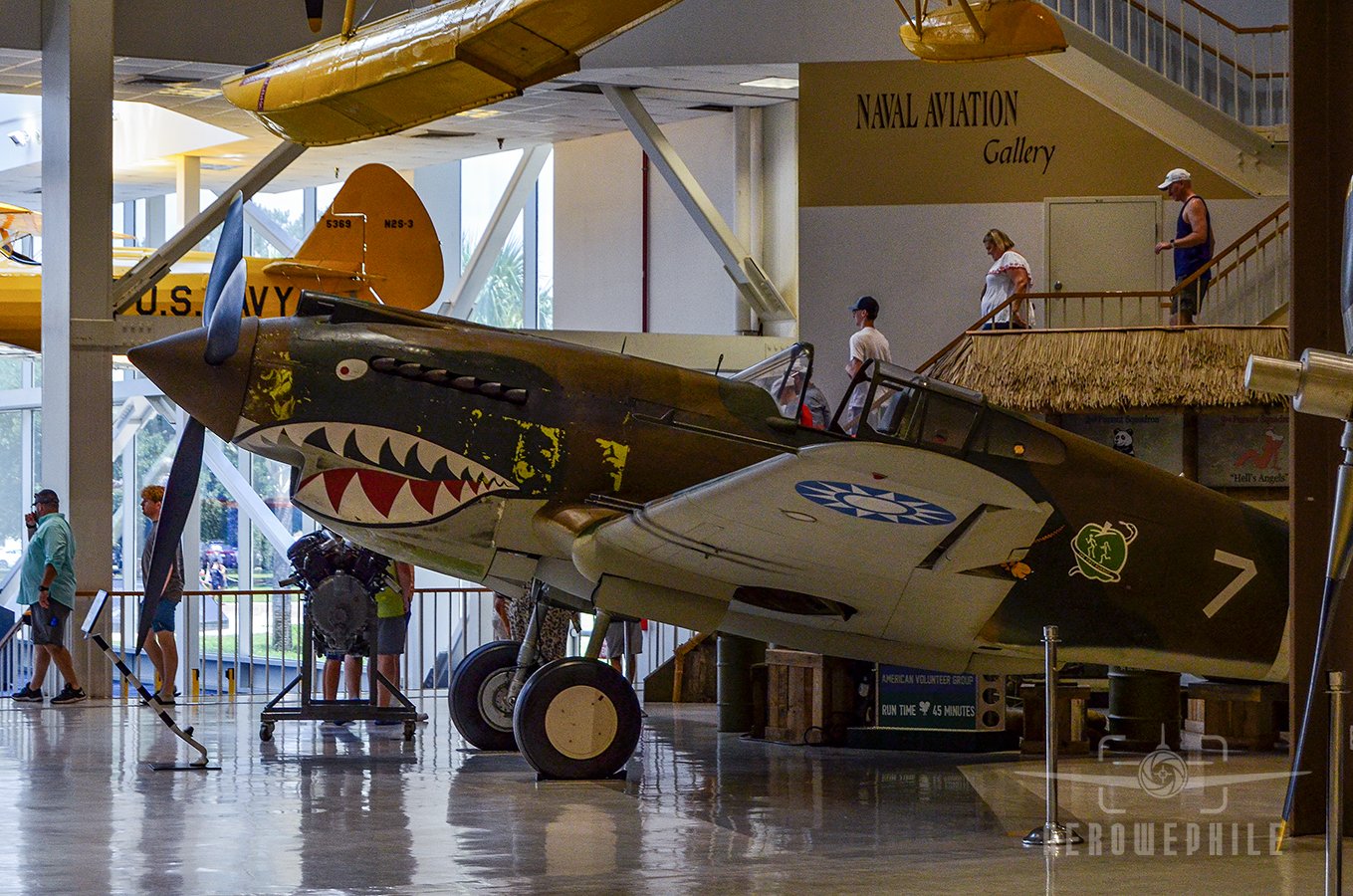
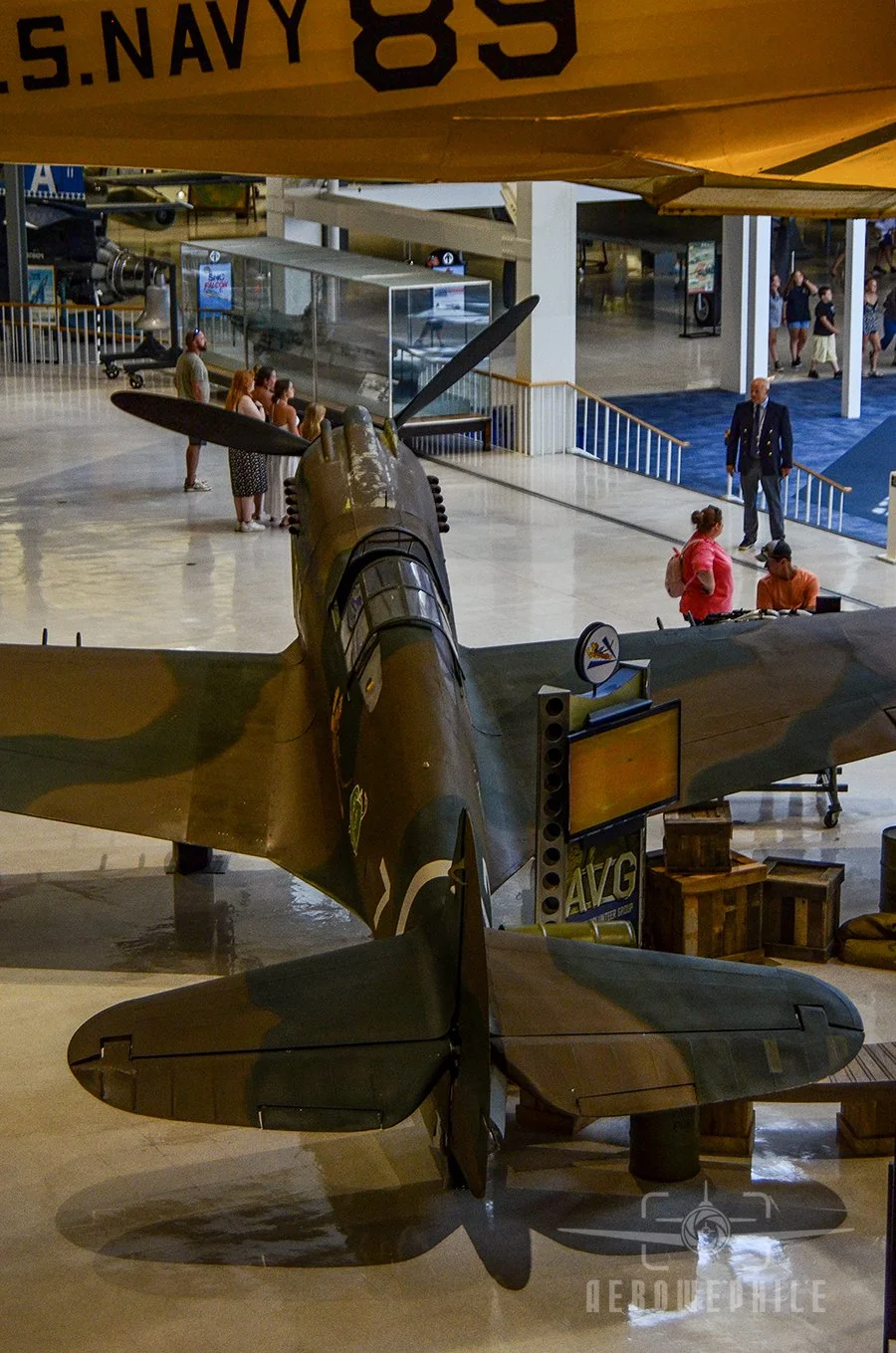
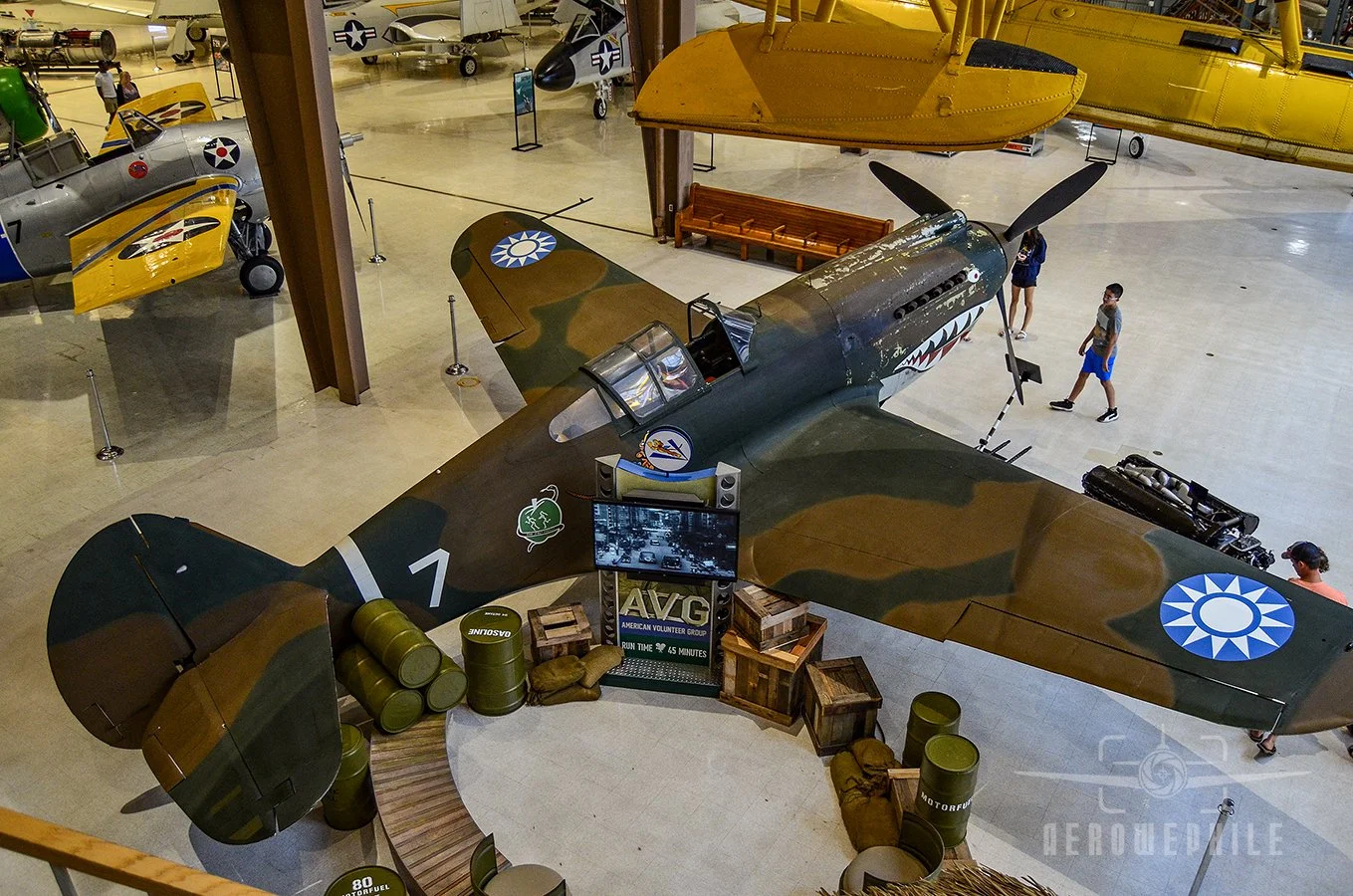
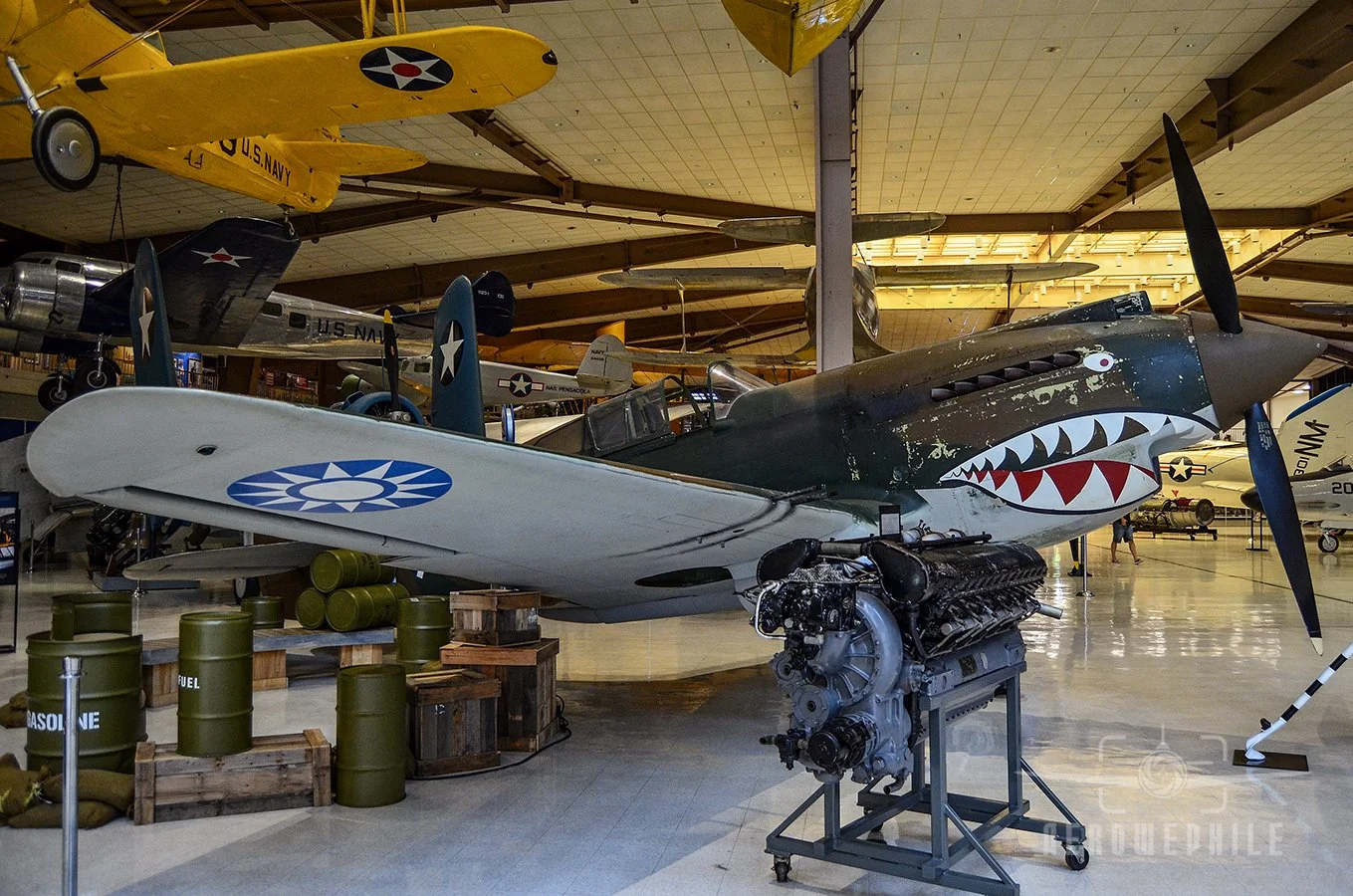
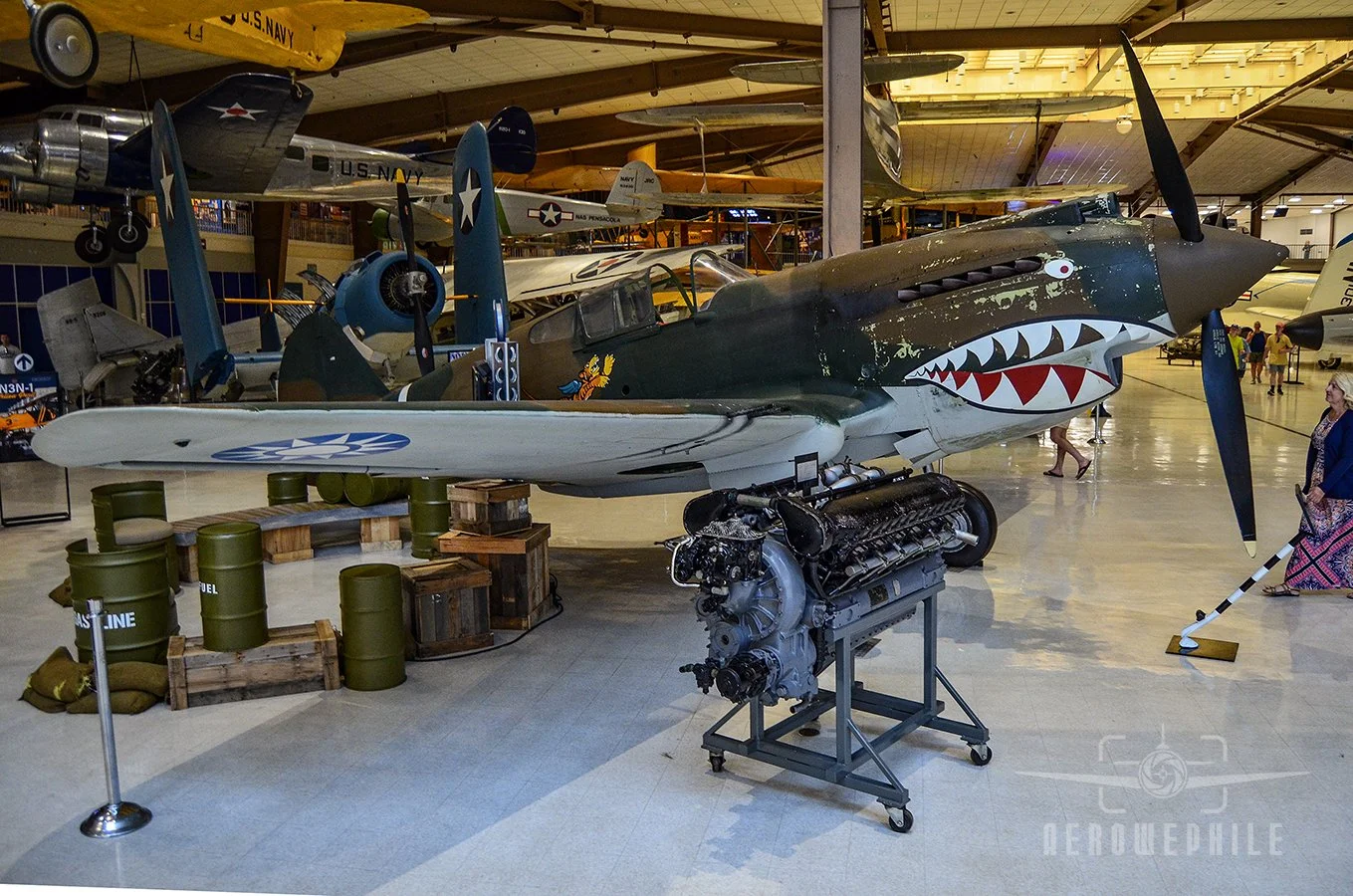
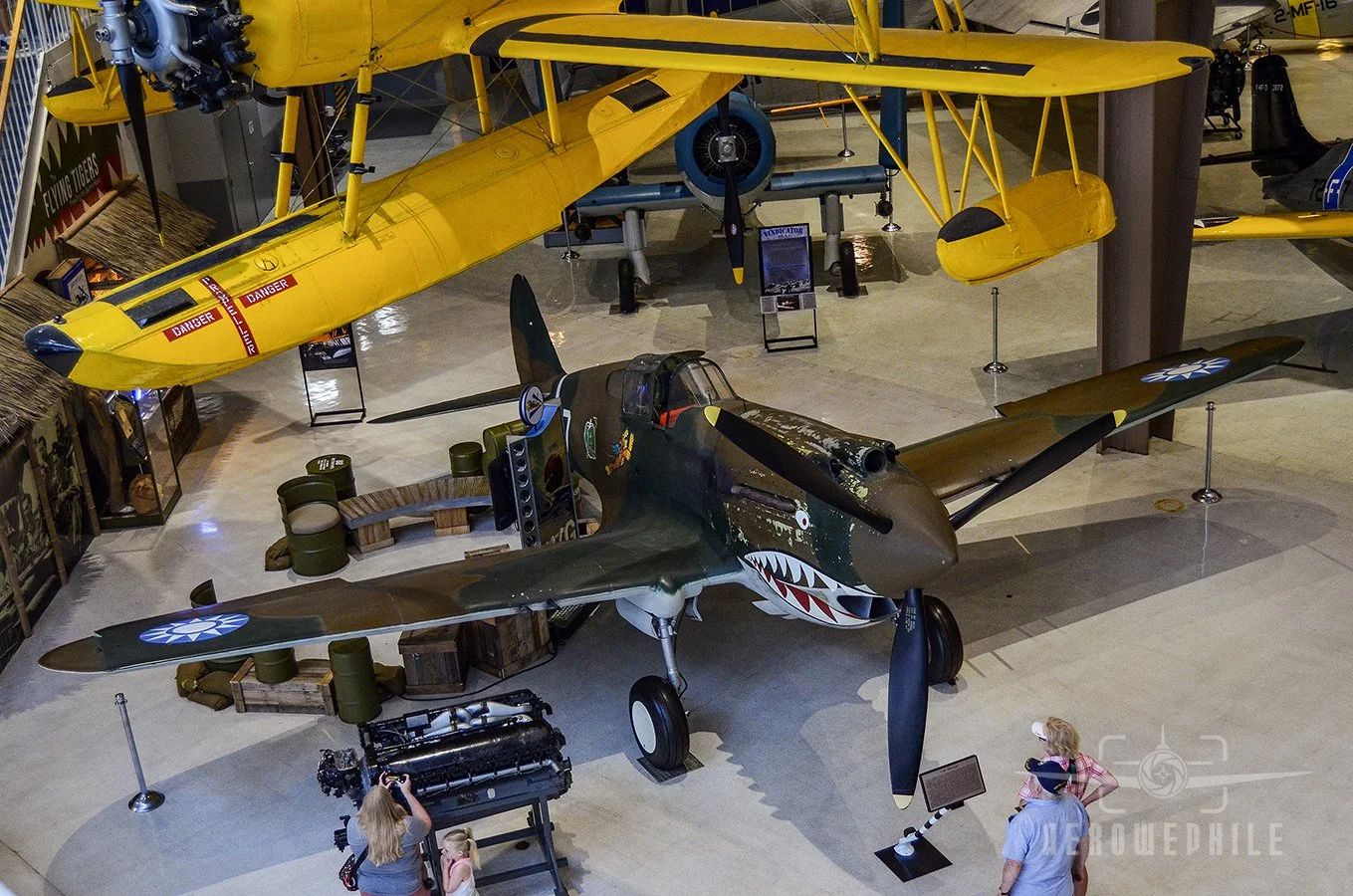
Flying Tigers Exhibit - Never included in Naval Aviation's inventory, the P-40B Tomahawk is displayed to honor those Naval Aviators who joined Colonel Claire Chennault's American Volunteer Group (AVG), better known as the Flying Tigers.
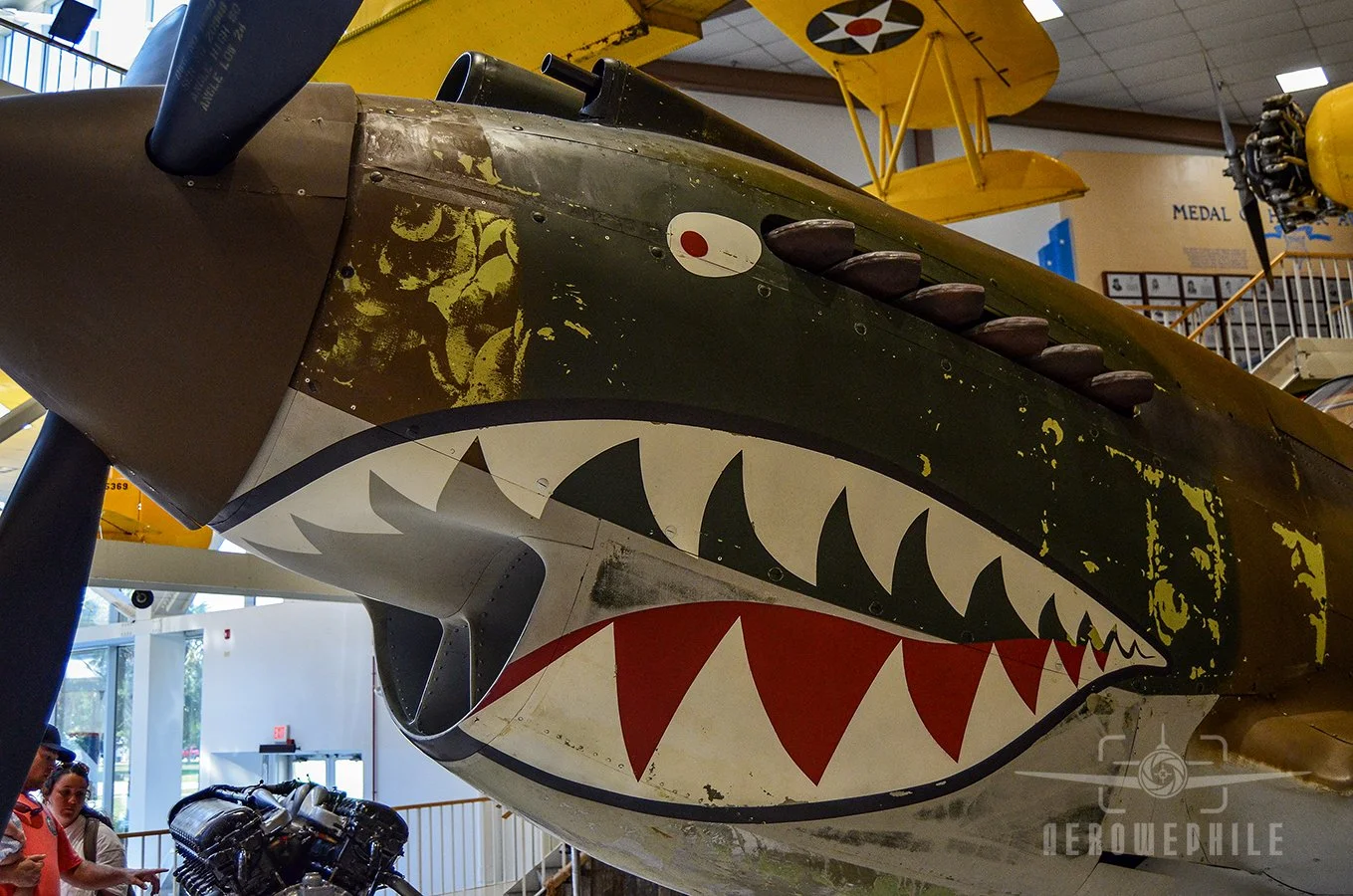
The distinctive "Shark's Mouth" painted on the Flying Tigers P-40B Tomahawks.
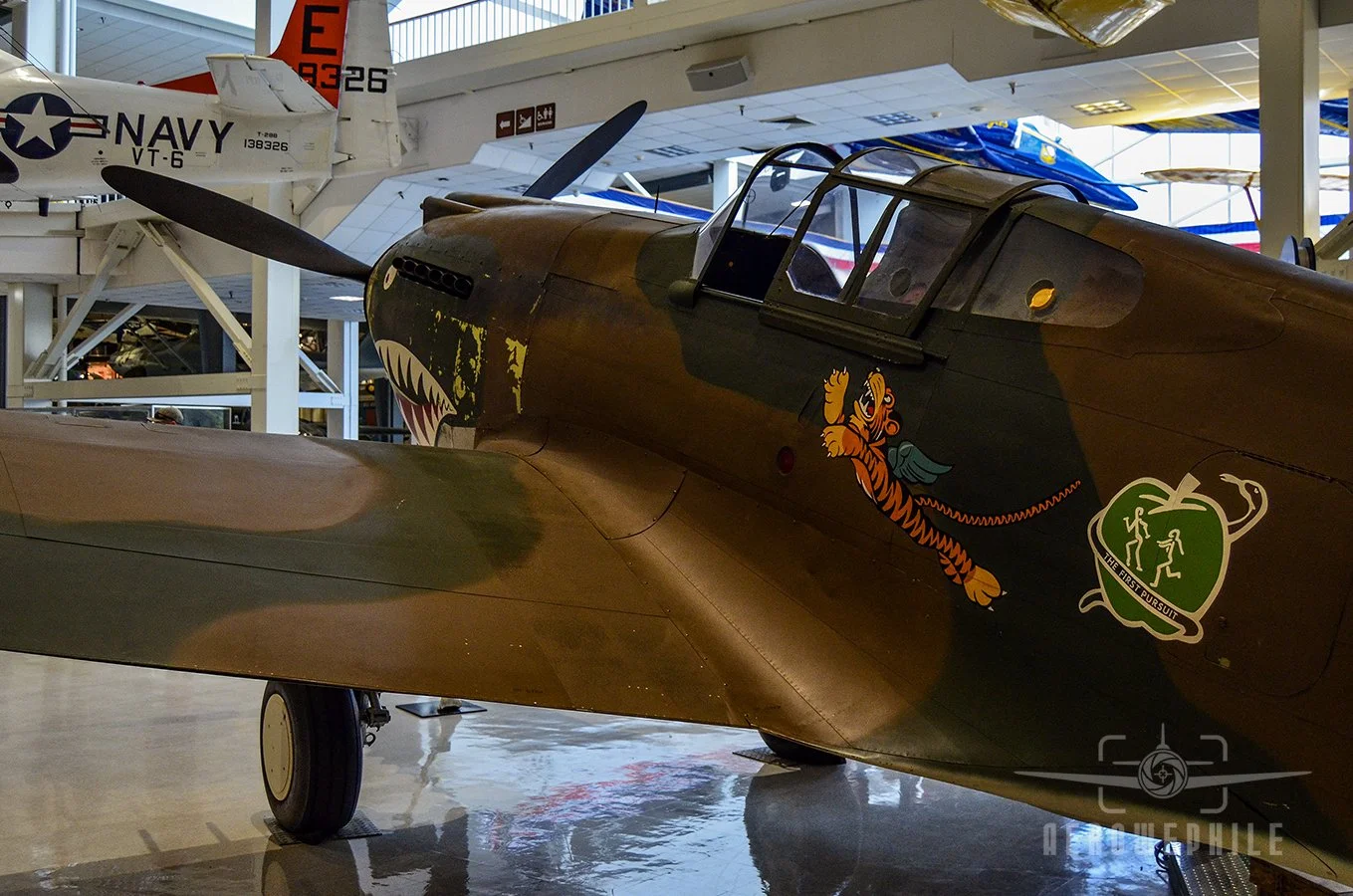
P-40B Tomahawk with the Flying Tiger emblem and the 1st squadron's Adam and Eves logo painted on the fuselage.
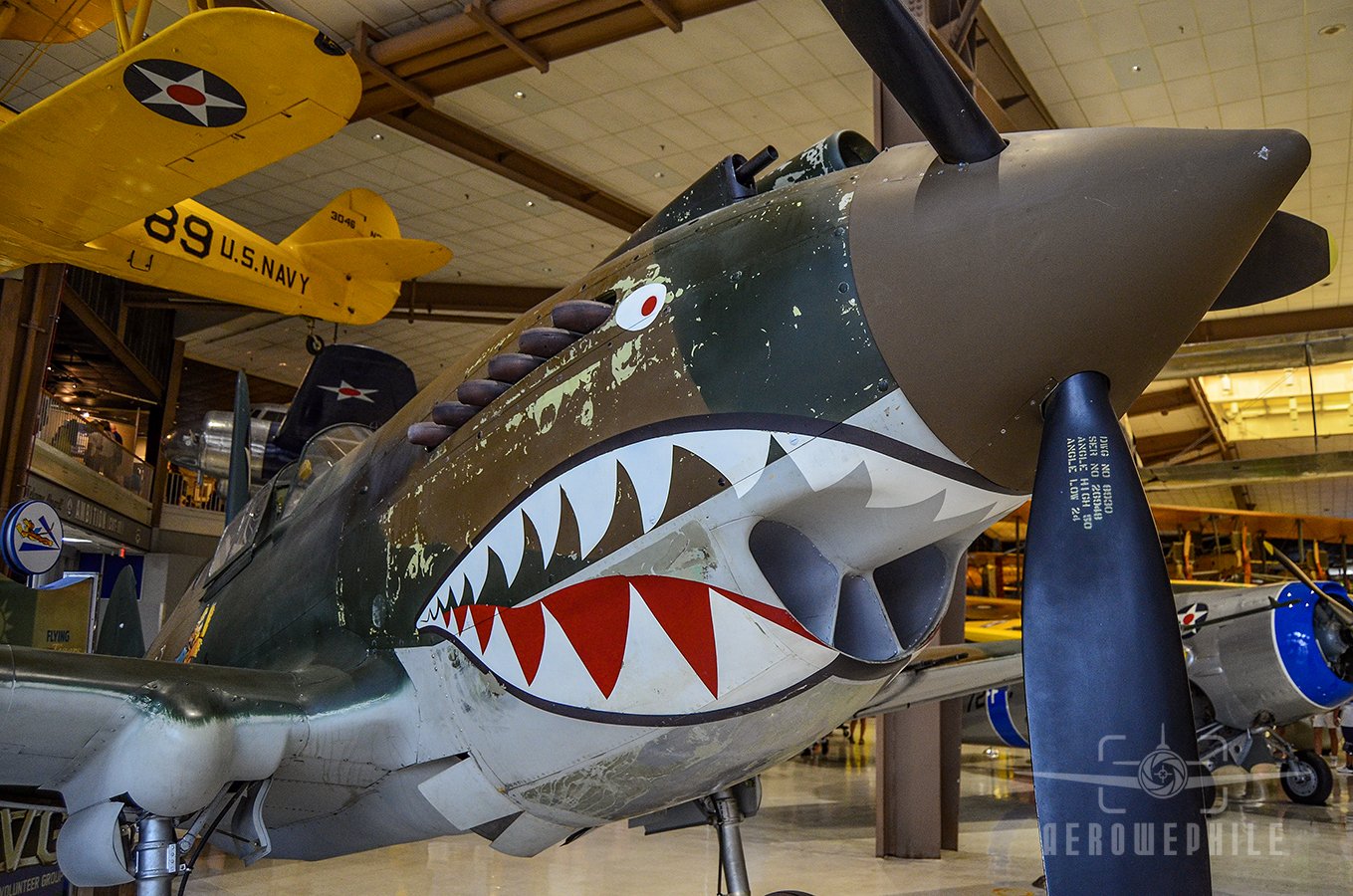
The distinctive "Shark's Mouth" painted on the Flying Tigers P-40B Tomahawks.
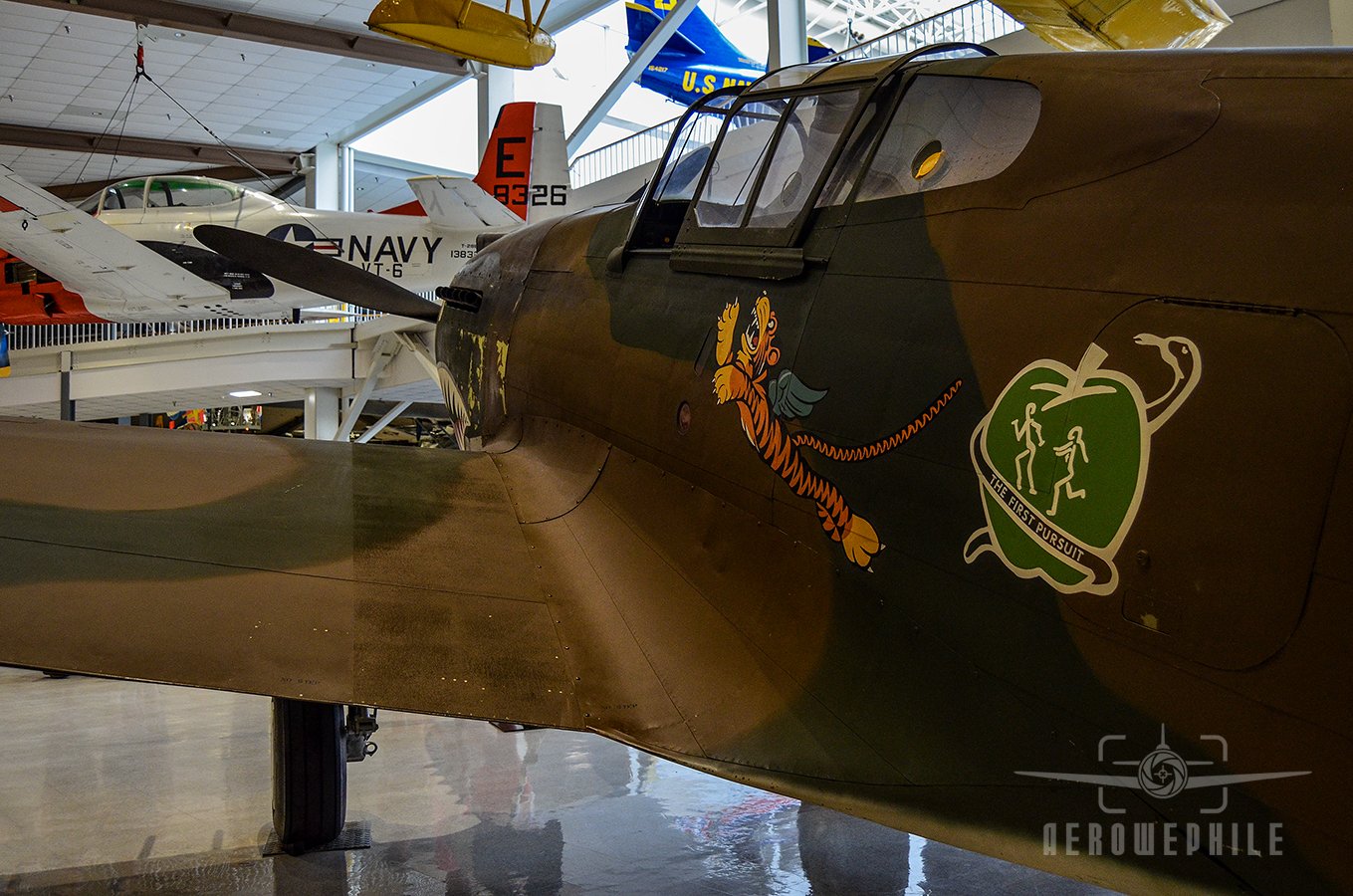
P-40B Tomahawk with the Flying Tiger emblem and the 1st squadron's Adam and Eves logo painted on the fuselage.
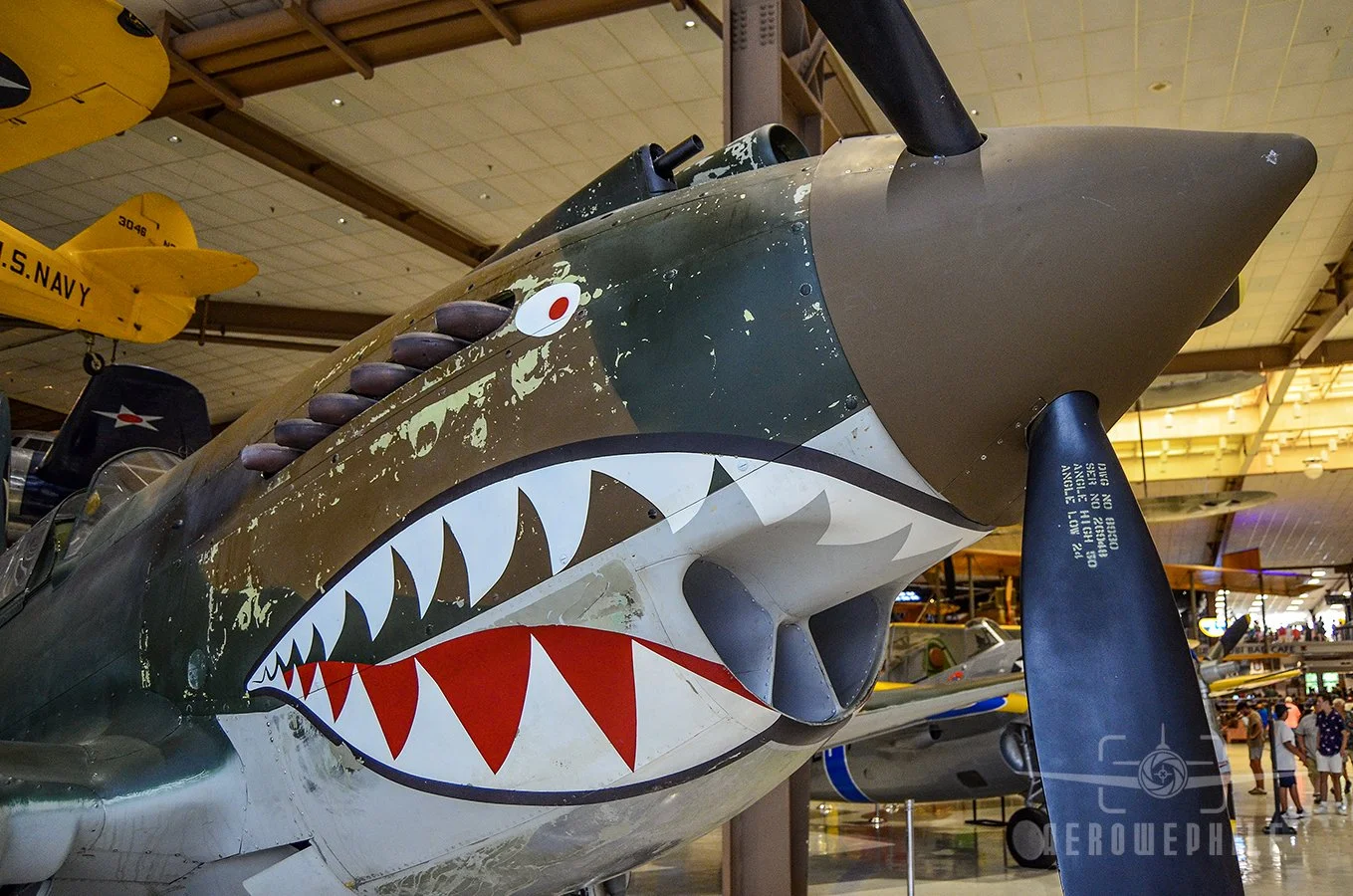
The distinctive "Shark's Mouth" painted on the Flying Tigers P-40B Tomahawks.
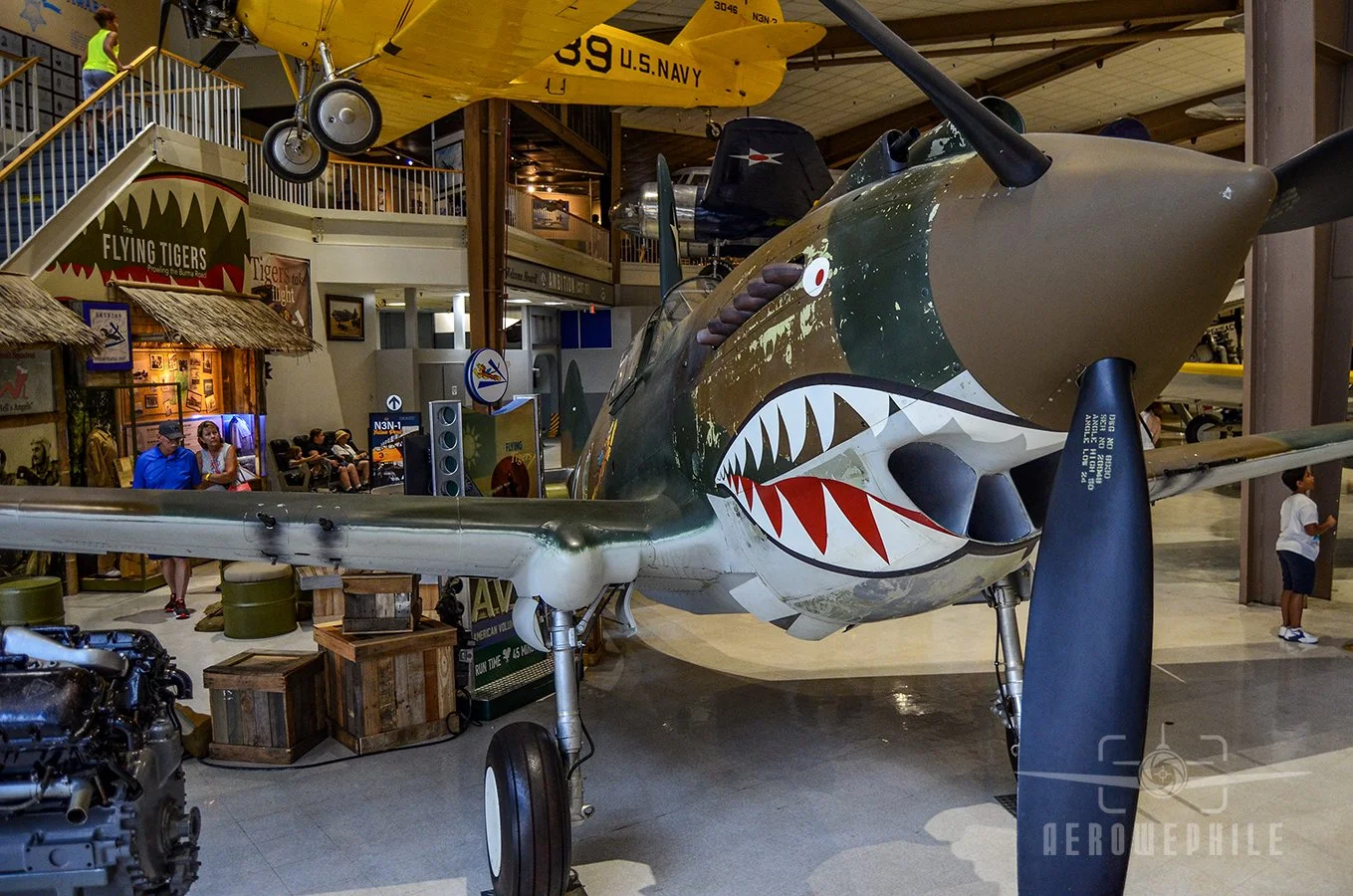
The P-40B Tomahawk evolved from the Curtiss Model 75 Hawk, a radial-engined fighter introduced in the mid-1930s. First flown in October 1938, the XP-40 was the fastest U.S. Army fighter at the time, and deliveries of the P-40 began in June 1940.
With the signing of the Lend-Lease Act, the Chinese Commissioner of Aviation, T.V. Soong, approached the U.S. to procure aircraft for China's air force. A number of P-40Bs were available, and were sold to a Chinese company. CAMCO, as it was called, shipped crated P-40Bs to Rangoon, Burma, where they were assembled.
In 1937, Claire Chennault, a retired U.S. Army captain, had been hired by the Nationalist Government to train Chinese pilots, then flying both Russian and Italian aircraft far inferior to the Japanese. Forming the AVG, Chennault had new P-40 aircraft and a host of American recruits.
Among the Naval Aviators who resigned their commissions to fly with the AVG were David Lee "Tex" Hill, Chuck Older, Dick Rossi, and Gregory Boyington, to name a few.
In fact, the majority of the pilots in the AVG were Naval Aviators. "Tex" Hill became one of the top aces in the AVG, Older was a double ace with both the AVG and Army Air Forces 23d Pursuit Group, and Boyington returned to the Marines to become a four-time ace and command the famous "Black Sheep" of Marine Fighting Squadron (VMF) 214.
Another former Naval Aviator who served in the AVG, James H. Howard, eventually became an Army Air Forces pilot and received the Medal of Honor for actions over Europe in 1944. From 20 December 1941 to 4 July 1942, the AVG downed 299 enemy aircraft, and destroyed another 153 on the ground.
In addition to their combat victories, the Flying Tiger members and Chennault were highly celebrated, and in 1992, AVG veterans were finally recognized as members of the military services, and all members were awarded the Distinguished Flying Cross. The ground crew were rewarded the Bronze Star.
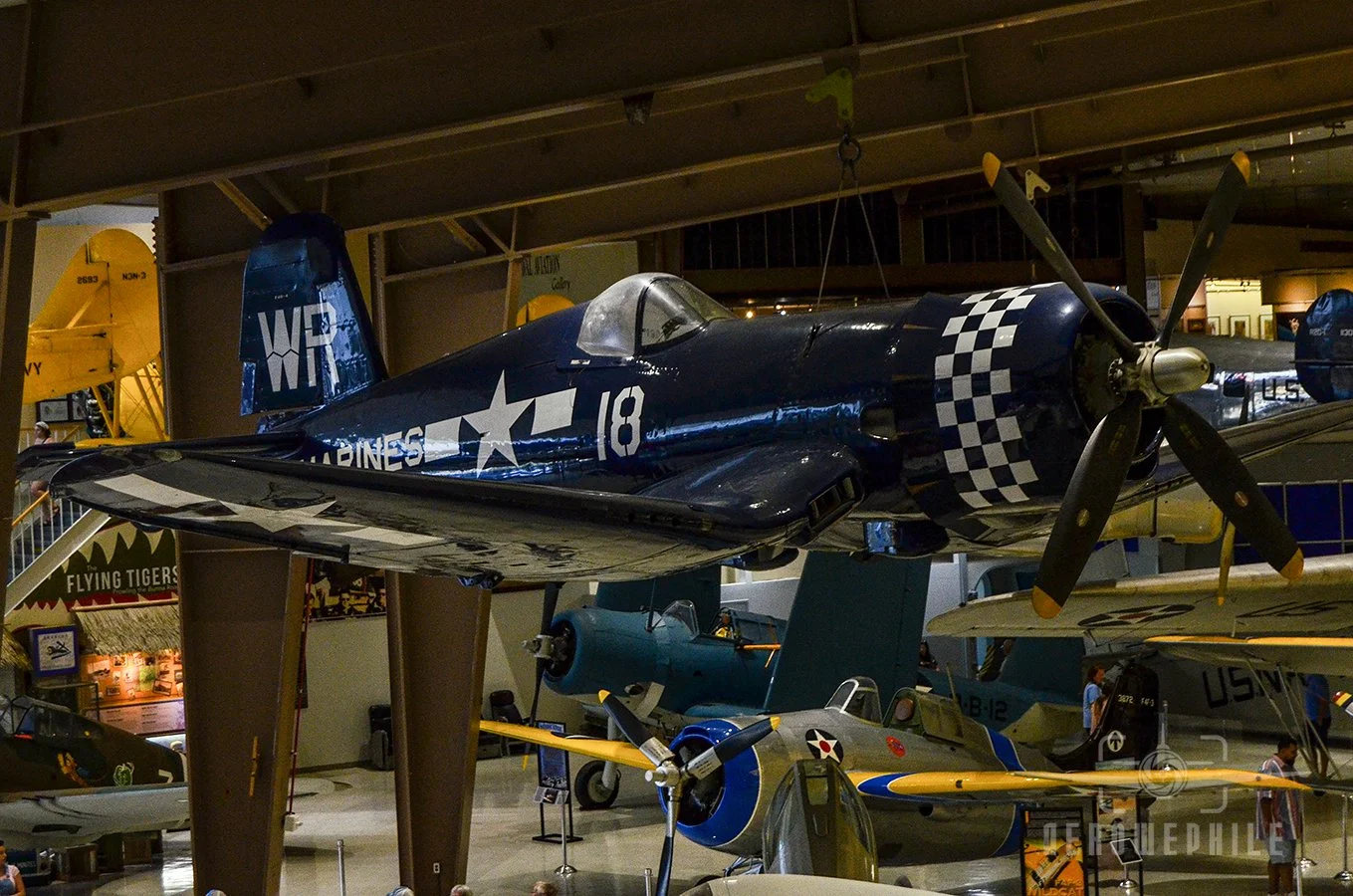
One of the most recognizable airplanes in history owing to its unique inverted gull wing design, the F4U Corsair remained in continual production from 1942 until 1952, with more than 12,500 examples of the aircraft delivered.
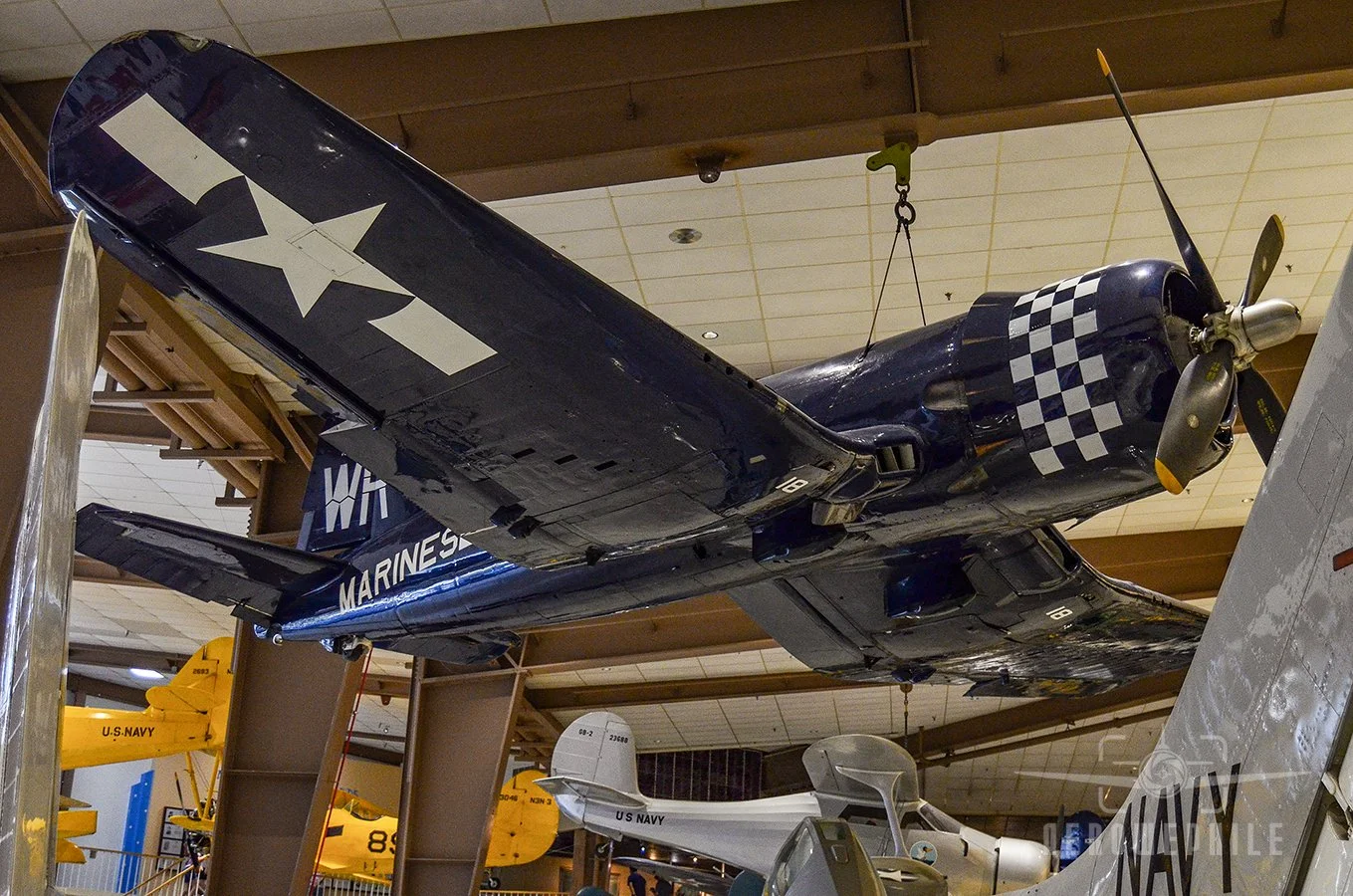
One of the Navy and Marine Corps' finest fighters, Corsairs shot down 2,140 Japanese aircraft during World War II and in the Korean War a Marine pilot became the first to down a MiG-15 jet while flying a propeller-driven aircraft.
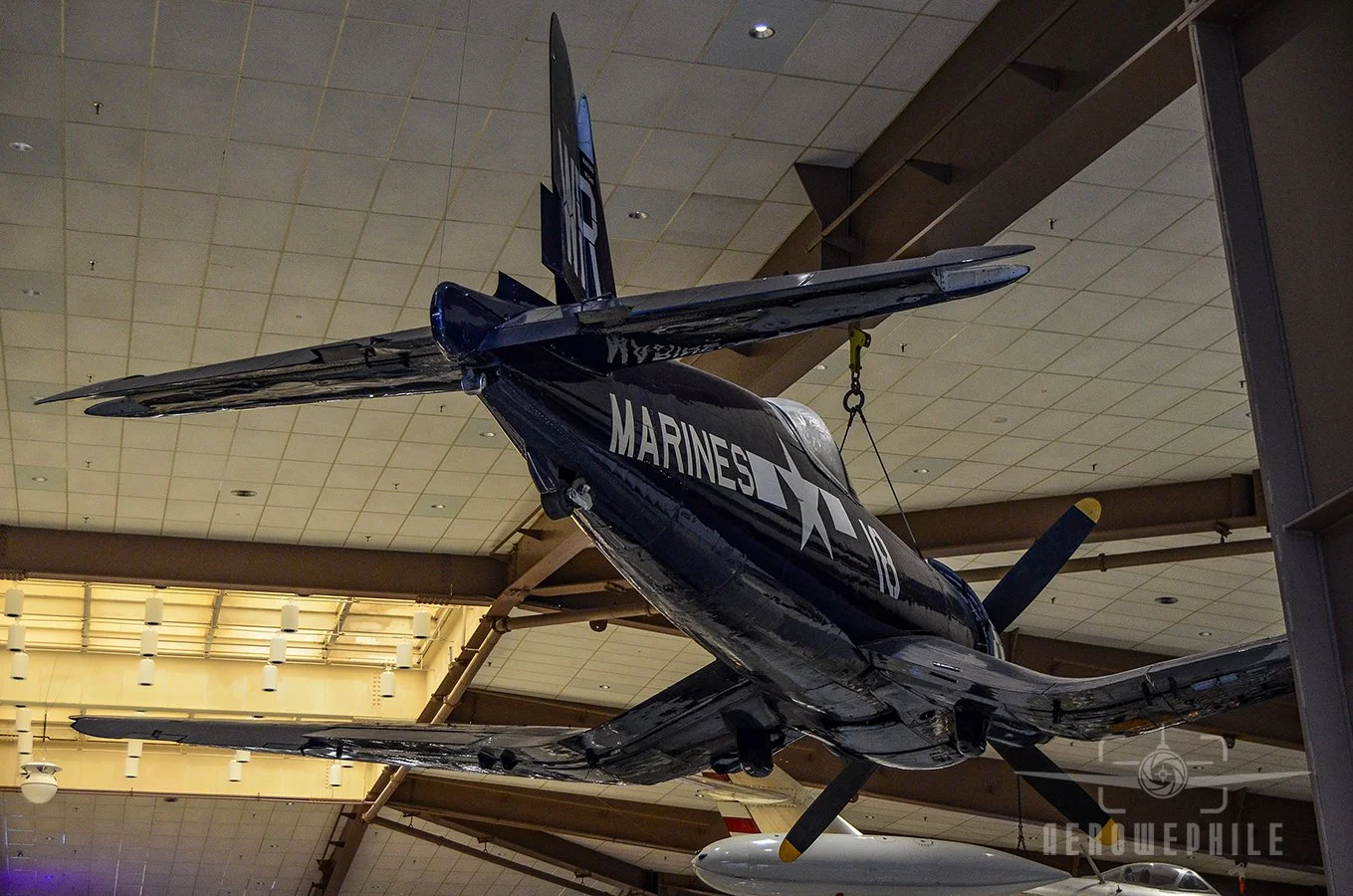
Among the last batch of production F4U-4 Corsairs delivered by Vought, the Museum's F4U-4 (Bureau Number 97349) was accepted by the Navy in 1946, serving in both Navy and Marine squadrons. Stricken from the Navy inventory in July 1956, it arrived at the Museum in 1985 and is displayed in the markings of the VMF-312 "Checkerboards."
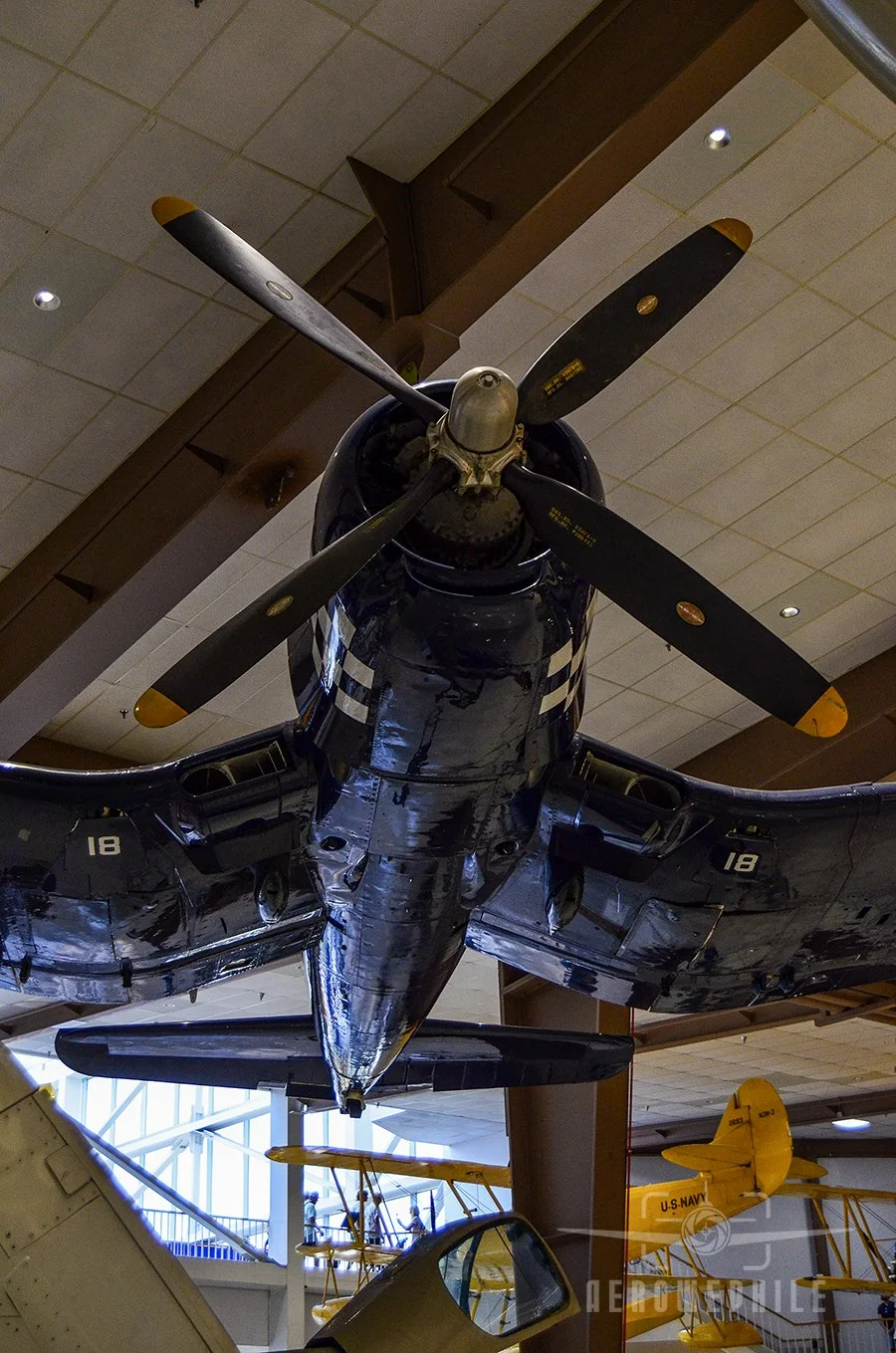
Vought-Sikorsky designed the F4U Corsair around the Pratt & Whitney R-2800 engine in a quest to build a fighter plane of unparalleled power and performance. The size of the engine necessitated a long nose and the aircraft featured inverted gull wings and tall landing gear in order to accommodate its oversized propeller. The result was an airplane that could eclipse 400 mph
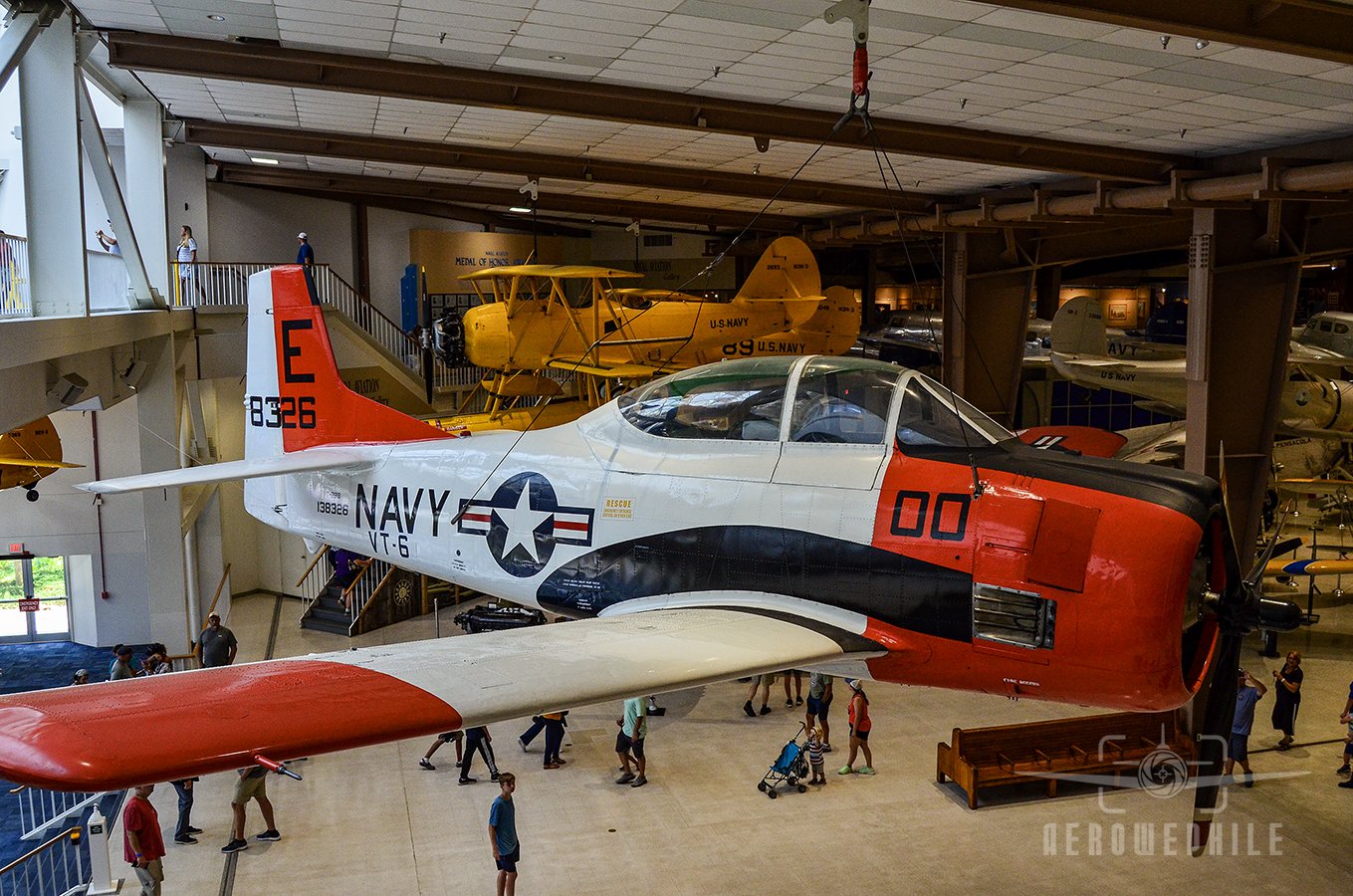
The last T-28 Trojan was retired from active duty in the Naval Air Training Command in the spring of 1984, ending 29 years of active service. The Museum's T-28B Trojan (Bureau Number 138326) entered service on 26 September 1955, and after being retired from service in the Naval Air Training Command, it arrived at the Museum in 1990. It is currently displayed in the markings of Training Squadron (VT) 6.
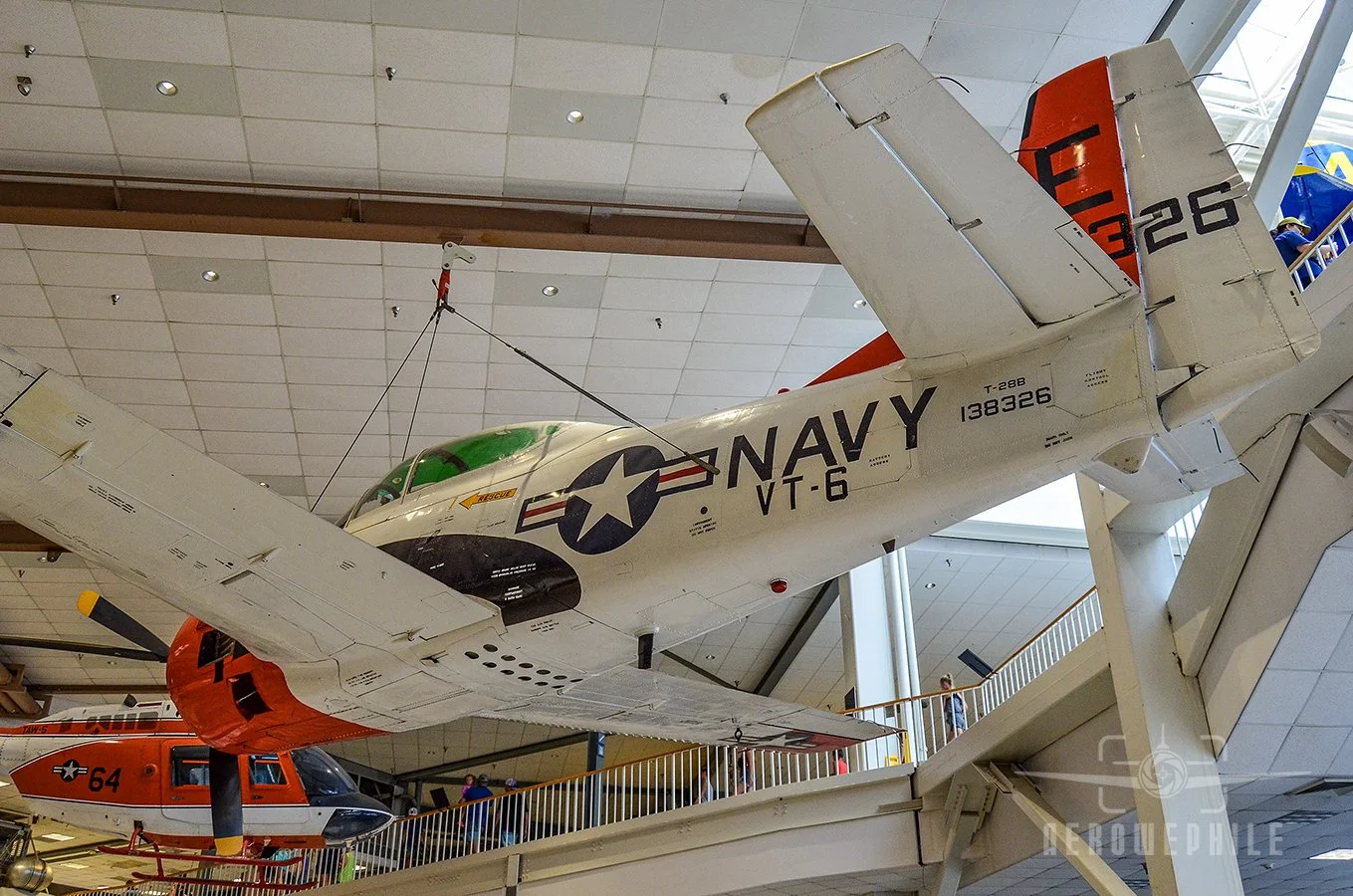
The T-28 had the look, feel, sound, and power of early World War II fighters, something the Navy desired it to have when it entered training service mid-century. Powerful but predictable, the aircraft was an ideal trainer, although it was not pressurized and lacked ejection seats. Cockpit instrumentation, although adequate for instrument flight, would be considered primitive by today's standards.
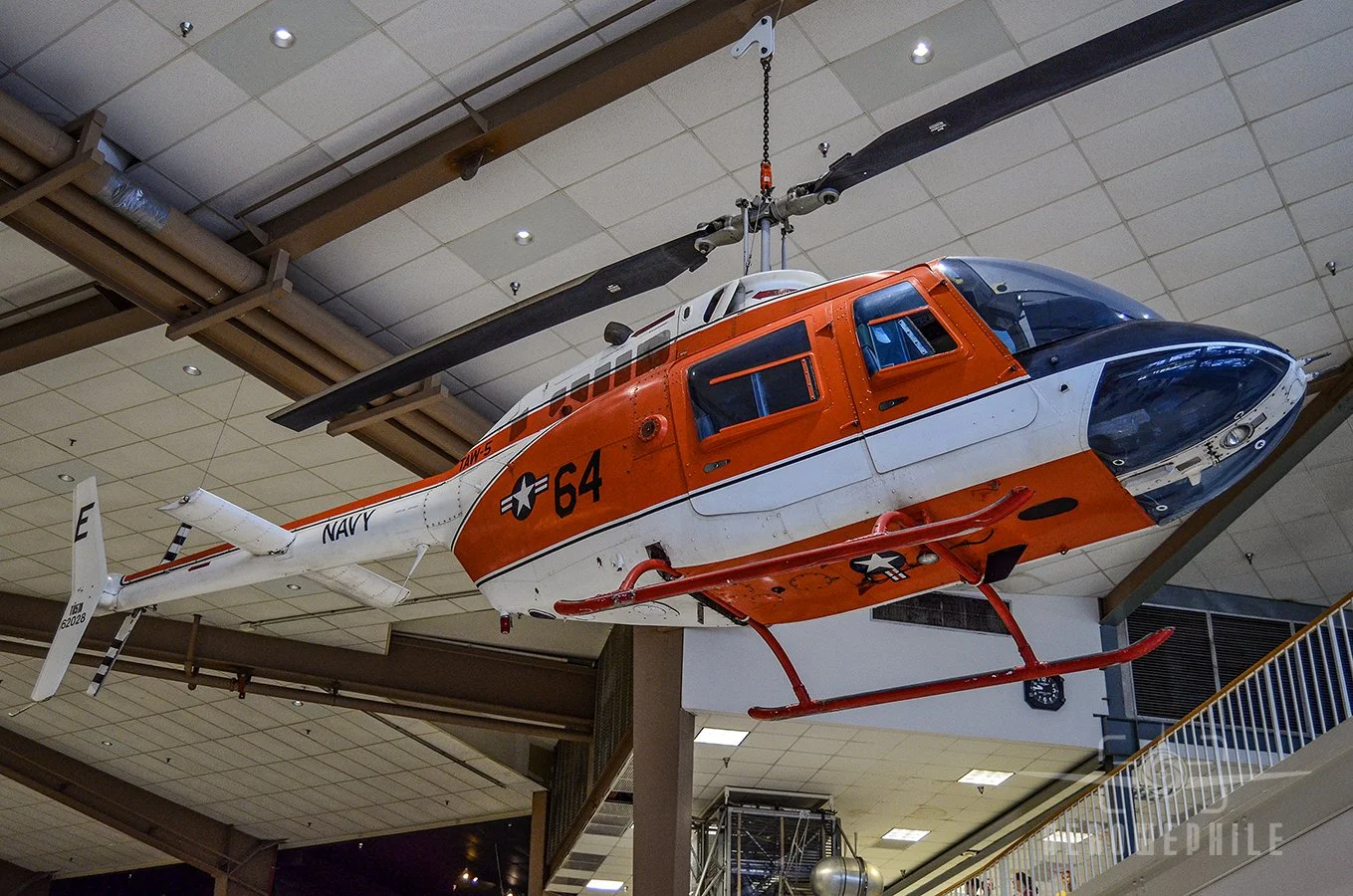
The Museum's TH-57 Sea Ranger (Bureau Number 162028) arrived from Training Air Wing (TAW) 5 at Naval Air Station (NAS) Whiting Field, Florida. Although primarily used for helicopter flight training, these aircraft were also used for photo, chase and utility missions.
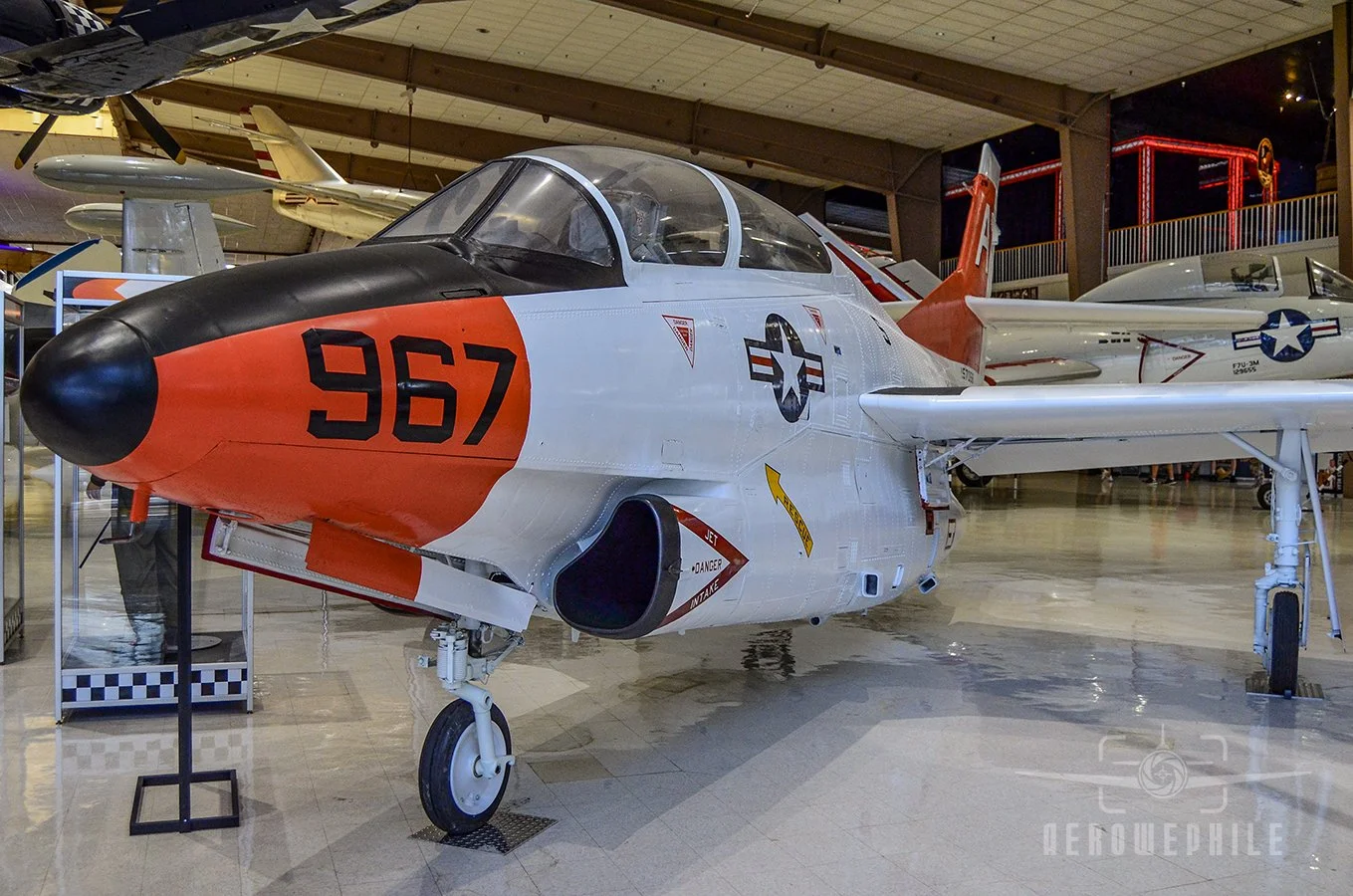
T-2C Bu.158327 North American Buckeye at National Naval Aviation Museum in Pensacola Fl. This T-2C Buckeye was the last one to make an arrested landing on board an aircraft carrier.
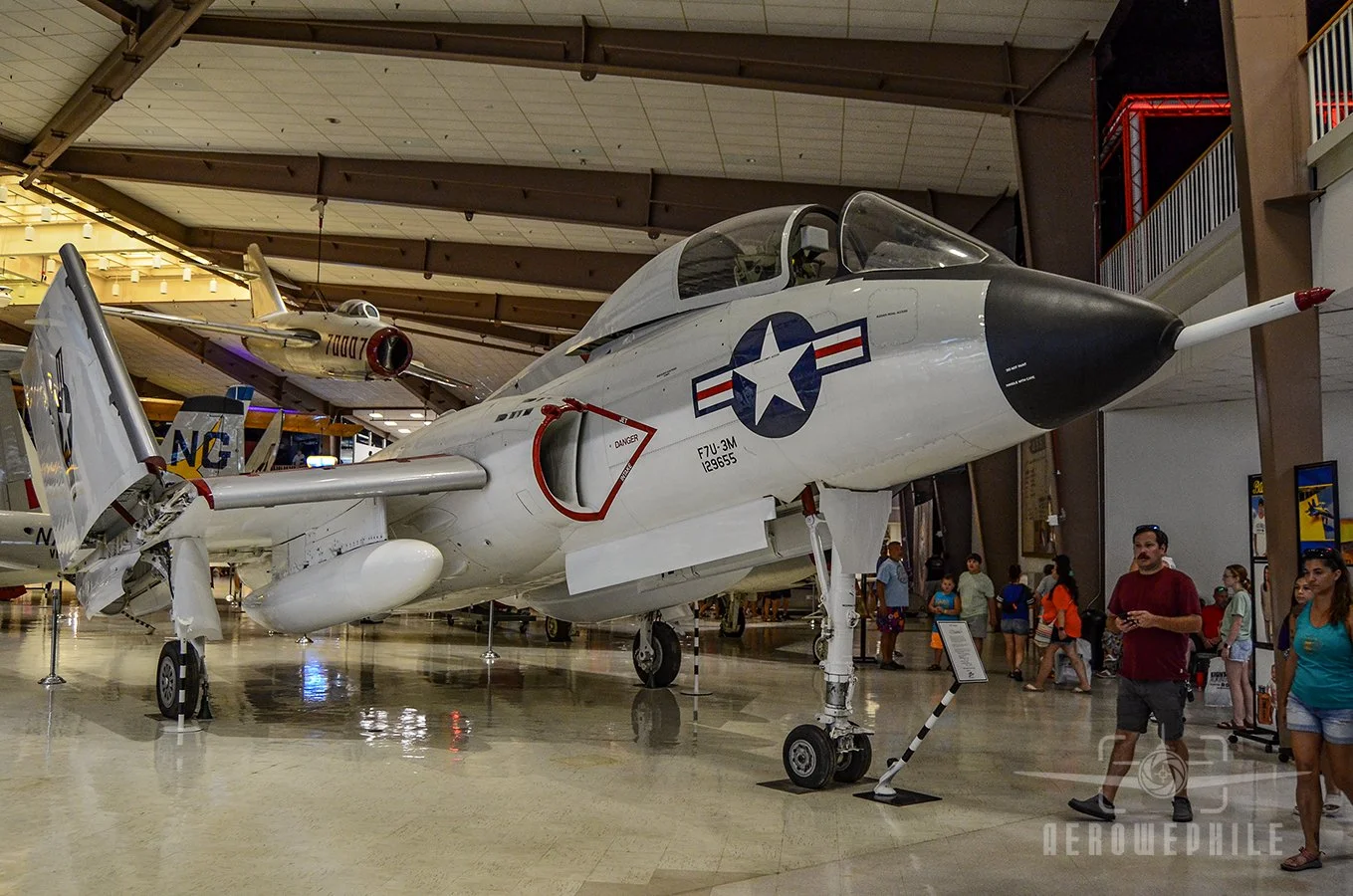
Boasting a unique "tailless" design, the F7U Cutlass incorporated a number of new and advanced features for its time. The F7U was ahead of its time and the capabilities of available power plants, resulting in its nickname the "Gutless Cutlass." Structural shortcomings and its underpowered engines plagued it, resulting in several deaths and the loss of over a quarter of all F7Us built to operational accidents.
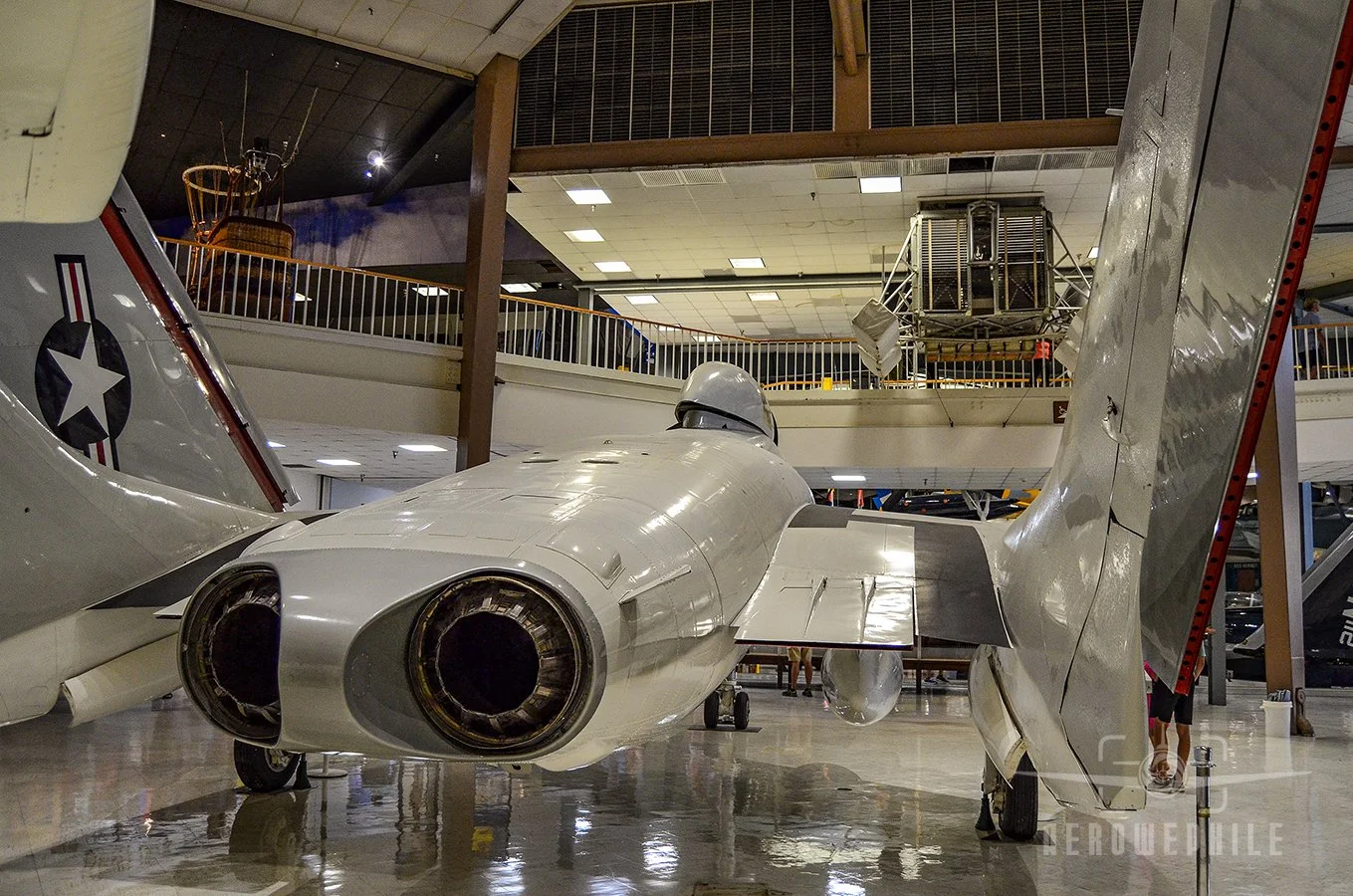
Accepted in June 1954, the F7U-3M Cutlass (Bureau Number 129655) on display in the Museum was stricken from the Navy inventory in 1957. Displayed for many years in Griffith Park in Los Angeles, the aircraft was restored during the early 1990s and arrived at the Museum in 1993.
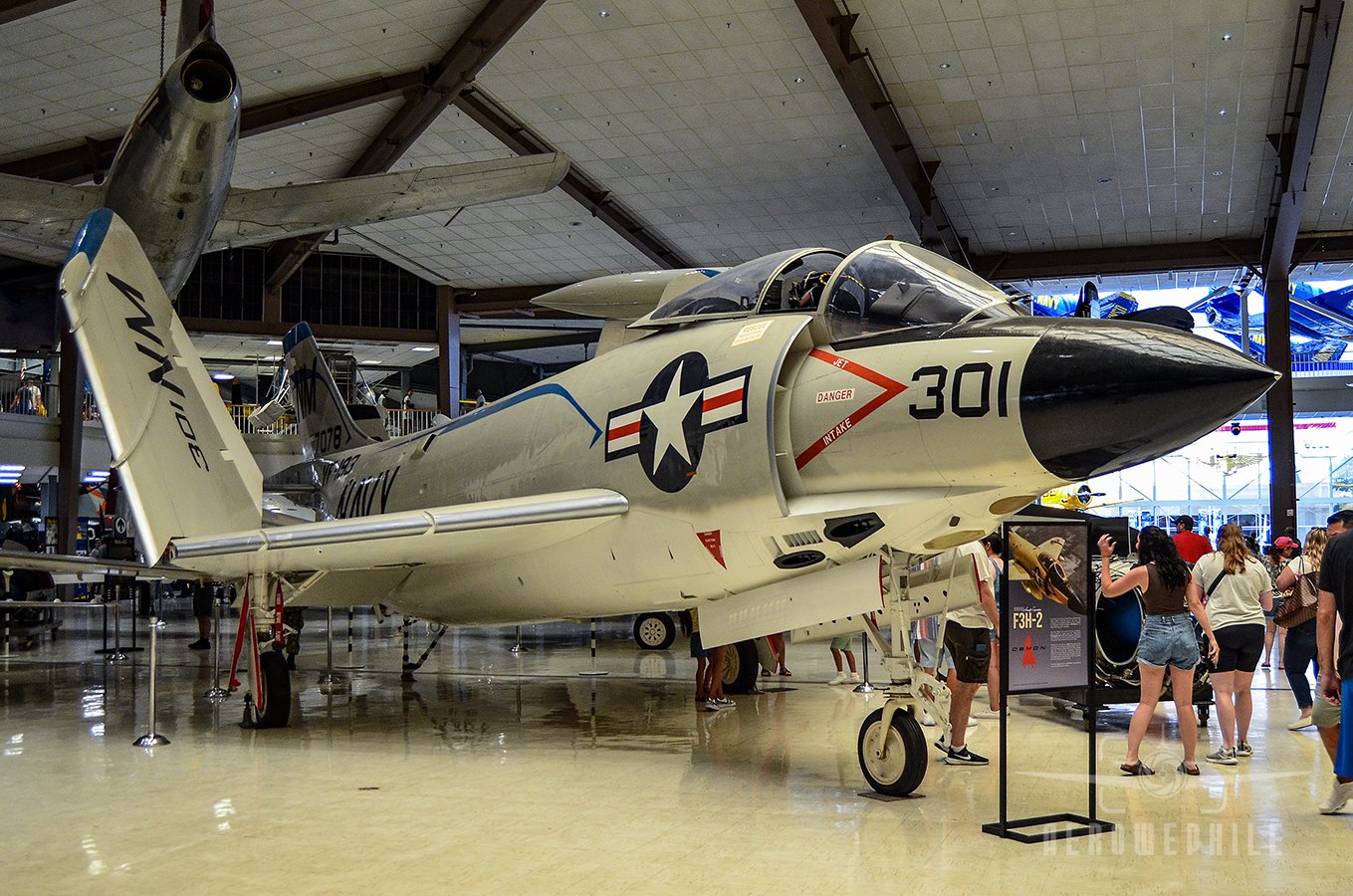
Accepted by the Navy on 24 May 1957, the Museum's F3H-2M (Bureau Number 137078) spent just over two years in operational service and for many years was displayed at Naval Air Station (NAS) Cecil Field, Florida. It returned to Pensacola in 1999 upon the decision to close Cecil Field, and is displayed in the markings of Fighter Squadron (VF) 193. The Museum's airplane is one of only three surviving Demons.
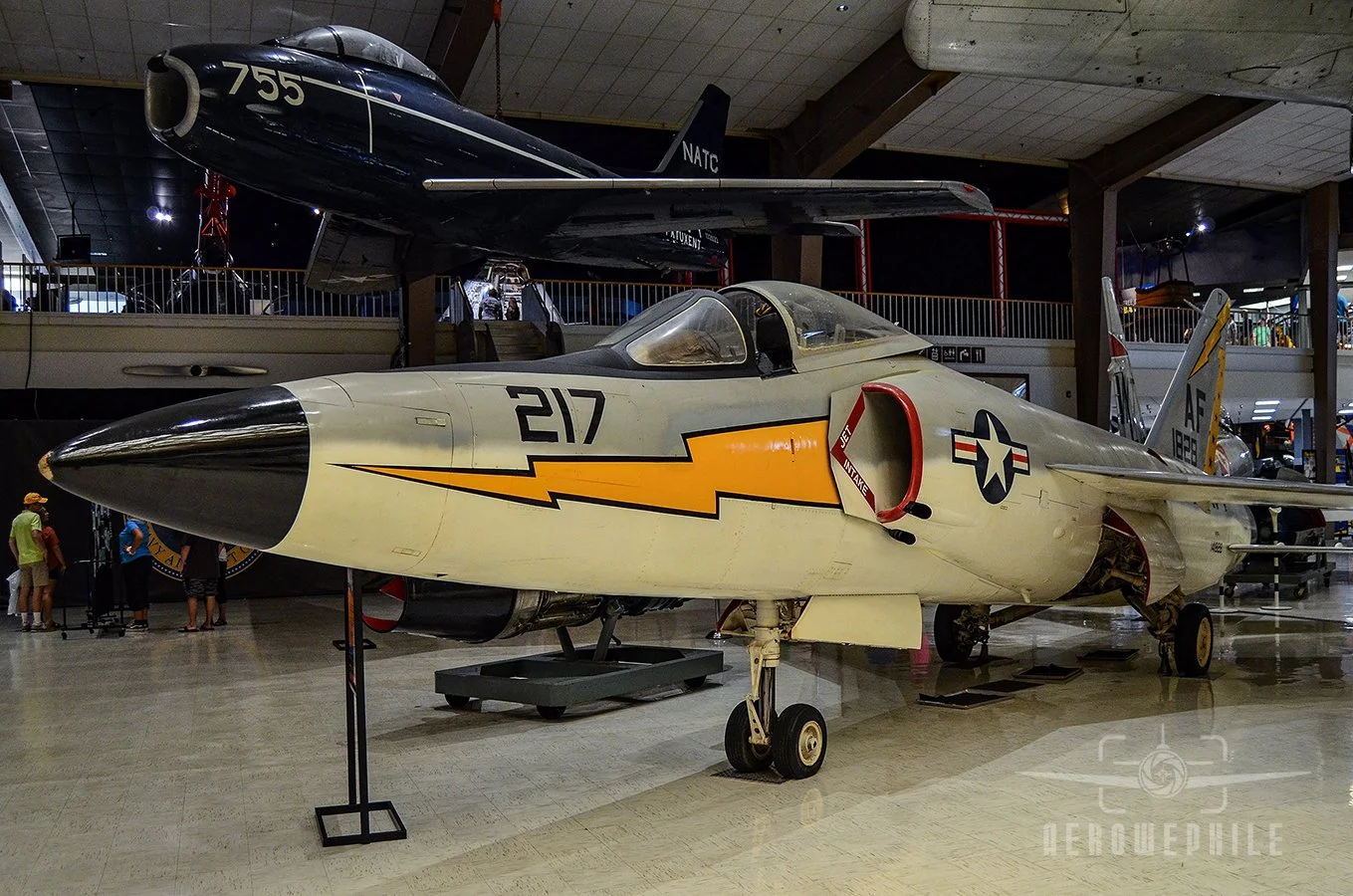
Delivered to the Navy in April 1958, the Museum's F11F-1 (Bureau Number 141828) served with several squadrons, ashore at Naval Air Station (NAS) Cubi Point, Philippines, and with Training Squadron (VT) 26 before flying with the Blue Angels from 1967 to 1969, the last show seasons in which the team flew the Tiger.
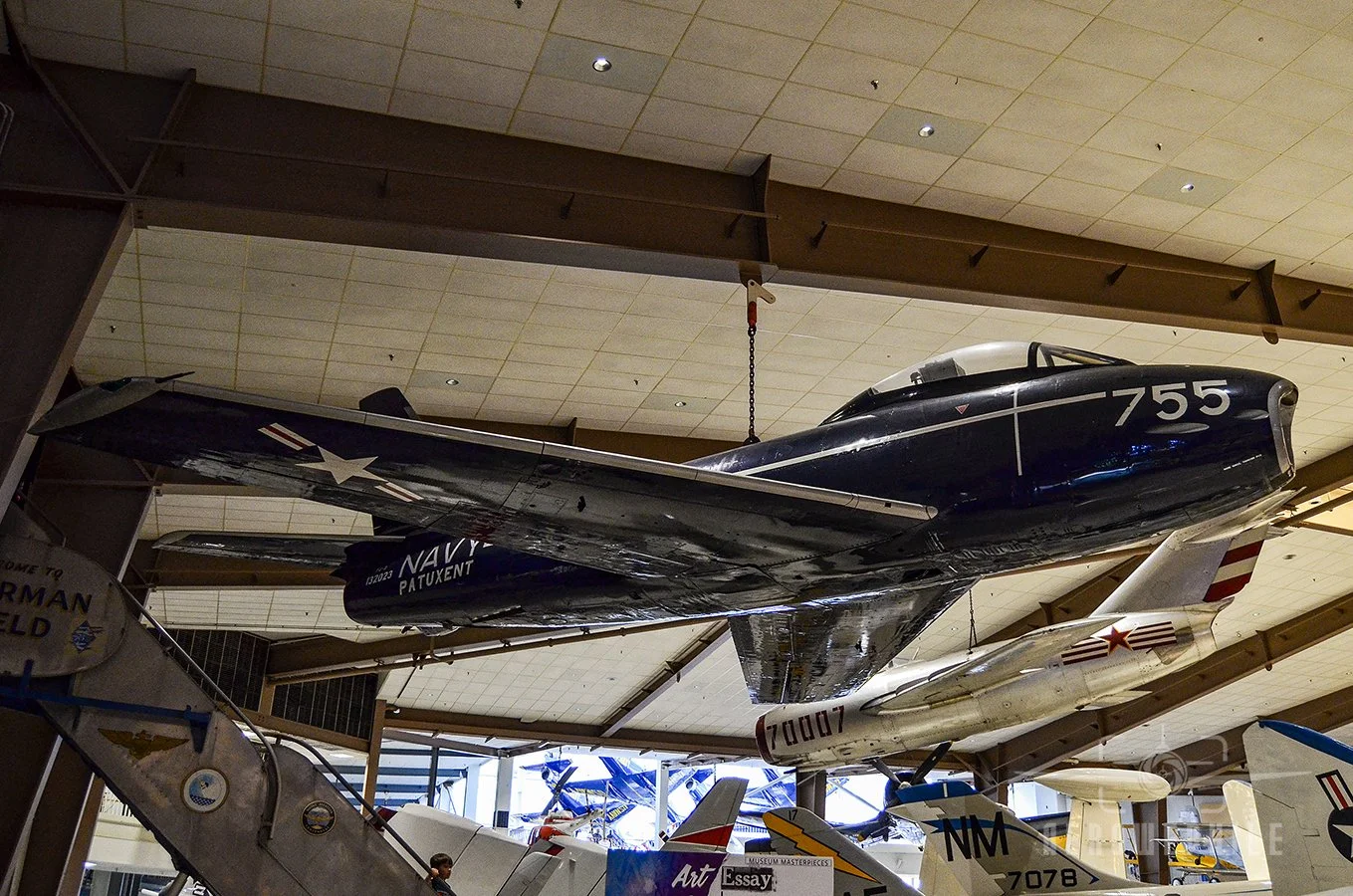
Accepted by the Navy on 16 April 1954, the Museum's example of the FJ-2 Fury (Bureau Number 132023) served until July 1958. It arrived at the Museum in 1984 and is displayed in the markings of the Naval Air Test Center at Patuxent River, Maryland.
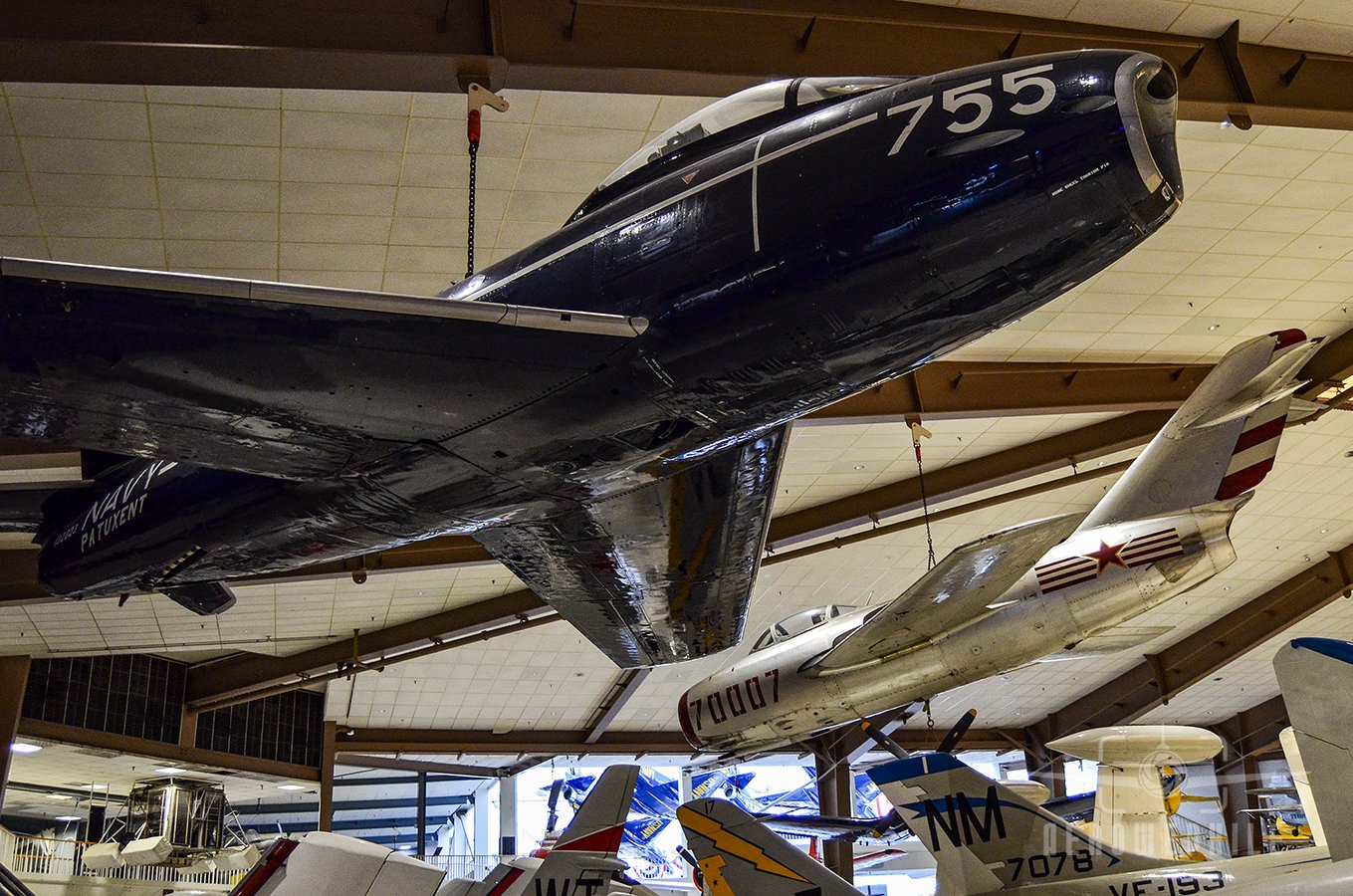
The FJ-2 was flown exclusively by Marine Corps squadrons while in front line service. Despite limits in carrier operations, however, the FJ-2 was among the aircraft used to evaluate the first steam catapult installed on a U.S. Navy carrier.
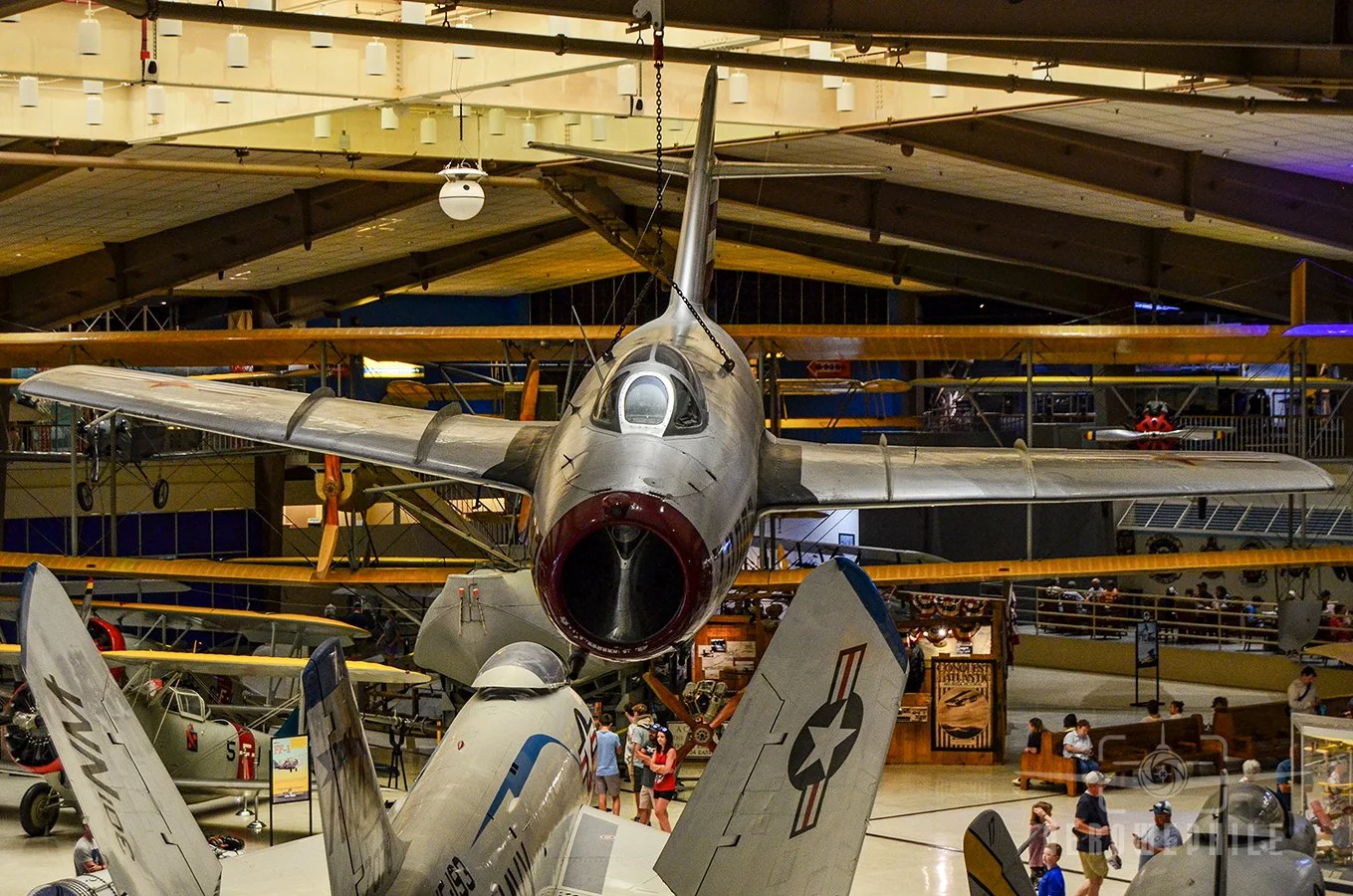
The Soviet MiG-15 was one of the first successful swept-wing fighters, and a potent adversary for Western aircraft. The Navy's first jet vs. jet combat was against the MiG-15, and Lieutenant Commander William T. Amen became the first Naval Aviator to down a MiG-15 in November 1950.
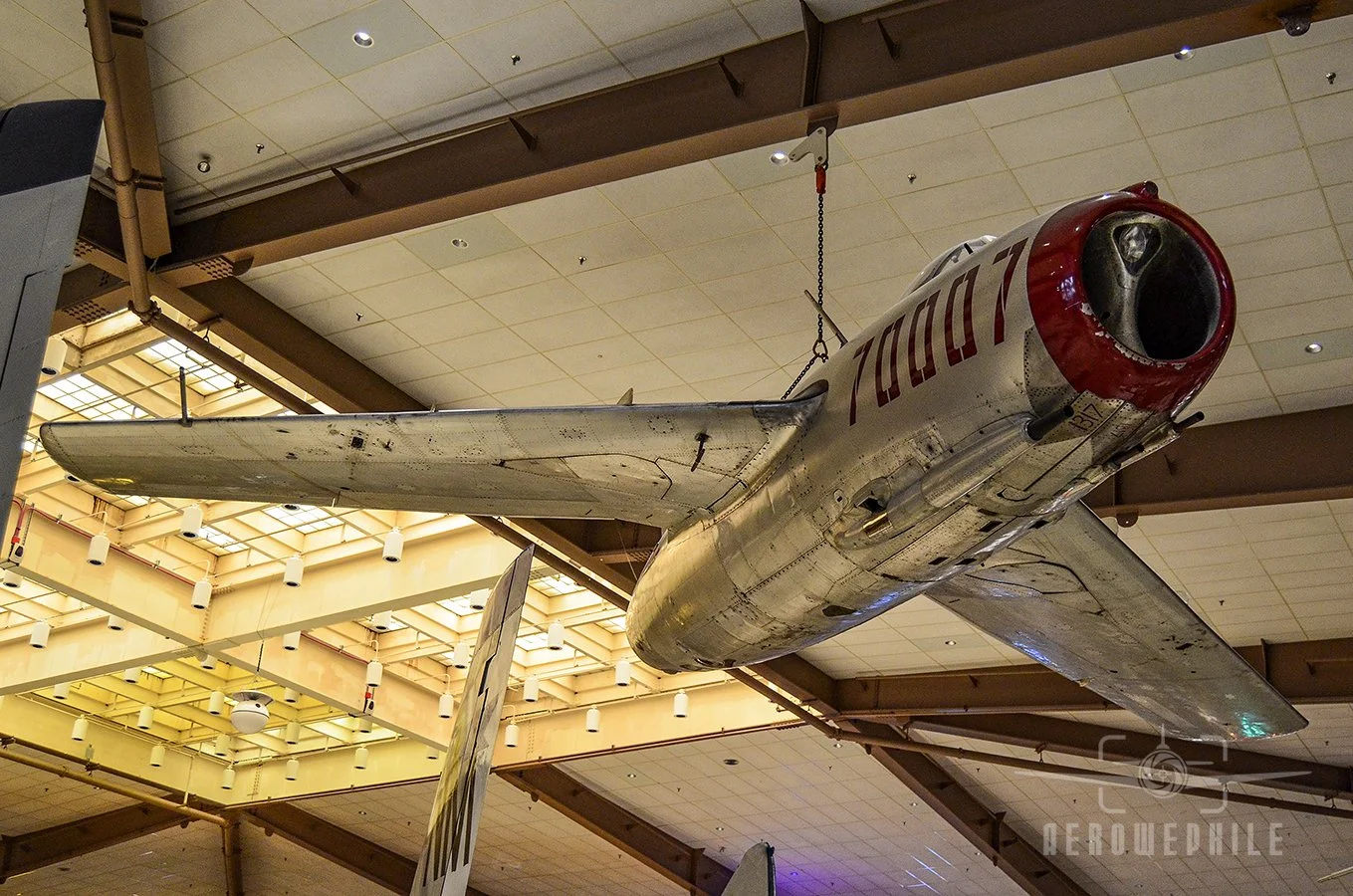
While on exchange duty with the U.S. Air Force, Marine Major John F. Bolt became Naval Aviation's only jet ace of the Korean War by shooting down six MiG-15s. Other Naval Aviators who downed MiG-15s in aerial combat were future astronauts John Glenn and Wally Schirra.
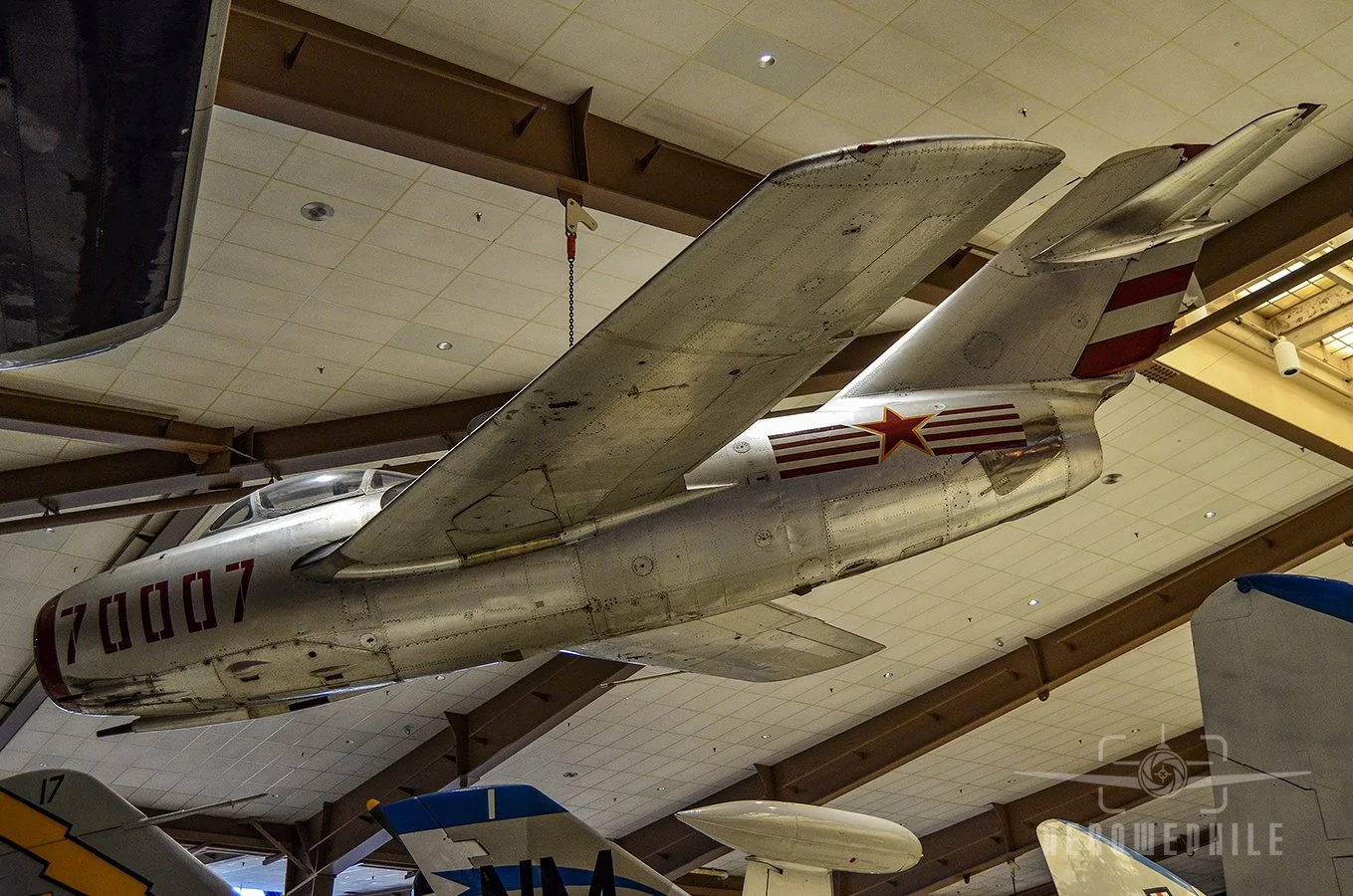
In addition to combat over Korea, from 1950 to 1959 MiG-15s flown by Soviet, Chinese and North Korean pilots were involved in multiple Cold War incidents that included attacks on Navy reconnaissance and patrol aircraft, resulting in deaths and injury of crewmen. The Museum's MiG-15 has been on display since 2002.
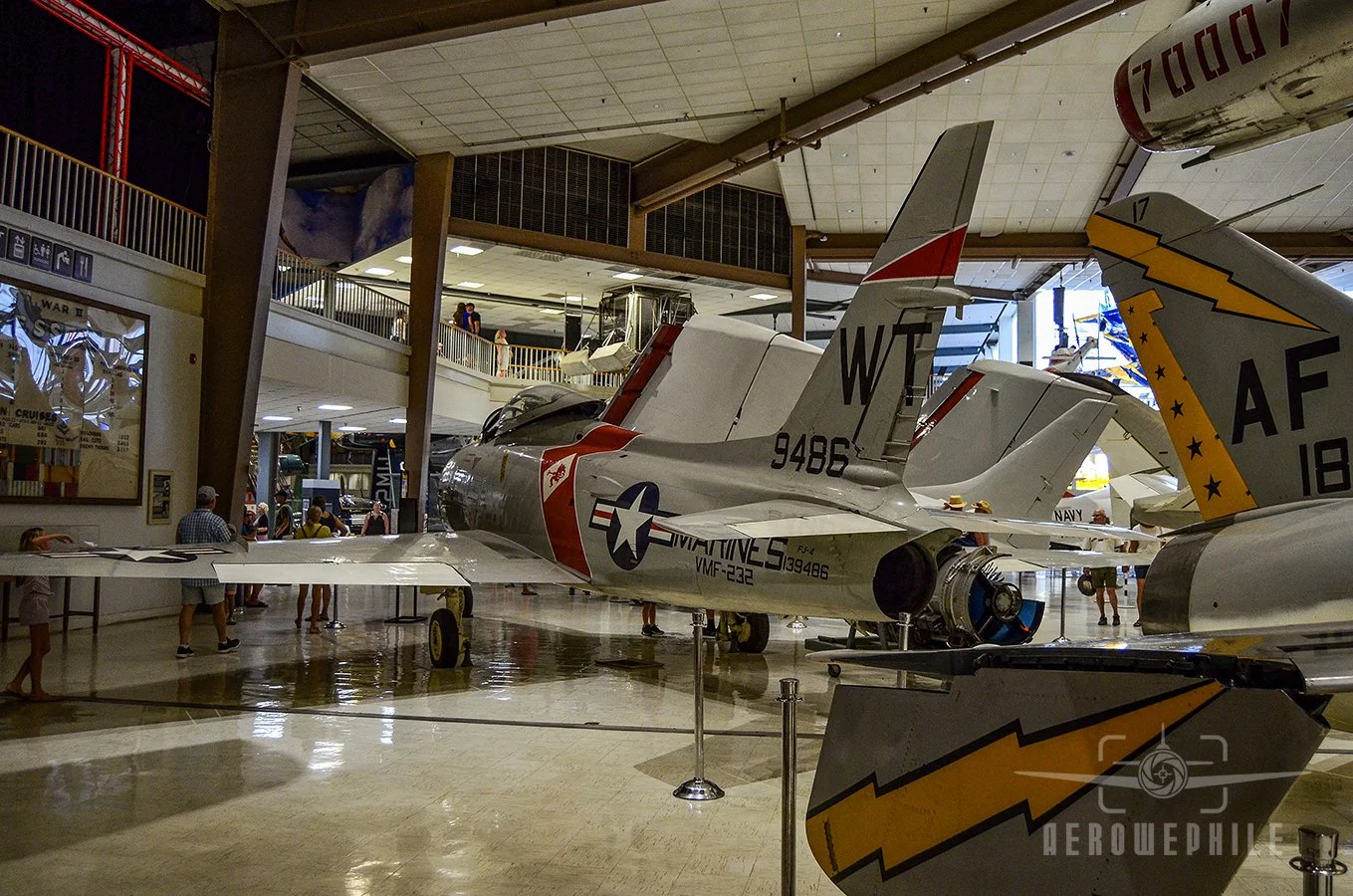
North American produced 374 FJ-4/4B Fury aircraft (redesignated F-1E in 1962). Accepted by the Navy in November 1956, the Museum's example (Bureau Number 139486) is one of only two to exist anywhere in the world. It was retired from service in December 1964, with 2,351 flight hours and is painted in the markings of one of the squadrons in which it flew, the Marine Fighter Squadron (VMF) 232 "Red Devils."
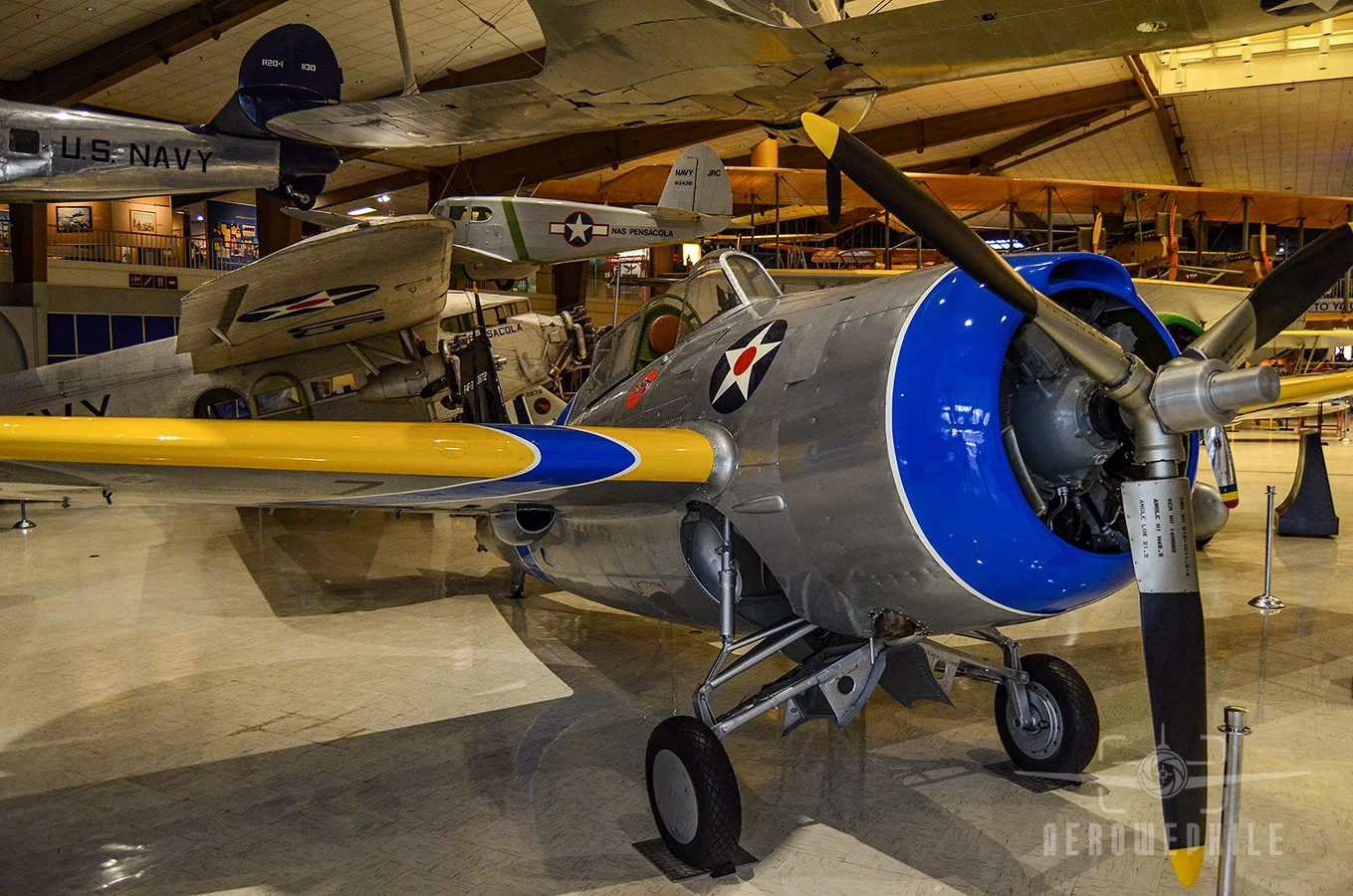
First flown in February 1939, the rugged and heavily armed F4F Wildcat became the Navy/Marine Corps premier fighter until late 1942. This F4F-3 is displayed in the markings in which it was originally painted when it flew from the carrier Wasp (CV-7) during the Neutrality Patrols protecting U.S. shipping in the western Atlantic Ocean in the months before the United States formally entered World War II.
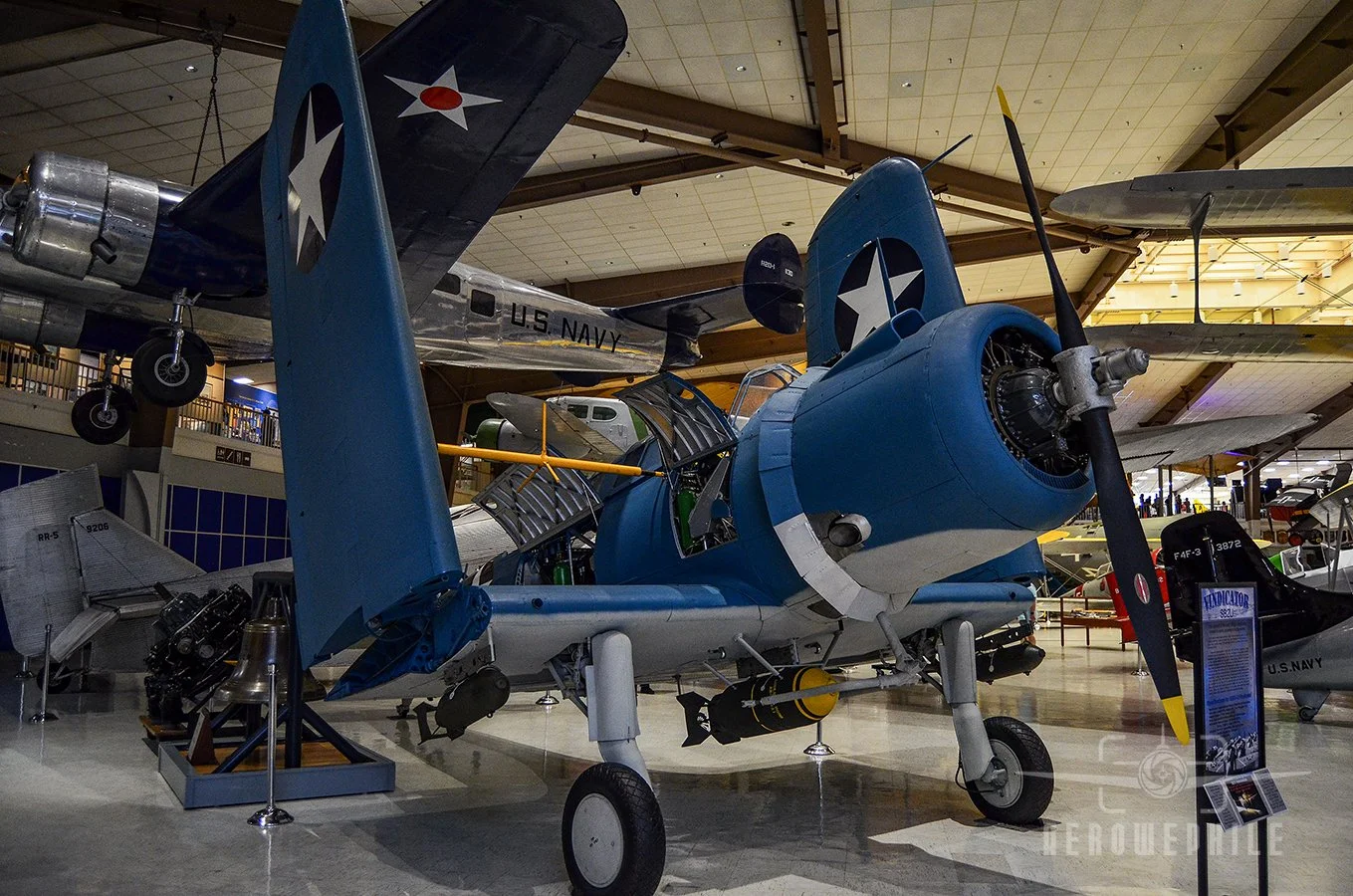
This airplane is the last SB2U-2 Vindicator delivered to the Navy, joining the fleet in 1939. It flew from the decks of the carriers Ranger (CV 4) and Wasp (CV 7), including flights in support of the Neutrality Patrol tracking hostile vessels approaching the shores of the United States.
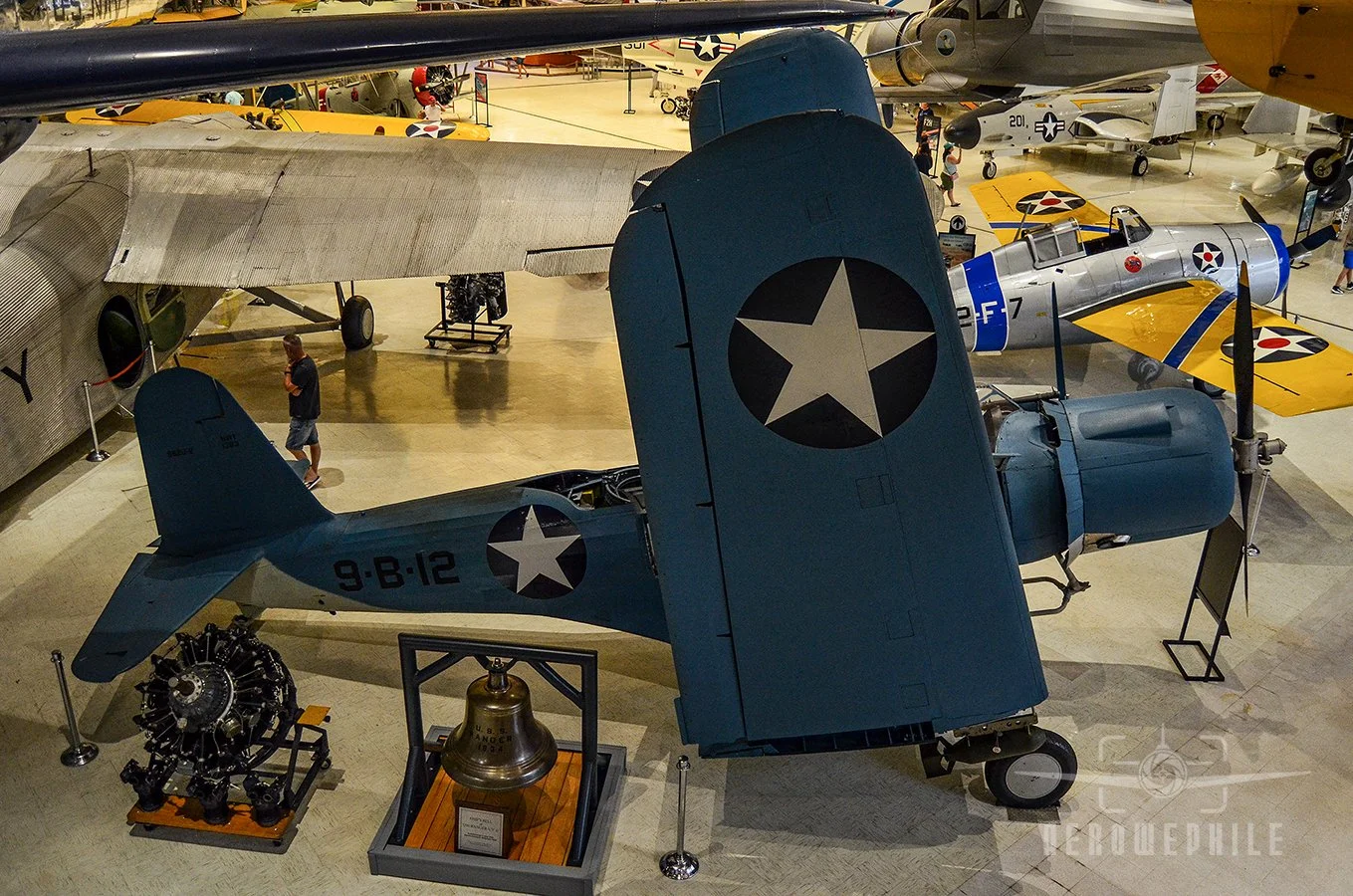
Before its assignment to the Carrier Qualification Training Unit (CQTU) at Naval Air Station (NAS) Glenview, Illinois, in 1943, the museum’s aircraft flew with Bombing Squadron (VB) 9, the last front-line squadron equipped with the Vindicator as it awaited delivery of the SBD-5 Dauntless.
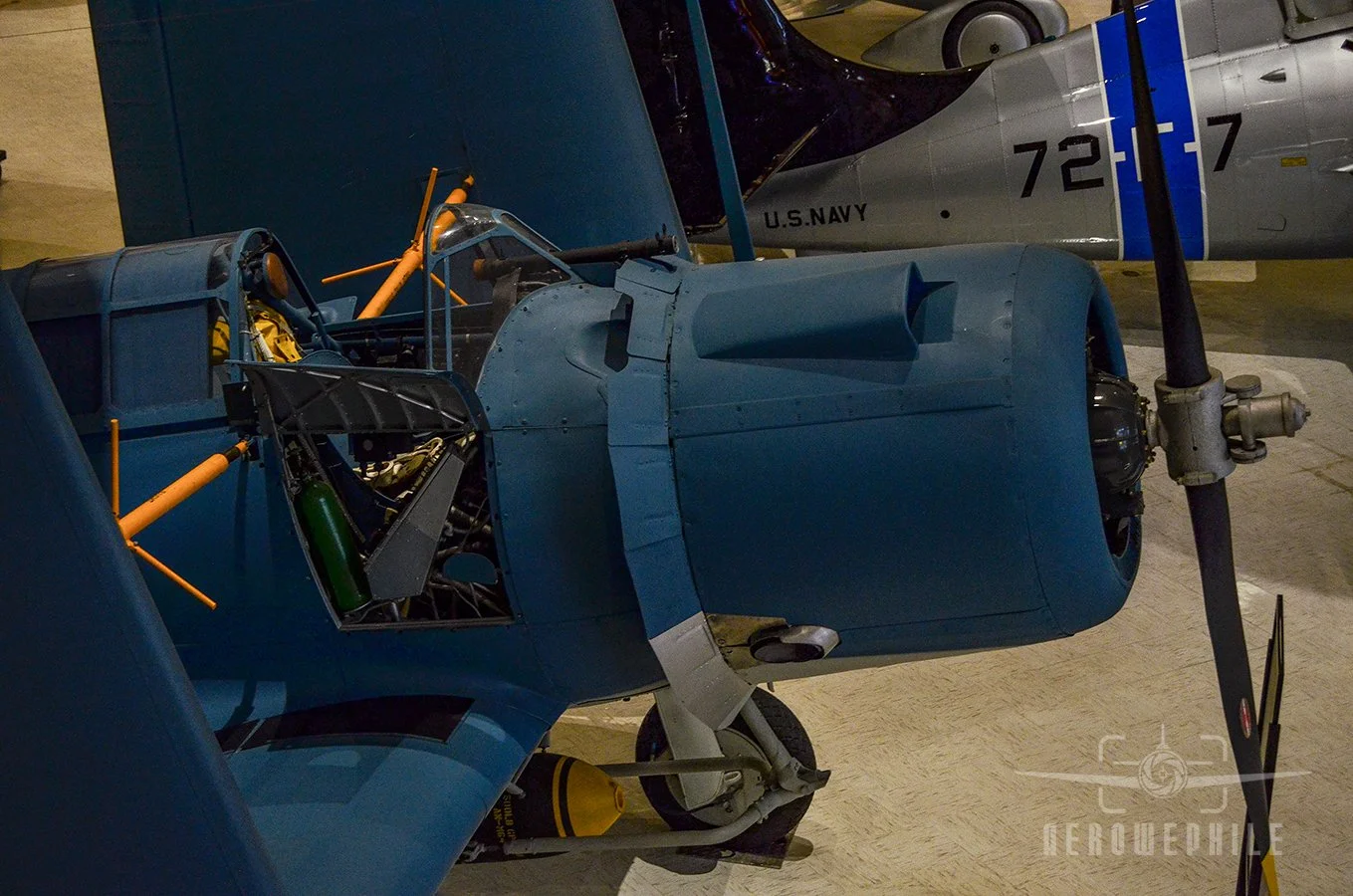
On June 21, 1943, Marine Second Lieutenant A.W. Lemmons ditched the airplane in Lake Michigan during carrier qualification on board the training aircraft carrier Wolverine (IX-64). The airplane spent nearly a half century beneath the waters of Lake Michigan before being recovered and restored.
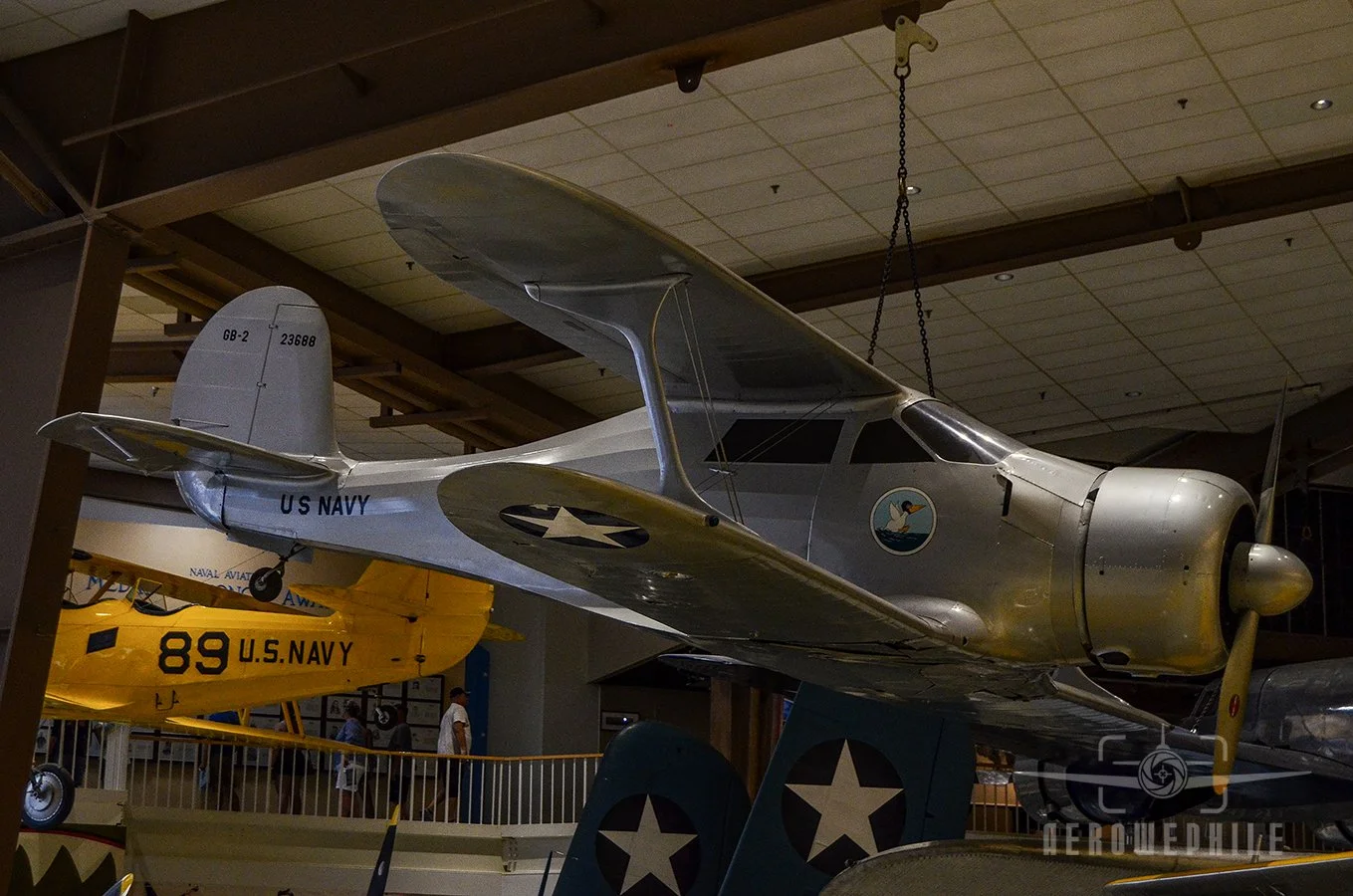
GB-2 Traveller - Named "Traveller," the GB-2 served as both a liaison aircraft and as a transport to take ferry pilots to aircraft factories around the U.S. for pick up and delivery of new aircraft to the fleet.
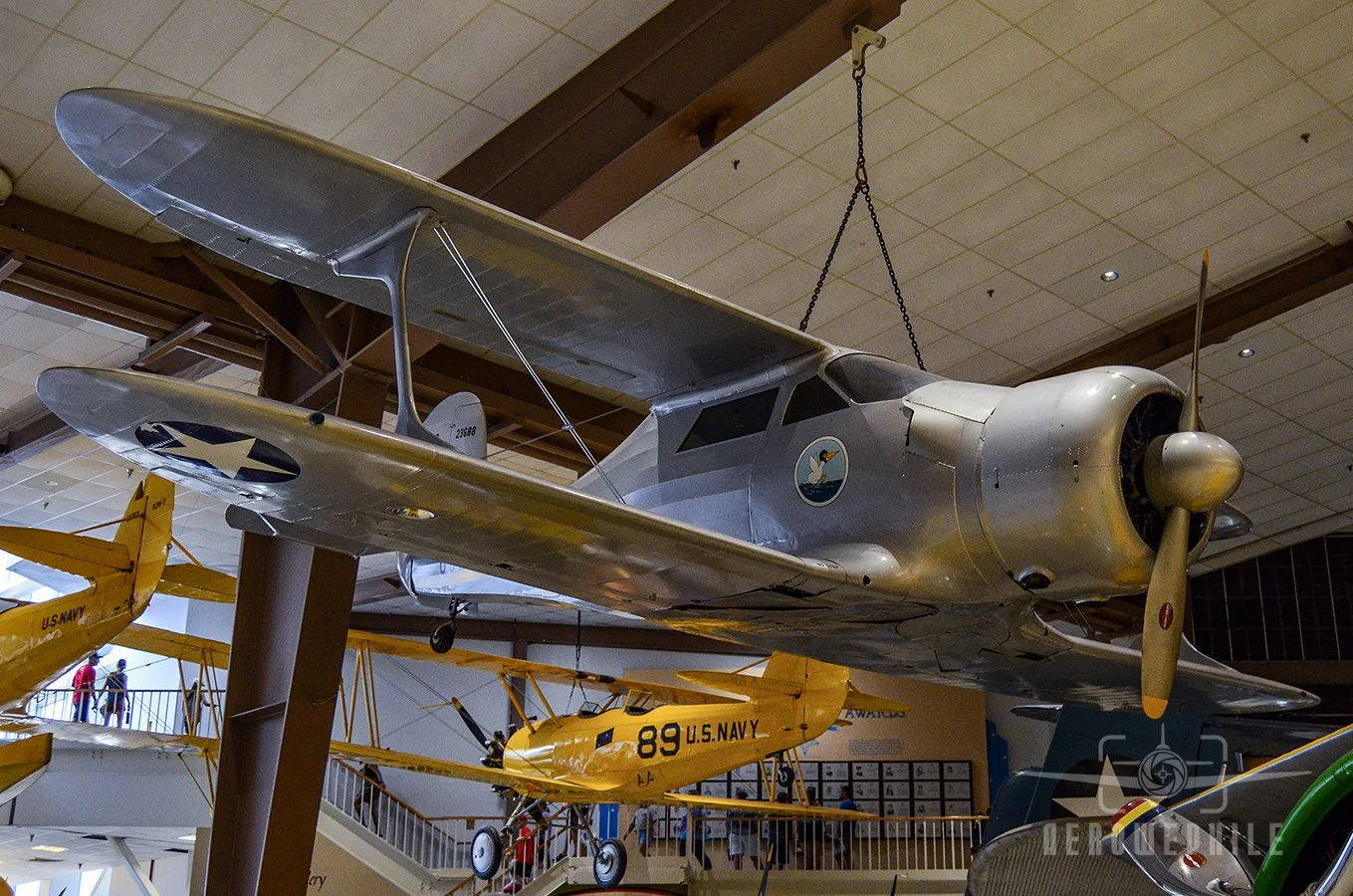
Developed by Beech in 1934, the unique "staggerwing" was an instant success in general aviation, and became a valuable asset to the Navy as an executive transport.
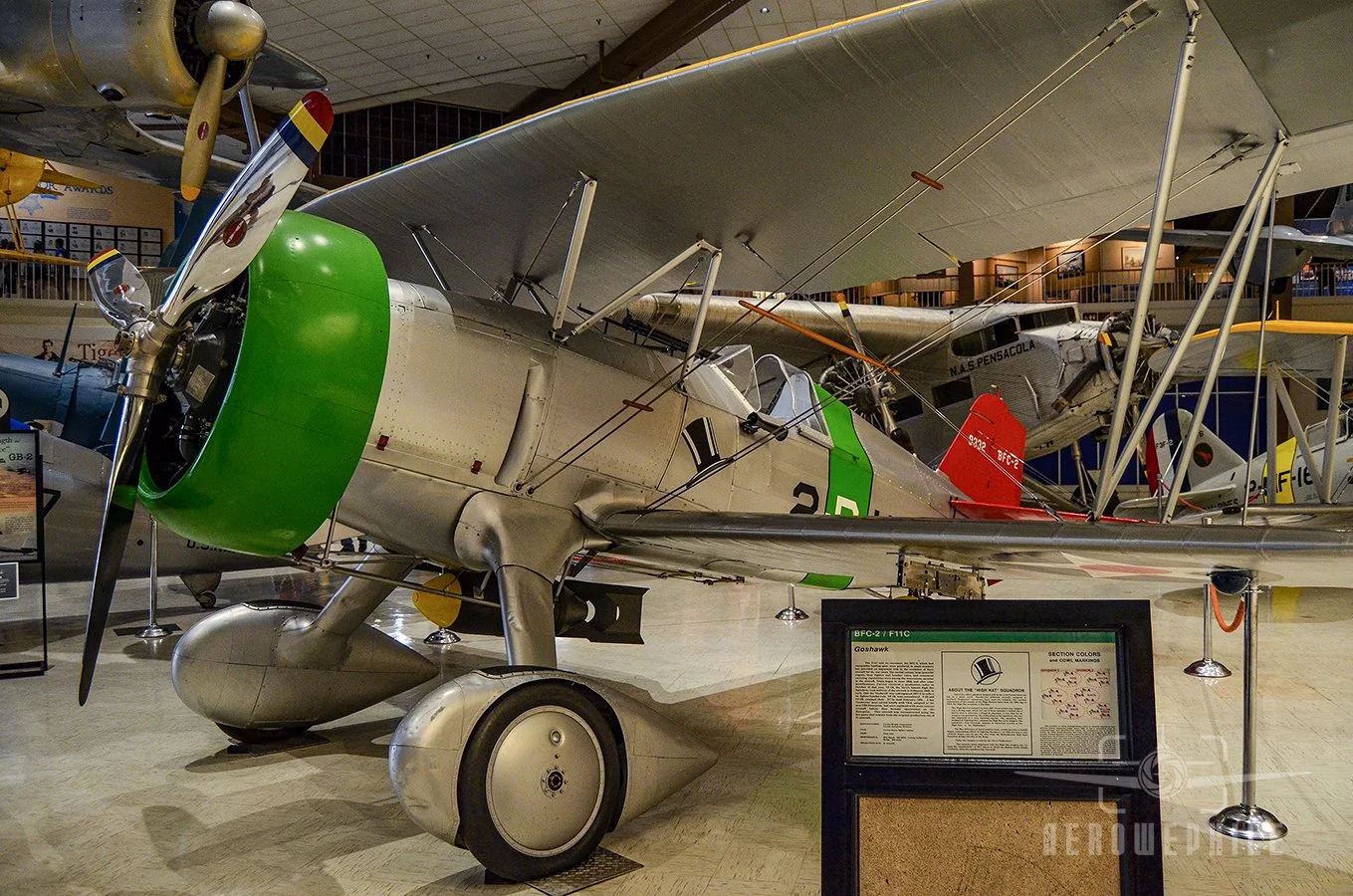
The BFC-2 Goshawk on display was restored over a three-year period by World Wide Aeronautical Industries using some original components. It is displayed in the markings of Bureau Number 9332, which flew with the High Hats from the aircraft carrier Saratoga (CV 3), and later served briefly in VB-6. It was acquired by the museum in 1992.
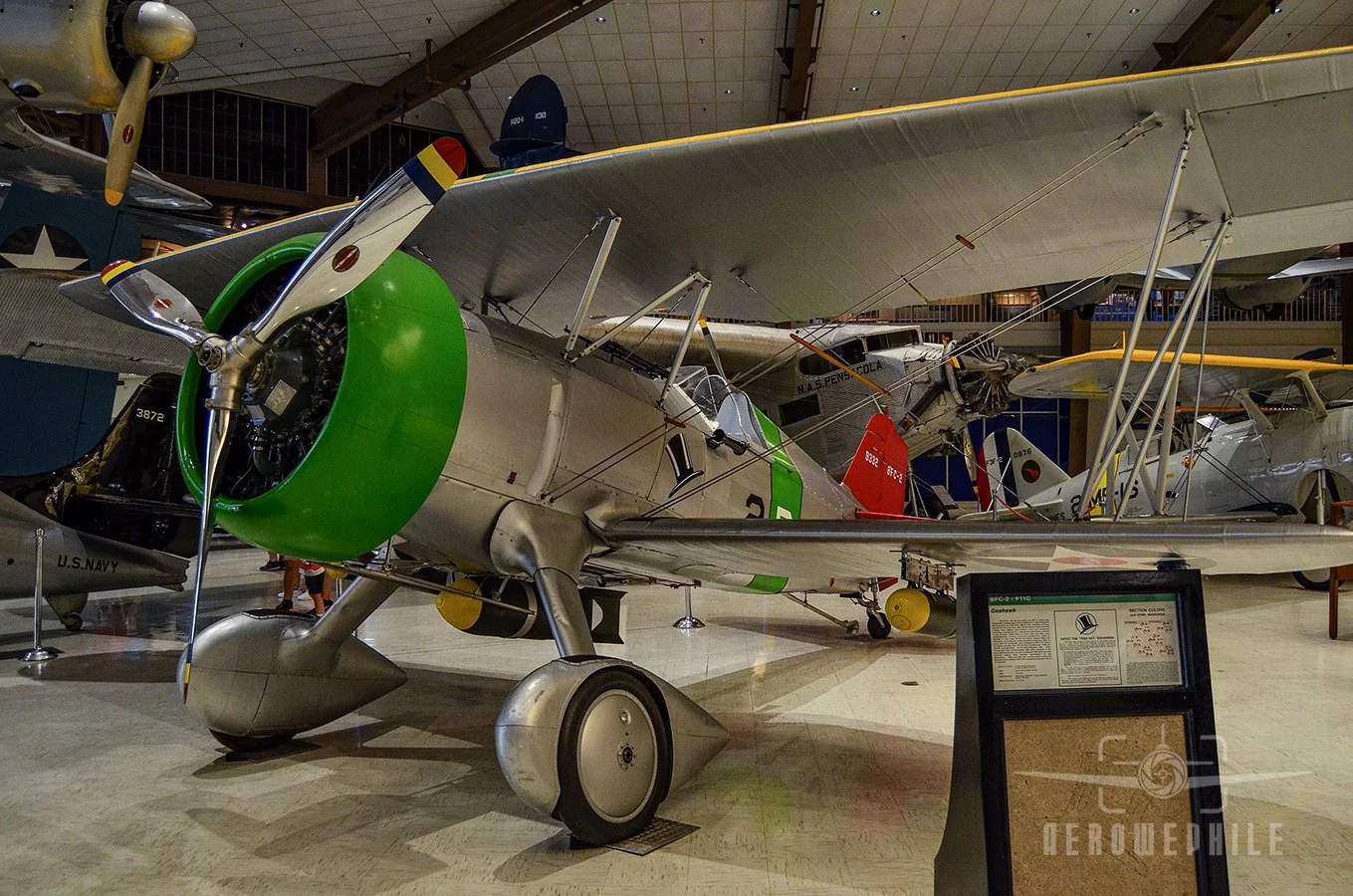
The museum’s example of the BFC-2 Goshawk is painted in the markings of an aircraft flown by Bombing Squadron (VB) 2B, the famed High Hat squadron, during the 1930s. Now known as the Tophatters, that squadron is the oldest continuously operating squadron in the U.S. Navy, having been in existence since 1919.
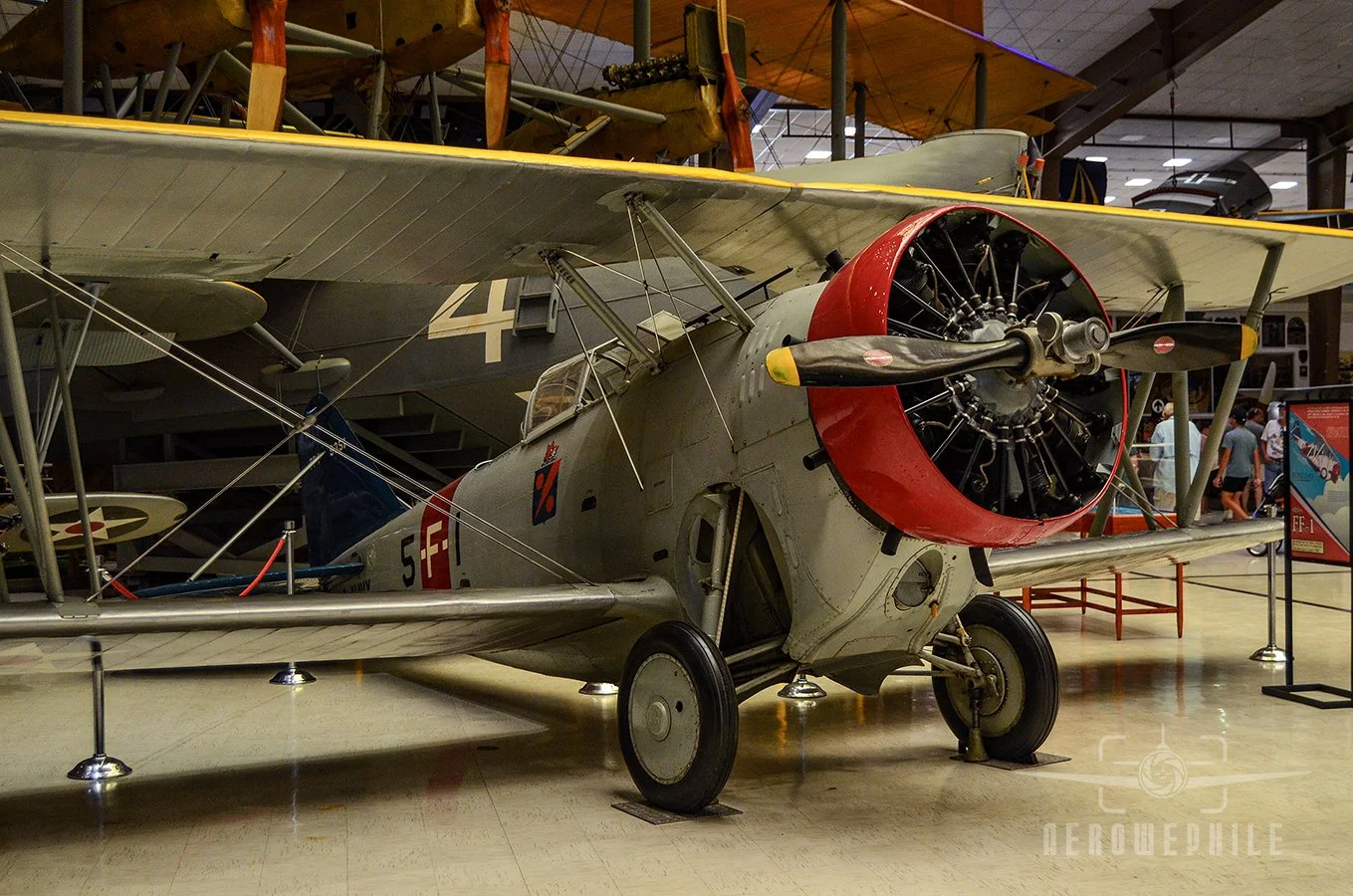
Affectionately known as "Fifi" by its pilots, the Grumman FF-1 was the first in a series of outstanding aircraft that made the name Grumman a virtual synonym for Naval Aviation.
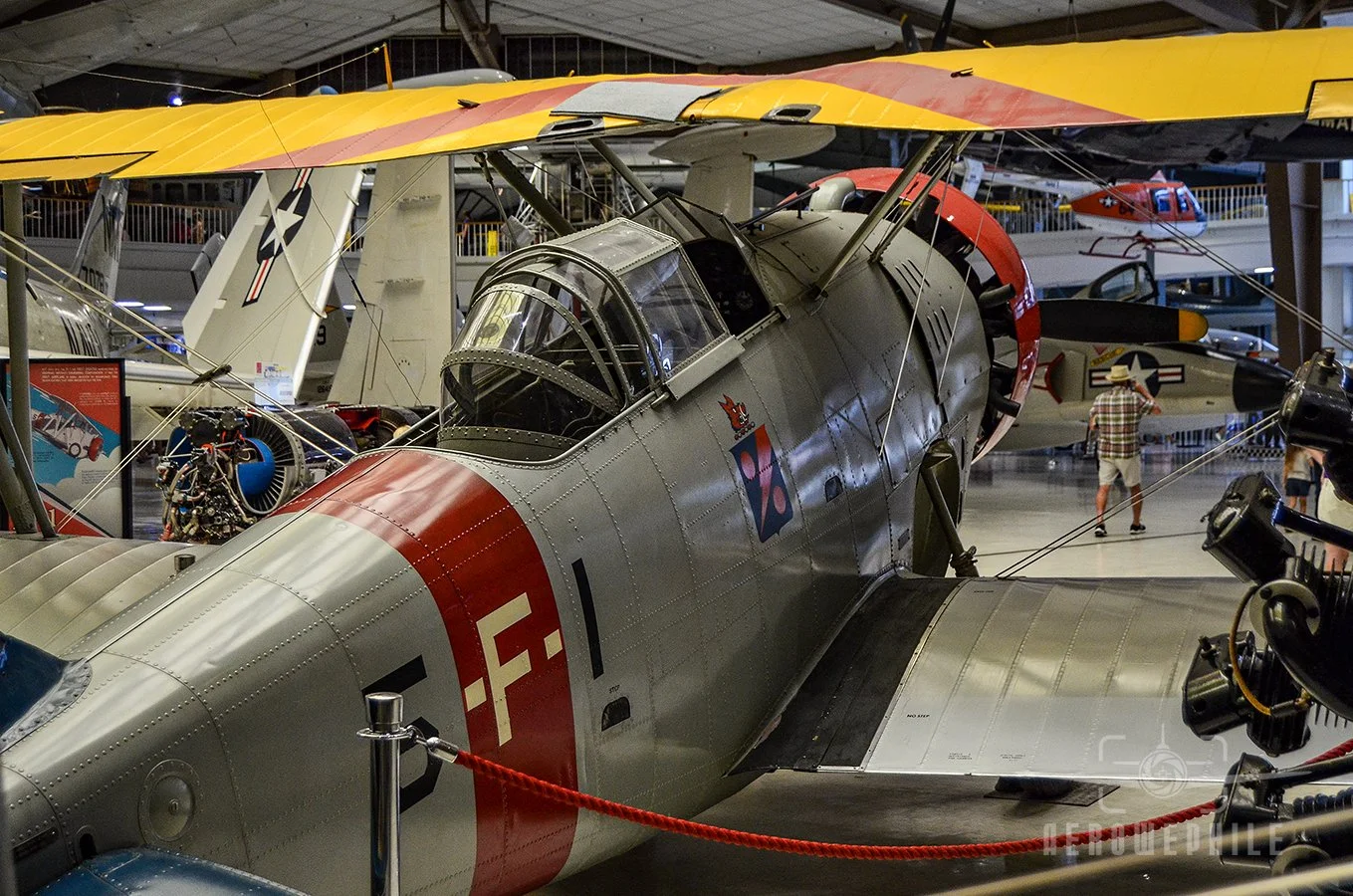
First flown in late 1931, the XFF-1 featured a 616 horsepower Wright R-1820E engine, achieving a speed of 195 mph during trials. Later engineers installed the R-1820F engine, which boasted 750 horsepower and increased top speed to 210 mph, by far the fastest of any fighter then in service.
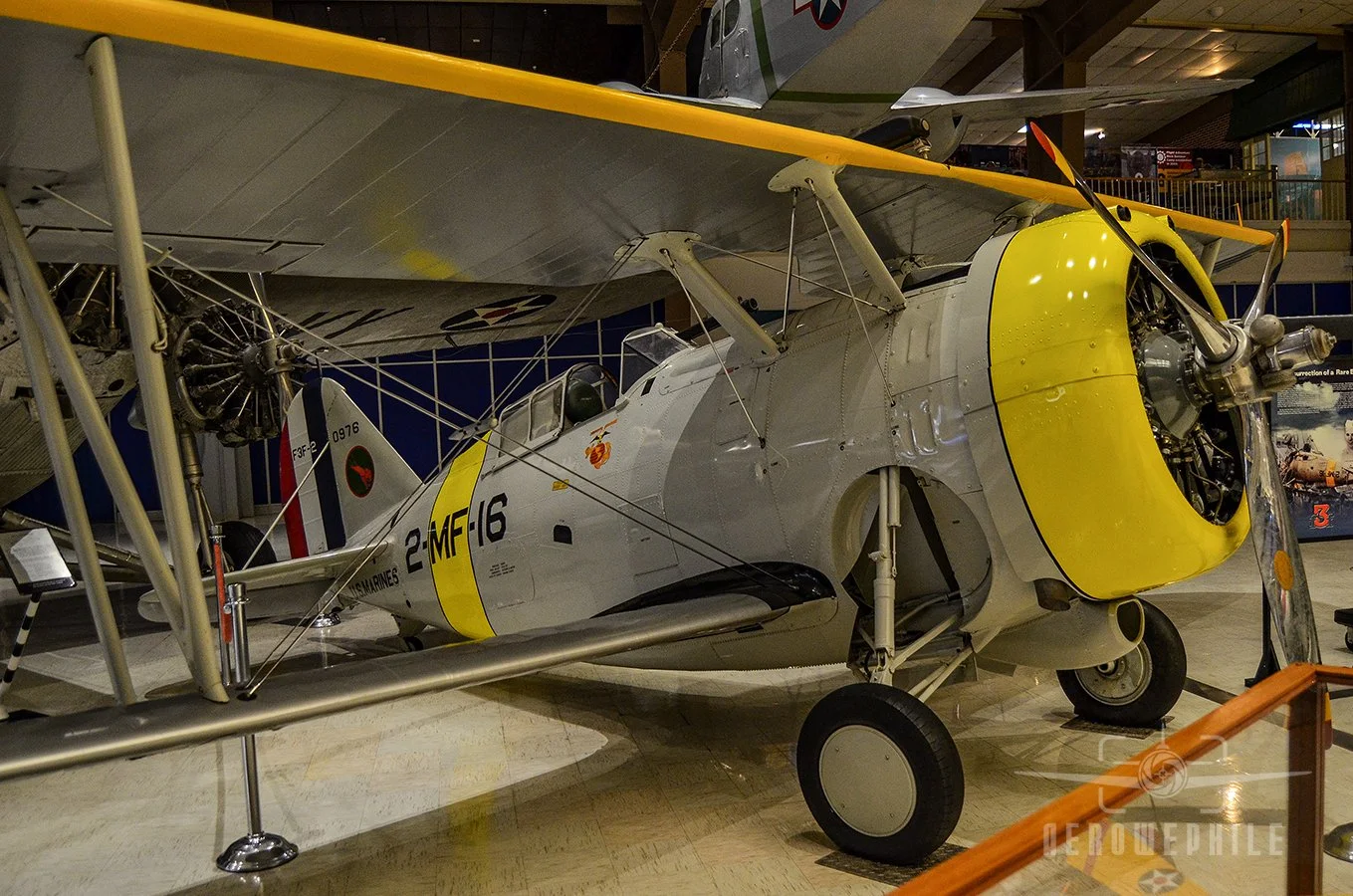
When the Navy moved to monoplanes in the mid-1930s, the highly maneuverable F3F-2s and -3s became the last carrier-based biplanes. More maneuverable than a monoplane, the biplane fighter was prized as a "dog fighter," but drag prevented it from attaining the high speeds desired for modern warfare.
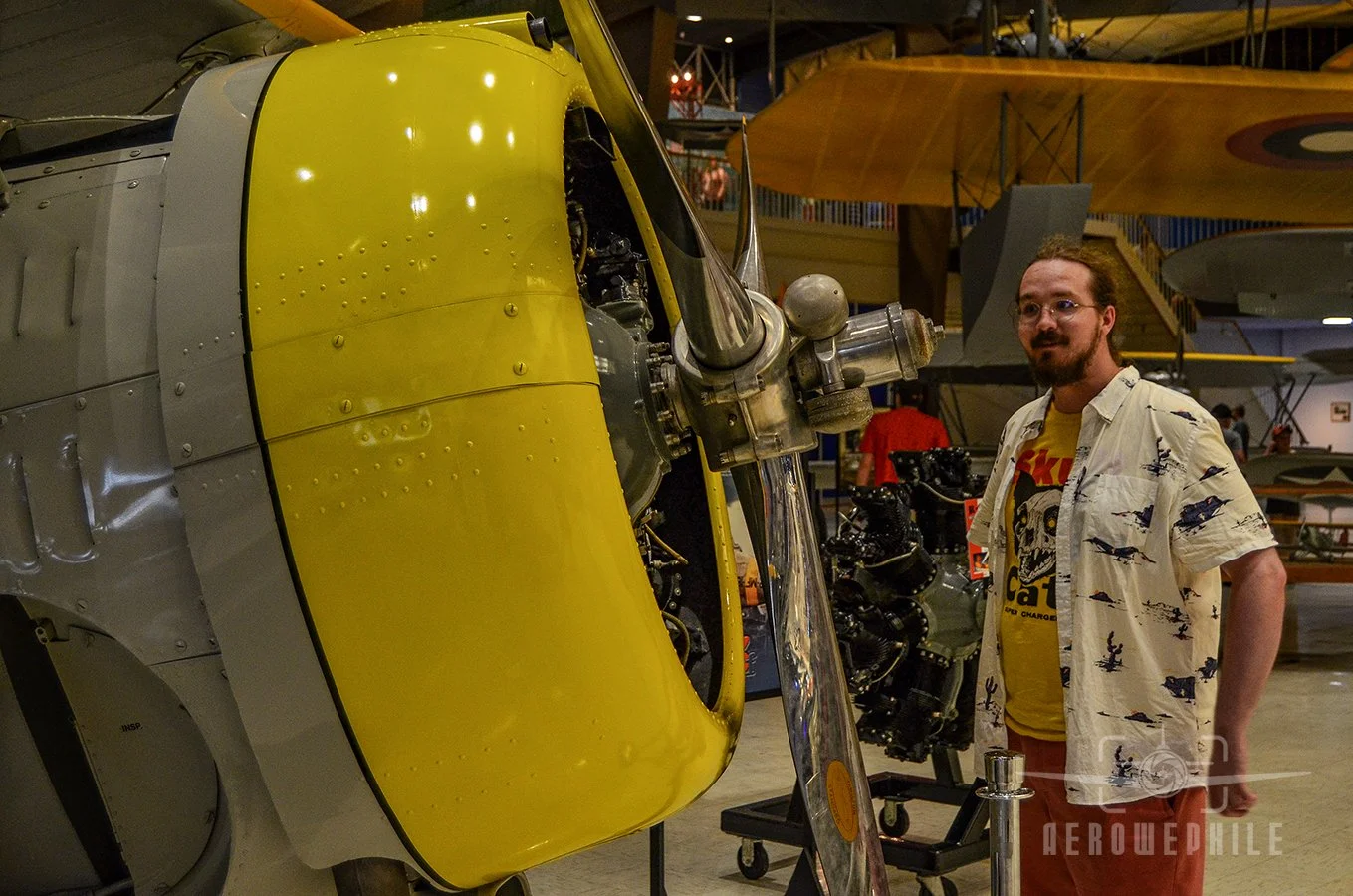
The highly maneuverable Grumman F3F served as the Navy and Marine Corps' premier (and last biplane) fighter of the late 1930s. Used by both the Navy and Marine Corps, the stubby fighter served from 1936 to 1941. My son is pictured standing in front of the F3F.
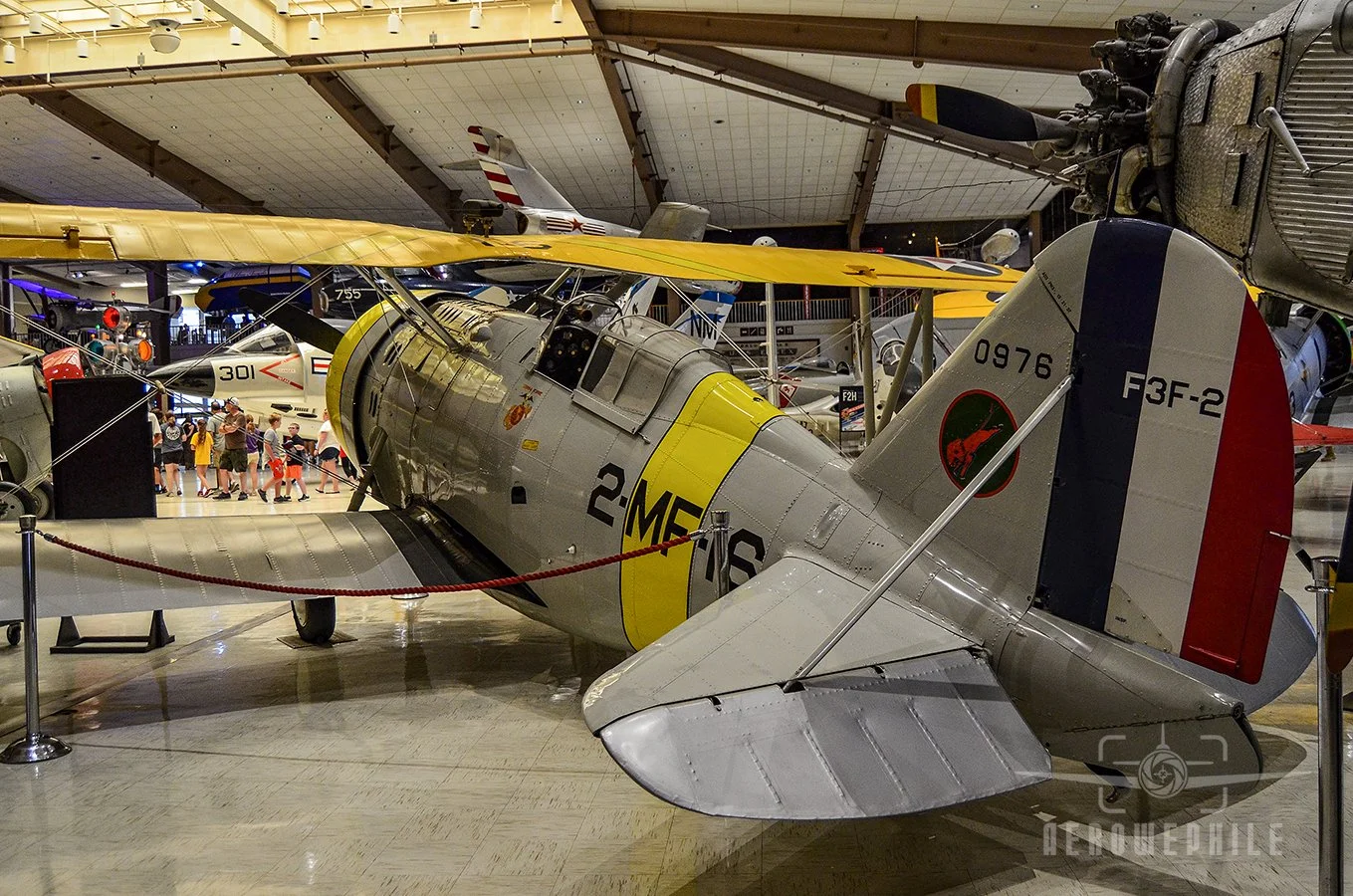
The F3F-2 on display last flew on 29 August 1940, when then-First Lieutenant Bob Galer was qualifying aboard USS Saratoga (CV-3). A malfunction forced him to ditch his aircraft in the waters off San Diego. Discovered and pulled from the Pacific in 1988, the bird was carefully restored by volunteers and staff at the San Diego Aerospace Museum and retains its markings as a VMF-2 aircraft. A Medal of Honor recipient during World War II, Bob Galer become a double ace at Guadalcanal and eventually retired as a brigadier general.
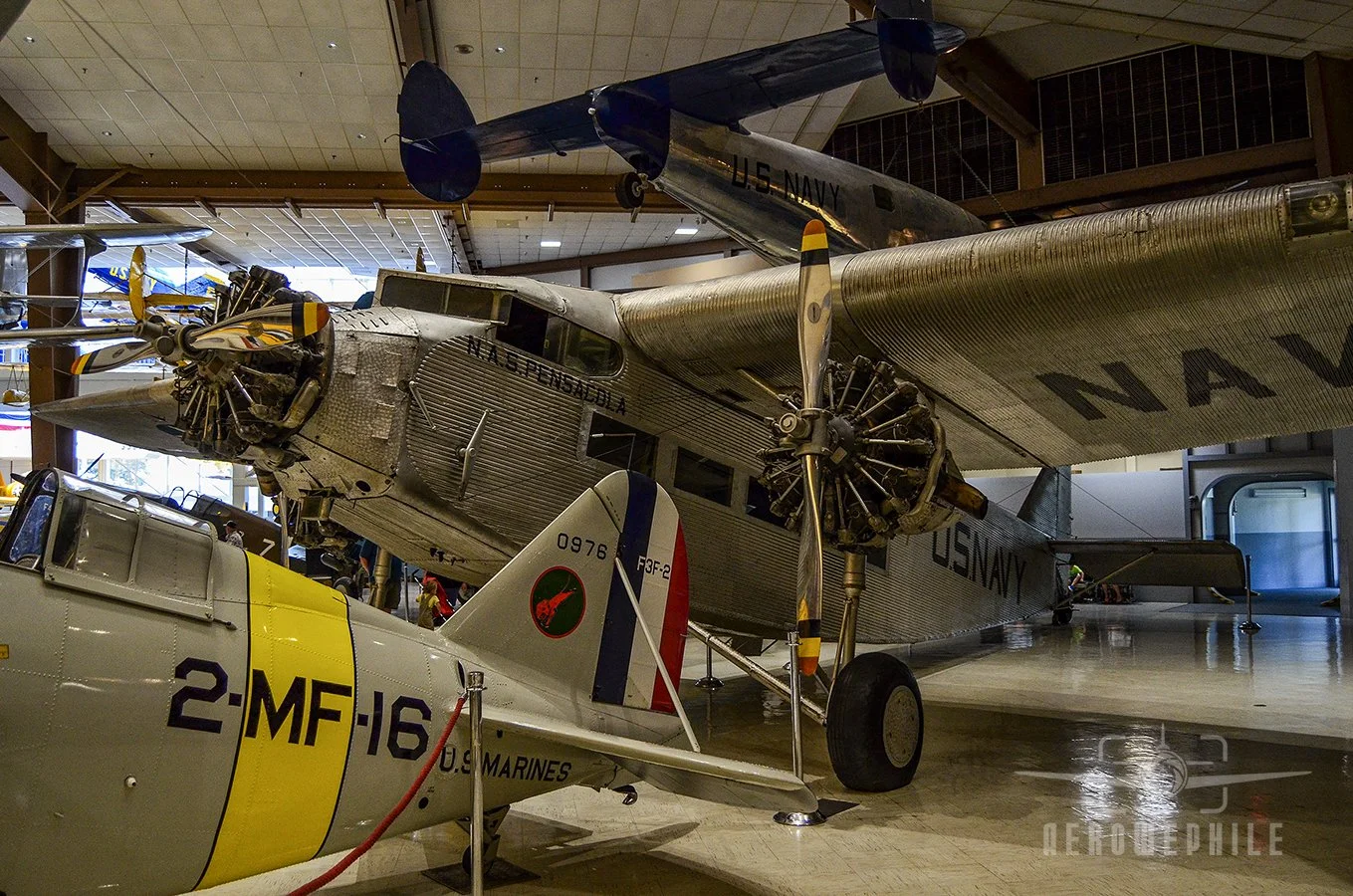
Built in 1928, the museum’s example of the Ford Tri-Motor was initially delivered as a 4-AT-B version before conversion to the 4-AT-E configuration. Arriving just in time for the opening of the new museum building in 1974, the aircraft has resided in what is now the south wing ever since. It is painted in the markings of Naval Air Station (NAS) Pensacola, Florida.
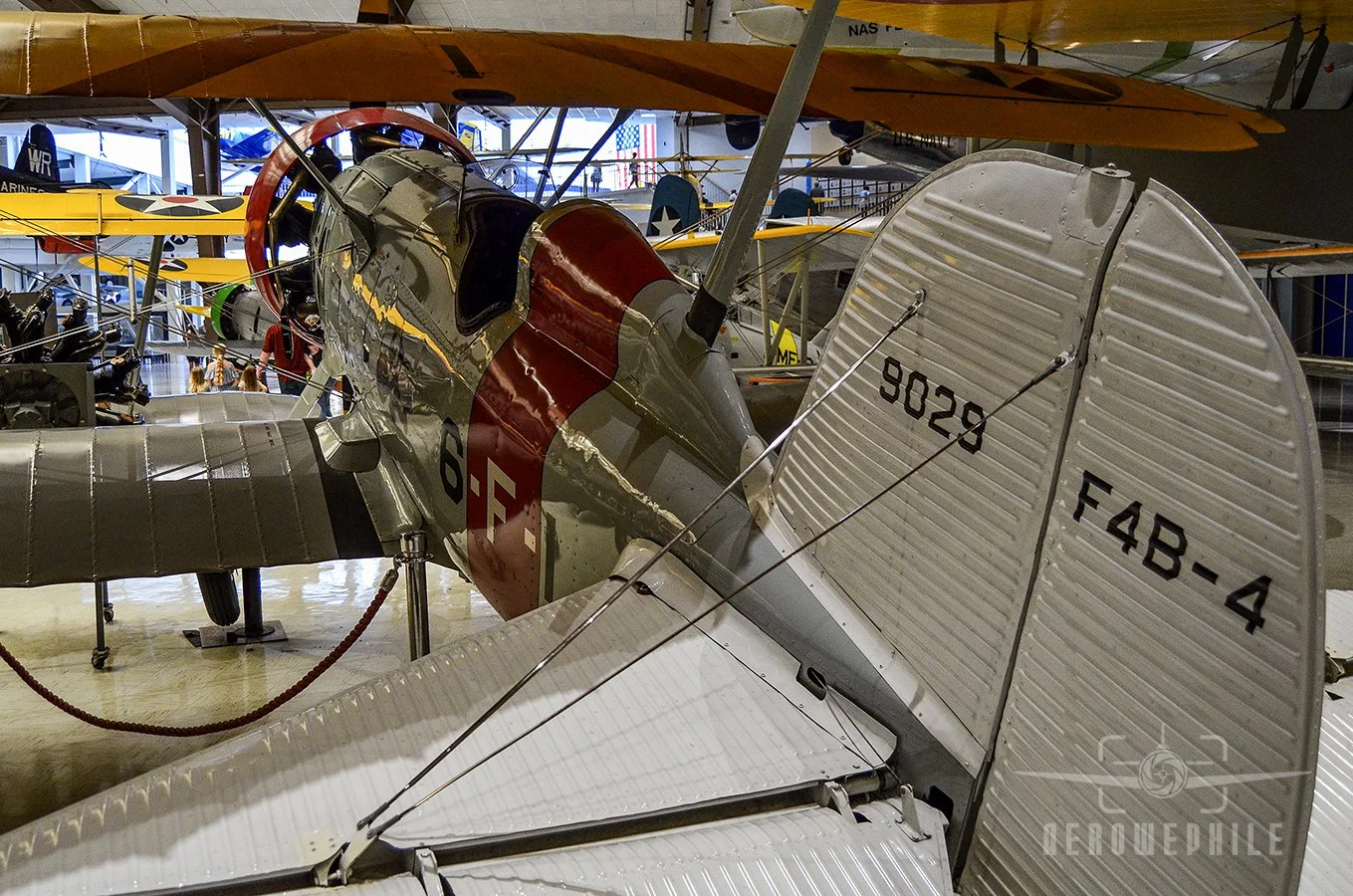
From 1923 to 1937 Boeing produced a series of excellent fighters for the Army (P-12) and Navy (F4B), the last of which was the F4B-4. Highly successful, the F4B-4 was the Navy's first-line fighter from 1932 to 1937. The Museum's aircraft was delivered as a P-12E and modified during restoration to the F4B-4 configuration.
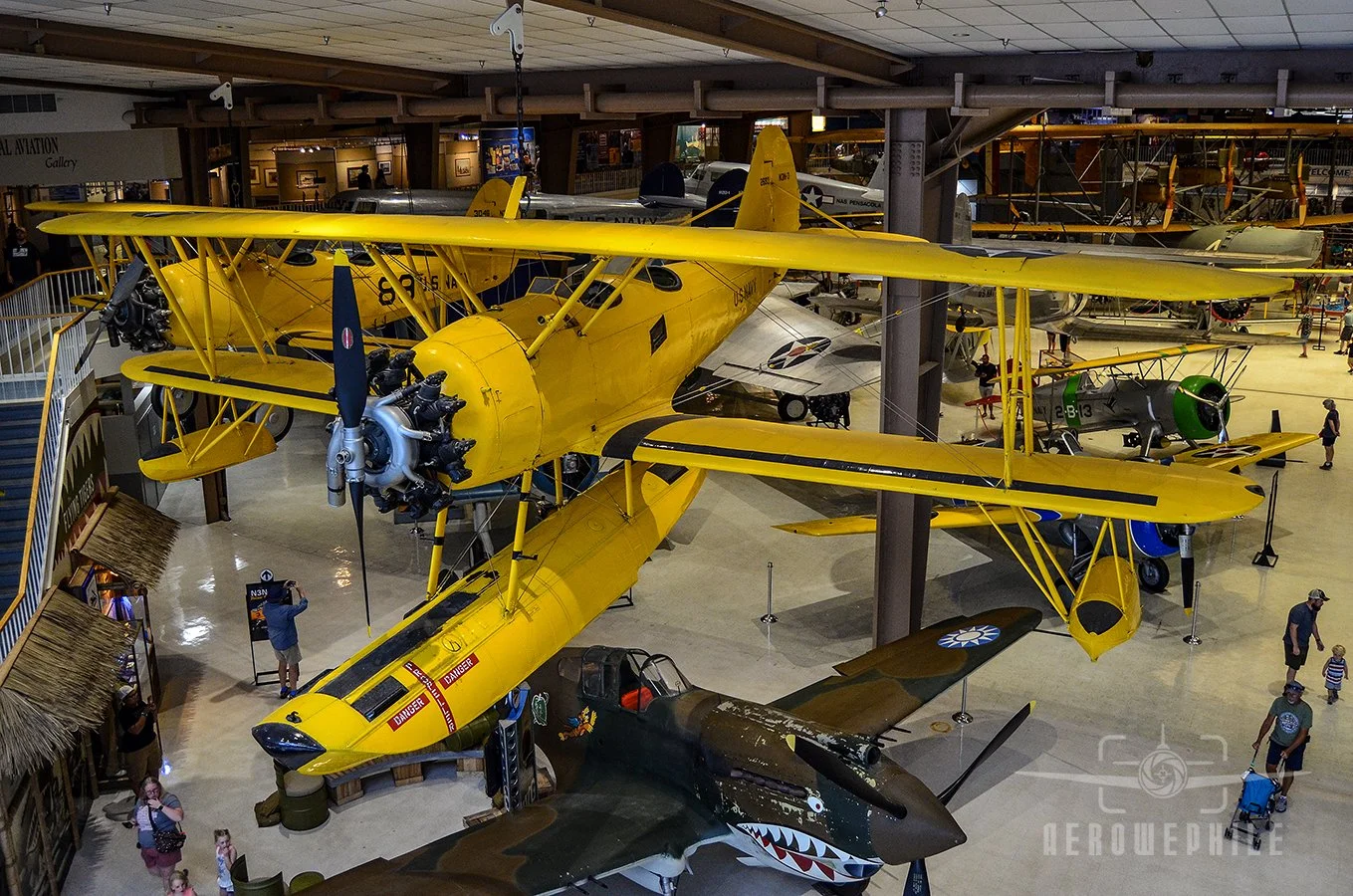
N3N "Yellow Peril" (floatplane) - Accepted by the Navy in September 1941, the Museum's floatplane version of the N3N-3 Yellow Peril (Bureau Number 3046) flew throughout World War II. It continued in operation at Naval Air Station (NAS) Pensacola and training Naval Academy midshipman at Annapolis during 1947-1948. It was acquired by the Museum in 1978.
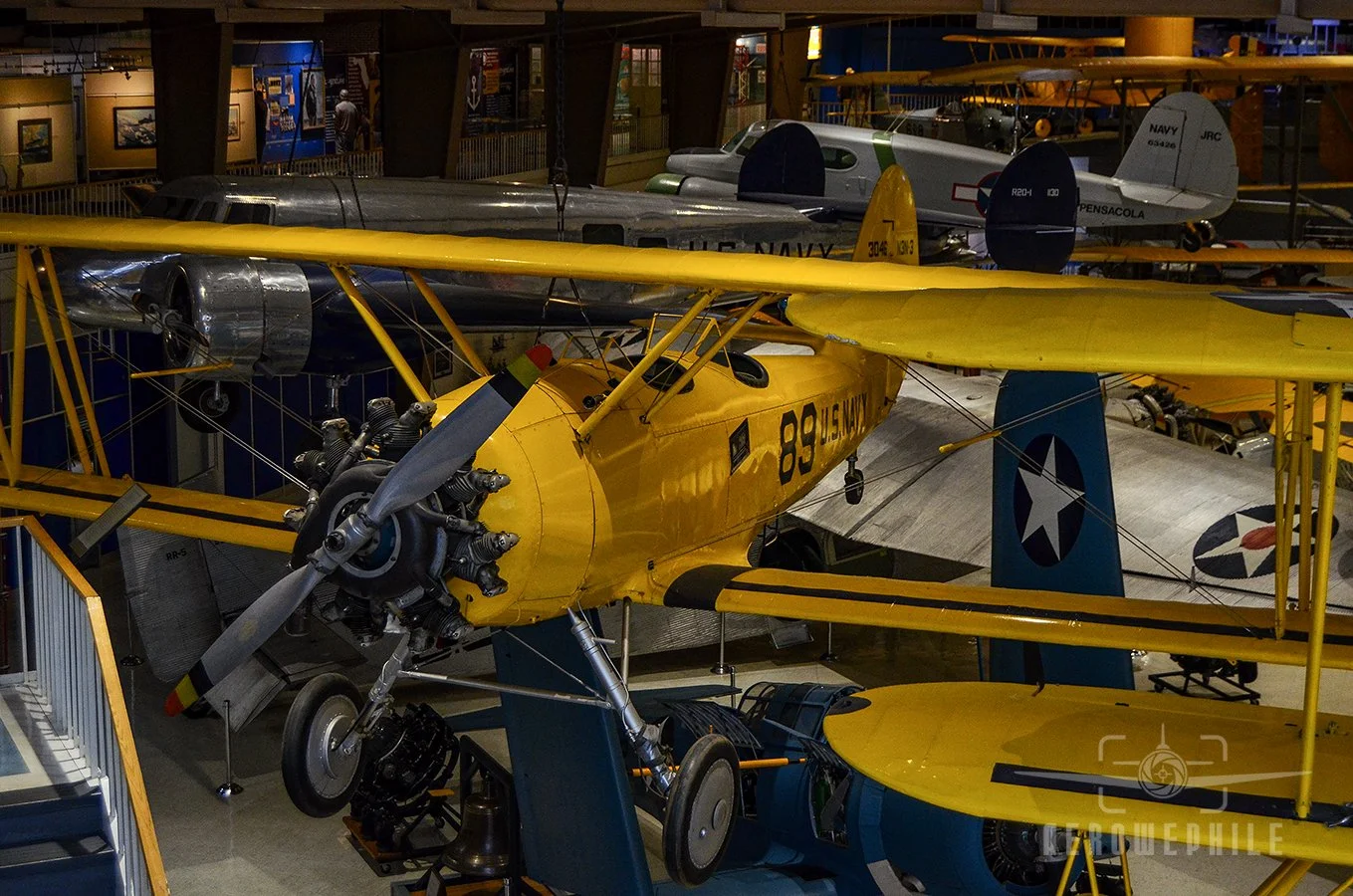
N3N "Yellow Peril" (Conventional Gear) - Called "Yellow Peril" because of its color scheme and principal use by inexperienced flight students, the Naval Aircraft Factory's N3N primary trainer was extremely rugged and easy to maintain.
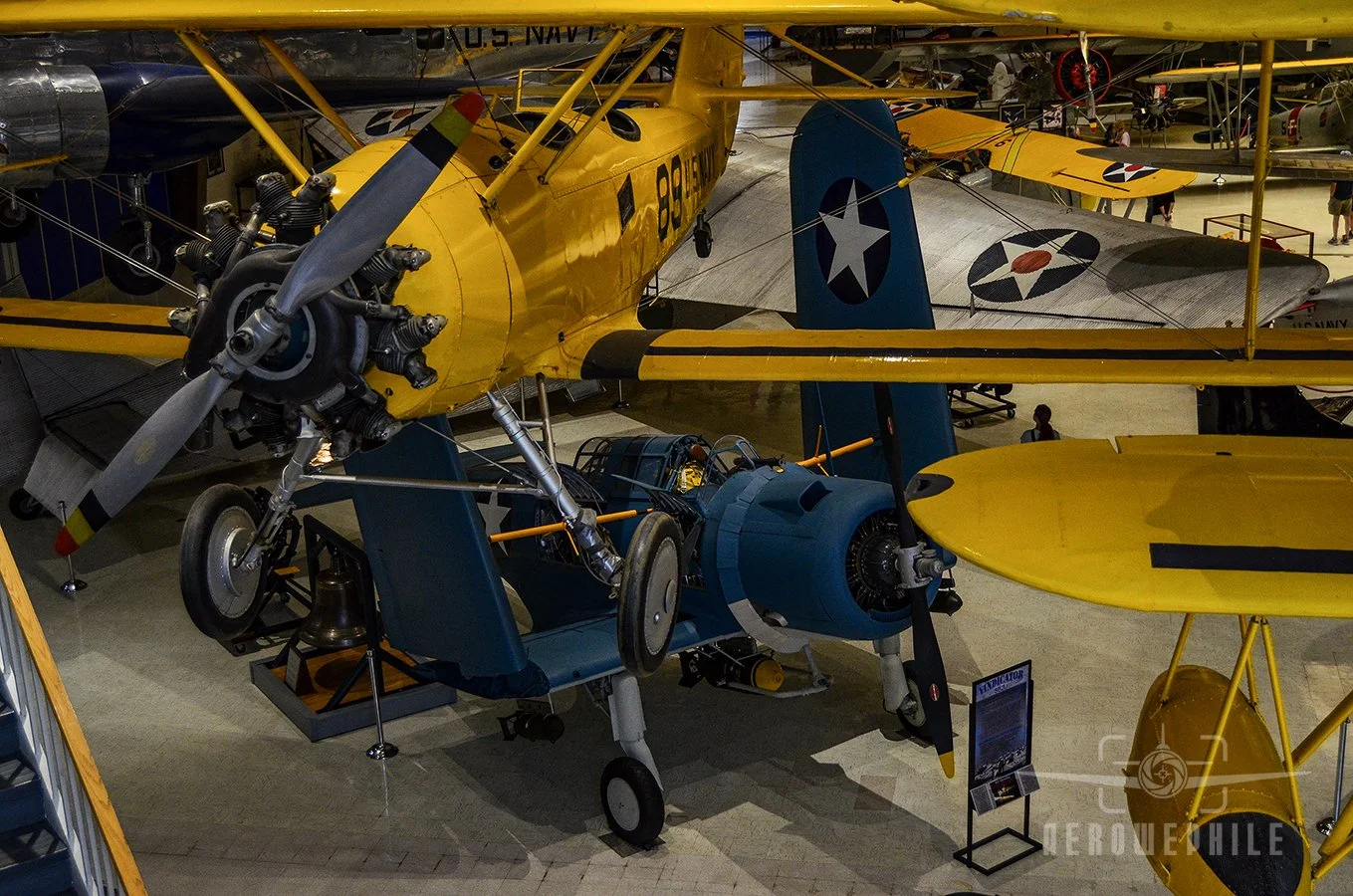
N3N "Yellow Peril" (Conventional Gear) and SB2U-2 Vindicator.
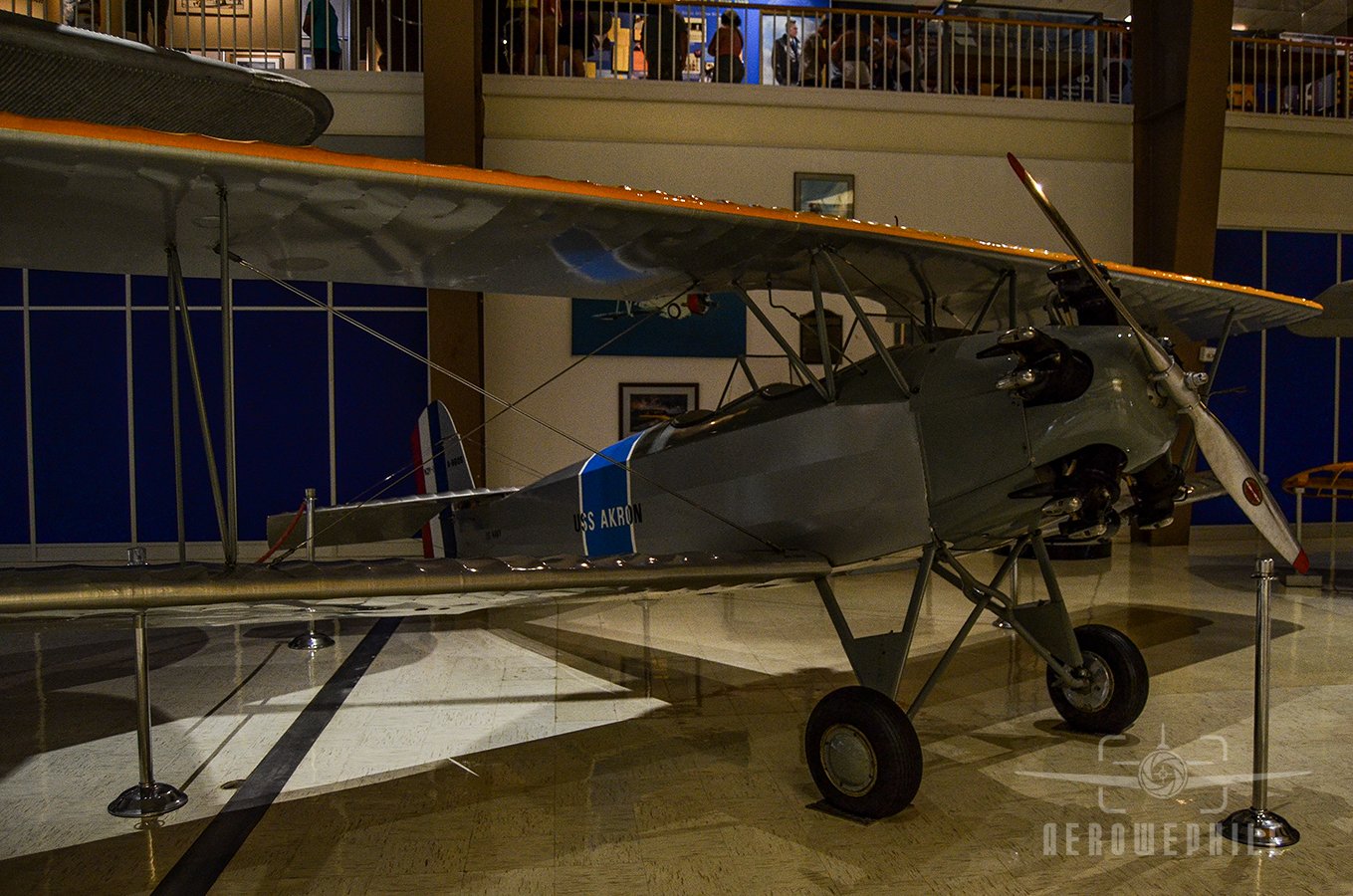
N2Y - Six specially-equipped Consolidated Model 14 Husky Junior two-seat trainers were purchased by the Navy in 1930, and assigned to the rigid airships Los Angeles (ZR-3) and Akron (ZRS-4). Rigged with skyhooks, the trainers were used to familiarize pilots with in-flight launching and recovery from the huge airships' "trapeze" gear, preparing them for operational employment flying Curtiss' F9C Sparrowhawk fighter. After Los Angeles was retired in 1932, and Akron crashed in 1933, The N2Ys were assigned to Macon (ZRS-5).
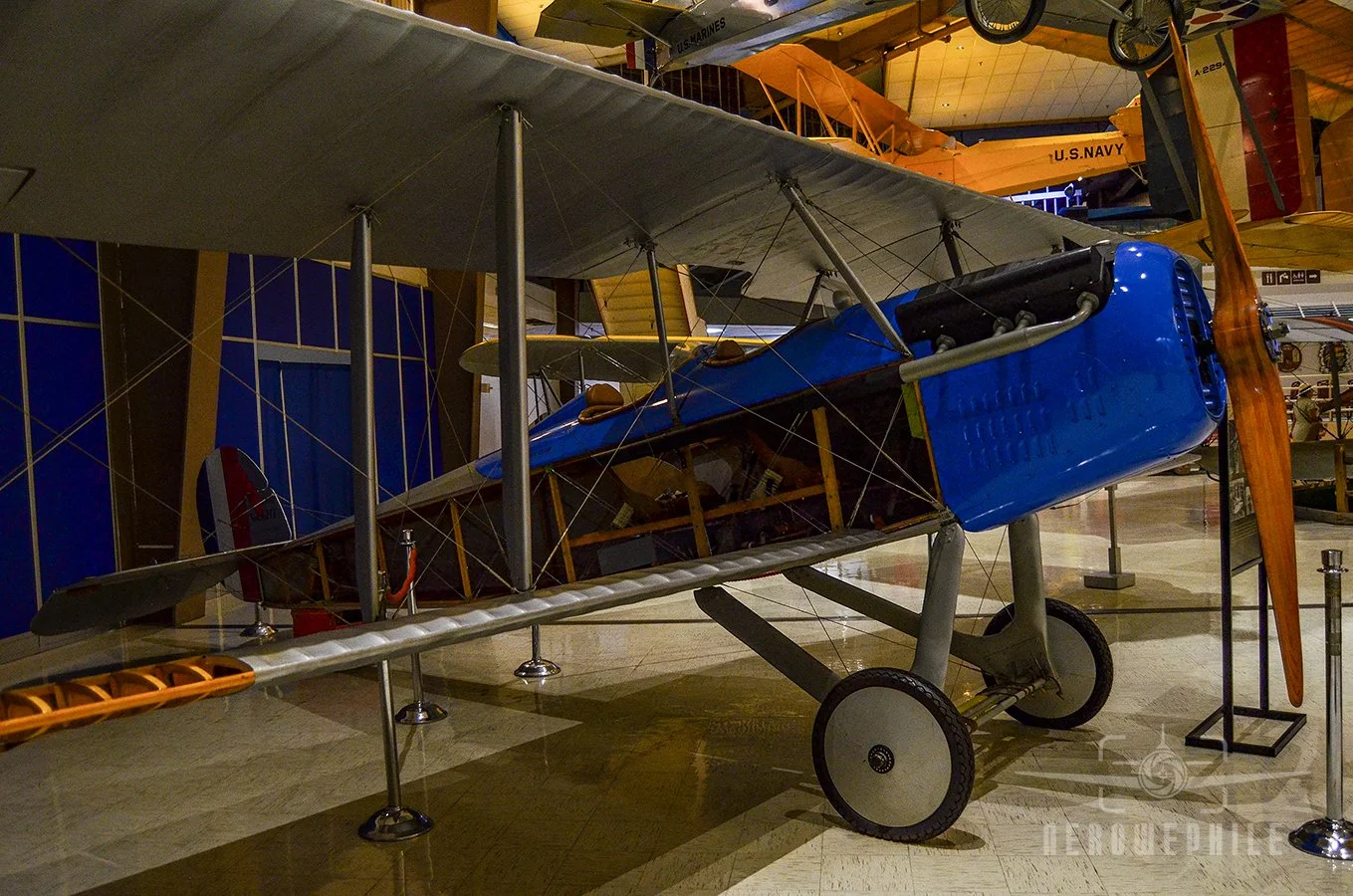
Built by the Vought Aircraft Heritage Foundation, this aircraft is a replica of the VE-7 "Bluebird," so named because of its colorful paint scheme. The VE-7 participated in signature events of Naval Aviation history and development during the 1920s, making the first ever take-off from a U.S. carrier, Langley (CV-1), on 17 October 1922, serving as the platform for tests of compressed air catapults for floatplane operations from battleships and cruisers, and staging early experiments in the development of the tactic of dive-bombing.
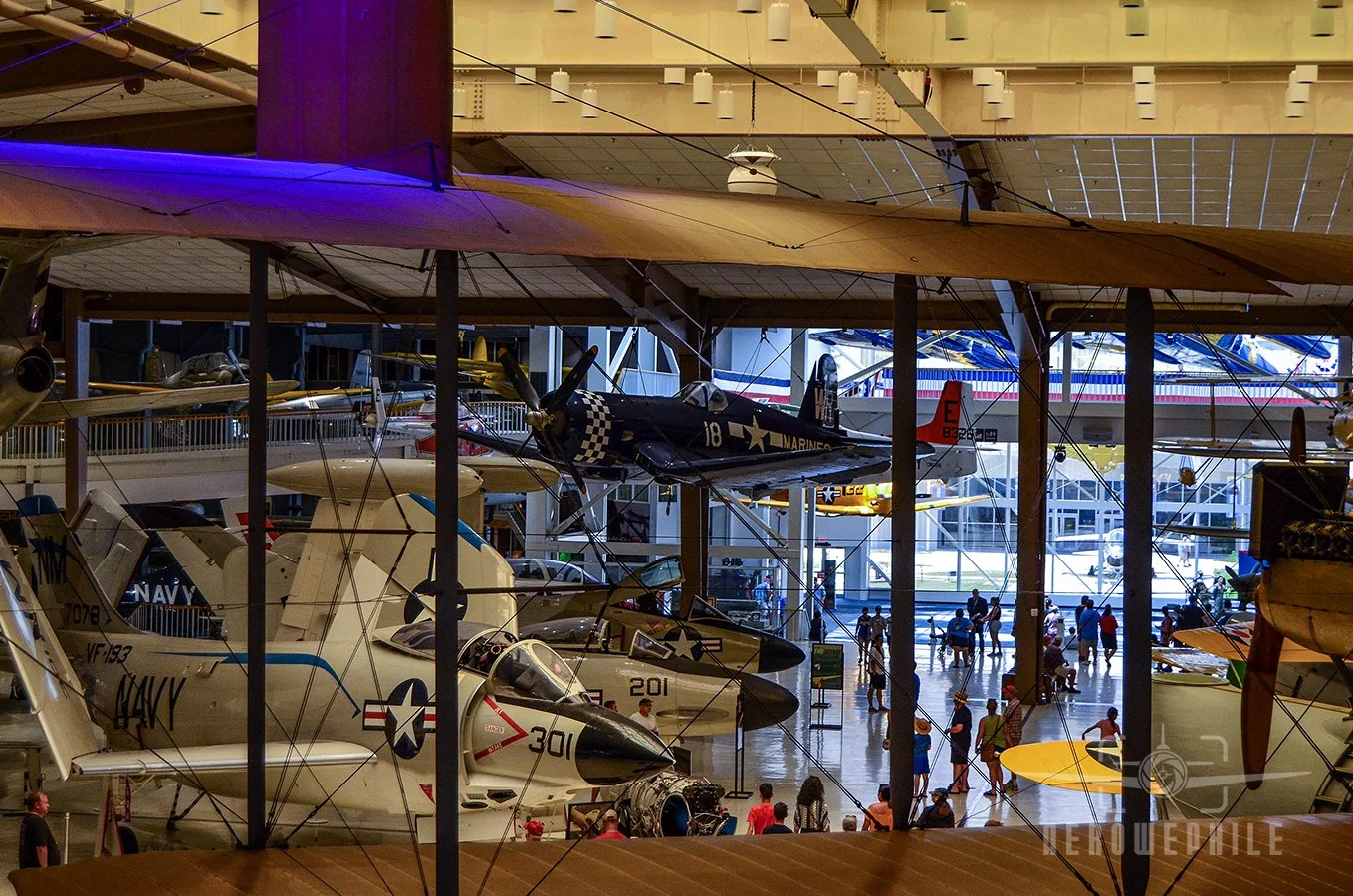
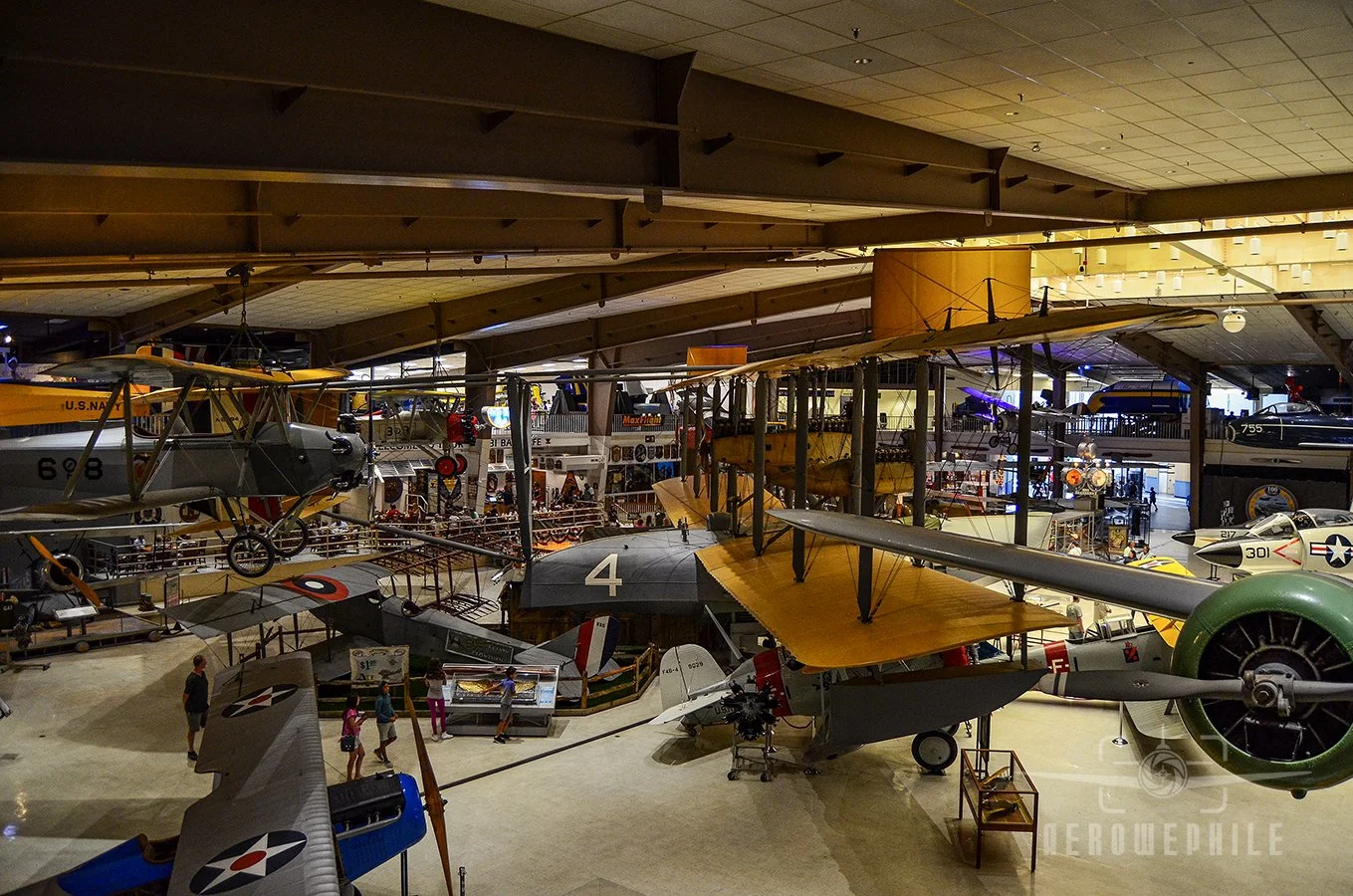
View of the South Wing as viewed through the wing of the NC-4 floatplane.
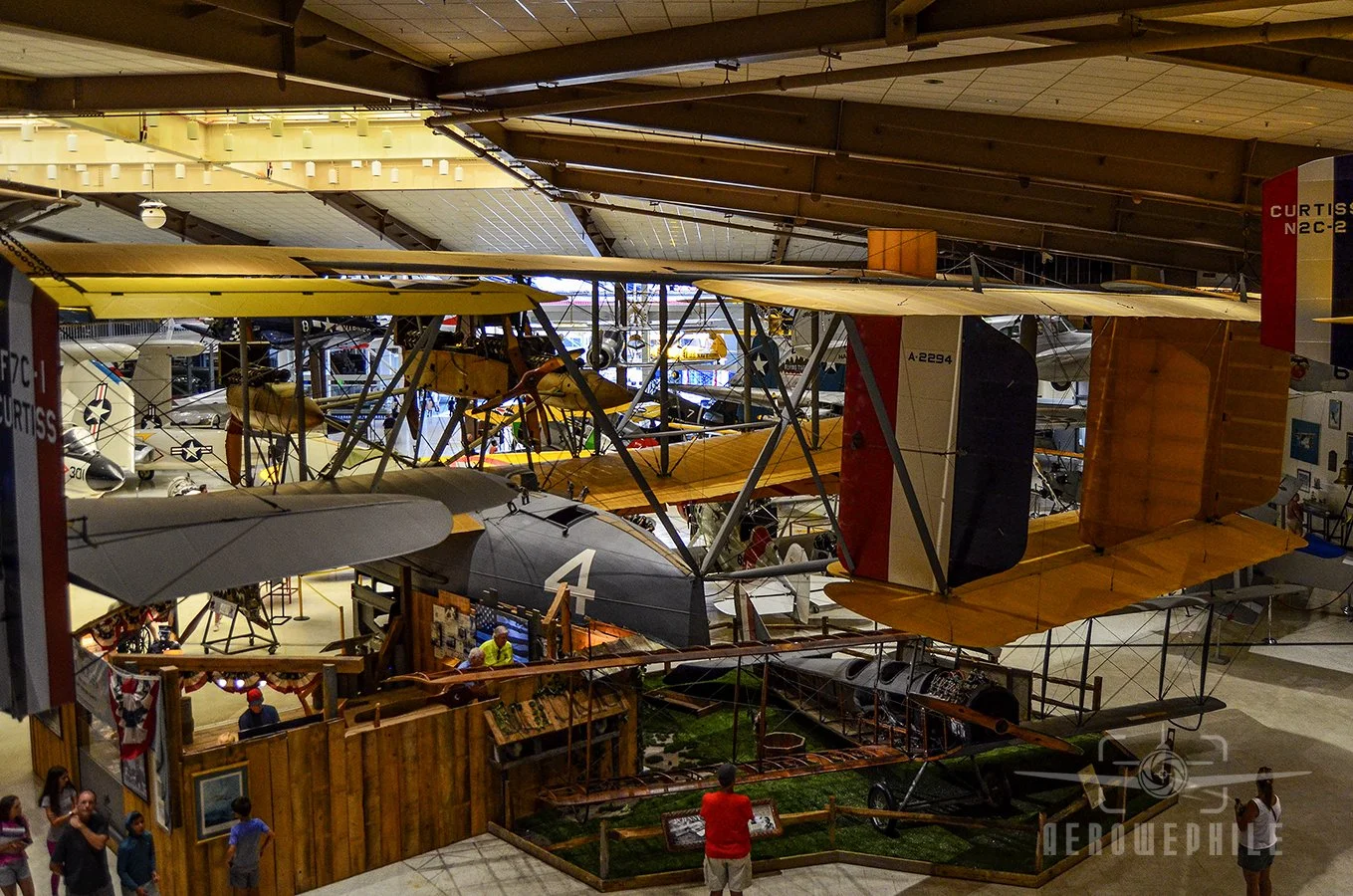
The NC flying boats were designed as aircraft that could fly across the Atlantic to the coastlines of Europe and be ready to patrol for German U-boats upon arrival. Too late for World War I, the NCs still took up the challenge of traversing the Atlantic by air, and in May 1919, the NC-4 made the first successful transatlantic flight, a milestone in aviation history that brought great acclaim to Naval Aviation.
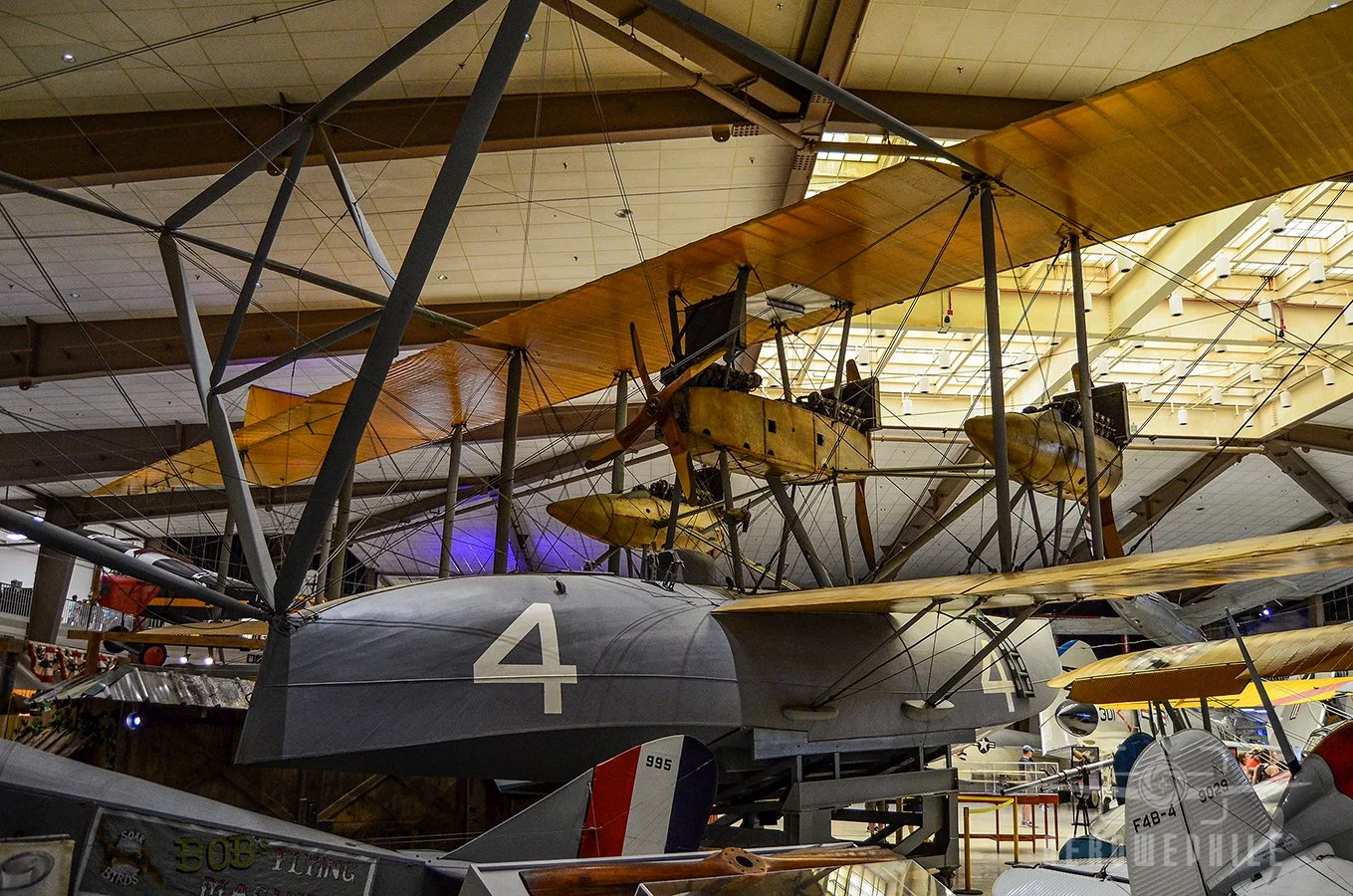
On 3 May 1919, crews of the NC-1, NC-3 and NC-4 gathered at Naval Air Station (NAS) Rockaway, Long Island, for the transatlantic attempt. In the ensuing days a series of mishaps cast a pall over the endeavor, including a fire that damaged the NC-1, and one of the NC-4's crewmen accidentally sticking his hand into one of the aircraft's whirring propellers during an engine test.
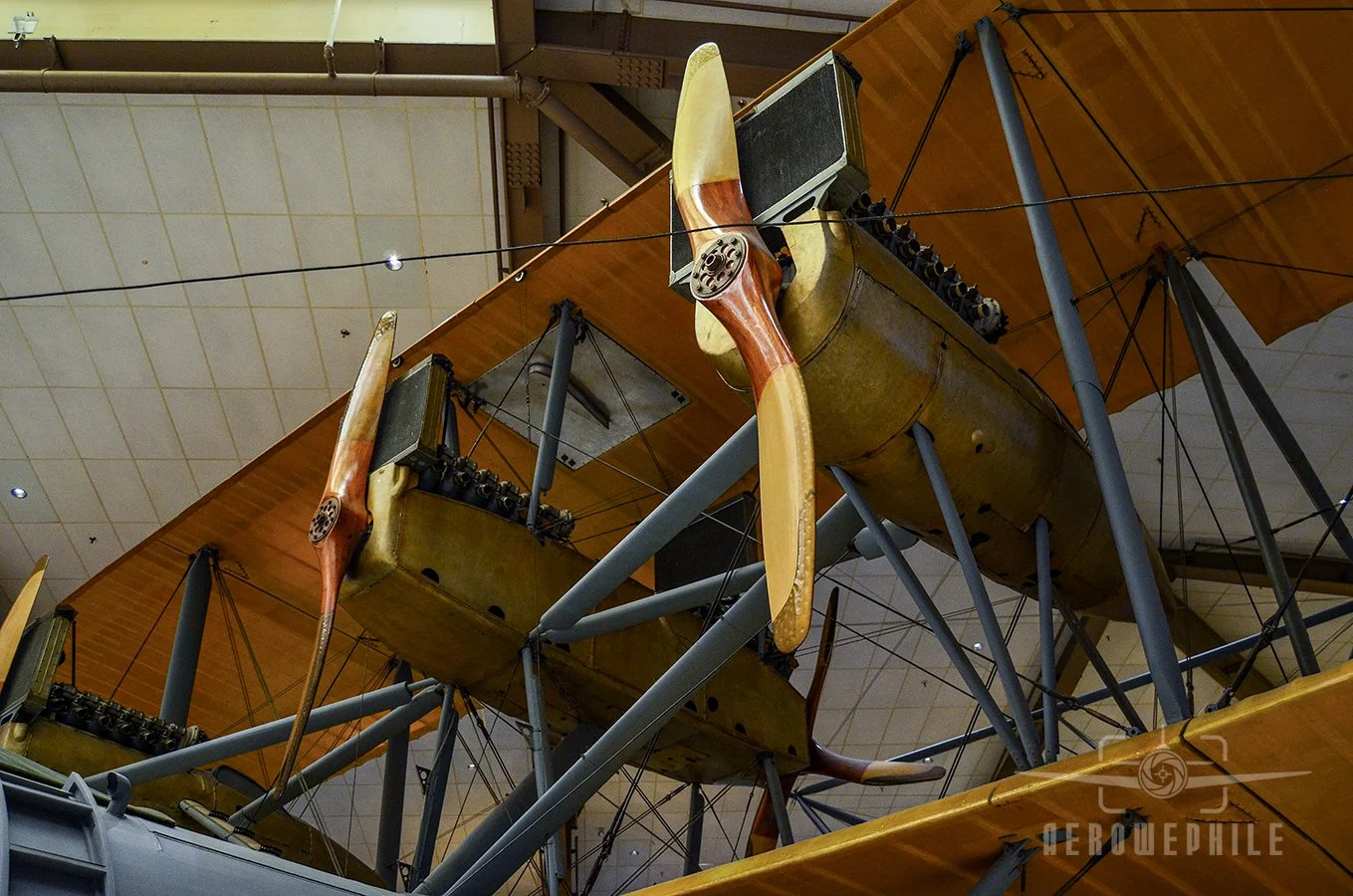
By 8 May 1919, with a four leaf clover presented to each crew member for luck, the three flying boats launched on the first leg of the their flight from Rockaway to Halifax, Nova Scotia. Only two completed the nine-hour trip, the NC-4 being forced down off Massachusetts with engine trouble and the media giving her the nickname the "Lame Duck."
On 16 May 1919, bound for the Azores Islands, the longest and most demanding leg of the transatlantic flight, covering some 1,200 nautical miles. Increasing clouds and rain caused the aircraft to separate, with NC-1 and NC-3 making forced landings. Only NC-4 successfully reached the Azores, the crew of NC-1 rescued by a Greek freighter and the crew of NC-3 actually sailing their battered craft 205 miles to the Azores.
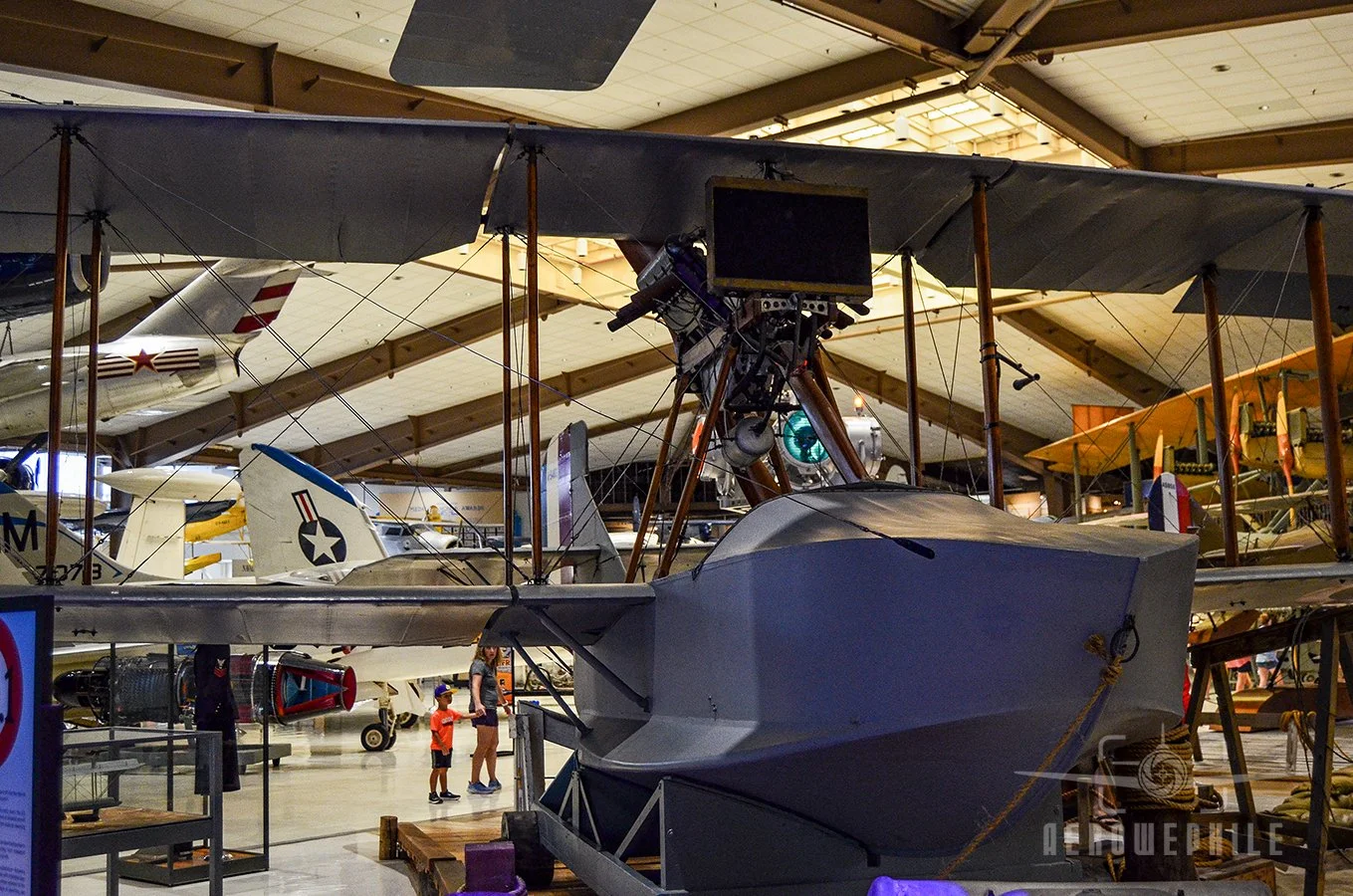
A modified version of Glenn Curtiss' widely used F-Boat, the MF-Boat was built as a trainer and support aircraft. Serving throughout World War I, F and MF-Boats prepared Naval Aviators for their primary mission of anti-submarine warfare over the Atlantic, protecting Allied shipping from the dreaded U-boat. The Museum's aircraft is a rare example and the first of 80 MF-Boats built at the Naval Aircraft Factory.
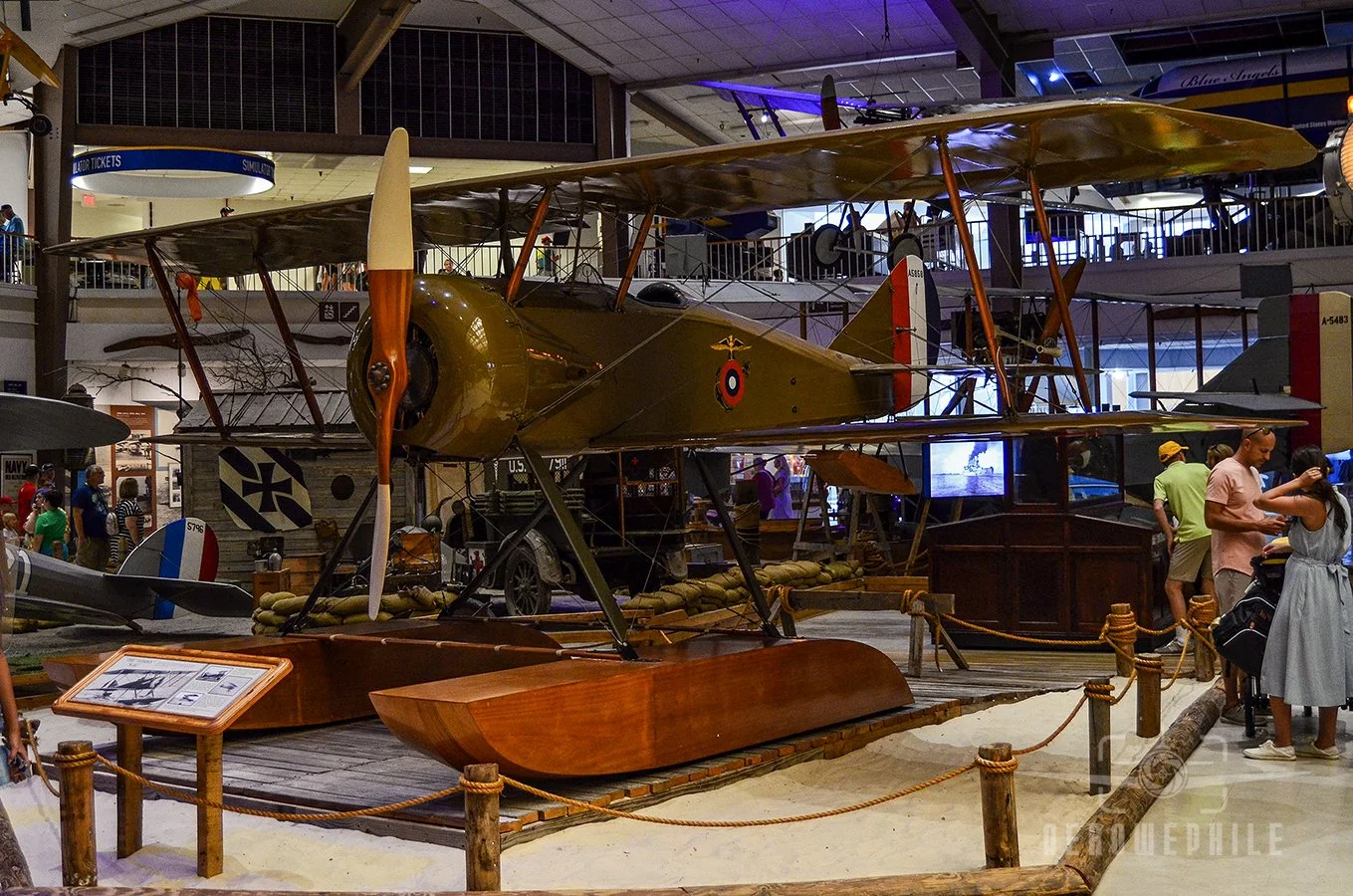
Used as a primary trainer during World War I, the Thomas-Morse S-4B/C Scout was the aircraft in which David Ingalls received training at Naval Air Station (NAS) Dunkirk before joining a Royal Air Force squadron, where he became the Navy's only ace in World War I with six aerial victories. The Museum's example is configured as the S-5 floatplane variant of the aircraft.
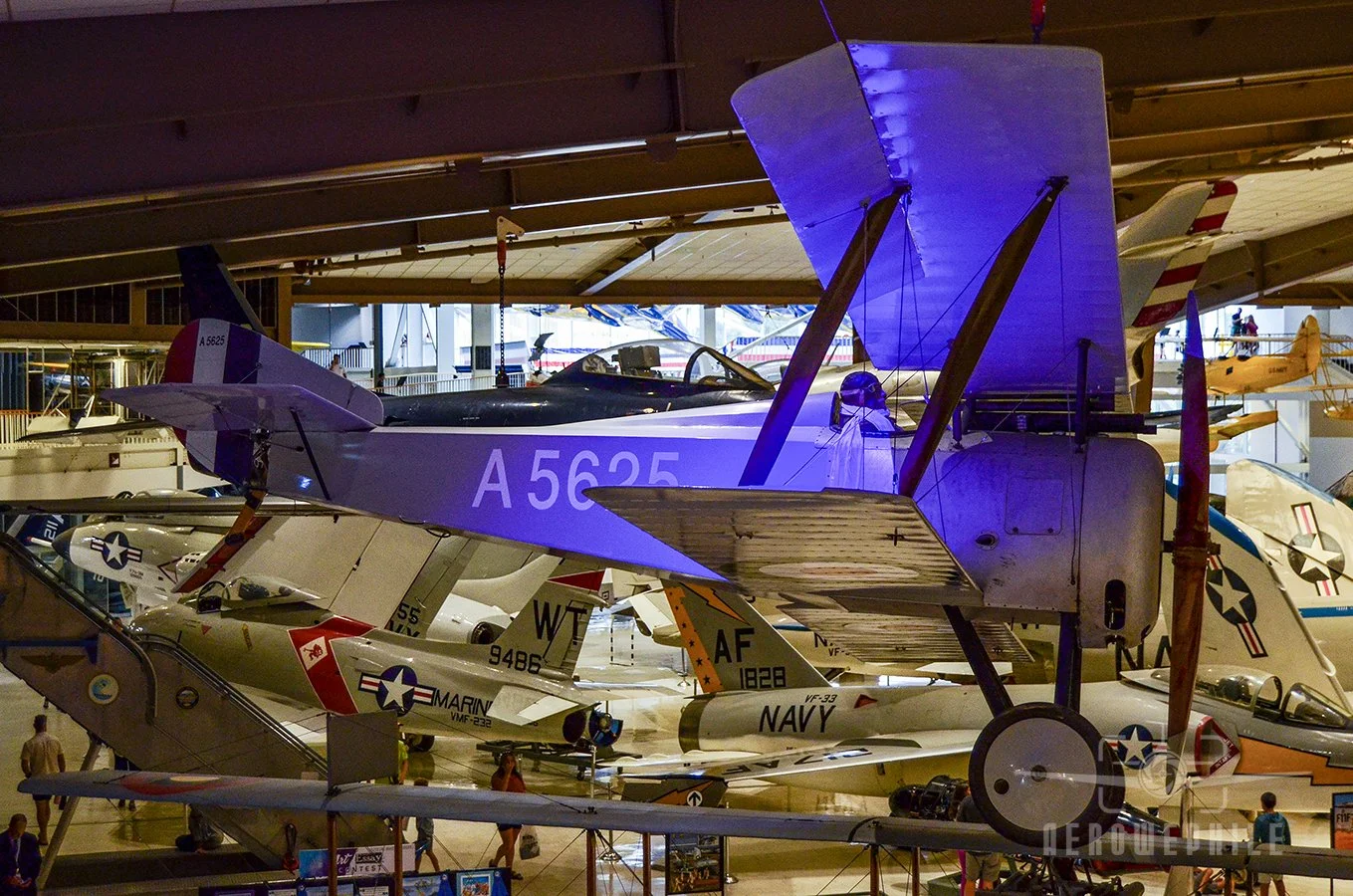
Hanging overhead is the Hanriot HD-1. A capable French fighter, the HD-1 was overshadowed by its contemporary, the SPAD VII, and saw use mostly with Belgian and Italian pilots. After the war, the U.S. Navy acquired several for shipboard evaluation, performing launch experiments from wooden decks erected atop the gun turrets of battleships.
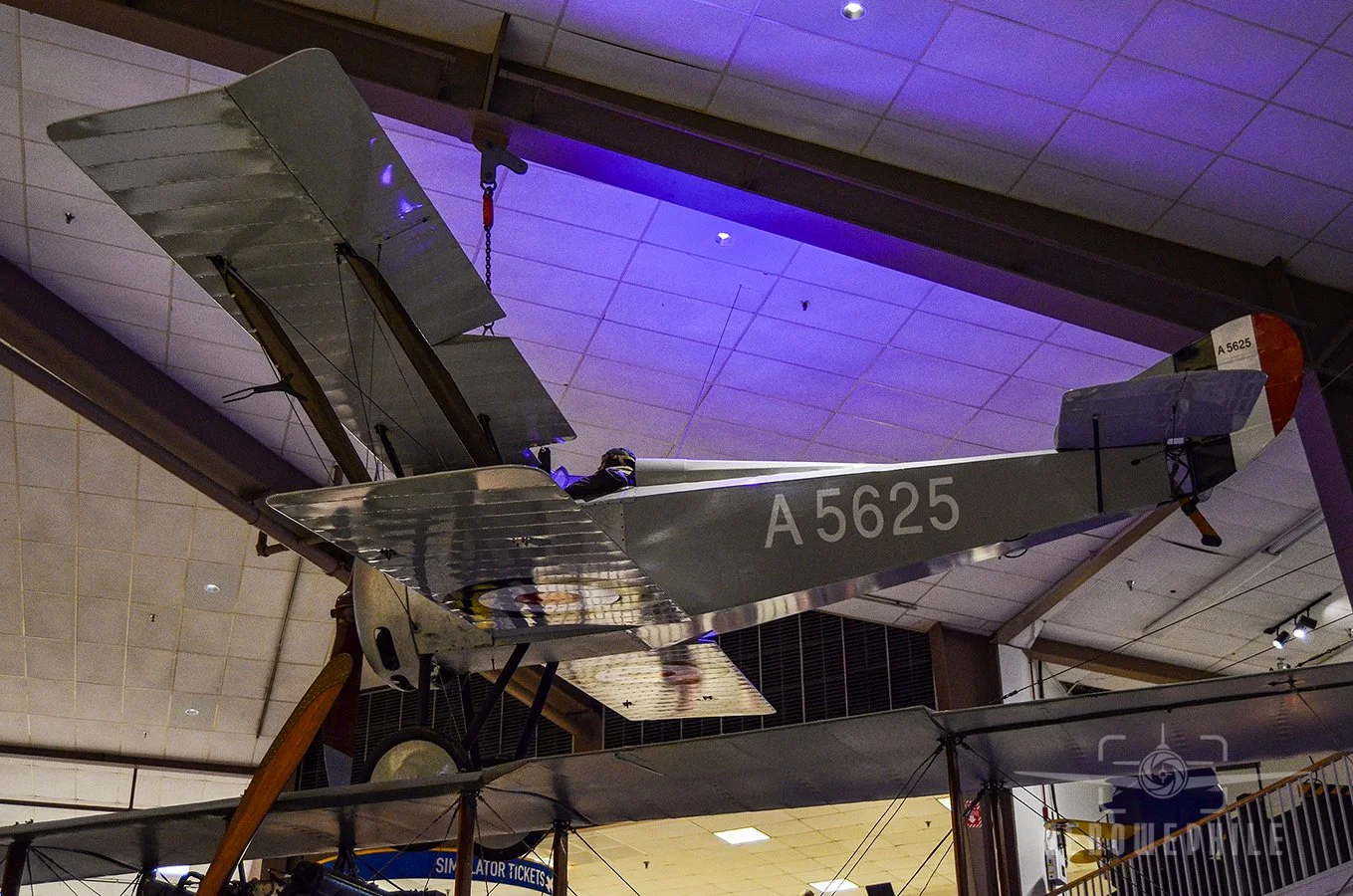
Out of a batch of 26 French Hanriot HD-2 seaplanes, the Navy converted ten to landplane configuration and designated them HD-1s. Some outfitted the Ship Plane Unit conducting experimental work at Langley Field, Virginia, and others operated from the battleship Mississippi(BB-41) under the command of Captain William A. Moffett, who later was promoted to flag rank and became the first Chief of the Bureau of Aeronautics.
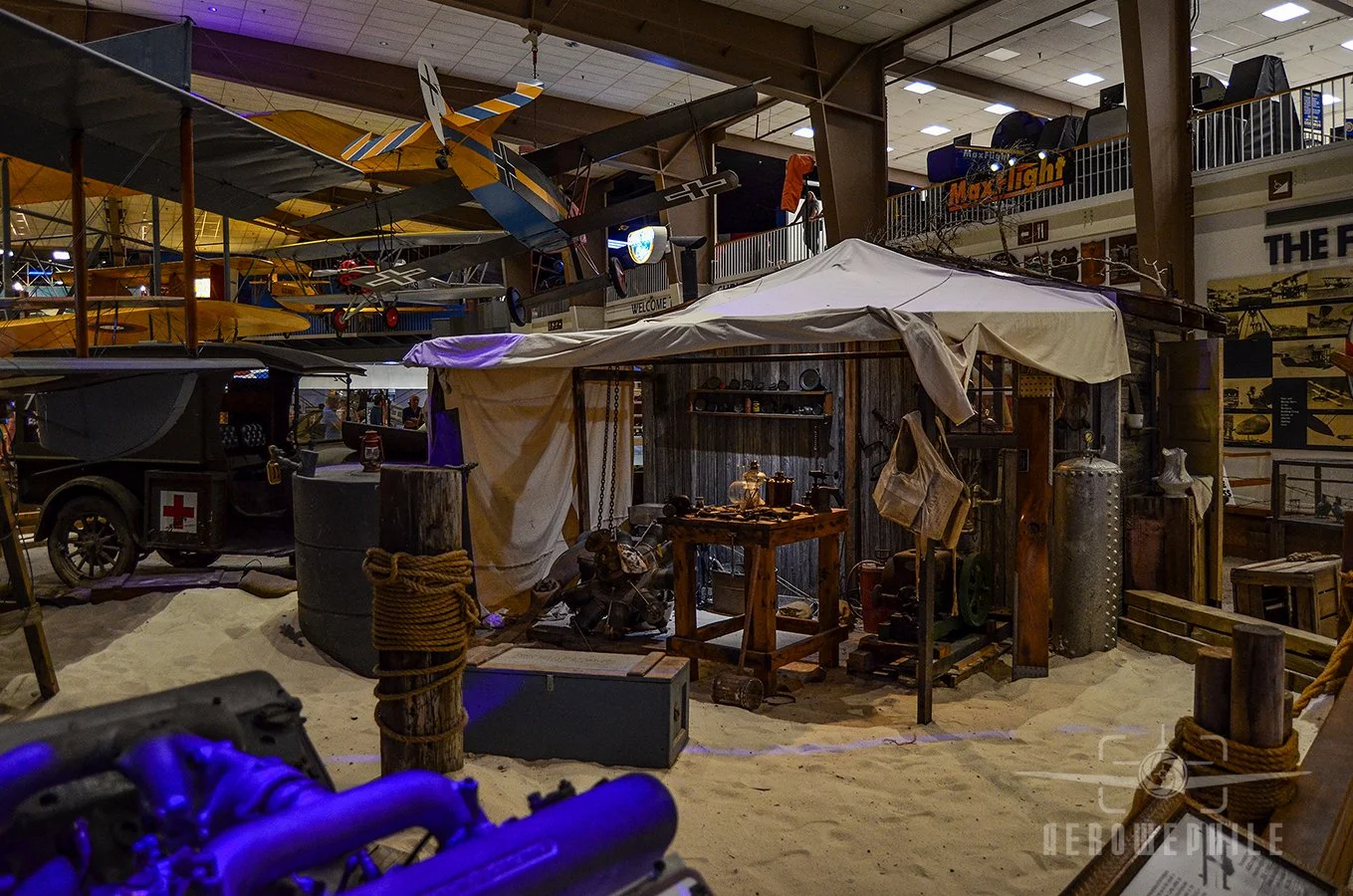
World War I exhibit.
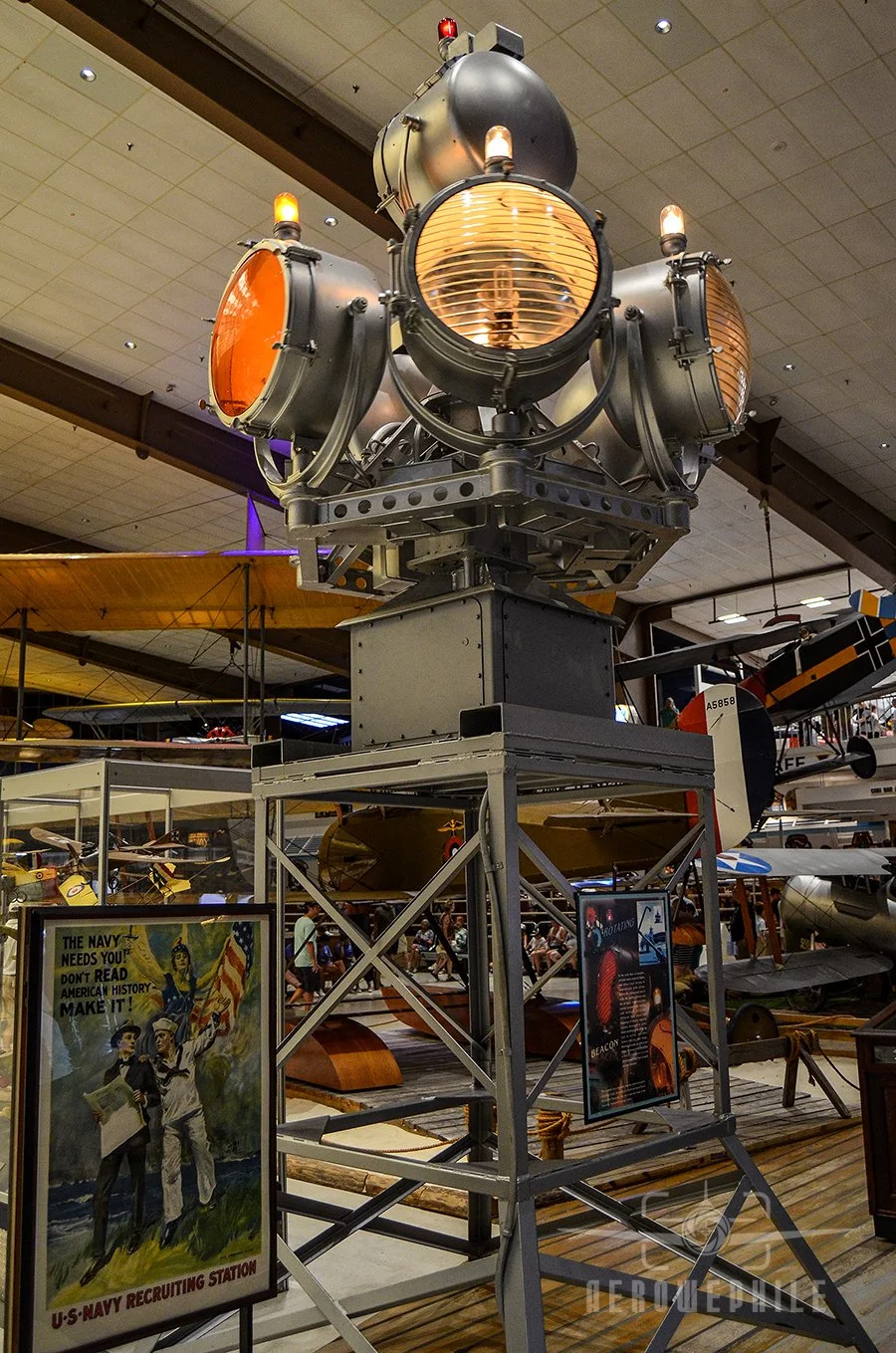
Before the widespread use of radio, the rotating beacon was the primary communication system around both civilian and military airfields. This example was originally atop the control tower at Chevalier Field, the original airfield on board NAS Pensacola, a site now home to the Naval Air Technical Training Center.
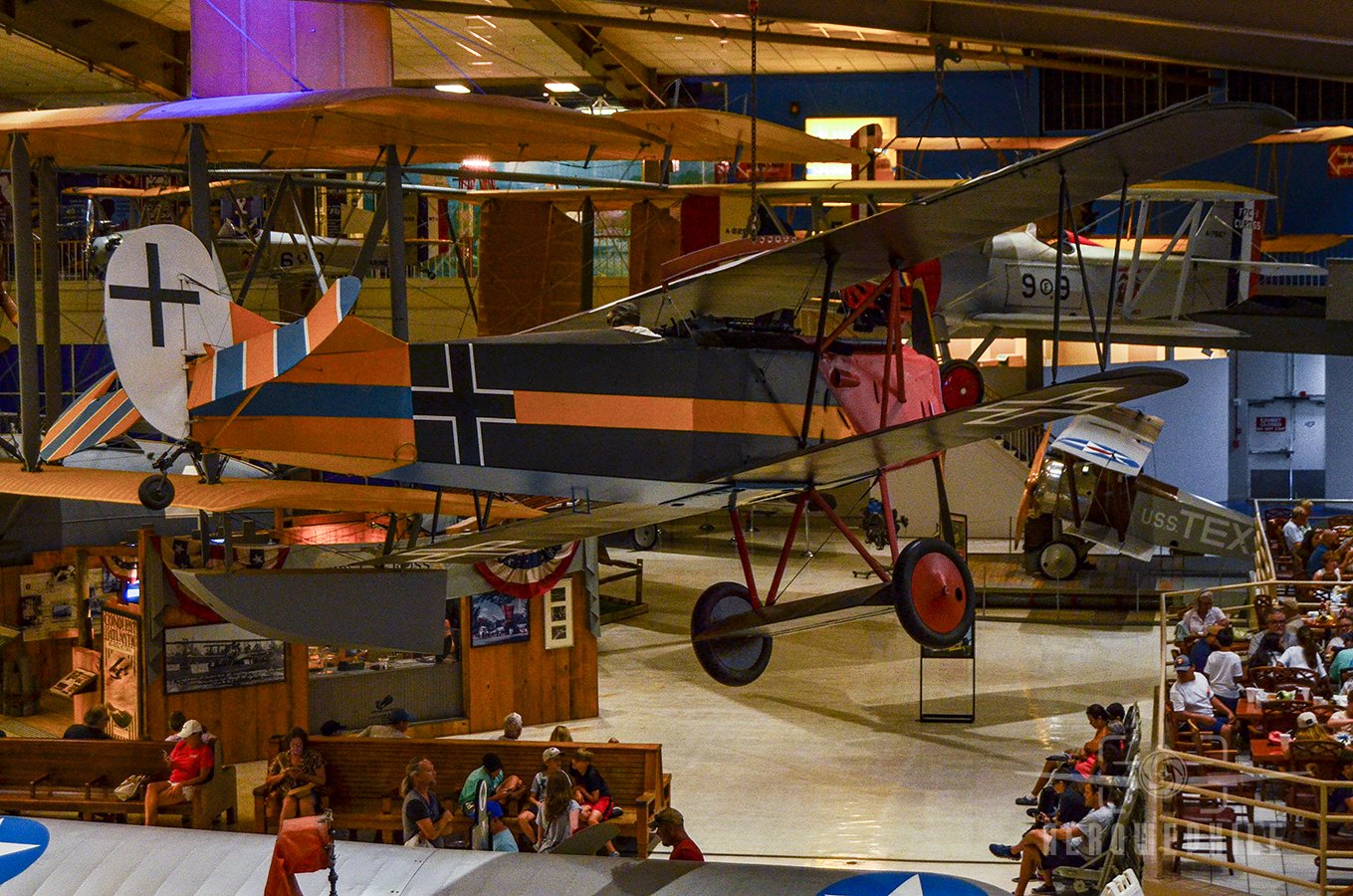
A fierce German fighter, the Fokker D.VII made its mark quickly after entering service in 1918, and was so feared that the Versailles Treaty mandated the surrender of all D.VIIs to the Allies. The Navy used a handful after the war as trainers. The Museum's example of the Fokker D.VII is a replica aircraft constructed using some original parts.
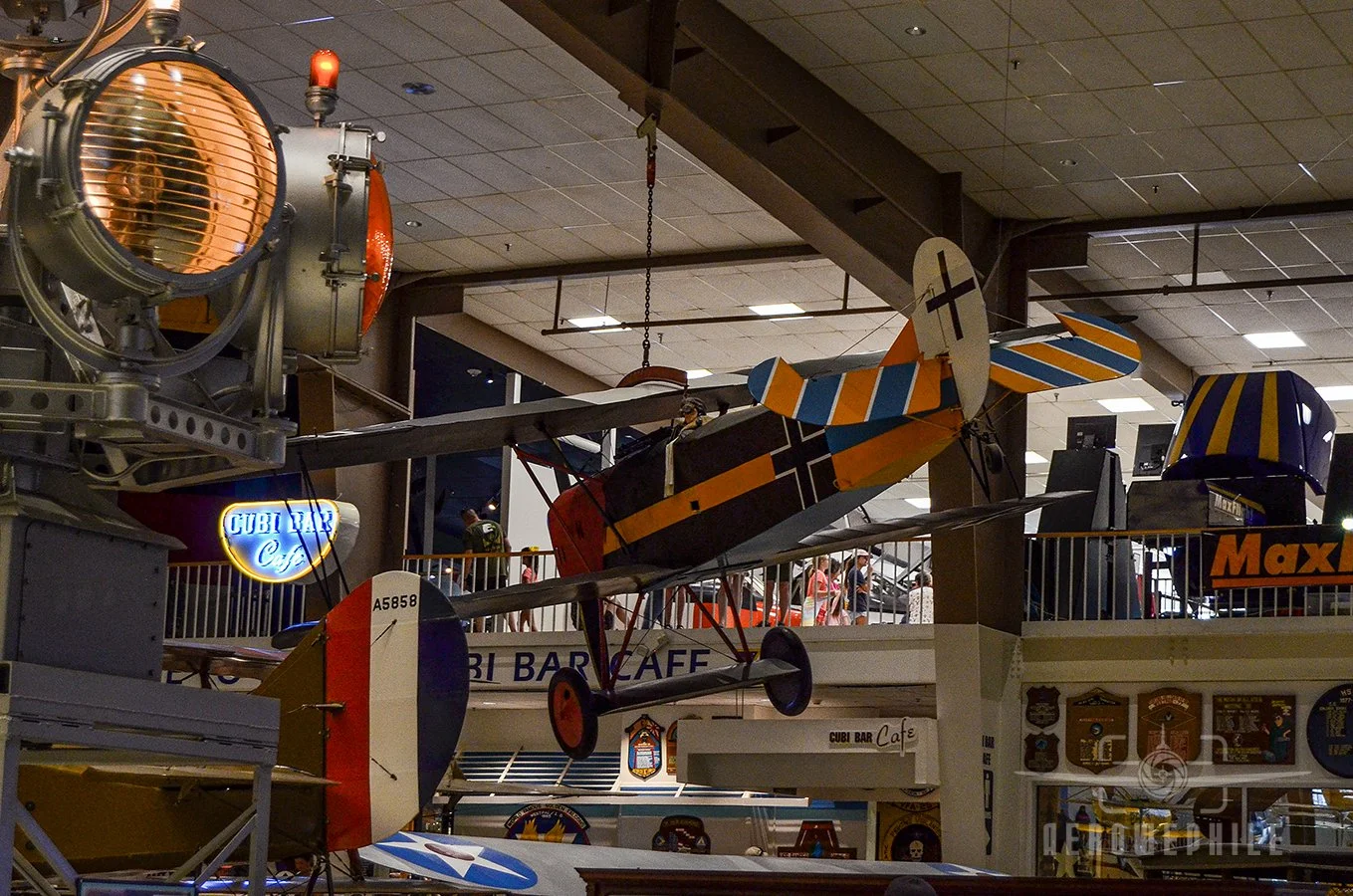
The Museum's example of the Fokker D.VII is a replica aircraft constructed using some original parts by Dr. Stan Morel of Arlington, Texas, who served as an enlisted pilot in the Navy and retired as an aviation chief machinist's mate. At one time it was in flyable condition. Painted overall red when it arrived at the Museum in 1986, it underwent a complete rework by students at Pensacola Junior College.
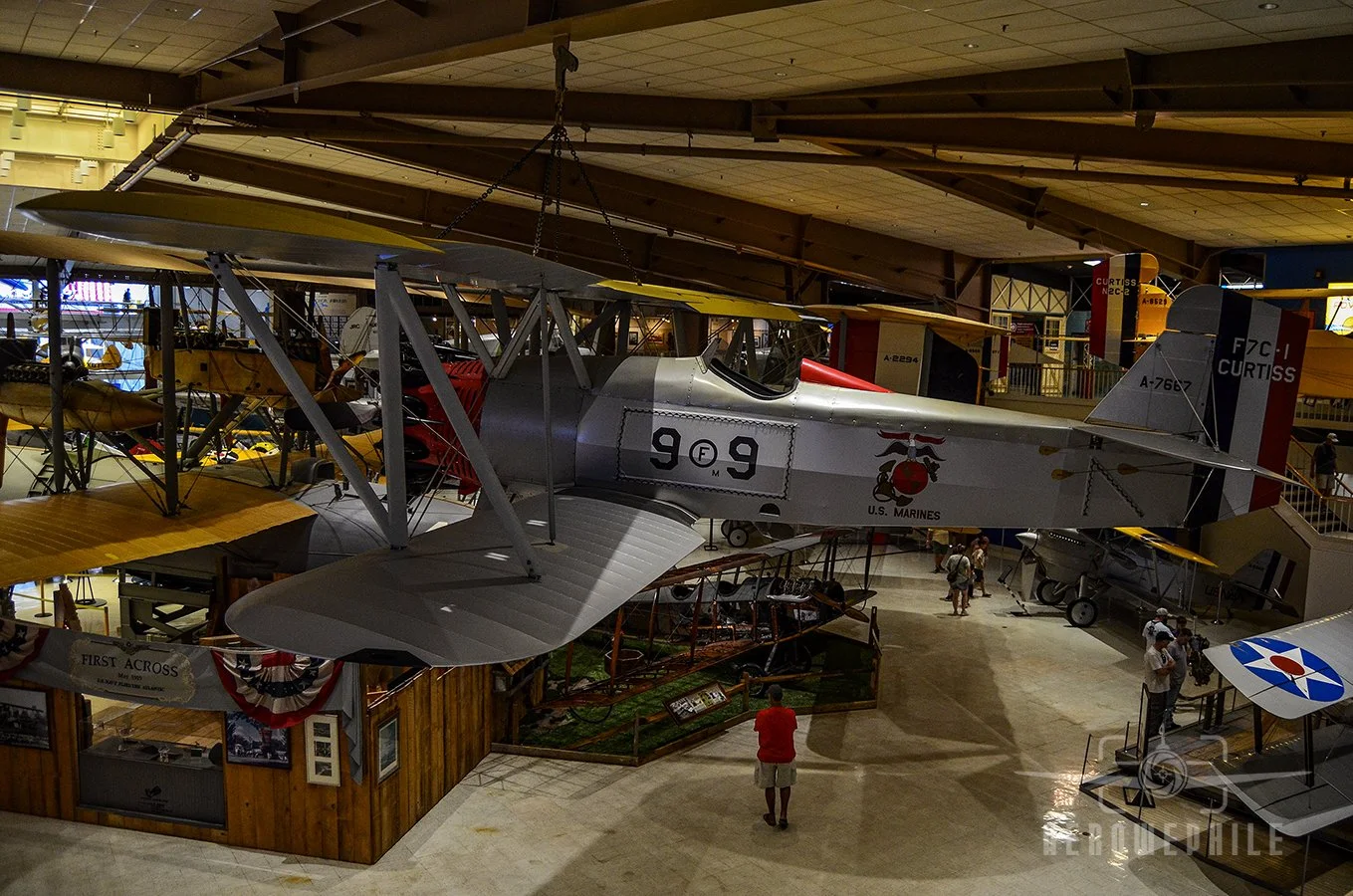
Designed from the outset as a carrier-based fighter, ironically, the F7C-1 Seahawk never saw the deck of a ship, serving instead with the Marine Corps in Fighting Squadron (VF) 5M, later re-designated as VF-9M. The squadron gained fame with its flying exhibitions around the country, for which the maneuverable Seahawk was well suited.
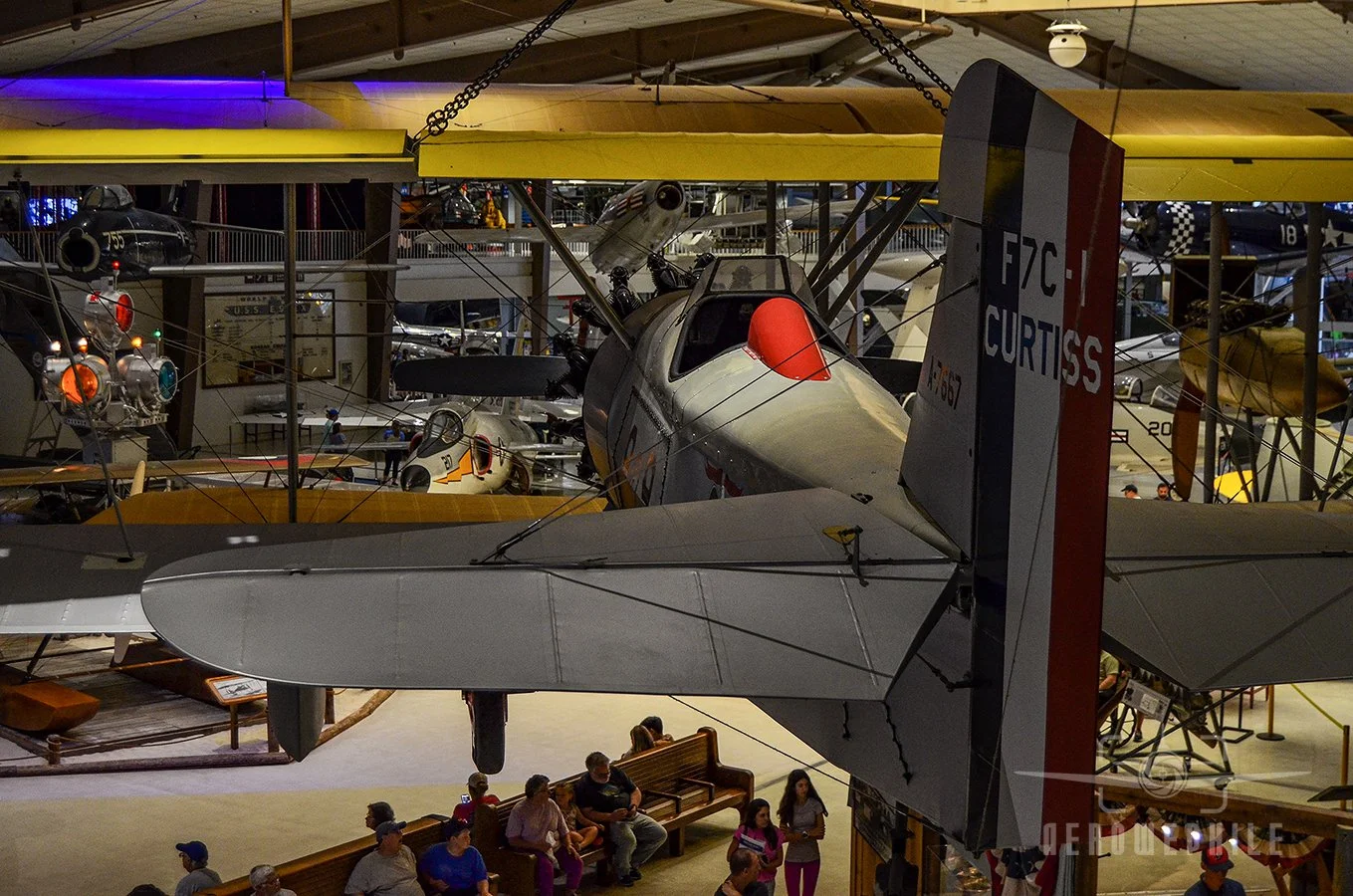
The appearance of the F7C-1 Seahawk in December 1928 also marked the end of liquid-cooled engines in naval aircraft, the Navy opting for the air-cooled radial.
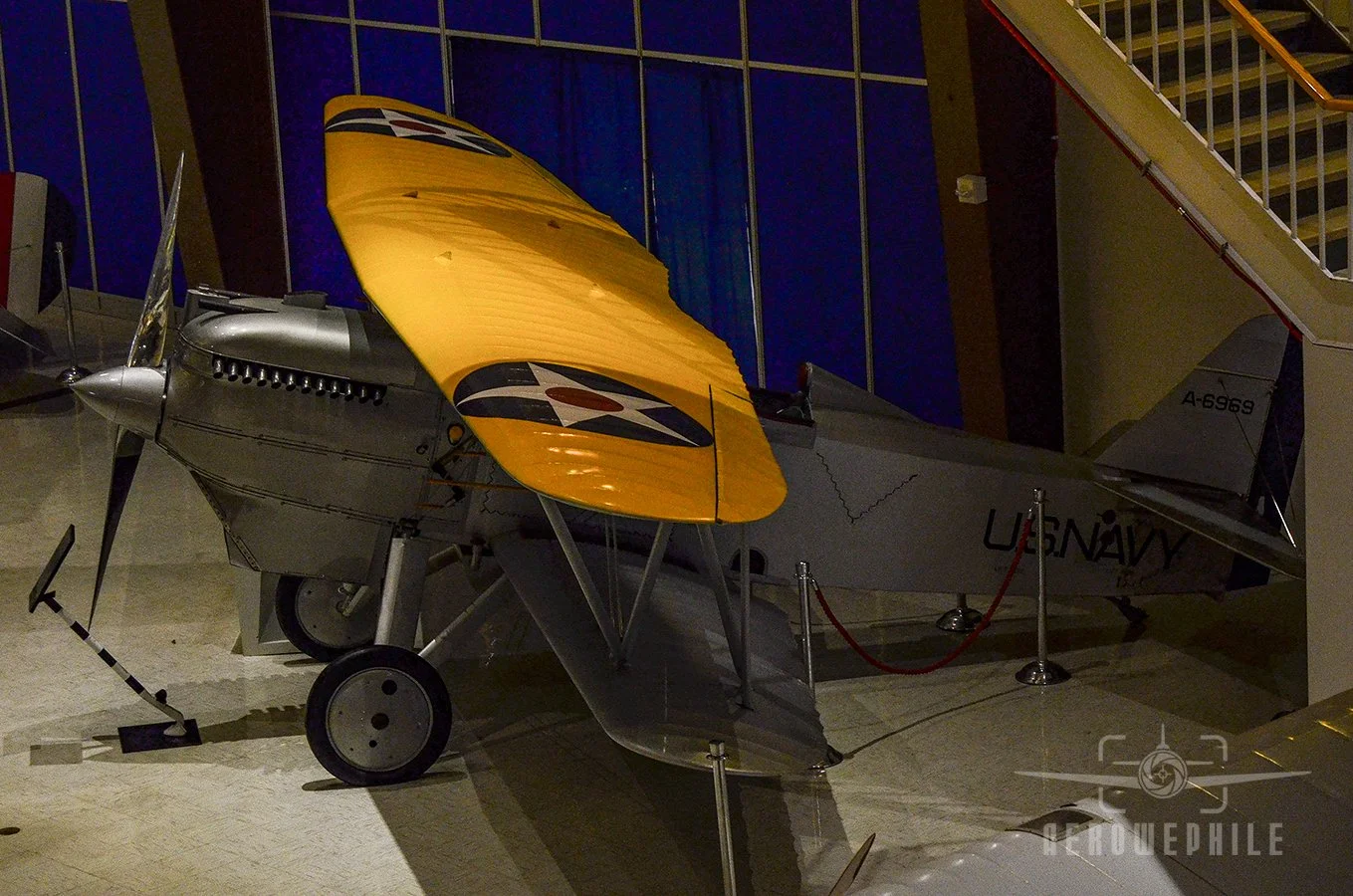
An exceptional Golden Age fighter and part of Curtiss' famous Hawk-series, the F6C Hawk served a critical role in developing the tactic of dive-bombing, being one of the earliest aircraft with an airframe strong enough to make the steep dives necessary for accurate strikes.
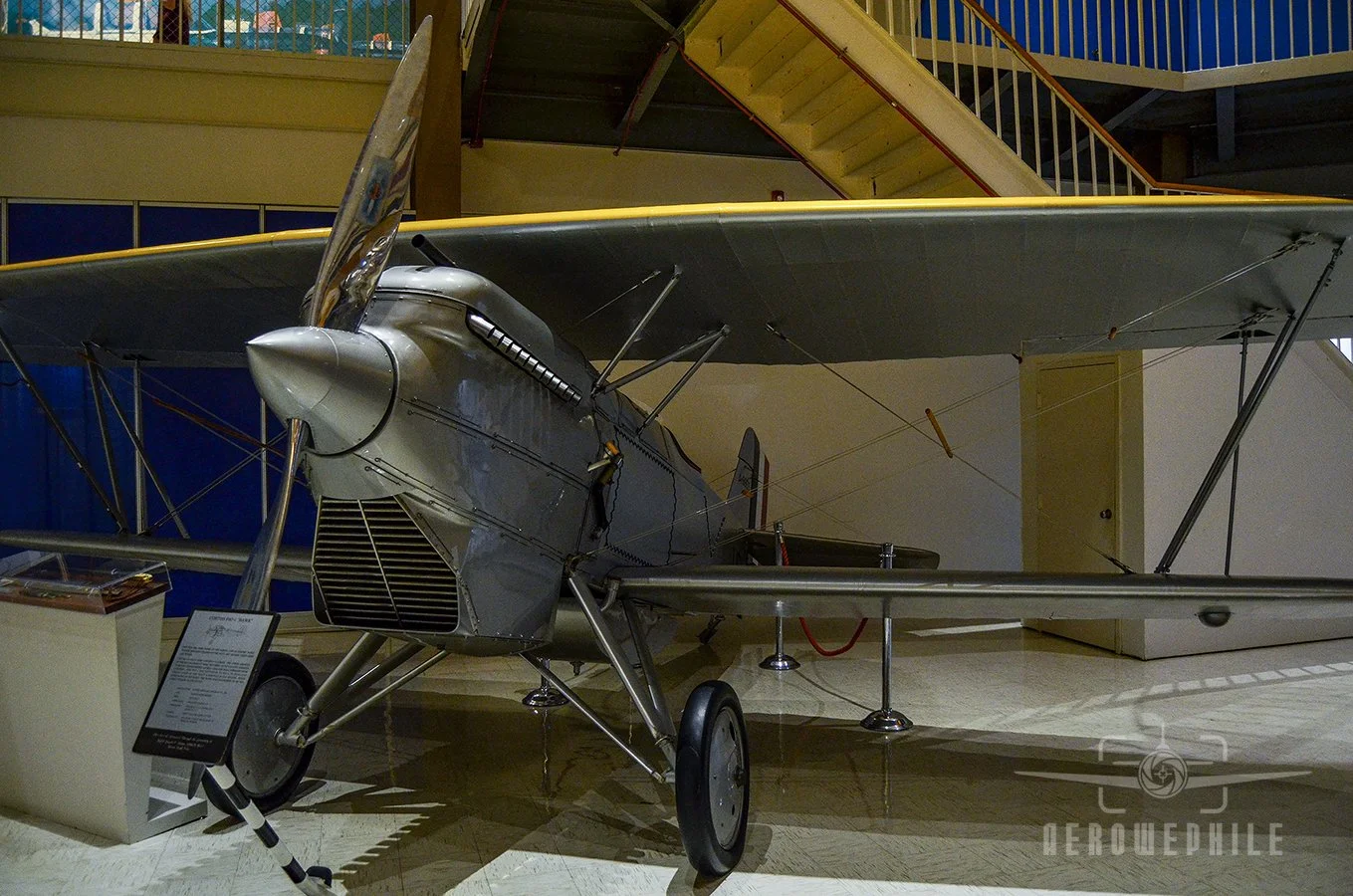
The Museum's example of the F6C-1 Hawk was acquired from Roy Reagan of Chico, California, in 1986. It is restored in the markings of Bureau Number A-6969.
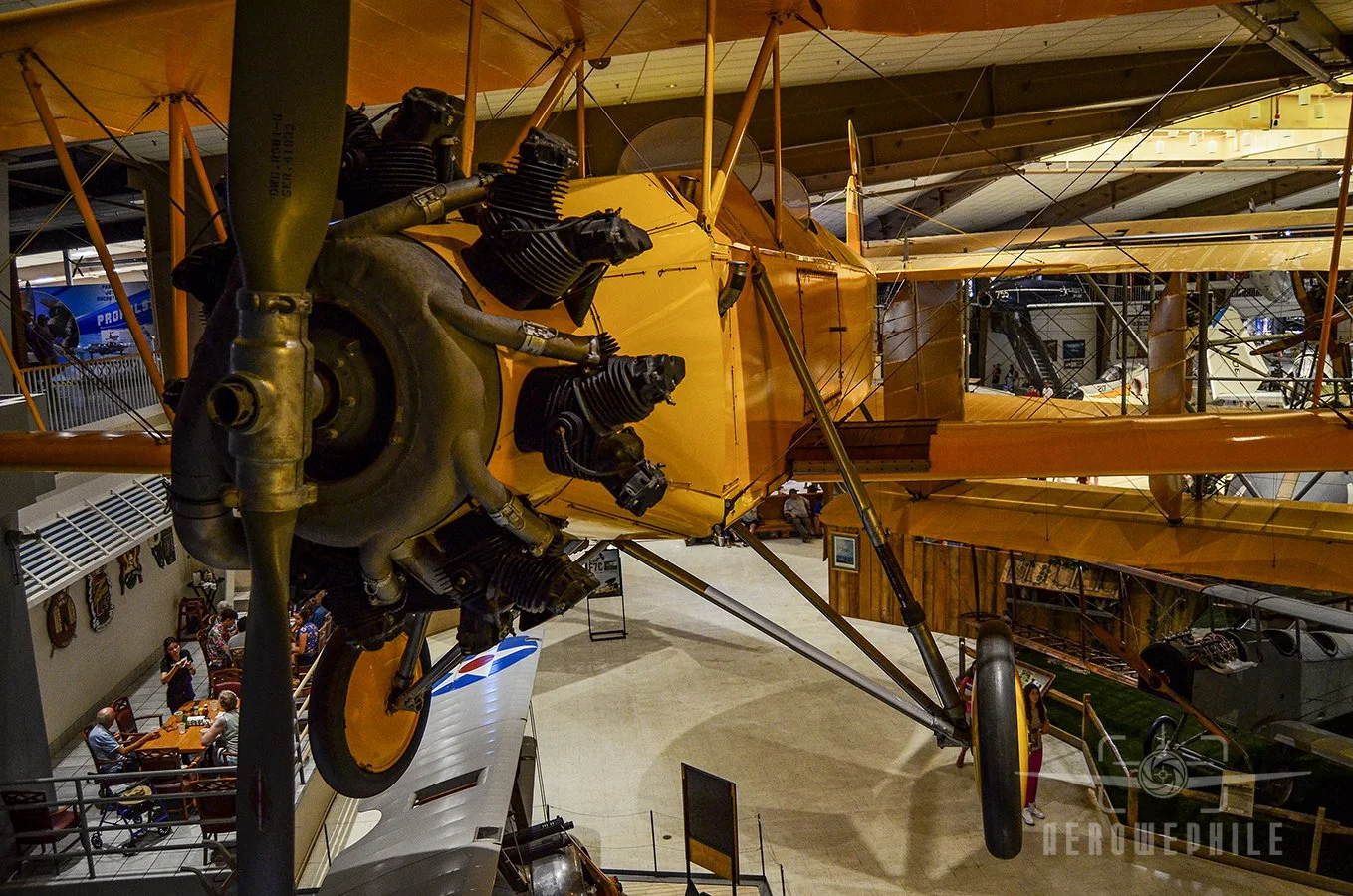
In 1928 Curtiss' XN2C-1 Fledgling trainer was evaluated by the Navy and won the competition for a new primary trainer. The Fledglings spent most of their service lives assigned to Naval Reserve training bases throughout the country.
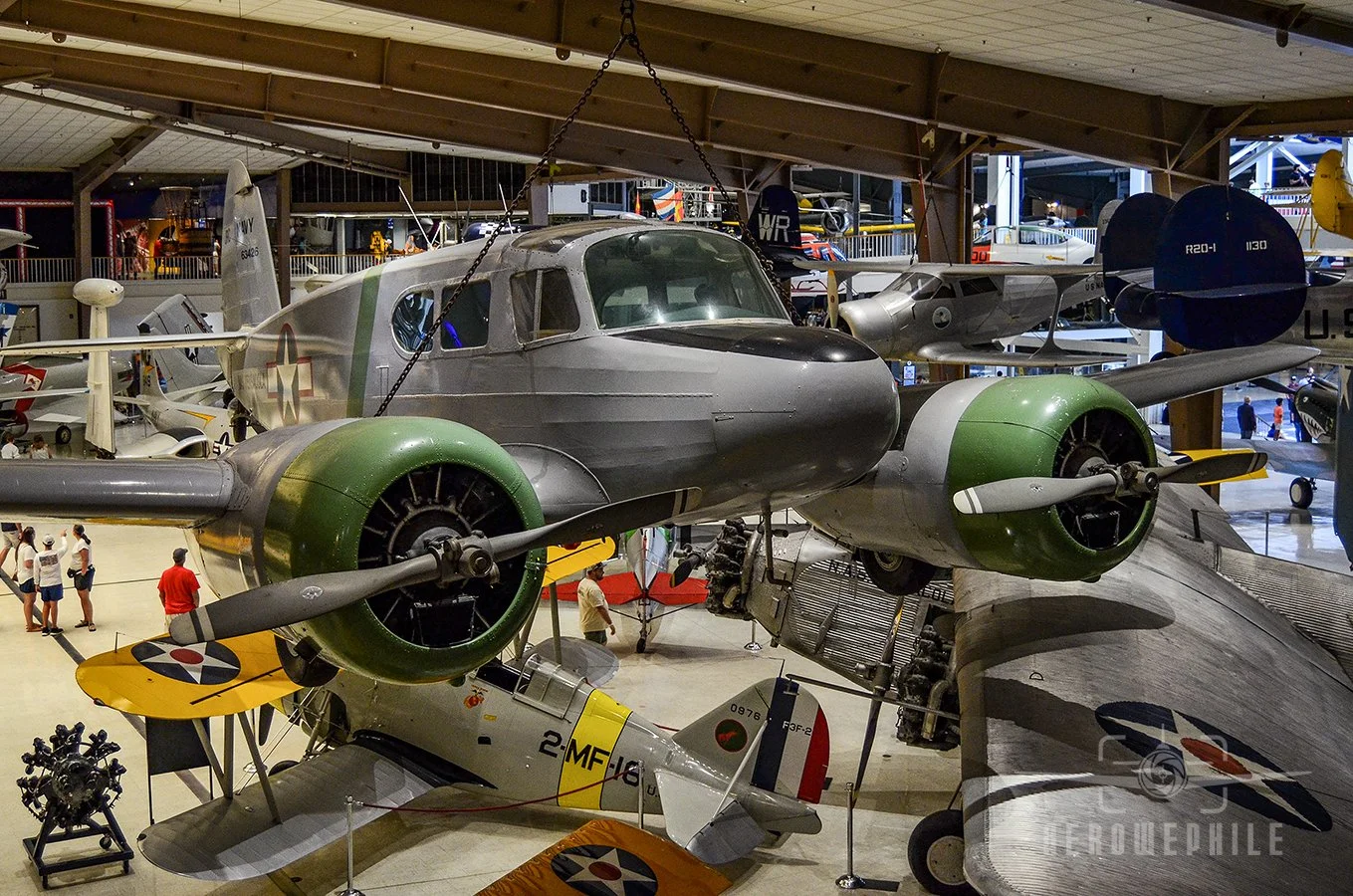
War-time expansion of Navy ferry squadrons and aircraft delivery units brought a need for small, reliable transports to carry ferry pilots to and from their home bases during World War II. One of these was the JRC-1, affectionately called the "Bamboo Bomber" by those who flew it.
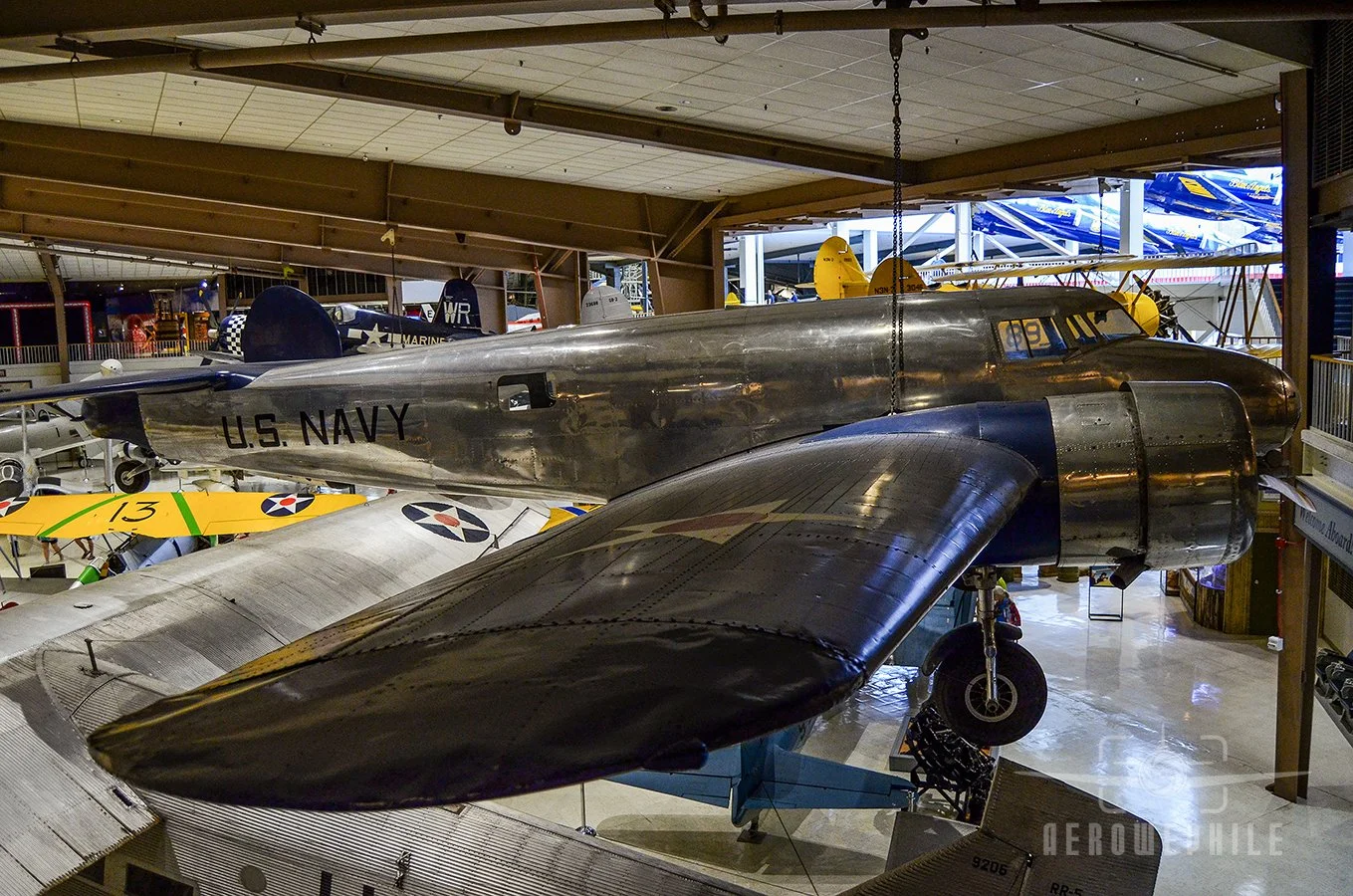
Purchased in 1936, the Lockheed 10A and B Electra were designated R2O and R3O, respectively. The R2O was used as the personal transport for the Secretary of the Navy. The aircraft on display is painted as the Secretary of the Navy's transport.
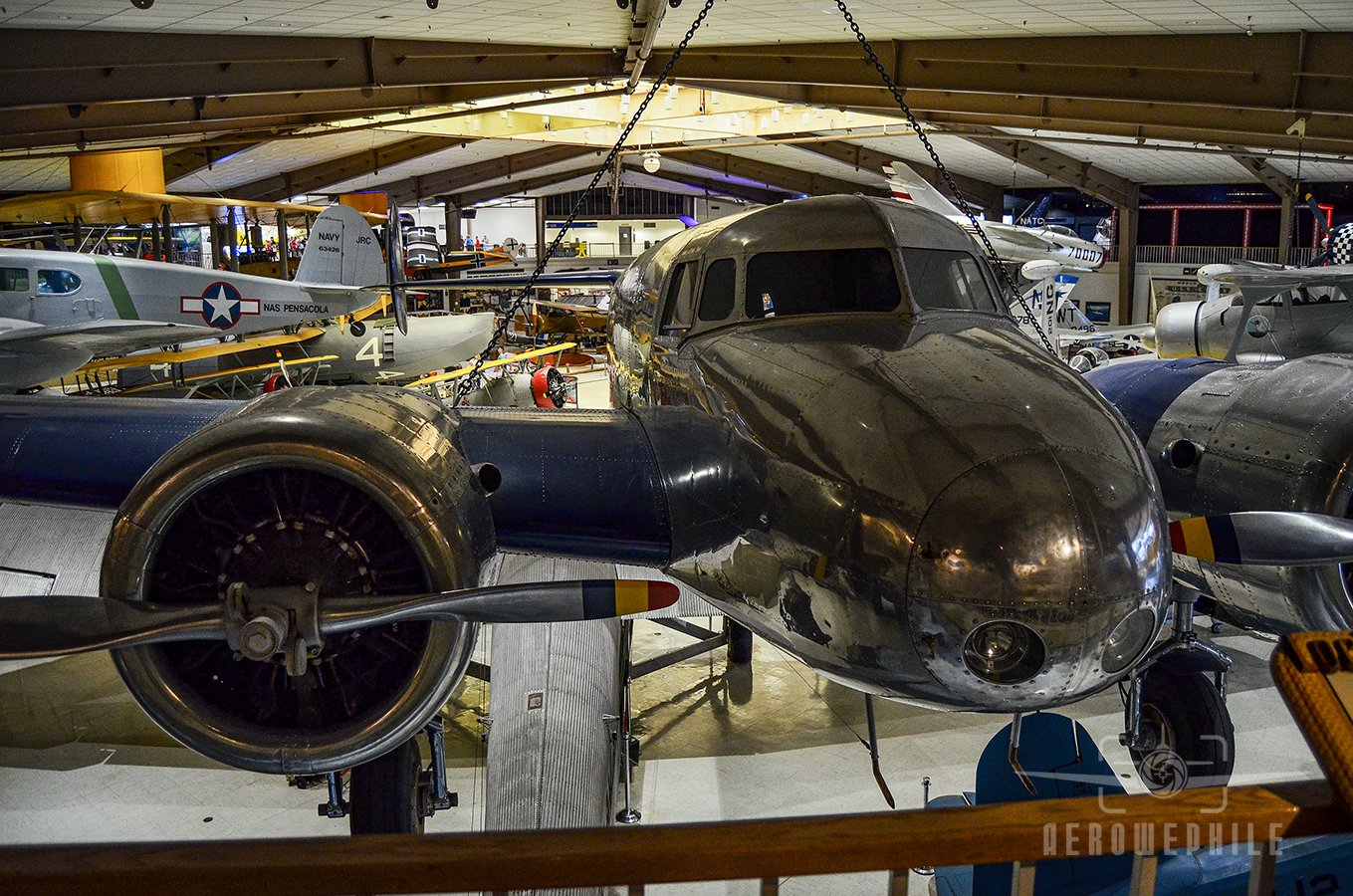
Purchased in 1936, the Lockheed 10A and B Electra were designated R2O and R3O, respectively. The R3O was given to the Coast Guard as personal transport for the Secretary of the Treasury. A much-modified 10E was used by Amelia Earhart in her round-the-world attempt in 1937.
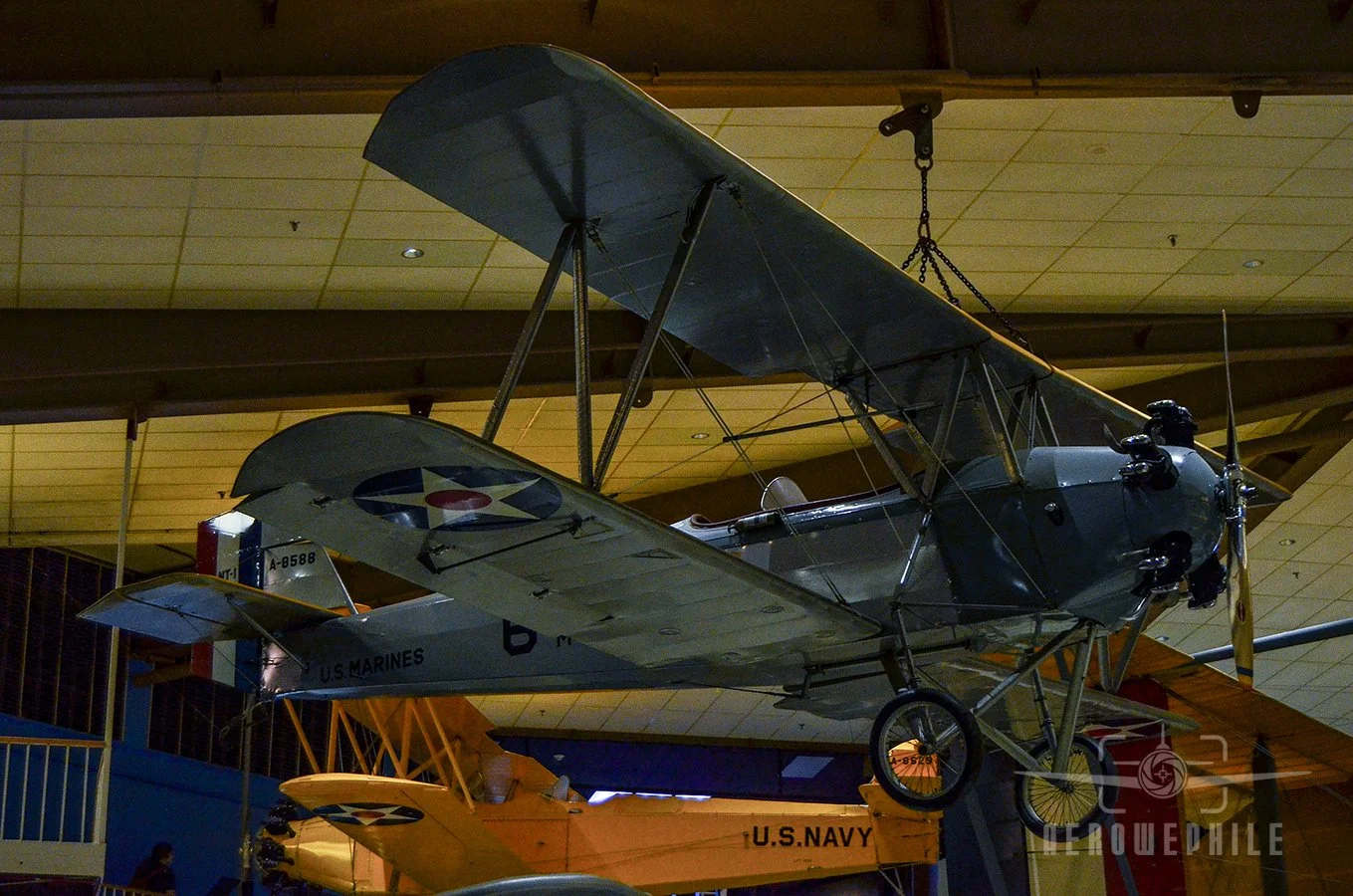
Purchased by the Navy in 1930 and designated NT-1, New Standard's D-29 trainer was altered to conform to Navy specifications to serve as a primary trainer. Only six were purchased. The aircraft were assigned to Naval Air Station (NAS) Pensacola as trainers and to the Marines at Quantico, Virginia.
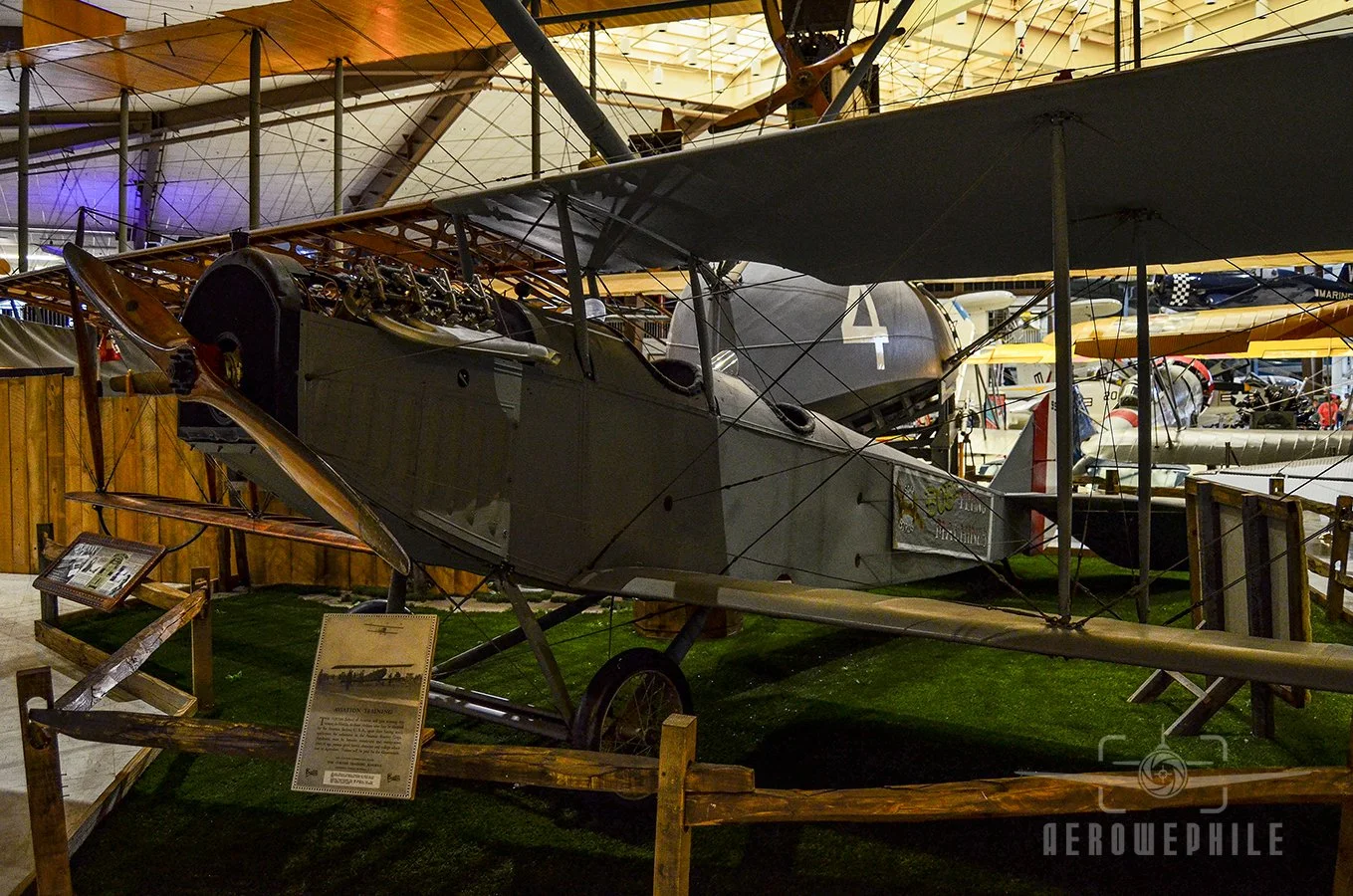
Following World War I, the JN-4 "Jenny" participated in experimental flights for the Army and Navy evaluating the feasibility of operating aircraft from airships. However, it was in the hands of barnstormers and pilots of the fledgling air mail service that the aircraft became most famous, exposing thousands of Americans to aviation.
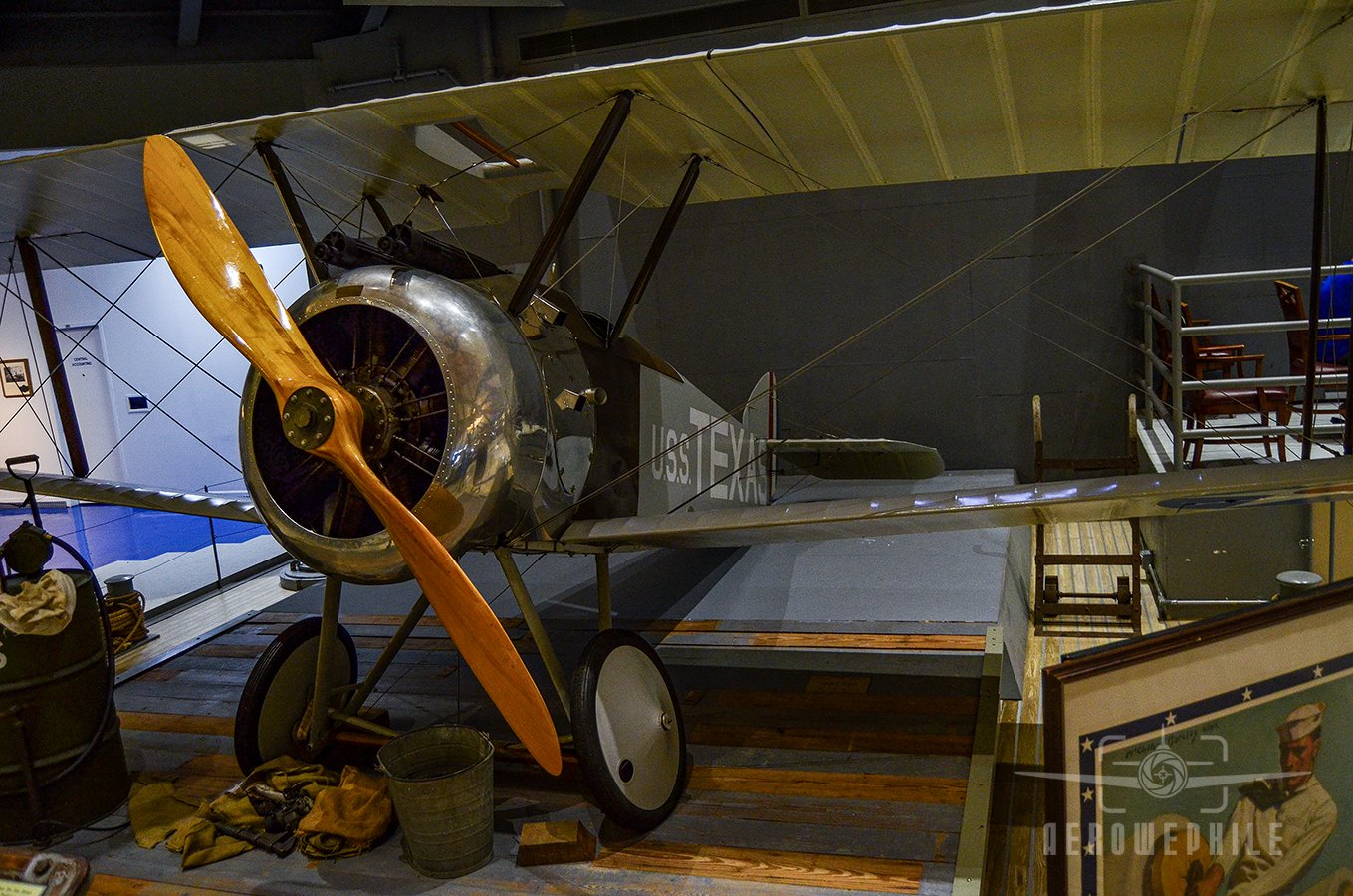
A superlative fighter, the Sopwith Camel was credited with shooting down 1,294 enemy aircraft, more than any other Allied fighter of the war, and was flown by Lieutenant Junior Grade David S. Ingalls, the Navy's sole ace of World War I. After the Armistice, the U.S. Navy obtained six Camels for experiments at Guantananmo Bay, Cuba, operating planes aboard ship using wooden platforms built over the forward turret guns of battleships.
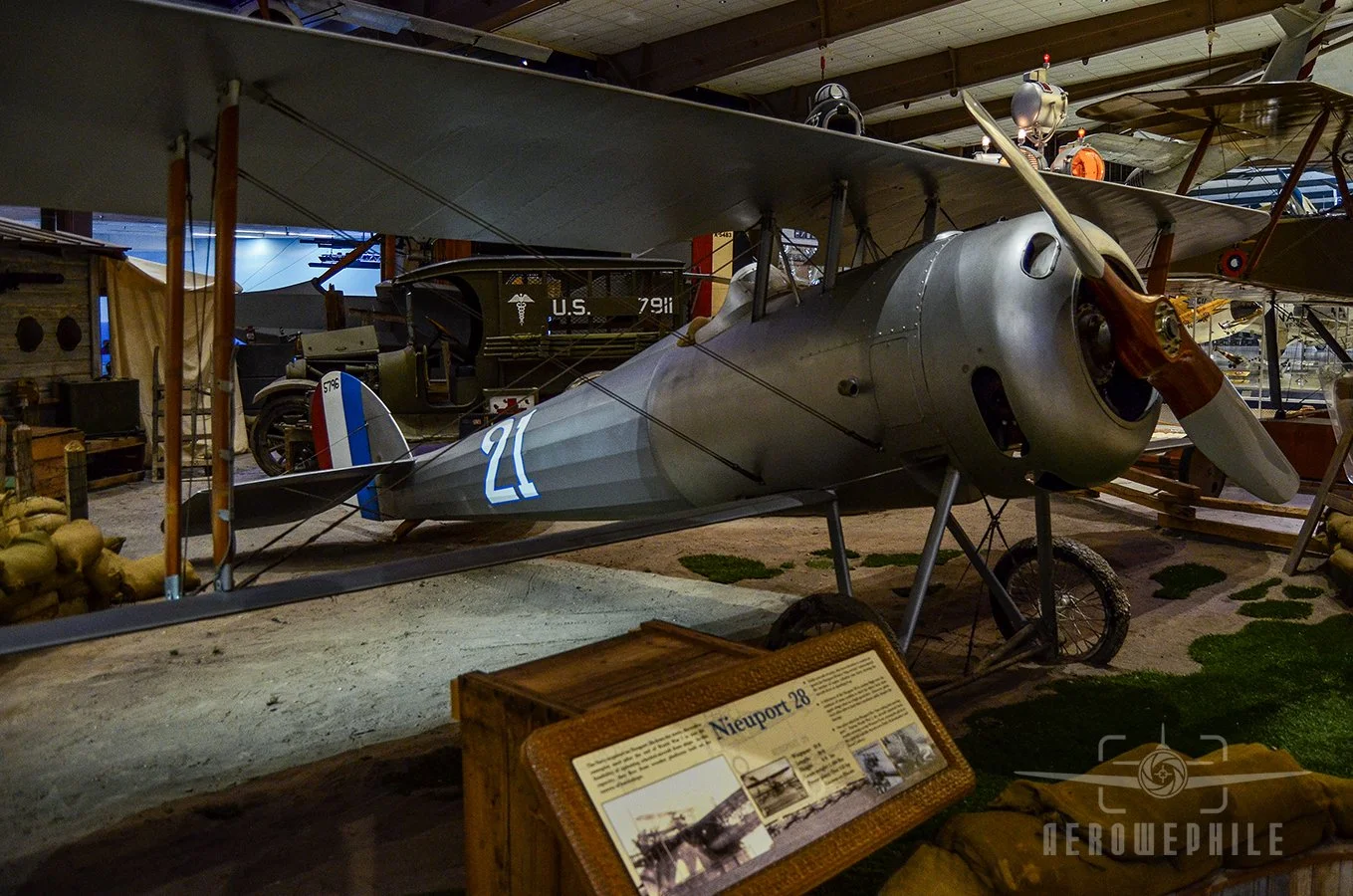
The U.S. Navy employed the Nieuport 28 not in combat, but in the postwar evaluation of operating aircraft from ships. In 1919 the sea service acquired twelve examples for service with the fleet as part of the "shipboard fighter" concept.
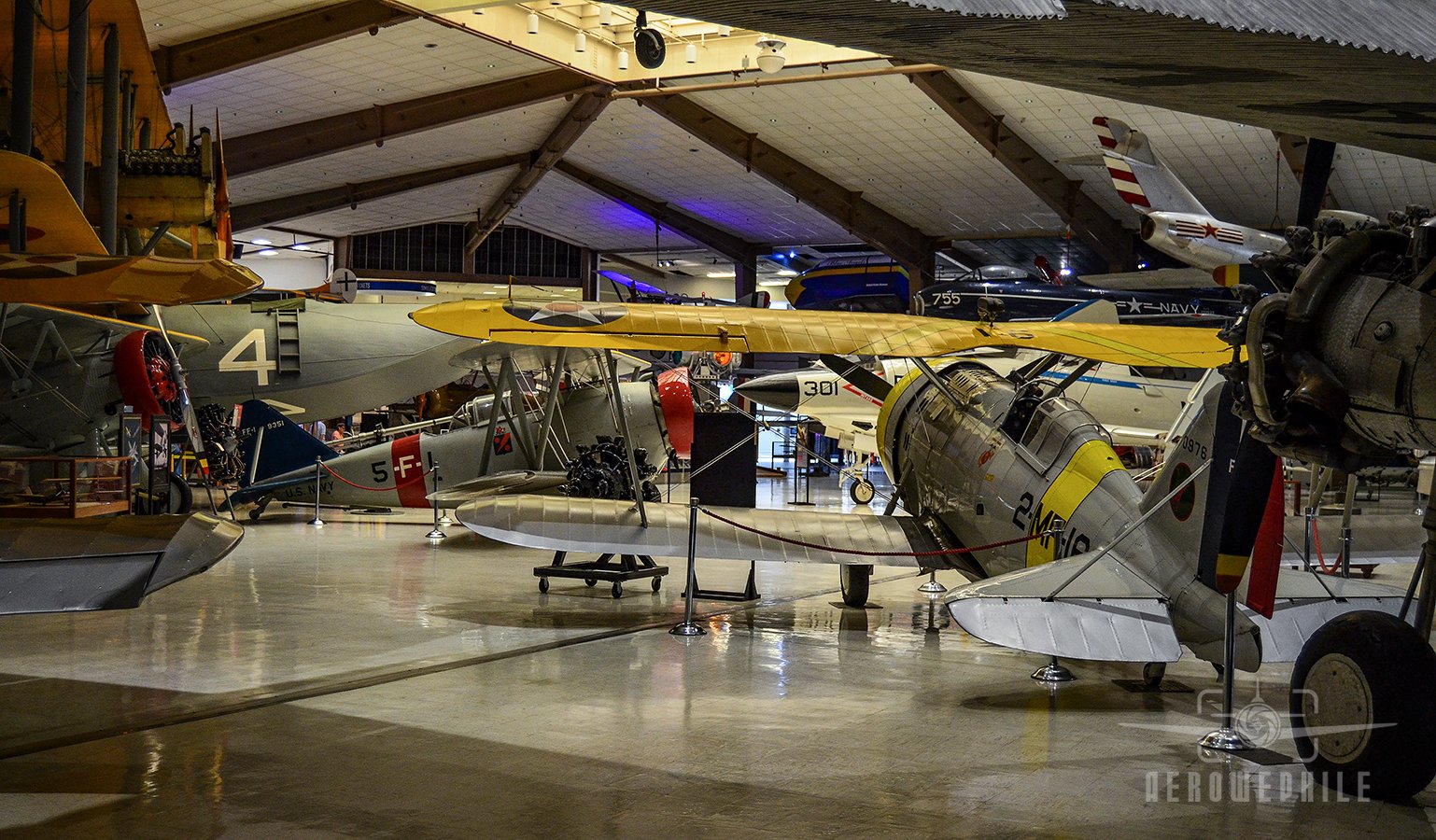
View of the South Wing.
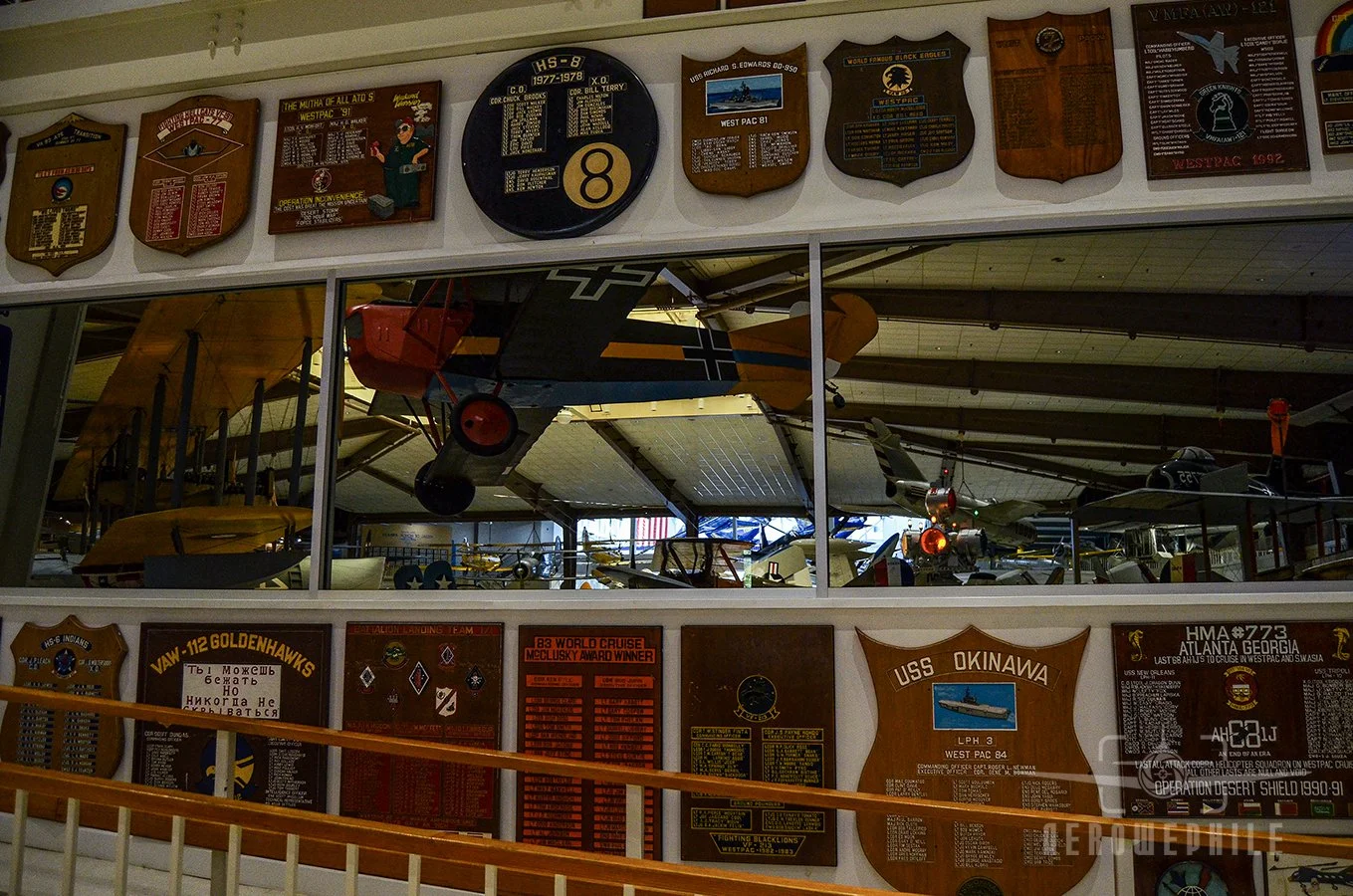
Plaques adorning the walls and reflective windows show the South Wing.
MEZZANINE EXHIBITS
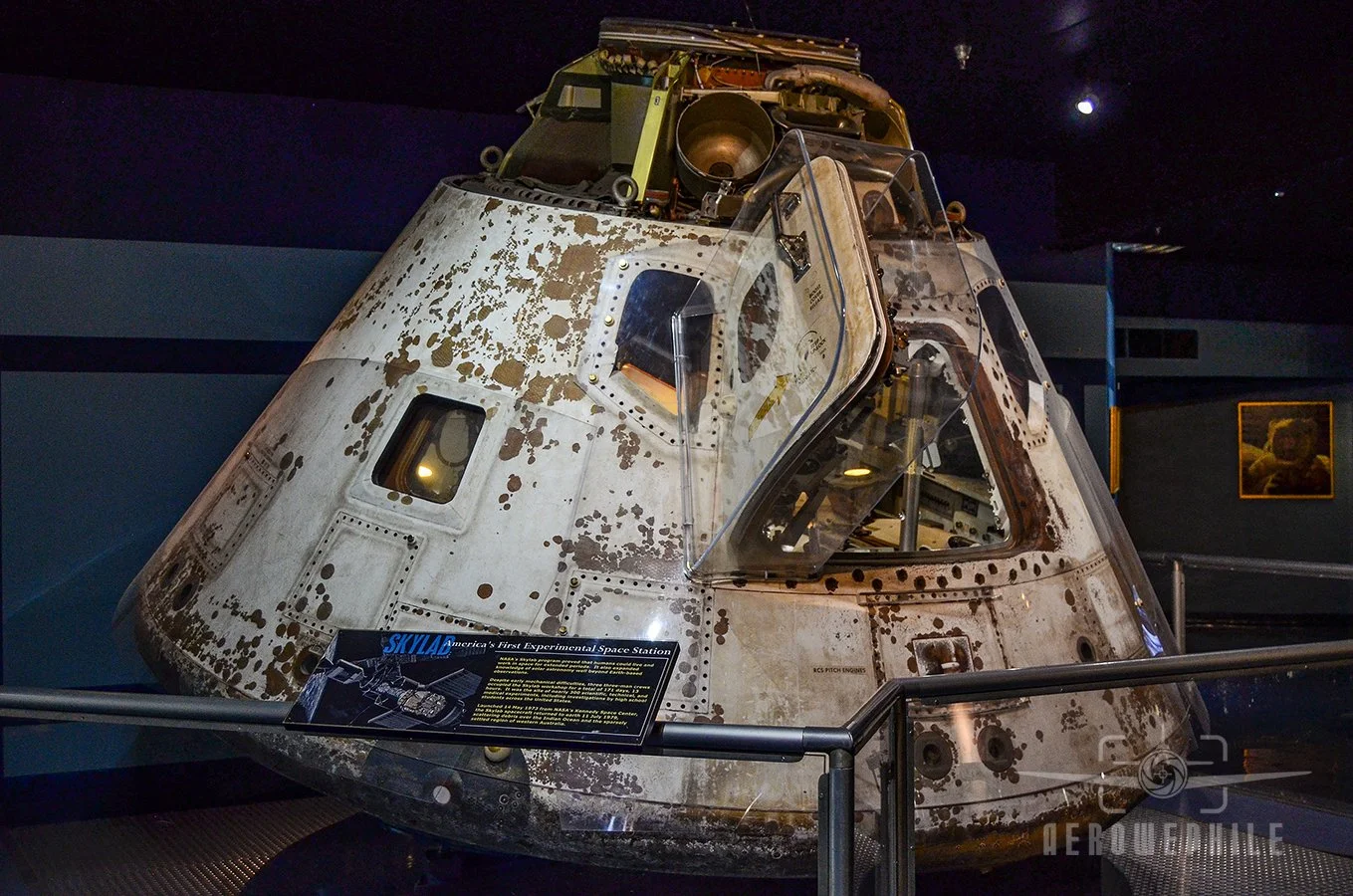
Skylab Command Module - A centerpiece of the Museum's collection of space artifacts is the command module for the Skylab II mission flown by an all-Navy crew (Charles Conrad, Paul Weitz and Joseph Kerwin).
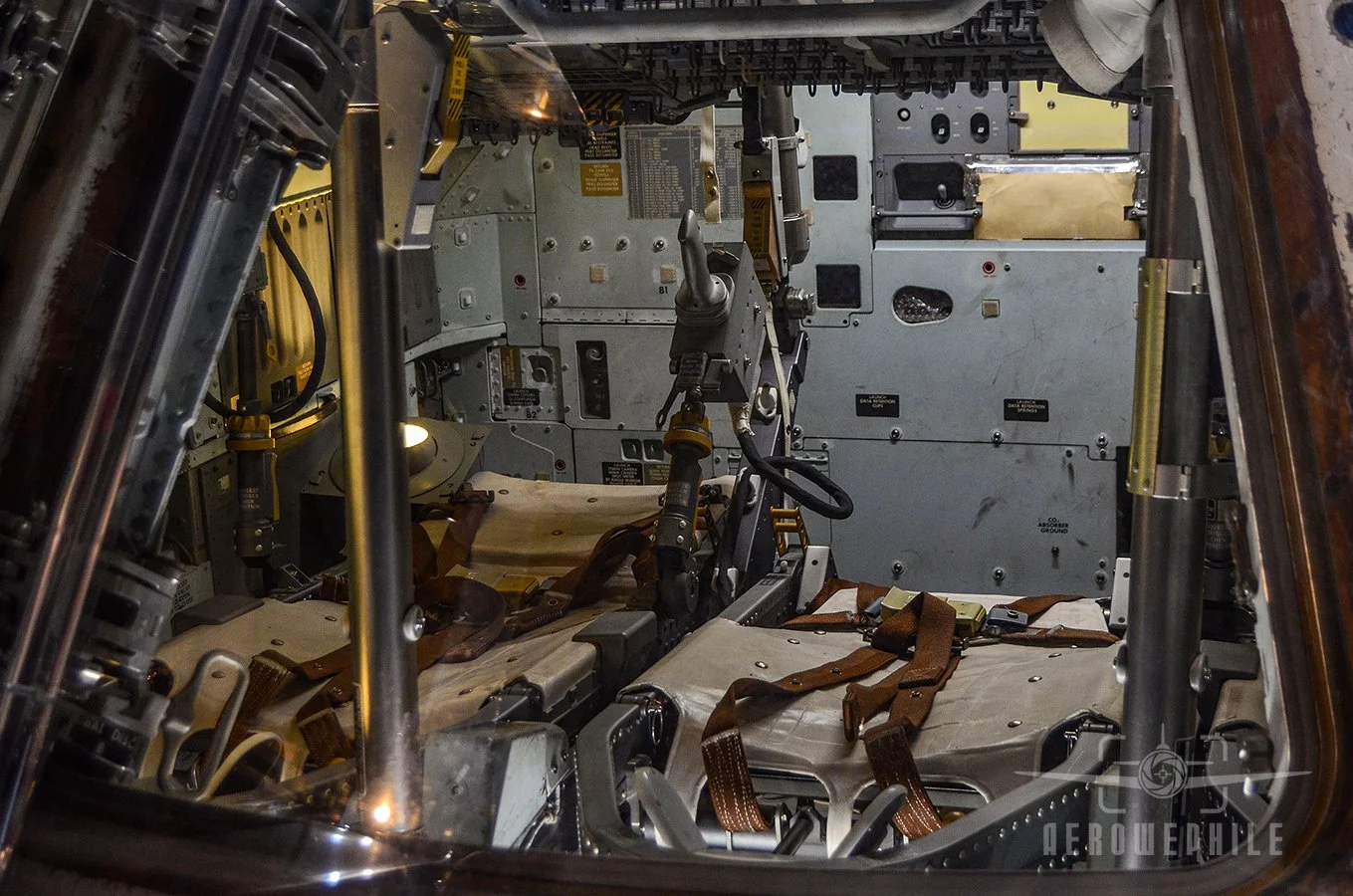
Skylab Command Module Interior - The all-Navy crew of Charles Conrad, Paul Weitz and Joseph Kerwin went on a 28-day mission to the orbiting Skylab space station in May-June 1973.
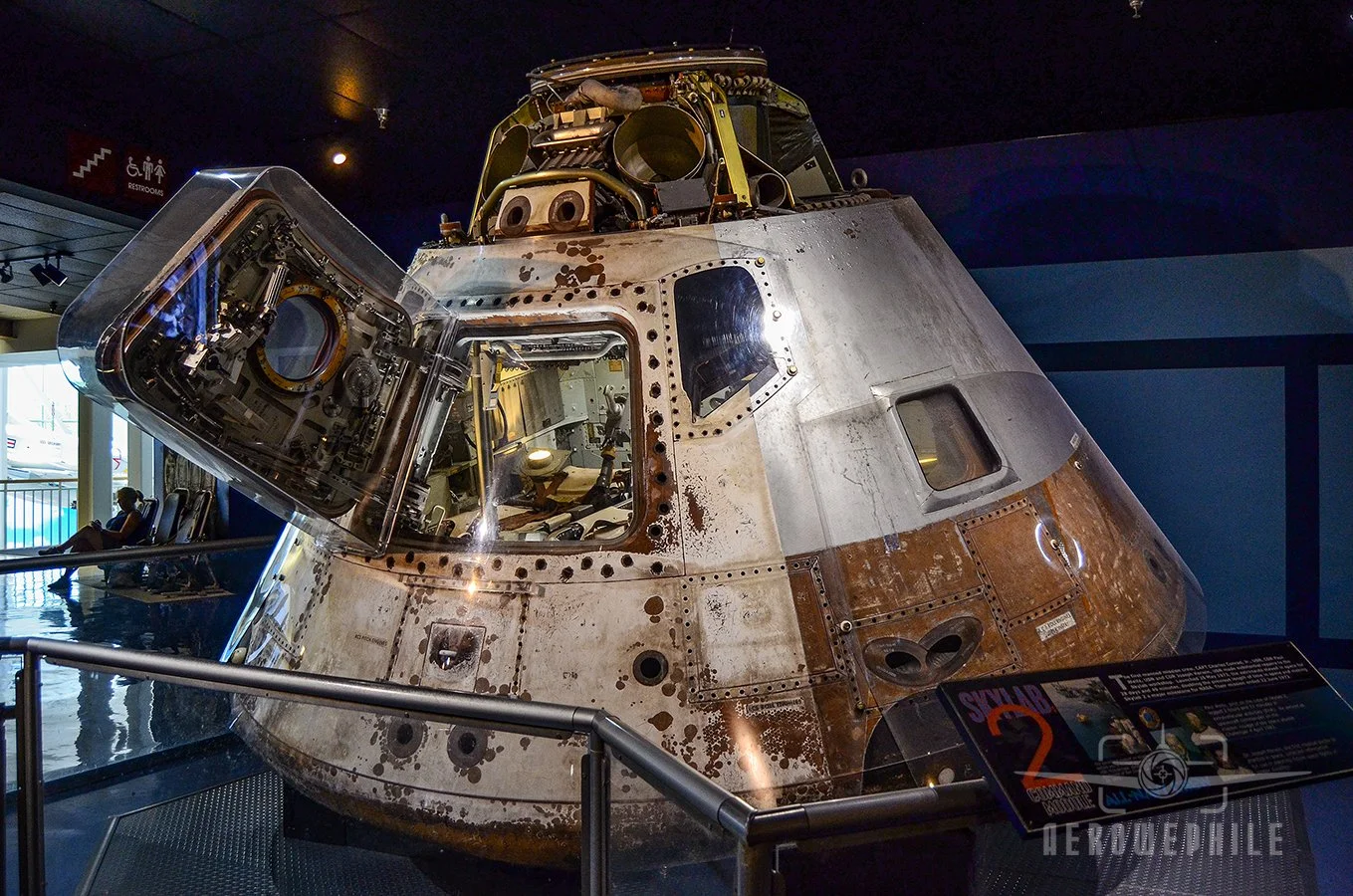
Skylab Command Module - Skylab II set record for the longest duration manned space flight, greatest distance traveled and greatest mass docked in space.
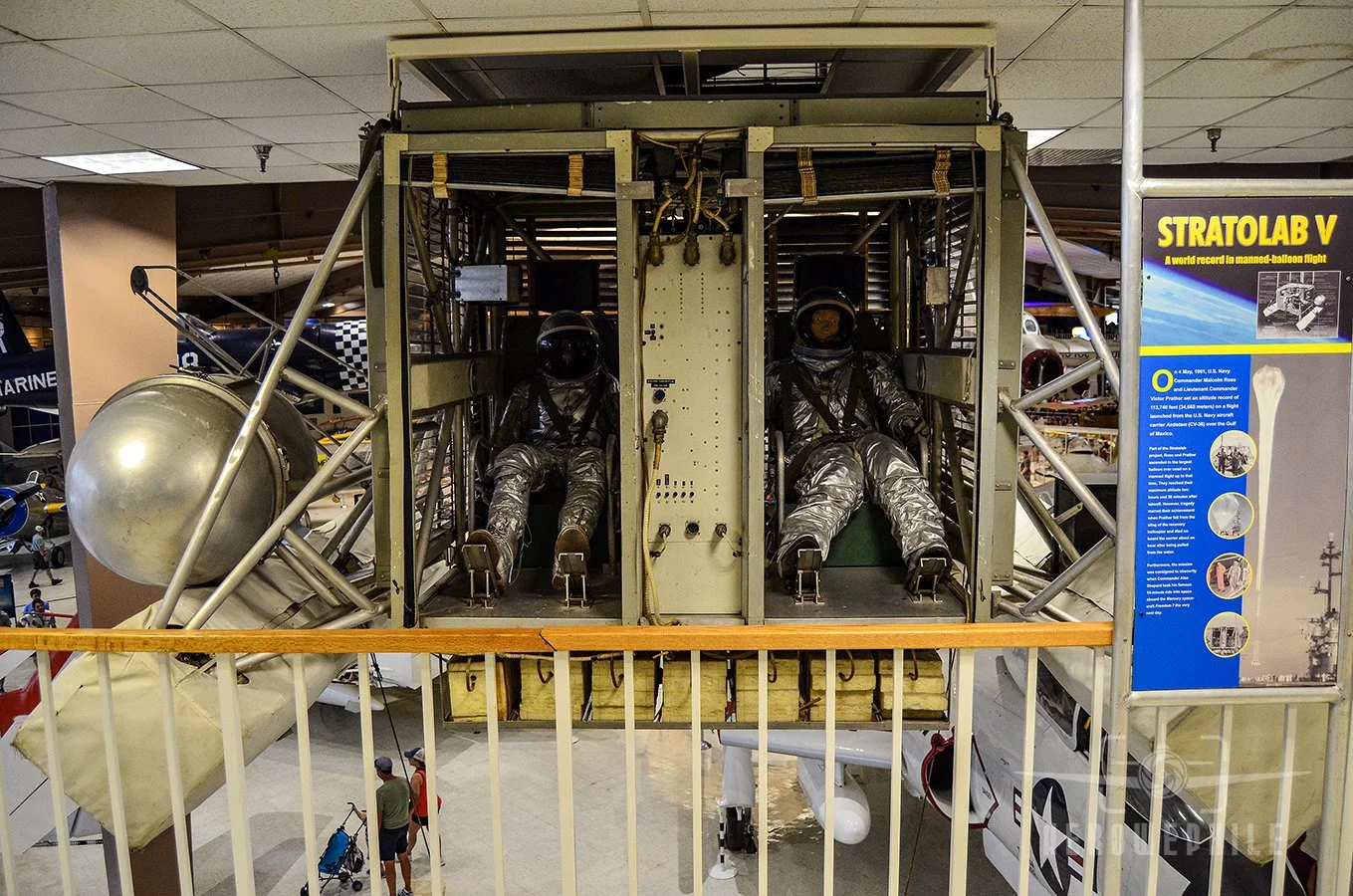
Stratolab - On 4 May 1961, Commander Malcolm Ross and Lieutenant Commander Victor Prather set an altitude record of 113,740 feet on a flight launched from the aircraft carrier USS Antietam (CVS-36). Ross and Prather ascended in the largest balloon ever used on a manned flight up to that time.
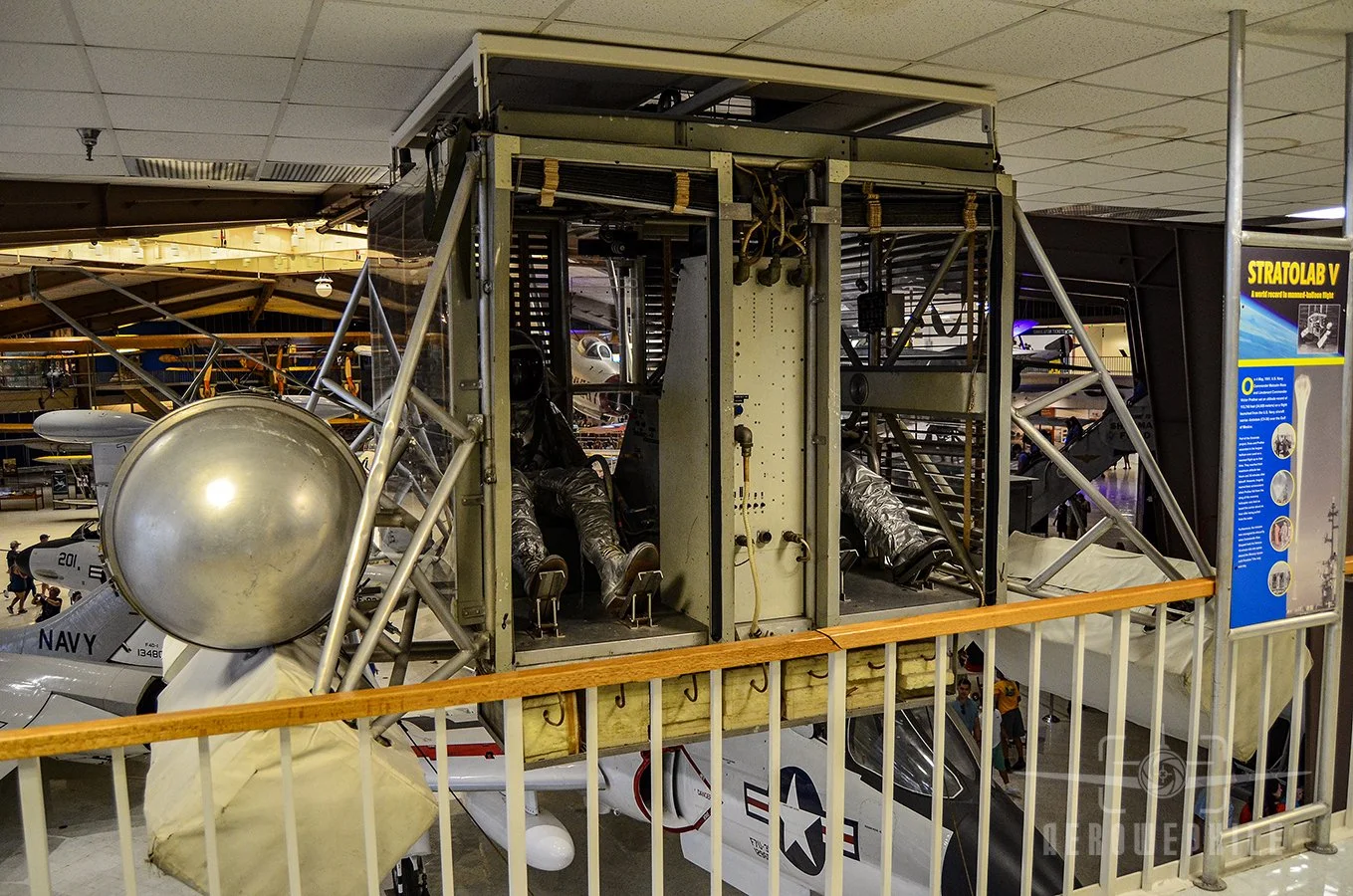
Stratolab - Commander Malcolm Ross and Lieutenant Commander Victor Prather reached their maximum altitude two hours and 36 minutes after takeoff. Tragedy marred their achievement, however, when Prather fell from the sling of the recovery helicopter and died on board the carrier after being pulled from the water.

FM-2 Wildcat (Pacific Island) - Accepted by the Navy on 14 December 1943, the FM-2 Wildcat in the South Pacific Island Display (Bureau Number 16089) was transferred to the Pacific Theater in February 1944, eventually serving in an aircraft pool on Espiritu Santo before returning to San Diego in November 1944.
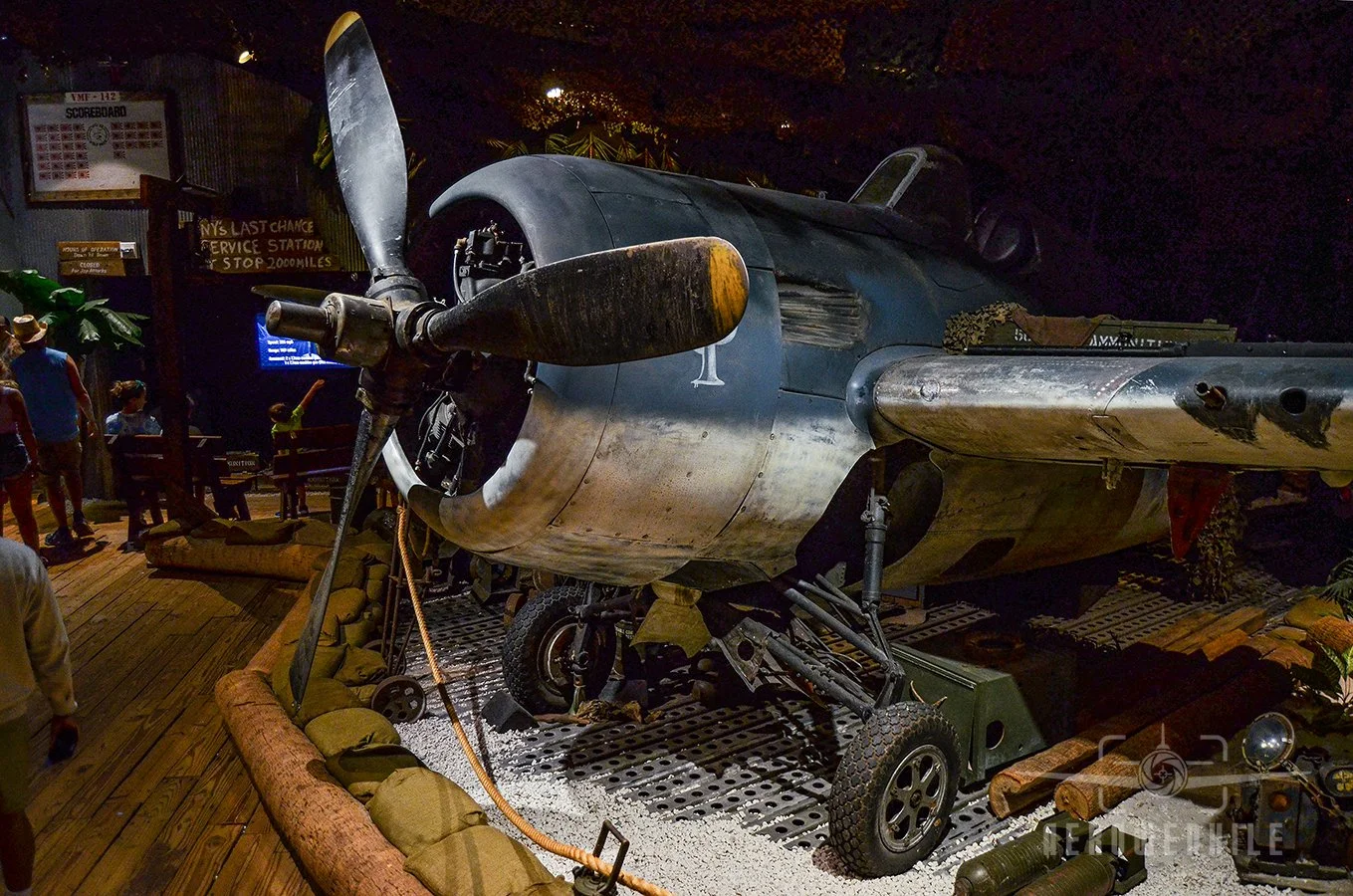
FM-2 Wildcat (Pacific Island) - Transferred to the Carrier Qualification Training Unit (CQTU) at Naval Air Station (NAS) Glenview, Illinois, the aircraft crashed in Lake Michigan on 28 December 1944, when Ensign Leonard L. Alick prematurely cut his engine during an attempted landing on the training carrier Sable (IX-81) and was forced to make a left bank to avoid hitting the ship.
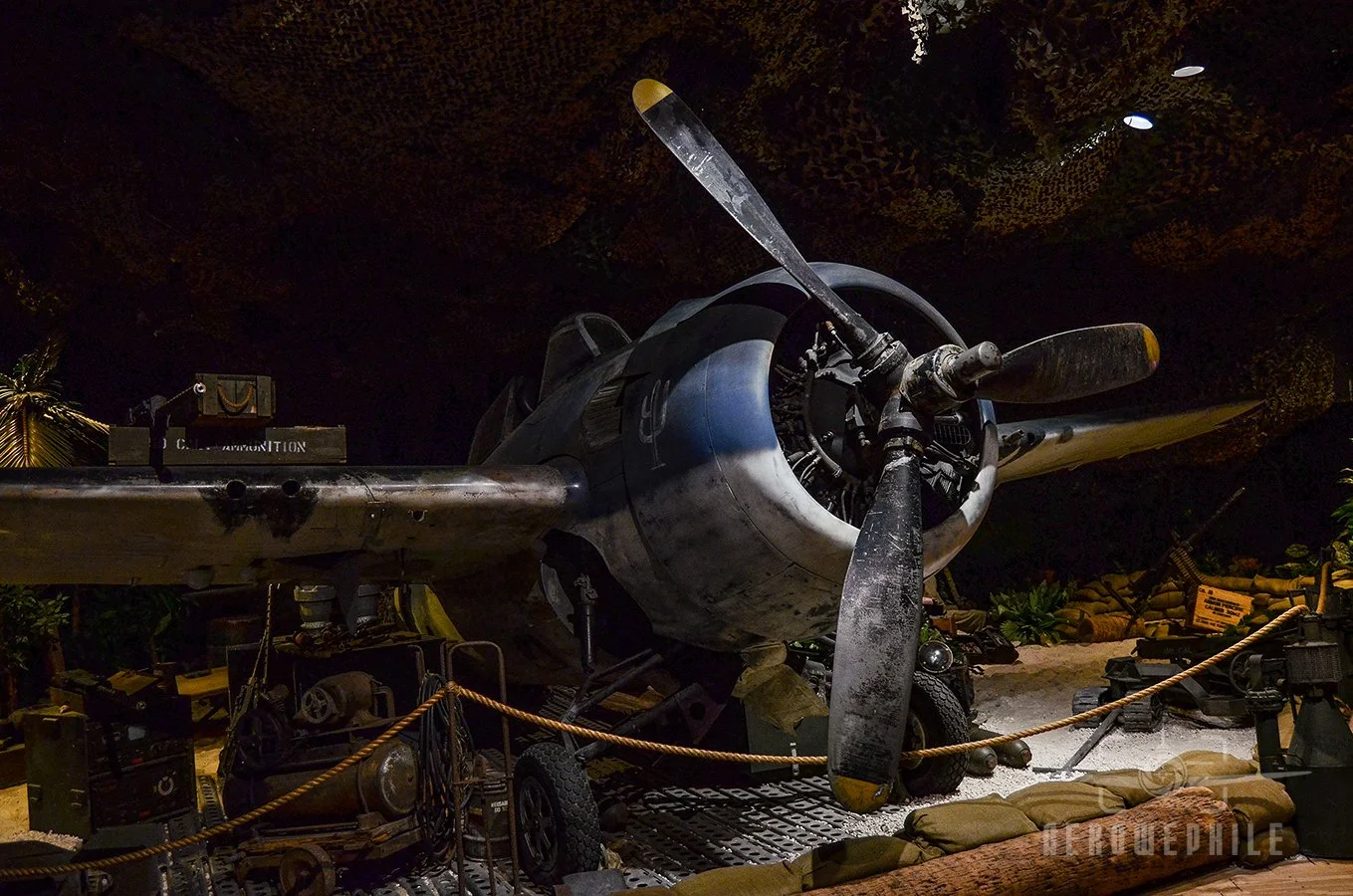
FM-2 Wildcat (Pacific Island) - Recovered from Lake Michigan in 1993, the aircraft arrived at the Museum later in the year. In good condition when recovered, the aircraft underwent a limited restoration incorporating parts from another FM-2 Wildcat (Bureau Number 55404) and remanufactured parts (top gun accessory door, engine top accessory cowling, lower hinged door for wing fold, ammo box cover, and radio antenna mast).
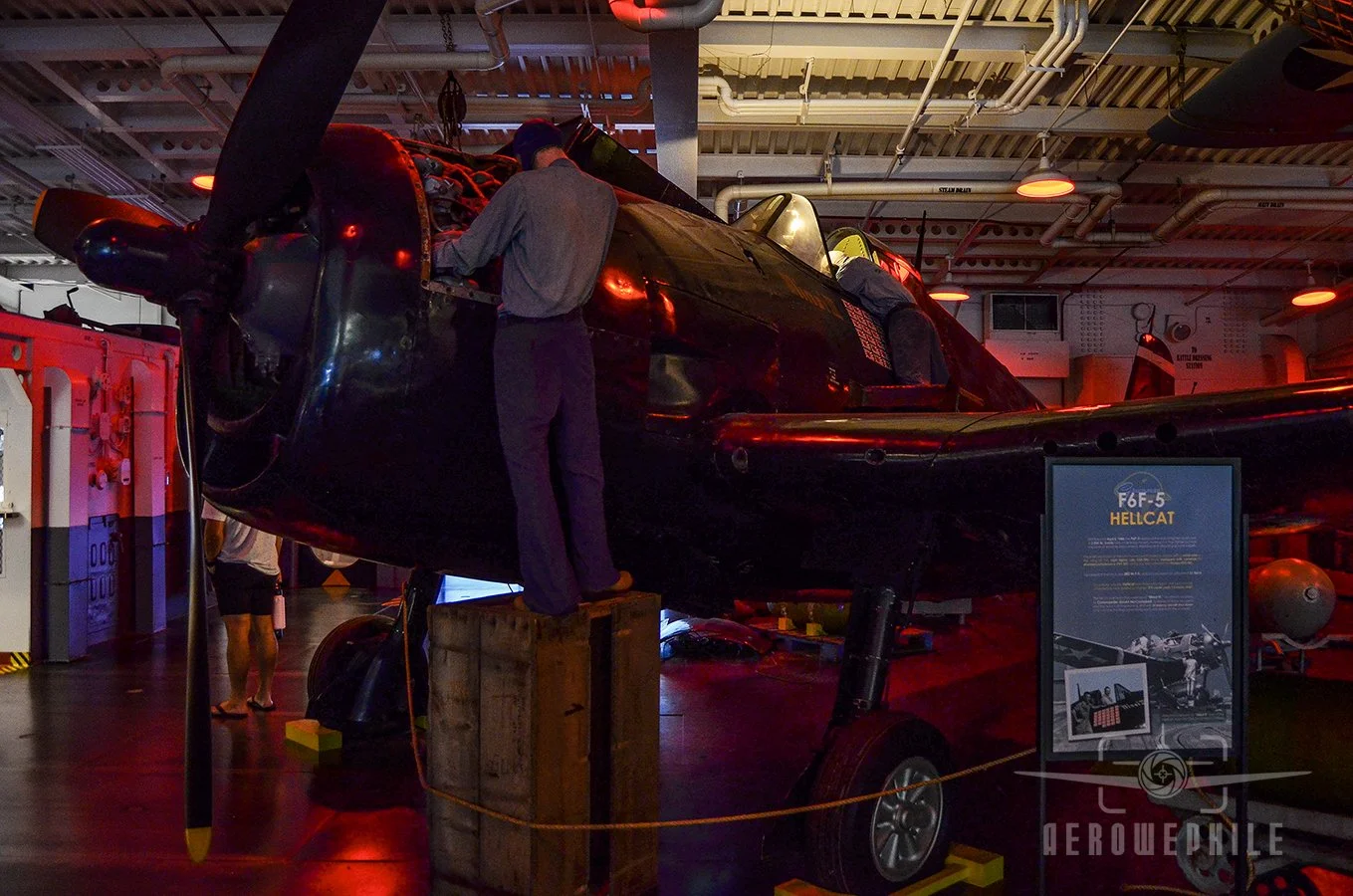
The Museum's F6F-5 Hellcat (Bureau Number 94203) entered service in July 1945 and has been in the collection since 1971. It is painted in the markings of Commander David S. McCampbell, the Navy's top ace of World War II.
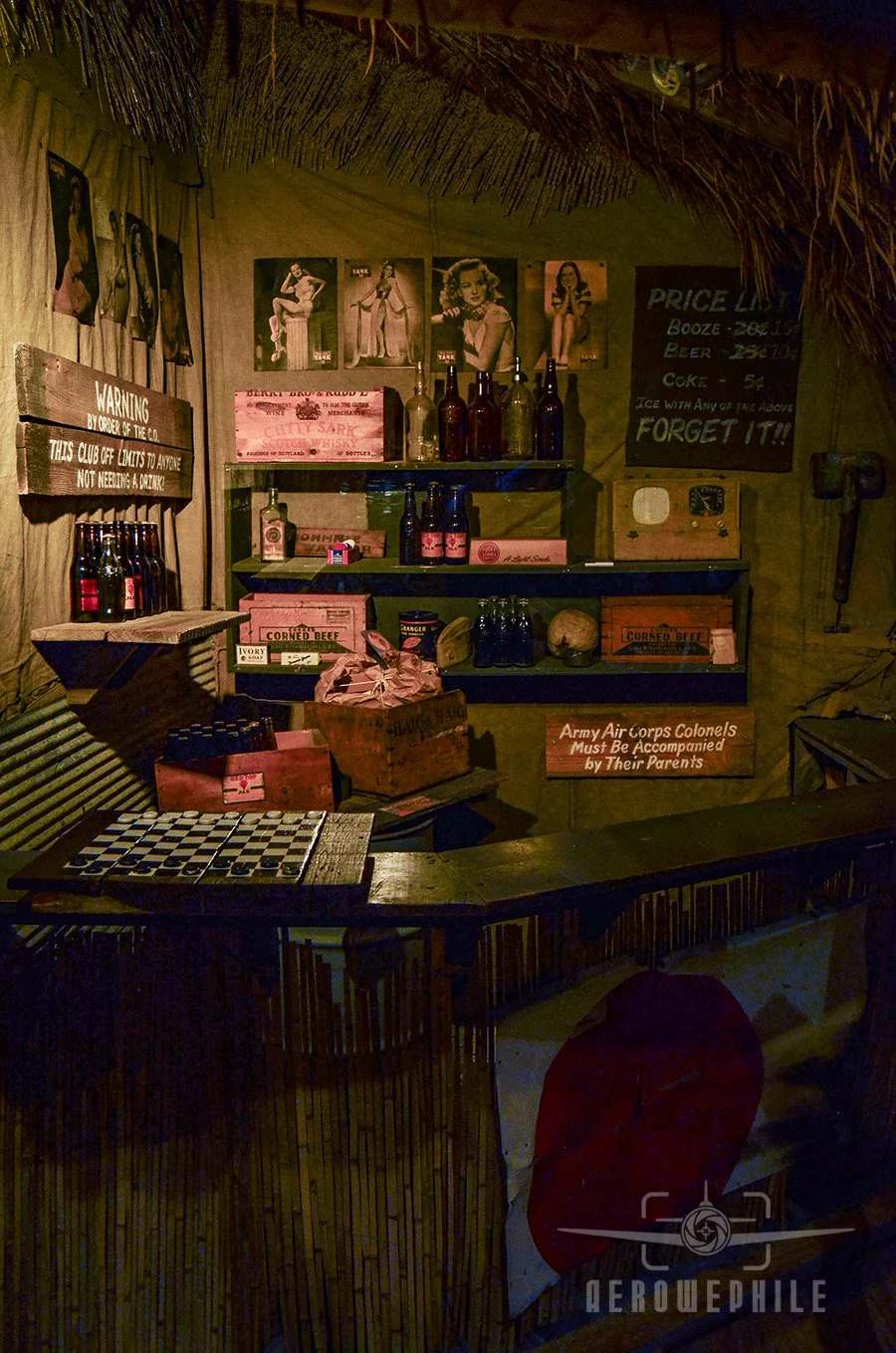
South Pacific Island Display
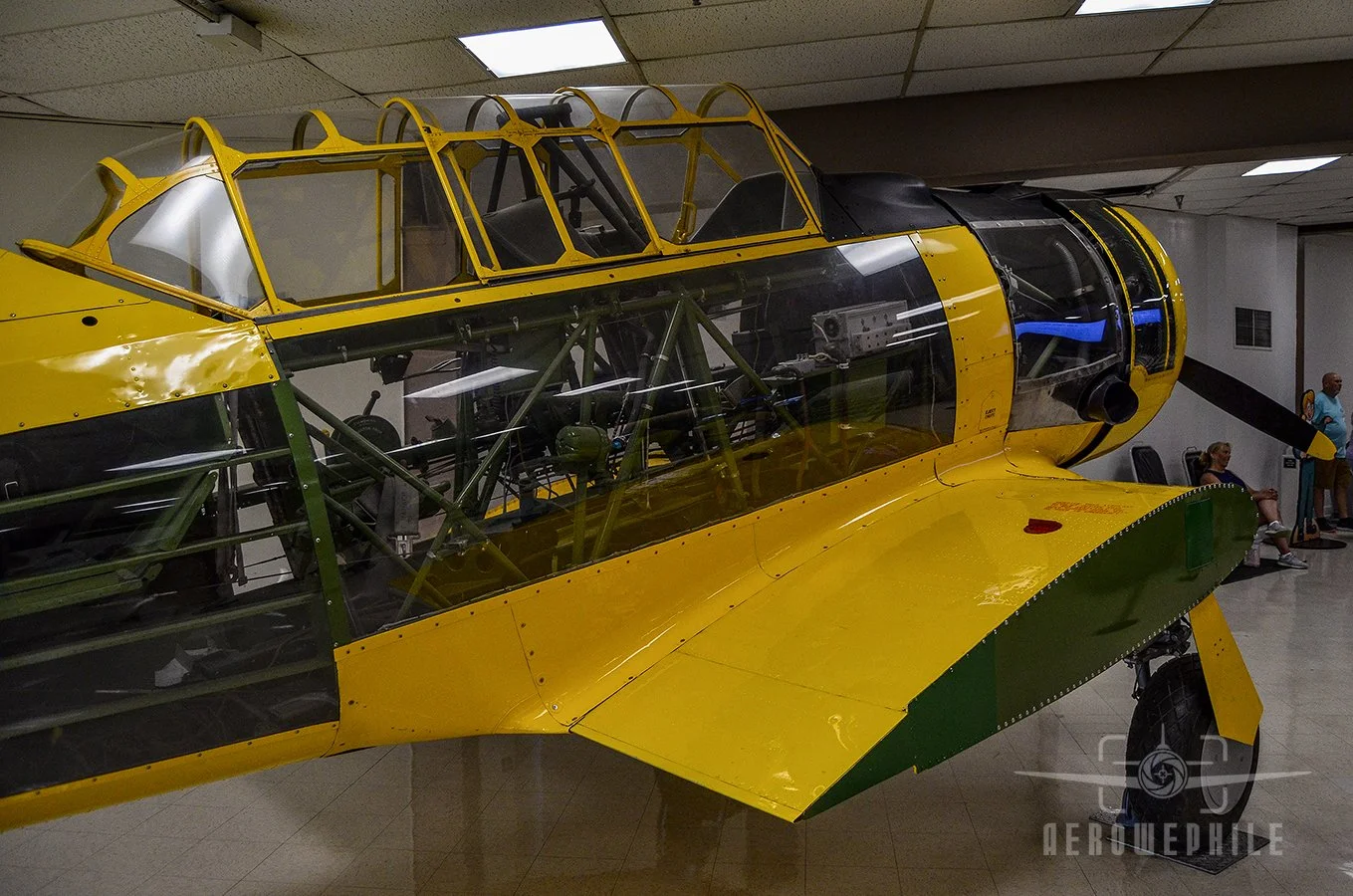
SNJ Cutaway - An exceptionally well-conceived and well-built Navy trainer, the SNJ Texan entered service before World War II and was used into the 1950s, ubiquitous in the training programs of the Navy and Air Force. This "cutaway" SNJ reveals the inner workings of the aircraft to Museum visitors.
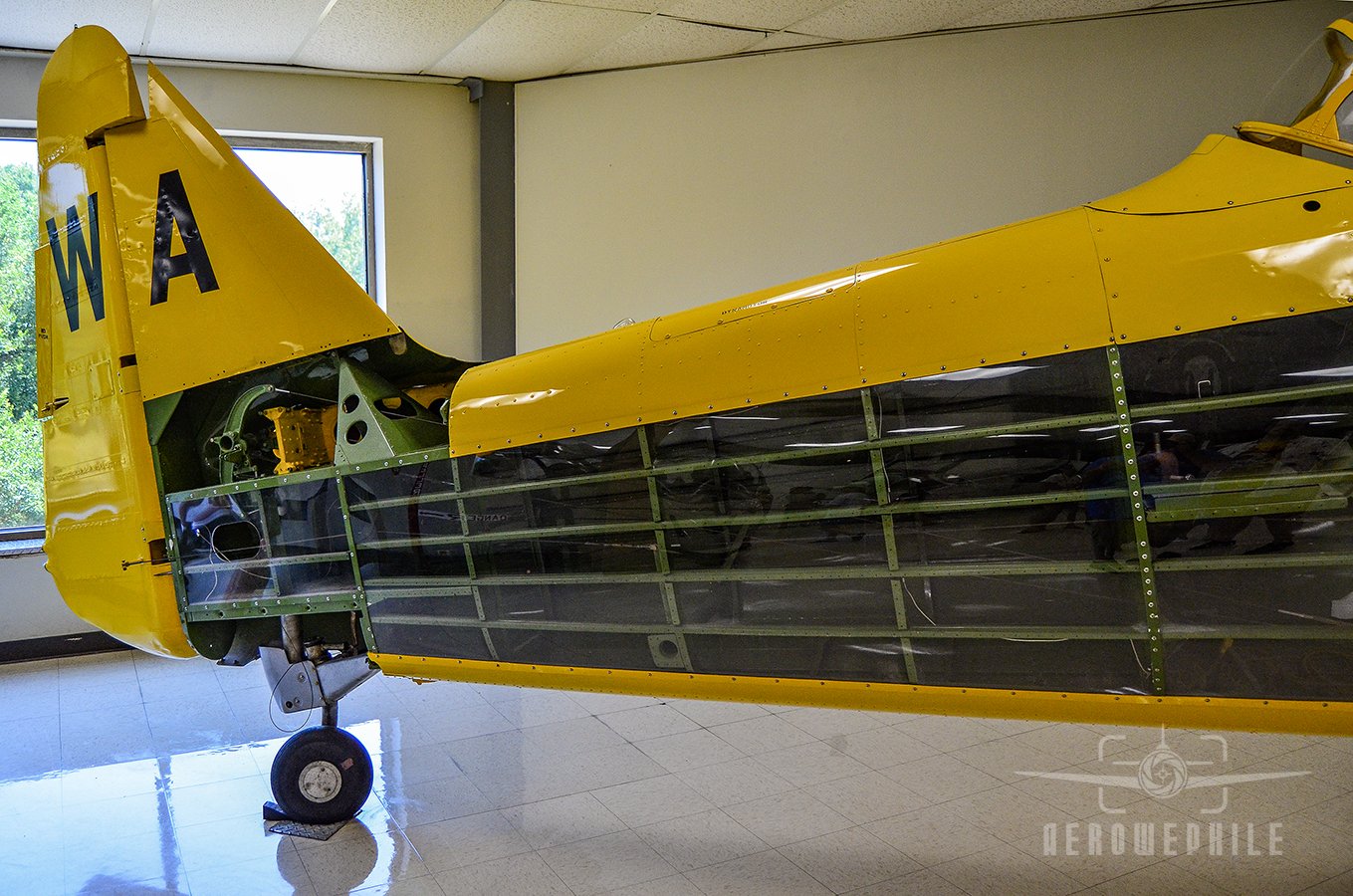
SNJ Cutaway - Two generations of Naval Aviators trained in the SNJ, and a number of aviators made their first carrier landings in the aircraft. This "cutaway" SNJ reveals the inner workings of the aircraft to Museum visitors.
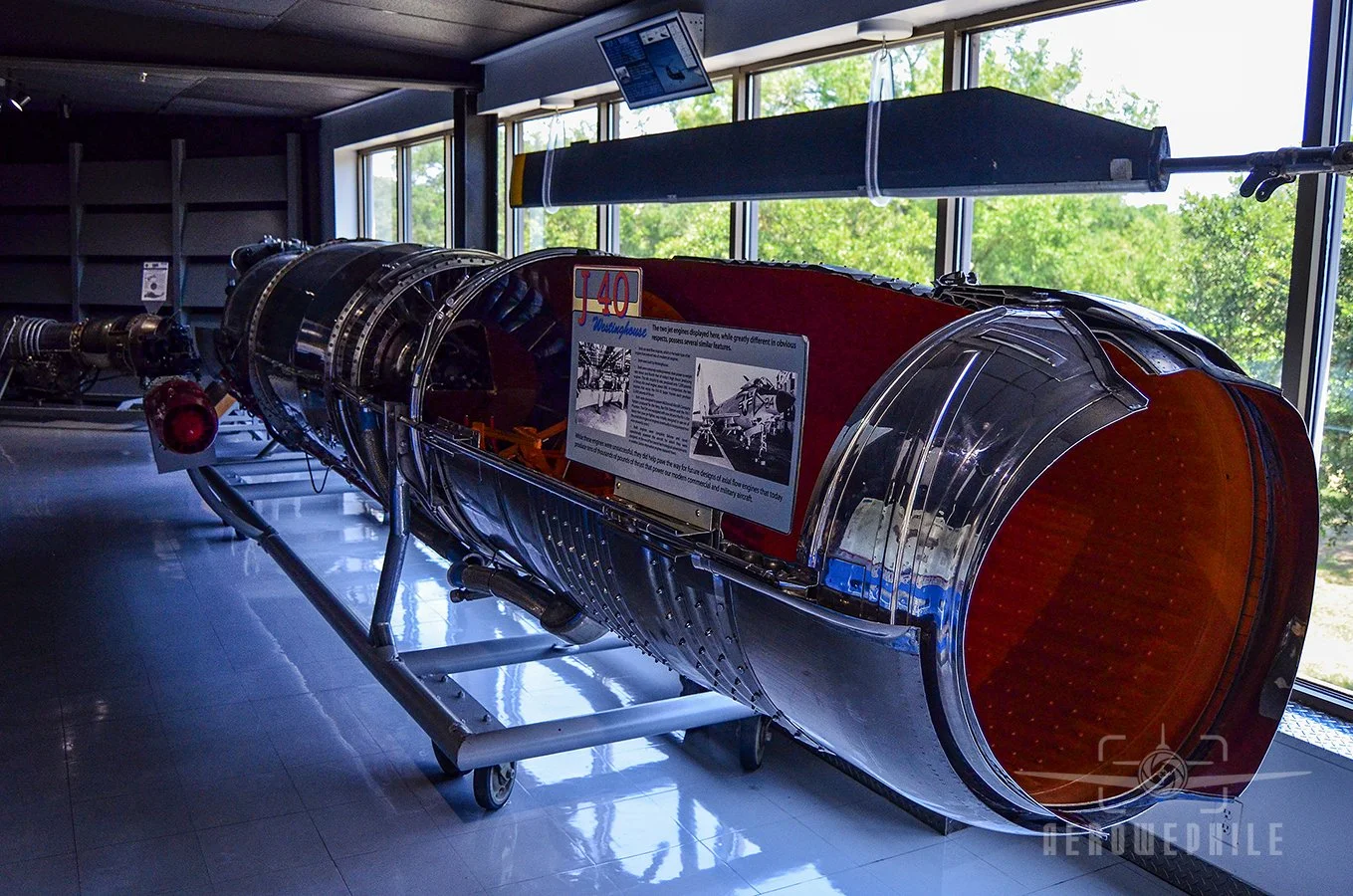
The Westinghouse J40 was an early high-performance afterburning turbojet engine designed by Westinghouse Aviation Gas Turbine Division starting in 1946 to a US Navy Bureau of Aeronautics (BuAer) request. The J40 was designed to power many of the new Navy carrier-based fighters with a single engine. These included the Grumman XF10F Jaguar variable-sweep wing general-purpose fighter, the McDonnell F3H Demon and Douglas F4D Skyray interceptors.
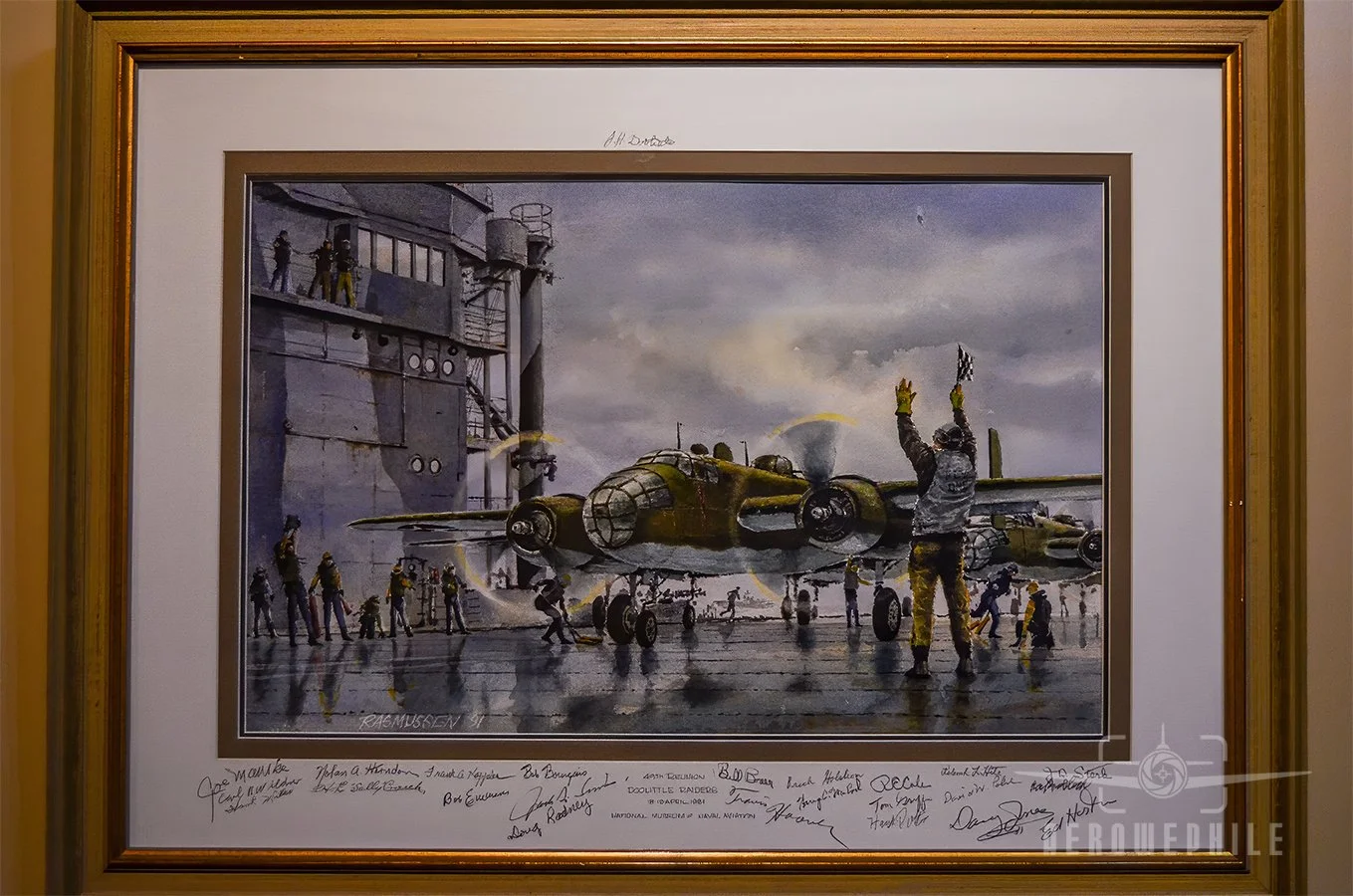
Naval Aviation Art Gallery - Doolittle Raiders with many of the Raiders signatures on the mat frame.
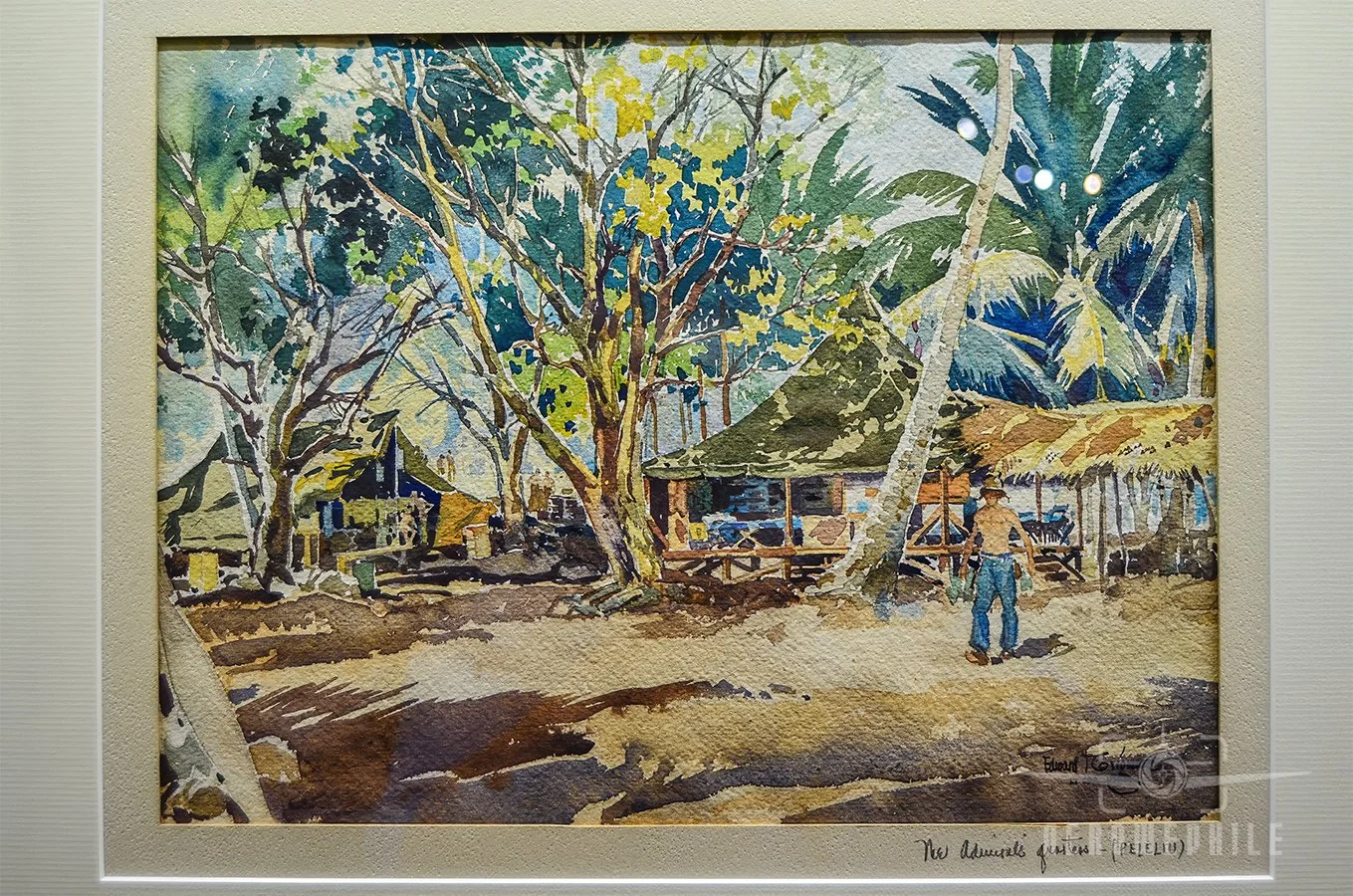
Naval Aviation Art Gallery - Watercolor by Edward T. Grigware - 1944 - Title: New Admiral Quarters - Bright colors of island trees and vegetation frame the headquarters of Commander, Western Carolines, Peleliu. A shirtless sailer models the work uniform of the day in the tropical heat of the South Pacific.
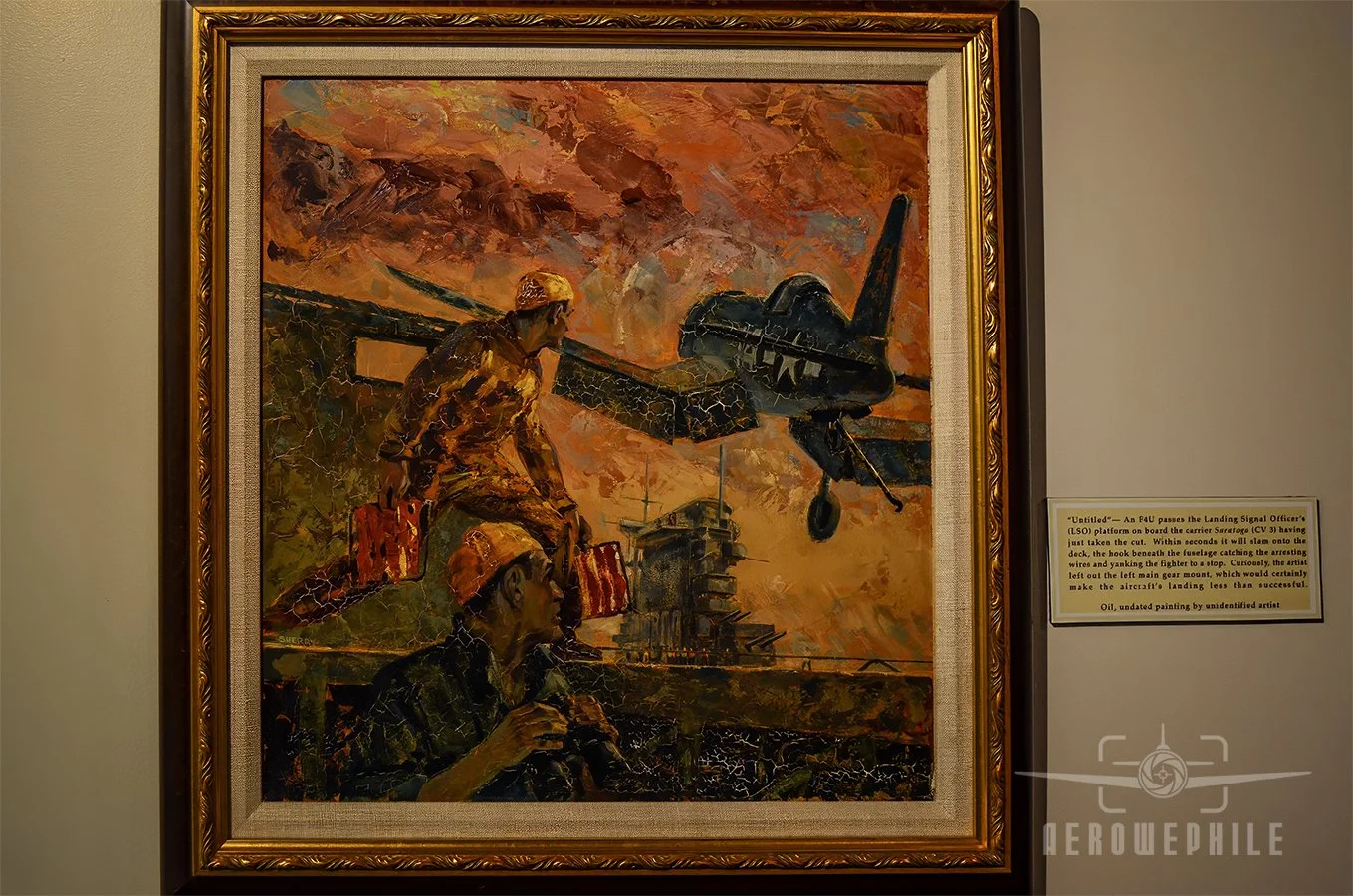
Naval Aviation Art Gallery - Undated oil painting by unidentified artist - Untitled - An F4U passes the Landing Signal Officer's (LSO) platform on board the carrier Saratoga (CV-3) having just taken the cut. Within seconds it will slam onto the deck, the hook beneath the fuselage catching the arresting wires and yanking the fighter to a stop. Curiously, the artist left out the left main gear mount, which would certainly make the aircraft's landing less that successful.
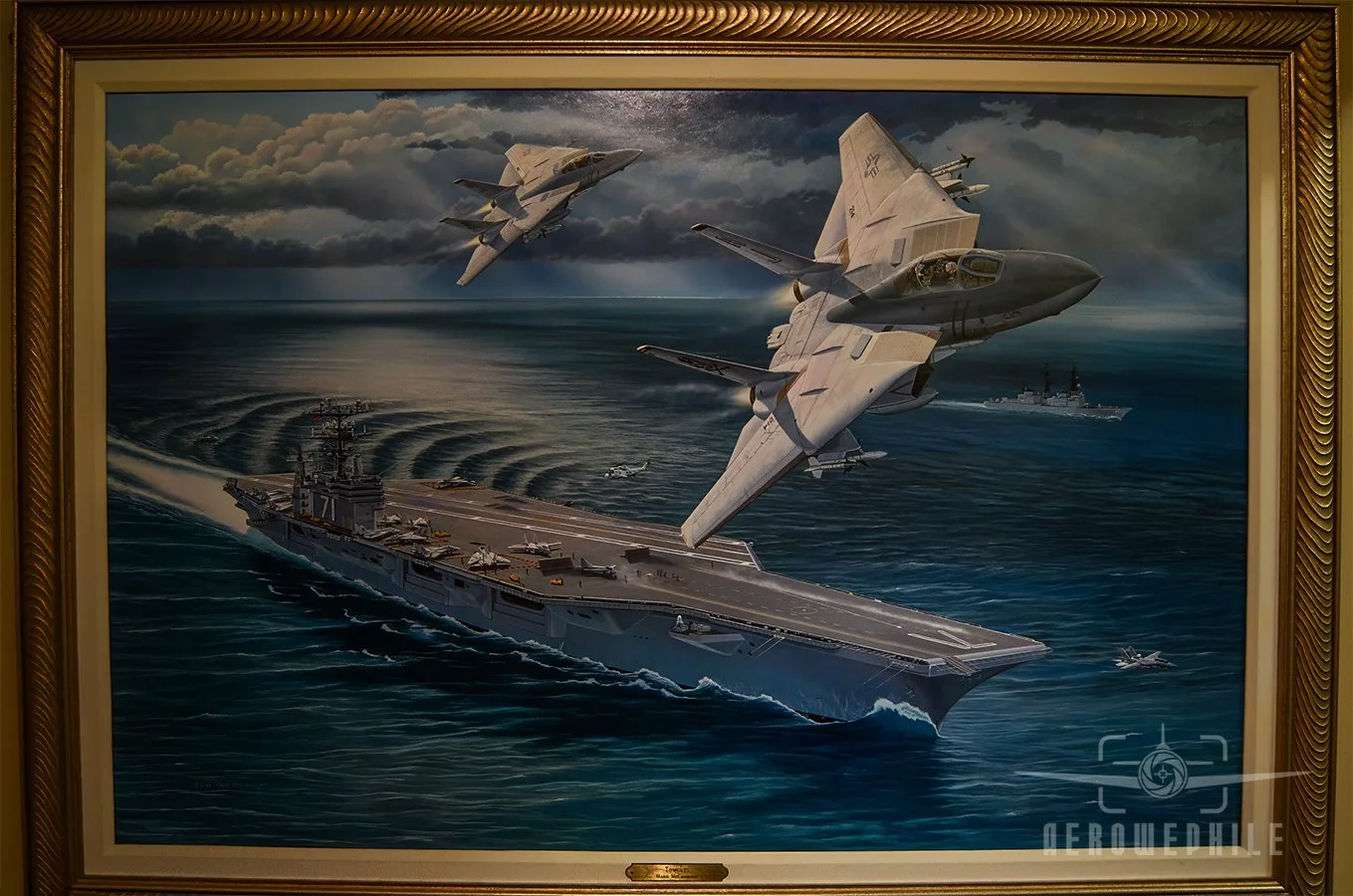
Naval Aviation Art Gallery - Tomcats
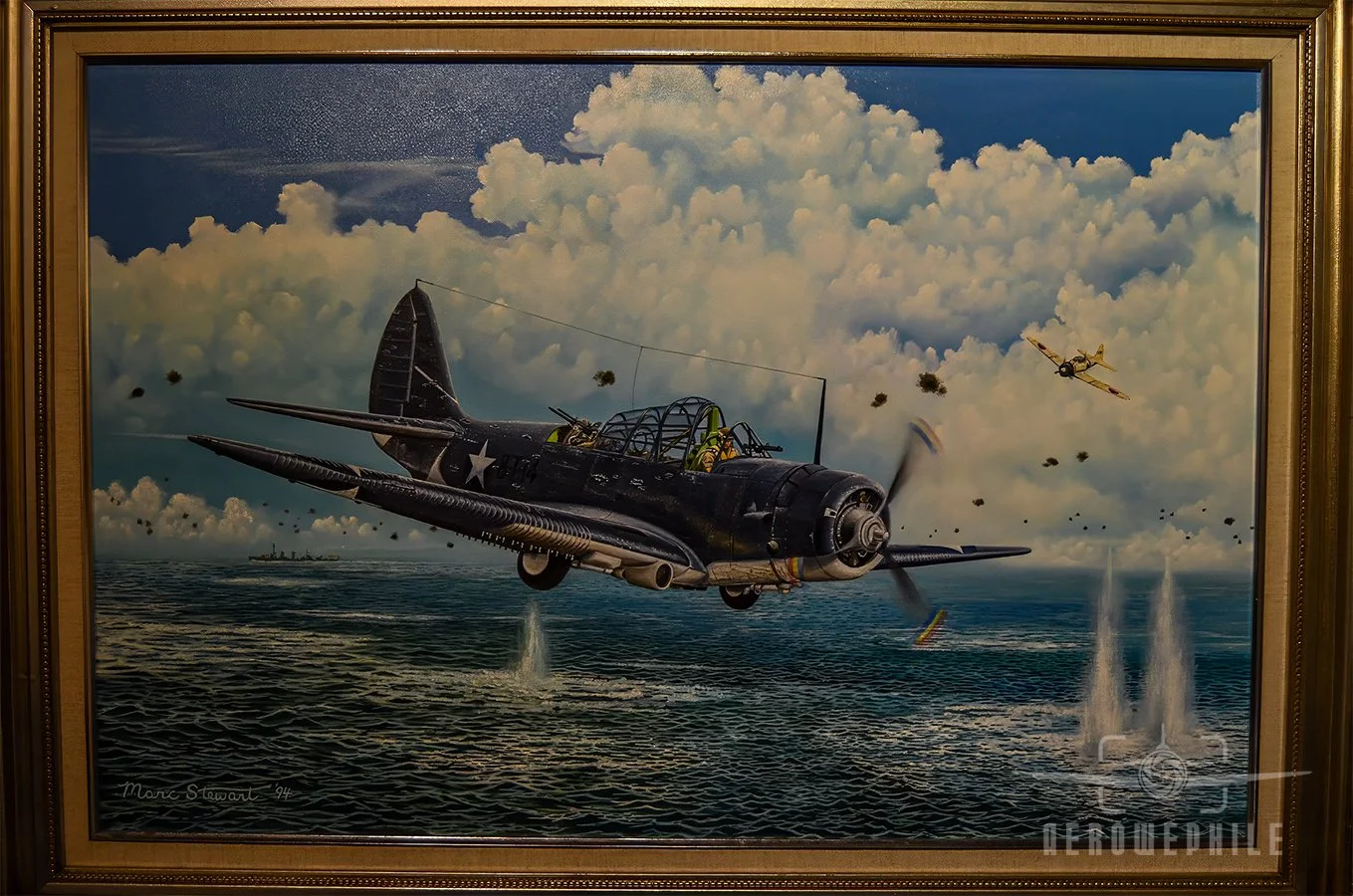
Naval Aviation Art Gallery - Douglas TBD Devastator - Artist: Marc Stewart - 1994
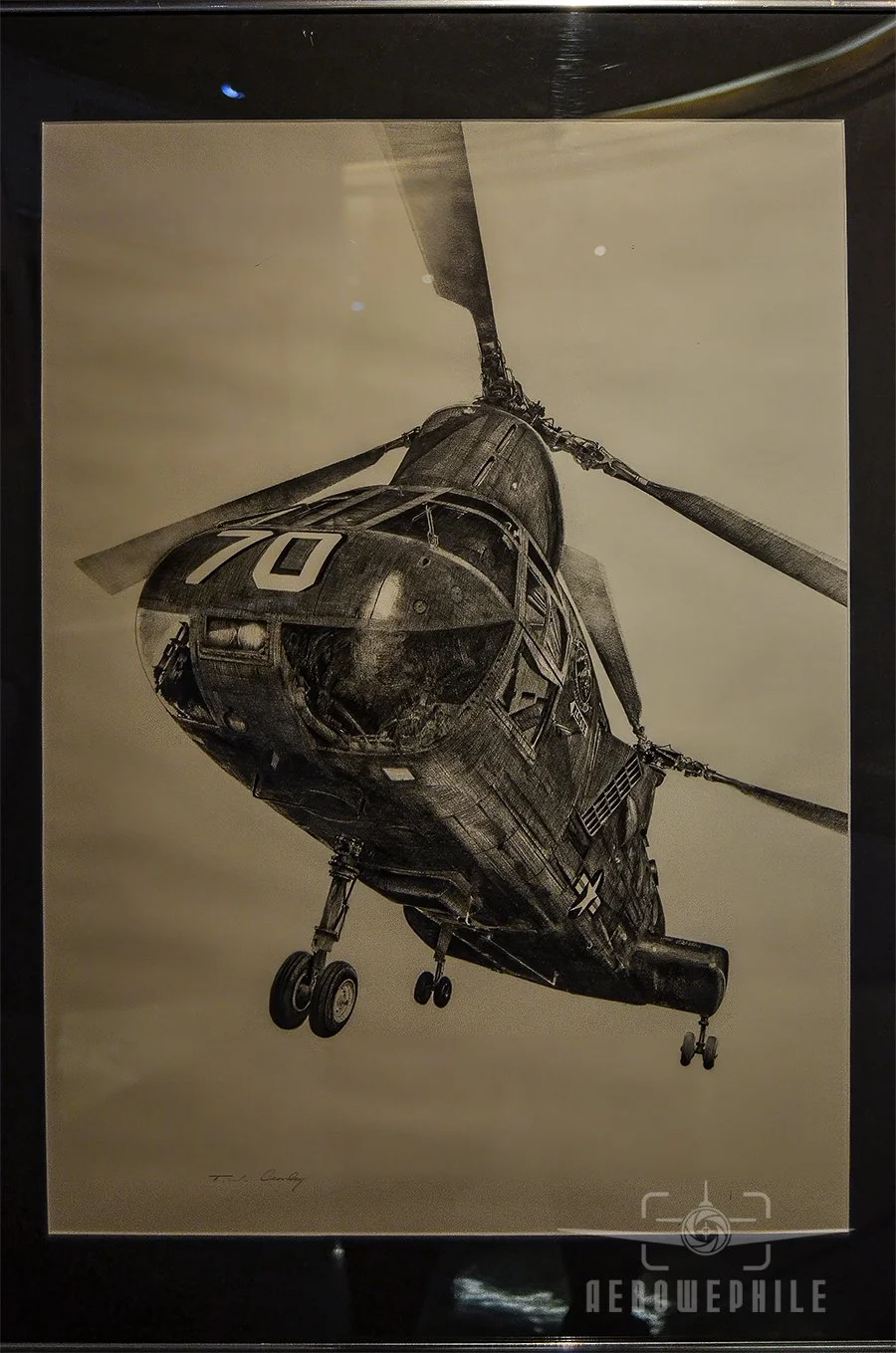
Naval Aviation Art Gallery - Title: Sea Knight Close Up - A CH-46 Sea Knight, a twin-engine design born during the Vietnam War continues to airlift Marines in Iraq and only recently retired as a primary platform for vertical replenishment for ships at sea, portrayed in flight - Pencil - Tom Cronley - Undated
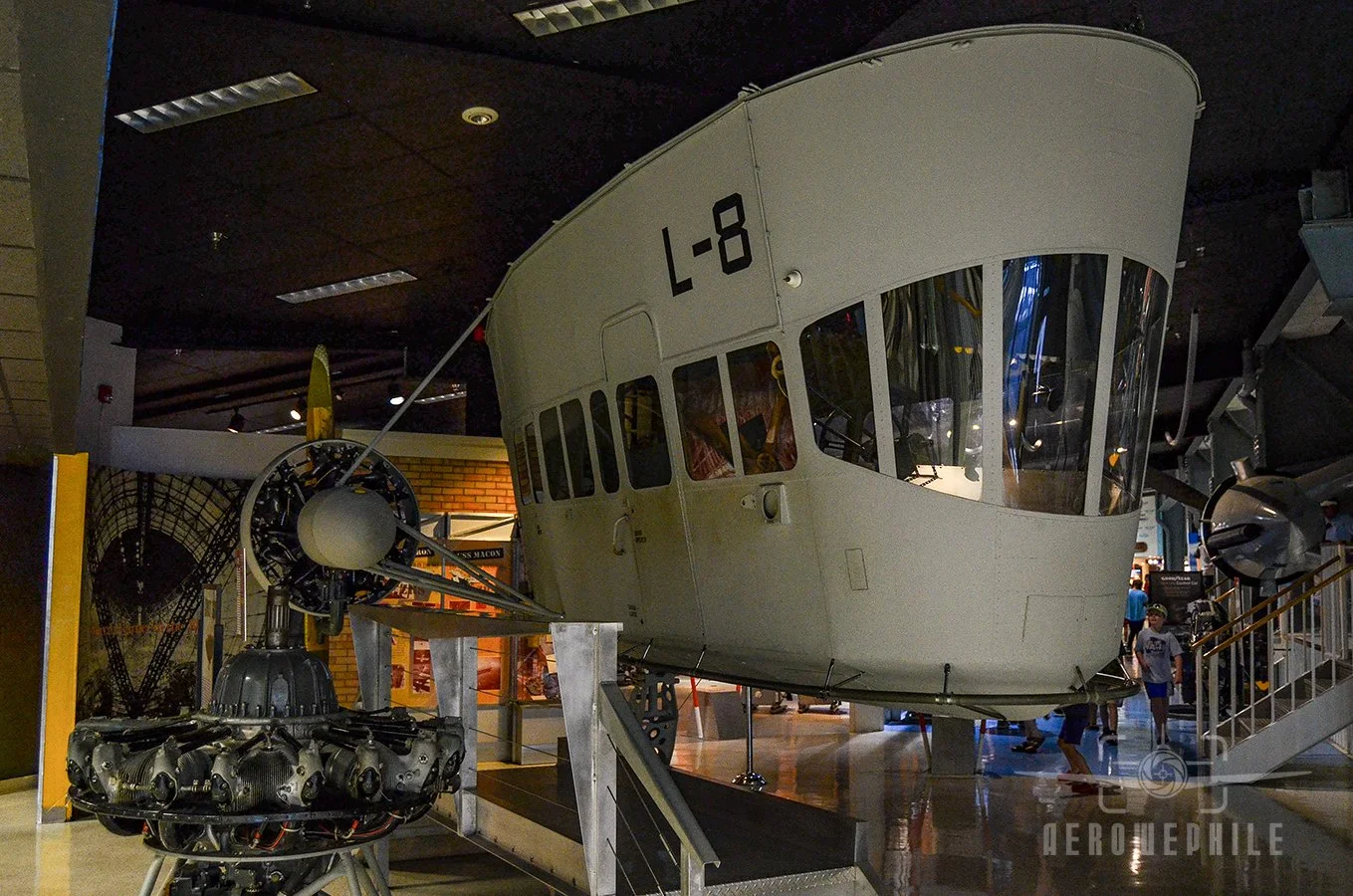
L-8 Ghost Ship - On the morning of 16 August 1942, in Treasure Island, California, Lieutenant Ernest Cody and Ensign Charles Adams set a course west for a routine anti-submarine patrol. Their aircraft was the L-8 airship, a former Goodyear blimp procured by the Navy that in April 1942 had delivered vital equipment to the carrier USS Hornet (CV-8) while she was at sea en route to launch the Doolittle Raiders. After reaching their patrol station, they radioed that they were investigating a suspicious oil slick. Hours later, residents of Daly City saw the unusual sight of the L-8 descending towards them and crashing to the ground. An investigation revealed that the control car was empty and the interior was in perfect order. To this day, the fate of the two men remains a mystery.
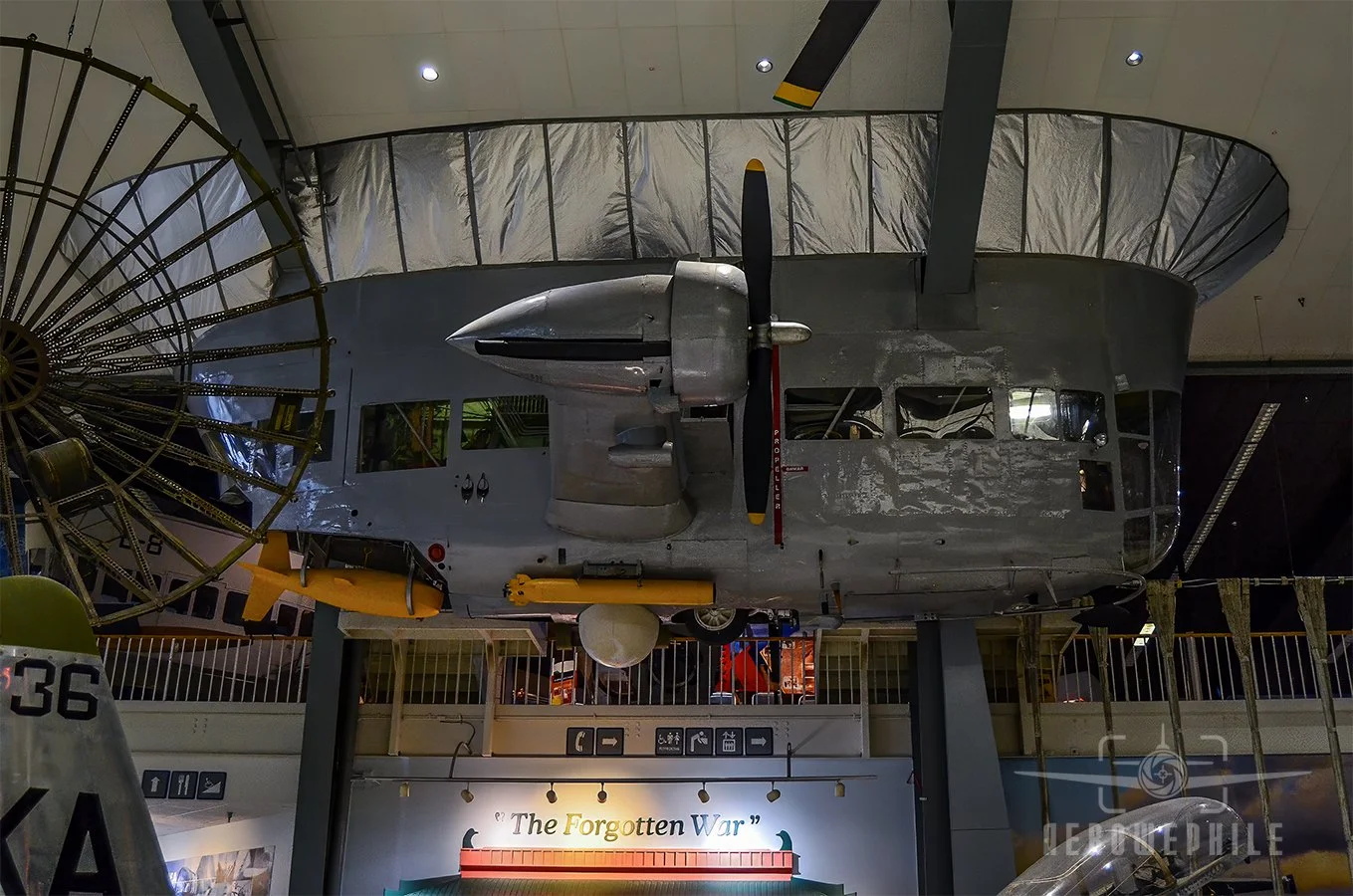
K-47 Control Car - Restored by Museum staff and volunteers after it was pulled from a scrap yard near Naval Air Station (NAS) Lakehurst, New Jersey, K-47 is part of the most widely produced class of airships in Naval Aviation history
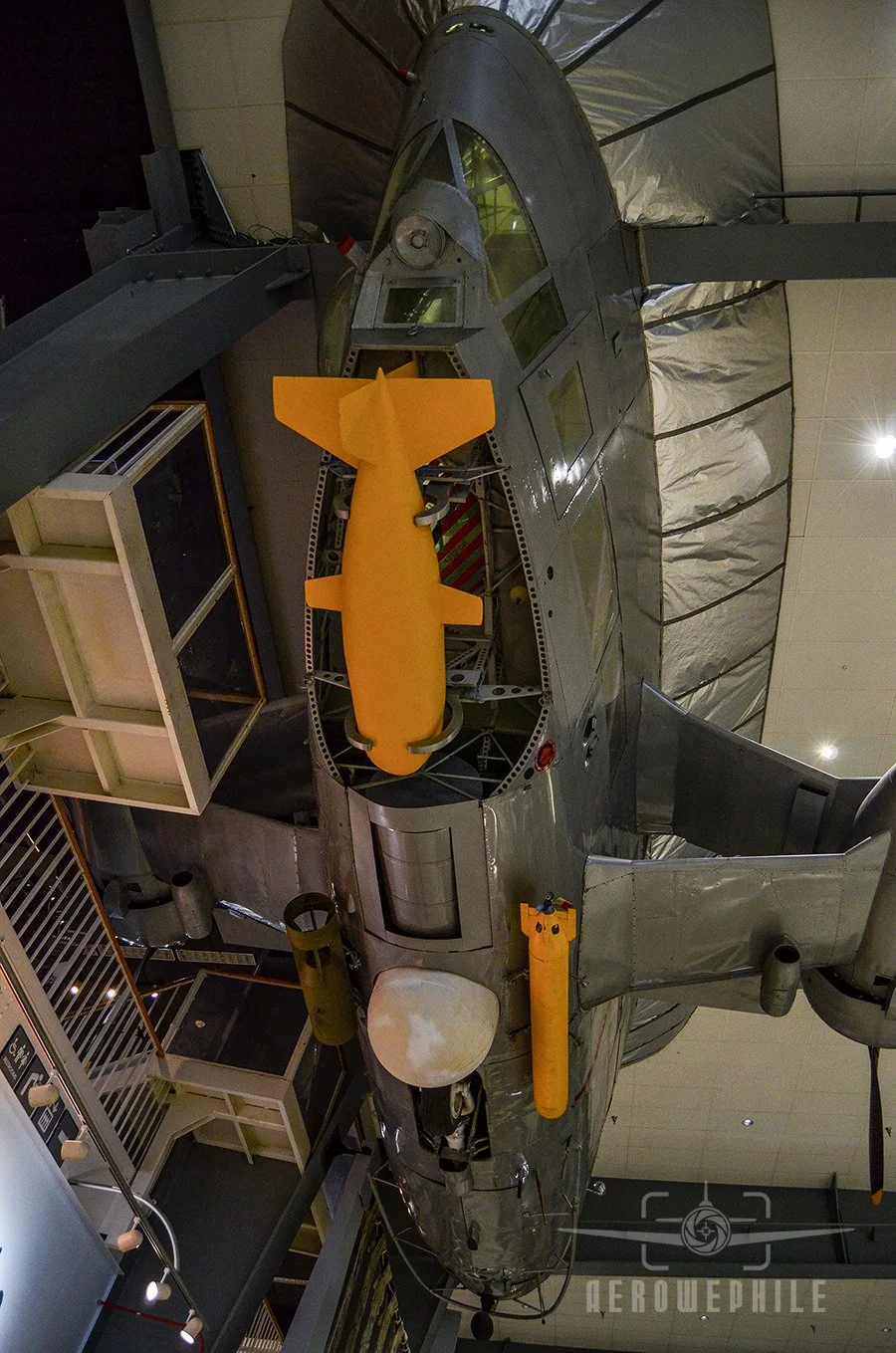
K-47 Control Car - The backbone of the Navy's lighter than air operations during World War II, K-ships flew antisubmarine patrols over convoys and logged many an air-sea rescue flight.
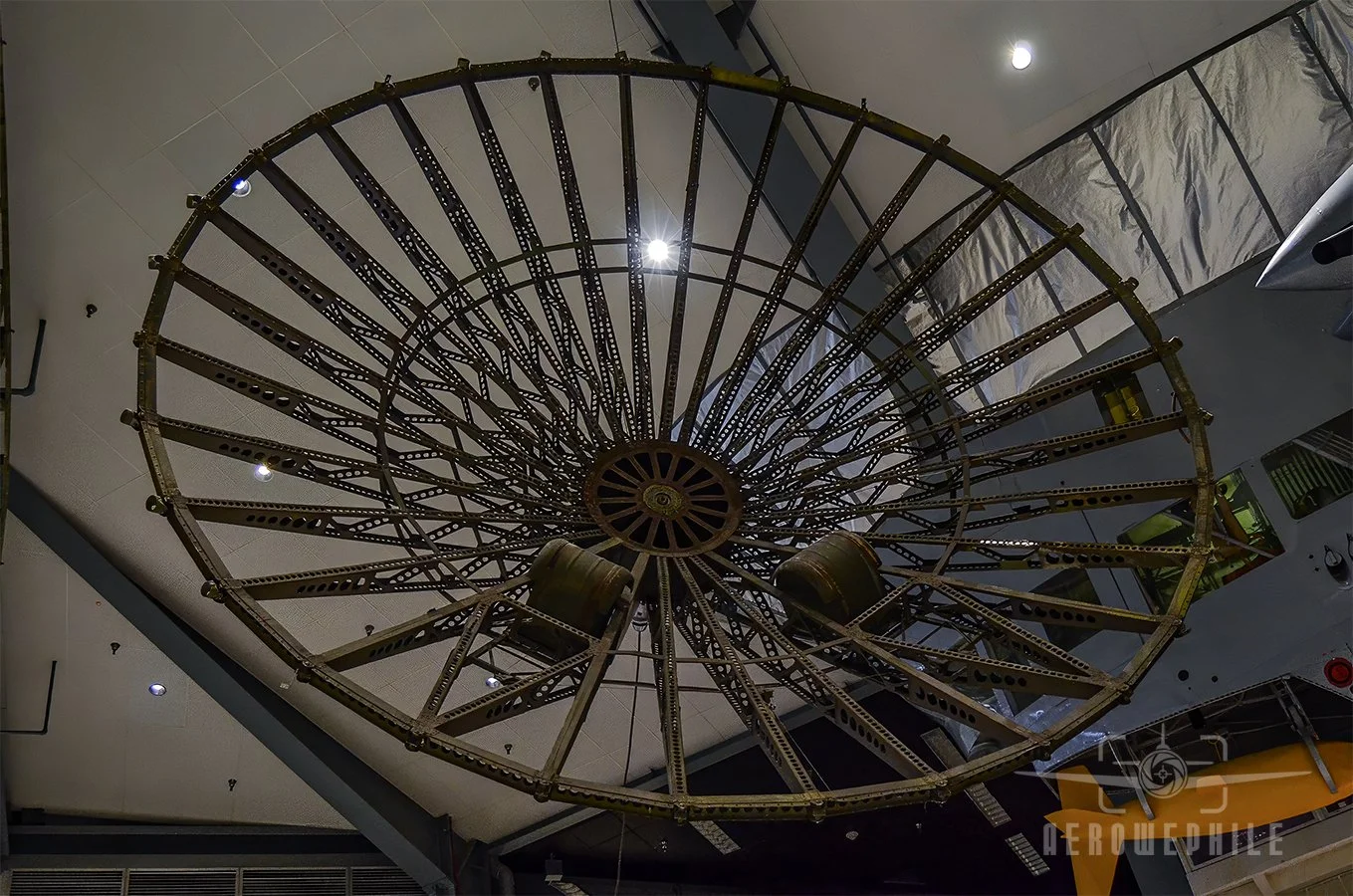
K-47 Nosecone - The immense size of this nosecone gives visitors a sense of the immensity of the aircraft.
NNAM - Hanger Bay One
The newest addition to the National Naval Aviation Museum, Hangar Bay One, adds 55,000 square feet of exhibit space to a facility that is already one of the largest of its kind in the world. Its façade reminiscent of hangars of old, the new structure primarily displays aircraft from the Museum collection that flew during the post-World War II era. Among them is the R4D-5L Skytrain nicknamed "Que Sera Sera" that in 1956 became the first aircraft to land at the South Pole, as well as the P2V-1 Neptune nicknamed the "Truculent Turtle" that in 1946 established a long-distance record during a flight between Perth, Australia, and Columbus, Ohio.
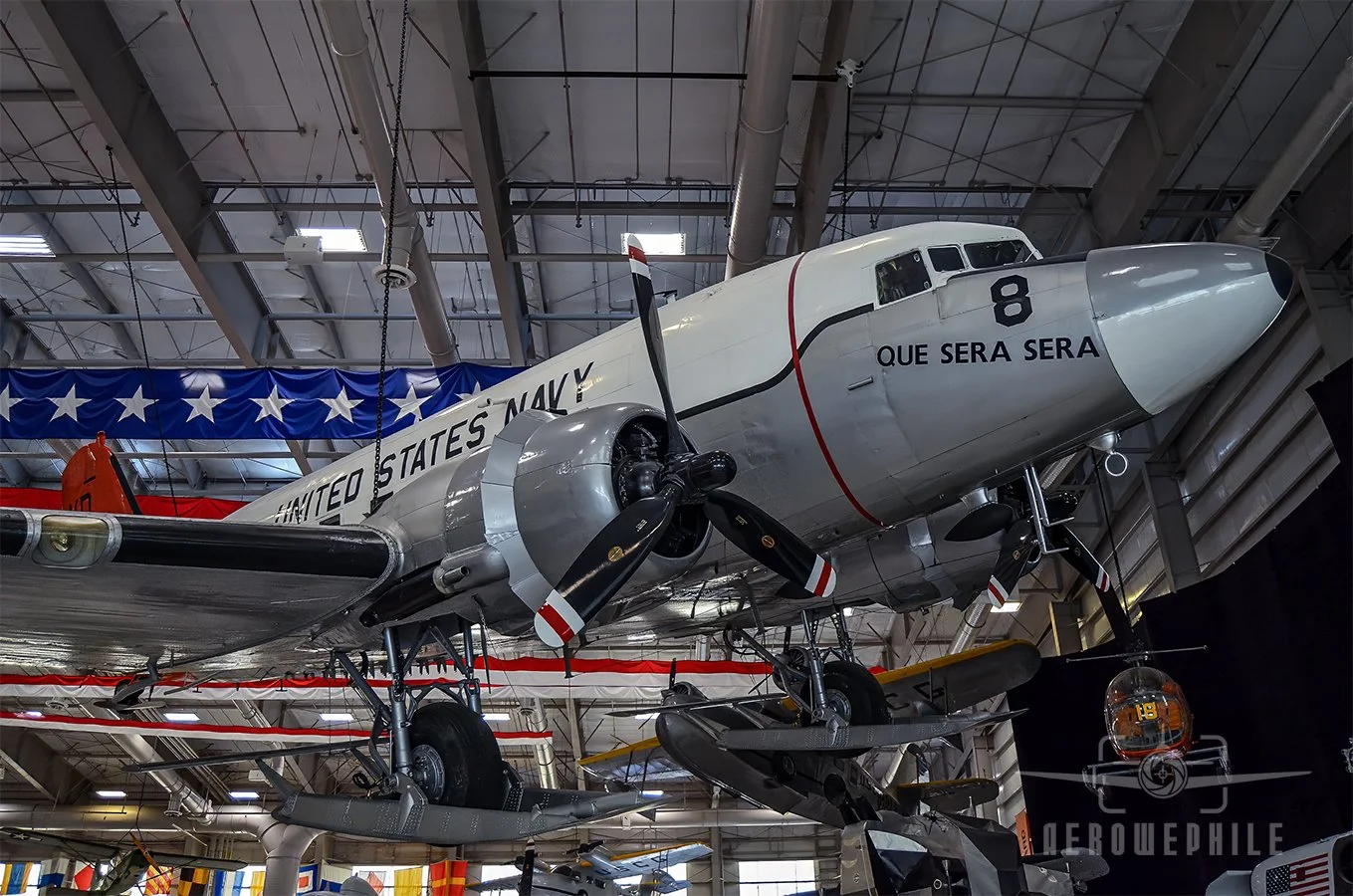
R4D-5L Skytrain nicknamed "Que Sera Sera".
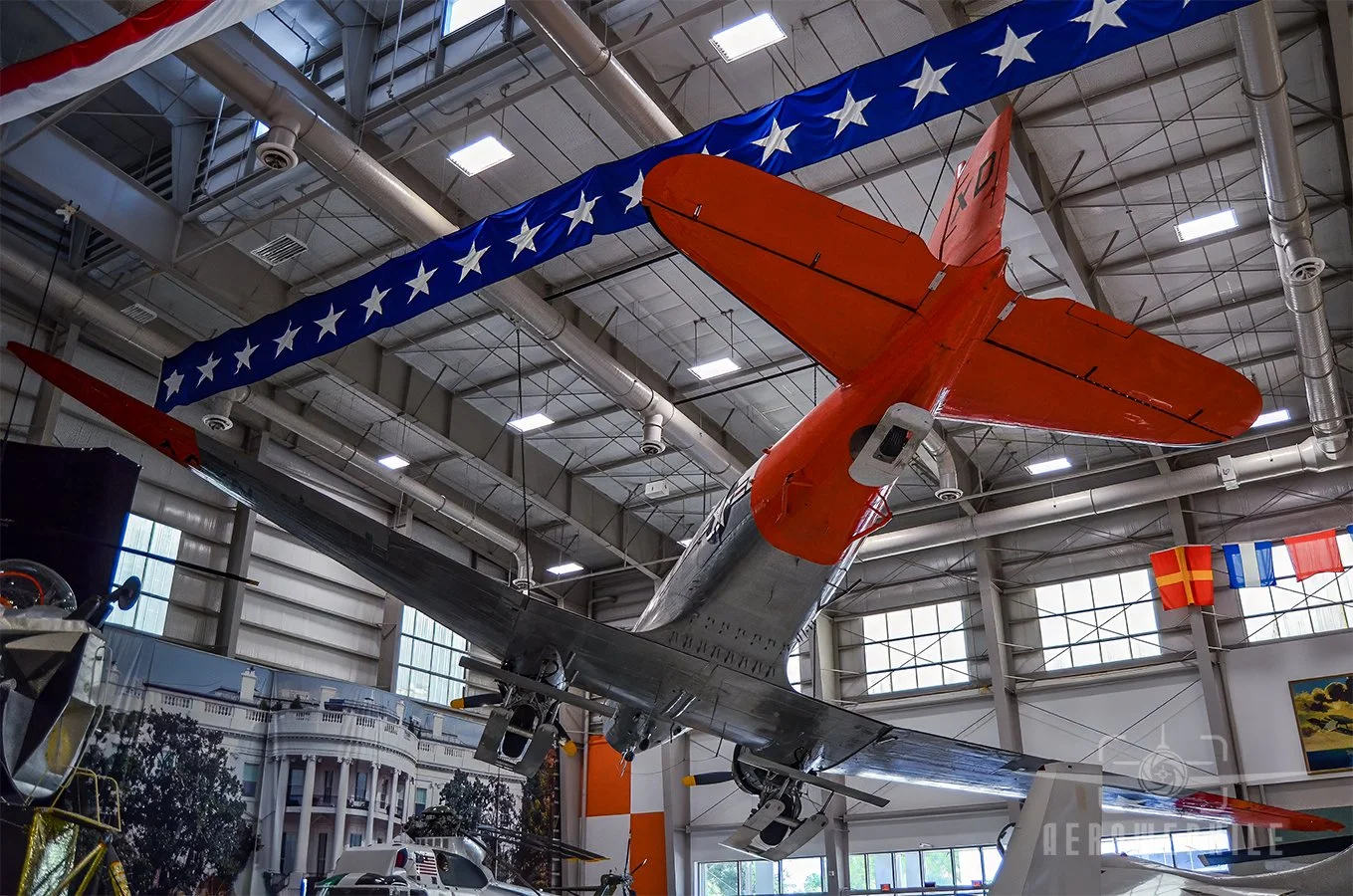
R4D-5L Skytrain nicknamed "Que Sera Sera"
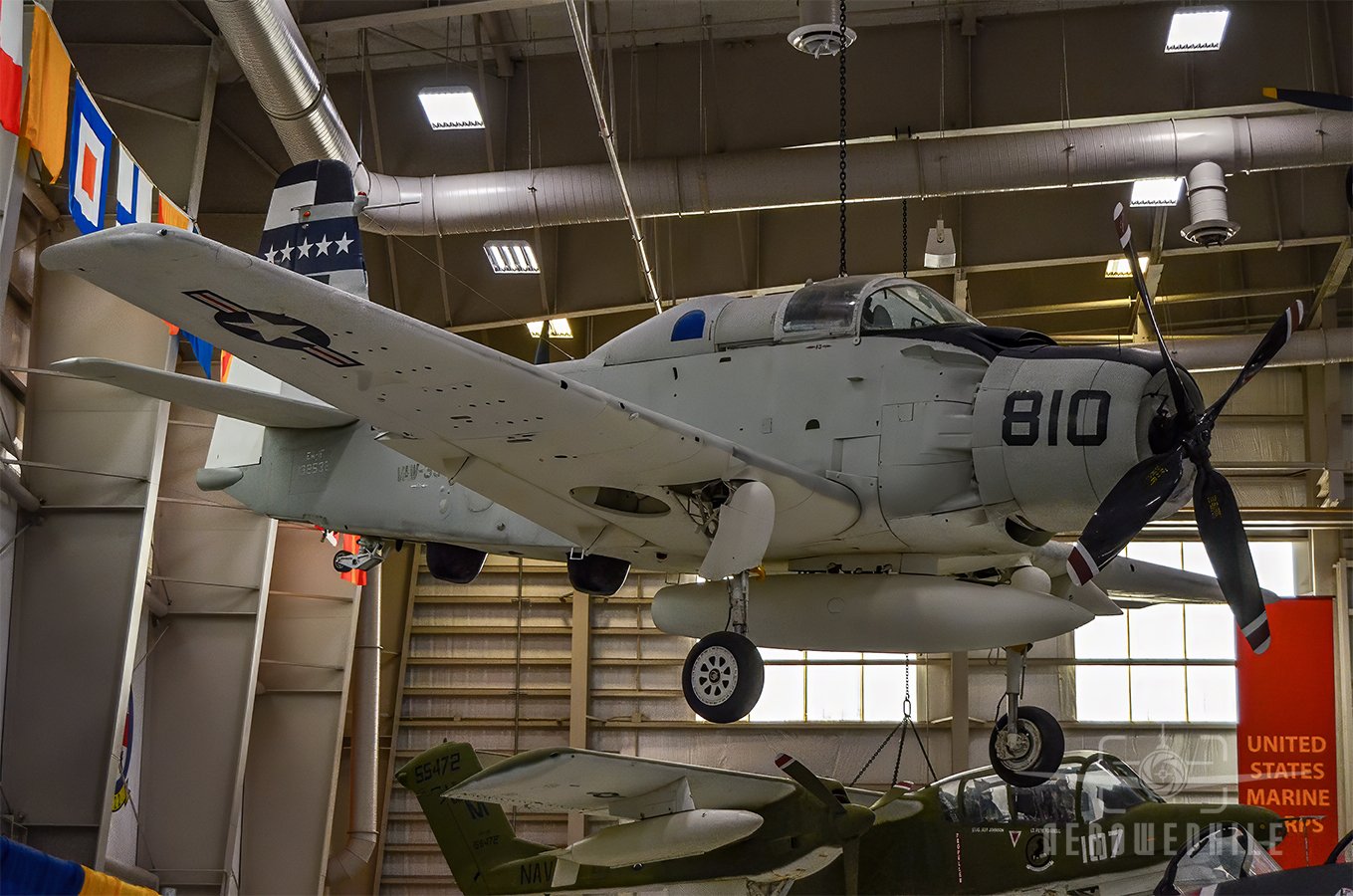
Douglas EA-1F Skyraider – VAW-33 Squadron
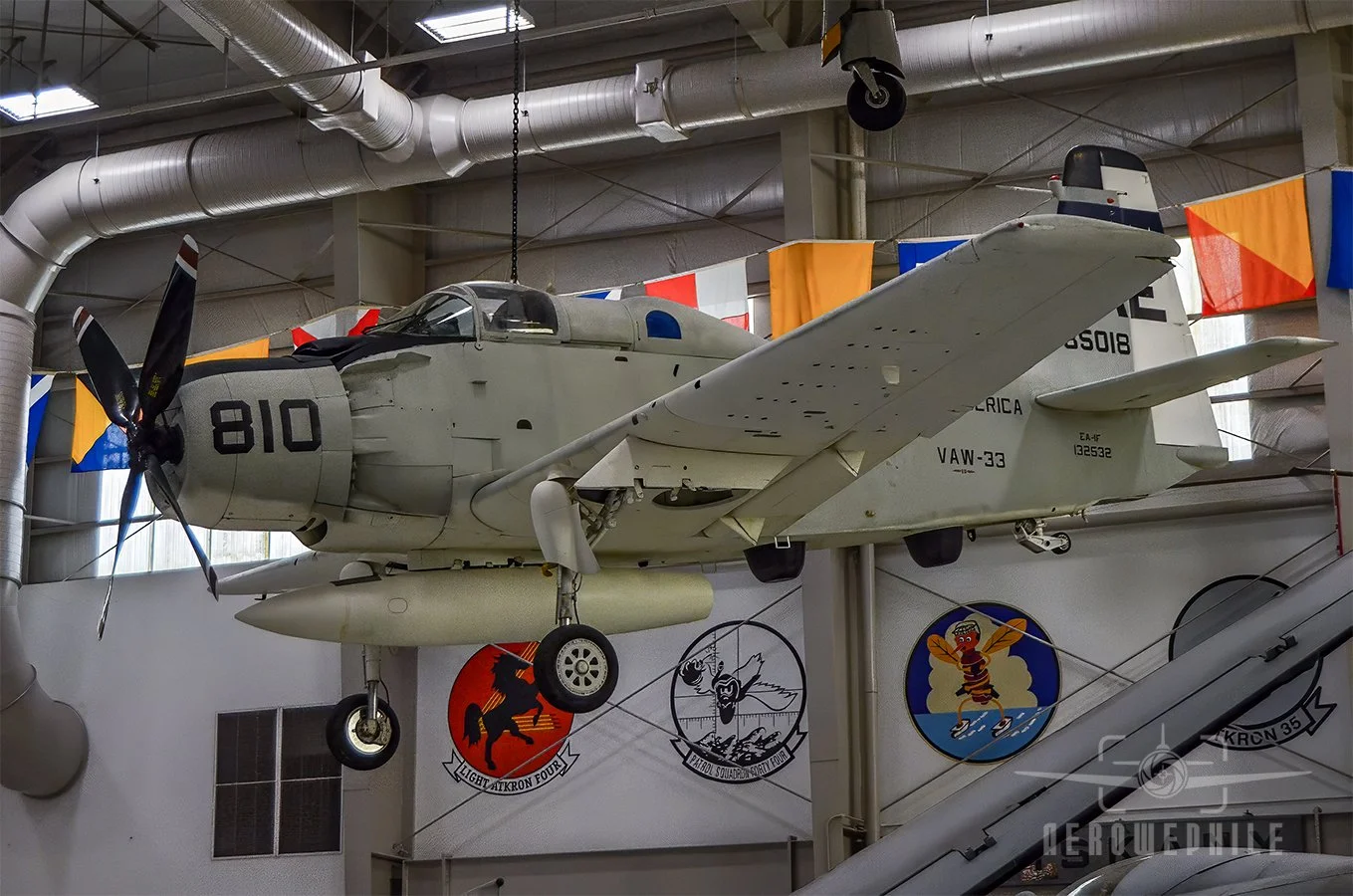
Douglas EA-1F Skyraider – VAW-33 Squadron
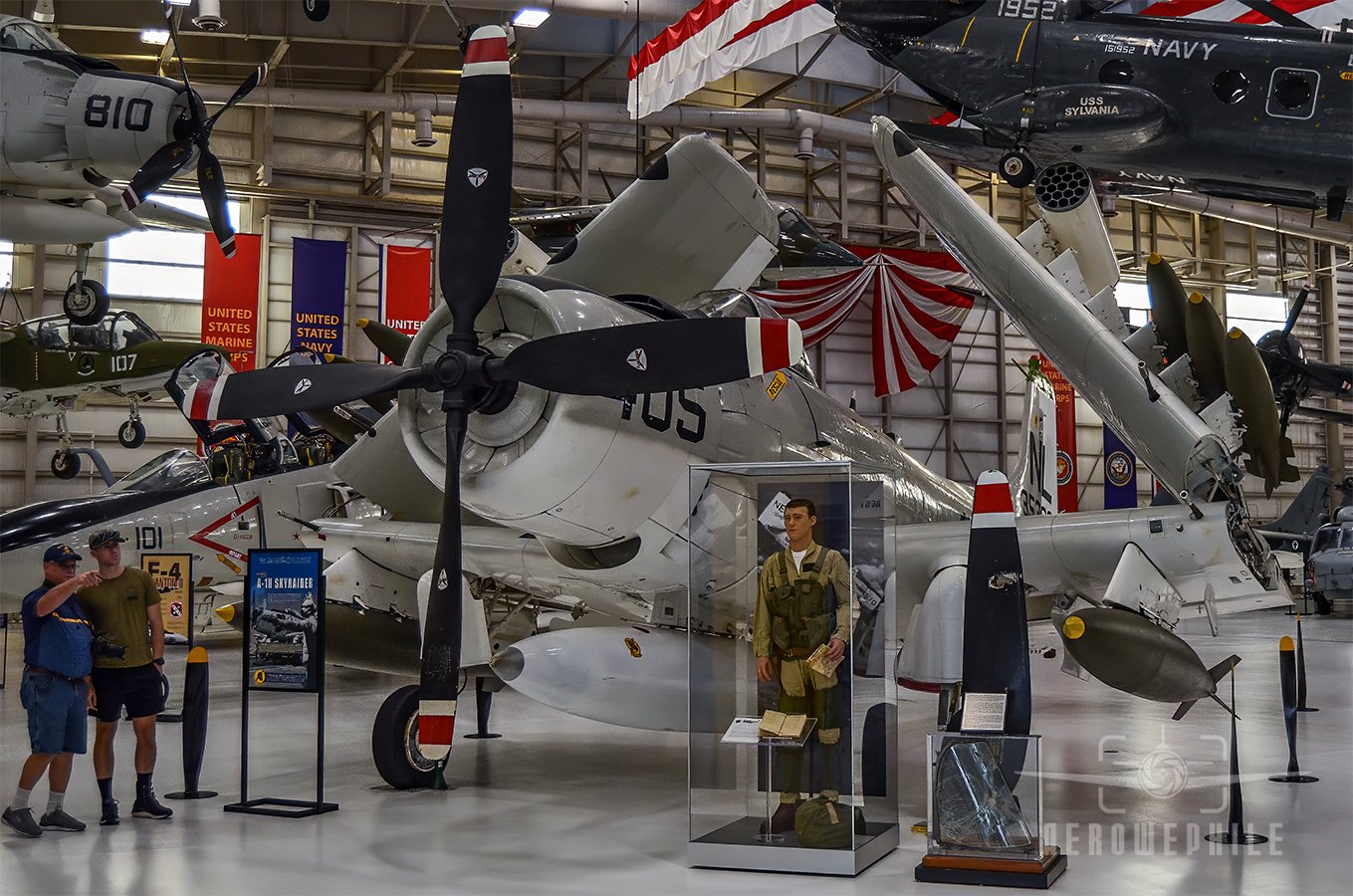
Douglas A1-H Skyraider – USN BuNo 135300.
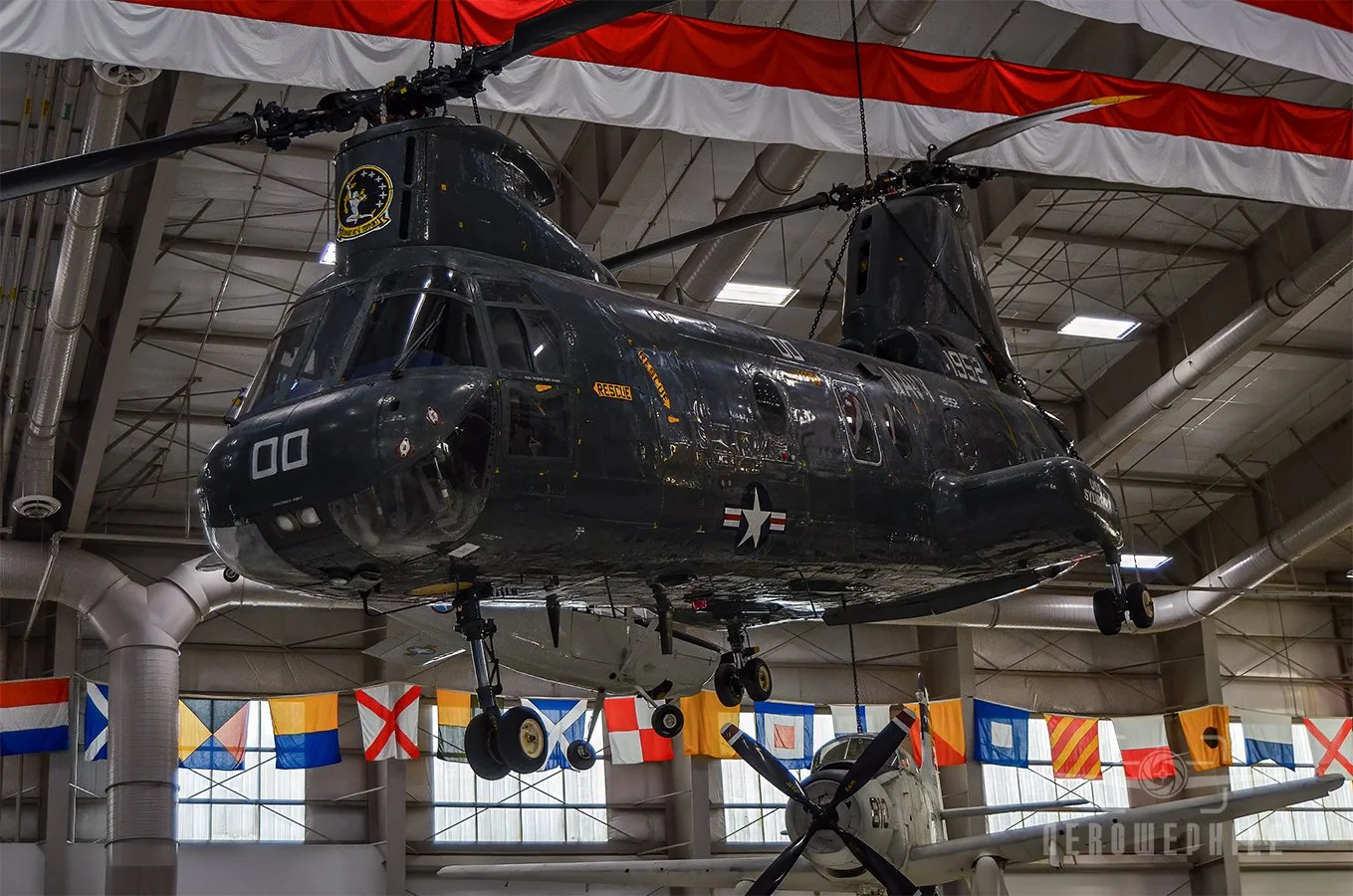
Boeing CH-46D Sea Knight
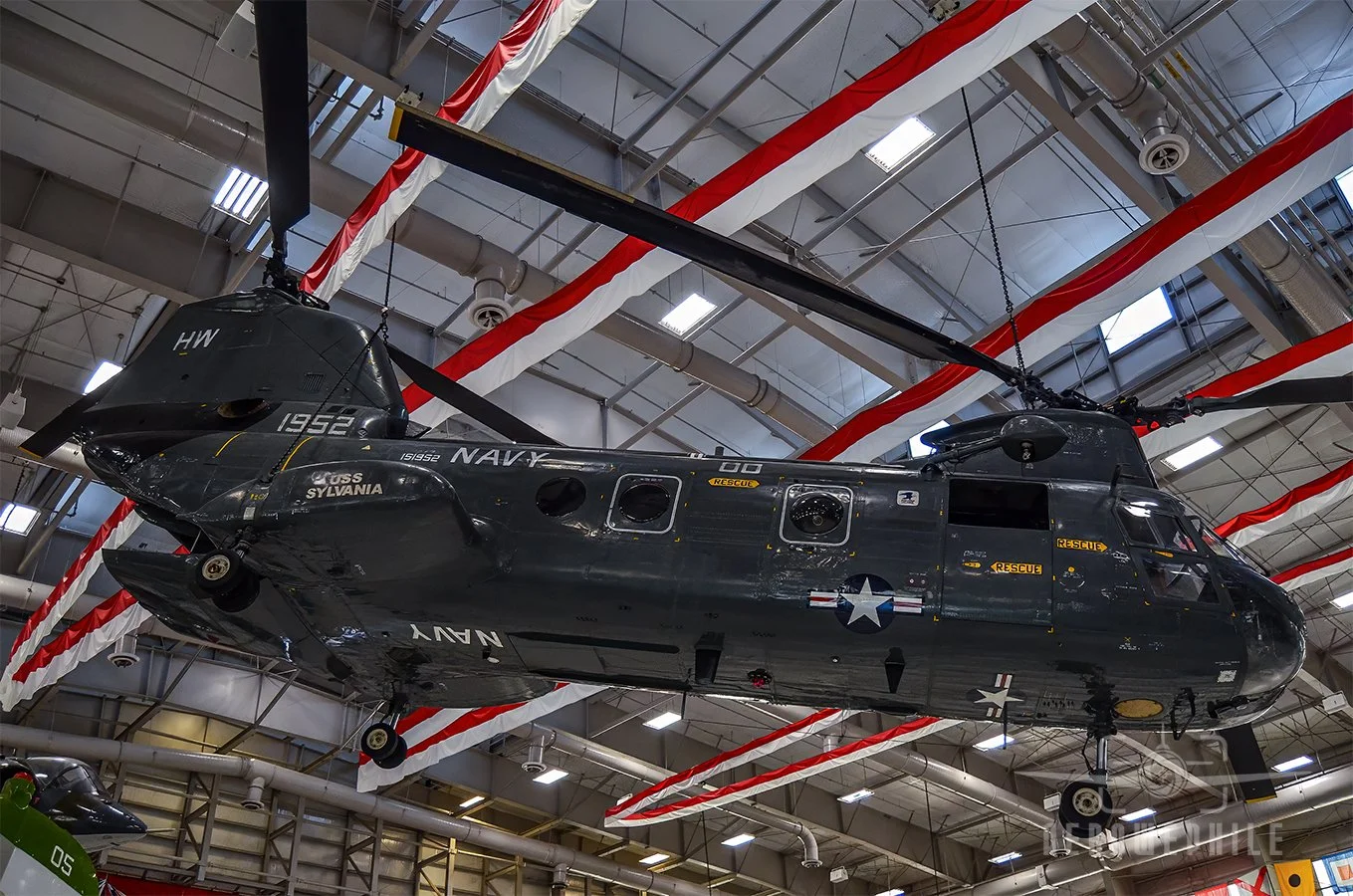
Boeing CH-46D Sea Knight
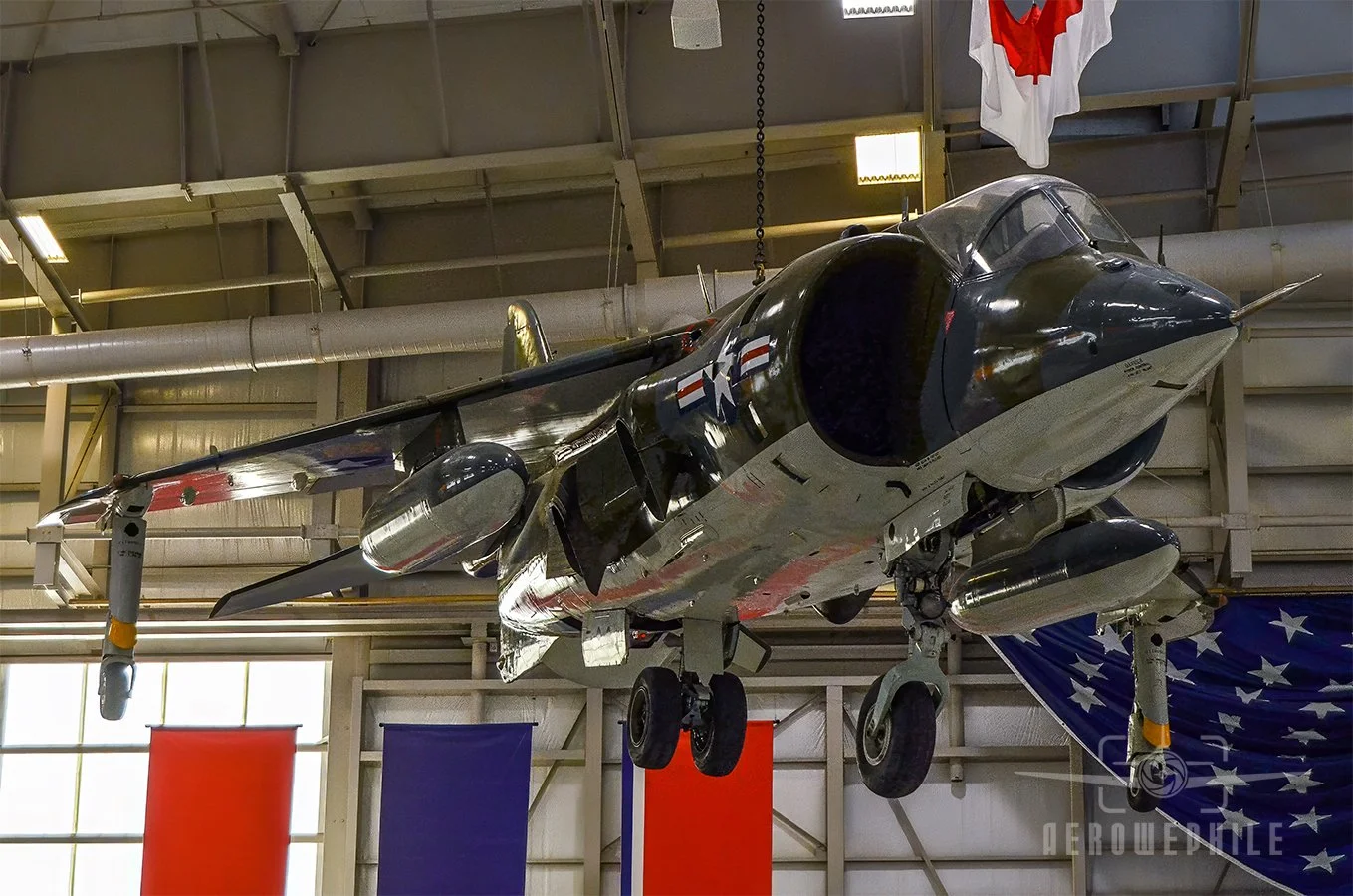
Hawker Siddeley AV-8C Harrier
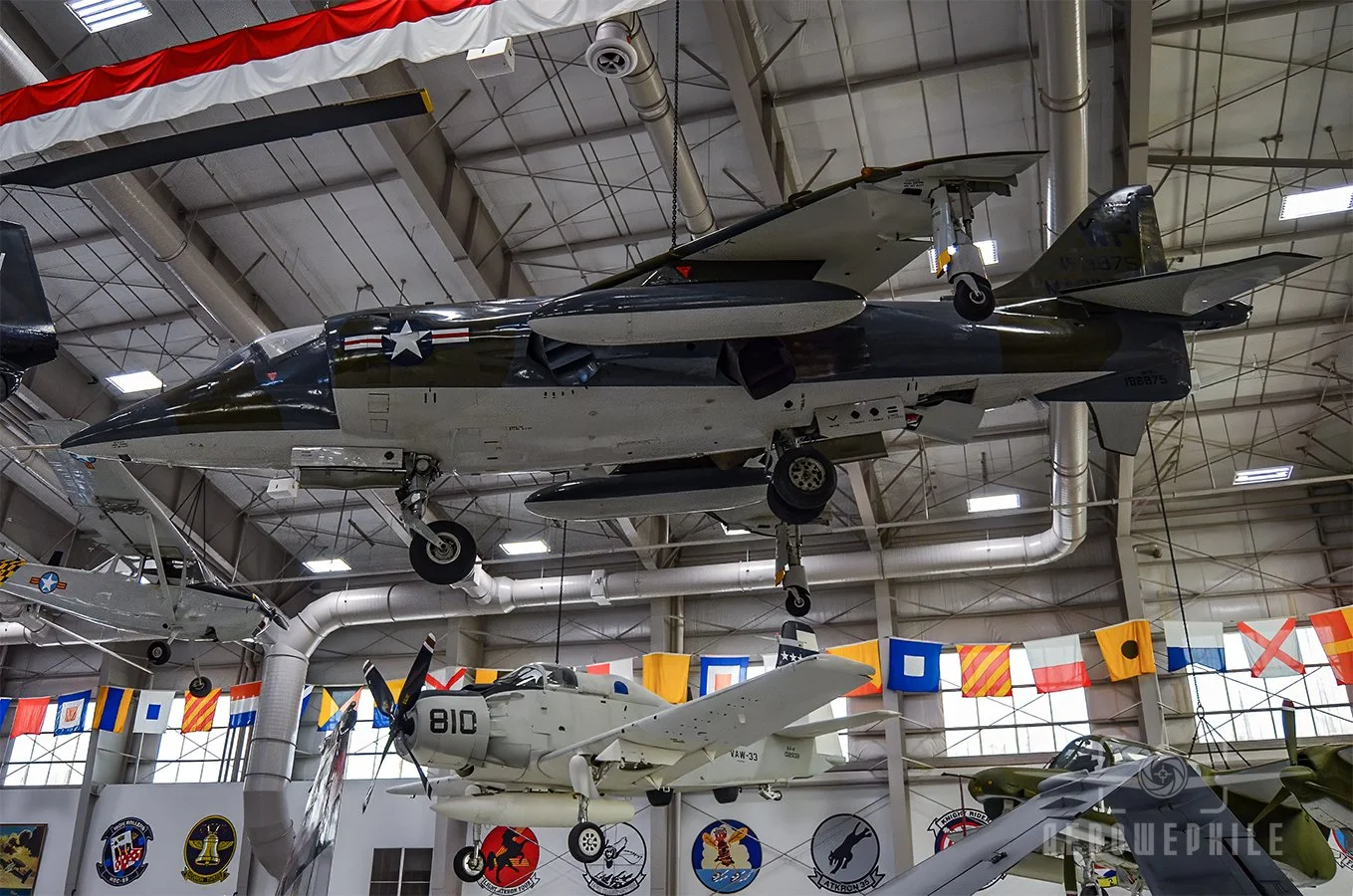
Hawker Siddeley AV-8C Harrier
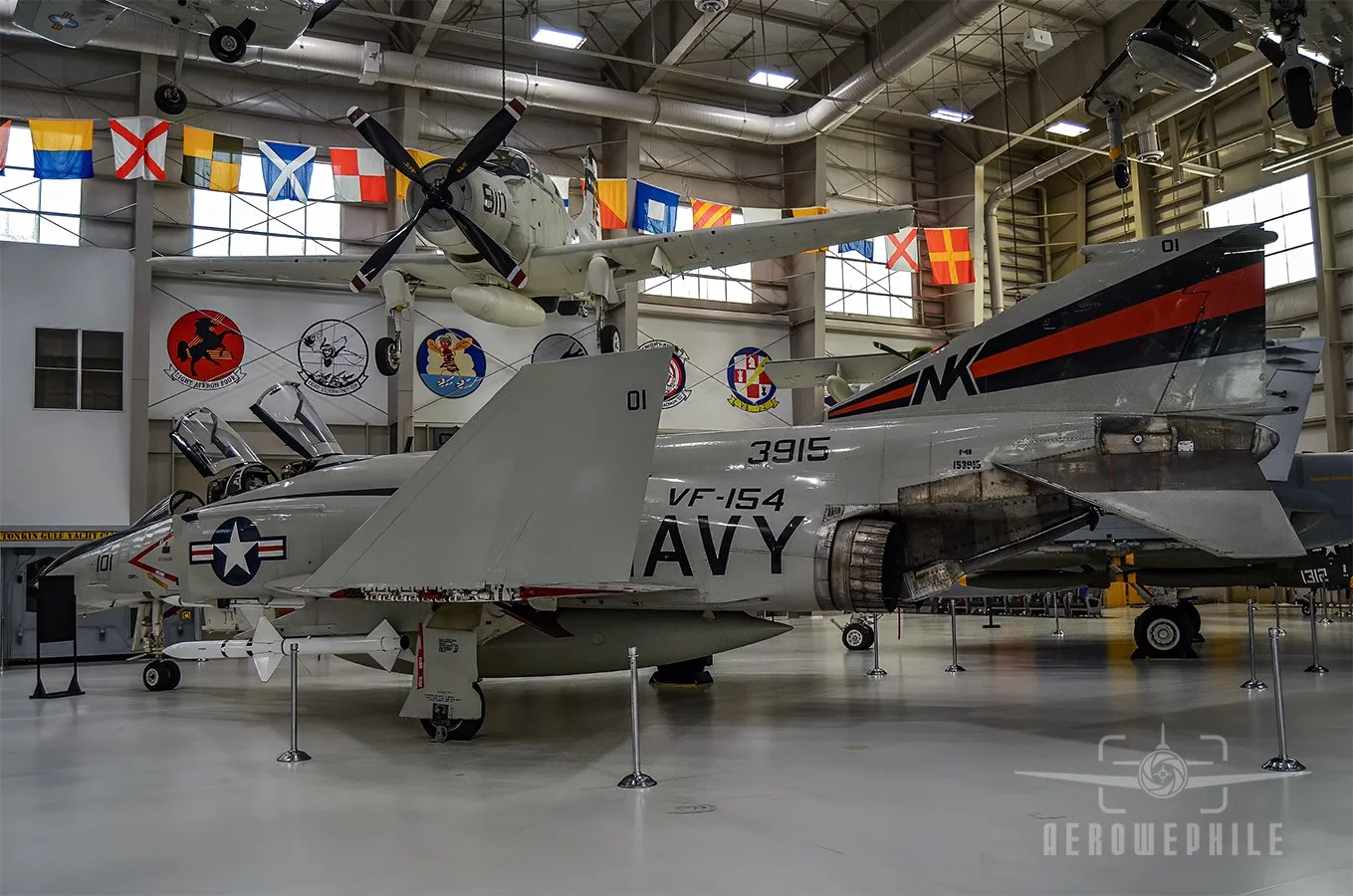
McDonnell-Douglas F-4N Phantom II - VF-154 Squadron
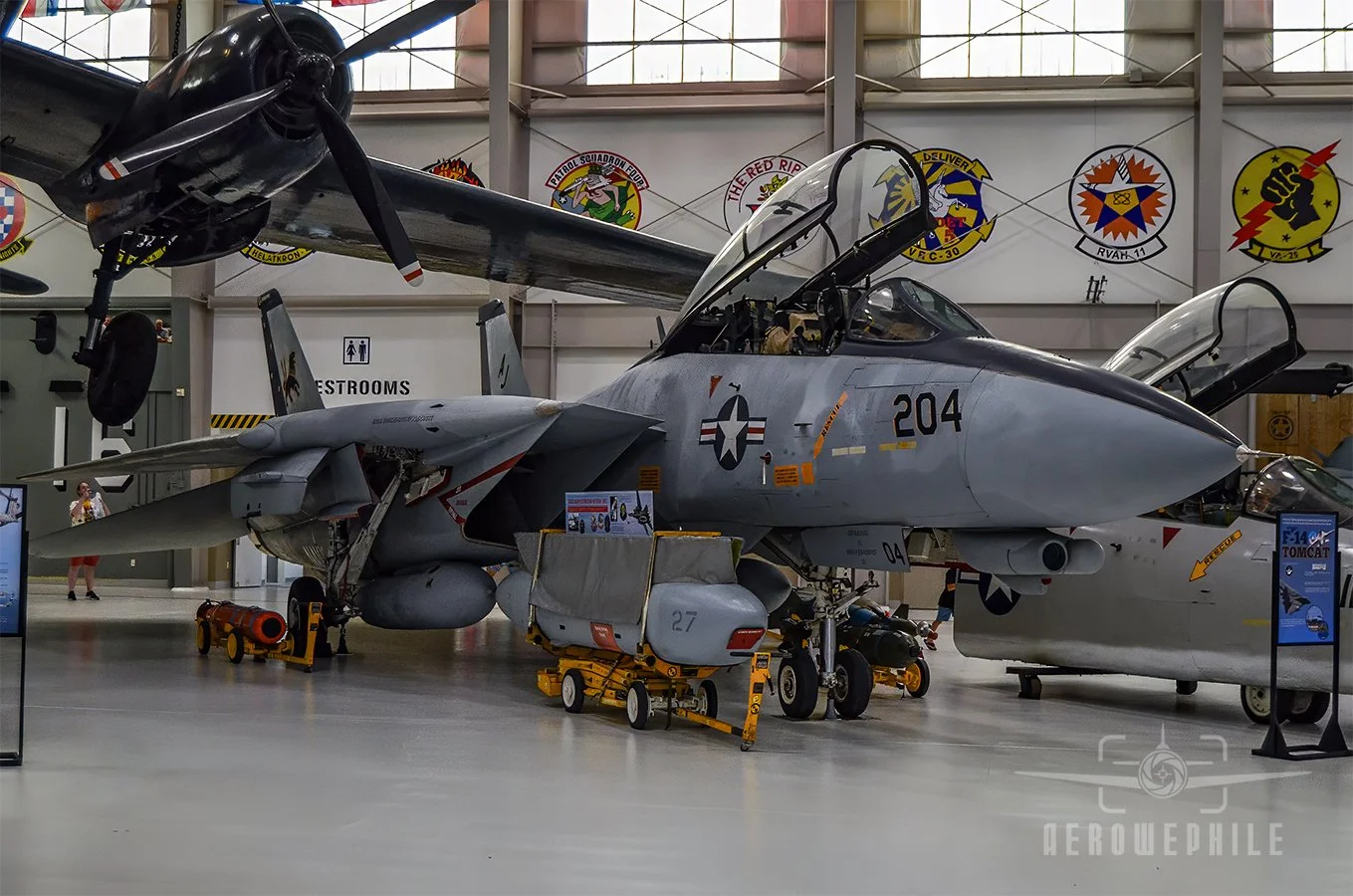
Grumman F-14D(R) Tomcat
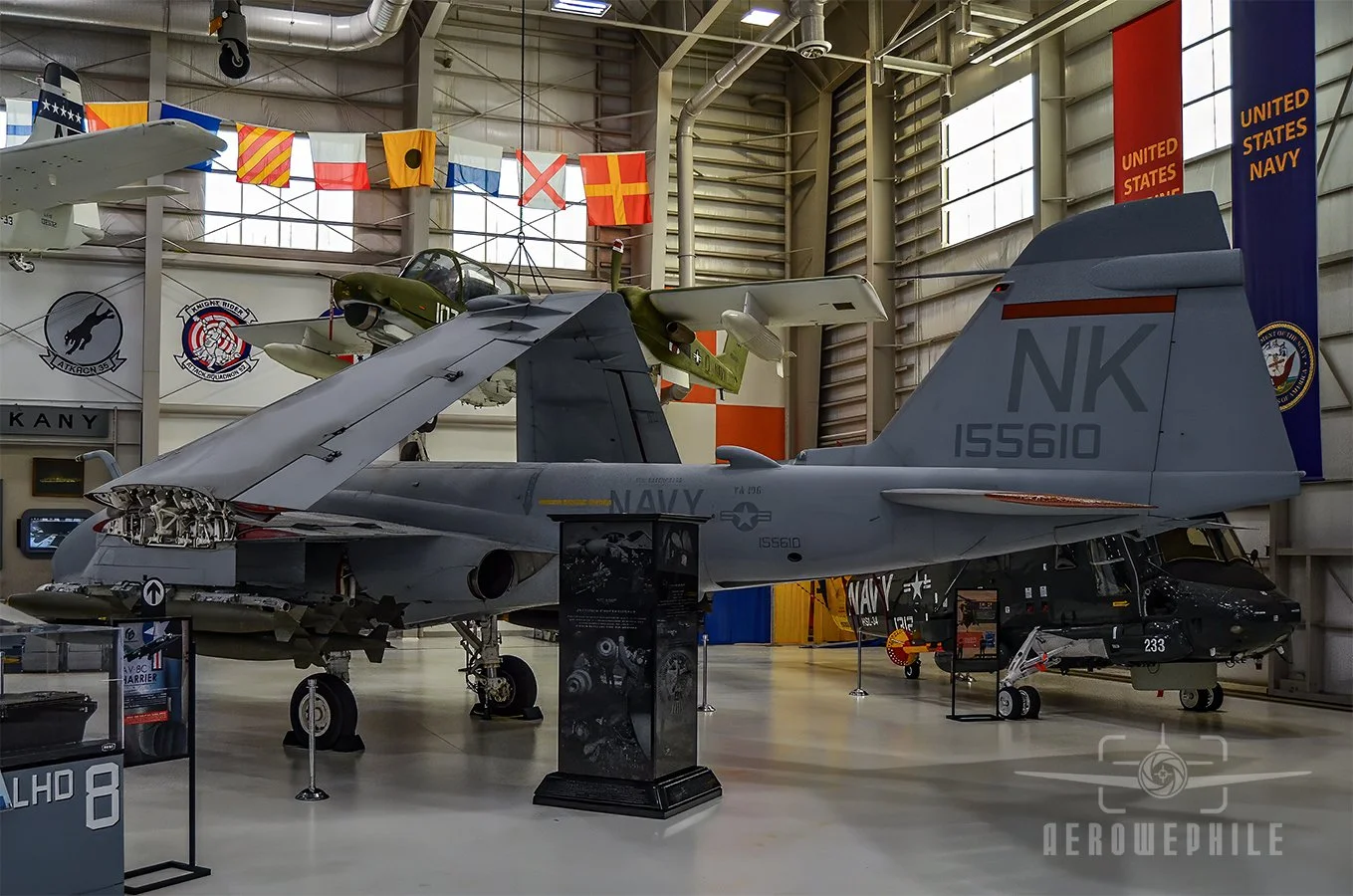
Grumman A-6E Intruder
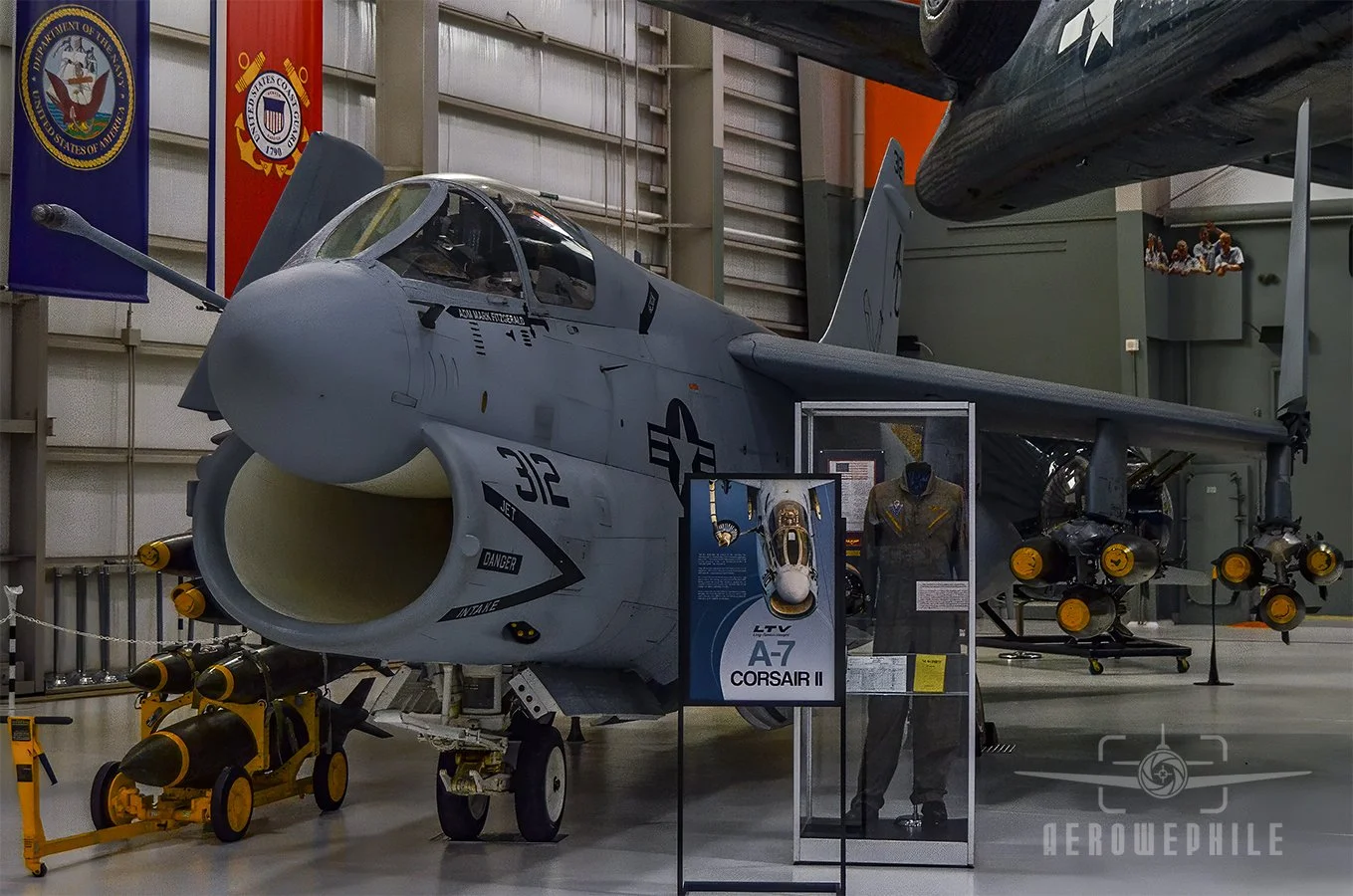
Vought A-7E Corsair II
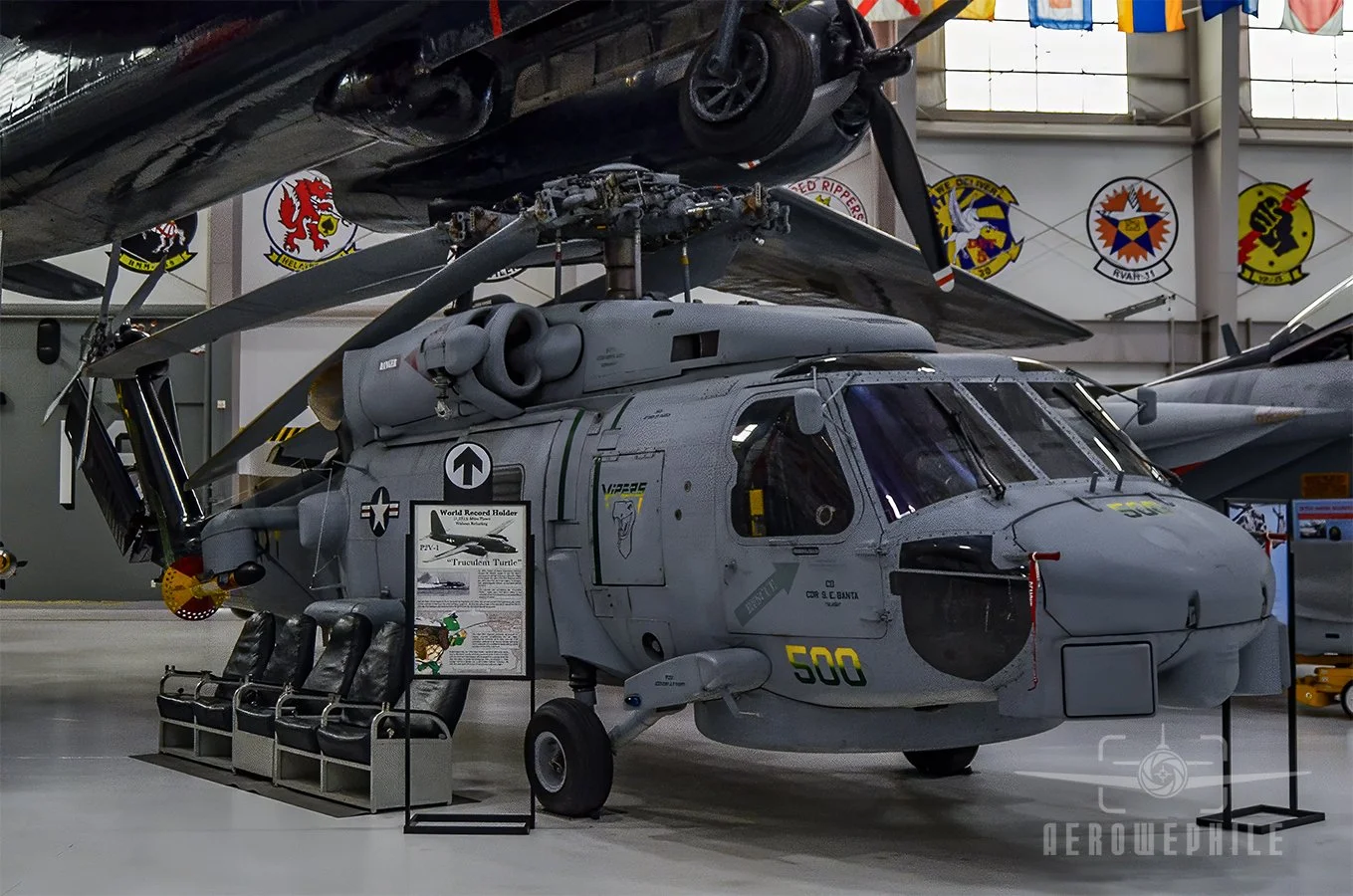
Sikorsky SH-60B Seahawk
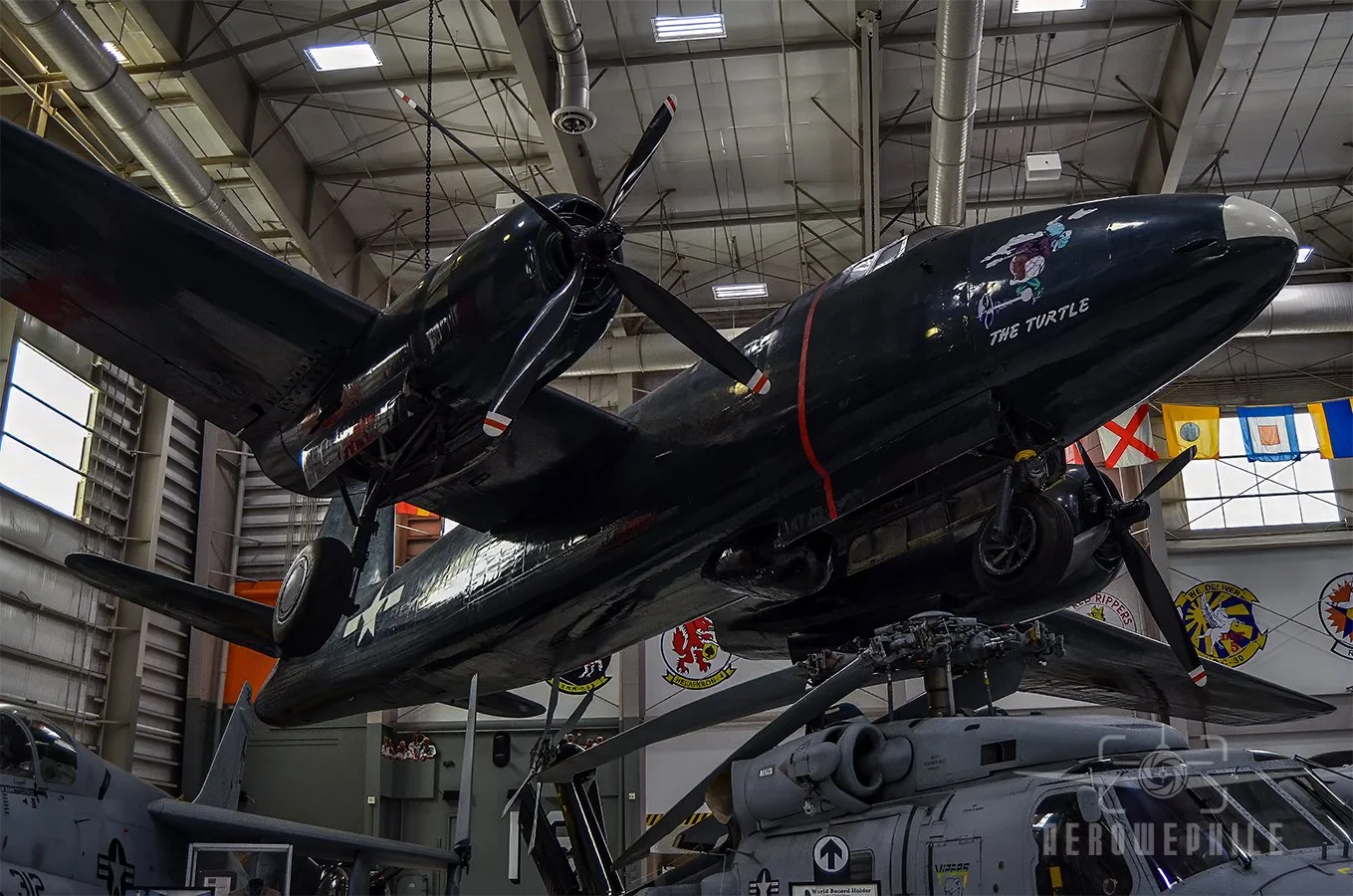
Lockheed P2V-1 Neptune (Truculent Turtle)
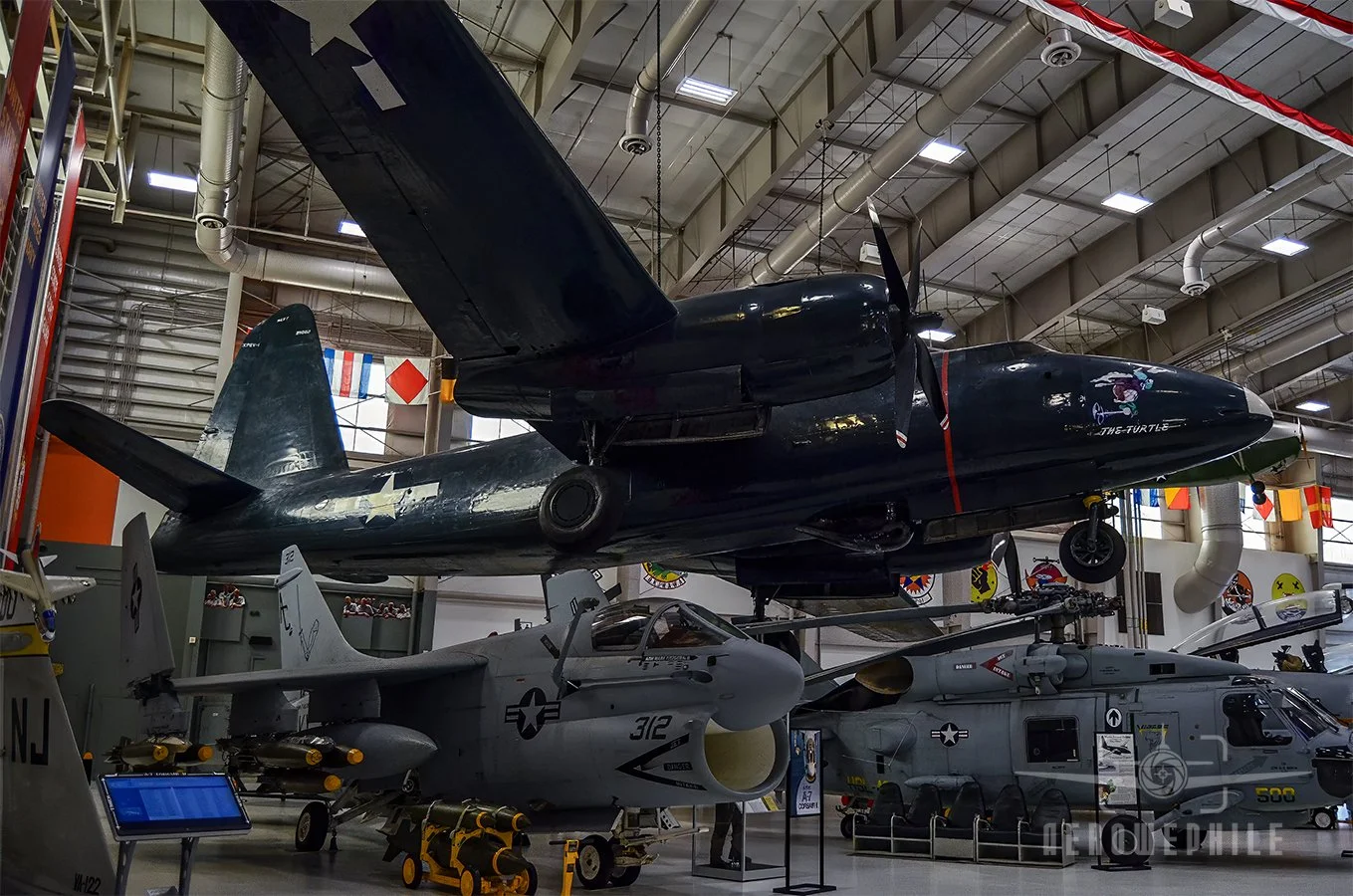
Lockheed P2V-1 Neptune (Truculent Turtle)
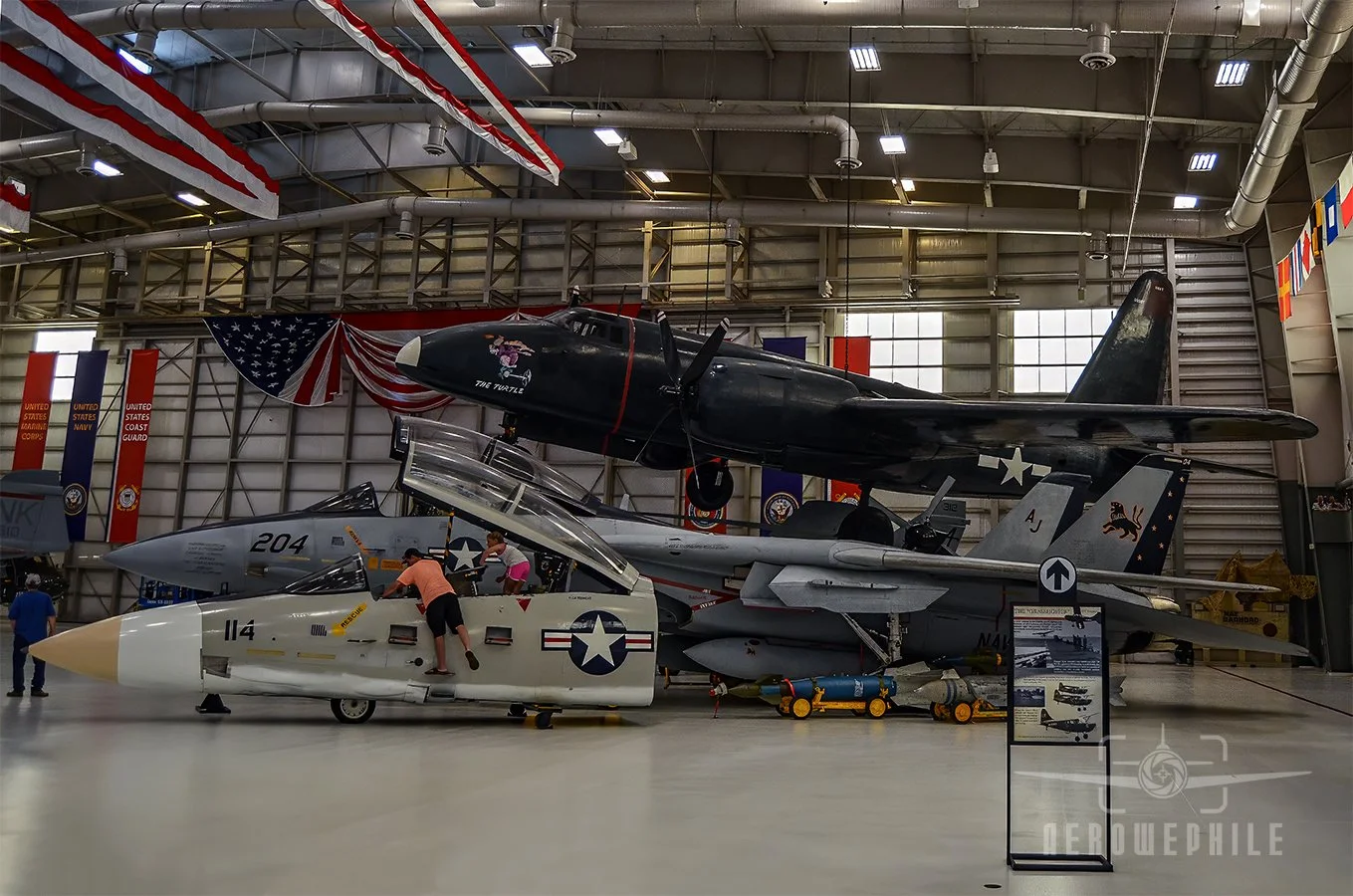
Lockheed P2V-1 Neptune (Truculent Turtle) above the Grumman F-14D(R) Tomcat and Tomcat cockpit section.
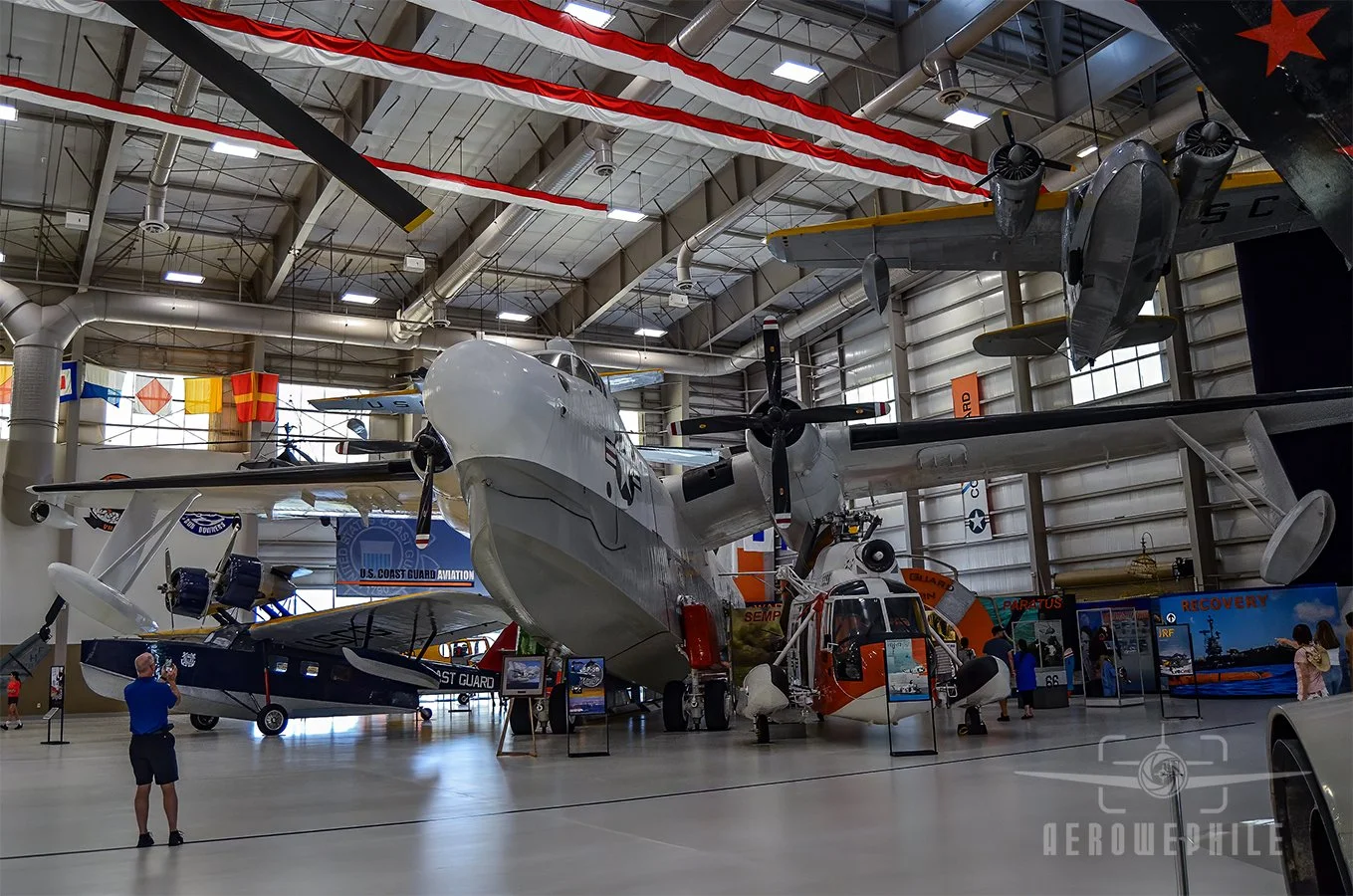
The enormous Martin SP-5B Marlin seaplane.
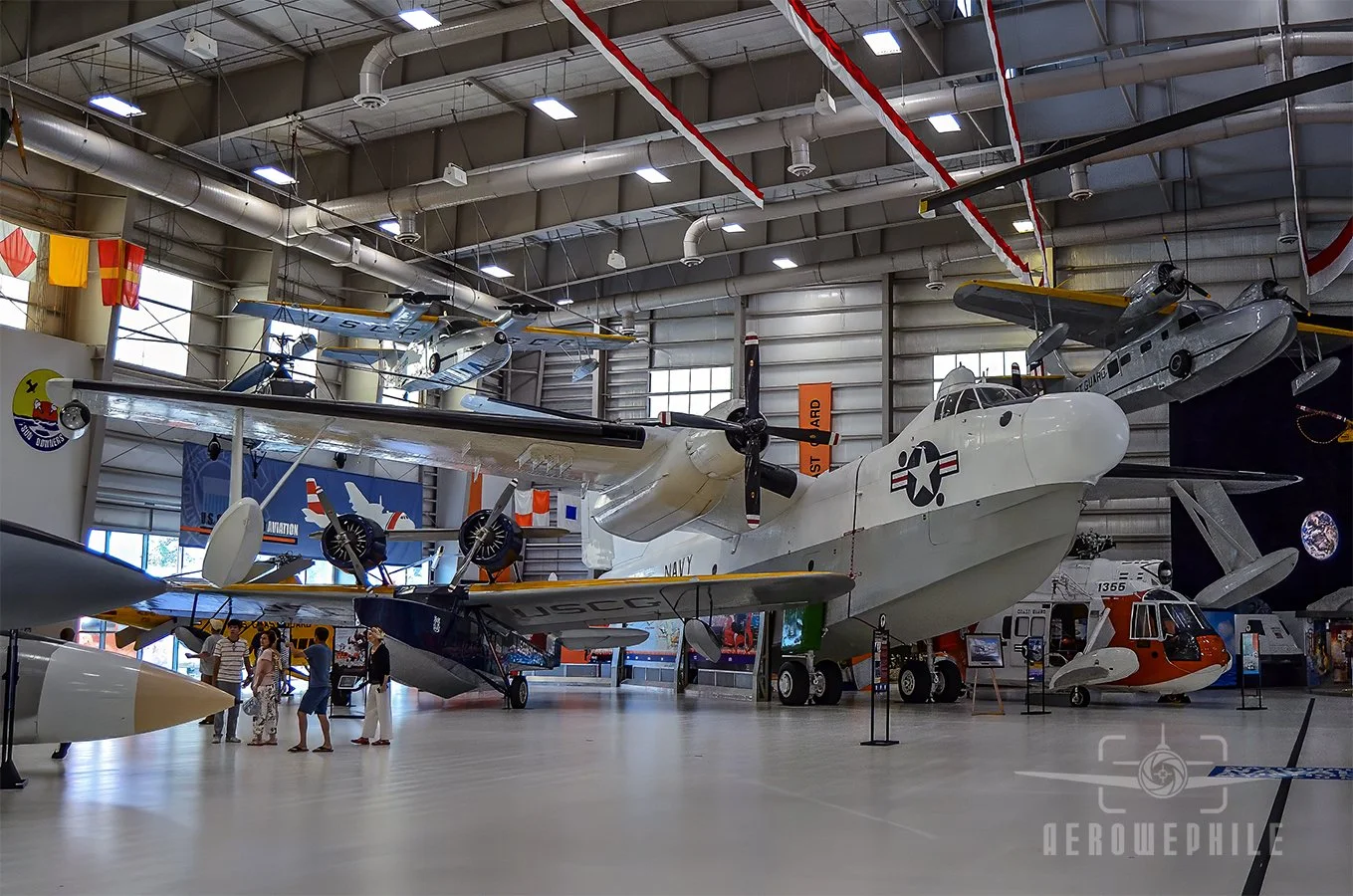
Martin SP-5B Marlin seaplane
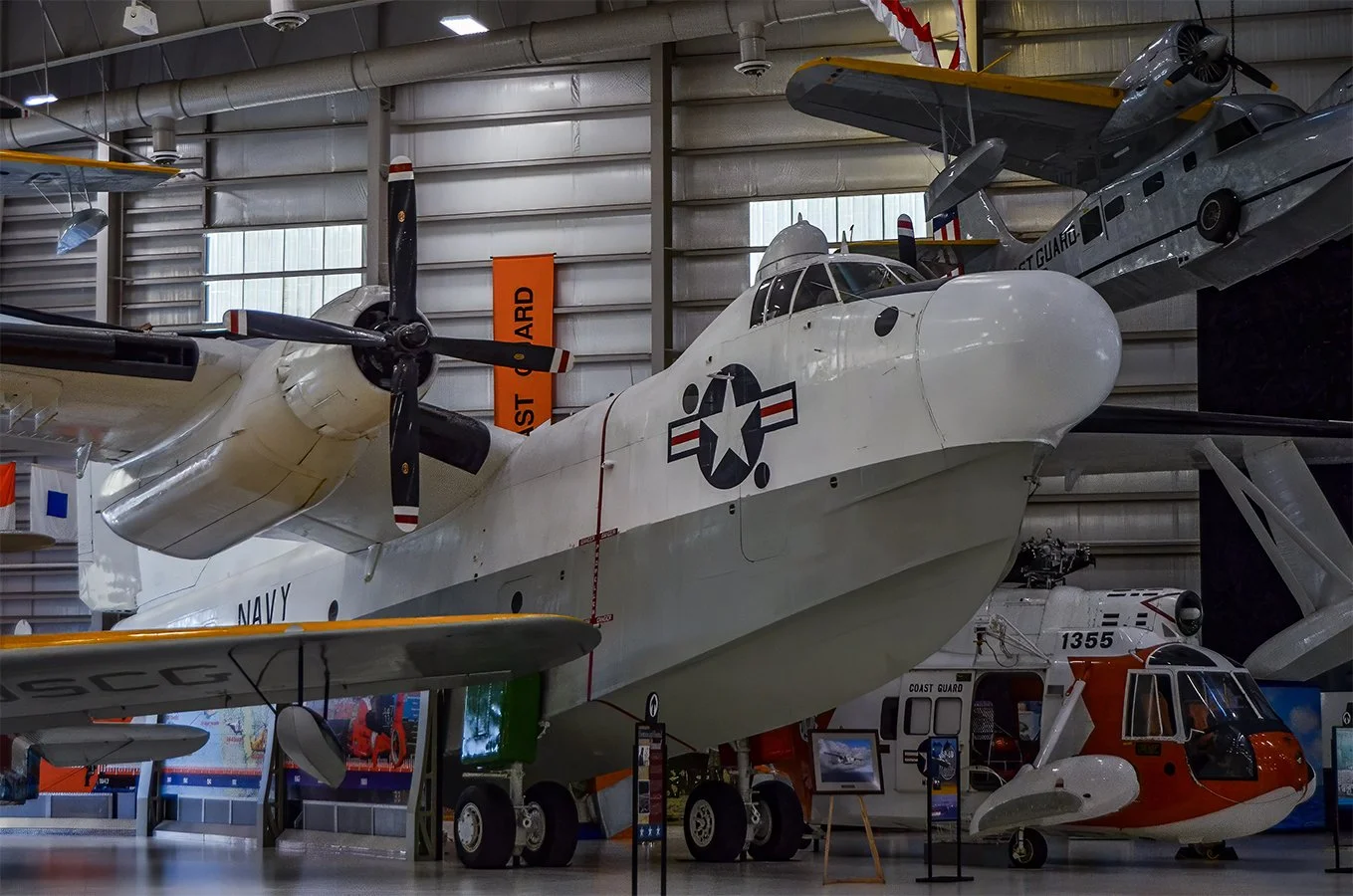
Martin SP-5B Marlin seaplane
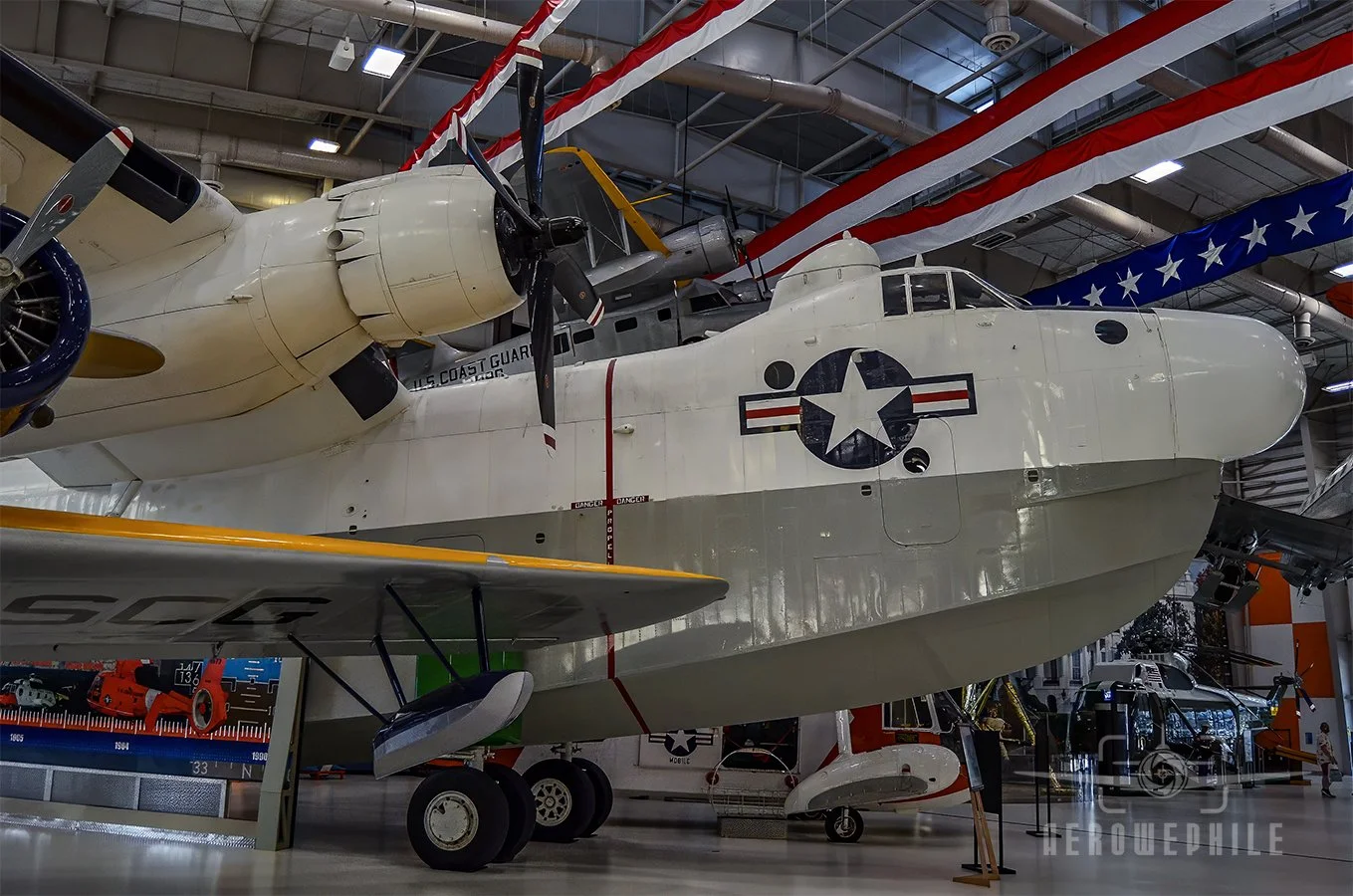
Martin SP-5B Marlin seaplane
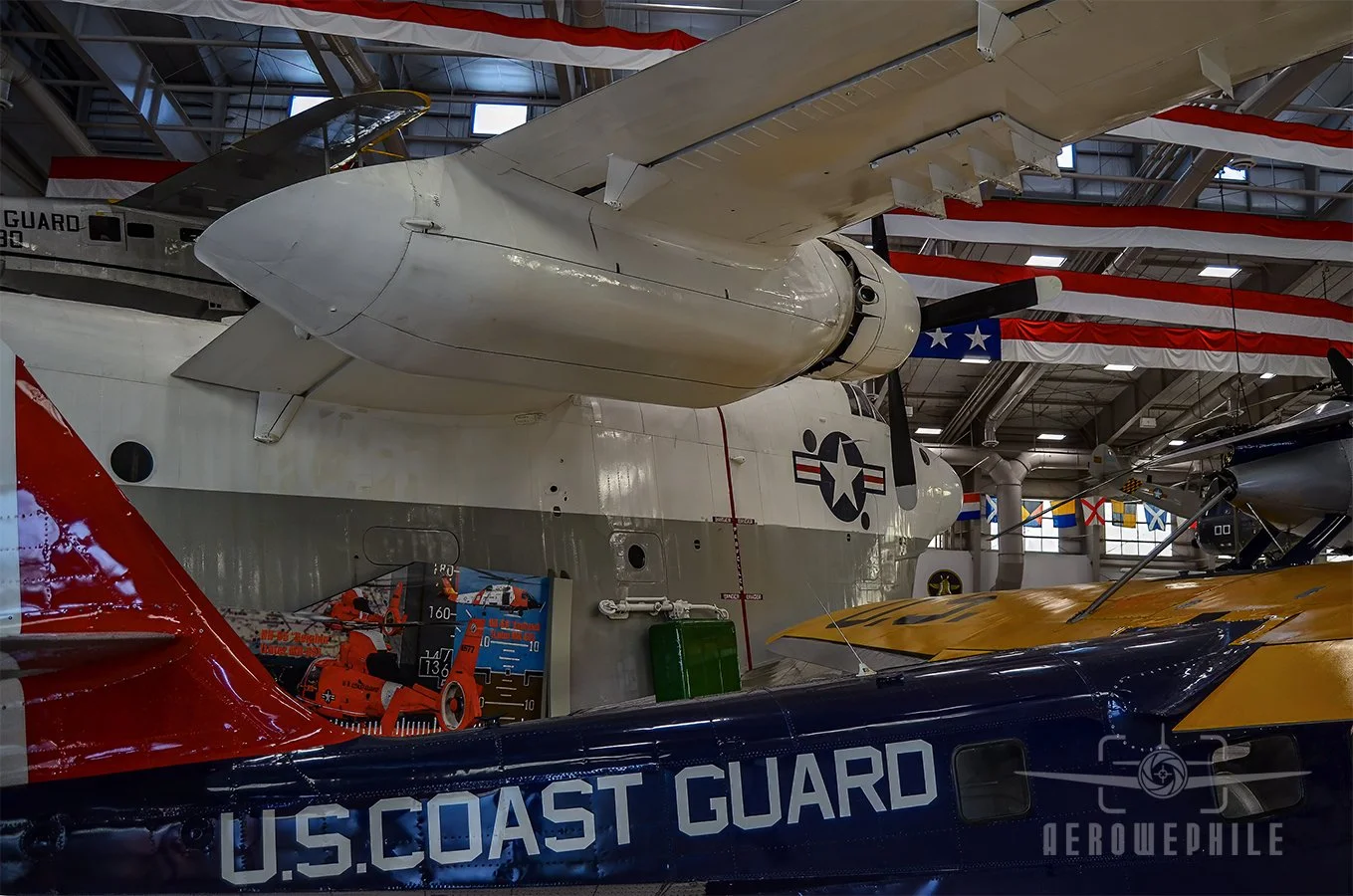
Martin SP-5B Marlin seaplane with the Douglas RD-4 Dolphin in the foreground.
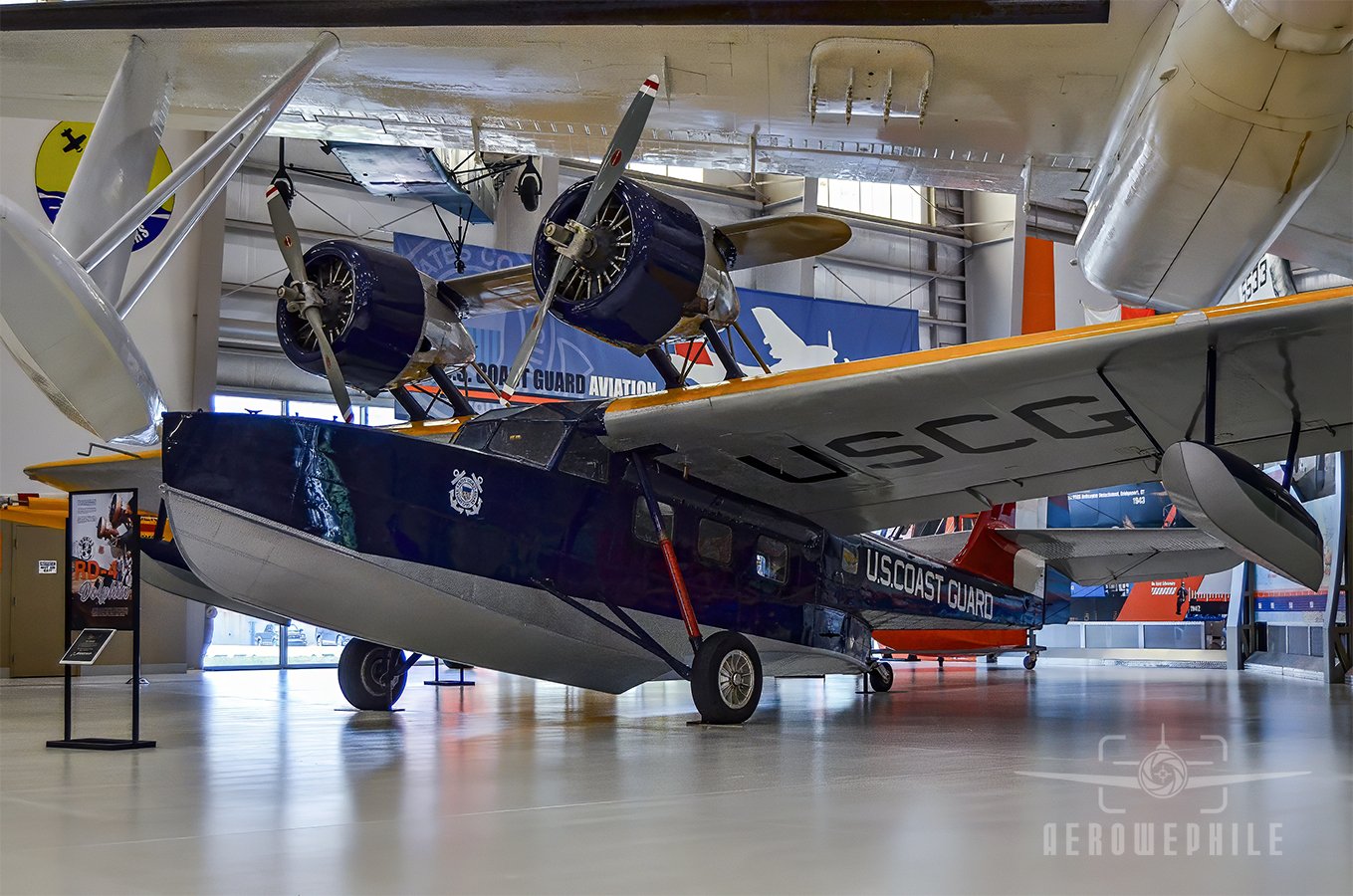
Douglas RD-4 Dolphin
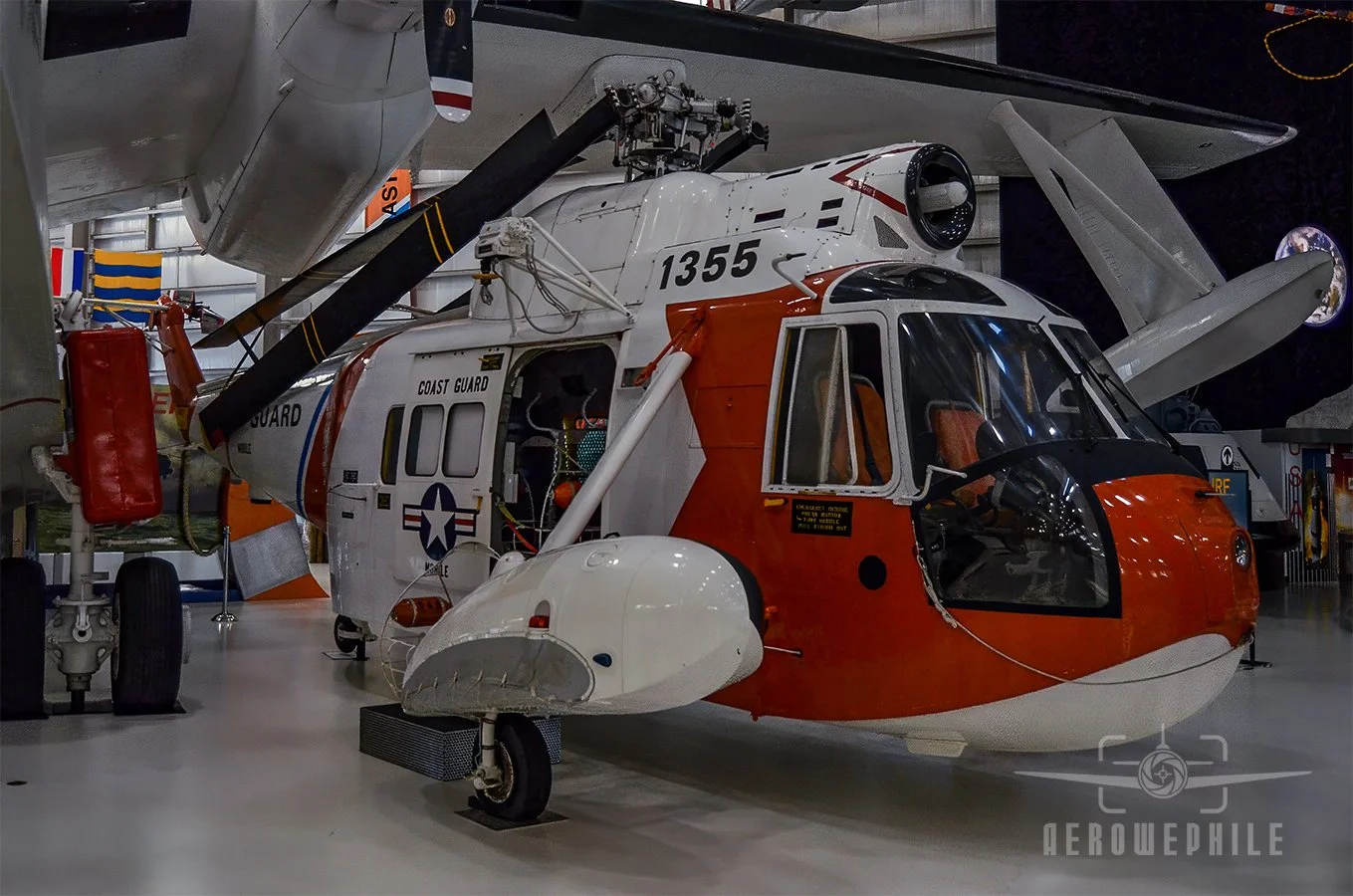
Sikorsky HH-52A Sea Guard
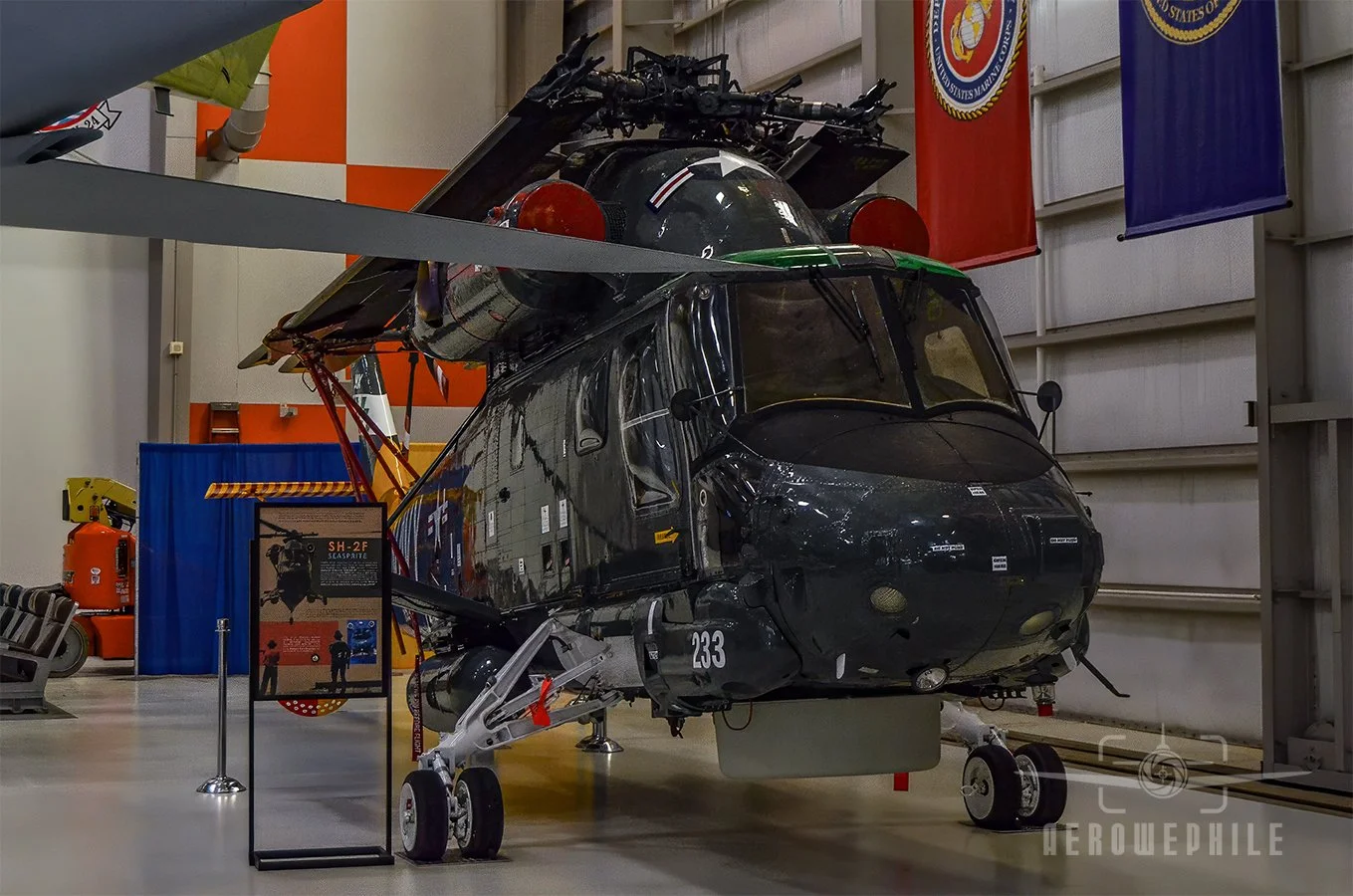
Kaman SH-2F Seasprite
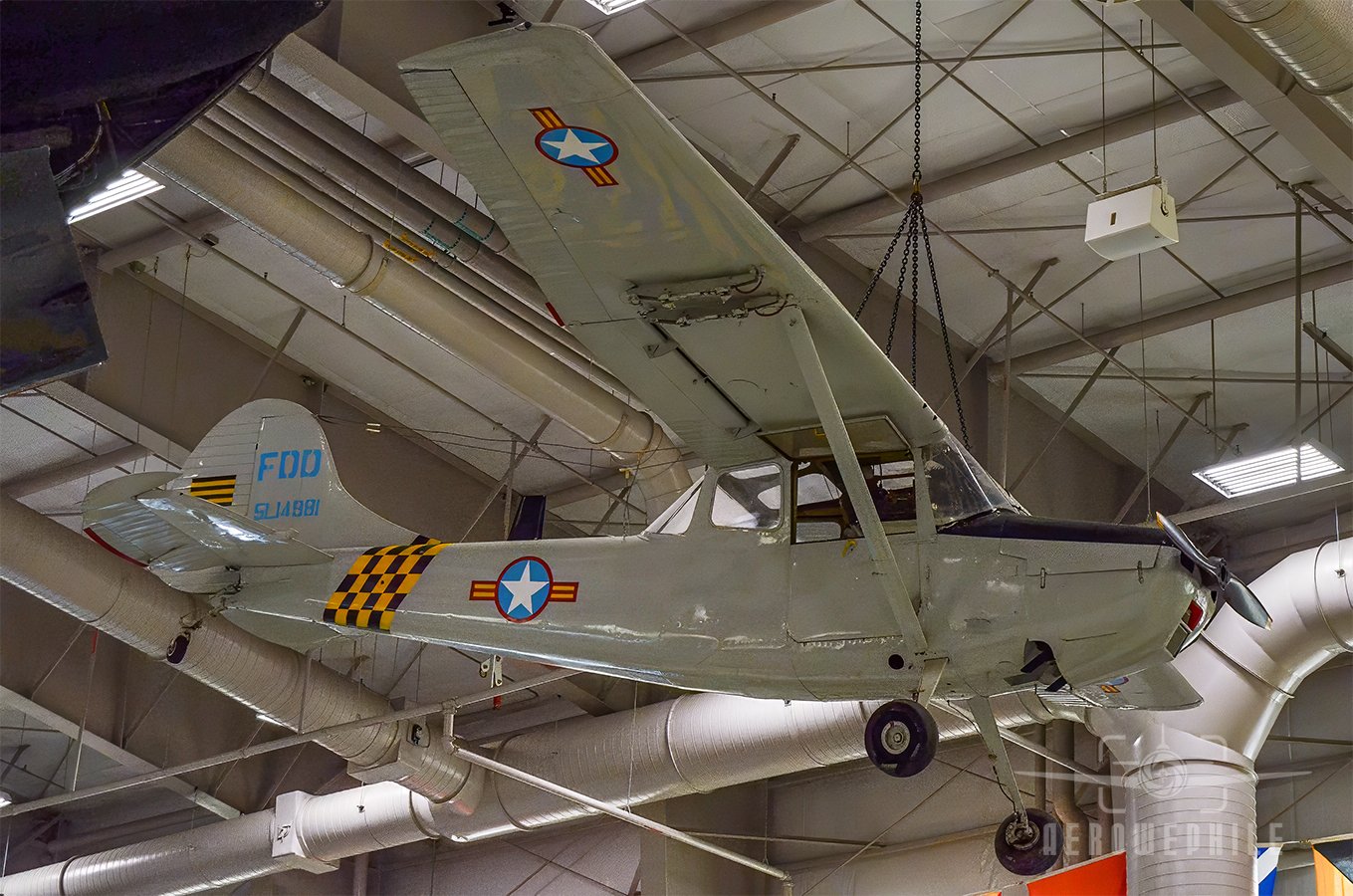
Cessna O-1G Bird Dog – RVNAF
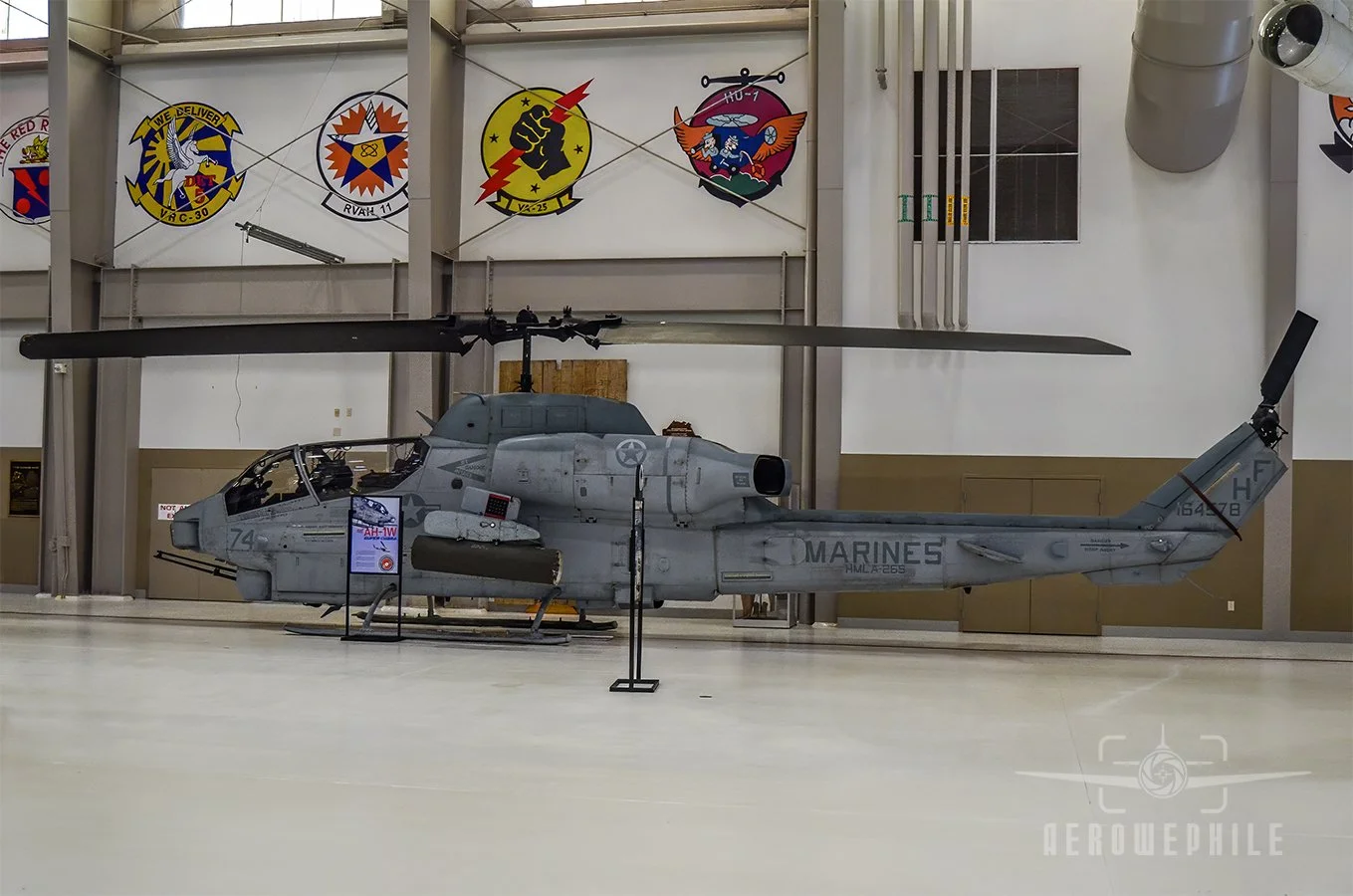
Bell AH-1W SuperCobra
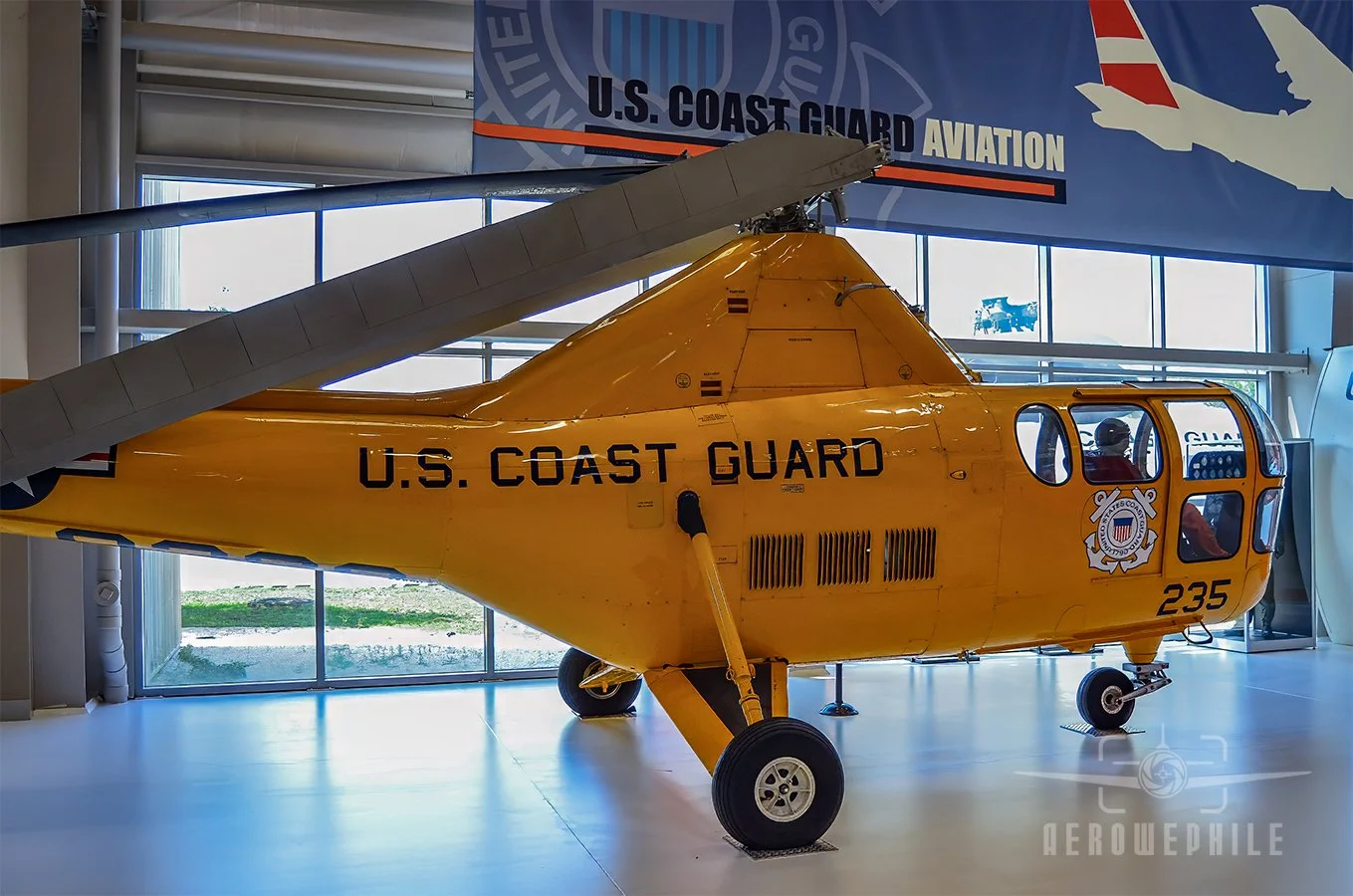
Sikorsky HO3S-1G
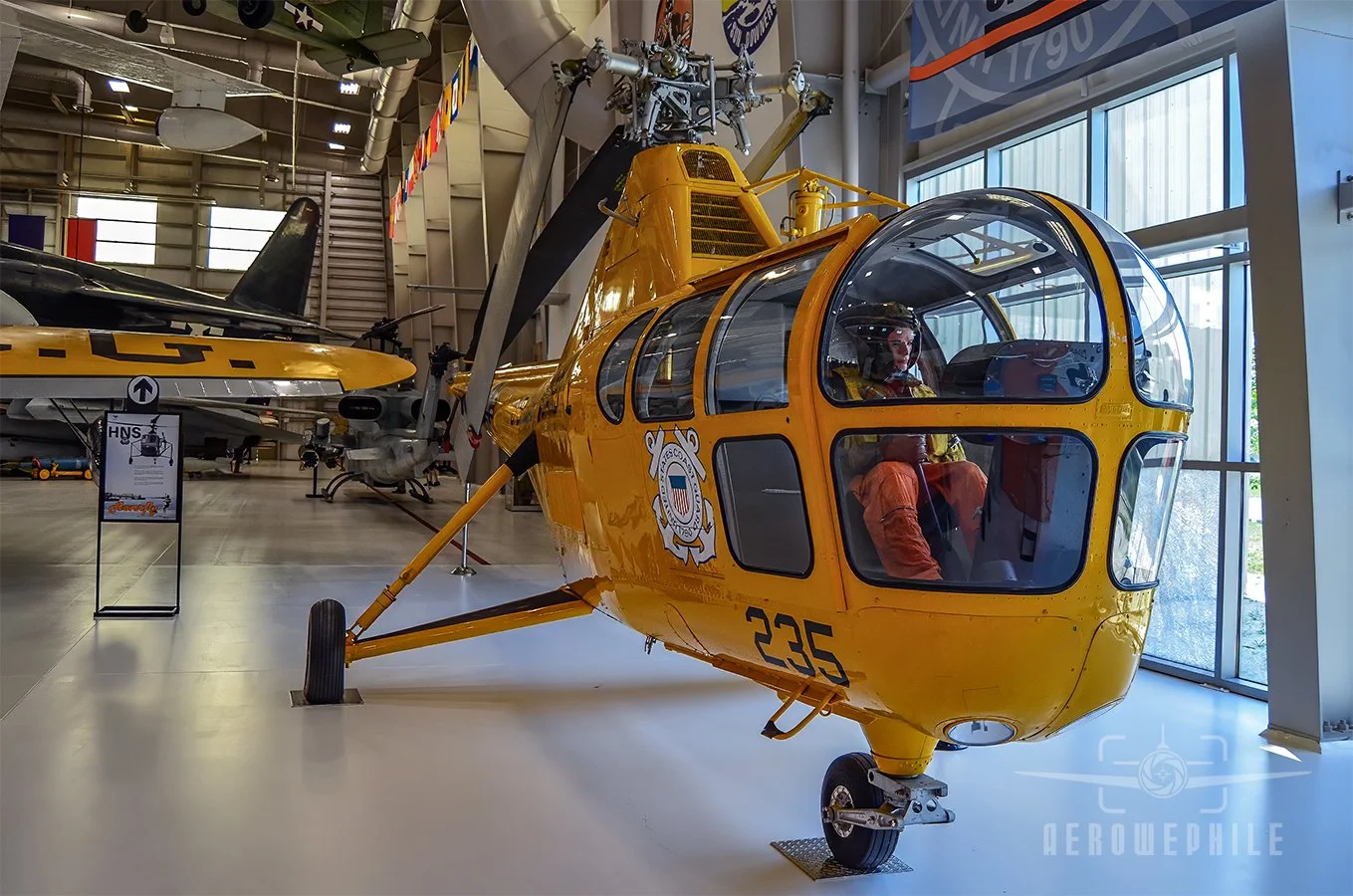
Sikorsky HO3S-1G
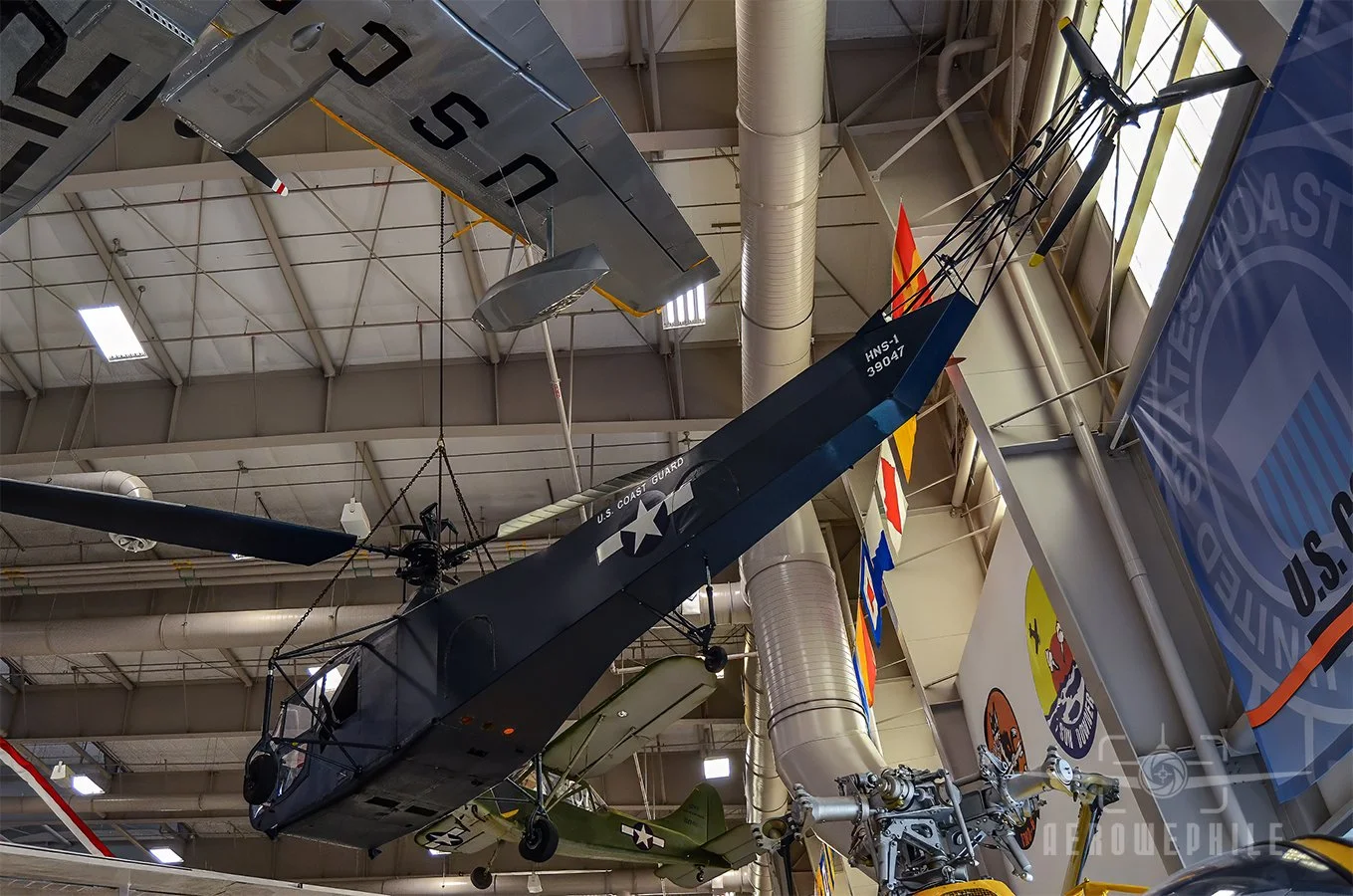
Sikorsky HNS Hoverfly
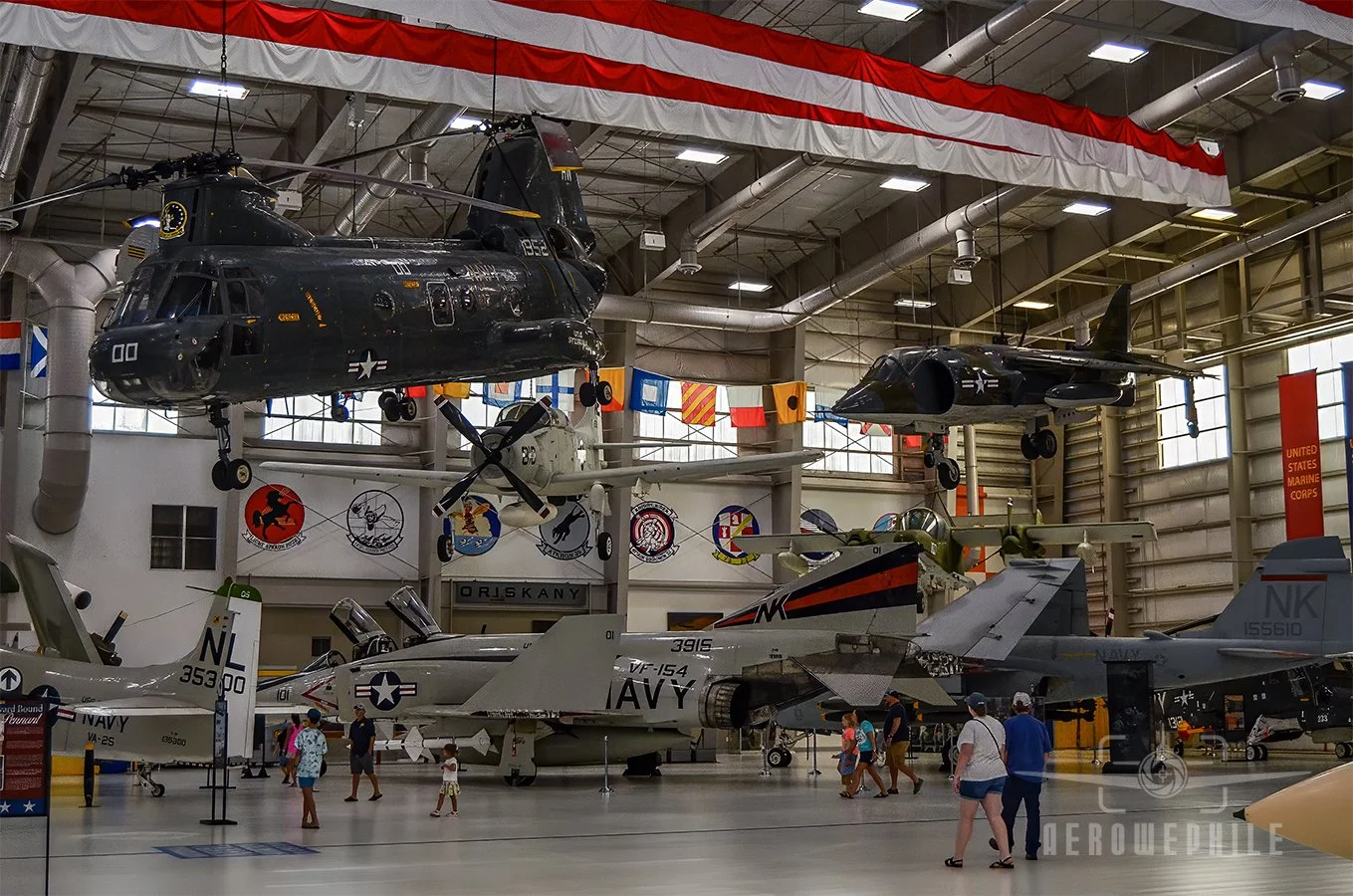
Boeing CH-46D Sea Knight (Top Left) - Douglas EA-1F Skyraider (Top Center) - Hawker Siddeley AV-8C Harrier (Top Right) - Douglas A-1H Skyraider (Bottom Left) - McDonnell-Douglas F-4N Phantom II (Bottom Center) - Grumman A-6E Intruder (Bottom Right) - North American Rockwell OV-10 Bronco (Partially hidden in background)
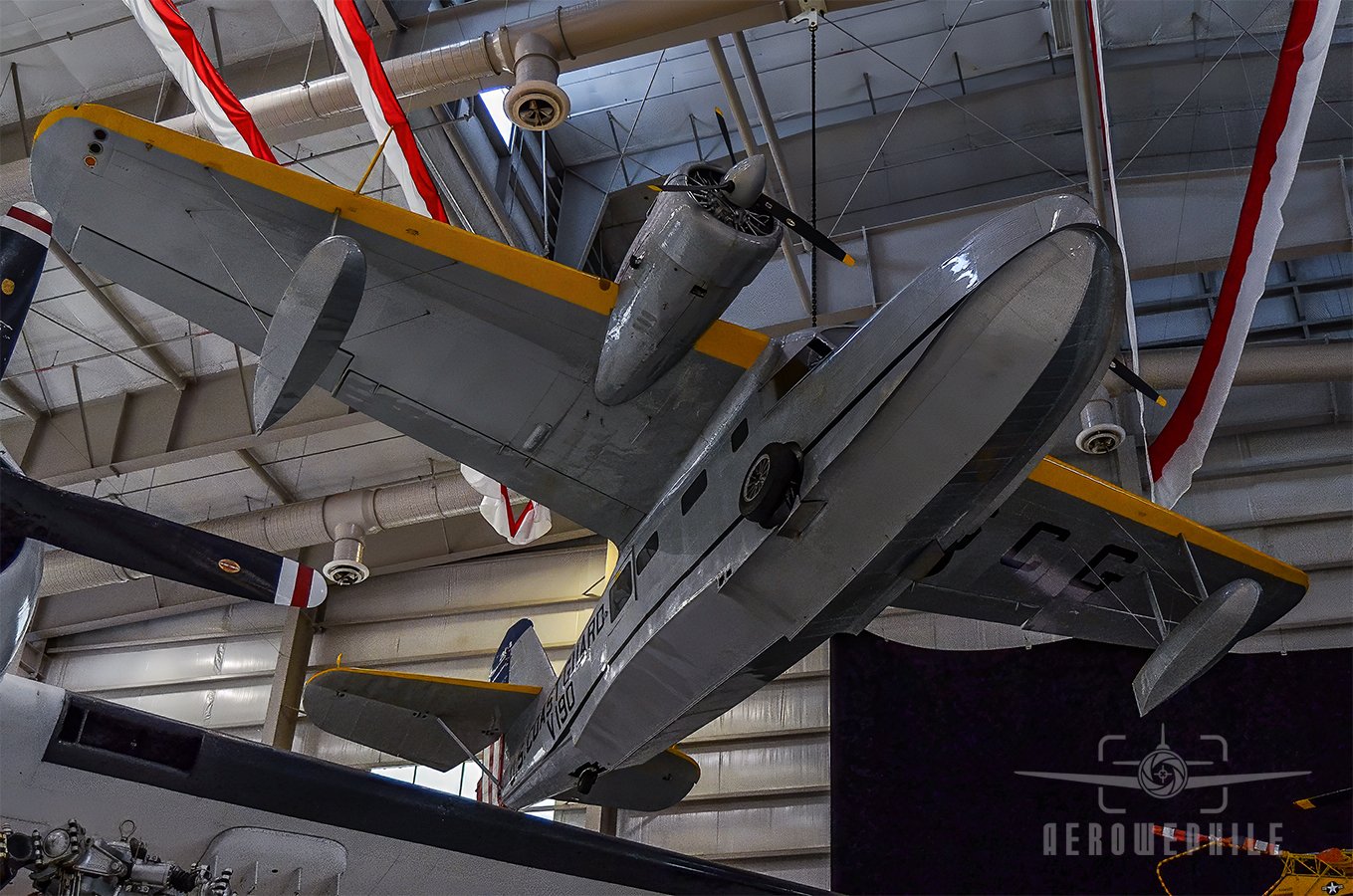
Grumman J4F Widgeon
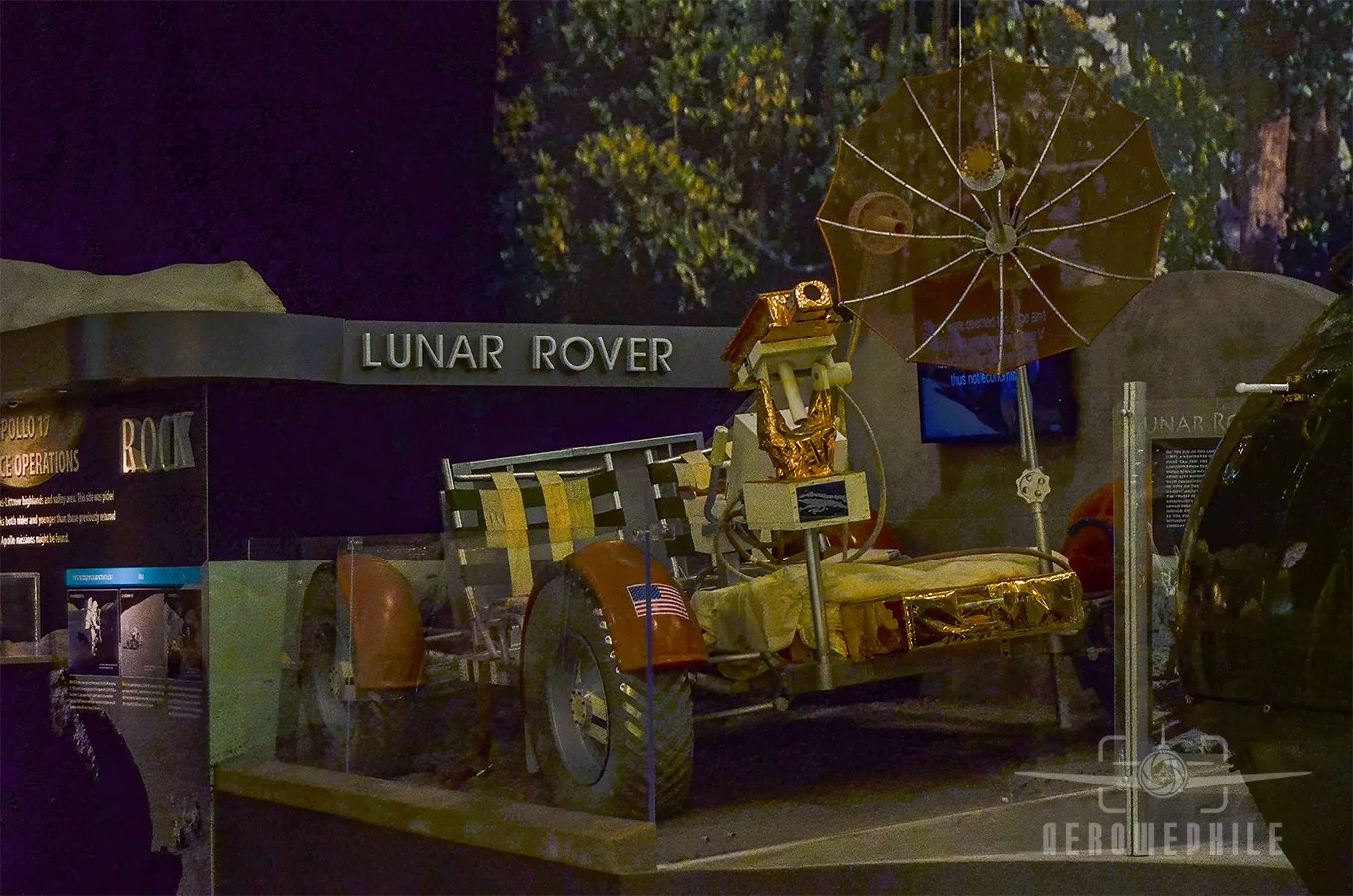
Lunar Rover
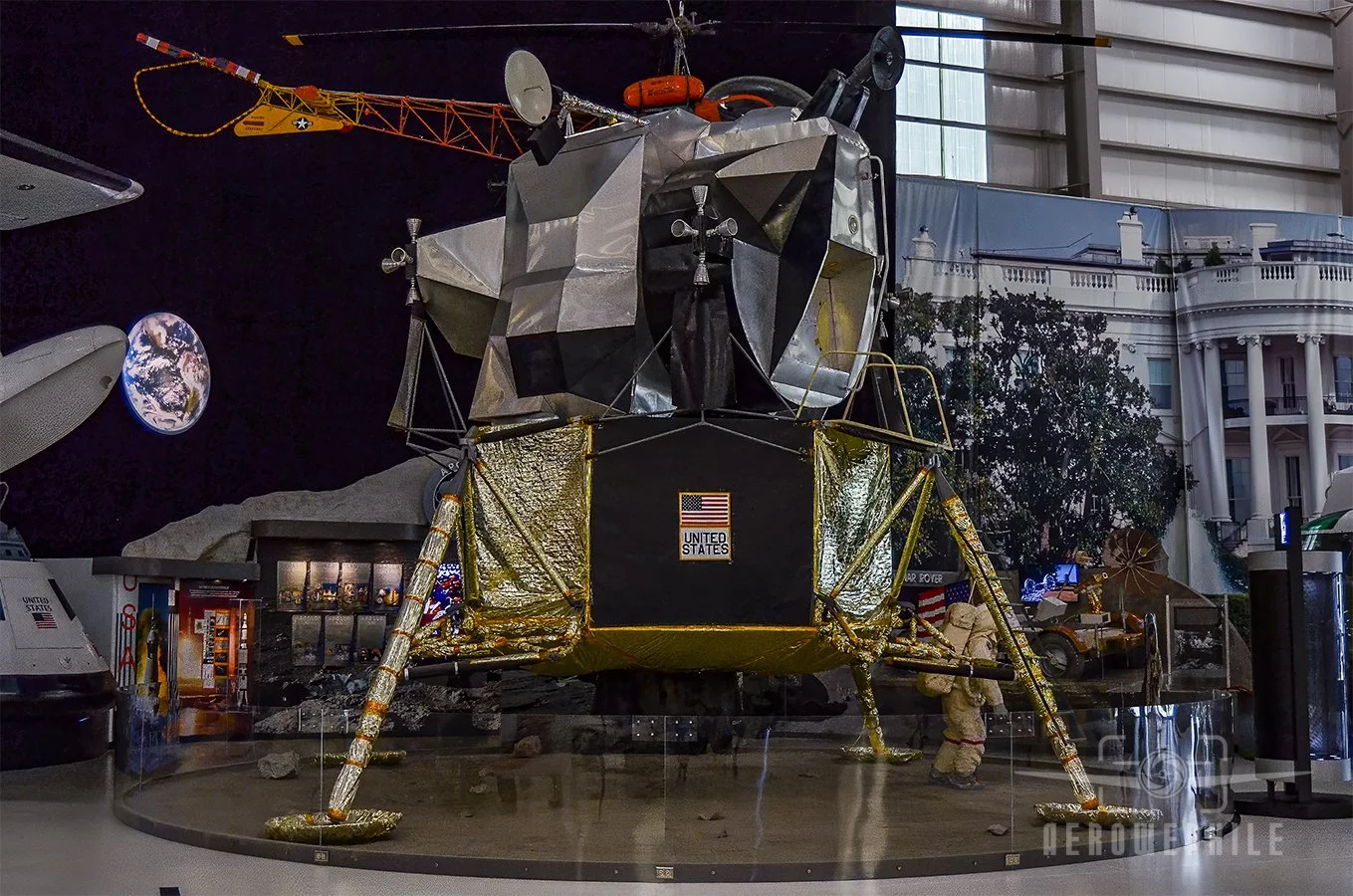
Apollo Lunar Module (replica)
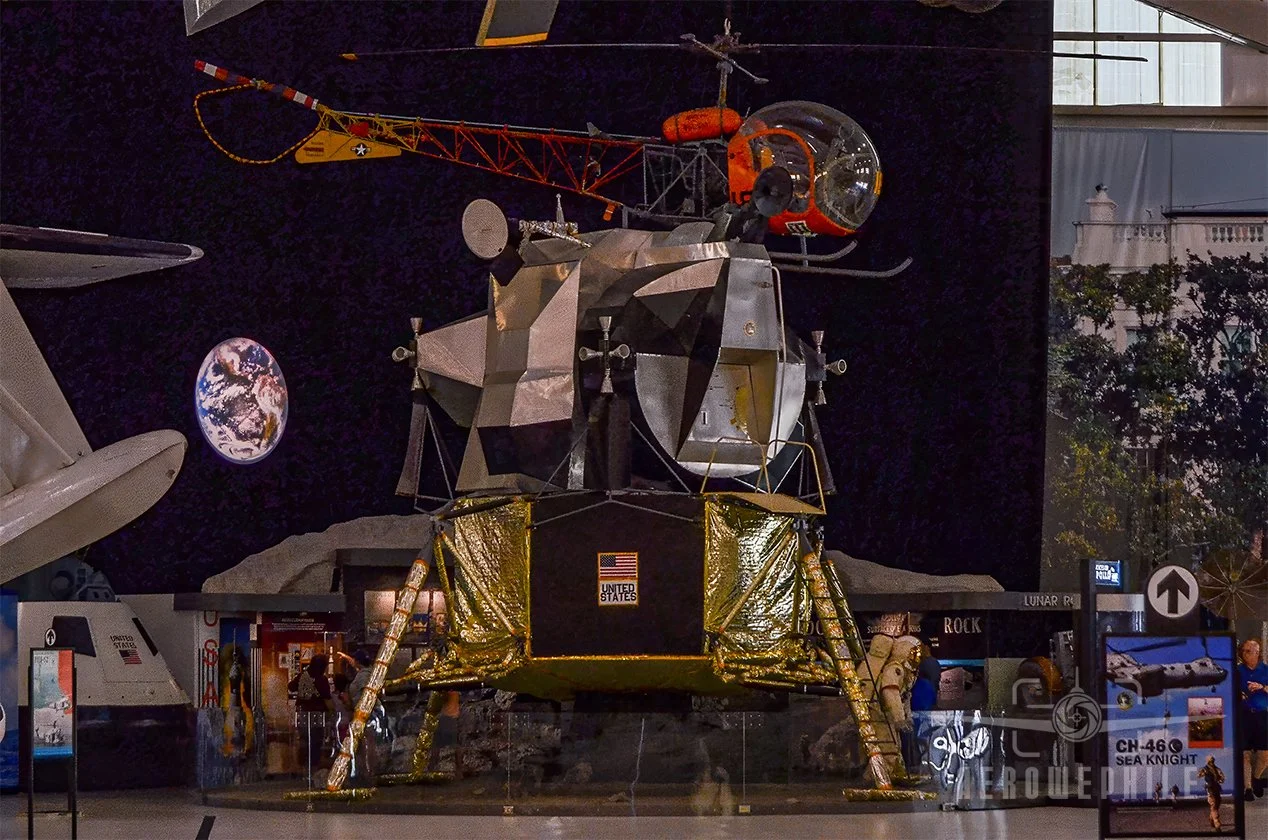
Apollo Lunar Module (replica) Bell HTL-4 Sioux hanging in background
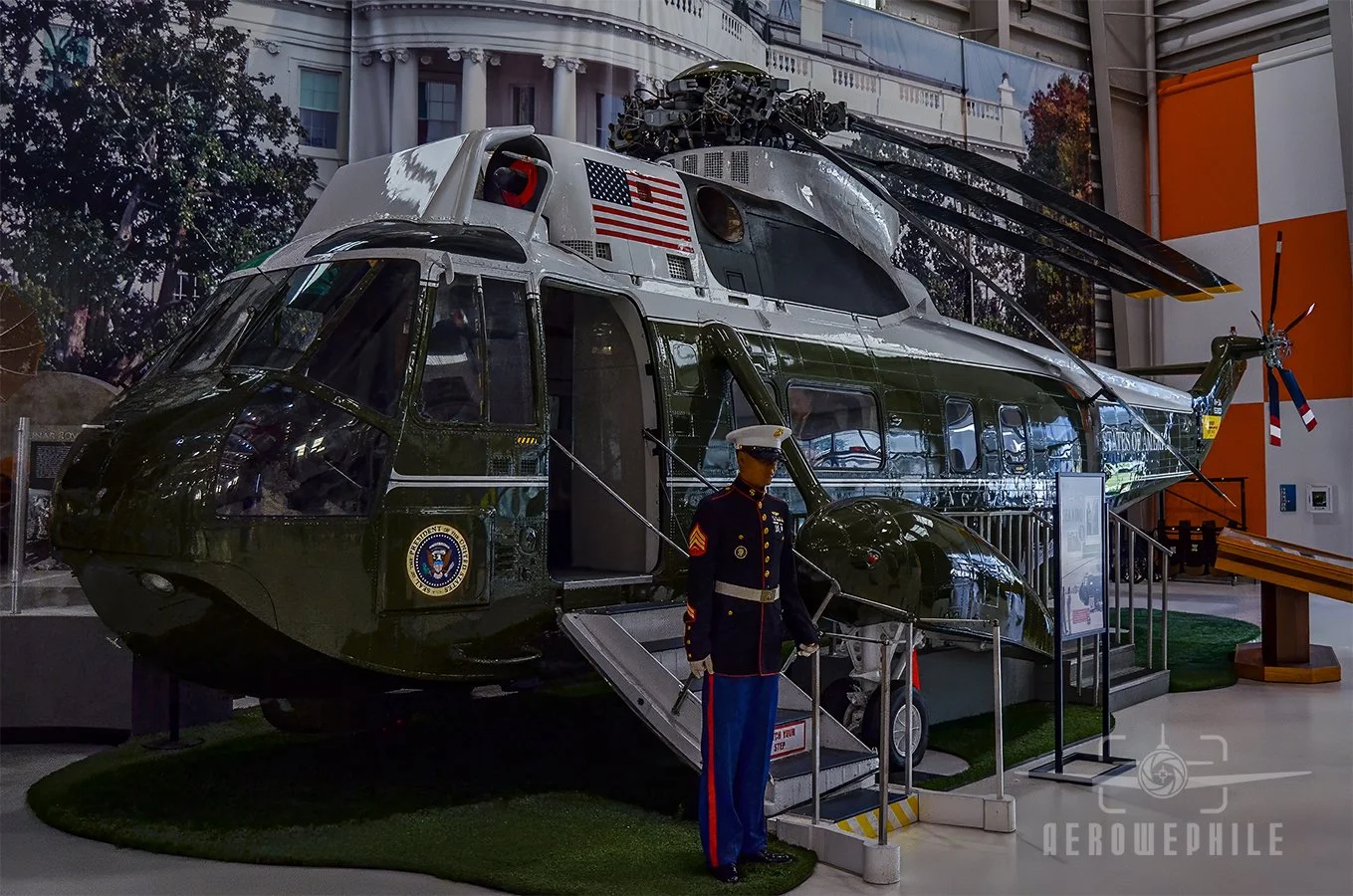
Sikorsky VH-3A Sea King
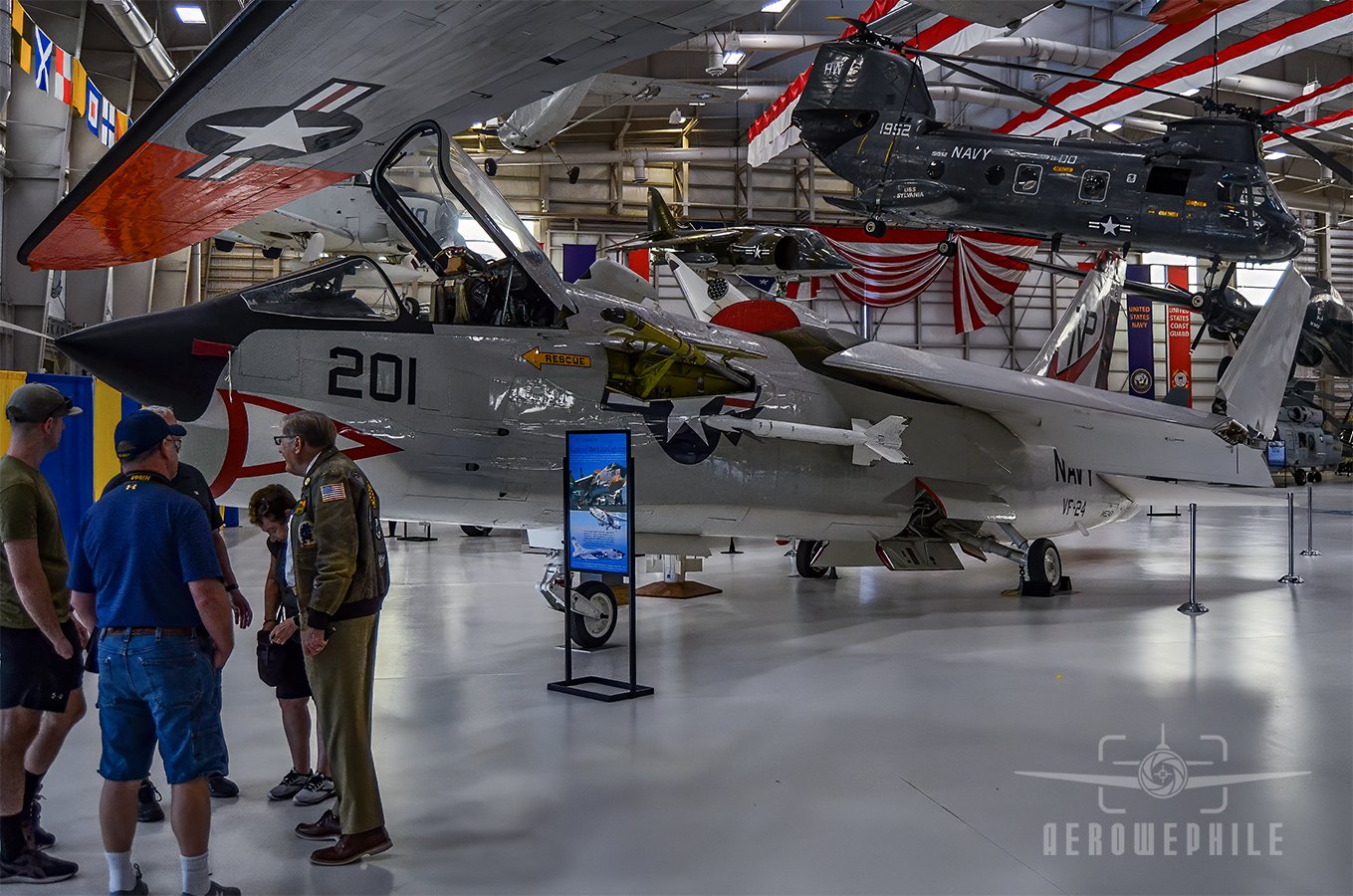
Vought F-8A Crusader
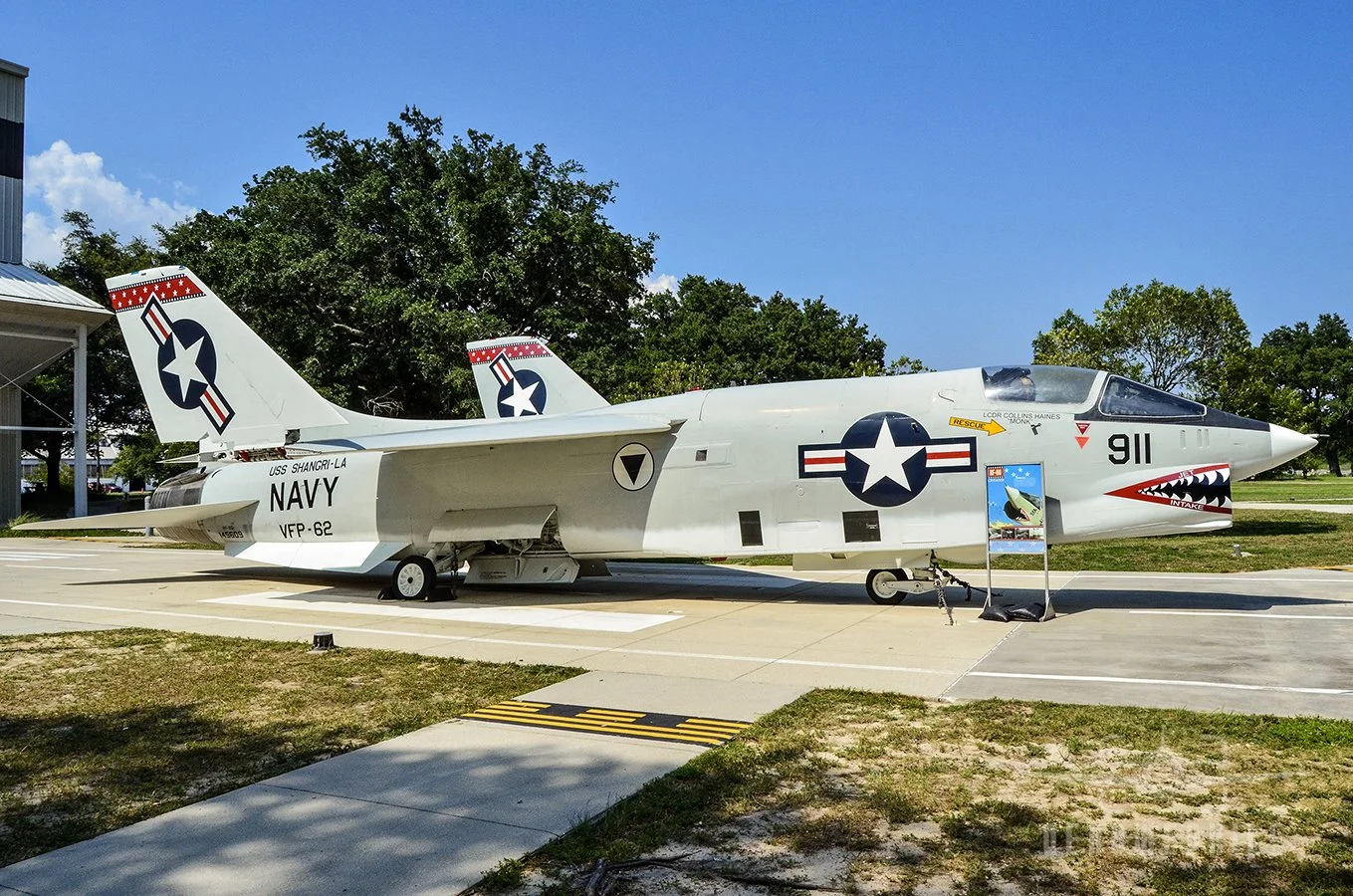
Vought RF-8G Crusader
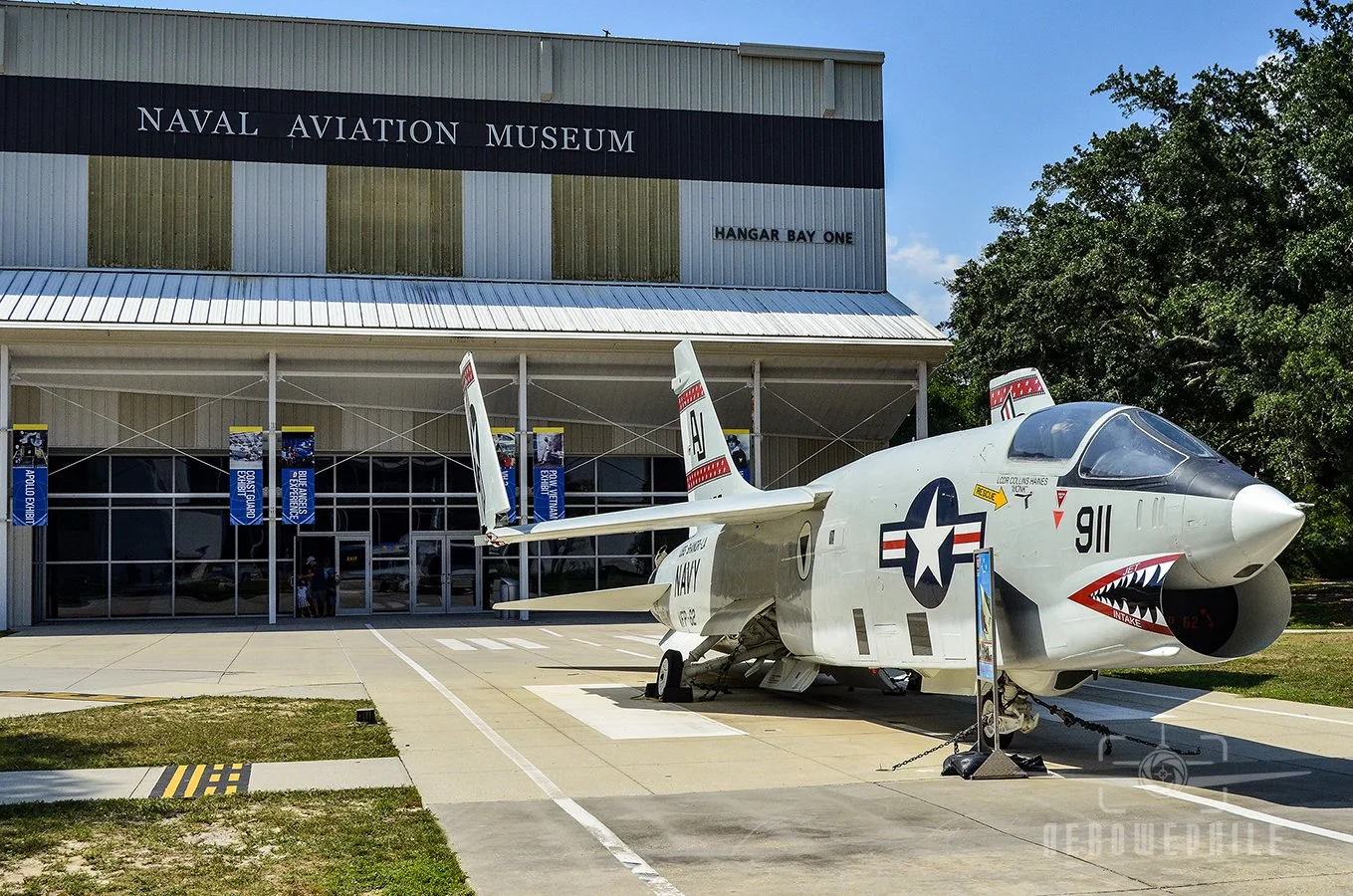
Vought RF-8G Crusader outside of Hanger Bay One entrance
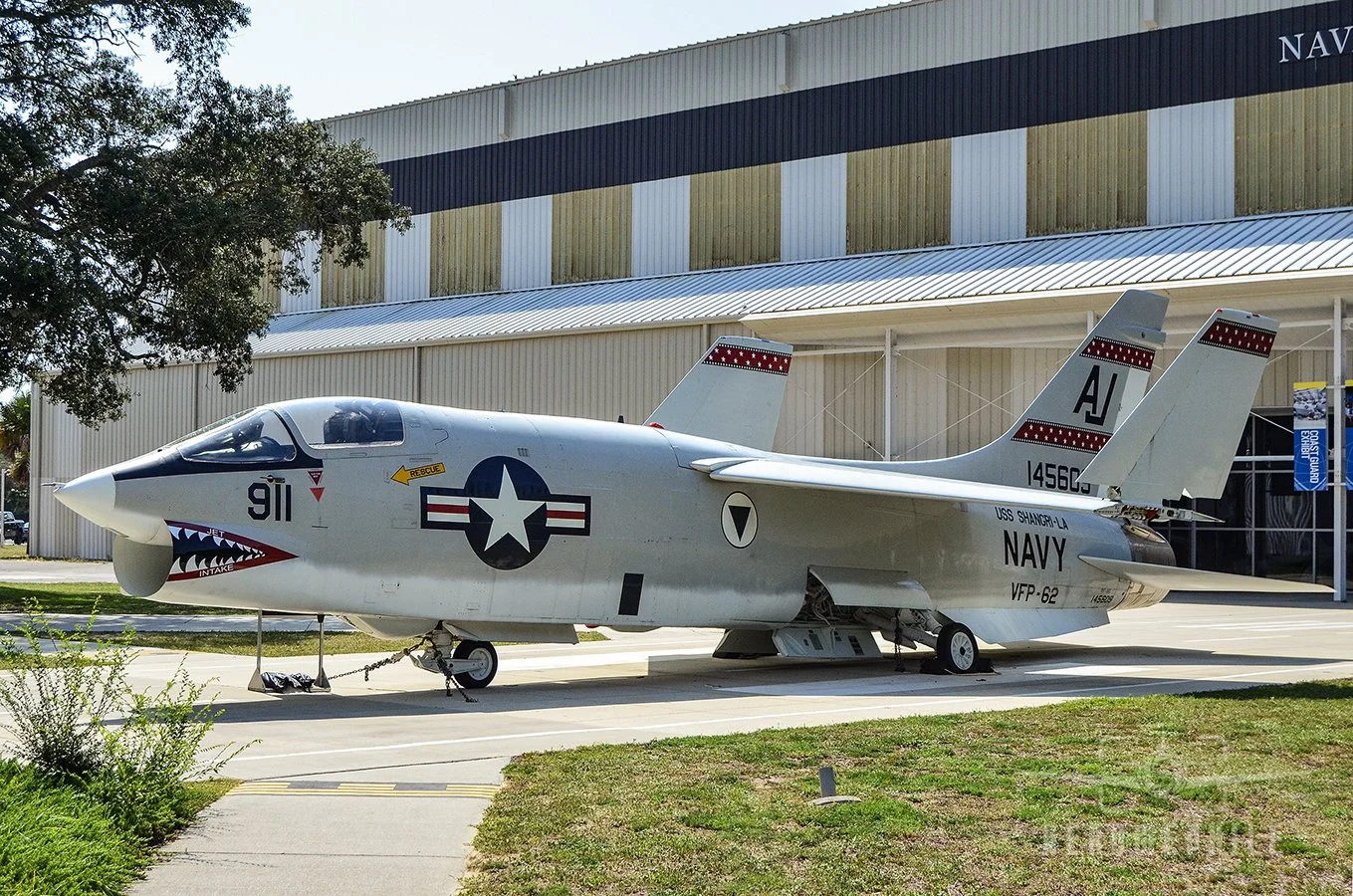
Vought RF-8G Crusader
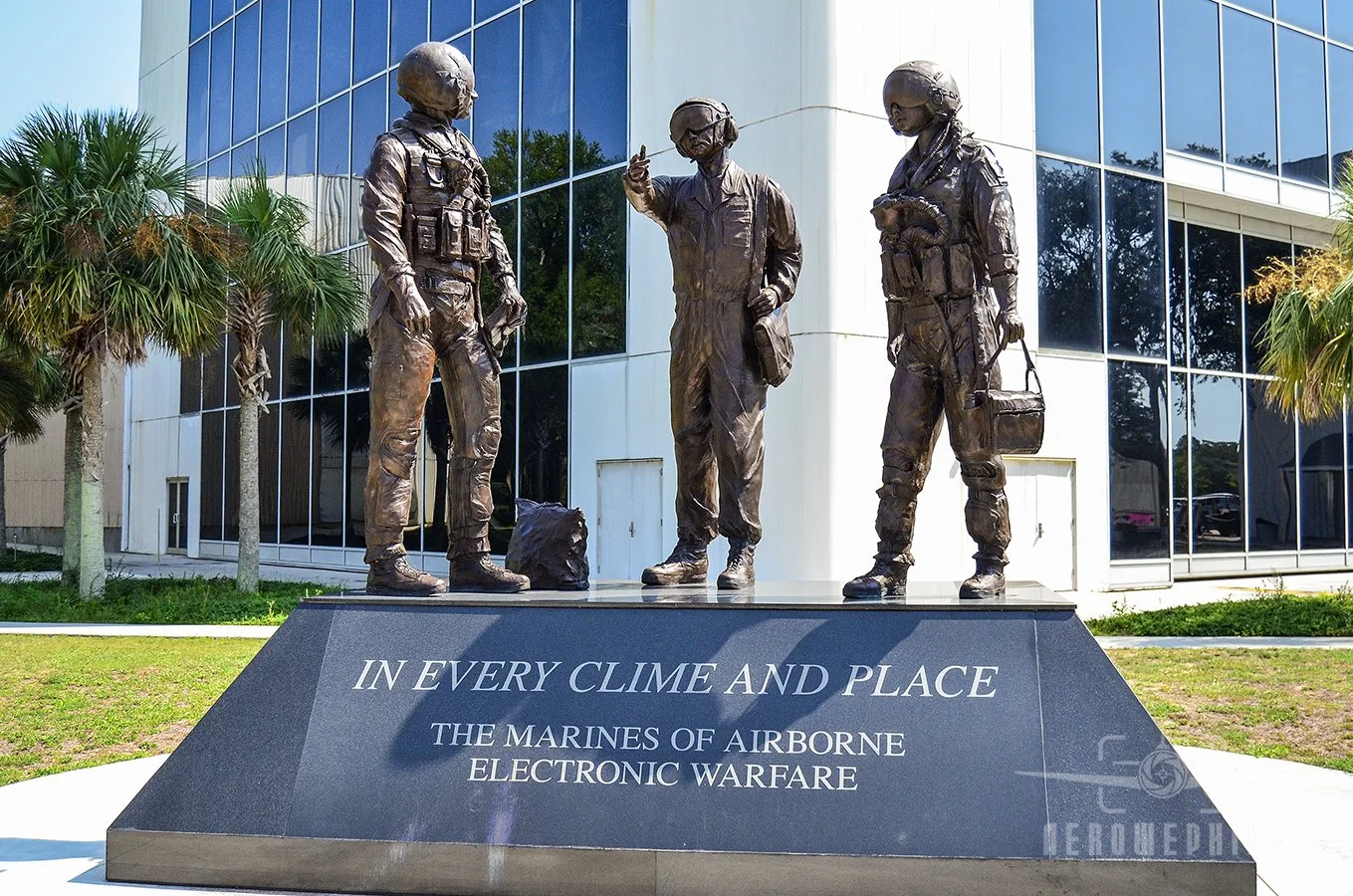
IN EVERY CLIME AND PLACE The Marines of Airborne Electronic Warfare
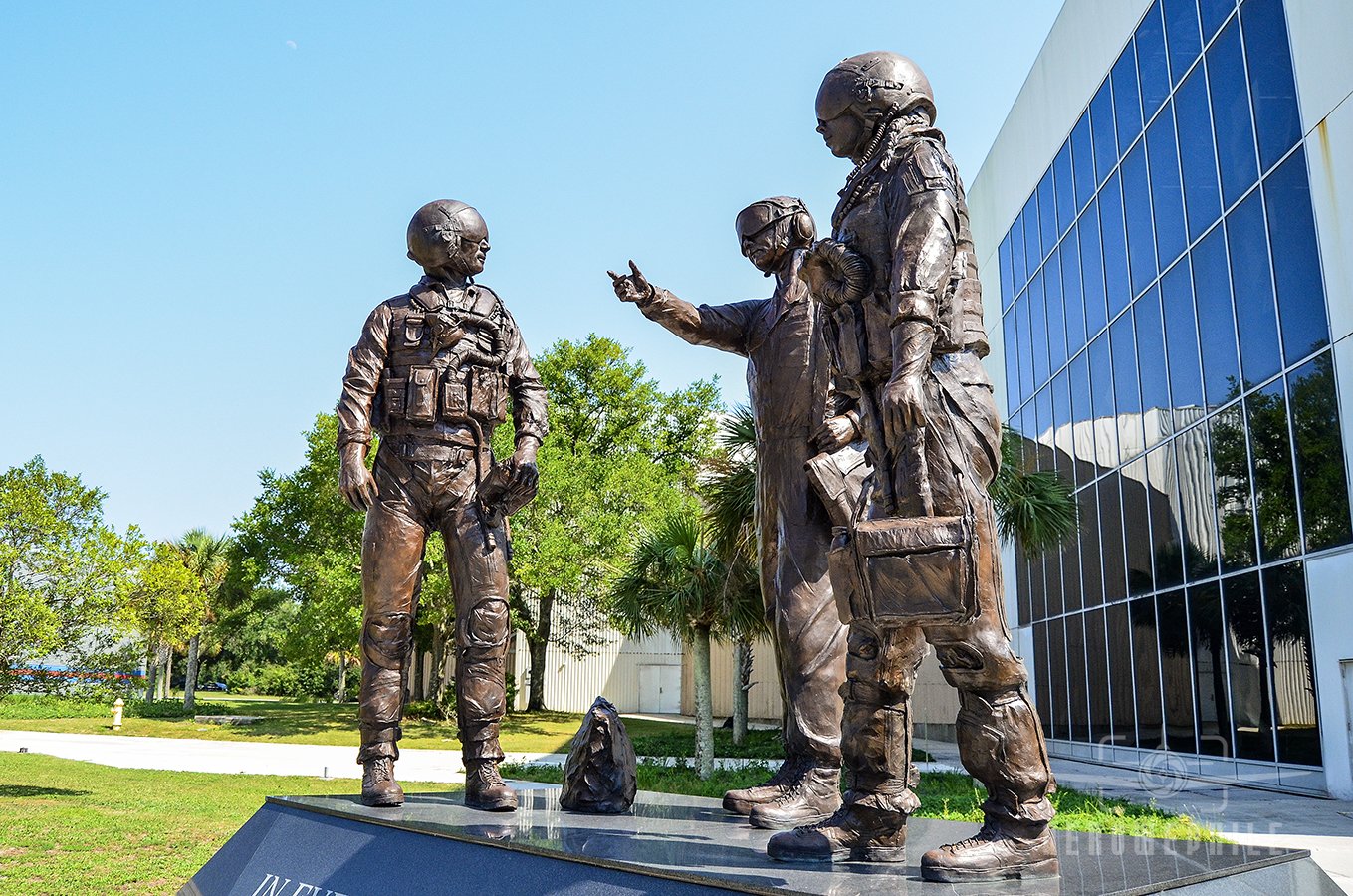
IN EVERY CLIME AND PLACE The Marines of Airborne Electronic Warfare
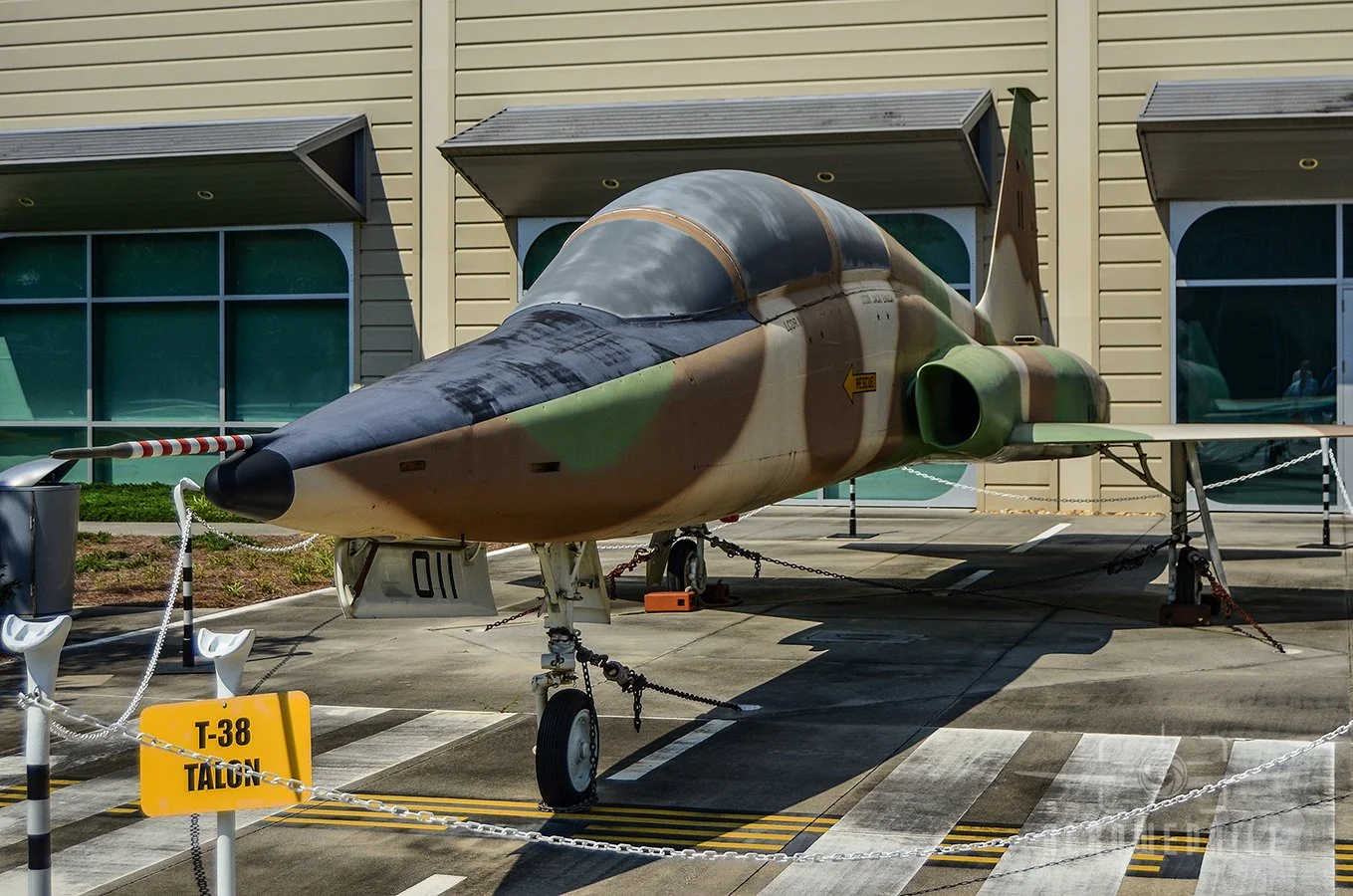
Northrop T-38A Talon
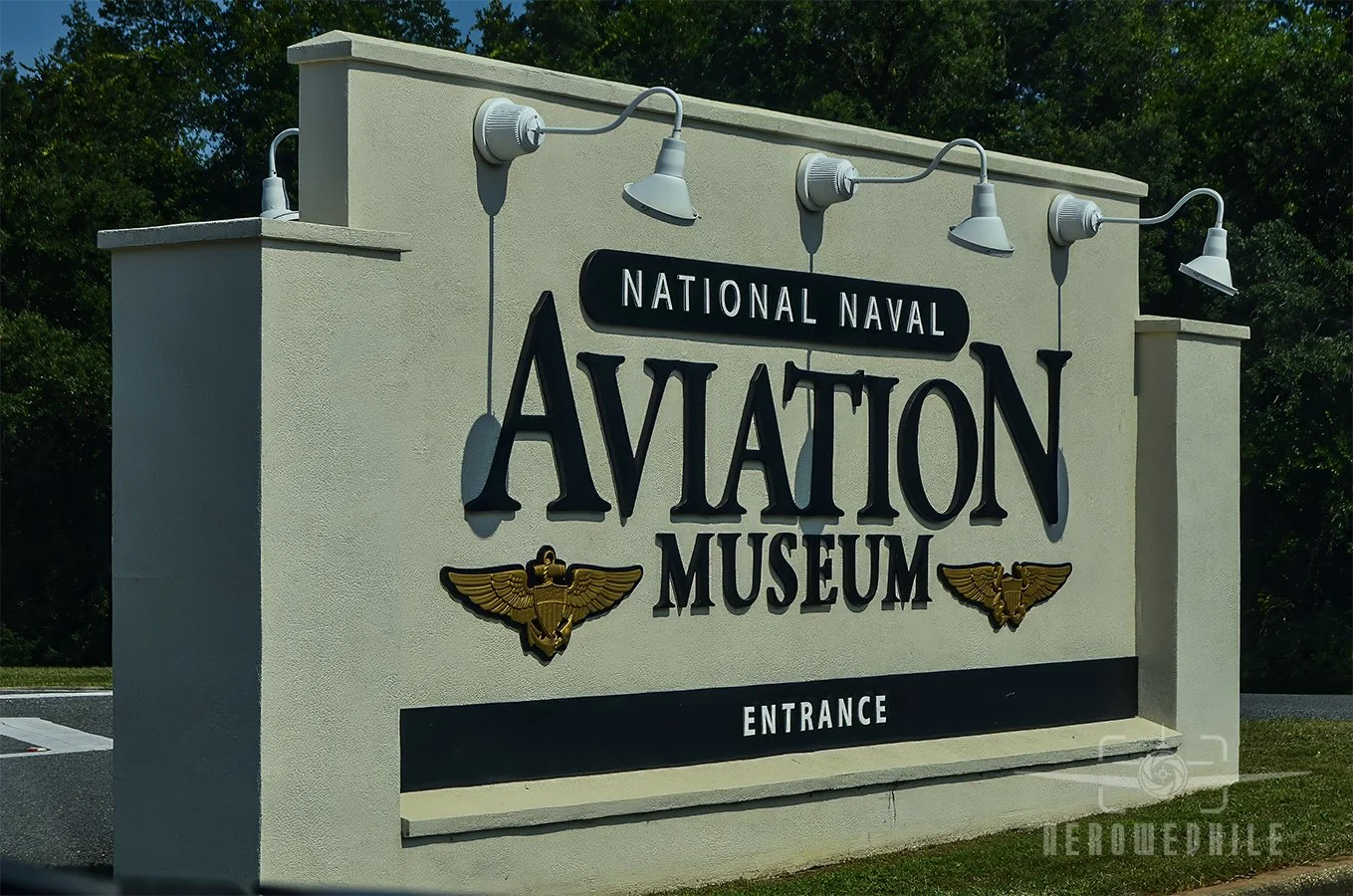
National Naval Aviation Museum Entrance Marker - I shot this on our way out of the parking lot at the end of the day.
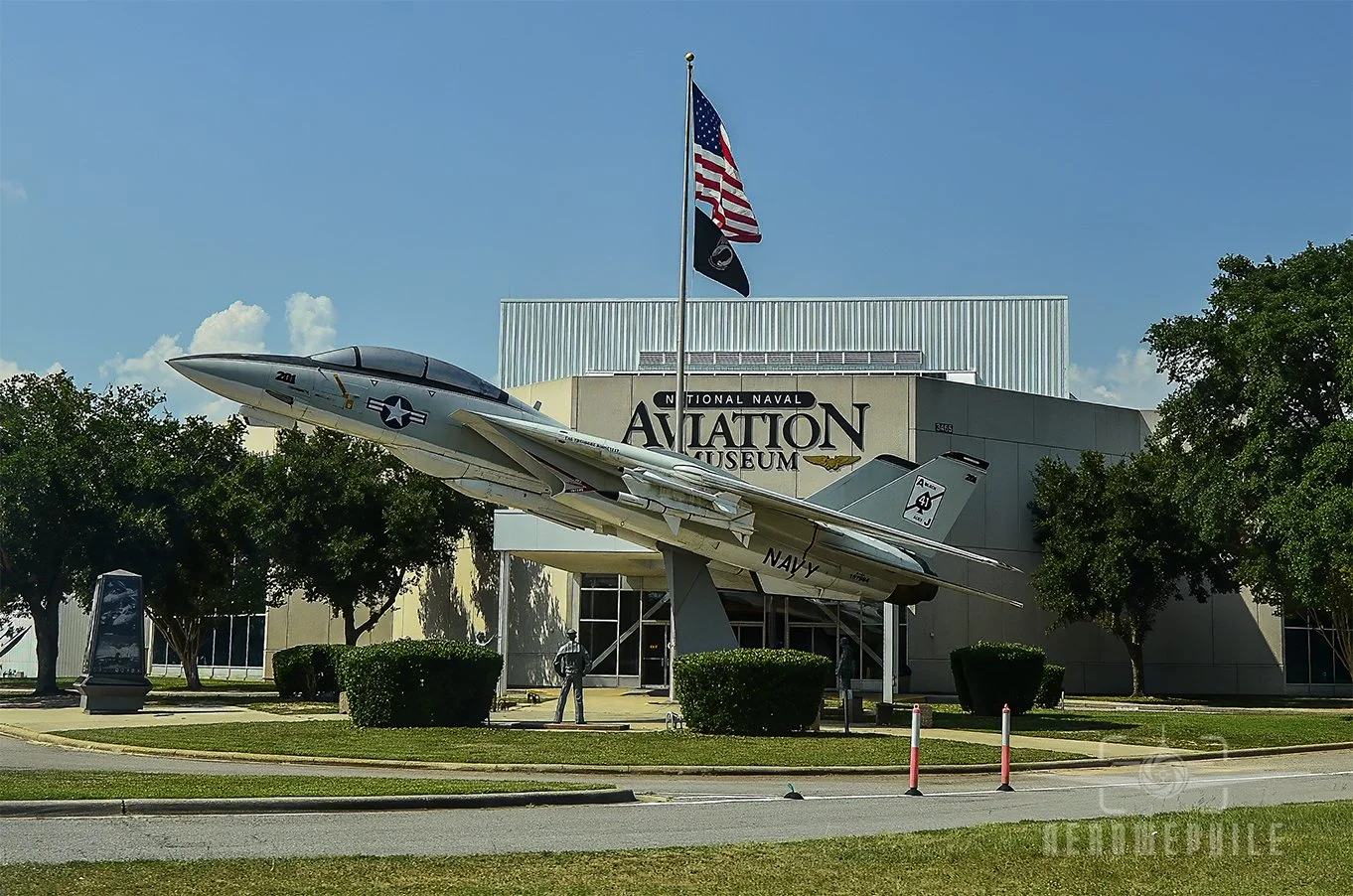
National Naval Aviation Museum - The classic shot of the museum.
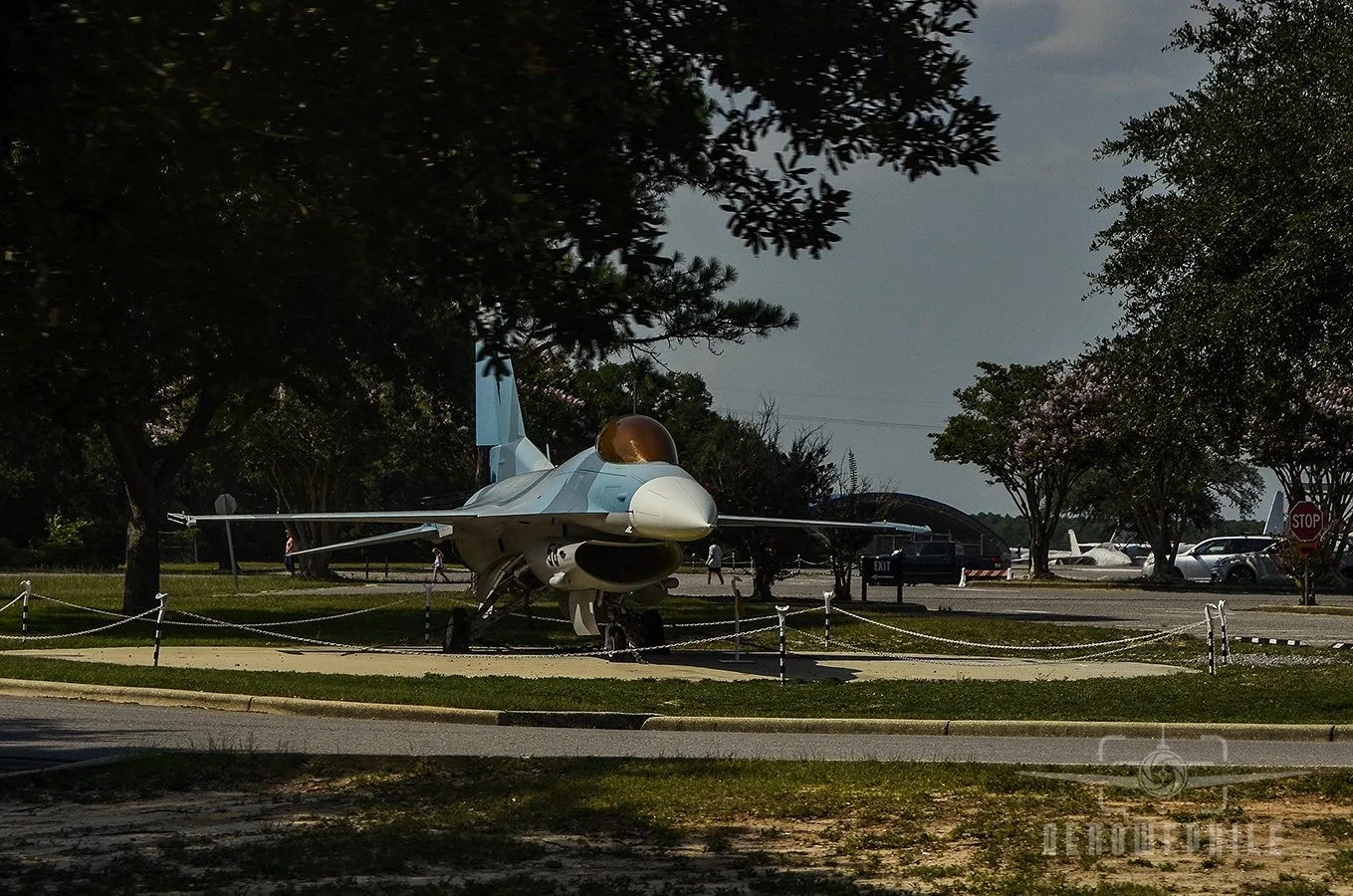
General Dynamics F-16N Viper
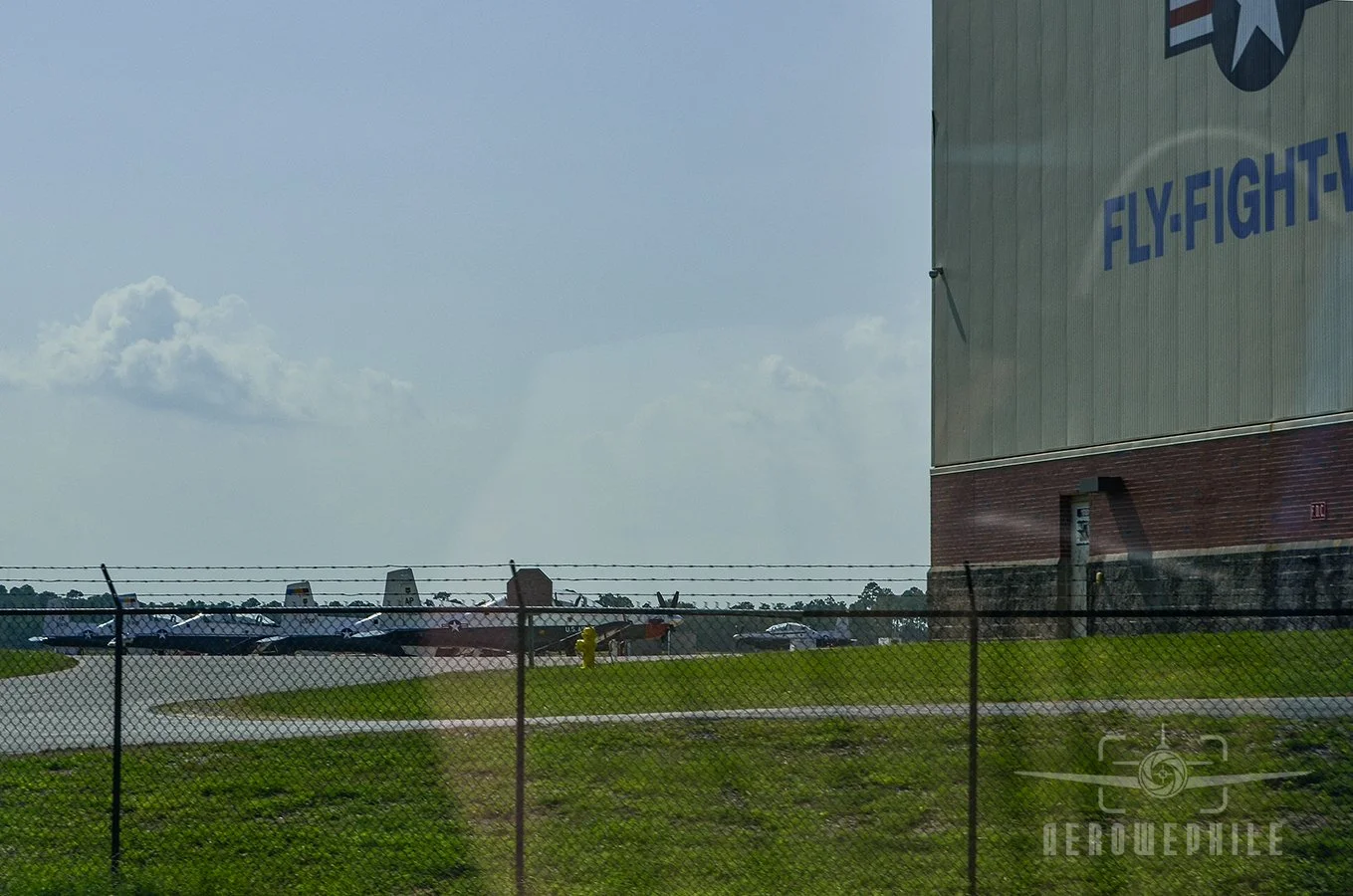
Active duty Beechcraft T-6 Texan II trainers parked on the ramp at NAS Pensacola.
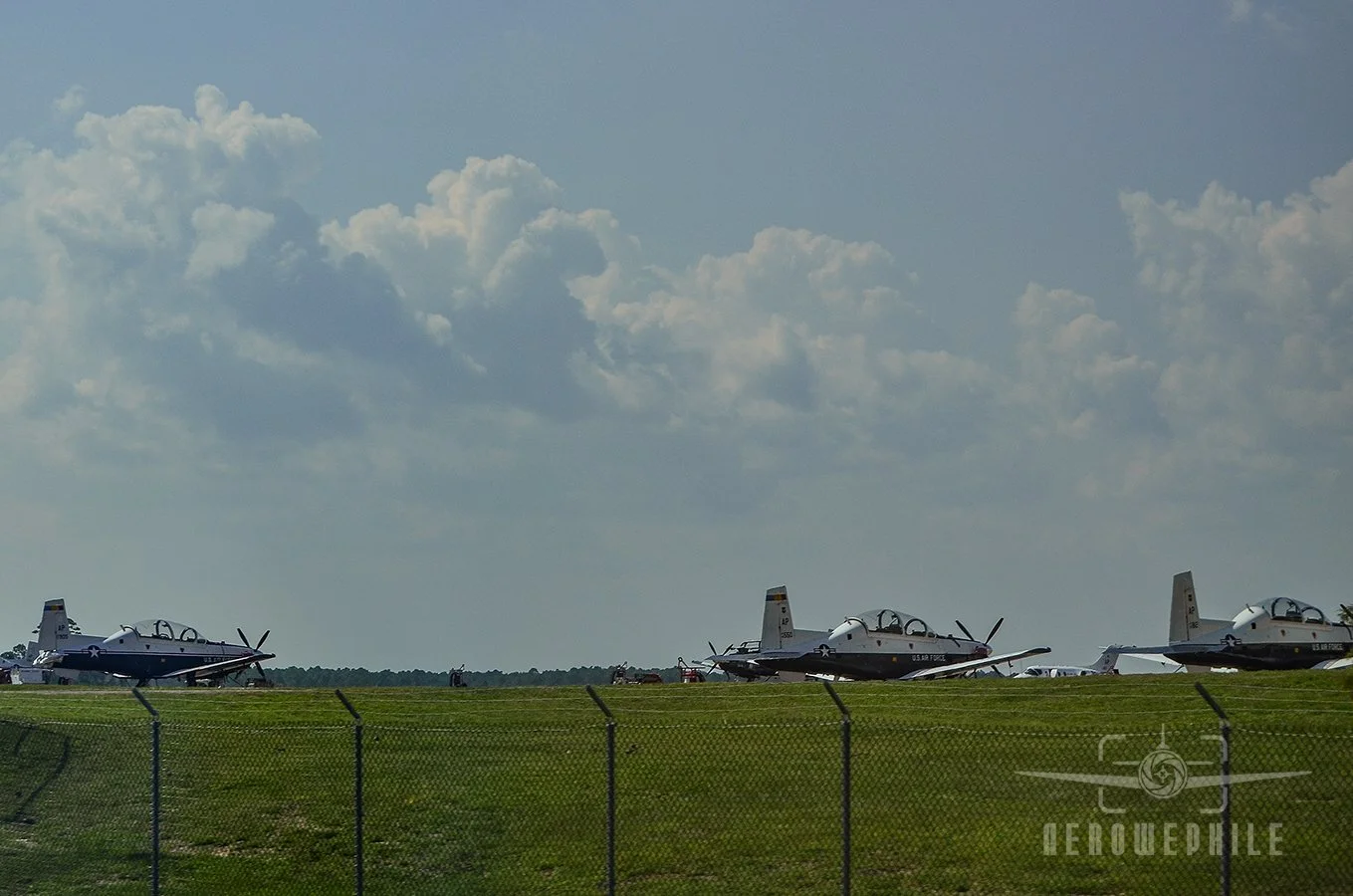
Active duty Beechcraft T-6 Texan II trainers parked on the ramp at NAS Pensacola.
National Naval Aviation Museum - Panoramas
Various panoramic shots I created while visiting the National Naval Aviation Museum. Both inside the museum and outside in their boneyard.
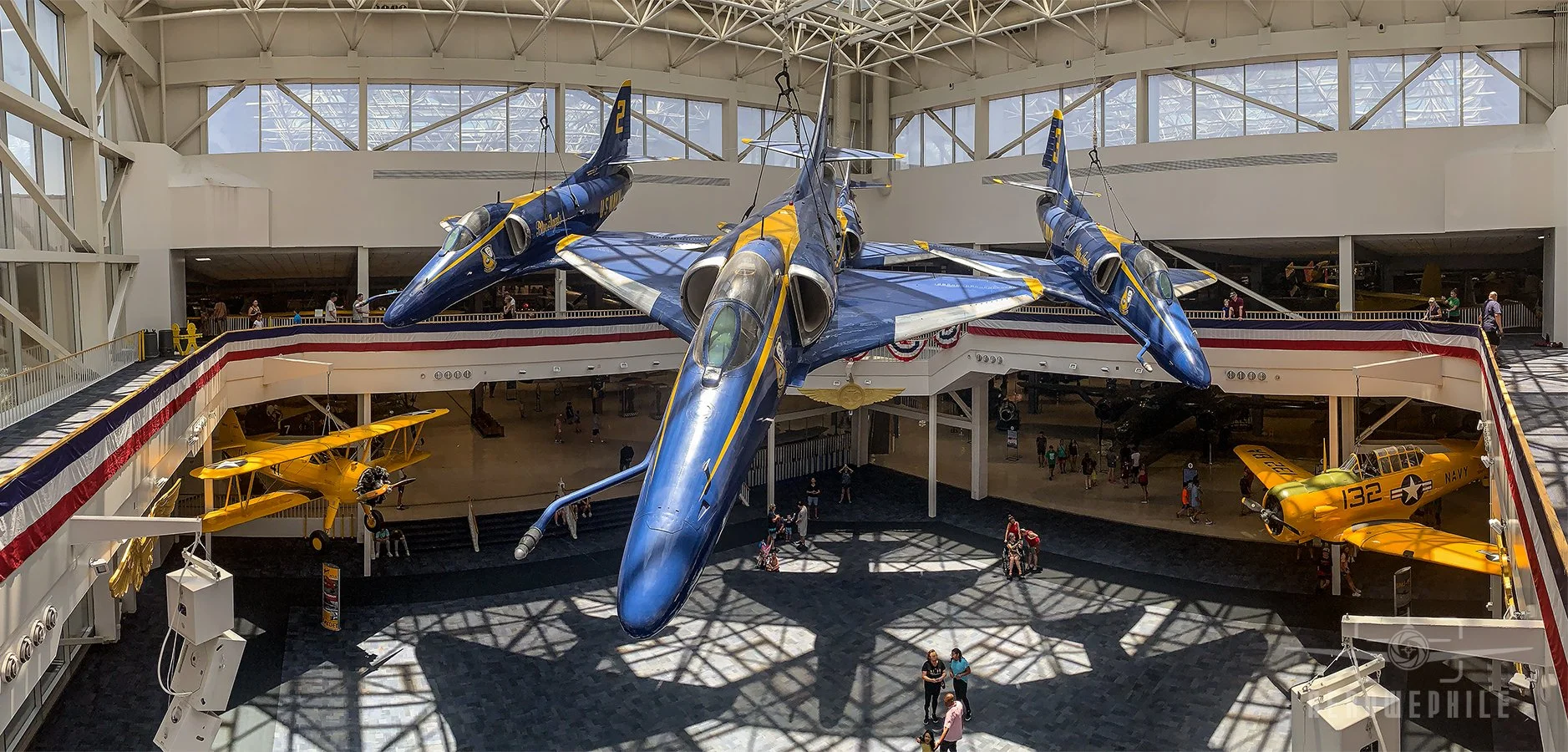
Second floor view of the Blue Angels A-4 Skyhawks hanging in the Blue Angel Atrium.
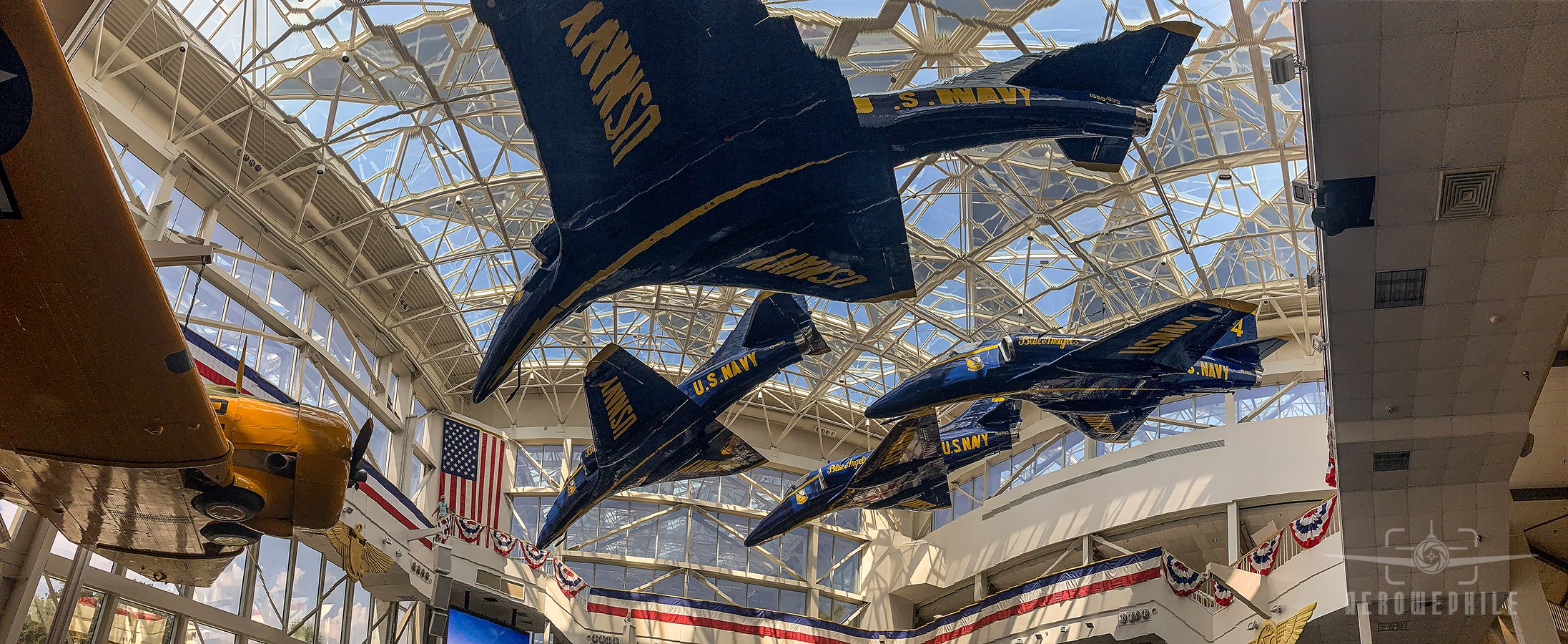
Ground floor view of the Blue Angels A-4 Skyhawks hanging in the Blue Angel Atrium.
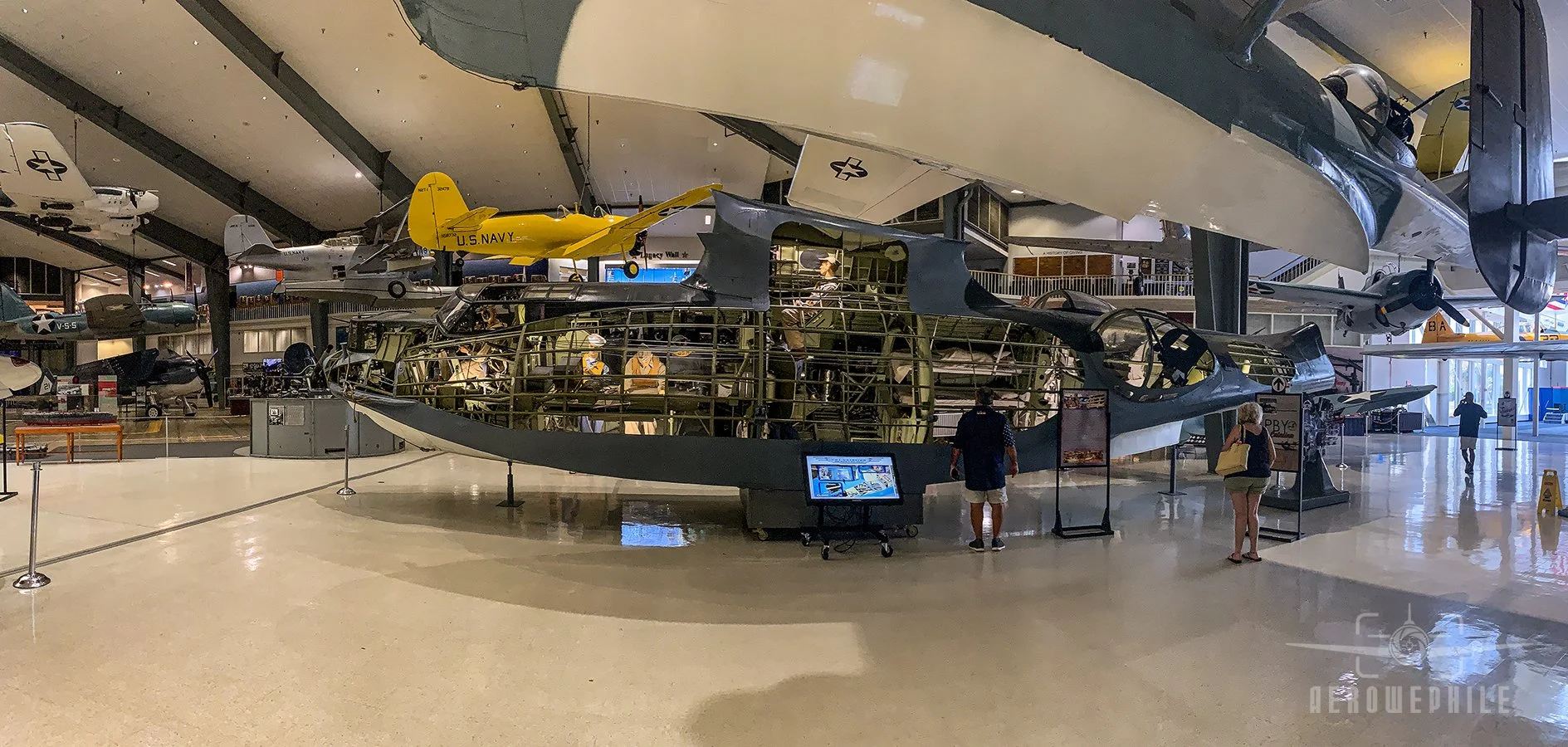
Ground floor view of the West Wing with the Consolidated PBY-5B Catalina (Mk.IB – RAF s/n FP216) cutaway display.
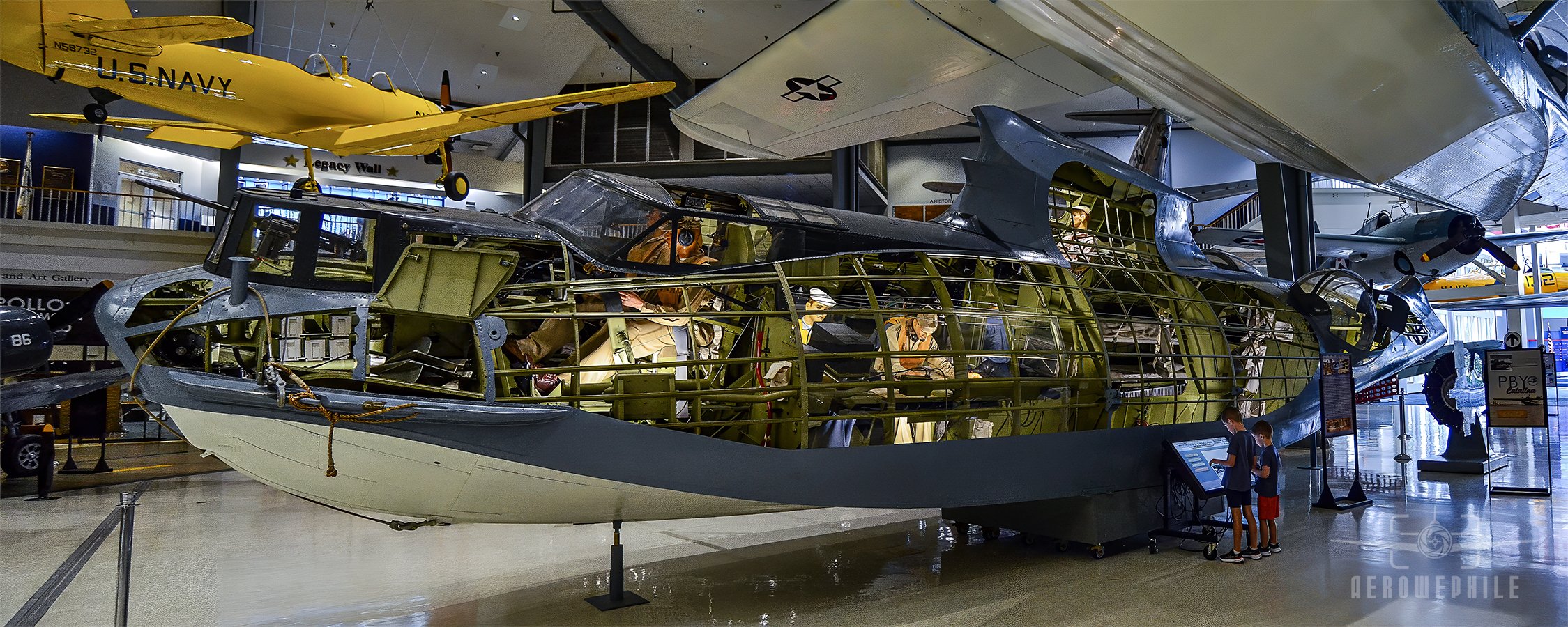
Close up view of the Consolidated PBY-5B Catalina (Mk.IB – RAF s/n FP216) cutaway display.

Ground floor view of the West Wing.

Ground floor view of the West Wing.
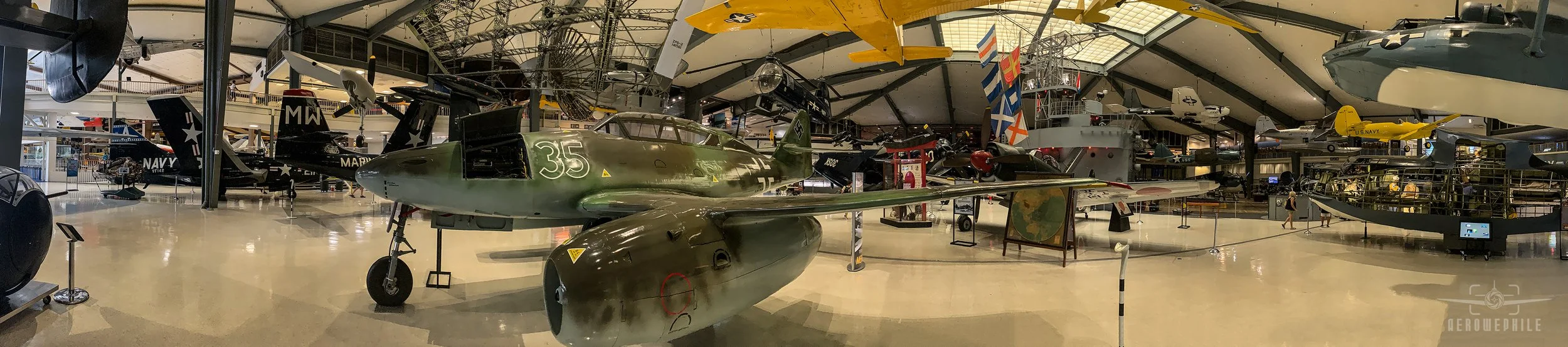
Ground floor view of the West Wing.
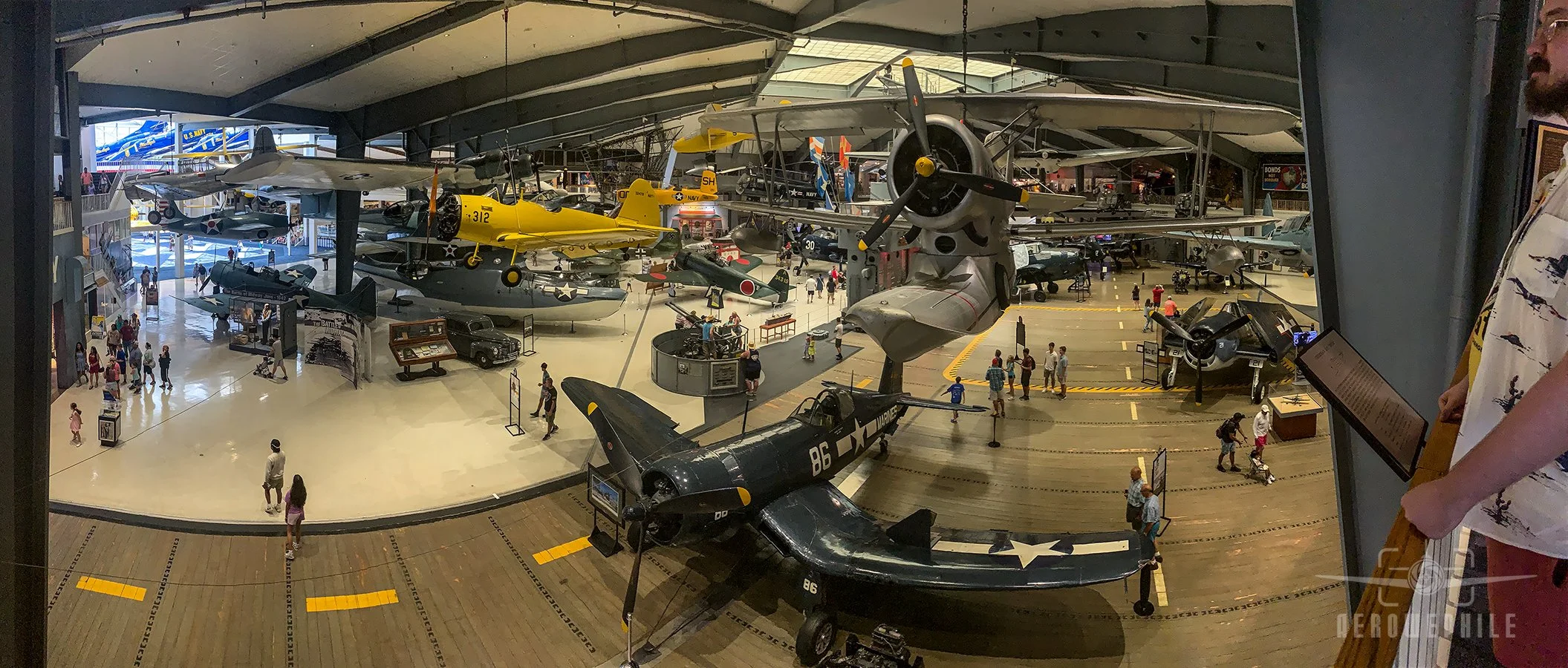
Second floor view of the West Wing,
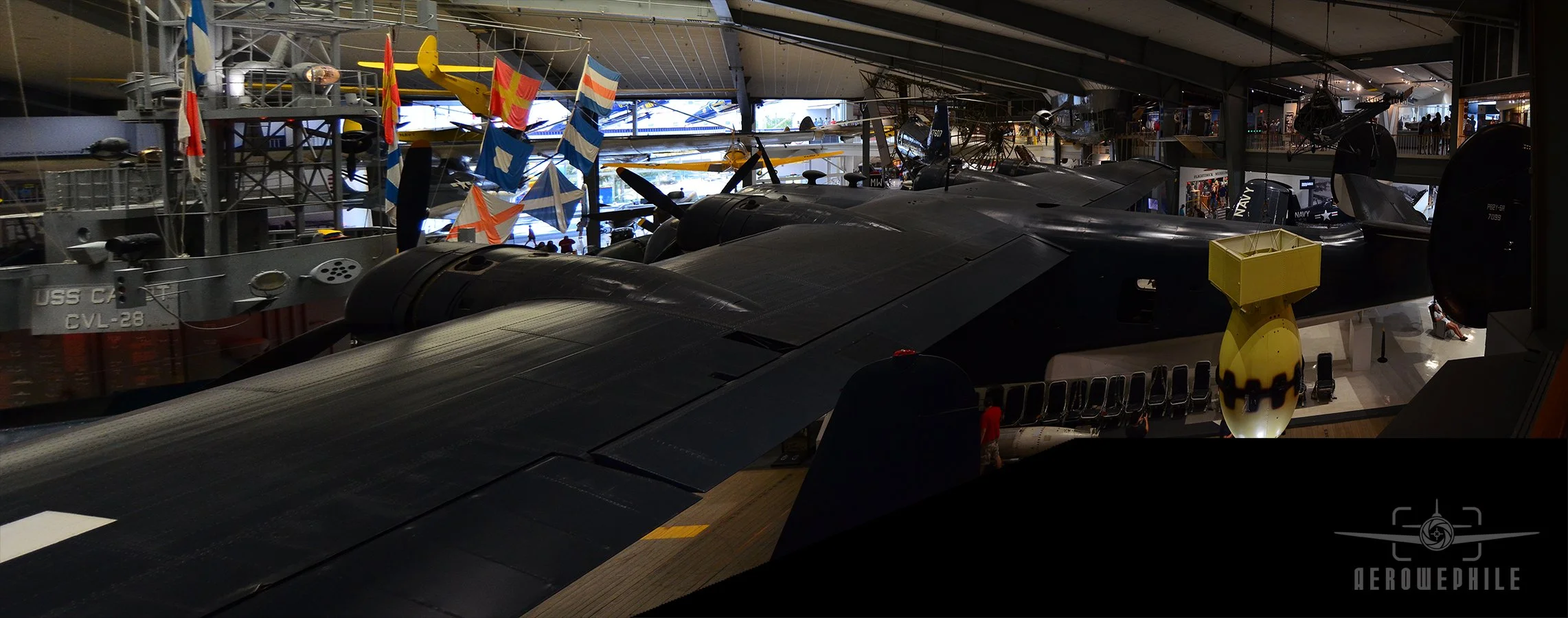
Second floor view of the West Wing, The Consolidated PB4Y Coronado in the foreground; this seaplane delivered Adm. Nimitz to Tokyo for the signing of the Japanese surrender.
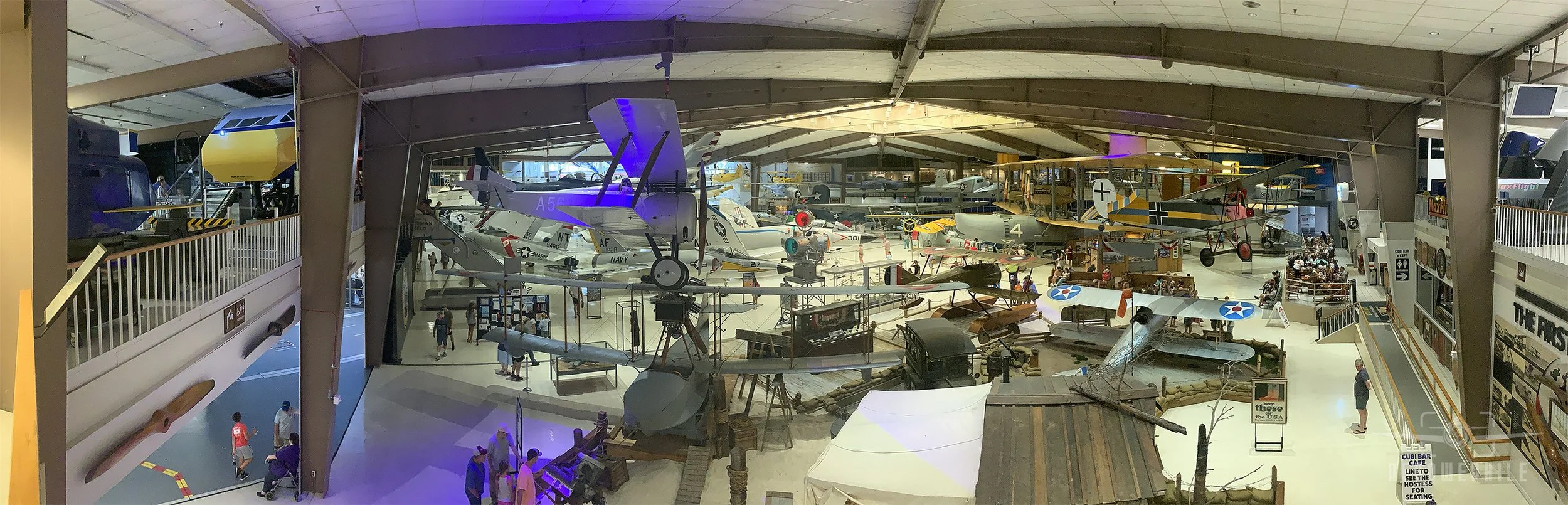
Second floor view of the South Wing,
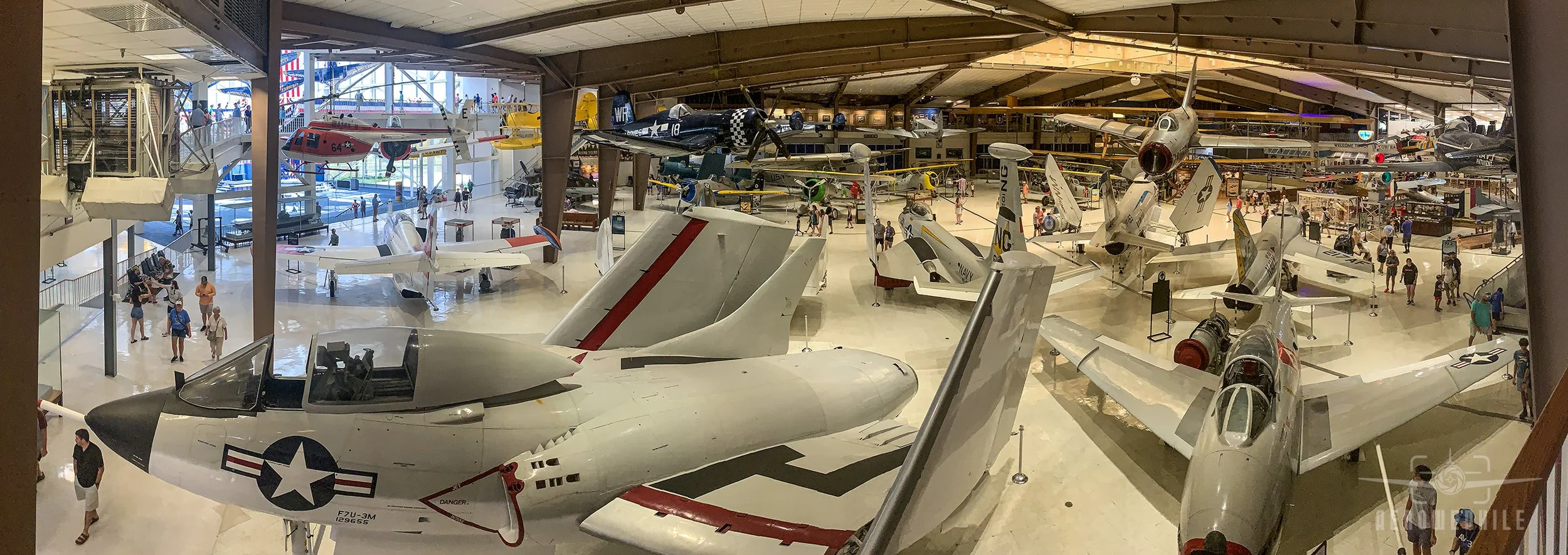
Second floor view of the South Wing,
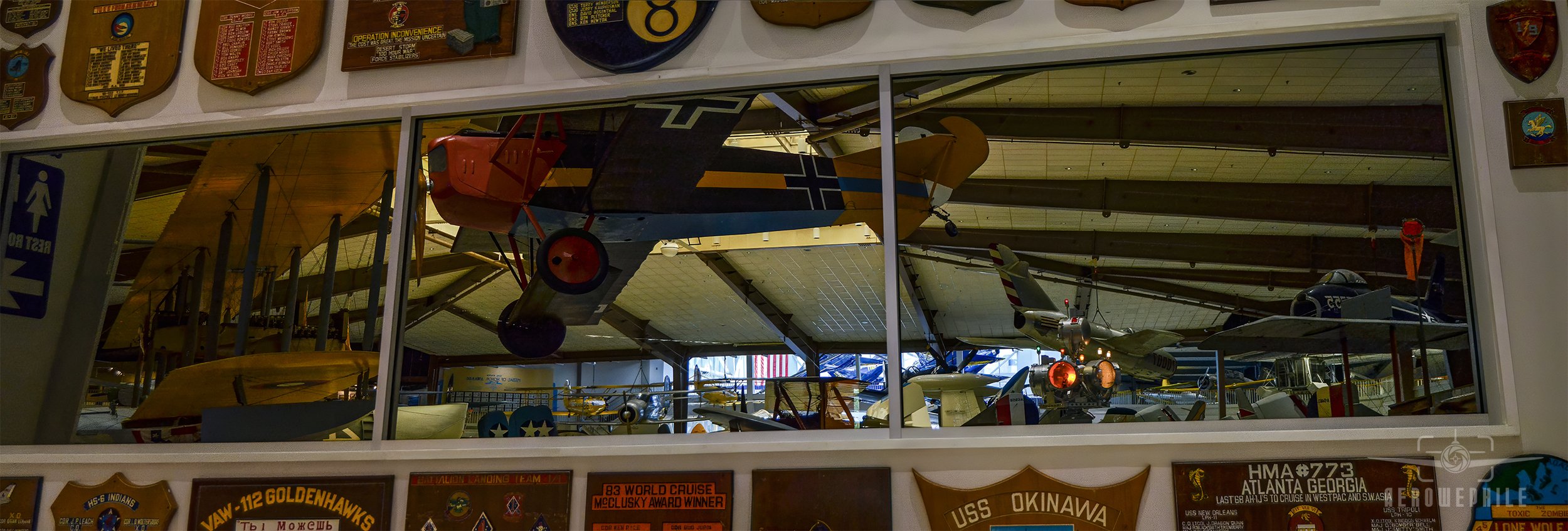
Mirrored window reflection of the South Wing.
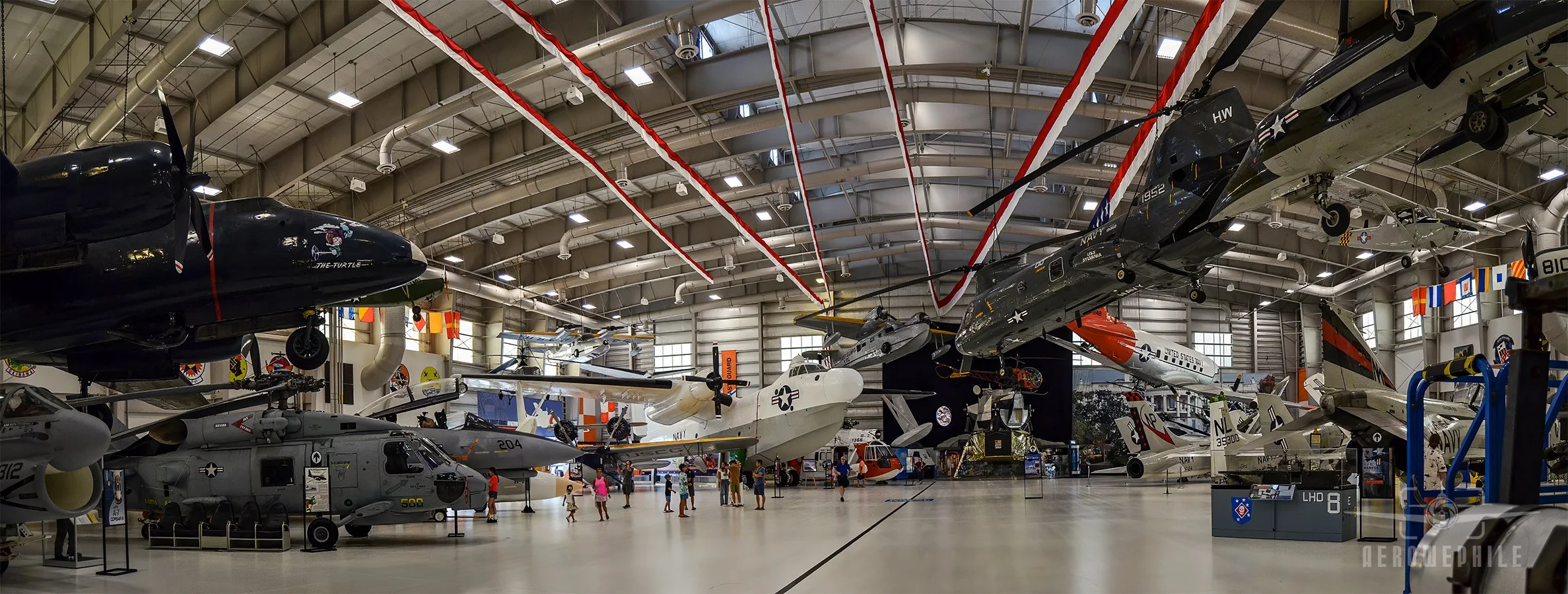
Interior shot of Hanger Bay One.
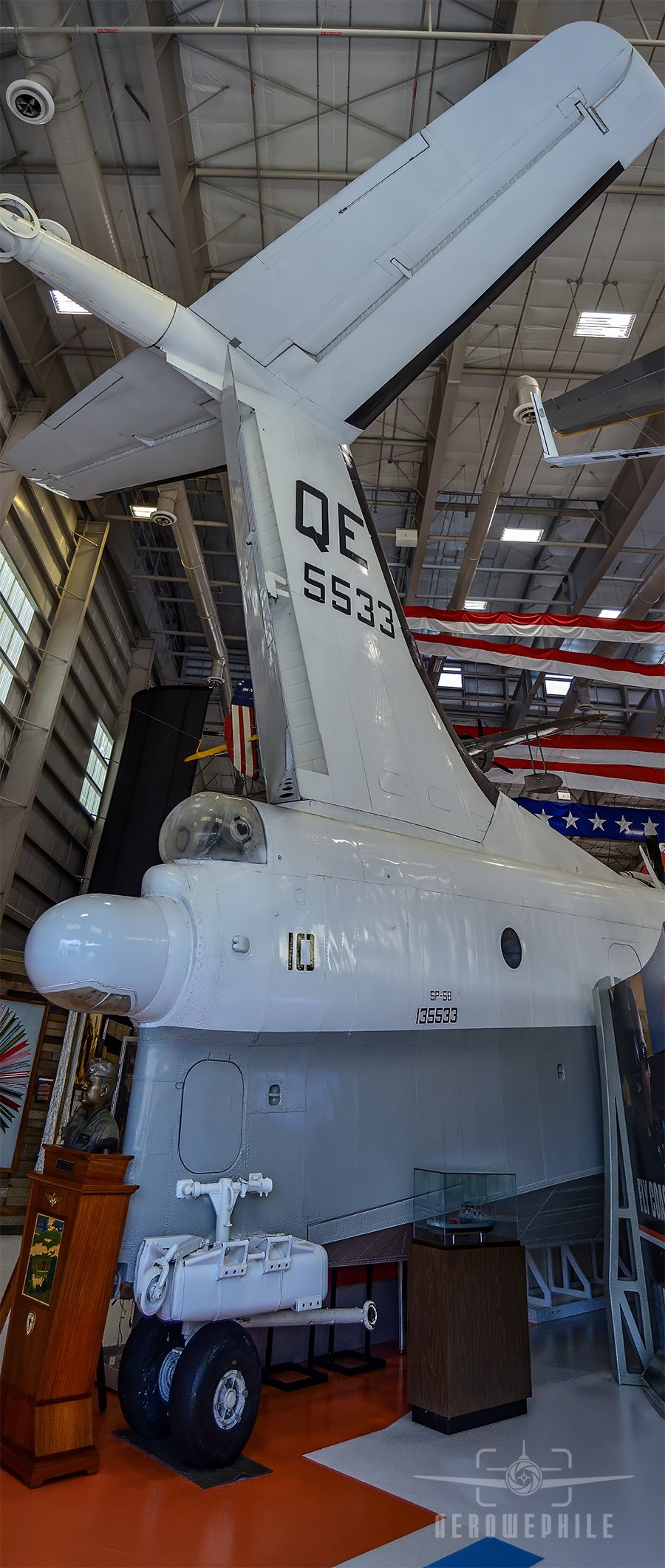
Massive vertical tail of the mighty Martin SP-5B Marlin.

View of the NAS Pensacola runway from the Blue Angels practice viewing/seating area.
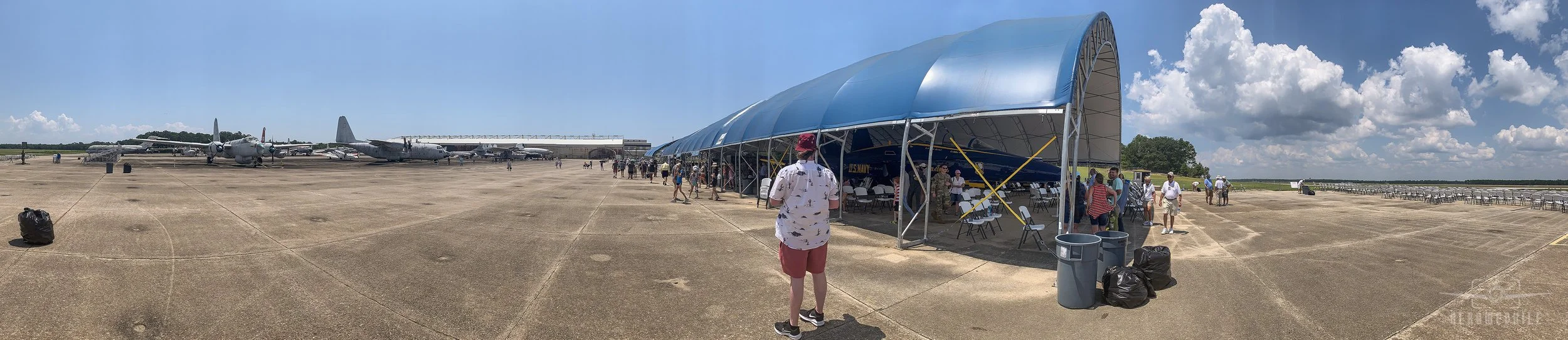
Looking from the Blue Angels practice viewing area back towards the museum buildings.
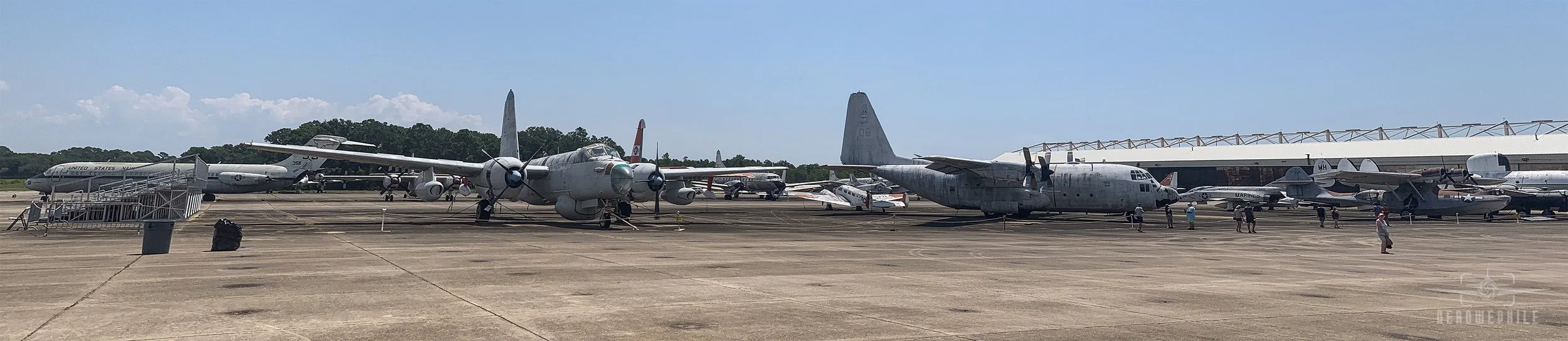
Outdoor aircraft storage area between the museum and the NAS Pensacola runway.

Outdoor aircraft storage area between the museum and the NAS Pensacola runway.