

WACO Air Museum & Aviation Learning Center
While on a weekend visit to Ohio, I made a stop at the WACO Air Museum and Aviation Learning Center in Troy, Ohio. Here, they keep the history of the Weaver Aircraft Company alive with some fantastic WACO aircraft (originals and reproductions) on display. The museum is filled with numerous artifacts from the WACO company’s long history.
The museum is also a STEM learning center with a mission to prepare and inspire future generations with the education and essential skills for professional development and personal growth.
The museum does a wonderful job of preserving the WACO aviation legacy.
WACO Air Museum - Main Building
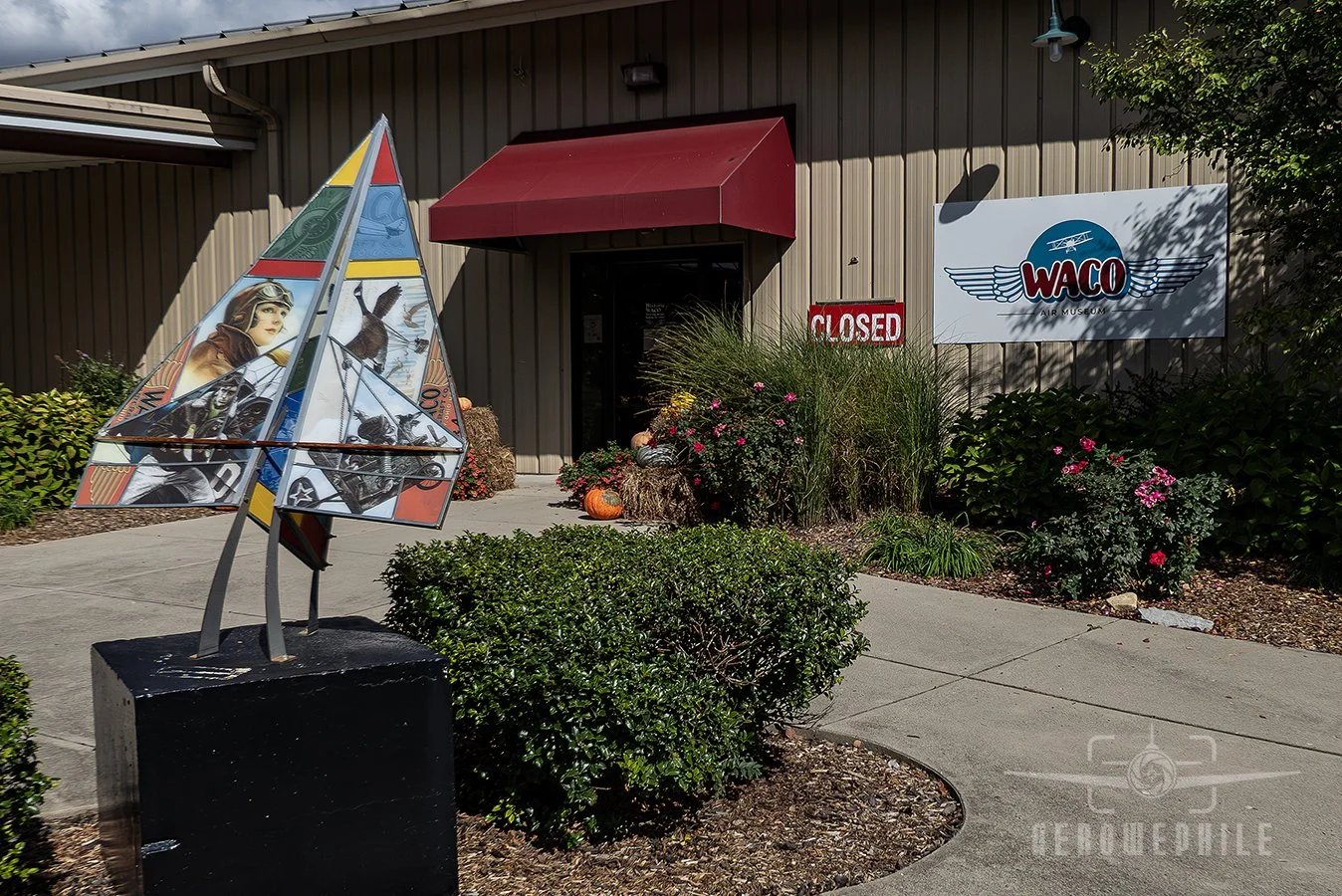
The entrance to the WACO Museum. Note the CLOSED sign. I shot this image as I was leaving. Yet another museum that I stayed as long as possible at!
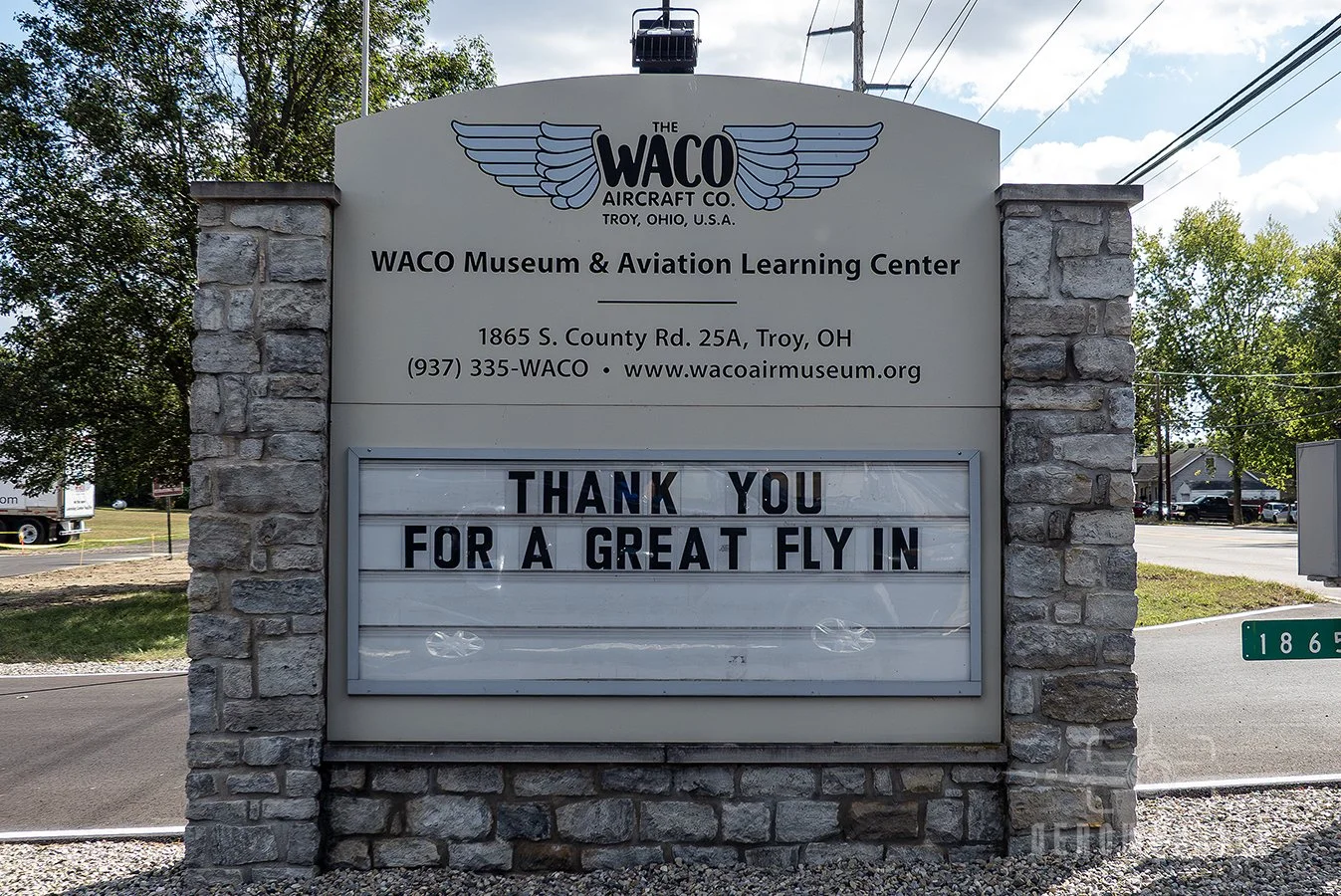
Sadly, I arrived at the WACO Museum a week after their big annual fly-in.
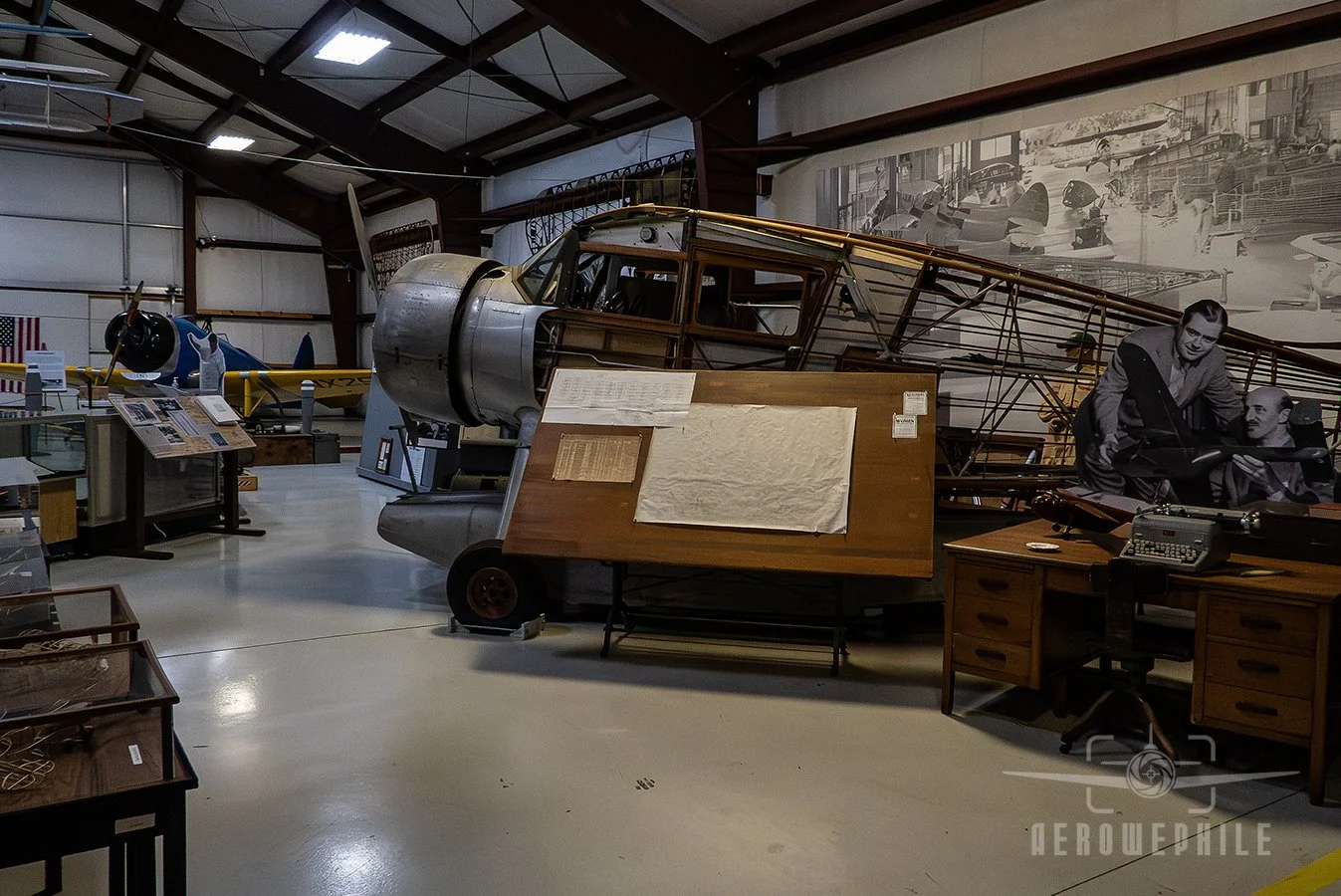
As you walk into the museum, you are greeted with this recreation of a WACO under restoration in a hanger.
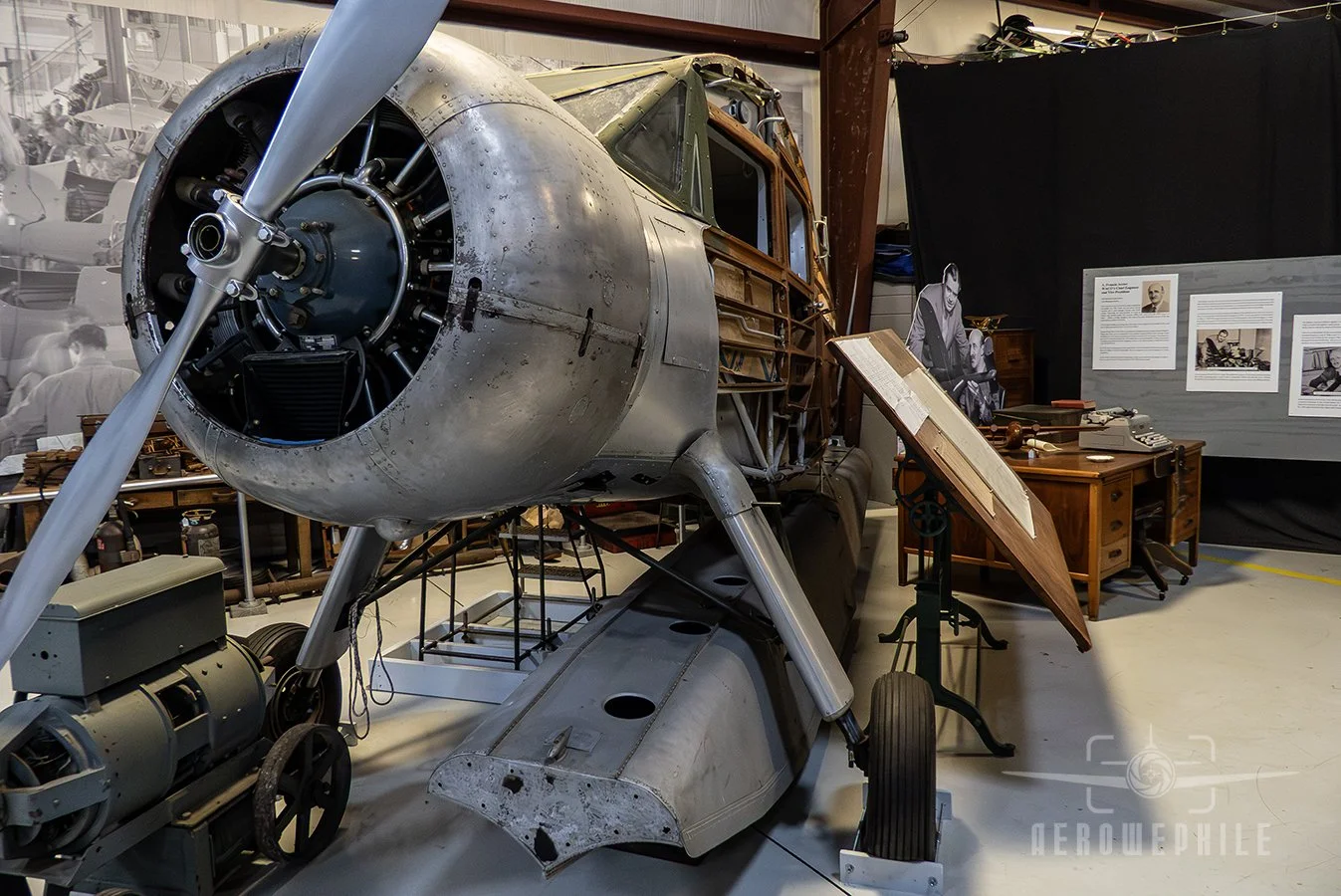
Waco YKS-6 on view in a simulated hanger display.
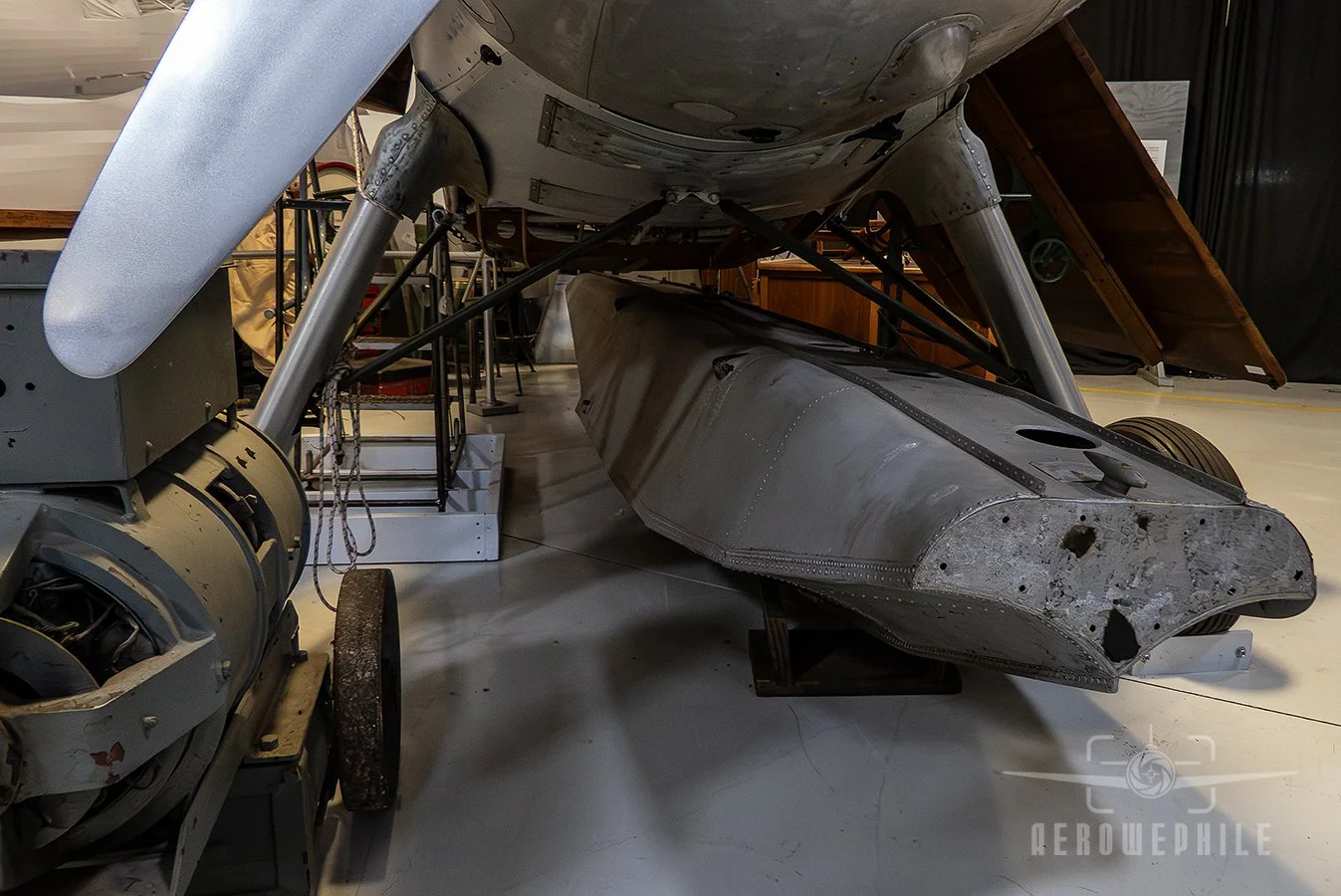
A single float on the floor below the Waco YKS-6.
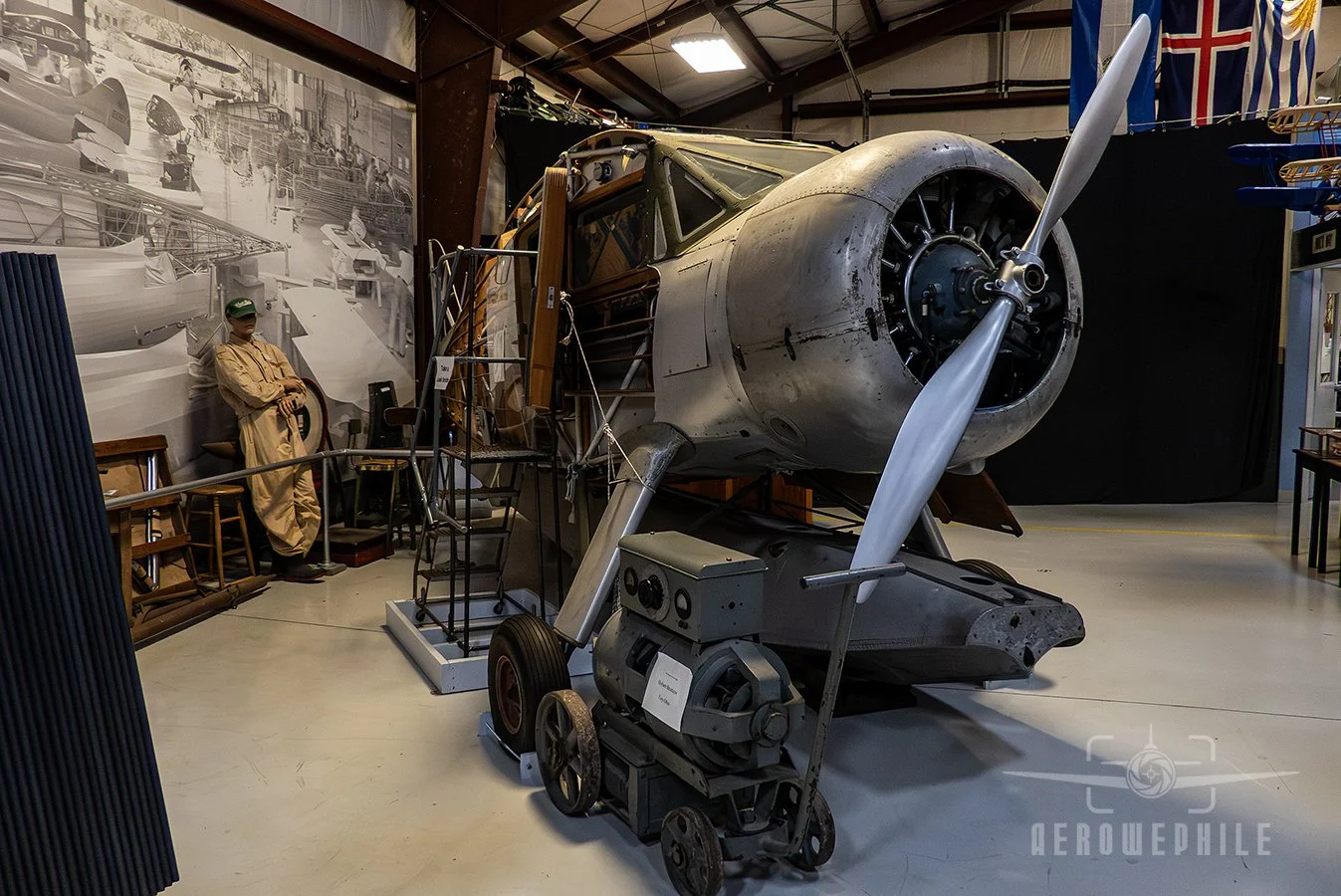
Waco YKS-6 on view in a simulated hanger display.

Waco YKS-6 on view in a simulated hanger display.
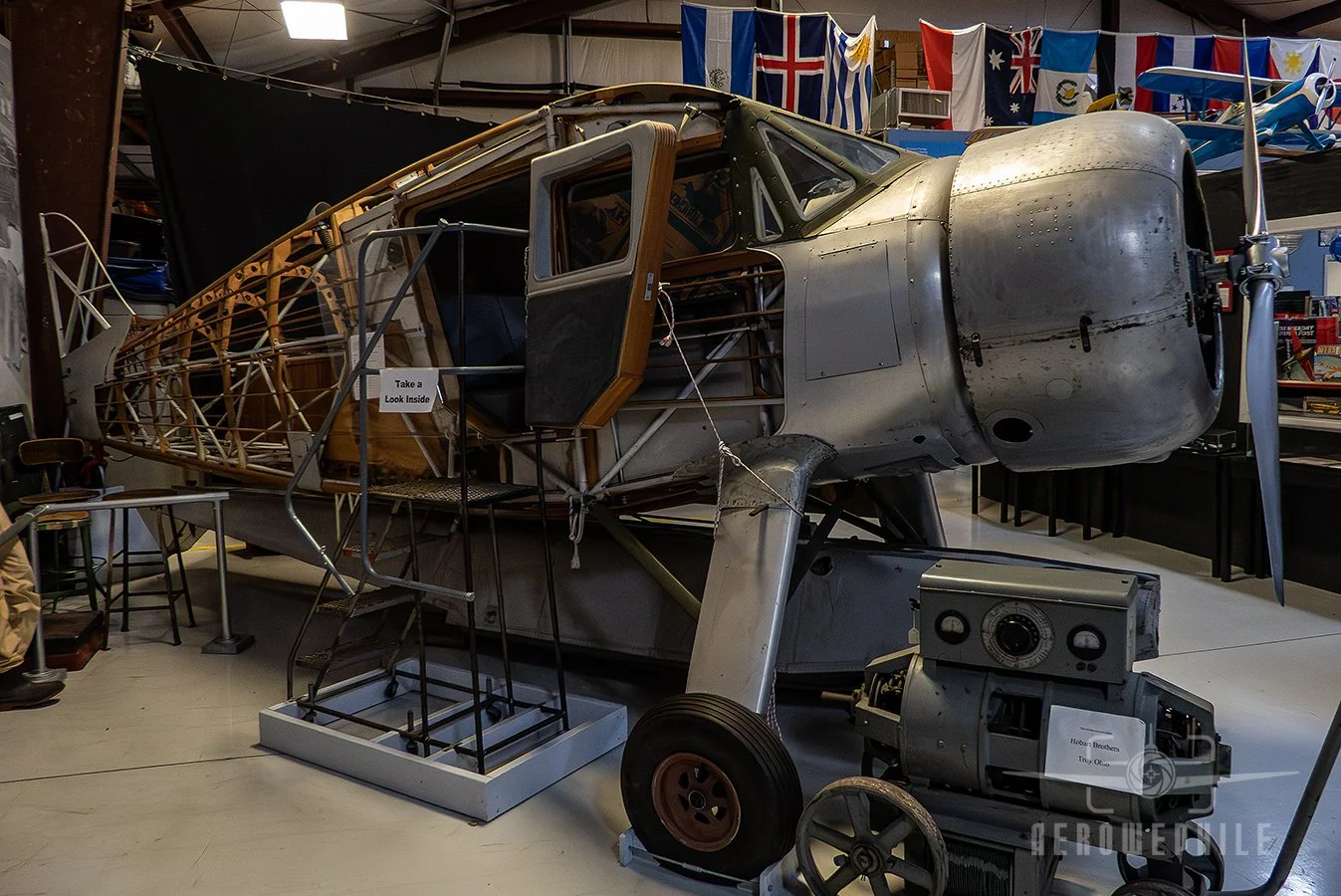
Waco YKS-6 on view in a simulated hanger display.
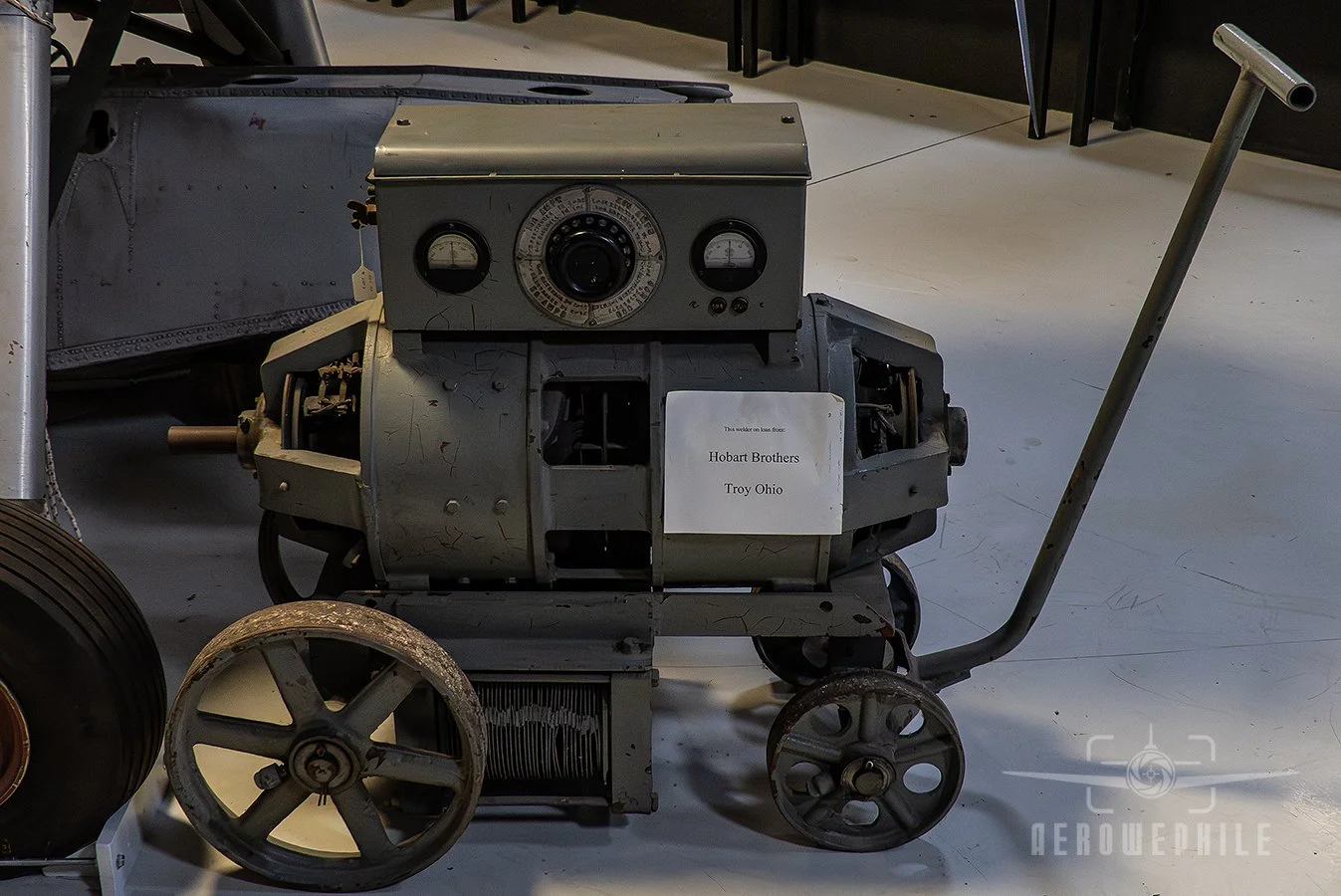
An old welder on display next to the Waco YKS-6.
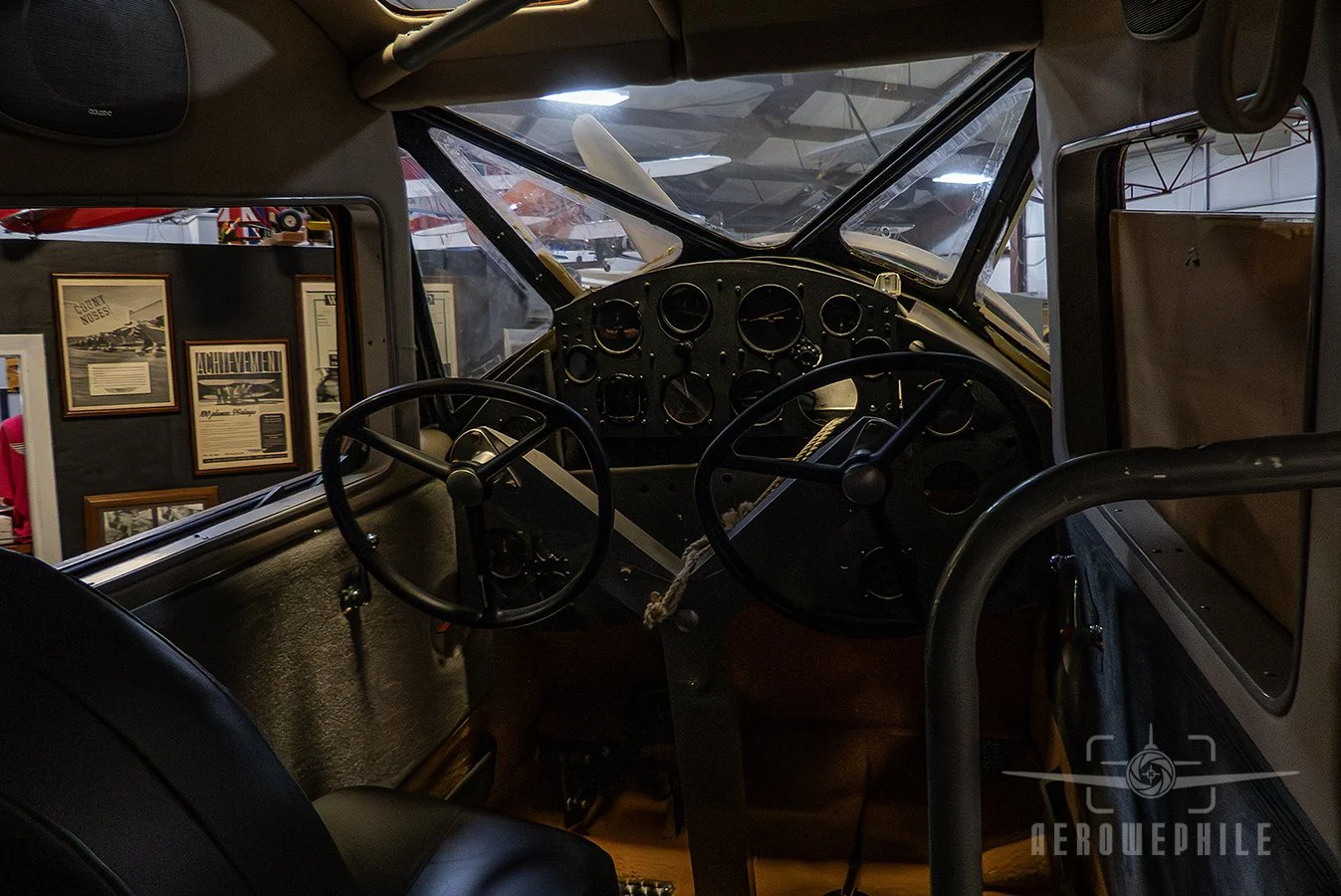
Interior of the Waco YKS-6.
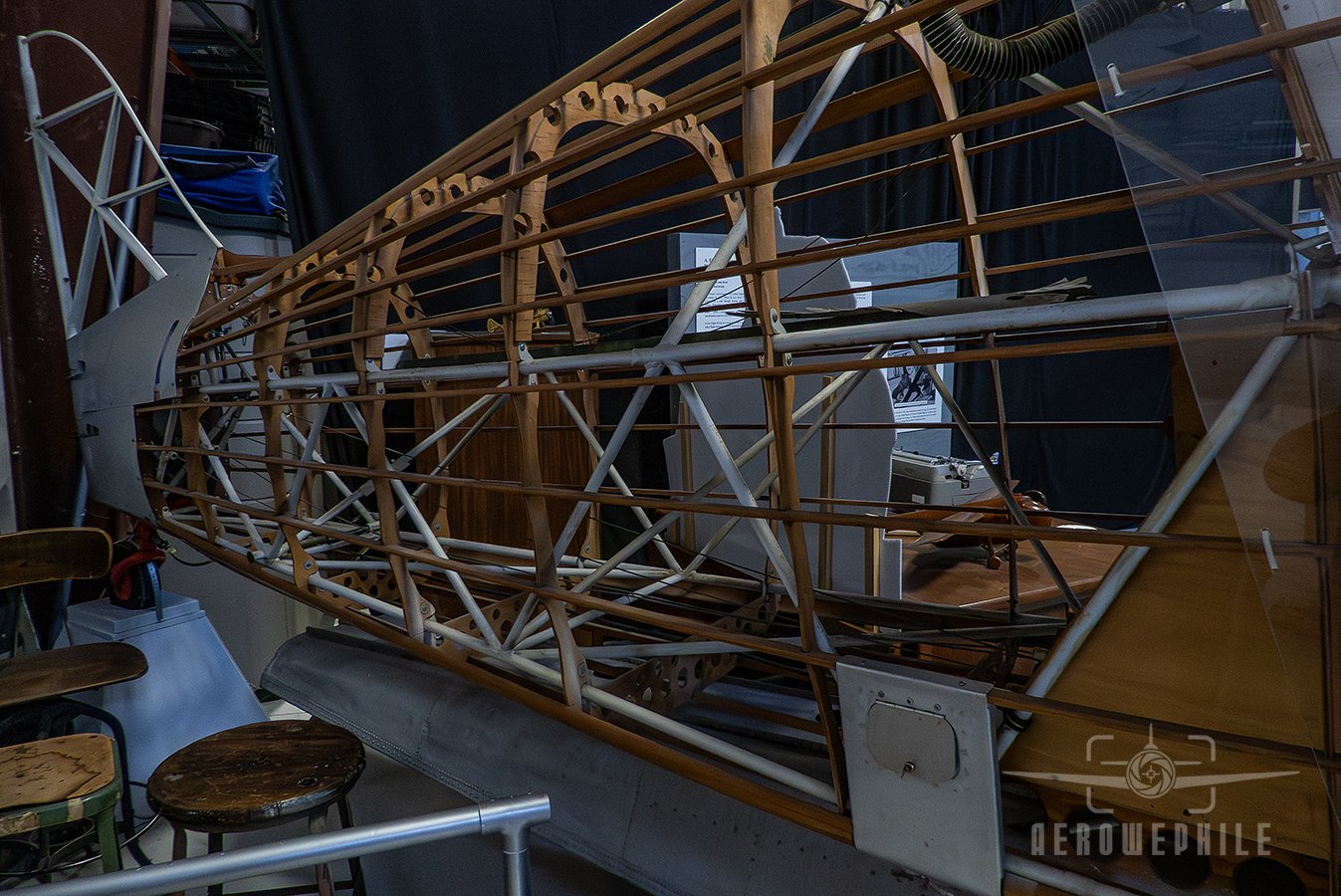
Fuselage framework of the Waco YKS-6.
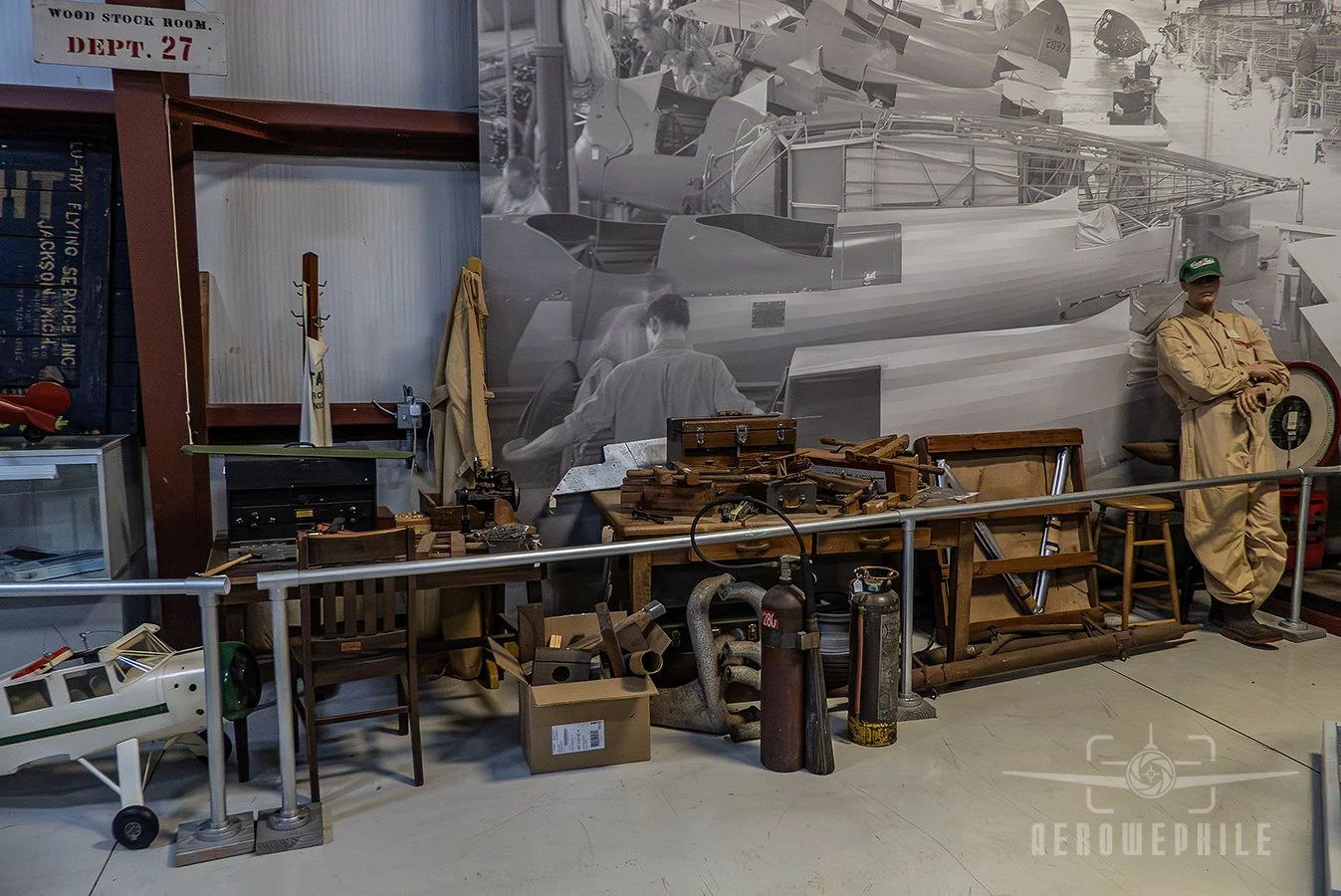
A very crowded workbench and an image of WACOs under construction.
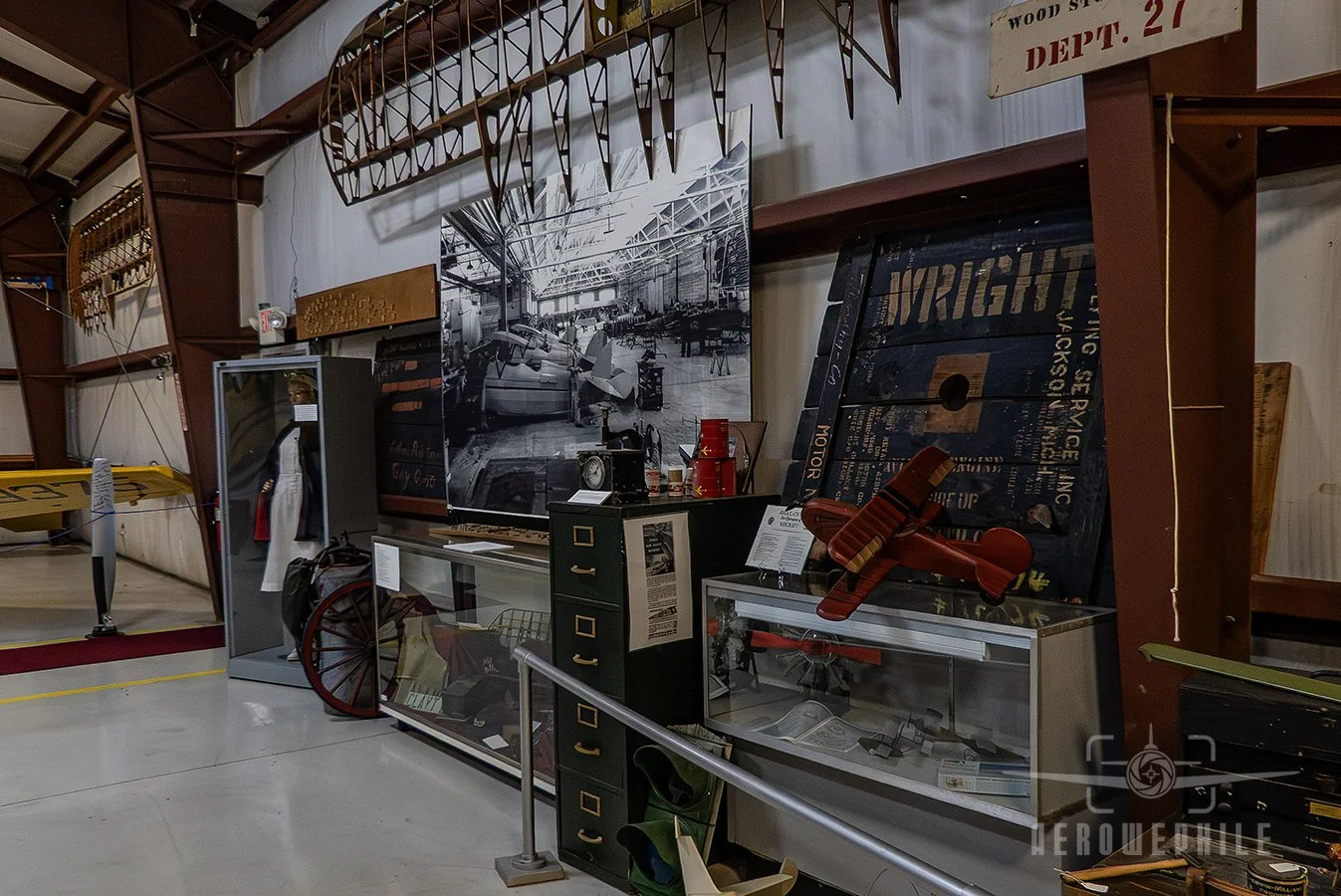
More WACO relics in the display cases. Another WACO factory image on the wall.
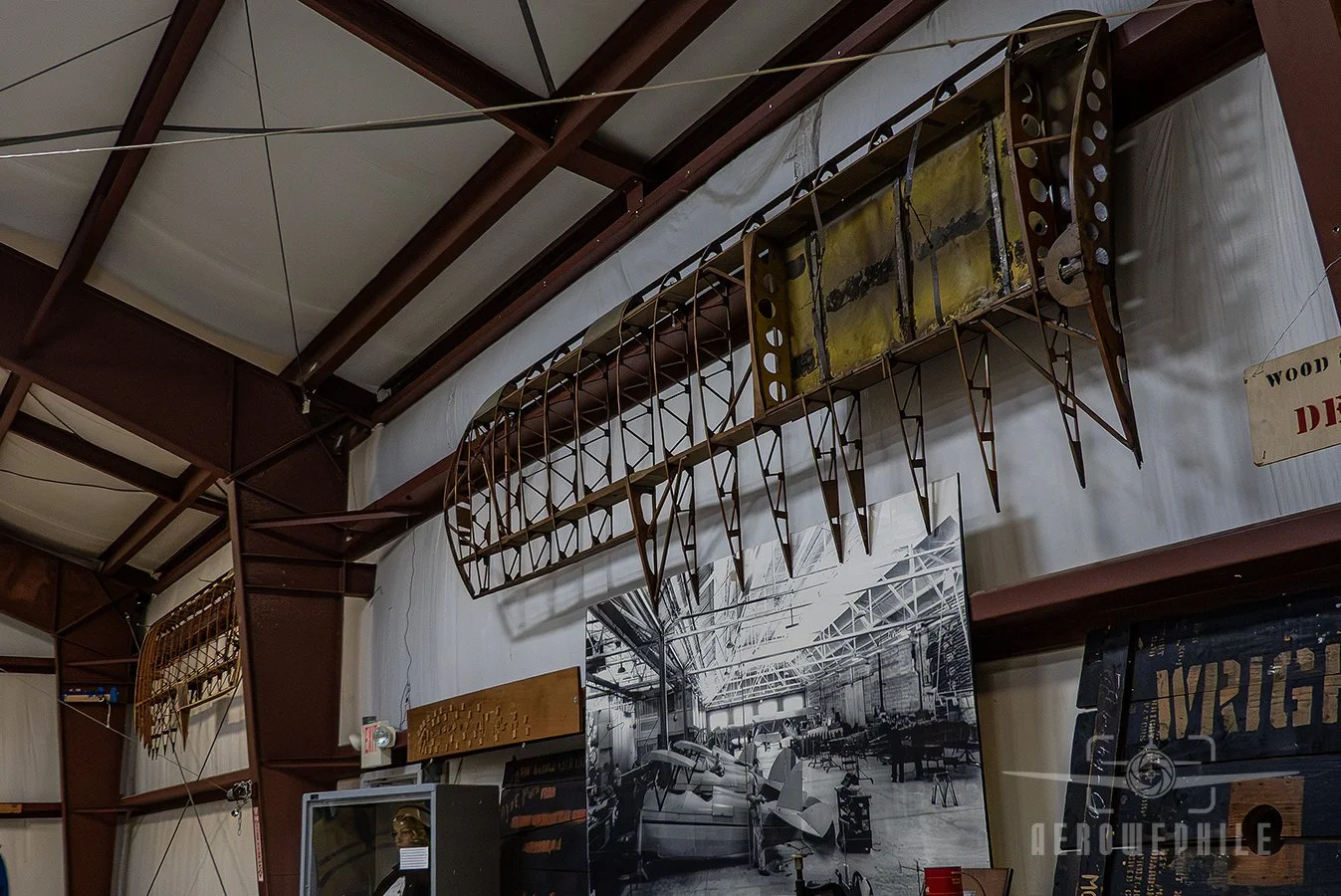
An uncovered wing hanging on the wall.
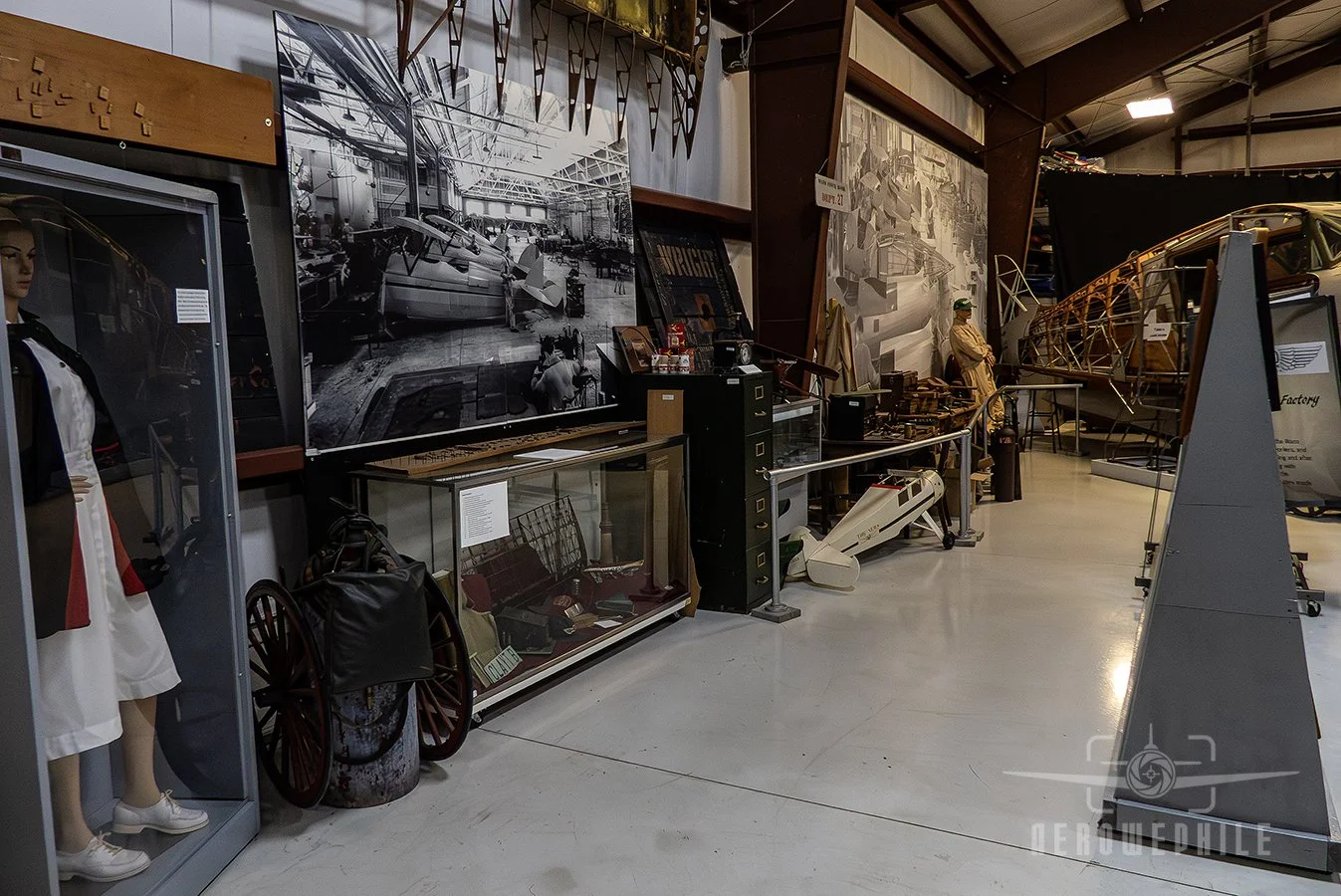
Looking back in to the WACO workspace display.
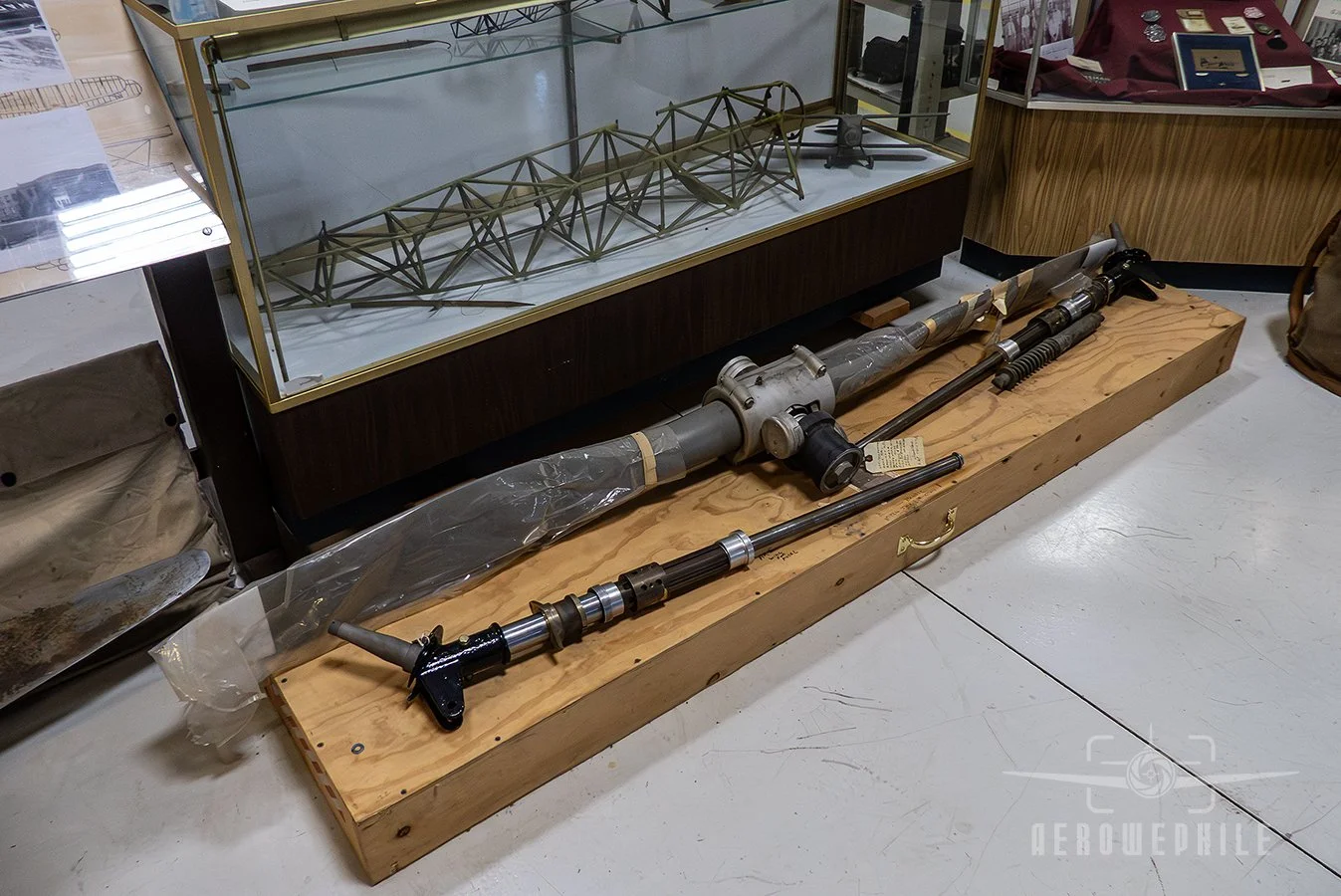
Propeller and other WACO artifacts on display.
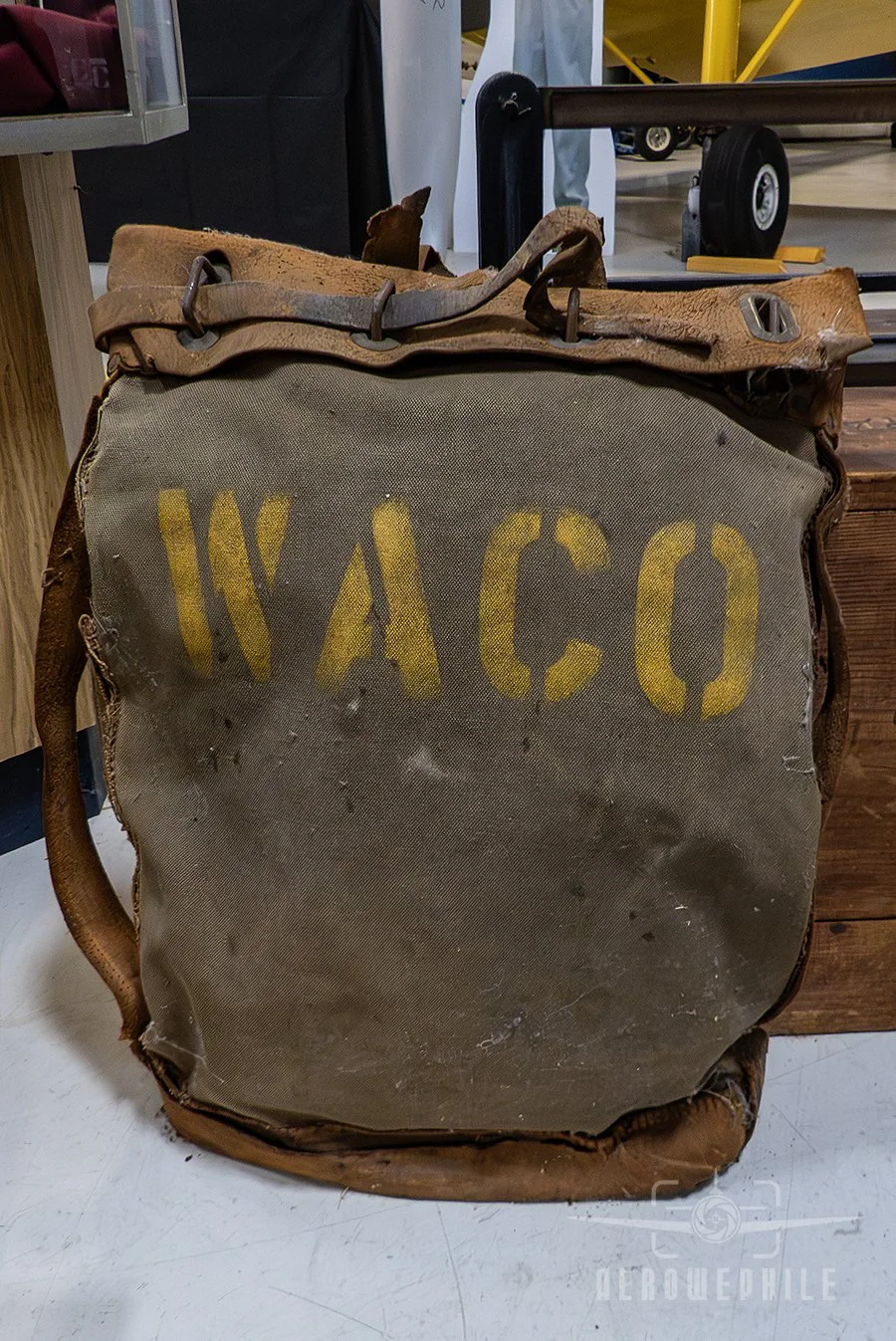
WACO mail bag?
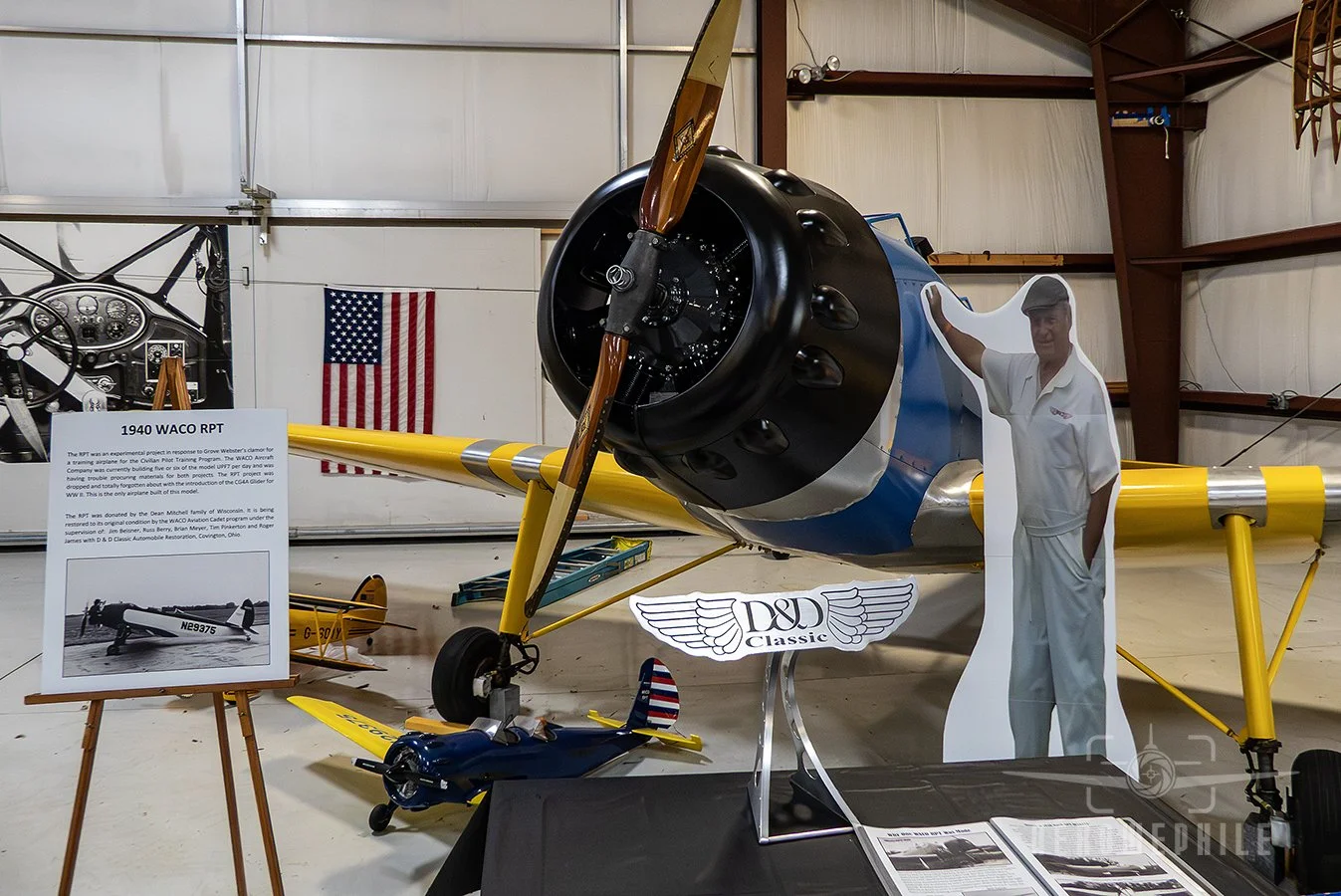
1940 WACO RPT in the main museum.
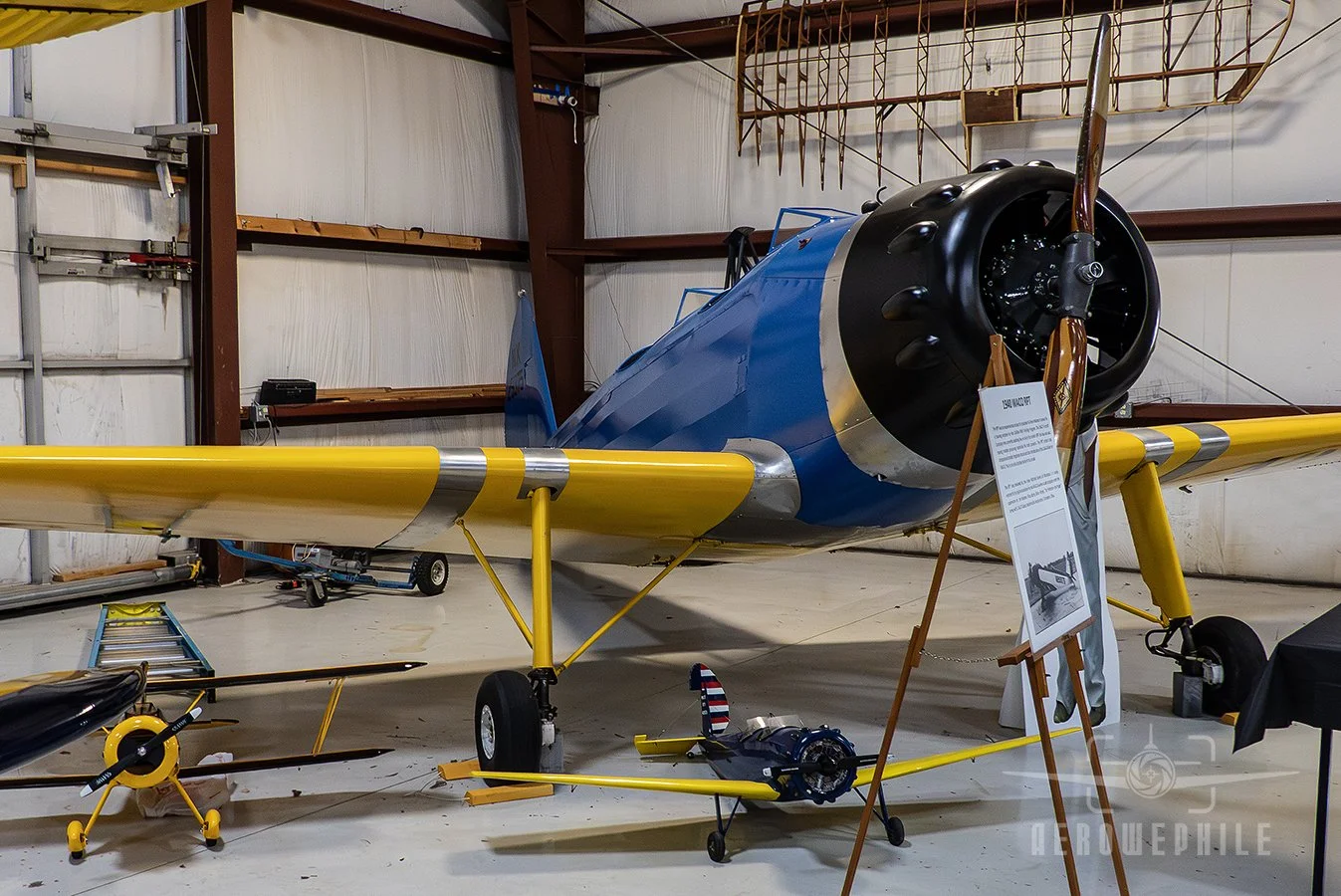
1940 WACO RPT in the main museum.
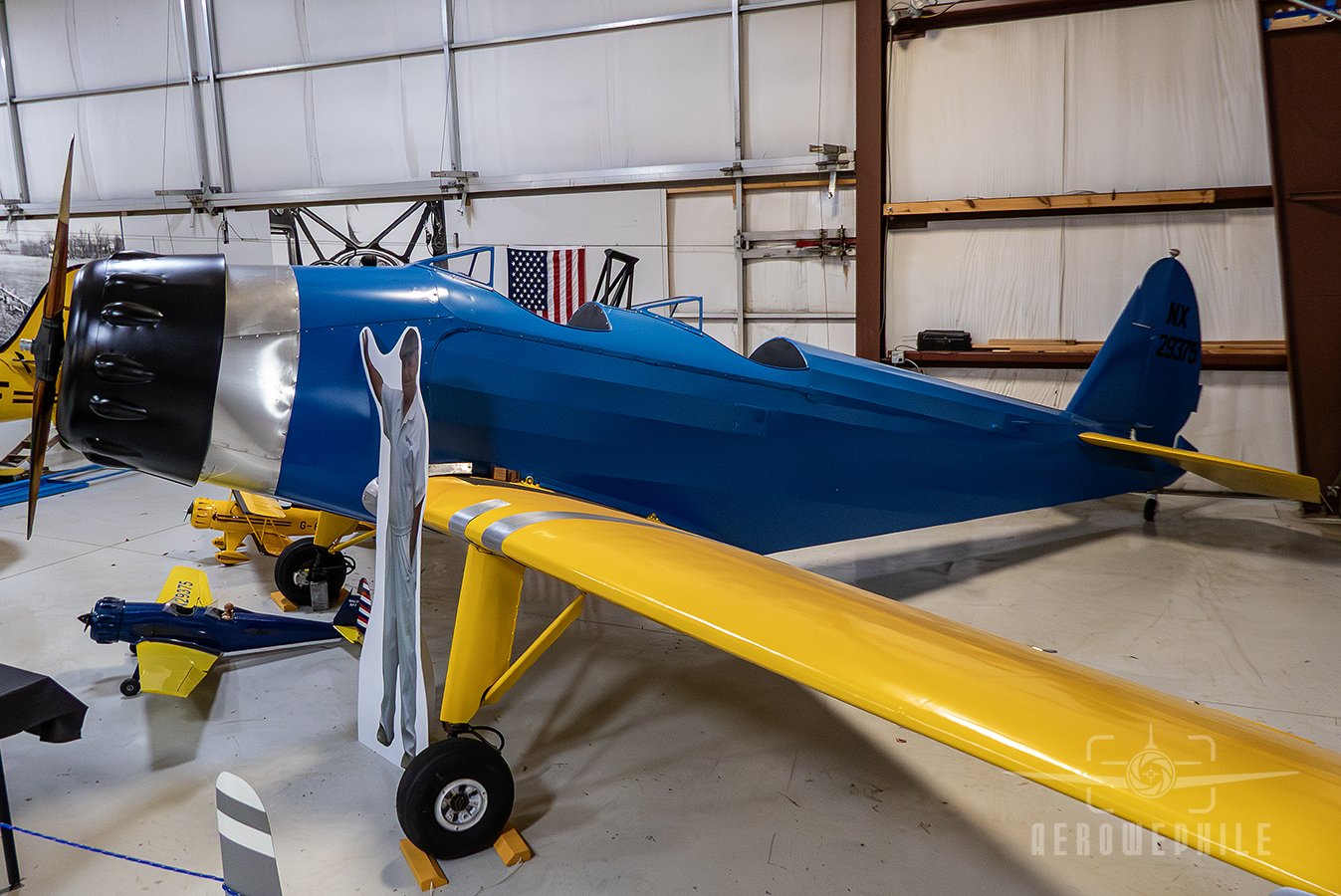
1940 WACO RPT in the main museum.
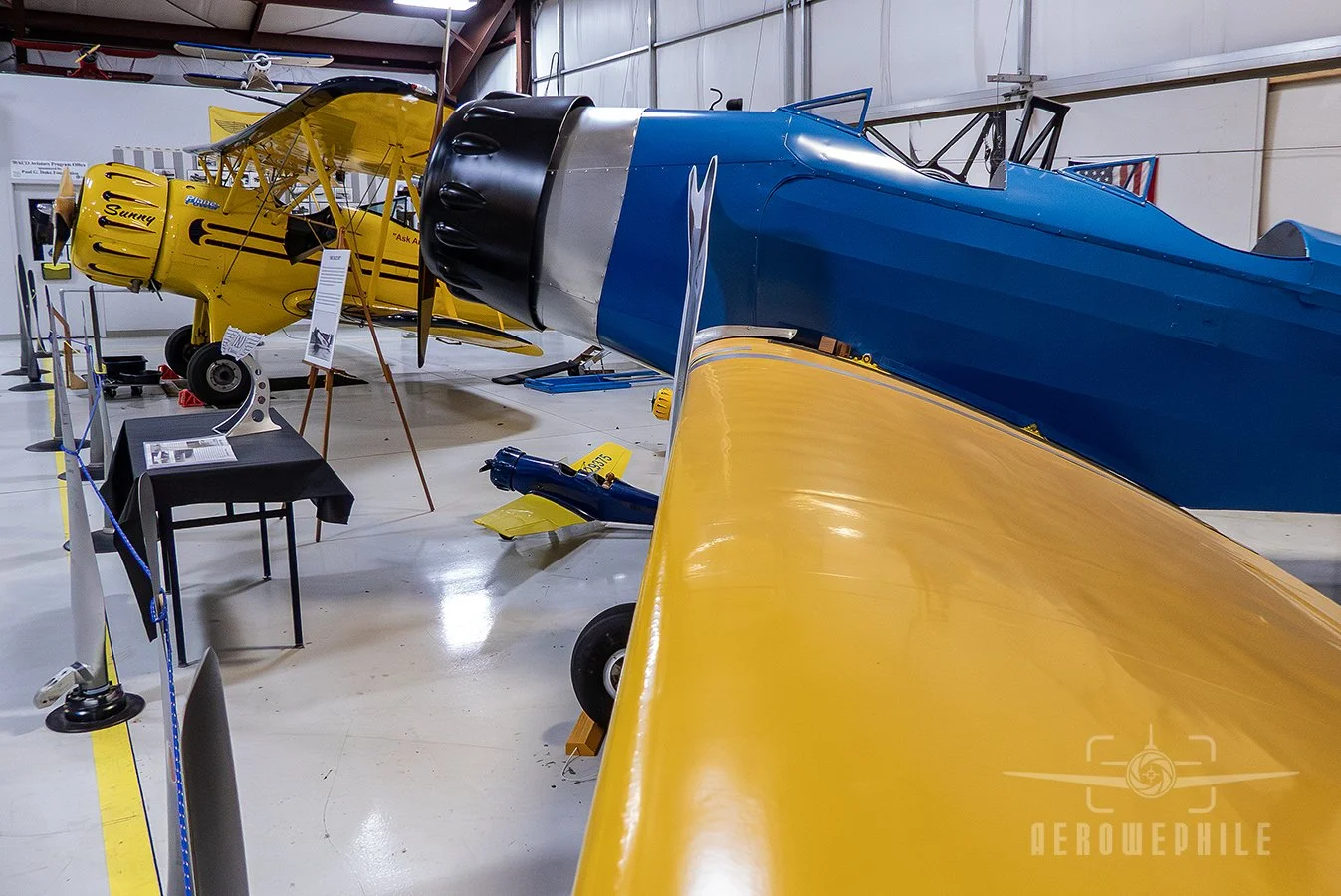
1940 WACO RPT in the foreground. 2004 WACO YMF-5FC in the background.
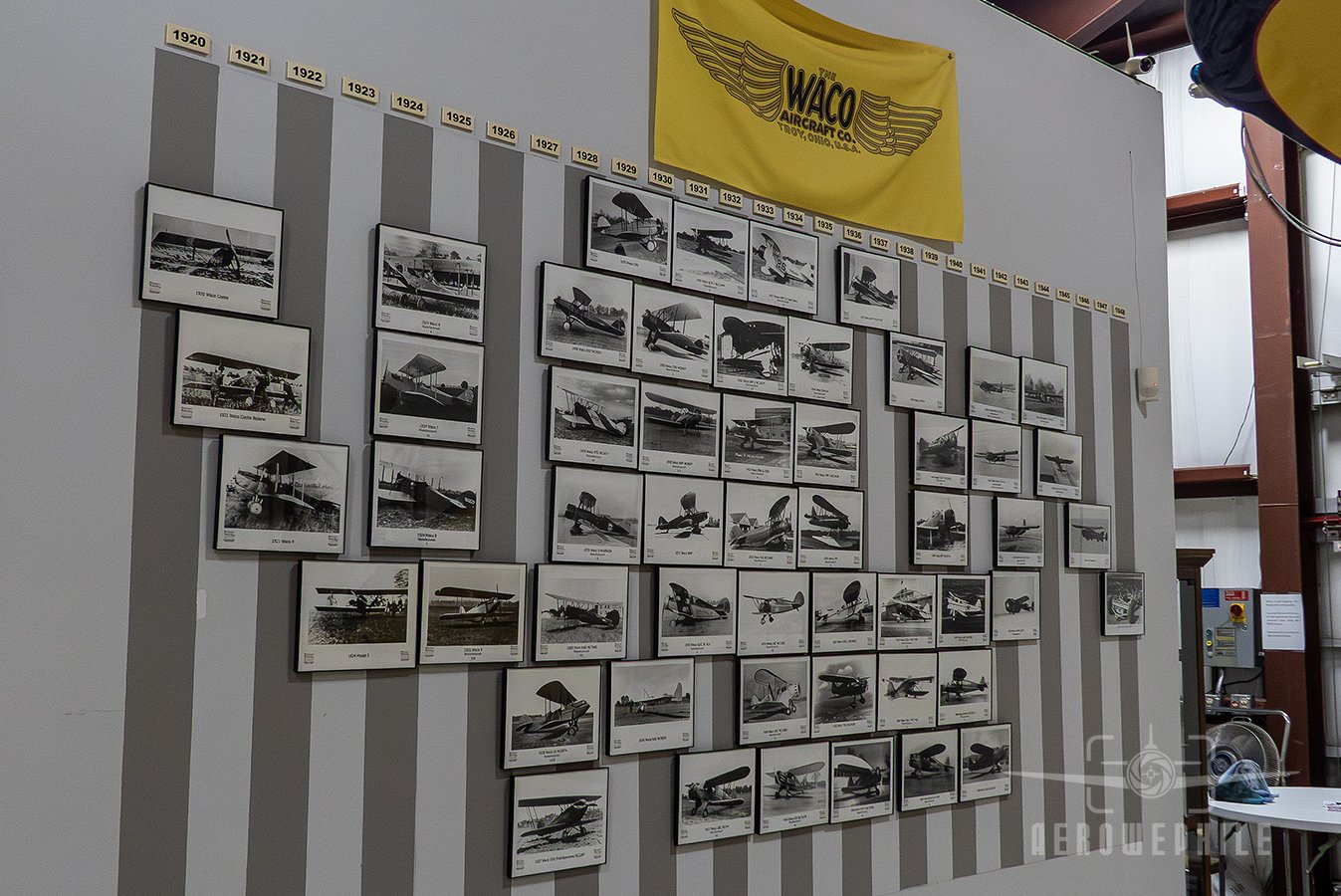
WACO photo history wall.
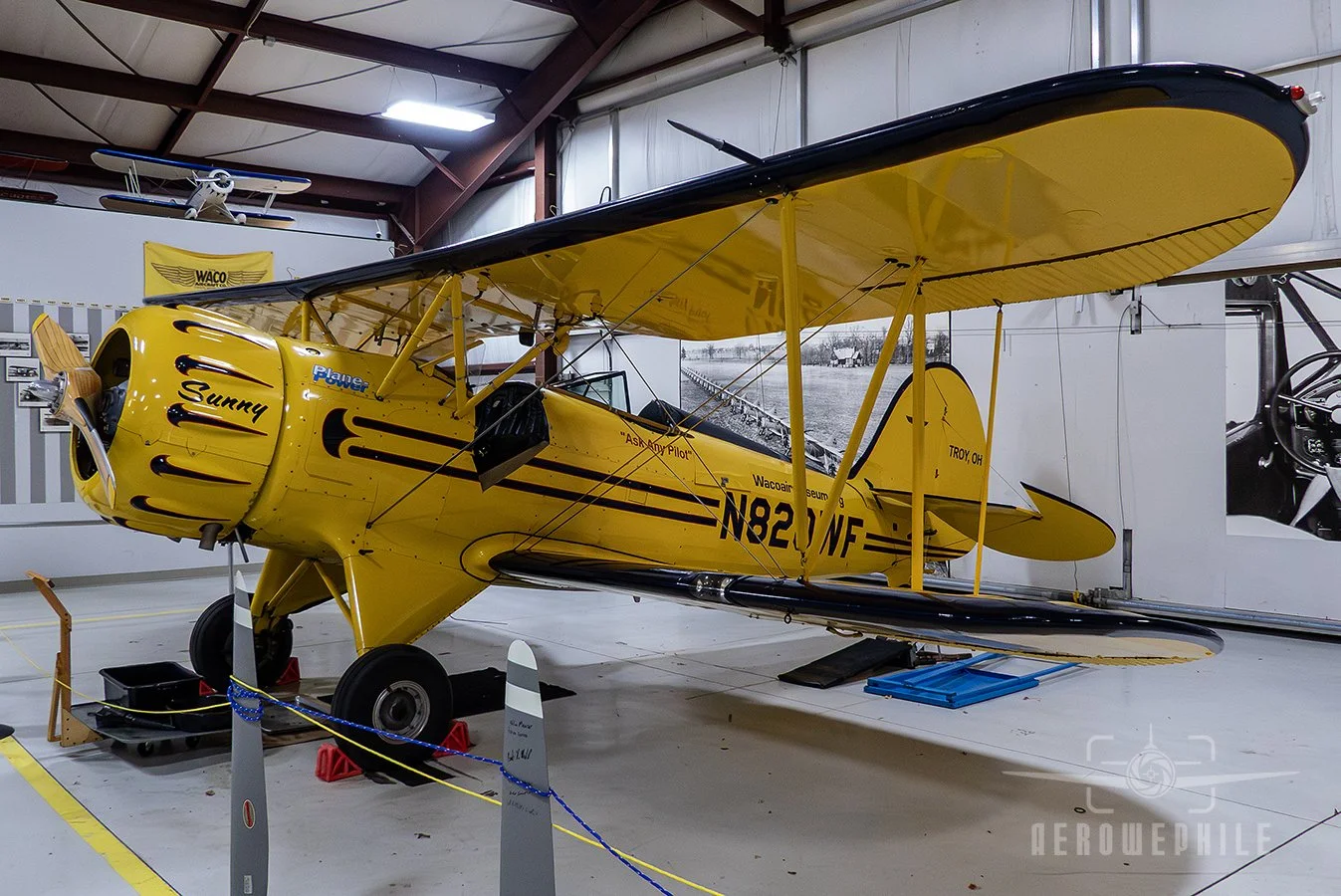
2004 WACO YMF-5FC.
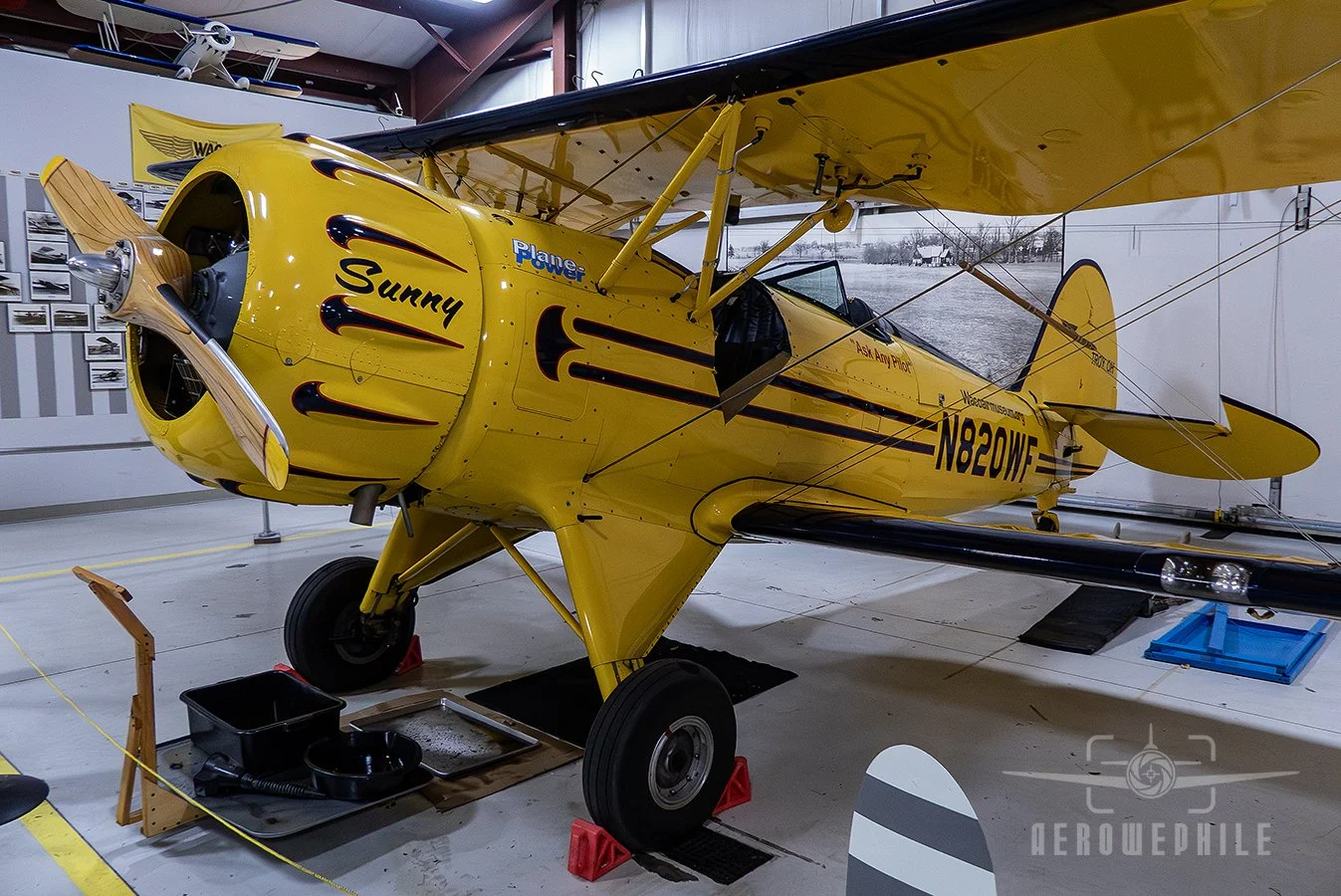
2004 WACO YMF-5FC with oil pans beneath it. This aircraft flies semi-regularly.
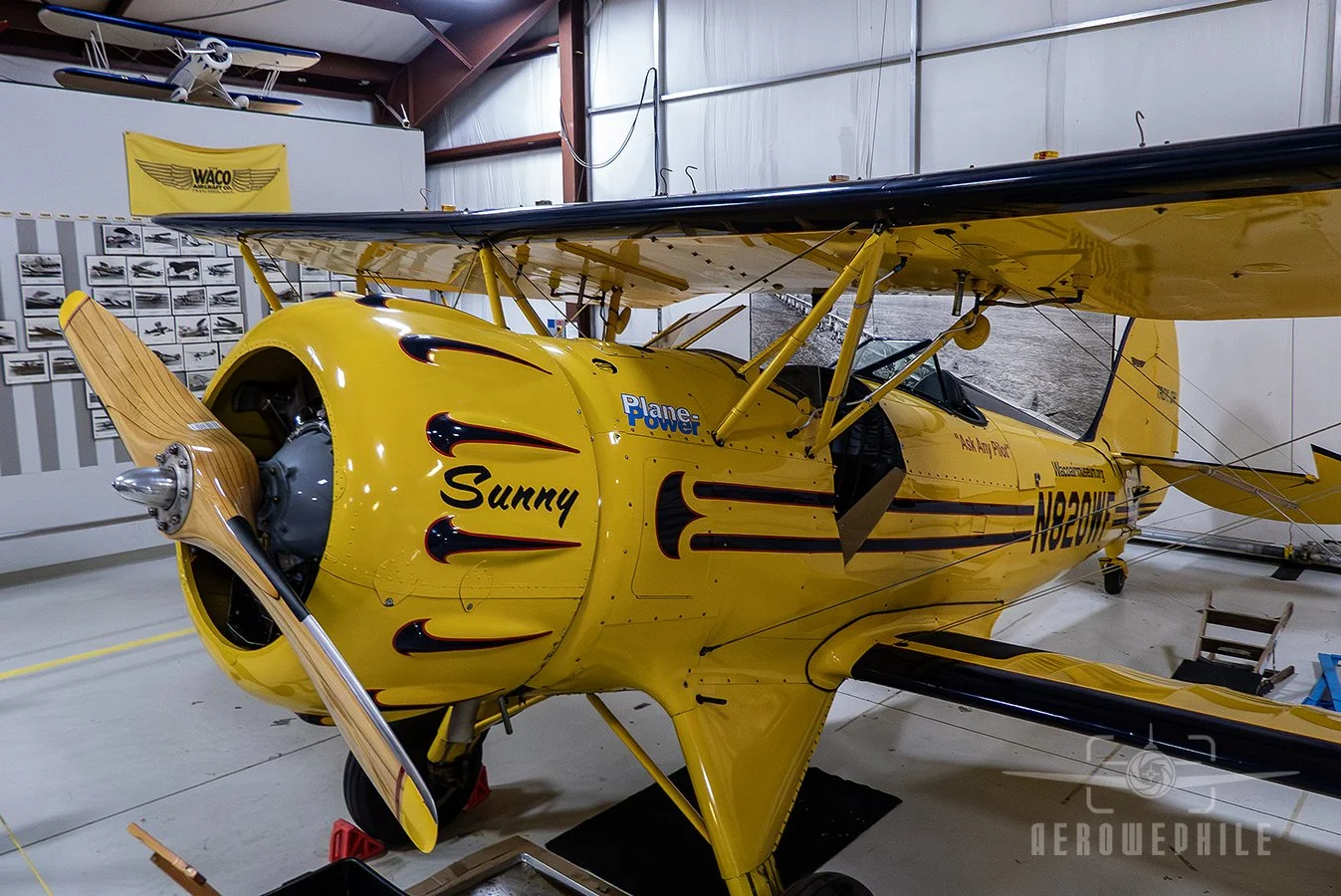
2004 WACO CLASSIC AIRCRAFT YMF-F5C

2004 WACO CLASSIC AIRCRAFT YMF-F5C
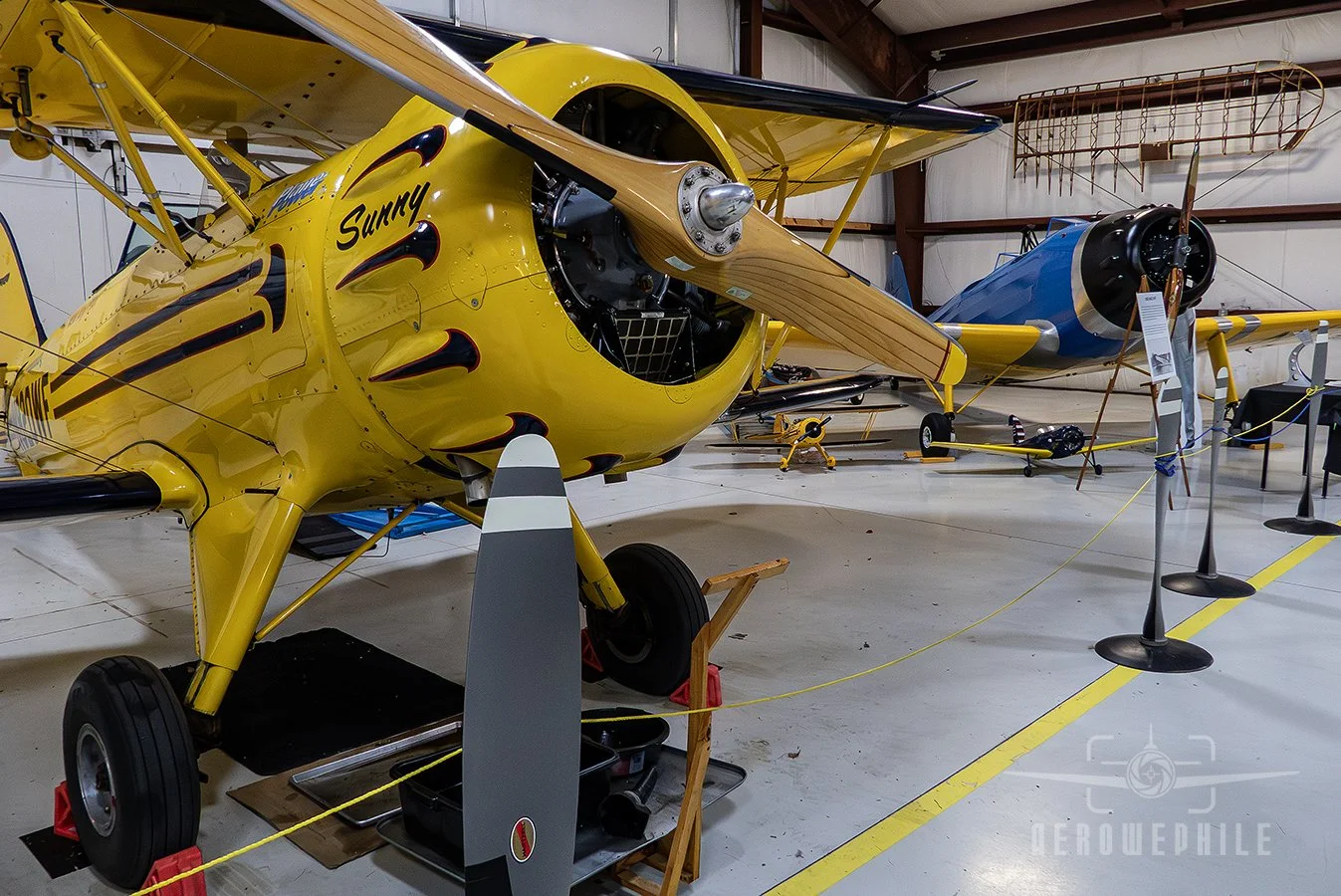
2004 WACO YMF-5FC in the foreground. 1940 WACO RPT in the background.
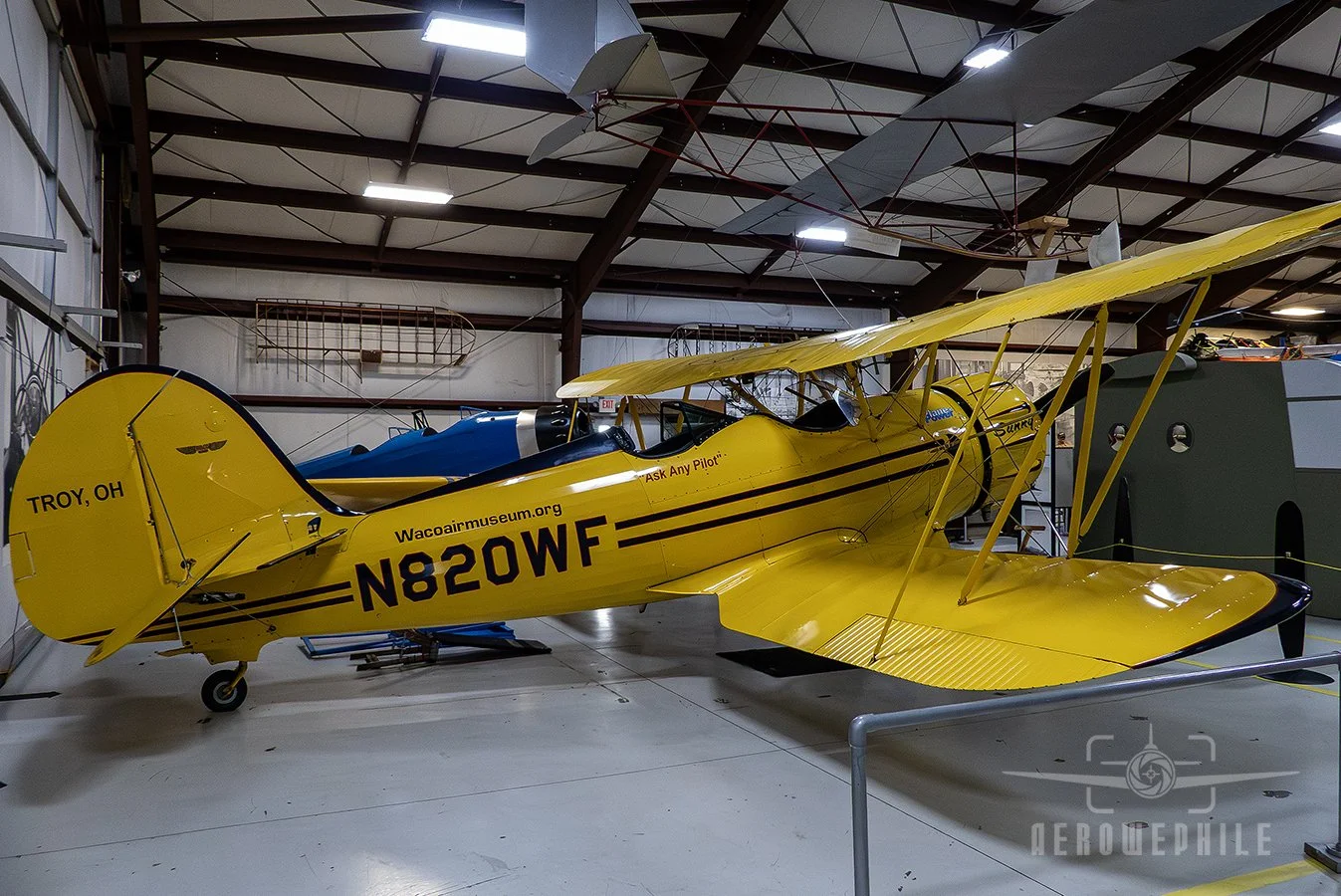
2004 WACO CLASSIC AIRCRAFT YMF-F5C
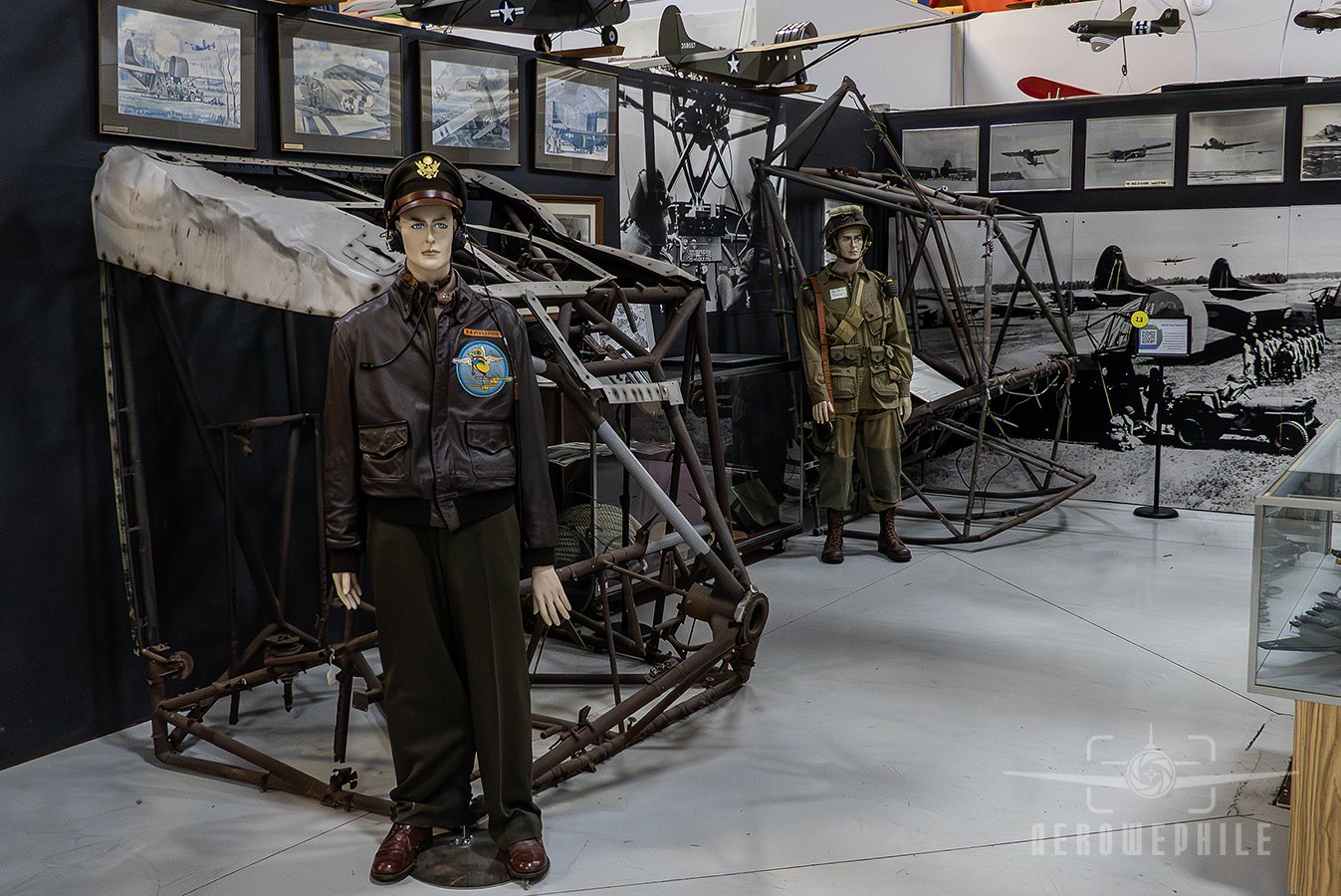
WACO manufactured the Waco CG-4A glider. This was the most widely used American troop/cargo military glider of World War II.
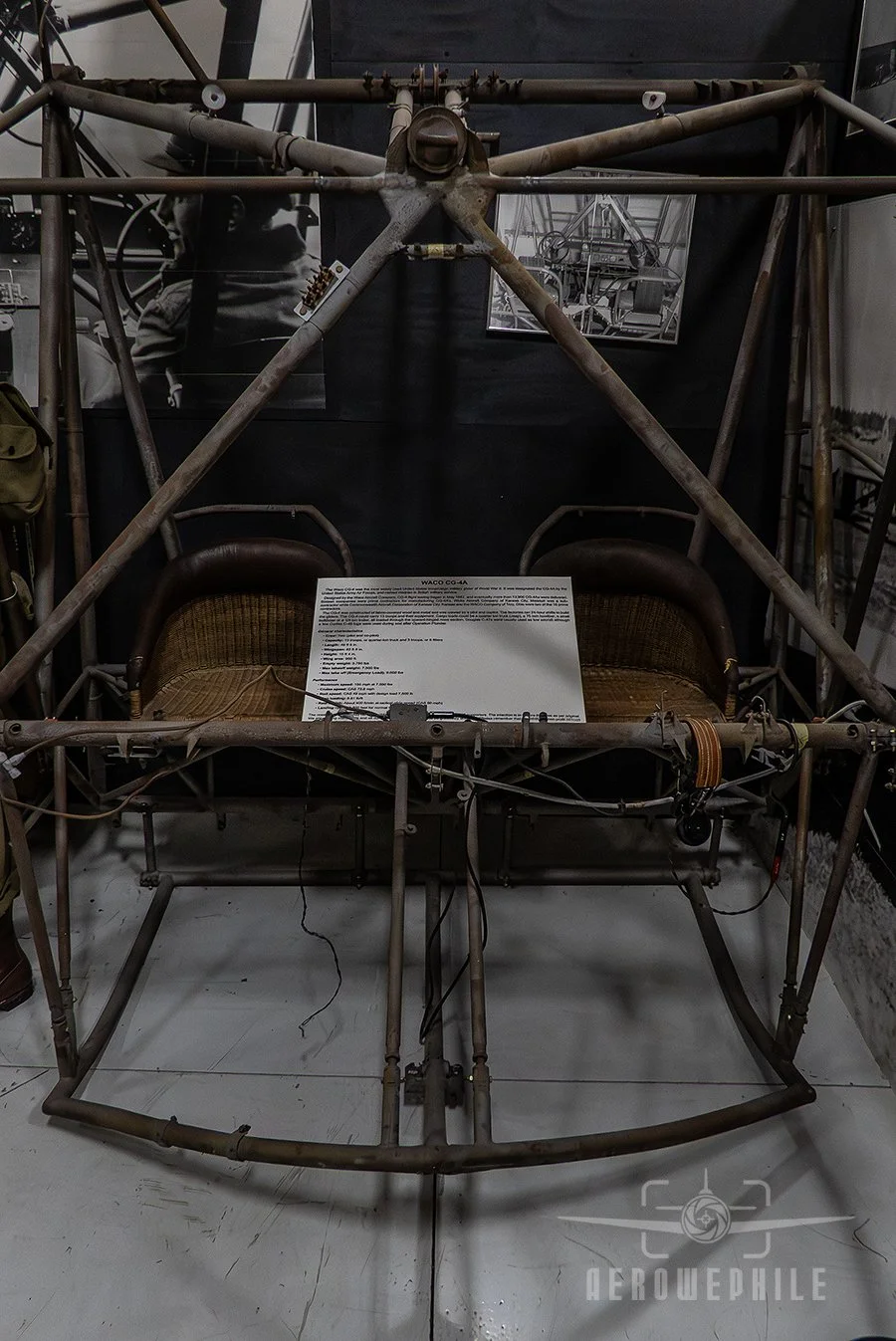
Cockpit section of a WACO CG-4A glider.
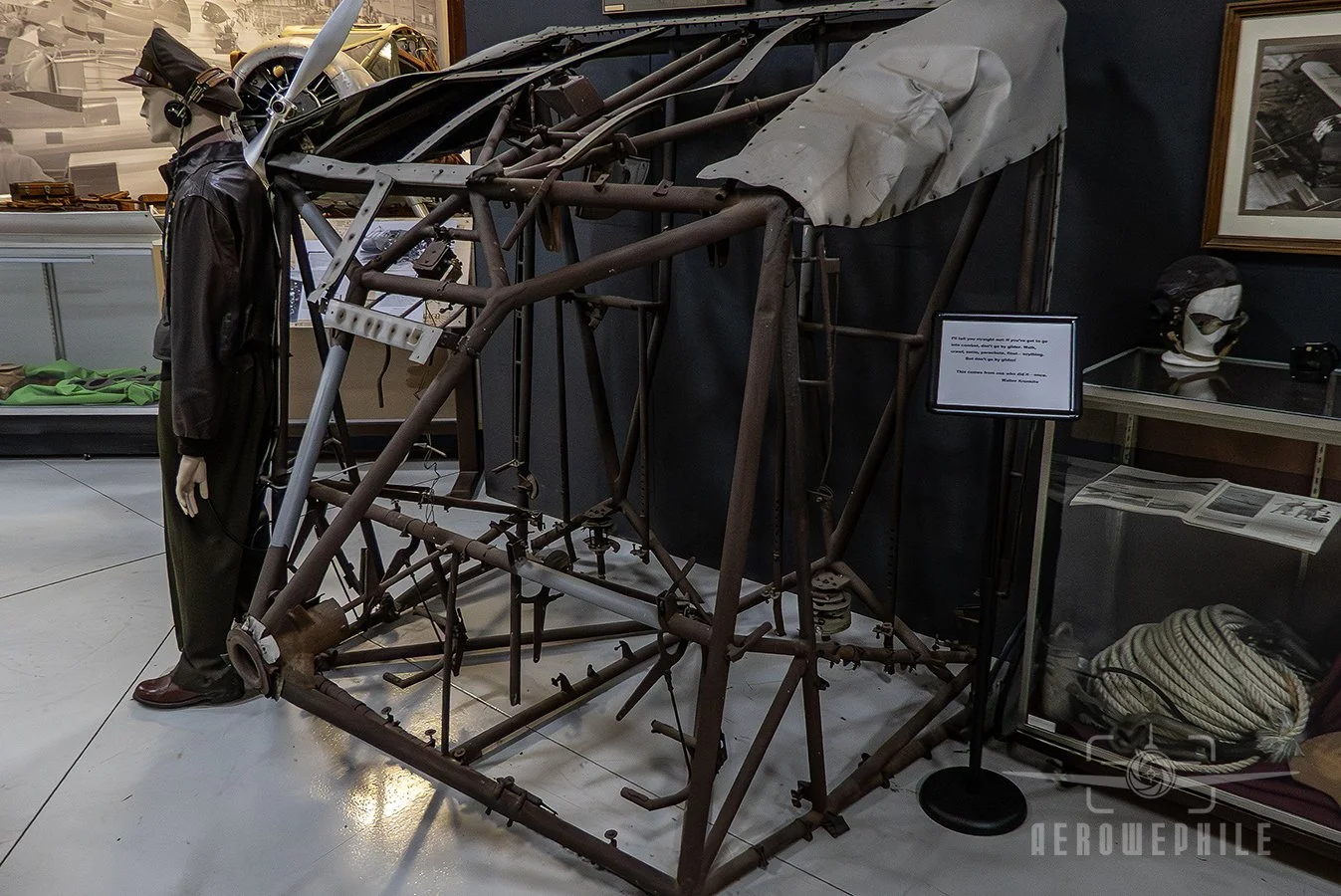
Forward framework of a WACO CG-4A glider.
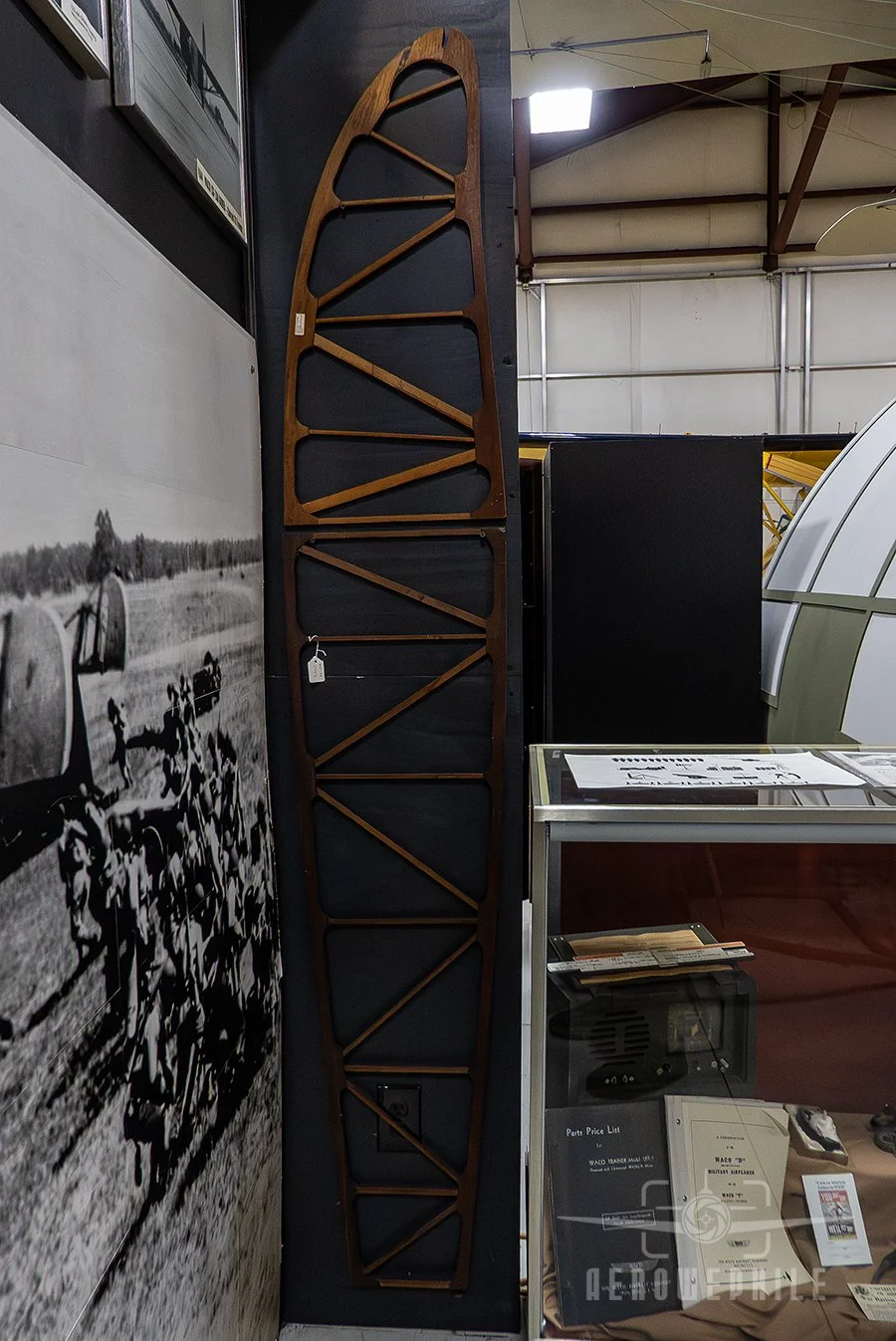
Wing rib from a WACO glider.
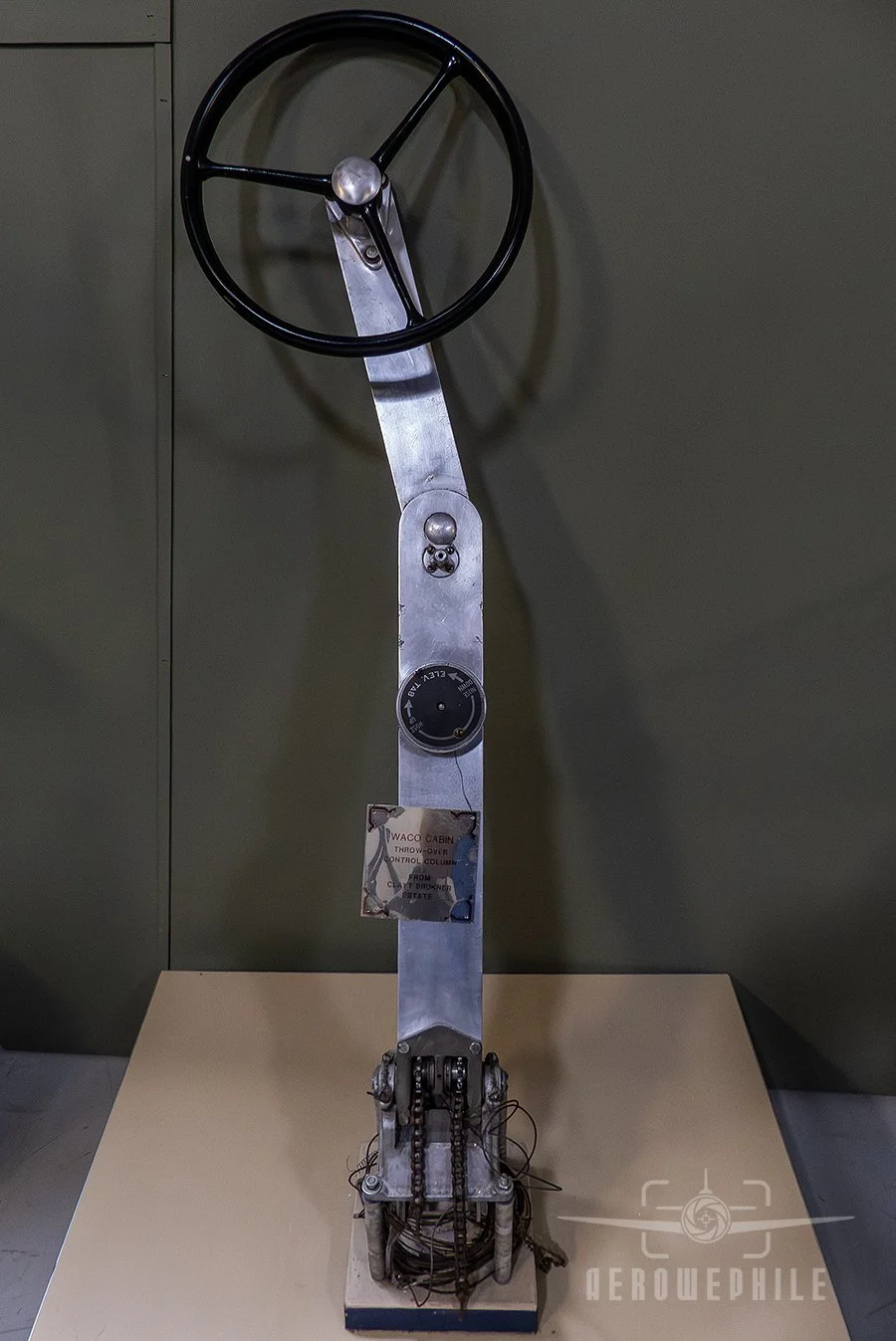
Control column from a WACO CG-4A glider.
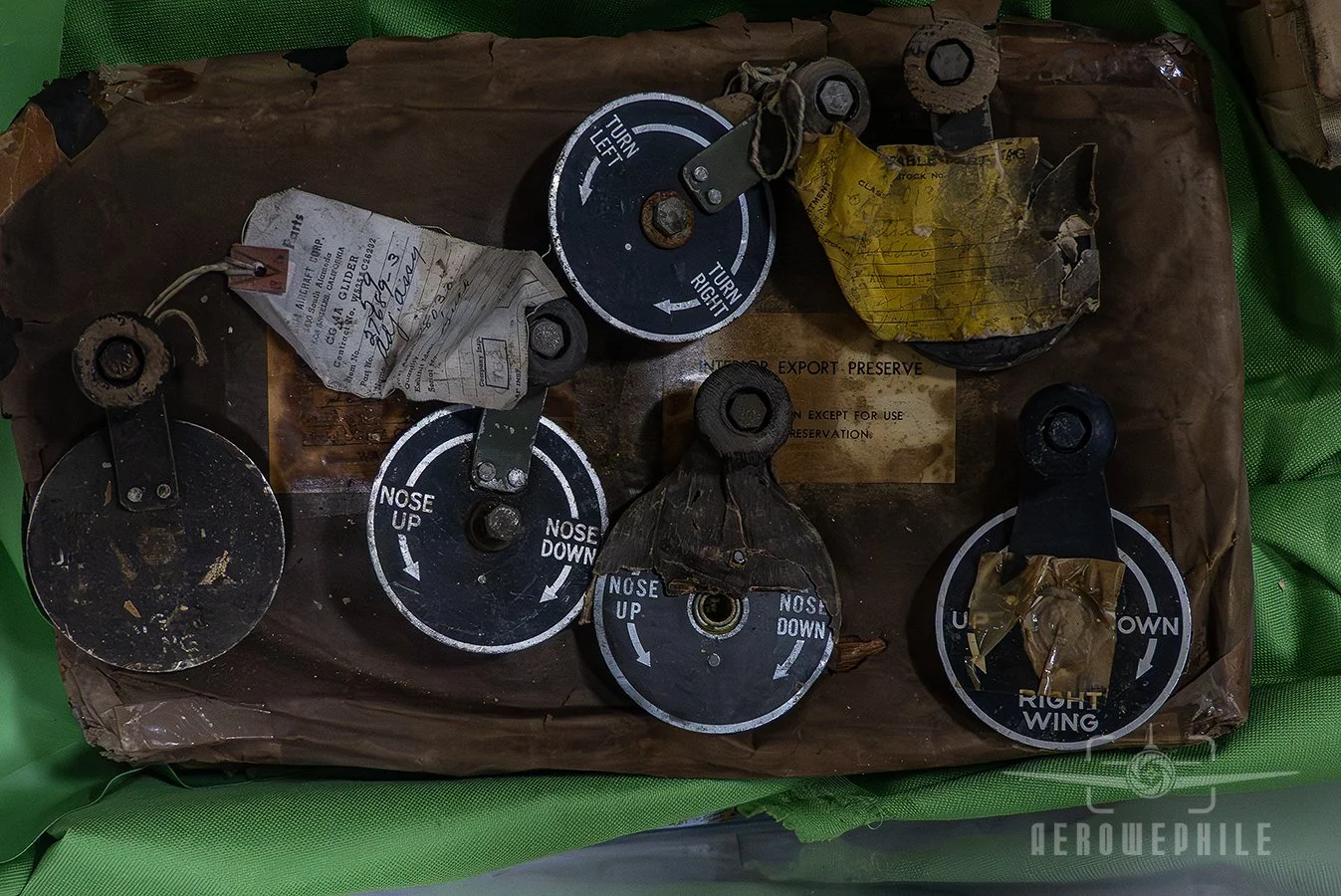
WACO CG-4A trim control dials.
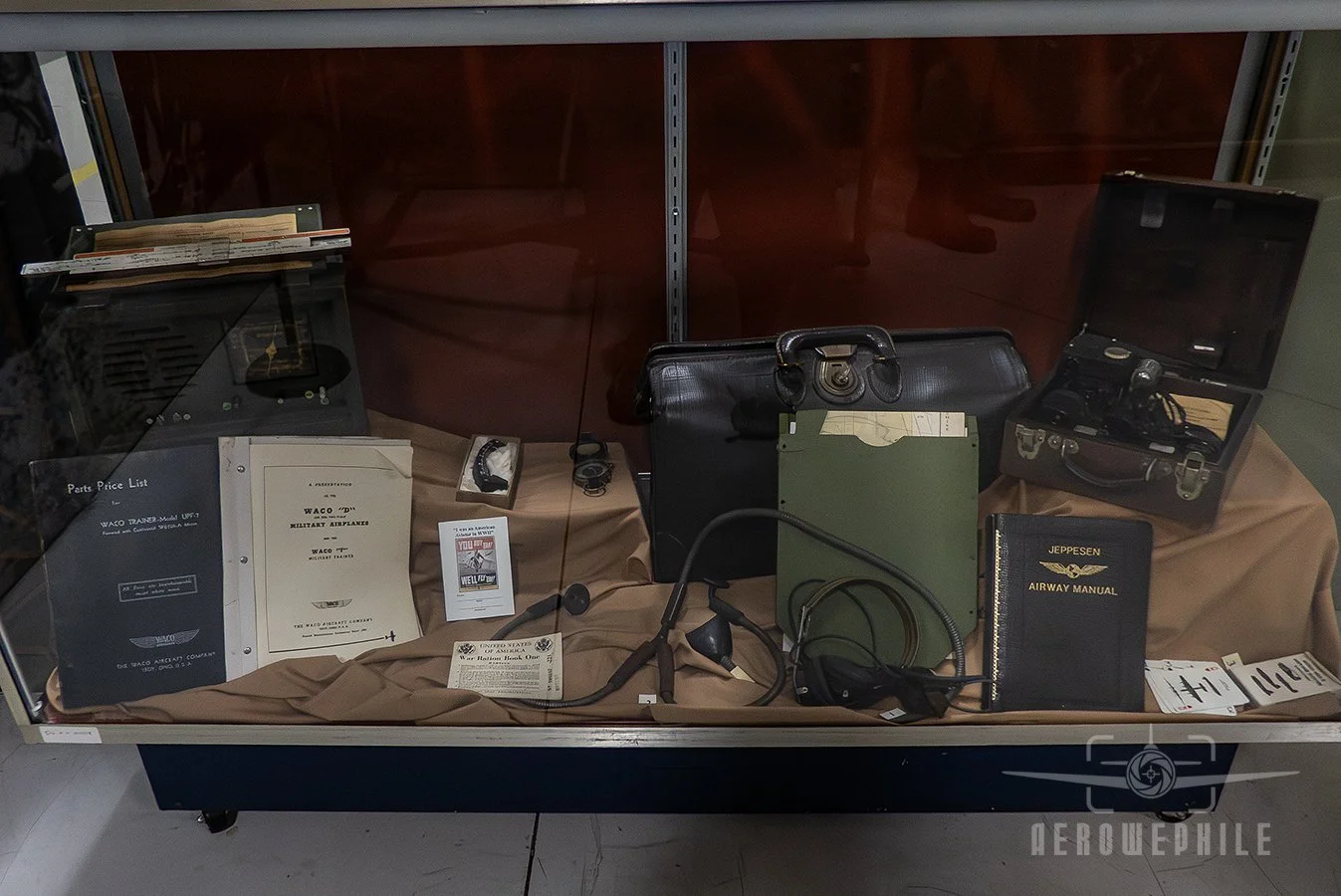
WACO artifacts on display.
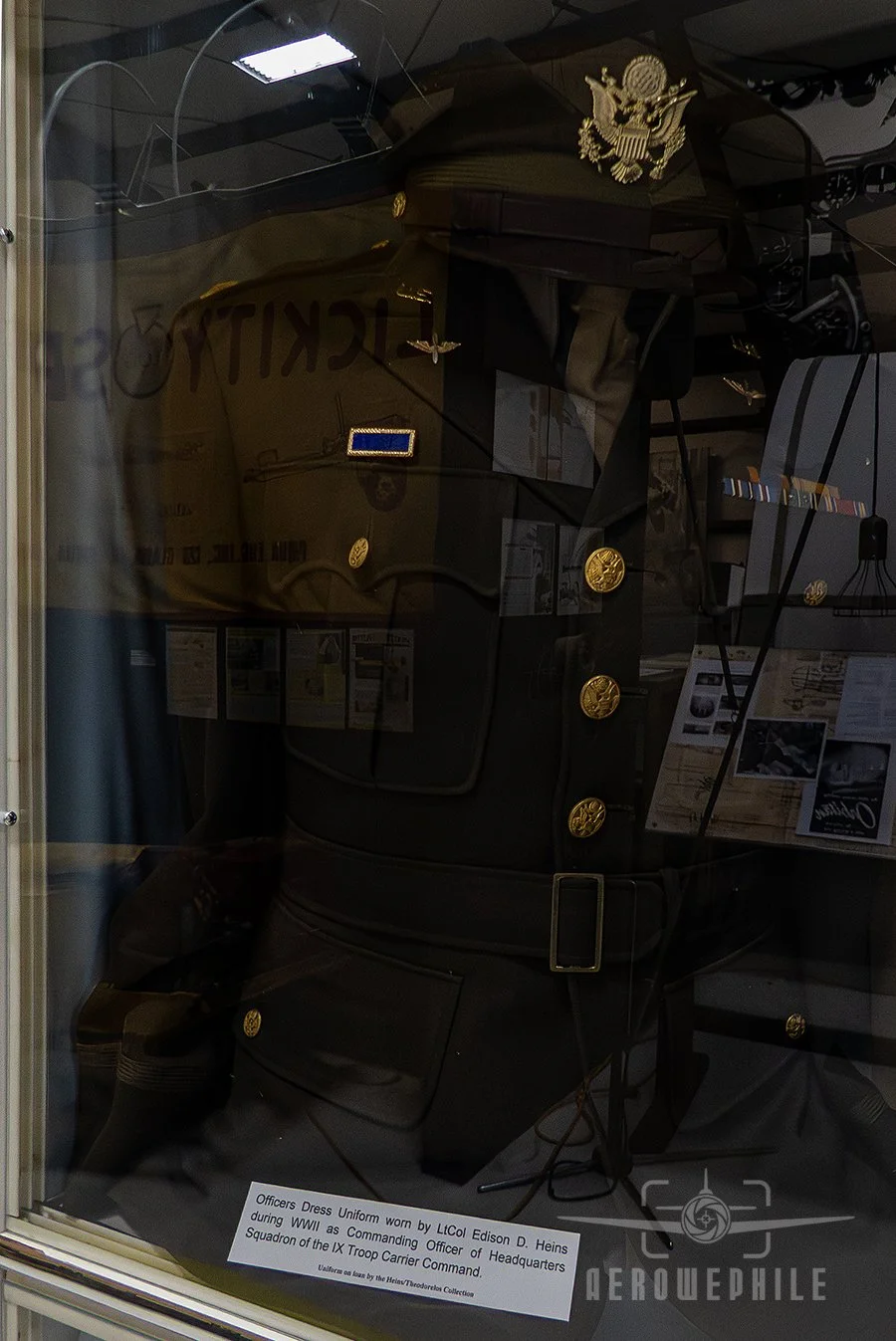
Officers dress uniform worn by LtCol Edison D. Heins during WWII as Commanding Officer of Headquarters Squadron of the IX Troop Carrier Command.
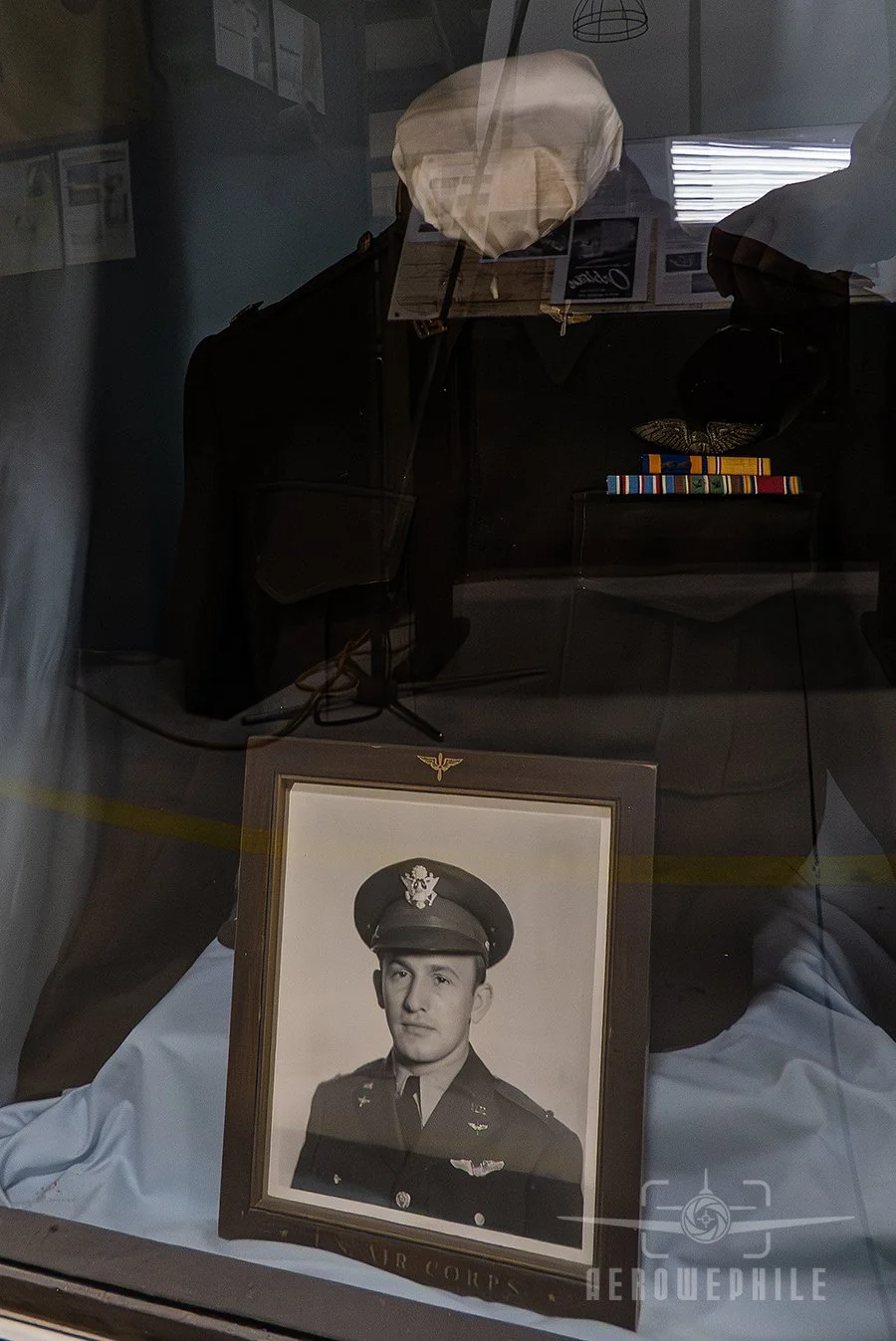
U.S. Air Corps Dress Uniform.
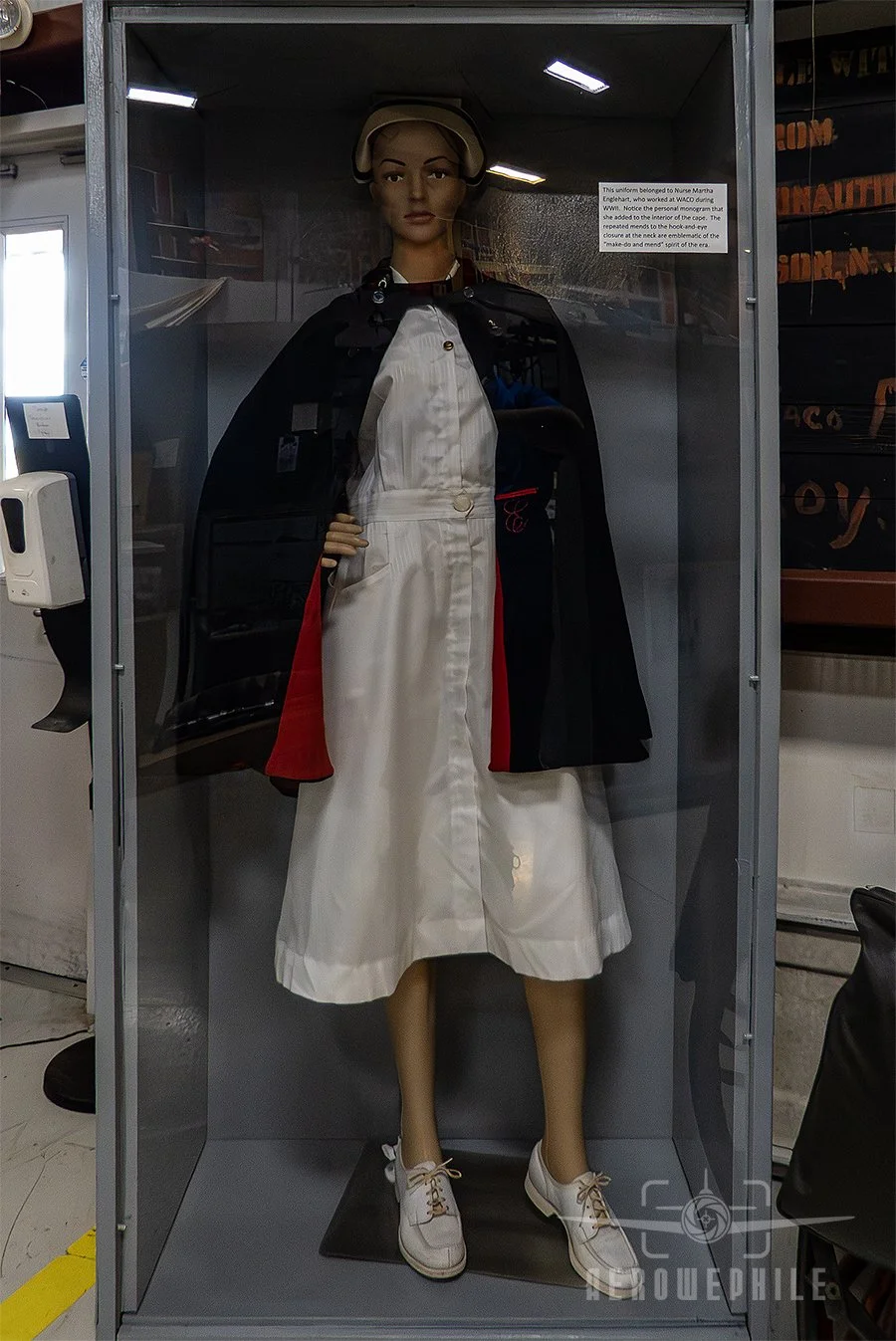
Nurses uniform worn by Martha Englehart while working at the WACO factory in WWII.
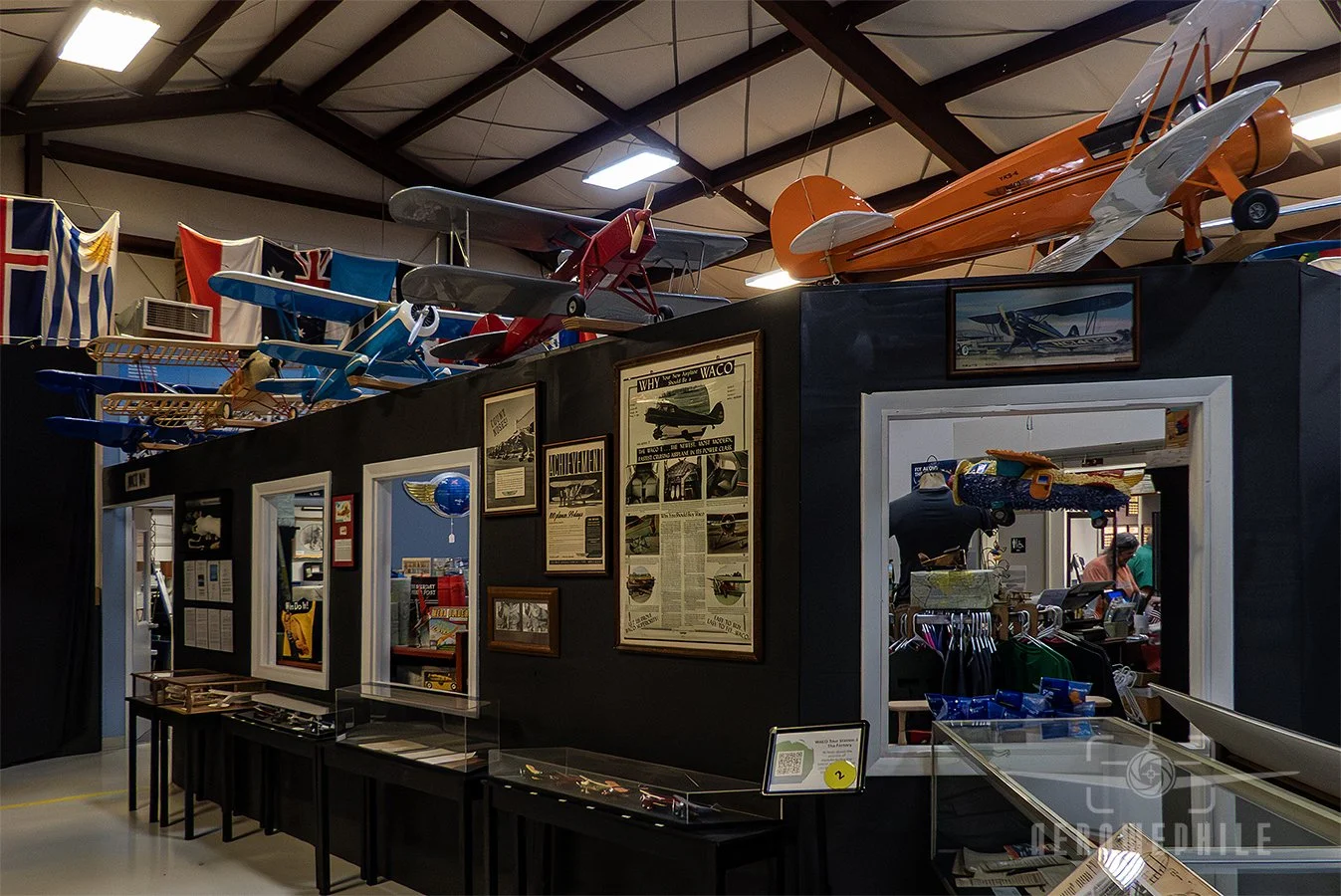
Some incredible WACO models on the top of the wall around the WACO souvenir store.
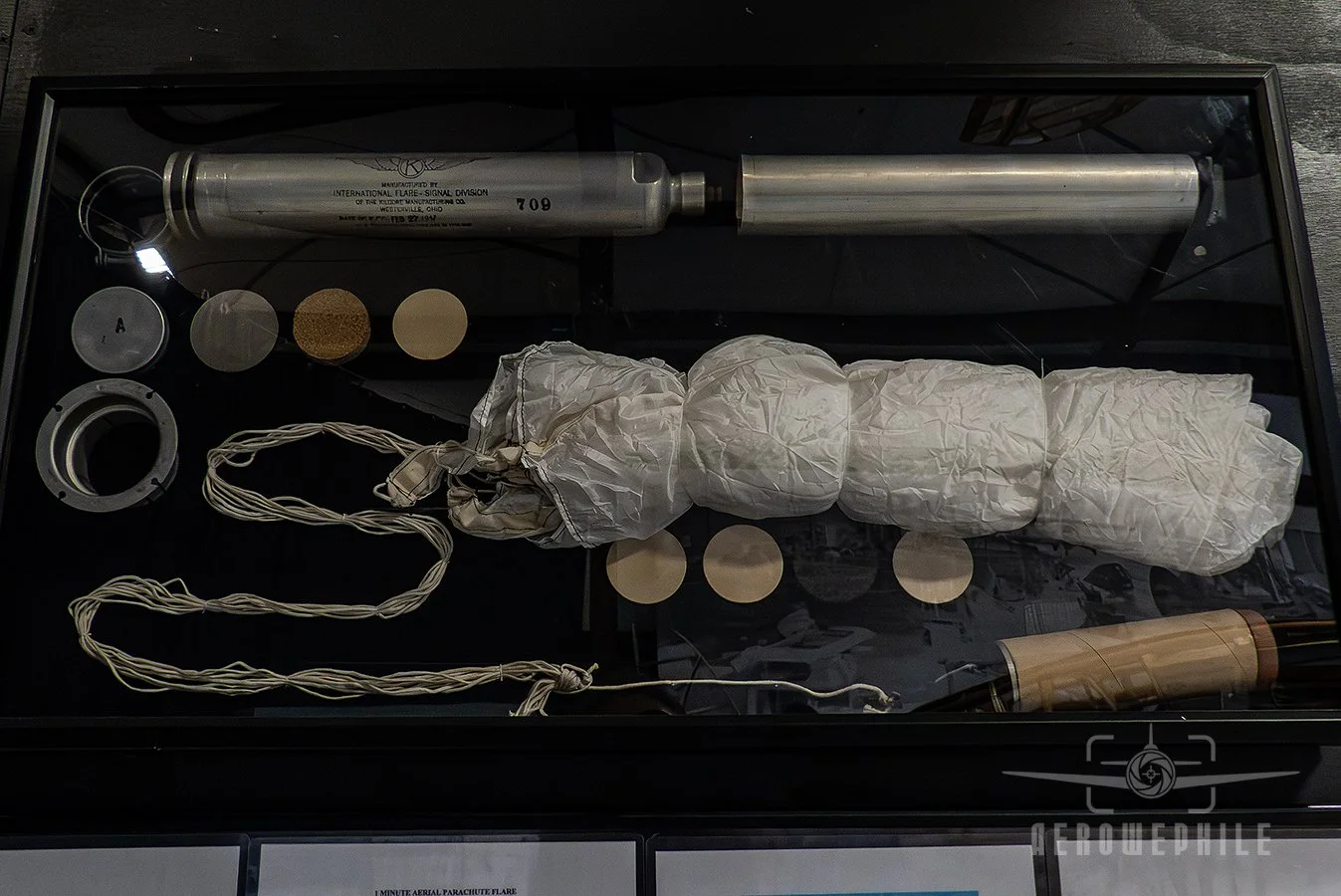
Disassembled Aerial Parachute Flare.
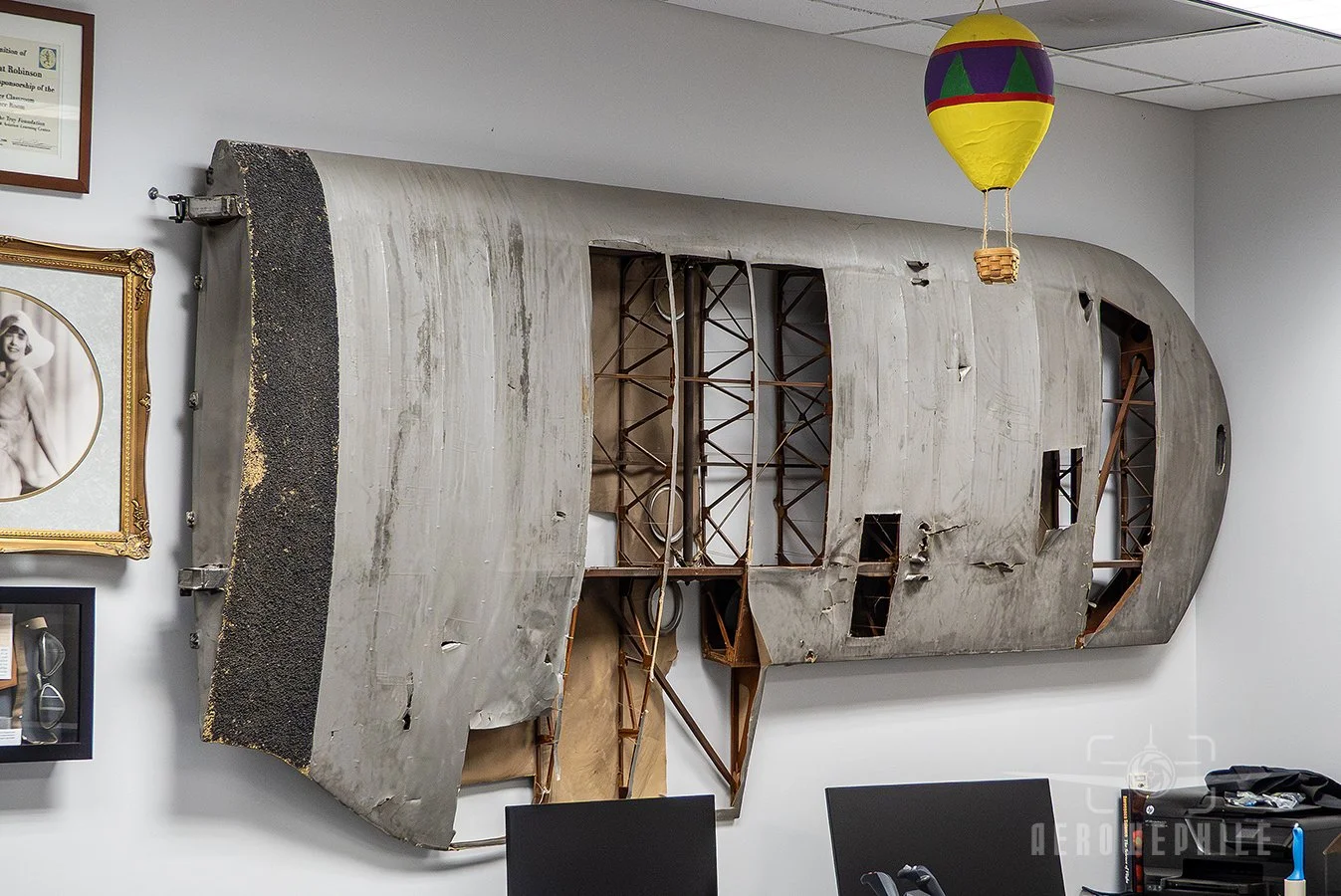
A WACO wing on display in one of the STEM activity rooms at the WACO Air Museum.
WACO Museum Building #2 - The Willis Wing
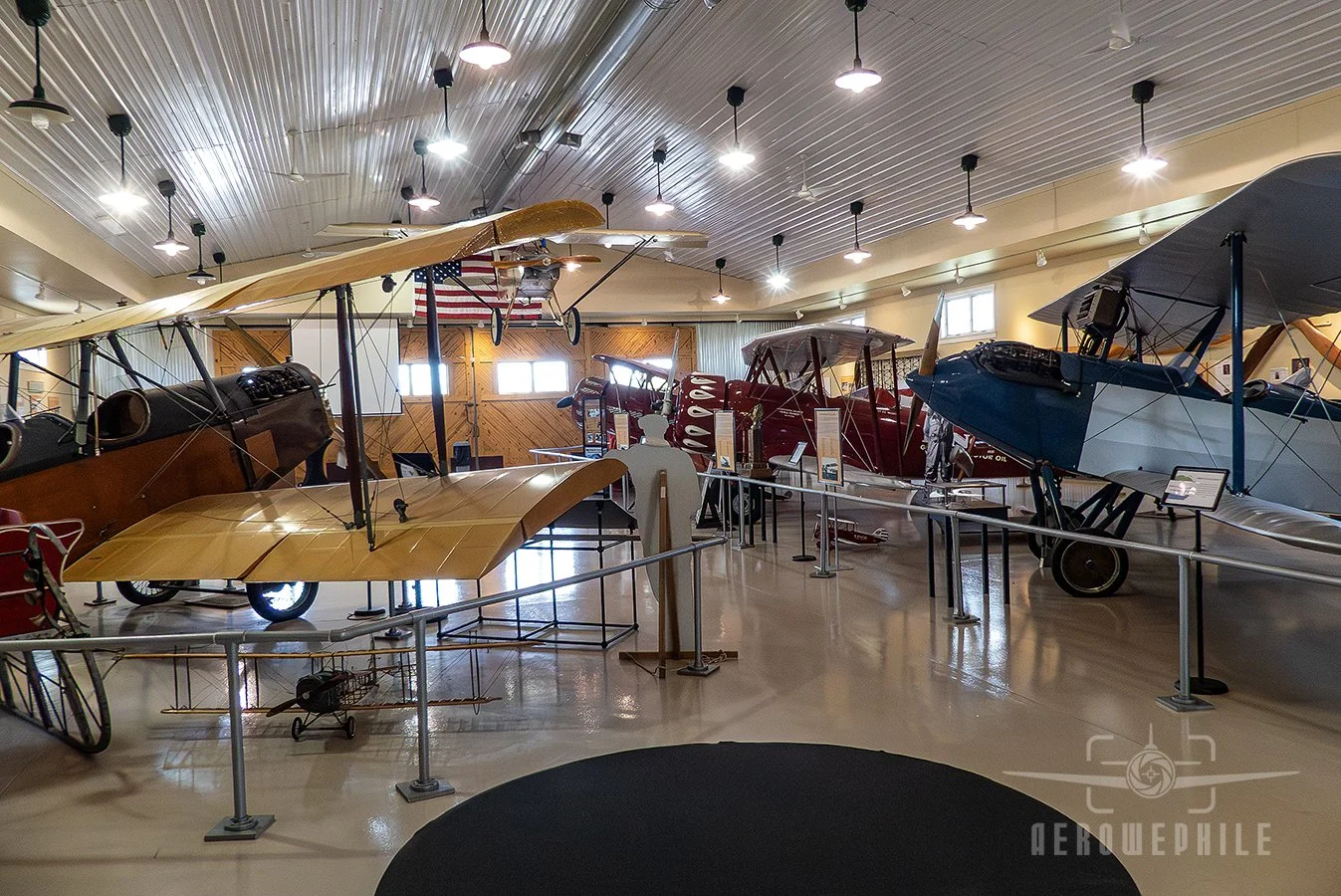
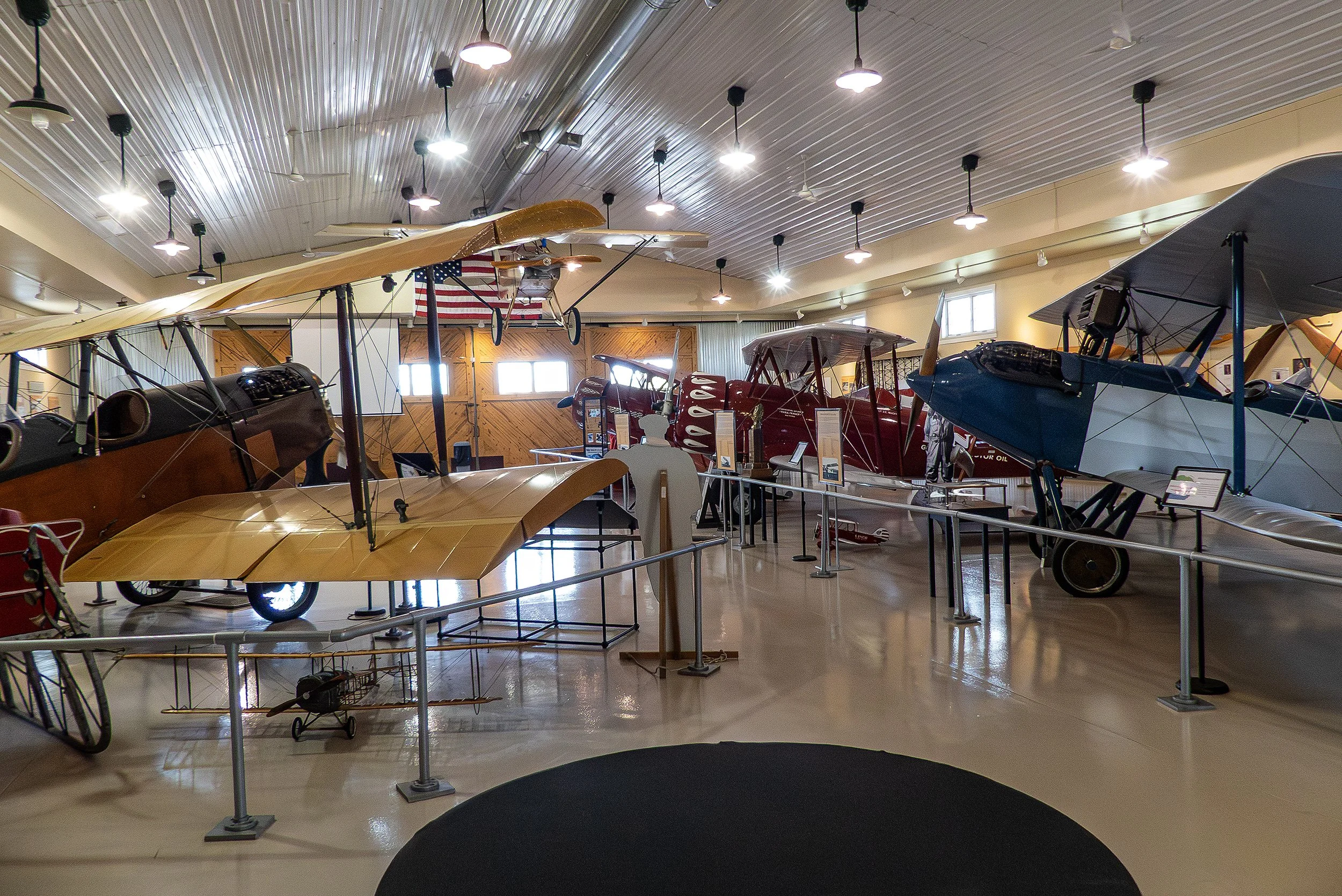
View of the Willis Wing interior with all the WACOs on display.
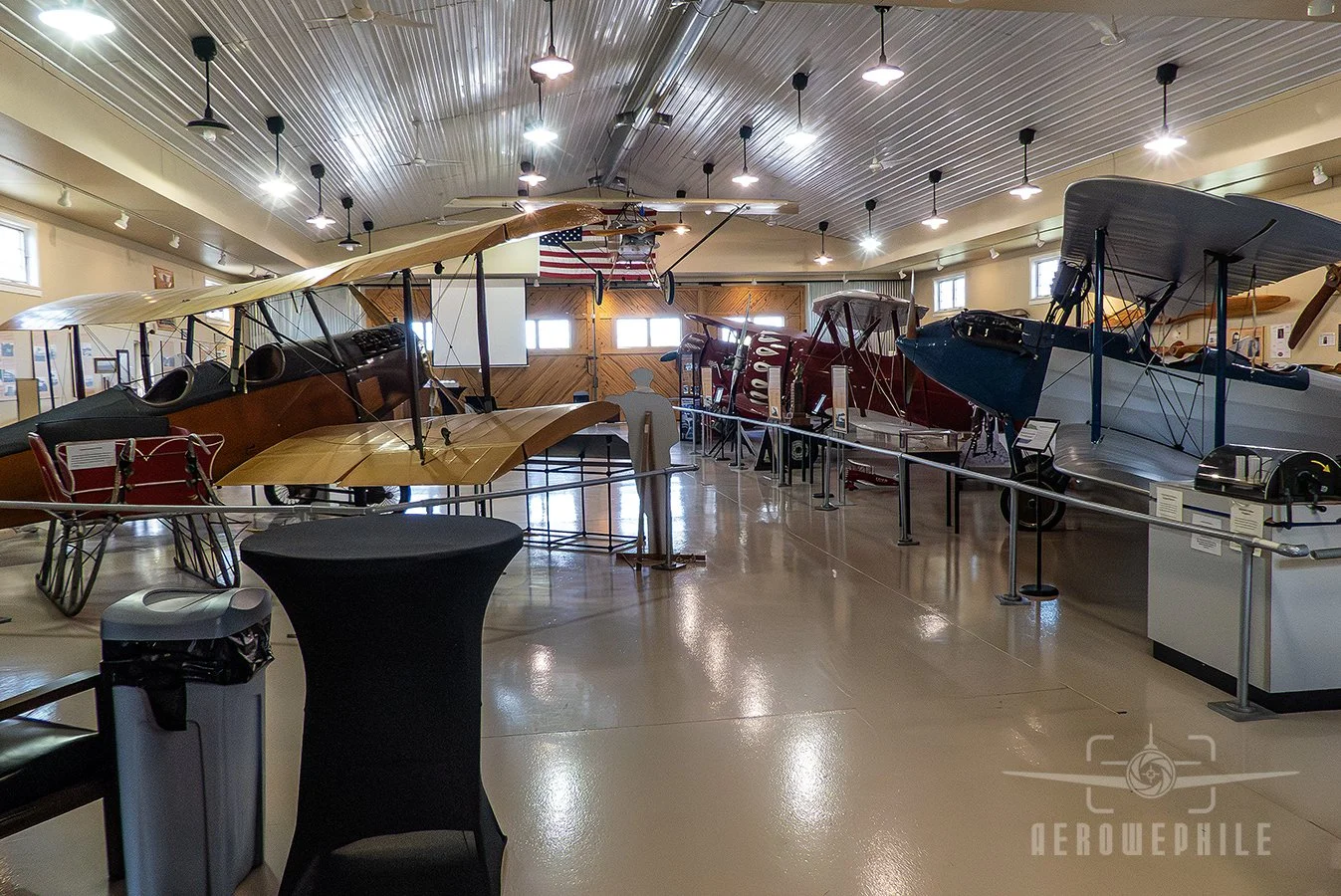
Willis Wing interior.
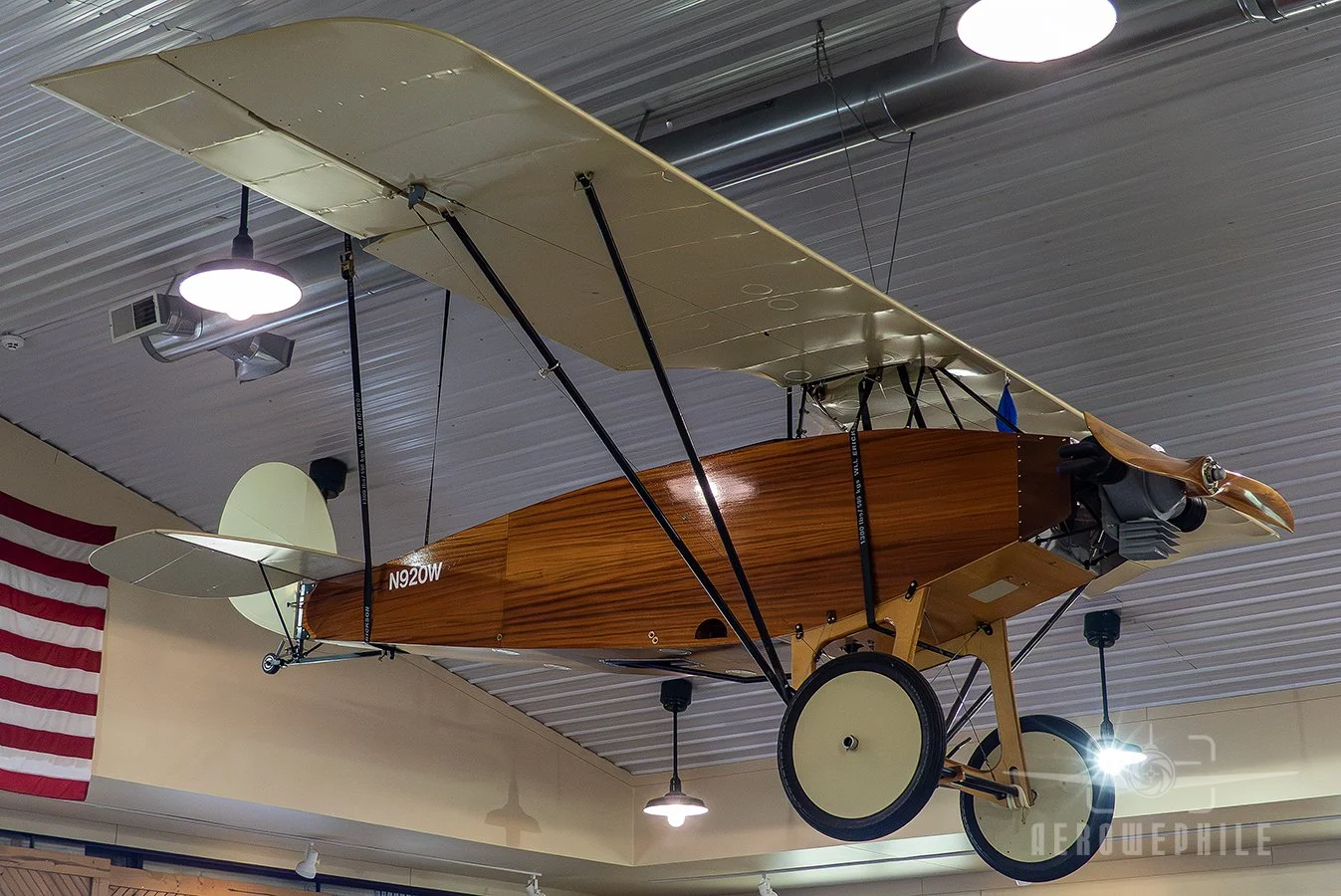
The WACO Cootie replica hanging from the ceiling.
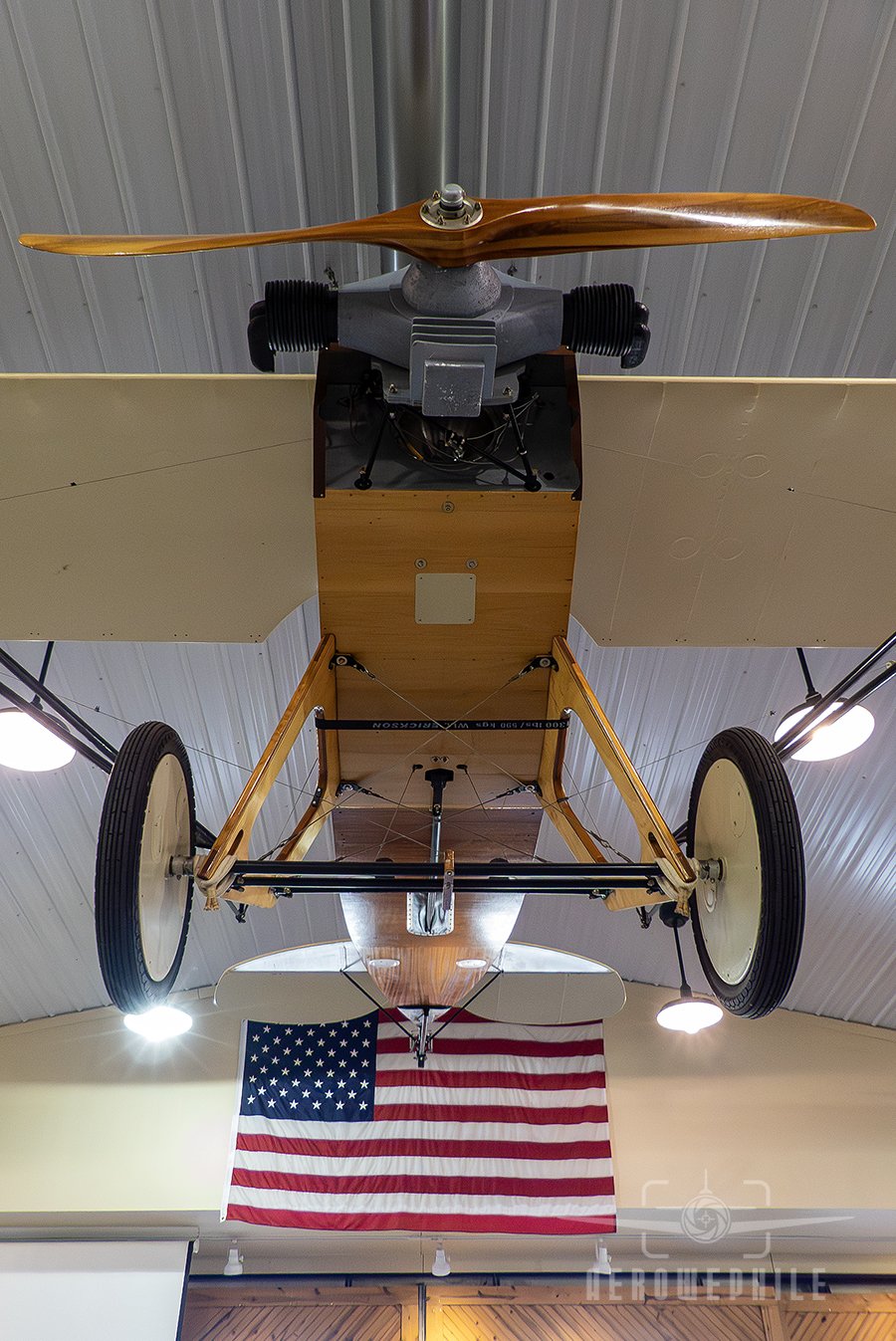
Brian Meyer designed, constructed, and flew the full-size WACO Cootie replica that now hangs in the WACO Air Museum.
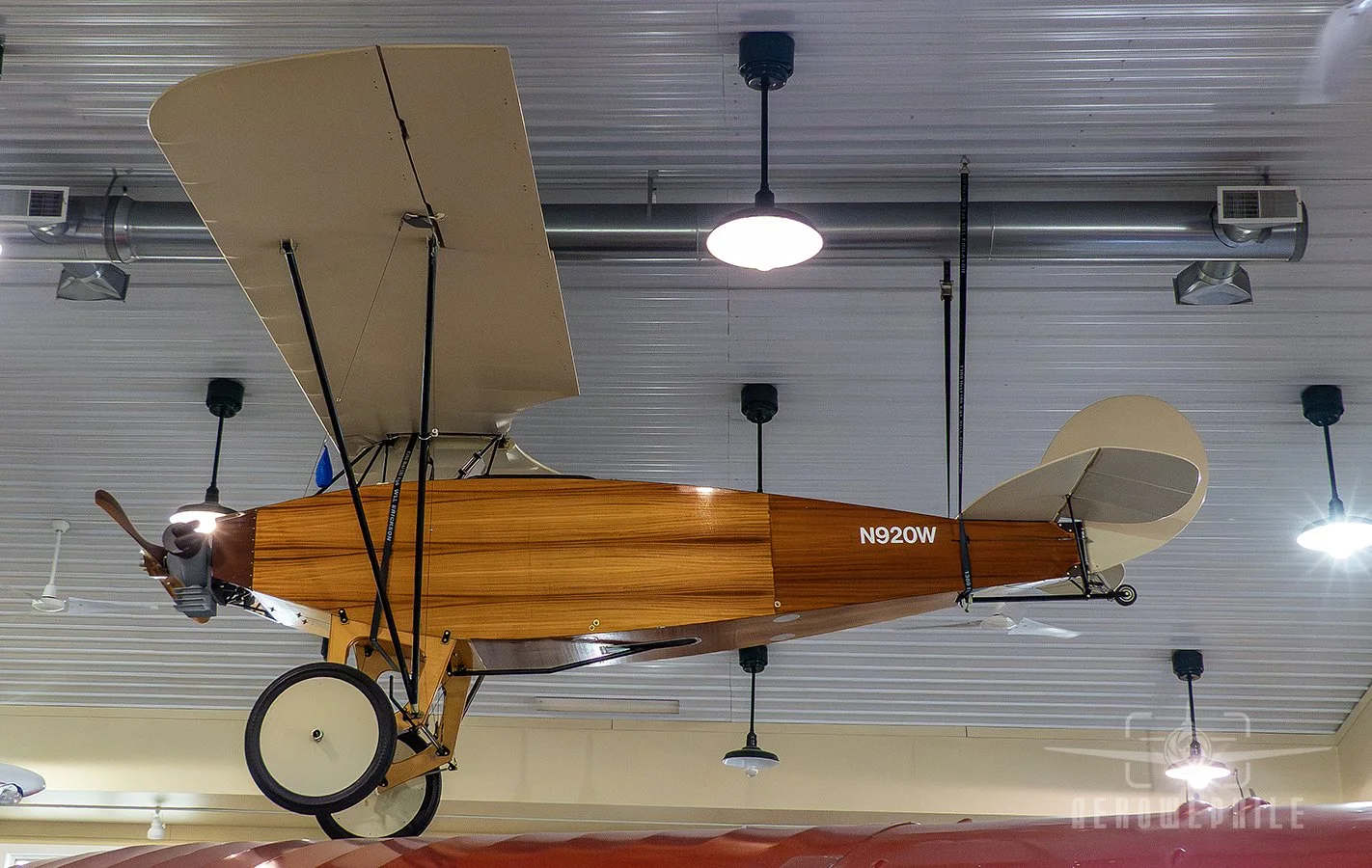
WACO Cootie, that is the name and it isn’t a biplane.
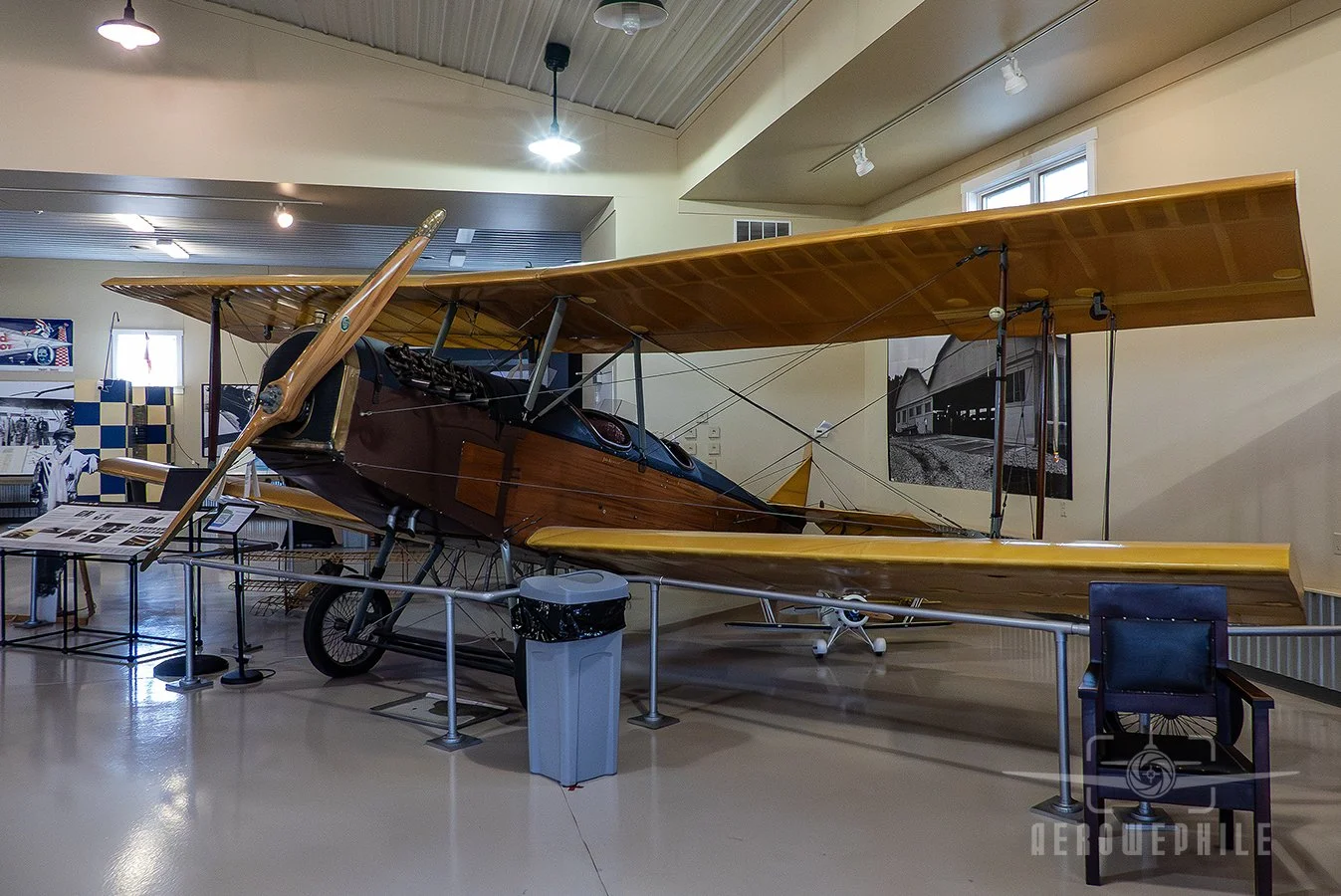
1921 WACO Model 4.
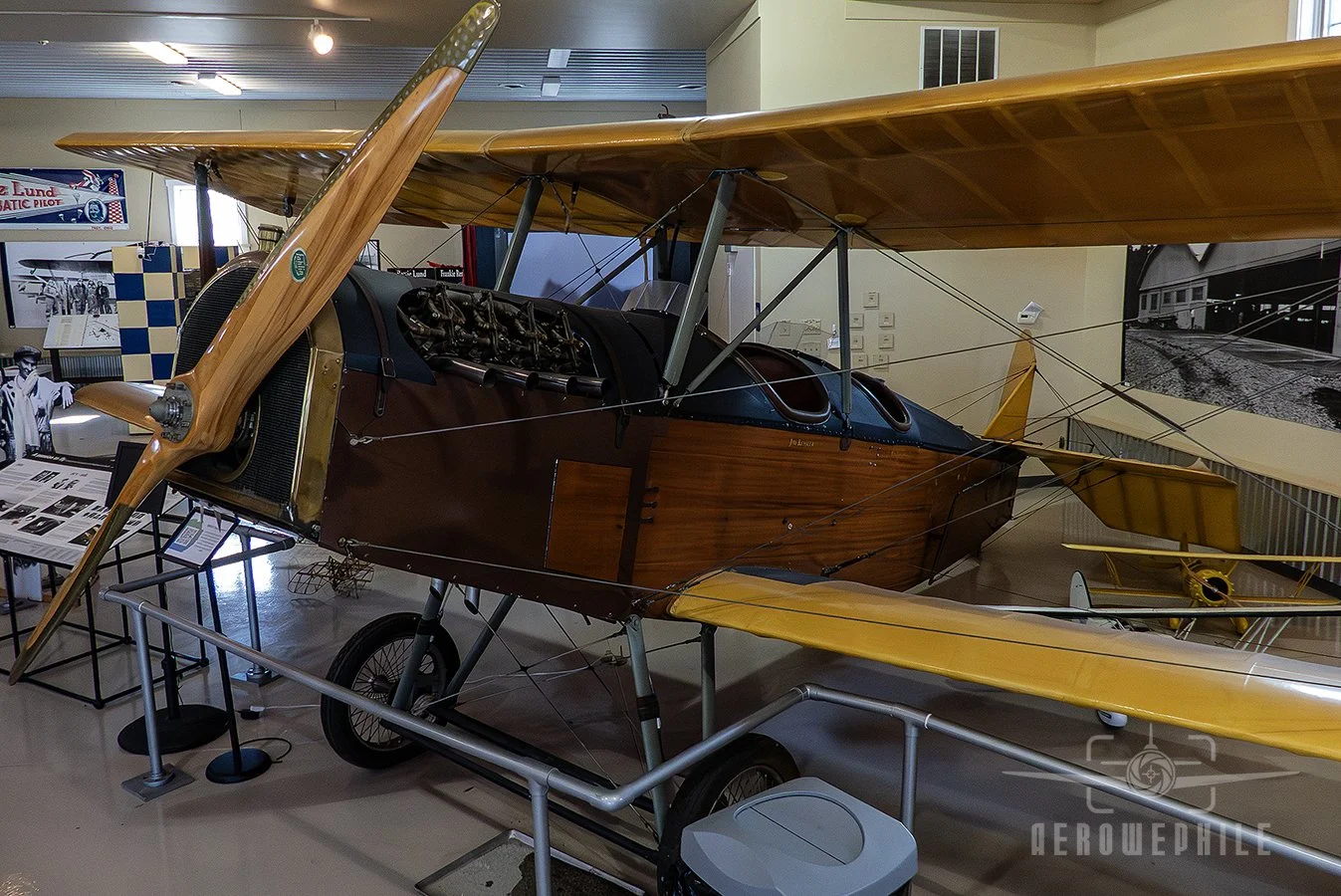
The WACO Model 4 was the first multi-passenger aircraft designed by the Weaver Aircraft Company.
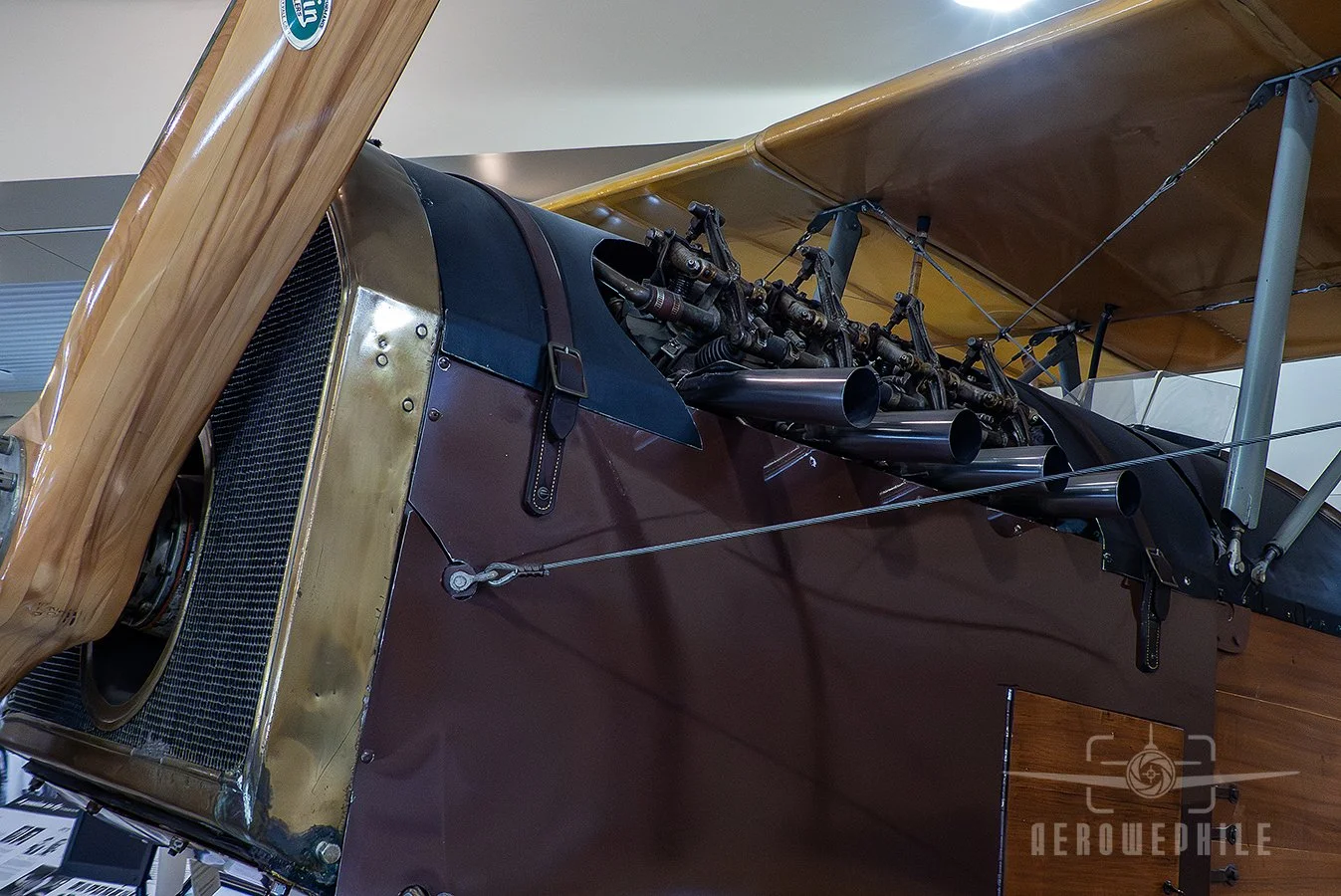
The WACO 4 was powered by a Curtiss OX-5 engine of 90hp.
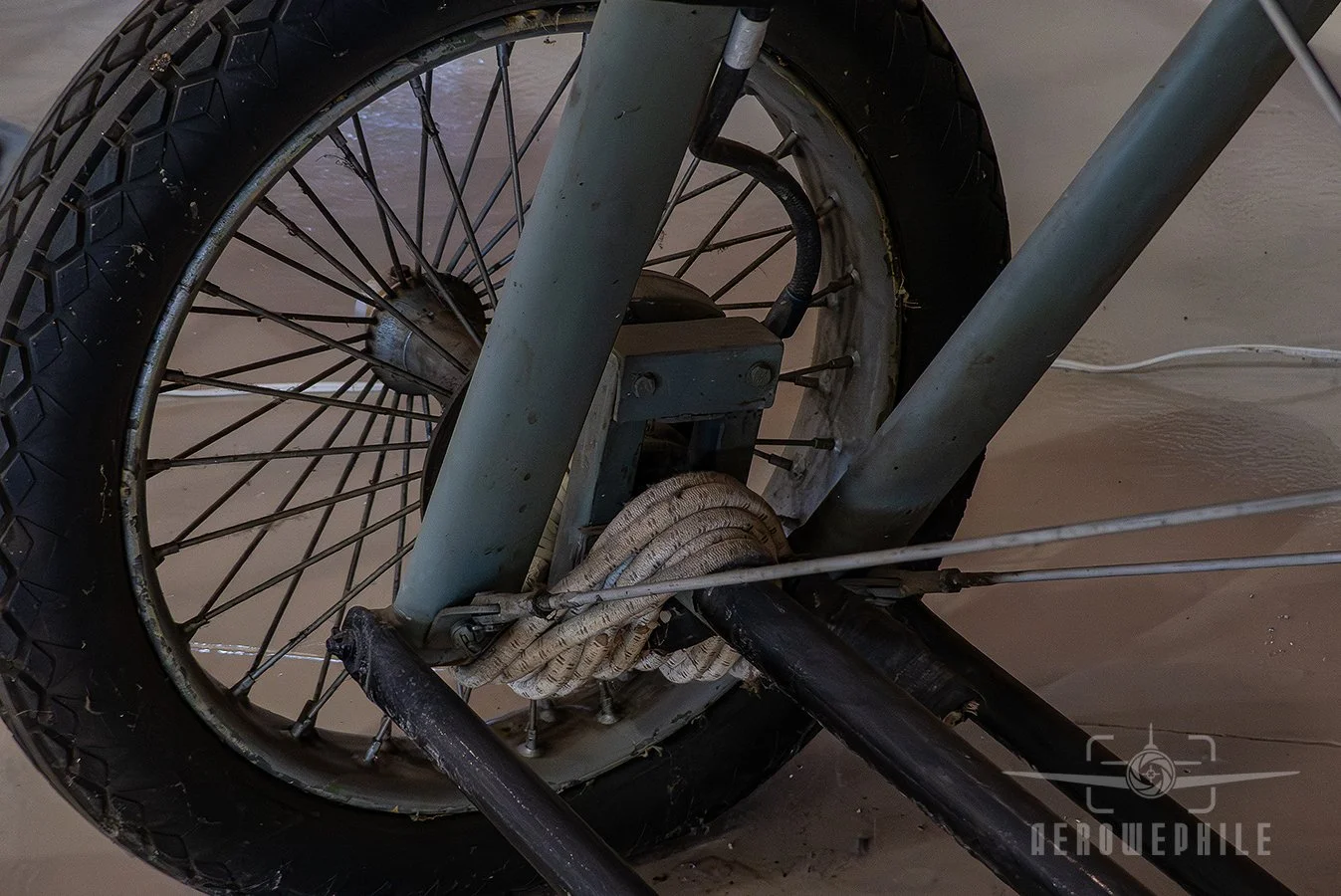
Landing gear arrangement on the WACO Model 4.
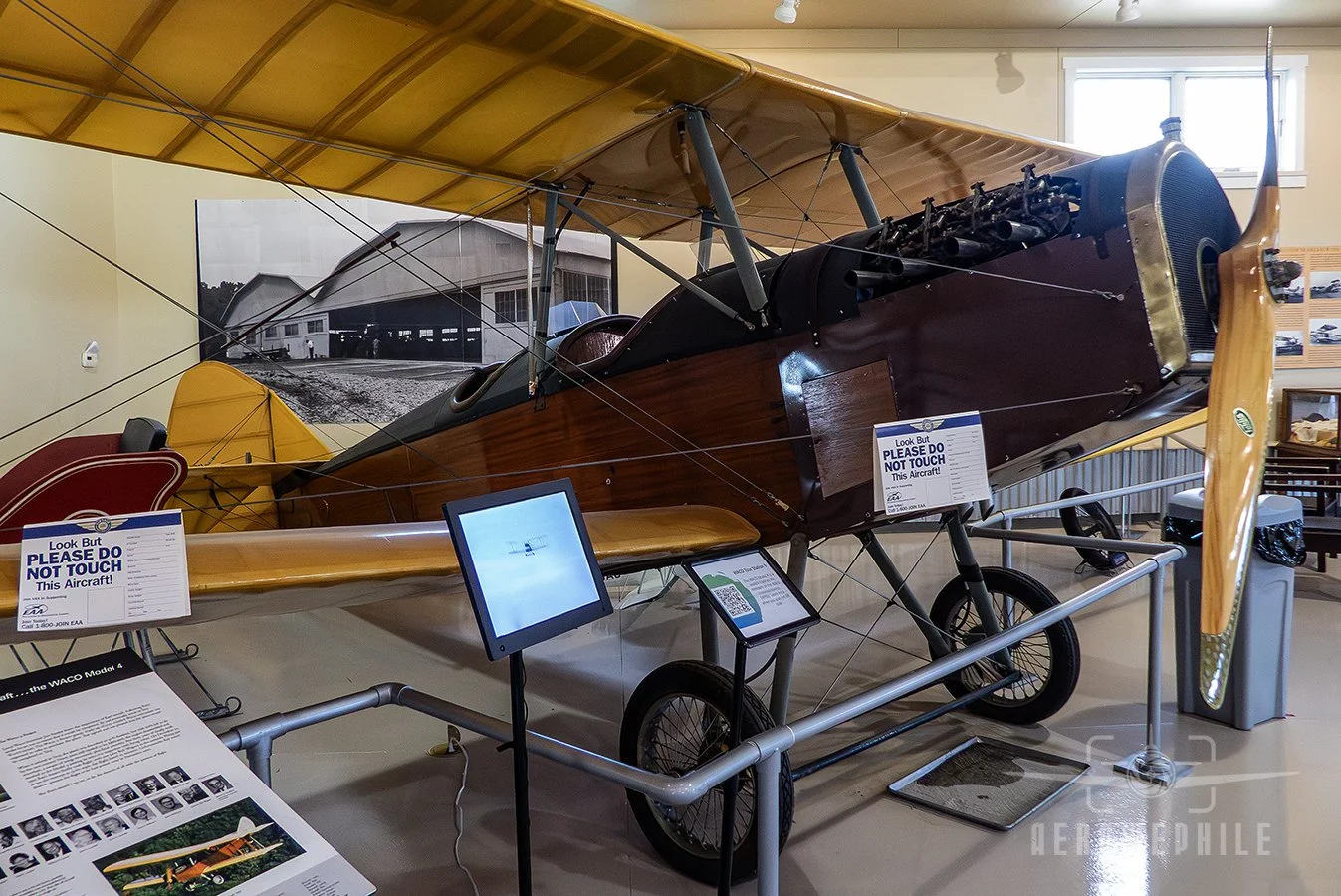
The WACO Model 4 was built to seat 4, the pilot in the rear cockpit and three passengers in the front in a cloverleaf configuration.
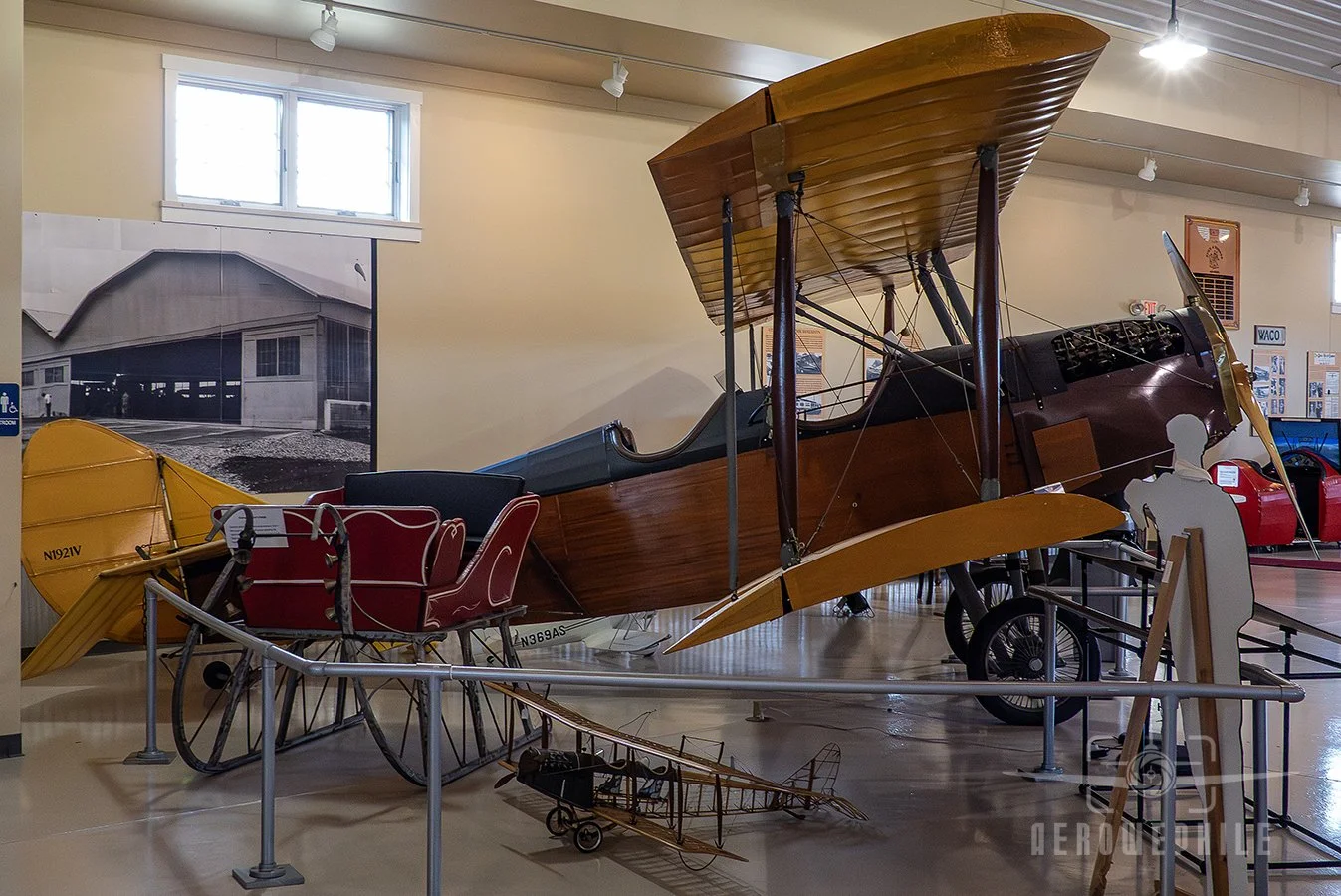
This WACO Model 4 is a replica originally started by Ray Vaughn of Bowling Green, OH. Ray helped build the original WACO 4 in 1921 and from memory and a few existing photographs began this replica.
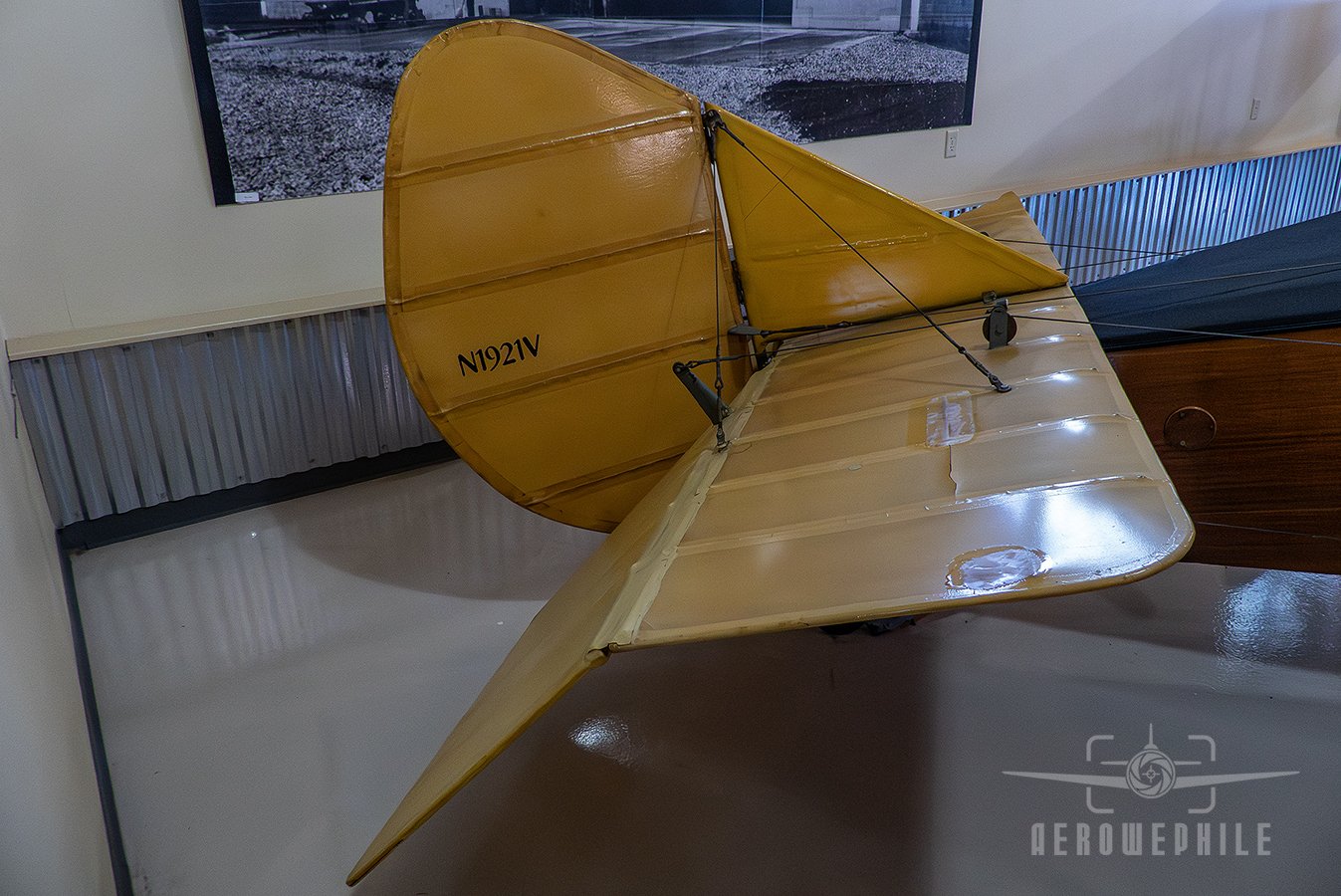
The WACO Model 4 was know for its ability to get off the ground quick and the ability to carry a load.
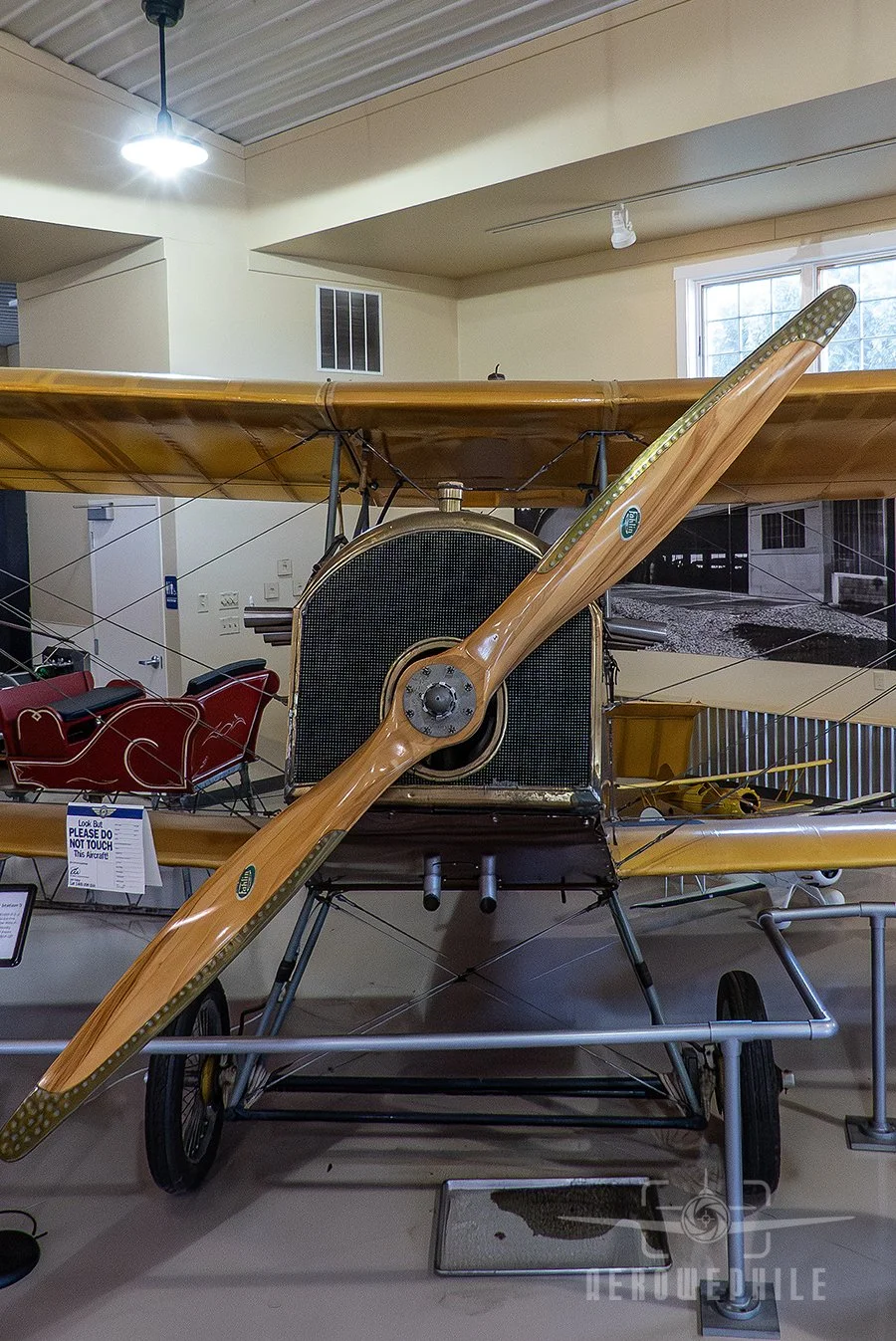
The WACO Model 4 did not enjoy much success and only one was built.
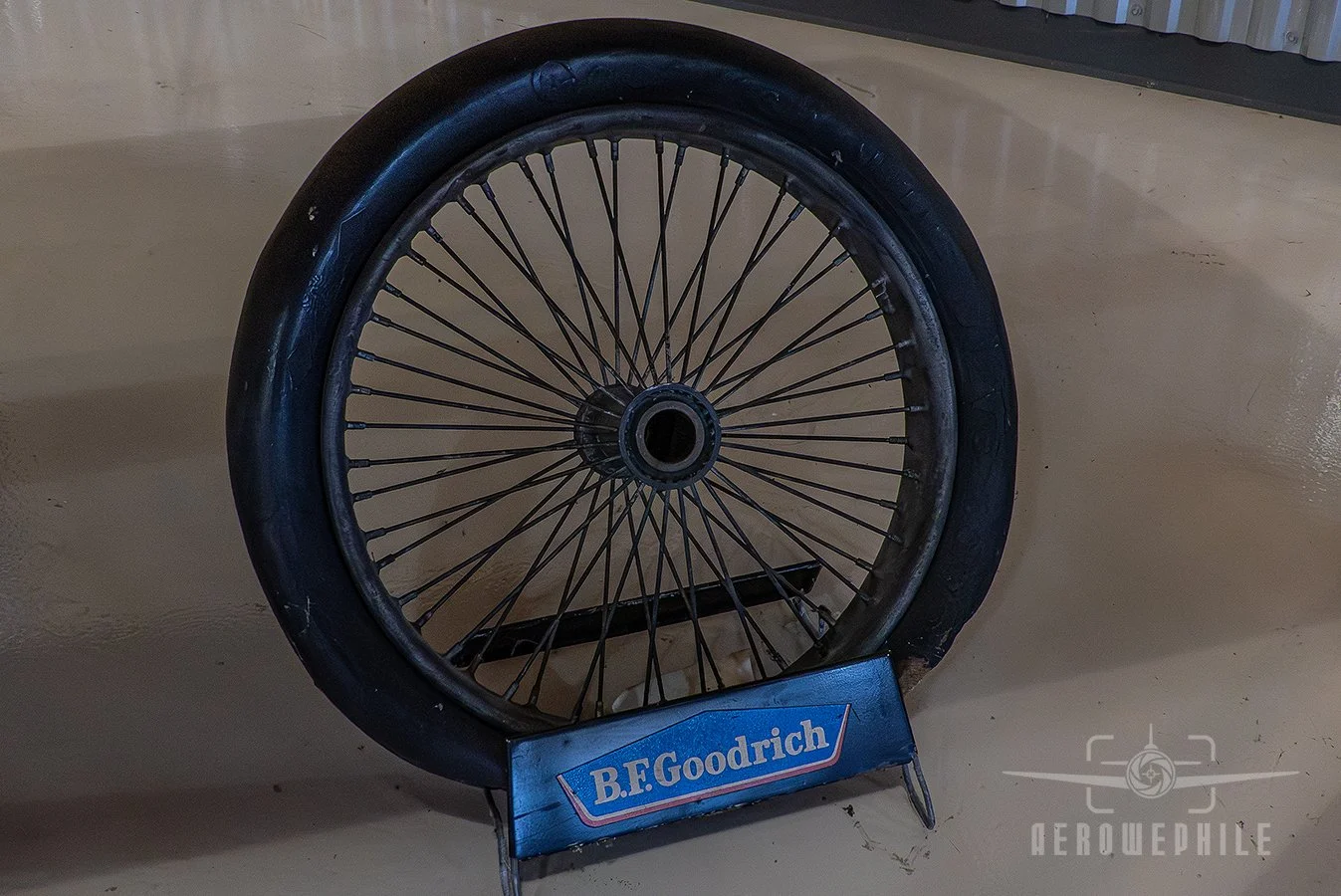
B.F. Goodrich tire on a spoke wheel.
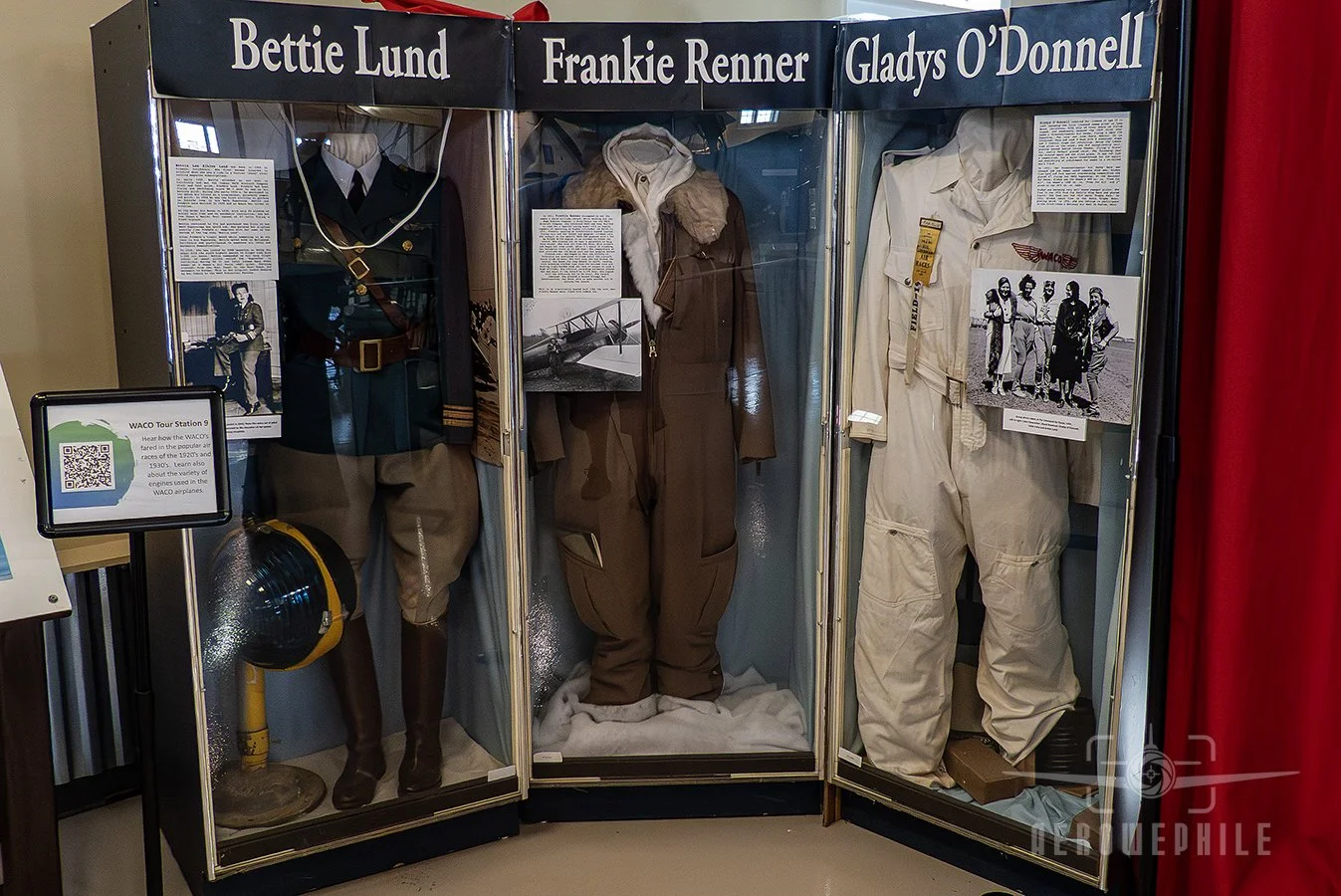
Flight Suits from three famous female aviators from the early years of aviation.
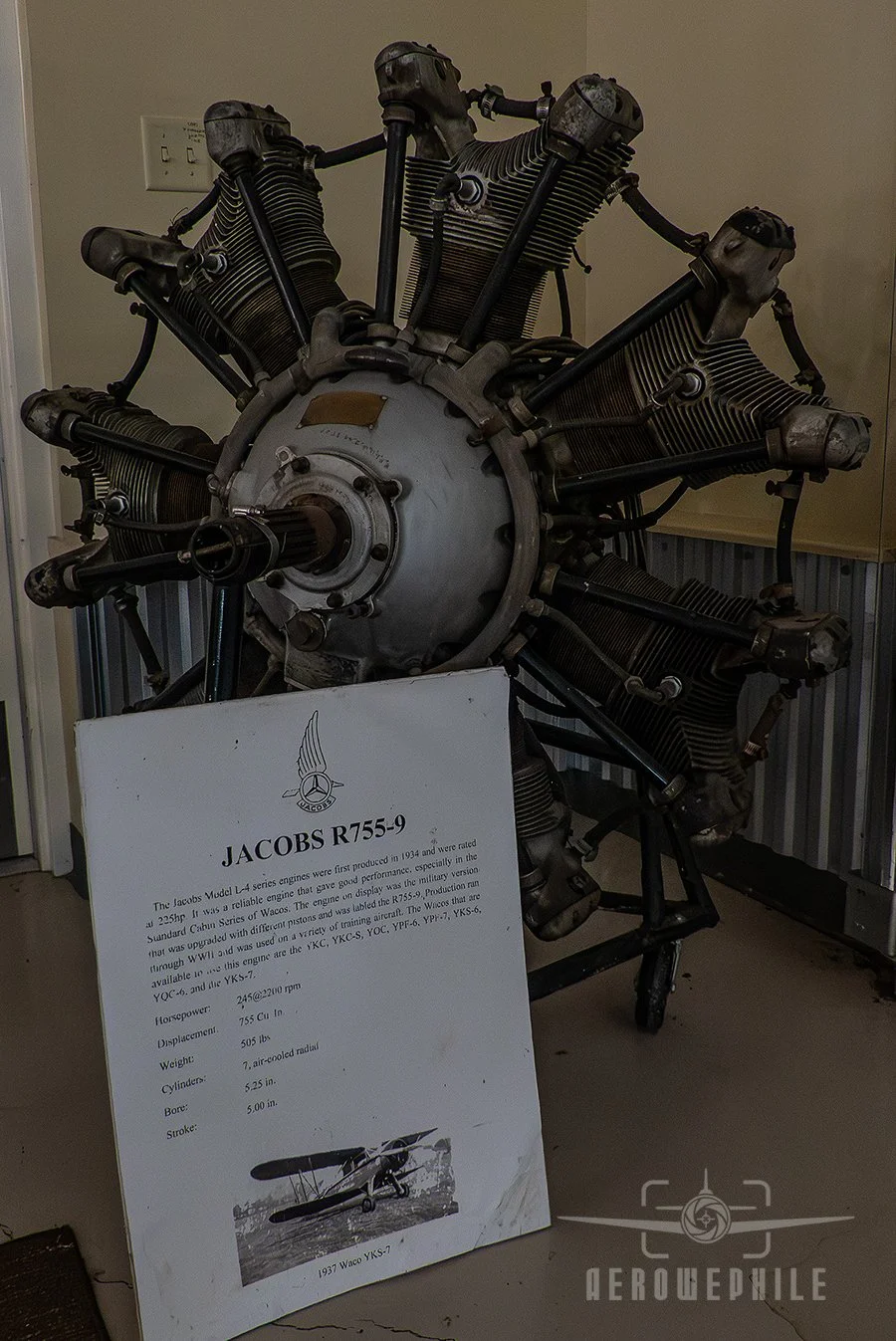
Jacobs R755-9 engine. Rated at 225hp. Used in the Standard Cabin Series of WACO aircraft.
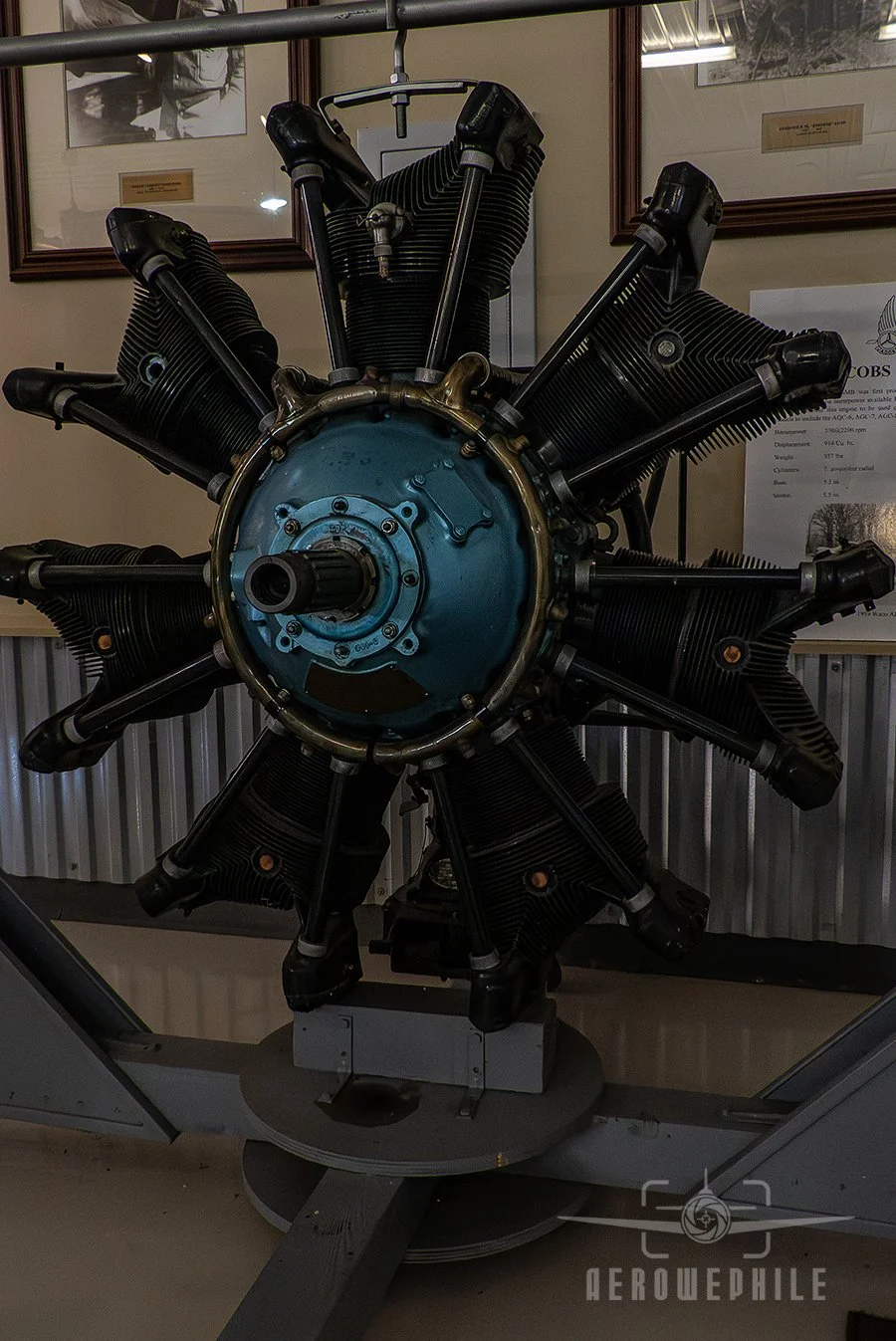
Jacobs L-6MB engine. Rated at 330hp. Used on Custom Cabin WACO models.
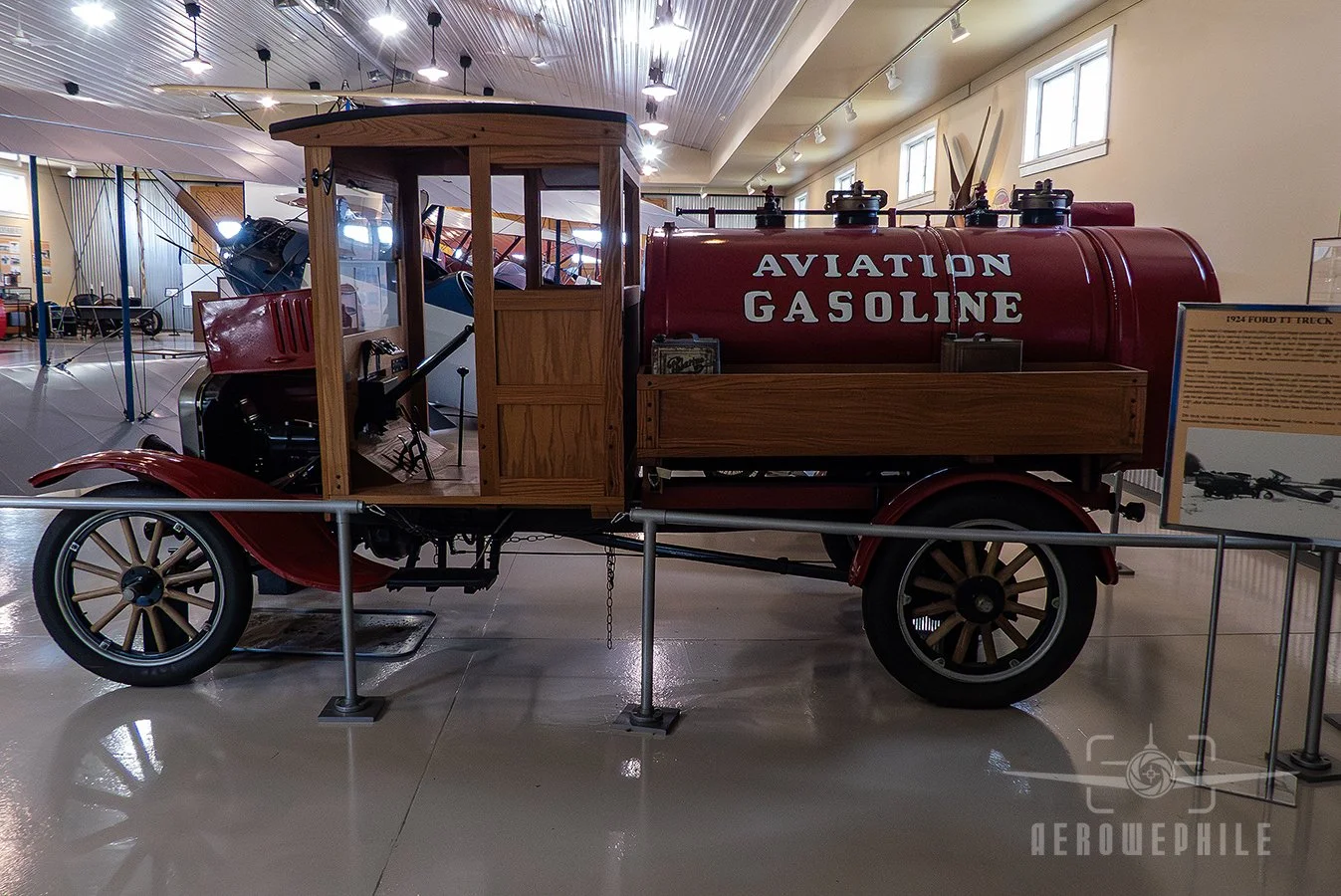
A restored gas truck similar to what was used at airports in the early days of aviation.
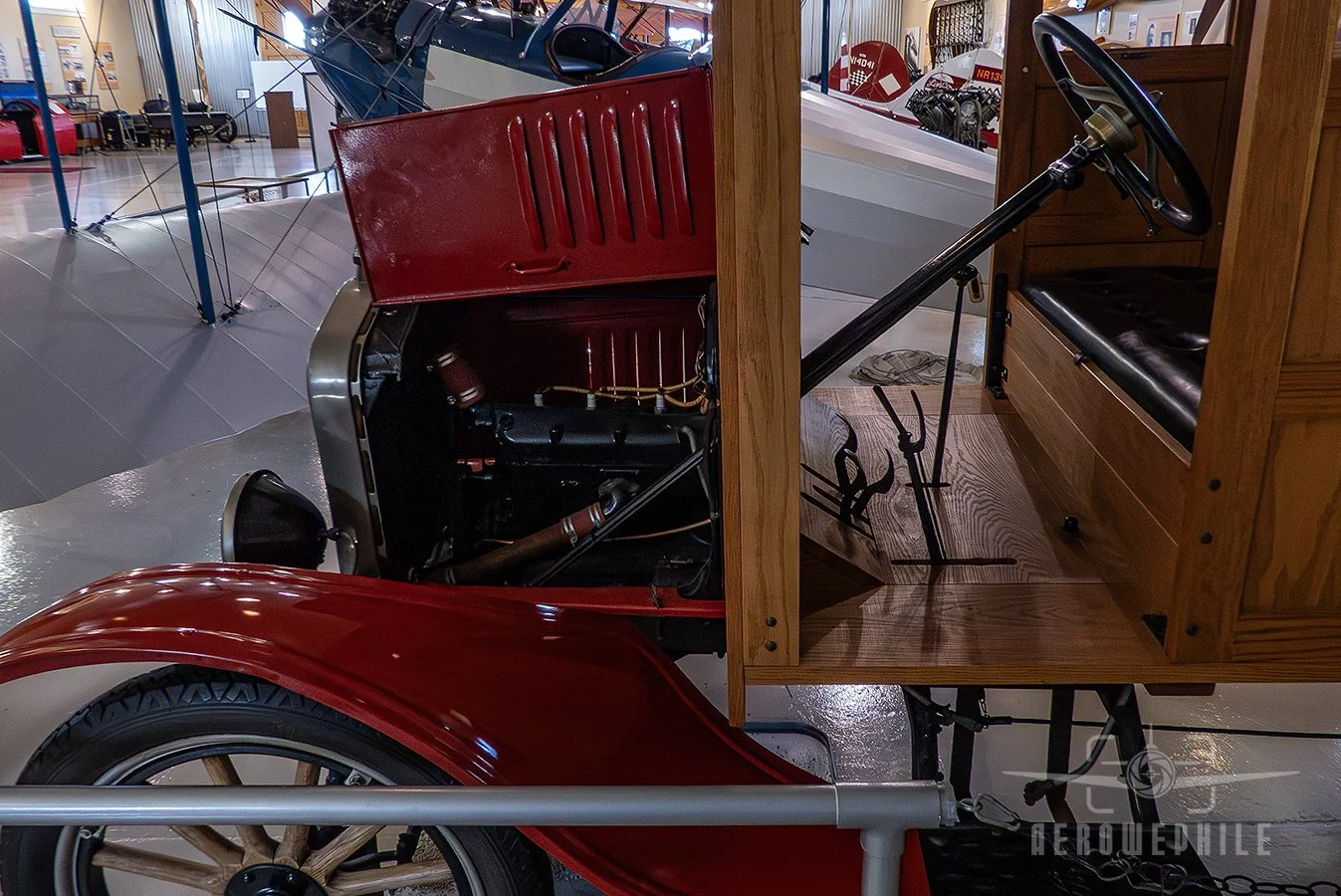
Restored gas truck with open hood and views of the engine and steering wheel column.
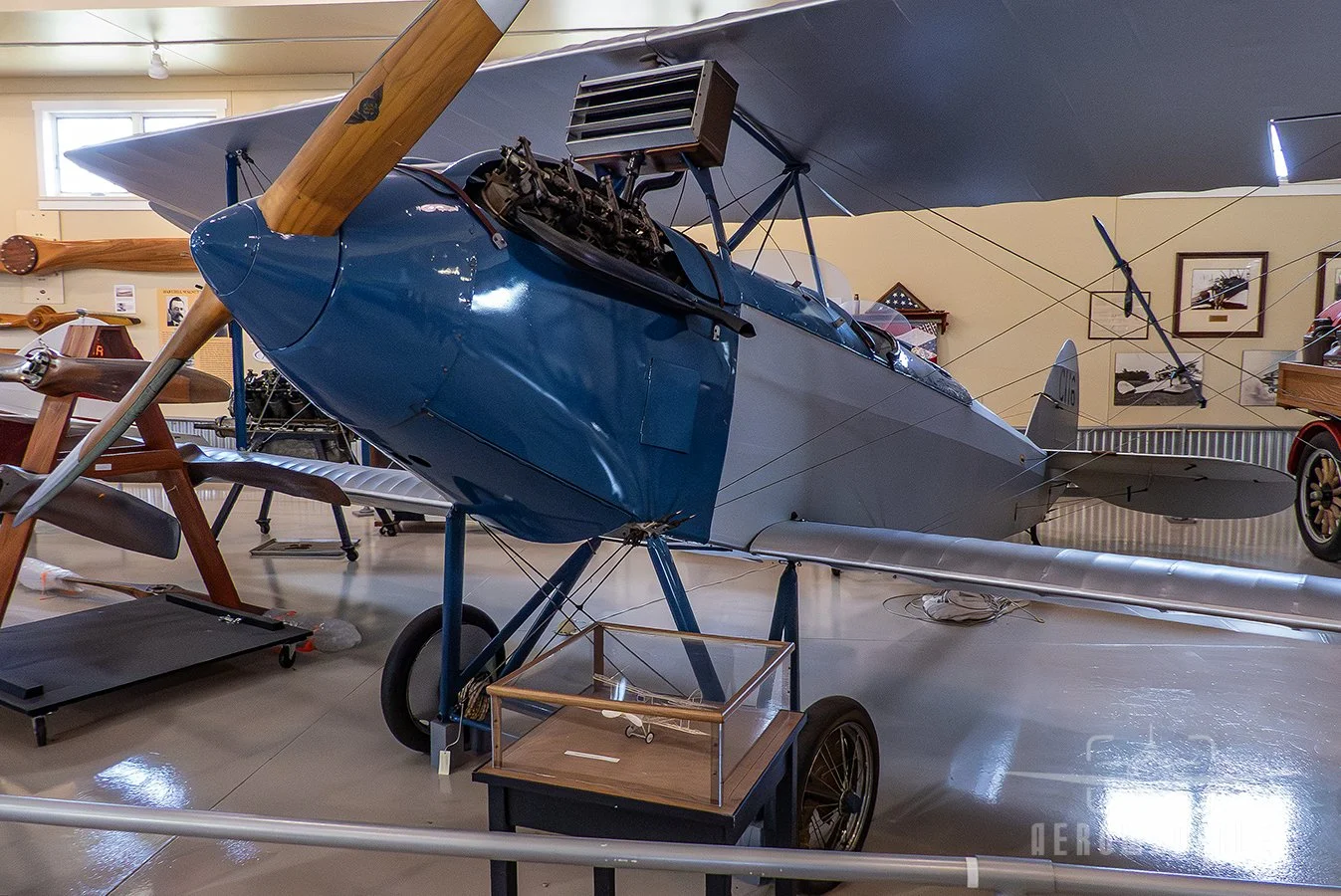
1926 WACO Model 9
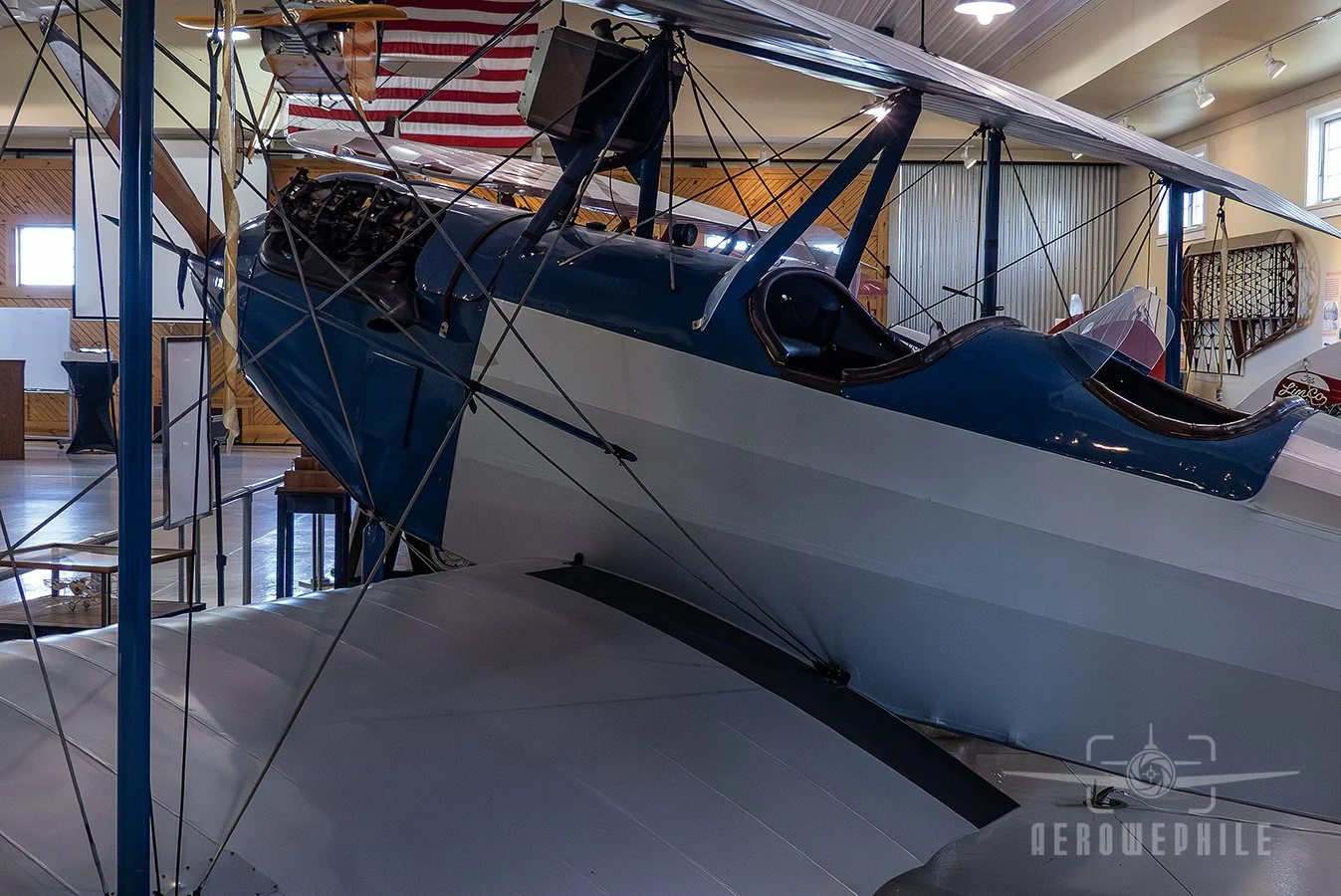
The WACO Model 9 was the first WACO mass produced and over 250 were sold from 1925-1927.
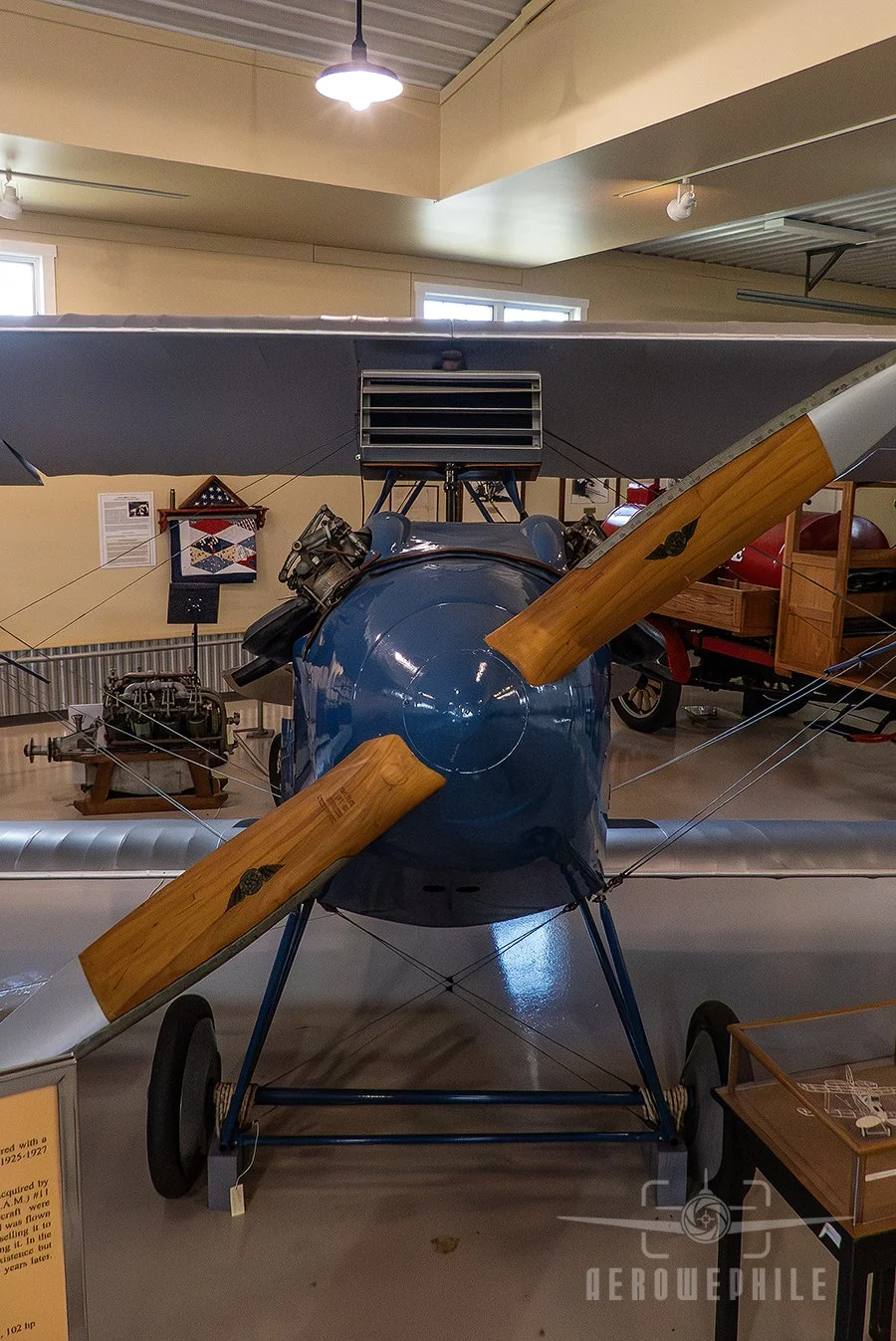
This is one of six WACO Model 9's acquired by Clifford Ball of McKeesport, Pennsylvania for Contract Air Mail services.
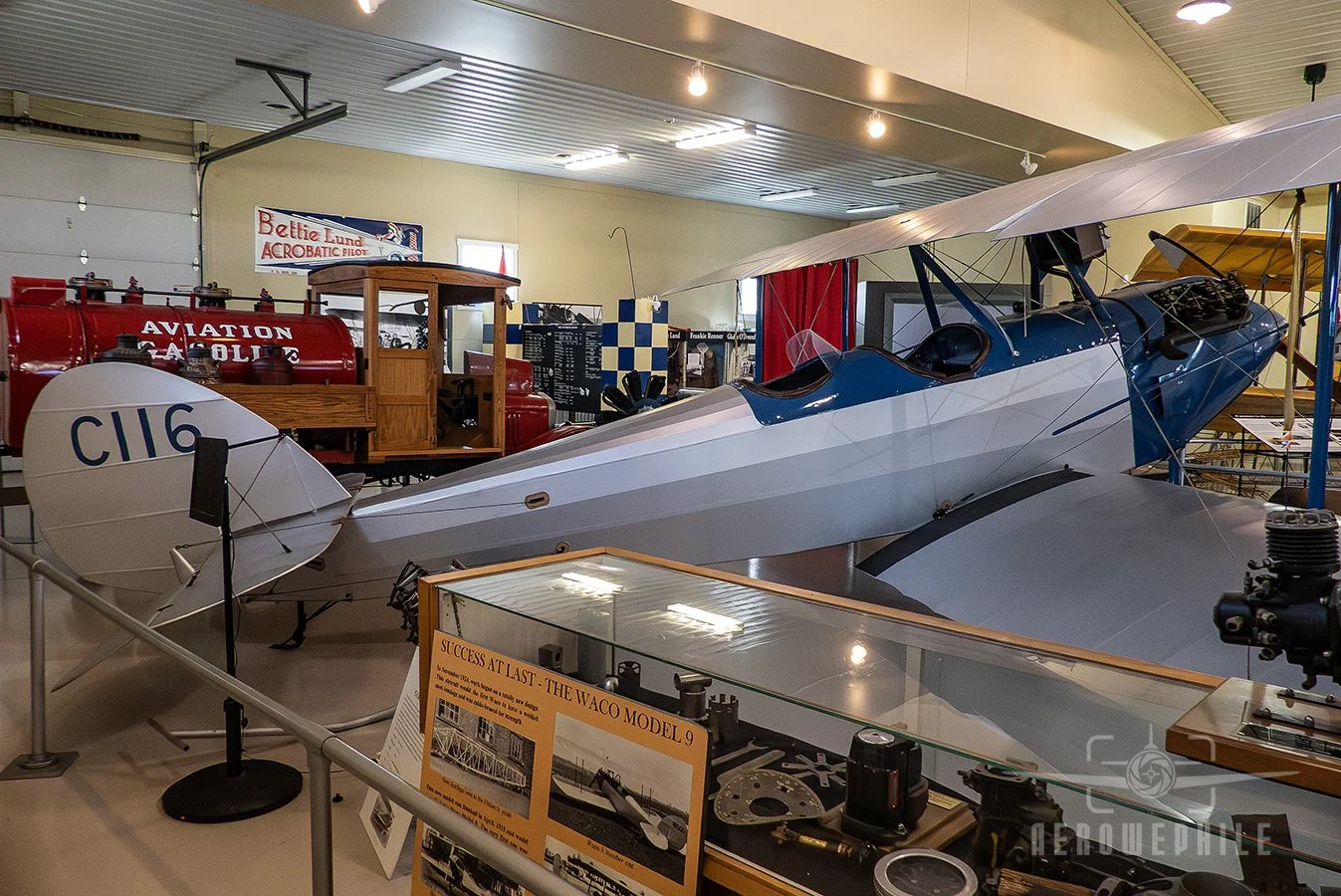
All six WACO Model 9's were named after the cities they serviced. This Model 9 is called "Miss McKeesport" and was flown by Merle Moltrup.
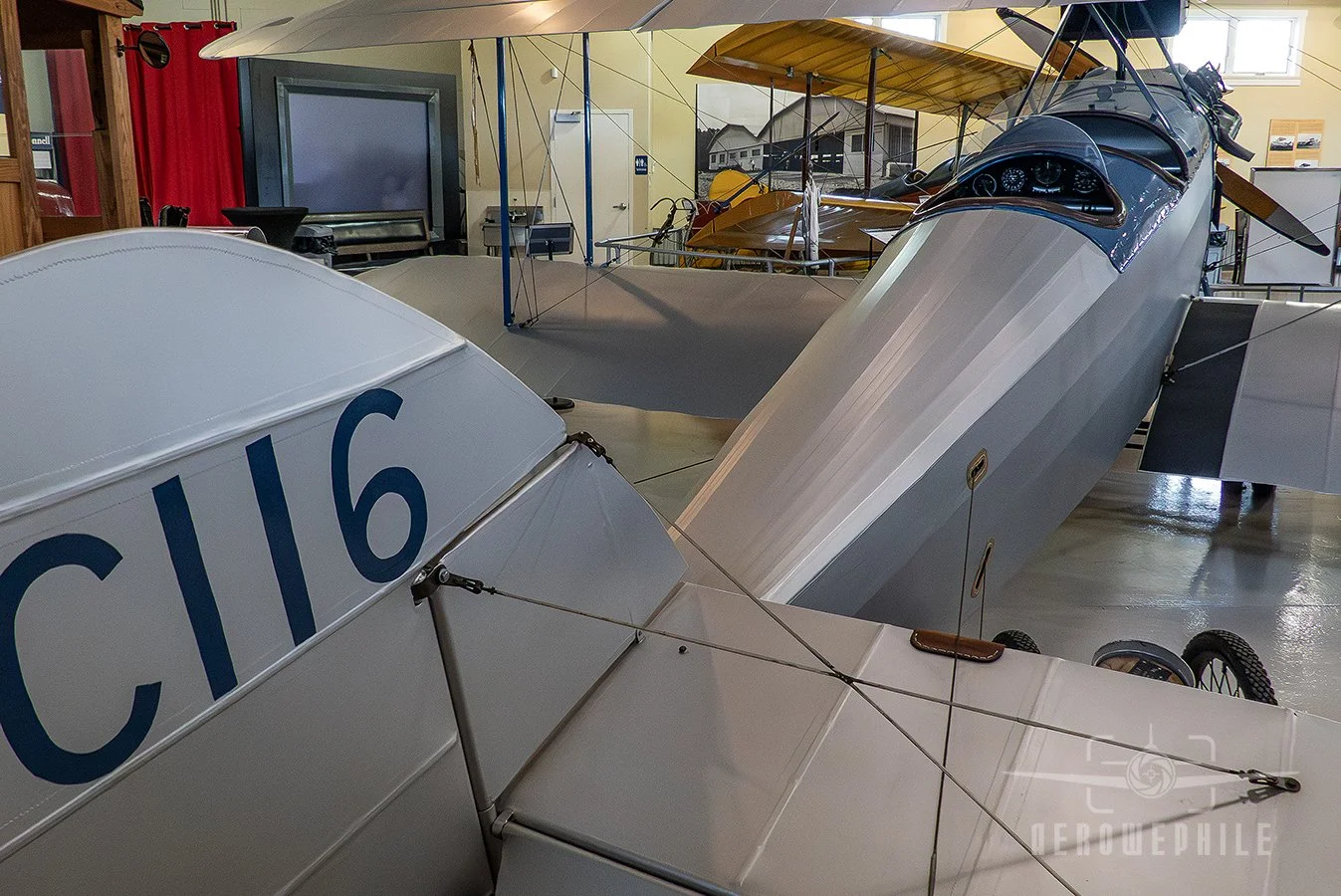
The WACO Model 9 was sold to Foster Lane of Columbus, OH in 1928. He later sold the aircraft and lost track of it.
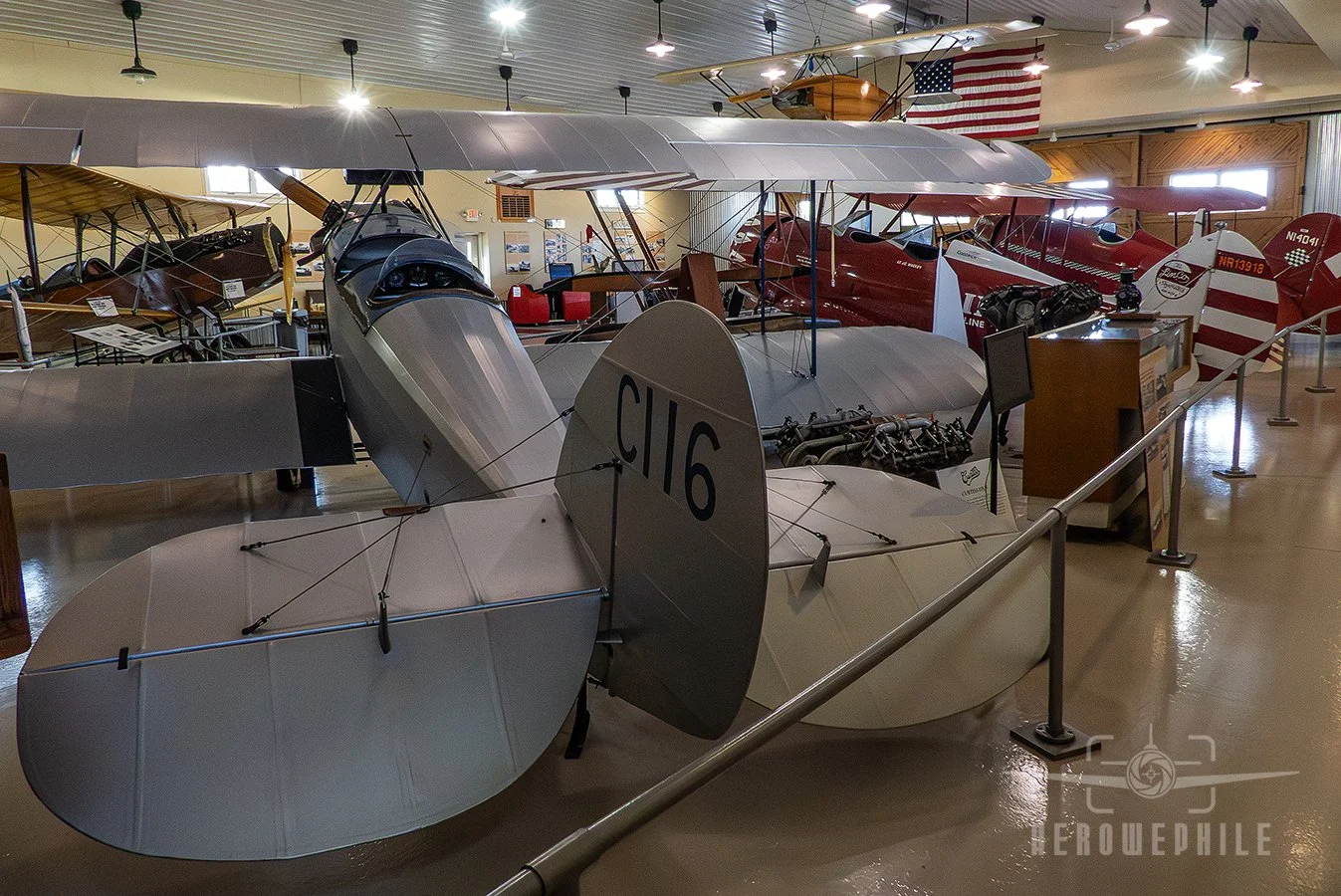
In the early 1980's, Foster Lane searched for and found the WACO Model 9 in need of a complete restoration. Mr. Lane acquired the aircraft in 1984 and restoration was completed two years later.
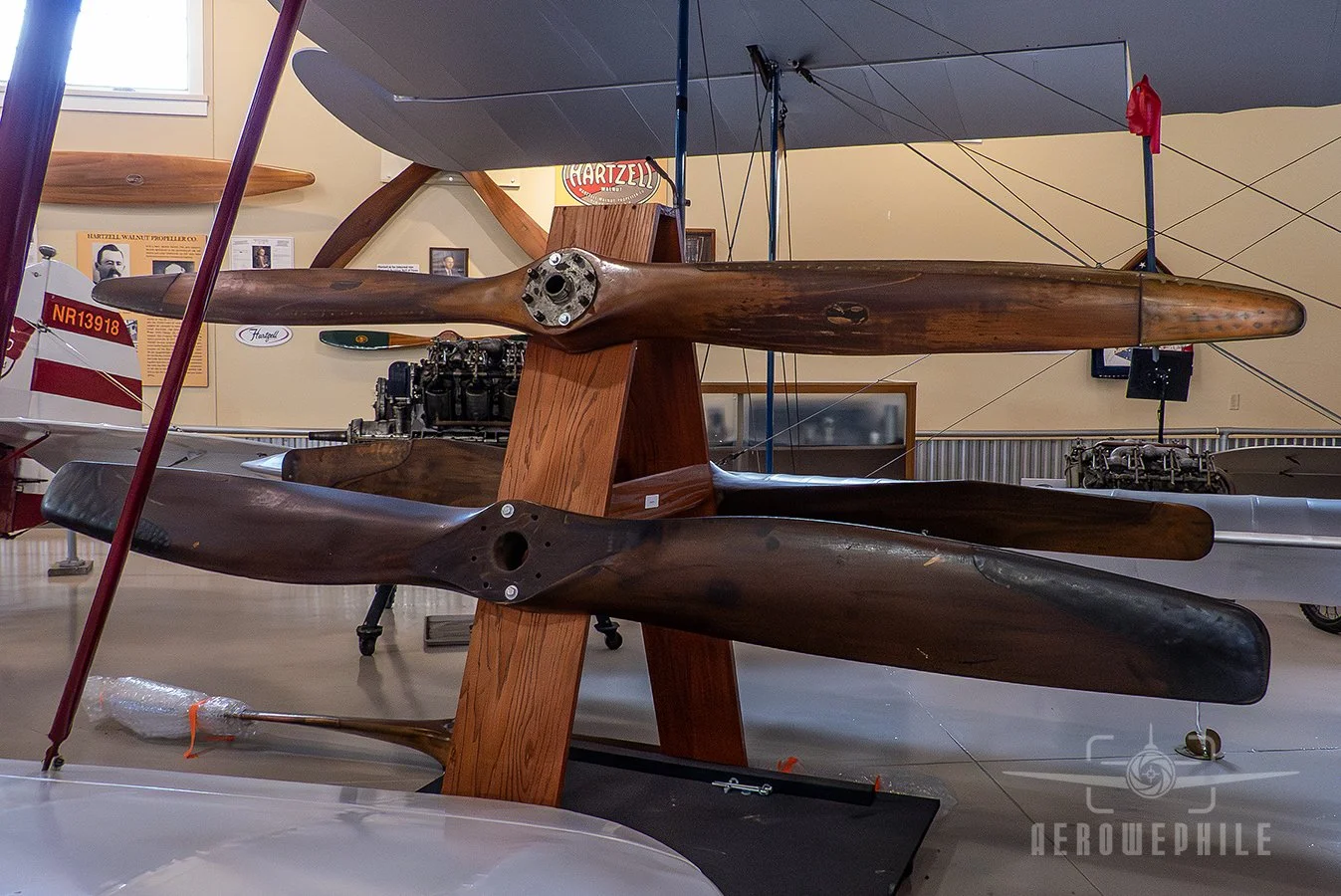
Wooden propellors on display.
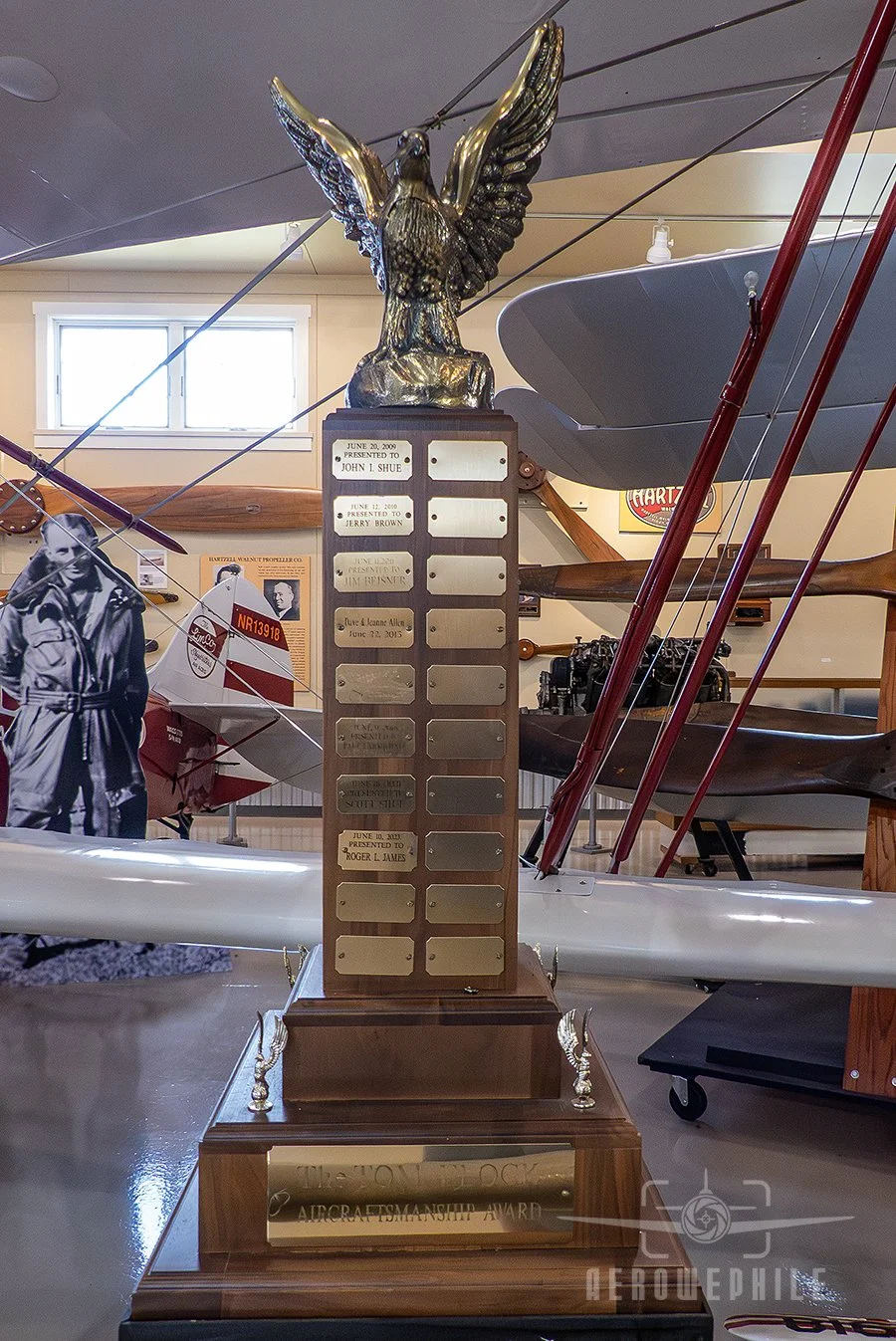
The Tom Flock Award is given to individuals who have demonstrated excellence in aircraft restorations. It is named for and in honor of Tom Flock of Indiana who set the highest standards for WACO restorations. It is not necessarily awarded every year.
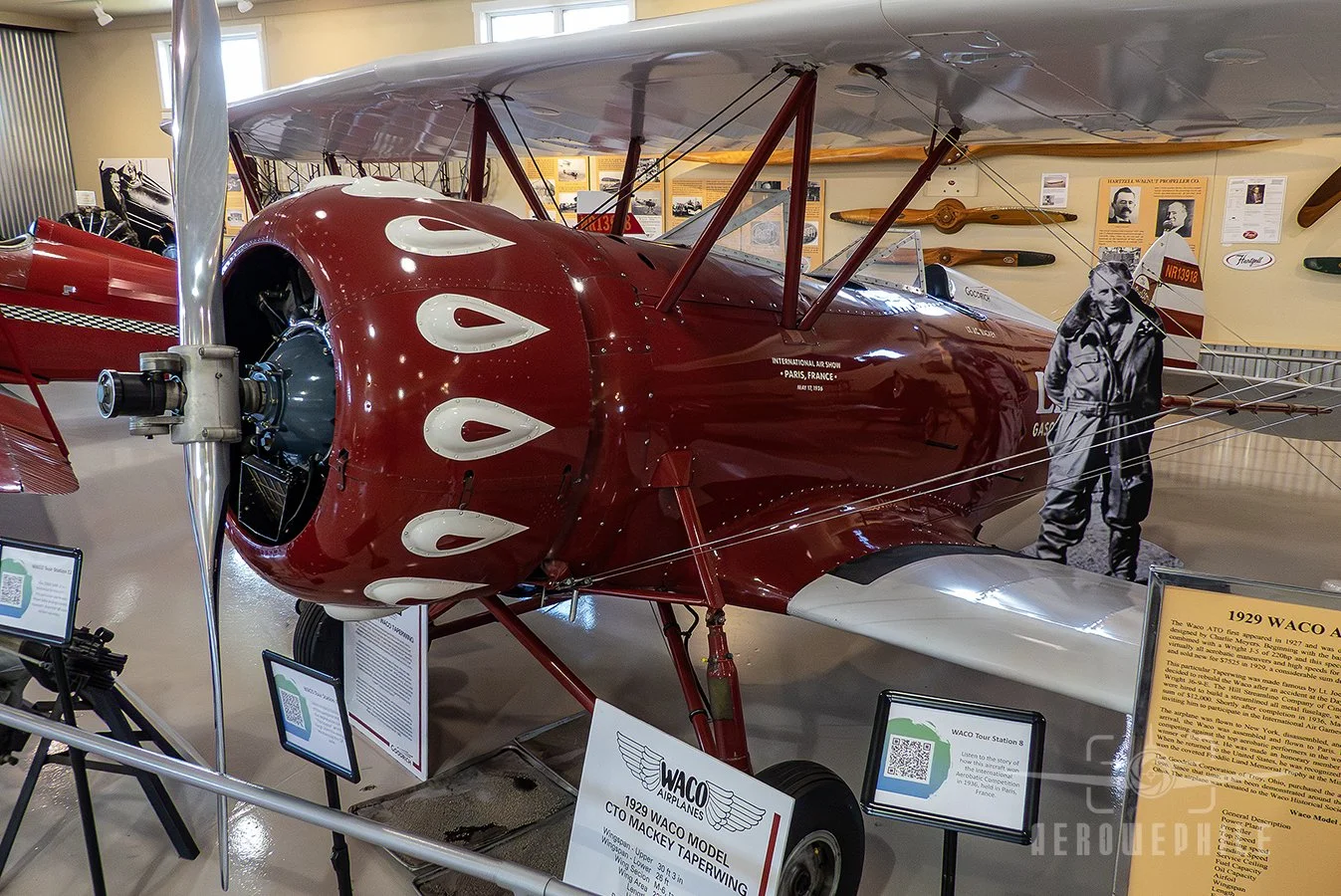
The 1929 WACO Model CTO Mackey Taperwing. Named after its pilot Lt. Joe Mackey of the LINCO Flying Aces.
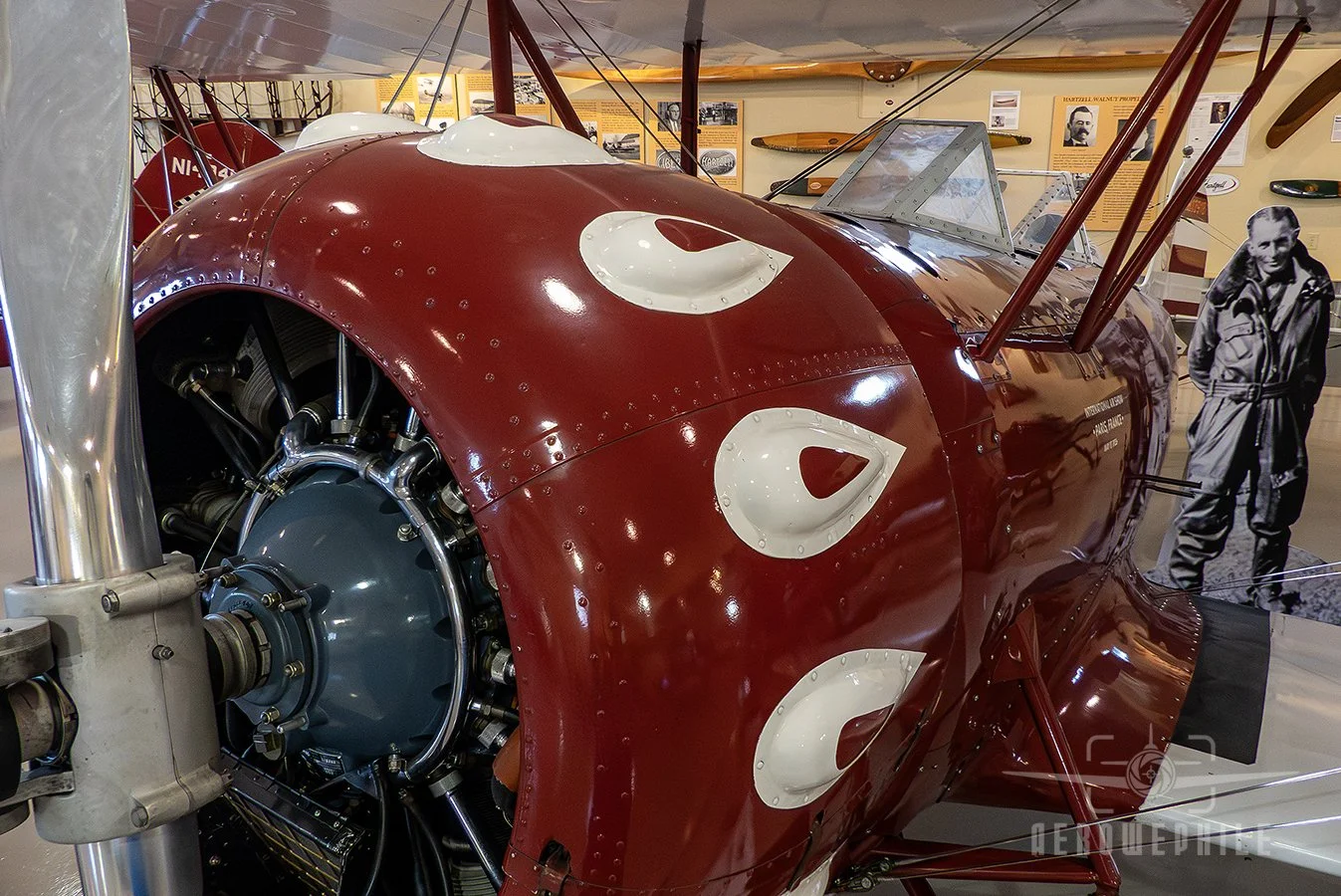
This exquisite cowling houses a 330hp Wright J6-9-E engine.
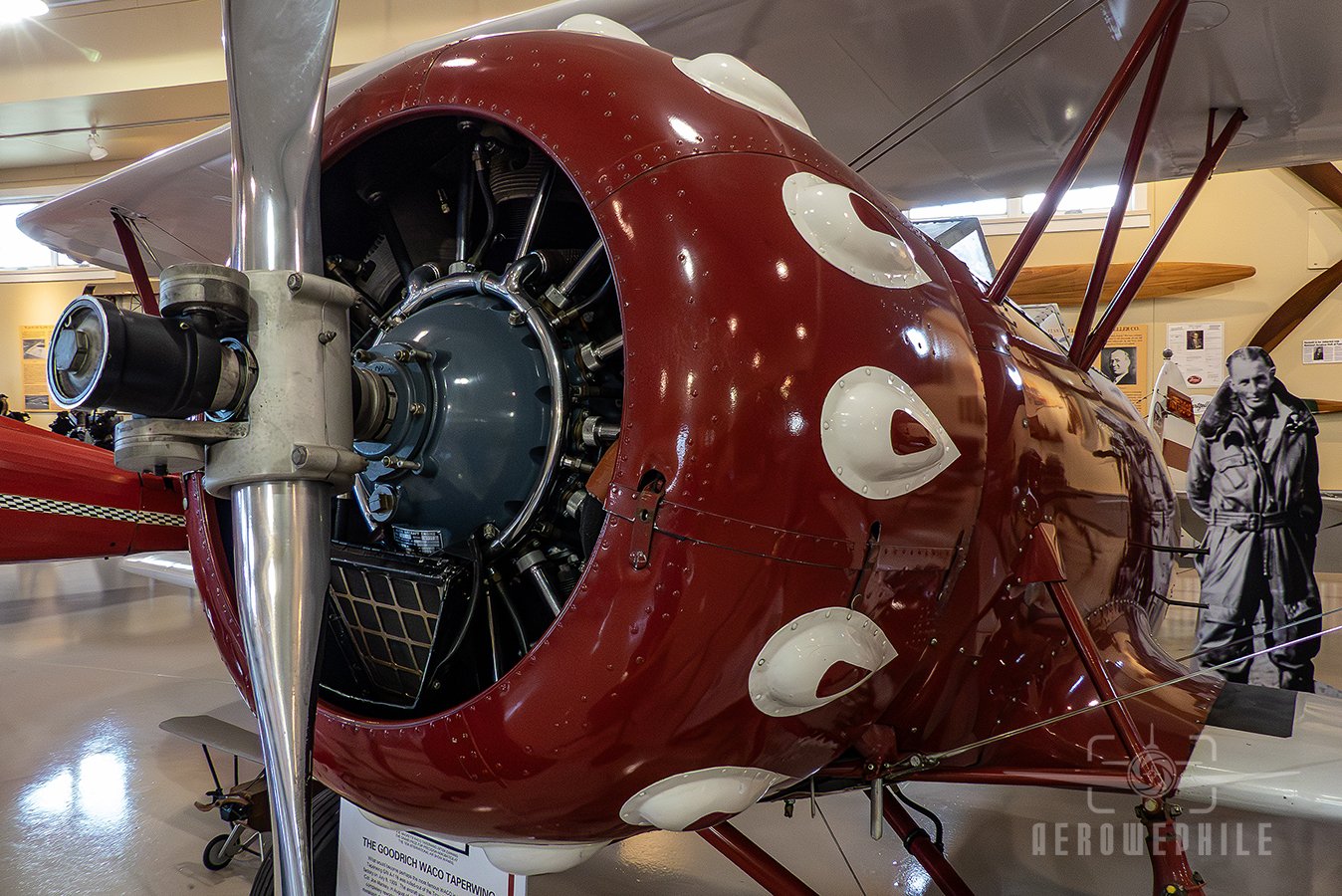
The Hill Streamline Company of Cincinnati, Ohio, premiere manufacturers of aluminum aircraft fairings were hired to build a streamlined all-metal fuselage, wing and strut fairings, wheelpants and cowling for the unbelievable sum of $12,000.
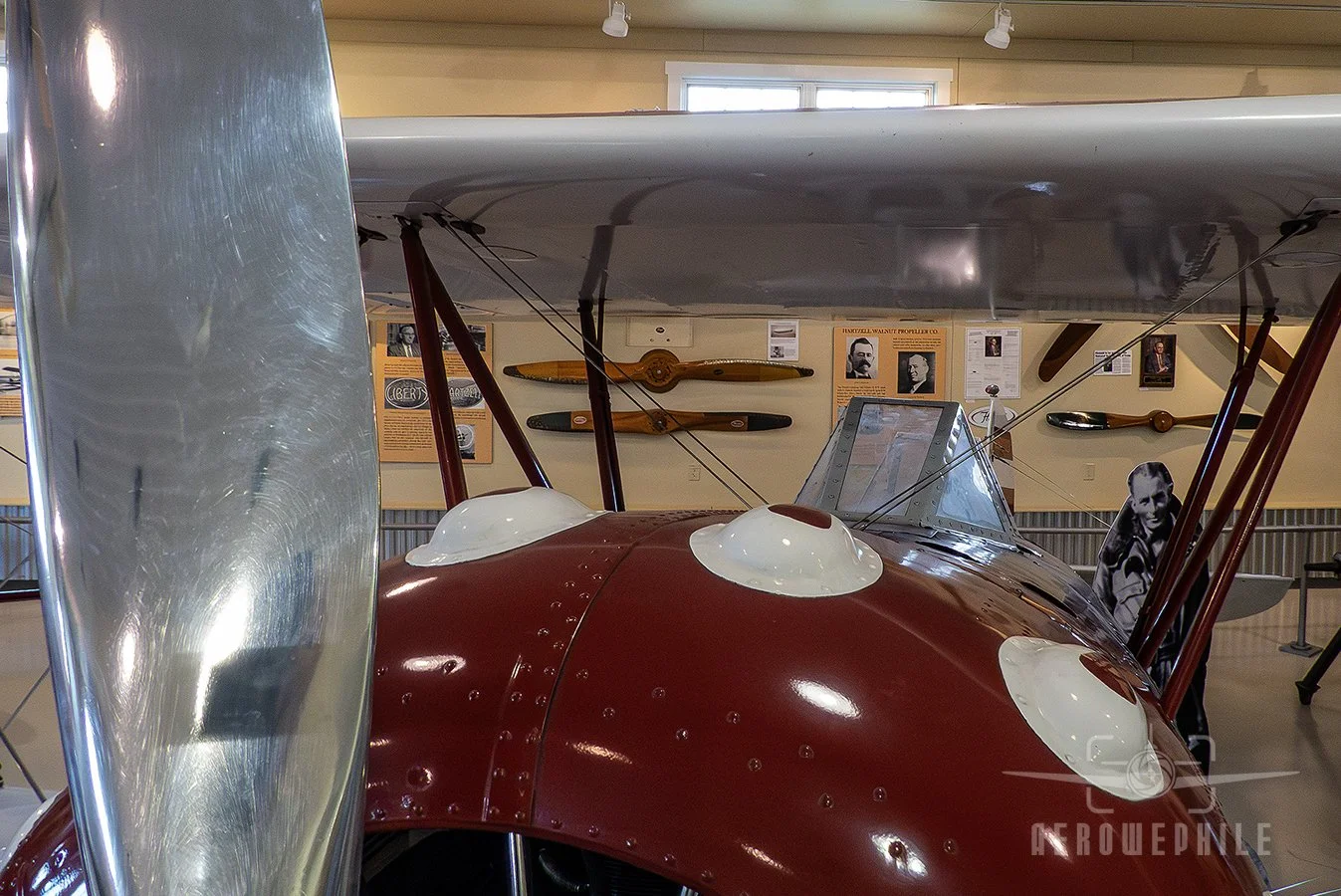
The WACO Taperwings, with their special tapered wing designed by Charlie Meyers, were renowned for their high performance and were capable of virtually all aerobatic maneuvers and high speed racing.
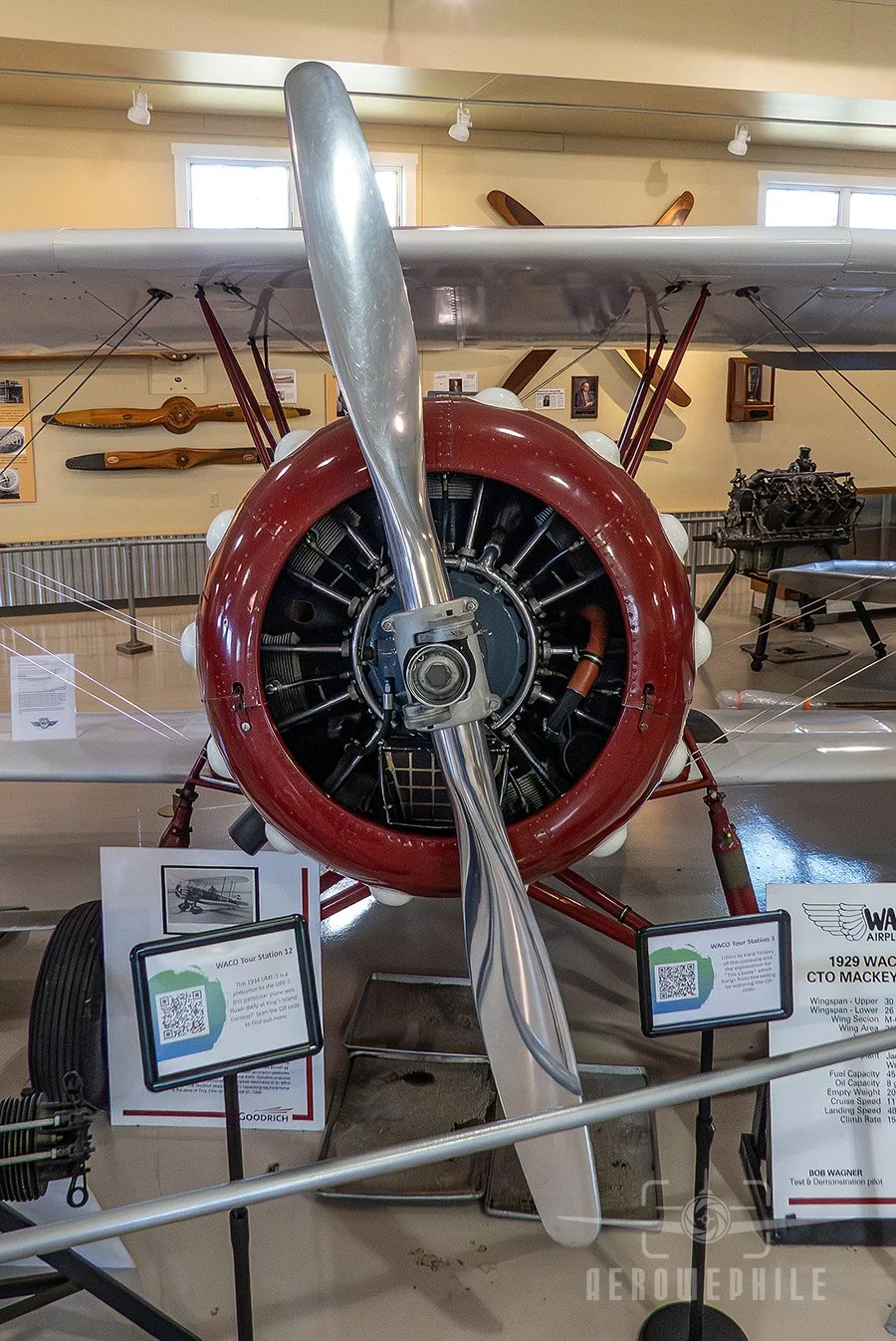
In 1936, Joe Mackey was invited to Paris, France to fly in the International Air Games. This WACO was disassembled and shipped to France. Upon arrival, it was reassembled and Mackey flew it so well that he was named the overall winner of the event.
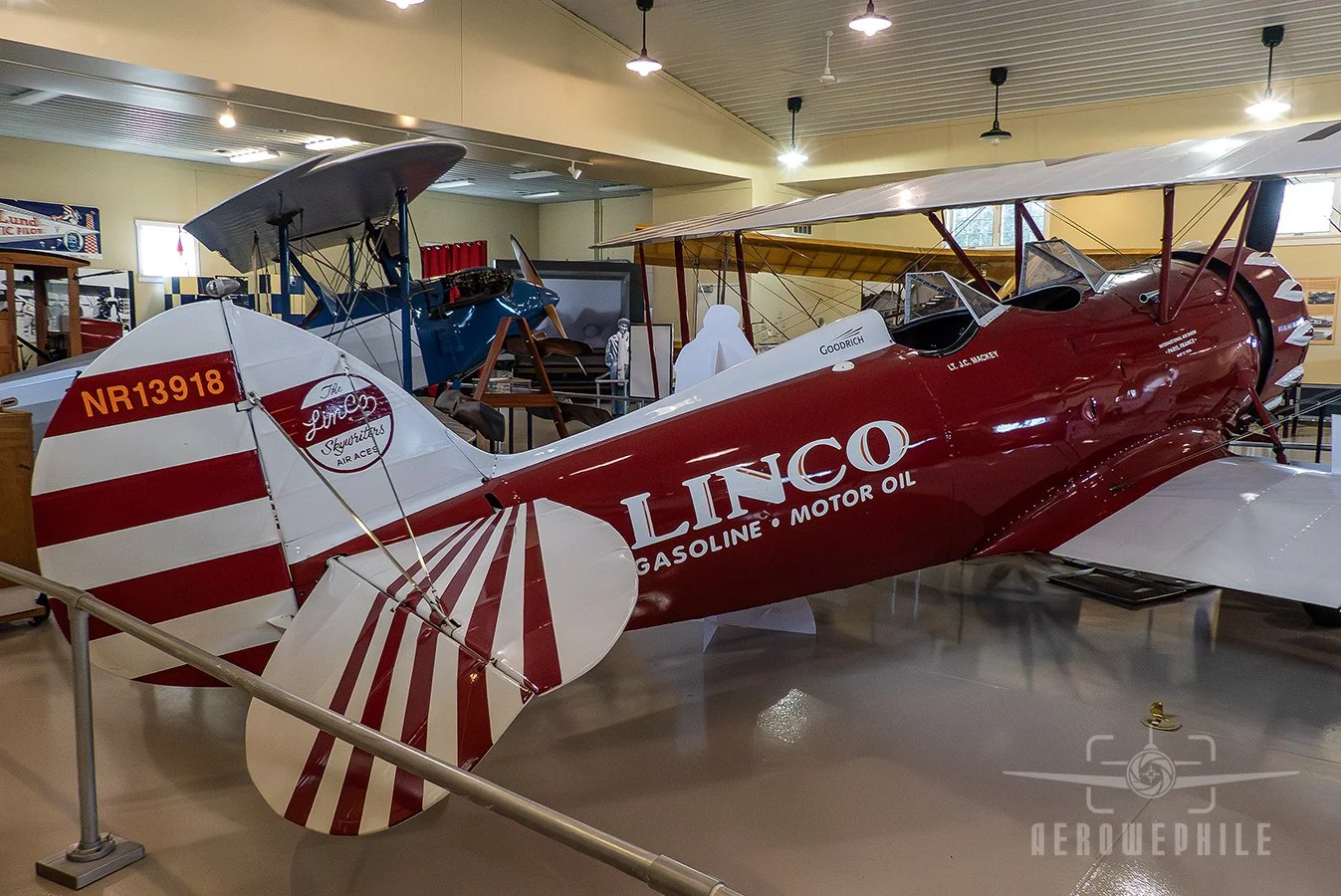
This WACO is painted in the LINCO Flying Aces livery that it wore from 1932-1940.
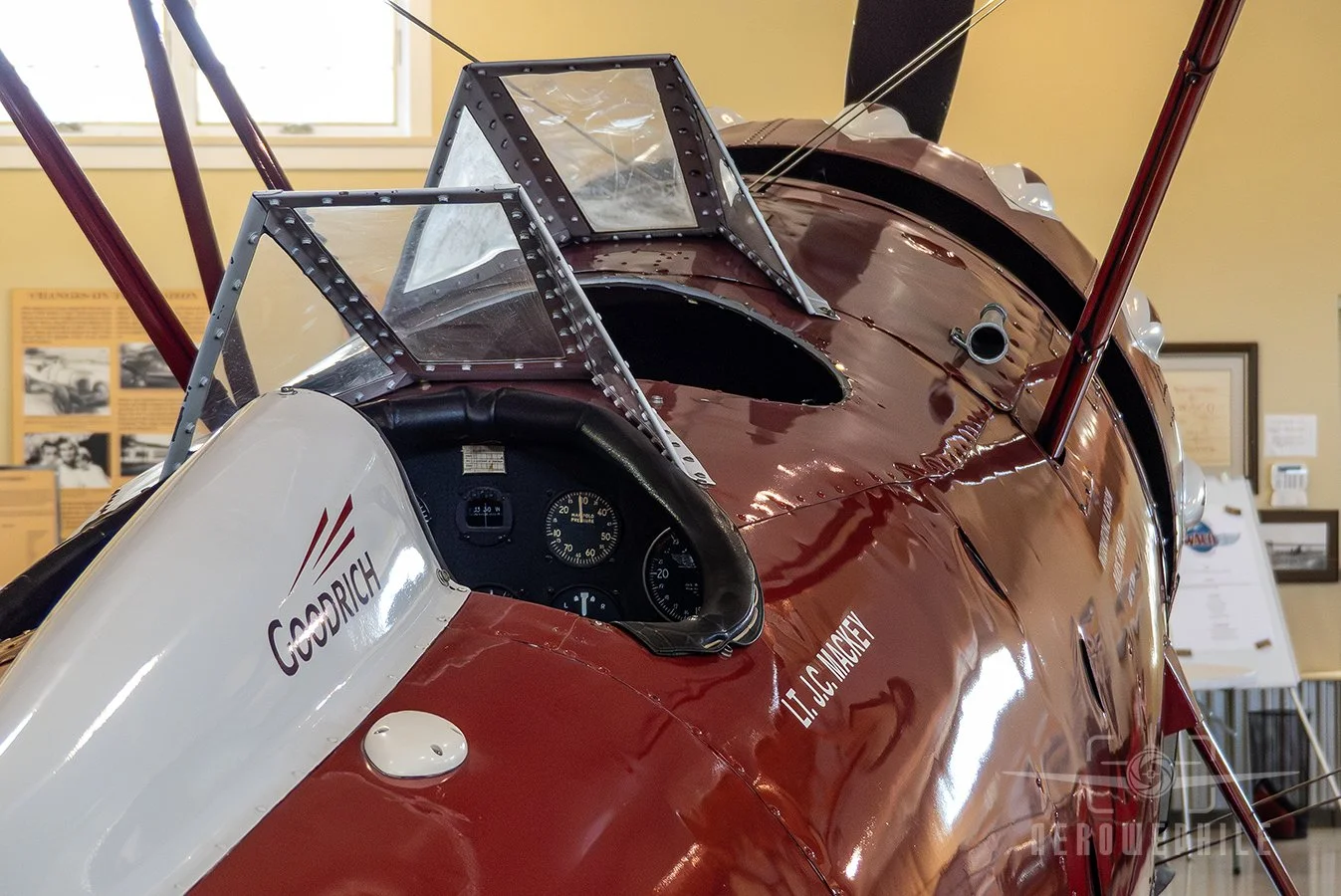
In 1937, Joe Mackey won the coveted Freddie Lund Memorial Trophy at the Miami Air Races for precision aerobatics.
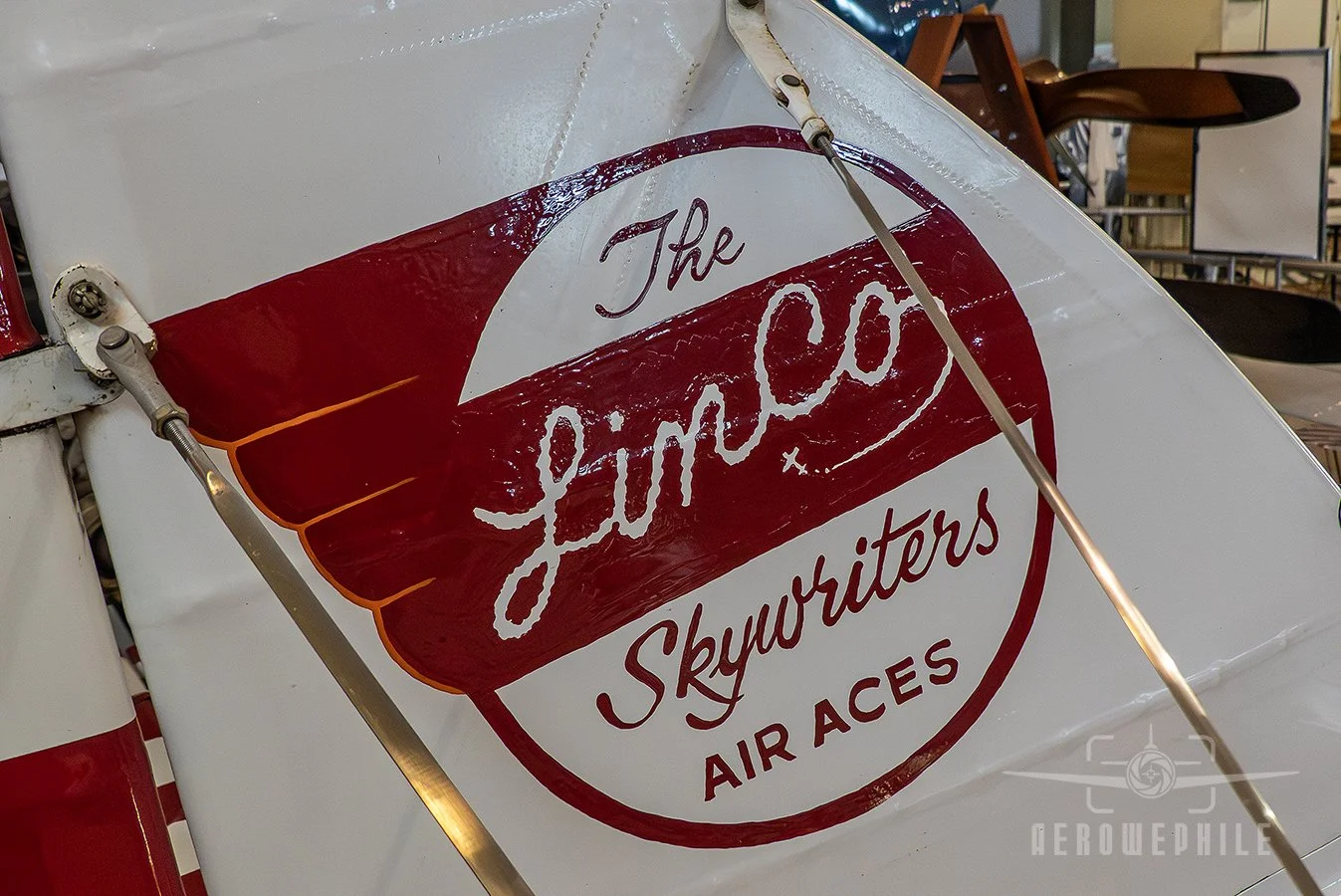
The Linco Skywriter Air Aces was a traveling aerial exhibition that featured sky writing and all other kinds of aerial maneuvers.
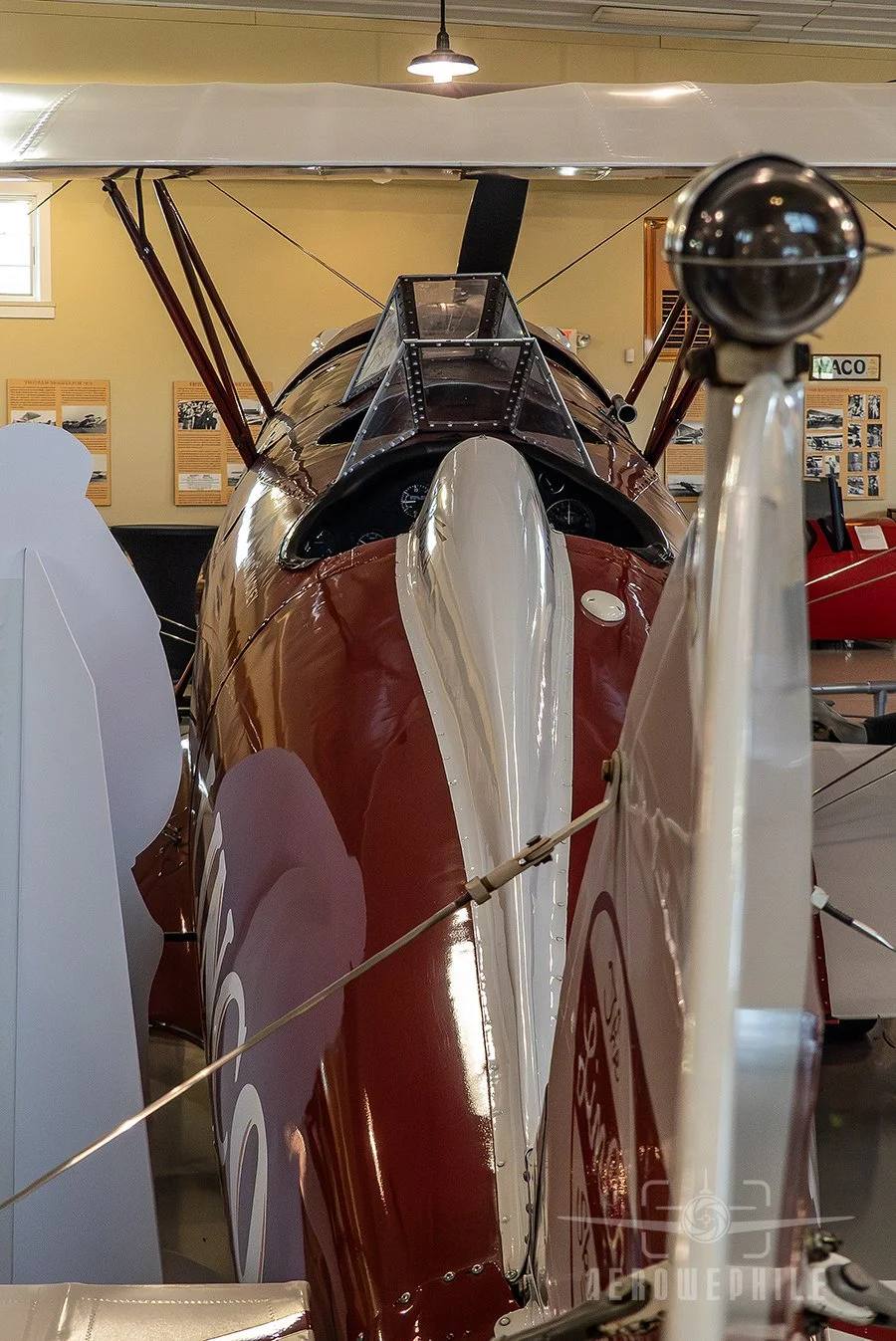
Rear view of the WACO Taperwing with the streamlined pilot headrest.
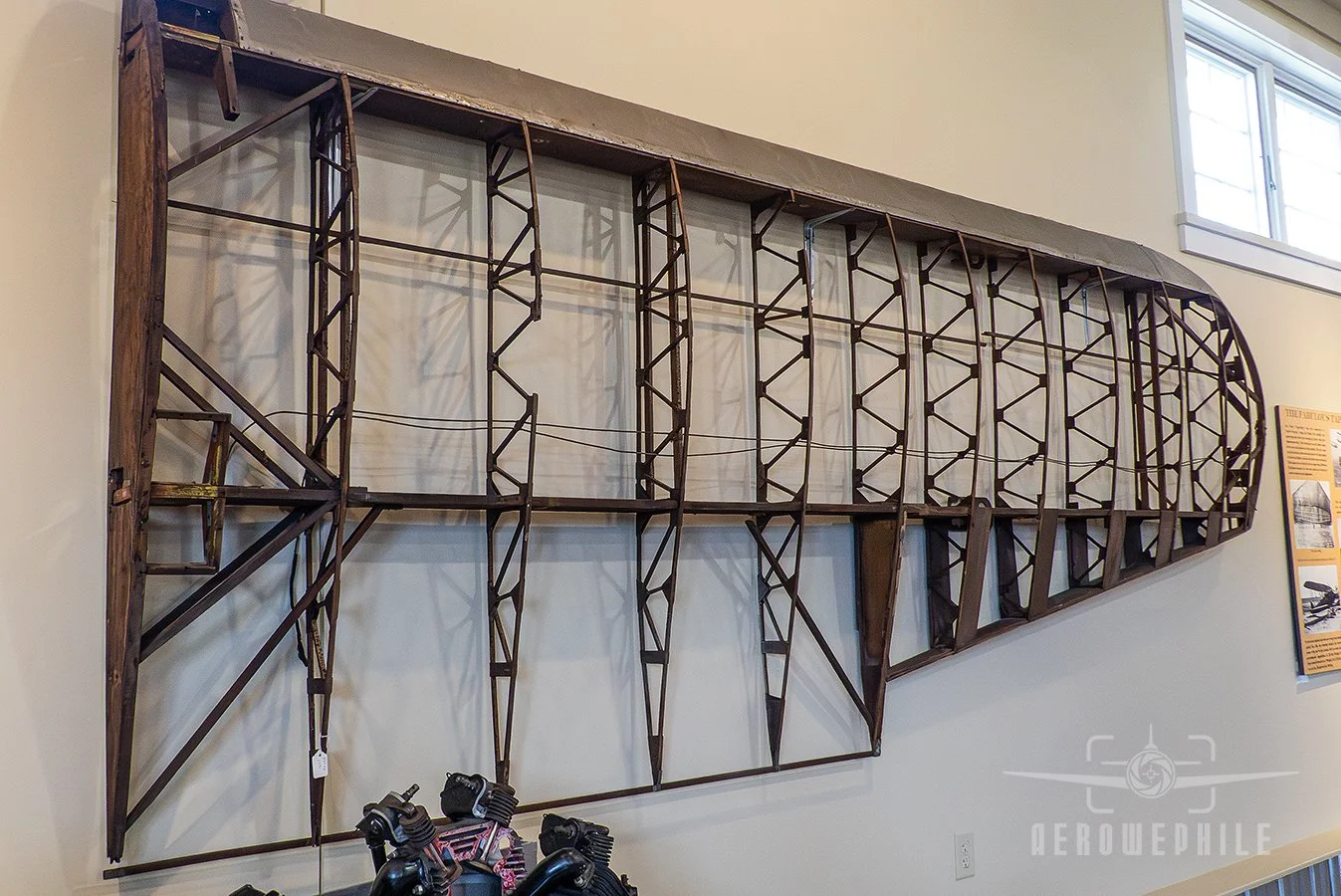
Wing framework hanging on the wall.
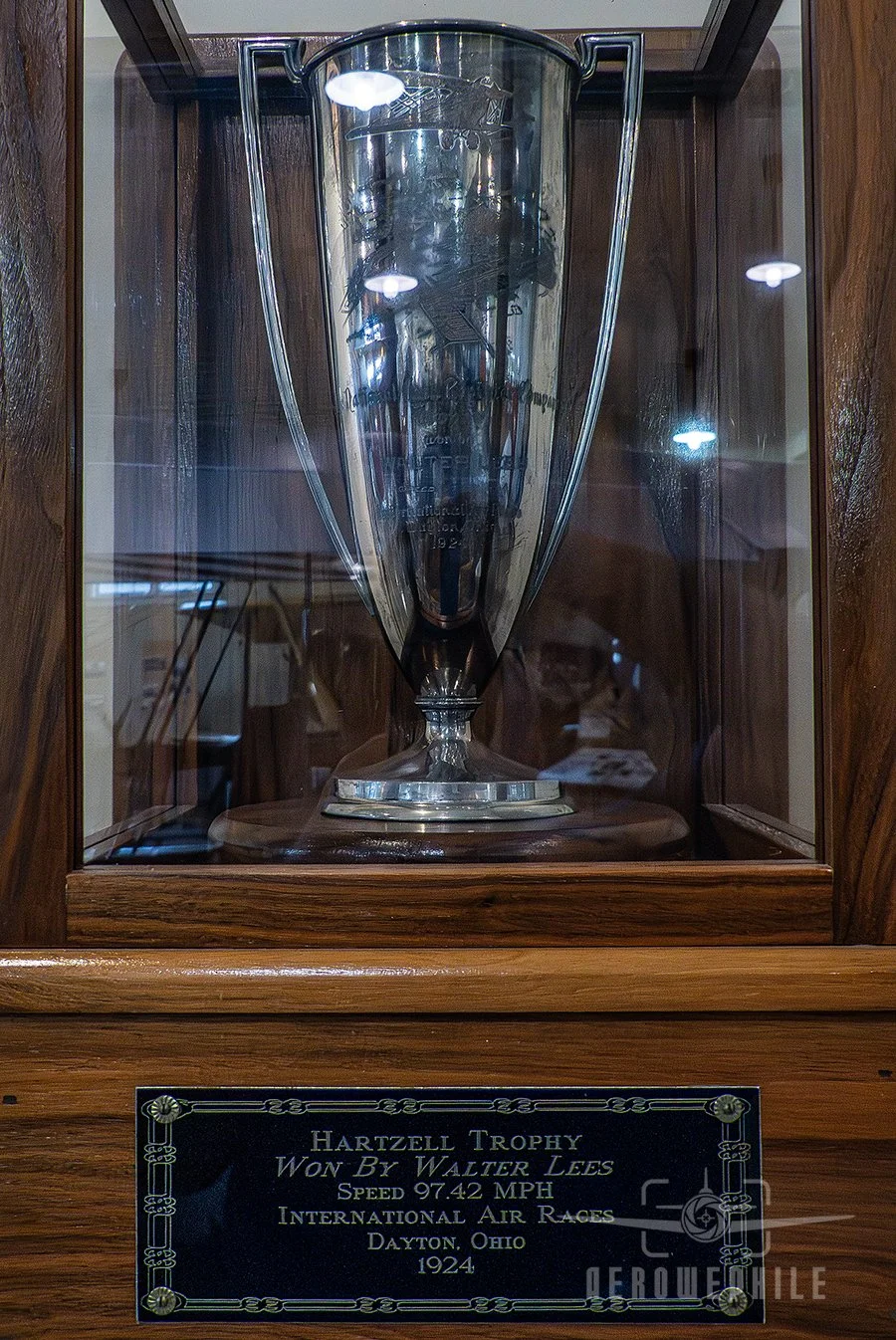
Hartzell Trophy Won by Walter Lees Speed 97.42 MPH International Air Races Dayton, Ohio 1924
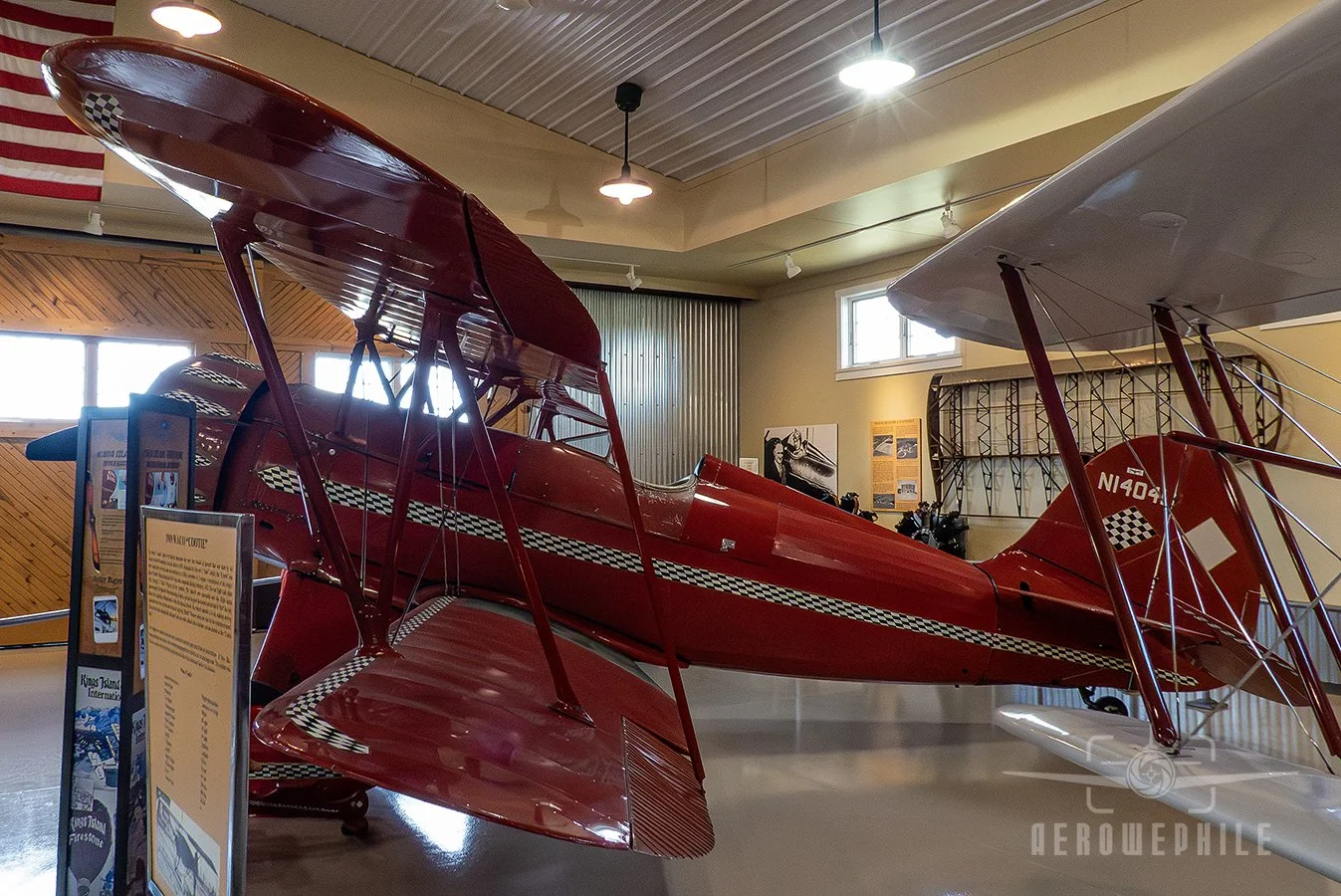
1934 WACO UMF-3 was a completely new design marketed toward the affluent sportsman pilot.
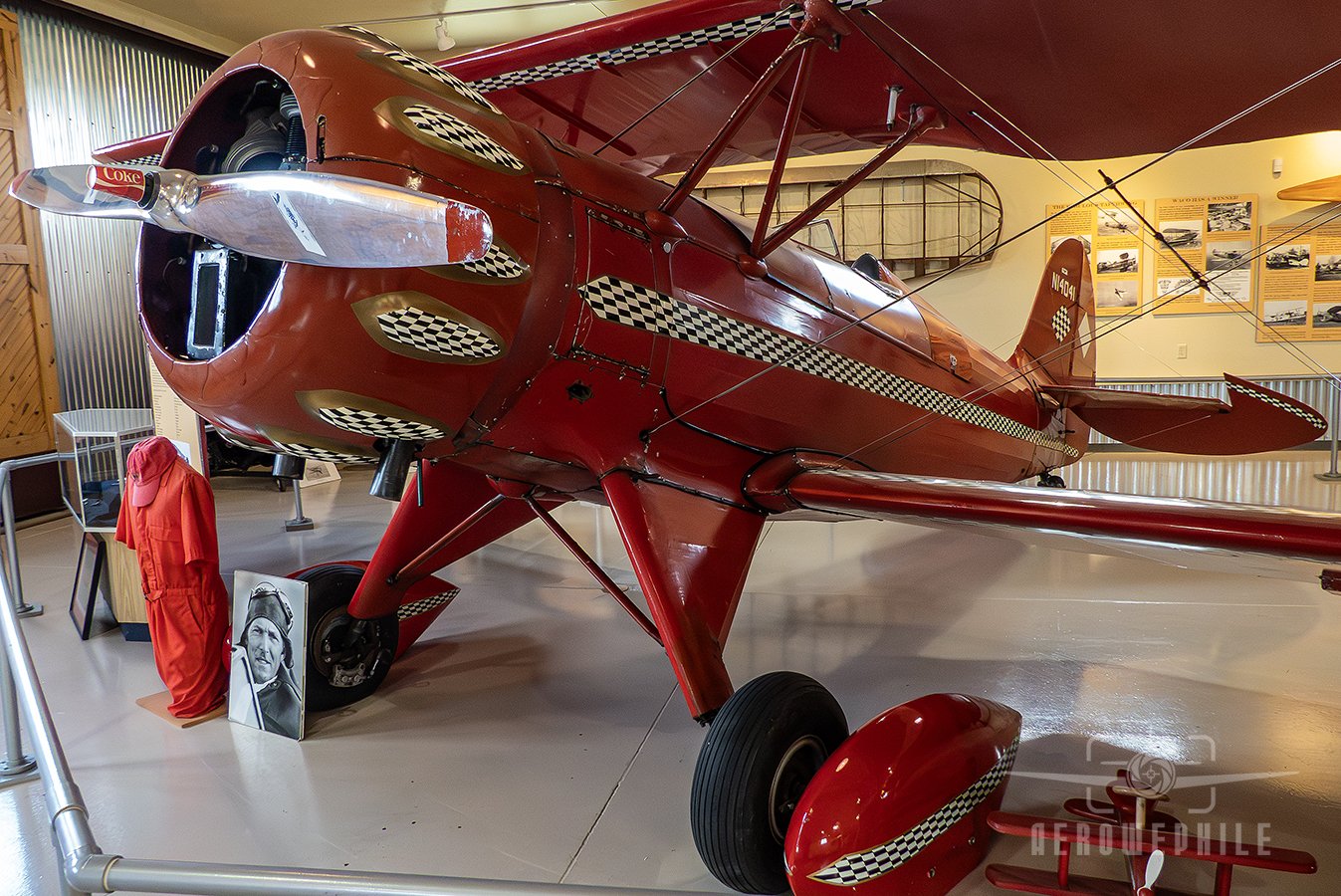
This particular UMF-3 was the third WACO UMF-3 built and delivered on October 15, 1934 to WACO dealer Gillies Aviation Corporation, Garden City, Long Island, New York, who in turn delivered it to Graham Cameron, Princeton Elm Club, Princeton University, Princeton, New Jersey.
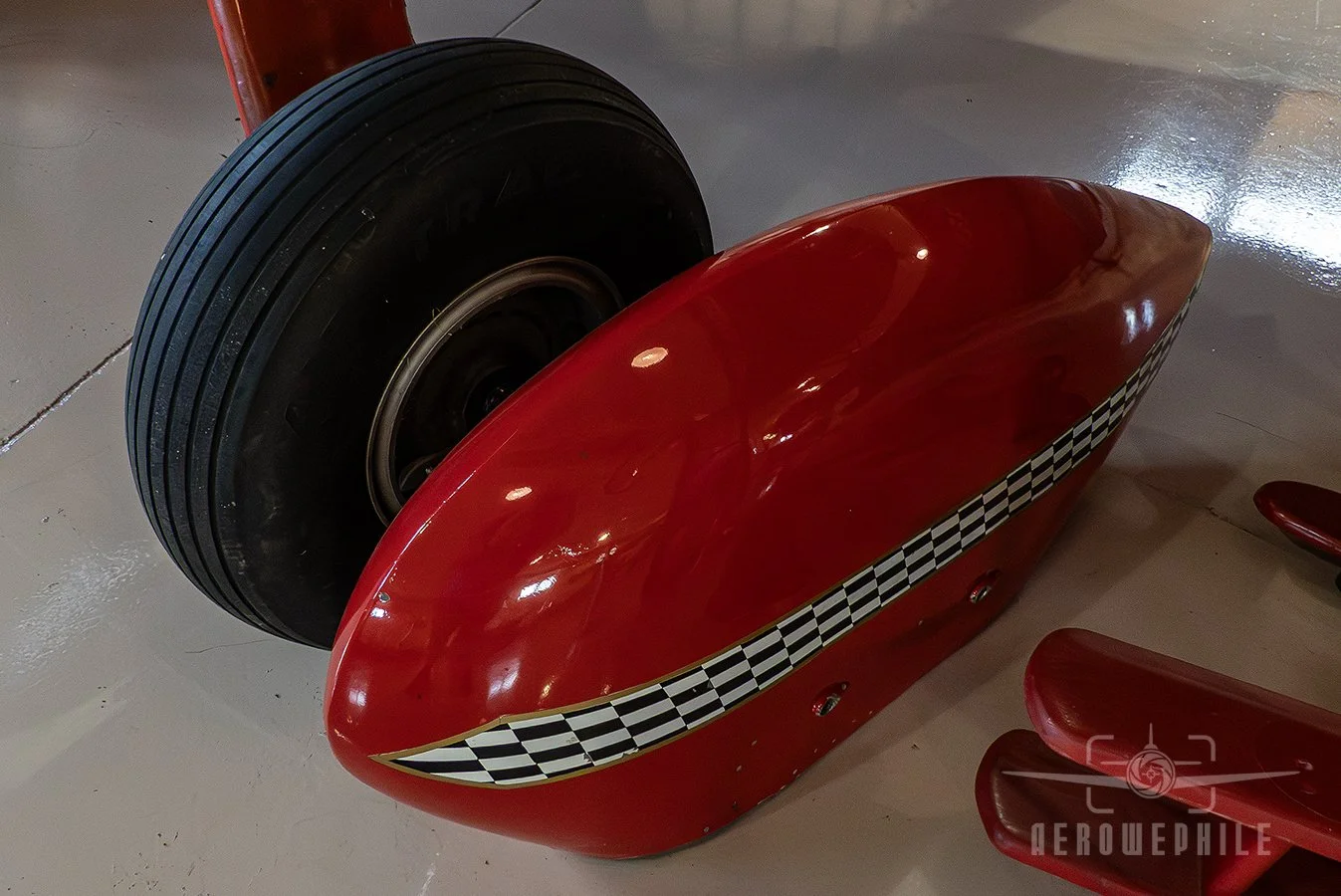
Wheel Pants for the WACO UMF-3.
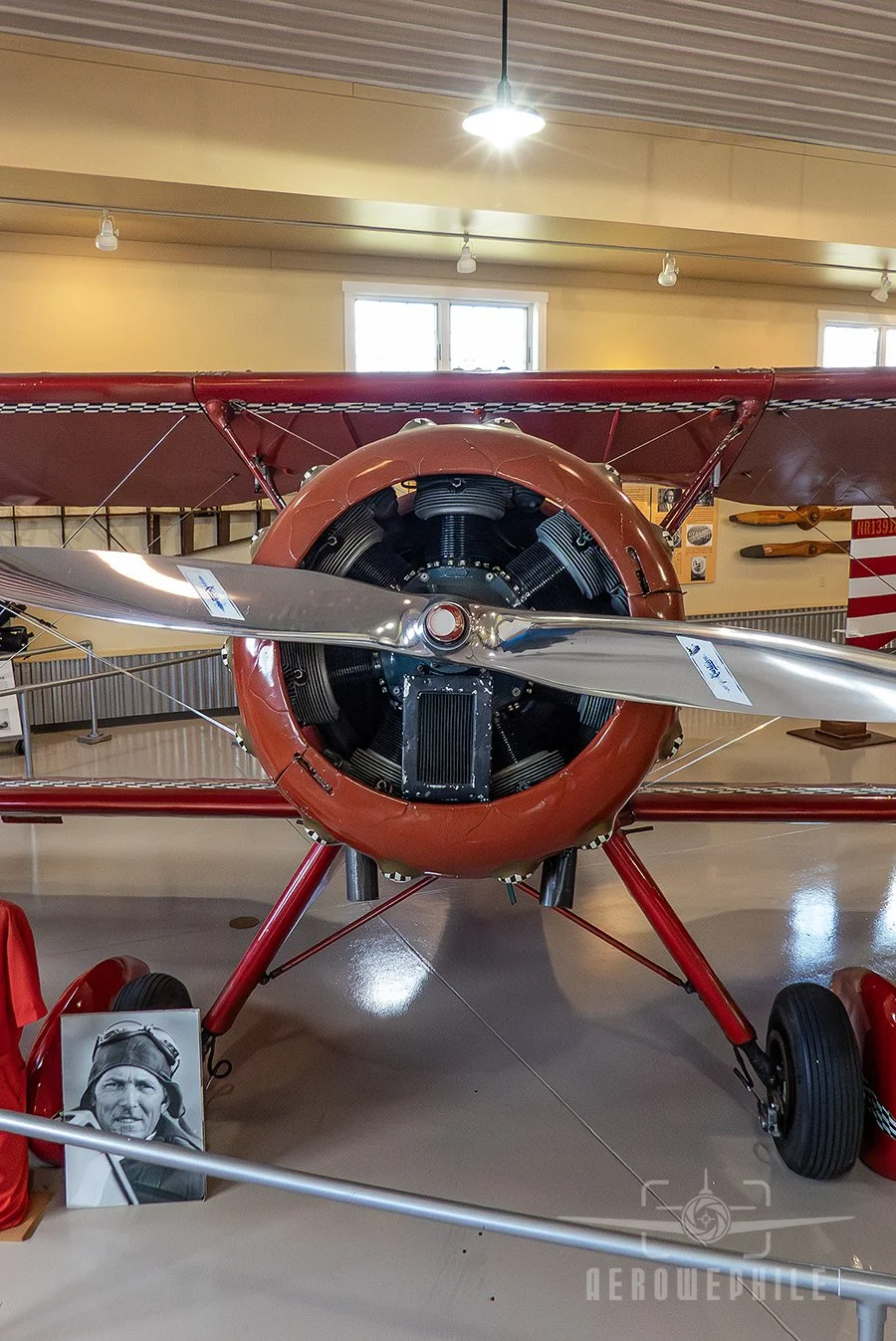
The WACO UMF-3 is powered by a Continental RJA-670-A, 210 hp radial engine.

Between 1934 to 1945, this WACO UMF-3 went through no less than 10 owners.
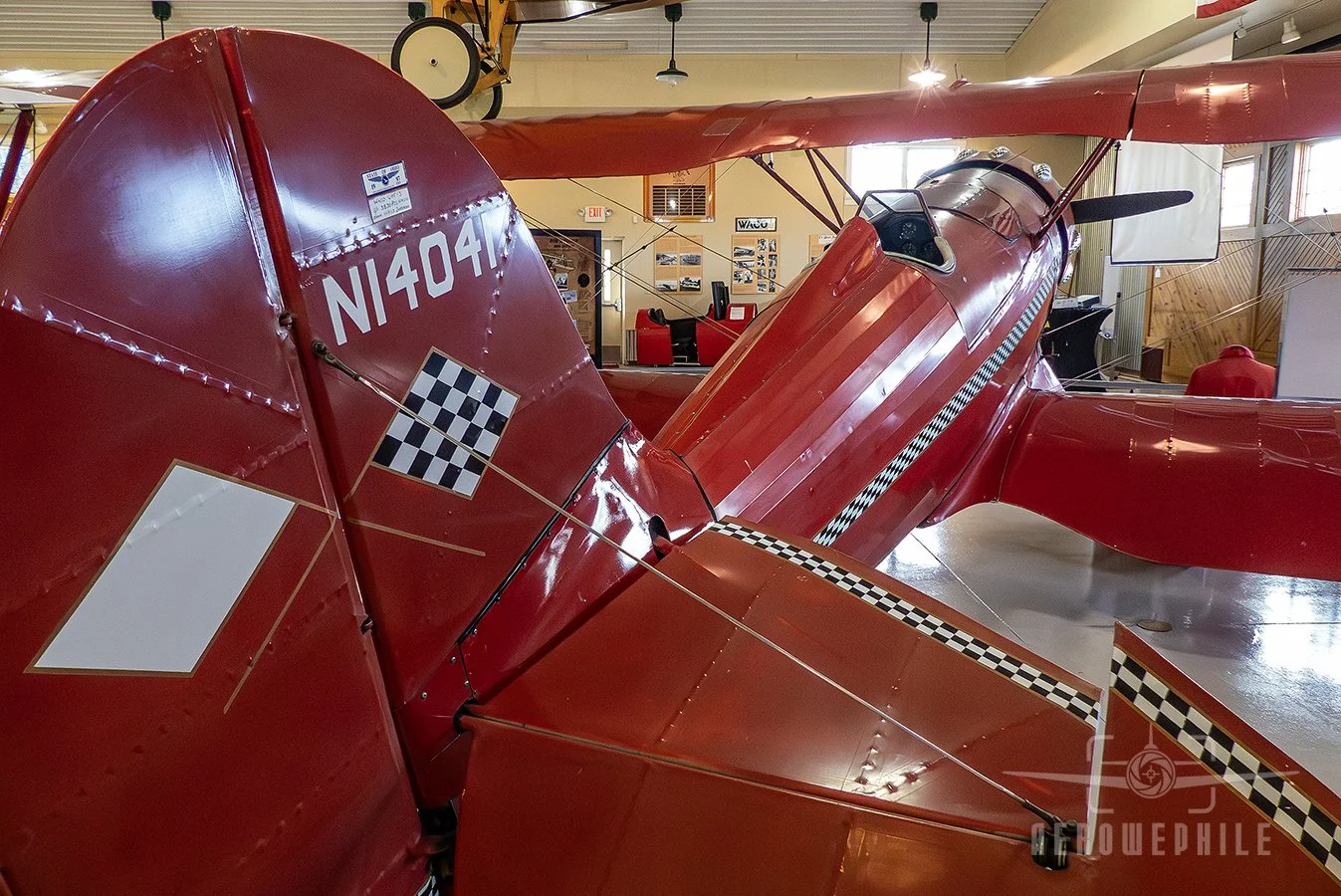
Following WWII, this WACO UMF-3 was purchased by a gentleman in Tennessee who used it until it needed rebuilding. It than sat in a derelict state until 1960.
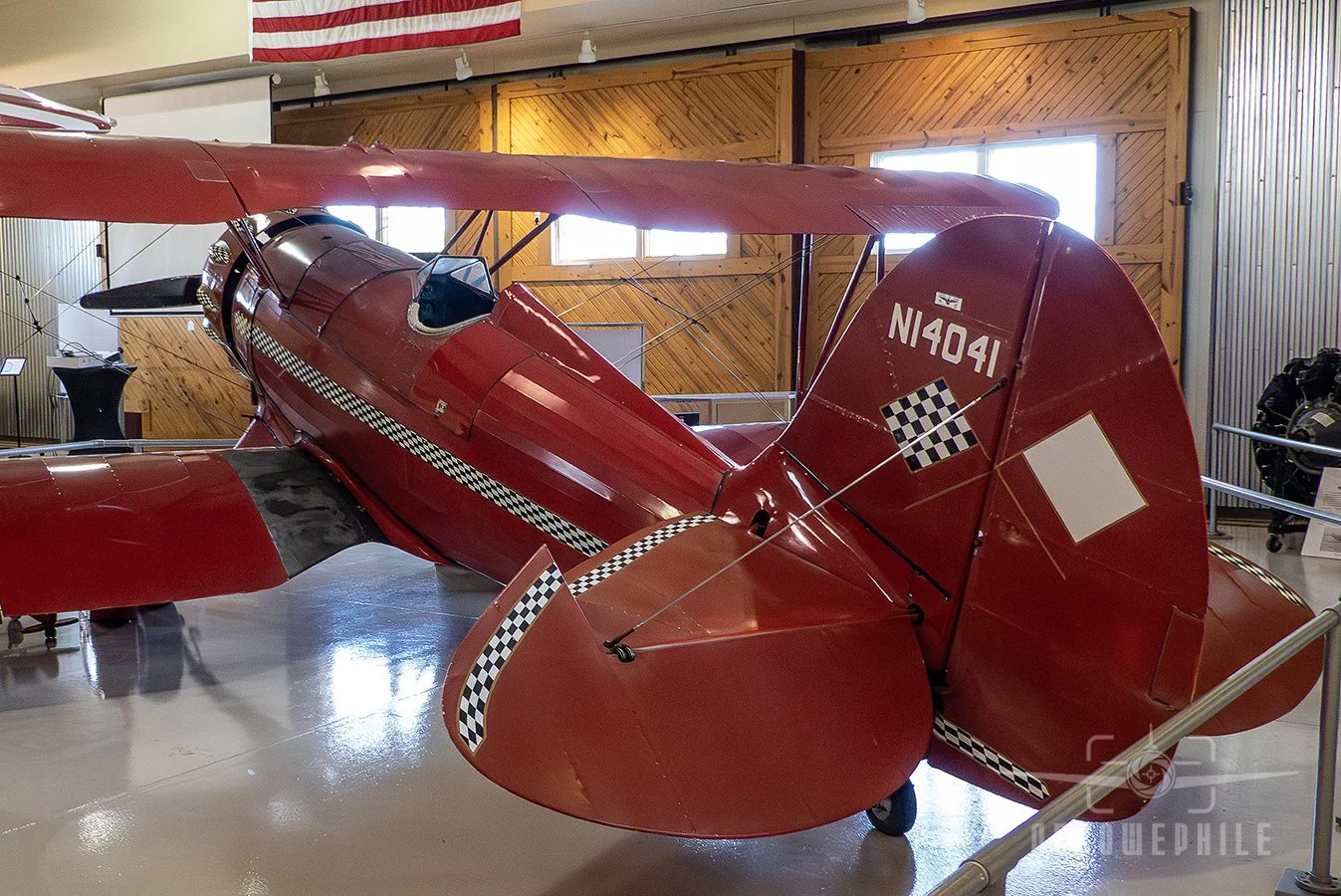
Purchased in 1960 by Harold Johnson and Glen Thomas of Dayton, Ohio. Using what little plans remained, they rebuilt the WACO UMF-3 back to its former glory.
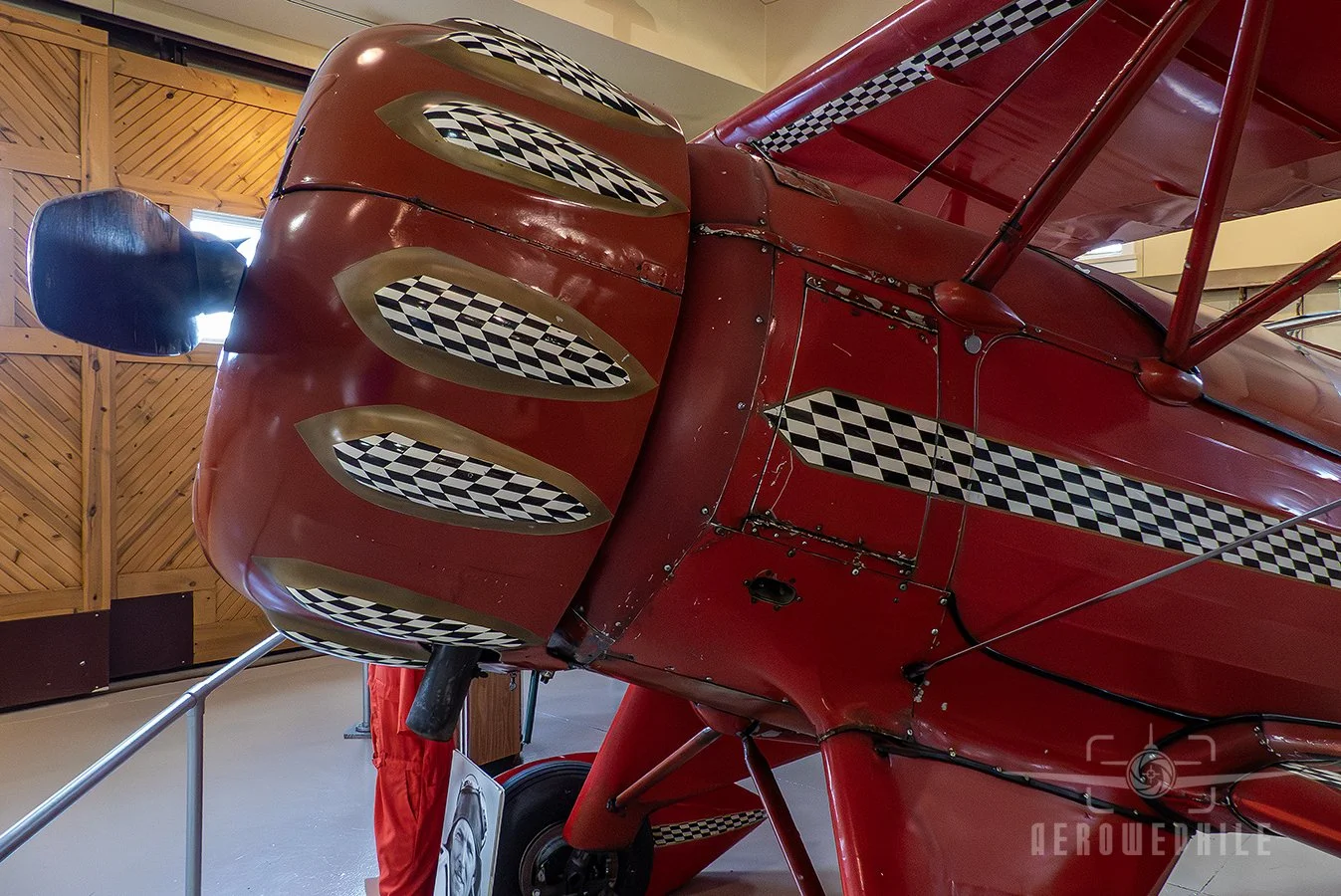
Harold Johnson then used the WACO UMF-3 for the next 45 years flying airshows across the Midwest.
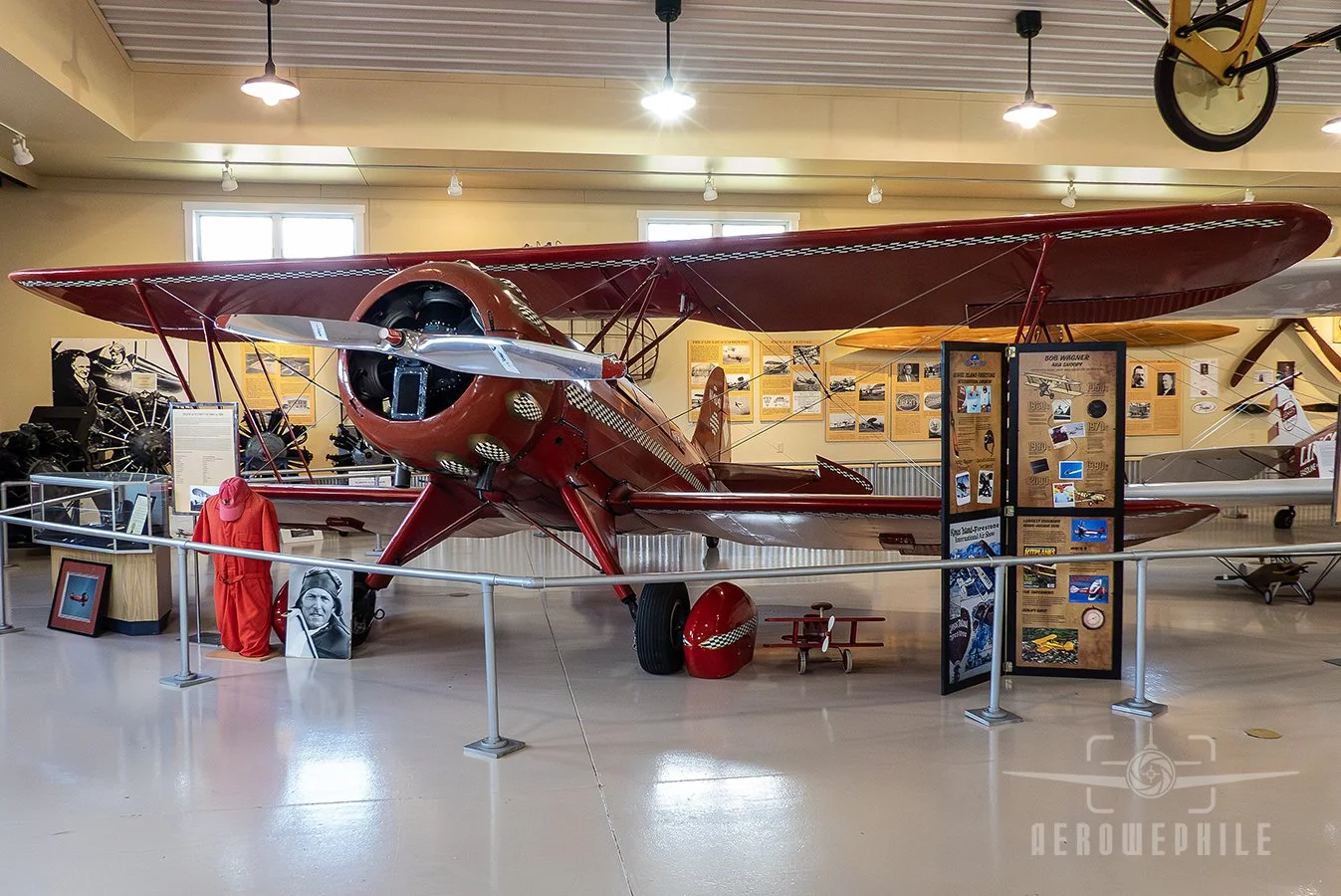
This WACO UMF-3 was used for seven years at a nightly airshow at Kings Island Amusement Park.
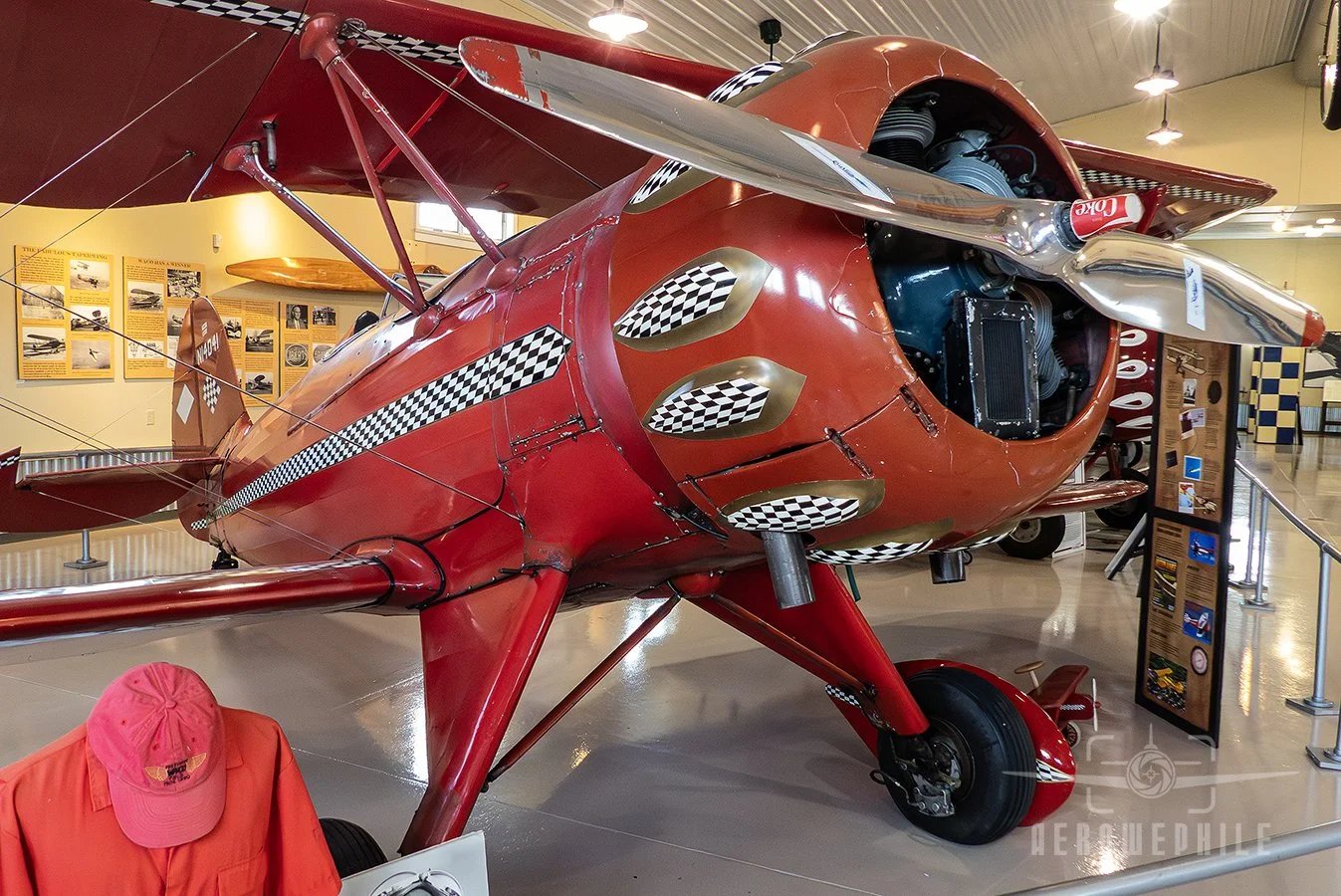
This WACO has more flight time than any other WACO in existence with over 14,000 hours in the air.
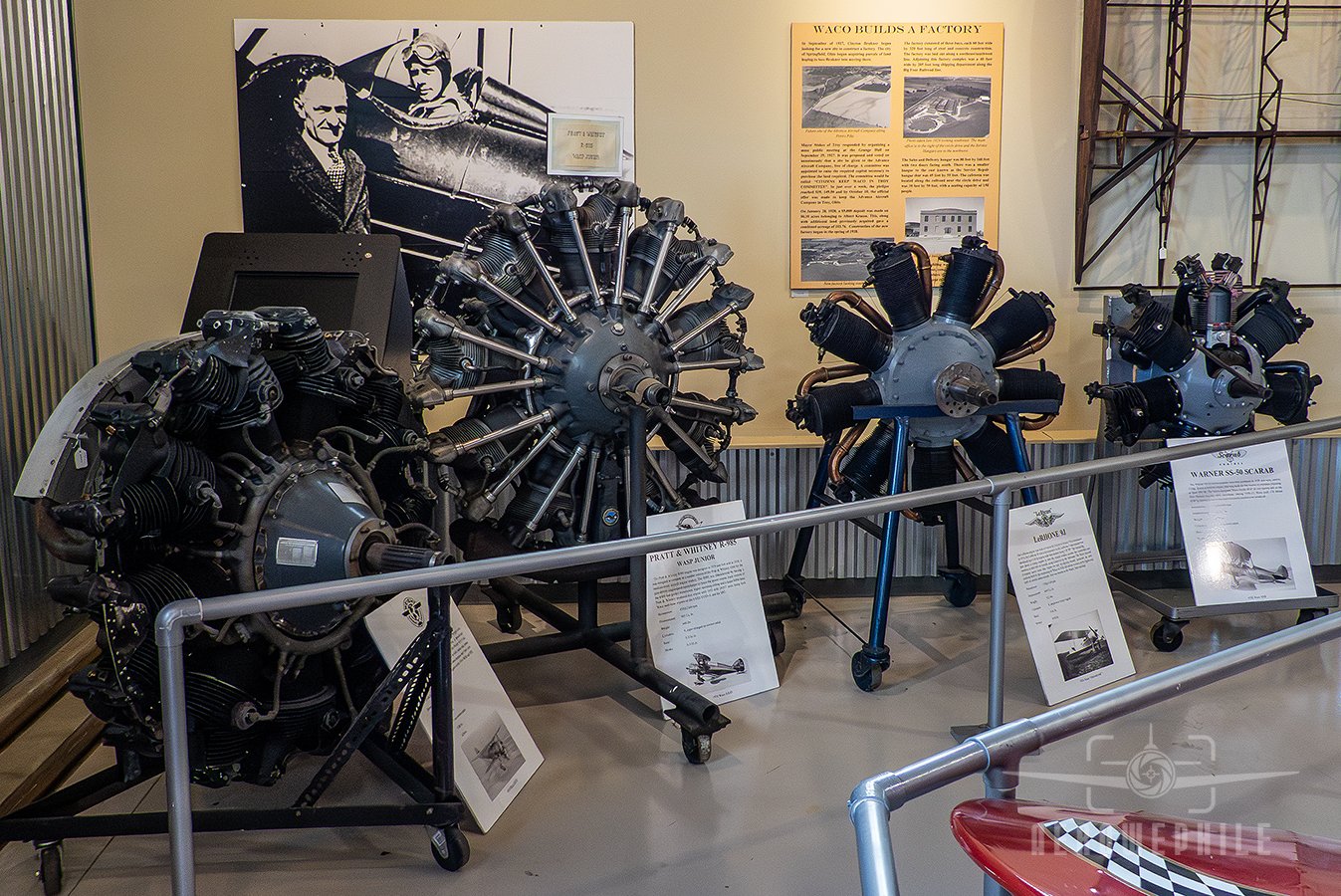
Lineup of radial engines from Wright, Pratt & Whitney, LaRHONE, and Warner.
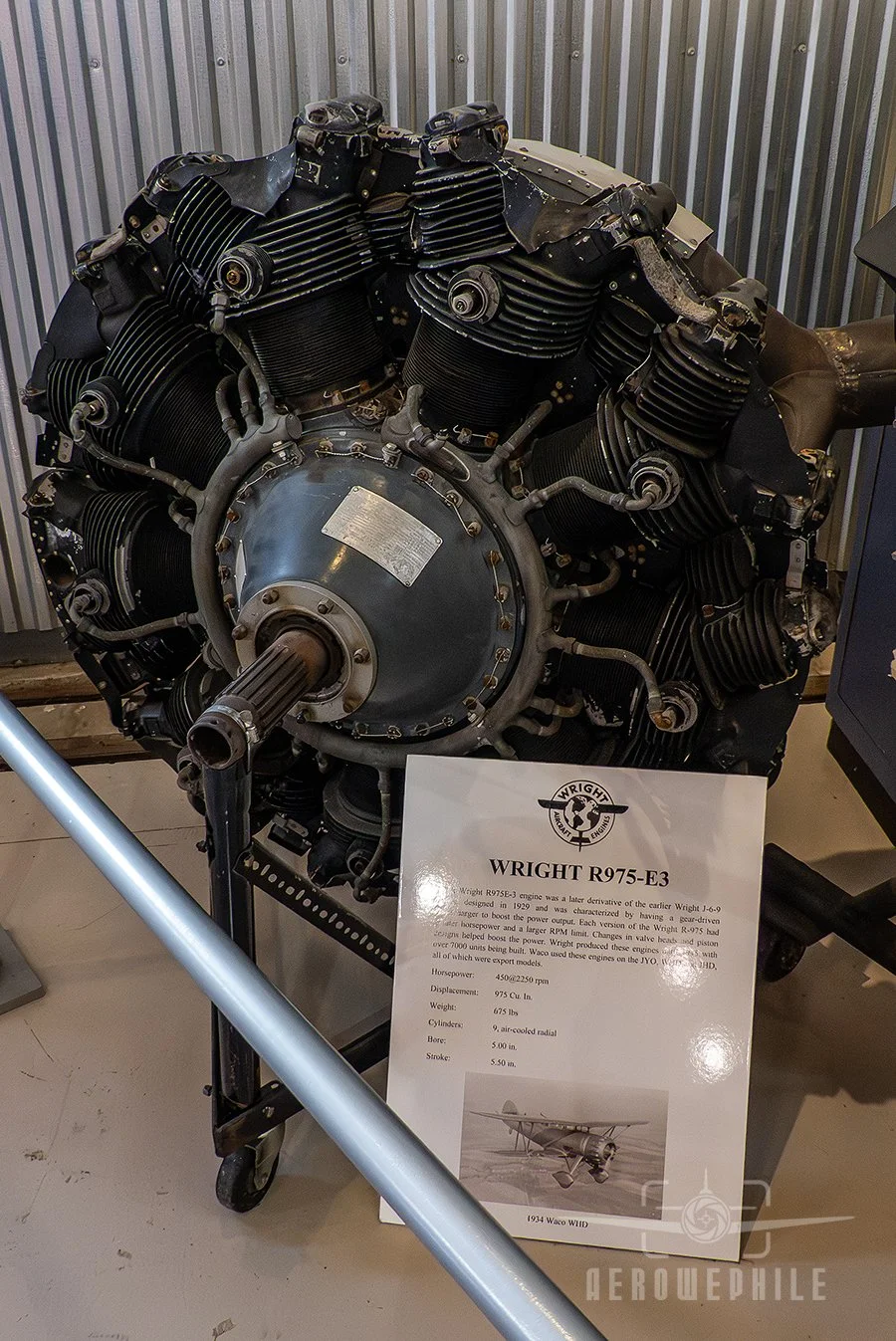
Wright R975-E3 radial engine.
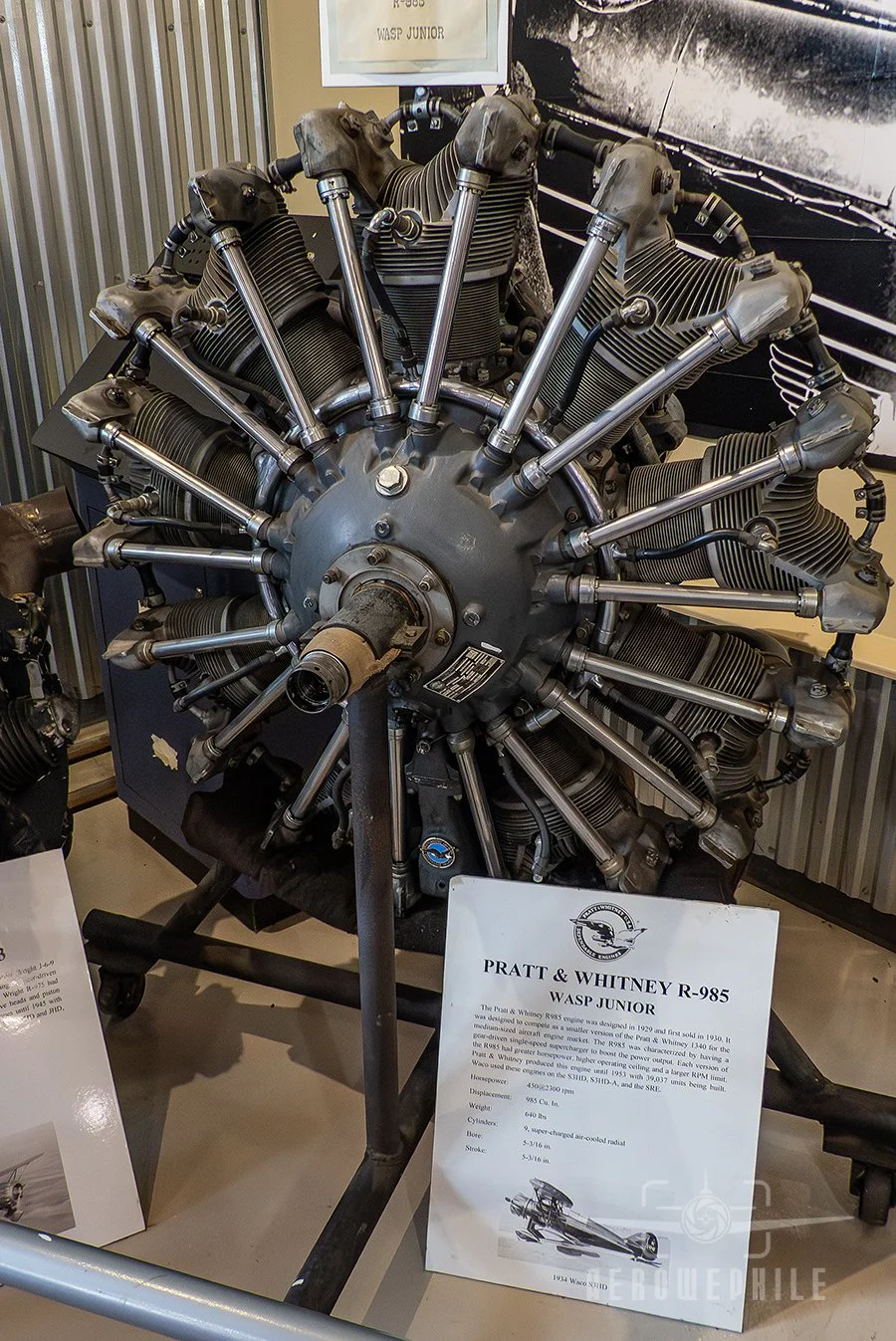
Pratt & Whitney R-985 Wasp Junior radial engine.
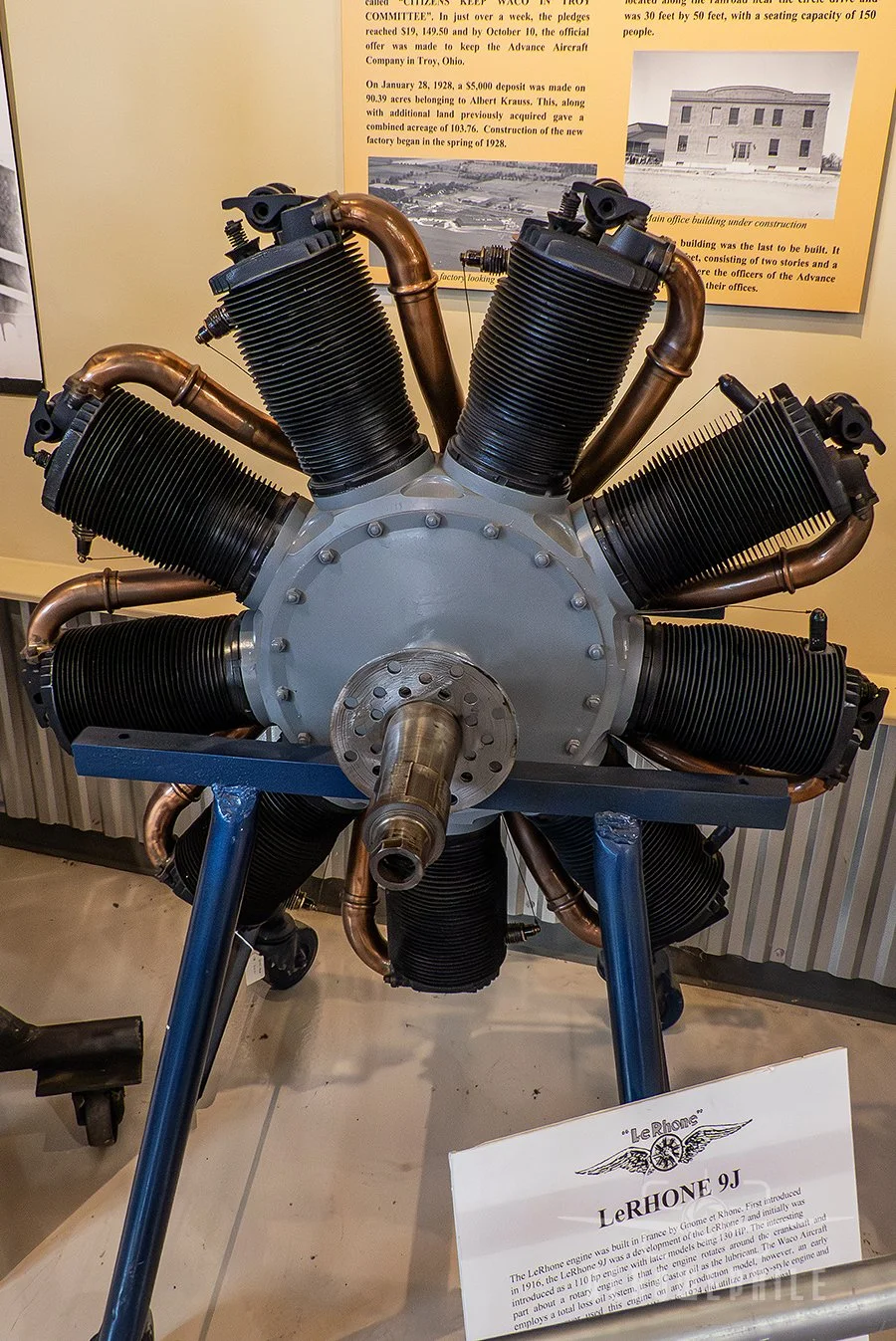
LeRHONE 9J radial engine.
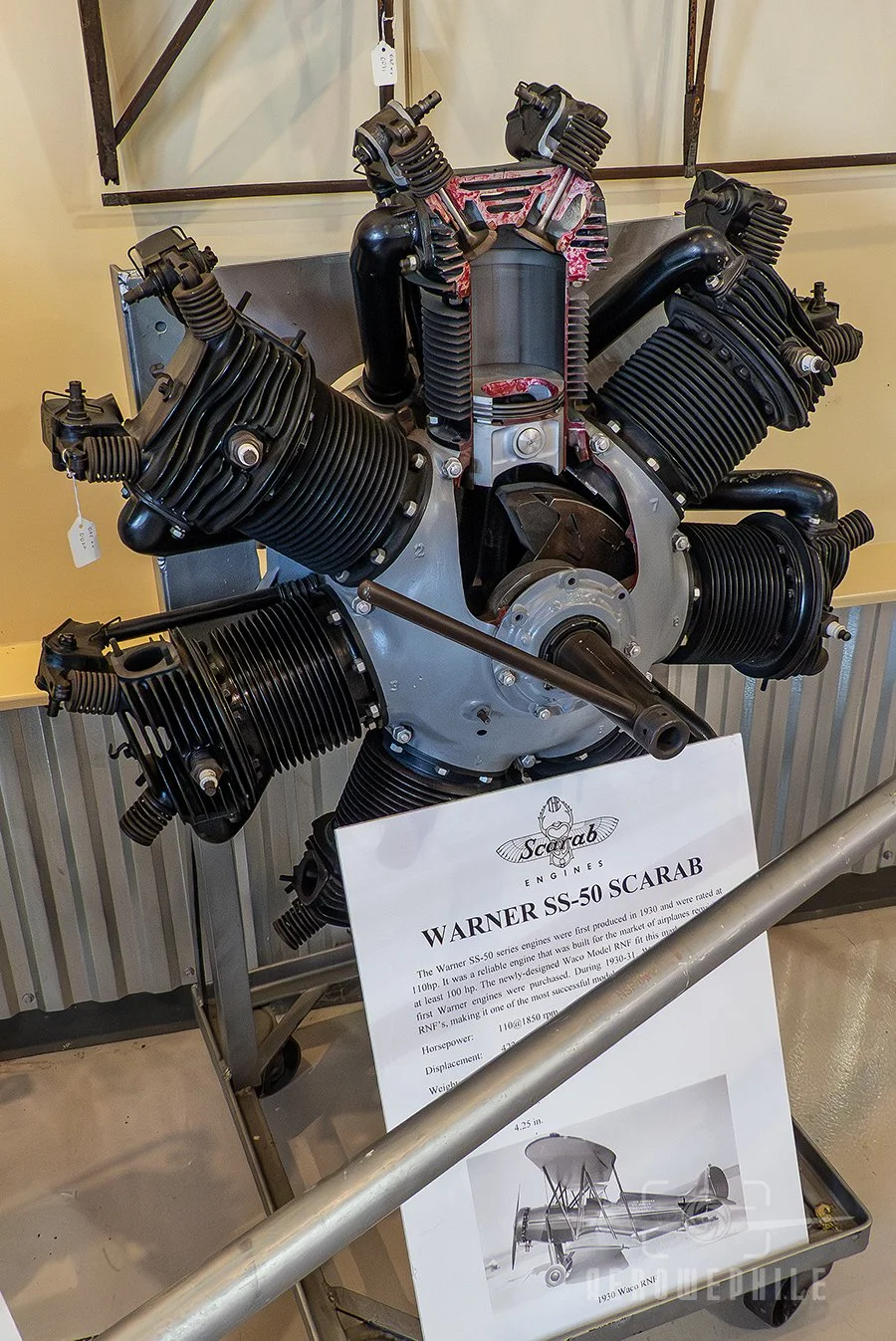
Warner SS-50 Scarab radial engine.
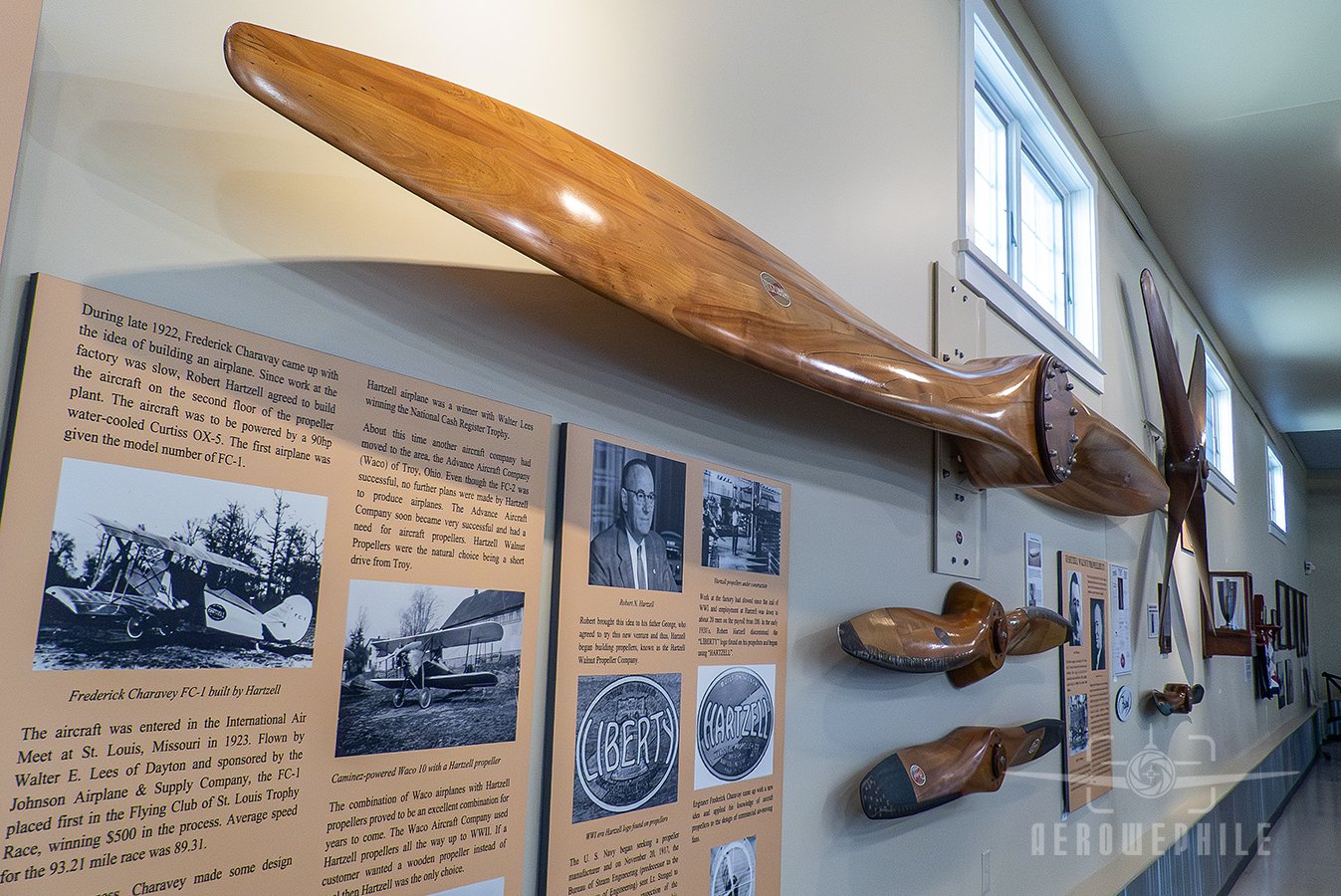
Hartzell propellor wall display.
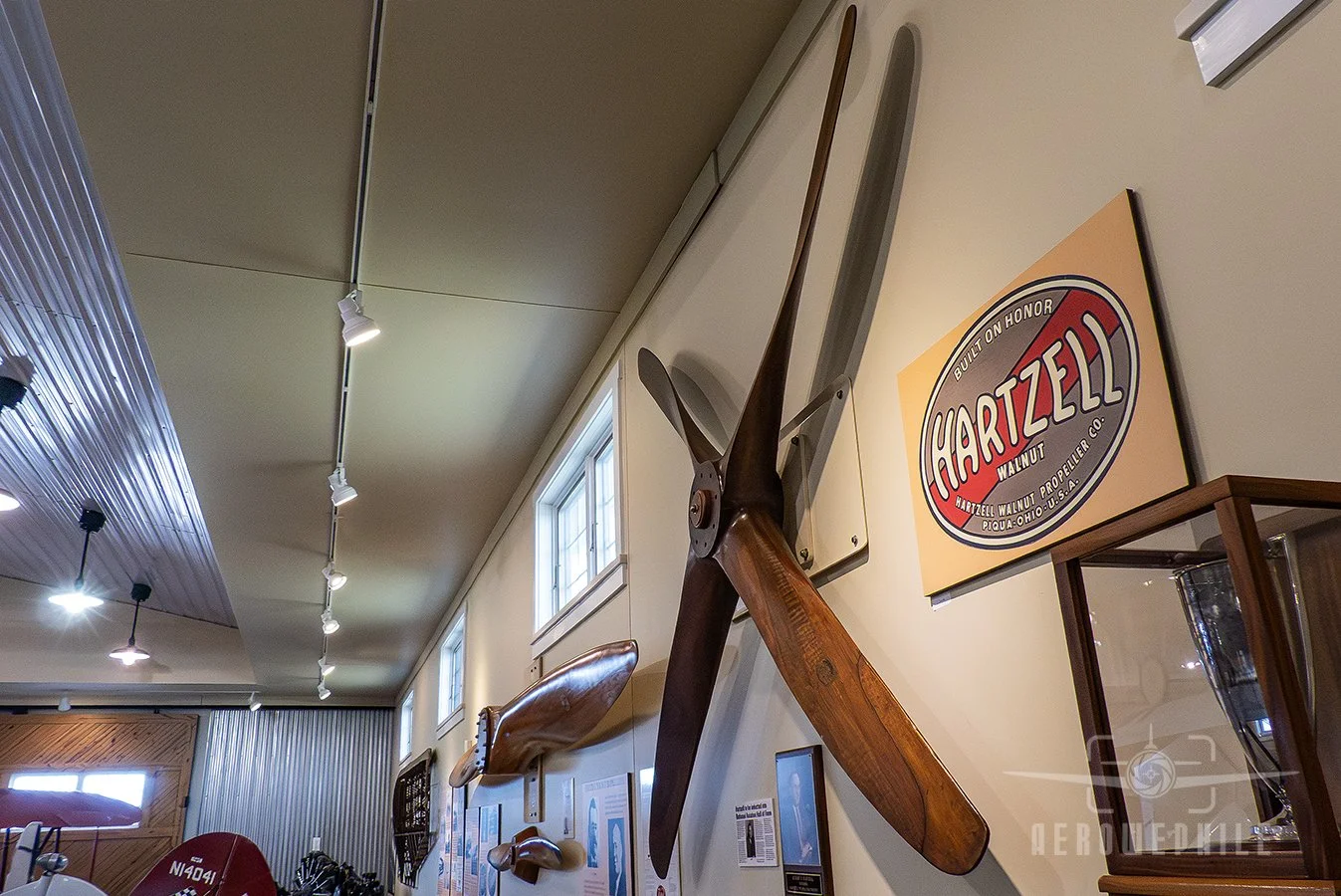
Other side of the Hartzell propellor wall display.
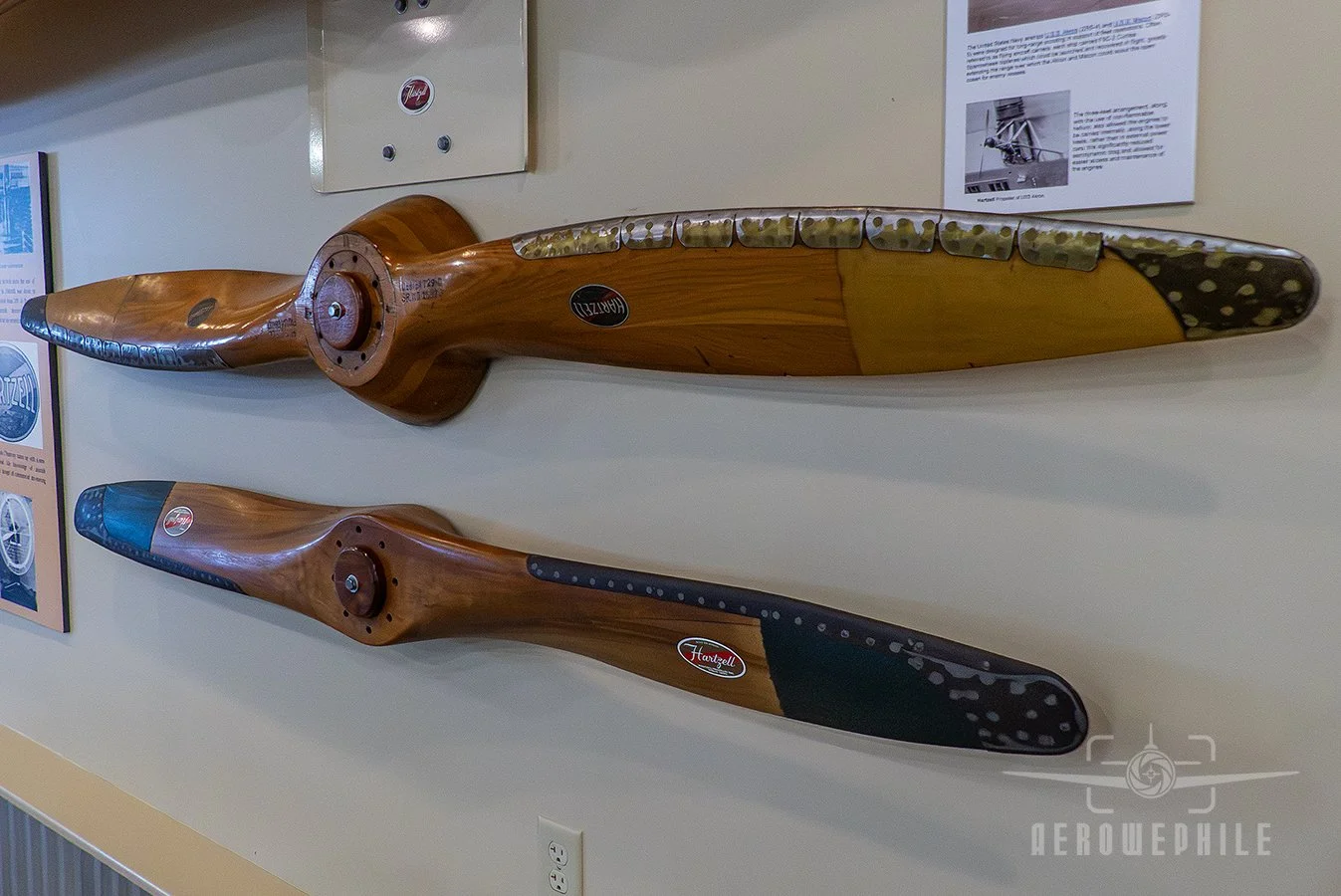
Some very large Hartzell propellors on display.
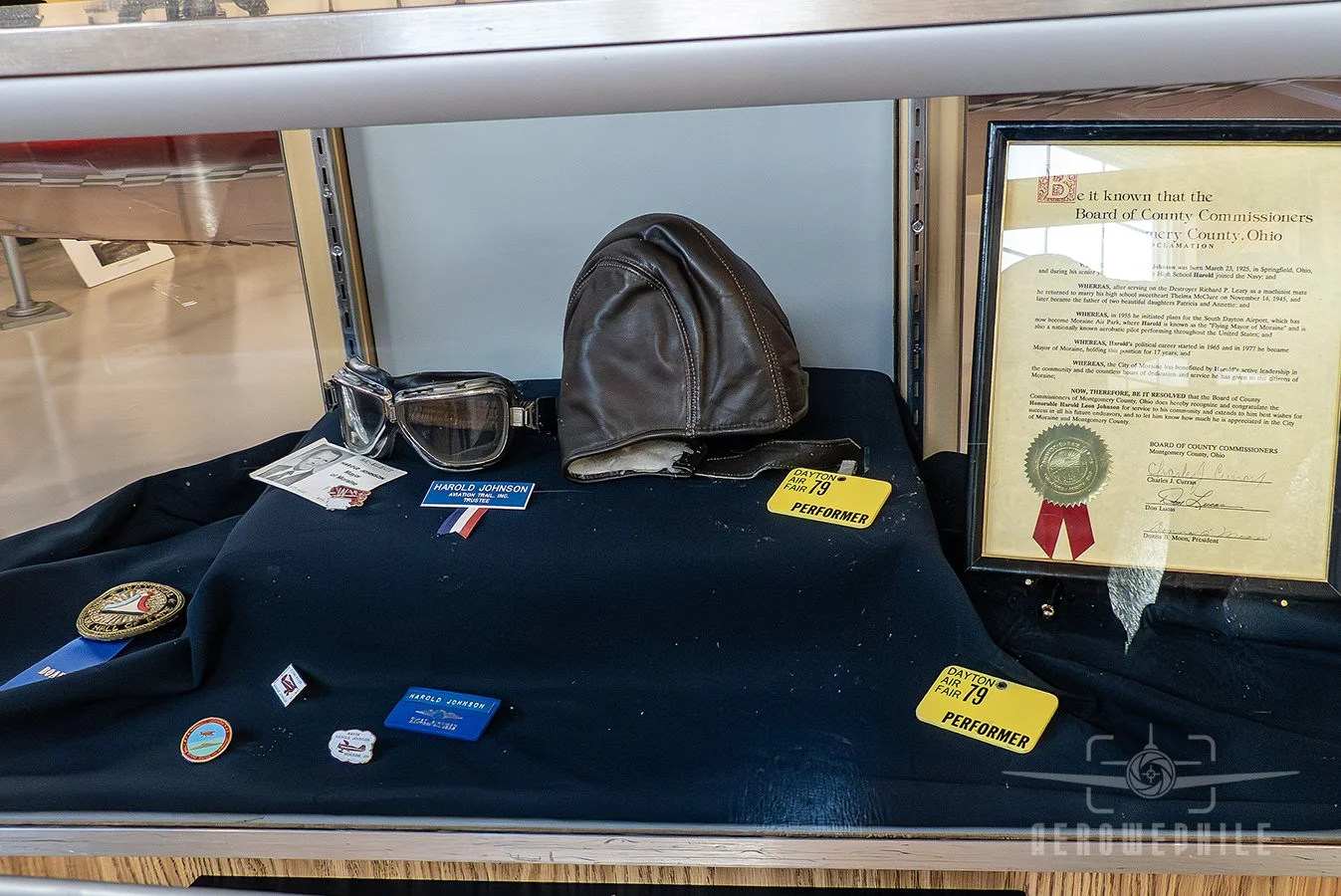
Pilot Harold Johnson artifacts on display.
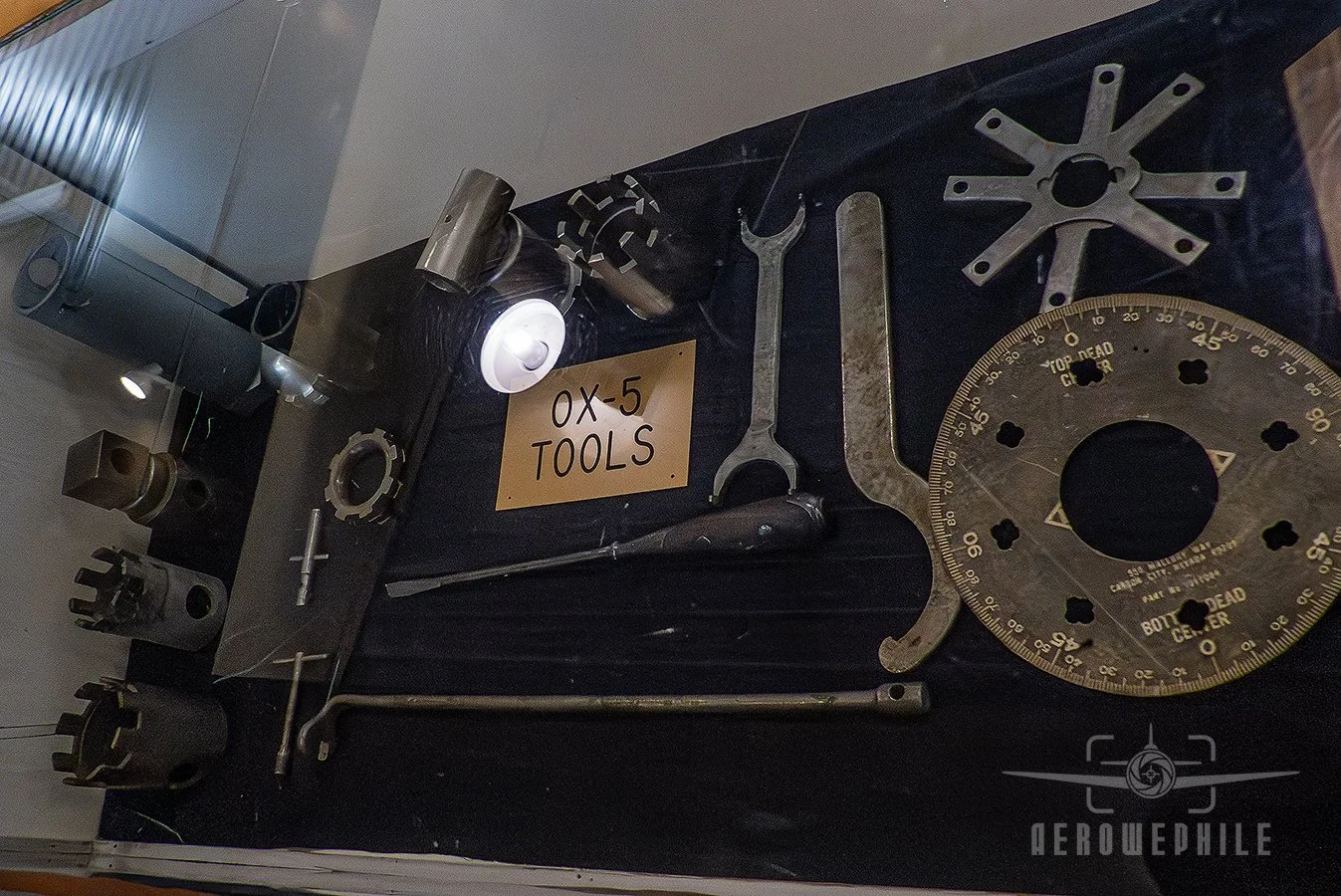
OX-5 tools on display.
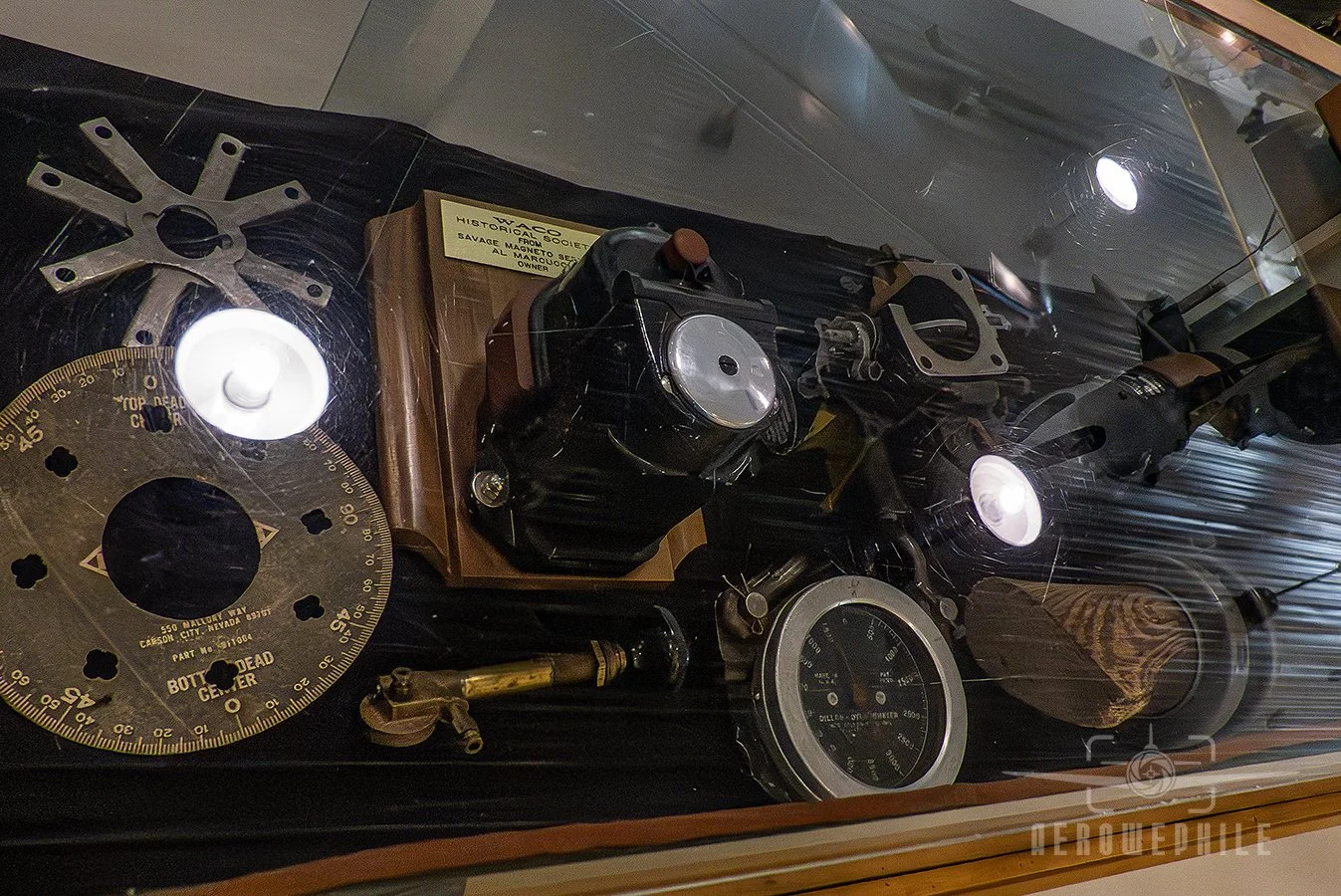
OX-5 tools on display.
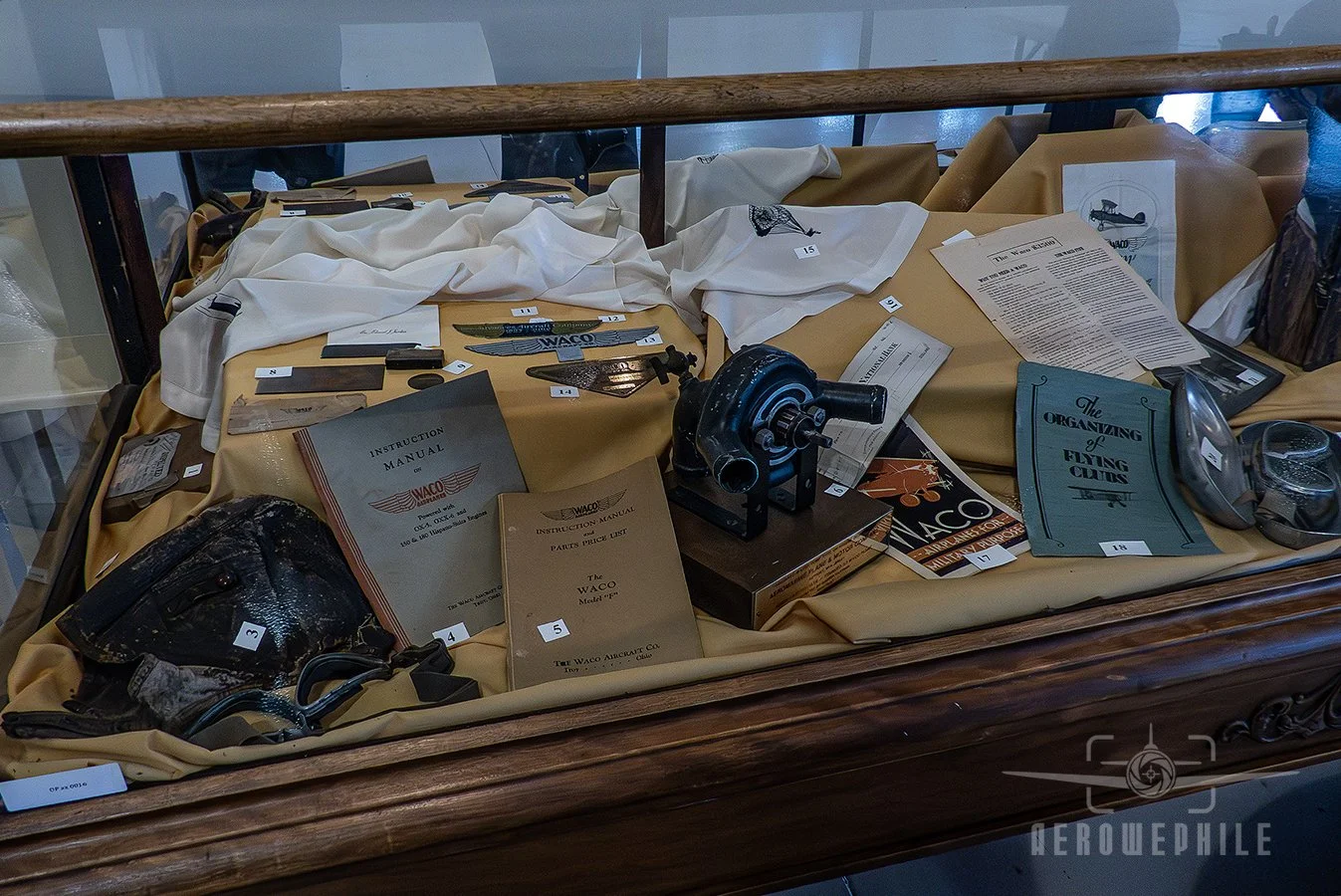
WACO artifacts on display.
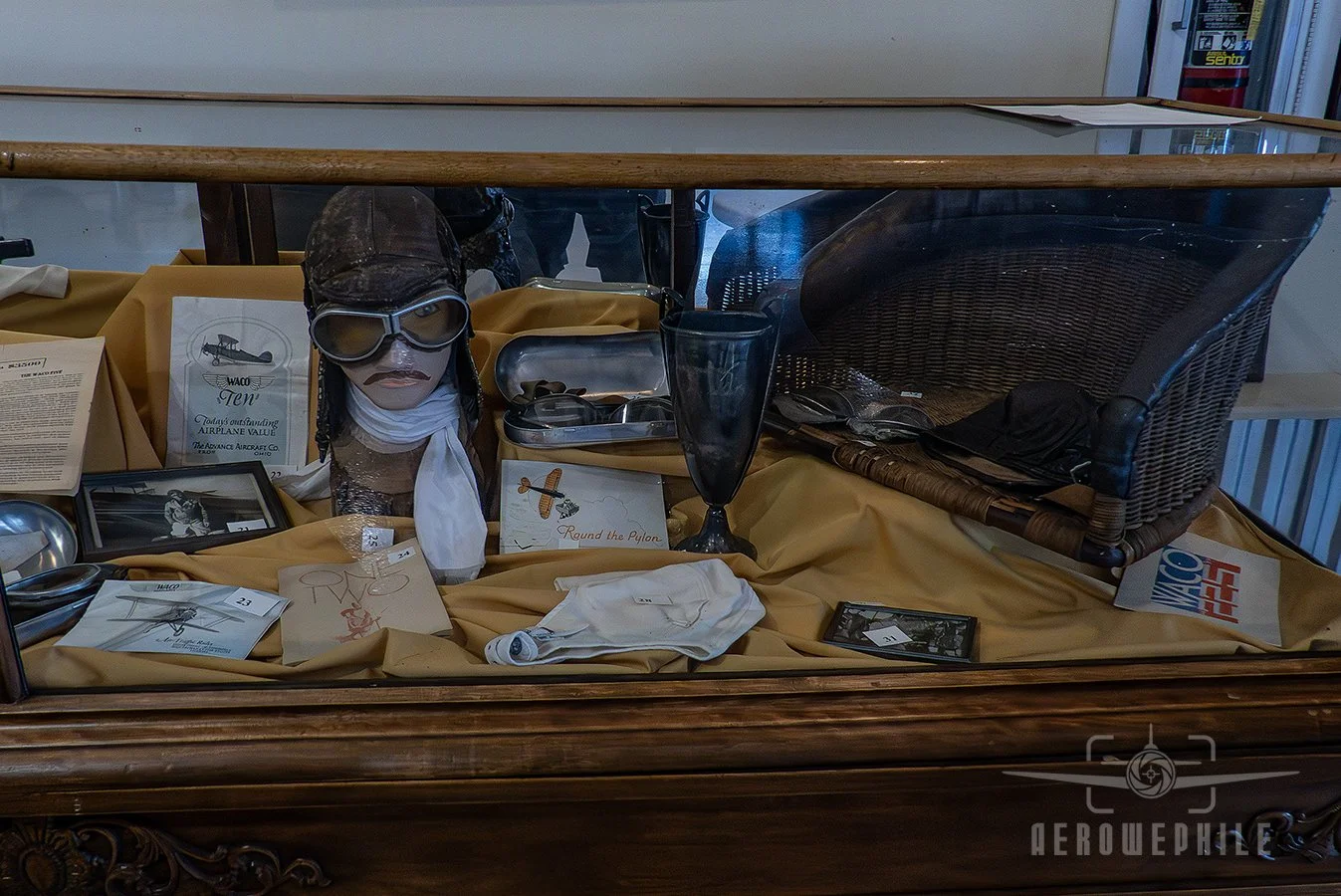
WACO artifacts on display.
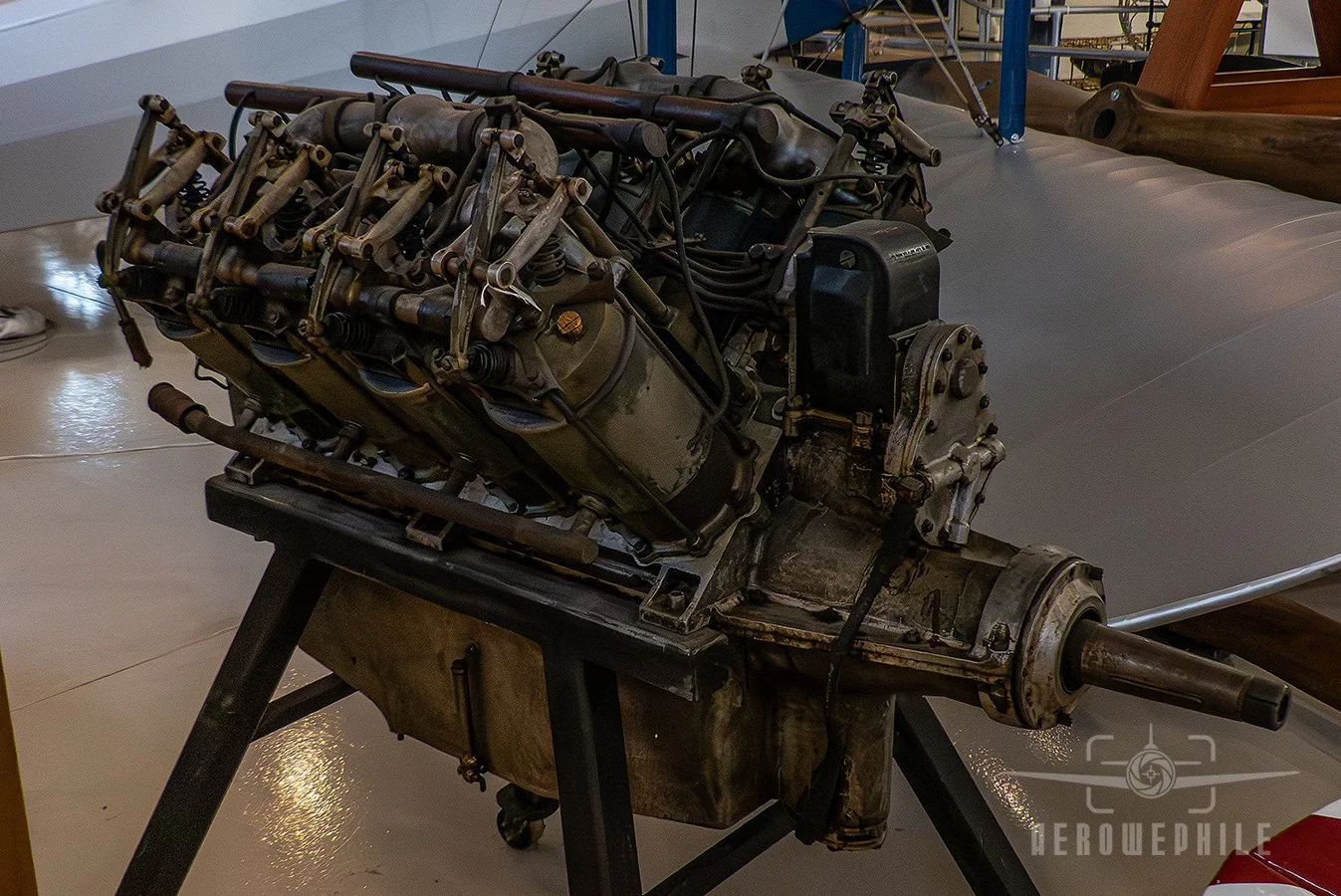
V-8 engine on display.
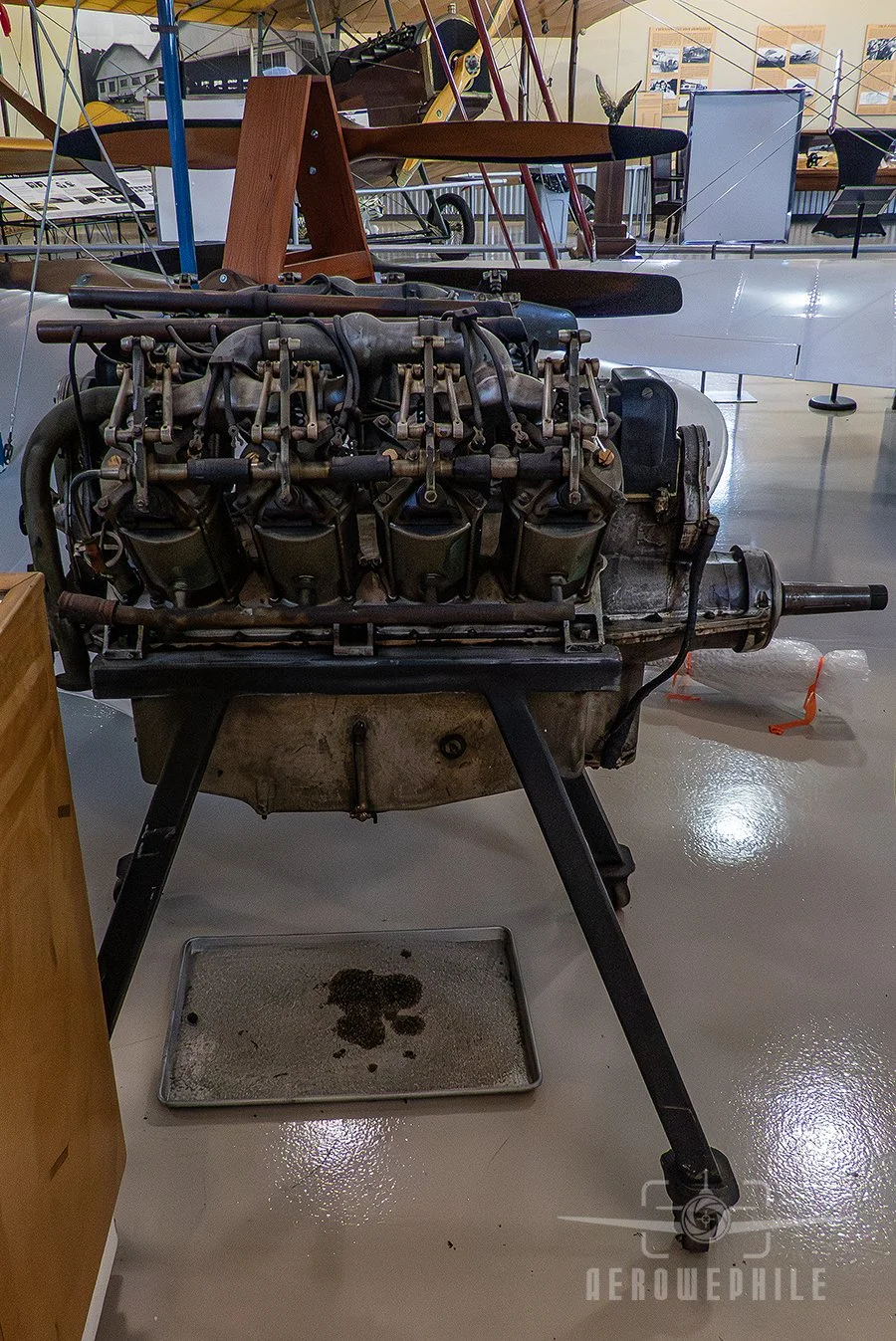
V-8 engine with oil drip pan underneath.
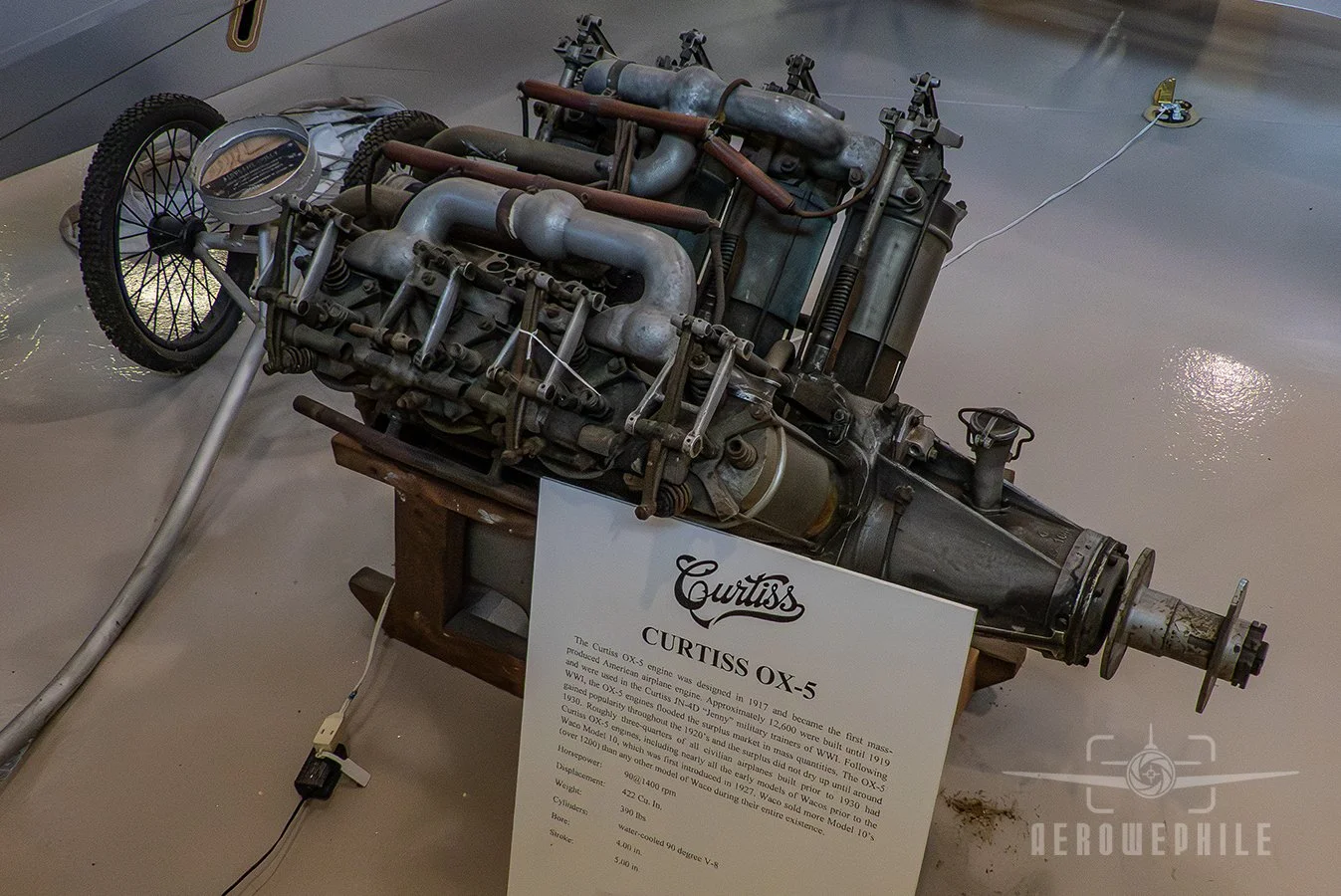
Curtiss OX-5 radial engine.
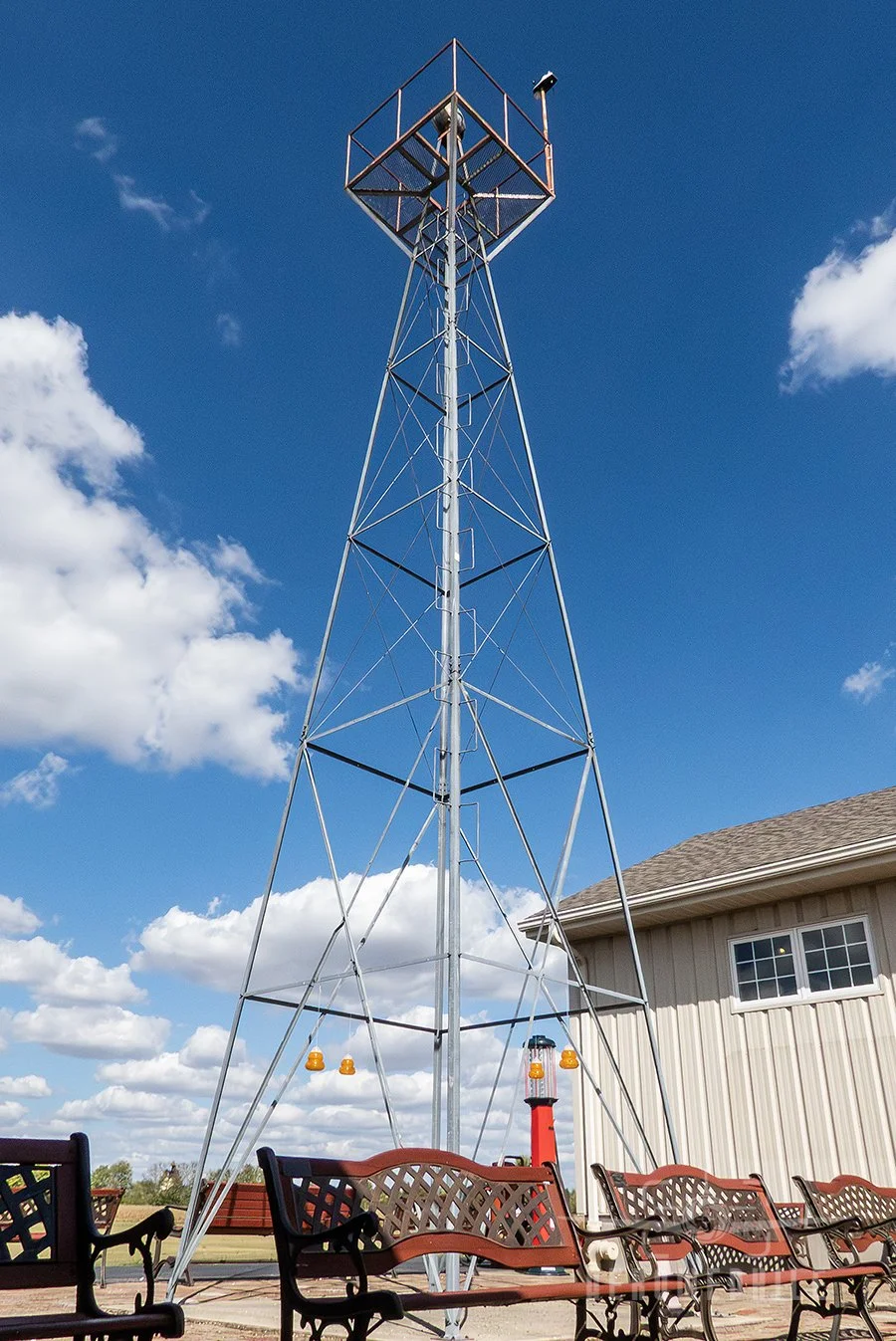
Beacon light outside the Willis Wing hanger.