

Wright Brothers Memorials - Dayton, Ohio
Dayton, Ohio - Home to the Wright Brothers. The birthplace of powered flight. This is where the Wright Brothers dreamed, designed, developed, and delivered one of the greatest inventions in human history. The city of Dayton has several locations and a memorial dedicated to the Wright Brothers spread out around the city and surrounding area. The Wright Brothers home, several of their bike shop locations, their flying field & training center, and a monument are all within a short drive around the city.
25Sep25
Wright Brothers Memorial
Wright Brothers Memorial is located on Wright Brothers Hill, Wright-Patterson Air Force Base, Ohio. The memorial was constructed from 1938 to 1940. The memorial park commemorates the exceptional achievements of the Wright brothers. The site overlooks the Huffman Prairie Flying Field, a National Historic Landmark where the Wright brothers mastered their flying skills and developed the first practical airplane, the Wright Flyer III.
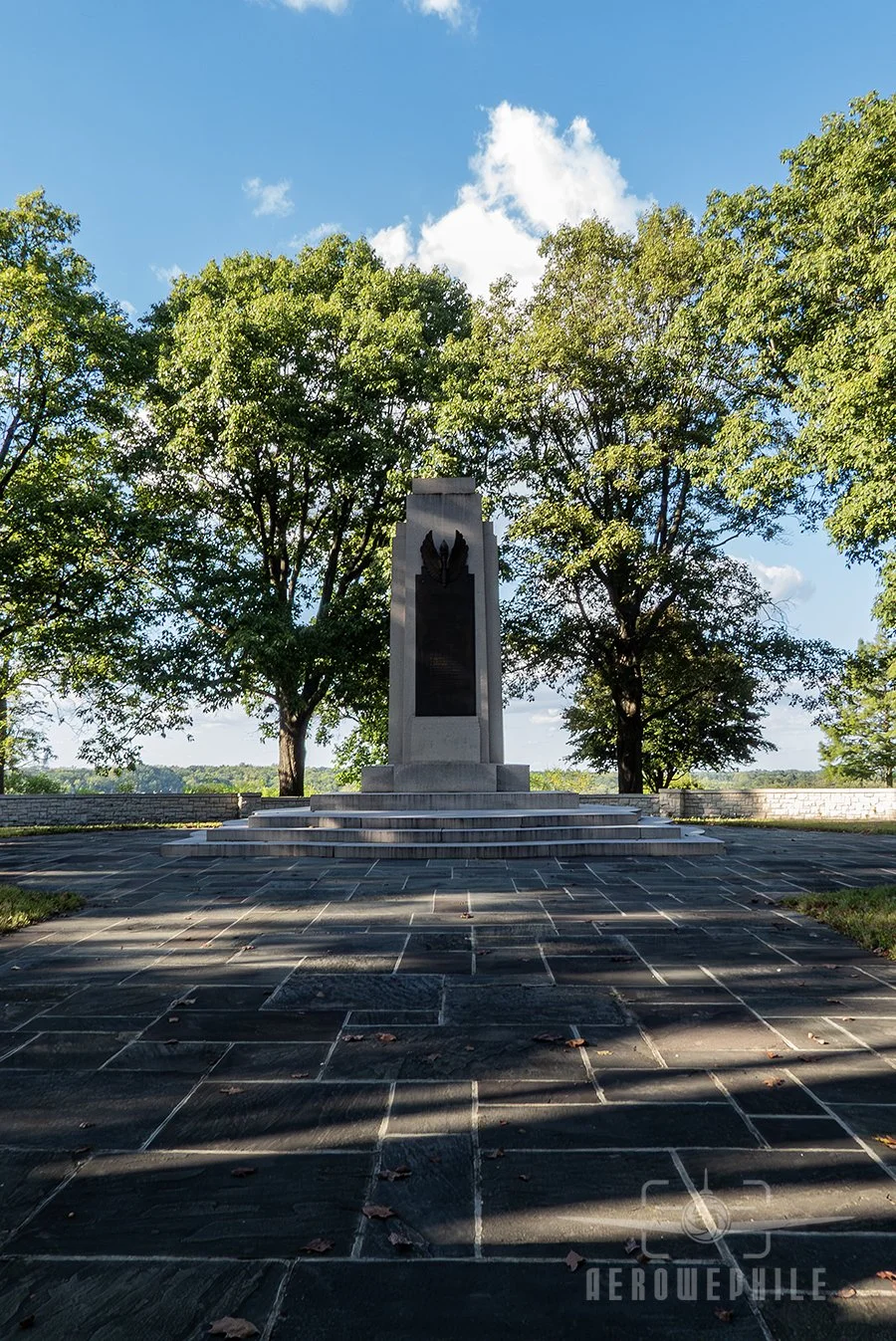
The idea for a Wright brothers memorial in Dayton was first formulated in 1910 by a group of influential members of the Dayton community who called themselves the J. Sprigg McMahon’s Committee. This committee was unable to come to any decisions regarding the memorial and the idea gradually faded away.
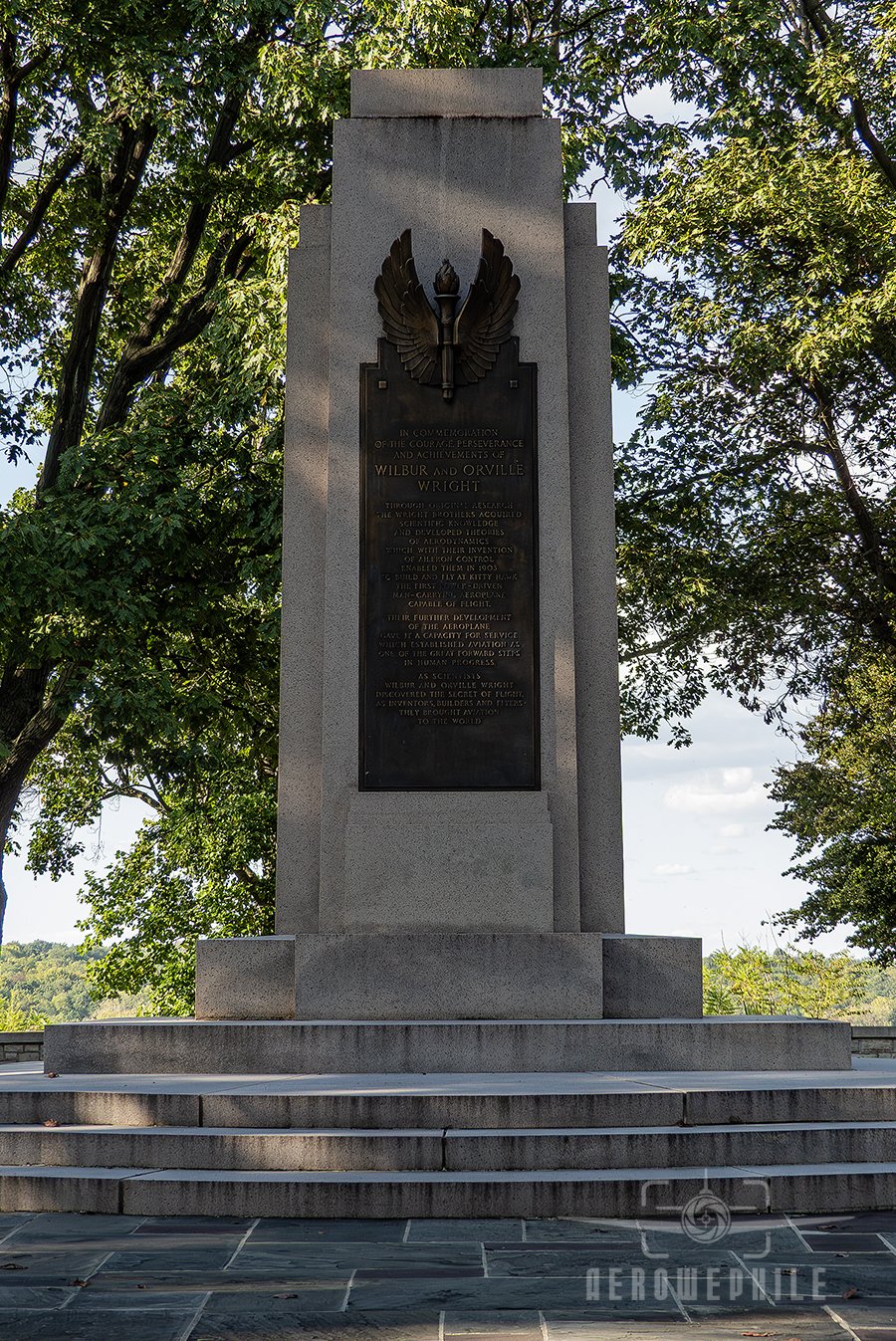
The original J. Sprigg McMahon’s Committee was re-formed, and in 1913 it was renamed the Wright Memorial Commission. The committee began plans for the erection of a memorial, and the sculptor of Mount Rushmore, Gutzon Borglum, was asked to create a sculpture as the focal point of the memorial. In a meeting on February 14, 1913, Percy R. Jones of the Olmsted Brothers firm and Borglum decided that the memorial would consist of a shaft with a winged figure on top.
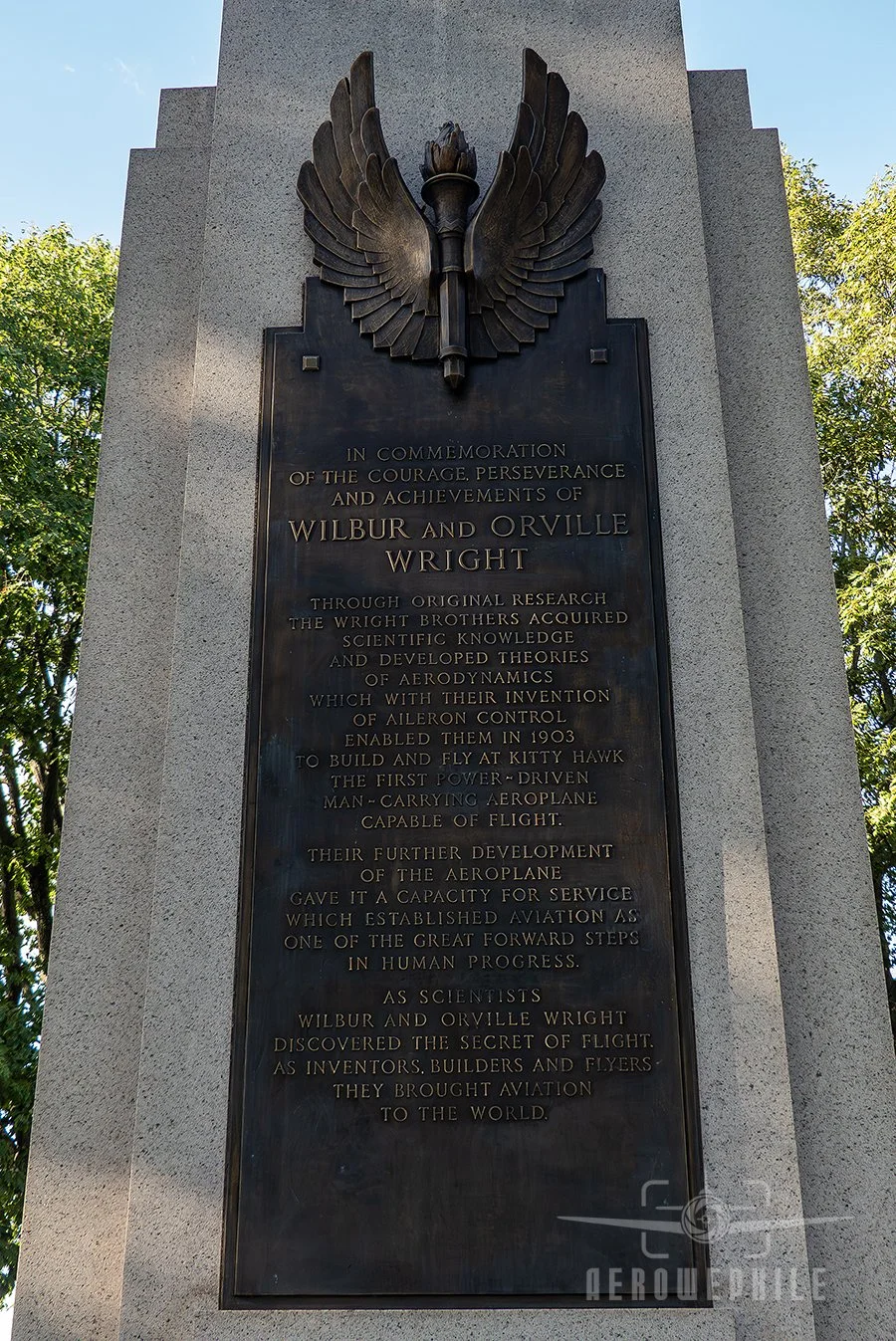
In 1922, the Wright Memorial Commission was reestablished as the Wilbur and Orville Wright Memorial Commission. The Wilbur and Orville Wright Memorial Commission was chaired by Colonel Deeds, a close friend of the Wright brothers. Deeds personally contacted the Olmsted firm about designing the Wright brothers memorial, and the firm’s design was accepted on October 7, 1938. Orville Wright was himself deeply interested in the memorial. He was consulted on its conceptual design and asked for his “criticism and suggestions” regarding the memorial. While Gutzon Borglum was originally contracted to design the memorial statue in 1913, who ultimately created the existing sculpture is unknown.
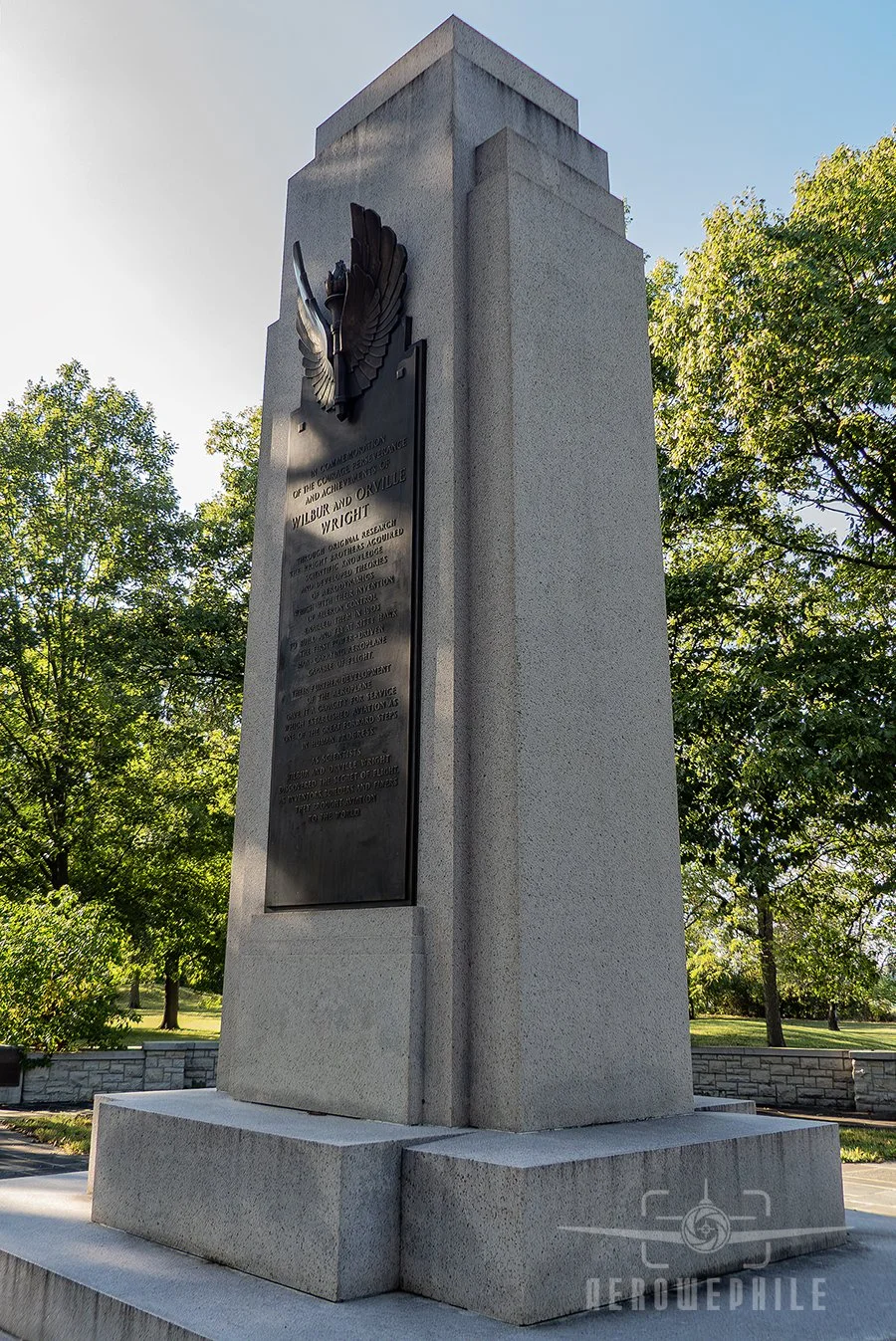
The dedication of Wright Brothers Hill was held on August 19, 1940, Orville Wright’s sixty-ninth birthday. The ceremony began with an invocation by Bishop A. R. Clippinger. Other speakers included Major General Henry H. Arnold of the U.S. Army and Captain Kenneth Whiting of the U.S. Navy. The granite shaft was unveiled by Leontine Jameson and Marianne Miller, grandnieces of Orville Wright. Former Ohio governor James Cox closed the ceremony.
Wright Brothers Homestead and Bike Shops
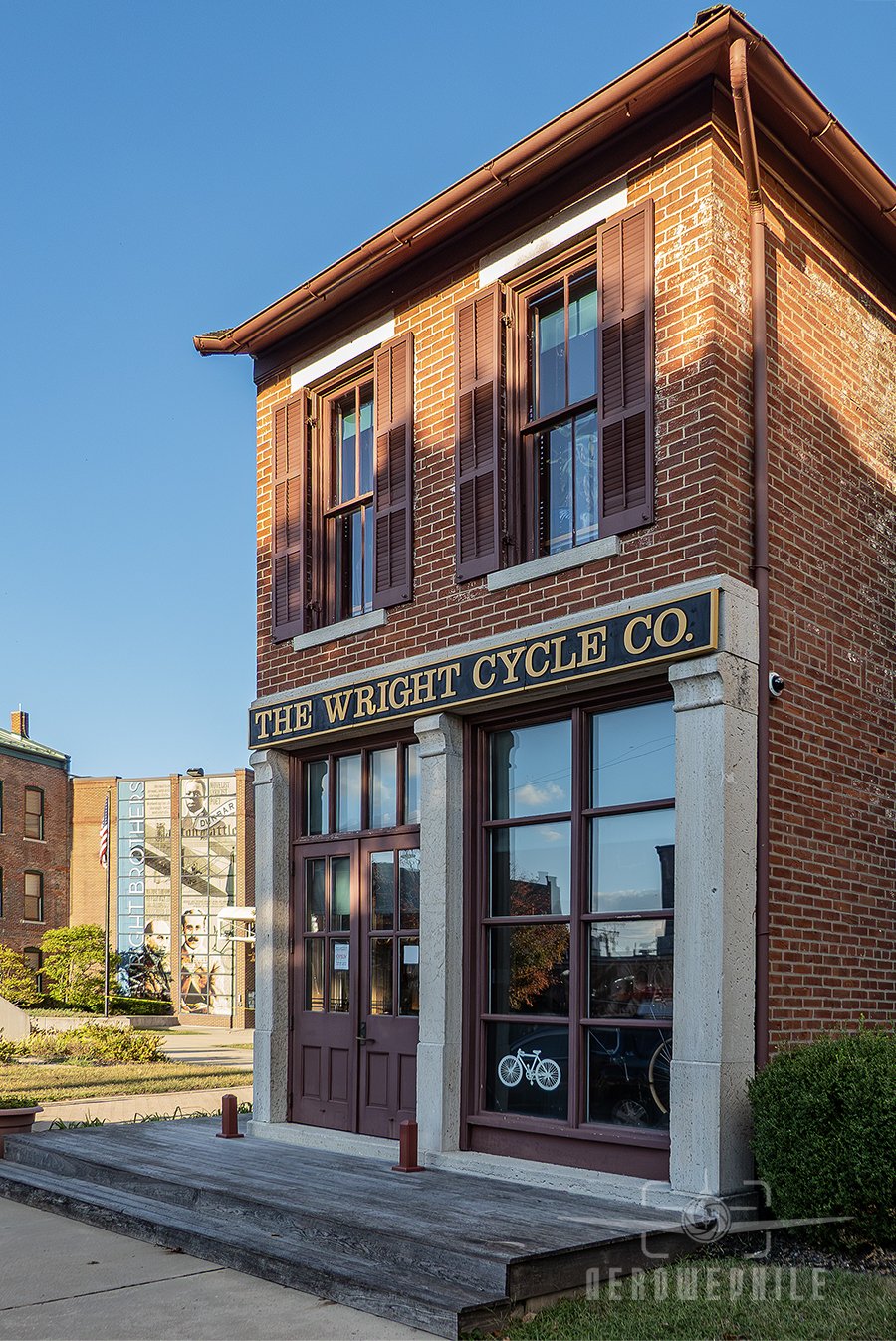
Wright Cycle Shop #4 in downtown Dayton, OH. Located about one block from the Wright Brothers home.
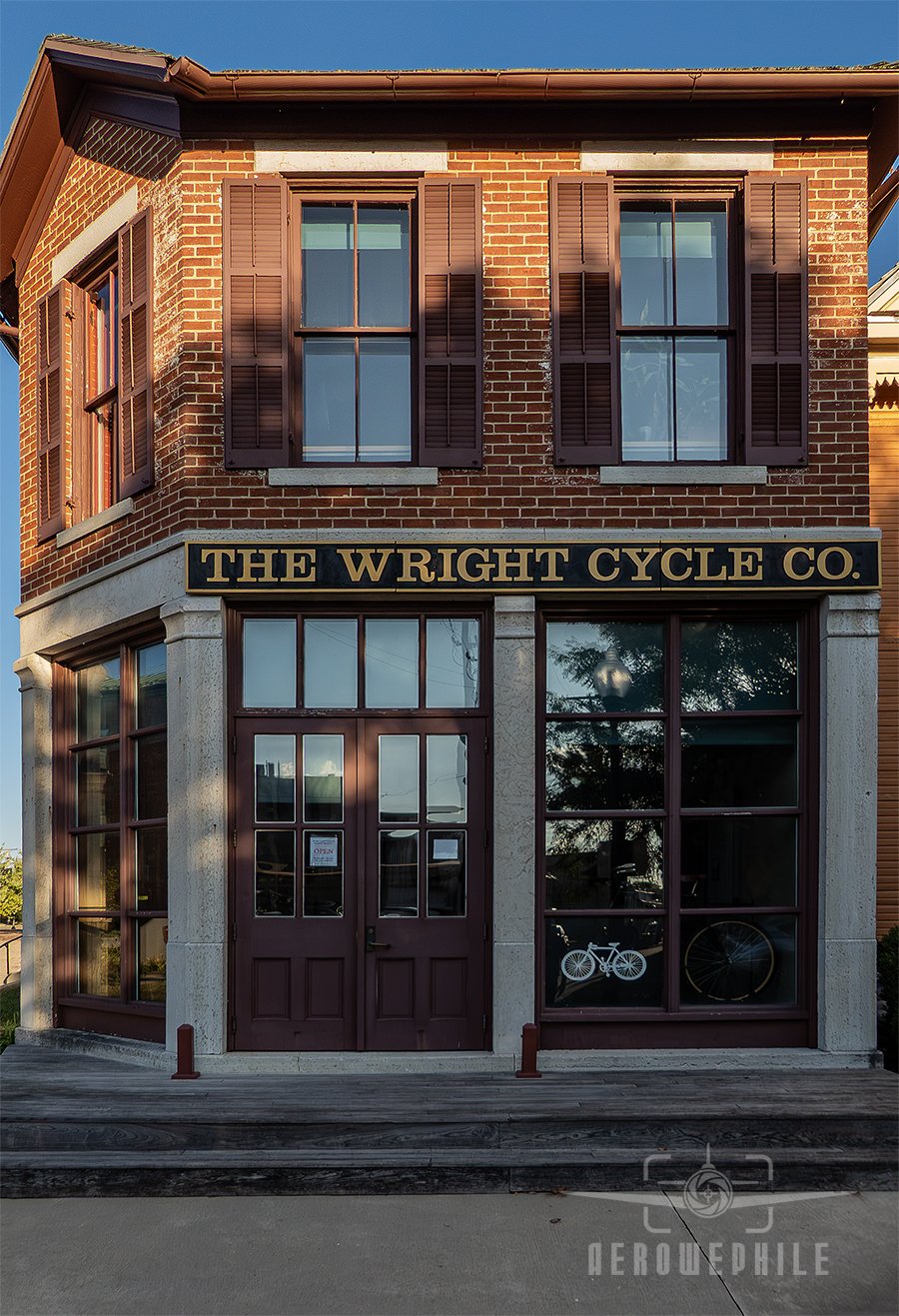
One of the bike shops where the Wrights fixed bicycles and refined their mechanical ingenuity to develop the world's first practical airplane.
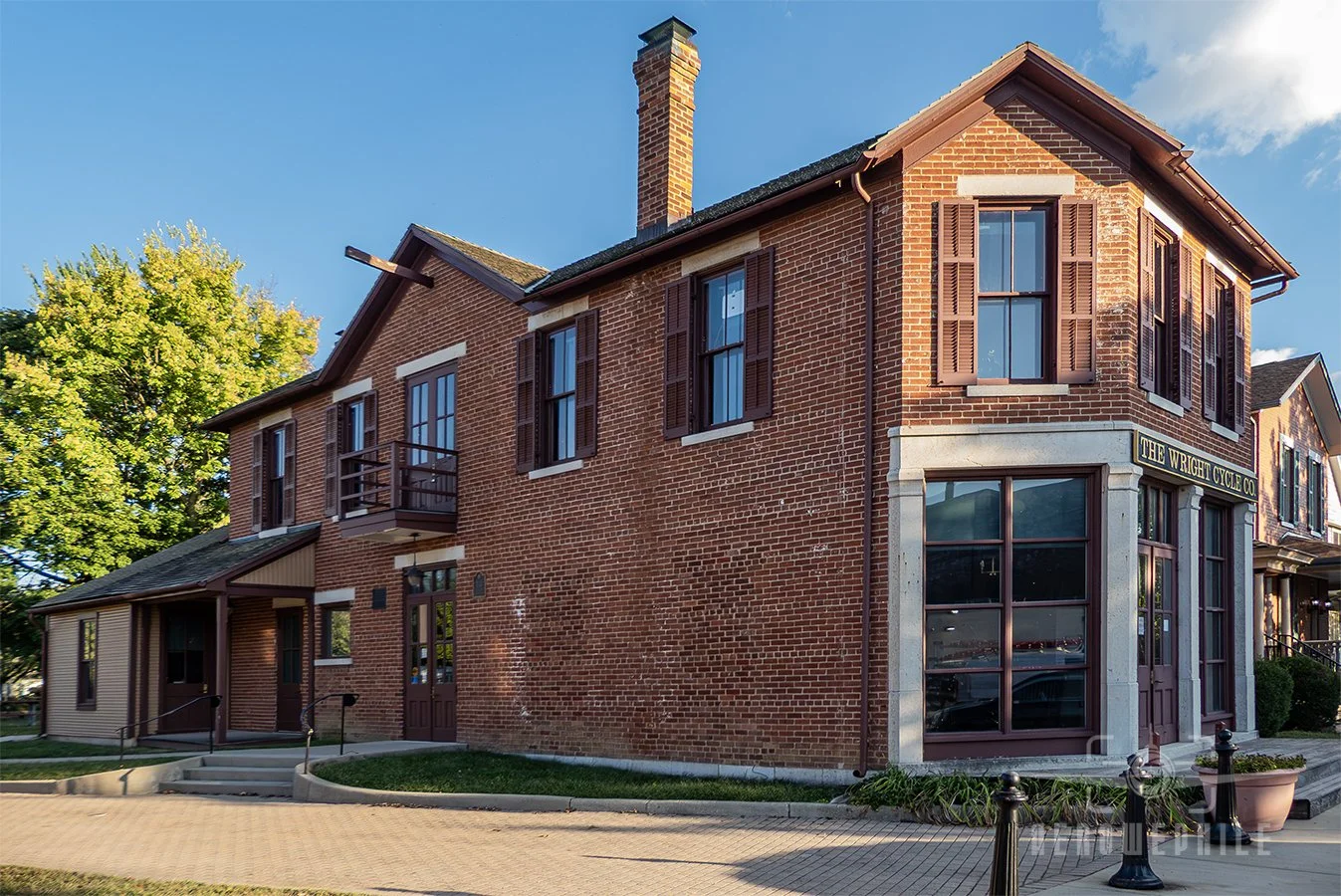
The brick building at 22 South Williams St., where the Wrights worked from 1895 to 1897, is the only extant building on its original foundation and in its original location that housed a Wright bicycle shop. They ran a printing shop on the second-floor.
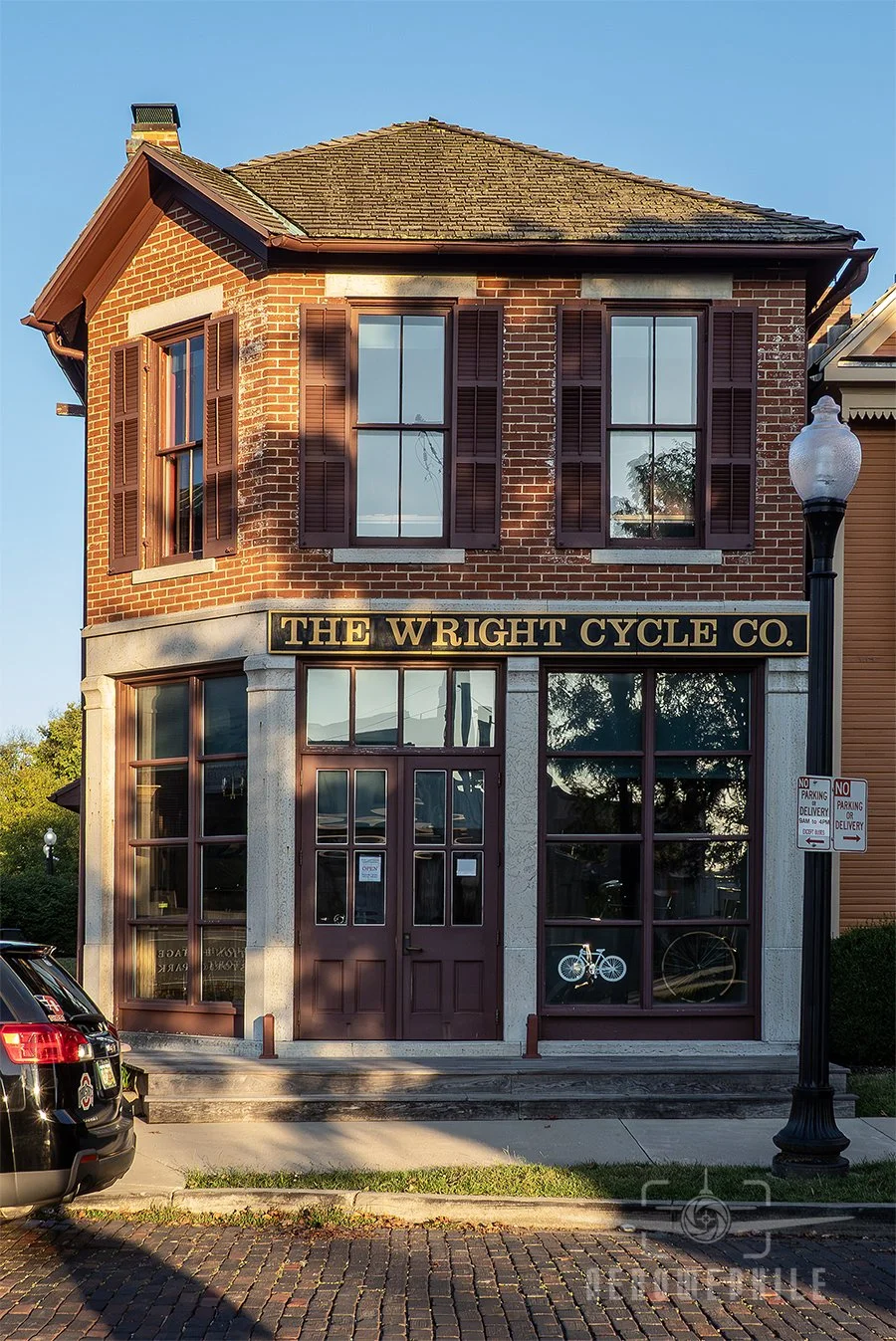
From 1895 to 1897—Wright Cycle Co. was located at two locations—the main store at 22 South Williams Street (shown above), and a branch store in downtown Dayton at 23 West Second Street. The branch closed in 1896.

Wright Brothers signage on the side of the Wright-Dunbar Interpretive Visitor Center.
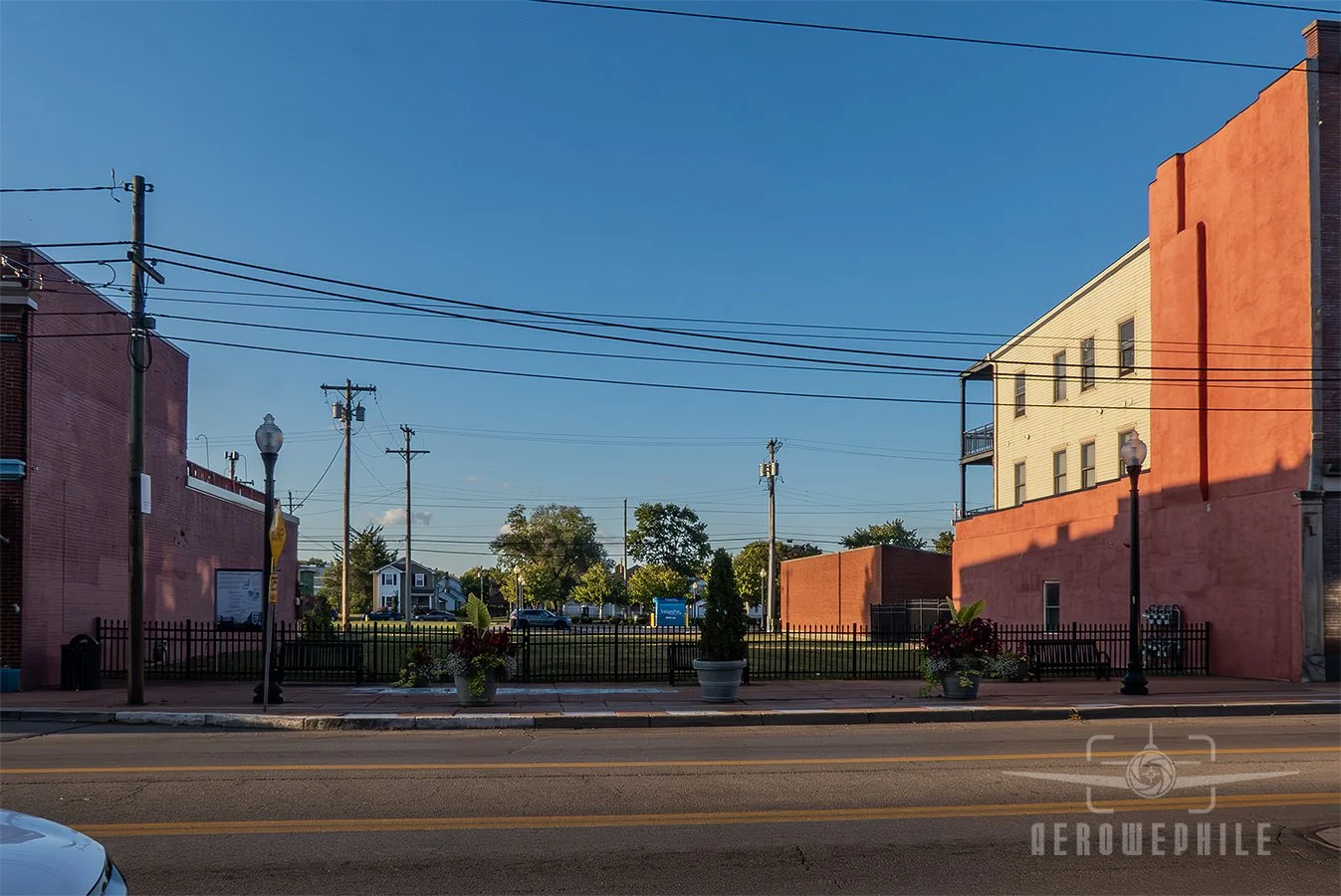
From 1897 to 1909—The Wright Cycle Co. was located at 1127 West Third Street. In 1937, with Orville's cooperation, the building at 1127 West Third St. was moved to Greenfield Village, Dearborn, Michigan, by Henry Ford.
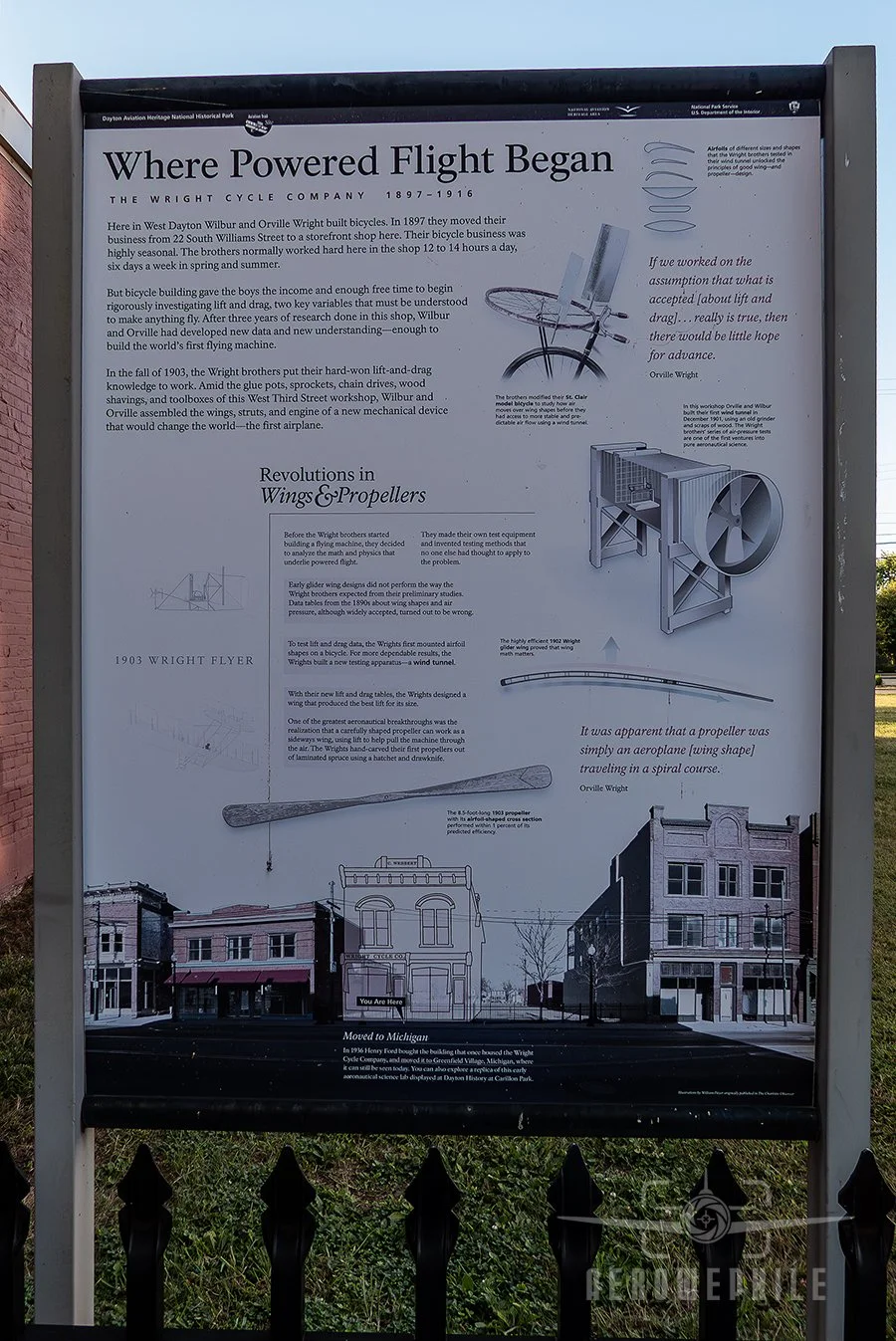
Marker detailing some of the Wright's accomplishments. Includes a representation of what the Wright Cycle Shop looked like before being removed from this location.
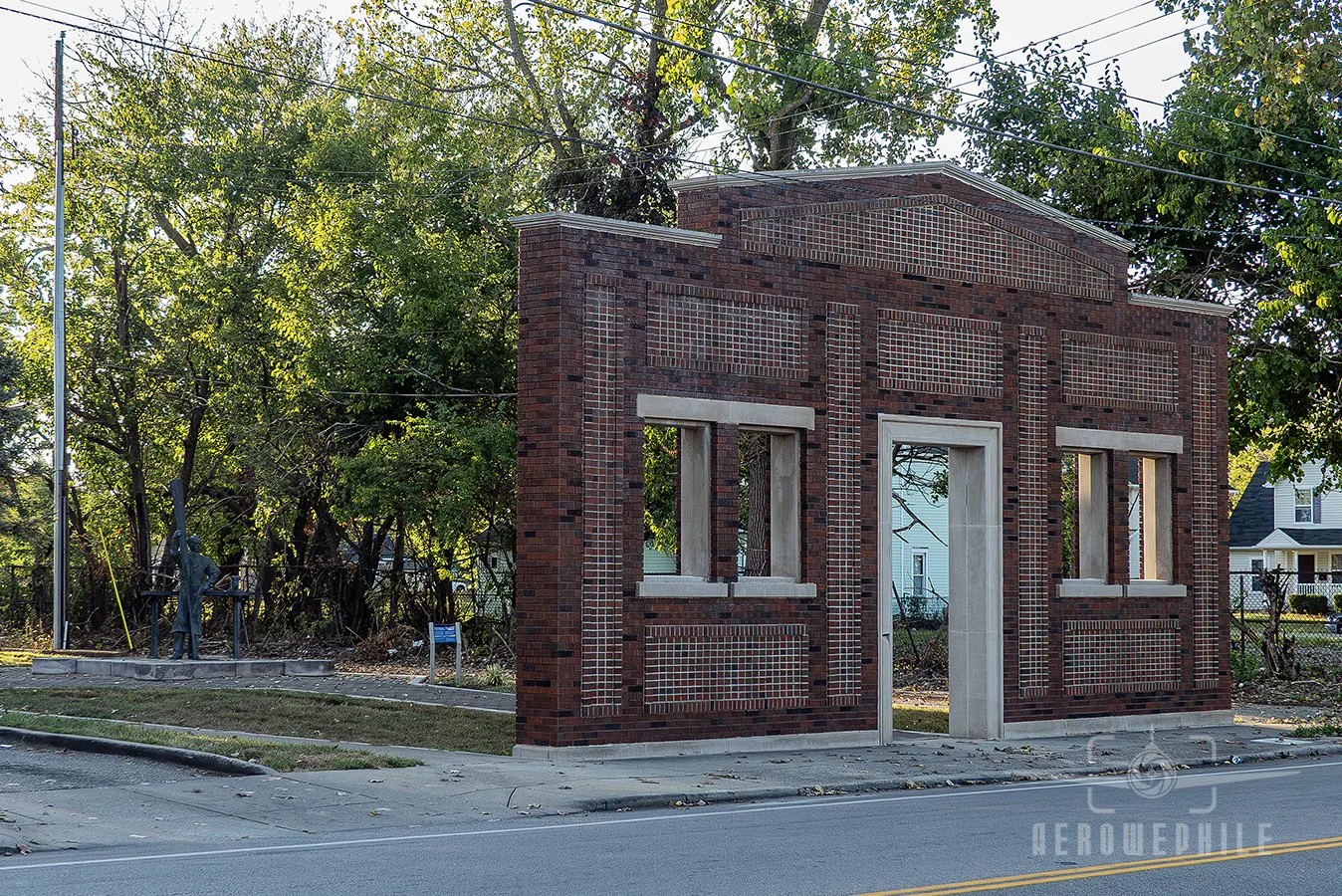
After the death of Wilbur Wright in 1912, Orville built a one story workshop at this location in 1916. The facade you see above was constructed to represent the original building which was torn down in 1976 by the Standard Oil of Ohio company for a gas station that was never built..
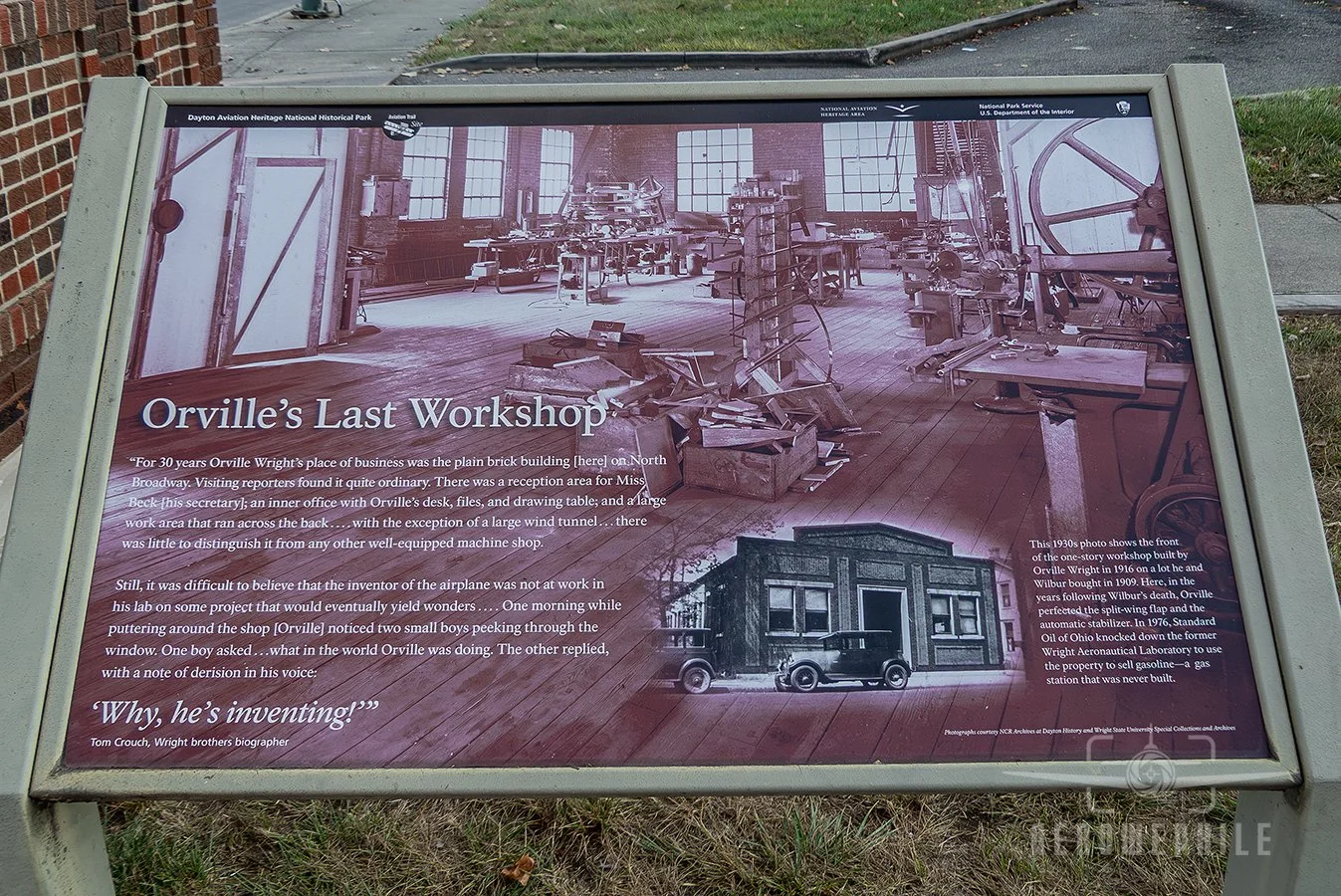
Marker detailing "Orville's Last Workshop". In this workshop, Orville continued his work with the development of powered flight. Here Orville perfected the split wing flap and automatic stabilizer.
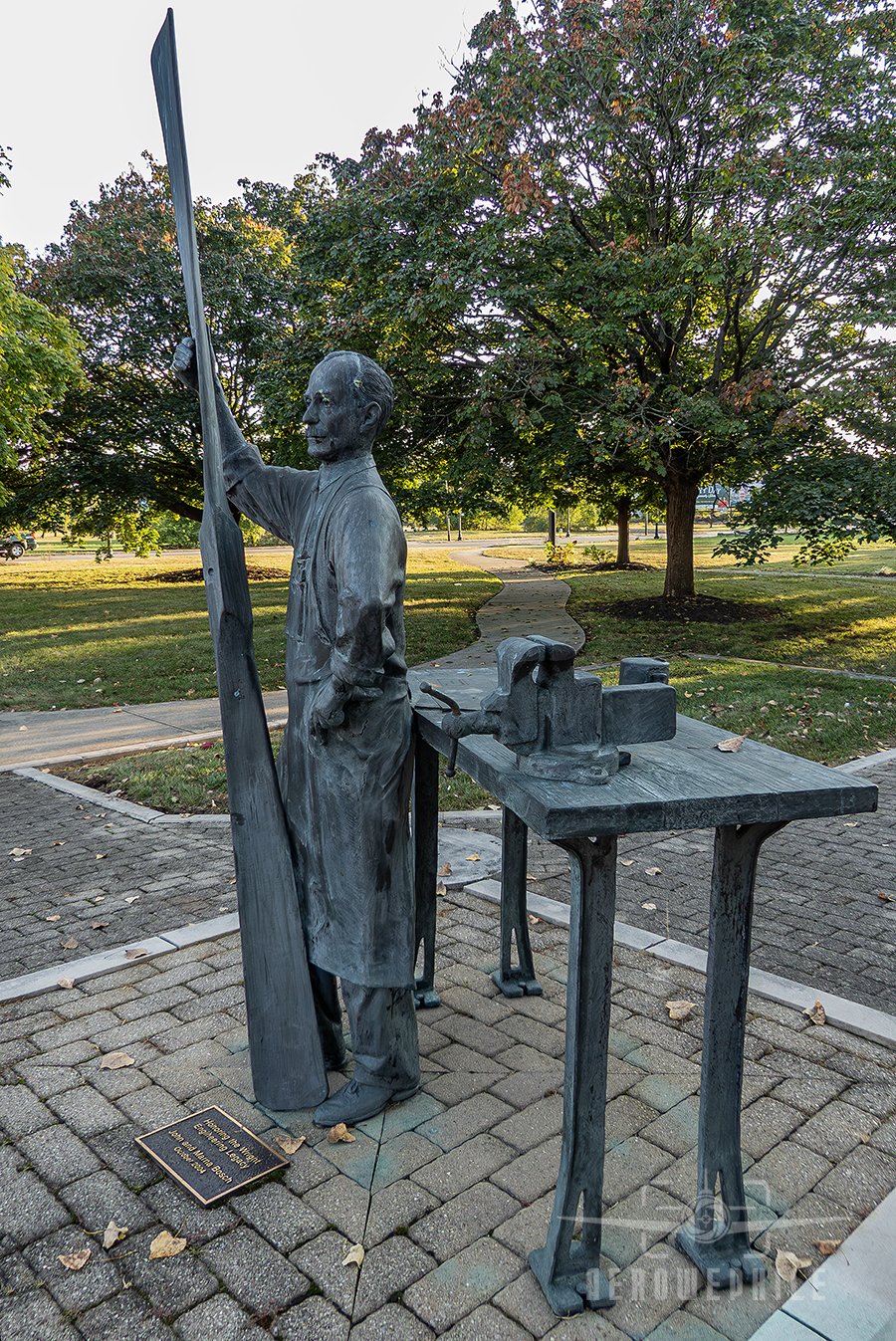
Statue commemorating Orville Wrights contributions to aviation. In addition to the Wright Brothers pioneering efforts in propellor design.
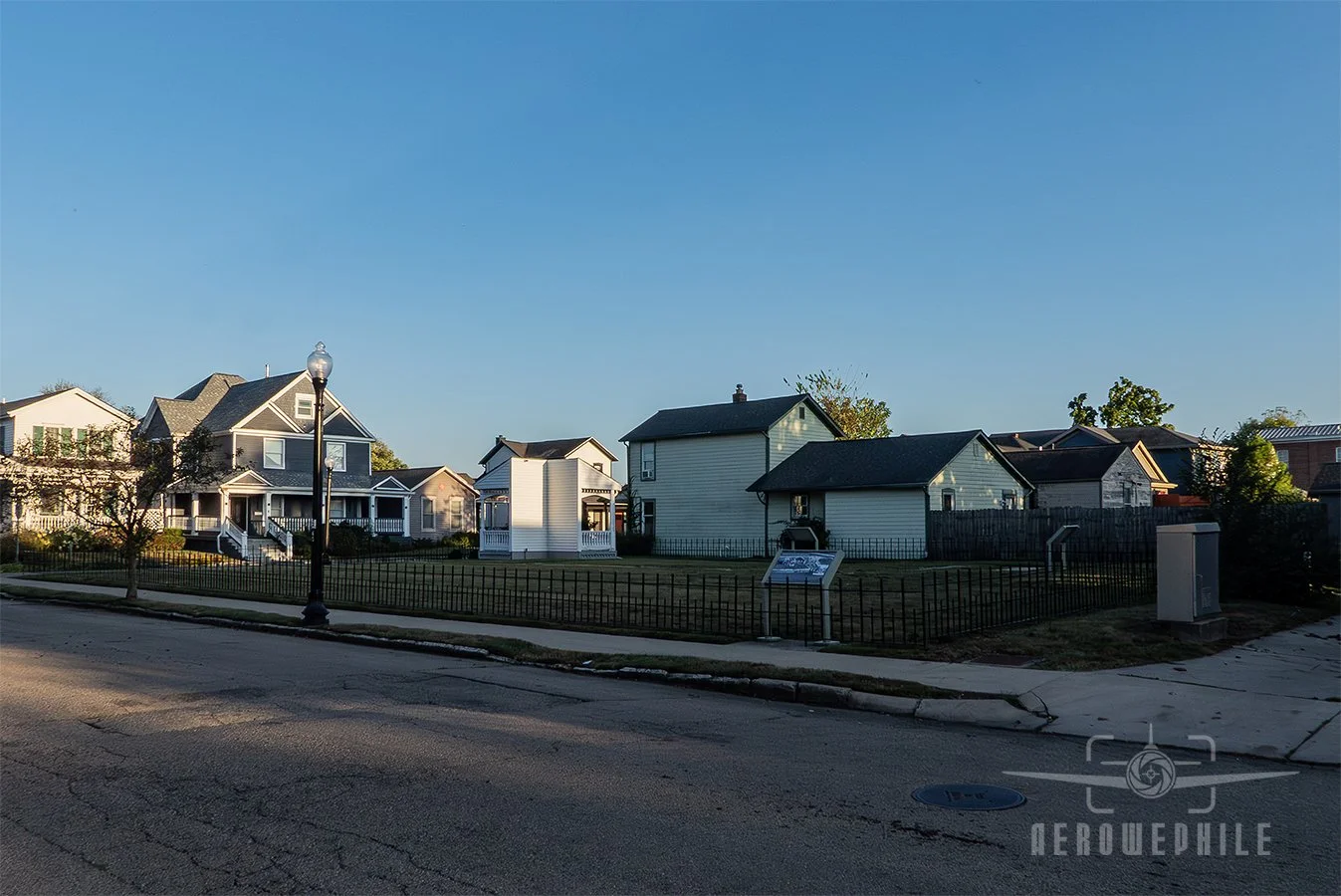
Located in West Dayton is the Wright Brothers home at 7 Hawthorn Street, Dayton, OH.
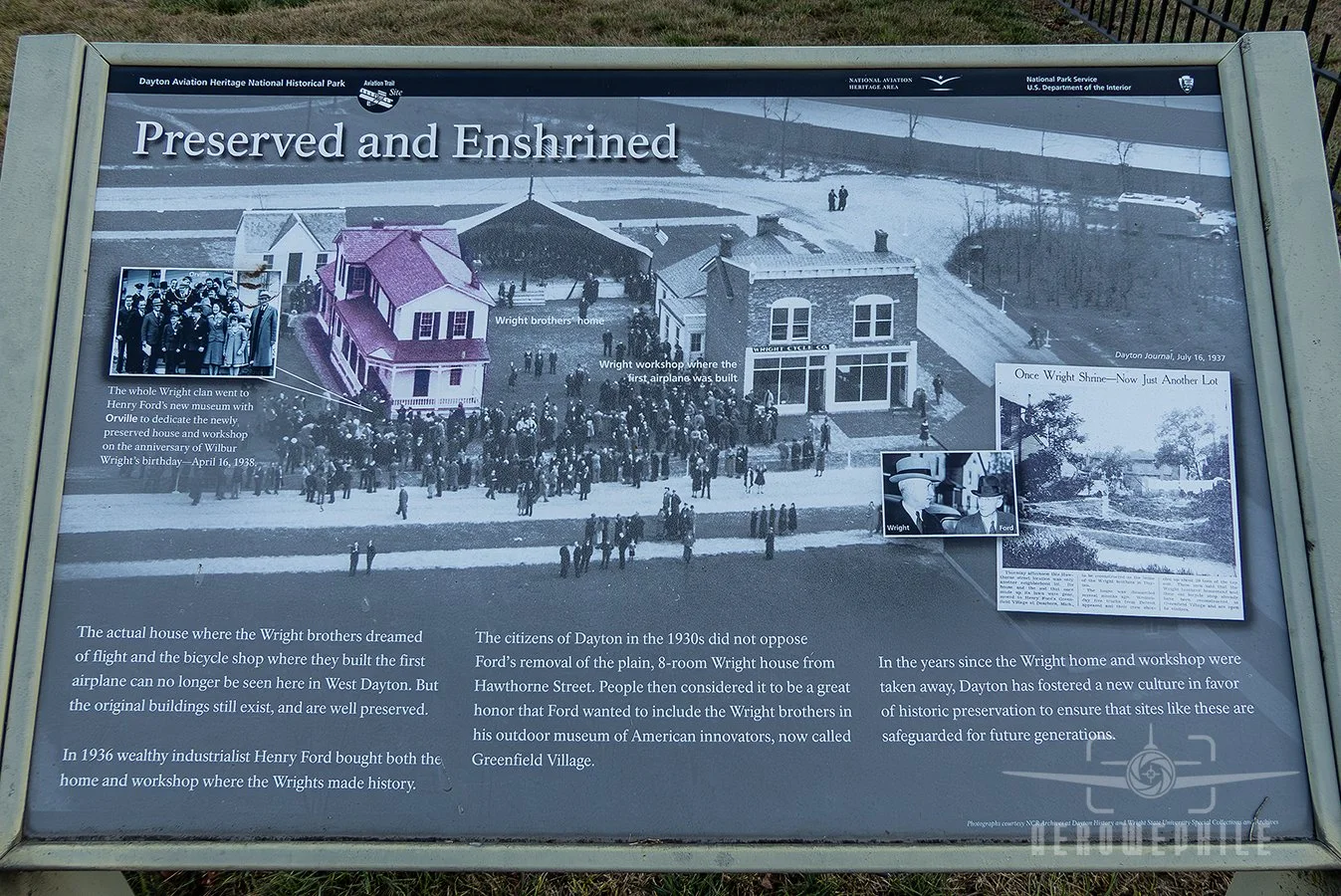
Marker detailing the Wright Brothers home and bicycle shop being moved from their West Dayton location to Henry Ford's Greenfield Village in Detroit, MI.
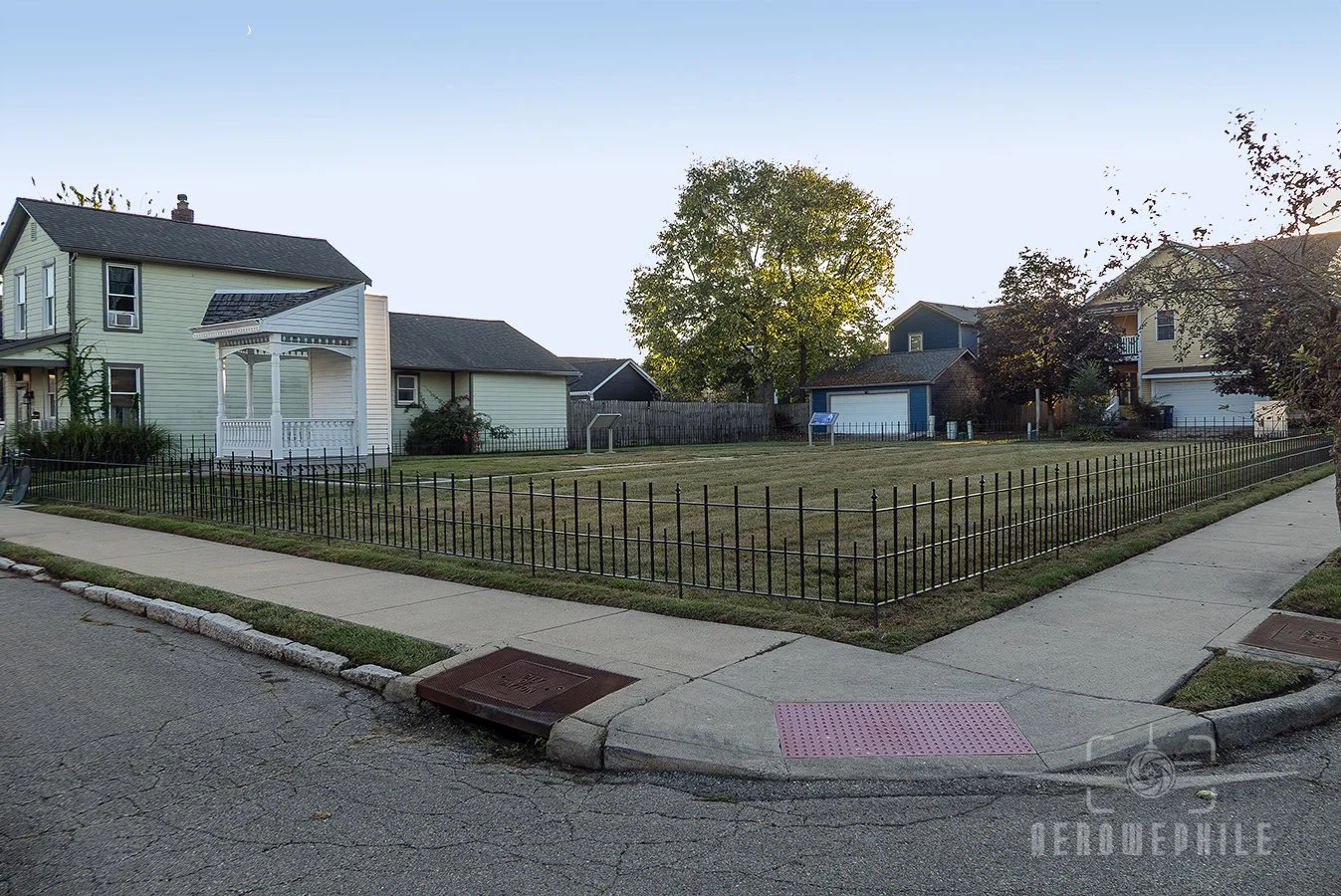
The empty lot is all that remains of the Wright Brothers home. A replica corner of the porch that surrounded the house shows where the house was located.
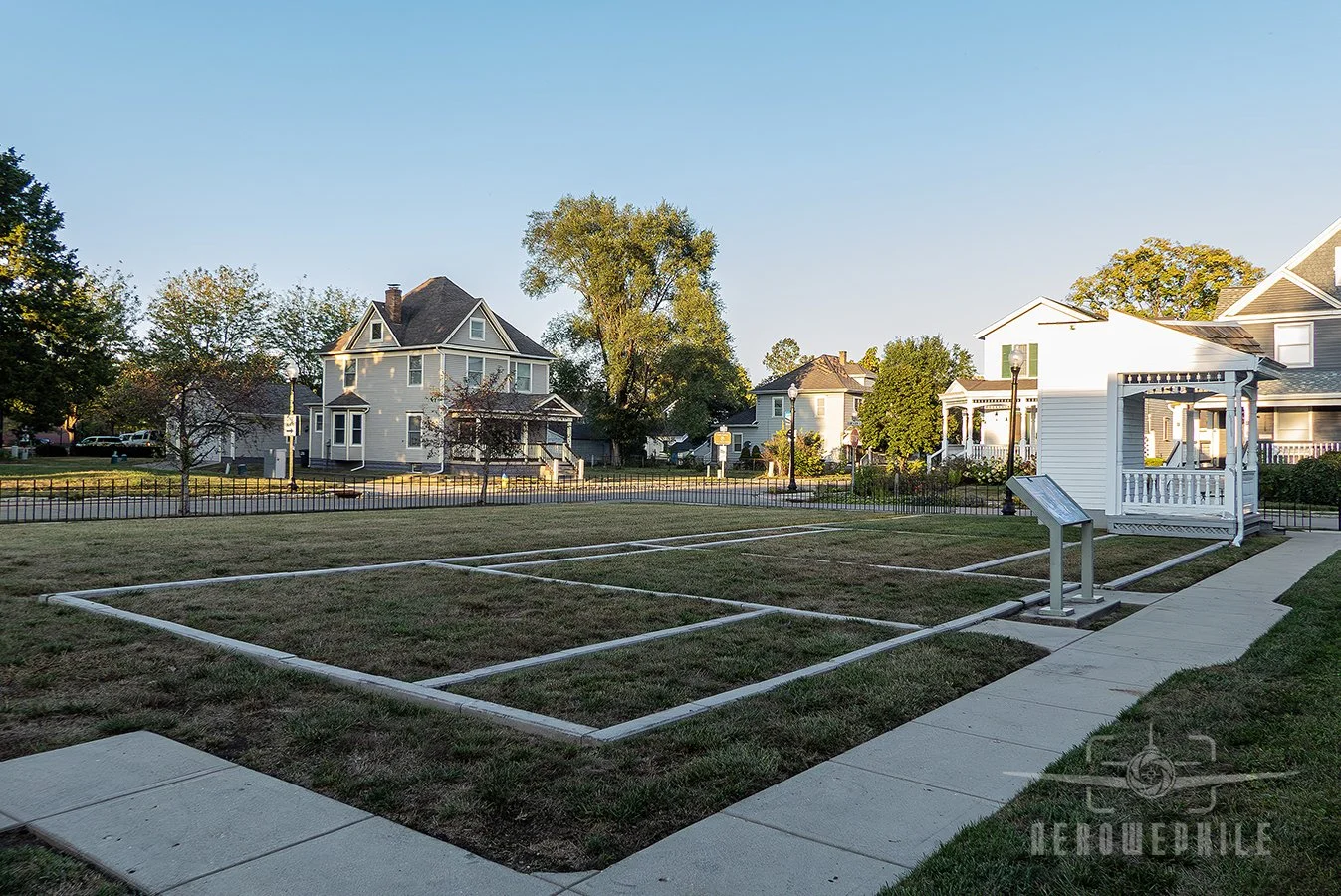
Footprint of the Wright Brothers home shown with the path laid out on the ground.
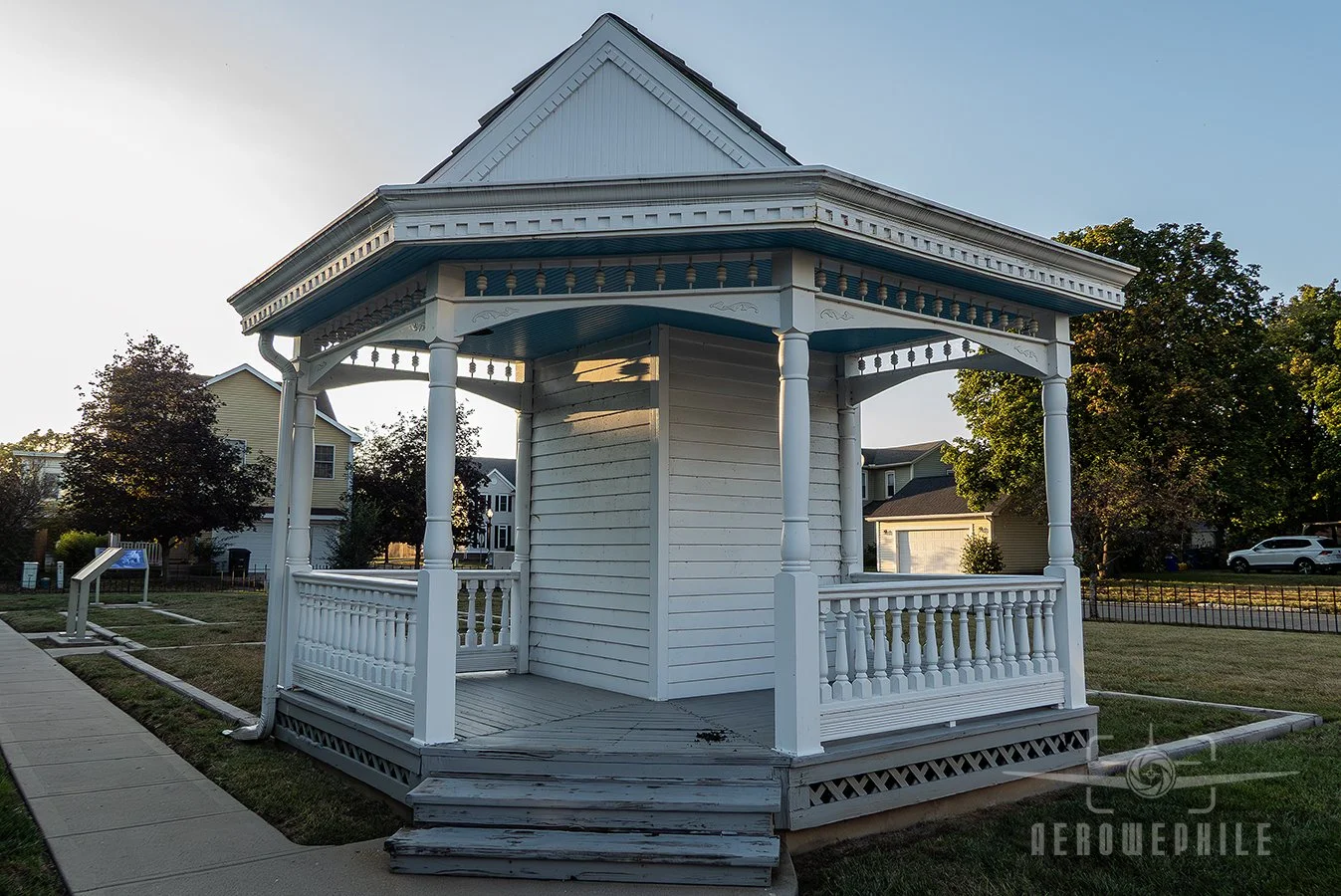
Close up of the Wright Brothers replica porch corner.
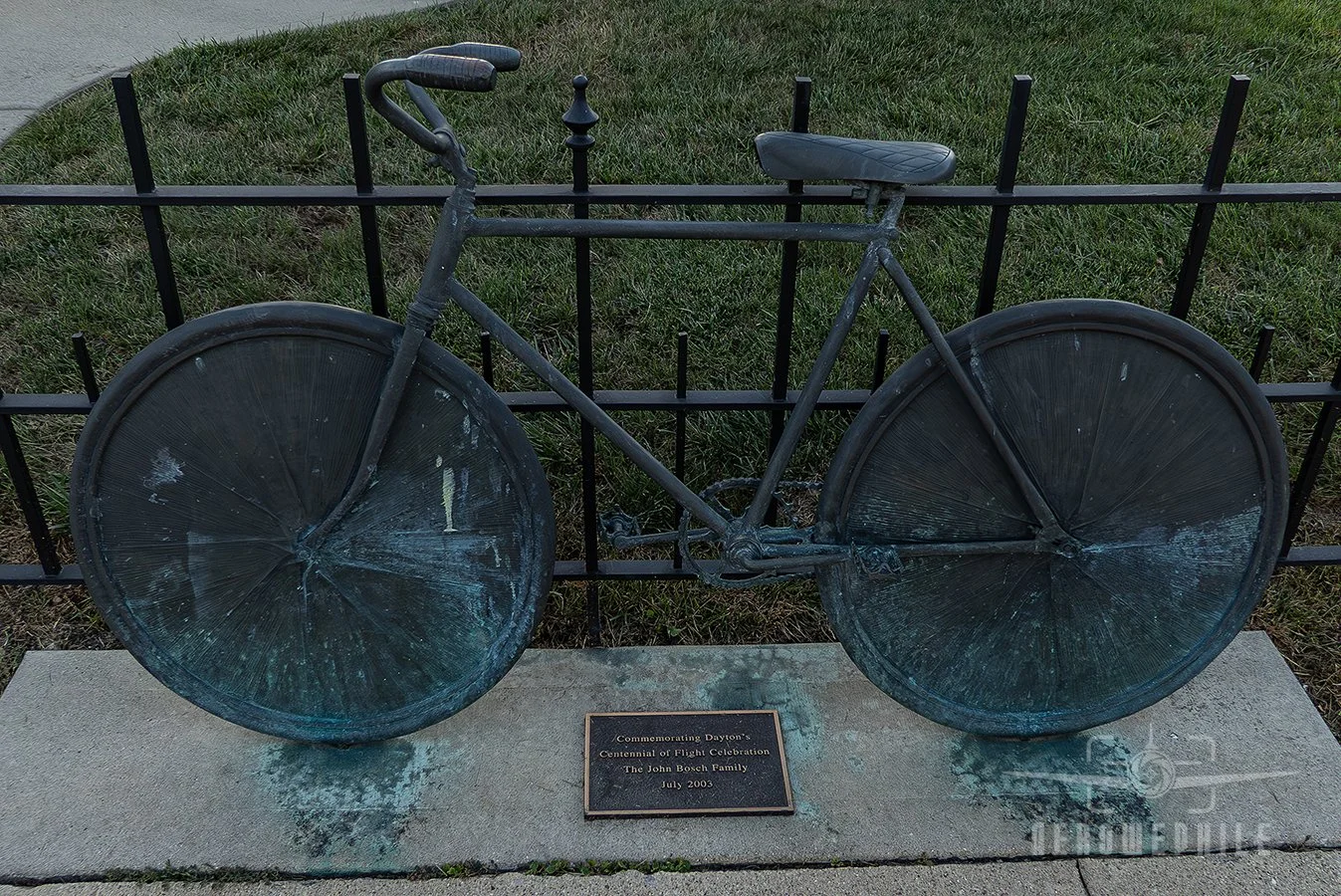
Bicycle sculpture outside the Wright Brothers home lot.
Huffman Prairie Flying Field & Training Center
When the Wright brothers returned to Dayton, after their historic first flights at Kitty Hawk, North Carolina, on December 17, 1903, they looked for a suitable flying field closer to home. Dayton banker, Torrence Huffman allowed the brothers to use his pasture, which was located eight miles northeast of Dayton, rent-free. Here in 1904 and 1905, through a series of unique experiments, the Wright brothers mastered the principles of controlled, powered flight and developed the world's first practical airplane.
The field was used by their new business, The Wright Company, as a testing ground, flying school, and home to their exhibition team. The Wright Company ceased use of the flying field in 1916.
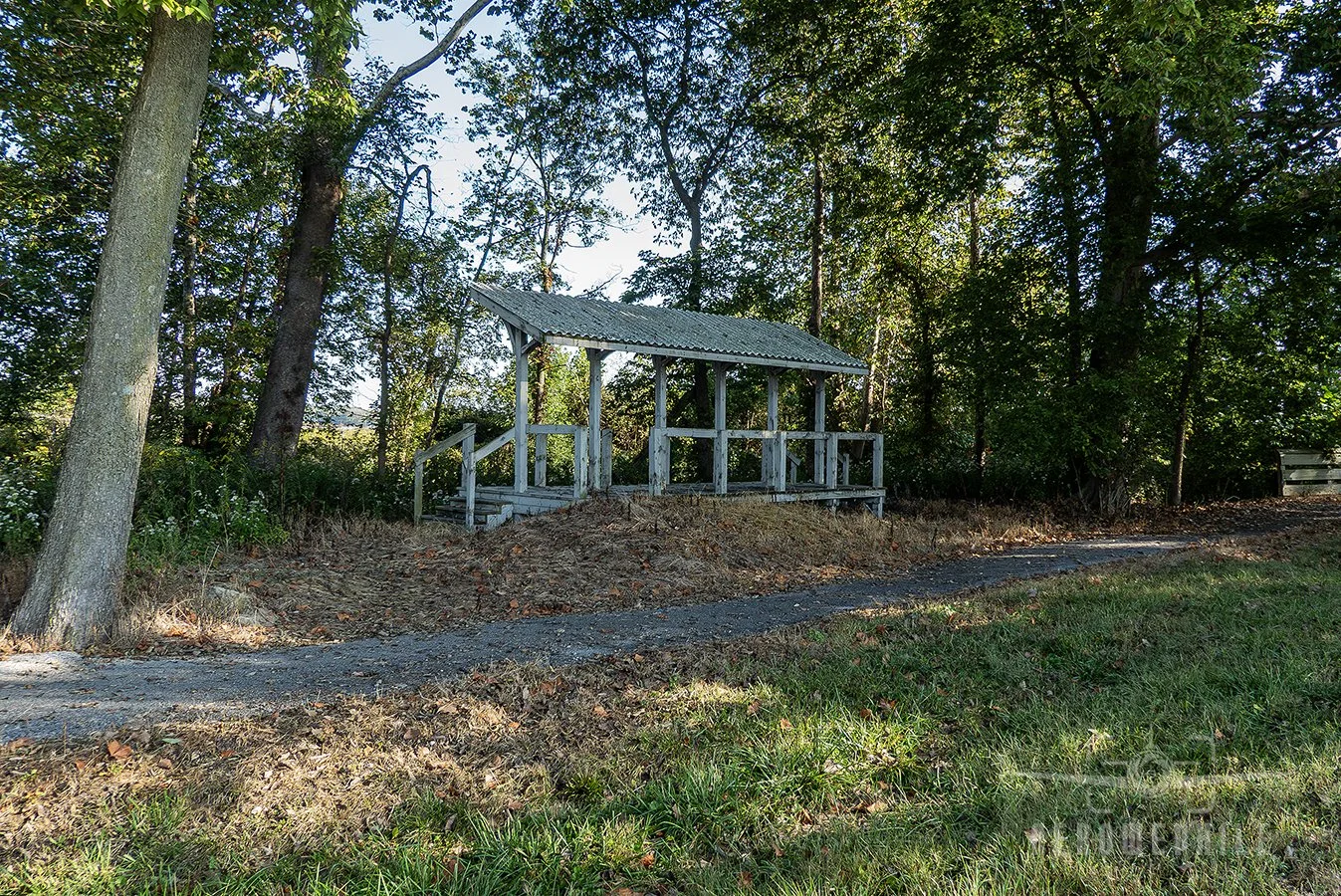
What appears to be a Bus/Tram/Trolley stop outside the entrance to Huffman Prairie Field.
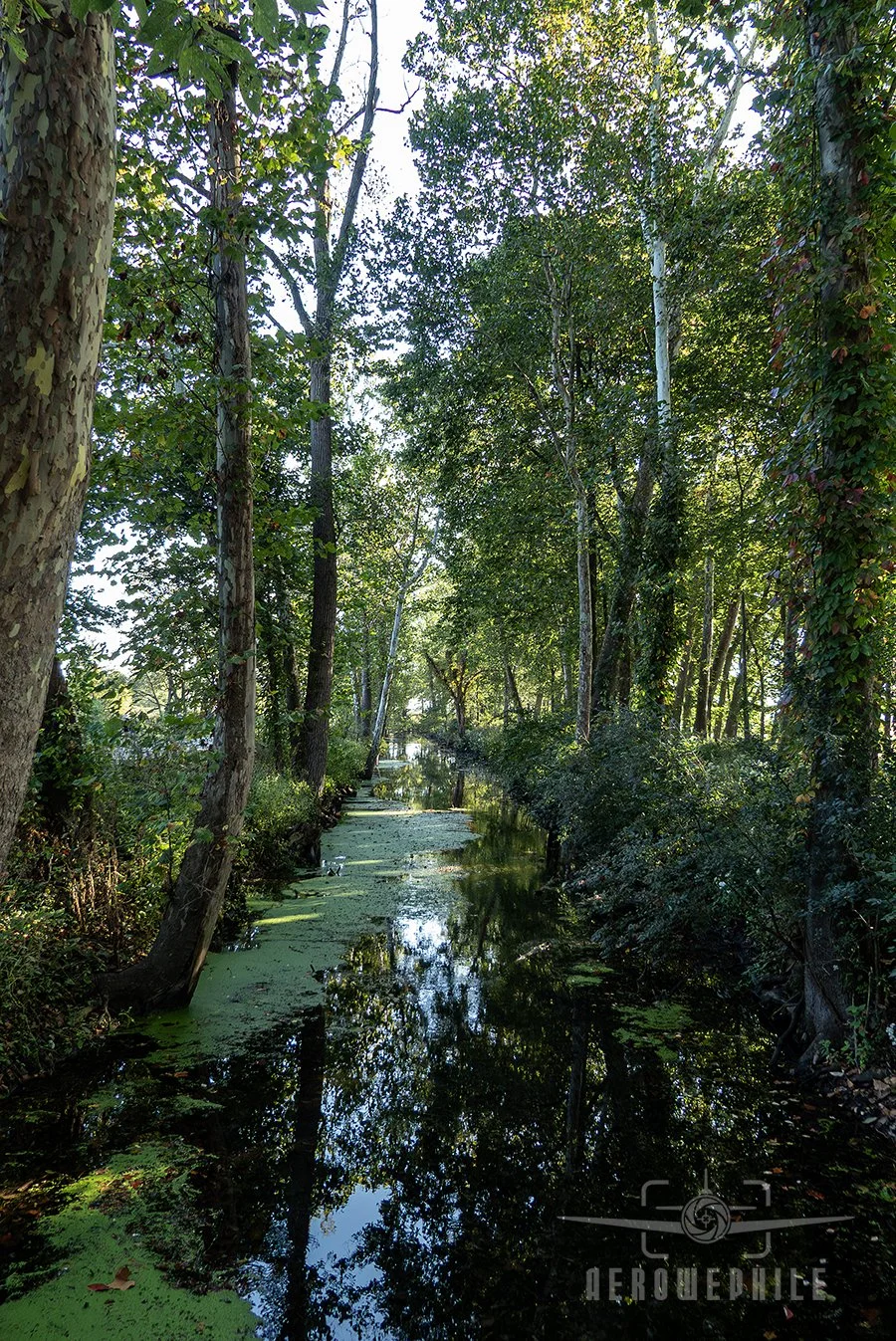
As you enter the Huffman Prairie Field after parking, you cross a small bridge over a very picturesque creek. This is looking to the left of the entrance.
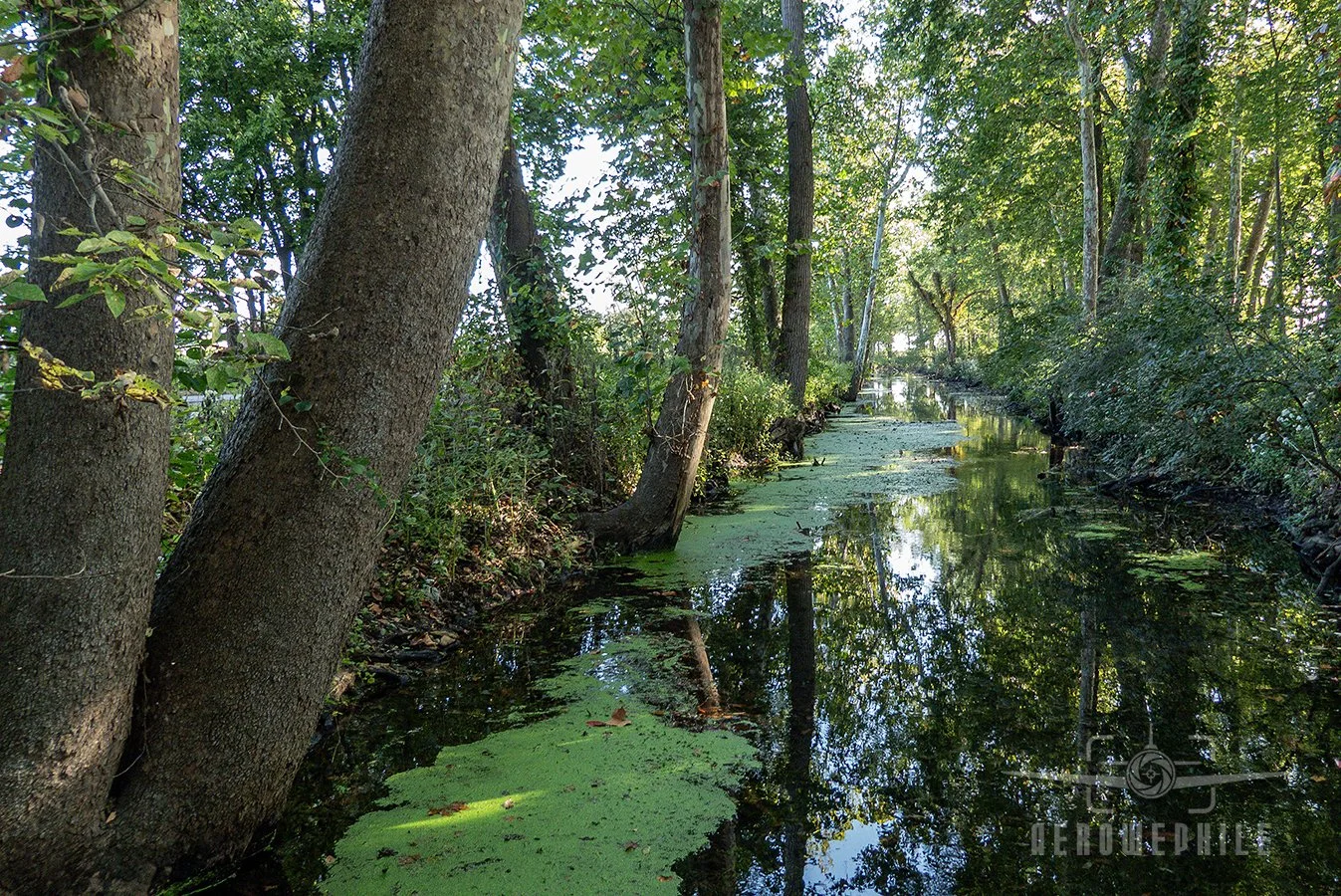
Another view looking to the left of the creek bordering Huffman Prairie Field.
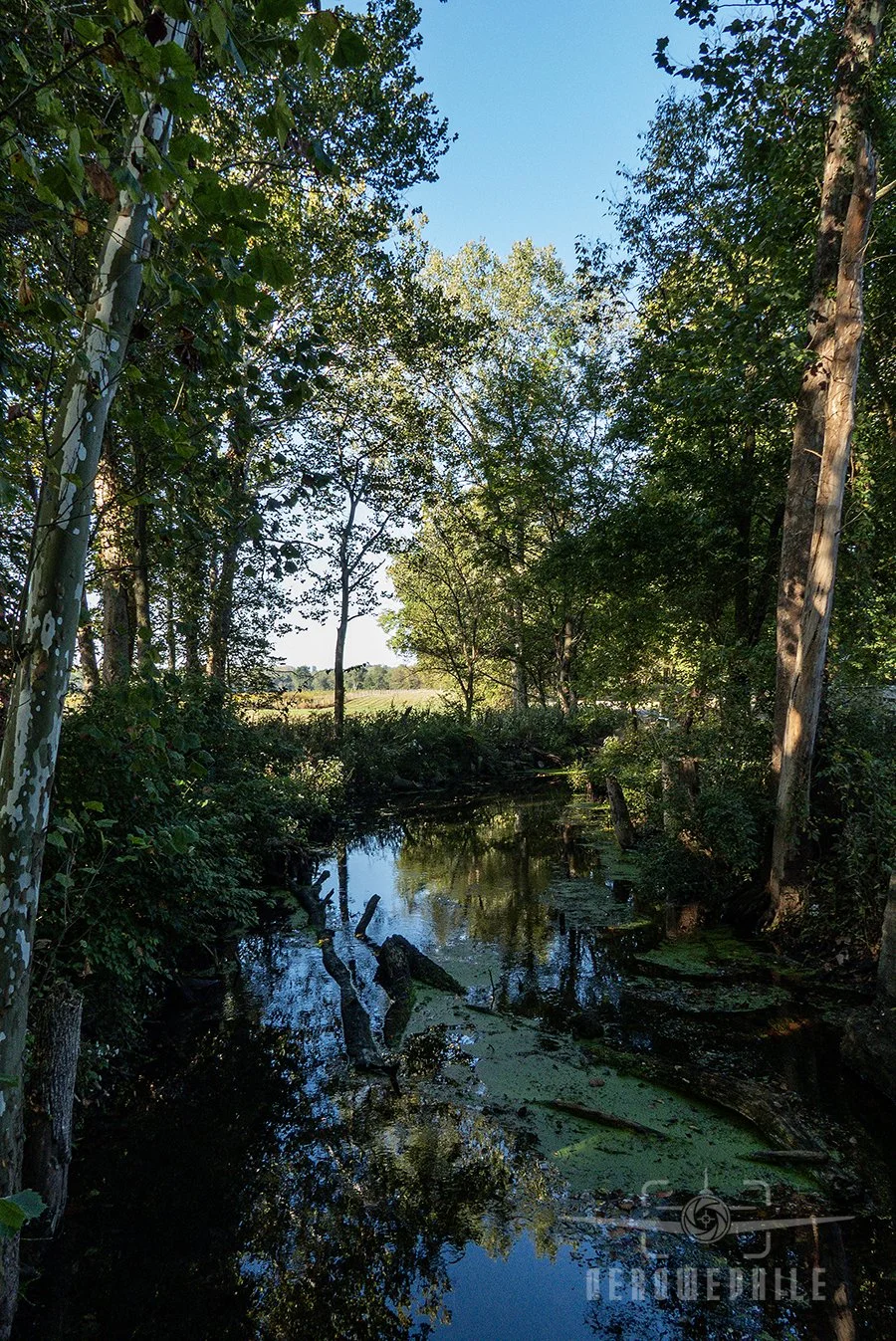
Looking to the right of the Huffman Prairie Field entrance at the lovely creek.
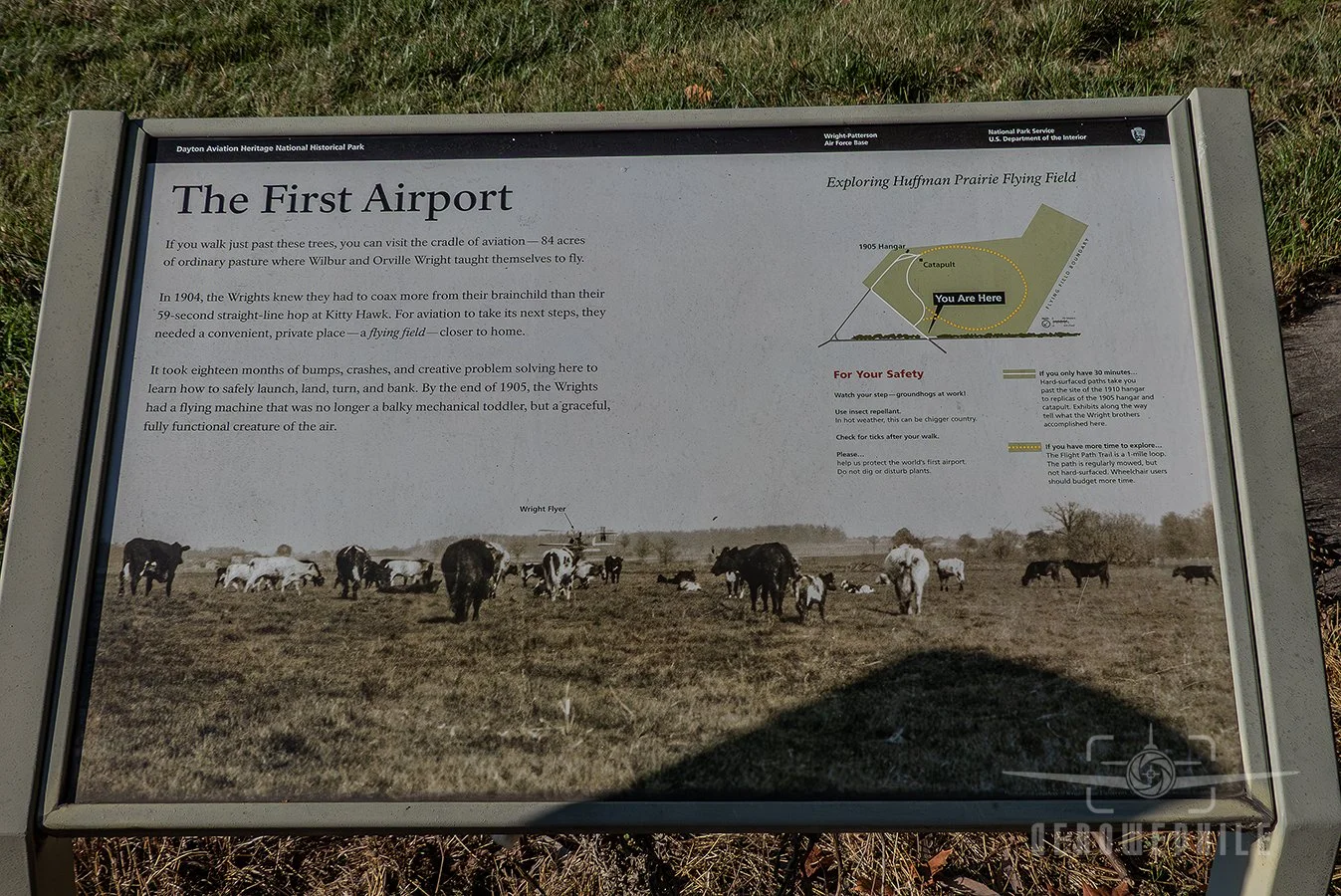
Marker describing the history of "The First Airport".
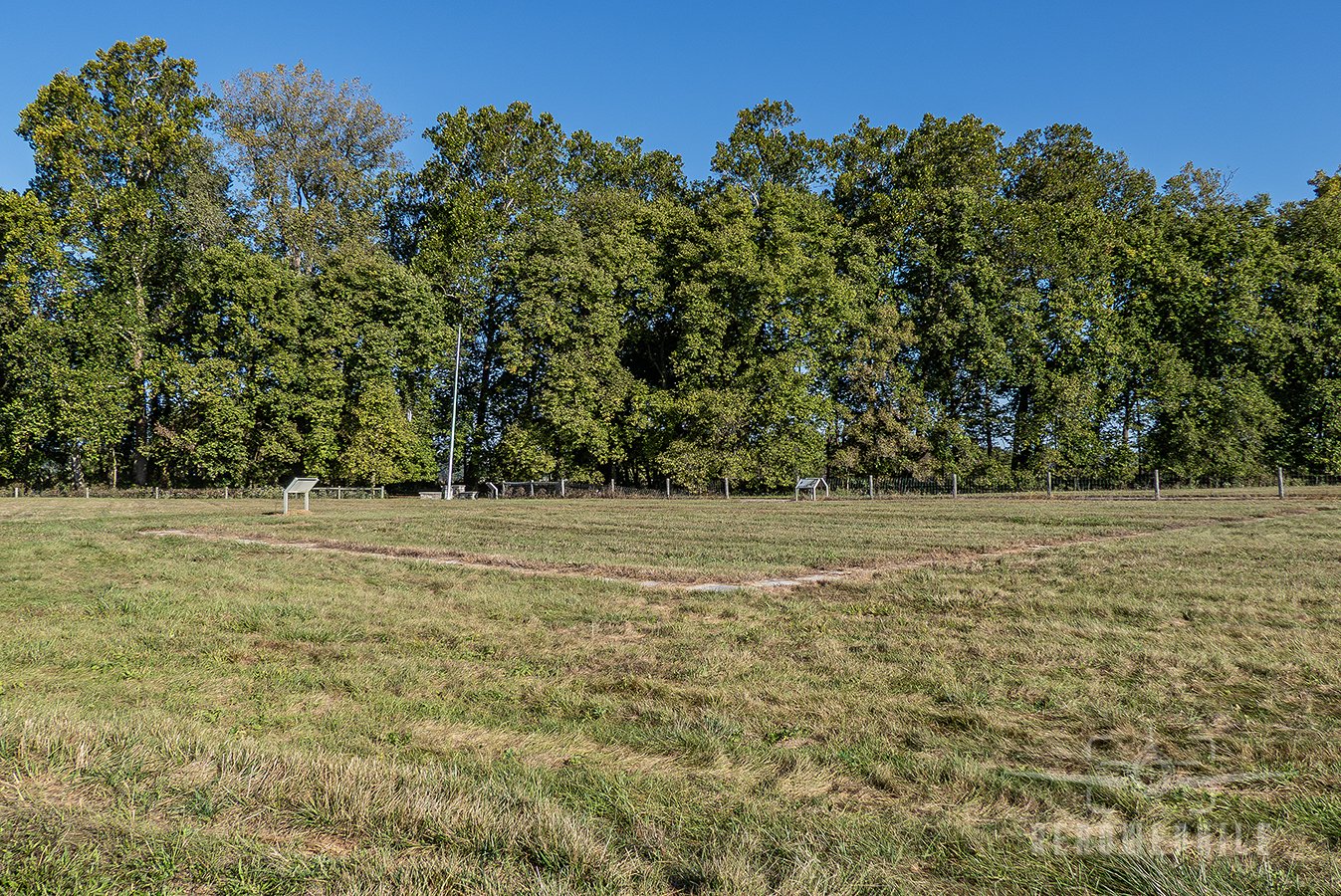
Footprint of the Wright Brothers training school hanger at Huffman Prairie Field. The hanger structure has long since been removed.
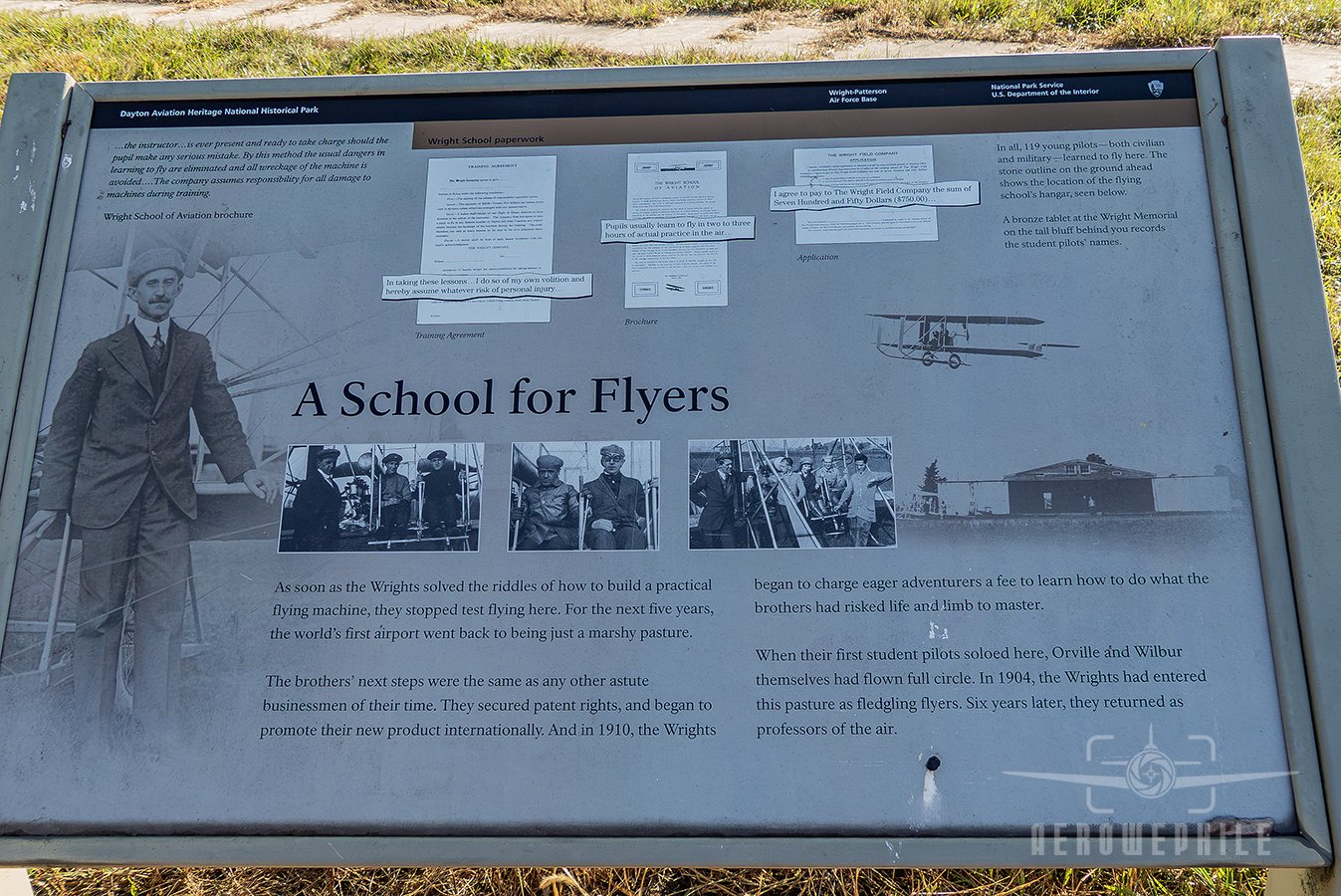
"A School For Flyers" marker detailing the history of the Wright Brothers flight training school at Huffman Prairie Field.
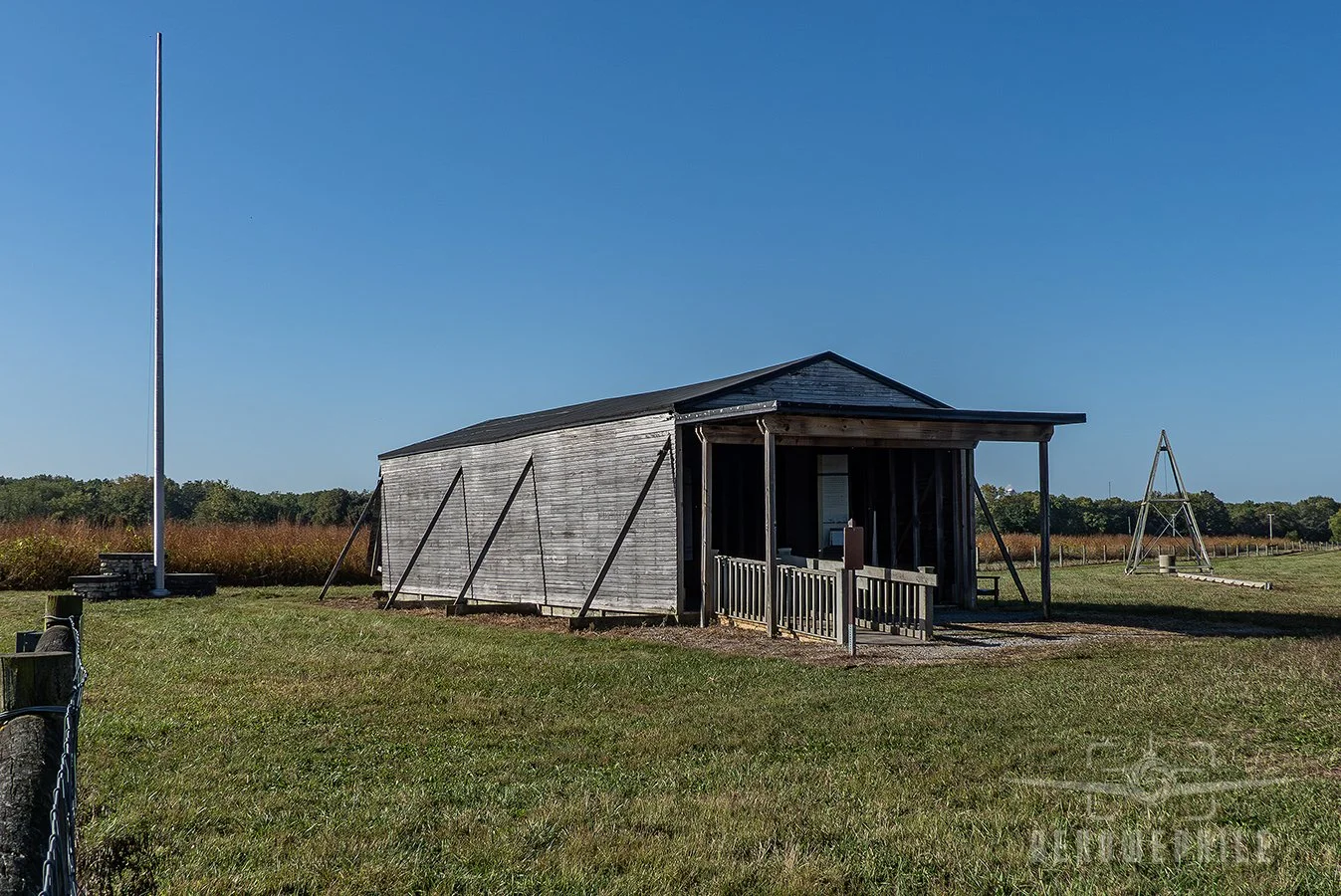
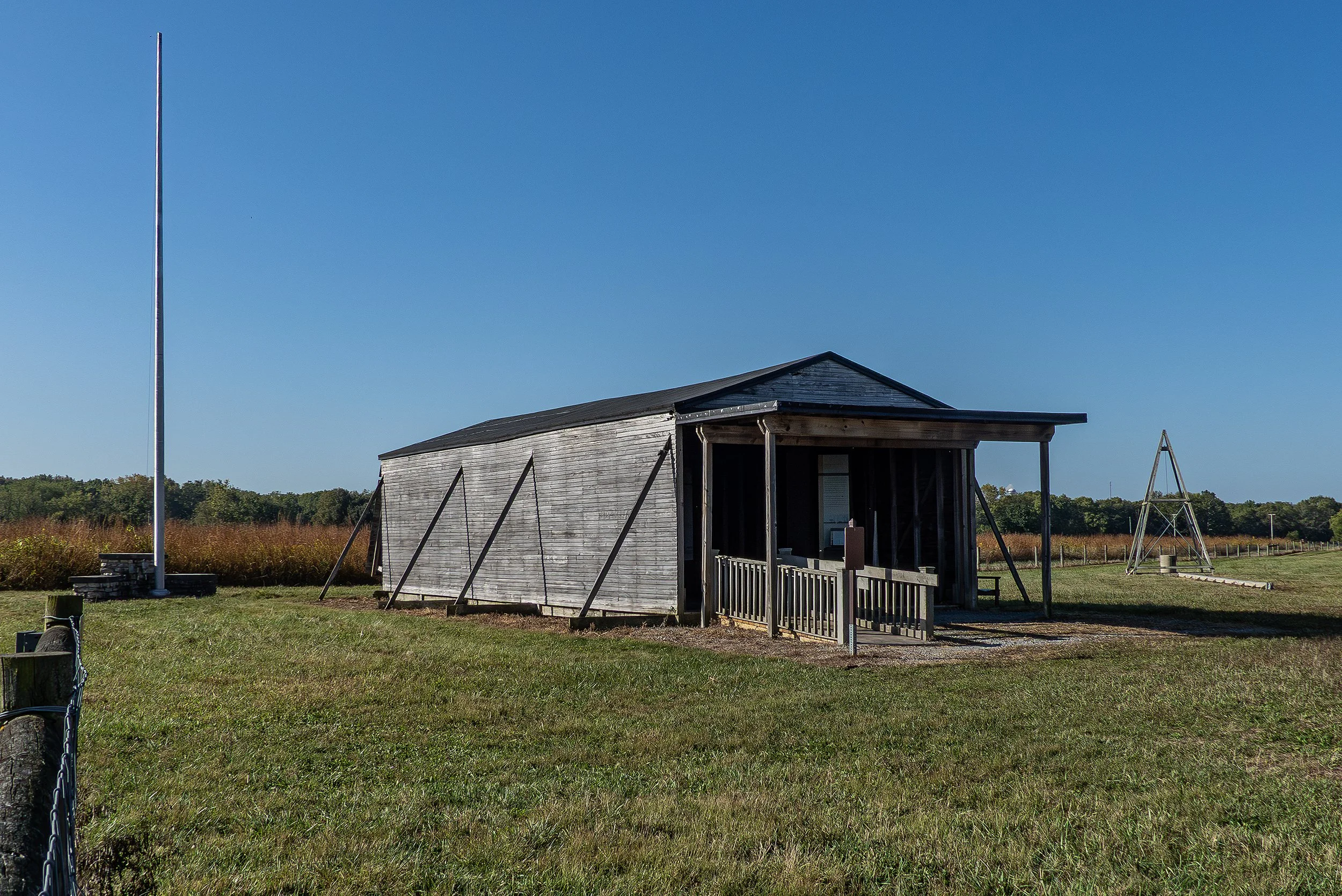
Replica hanger of the "1905 hanger" used by the Wright Brothers when they were learning to fly their Wright Flyer III. Note the catapult tower in the background.
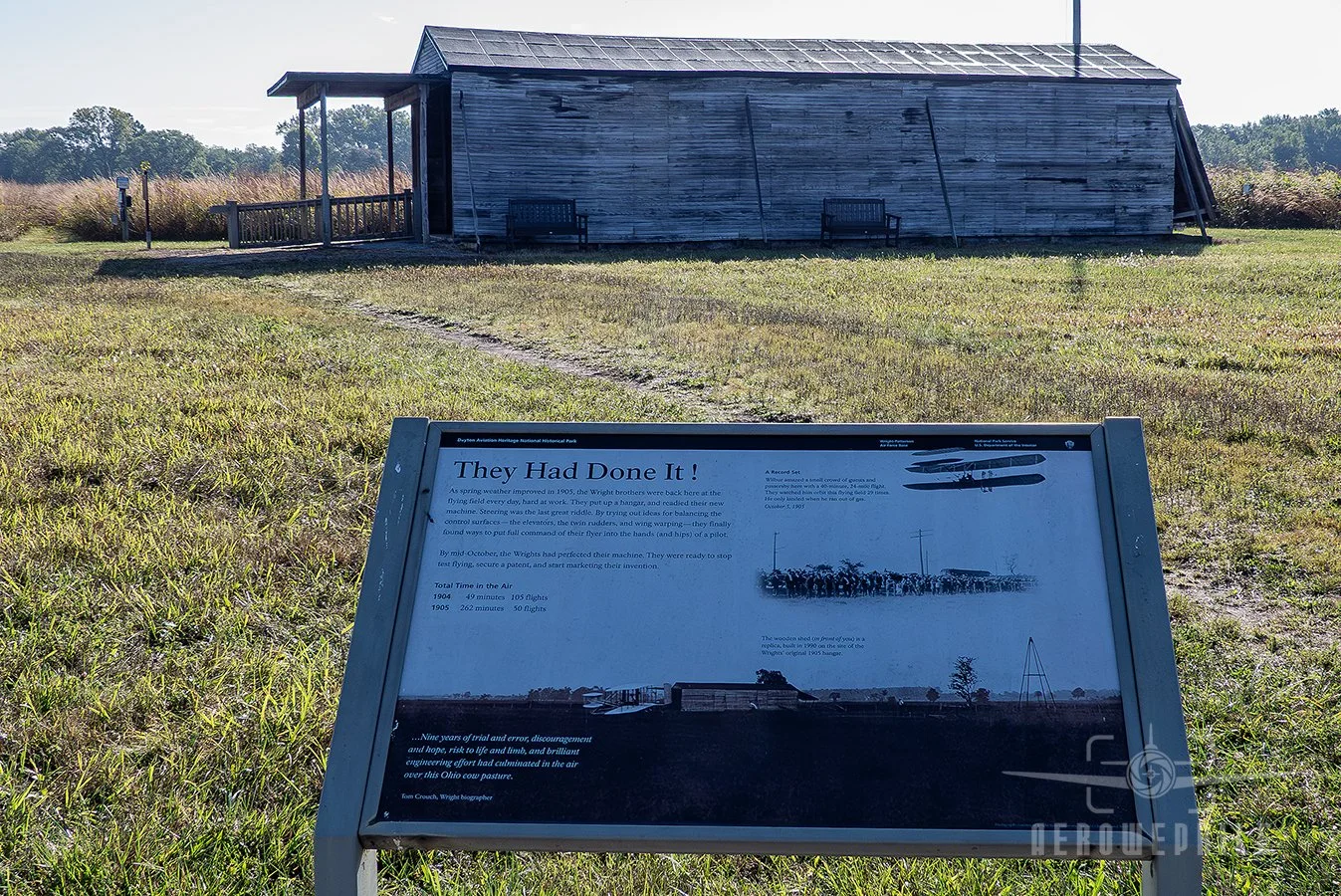
"They Had Done It" marker describing the successful flights that were achieved at Huffman Prairie Flying Field.

This replica "1905 Hanger" was built in 1990 on the same location that the Wright Brothers had erected their hanger to house their Wright Flyer III aircraft.
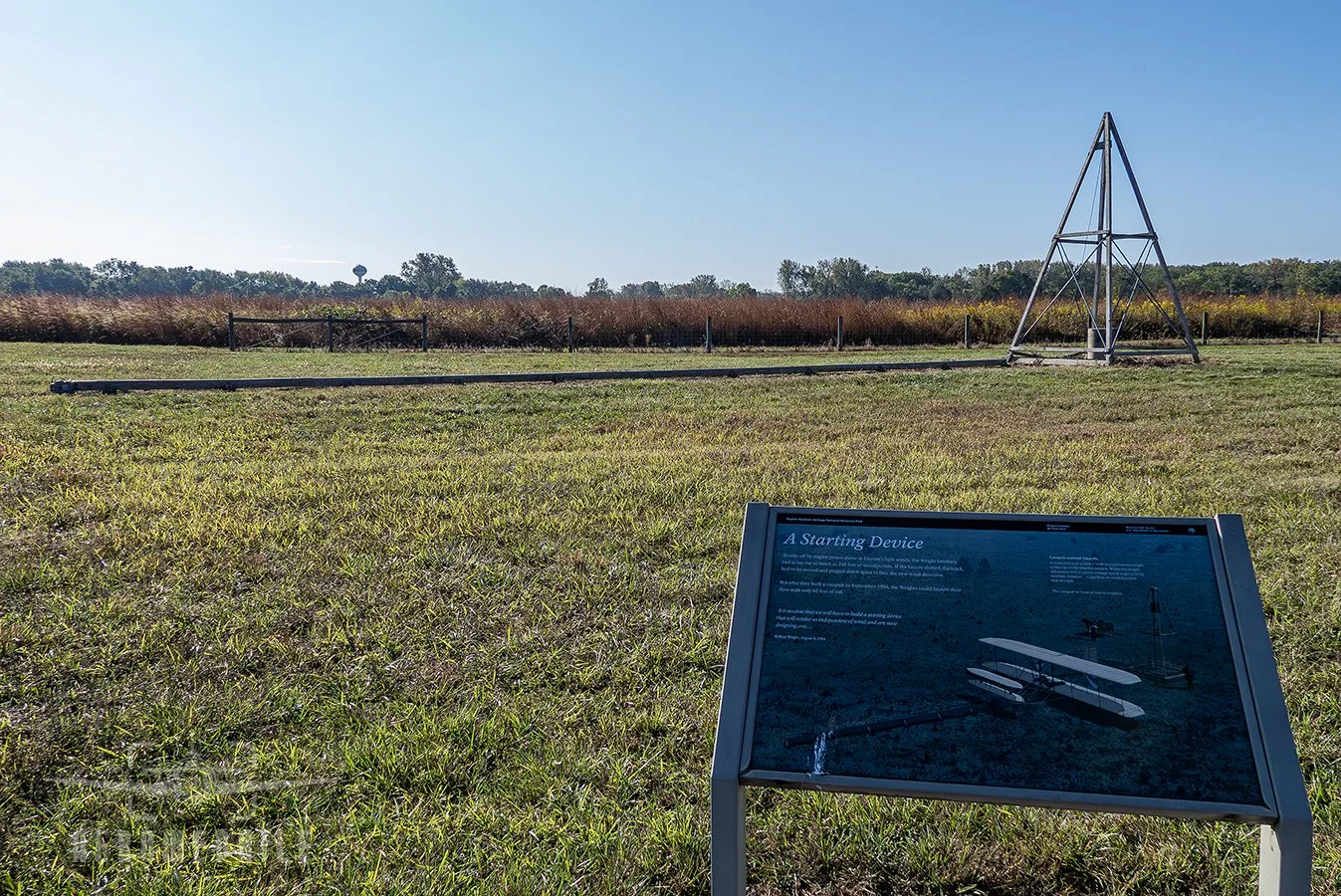
"A Starting Device" marker describing the Catapult Tower that the Wright Brothers used to launch their aircraft off the ground.
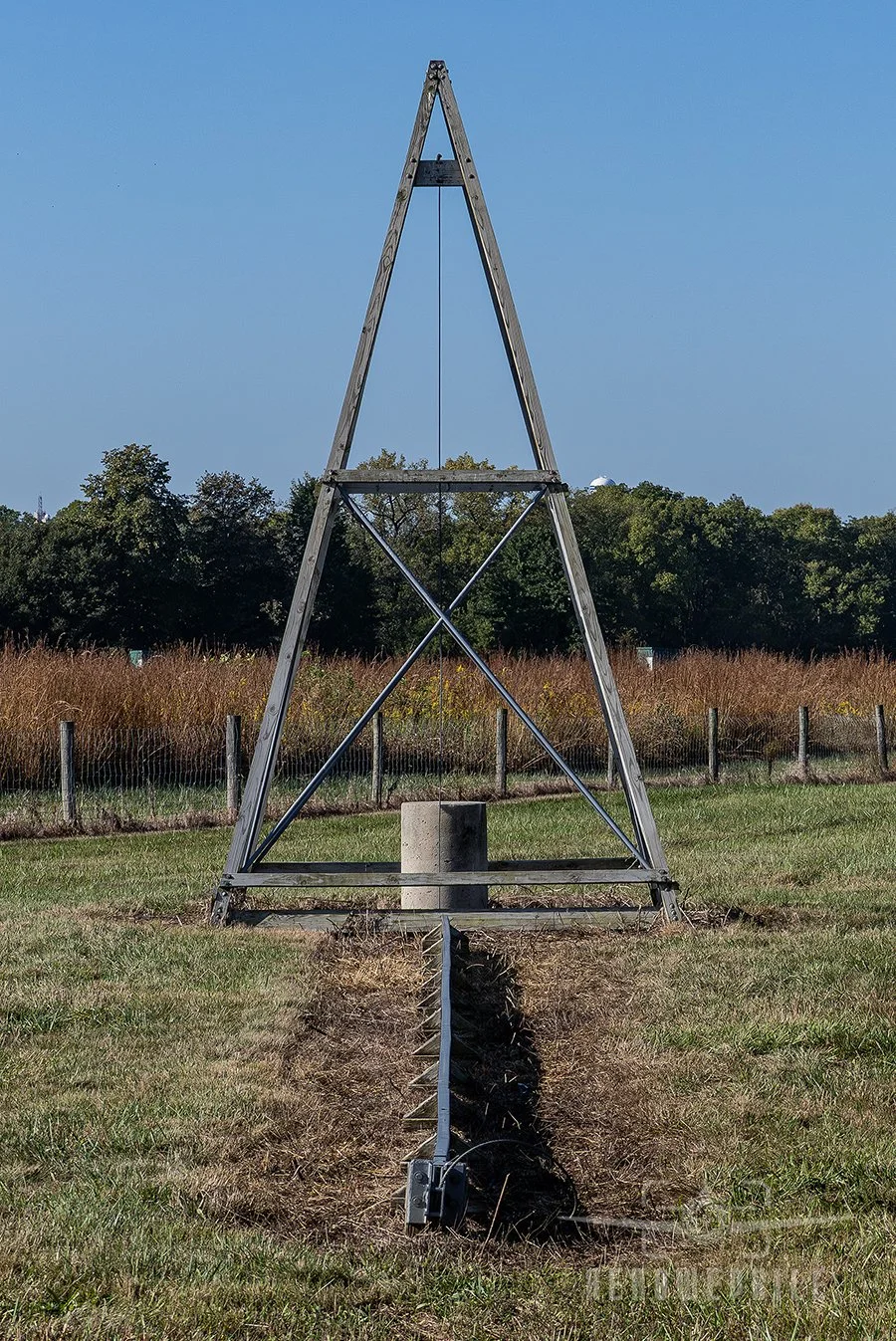
Head on view of the Wright Brothers catapult tower.
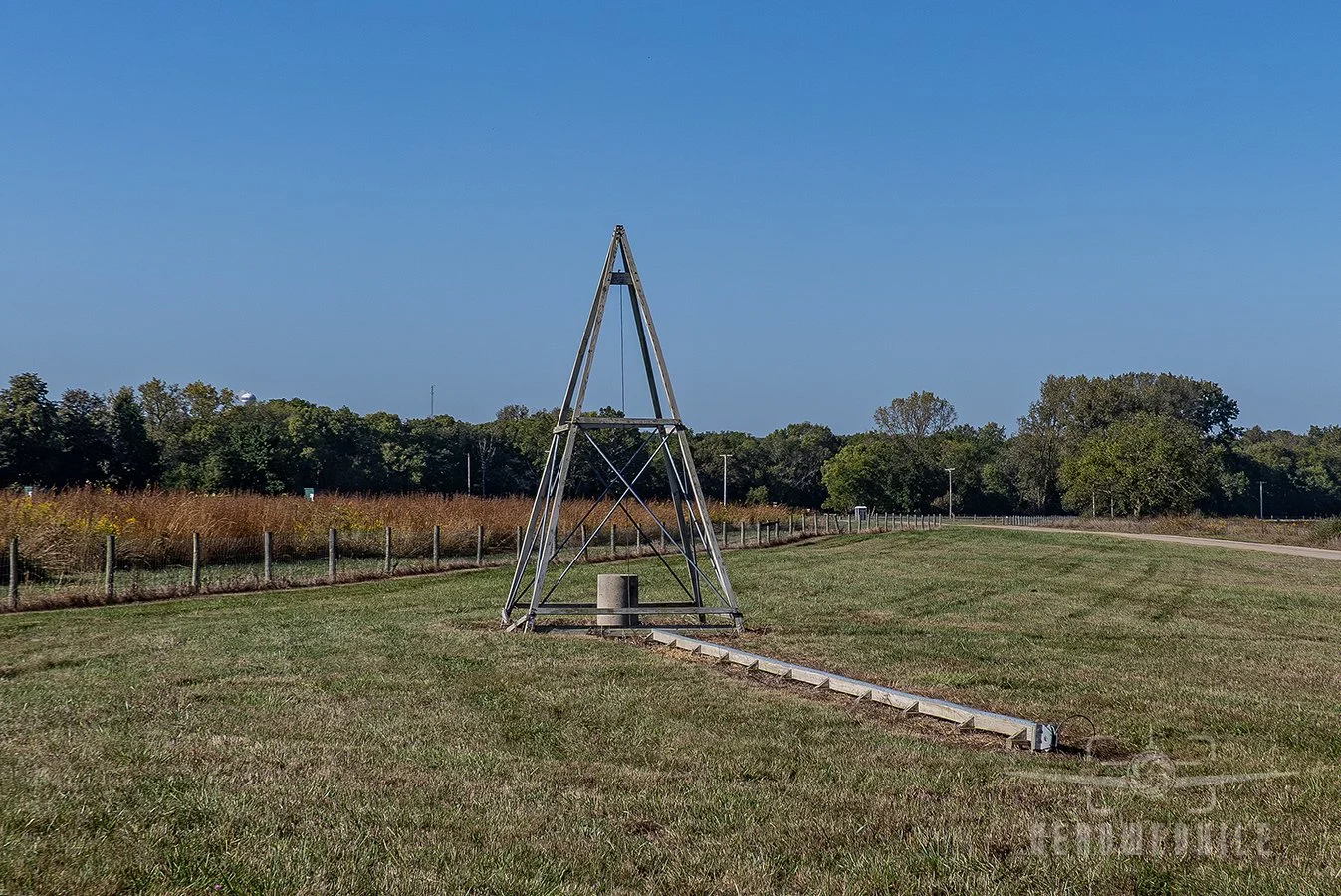
The Catapult Tower would pull the Wright Flyer along the approximately 70ft rail until it accelerated up to takeoff speed.
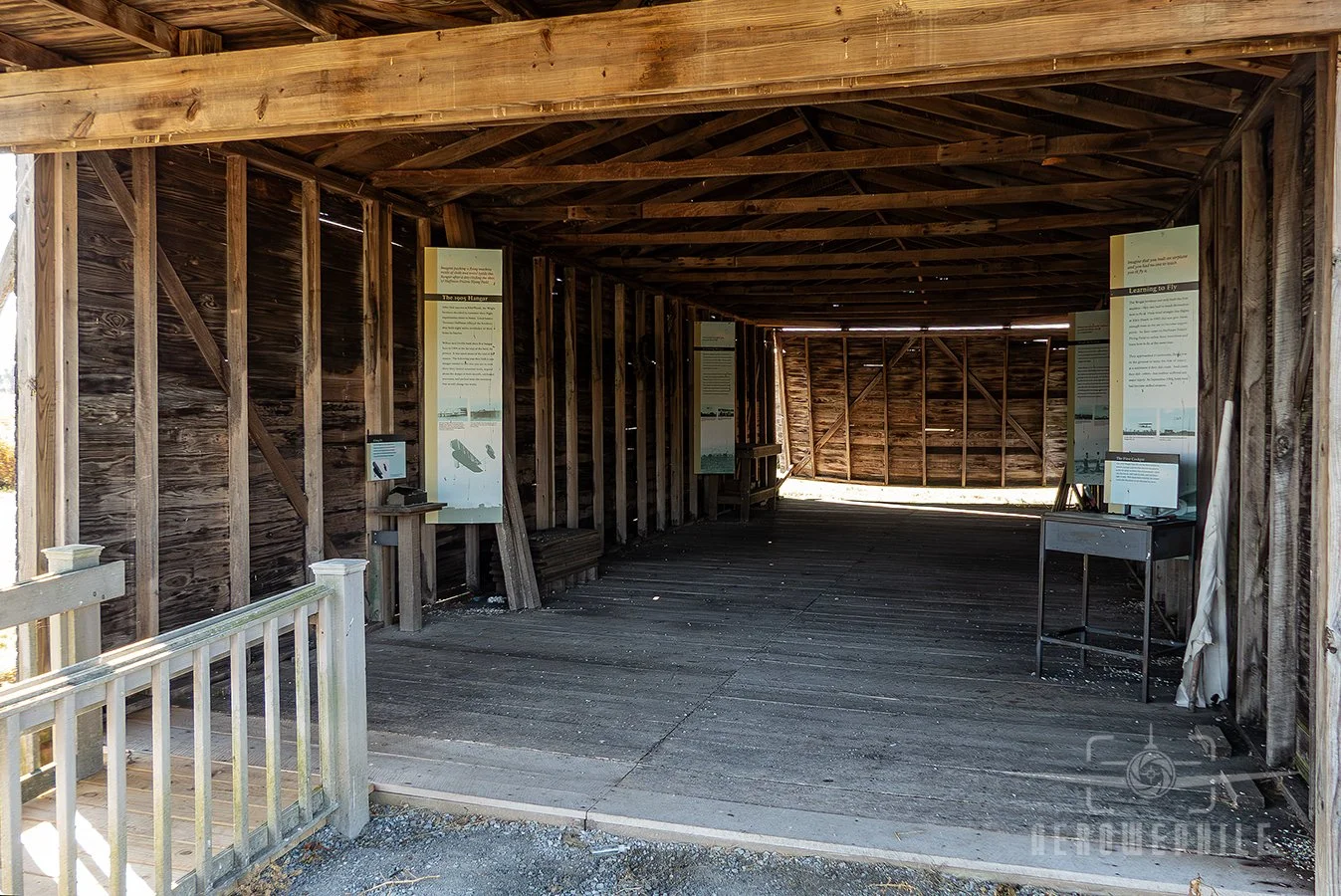
A look inside the replica Wright Brothers hanger.
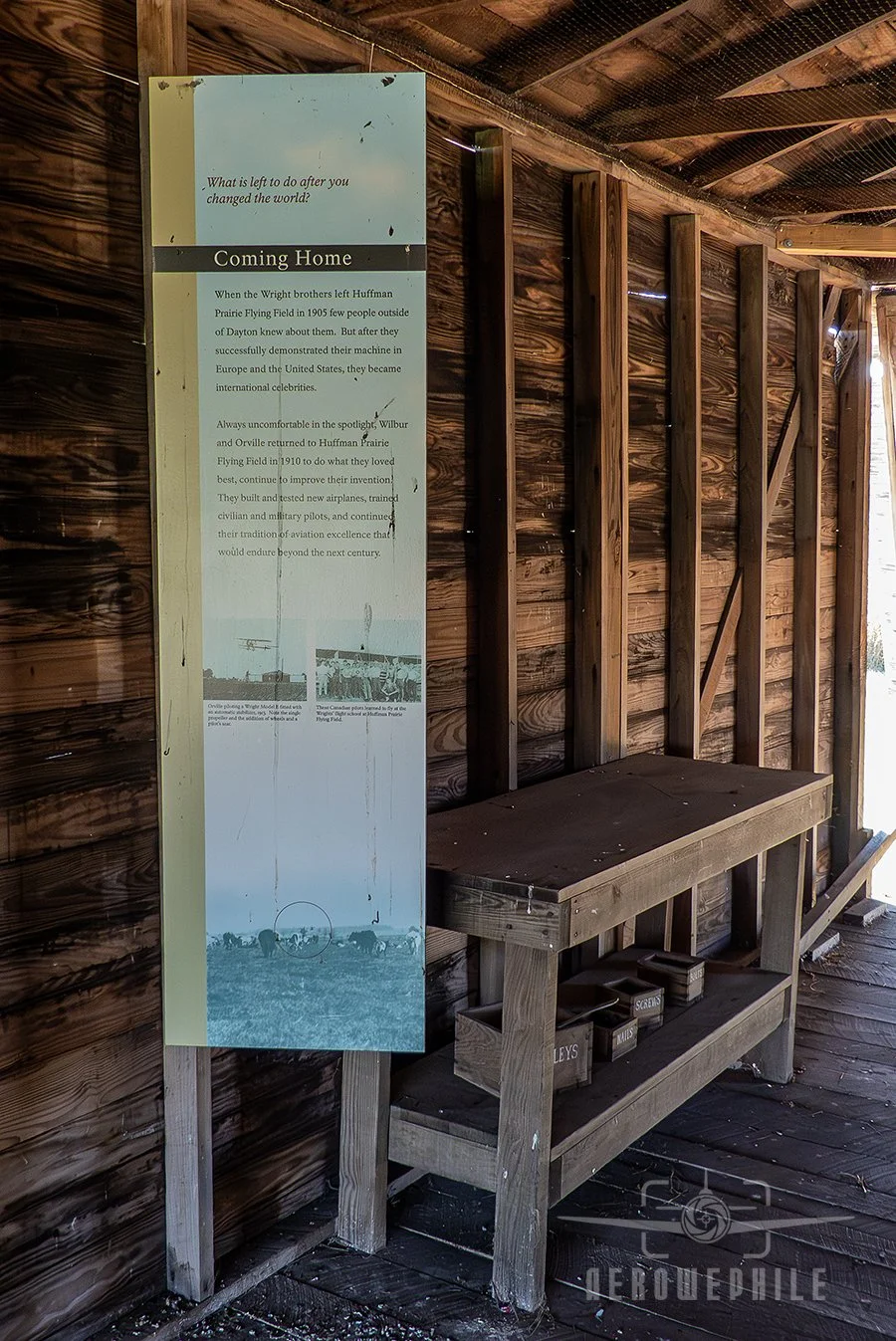
"Coming Home" marker detailing the Wright Brothers return to Huffman Prairie Field in 1910 to continue their experiments in controlled, powered flight.
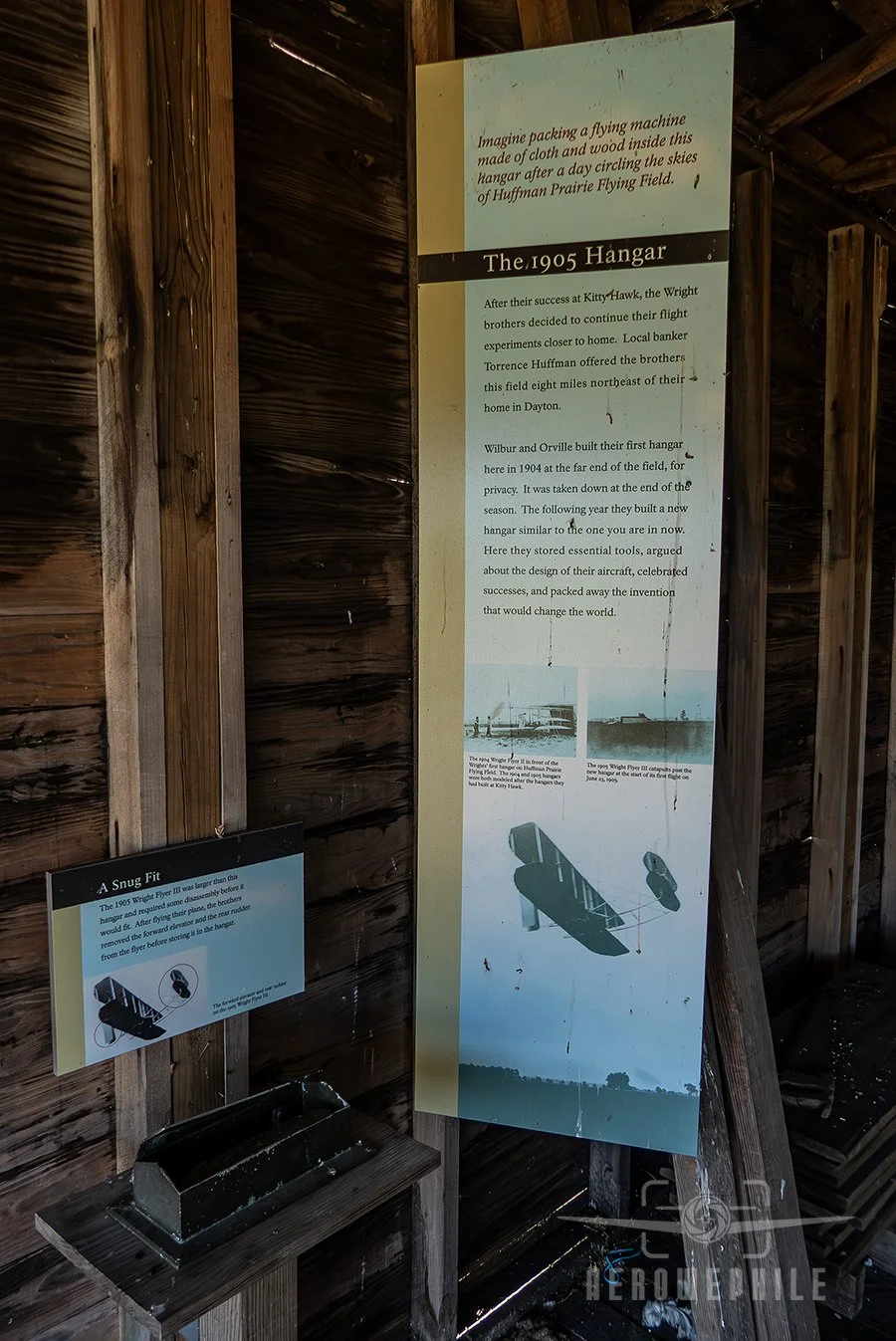
"The 1905 Hanger" marker detailing how the Wright Brothers used the original hanger.
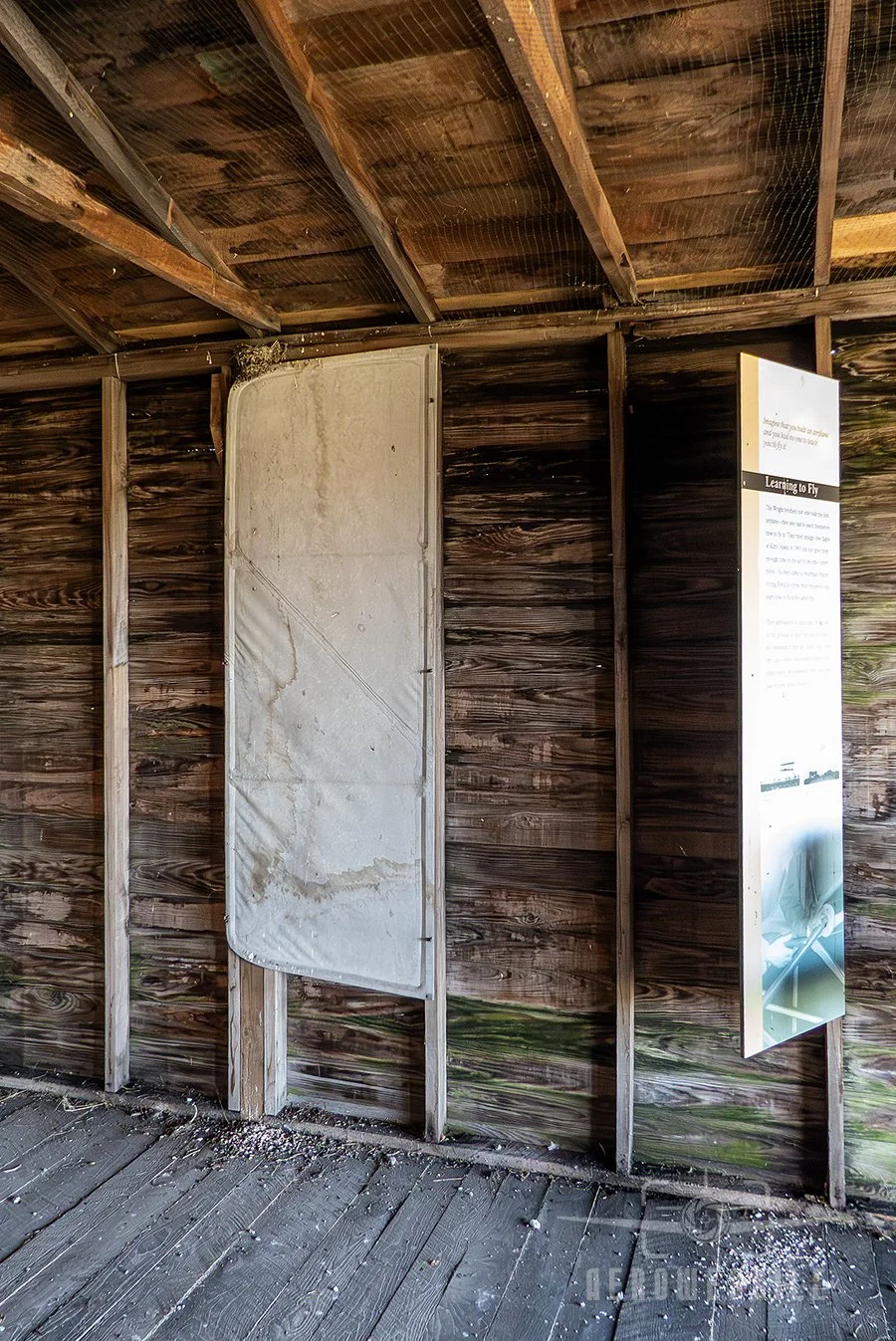
An example of how the Wright Brothers would have stored the vertical flight stabilizer when they disassembled the Wright Flyer for storage.
Wright-Patterson Air Force Base
The Air Force base is named after the Wright Brothers and 1Lt Patterson of the 137th Aero Squadron, who was killed at Wright Field in the crash of his de Havilland DH.4 after its wings collapsed during a dive while firing at ground targets with a new synchronized-through–the–propeller machine gun.
The base is headquarters for a vast, worldwide logistics system, a world-class laboratory research function, and is the foremost acquisition and development center in the U.S. Air Force. Dozens of associate organizations representing a broad spectrum of Air Force and Department of Defense activities call Wright-Patterson home.
Views of Wright-Patterson AFB are available from the Wright Brothers Memorial and Huffman Prairie Field.
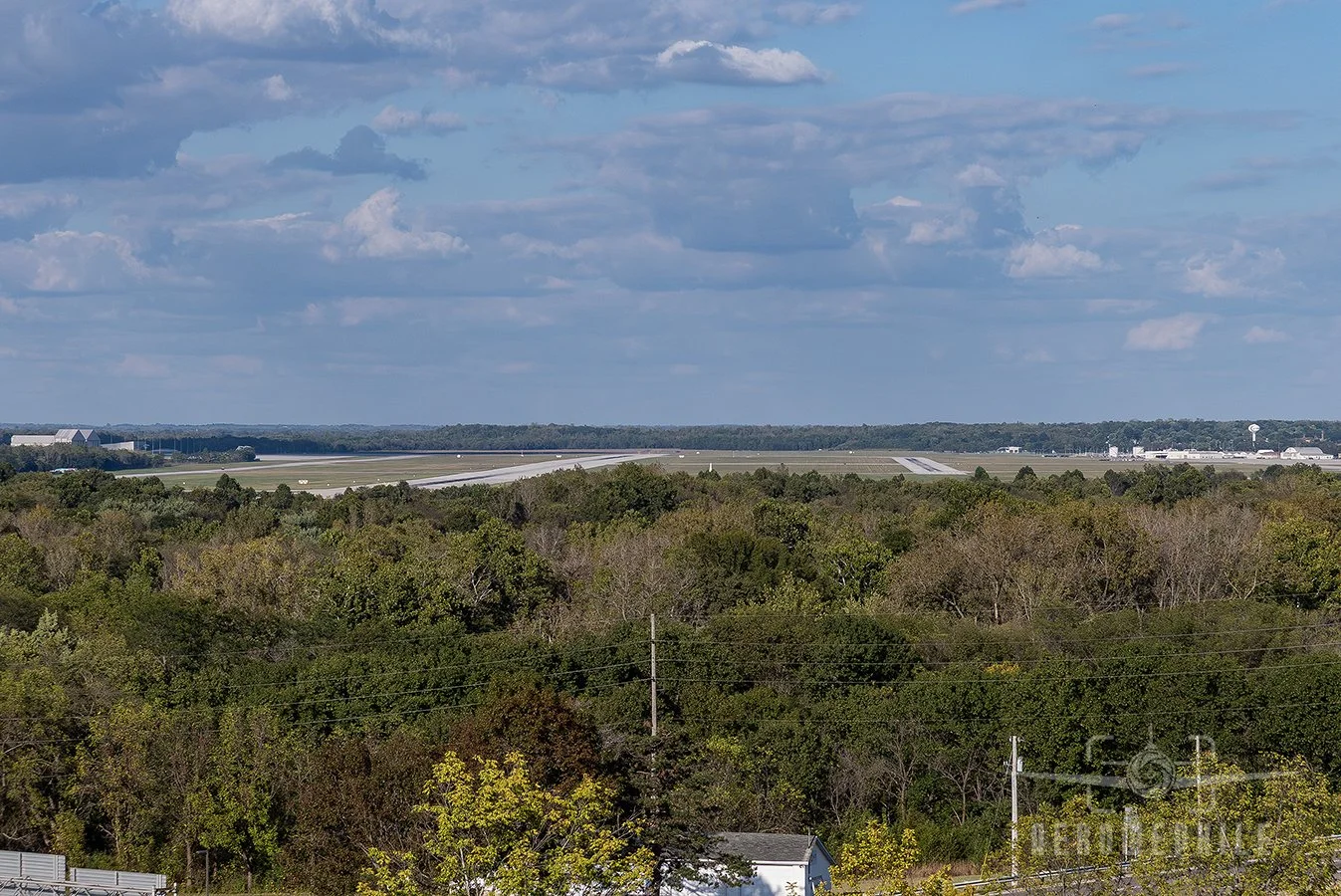
View of Wright-Patterson AFB runways from the Wright Brothers Memorial.
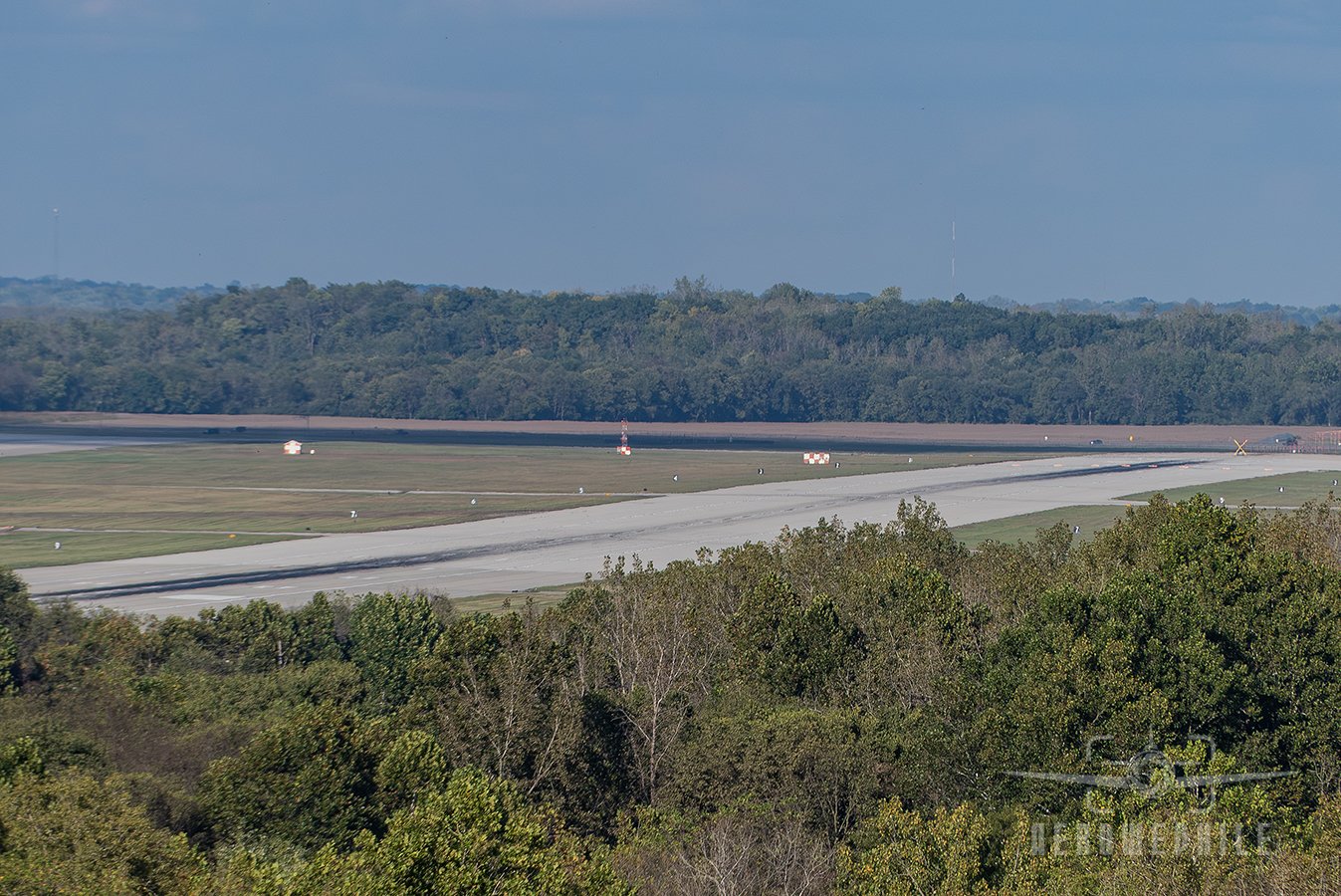
Main runway 05L - 23R at Wright-Patterson AFB.
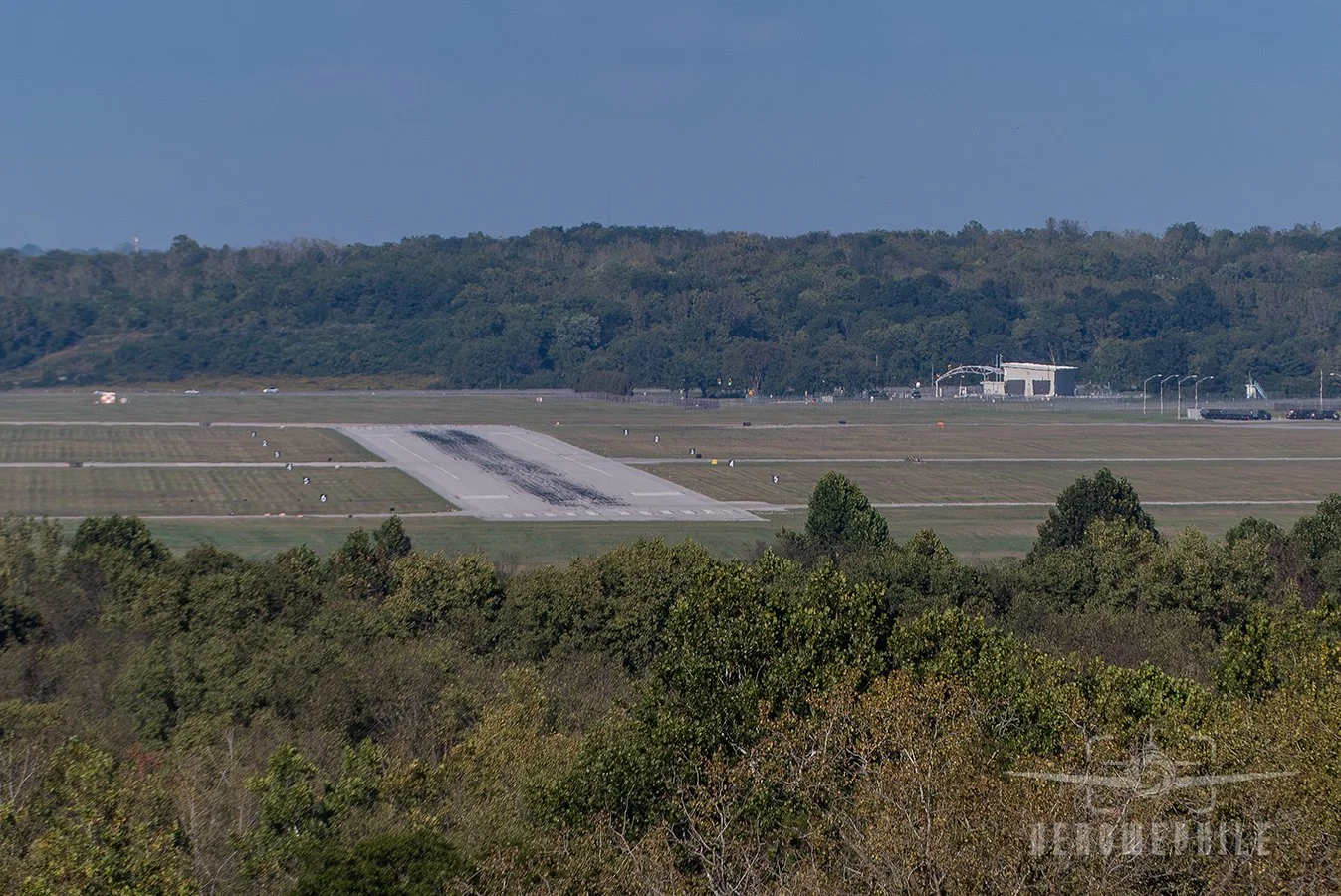
Shorter, alternate runway 05R - 23L at Wright-Patterson AFB.
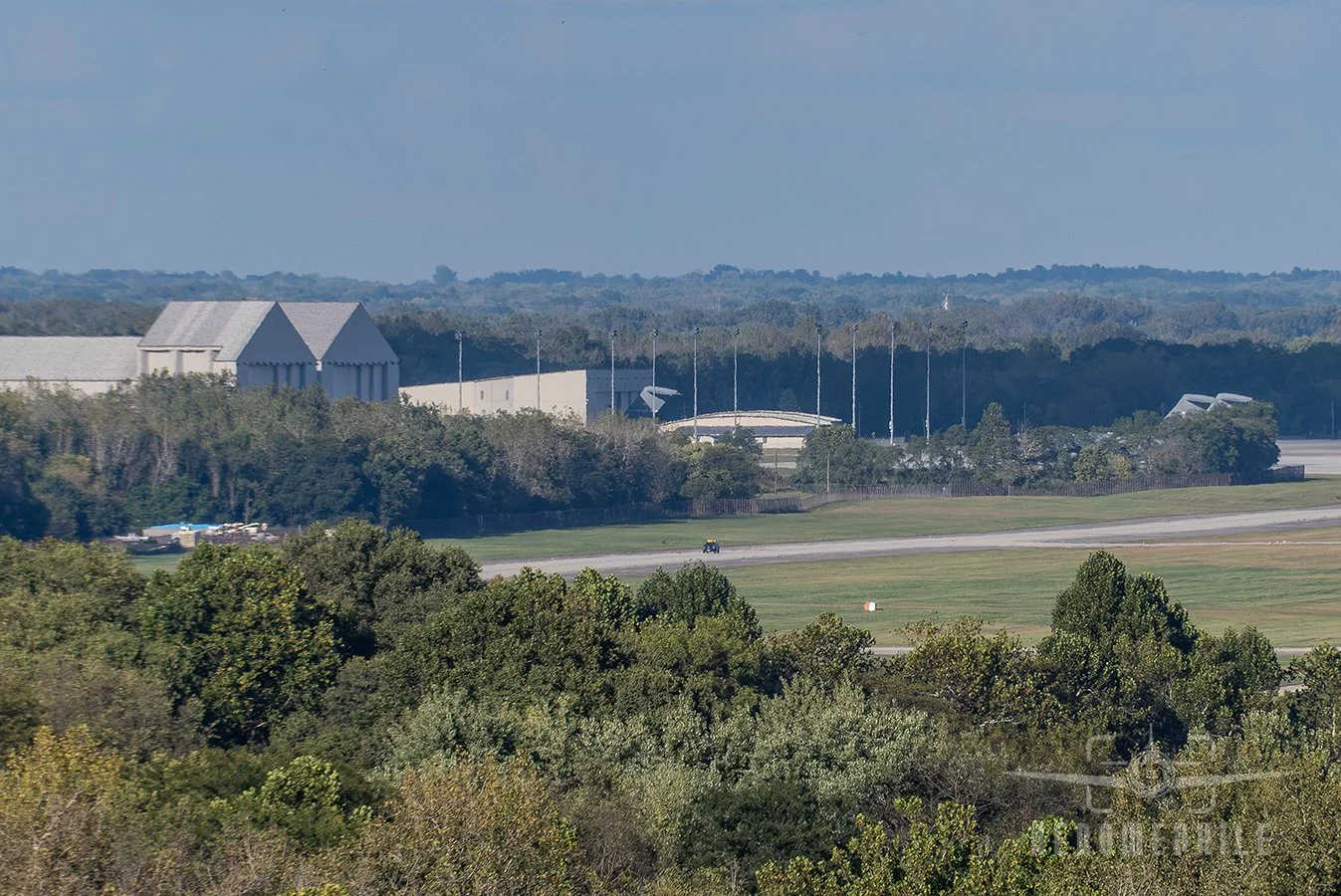
A shot of some of the visible buildings on the Wright-Patterson AFB. Note the C-17A Globemaster III tails visible in front of the hangers and behind the trees at the right.
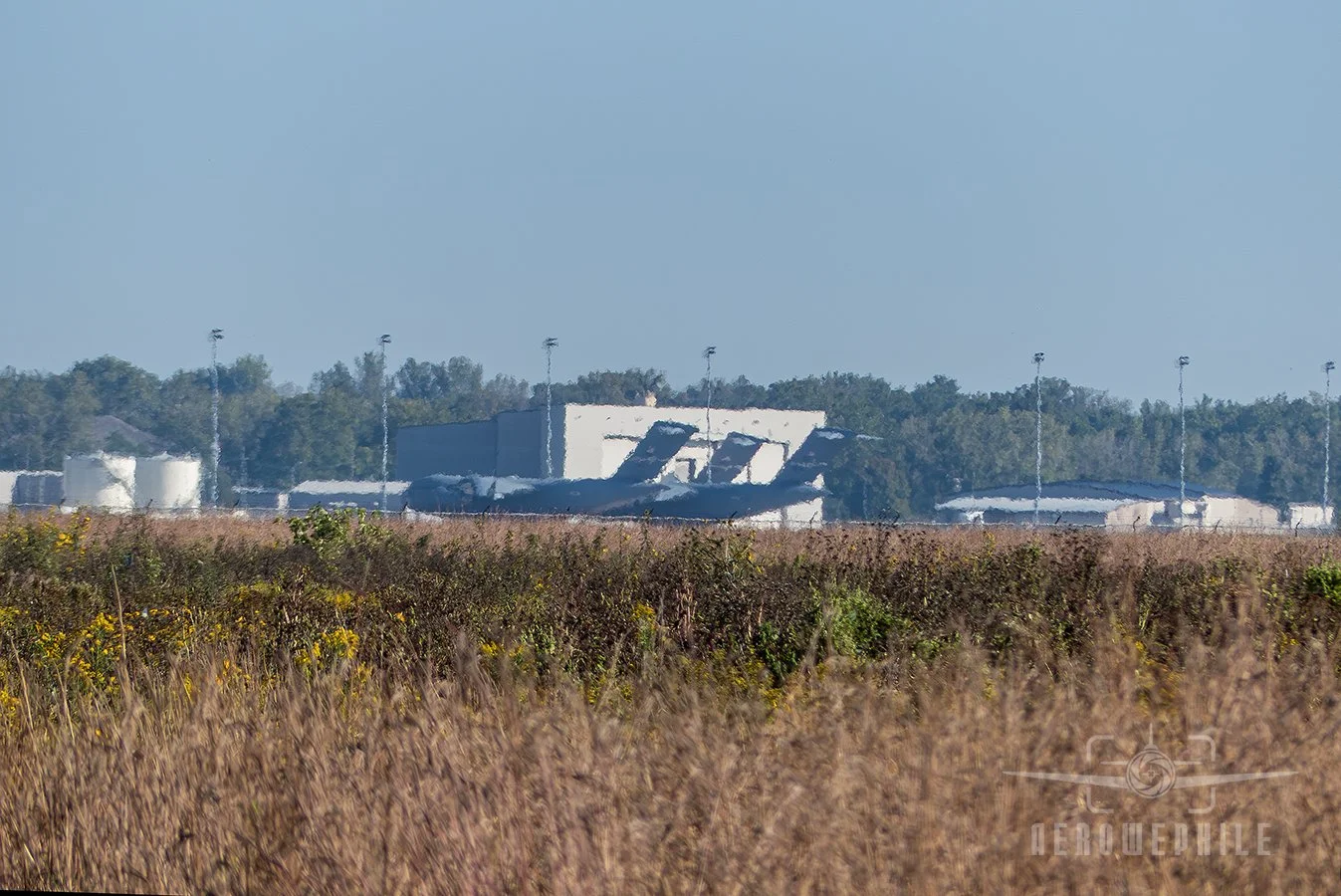
A view from Huffman Prairie Field of some C-17A Globemaster III aircraft on the ramp at Wright-Patterson AFB.
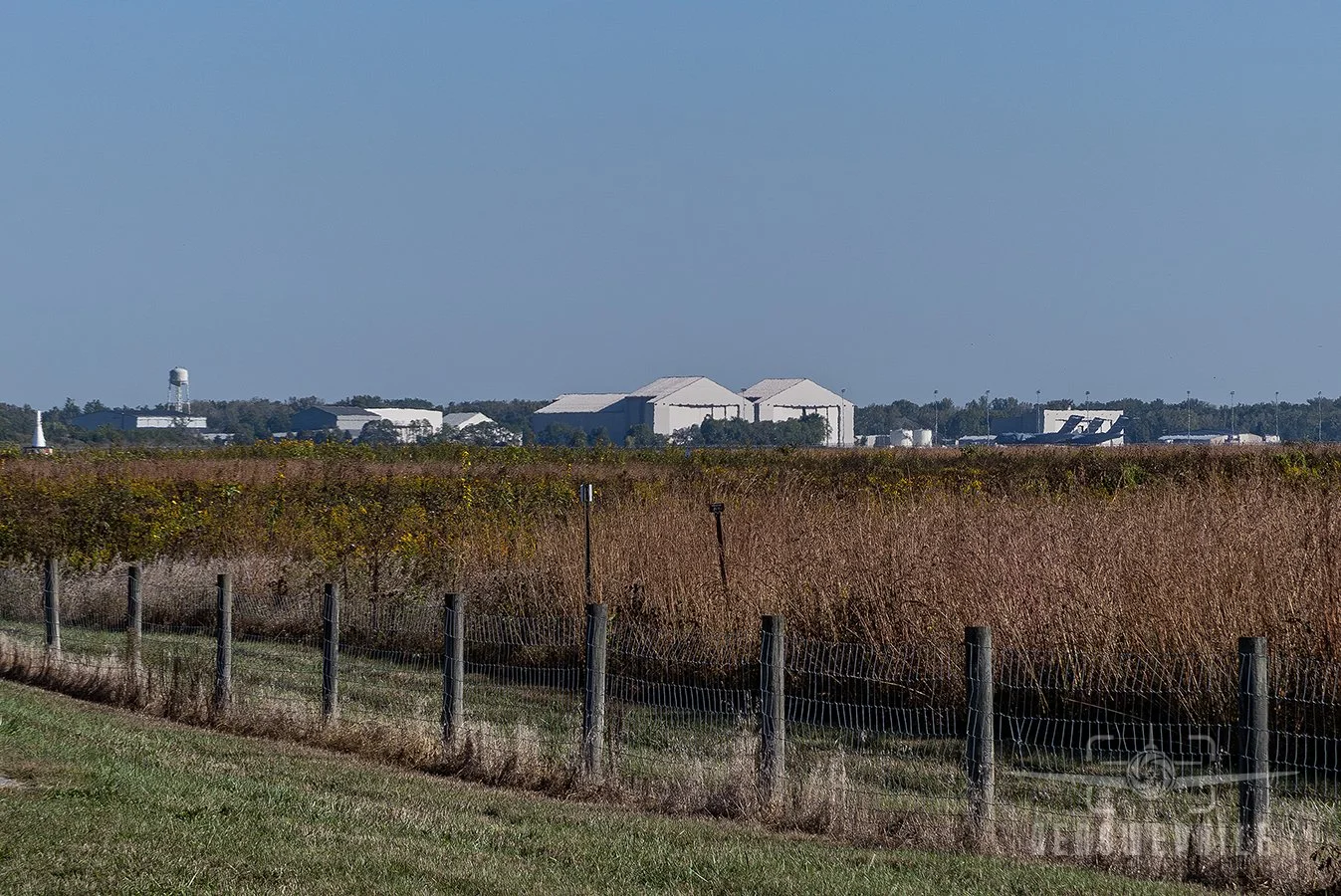
Standing next to the Wright Brothers hanger at Huffman Prairie Field, you can clearly see the Wright-Patterson AFB in the distance.
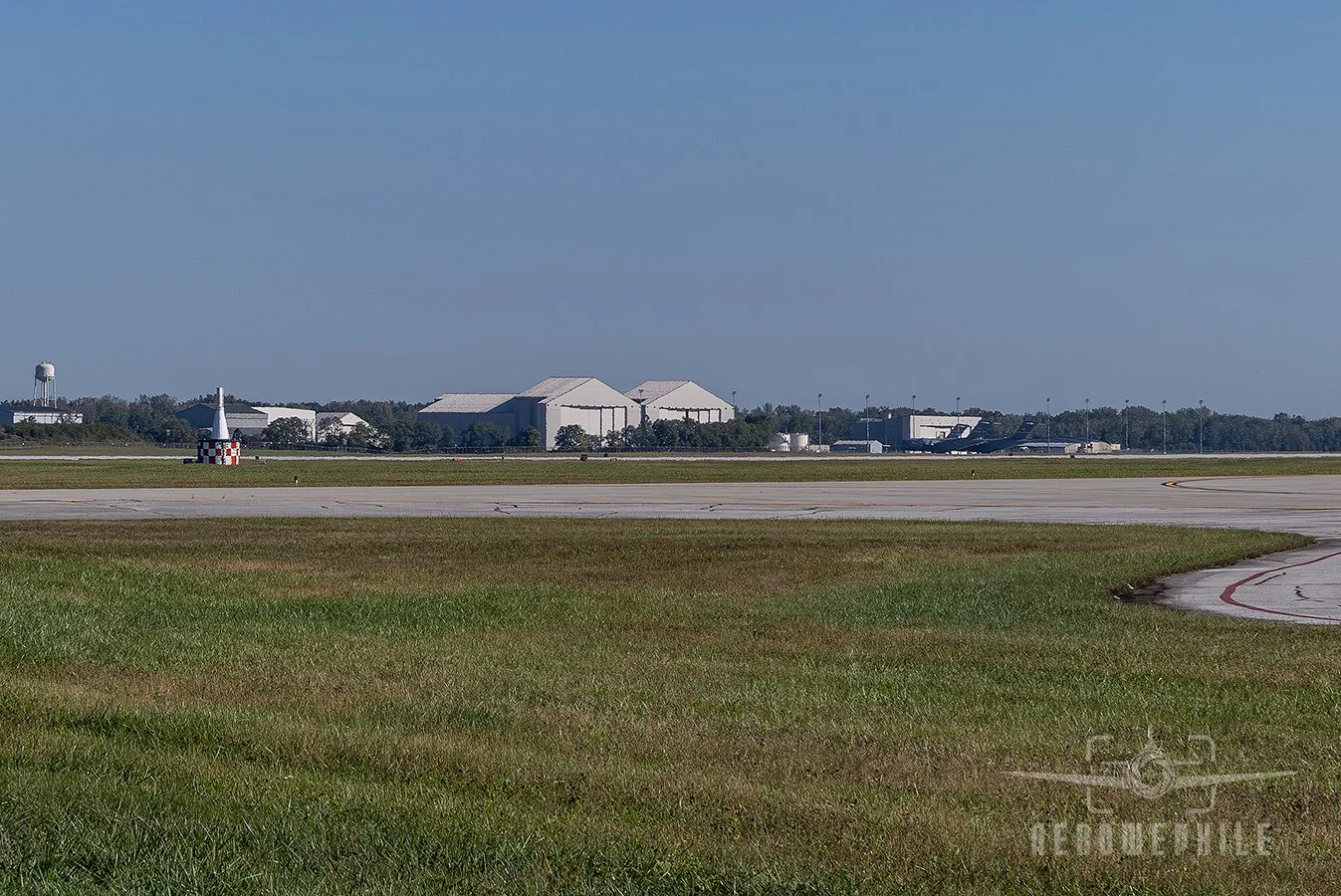
Huffman Prairie Field abuts the perimeter of Wright-Patterson AFB.
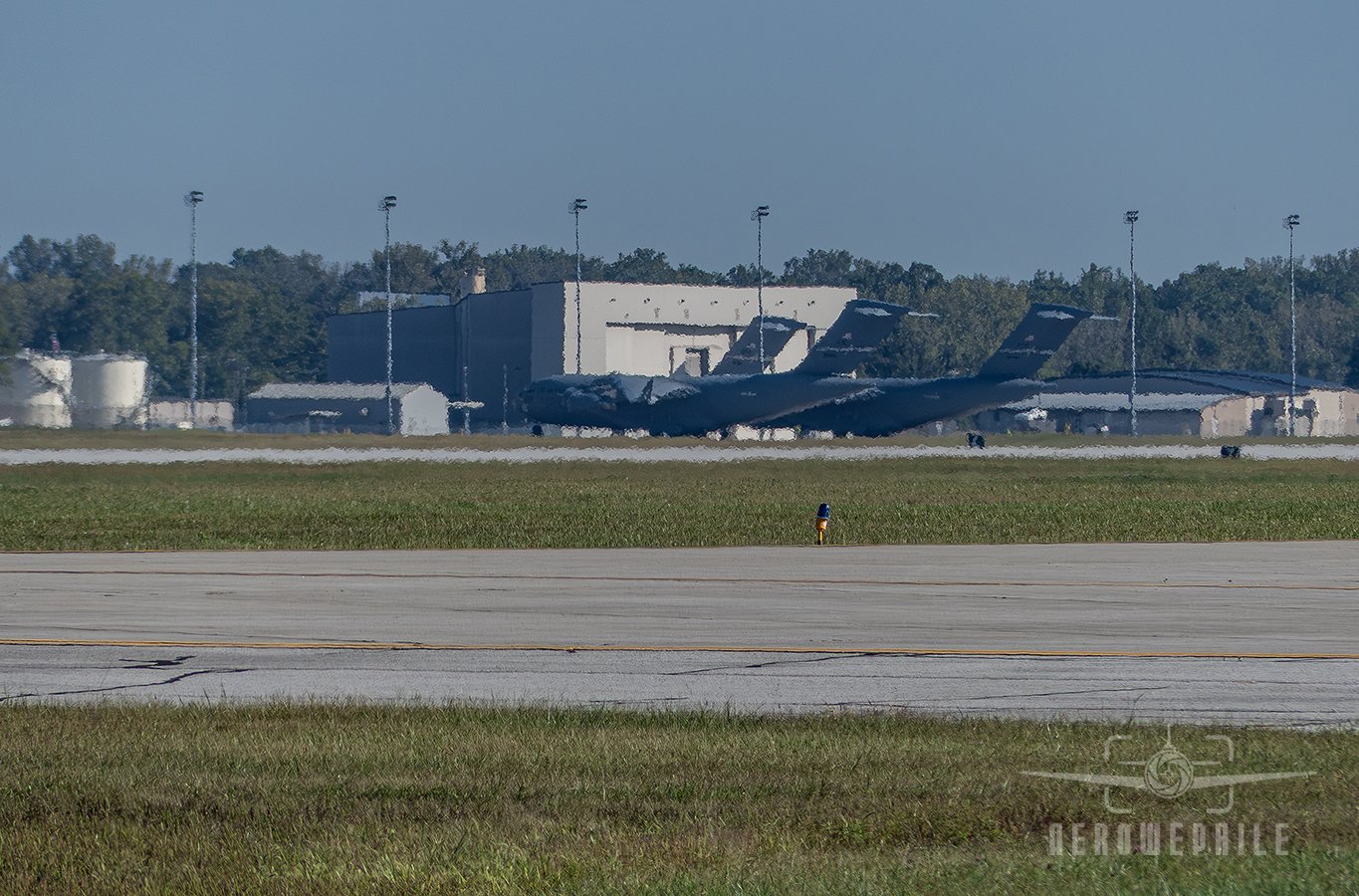
Wright-Patterson AFB is home to the 445th Airlift Wing of the Air Force Reserve Command, an Air Mobility Command-gained unit which flies the C-17A Globemaster III.